10 Stylish 70s Interior Design Ideas and Boho Chic Spaces
- Home Interior Design
 Ben
Ben- 0
- 48 minutes read
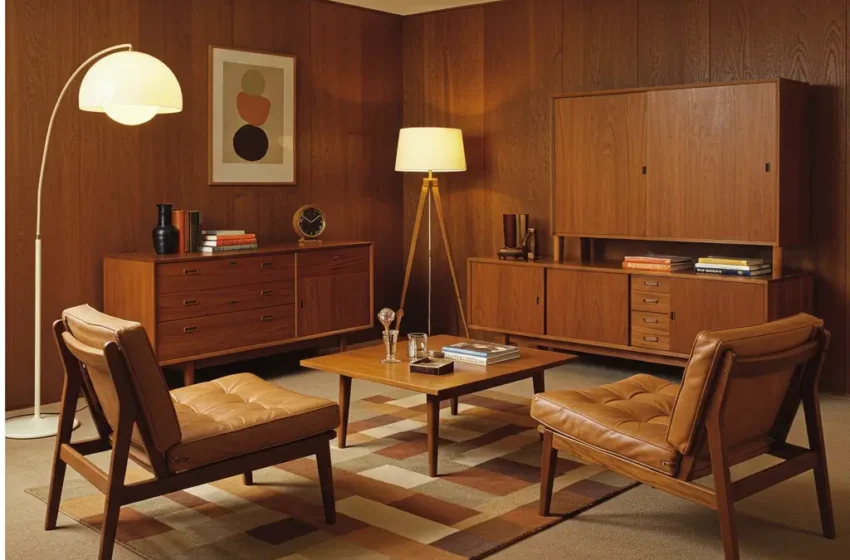
Let’s talk about the elephant in the room — or should I say, the shag carpet in the room? The 70s get a bad rap for interior design, but honestly, after helping my aunt renovate her split-level that hadn’t changed since 1976, I discovered something shocking. 70s interior design actually had some brilliant ideas hiding beneath all that avocado green.
The decade gave us conversation pits, open floor plans, and the radical idea that homes should be fun, not just functional.
Here’s the thing: bringing 70s interior design ideas into your modern home doesn’t mean recreating your grandmother’s wood-paneled basement exactly as it was.
It means cherry-picking the best elements — the warmth, the personality, the unapologetic boldness — and making them work for how we live now. I’ve spent the last two years incorporating 70s elements into my own home, and trust me, you can embrace the era without looking like you’re stuck in a time warp.
1. Retro 70s Living Room Makeover Ideas
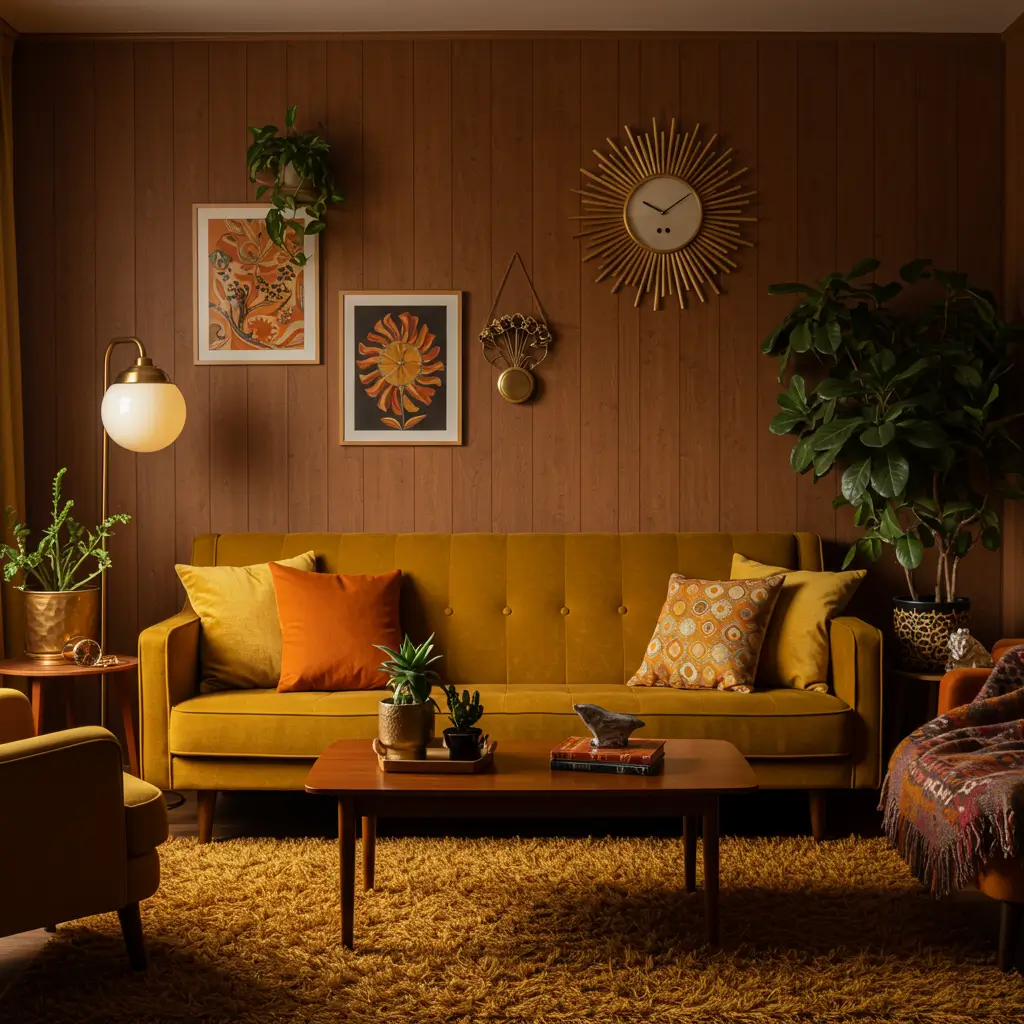
The 70s living room was command central for groovy gatherings, and honestly, they knew how to create spaces where people actually wanted to hang out. Forget stiff formal living rooms — 70s living rooms invited you to sink in, stay awhile, and maybe never leave.
The Conversation Pit Dream
Everyone fantasizes about conversation pits, and for good reason. These sunken seating areas forced people to actually face each other while talking — revolutionary concept, right? If you can’t literally dig into your floor, fake it:
- Create a defined lowered area with a large, thick rug
- Use low-profile furniture like floor cushions and low sofas
- Build a platform around the room’s perimeter, leaving center lower
- Arrange seating in a square facing inward
- Add a central coffee table at floor level
- Install dimmer switches for that intimate vibe
My friend created a pseudo-conversation pit using modular sectionals arranged in a square with a sunken ottoman in the middle. Cost her a fraction of actual construction, looks almost as cool.
Texture, Texture Everywhere
The 70s understood that smooth surfaces are boring. Mix these textures fearlessly:
- Velvet or corduroy upholstery
- Shag rugs (yes, they’re back and better)
- Macrame wall hangings
- Cork wall coverings
- Woven wood blinds
- Nubby linen pillows
Warm Wood Everything
Forget painted furniture — the 70s celebrated natural wood grain:
- Teak coffee tables with visible grain
- Walnut entertainment centers
- Pine paneling (done right, it’s actually cozy)
- Wooden room dividers
- Live-edge shelving
- Butcher block side tables
I rescued a teak sideboard from an estate sale for $100. Everyone assumes I paid thousands at a vintage furniture store. The 70s knew quality when they saw it.
2. Vintage 70s Bedroom Decor Inspirations
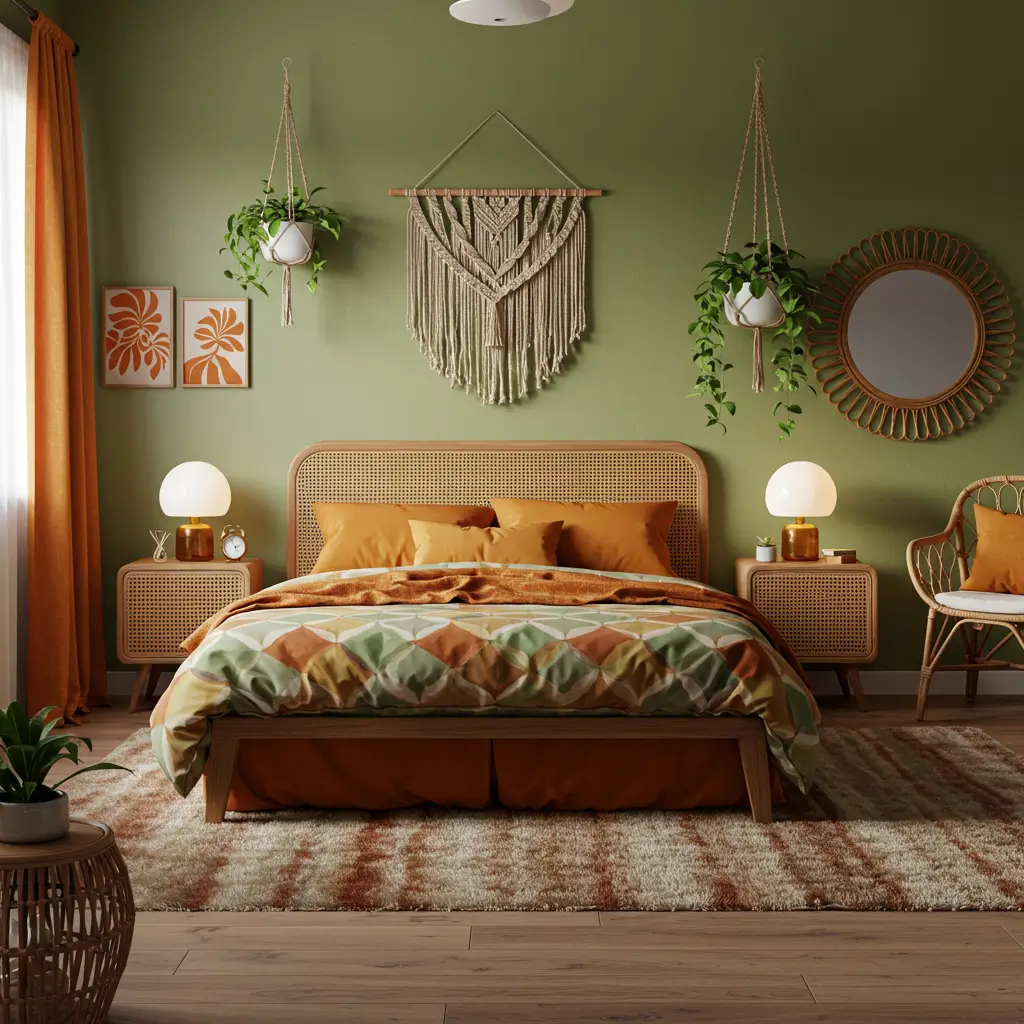
70s bedrooms were unapologetically sensual spaces. They embraced comfort, mood lighting, and the radical idea that bedrooms could be more than just places to sleep.
The Platform Bed Revolution
Platform beds weren’t just furniture — they were architectural statements. Create the look:
- Choose a low platform bed frame
- Build storage into the base
- Add built-in nightstands as part of the platform
- Install recessed lighting underneath
- Use a oversized headboard that extends beyond the bed
- Skip the box spring for that authentic low profile
Textiles That Tell Stories
70s bedrooms layered fabrics like they were going out of style:
- Patchwork quilts in earthy tones
- Velvet throw pillows in burnt orange or chocolate
- Crocheted afghans draped casually
- Ethnic-inspired bedspreads with geometric patterns
- Faux fur throws (because real fur is not cool anymore)
- Hanging tapestries as headboards
Mood Lighting Mastery
The 70s invented mood lighting, I swear:
- Mushroom lamps on nightstands
- Hanging rattan pendants
- Lava lamps (ironically or unironically, your choice)
- Colored bulbs in regular lamps
- String lights before they were trendy
- Himalayan salt lamps (okay, those came later, but they fit the vibe)
My bedroom currently rocks two mushroom lamps I found at different thrift stores, and the amber glow they create makes everyone look amazing. Strategic lighting choices, people.
3. Bold 70s Color Palette Home Ideas
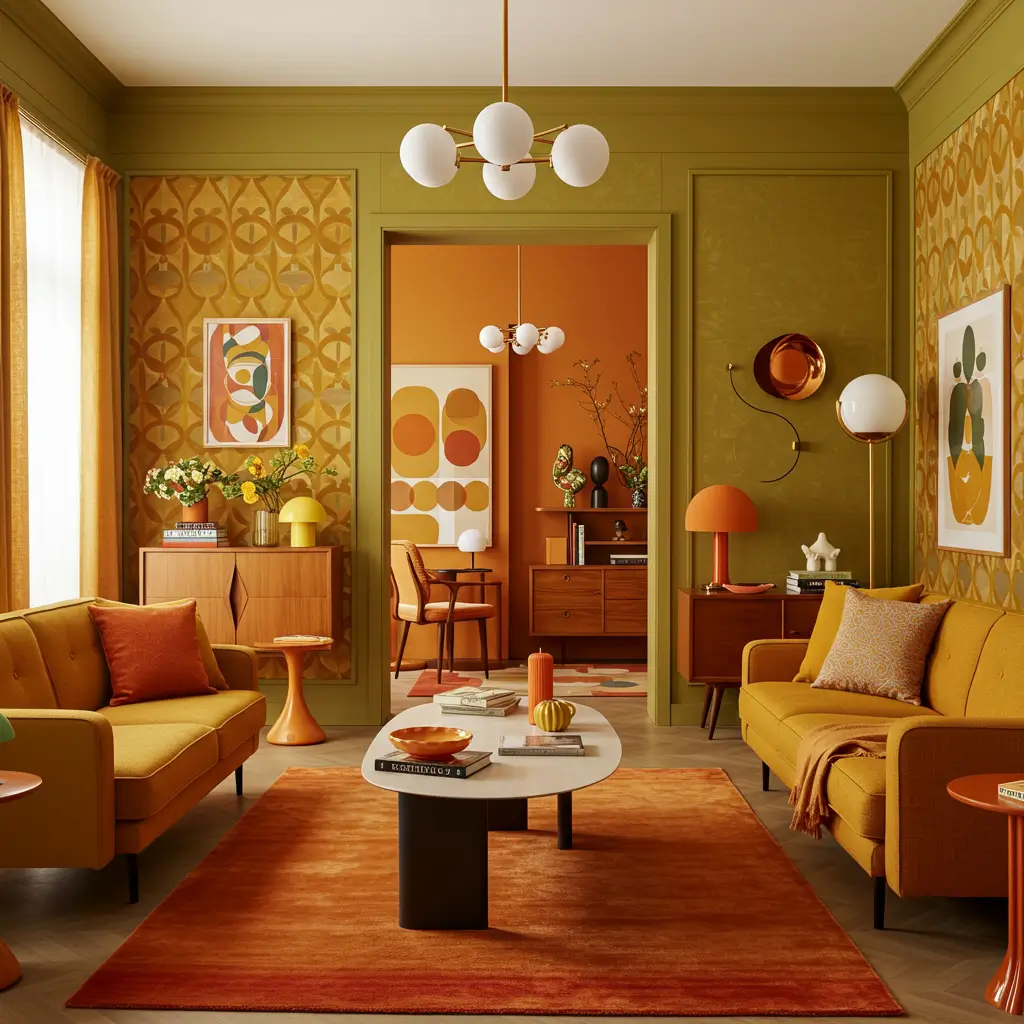
The 70s didn’t do subtle. Colors were either earth-toned or electric — no in-between. But here’s the secret: 70s color palettes work brilliantly when you understand the psychology behind them.
Earth Tones That Ground You
These colors create instant warmth:
- Burnt orange — energizing without aggression
- Harvest gold — sunny but sophisticated
- Avocado green — nature-inspired calm
- Chocolate brown — grounding and cozy
- Rust red — passionate yet earthy
- Camel tan — the perfect neutral base
I painted my dining room burnt orange last year. Everyone warned me I’d regret it. Instead, dinner parties last hours longer because the color makes people feel warm and chatty.
Jewel Tones for Drama
When earth tones weren’t enough:
- Deep purple (aka “groovy grape”)
- Emerald green
- Sapphire blue
- Ruby red
- Topaz yellow
The 70-20-10 Rule
Use the 70s approach to color balance:
- 70% neutral base (white, cream, tan walls)
- 20% secondary color (that burnt orange sofa)
- 10% accent pop (electric blue pillows)
This formula prevents your home from looking like a discount furniture store exploded, while still capturing that 70s energy.
Also Read: 12 Cozy Boho Interior Design Ideas for Serene Bedrooms
4. 70s Boho Chic Interior Styling Tips
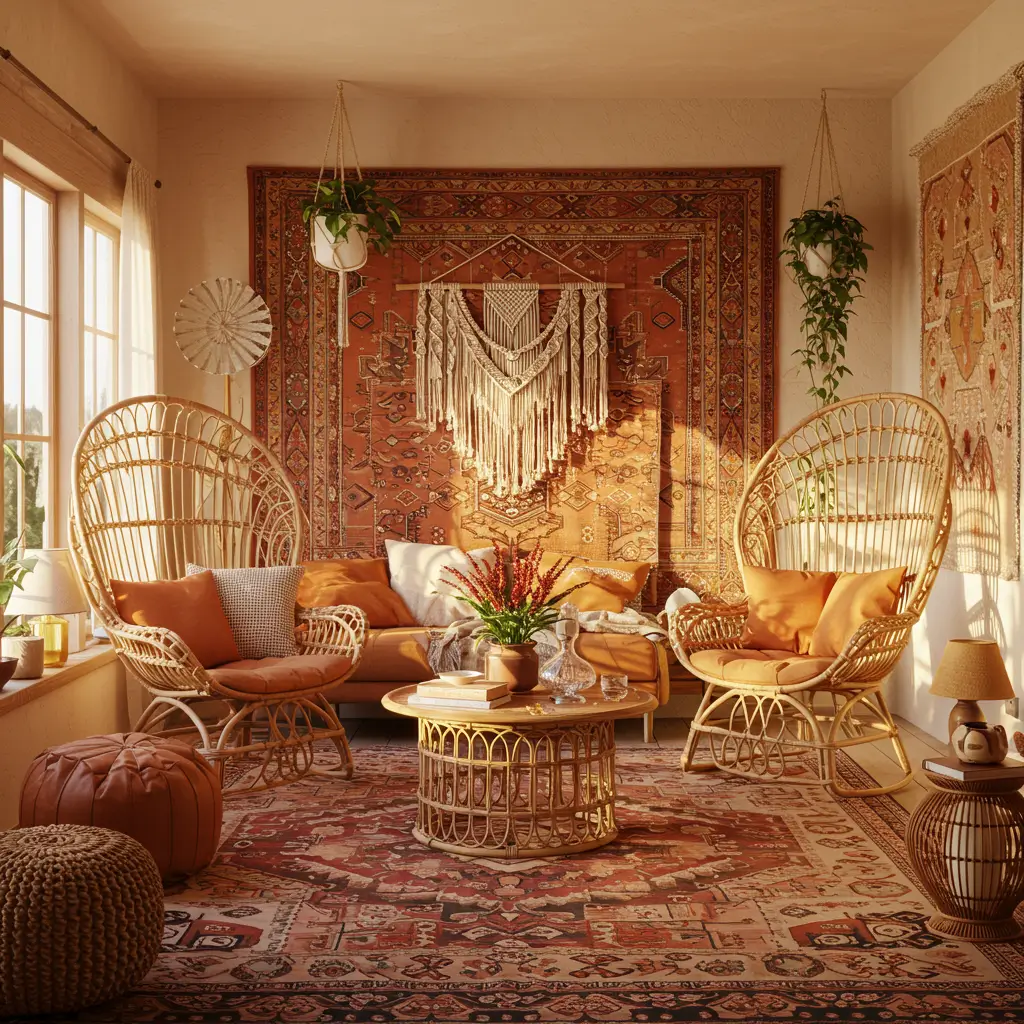
Before boho was Instagram-worthy, the 70s pioneered the bohemian aesthetic. They mixed global influences, handmade elements, and natural materials without trying to be “curated.”
Global Fusion Without Appropriation
The 70s loved world travel influences:
- Moroccan poufs and lanterns
- Indian block-printed textiles
- Mexican serapes as throws
- African mud cloth pillows
- Japanese shoji screens as dividers
- Turkish kilim rugs layered freely
The key? Buying from authentic sources and understanding cultural significance. Support artisans, not mass production.
Plants as Architecture
The 70s treated plants like furniture:
- Massive fiddle leaf figs in corners
- Hanging gardens with macrame planters
- Room dividers made entirely of plants
- Built-in planters as part of architecture
- Terrariums on every surface
- Actual trees growing indoors
My living room currently houses fourteen plants. Too many? The 70s would say I need at least ten more.
Handmade Everything
DIY culture thrived in the 70s:
- Macrame plant hangers
- Tie-dyed curtains
- Painted furniture
- Ceramic pottery
- Woven wall hangings
- Beaded door curtains
FYI, making your own macrame is stupidly easy and saves you hundreds. YouTube University teaches everything.
5. Mid-Century 70s Furniture Arrangement Ideas
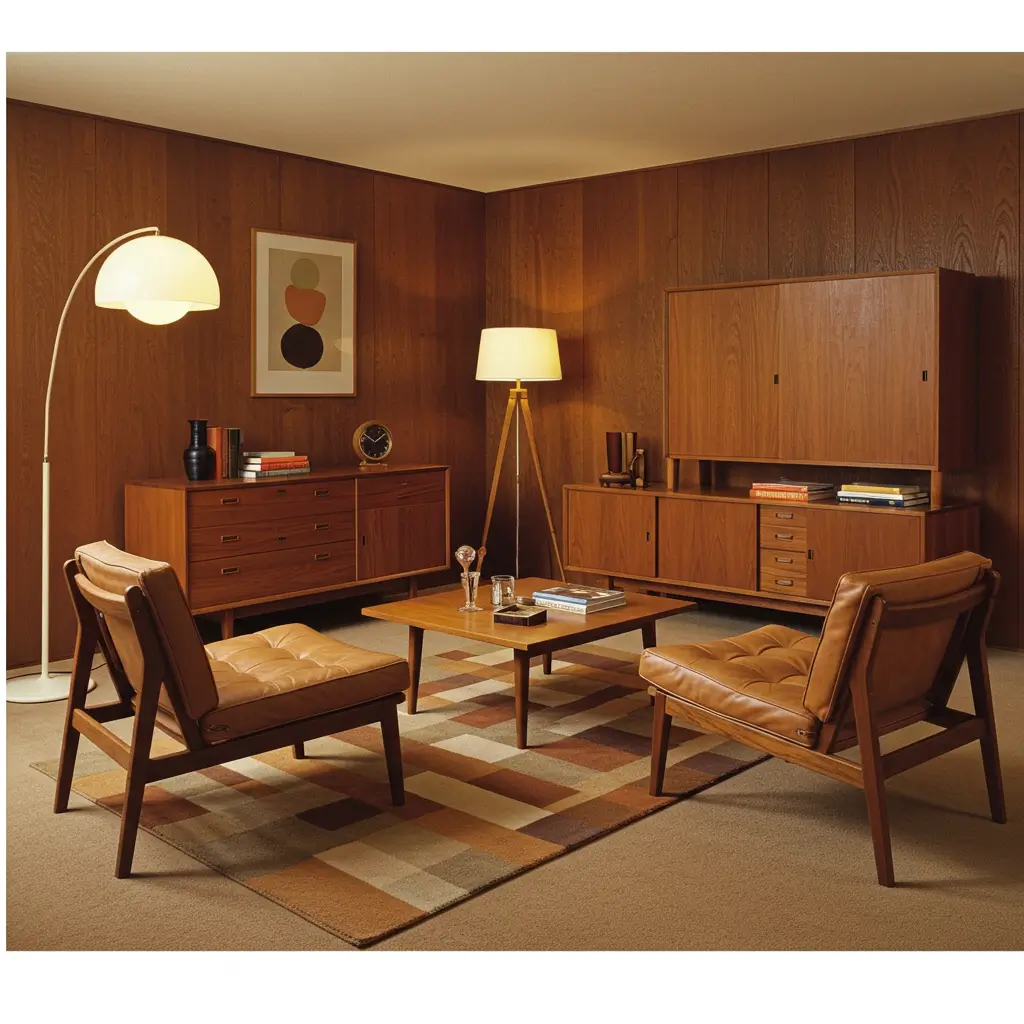
The 70s took mid-century modern and made it groovy. Furniture arrangement became about creating zones and flow rather than pushing everything against walls.
Float Your Furniture
Revolutionary idea: furniture doesn’t need walls:
- Float sofas in the middle of rooms
- Create back-to-back seating areas
- Use consoles as room dividers
- Define zones with furniture placement
- Leave breathing room around pieces
- Create multiple conversation areas
Mix Heights Strategically
70s rooms played with vertical space:
- Low sofas with tall plants behind
- Floor seating mixed with regular chairs
- High shelving with low coffee tables
- Hanging chairs adding vertical interest
- Platform areas creating levels
My living room uses three different seating heights, and it makes a 12×14 room feel like multiple spaces. Optical illusions work, people.
The Modular Movement
Sectional everything was peak 70s:
- Modular sofas that reconfigure
- Stackable tables
- Nesting ottomans
- Component shelving systems
- Convertible furniture pieces
6. 70s Patterned Wallpaper Room Ideas
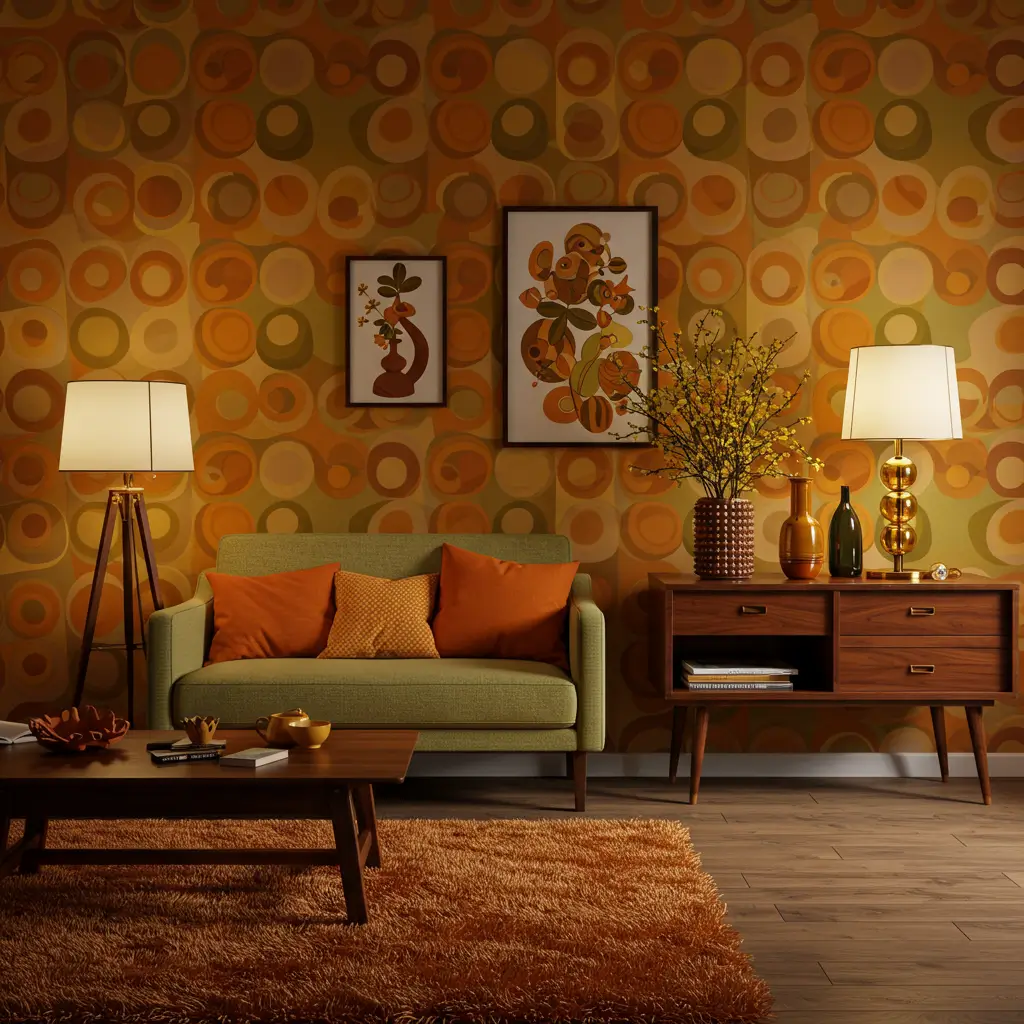
Wallpaper in the 70s was absolutely unhinged in the best way possible. These weren’t subtle suggestions of pattern — they were full-on visual experiences that dared you to look away.
Pattern Mixing Without Chaos
The 70s secret to pattern mixing:
- Keep colors consistent across patterns
- Vary pattern scales (large, medium, small)
- Ground with solids on large furniture
- Use patterns to define zones
- Echo motifs throughout the room
Iconic 70s Patterns
These patterns scream 70s:
- Supergraphics — massive geometric shapes
- Psychedelic swirls and optical illusions
- Botanical prints with huge flowers
- Art nouveau revivals with flowing lines
- Geometric repeats in earth tones
- Bamboo and grasscloth textures
I used peel-and-stick wallpaper with a 70s geometric pattern in my powder room. Guests literally gasp when they walk in. Sometimes bold choices pay off.
The Accent Wall Approach
Can’t commit to full rooms? Try:
- One wall of bold pattern
- Wallpaper inside bookcases
- Ceiling wallpaper (trust me)
- Wallpaper behind headboards
- Inside closets for surprise moments
Also Read: 10 Creative Showroom Interior Design Ideas and Space Hacks
7. Funky 70s Kitchen Design Inspirations
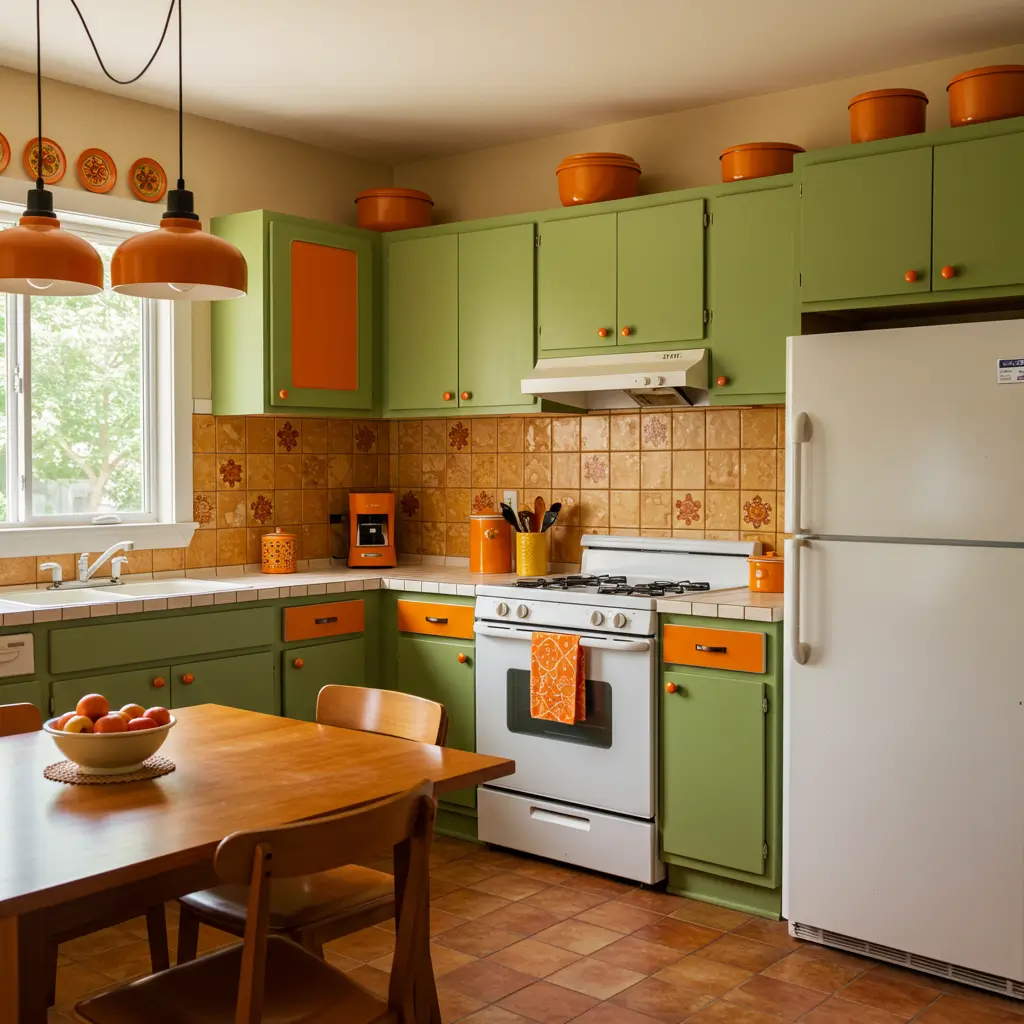
70s kitchens were command centers for fondue parties and casserole experiments. They embraced color, pattern, and the revolutionary idea that kitchens should be fun, not clinical.
Color Where You Least Expect It
70s kitchens went bold:
- Colored appliances (harvest gold refrigerators!)
- Bright cabinet interiors when doors open
- Patterned backsplashes in wild tiles
- Colorful countertops (though maybe skip the orange laminate)
- Painted ceilings in unexpected hues
Open Shelving Before It Was Cool
The 70s loved displaying dishes:
- Macrame hanging fruit baskets
- Open wood shelving
- Plate racks on walls
- Mug trees on counters
- Spice racks as decor
Modern interpretation? Mix vintage 70s dishes with contemporary storage solutions. My open shelves display a collection of amber glass and mushroom canisters that cost less than $50 total at estate sales.
The Breakfast Nook Revolution
Every 70s kitchen needed a cozy eating spot:
- Built-in banquette seating
- Round tables with pedestal bases
- Hanging lights directly overhead
- Cushions in corduroy or vinyl
- Windows surrounding the nook
8. 70s Minimalist Retro Home Ideas
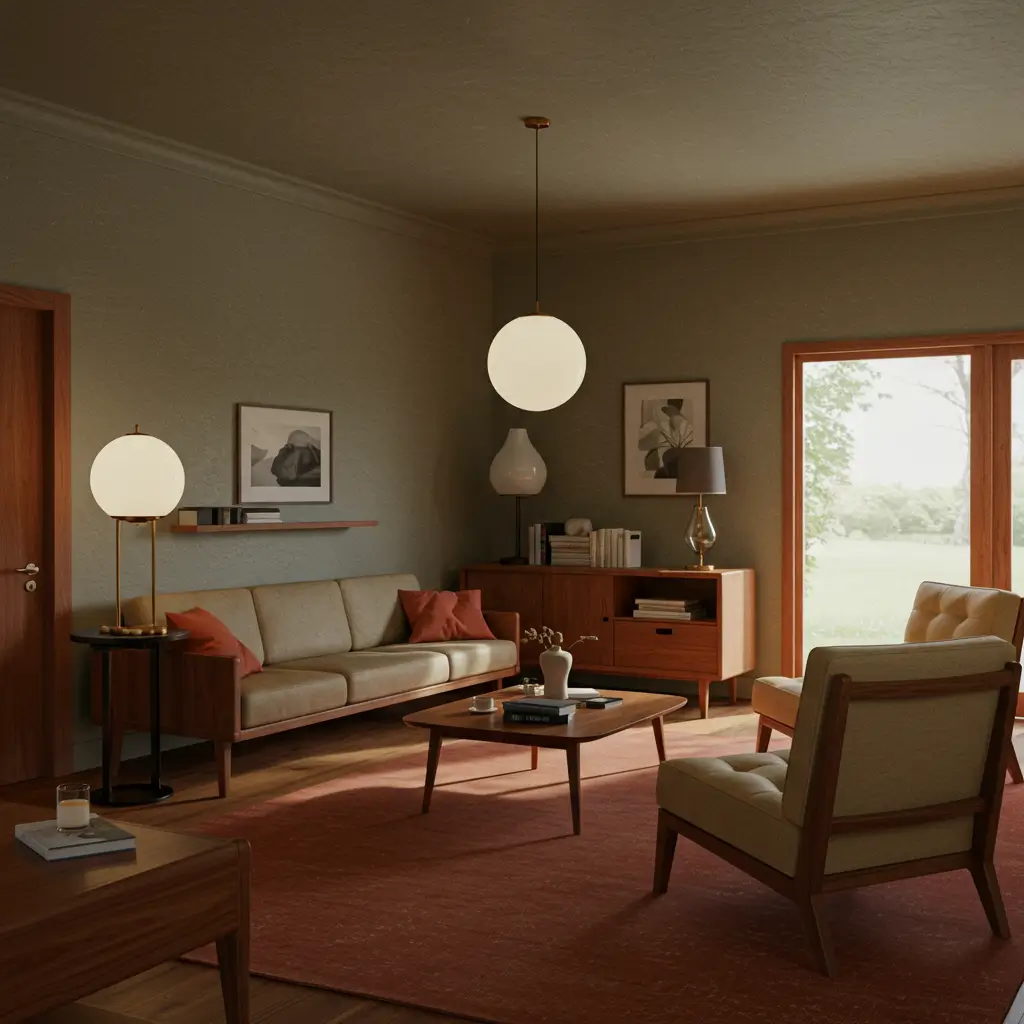
Plot twist: the 70s also embraced minimalism, just not the stark white kind. 70s minimalism meant thoughtful reduction with warmth intact.
Warm Minimalism
Less stuff, more soul:
- Quality over quantity furniture
- Natural materials only
- Purposeful empty space
- Hidden storage solutions
- Single statement pieces per room
- Monochromatic color schemes
Space Age Influence
The future was minimalist:
- Molded plastic chairs
- Chrome and glass tables
- Built-in everything
- Concealed technology
- Smooth, curved lines
- White with single color accents
My office follows 70s minimalism — one orange Eames-style chair, a teak desk, and a single piece of art. Somehow feels more 70s than rooms full of stuff.
Japanese-Influenced Simplicity
The 70s loved Japanese design:
- Low furniture profiles
- Natural wood finishes
- Shoji screen dividers
- Minimal ornamentation
- Focus on light and shadow
- Indoor-outdoor connections
9. Eclectic 70s Office & Workspace Designs
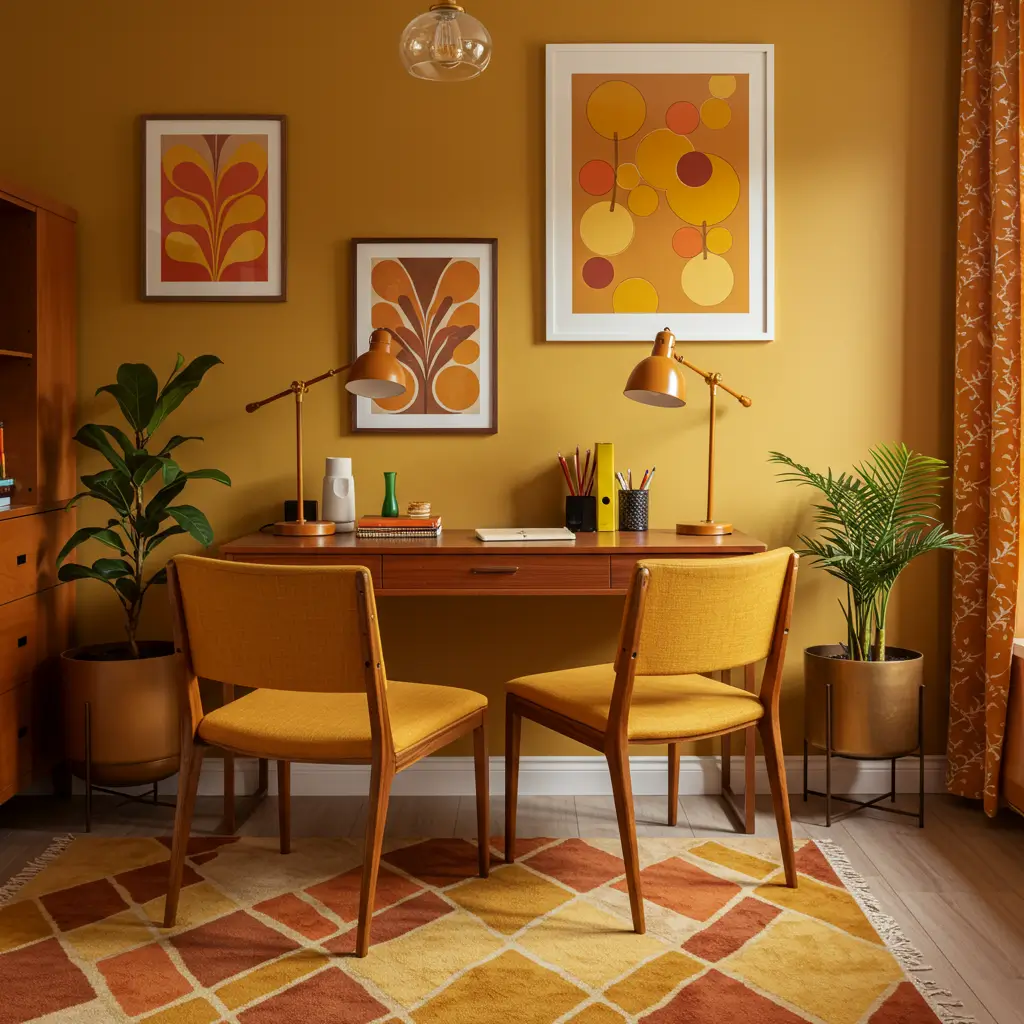
Home offices weren’t common in the 70s, but when they existed, they were groovy thinking spaces that inspired creativity. No boring cubicle energy allowed.
The Creative Zone Approach
70s offices embraced personality:
- Bold artwork at eye level
- Comfortable seating beyond desk chairs
- Multiple lighting sources
- Plants everywhere
- Personal collections on display
- Color that energizes
Furniture That Works Hard
70s office furniture was substantial:
- Massive wooden desks
- Modular shelving systems
- Rolling bar carts for supplies
- Swivel chairs in leather or velvet
- Credenzas with hidden filing
I found a teak desk from 1973 that has more storage than any modern desk I’ve seen. They built things to last back then.
Inspiring Wall Treatments
Make walls work for creativity:
- Cork boards covering entire walls
- Pegboard painted in bright colors
- Gallery walls of inspiration
- Chalkboard paint sections
- Fabric-covered pin boards
Also Read: 12 Creative Small House Interior Design Ideas to Maximize Space
10. DIY 70s Home Decor Projects
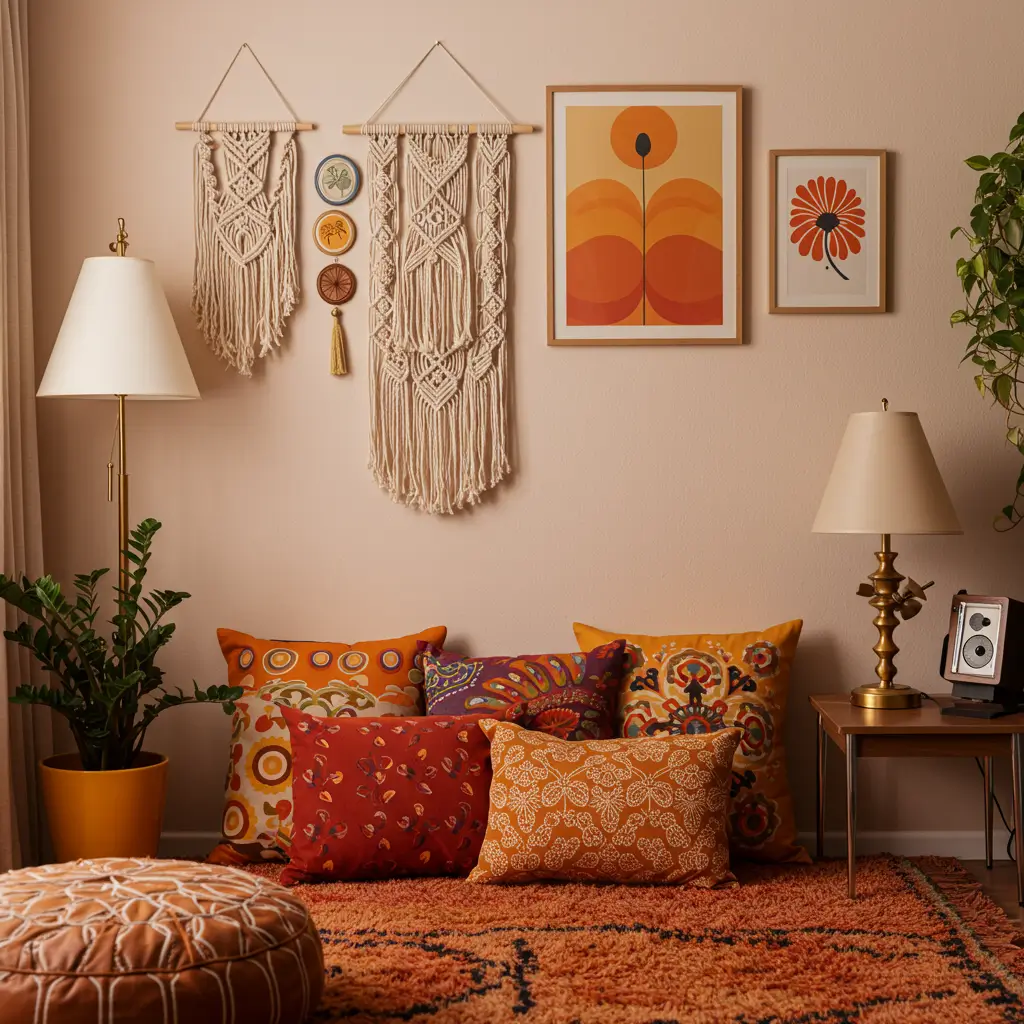
The 70s were peak DIY culture. People made everything themselves, and honestly, that handmade quality is what gives authentic 70s style its soul.
Macrame Everything
Learn three knots, make infinite projects:
- Plant hangers (obviously)
- Wall hangings
- Room dividers
- Lampshades
- Table runners
IMO, the time investment in learning macrame pays off massively. One ball of cord = multiple projects :/
Furniture Transformation
Update thrift finds with 70s flair:
- Paint in earth tones
- Add cane webbing to cabinet doors
- Reupholster in velvet or corduroy
- Install hairpin legs on everything
- Strip paint to reveal wood grain
Quick Weekend Projects
Instant 70s vibes:
- Tie-dye curtains or pillowcases
- Paint geometric murals
- Build simple platform beds
- Create cork board walls
- Make beaded curtains
- Craft pottery with air-dry clay
Last weekend I made a beaded curtain for $15. Took two hours, looks like it came from an expensive vintage store. Sometimes the best design is DIY design.
Making 70s Design Work Today
Here’s what I’ve learned bringing 70s interior design into the 2020s: it’s all about editing. Take the warmth, the personality, the fearlessness — leave the asbestos ceiling tiles and lead paint.
The 70s taught us that homes should reflect who we are, not what magazines tell us is “timeless.”
Start small. Maybe it’s one burnt orange pillow or a single macrame plant hanger. See how it feels. The beauty of 70s design is that it’s forgiving — nothing needs to match perfectly because eclecticism was the point.
Your home should make you happy, and if that means embracing some groovy elements, then let your freak flag fly.
The 70s understood something we forgot in our minimalist, gray-everything phase: homes should have personality. They should tell stories.
They should make us feel something beyond “this photographs well.” Whether you go full 70s revival or just add touches here and there, remember that the best interiors — then and now — are the ones that make you smile every time you walk through the door 🙂