15 Inspiring Hotel Bathroom Design Luxury Ideas for Your Remodel
- Bathroom Design
 Ben
Ben- 0
- 49 minutes read
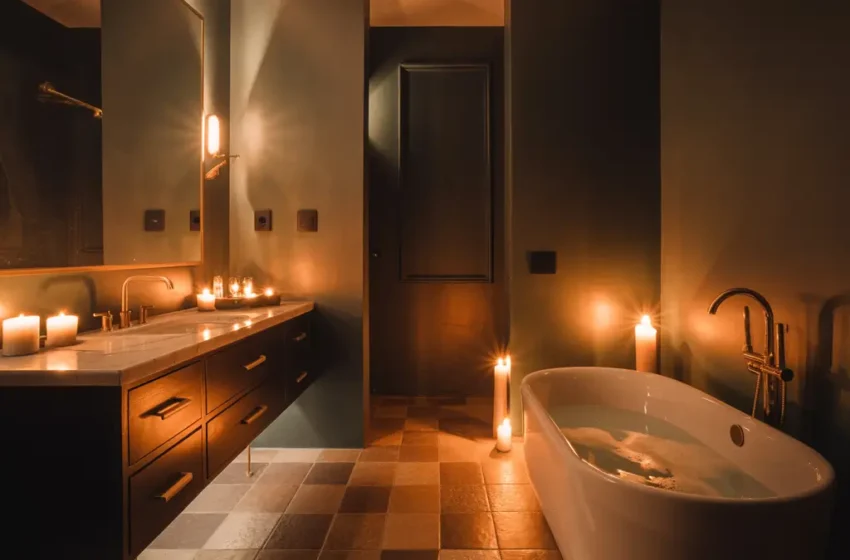
Ever walked into a hotel bathroom and thought, “Forget the bedroom, I’m sleeping in here”? Yeah, me too.
There’s something about hotel bathrooms that makes our home bathrooms look like sad little closets with plumbing.
After staying in probably 200+ hotels for work (rough life, I know), I’ve become obsessed with recreating that five-star bathroom magic at home.
The thing is, hotel bathrooms aren’t just fancy by accident. They follow specific design principles that trigger our “this is luxury” sensors.
And guess what? You can totally steal these ideas without needing a hotel-sized budget. I’ve renovated four bathrooms using hotel-inspired designs, and people literally ask if they can shower at my house now. Not weird at all, right?
Let’s break down the exact elements that make hotel bathrooms feel so ridiculously luxurious. Trust me, once you understand the formula, you’ll never look at your bathroom the same way again.
1. Marble Elegance Hotel Bathroom
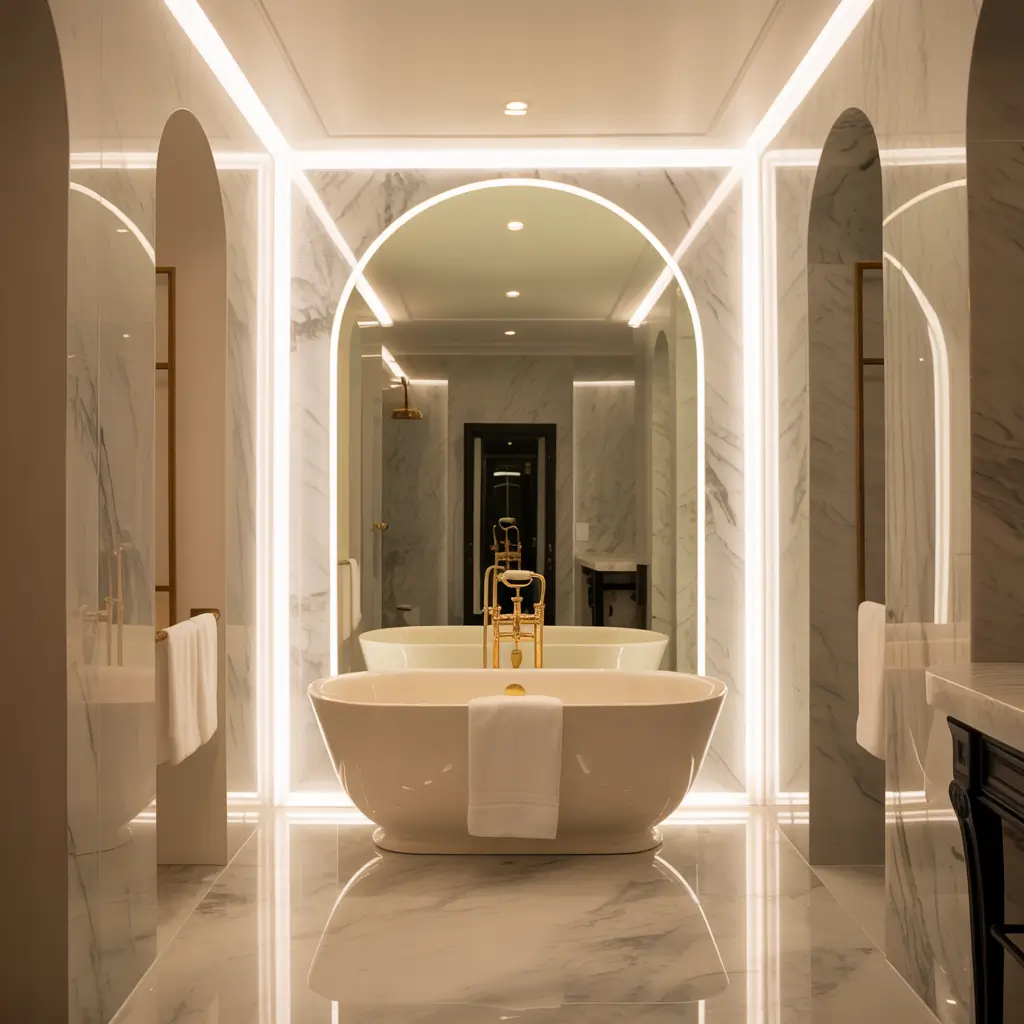
The Timeless Classic That Hotels Can’t Quit
Walk into any luxury hotel from Tokyo to New York, and you’ll find marble. It’s like the international language of “we’re expensive and we know it.” But here’s what most people miss—hotels don’t just slap marble everywhere and call it fancy.
The best hotel bathrooms use marble strategically. I stayed at the St. Regis last year, and they had this brilliant approach: Carrara marble floors, but with brass inlays creating patterns. The walls? Only marble up to eye level, then painted plaster above. This creates visual interest without overwhelming the space or, more importantly, your wallet.
The Marble Hierarchy Hotels Follow
Hotels categorize marble by impact zones:
- Hero marble (the showstopper on main walls or vanity)
- Supporting marble (coordinating but simpler for floors)
- Accent marble (small touches like shelves or frames)
I copied this formula in my master bath. Splurged on Calacatta Gold for the vanity top, used affordable Carrara tiles for floors, and added small marble accessories. Total cost? Half what full marble would’ve been, but the effect reads as pure luxury.
Why This Works Every Time
Marble triggers our luxury sensors because our brains associate it with permanence and quality. Hotels know this. They also know marble photographs beautifully for Instagram, which—let’s be honest—matters now. The veining creates natural art that changes with lighting throughout the day.
2. Gold Accent Luxury Spa Bathroom
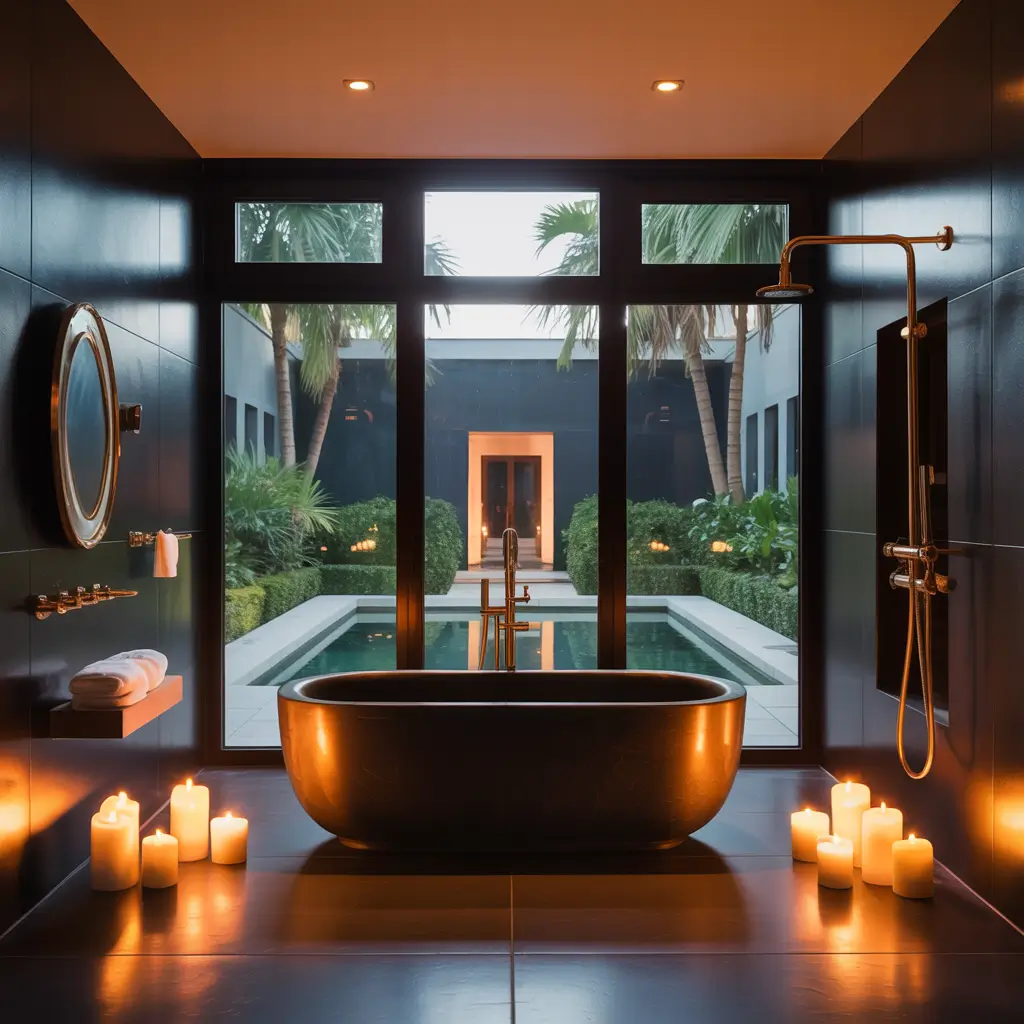
The Midas Touch That Hotels Perfected
Remember when gold fixtures were tacky? Hotels brought them back with a vengeance, but they did it right. Modern hotel gold isn’t your grandma’s shiny brass—it’s sophisticated, matte, and surprisingly versatile.
The Four Seasons taught me the gold accent formula. During a stay in Miami, I noticed they never used gold alone. Always paired with either black, white, or deep navy. The gold becomes punctuation rather than the whole sentence. Brilliant, right?
Where Hotels Place Gold for Maximum Impact
Hotels follow a specific gold placement strategy:
- Faucets and fixtures (the jewelry approach)
- Mirror frames (creates a focal point)
- Light fixtures (warm glow enhancement)
- Hardware details (subtle continuity)
- Accent tiles or trim (just whispers, never shouts)
Making Gold Work Without Looking Like Vegas
The secret sauce? Temperature matching. Hotels always use warm gold (not yellow gold) and pair it with warm lighting. I learned this the hard way when I installed gold fixtures under cool LED lights—looked like a bad spray tan. Switched to 3000K bulbs, and suddenly everything looked expensive.
3. Minimalist Black & White Hotel Bath
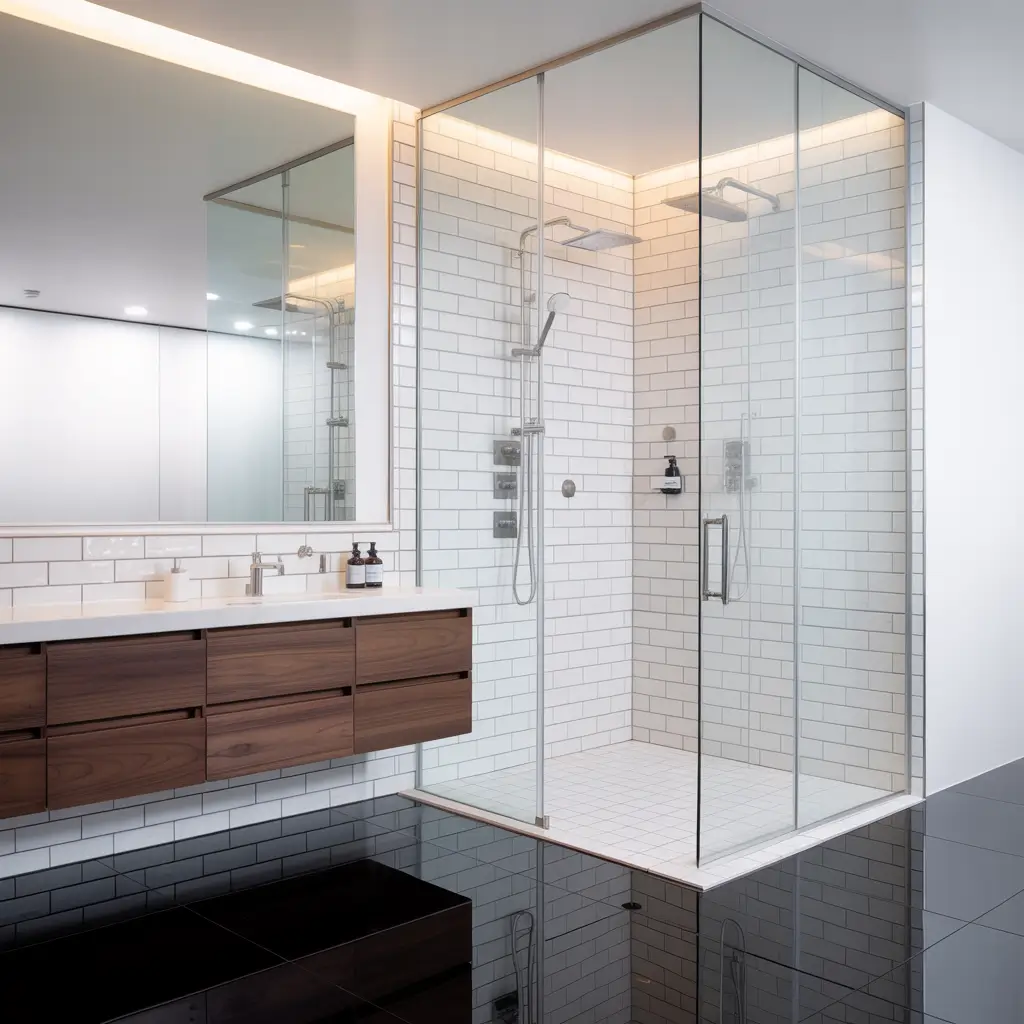
The Power Play of Contrast
Boutique hotels love this combo because it’s impossible to mess up and impossible to date. Black and white reads as expensive, period. The Ace Hotel chain basically built their entire bathroom aesthetic on this principle.
What makes hotel black and white different from basic black and white? The ratios. Hotels typically go 70% white, 20% black, 10% grey or metallic. This prevents the checkerboard effect that screams “1950s diner” instead of “luxury suite.”
The Hotel Pattern Rules
Hotels stick to these patterns with black and white:
- Large format tiles (fewer grout lines = more expensive look)
- Geometric patterns (hexagons, chevron, or herringbone)
- Matte black fixtures (never glossy—too harsh)
- White dominance (black as accent, not primary)
Why Minimalism Equals Luxury
Hotels discovered something crucial: clutter kills luxury vibes instantly. Black and white forces discipline. You can’t hide mess with busy patterns or colors. This constraint creates that clean, expensive feeling we associate with high-end hotels.
Also Read: 15 Gorgeous Dark Luxury Bathroom Ideas That Feel Like
4. Warm Lighting Modern Retreat
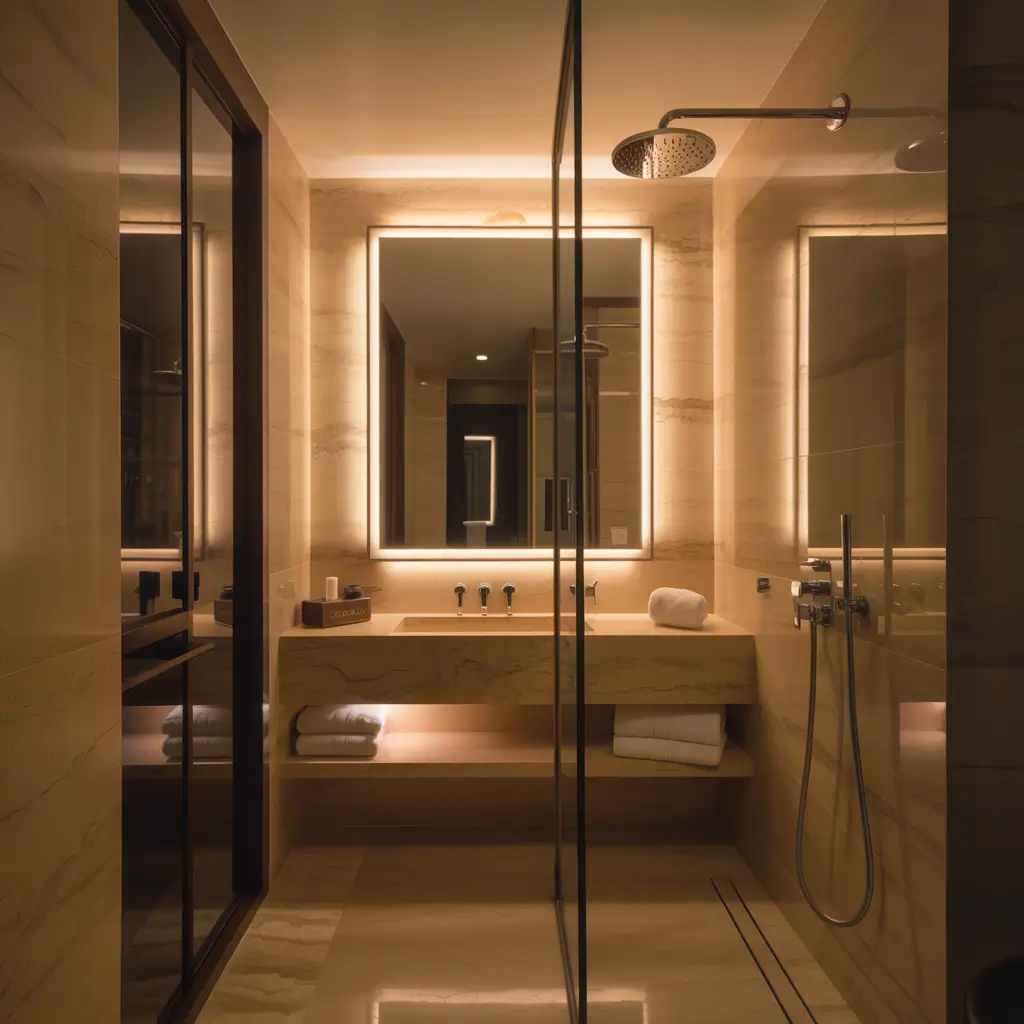
The Secret Weapon Hotels Deploy
Here’s what blew my mind: luxury hotels spend more on bathroom lighting design than on the actual fixtures. Why? Because lighting literally makes or breaks the luxury experience. Bad lighting can make a $10,000 marble vanity look like plastic.
I consulted with a hotel designer friend who revealed their formula: minimum four light sources in any luxury bathroom. Overhead ambient, vanity task lighting, accent lighting, and natural light (or faux natural with smart bulbs). Each serves a purpose, and together they create magic.
The Layered Lighting Approach
Hotels layer lighting like this:
- Ambient lighting at 30% brightness (never full blast)
- Task lighting at eye level (no shadows on face)
- Accent lighting highlighting textures or art
- Night lighting on motion sensors (subtle and automatic)
Color Temperature Is Everything
Luxury hotels exclusively use 2700K-3000K warm white bulbs. Anything cooler feels institutional. I replaced all my bathroom bulbs with 2700K, and instantly my basic bathroom felt more expensive. It’s literally the cheapest luxury upgrade possible.
5. Freestanding Tub with City View
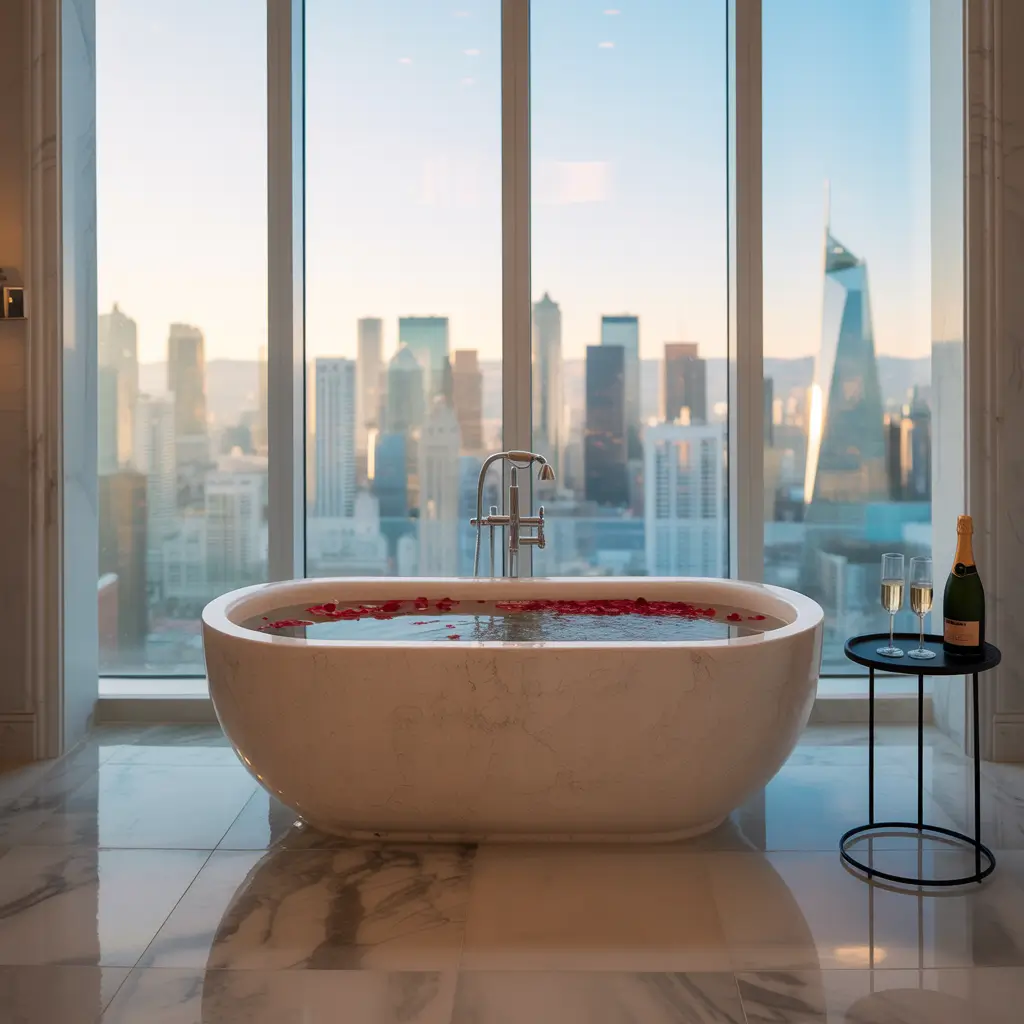
The Ultimate Flex in Hotel Design
Hotels position freestanding tubs by windows for one reason: it screams “I have so much space, I can waste it on views while bathing.” The Peninsula Hotels perfected this, and now everyone copies them.
But here’s the insider trick—you don’t need an actual city view. Hotels create the illusion of views with frosted glass, strategic mirrors, or even projected images. I’ve seen boutique hotels use LED panels showing “views” behind frosted glass. Sneaky? Yes. Effective? Absolutely.
Tub Positioning Psychology
Hotels know exactly where to place tubs:
- 45-degree angle from the door (creates drama on entry)
- 18 inches from walls minimum (feels floating)
- Elevated on platform if possible (adds importance)
- Near but not under windows (privacy with light)
The Supporting Cast Matters
A freestanding tub alone doesn’t create luxury. Hotels always add:
- Floor-mounted or wall-mounted filler (never deck-mounted)
- A side table or stool (for champagne, obviously)
- Soft lighting from below or behind
- Premium bath products displayed beautifully
- Ridiculously fluffy towels within reach
6. Tropical Resort-Inspired Bathroom
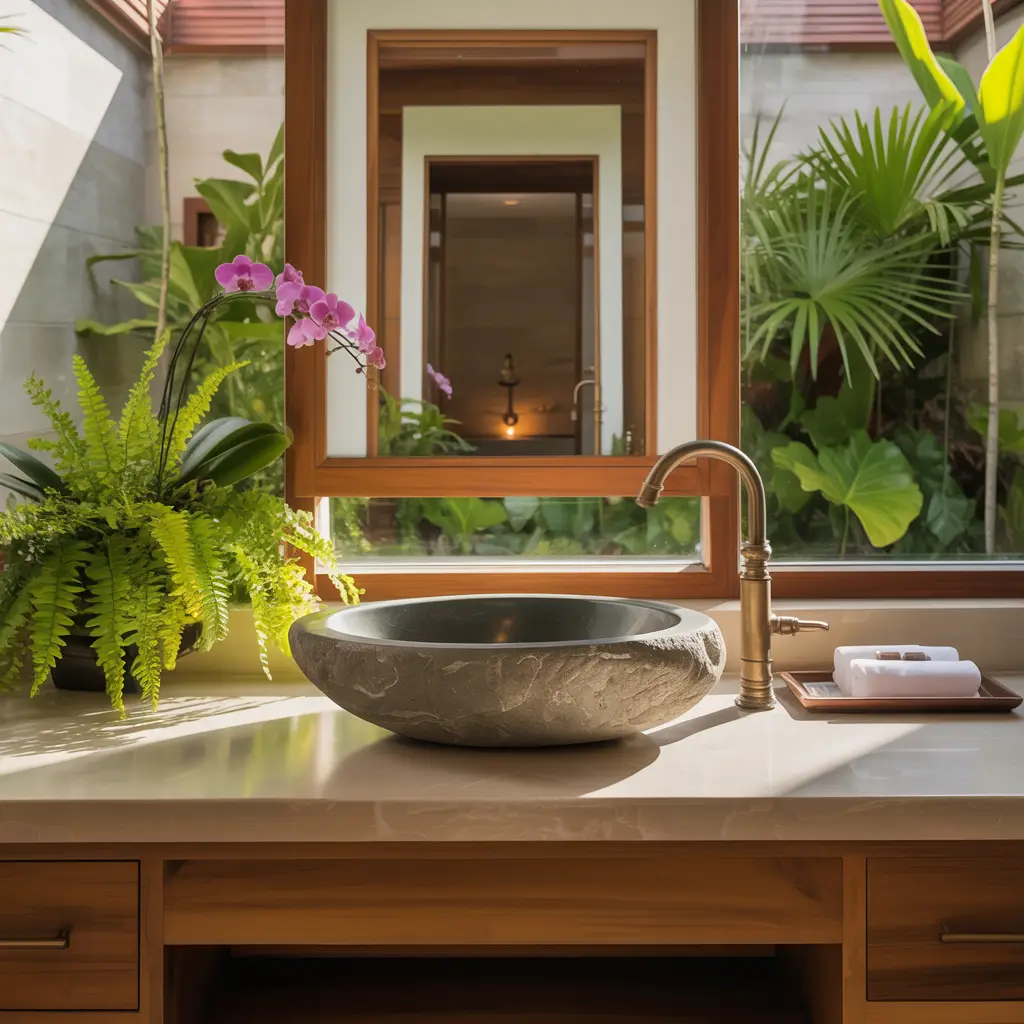
Bringing Vacation Vibes Home Forever
Resort bathrooms hit different because they blur the line between inside and outside. The Four Seasons Maui bathroom I experienced had more plants than my entire garden. The genius? They make you feel like you’re showering in nature while still having hot water and marble floors.
Hotels achieve this with specific elements working together. Natural materials, organic shapes, and strategic greenery transform sterile bathrooms into tropical escapes. The best part? Most of these elements cost less than traditional luxury materials.
The Tropical Formula Hotels Use
Resort bathrooms always include:
- Teak or bamboo accents (shower floors, benches, accessories)
- Natural stone in warm tones (never grey or black)
- Living plants (real or really good fakes)
- Natural textures (rattan, jute, woven baskets)
- Rain showerheads (mimics tropical rainfall)
Climate Control Tricks
Hotels in non-tropical locations fake it brilliantly. Heated floors paired with humidity-loving plants, warm lighting that mimics sunset, and essential oil diffusers with coconut or plumeria create the full sensory experience. Your brain can’t tell you’re in Detroit in December.
Also Read: 15 Breathtaking Modern Luxury Bathroom Ideas You’ll Love
7. Zen Stone Spa Bathroom
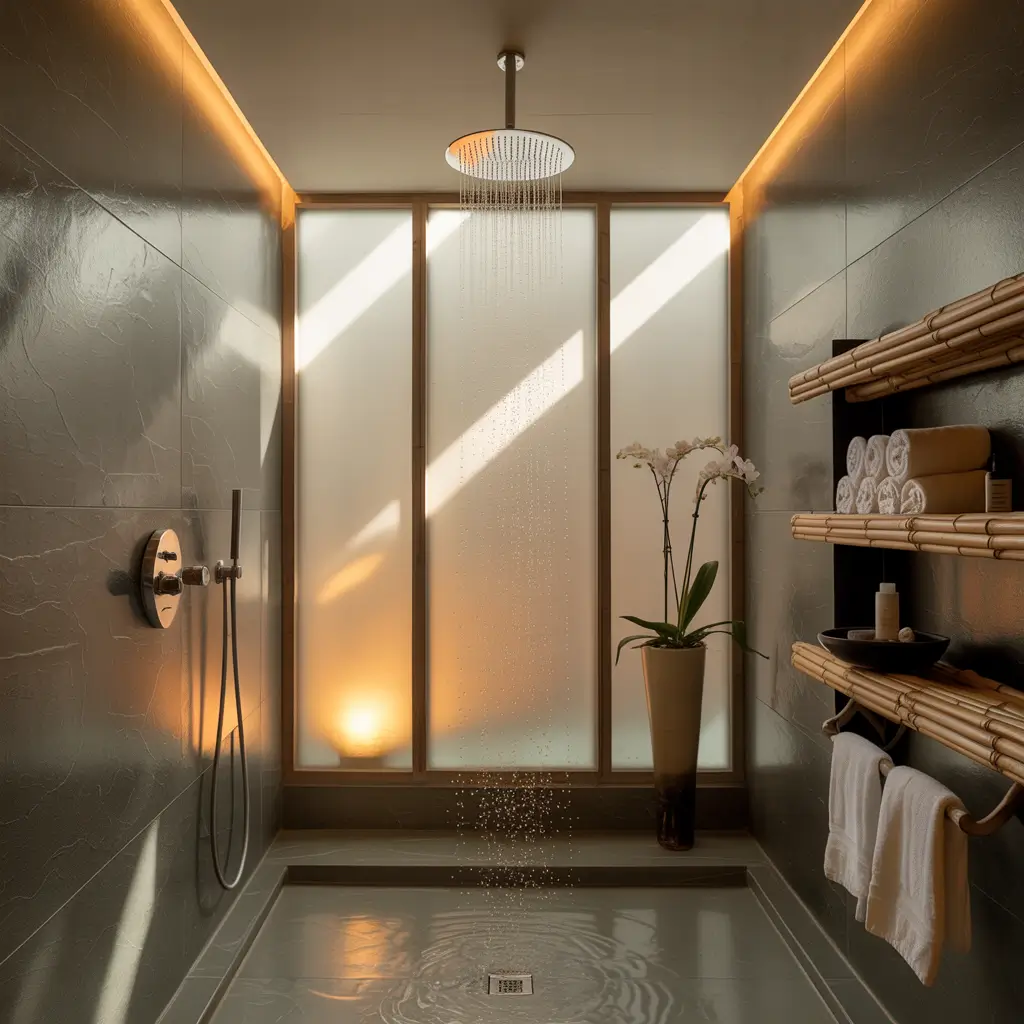
The Meditation Chamber Approach
Asian luxury hotels revolutionized bathroom design by making them feel like meditation spaces. The Aman Resorts basically turned “zen bathroom” into an entire brand identity. After staying at one in Kyoto, I understood why people pay $2,000 a night.
The magic lies in restraint. Where Western luxury adds, Eastern luxury subtracts. Every element serves a purpose, and that purpose includes emotional impact, not just function.
Elements of Zen Luxury
Hotels create zen with:
- Natural stone in neutral tones (river rock, slate, sandstone)
- Wood elements (always natural, never painted)
- Minimal fixtures (wall-mounted everything)
- Hidden storage (clutter is zen’s enemy)
- Water features (even just the sound)
The Sensory Experience
Zen hotel bathrooms engage all senses:
- Rough stone textures underfoot
- Smooth wood surfaces for hands
- Subtle aromatherapy (cedar, eucalyptus)
- Gentle water sounds
- Warm, dim lighting
FYI, you don’t need actual water features. I bought a $30 fountain pump and created a recirculating water wall with stacked slate. Sounds like a babbling brook, costs less than a dinner out.
8. Crystal Mirror Glam Hotel Bath
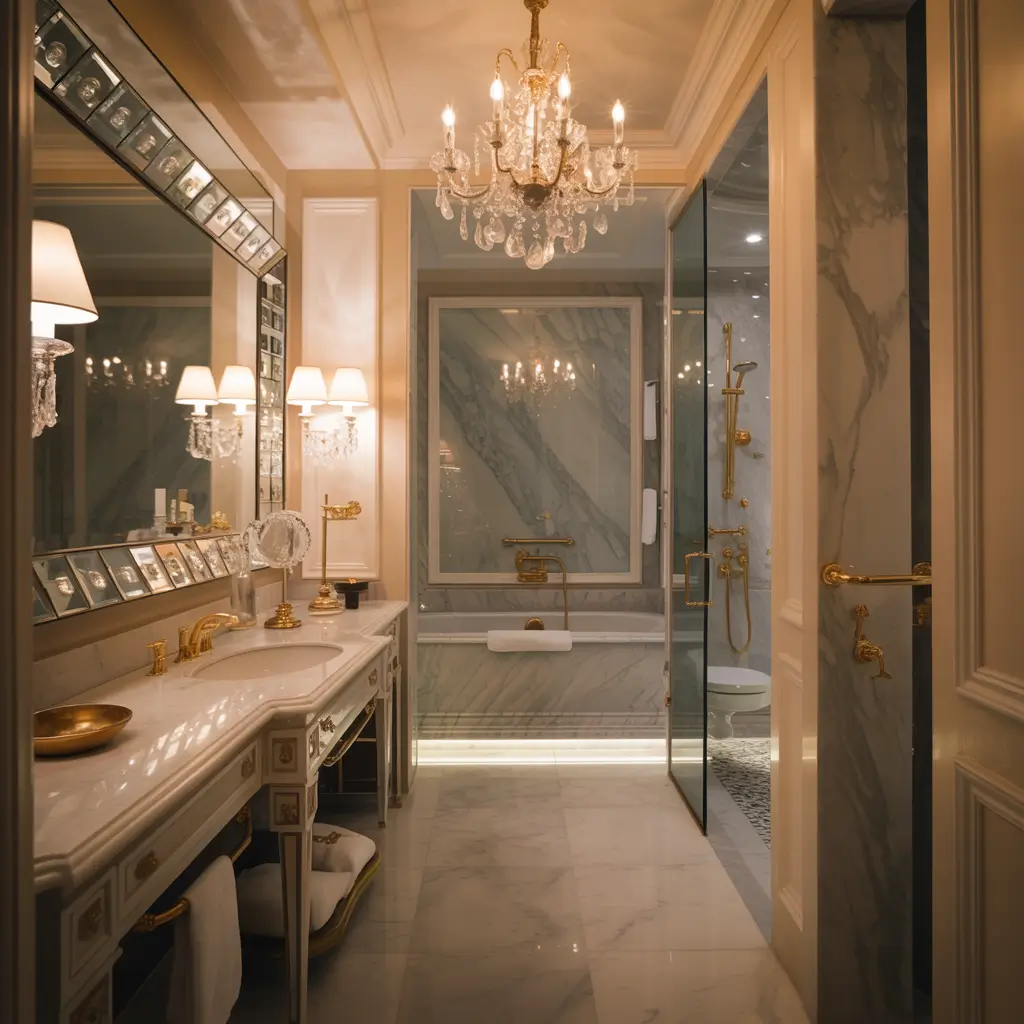
When More Is Actually More
Vegas hotels proved that crystal and mirrors can create luxury through pure sensory overload. The Cosmopolitan’s bathrooms literally sparkle. It’s not subtle, but damn if it doesn’t feel expensive.
The trick hotels use? Quality over quantity. One stunning crystal chandelier beats ten cheap crystal accessories. One oversized ornate mirror trumps three basic ones. Hotels invest in statement pieces then keep everything else simple.
Strategic Sparkle Placement
Hotels position crystals and mirrors for maximum impact:
- Chandelier centered over tub (never toilet)
- Backlit mirrors (creates depth and glow)
- Mirrored surfaces on one wall max (more feels like a funhouse)
- Crystal hardware on select pieces (not everything)
- Reflective tiles as accents only
Making It Modern, Not Grandma’s House
The difference between hotel glam and dated glam? Clean lines and restraint. Hotels pair crystal with modern fixtures, minimal color palettes, and contemporary shapes. Think crystal chandelier over a sleek freestanding tub, not a pink jacuzzi.
9. Dark Marble Sanctuary
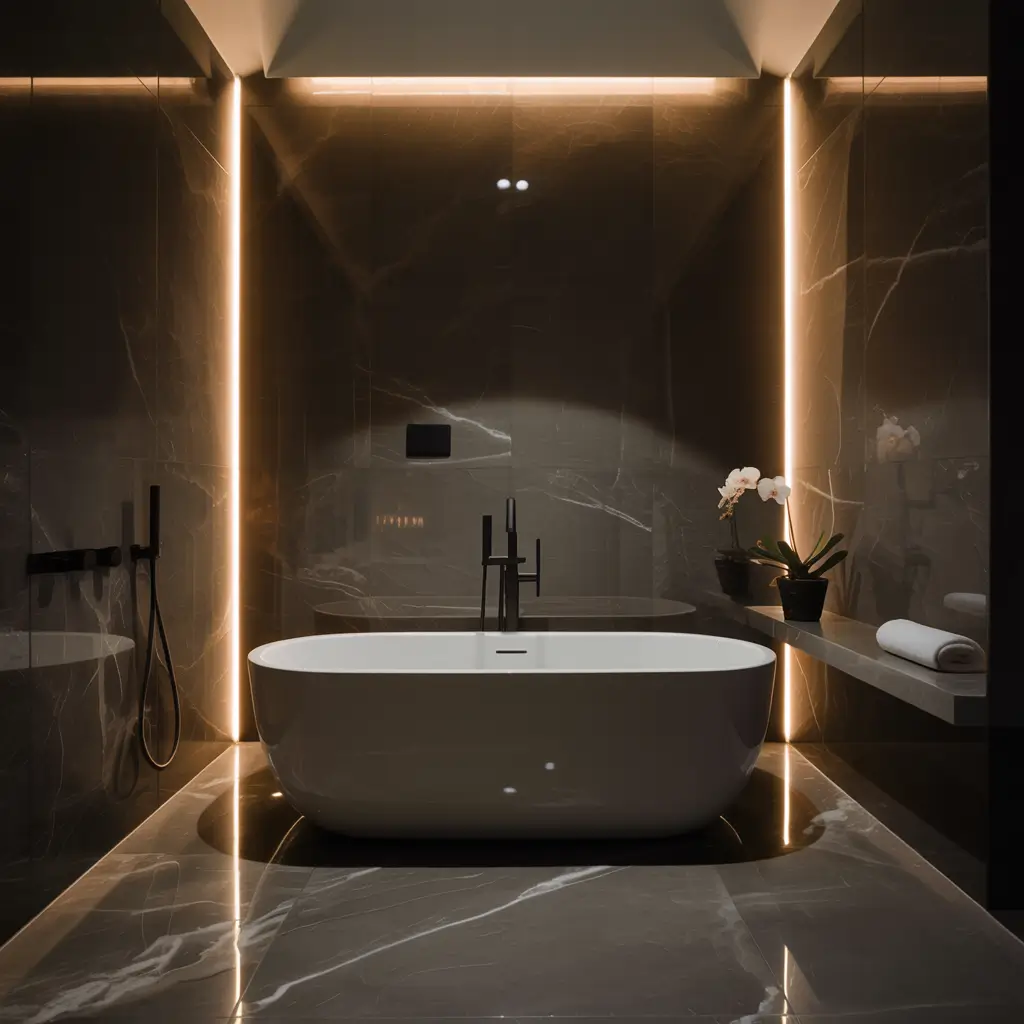
The Moody Luxury Trend
High-end hotels recently discovered that dark marble creates intimacy that white marble can’t touch. The Edition Hotels basically built their entire brand on dark, moody bathrooms that feel like expensive caves.
Dark marble works because it absorbs light rather than reflecting it, creating a cocoon effect. After experiencing a black marble bathroom at the Bulgari Hotel, I finally understood why people have affairs in hotels. The bathroom alone sets a mood.
Dark Marble Success Secrets
Hotels make dark marble work with:
- Double the normal lighting (darkness eats light)
- Metallic accents (gold or brass, never silver)
- Large format pieces (less grout = more drama)
- Warm undertones (brown-black, not blue-black)
- Strategic white elements (prevents cave feeling)
The Maintenance Reality
Here’s what hotels won’t tell you: dark marble shows everything. Water spots, soap scum, dust—all visible immediately. Hotels have daily cleaning staff. You probably don’t. Consider dark porcelain that looks like marble instead. Nobody can tell, and you’ll keep your sanity.
Also Read: 15 Stunning Luxury Spa Bathroom Ideas and Relaxing Home Retreats
10. Chic Vanity with Ambient Glow
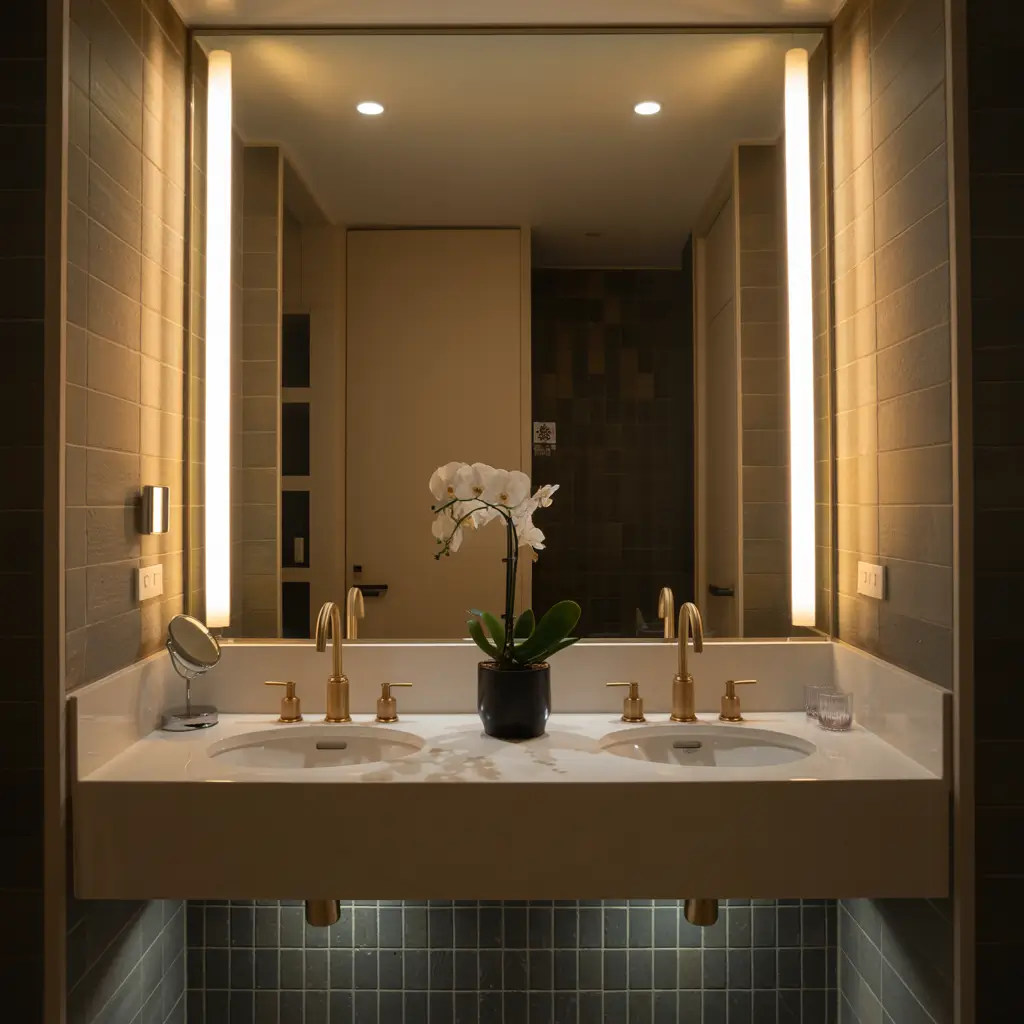
The Instagram-Ready Moment
Hotels design vanities as photo opportunities now. That perfect lighting around mirrors isn’t accidental—it’s calculated for selfies. The Hoxton Hotels mastered this with their backlit mirrors that make everyone look like a movie star.
The ambient glow trend works because it eliminates harsh shadows while creating atmosphere. Hotels achieve this with hidden LED strips, backlit mirrors, and under-vanity lighting. The result? You look amazing, and your bathroom looks expensive.
Creating the Glow Effect
Hotels layer vanity lighting:
- Backlit mirrors (the hero piece)
- Under-cabinet LEDs (floating effect)
- Side-mounted sconces (fill light for face)
- Dimmer controls (essential for ambiance)
- Warm white only (cool light kills the vibe)
Vanity as Furniture
Luxury hotels treat vanities like furniture pieces, not just bathroom fixtures. Custom millwork, furniture legs, and unique materials make vanities feel special. I copied this by adding furniture legs to my basic vanity and suddenly it looked custom.
11. Neutral Tones Serenity Suite
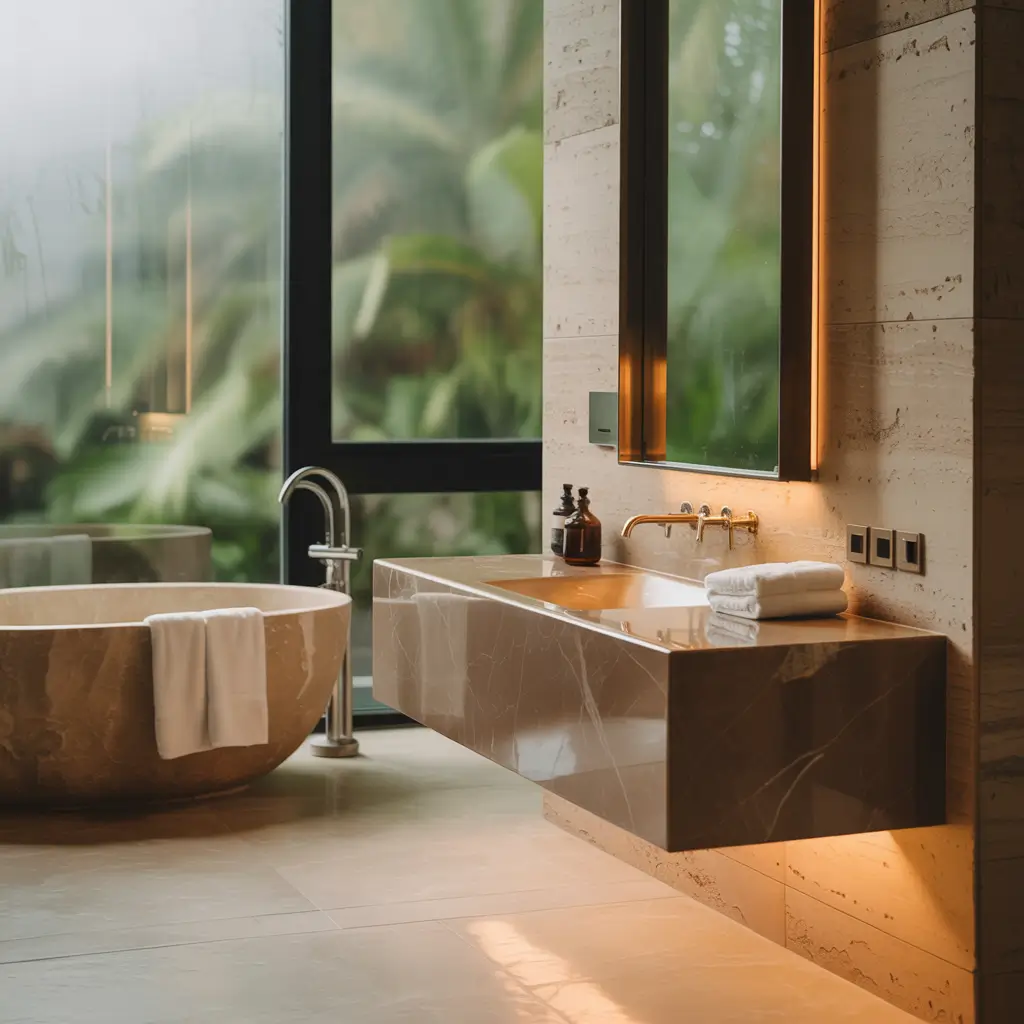
The Failsafe Luxury Palette
Every major hotel chain has a neutral bathroom because neutrals never offend and always photograph well. The Ritz-Carlton built an empire on beige and cream bathrooms that feel expensive regardless of actual cost.
Neutral doesn’t mean boring when hotels do it. They layer different shades, textures, and materials within the neutral family. Warm grey walls, cream marble, taupe towels, and champagne fixtures create depth without color chaos.
The Neutral Layering System
Hotels build neutral palettes like this:
- Base: Warm white or light grey (walls and floors)
- Mid-tone: Beige, taupe, or greige (vanity and accessories)
- Deep tone: Charcoal or chocolate (accents only)
- Metallic: Warm brass or brushed nickel (fixtures)
- Natural: Wood or stone elements (warmth and texture)
Why Neutrals Feel Expensive
Neutral palettes force attention on quality and details rather than color. Hotels know this. Without color distraction, you notice the marble veining, the fixture quality, the textile softness. It’s luxury through subtraction.
12. Art Deco Luxury Bathroom
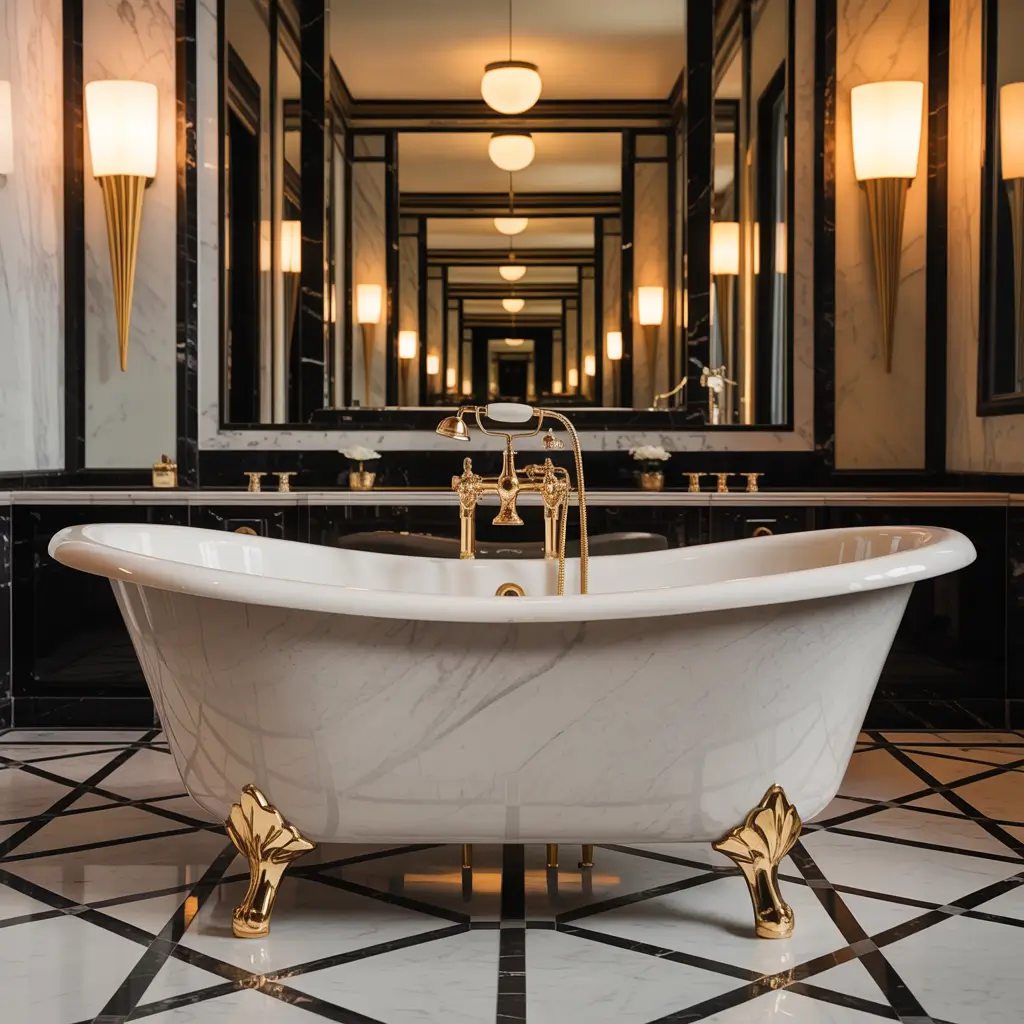
The Gatsby Effect in Modern Hotels
Boutique hotels obsess over Art Deco because it instantly telegraphs luxury through geometry and glamour. The Beaumont in London has Art Deco bathrooms that make you want to drink champagne while brushing your teeth.
Modern hotels interpret Art Deco without going full 1920s museum. They take the best elements—geometric patterns, luxe materials, bold contrasts—and pair them with contemporary functionality.
Art Deco Elements That Work
Hotels cherry-pick these Deco details:
- Geometric floor patterns (black and white hexagons)
- Brass or gold fixtures (always warm metals)
- Fluted or reeded textures (on vanities or walls)
- Fan or sunburst patterns (mirrors or tile designs)
- Bold contrast (black with white, navy with gold)
Making Deco Feel Fresh
The secret to modern Art Deco? Restraint in pattern use. Hotels typically choose one geometric element as the star—usually floors or a feature wall—then keep everything else simple. Too many patterns and you’re in a casino bathroom, not a luxury hotel.
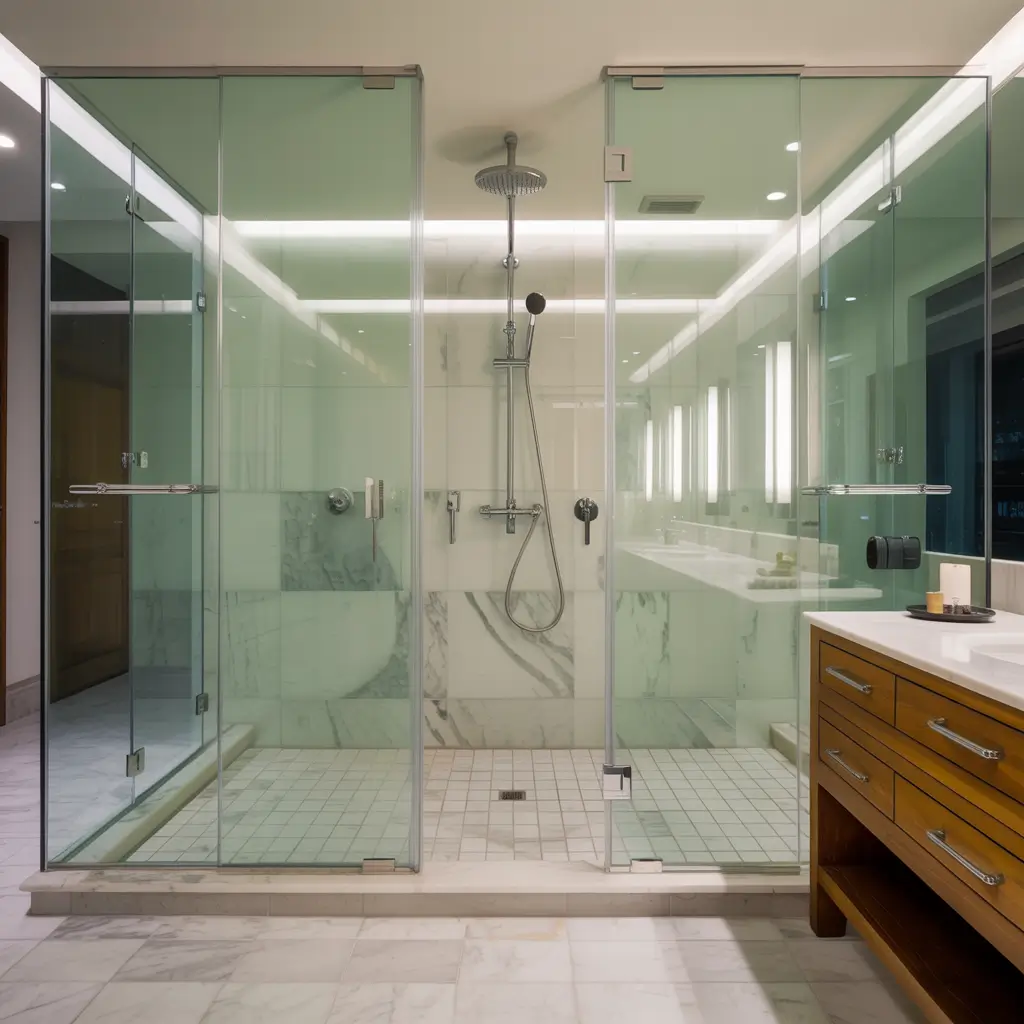
13. Contemporary Glass Shower Retreat
The Invisible Luxury Statement
High-end hotels use frameless glass showers to make bathrooms appear twice their actual size. The Mandarin Oriental perfected this—their showers feel like you’re bathing in an art gallery.
Glass showers work because they remove visual barriers. Your eye travels through the entire space uninterrupted. Hotels amplify this with continuous flooring through the shower, making the room feel massive even when it’s not.
Glass Shower Design Rules
Hotels follow strict glass shower principles:
- Frameless or minimal frames (thick glass, no metal)
- Floor-to-ceiling height (creates vertical drama)
- Clear glass only (frosted looks cheap)
- Linear drains (cleaner than center drains)
- Curbless entry when possible (seamless flow)
The Multi-Head Experience
Luxury hotels never install just one showerhead. The standard is rainfall plus handheld plus body jets. Seems excessive until you experience it. I installed a rainfall and handheld combo—couldn’t afford body jets—but even that transformed my shower experience completely.
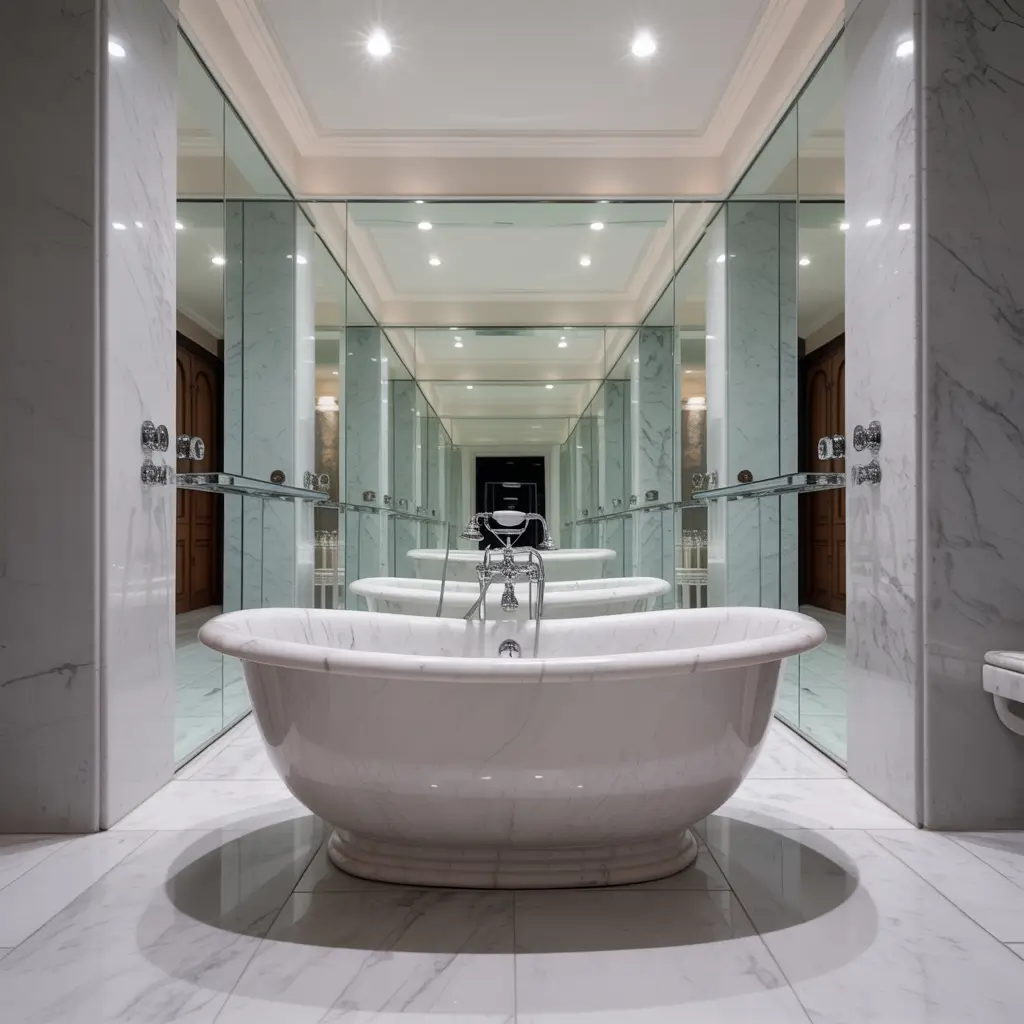
14. Classic White Marble Elegance
The Forever Trend That Never Fails
White marble remains the hotel industry’s favorite because it’s luxury that transcends trends. The Plaza, The Savoy, The Peninsula—all their signature suites feature white marble bathrooms that haven’t been renovated in decades yet still look perfect.
Hotels know white marble’s secret power: it makes everything else look more expensive. Cheap fixtures look premium against white marble. Basic towels look luxurious. Even hotel shampoo bottles look fancy sitting on white marble.
White Marble Hierarchy
Hotels categorize white marble by drama level:
- Calacatta (dramatic veining, ultimate luxury)
- Statuario (bold patterns, high impact)
- Carrara (subtle veining, timeless elegance)
- Thassos (pure white, minimal veining)
Keeping It Interesting
All-white risks looking sterile, so hotels add:
- Contrasting grout (grey or black for definition)
- Mixed marble types (creates visual layers)
- Different finishes (polished and honed)
- Metal accents (breaks up the white)
- Texture variation (subway tiles with hexagon floors)
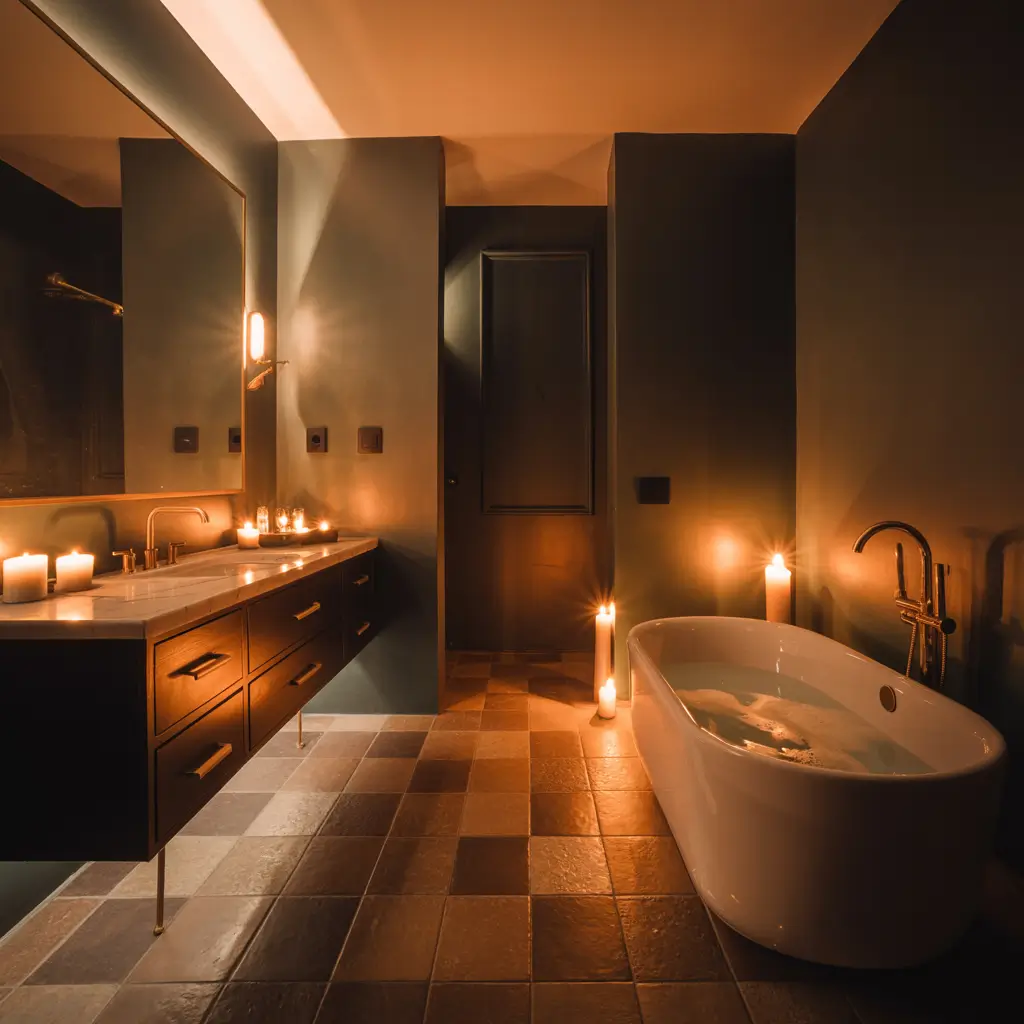
15. Moody Luxe Bathroom with Gold Fixtures
The Dark Romance Hotels Love
Boutique hotels discovered that moody bathrooms with gold fixtures create an intimate luxury that bright bathrooms can’t match. The NoMad Hotels built their entire aesthetic on this combination, and now everyone’s copying them.
The magic happens when dark walls make gold fixtures pop like jewelry against velvet. It’s dramatic without trying too hard, luxurious without screaming about it. After experiencing this at a boutique hotel in Paris, I immediately painted my powder room dark green and added brass fixtures. Game changer.
The Moody Color Palette
Hotels stick to these moody hues:
- Deep emerald or forest green (rich but not overwhelming)
- Navy or midnight blue (sophisticated and calming)
- Charcoal grey (safe but still dramatic)
- Deep plum or burgundy (unexpected luxury)
- Black (when you’re fully committed)
Gold Fixture Placement Strategy
Hotels never randomly place gold in moody bathrooms:
- Faucets and shower fixtures (the stars of the show)
- Mirror frames (creates focal point)
- Light fixtures (warm glow enhancement)
- Cabinet hardware (ties everything together)
- Small accessories (soap dispensers, towel bars)
IMO, the key is using brushed or antique gold, never shiny gold. Shiny looks cheap against dark colors. Brushed gold looks like it belongs there, like it’s always been there, like it costs more than your car :/
Final Thoughts
After studying hotel bathrooms obsessively (and spending way too much money “researching” them), here’s what I know for sure: hotel bathroom luxury isn’t about spending millions—it’s about understanding the psychology of luxury.
Hotels create experiences, not just bathrooms. Every choice, from marble selection to lighting temperature, serves the goal of making guests feel pampered.
You can absolutely steal these strategies for your own bathroom, regardless of budget.
Start with one hotel-inspired element. Maybe it’s switching to warm lighting, adding a single piece of marble, or investing in fluffy white towels.
Once you experience that hotel feeling at home, you’ll want more. Trust me, it’s addictive.
The best part about hotel-inspired bathroom design? It never goes out of style. These ideas work because they tap into timeless luxury principles—quality materials, thoughtful lighting, and intentional design.
Your bathroom might not have a city view or daily housekeeping, but it can absolutely make you feel like you’re living in a five-star suite.
Now if you’ll excuse me, I need to go light some candles and pretend my bathroom is at the Four Seasons. Because sometimes, that’s all the vacation we need 🙂