10 Cozy French Farmhouse Living Room Ideas for Relaxed Comfort
- Living Room Decor
 Ben
Ben- 0
- 34 minutes read
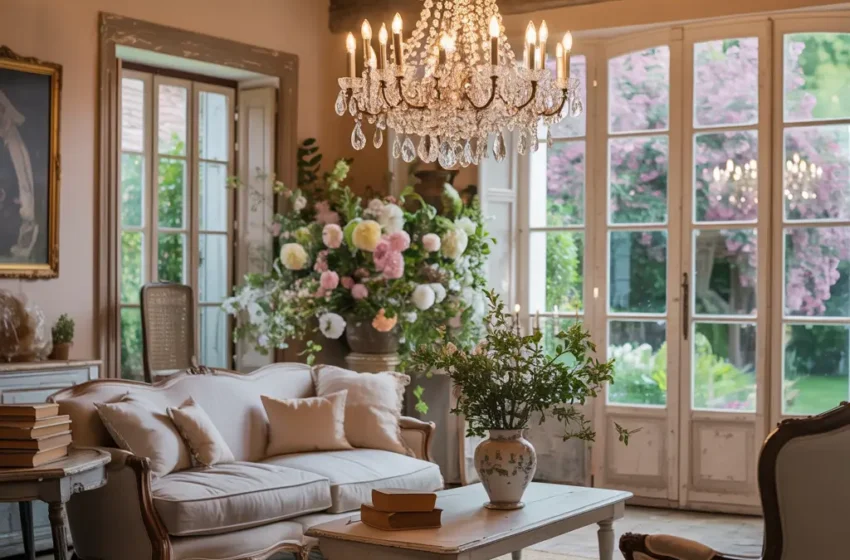
Remember that scene in every French movie where the protagonist walks into a sun-drenched living room with worn wooden beams, soft linens, and somehow everything looks effortlessly perfect?
Yeah, I spent three years trying to recreate that vibe in my suburban split-level, and let me tell you – I made every mistake possible before finally cracking the code.
French farmhouse style hits different than its American cousin. While American farmhouse screams “shiplap and mason jars,” French farmhouse whispers “centuries-old château meets countryside comfort.”
After countless trips to antique markets, paint samples that nearly divorced me, and one very expensive chandelier mistake (we’ll get to that), I’ve figured out what actually works.
Rustic French Linen Sofa Corner
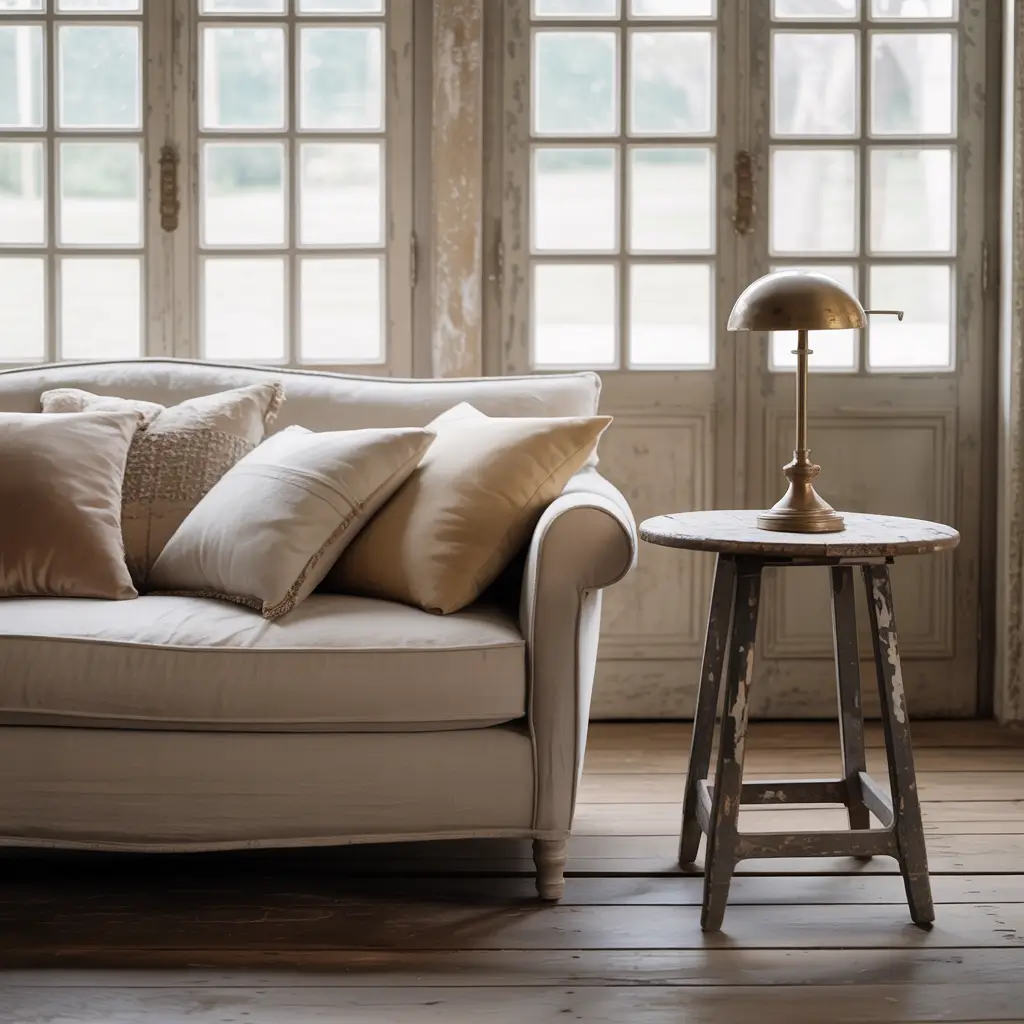
The cornerstone of any French farmhouse living room starts with getting your sofa situation right. And nothing – I mean nothing – says French farmhouse quite like a linen-covered sofa that looks like it’s been hosting wine-soaked conversations for decades. The trick isn’t finding the perfect sofa; it’s making any sofa look perfectly imperfect.
I learned this lesson after dropping serious cash on a “French country” sofa that looked more Vegas hotel than Versailles. The solution? Slipcovers in natural, rumpled linen. Choose colors like oatmeal, soft gray, or that perfect shade of white that’s not quite white – the French call it “blanc cassé.” The beauty of linen is that it’s supposed to look wrinkled. Finally, a style that celebrates my inability to iron!
Creating that authentic corner means thinking beyond just the sofa. Layer in mismatched throw pillows – and I mean really mismatched. Mix vintage grain sack pillows with faded toile, add a velvet cushion in dusty rose, throw in some ticking stripe. The French don’t do matchy-matchy, and thank goodness for that.
The Art of Strategic Dishevelment
Here’s what makes a French sofa corner actually work:
- Throws casually draped (not perfectly folded) over the arm
- A worn leather pouf or ottoman nearby for feet or extra seating
- An antique side table that’s slightly too small for the space
- A stack of French books nobody can actually read but look fantastic
Position your sofa at a slight angle if possible. French rooms rarely have furniture pushed against walls like we’re preparing for a dance-off. Float that sofa, add a console table behind it with a lamp and some lavender, and suddenly you’re living in a Provence postcard.
Vintage Gilded Mirror Mantel
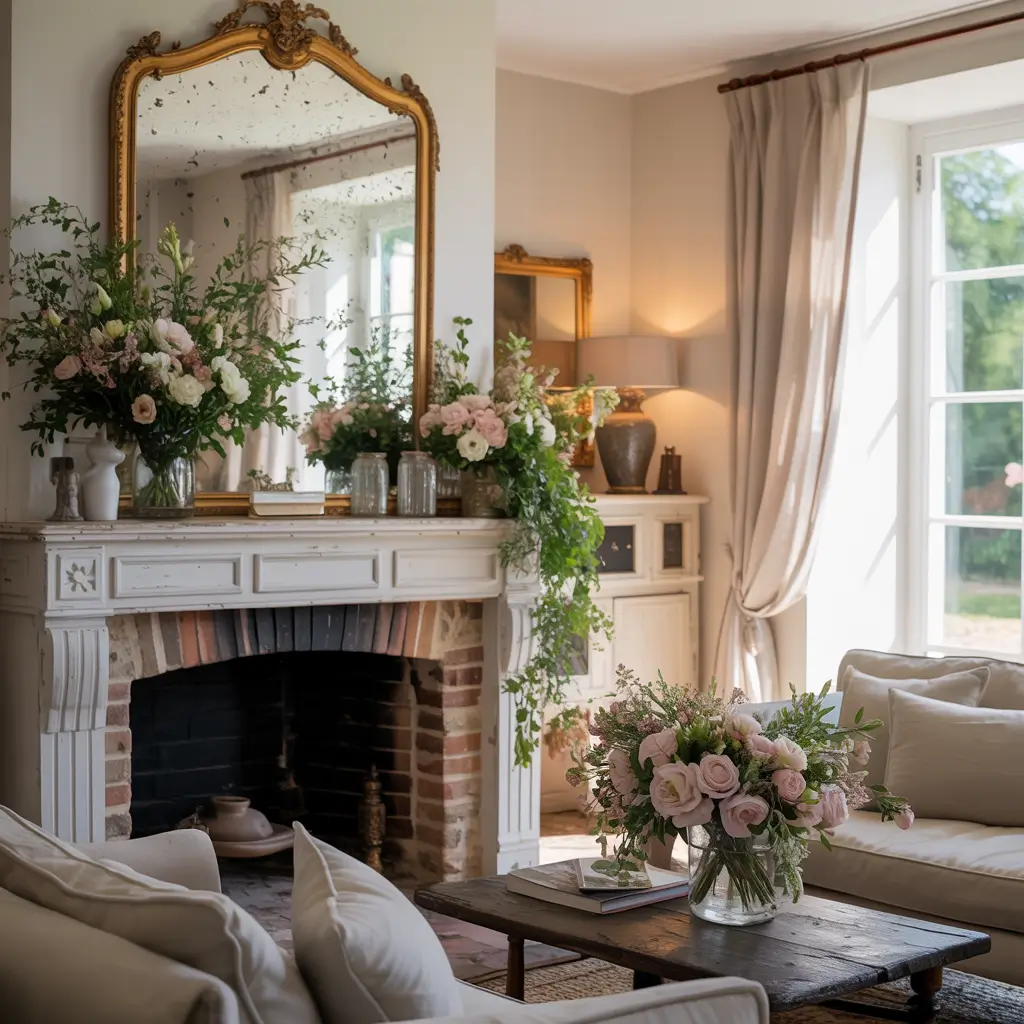
Want to know the fastest way to make any room feel French? Stick a massive gilded mirror above your mantel. But here’s the thing – it needs to look like Napoleon himself might have checked his hair in it, not like you bought it from HomeGoods last Tuesday.
The hunt for the perfect mirror took me to every estate sale within a 50-mile radius. Finally found mine at an antique shop in the sketchy part of town – ornate gold frame, slightly tarnished, with those age spots that you literally can’t fake. Cost me less than a new mirror from Pottery Barn, and it has actual character.
The key to French mantel styling is calculated chaos. Americans tend to center everything perfectly – one mirror, two matching candlesticks, done. The French? They lean artwork against the mirror, add mismatched candlesticks at different heights, tuck in some dried lavender, maybe prop up an old clock that doesn’t work.
Mastering the Mantel Game
Essential elements for that French mantel magic:
- Layered artwork – lean smaller pieces against the mirror
- Varying heights – mix tall candlesticks with short vases
- Natural elements – dried flowers, olive branches, or lavender
- Antique finds – old books, vintage clocks, or ceramic pieces
Don’t polish that gilded frame to perfection either. The tarnish, the chips, the places where gold leaf has worn away – that’s what the French call “patina,” and we call “I don’t have to fix it.” 🙂
Aged Oak Coffee Table Setting
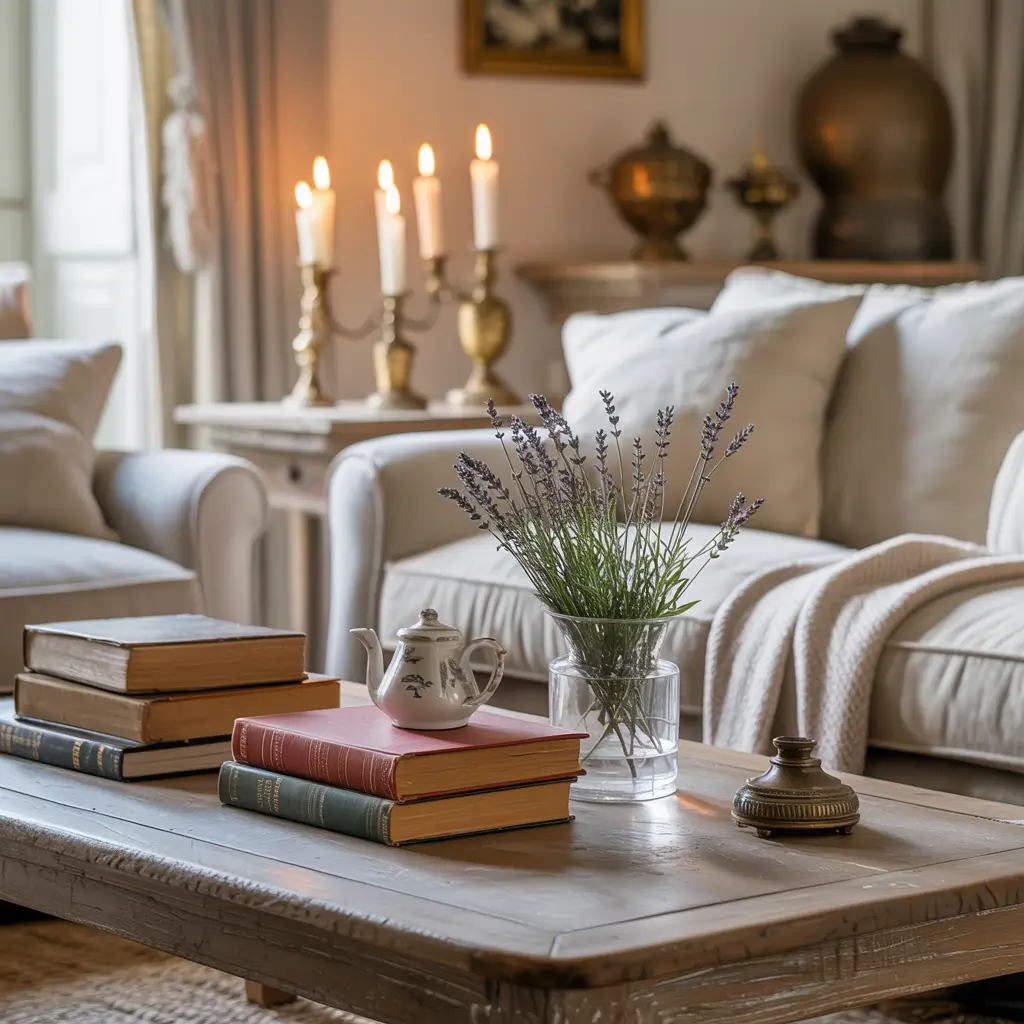
Every French farmhouse living room needs a coffee table that looks like it’s been in the family since the Revolution. Aged oak is the gold standard – that beautiful gray-brown wood that’s been weathered by centuries of wine spills and coffee rings.
My first attempt involved trying to distress a brand-new oak table. Three different tutorials, two types of stain, and one very patient husband later, it still looked like a new table that had been attacked. Finally bit the bullet and found an actual antique farm table at an estate sale. Cut the legs down myself (terrifying but worth it), and now I have a coffee table with authentic character.
The French approach to coffee table styling breaks every American rule. Forget the decorative tray with carefully arranged objects. Instead, think beautiful chaos – a stack of art books, a bowl of fresh pears, yesterday’s newspaper, a half-burned candle, fresh flowers in a mason jar (yes, they use them too, but differently).
Coffee Table Styling That Actually Looks Lived-In
What belongs on a French farmhouse coffee table:
- Oversized art or photography books (bonus points if they’re actually French)
- Fresh flowers in simple vessels – no fancy arrangements
- Antique wooden bowls filled with anything or nothing
- Candlesticks of varying heights and materials
Leave some empty space too. Americans tend to fill every surface, but French style appreciates breathing room. Your coffee table should look like someone just cleared a spot for their wine glass, not like a catalog photo shoot.
Also Read: 10 Charming Warm Farmhouse Living Room Ideas for Rustic Style
French Blue Accent Armchairs

Can we talk about French blue for a second? It’s not navy, not baby blue, but that perfect dusty, gray-blue that makes you think of Provence shutters and vintage Peugeots. Adding French blue armchairs to your living room instantly elevates the entire space from “farmhouse” to “French farmhouse.”
I searched for months for the right chairs before finding a pair of Louis XV reproductions on Facebook Marketplace. The seller thought they were “outdated” – her loss, my gain. Had them reupholstered in a faded French blue linen (cost more than the chairs themselves, but so worth it), and they became instant conversation starters.
The placement of these chairs matters more than you’d think. Don’t push them against walls or create a stiff conversation area. Angle them slightly toward each other, add a small side table between them, maybe a footstool nearby. Create a vignette that says “let’s discuss philosophy over wine” not “waiting room.”
Making Blue Work Without Looking Nautical
Keys to nailing French blue accents:
- Choose muted, grayed blues over bright or pure blues
- Mix blue with warm neutrals like cream, beige, and natural wood
- Add pattern through toile or ticking in similar blue tones
- Balance with warm metals like brass or gold, not silver
The biggest mistake people make? Going too matchy with their blues. Mix different shades and patterns – a solid chair with a toile pillow, or a striped chair with a floral throw. The French mastered the art of coordination without matching.
Distressed Whitewashed Fireplace
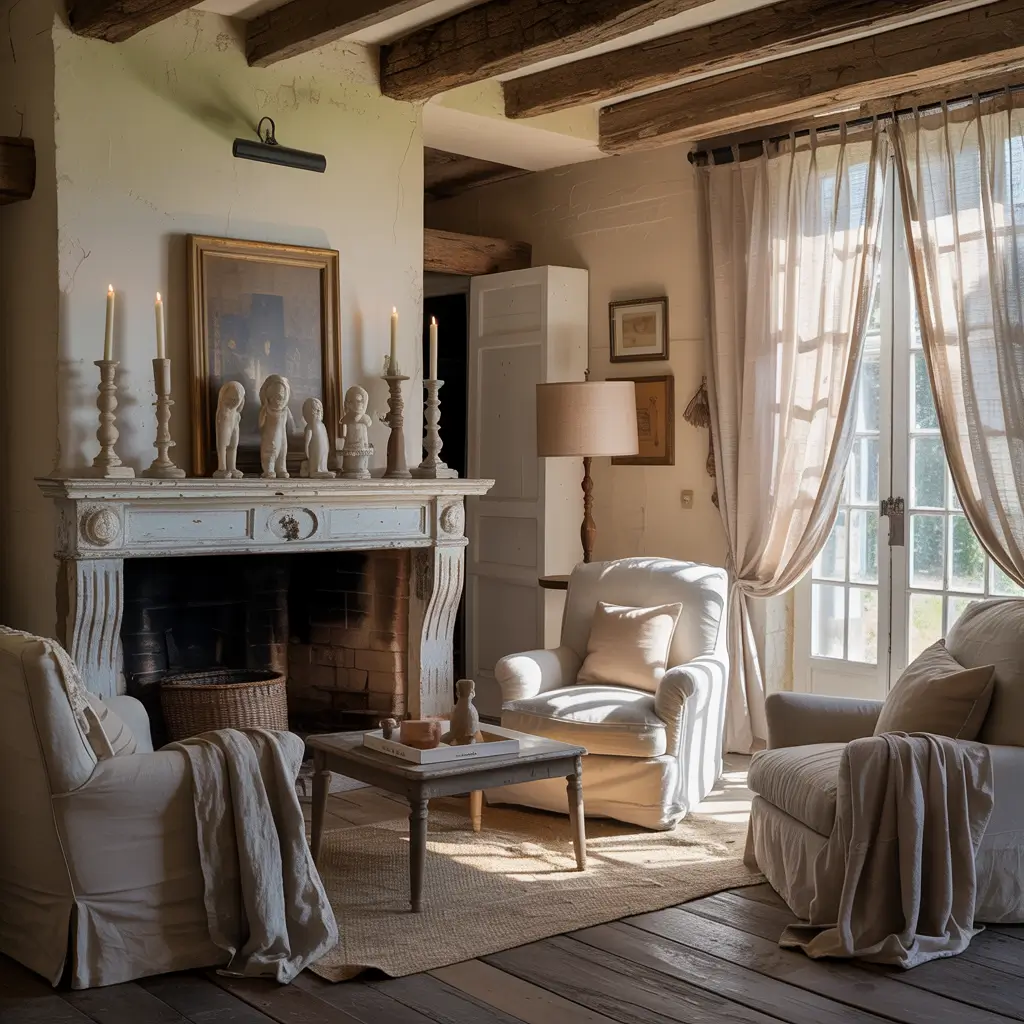
A whitewashed fireplace might seem basic, but done the French way, it becomes the room’s focal point. The difference between American and French whitewashing? Americans want it perfect and uniform. The French want it to look like it’s been there since Marie Antoinette was choosing cake.
My fireplace journey started with traditional red brick that screamed “1990s builder grade.” First attempt at whitewashing looked like I’d had a paint accident. The secret? German schmear technique with multiple layers, letting some brick show through completely. It should look weathered, not painted.
The French also treat their fireplace differently than we do. While Americans often mount TVs above them (guilty), the French see the fireplace as sacred architectural space. Layer artwork on the mantel, add iron fireplace tools that look properly ancient, maybe prop a mirror inside during summer months.
Fireplace Styling That Feels Authentic
Essential elements for French fireplace appeal:
- Exposed brick patches showing through the whitewash
- Aged iron accessories – tools, screens, andirons
- Simple mantel decor that changes seasonally
- Stacked firewood in a worn basket nearby (even if you never burn it)
Don’t forget the hearth itself. A piece of aged stone or worn wood as a hearth extension adds that authentic touch. I used reclaimed barn wood, and it looks like it’s been catching embers for centuries.
Elegant Crystal Chandelier Glow
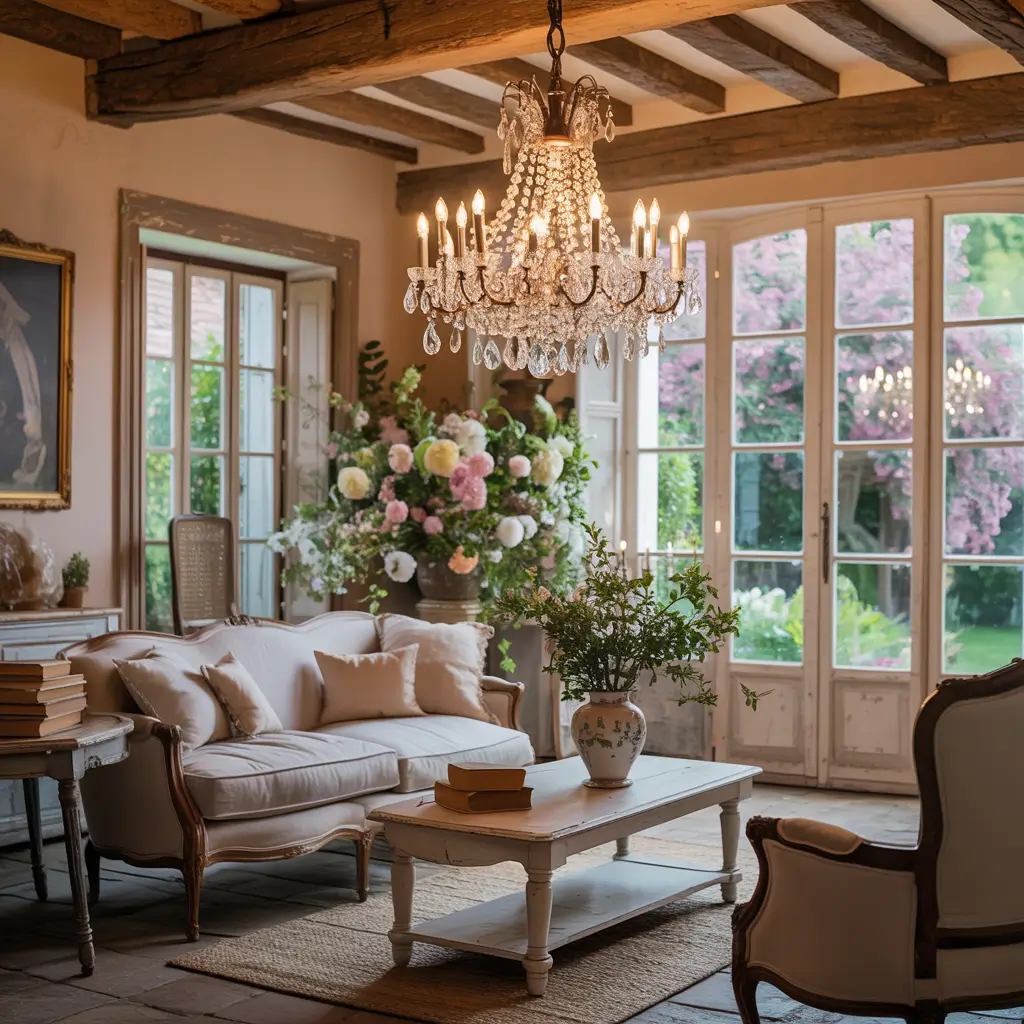
Nothing says French quite like a crystal chandelier, but hear me out before you run away. We’re not talking about the formal dining room chandelier your grandmother polished weekly. French farmhouse chandeliers mix elegance with rusticity – think crystal drops on iron arms, or aged brass with just a few hanging prisms.
My chandelier disaster involved buying a massive, shiny crystal fixture that looked like it belonged in a rap video, not a farmhouse. Returned it (barely) and found a perfect vintage piece at an architectural salvage yard – tarnished brass, missing a few crystals, absolutely perfect. The imperfections make it feel authentic rather than trying too hard.
Installation height makes or breaks a chandelier. Americans hang them too high. The French hang them lower, creating intimate pools of light. In a living room, aim for about 7 feet from floor to bottom – low enough to make a statement, high enough that tall guests won’t concuss themselves.
Chandelier Choosing Without the Cringe
What makes a chandelier French farmhouse appropriate:
- Aged metal finishes – brass, bronze, or painted iron
- Mix of materials – crystal with wood, iron with beads
- Appropriate scale – big enough to matter, not so big it’s comical
- Warm bulbs – always warm white, never cool
Add dimmer switches immediately. French lighting is all about ambiance, and nothing kills ambiance faster than blazing overhead light. Layer your chandelier with table lamps and sconces for that perfect evening glow.
Also Read: 10 Trendy Moody Farmhouse Living Room Ideas and Luxe Details
Cozy French Cottage Window Nook
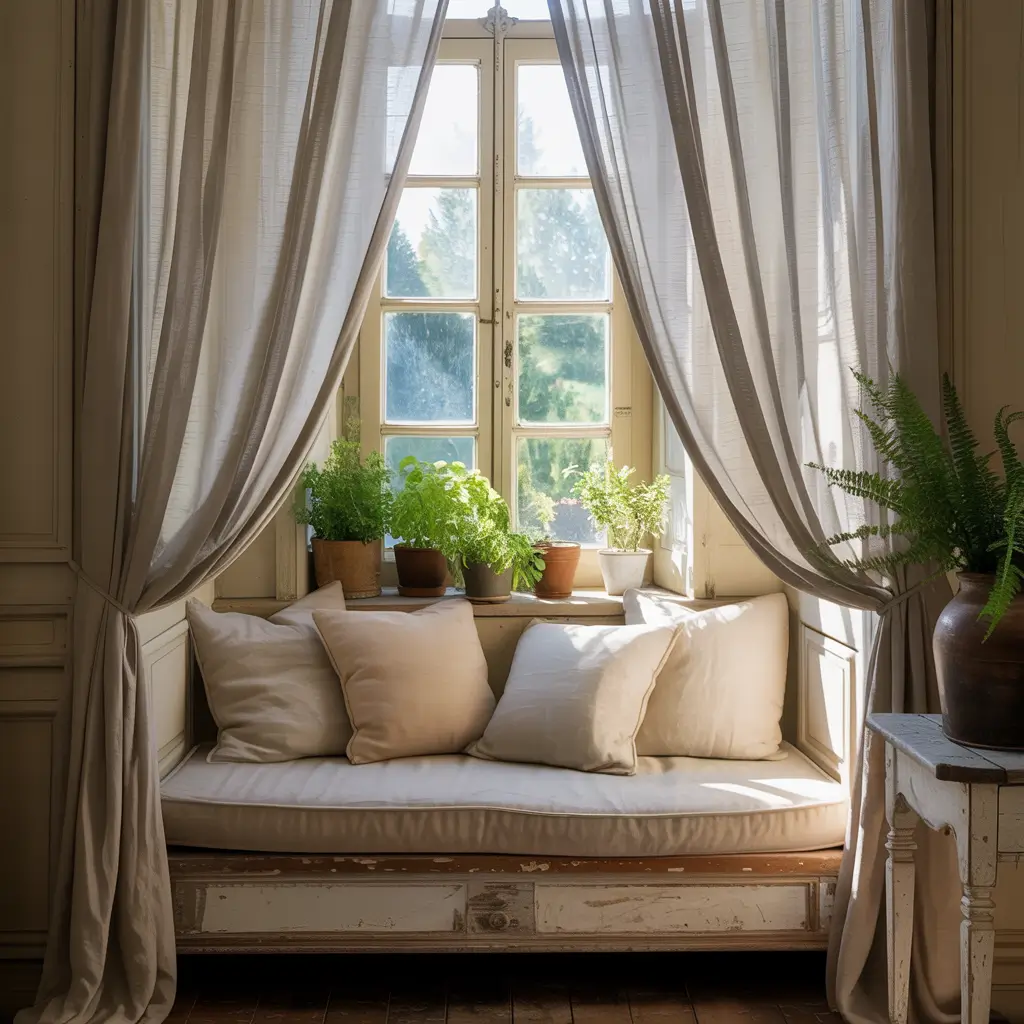
Every French living room needs a spot that makes people say, “I could read there for hours.” Creating a window nook doesn’t require a built-in window seat (though if you have one, lucky you). It’s about making any window area feel like a deliberate retreat.
I transformed a boring window corner with a vintage settee I found at an estate sale, positioned at an angle to catch morning light. Added layers of pillows in faded florals and stripes, a soft throw, and a wonky little side table for coffee. Now everyone fights over that spot.
The French approach windows differently than Americans. While we often go for heavy drapes or pristine blinds, French windows feature simple linen curtains that filter light without blocking it. They puddle on the floor because who has time for hemming? They’re often sheer because privacy is less important than light.
Window Nook Essentials
Creating that perfect French reading corner:
- Comfortable seating that’s slightly too small for the space
- Soft textiles in natural fibers – linen, cotton, wool
- Good reading light – a vintage floor lamp or wall sconce
- Small side table for books and beverages
- Something living – a potted plant or fresh flowers
Don’t overthink the styling. Stack some books on the floor, leave a throw casually draped, maybe add a footstool that doesn’t quite match. The goal is “someone just stepped away” not “styled for Instagram.”
Antique Trunk Coffee Table
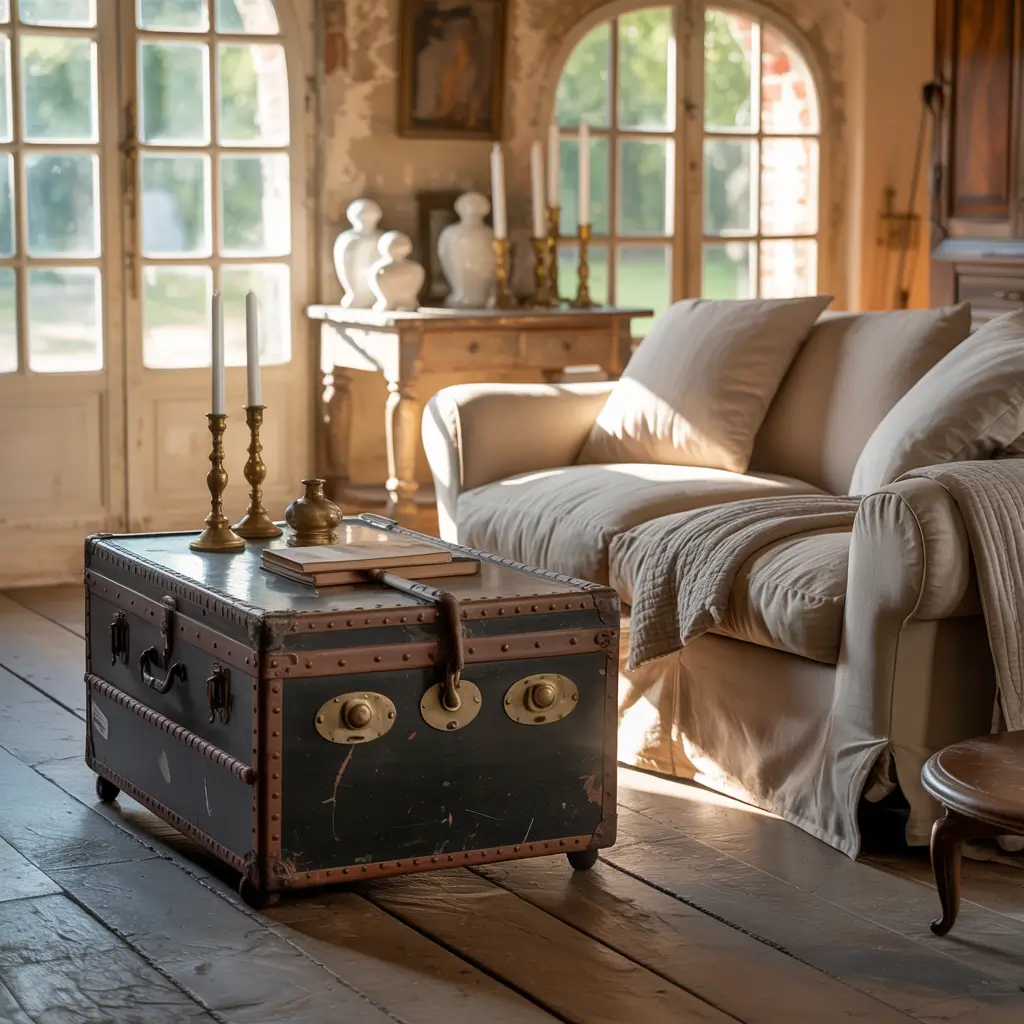
Using an antique trunk as a coffee table might seem cliché, but the French have been doing it since before Pinterest existed. The difference? They use actual antique trunks with actual history, not the mass-produced “vintage-inspired” versions from big box stores.
Found mine at a flea market – a battered Louis Vuitton from the 1920s (not the fancy kind, the kind actually used for travel). The leather is cracked, the hardware is tarnished, and it’s perfect. Cost less than a new coffee table from West Elm, and it actually stores all my throw blankets.
The beauty of trunk coffee tables is their functionality meets style approach. They provide storage in small spaces, add height variation to your seating area, and immediately add character. Plus, everyone wants to know what’s inside (usually disappointingly practical things like extra pillows).
Trunk Styling That Doesn’t Scream “College Dorm”
Making a trunk coffee table sophisticated:
- Choose authentic vintage pieces with genuine patina
- Style the top sparingly – a tray, some books, fresh flowers
- Don’t overfill the inside – it should close properly
- Mix with other antique pieces so it doesn’t stand alone
- Add a large tray on top to create a stable surface for drinks
Position your trunk slightly off-center from your sofa. The French rarely center anything perfectly. It should look like it was placed there temporarily a hundred years ago and nobody bothered to move it.
Soft Neutral Layered Textures
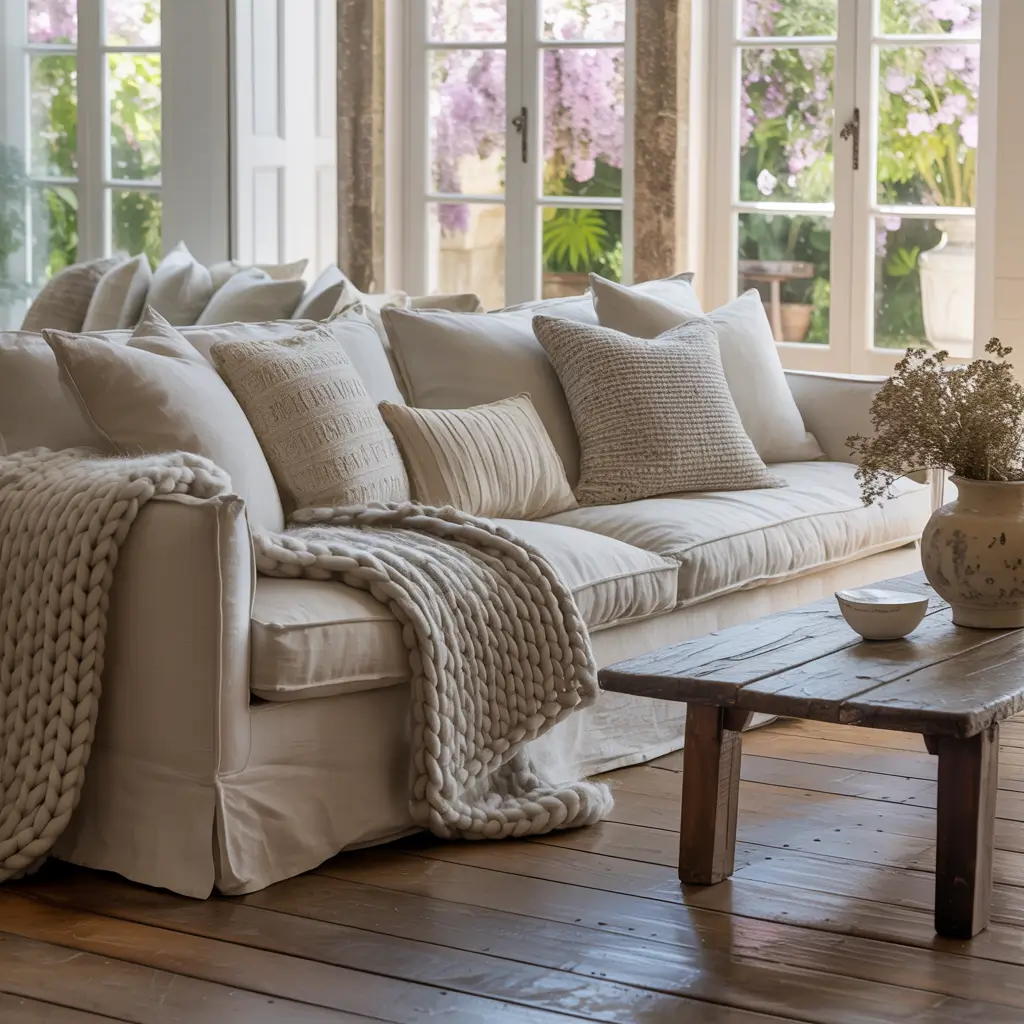
The French mastered texture layering long before it became a design trend. Their secret? Multiple textures in similar tones create depth without chaos. Think of it as a monochromatic symphony where every instrument plays a slightly different note.
My living room has seven different shades of cream and beige (my husband calls it “fifty shades of beige” but whatever). The sofa is natural linen, curtains are gauzy cotton, throw pillows mix velvet and grain sack, the rug is worn wool, and throws include everything from chunky knit to smooth cashmere.
The key is choosing textures that tell a story together. Rough with smooth, matte with slight sheen, heavy with light. But keep the color palette tight – varying more than three shades starts looking confused rather than sophisticated.
Texture Combinations That Always Work
French-approved texture mixing:
- Linen + velvet – casual meets luxury
- Rough wood + smooth stone – natural elements at play
- Worn leather + soft wool – masculine meets feminine
- Matte cotton + subtle silk – everyday meets special
FYI, this is where those expensive-looking rooms get their magic. You could have all IKEA furniture, but with the right textile layering, it’ll look like you inherited everything from your French grandmother.
Also Read: 10 Stylish Farmhouse Living Room Curtains Ideas for Warm Interiors
French Country Floral Arrangement Space
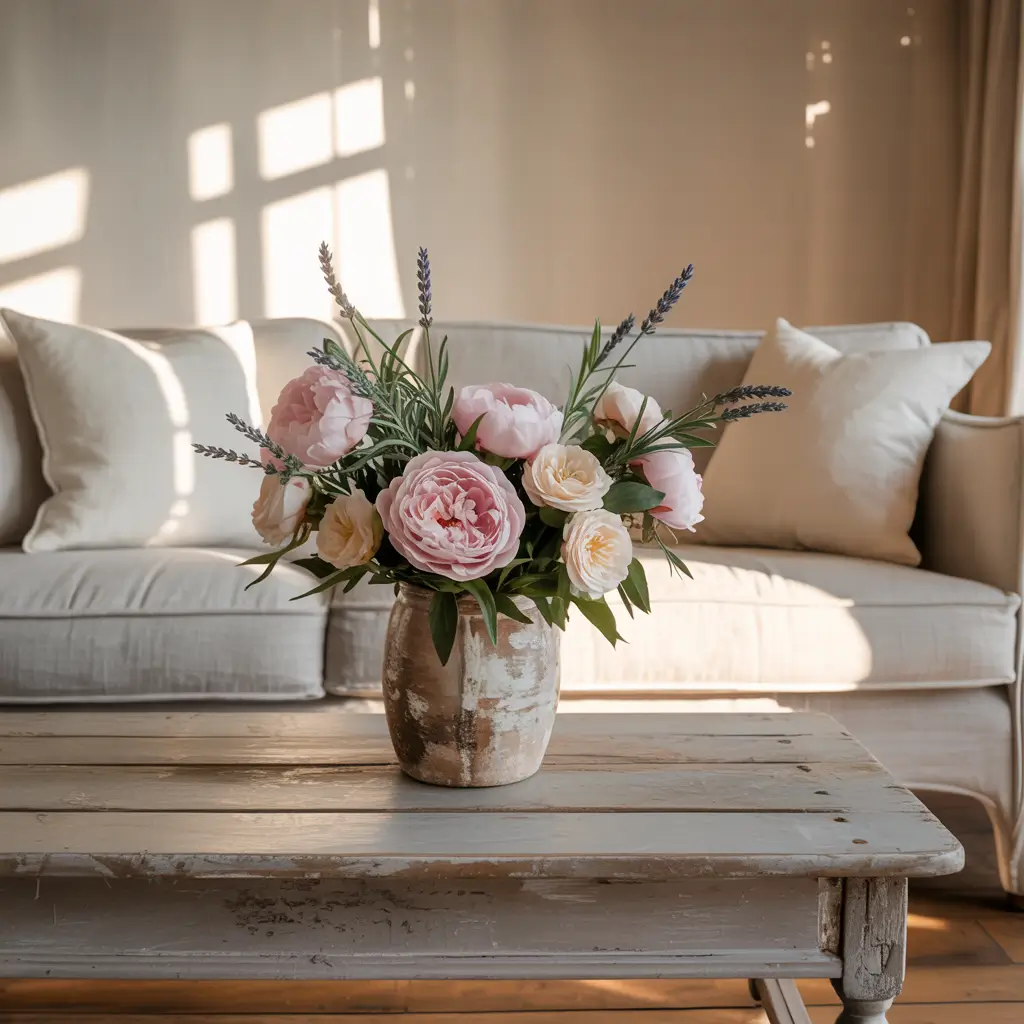
The French relationship with flowers differs completely from American flower culture. While we go for perfect, dome-shaped arrangements, the French prefer flowers that look just picked from the garden – even if that garden is the grocery store parking lot.
My flower philosophy changed after visiting a French friend’s apartment. She literally stuffed market flowers into random vessels – a pitcher here, a jam jar there, an old wine bottle on the mantel. No foam, no rules, no “design.” Just flowers being flowers. Revolutionary.
Creating dedicated space for floral arrangements doesn’t mean a specific flower table. It means having vessels ready throughout the room – that empty pitcher on the bookshelf, the vintage bottles on the mantel, the ironstone jug on the coffee table. When you bring flowers home, you have options.
Floral Arrangements the French Way
Master the art of French flower arranging:
- Mix different flowers like you’re grabbing from a garden
- Use unexpected vessels – teapots, water glasses, medicine bottles
- Keep stems different lengths for natural movement
- Include greenery and herbs – rosemary, lavender, olive branches
- Place arrangements at different heights throughout the room
Never apologize for dying flowers either. The French appreciate flowers in all stages, including that romantic droop before they’re completely gone. Americans toss flowers at the first brown edge; the French see it as part of the flower’s story.
Pulling It All Together
After years of trying to nail French farmhouse style, here’s what I’ve learned: stop trying so hard. The French don’t agonize over perfect placement or matching sets.
They inherit a chair, find a mirror at a flea market, repurpose their grandmother’s trunk, and somehow it all works.
The real secret isn’t about buying the right things – it’s about choosing pieces with history and character, then letting them live together naturally. Mix high and low, new and vintage, perfect and imperfect.
Let things look lived-in because, guess what? You actually live there.
Start with one element that speaks to you. Maybe it’s that gilded mirror you’ve been eyeing, or finally painting your fireplace, or just adding some French blue pillows to your current setup.
Build slowly, choose thoughtfully, and don’t stress about rules. The best French farmhouse living rooms look like they evolved over generations, not like they were decorated last weekend.
Remember, the French have a phrase “je ne sais quoi” – literally “I don’t know what” – that perfectly captures their design aesthetic. It’s that indefinable something that makes a space feel special. You can’t buy it, plan it, or force it.
But when you stop trying so hard and start trusting your instincts, that’s usually when the magic happens. And if all else fails, add more flowers and open a bottle of wine. That’s very French too. 😉