
12 Inspiring Oak Bathroom Vanity Ideas and Luxury Touches
- Bathroom Design
 Ben
Ben- 0
- 39 minutes read
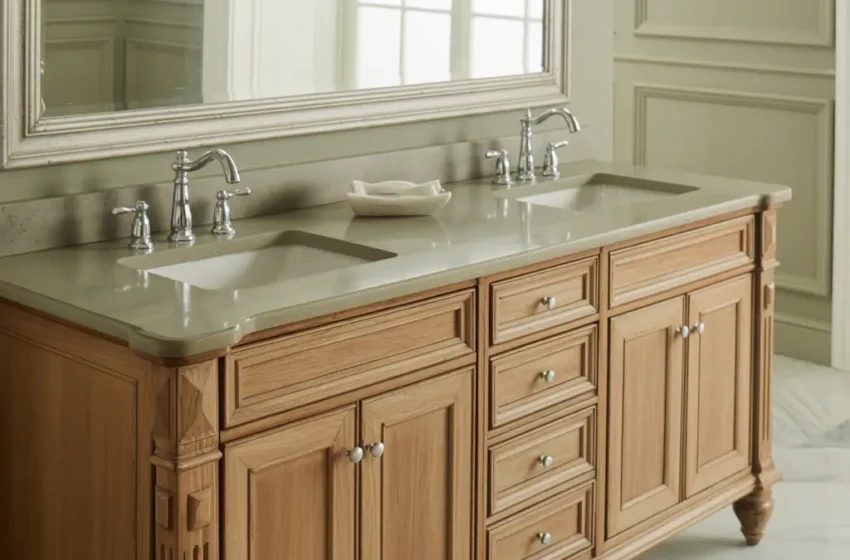
Oak vanities are like that reliable friend who never lets you down – sturdy, good-looking, and always there when you need them.
After installing oak vanities in four different bathrooms over the past decade (and helping countless friends choose theirs), I’ve become somewhat of an oak evangelist.
Why? Because oak delivers everything you want in a bathroom vanity – durability, beauty, and versatility – without the premium price tag of exotic woods.
I remember standing in my first house’s bathroom, staring at the dated laminate vanity that needed to go. When I discovered oak’s natural water resistance and saw how that gorgeous grain pattern could transform a space, I was sold.
These 12 oak bathroom vanity ideas showcase exactly why oak remains the undisputed champion of bathroom woods.
1. Rustic Oak Vanity with Farmhouse Charm
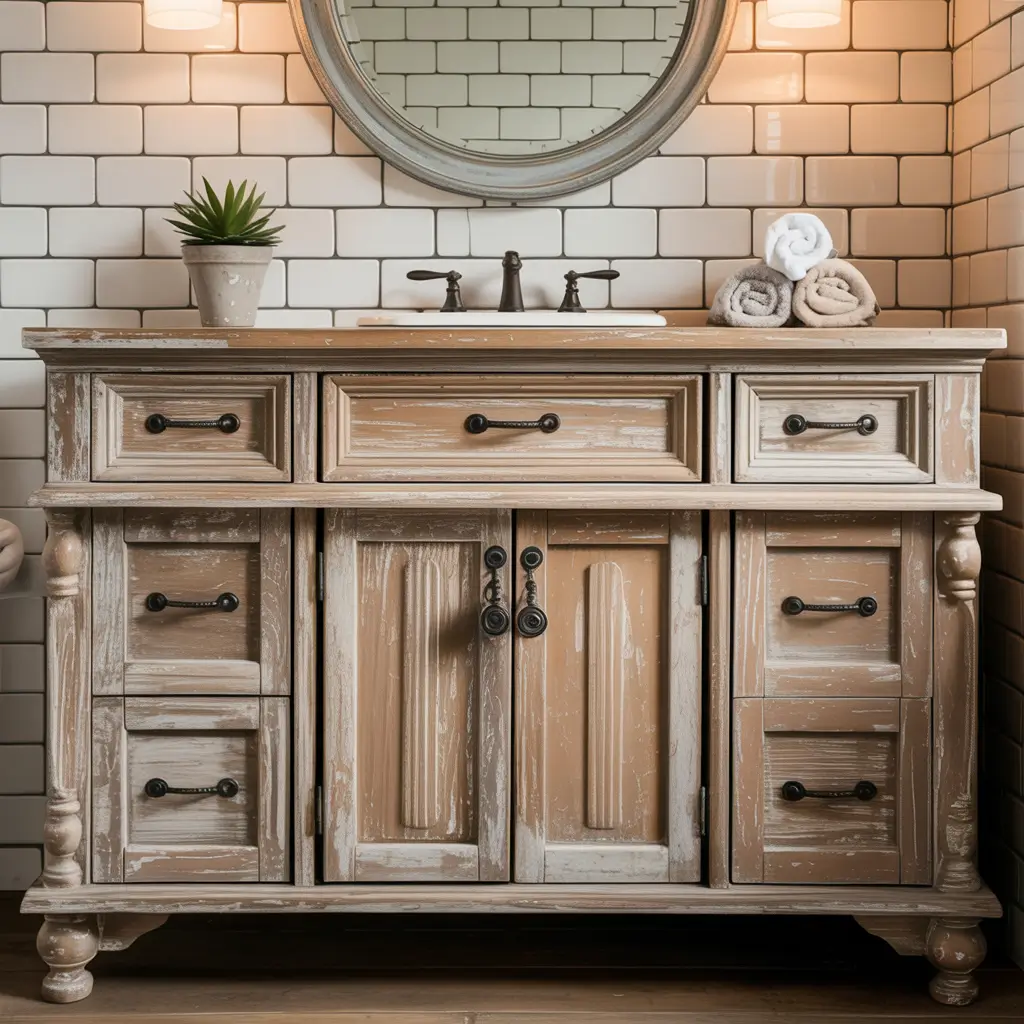
Bringing the Barn to Your Bathroom
Rustic oak vanities nail that farmhouse aesthetic everyone’s obsessing over. The natural grain patterns and knots in oak create authentic country charm without trying too hard. My sister’s bathroom features a rustic oak vanity with visible grain and natural imperfections, and honestly? It looks like something from a high-end design magazine.
The beauty of rustic oak lies in its imperfections. Those knots, grain variations, and natural color changes aren’t flaws – they’re character. I love how morning light catches the different grain patterns, creating this ever-changing natural artwork on the vanity surface.
Essential Farmhouse Elements
Features that define rustic oak vanities:
- Distressed or weathered finish showing grain texture
- Natural knots and grain variations left visible
- Chunky, substantial construction
- Open bottom shelving for basket storage
- Apron-front or shiplap panel details
- Black iron or oil-rubbed bronze hardware
- Natural or lightly stained finishes
Making Rustic Work in Modern Homes
You don’t need an actual farmhouse to rock this style. I paired my rustic oak vanity with modern hexagon tiles and sleek fixtures – the contrast creates this perfect balance between old and new. The trick is letting the oak be the star while keeping other elements simple and contemporary.
2. Modern Minimalist Oak Bathroom Vanity
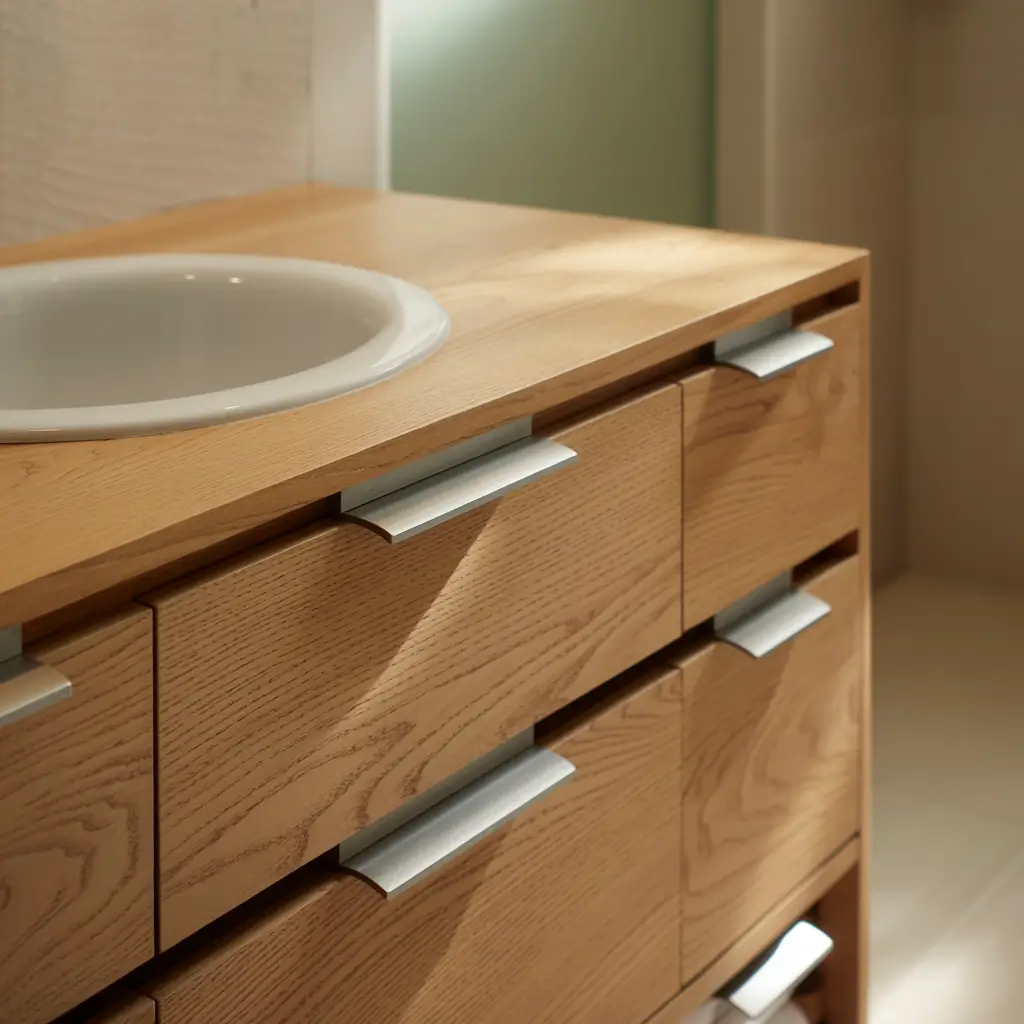
Clean Lines, Maximum Impact
Modern minimalist oak vanities prove that simple doesn’t mean boring. The white oak vanity in my master bathroom features razor-sharp edges, hidden hardware, and a floating design that makes the room feel twice its size. The natural oak grain provides all the visual interest you need without adding clutter.
Minimalist oak vanities work because oak’s grain pattern adds organic texture to otherwise stark designs. Without the wood’s natural character, minimalist vanities can feel cold and institutional. Oak brings warmth while maintaining that clean, uncluttered aesthetic everyone wants.
Minimalist Oak Features
Design elements for modern oak vanities:
- Handle-free drawers with push-to-open mechanisms
- Integrated or undermount sinks
- Natural or light oak finishes
- Wall-mounted floating designs
- Hidden storage maintaining clean lines
- Matte finishes over high gloss
- Single-piece construction for seamless look
Choosing the Right Oak Finish
For minimalist designs, I recommend white oak with a clear matte finish. The light color keeps things airy while the matte finish prevents that plastic-looking shine. My vanity uses water-based polyurethane that protects without adding yellowing or artificial gloss. The result? Natural beauty that whispers instead of shouts.
3. Double Sink Oak Vanity for Large Bathrooms
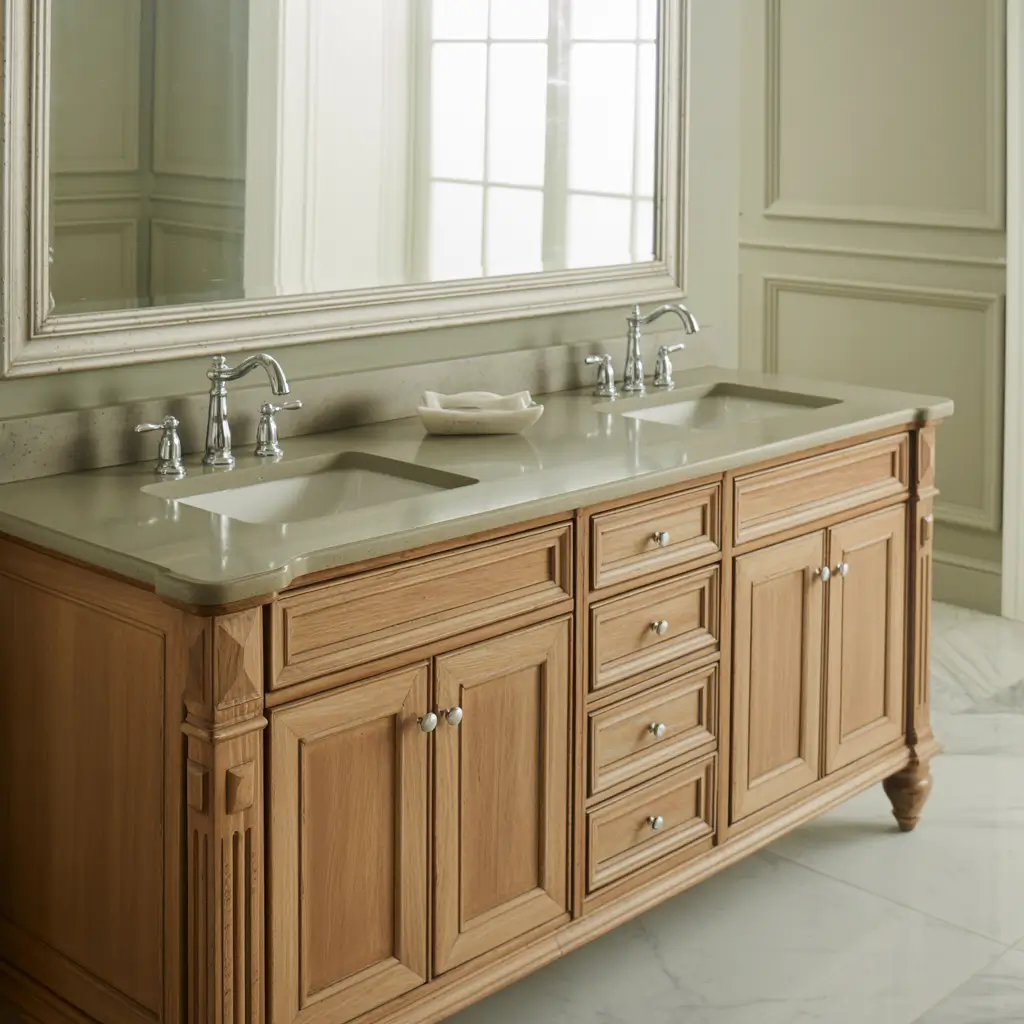
Finally, No More Morning Traffic Jams
Double sink oak vanities solve the eternal bathroom battle over mirror space. The 72-inch red oak vanity we installed in our master bathroom ended the morning elbow-bumping dance my husband and I perfected over years of sharing a single sink. Now we each have our own territory, and mornings are actually peaceful.
Oak’s strength makes it perfect for double sink vanities. The wood handles the weight of two sinks, double plumbing, and twice the daily use without warping or failing. Plus, oak’s prominent grain creates visual continuity across the longer vanity surface, preventing it from looking like two separate pieces pushed together.
Double Vanity Considerations
Key features for oak double vanities:
- Minimum 60 inches width (72-84 inches ideal)
- Center storage tower or open space between sinks
- Matching grain patterns across the entire surface
- Reinforced construction for sink weight
- Adequate spacing (30+ inches) per person
- Double drawers and storage on each side
- Consistent staining across all wood surfaces
Making Double Vanities Feel Cohesive
The challenge with double oak vanities is maintaining visual flow across that long surface. I chose book-matched oak panels where the grain creates a mirror image at the center. This technique makes the vanity look like one intentional piece rather than just a really long cabinet. FYI, book-matching costs more but the visual impact is totally worth it.
Also Read: 10 Charming Natural Wood Bathroom Vanity Ideas for Small Bathrooms
4. Floating Oak Vanity with Open Shelves
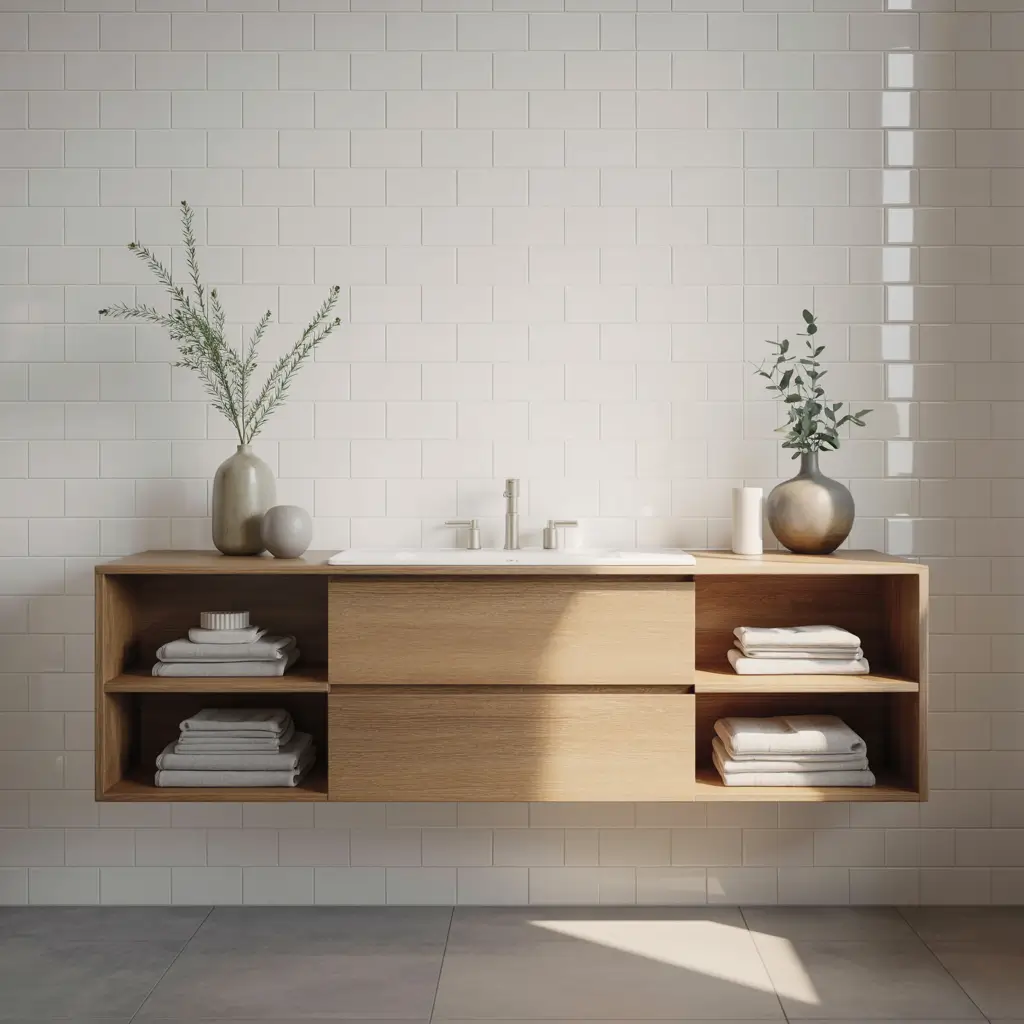
The Illusion of Space
Floating oak vanities with open shelves create this amazing visual lightness that traditional floor-mounted vanities can’t match. My powder room’s floating oak vanity makes the tiny space feel surprisingly spacious. Seeing the floor continue under the vanity tricks your eye into perceiving more square footage.
The open shelving adds functionality without bulk. I store pretty towels and decorative baskets on the shelves, turning necessary storage into visual interest. The natural oak grain provides warmth against the white walls while the floating design keeps everything feeling open and airy.
Floating Installation Essentials
Critical elements for floating oak vanities:
- Heavy-duty wall mounting brackets
- Installation into wall studs (not just drywall)
- Proper weight distribution across mounting points
- Quality wood thick enough to prevent sagging
- Sealed surfaces protecting against humidity
- Open shelves positioned for easy access
- Adequate clearance for comfortable use
Styling Open Shelves
Open shelves require curation, not clutter. I follow the rule of thirds – one-third functional items (towels), one-third decorative (plants, candles), and one-third empty space. This prevents the shelves from looking messy while maintaining that open, breathable feeling floating vanities provide.
5. Oak Vanity with Marble Countertop Elegance
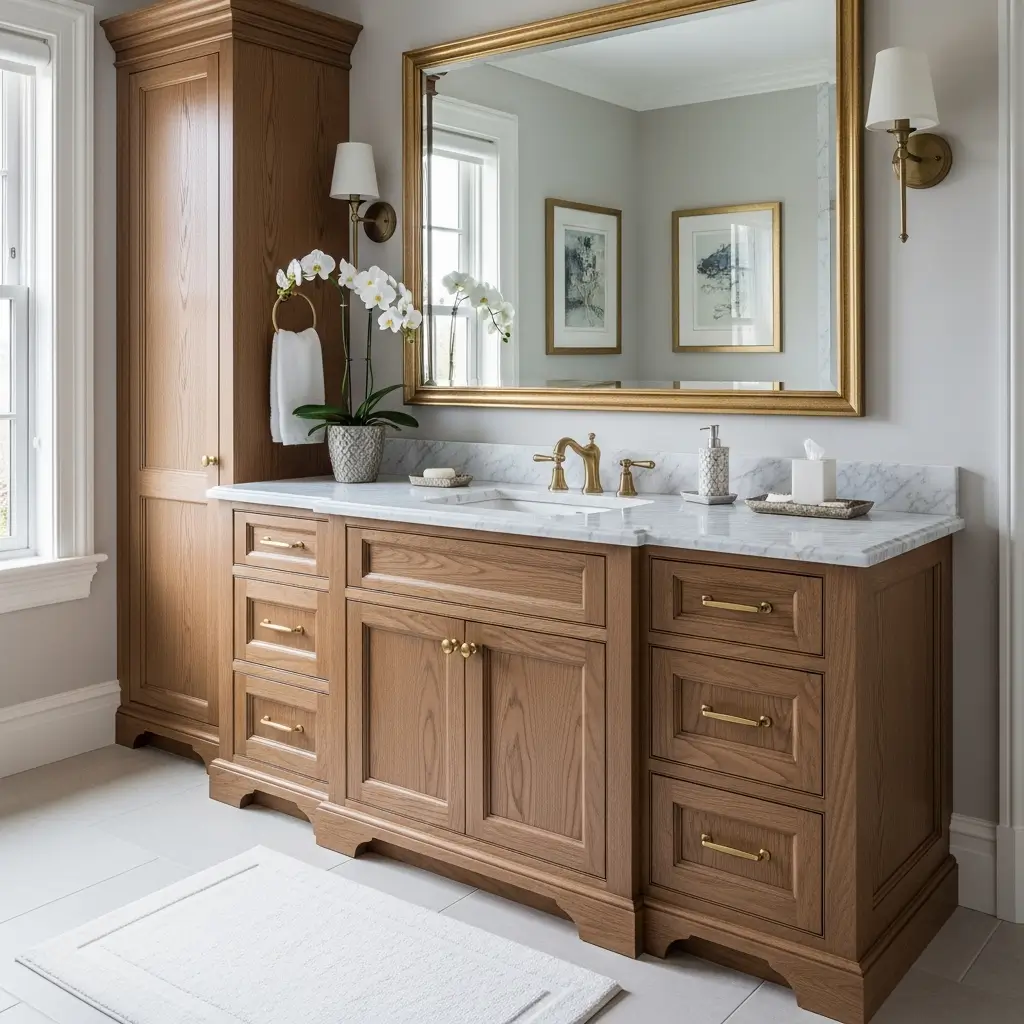
The Perfect Marriage of Materials
Oak and marble together create luxury without pretension. The warmth of oak balances marble’s coolness, while marble’s elegance elevates oak’s rustic nature. My guest bathroom’s honey oak vanity topped with Carrara marble gets more compliments than any other feature in my house.
This combination works because each material compensates for the other’s weaknesses. Marble handles water exposure better than wood, while oak adds warmth that all-marble vanities lack. Together, they create this perfect balance of practical and beautiful.
Oak and Marble Pairings
Successful oak and marble combinations:
- Light oak with white Carrara marble (classic elegance)
- Honey oak with Calacatta marble (warm luxury)
- Red oak with black granite (dramatic contrast)
- White oak with gray-veined marble (modern sophistication)
- Natural oak with honed marble (subtle texture)
- Dark-stained oak with white marble (high contrast)
Installation and Sealing Tips
Marble adds serious weight to oak vanities. Ensure your oak base has 3/4-inch plywood reinforcement to handle the load without sagging. Also, seal the junction between oak and marble meticulously – water sneaking between materials causes hidden damage. I learned this lesson the expensive way when my first vanity developed mysterious warping. :/
6. Vintage-Inspired Oak Bathroom Vanity

Old-World Charm with Modern Function
Vintage-inspired oak vanities bring character that new furniture desperately tries to fake. The 1920s-style oak vanity I restored for my downstairs bathroom has original brass hardware, curved legs, and grain patterns that tell stories spanning decades.
Real vintage oak vanities offer something reproductions can’t – authentic patina and craftsmanship from when furniture was built to last generations. The solid oak construction means these pieces survive decades of use and still look better than brand-new particle board vanities.
Vintage Oak Features
Elements defining vintage oak vanities:
- Turned or carved wooden legs
- Original brass or porcelain hardware
- Visible dovetail joints in drawers
- Aged patina and color variations
- Solid oak construction throughout
- Ornate details and moldings
- Often converted from dressers or washstands
Modernizing Vintage Pieces
You want vintage charm, not vintage plumbing problems. I retrofitted my vintage oak vanity with modern plumbing, soft-close drawer slides, and proper sealing while preserving the original character. The outside looks authentically vintage, but the inside functions like 2024. Best of both worlds, really.
Also Read: 12 Creative Bathroom Vanity Organization Ideas for Stylish Storage
7. Compact Oak Vanity for Small Spaces

Big Style in Tiny Bathrooms
Small bathrooms don’t mean settling for boring vanities. Compact oak vanities deliver full functionality and beauty in minimal square footage. My 24-inch wide oak vanity in the half bath proves you can have style and storage even in the tiniest spaces.
Oak’s strength allows for thinner construction without sacrificing durability. This means you can maximize storage space inside while minimizing the vanity’s footprint. The prominent oak grain also adds visual interest that makes small vanities feel intentional rather than just squeezed in.
Space-Saving Oak Solutions
Design strategies for compact oak vanities:
- Wall-mounted designs freeing floor space
- Corner installations utilizing dead space
- Narrow depth options (16-18 inches)
- Vertical storage maximizing height
- Single deep drawer over cabinet doors
- Vessel sinks reducing required depth
- Light oak finishes brightening small spaces
Making Small Feel Special
I painted my small bathroom walls the same warm tone as the oak vanity, creating visual continuity that makes the space feel larger. The matching tones eliminate harsh transitions between vanity and walls. Add an oversized mirror above, and suddenly your tiny bathroom feels luxurious instead of cramped.
8. Oak Vanity with Built-in Makeup Station
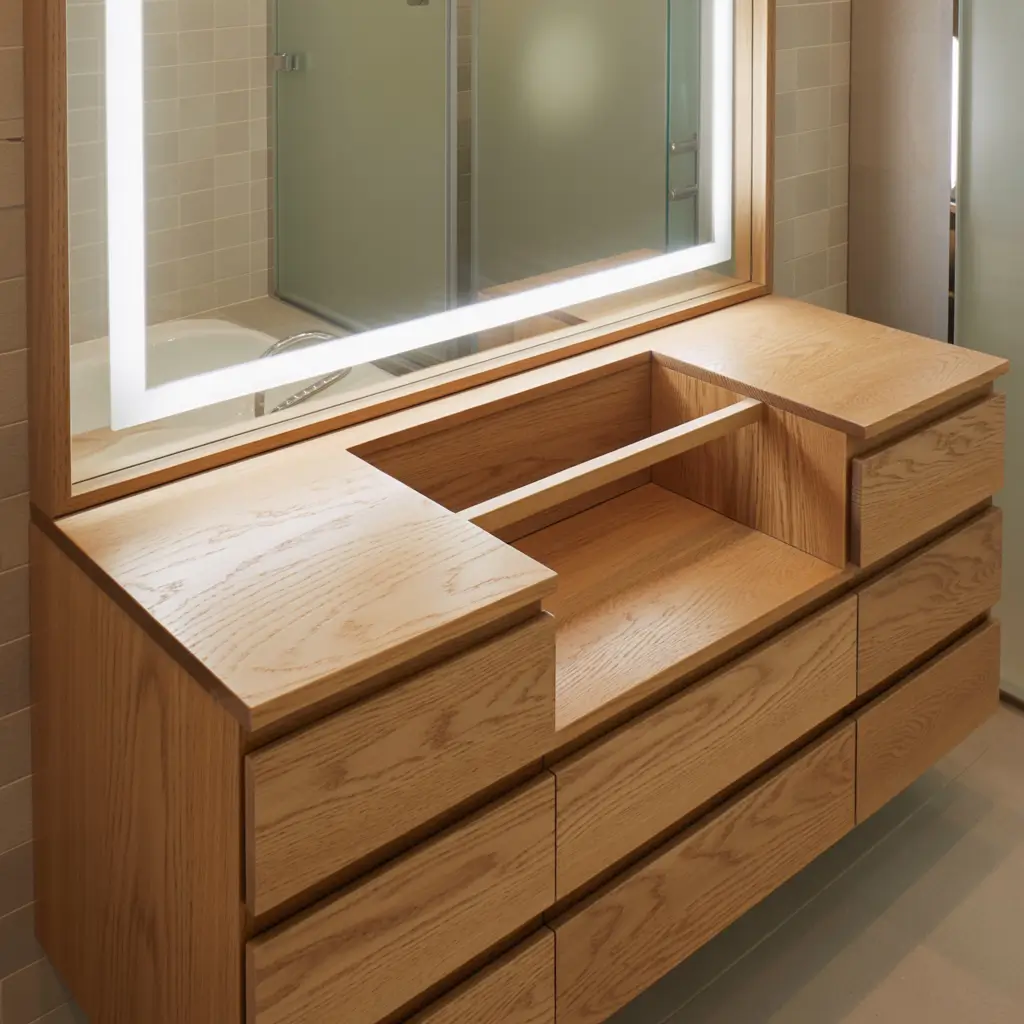
Your Personal Glam Corner
Oak vanities with built-in makeup stations end the bathroom counter battle forever. My master bathroom’s oak vanity features a dropped center section with a flip-up mirror that creates the perfect makeup application spot. No more standing at weird angles trying to see in the bathroom mirror!
The natural durability of oak handles daily makeup spills, hair tool heat, and product stains better than softer woods. Plus, oak’s grain patterns hide minor marks and stains that would show prominently on solid-color surfaces.
Makeup Station Features
Essential elements for oak makeup vanities:
- Lower counter height section (28-30 inches)
- Built-in electrical outlets for tools
- Drawer dividers for makeup organization
- Adequate lighting around makeup mirror
- Heat-resistant surface treatment
- Pull-out or flip-up mirrors
- Dedicated storage for brushes and tools
Organizing Your Makeup Station
The key to functional makeup stations is customized organization fitting your actual products. I measured all my makeup and tools before designing drawer dividers. Now everything has a designated spot, and my morning routine flows smoothly. No more digging through drawers looking for that one lipstick!
9. Two-Tone Oak and White Vanity Design
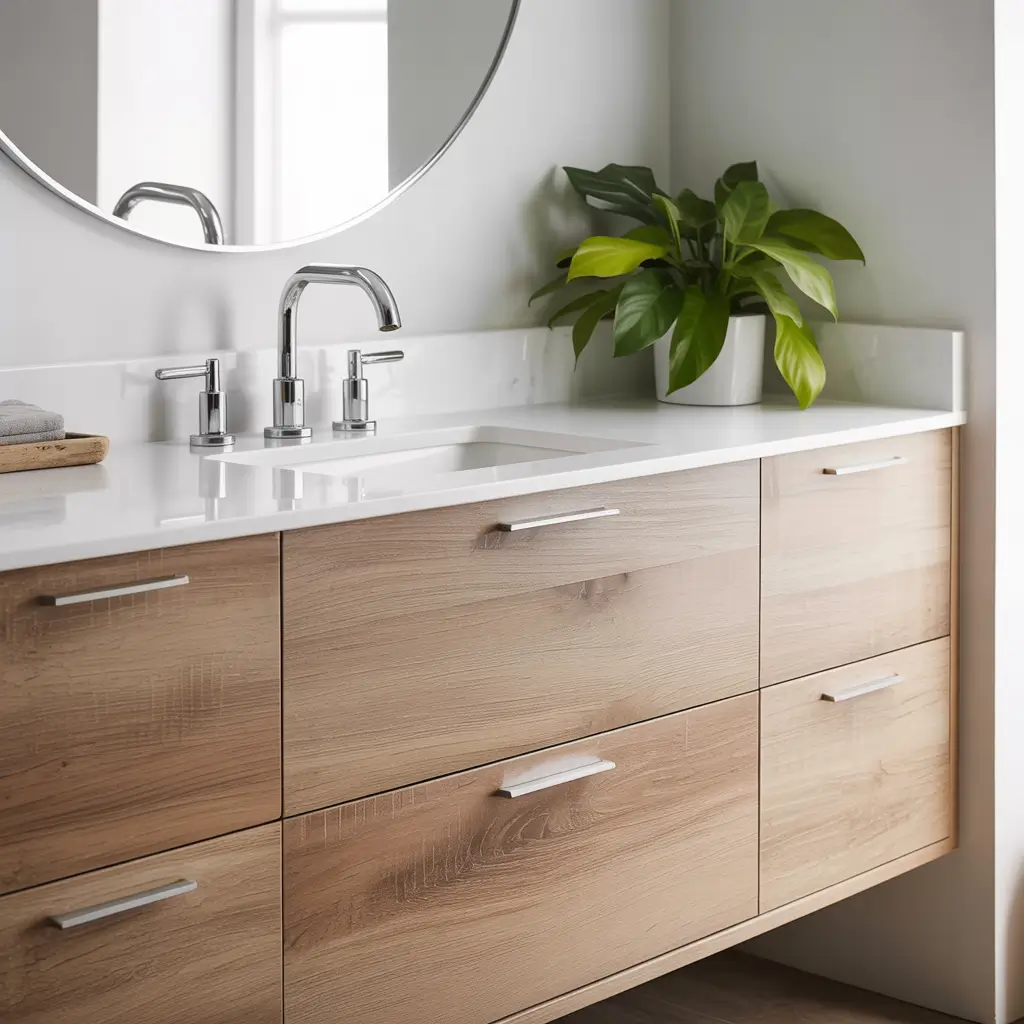
Breaking the Monochrome Monotony
Two-tone oak and white vanities create visual interest without overwhelming the space. My kids’ bathroom features white-painted oak drawer fronts with natural oak trim and countertop. The contrast makes the vanity pop while maintaining the warmth only real wood provides.
This design technique lets you enjoy oak’s natural beauty while lightening the overall appearance. White elements keep things bright and clean-looking, while oak accents add organic warmth and texture. It’s like having two vanities in one!
Two-Tone Design Strategies
Effective oak and white combinations:
- White base with natural oak countertop
- Oak drawers with white cabinet frame
- Alternating white and oak drawer fronts
- White-washed oak with natural oak accents
- Natural oak with white interior shelving
- Oak trim on white-painted surfaces
Painting Oak Successfully
If you’re painting part of your oak vanity white, proper prep is crucial. Oak’s open grain requires quality primer and grain filler for a smooth painted finish. I learned this after my first attempt resulted in visible grain texture through the paint. Now I fill, sand, prime twice, then paint. The extra steps create that professional smooth finish.
Also Read: 10 Chic Dual Vanity Bathroom Ideas and Elegant Finishes
10. Scandinavian Style Oak Bathroom Vanity

Nordic Simplicity at Its Finest
Scandinavian oak vanities master the art of functional minimalism with warmth. Light oak, clean lines, and thoughtful storage create that effortlessly elegant Nordic look everyone loves. My guest bathroom’s Scandi oak vanity makes the space feel like a Swedish spa retreat.
The Scandinavian approach celebrates oak’s natural beauty without unnecessary embellishment. Simple construction, quality materials, and perfect proportions create timeless designs that never feel dated. Plus, the light oak typical of Scandi style brightens bathrooms naturally.
Scandinavian Oak Elements
Key features of Nordic oak vanities:
- Light or white oak with minimal staining
- Clean, straight lines without ornamentation
- Hidden or minimalist hardware
- Emphasis on natural wood grain
- Functional storage solutions
- Matte or low-sheen finishes
- Integration with white and light colors
Creating Hygge in Your Bathroom
Scandinavian design isn’t just about looks – it’s about creating comfort. I added soft textiles, a small plant, and warm lighting to complement my oak vanity. These elements transform a simple oak vanity into a cozy retreat that makes every morning feel peaceful. IMO, that’s what good design should do – improve how you feel in the space. 🙂
11. Oak Vanity with Brass Hardware Accents
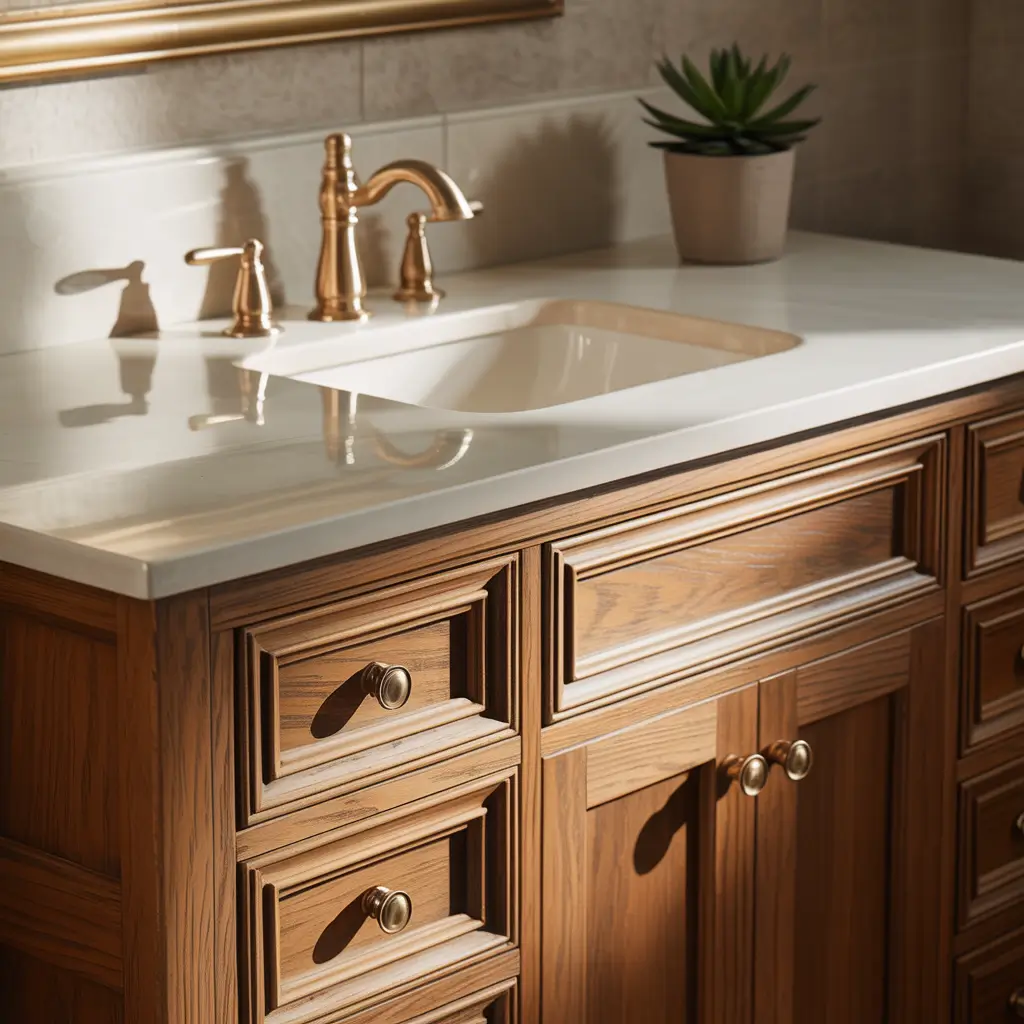
The Combination That Never Fails
Oak and brass together create timeless sophistication that works in any bathroom style. The warm tones complement each other perfectly, and brass hardware against oak grain looks intentionally curated rather than randomly chosen.
I upgraded my basic oak vanity with brushed brass pulls and faucets, and the transformation was incredible. The brass catches light beautifully against the oak’s matte surface, adding subtle glamour without overwhelming the natural wood beauty.
Brass Hardware Selection
Brass options for oak vanities:
- Brushed brass for subtle elegance
- Antique brass for vintage appeal
- Polished brass for maximum glamour
- Champagne bronze for modern twist
- Mixed metals incorporating brass accents
- Brass inlays in oak surfaces
Brass Maintenance Reality
Let’s be honest – brass requires more maintenance than chrome or nickel. But that living finish that develops patina over time? Totally worth the occasional polishing. My brass hardware has developed this gorgeous aged character that makes my oak vanity look like a treasured antique.
12. Eco-Friendly Reclaimed Oak Vanity

Sustainability Meets Style
Reclaimed oak vanities give old wood new life while creating unique pieces with authentic history. My powder room’s vanity came from 100-year-old barn beams, and the weathered oak tells stories that new lumber could never match.
Using reclaimed oak reduces environmental impact while delivering character-rich wood that’s already proven its durability. These pieces survived decades or centuries – they’ll definitely handle your bathroom! Plus, each reclaimed oak vanity is genuinely one-of-a-kind.
Reclaimed Oak Characteristics
Features of reclaimed oak vanities:
- Unique weathering and patina
- Nail holes and saw marks adding character
- Varied coloring from age and exposure
- Dense, tight grain from old-growth trees
- Environmental sustainability
- Historical provenance adding value
- Natural distressing without artificial aging
Working with Reclaimed Oak
Reclaimed oak requires proper preparation. Check for nails, clean thoroughly, and treat for any pests before bringing it indoors. I had my reclaimed oak kiln-dried to eliminate moisture and potential bugs. Then sealed everything with penetrating oil finish that preserved the aged character while protecting against bathroom humidity.
The Bottom Line
Oak bathroom vanities deliver the perfect combination of beauty, durability, and value.
Whether you choose rustic farmhouse charm or sleek Scandinavian simplicity, oak adapts to your style while providing decades of reliable service.
The best oak vanity matches your bathroom size, fits your budget, and makes you smile every morning. Don’t overthink it – oak is forgiving, versatile, and timeless.
Pick the style that speaks to you and enjoy the natural beauty and warmth only real oak can provide.
After years of installing and living with oak vanities, I can confidently say they’re the smartest choice for most bathrooms.
Oak gives you premium wood quality without the premium price, endless style options, and the satisfaction of choosing a material that actually improves with age. Your bathroom deserves that kind of lasting beauty!