10 Inspiring Antique Bathroom Vanity Ideas with Vintage Touch
- Bathroom Design
 Ben
Ben- 0
- 34 minutes read
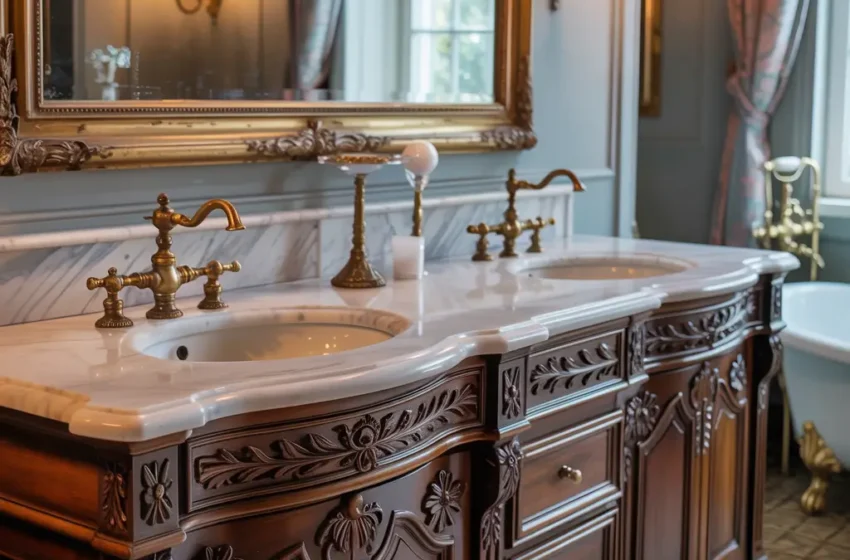
Let me tell you about the time I dragged my husband to his seventh antique shop in one weekend. We were hunting for the perfect bathroom vanity, and he was ready to just buy something from Home Depot and call it a day.
Then we found it – a 1920s mahogany dresser that practically begged to become a vanity. Three years later, everyone who uses our guest bathroom asks where we bought that “amazing custom piece.”
That’s the magic of antique bathroom vanities – they bring character, history, and uniqueness that mass-produced furniture can’t touch.
After converting five antique pieces into bathroom vanities across different homes (yes, I might have a problem), I’ve learned which styles work brilliantly and which ones just look good in theory.
These 10 antique bathroom vanity ideas will transform your bathroom from forgettable to unforgettable.
1. French Country Antique Bathroom Vanity
Romance Meets Function
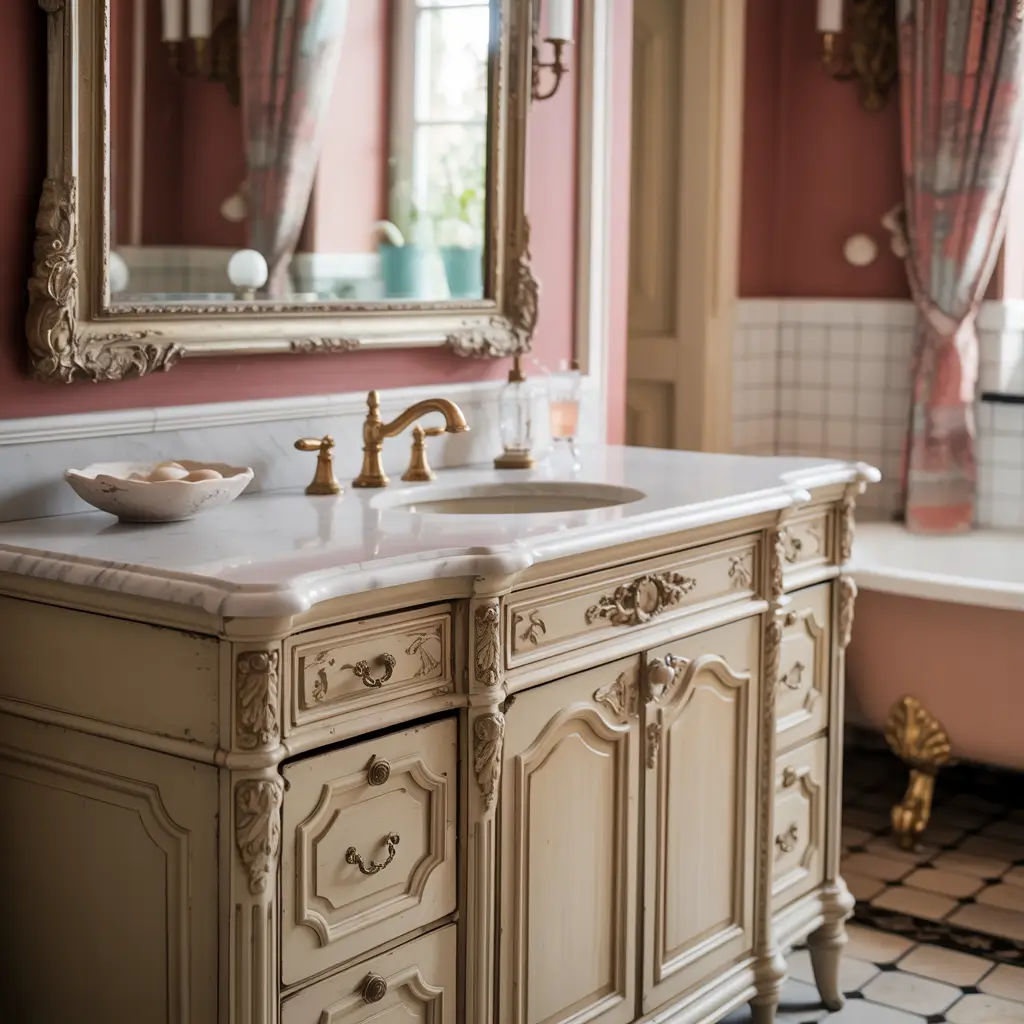
French country antique vanities bring that je ne sais quoi that makes bathrooms feel like Parisian powder rooms. The carved walnut vanity I found at an estate sale has curved legs, delicate details, and that slightly distressed patina that screams authentic French elegance. Every morning feels a little more sophisticated when you’re brushing your teeth at something this beautiful.
The secret to authentic French country style lies in the imperfections. Those little paint chips, the slightly uneven carved roses, the way one drawer sticks just a bit – these aren’t flaws, they’re proof of a life well-lived. My vanity has a water ring from someone’s coffee cup circa 1940, and I refuse to sand it out.
Key French Country Features
Elements that define French antique vanities:
- Cabriole legs with carved details
- Soft, muted paint colors (cream, pale blue, sage)
- Distressed or crackled paint finishes
- Ornate brass or bronze hardware
- Marble or limestone countertops
- Carved floral or scroll motifs
- Curved, feminine silhouettes
Making French Antiques Work
French antique vanities often come with shallow drawers designed for linens, not modern plumbing. I learned to work with this by routing plumbing through the back rather than underneath. The drawers still function for storage, just not directly under the sink. Also, these pieces usually need reinforcement to handle sink weight – don’t skip this step unless you want a very expensive disaster.
2. Rustic Wooden Antique Vanity with Marble Top
Where Rough Meets Refined
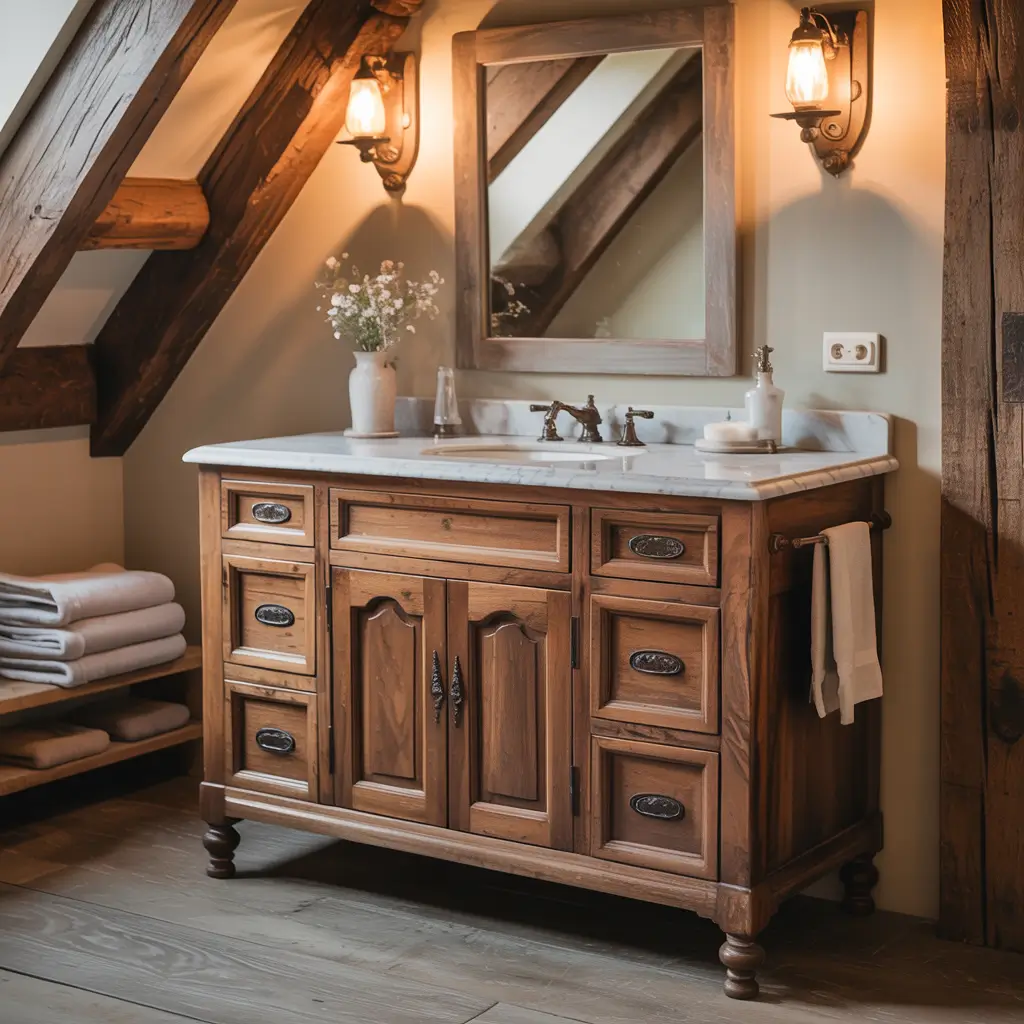
Rustic wooden antique vanities topped with marble create this amazing contrast between raw and elegant. My master bathroom features a converted 1890s farm table with original paint layers showing through, topped with pristine Carrara marble. The juxtaposition makes people stop and stare.
The combination works because each element respects the other. The rough wood doesn’t try to be fancy, and the marble doesn’t apologize for being luxurious. Together, they create balance that feels intentional rather than accidental.
Rustic Wood Characteristics
Features of authentic rustic antiques:
- Visible wear patterns and patina
- Original tool marks and imperfections
- Multiple paint layers creating depth
- Sturdy, utilitarian construction
- Natural wood grain showing through finish
- Hand-forged hardware or simple latches
- Signs of repairs adding character
Marble Installation Tips
Adding marble to antique wood bases requires careful planning. The wood needs reinforcement to handle marble’s weight – I added a 3/4-inch plywood substrate to distribute load evenly. Also, seal the wood-marble junction meticulously. Water finding its way between materials causes rot you won’t discover until it’s too late. Trust me on this one. :/
3. Victorian Style Bathroom Vanity Inspiration
Drama and Detail in Every Inch
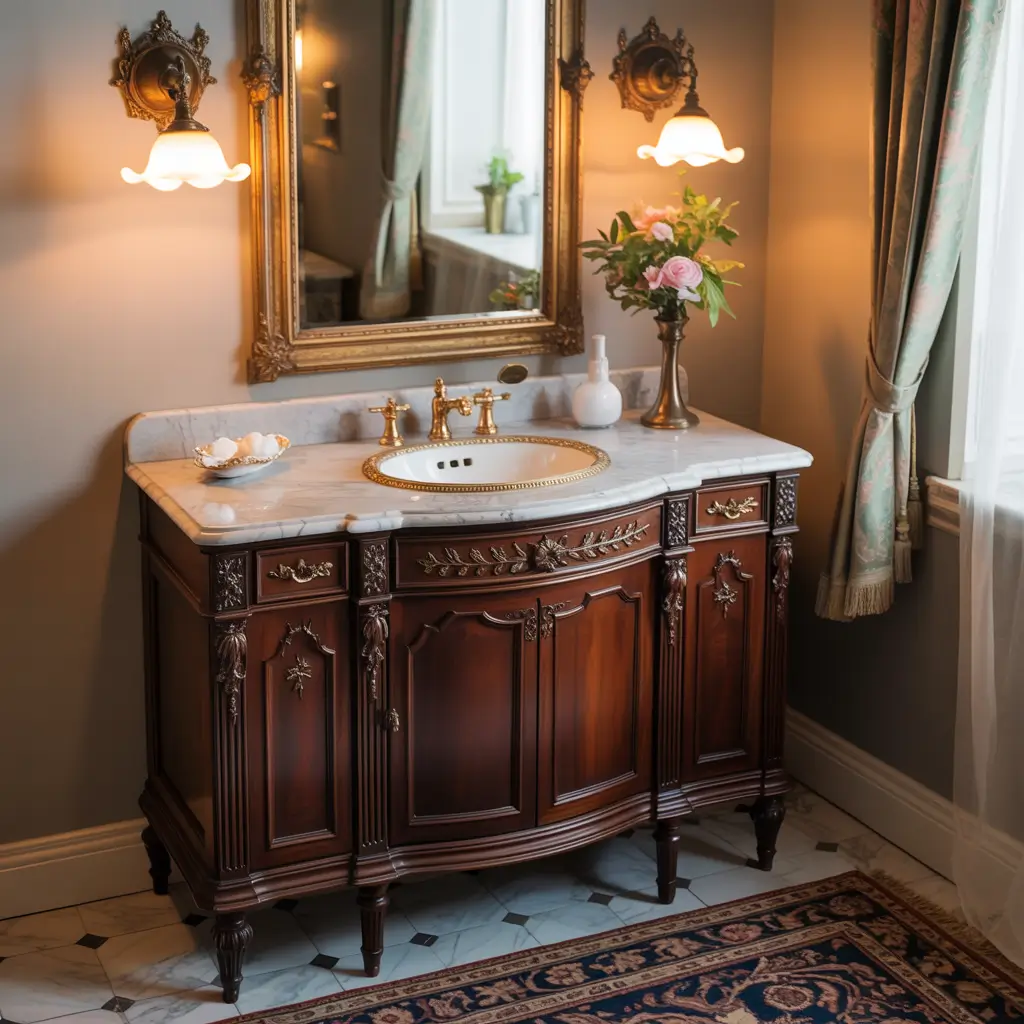
Victorian antique vanities don’t do subtle. My friend’s bathroom features an 1880s Victorian dressing table converted to a vanity, complete with ornate carvings, original mirror, and enough decorative details to keep you discovering new elements years later.
These pieces work best in bathrooms that can handle their presence. Victorian vanities demand attention and space – cramming one into a tiny powder room just makes everything feel cluttered. But give them room to breathe? They transform bathrooms into theatrical spaces worthy of their drama.
Victorian Vanity Elements
Defining Victorian characteristics:
- Dark wood finishes (mahogany, walnut, rosewood)
- Elaborate carved details and moldings
- Original beveled mirrors with wooden frames
- Marble tops (often white or gray)
- Multiple small drawers and compartments
- Ornate brass hardware with patina
- Turned legs with intricate details
Modernizing Victorian Pieces
Victorian vanities need modern updates to function properly. I retrofitted mine with soft-close drawer slides and modern plumbing while preserving the exterior character. The challenge is hiding modern elements – nobody wants to see PVC pipes under a Victorian masterpiece. Creative routing and period-appropriate pipe covers solve this beautifully.
Also Read: 12 Inspiring Oak Bathroom Vanity Ideas and Luxury Touches
4. Small Antique Vanity for Tiny Bathrooms
Proving Size Doesn’t Limit Style
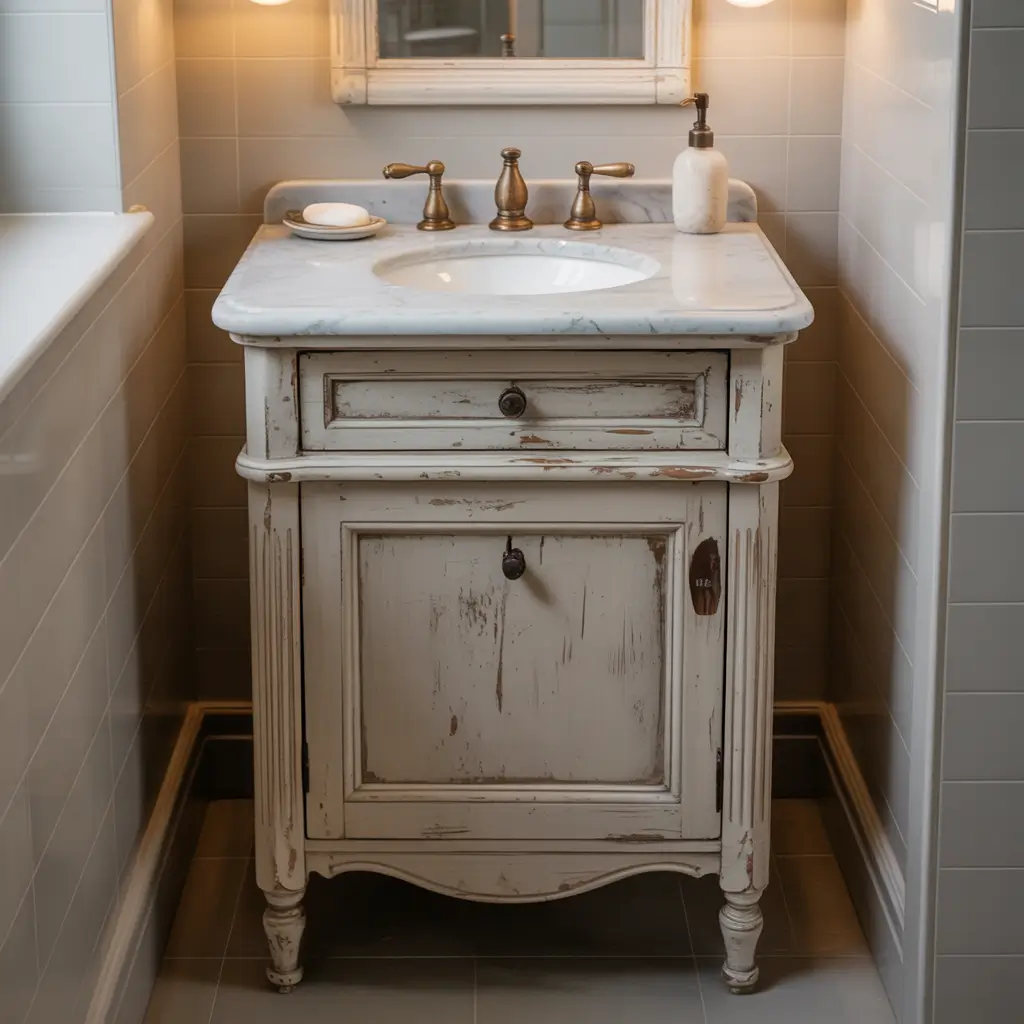
Small antique vanities pack enormous character into minimal square footage. The 24-inch washstand in my powder room proves you don’t need massive furniture to make a statement. This Victorian shaving stand turned vanity gets more compliments than pieces three times its size.
The key to small antique vanities is choosing pieces with vertical interest rather than horizontal spread. Tall, narrow pieces draw the eye upward, making rooms feel larger. My washstand has a towel bar, small shelf, and tilting mirror all within its compact footprint.
Small But Mighty Features
Characteristics of compact antique vanities:
- Narrow footprints (18-30 inches wide)
- Vertical storage maximizing height
- Wall-mounted or leggy designs
- Original mirrors adding function
- Single small drawer or shelf
- Vessel sinks preserving counter space
- Light finishes preventing visual weight
Maximizing Small Antiques
Small antique vanities require strategic planning. I mounted my faucet on the wall to preserve precious counter space. Using a vessel sink instead of undermount gave me an extra 4 inches of usable depth. Every inch matters in tiny bathrooms, and these little tricks make small antiques surprisingly functional.
5. Reclaimed Wood Antique Vanity Designs
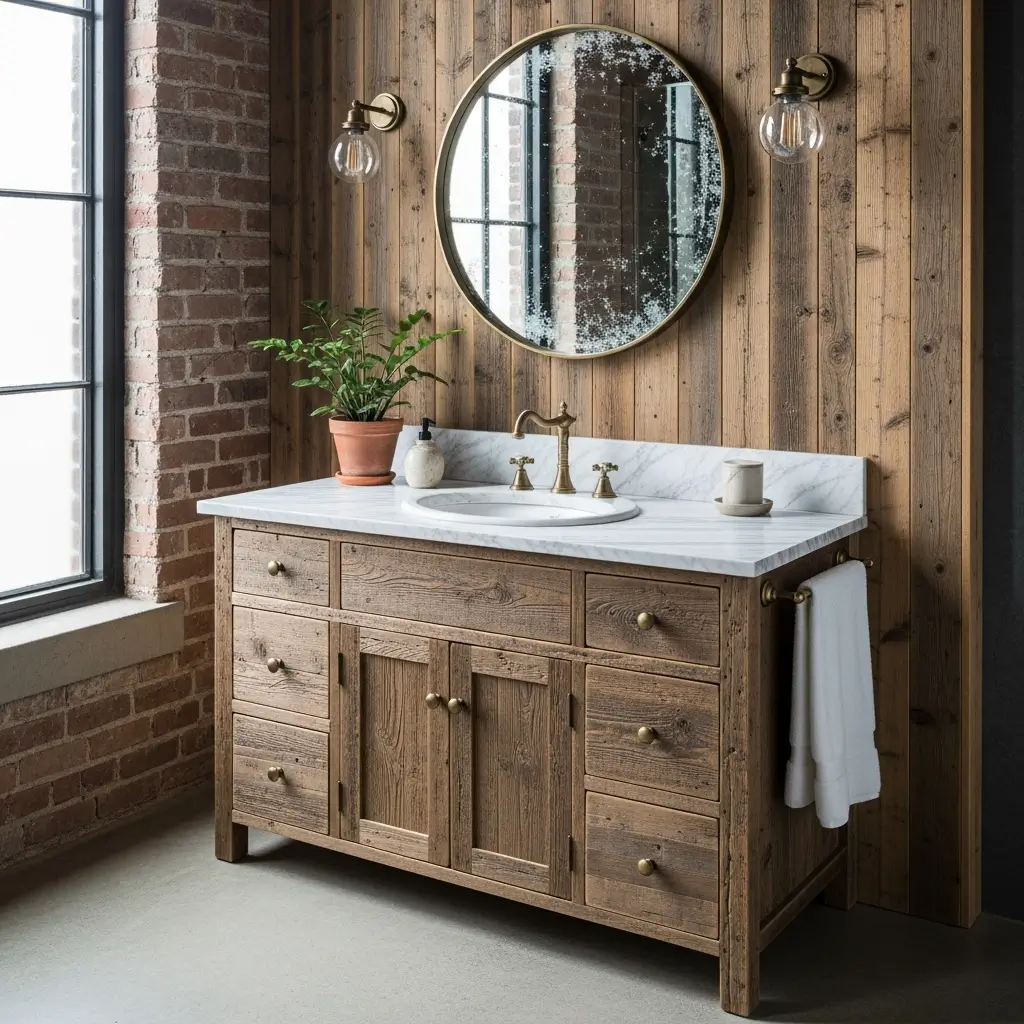
History You Can Touch
Reclaimed wood antique vanities tell stories through their scars. My guest bathroom vanity came from barn beams dating to the 1850s, and the nail holes, saw marks, and weathering create texture no new piece could replicate.
These pieces appeal to people who value authenticity over perfection. Each mark represents history – that deep gouge might be from farm equipment, those stains from decades of weather. It’s furniture with provenance, not just age.
Reclaimed Wood Qualities
What makes reclaimed antiques special:
- Authentic aging impossible to replicate
- Dense old-growth wood quality
- Unique weathering and patina
- Environmental sustainability
- Historical significance
- One-of-a-kind character
- Natural distressing patterns
Working with Reclaimed Materials
Reclaimed wood requires proper treatment before bathroom use. I had my beams kiln-dried to eliminate pests and moisture, then sealed with marine-grade finish. Skip these steps and you risk introducing termites or watching your vanity warp from humidity. The prep work takes time but ensures your antique survives modern bathroom conditions.
6. Shabby Chic Painted Antique Vanities
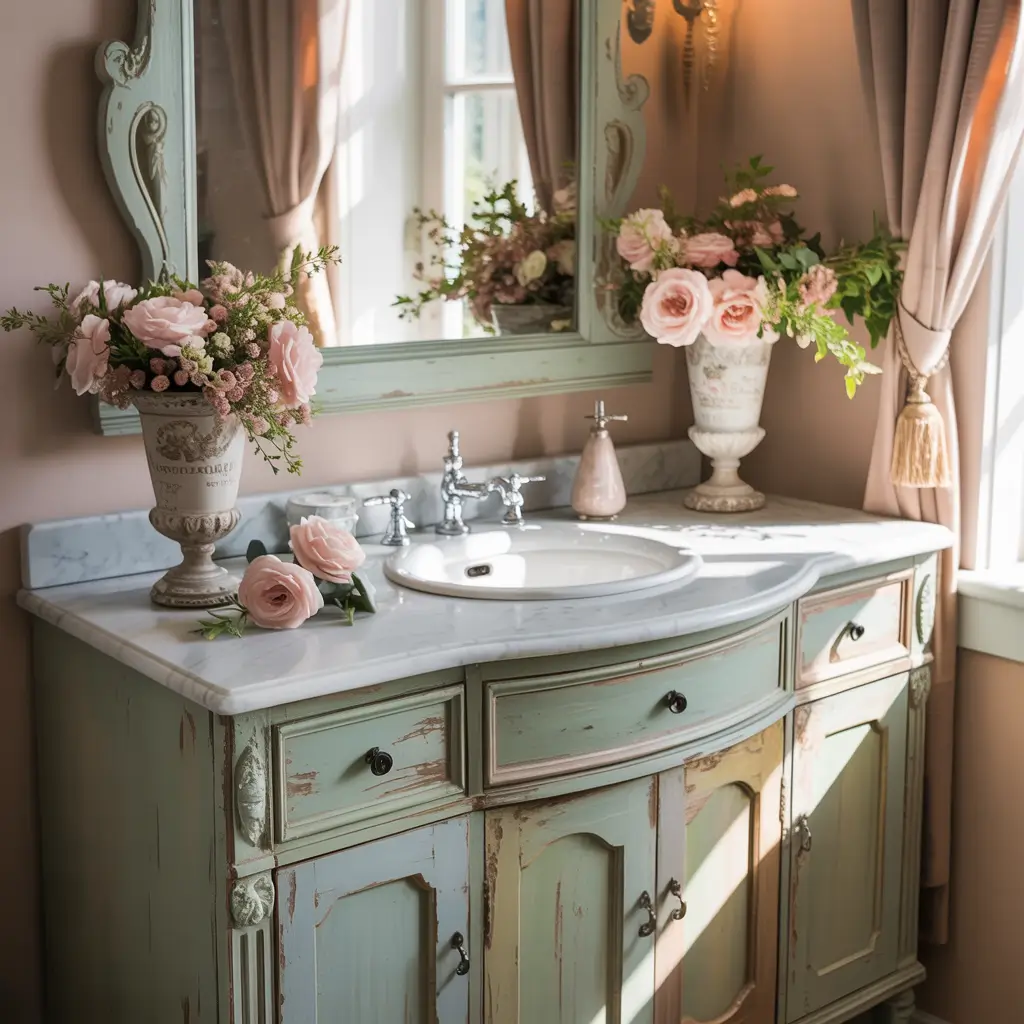
Distressed to Impress
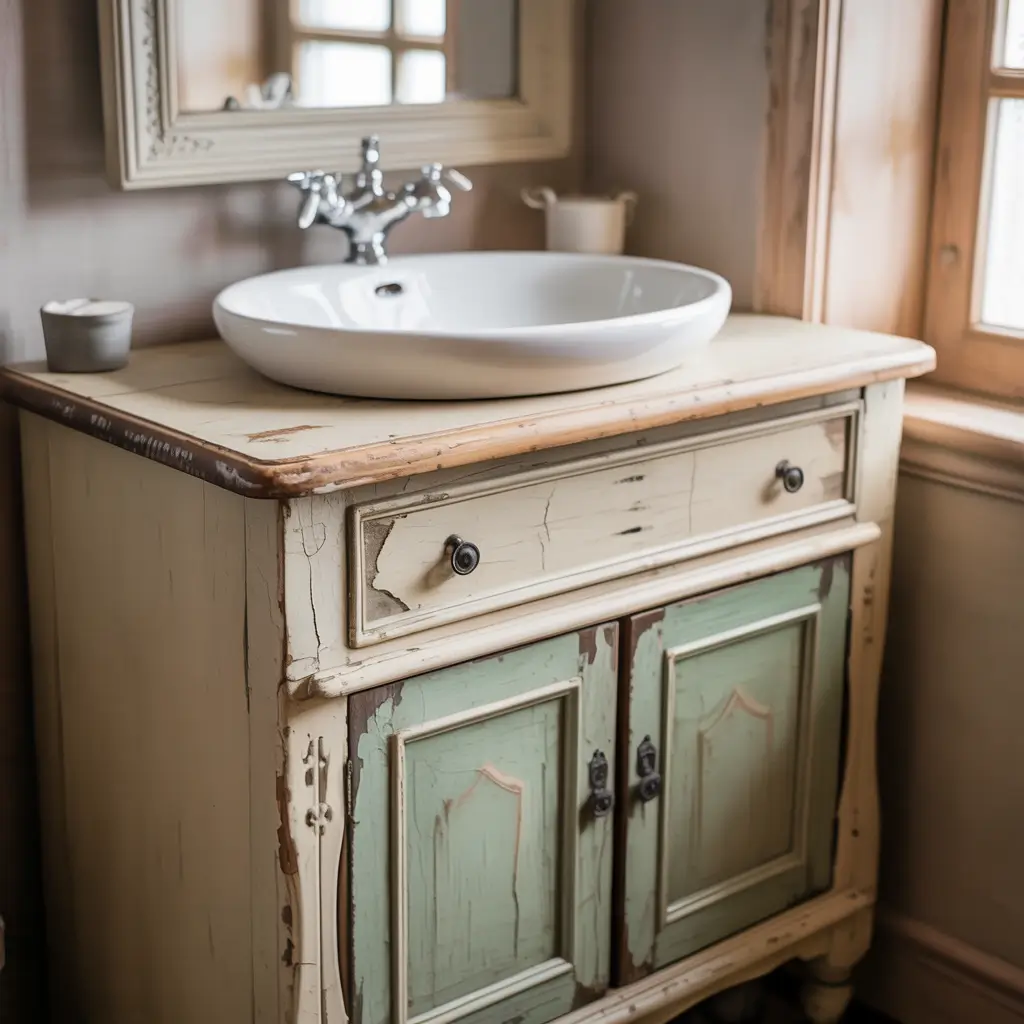
Shabby chic antique vanities embrace imperfection as art. The dresser-turned-vanity in my daughter’s bathroom features layers of white and pink paint artfully distressed to reveal wood beneath. It looks like it’s been loved for generations, which technically it has.
The shabby chic aesthetic works because it feels approachable. These aren’t museum pieces you’re afraid to touch – they’re furniture that invites daily use. Spill something? Adds character. Chip the paint? Part of the charm. It’s liberating, honestly.
Shabby Chic Essentials
Elements defining shabby chic vanities:
- Multiple paint layers showing through
- Soft, feminine color palettes
- Intentional distressing at wear points
- Mismatched vintage hardware
- Romantic details like roses or scrollwork
- Crystal or porcelain knobs
- Weathered but not damaged appearance
DIY Shabby Chic Techniques
Creating authentic shabby chic requires restraint. I layer two or three paint colors, then sand strategic areas where natural wear would occur – edges, around hardware, high-touch zones. The trick is stopping before it looks forced. Real wear happens gradually and unevenly, not in perfect patterns. FYI, chalk paint works beautifully for this style.
Also Read: 10 Charming Natural Wood Bathroom Vanity Ideas for Small Bathrooms
7. Double Sink Antique Bathroom Vanity Ideas
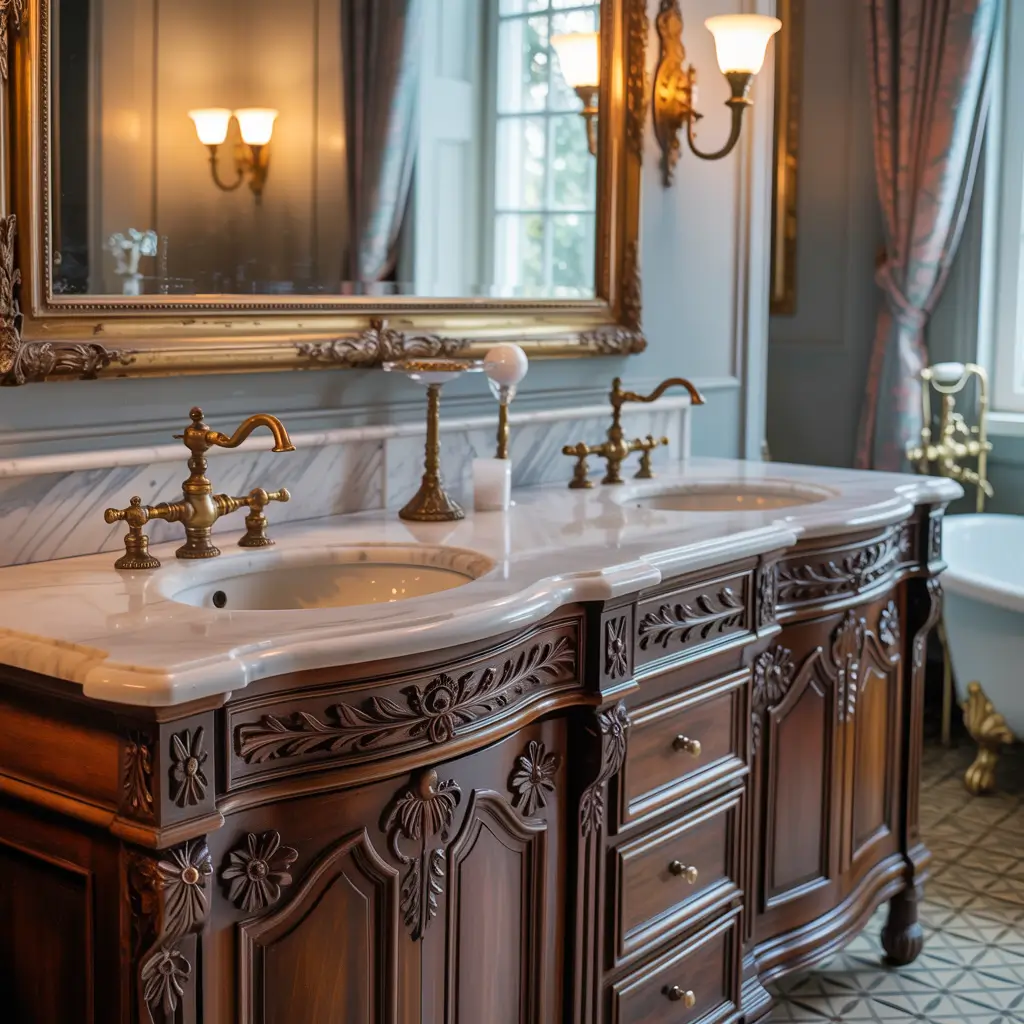
Twice the Sinks, Double the Character
Double sink antique vanities solve modern problems with vintage style. We converted a massive Victorian sideboard into a double vanity, and now my husband and I have separate sinks without sacrificing antique charm. Morning routines became peaceful instead of competitive.
Finding antiques large enough for double sinks requires patience. Sideboards, buffets, and large dressers work best. The piece needs to be at least 60 inches wide, preferably 72 inches for comfortable spacing. My sideboard measures 78 inches, providing luxurious personal space.
Double Sink Conversion Considerations
Requirements for double antique vanities:
- Minimum 60-inch width
- Structural strength for two sinks
- Adequate depth (minimum 20 inches)
- Space for dual plumbing lines
- Matching sinks maintaining period style
- Balanced placement preserving symmetry
- Reinforcement for added weight
Plumbing Challenges
Double sinks mean double plumbing, which antiques weren’t designed to accommodate. We ran separate supply and drain lines for each sink, hiding pipes behind false drawer fronts. The center drawers still function, but the ones directly under sinks are just facades. It’s a compromise, but the visual impact makes it worthwhile.
8. Modern Meets Antique Bathroom Vanity
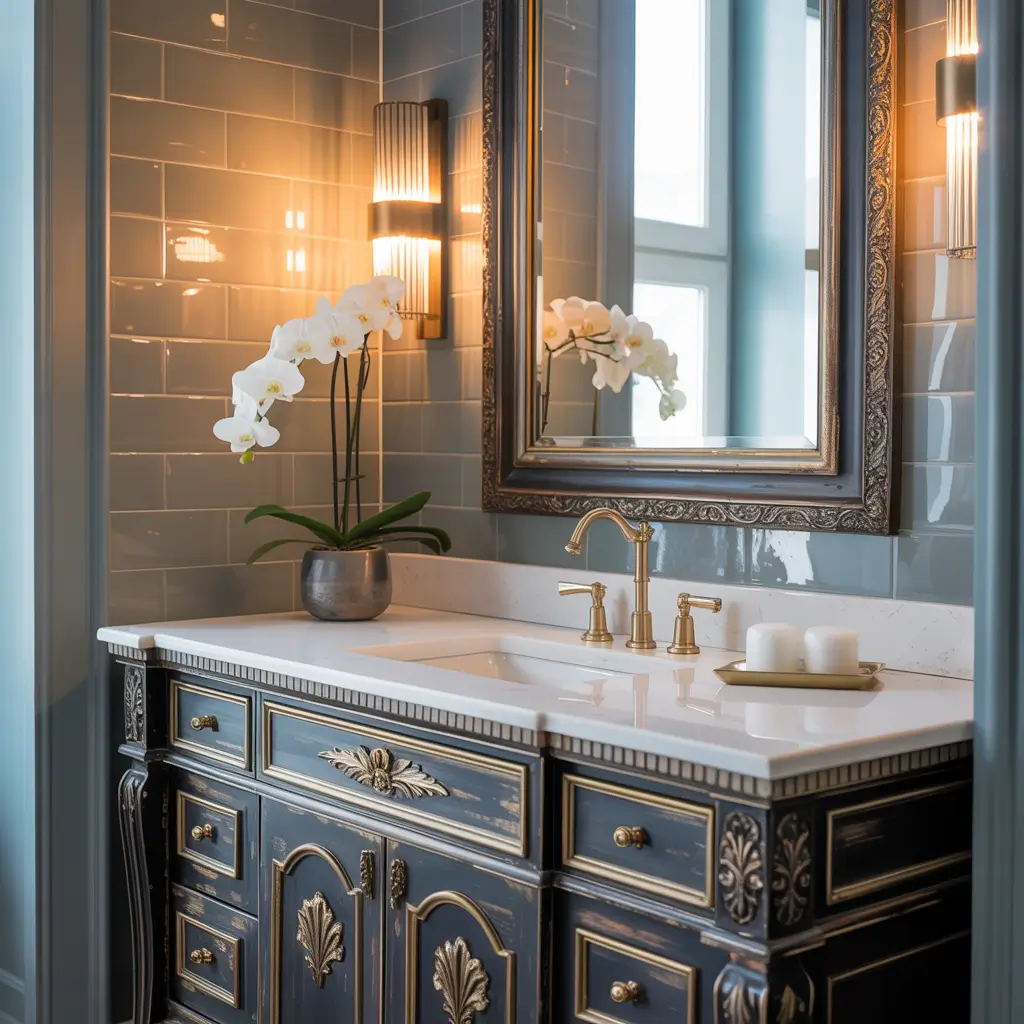
The Best of Both Worlds
Mixing modern elements with antique vanities creates unexpected magic. My powder room pairs a 1920s Art Deco vanity with ultra-modern fixtures – the contrast makes both elements more interesting than they’d be alone.
This approach works because it feels intentional rather than indecisive. The antique provides warmth and character while modern elements ensure functionality. You get historical charm without sacrificing contemporary convenience.
Successful Modern-Antique Combinations
Pairings that work beautifully:
- Antique wood base with concrete countertop
- Victorian vanity with minimalist vessel sink
- Rustic antique with sleek wall-mounted faucet
- Ornate antique with simple subway tile
- Dark antique wood with bright LED lighting
- Traditional antique with geometric mirror
- Carved antique with stark white walls
Balance Is Everything
The key to mixing periods is maintaining balance. I follow the 70/30 rule – 70% one style, 30% the other. My bathroom is 70% modern (tiles, fixtures, lighting) with the antique vanity as the 30% contrast element. This prevents the space from feeling confused about its identity. 🙂
9. DIY Upcycled Antique Vanity Projects
Creating Custom Character
DIY antique vanity conversions let you create exactly what you want while preserving history. I’ve converted three antique dressers into vanities, each project teaching me something new about working with old furniture and modern plumbing.
The satisfaction of giving forgotten furniture new purpose can’t be overstated. That dresser gathering dust in someone’s barn becomes your bathroom’s centerpiece. Plus, DIY conversions cost fraction of buying converted pieces while giving you complete control over the final product.
DIY Conversion Steps
Process for converting antiques:
- Evaluate structural integrity thoroughly
- Measure for sink and plumbing placement
- Cut holes carefully with proper tools
- Reinforce structure for sink weight
- Modify drawers around plumbing
- Apply protective finishes for moisture
- Install plumbing with proper clearances
- Add backsplash preventing water damage
Tools and Techniques
Successful conversions require the right tools. A quality hole saw kit creates clean sink openings. Reinforcement brackets prevent sagging. Marine-grade polyurethane protects against moisture. Don’t cheap out on materials – saving $20 on sealant isn’t worth destroying an antique with water damage.
Also Read: 12 Creative Bathroom Vanity Organization Ideas for Stylish Storage
10. Elegant Antique Vanities with Gold Accents
Luxury That Lasts
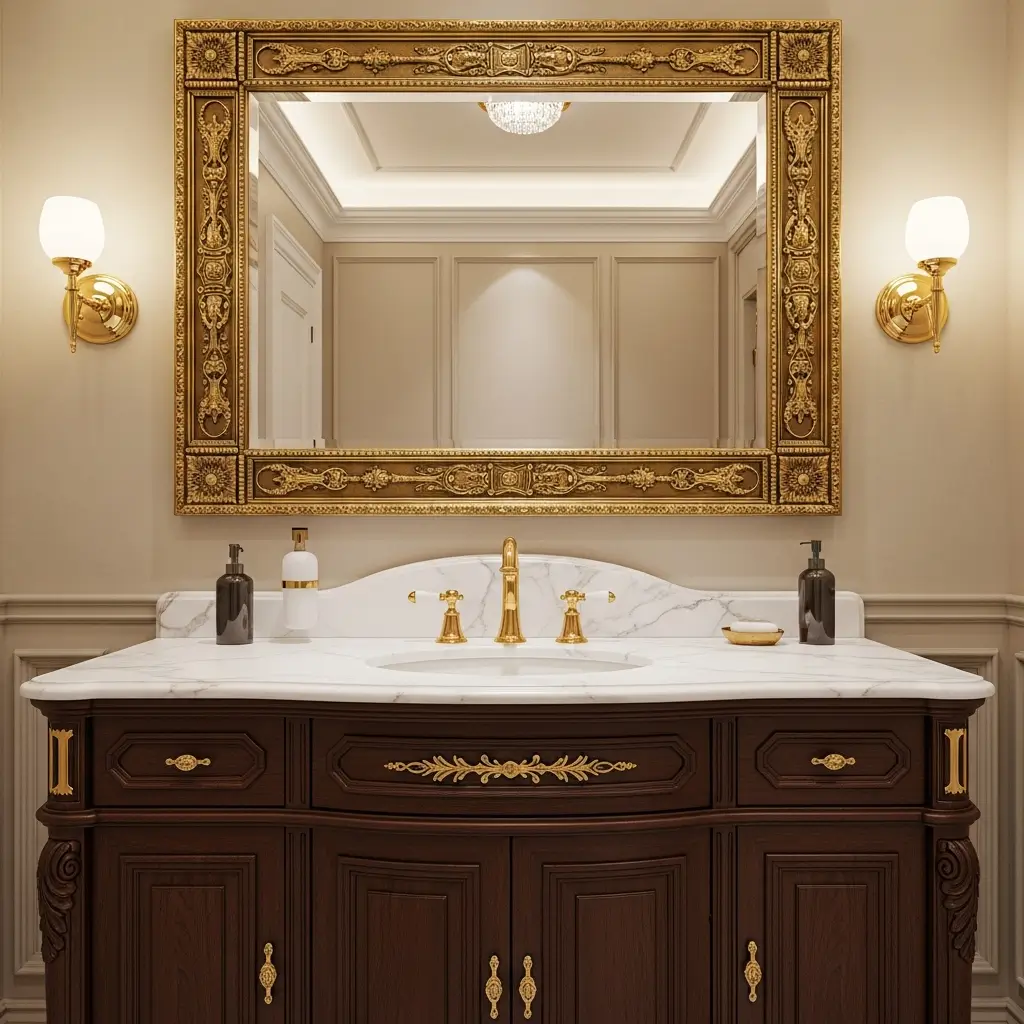
Antique vanities with gold accents bring Old World elegance to modern bathrooms. The Louis XV-style vanity in my master bathroom features original gilt details, brass hardware with patina, and hand-painted gold leaf accents that shimmer in morning light.
Gold accents on antiques differ from modern gold fixtures. The patina, the slightly worn edges, the way gilt settles into carved details – these elements create depth and authenticity that new gold-finished items lack. It’s luxury with history, not just expense.
Gold Accent Elements
Features that enhance elegance:
- Original gilt or gold leaf details
- Brass hardware with natural patina
- Gold-veined marble countertops
- Ornate gold-framed mirrors
- Bronze or brass faucets
- Gold painted accents in carvings
- Champagne-toned metallic finishes
Preserving Gold Finishes
Antique gold finishes require gentle care. I clean mine with soft cloths and minimal moisture – harsh cleaners strip patina and damage gilt. Some wear is desirable (it proves authenticity), but protect high-touch areas with Renaissance Wax. This preserves the finish while maintaining that aged appearance everyone loves.
The Bottom Line
Antique bathroom vanities bring character, history, and uniqueness that modern pieces can’t replicate.
Whether you choose French country elegance or shabby chic charm, antiques transform bathrooms from purely functional to personally meaningful spaces.
The perfect antique vanity tells a story, fits your space, and makes you smile every time you use it. Don’t rush the search – finding the right piece takes time, but living with generic furniture takes longer.
Trust your instincts, embrace imperfections, and prepare for compliments from everyone who visits your bathroom.
After years of hunting, converting, and living with antique vanities, I can tell you they’re worth every bit of effort required. \
Your bathroom deserves furniture with soul, and antiques deliver that in ways modern manufacturing never will. So start hunting – your perfect antique vanity is out there waiting to begin its next chapter in your home!