10 Cozy Small Kids Bedroom Ideas to Spark Imagination
- Bedroom Design
 Ben
Ben- 0
- 34 minutes read
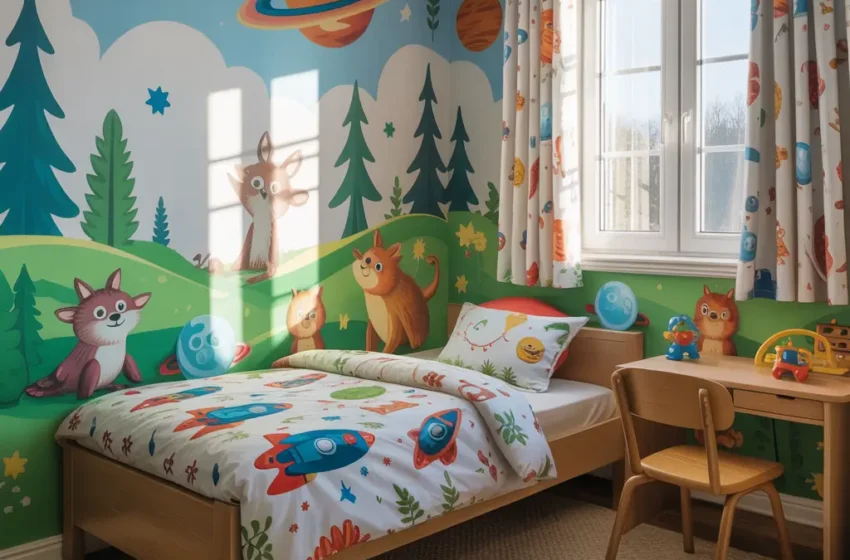
Small bedroom, big dreams, zero floor space – sound familiar? If you’re staring at your kid’s shoebox-sized room wondering how to fit a bed, toys, clothes, AND leave room for them to actually play, you’re not alone.
After wrestling with my daughter’s 8×9 bedroom for three years (and trying approximately 47 different layouts), I’ve learned that small kids’ bedrooms just need smarter solutions, not bigger square footage.
The truth is, kids don’t care if their room is tiny – they care if it’s cool. And guess what? Some of the most creative, fun, and functional kids’ bedrooms I’ve seen have been the smallest ones.
When you’re forced to get creative, magic happens.
Convertible Loft Bed with Slide
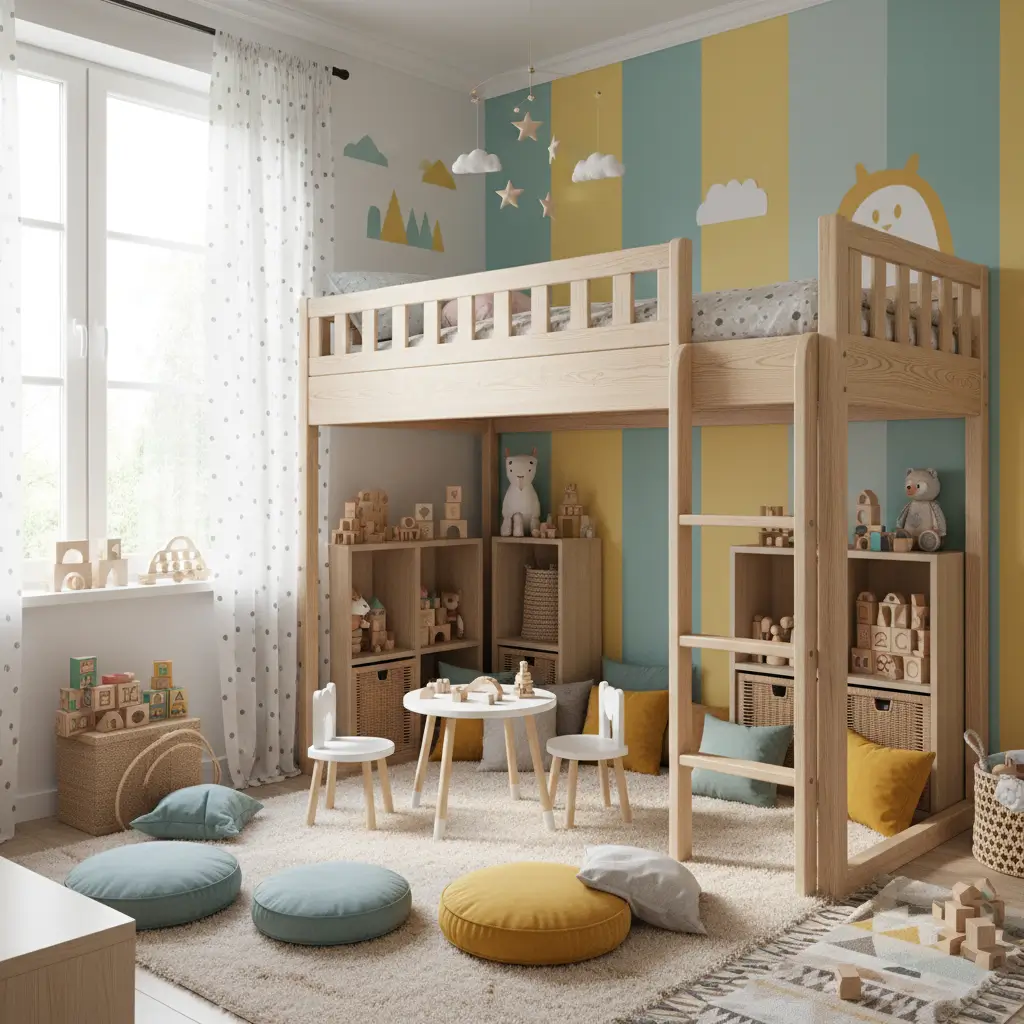
Let me paint you a picture: bed on top, play paradise below, and a slide that makes bedtime feel like recess. The convertible loft bed with slide basically turns sleeping into an adventure while freeing up all that precious floor space underneath.
My neighbor installed one of these last year, and her 5-year-old literally runs to bed now. The slide isn’t just fun – it’s genius space-saving. No need for stairs taking up room when you can slide down in the morning like you’re escaping from a castle tower.
Making the Most of Loft Space
The area underneath becomes whatever you need:
- Play zone with soft mats and toy storage
- Reading nook with bean bags and bookshelves
- Art station with a small table and supply organizers
- Dress-up area with costume hooks and mirror
- Mini home office for homework (optimistic, but hey)
What really sold me on this idea? The convertibility factor. As your kid grows, remove the slide, add a ladder, and suddenly you have a sophisticated loft bed for a preteen. That’s what I call a solid investment.
Safety Without Killing the Fun
Before you panic about safety, modern loft beds with slides come with solid safety rails, anti-slip slide surfaces, and weight limits that accommodate adults (because you know you’ll try it). The slides attach securely and can handle daily abuse from excited kids.
Hidden Toy Storage Bed
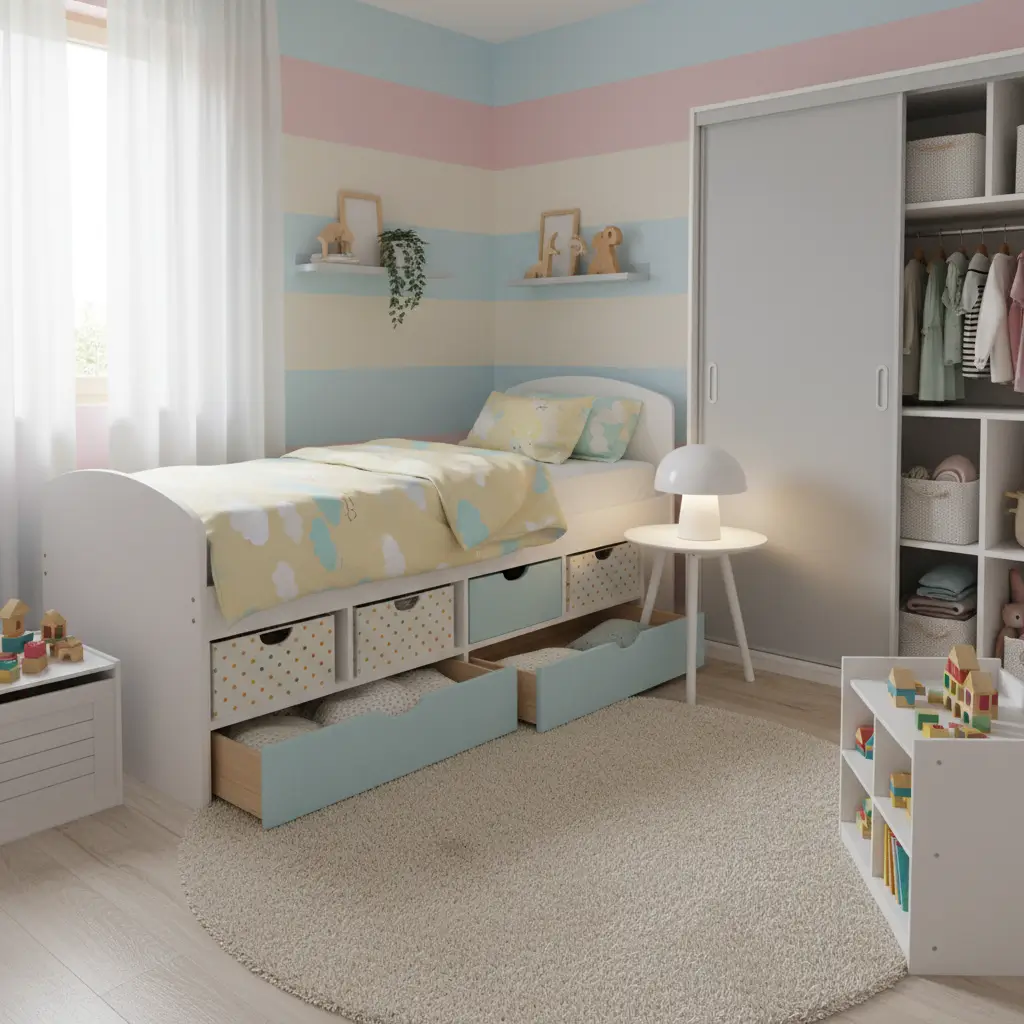
Ever looked at your kid’s bed and thought, “That’s a lot of wasted space underneath”? The hidden toy storage bed solves two massive problems at once: where to sleep and where to hide the 10,000 tiny toys that multiply overnight.
I discovered these beds when desperately searching for solutions for my son’s LEGO obsession. His bed now has six pull-out drawers underneath, each labeled with pictures. The best part? He actually uses them because he can see exactly where everything goes.
Storage That Actually Works
Here’s what makes hidden storage beds genius:
- Deep drawers that hold bulky items like blocks
- Dividers for organizing smaller toys
- Soft-close mechanisms (no more 3 AM drawer slams)
- Some models include shelving in the headboard
- Corner designs maximize every inch
My personal favorite feature? The drawers pull out completely, so kids can carry them to wherever they’re playing. Cleanup becomes simply sliding the drawer back under the bed. Revolutionary? Maybe not. Life-changing? Absolutely.
Choosing the Right Storage Configuration
Not all storage beds work the same. Platform beds with built-in cubbies work great for kids who like displaying special toys. Beds with lift-up mattress platforms hide everything completely but require more strength to access. Drawer models offer the best daily usability for young kids.
Wall-Mounted Foldable Study Station
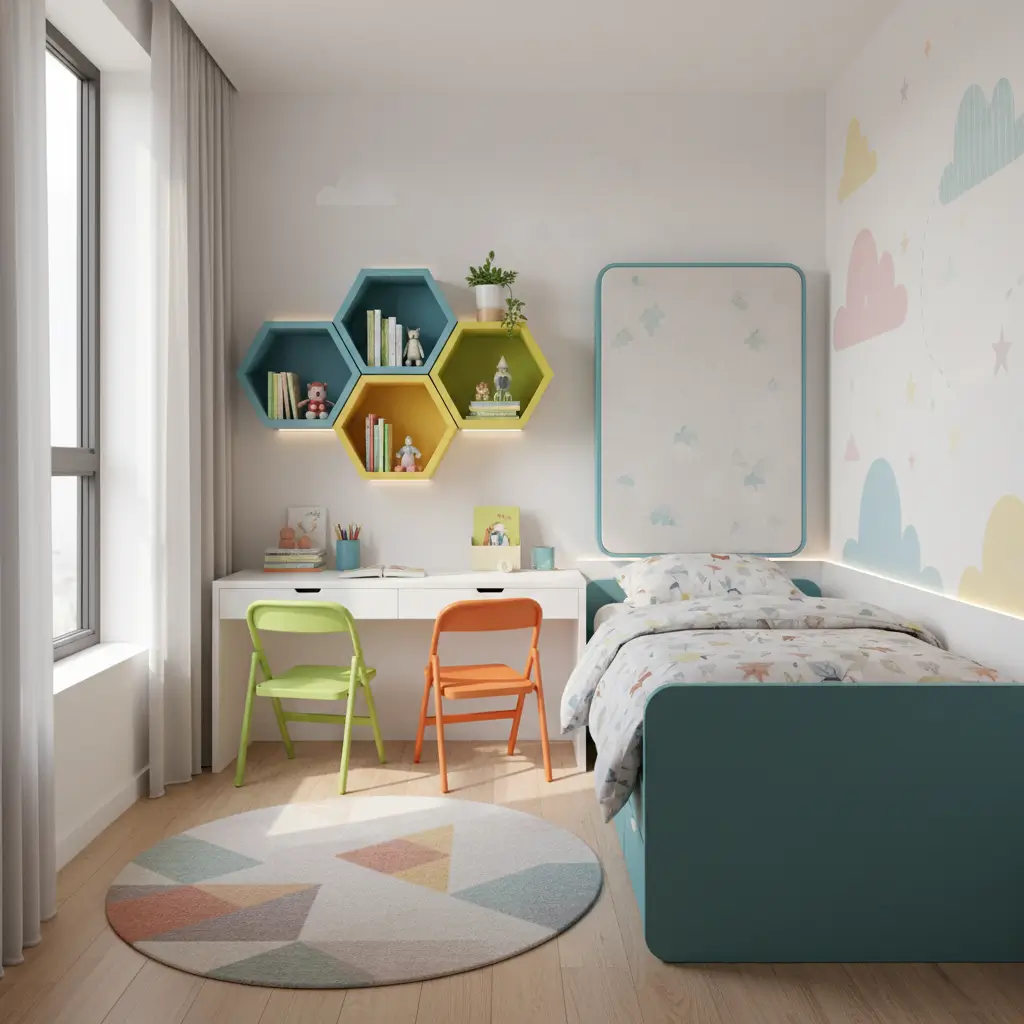
Remember when we thought kids needed huge desks? Turns out, a wall-mounted foldable study station works better in small rooms and actually gets more use. When it folds flat against the wall, you get back precious square footage for playing, dancing, or whatever chaos your kids create daily.
We installed one in my daughter’s room when she started kindergarten. Homework time? Fold it down. Play time? Fold it up. The simplicity means even she can manage it independently (mostly).
Features That Make It Work
Essential elements for foldable stations:
- Sturdy wall mounting into studs (non-negotiable)
- Built-in storage cubbies that stay accessible when folded
- Cork board or whiteboard backing
- Cable management for tablets or laptops
- Height-adjustable installation as they grow
The game-changer for us was adding a magnetic strip along the top edge. Scissors, rulers, and metal supplies stick right to it, staying organized and off the tiny work surface.
Making Study Spaces Appealing
Kids resist homework enough without uncomfortable study spaces. Add a cushioned stool that tucks under when folded, good lighting (clip-on lamps work great), and personalized decoration on the wall around it. My son has his artwork displayed above his station, making it feel special rather than punishment-adjacent.
Also Read: 12 Chic Modern Kids Bedroom Ideas and Playful Décor Touches
Floating Loft Play Space
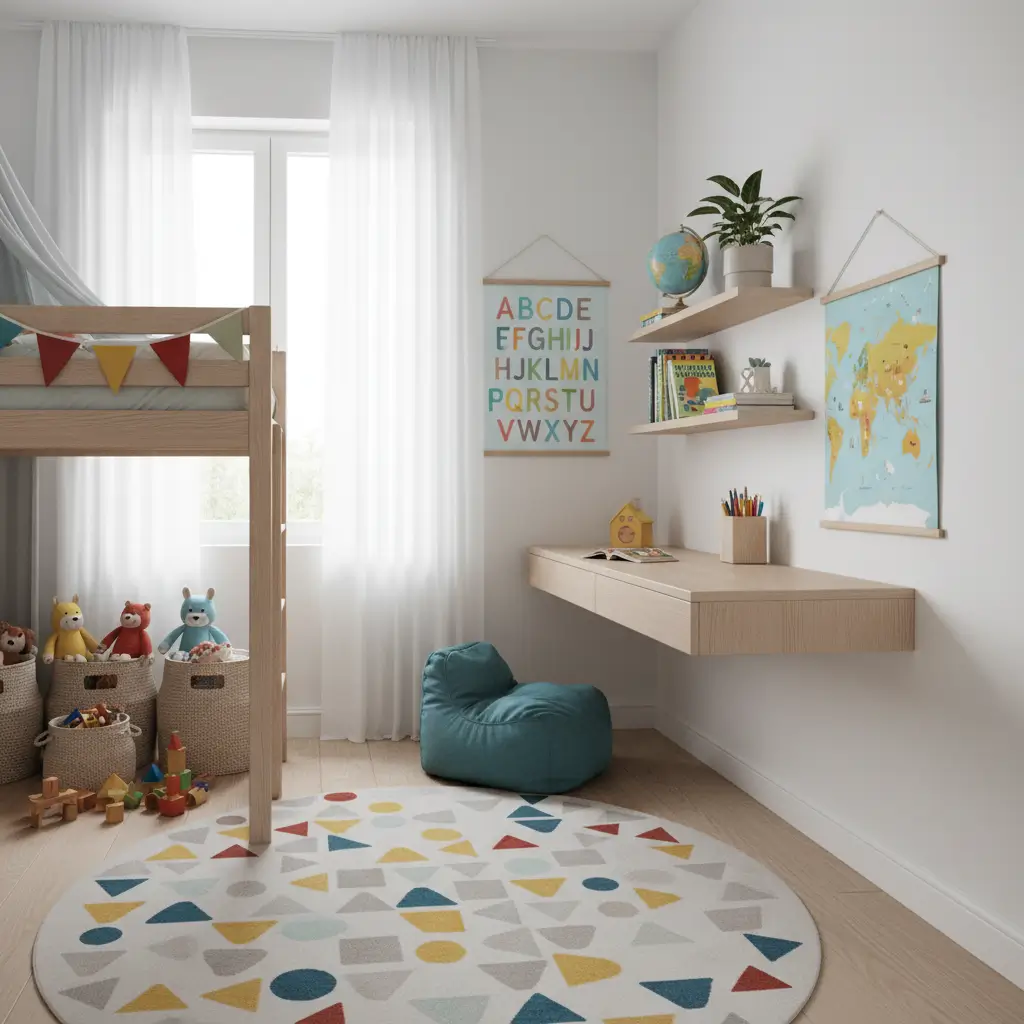
Imagine a magical floating platform where kids can play, read, or just escape to their own little world. The floating loft play space creates a second level in rooms with decent ceiling height, essentially doubling your usable space without touching the floor footprint.
My friend built one of these DIY-style (with professional help for safety), and it transformed her son’s tiny room into a two-story wonderland. The loft holds all his quiet activities while the floor stays clear for active play.
Design Considerations for Floating Lofts
Key elements for success:
- Minimum 8-foot ceilings (preferably higher)
- Professional installation for safety
- Railings at least 36 inches high
- Ladder or stairs that don’t eat floor space
- Weight limits clearly established and followed
What makes floating lofts special? They feel separate from the main room. Kids get that treehouse feeling while staying safely indoors. Plus, parents can still supervise from below without climbing up constantly.
Activities Perfect for Loft Spaces
The loft becomes whatever your kid needs most:
- Reading library with floor cushions
- LEGO building station with sorted bins
- Art studio with natural light from windows
- Quiet play zone for puzzles and games
- Meditation or calm-down space
FYI, adding string lights or battery-powered LEDs makes these spaces feel even more magical without complicated electrical work.
Under-Stair Bedroom Nook
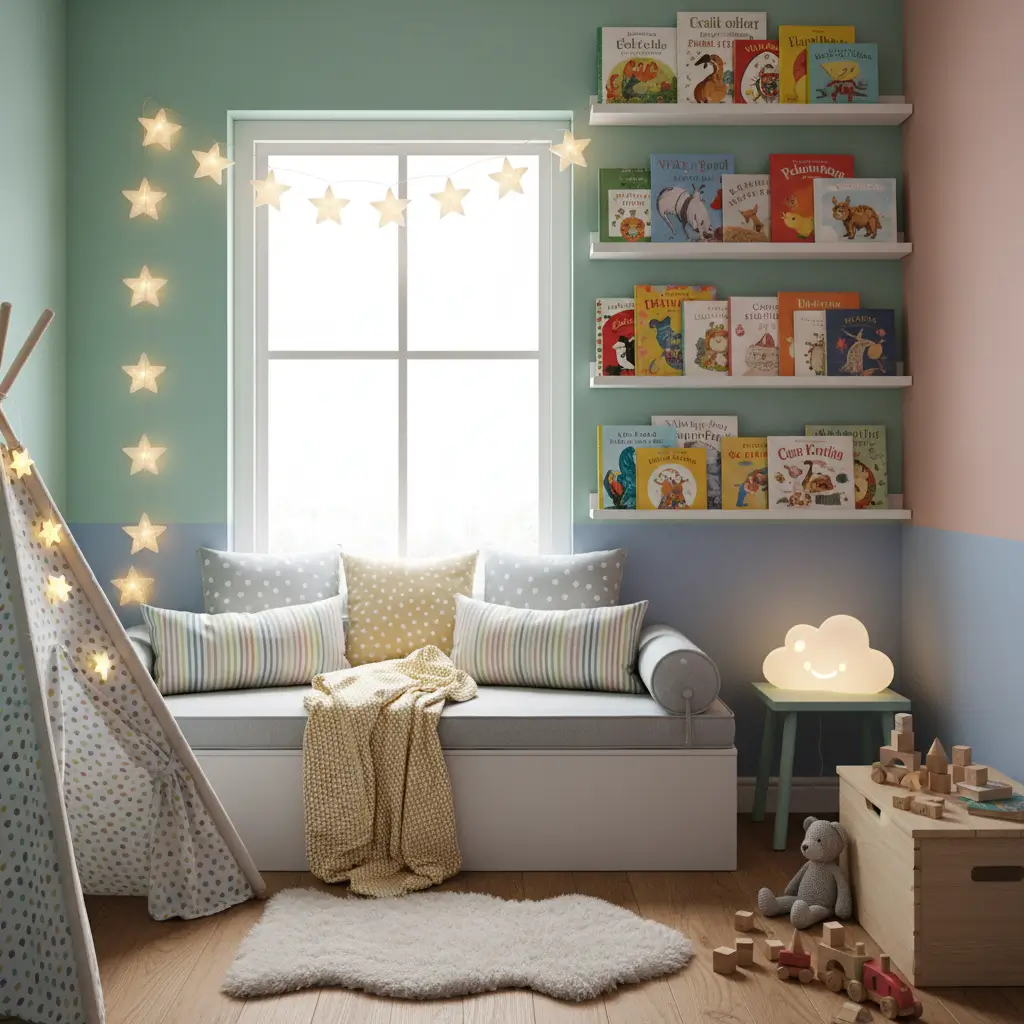
Got stairs in or near your home? That space underneath might be your small bedroom’s secret weapon. Under-stair bedroom nooks turn dead space into functional square footage, and kids absolutely love the cozy, cave-like feeling.
I’ve seen these work as sleeping spaces in tiny homes, but in regular bedrooms, they become epic hideaways. My cousin converted her under-stair space into her daughter’s reading cave, complete with fairy lights and cushions. The main bedroom suddenly felt huge with the bed pushed against a regular wall.
Maximizing Awkward Spaces
Smart under-stair uses include:
- Cozy sleeping nook for adventurous kids
- Built-in storage with custom drawers
- Study alcove with perfect desk height
- Play house or fort that’s always ready
- Closet space for hanging clothes
The sloped ceiling that usually makes these spaces awkward? Kids don’t care. They’re short enough that it doesn’t matter, and the unique shape makes it feel special rather than cramped.
Making It Safe and Accessible
Safety comes first with under-stair conversions. Ensure proper ventilation, install battery-powered lights for power-free illumination, and add soft padding on any low-hanging edges. Some parents install baby gates for younger kids who might bonk their heads until they learn the space.
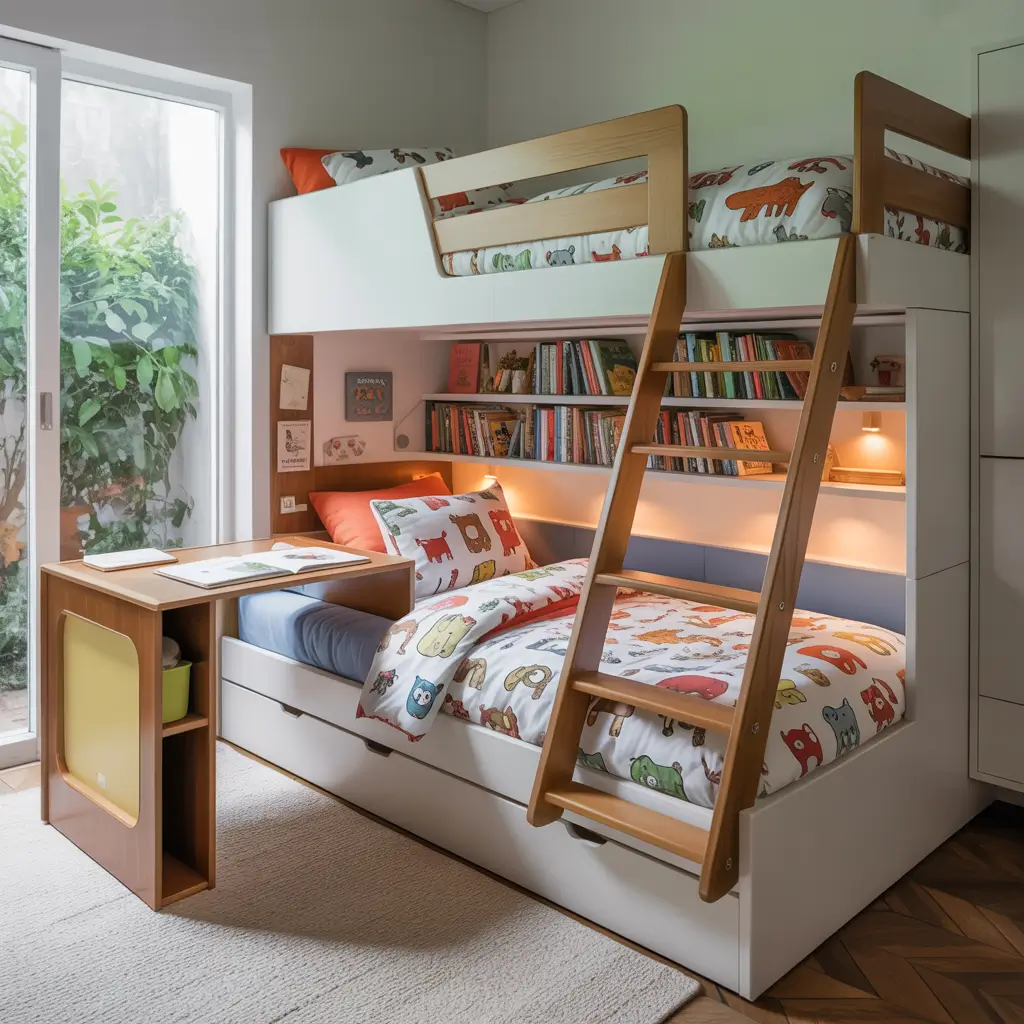
Multi-Level Bunk Bed with Drawers
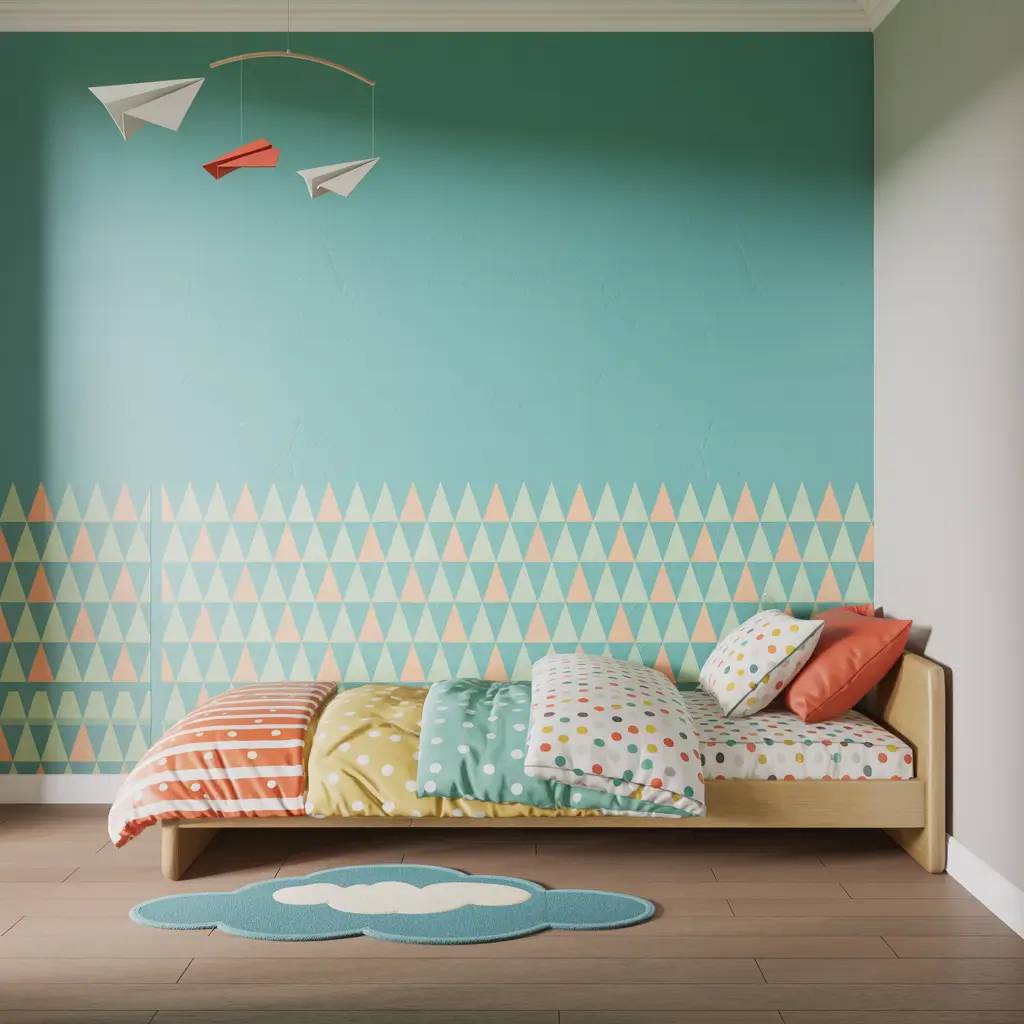
Think bunk beds are just two mattresses stacked? Think again. Modern multi-level bunks with integrated storage basically create bedrooms within bedrooms. These aren’t your childhood’s rickety bunk beds – they’re furniture systems that happen to include sleeping spaces.
My kids share a room with one of these setups, and it’s been a game-changer. The bottom bunk has three drawers underneath, the stairs have four more storage cubbies, and the top bunk has a built-in shelf. We literally don’t need any other furniture in the room.
Storage Integration That Works
Modern bunk storage options:
- Staircase drawers (each step is storage)
- Under-bed rolling drawers
- Built-in desks beneath raised bottom bunks
- Side-mounted organizers
- Headboard shelving systems
The unexpected benefit? Having designated storage for each kid reduces fights by approximately 73% (unscientific but feels accurate). Blue drawers for one kid, red for the other – problem solved.
Choosing the Right Configuration
L-shaped bunks maximize corner spaces. Parallel bunks work in narrow rooms. Triple bunks (yes, they exist) work for multiple kids or sleepovers. Consider how the configuration affects room flow and natural light before committing.
Also Read: 12 Colorful Kids Bedroom Ideas and Cheerful Wall Art
Modular Cube Storage Wall
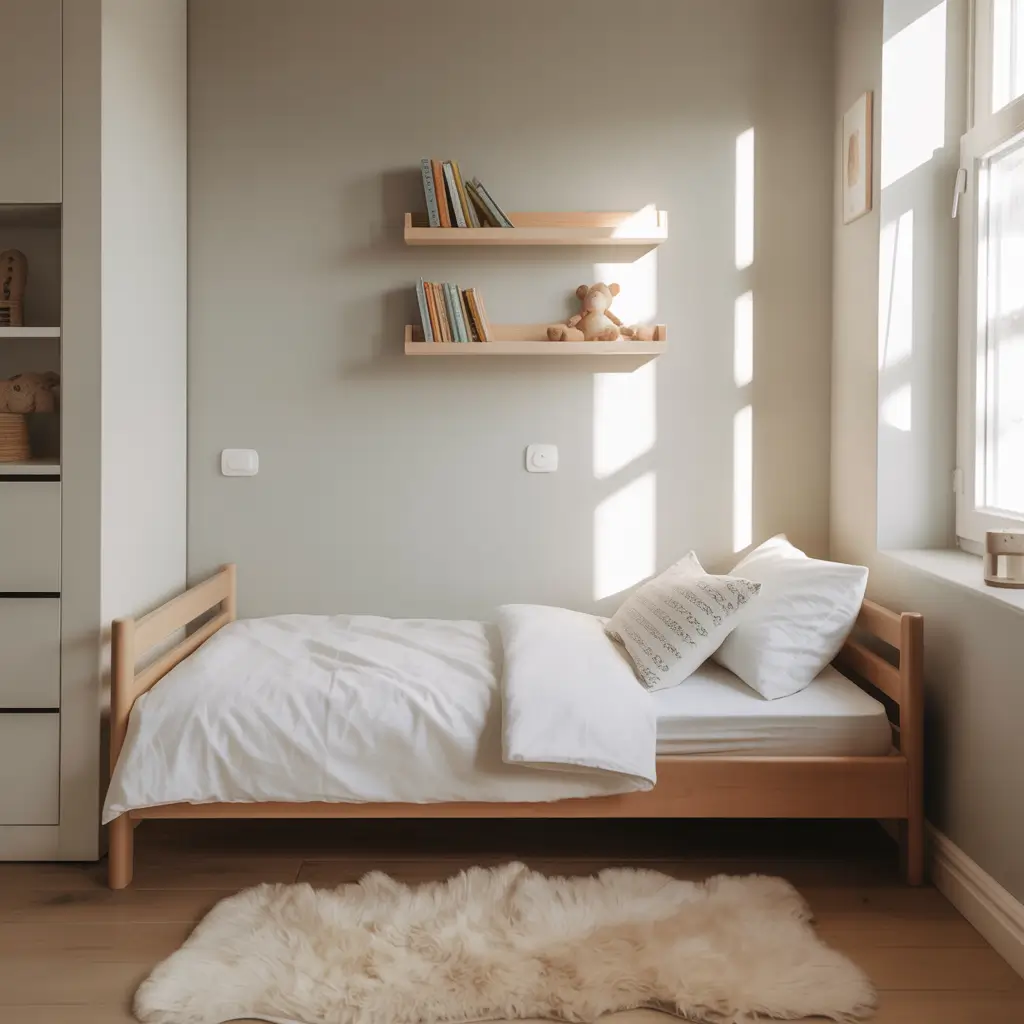
Modular cube storage might be the most versatile solution for small kids’ bedrooms. These systems grow and adapt as your kids’ needs change, and they look intentional rather than cluttered.
I started with four cubes when my son was three. Now at seven, we have twelve cubes in different configurations, and they’ve held everything from diapers to soccer trophies. The beauty? Rearranging them takes minutes and completely changes the room’s functionality.
Endless Configuration Options
Cube storage possibilities:
- Room divider creating separate zones
- Entertainment center for older kids
- Toy display and storage combo
- Reading nook when arranged in an L-shape
- Desk support with cubes as legs
Pro tip: get cubes from the same system so they’re truly modular. Mixing brands usually means slightly different sizes that don’t play well together (learned that the hard way).
Making Cubes Work Harder
Maximize cube functionality with:
- Fabric bins for hiding clutter
- Clear boxes for collections
- Bookshelf inserts for paperbacks
- Drawer inserts for small items
- Leave some empty for display
The key is not filling every cube. Empty spaces prevent the wall from feeling overwhelming and give kids room to add their own touches 🙂
Hanging Pod Reading Corner
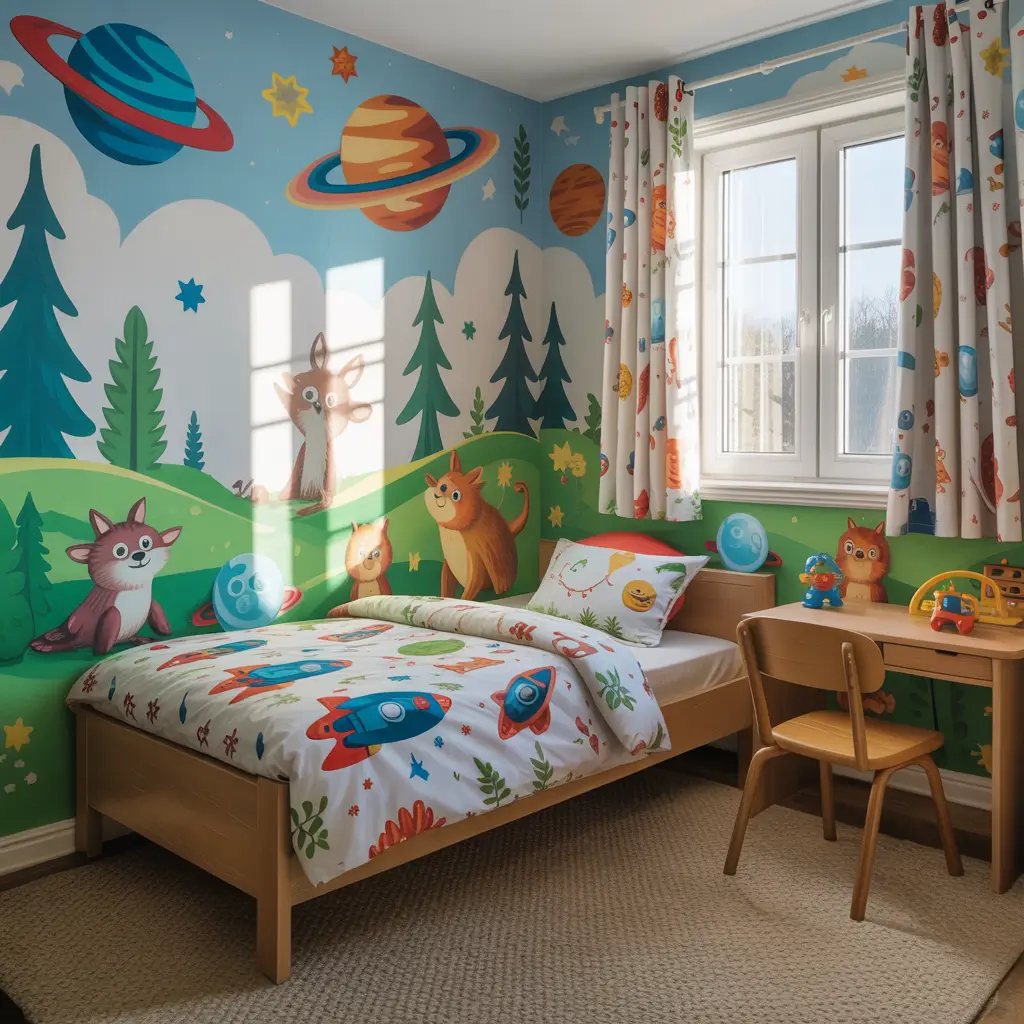
Want to add a reading space without using any floor space? Enter the hanging pod chair – basically a cocoon that dangles from the ceiling. Kids get a private retreat that swings gently while you get to keep the floor clear.
My daughter begged for one of these for her eighth birthday. I was skeptical (seemed gimmicky), but it’s become her favorite spot. She reads, does homework, and sometimes just sits in there to decompress after school.
Installation and Safety
Critical hanging pod considerations:
- Ceiling joist installation only (drywall won’t hold)
- Weight limits typically 150-200 pounds
- Swivel hardware prevents tangling
- Washable cushions for inevitable spills
- Position away from walls to prevent bumping
We added battery-powered fairy lights inside the pod, creating a magical reading environment without electrical work. The soft glow makes evening reading sessions feel special.
Making It Multi-Functional
Beyond reading, hanging pods work for:
- Quiet time or calm-down space
- Video game chair for older kids
- Study spot with lap desk
- Phone calls with friends (tweens love the privacy)
- Meditation or mindfulness practice
Fold-Out Murphy Bed for Kids

Murphy beds aren’t just for studio apartments anymore. Kid-sized Murphy beds transform bedrooms into playrooms during the day and bedrooms at night, doubling your functional space.
My friend installed one in her son’s 9×10 room, and suddenly he had space for dance parties, LEGO building marathons, and actual playdates where kids could move around. At bedtime, down comes the bed – room transformation complete.
Modern Murphy Bed Features
Today’s kids’ Murphy beds include:
- Built-in shelving that stays level when folded
- Desk attachments that fold with the bed
- Safety locks preventing accidental closure
- Lightweight mechanisms kids can operate
- Fun designs like chalkboard fronts
The safety features have come so far. Modern Murphy beds have pistons that prevent slamming, locks that keep them closed or open, and some even have sensors that stop closing if something’s in the way.
Making It Work for Kids
The trick to Murphy bed success? Making the transition easy enough for kids to do independently. If it’s too heavy or complicated, you’ll end up doing it every day. Look for models specifically designed for children’s weights and heights.
Also Read: 10 Creative Boys Bedroom Ideas Age 8-10 and Colorful Layouts
Bright Minimalist Scandinavian Room
Who says small has to mean cluttered? The Scandinavian approach to small kids’ bedrooms proves that less stuff plus smart design equals rooms that feel bigger than they are.
We went full Scandi in my son’s tiny room last year: white walls, light wood furniture, and strategic pops of color. The room went from feeling cramped to feeling spacious, and I swear it even looks bigger in photos.
Essential Scandinavian Elements
Core components for the look:
- Light color palettes (whites, soft grays, pale woods)
- Functional furniture with clean lines
- Natural materials and textures
- Minimal decoration, maximum impact
- Hidden storage everywhere
The secret sauce? Everything has a purpose and a place. That cute wooden peg rail isn’t just decoration – it holds bags, jackets, and hats. The sleek bench has storage inside. Even the rug defines play space while adding warmth.
Making Minimalism Kid-Friendly
Scandinavian doesn’t mean sterile. Add warmth through soft textiles, display favorite toys as art, and let kids choose one or two colors for accents. My son picked yellow, and his yellow lamp, pillow, and toy bins pop against the neutral backdrop beautifully.
IMO, the best part about Scandinavian design for small rooms is how it tricks the eye. Light colors reflect light, making spaces feel larger. Minimal furniture means more floor space. Simple lines don’t compete for visual attention. It all adds up to rooms that breathe despite their size.
Making Small Rooms Work Brilliantly
After trying all these ideas (okay, most of them), here’s what I know for sure: small kids’ bedrooms aren’t a limitation – they’re an opportunity to get creative.
Every single one of these solutions came from someone saying, “There has to be a better way.”
Start with your biggest pain point. No floor space? Go vertical with lofts or Murphy beds. Toy explosion? Hidden storage or modular systems.
Need study space? Wall-mounted stations save the day.
Remember, kids don’t see small rooms as problems – they see cozy spaces perfect for imagination. With the right ideas and a bit of creativity, you can transform that tiny bedroom into a space that works beautifully for both kids and parents.
The best small bedroom is one that grows with your child while making the most of every single square inch. And honestly? Some of the happiest kids I know have the tiniest, most cleverly designed rooms. Size really doesn’t matter when the design is this smart.