10 Functional Small Coffee Bar Ideas for Small Homes
- Coffee Bar Ideas
 Ben
Ben- 0
- 27 minutes read
Small coffee bars are proof that you don’t need a sprawling kitchen to fuel your caffeine addiction properly.
I’ve lived in apartments where my entire kitchen was smaller than some people’s walk-in closets, yet I still managed to create coffee stations that made my morning ritual feel intentional instead of chaotic.
The secret isn’t having space – it’s using whatever space you have smartly.
Here’s what nobody tells you about small coffee bars: they actually work better than huge elaborate setups because everything stays within arm’s reach.
I’ve designed coffee stations in spaces ranging from tiny studio apartments to slightly-less-tiny one-bedrooms, and honestly? The compact setups always end up more functional than those massive kitchen islands with coffee makers a mile away from the mugs.
These 10 small coffee bar ideas come from real spaces I’ve actually created or helped friends build.
No impossible Pinterest fantasies requiring contractor-level skills or unlimited budgets – just practical solutions for coffee lovers who refuse to let limited counter space stand between them and excellent home-brewed coffee.
1. Minimalist Corner Coffee Nook

Corner coffee nooks transform that awkward triangle space in your kitchen that usually collects junk into an actual functional area. I created one in my last apartment’s dead corner, and it became my favorite 18 inches of the entire kitchen. Corners offer vertical space you’re probably not using anyway, making them perfect for compact coffee setups.
The key is choosing the right corner shelving unit. I found a three-tier corner shelf at Target for $35 that fit perfectly in my weird kitchen angle. The top tier holds my pour-over setup and kettle, middle tier has mugs and coffee beans, bottom tier stores filters and backup supplies. Everything lives in one compact vertical stack that takes up maybe 10 inches of floor space.
Keep the minimalist vibe by limiting yourself to essential items only. I allow exactly six mugs in my corner nook, one coffee maker, two storage canisters, and one small plant. Nothing else. This ruthless editing prevents corner nooks from becoming corner chaos, which defeats the entire purpose of creating an organized coffee station.
Setting Up Your Corner Nook
Essential elements include:
- Corner shelving unit (2-3 tiers minimum)
- Compact coffee maker (French press or pour-over work great)
- Limited mug collection (4-6 maximum)
- Airtight coffee storage containers
- One decorative element (plant or small art)
2. Floating Shelf Espresso Station
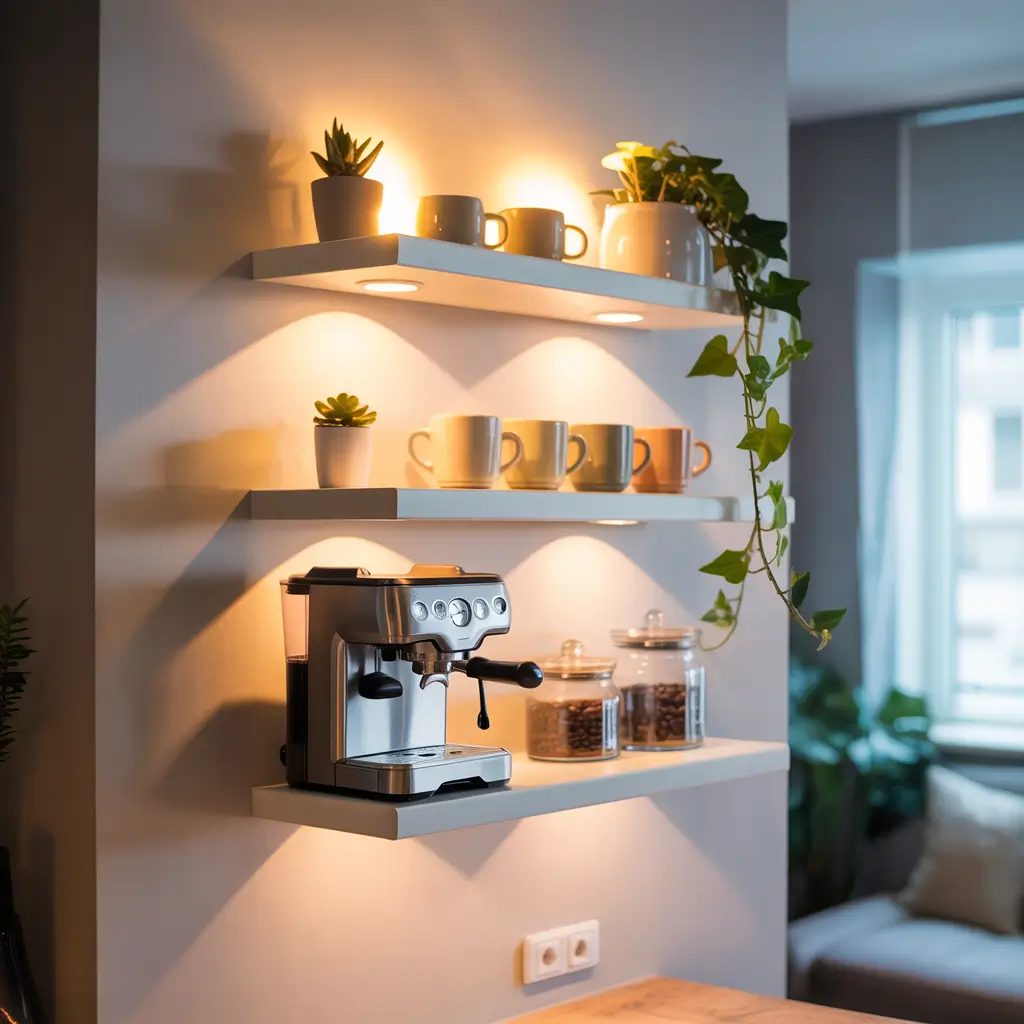
Floating shelves create coffee bars that literally hover above your counter, freeing up work space while keeping everything accessible. I installed a floating shelf espresso station in my current kitchen, and the visual lightness makes my tiny space feel way less cramped than traditional furniture would. Plus, cleaning underneath takes approximately two seconds instead of moving heavy cabinets around.
Choose heavy-duty floating shelves rated for serious weight – espresso machines aren’t light. I went with a solid oak shelf that’s 30 inches wide and 12 inches deep, mounted with hidden brackets that support up to 50 pounds. This matters because the last thing you need is your expensive espresso machine crashing to the floor at 6 AM when you’re barely conscious.
Position your shelf at a comfortable working height – I installed mine at 40 inches, which works perfectly for operating my espresso machine without hunching. Keep the actual shelf surface minimal with just your machine, grinder, and maybe a small tray for demitasse cups. Everything else (beans, supplies, backup equipment) lives in the cabinet below. FYI, this forced organization actually improved my coffee game because I’m not digging through clutter every morning. 🙂
3. Vintage Cart Coffee Bar
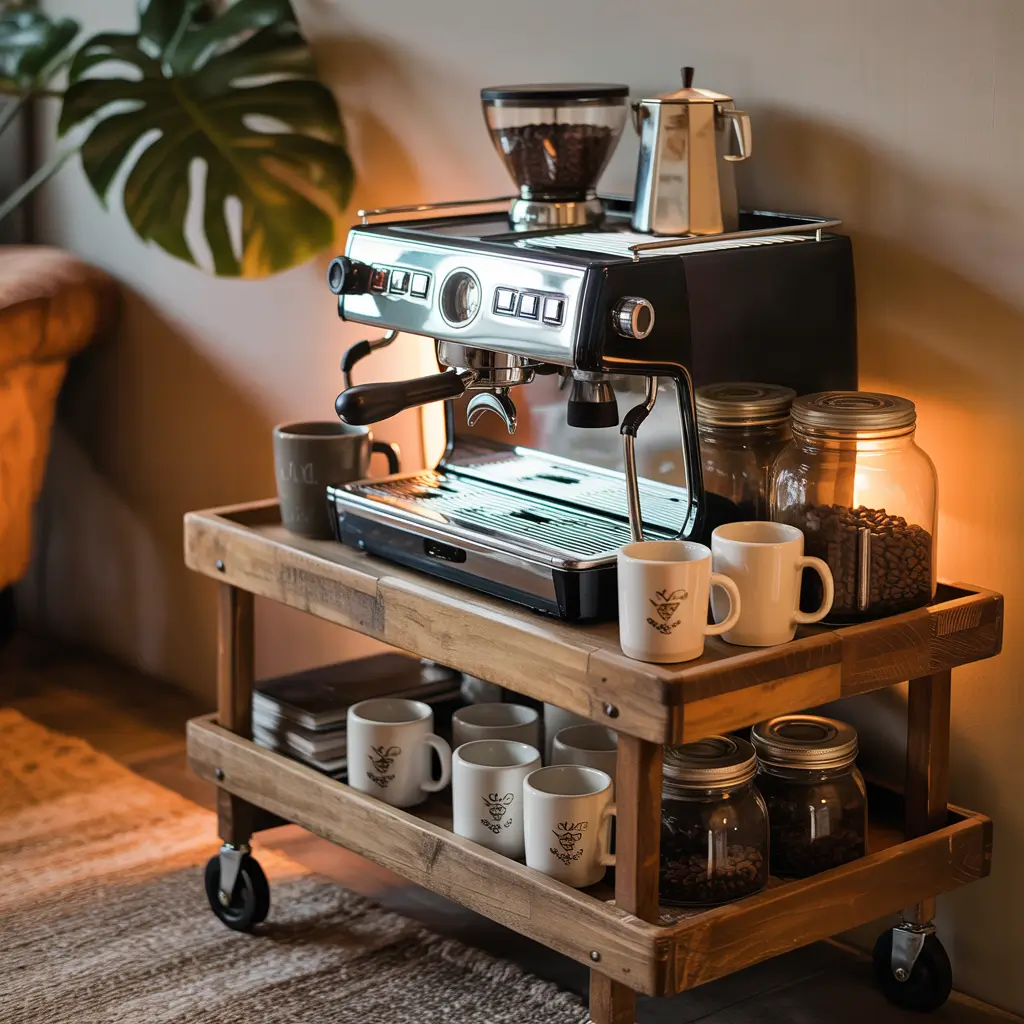
Coffee carts bring mobility and charm that fixed installations can’t match, plus they’re basically furniture that works overtime. I scored a vintage brass bar cart at an estate sale for $45, and after some cleaning and new casters, it became the most functional and complimented piece in my entire apartment. The ability to roll your coffee setup around opens up possibilities you don’t get with permanent installations.
Look for carts with at least two sturdy shelves and wheels that actually roll smoothly – test this before buying. My cart has three tiers: top shelf holds my Chemex and current coffee beans, middle tier has all my mugs and filters, bottom shelf stores my grinder and backup supplies. The vertical organization means everything’s accessible without spreading across precious counter space.
Style your vintage cart without making it so precious you’re afraid to actually use it. I added some vintage coffee advertisements I printed and framed, a small potted succulent, and antique brass spoons I found at a thrift store. But it’s still a working coffee station first, decorative piece second. Function beats aesthetics when you’re making coffee before your brain fully works.
Also Read: 15 Cozy Coffee Table Christmas Decor Ideas for a Warm
4. Compact Wall-Mounted Coffee Station
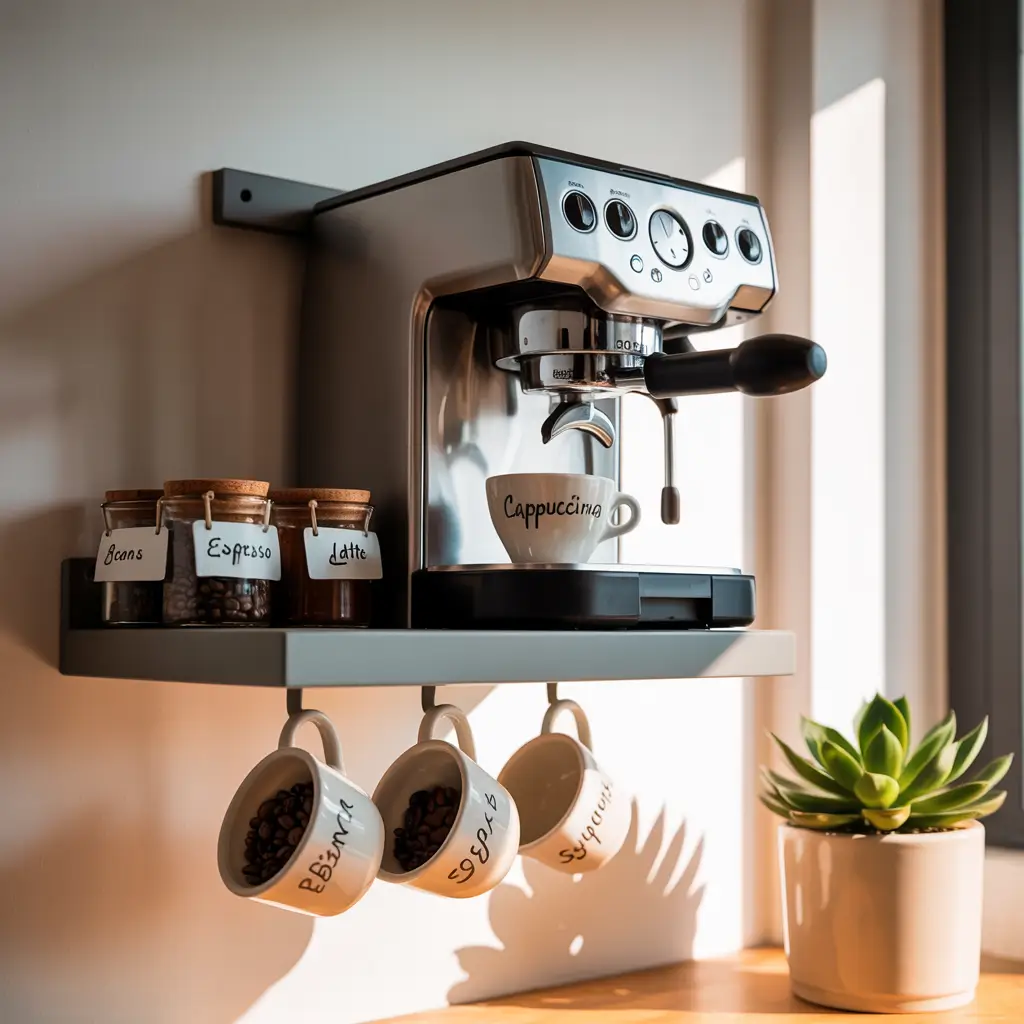
Wall-mounted coffee stations are genius for truly tiny spaces because they use vertical real estate you’re probably ignoring. I helped my friend create one in her micro-studio where counter space was approximately zero, and the transformation from no coffee setup to fully functional bar was mind-blowing considering we never touched the actual counter.
Install a pegboard or slat wall system as your base – I prefer pegboard because you can reconfigure it endlessly as your needs change. Mount it at a comfortable height (around 48-60 inches from the floor) and add hooks, small shelves, and baskets to hold everything. My friend’s setup has hooks for mugs, a small shelf for her Aeropress, magnetic containers for coffee and sugar, and a hanging basket for filters.
The beauty of wall-mounted setups is that everything’s at eye level and visible. You can see when you’re running low on coffee beans, find your favorite mug instantly, and grab what you need without opening a single cabinet. This visibility actually reduced my coffee supply spending because I stopped buying duplicates of things I already owned but couldn’t find in messy cabinets. :/
Wall-Mounted Station Components
Build your setup with:
- Pegboard or slat wall (24×36 inches minimum)
- S-hooks for hanging mugs
- Small floating shelves for equipment
- Magnetic or clip containers for supplies
- Proper anchoring into wall studs
5. Scandinavian Style Coffee Corner
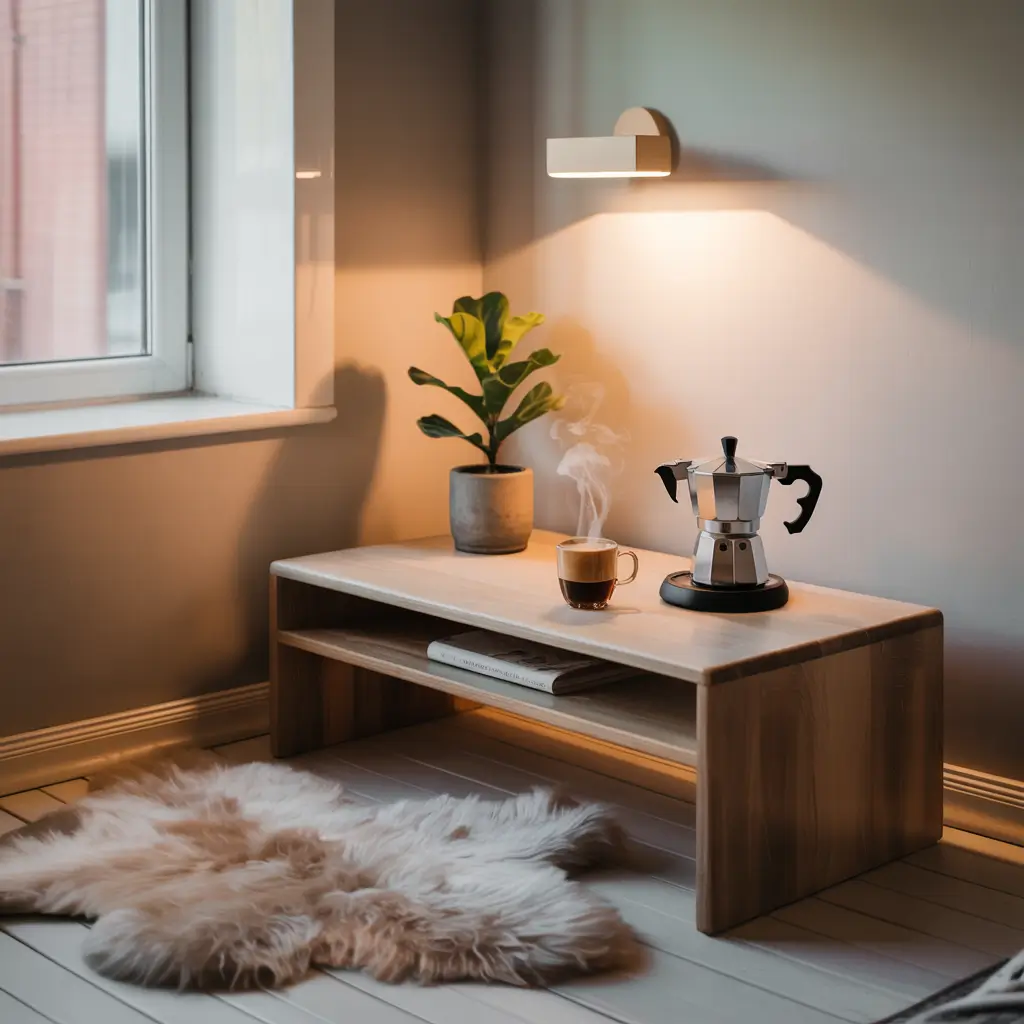
Scandinavian coffee corners embrace that hygge concept everyone’s obsessed with – cozy, minimal, and incredibly functional. I created one in my north-facing kitchen that gets zero natural light, and the Scandi approach made it feel brighter and more inviting than any amount of overhead lighting could achieve. The secret is light wood, white elements, and thoughtful simplicity.
Start with light wood shelving or a small light-colored table as your base. I used a small birch console table that’s just 24 inches wide, providing enough space for my coffee maker and a few essentials without overwhelming my tiny kitchen. The light wood reflects what little light exists and creates that signature Scandinavian brightness.
Add warmth through textiles and ceramic elements rather than lots of stuff. I have a linen runner under my coffee setup, white ceramic canisters for beans, and light gray mugs that feel cozy without adding visual weight. One small plant in a white pot completes the look. The restraint makes the space feel calm instead of cluttered, which is exactly what you want for morning coffee rituals.
6. Industrial Pipe Coffee Shelf Setup
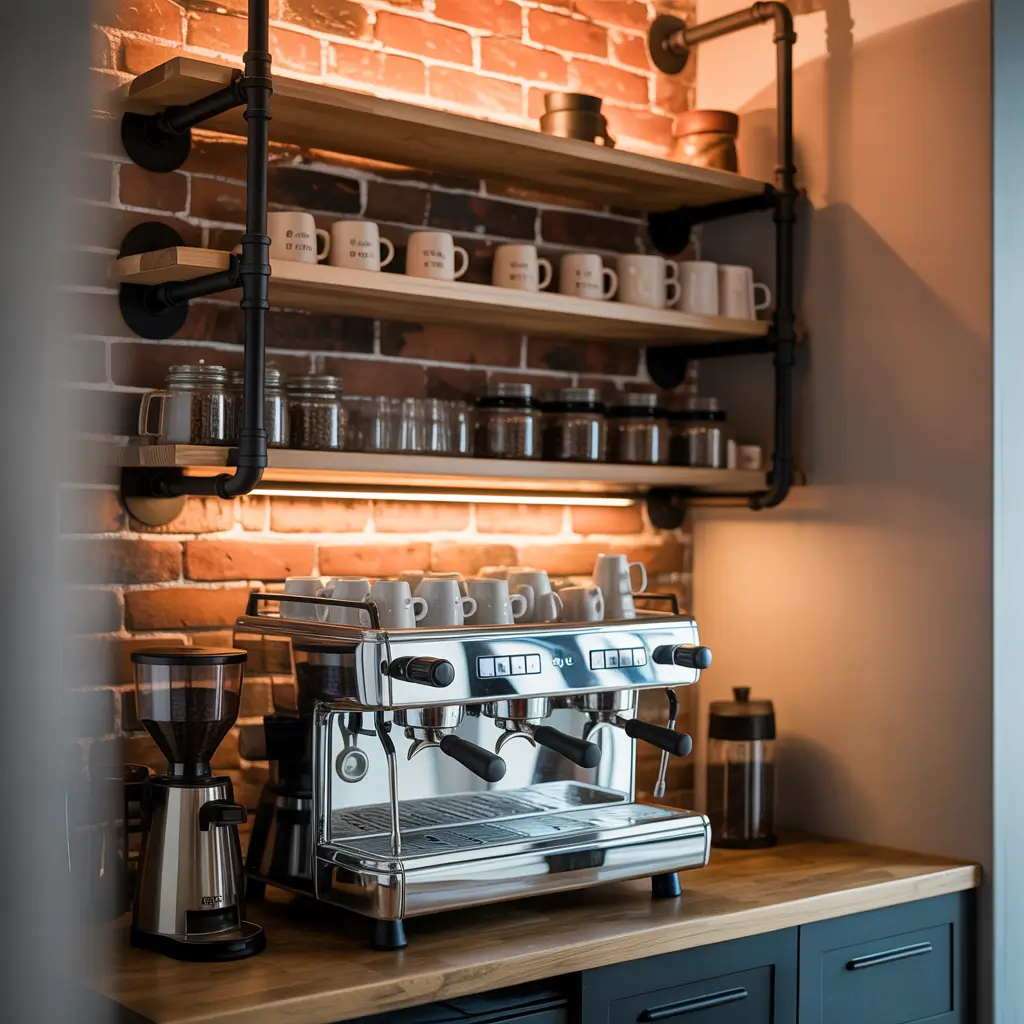
Industrial pipe shelving creates custom coffee bars that look expensive but cost surprisingly little if you’re willing to DIY. I built mine using black iron pipes from the hardware store and reclaimed wood, spending maybe $85 total for a setup that looks like it belongs in a Brooklyn coffee shop. The industrial vibe turns basic plumbing supplies into legit furniture, which is pretty brilliant when you think about it.
Plan your configuration before buying pipes – I sketched mine out and made a detailed supply list to avoid multiple hardware store trips. My setup uses floor-mounted pipes creating a two-tier shelf system: lower shelf holds my coffee maker and grinder, upper shelf has mugs and decorative elements. The pipes also provide built-in hanging spots for mugs using S-hooks.
The beauty of pipe shelving is that you customize every dimension to fit your exact space. No “almost fits” frustration like with store-bought furniture – you measure, cut, and assemble pieces that fit perfectly in whatever weird corner or narrow wall space you’re working with. Plus, the raw industrial aesthetic forgives imperfections and actually looks better with wear over time.
Also Read: 15 Chic Circle Coffee Table Decor Ideas for Cozy Living
7. Hidden Cabinet Coffee Bar
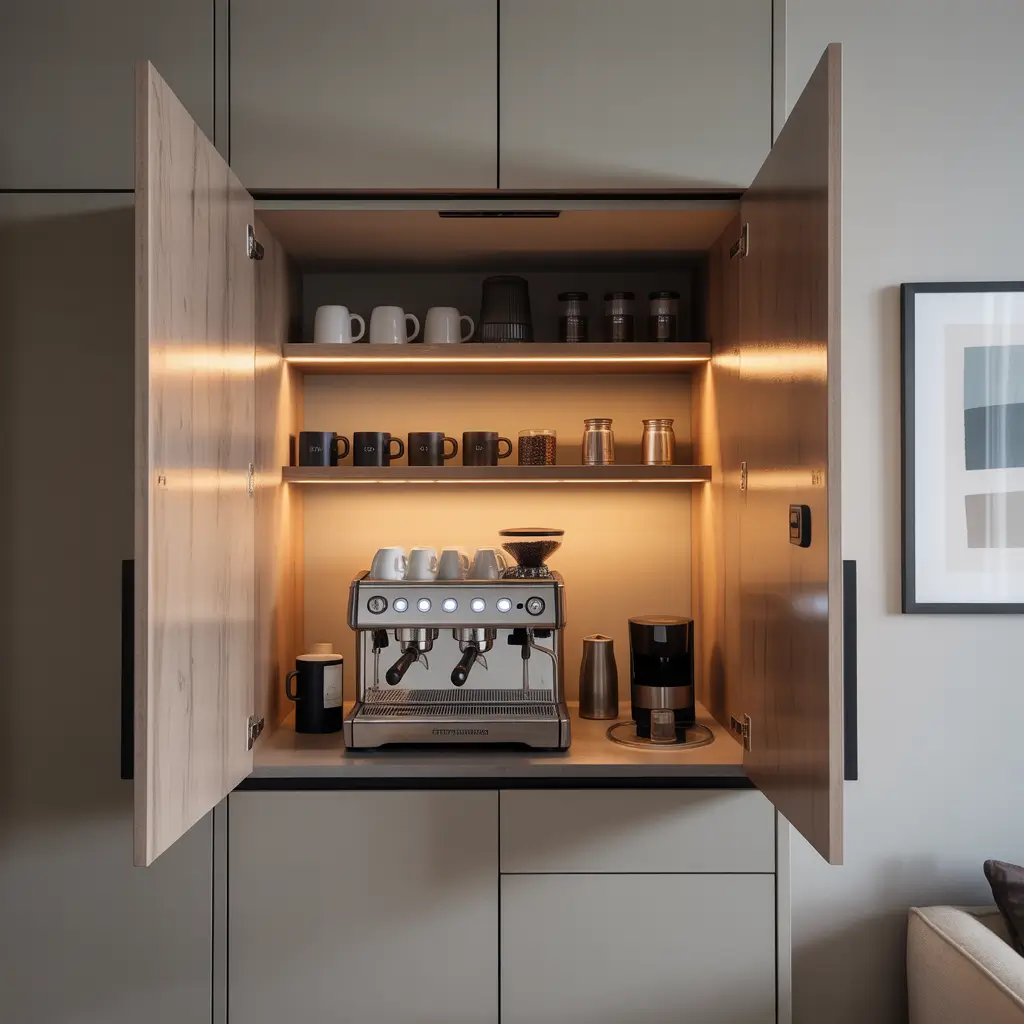
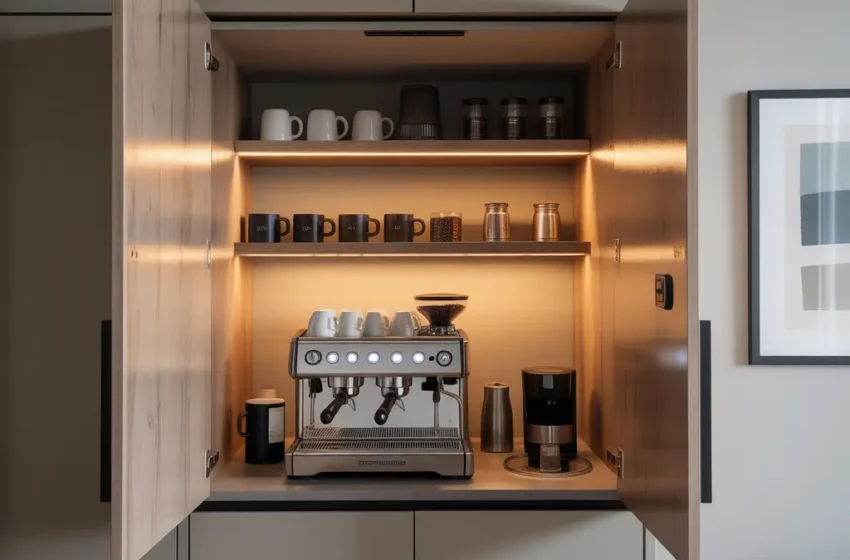
Hidden cabinet coffee bars are my favorite solution for people who want coffee functionality without permanent visual clutter. I installed one in my previous apartment using an IKEA cabinet hack, and being able to close doors and hide the entire setup was life-changing for keeping my small kitchen looking tidy when not actively caffeinating.
Choose a cabinet with doors that open wide – bifold or accordion-style doors work better than traditional ones because they don’t block access when open. I mounted a power strip inside for plugging in my coffee maker and grinder. Added small shelves inside the doors for mugs and installed pull-out shelves for easy access to equipment. Everything lives contained in one cabinet that closes completely when not in use.
The trick is organizing the interior so you can access everything without removing other items first. I keep my coffee maker on a pull-out shelf, beans in airtight containers on the door-mounted rack, and mugs hanging from hooks on the inside of the cabinet door. Opening the cabinet reveals my complete coffee setup; closing it shows a clean, minimal kitchen. IMO, this is the perfect solution for anyone who loves coffee bars but hates visual clutter.
Hidden Cabinet Organization Tips
Maximize interior space with:
- Pull-out shelves for heavy equipment
- Door-mounted racks for lightweight items
- Internal power strip for appliances
- Hooks for hanging mugs and tools
- Clear containers so you can see inventory
8. Small Apartment Countertop Coffee Bar

Countertop coffee bars work when you have approximately 18-24 inches of counter space and need maximum efficiency from minimal footprint. My first apartment coffee bar occupied exactly 20 inches of counter yet held everything I needed for daily lattes. The key is choosing compact equipment and organizing vertically instead of spreading horizontally.
Invest in a small two-tier organizer or corner shelf that sits on your counter. I use a bamboo two-tier shelf that holds my espresso machine on the bottom and mugs plus supplies on top. This vertical stacking means I’m using the space above my counter that would otherwise just be empty air. Going vertical literally doubles your usable space without requiring any more counter real estate.
Choose compact coffee equipment designed for small spaces. I switched from a bulky drip machine to a compact espresso maker that’s half the footprint with better coffee quality. My hand grinder takes up maybe 4 inches versus the 10-inch electric one I used to own. Smaller equipment doesn’t mean sacrificing quality – often compact options force you to be more intentional about your coffee, resulting in better results anyway.
9. Rustic Wooden Coffee Hutch
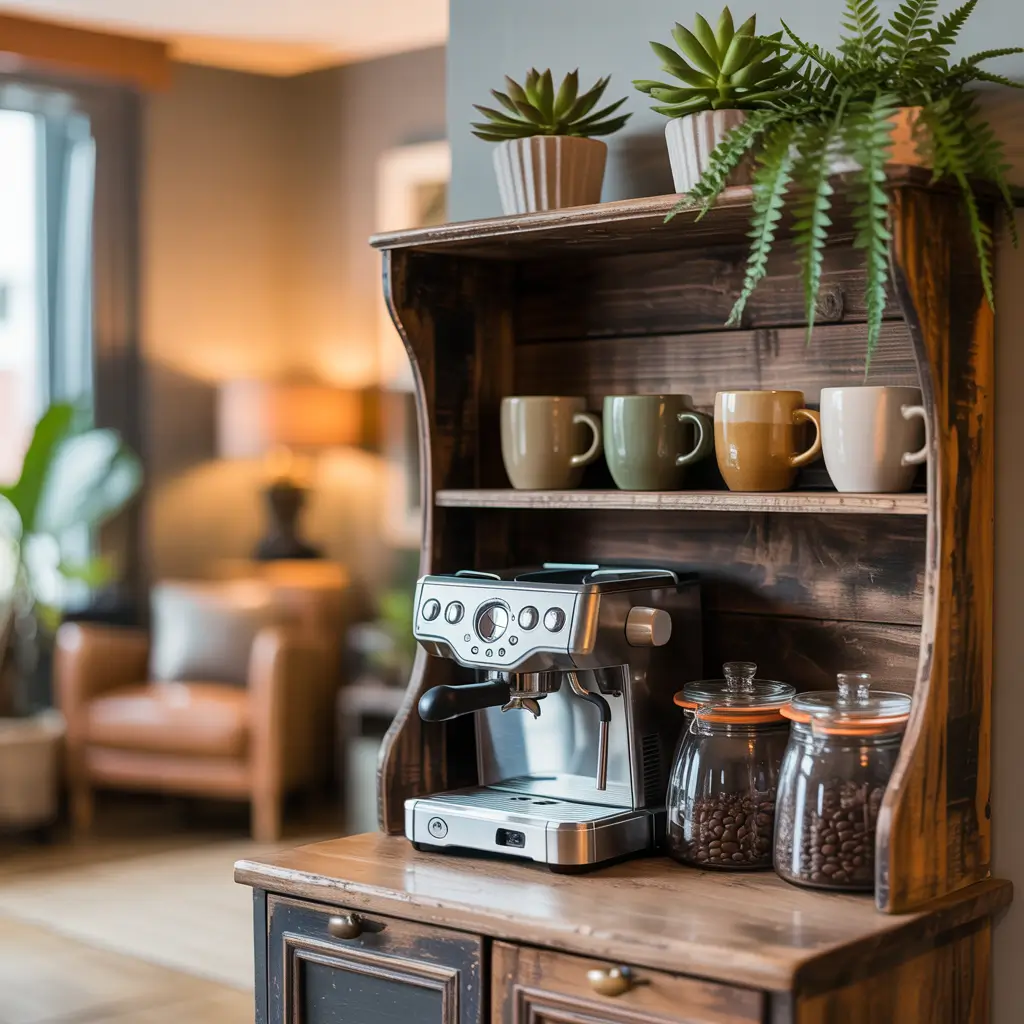
Wooden coffee hutches bring farmhouse charm while providing enclosed storage that keeps small spaces tidy. I found an antique hutch at a barn sale for $60, cleaned it up, and it became the most character-filled piece of furniture I’ve ever owned while solving all my coffee storage issues. The enclosed bottom hides supplies while the open top displays pretty mugs and equipment.
Look for hutches with a mix of open and closed storage. Mine has glass-front upper cabinets showing off vintage coffee mugs and a closed lower cabinet hiding backup beans, filters, paper products, and all the less-attractive necessities. The combination of display and storage means you get both functionality and aesthetics instead of choosing one over the other.
Style the hutch without making it so packed that accessing coffee becomes a puzzle. I keep daily-use items at eye level – current coffee beans, favorite mugs, my French press. Pretty-but-rarely-used items go higher, and backups live in the lower cabinet. The organization means I can make coffee half-asleep without thinking, which is exactly what you need from a coffee bar at 6 AM.
Also Read: 15 Elegant Round Coffee Table Decor Ideas for Living Rooms
10. Multi-Tier Rolling Coffee Cart
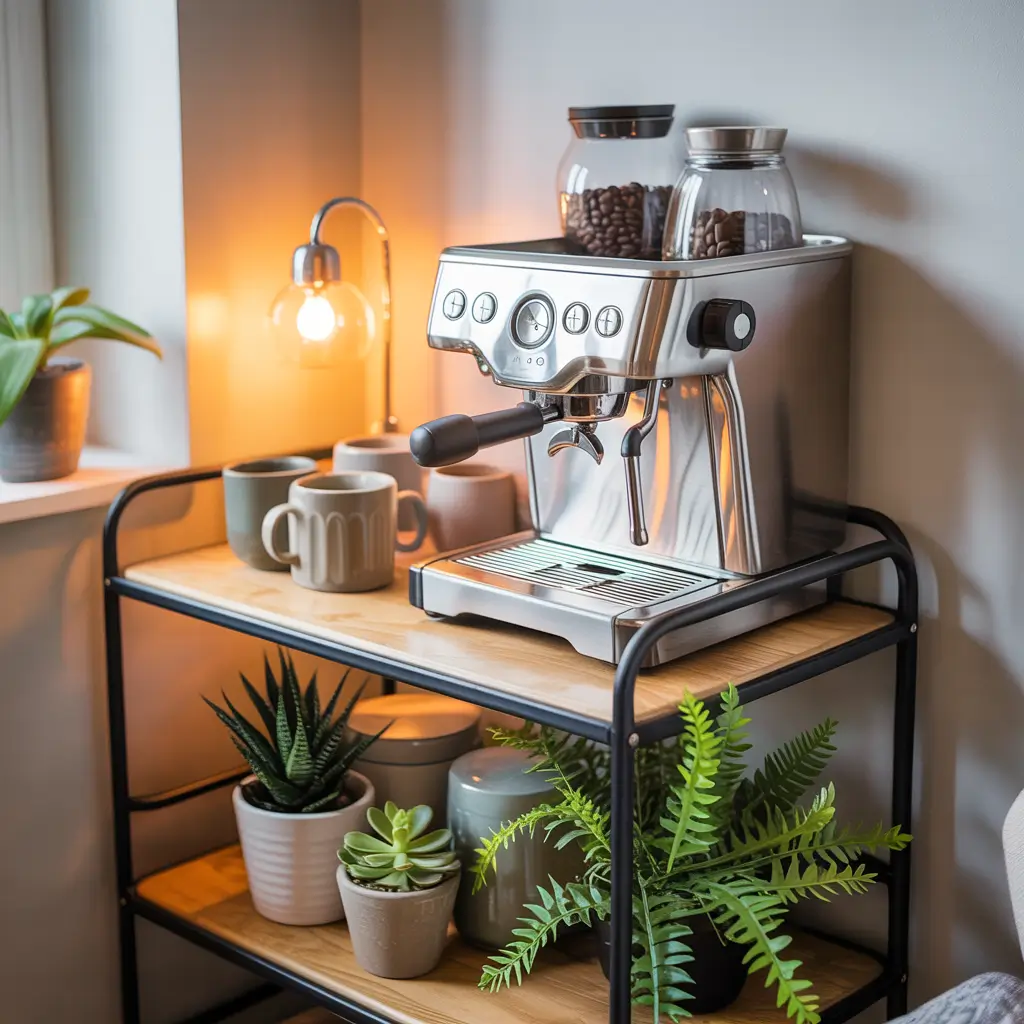
Rolling coffee carts with multiple tiers maximize vertical storage while maintaining mobility – basically the Swiss Army knife of small coffee bars. I use a three-tier cart in my current apartment, and the ability to roll it between the counter and dining table based on need is genuinely useful instead of just a gimmick like I initially thought.
Choose carts with sturdy construction and wheels that lock – wobbly carts with rolling wheels are disasters waiting to happen with hot coffee. My cart is metal with wood shelves, stands about 30 inches tall, and has three spacious tiers. Top tier holds my coffee maker, middle has mugs and beans, bottom stores my grinder and extra supplies. Everything’s accessible without bending or reaching, which matters more than you’d think at 6 AM.
The mobility means I can adapt my coffee setup to different situations. Morning coffee? Cart stays by the counter near the water and coffee maker. Having friends over? I roll it to the dining table as a coffee service station. Need counter space for cooking? Cart moves temporarily to the corner. This flexibility makes small spaces work harder than fixed installations ever could.
Multi-Tier Cart Features
Look for these qualities:
- At least three tiers for adequate storage
- Locking wheels for stability
- Sturdy weight capacity (30+ pounds)
- Appropriate height for comfortable use
- Metal or solid wood construction
Creating Your Perfect Small Coffee Bar
After exploring all these small coffee bar ideas, you’re probably ready to transform your own compact space into a proper coffee station.
Here’s my honest advice from years of creating coffee setups in tiny spaces: start by assessing your actual daily coffee routine and build around that instead of some fantasy version where you’re a barista with unlimited time.
The best small coffee bar matches your real coffee habits and available space. My minimalist floating shelf wouldn’t work for someone who owns four different brewing methods, just like a large hutch makes no sense in a micro-studio.
Function beats aspiration every time – build the coffee bar that serves your actual life, not your Pinterest dreams.
Remember that small coffee bars evolve as your preferences change. My first setup was completely different from my current one because I’ve upgraded equipment, refined my coffee taste, and learned what actually matters versus what just looks cool.
Start with basics and add elements as you discover what improves your routine.
Budget matters but creativity matters more when creating small coffee bars. Some of my best solutions cost nothing – repurposing existing furniture, using what I already owned differently, or shopping thrift stores for vintage pieces.
Before buying anything new, see what you can work with from your existing kitchen and storage areas.