12 Stunning Built-In Coffee Bar Ideas and Cozy Morning Corners
- Coffee Bar Ideas
 Ben
Ben- 0
- 32 minutes read
Ever walked into someone’s kitchen and spotted a gorgeous built-in coffee bar that made you stop mid-sentence? Yeah, that happened to me last month at my neighbor’s housewarming party.
While everyone else gushed over her marble countertops, I stood there staring at her custom coffee station like a kid at a candy store.
That’s when I realized my makeshift coffee corner with its tangled cords and scattered supplies needed a serious upgrade.
Built-in coffee bars aren’t just about looking fancy (though they definitely nail that part). They solve real problems that every coffee lover faces: cluttered counters, lost coffee scoops, and that annoying morning hunt for your favorite mug.
After helping three friends design their own built-in coffee stations this year, I’ve learned what works, what doesn’t, and what makes guests ask for your contractor’s number.
Why Built-In Coffee Bars Beat Everything Else
Let me be straight with you—built-in coffee bars change the entire game. Unlike those portable carts that wobble every time you press the espresso button, built-ins become part of your kitchen’s DNA. They increase your home’s value, save counter space, and make you feel like you own a boutique café.
The biggest advantage? Everything stays exactly where you put it. No more sliding coffee makers when you open the cabinet door too fast. No more reorganizing every time you clean. Your coffee routine becomes autopilot-smooth, which matters way more at 6 AM than you might think.
Plus, built-ins hide all the ugly stuff. Those necessary-but-hideous water filters, the tangle of appliance cords, the bulk-buy coffee pods you got on sale—all tucked away behind beautiful cabinet doors.
Planning Your Built-In Coffee Bar Like a Pro
Before you grab a hammer and start knocking holes in walls, let’s talk strategy. The perfect built-in coffee bar starts with honest self-assessment. How much coffee do you actually make? Do you need space for multiple machines? Are you a pour-over purist or an espresso enthusiast?
Location Matters More Than You Think
Pick the wrong spot, and you’ll hate your coffee bar forever. Trust me on this one. Consider these factors:
- Proximity to water source (for easy filling and cleaning)
- Distance from your main kitchen workflow
- Natural light availability (morning coffee tastes better in sunshine)
- Electrical outlet access
I made the mistake of putting my first coffee station in a dark corner. Every morning felt like brewing coffee in a cave. Learn from my mistakes, people.
Size and Scale Considerations
Measure everything twice, cut once, cry never. Your coffee maker needs breathing room—most require 18 inches of clearance above them. Don’t forget to account for opening the top to add water and beans. Nobody wants to drag their coffee maker out every single time they use it.
1. Hidden Cabinet Pull-Out Coffee Bar
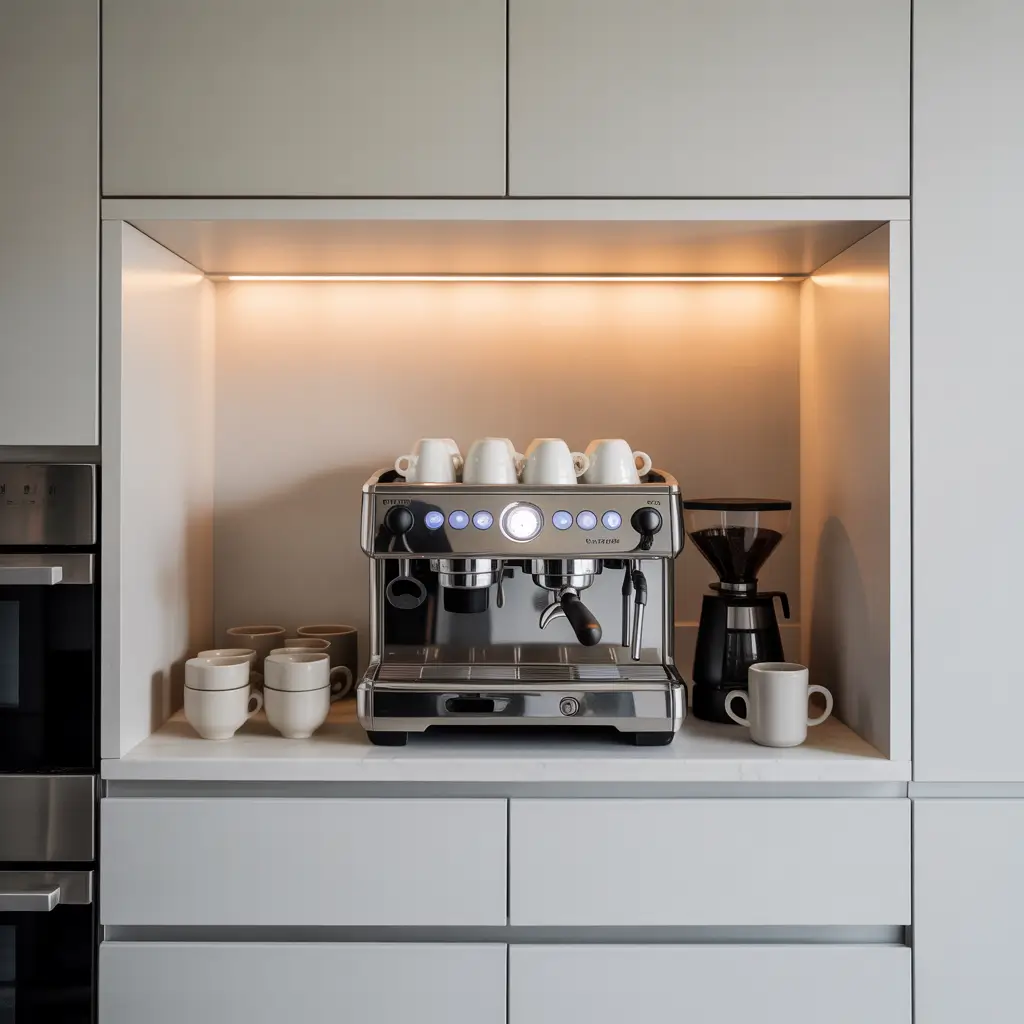
This sneaky solution makes me ridiculously happy every time I show it off. Imagine your entire coffee setup hidden behind what looks like regular cabinet doors. Pull them open, slide out the tray, and boom—instant coffee station.
The Mechanics Behind the Magic
Installing pull-out shelves requires heavy-duty drawer slides rated for at least 100 pounds. Your coffee maker, grinder, and supplies add up fast. Mount the slides to the cabinet frame, not just the sides, or you’ll have a disaster waiting to happen.
The top shelf holds your coffee maker on a sliding tray. Below that, create compartments for mugs, filters, and beans. Add a small power strip inside the cabinet so everything stays plugged in and ready.
Why This Design Rocks
Closed cabinets mean zero visual clutter. Your kitchen looks pristine even when you haven’t cleaned in days. Plus, dust can’t settle on your coffee maker when it’s tucked away. The pull-out mechanism brings everything to you—no more reaching into dark cabinets.
2. Built-In Pantry Coffee Nook

Got a pantry? You’ve got potential for an amazing coffee bar. Converting a section of pantry into a dedicated coffee zone keeps everything centralized but out of the main kitchen chaos.
Transformation Tips
Remove one or two shelves at counter height to create workspace. Install a butcher block or stone remnant as your coffee prep surface. Add an outlet if there isn’t one already (hire an electrician for this—seriously). Install LED strip lights under the shelf above your workspace.
Organization Ideas That Actually Work
- Use turntables for easy access to supplies in deep pantry corners
- Install pull-out drawers for coffee pods or filters
- Add door-mounted spice racks for syrup bottles
- Keep cleaning supplies on the bottom shelf
My sister did this in her pantry, and now she calls it her “coffee closet.” It sounds weird, but seeing her setup makes total sense.
3. Wall-Recessed Coffee Station
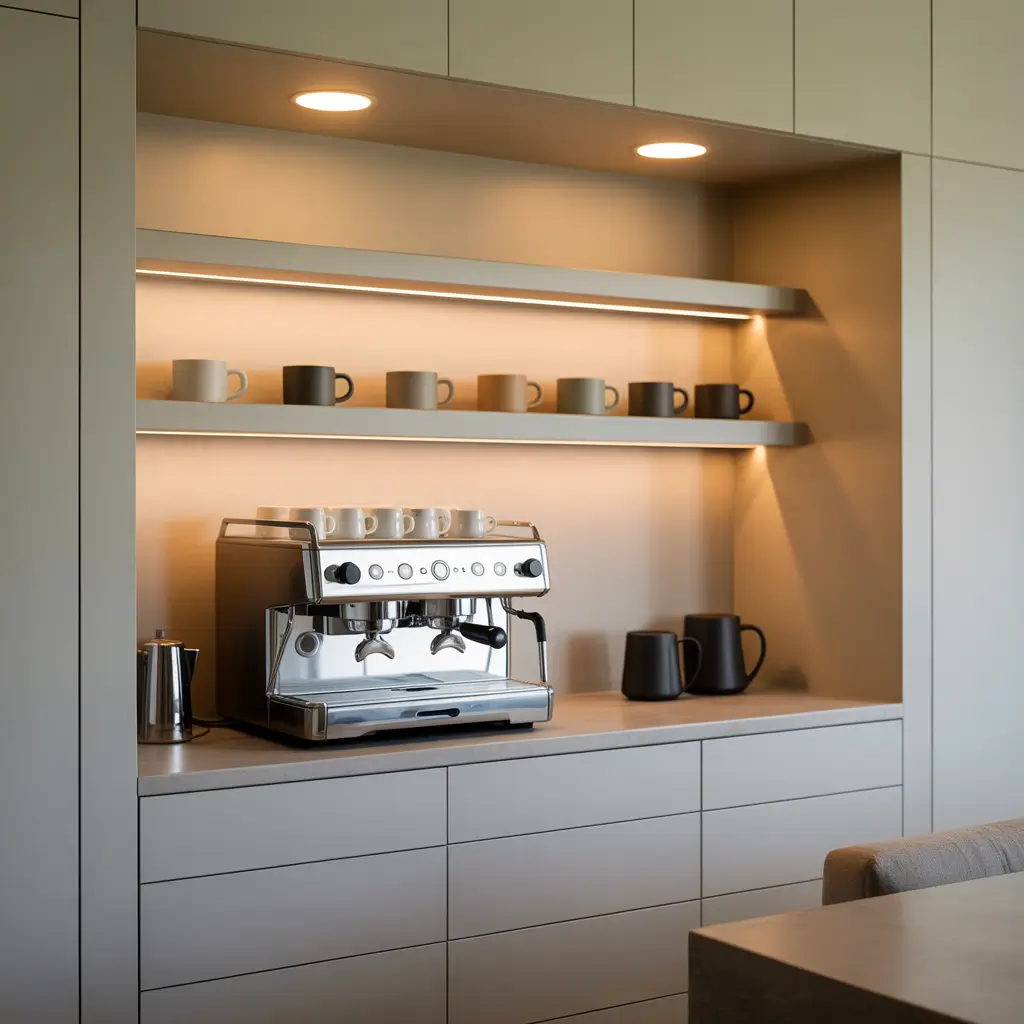
This option literally builds your coffee bar into the wall itself. Recessed designs save precious floor space while looking incredibly custom and high-end. Fair warning: this requires actual construction, not just assembly.
Construction Basics
You’ll need to work between wall studs or have a contractor reframe a section. The standard depth between studs is about 4 inches—perfect for storing mugs and supplies but not deep enough for most coffee makers. Solution? Bump out the lower section while keeping the upper storage recessed.
Design Elements That Elevate
Frame the recessed area with trim molding for a finished look. Paint the back wall an accent color to make it pop. Install glass shelves with LED lights underneath for that professional coffee shop vibe.
Also Read: 10 Trendy DIY Coffee Bar Ideas for Minimalist Living
4. Floor-to-Ceiling Coffee Tower
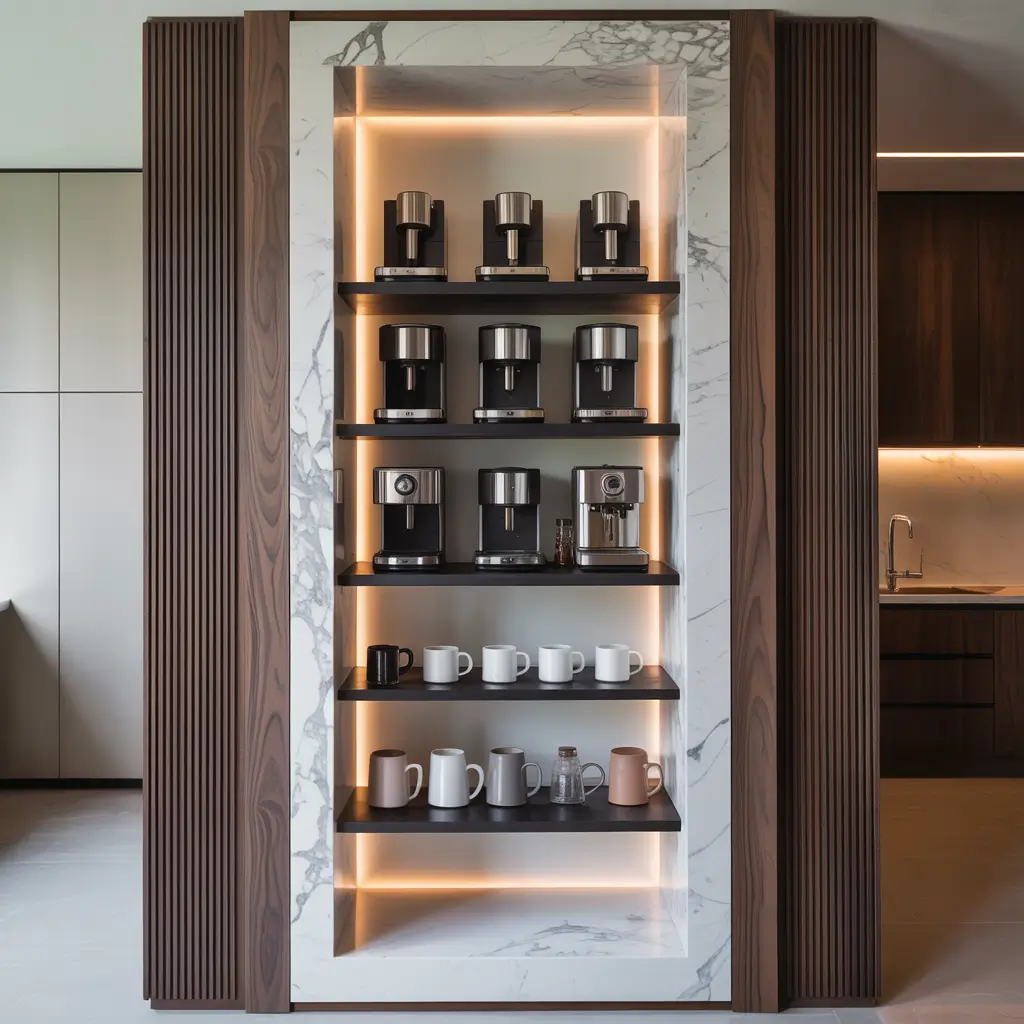
When horizontal space runs short, build up! A floor-to-ceiling coffee tower maximizes vertical space while creating a stunning focal point. This design works especially well in narrow spaces between appliances or at the end of a cabinet run.
Structural Requirements
These towers need proper anchoring to both floor and ceiling for stability. Use adjustable shelves so you can reconfigure as your coffee collection grows (and it will grow). Include a mix of open shelving and closed storage to balance display with discretion.
What Goes Where
- Eye level: Daily use items and coffee maker
- Upper shelves: Decorative items and occasional-use supplies
- Lower cabinets: Bulk storage and cleaning supplies
- Mid-section drawers: Filters, measuring tools, and small accessories
The height makes a statement, but don’t put anything you use daily on the top shelf unless you enjoy morning climbing exercises.
5. Built-In Espresso Alcove
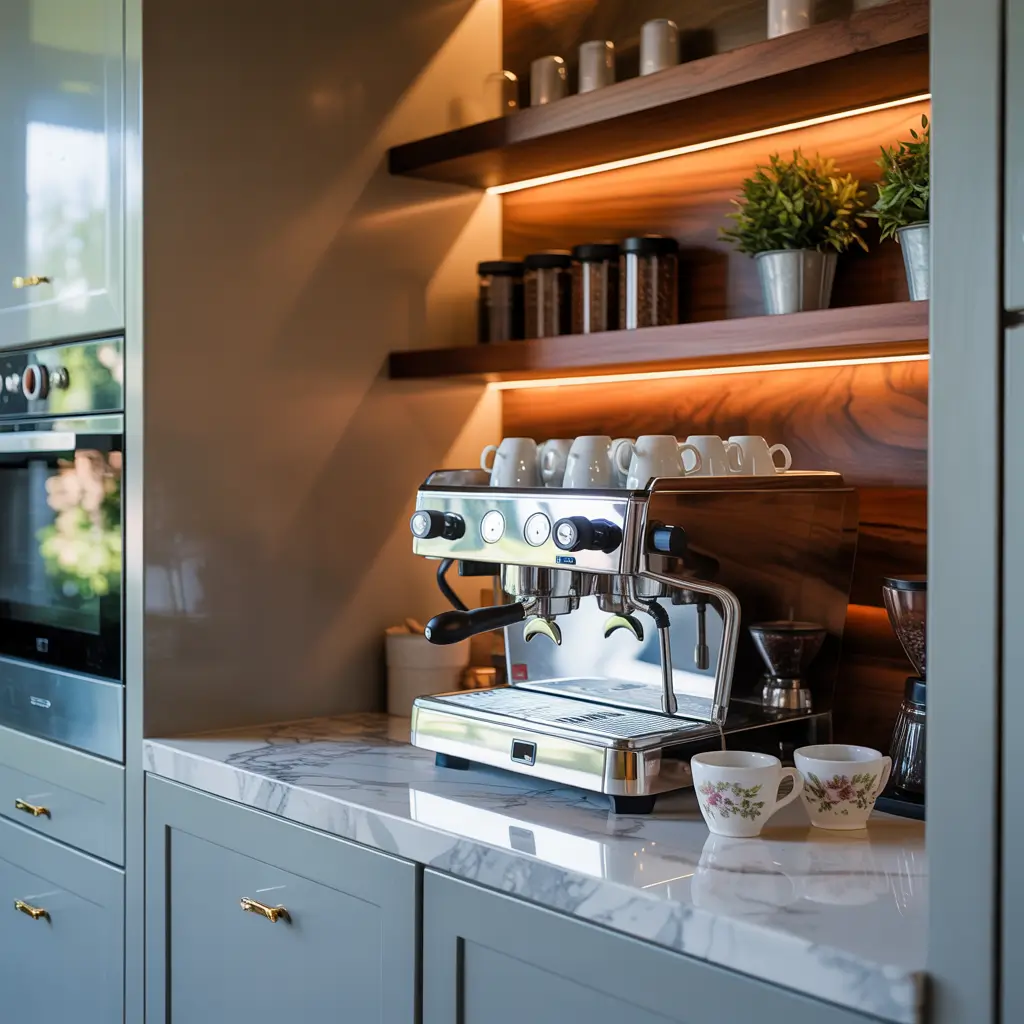
Espresso lovers, this one’s for you. Creating a dedicated alcove for your espresso machine and accessories turns coffee-making into an experience, not just a task.
Special Considerations for Espresso
Espresso machines need more than regular coffee makers:
- Dedicated water line (optional but amazing)
- Steam wand clearance on the side
- Heat-resistant surfaces
- Storage for various cup sizes
- Knock box installation spot
Build the alcove at least 24 inches deep to accommodate most home espresso machines. Include a pull-out drawer underneath for your knock box—genius for quick puck disposal.
Professional Touches
Install a cup warmer above your machine. Add a small sink if plumbing allows (this changed my life, tbh). Include a built-in scale for precise measurements. Mount a tamping station to the side wall.
6. Floating Shelf Built-In Coffee Wall
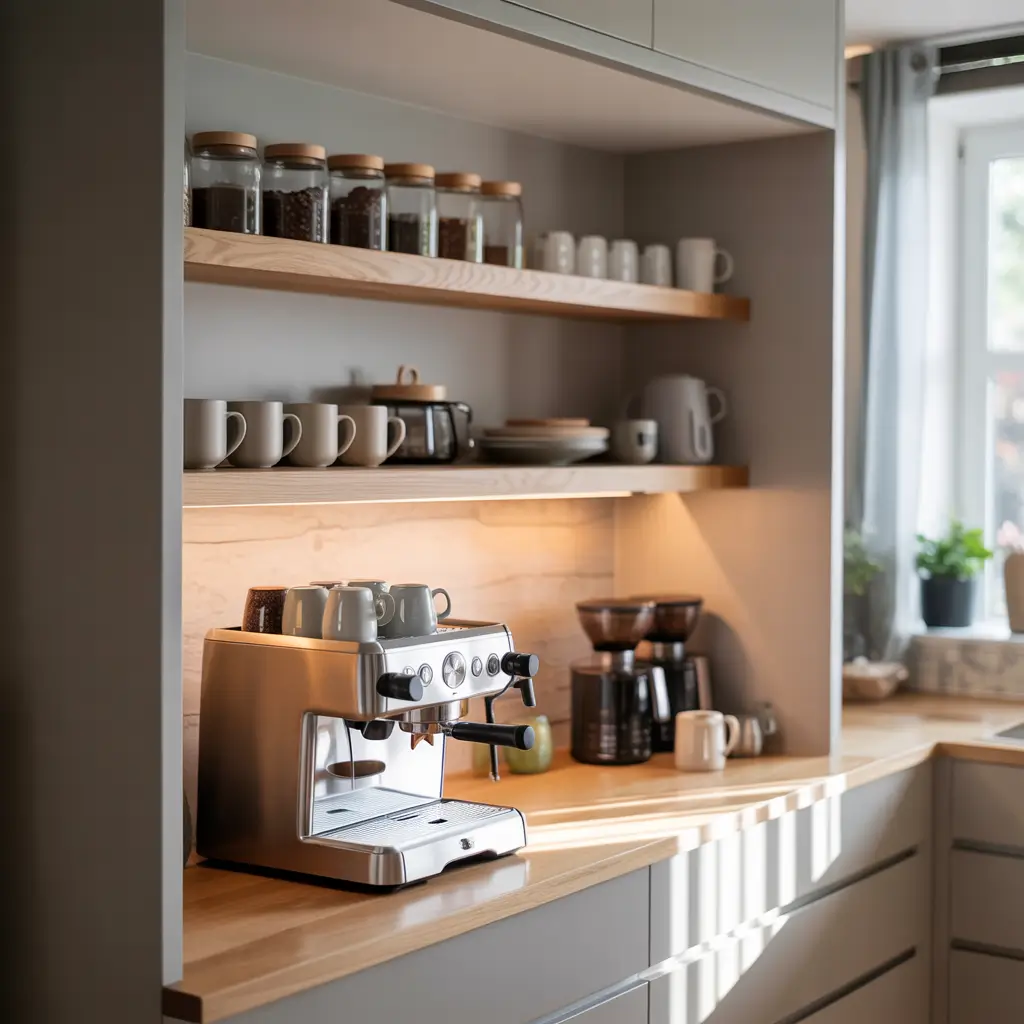
This design combines the airiness of floating shelves with the permanence of built-in construction. The result? A coffee wall that feels substantial yet doesn’t overwhelm your kitchen.
Installation Strategy
Mount a ledger board to the wall for consistent shelf alignment. Use thick shelves (at least 1.5 inches) for visual weight and stability. Space shelves based on your tallest coffee equipment plus 2 inches. Install under-shelf lighting to eliminate shadows.
Styling Your Floating Coffee Wall
Mix open storage with a few closed boxes or baskets. Display your prettiest mugs and hide the chipped ones. Add greenery between functional items for life and color. Keep the heaviest items on lower shelves for safety.
AlsoRead: 10 Functional Small Coffee Bar Ideas for Small Homes
7. Corner Built-In Coffee Hutch
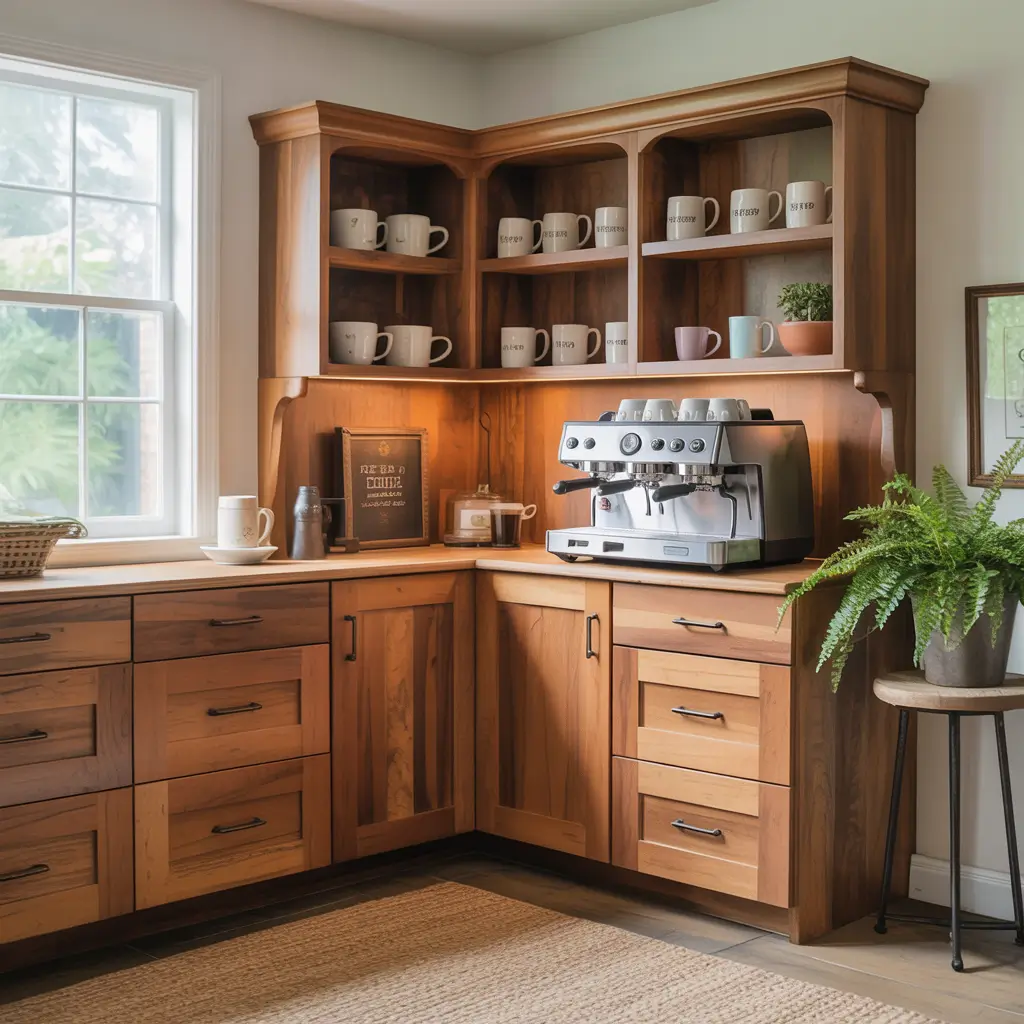
Corners often become dead space in kitchens, but they’re perfect for coffee stations. A corner hutch maximizes every inch while keeping your coffee setup contained.
Making Corners Work
Design upper cabinets with diagonal or curved fronts to avoid sharp corners at head height. Use lazy Susans inside corner cabinets for easy access. Install lighting inside upper cabinets to eliminate dark corners.
Custom Features Worth Considering
- Appliance garage doors to hide equipment
- Pull-out work surface for extra prep space
- Corner drawers (yes, they exist and they’re amazing)
- Angled power strips to keep cords manageable
My friend installed one of these, and now her awkward corner is the best spot in her kitchen. Sometimes the weird spaces make the best solutions.
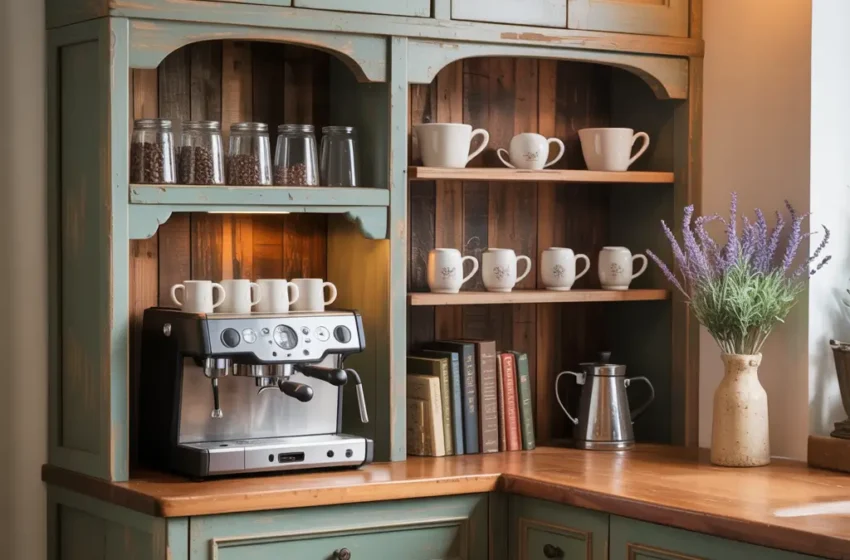
8. Built-In Rustic Farmhouse Coffee Unit
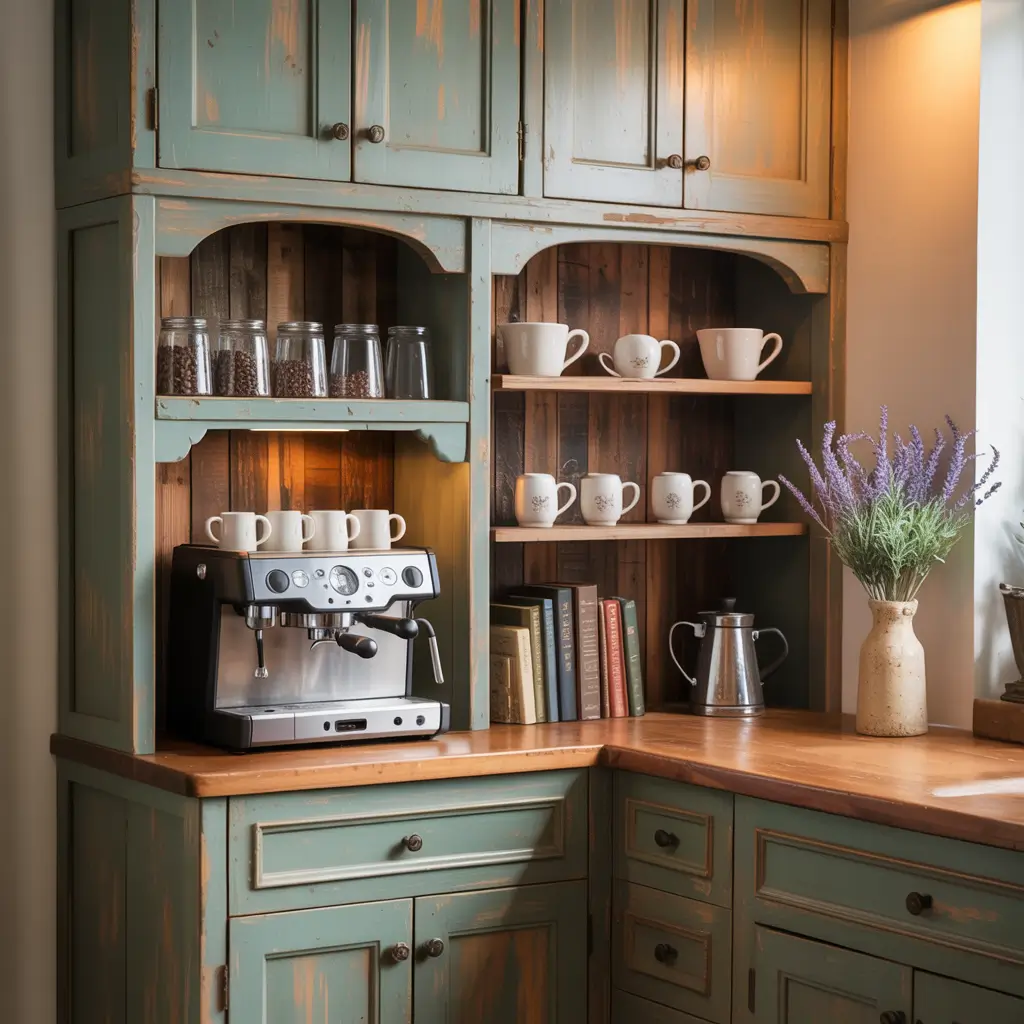
Want that cozy farmhouse café feeling? This style combines practical storage with charming details that make your kitchen feel like a warm hug.
Essential Farmhouse Elements
Use shiplap or beadboard backing for texture. Choose open shelving made from reclaimed wood. Install vintage-style brackets and hardware. Add corbels under shelves for that authentic farmhouse support detail.
Color and Finish Choices
Stick with warm whites, soft grays, or natural wood tones. Distress painted surfaces slightly for character. Mix metal finishes—black iron with copper accents works beautifully. Use butcher block countertops for warmth.
Farmhouse Functionality
- Include a built-in bread box for pastry storage
- Add pull-out cutting board for food prep
- Install mason jar storage systems
- Create a dedicated honey and jam station
The farmhouse style forgives imperfection, which makes it perfect for DIY attempts 🙂
9. Modern Minimalist Built-In Coffee Column
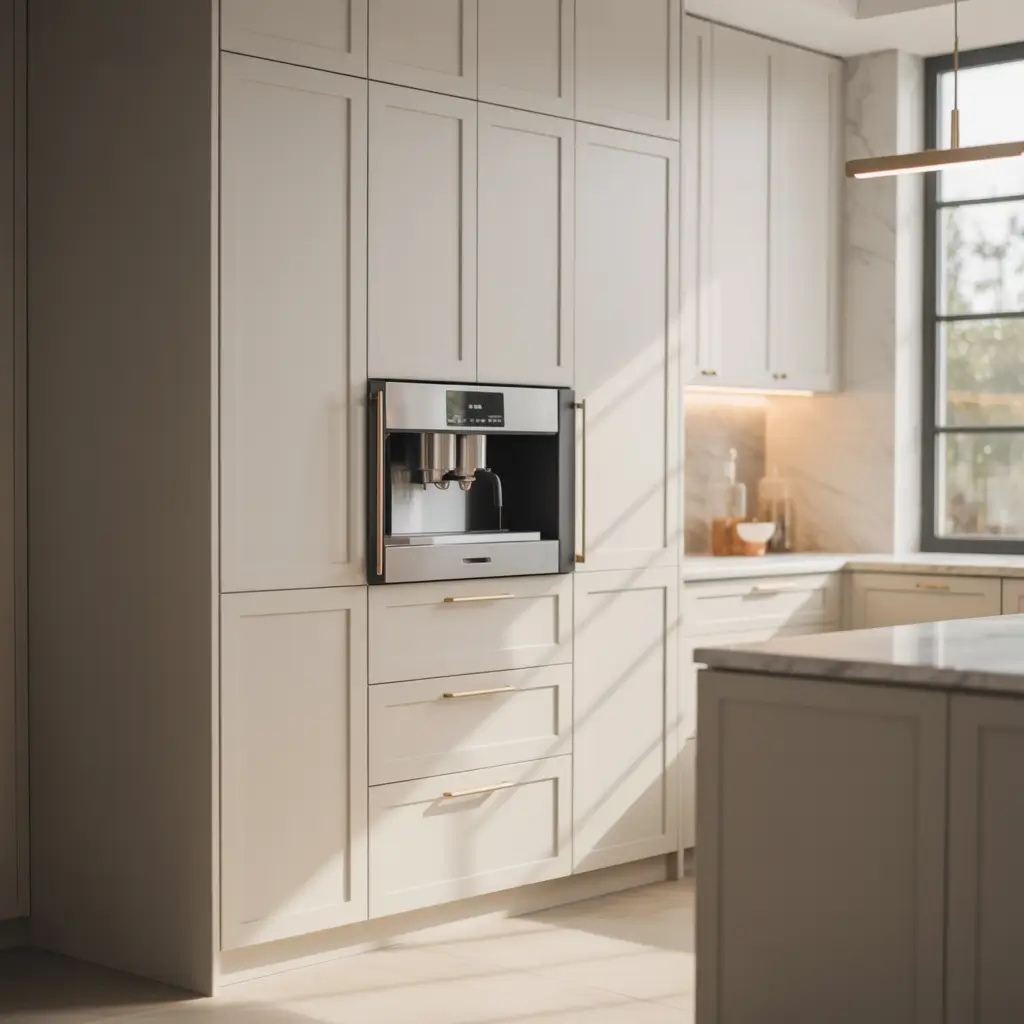
Sometimes you want your coffee bar to whisper, not shout. The minimalist column design provides maximum function with minimal visual impact.
Design Principles
Choose handleless cabinets with push-to-open mechanisms. Stick to one or two materials maximum. Keep everything in the same color family. Hide all equipment behind smooth cabinet fronts.
Internal Organization Systems
Since you can’t see inside, organization becomes crucial:
- Use drawer dividers for small items
- Install pull-out trays at different heights
- Add internal LED lights that activate when opened
- Label everything (inside where it doesn’t show)
The outside stays serene while the inside works like a Swiss watch. It’s basically the introvert of coffee bars.
Also Read: 10 Cozy Coffee Bar Ideas and Relaxing Corner Setups
10. Built-In Coffee Bar With Sliding Barn Doors
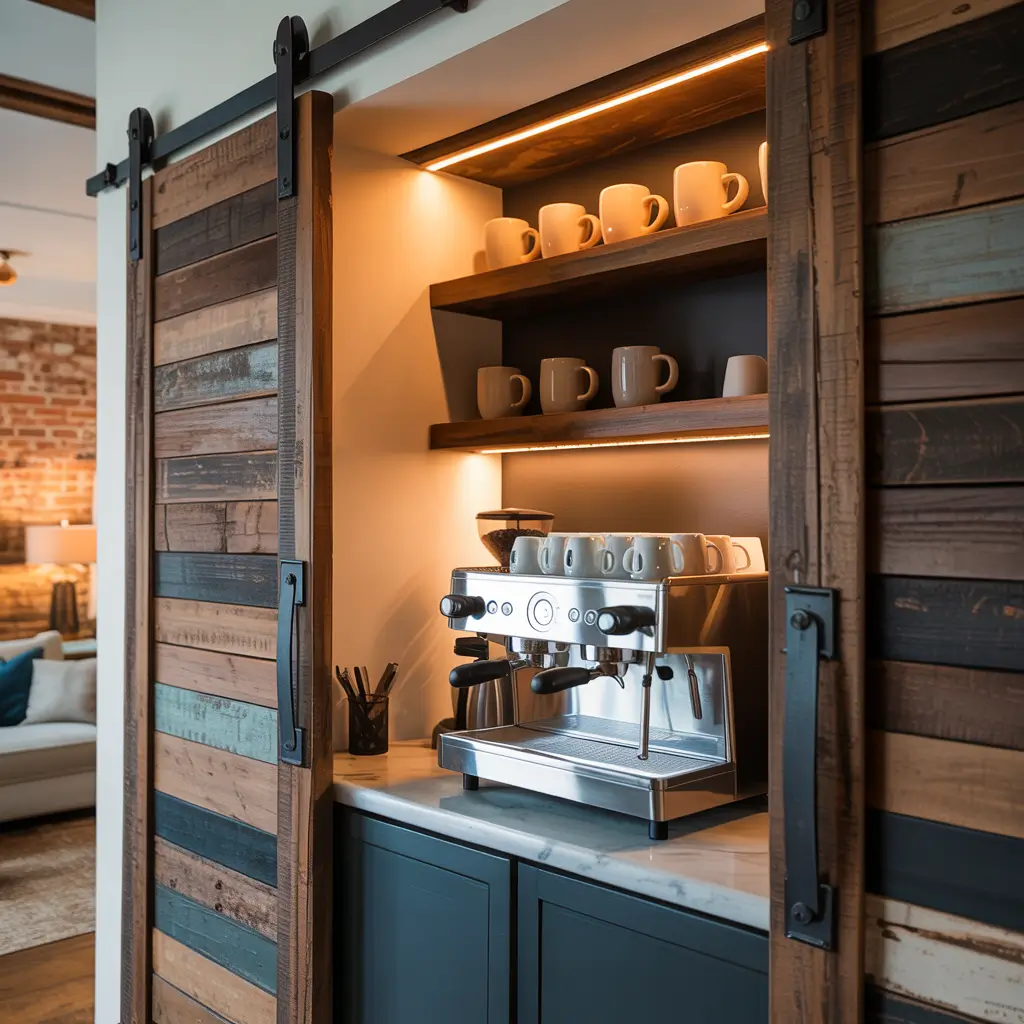
Barn doors add personality while solving the problem of cabinet doors that swing into traffic zones. This design lets you reveal or conceal your coffee bar with one smooth slide.
Hardware Selection
Don’t cheap out on barn door hardware—it carries serious weight. Choose soft-close mechanisms to prevent slamming. Install floor guides to prevent swaying. Make sure your track extends far enough to fully clear the opening.
Door Design Options
- Reclaimed wood for authentic rustic charm
- Modern slatted design for contemporary spaces
- Chalkboard paint for menu writing
- Glass panels for see-through storage
FYI, barn doors don’t seal completely, so avoid this design near the stove where grease might infiltrate.
11. Glass-Front Cabinet Built-In Coffee Setup
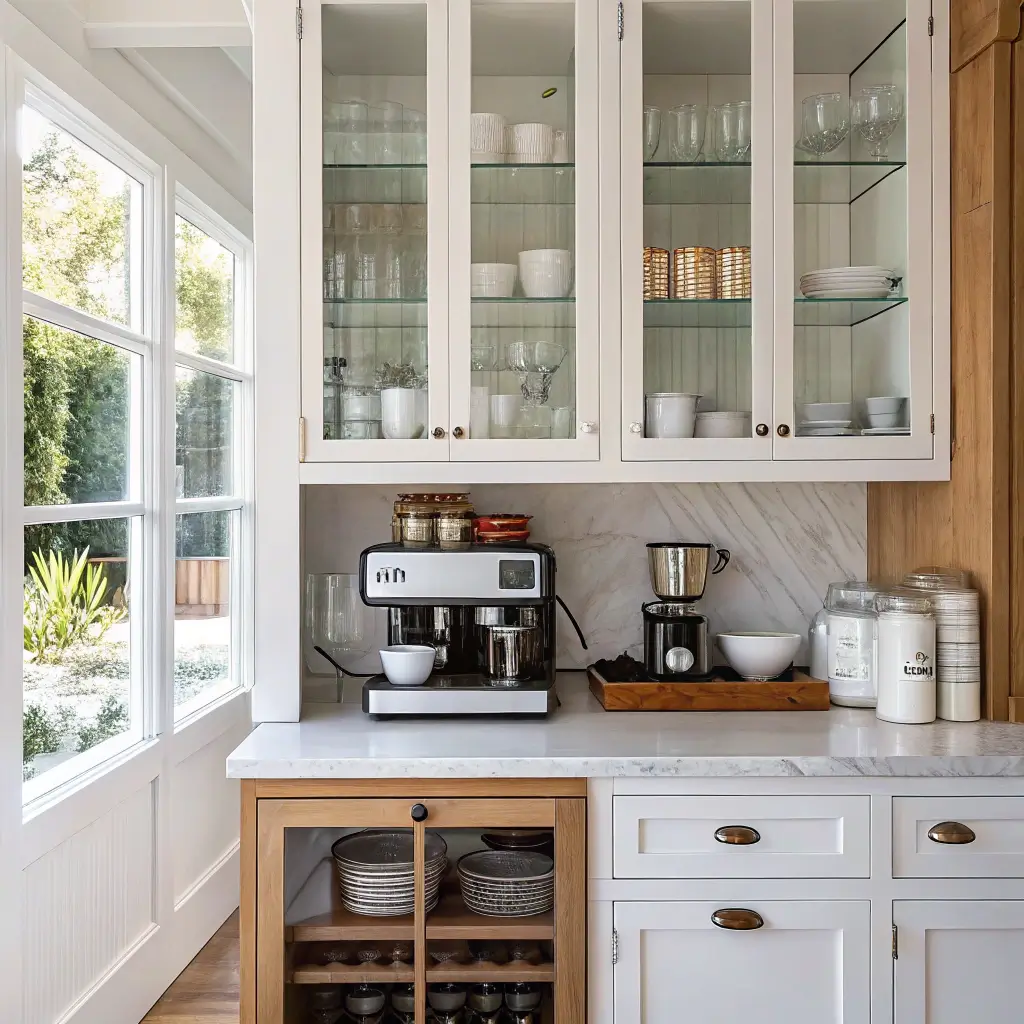
Display your beautiful mugs and equipment while keeping dust at bay. Glass-front cabinets offer the best of both worlds—visible organization with protection.
Glass Options and Considerations
Choose tempered glass for safety. Consider seeded or reeded glass for texture and forgiving visibility. Install interior lighting to showcase contents. Add glass shelves for an airy feel.
Organizing for Display
Since everything shows, organization matters:
- Group items by color or size
- Use matching containers for loose items
- Keep only your best-looking equipment visible
- Store utilitarian items in lower solid cabinets
Remember, glass shows fingerprints like crazy. Keep glass cleaner handy unless you enjoy seeing every smudge highlighted by your under-cabinet lights.
12. Built-In Coffee Bar With Under-Cabinet Lighting
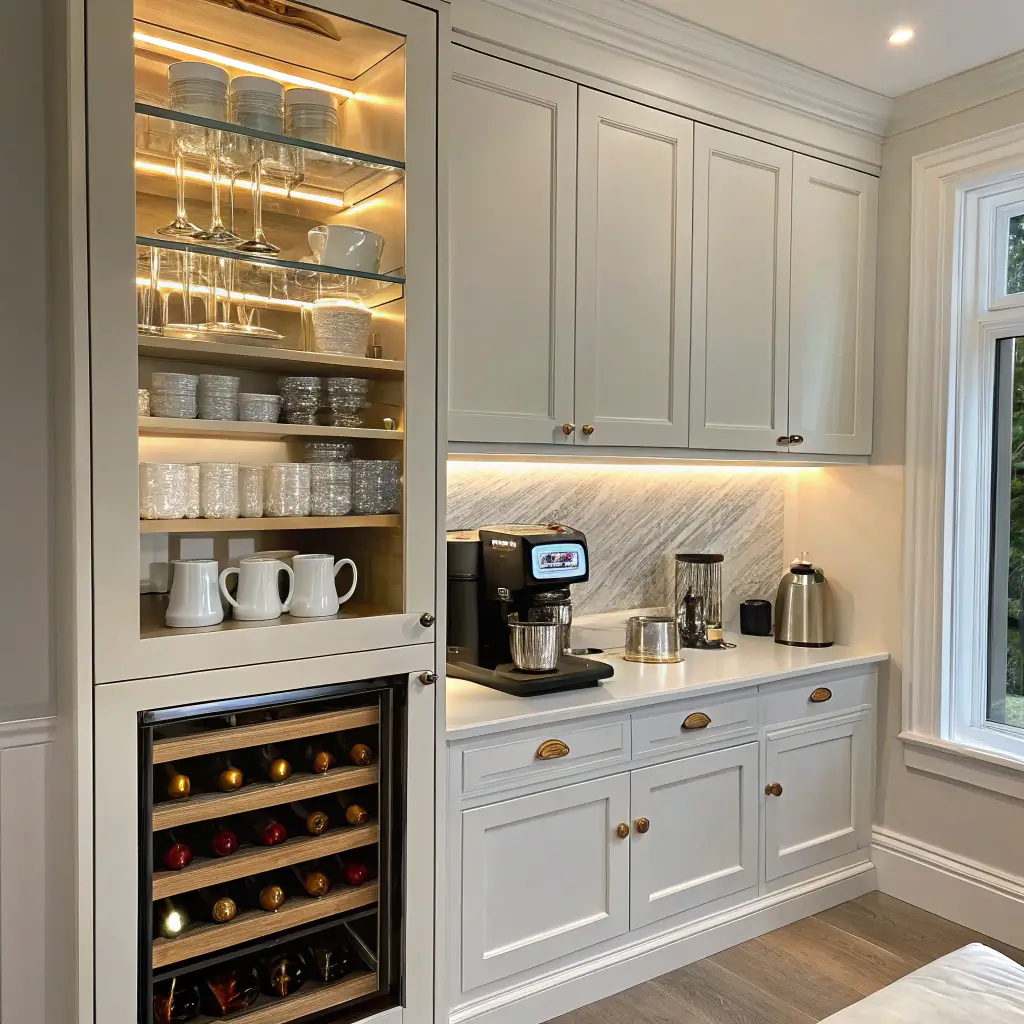
Lighting transforms a good coffee bar into a great one. Strategic under-cabinet lighting eliminates shadows, highlights your workspace, and creates ambiance that makes every morning feel special.
Lighting Types and Placement
LED strips provide even, continuous light. Puck lights create dramatic spotlights. Choose warm white (3000K) for cozy mornings. Install dimmers for pre-dawn brewing sessions.
Advanced Lighting Features
- Motion sensors for hands-free activation
- Color-changing LEDs for mood setting
- Timer functions for automatic morning illumination
- USB charging ports integrated with light fixtures
I installed motion-sensor lights in mine, and now I feel like I’m living in the future every morning.
Final Thoughts on Creating Your Dream Built-In Coffee Bar
Building a custom coffee bar changed my entire relationship with my kitchen. No more morning chaos, no more counter clutter, no more buying duplicate supplies because I couldn’t find what I needed.
Every morning starts with calm efficiency instead of frantic searching.
Whether you choose a hidden pull-out system or a floor-to-ceiling showcase, the key is designing something that fits your specific coffee ritual.
Think about how you move through your morning routine. Consider what frustrates you about your current setup. Build solutions to those exact problems.
The best built-in coffee bar is one that makes you smile before you’ve even had your first sip. It should feel like it was always meant to be there, like your kitchen was incomplete without it.
Start planning, start measuring, and start imagining your perfect morning coffee spot. Your future caffeinated self will thank you every single morning.
And honestly? That’s worth every penny and every hour you invest in creating your ideal built-in coffee bar.
Now excuse me while I go make another latte at my own built-in station—writing about coffee bars always makes me crave another cup!