12 Simple Kids Closet Organization Ideas That Stay Tidy
- Closet Organization
 Ben
Ben- 0
- 29 minutes read
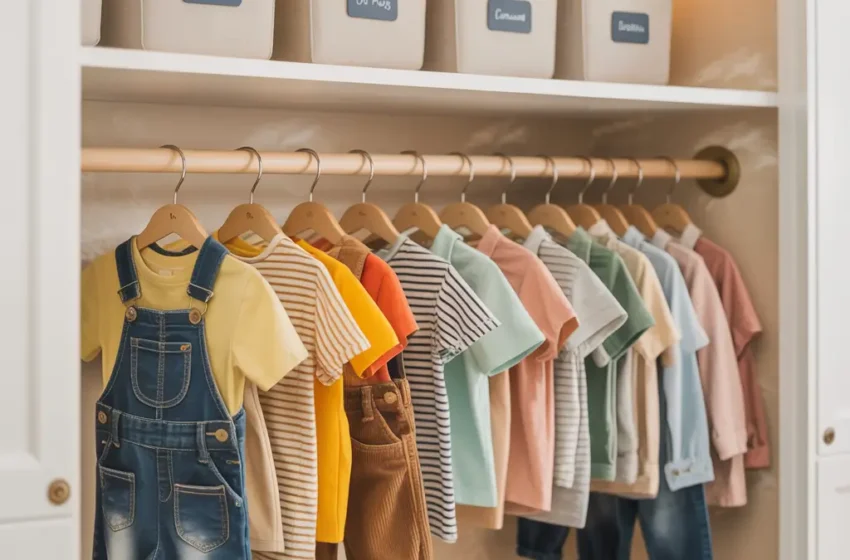
You know that moment when you open your kid’s closet and everything just avalanches onto your feet? Yeah, we’ve all been there.
I literally spent twenty minutes last week untangling a mess of hangers, mismatched shoes, and what I think was last year’s Halloween costume.
If you’re nodding along right now, trust me, you’re gonna love what I’ve discovered about organizing kids’ closets without losing your mind.
Let’s face it – kids and organization go together about as well as oil and water. But here’s the thing: with the right setup, even the messiest little tornado can keep their closet somewhat functional.
I’ve tested these ideas with my own kids (ages 5 and 8), and while I can’t promise perfection, I can promise you’ll stop wanting to cry every time you see their closet.
Kid-Height Hanging Rod System
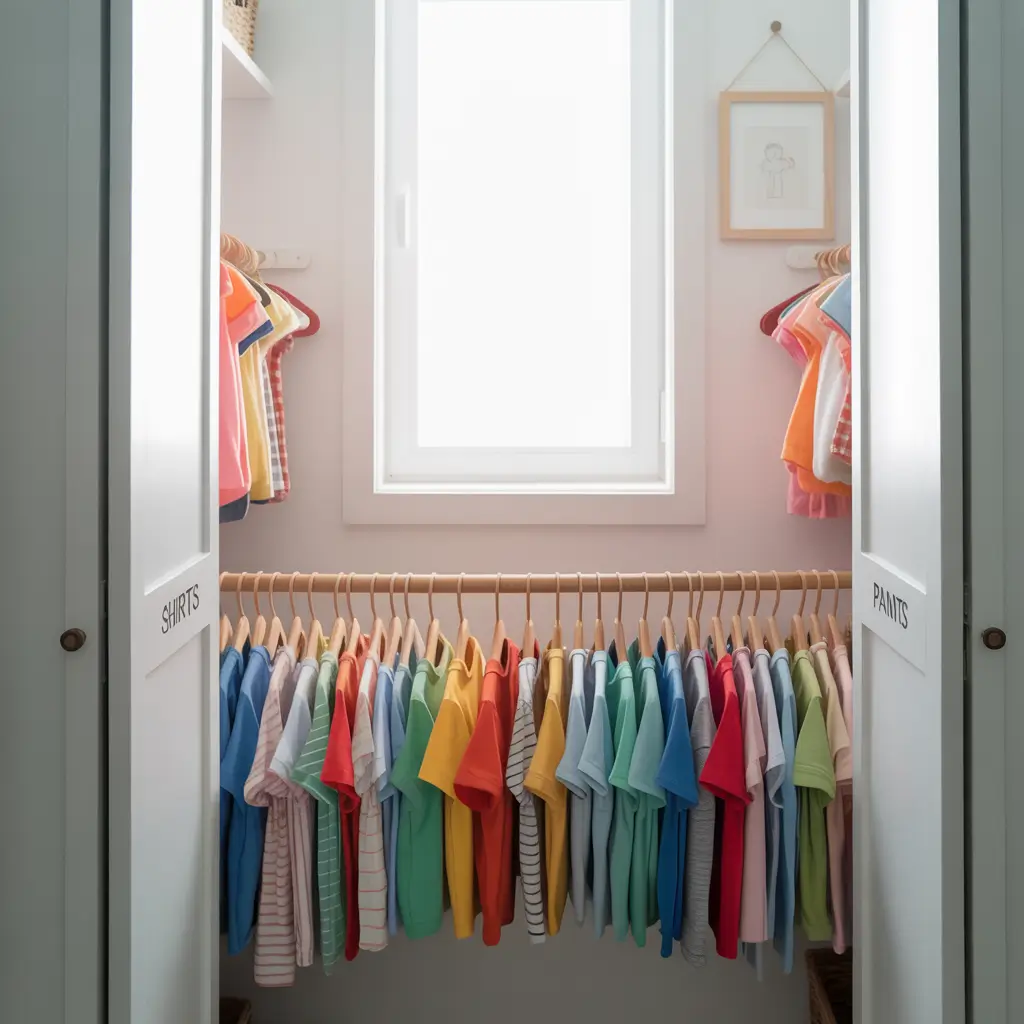
Remember when you installed that closet rod at adult height and expected your five-year-old to magically reach it? Yeah, me too. The single best investment you can make is lowering that hanging rod to kid height – typically around 30-40 inches from the floor, depending on your child’s age.
I installed a double-rod system in my daughter’s closet last spring, and honestly? Game changer. The lower rod sits at about 36 inches for her everyday clothes, while the upper one holds out-of-season stuff and fancy dresses she never wears (but insists on keeping). She can actually hang up her own clothes now – imagine that!
What makes this work so well? Kids feel empowered when they can reach their own stuff. No more “Mom, can you get my shirt?” fifty times a day. Plus, you can adjust the height as they grow, which means this solution actually lasts more than six months.
Setting Up Your Kid-Height System
Here’s what you’ll need to make this happen:
- Adjustable closet rod (get the expandable kind)
- Wall brackets that can handle the weight
- Level (because crooked rods will drive you crazy)
- Measuring tape to get the height just right
Pro tip: measure from your kid’s shoulder height and add about 6 inches. That’s your sweet spot for rod placement. Any higher and they’ll struggle; any lower and clothes will drag on the floor.
Color-Coded Outfit Zones
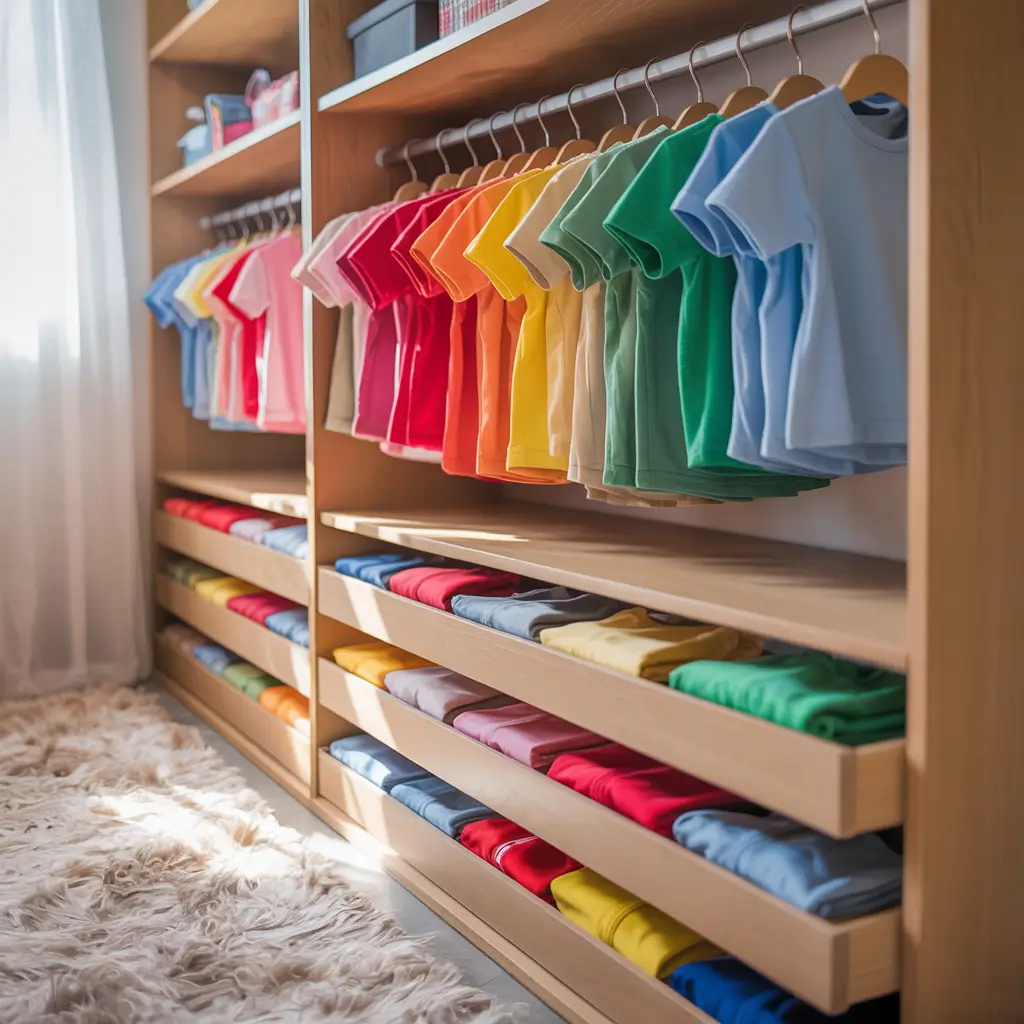
Want to know how I stopped the daily “I don’t know what to wear” meltdown? Color coding, my friend. Each type of clothing gets its own color zone, and suddenly my kids can find their stuff without destroying the entire closet.
I use colored hangers for this – pink for dresses, blue for shirts, green for pants, you get the idea. Some parents go all out with colored bins or even paint sections of the closet, but honestly, colored hangers work just fine and cost way less. The key is keeping it simple enough that your kids can remember the system.
My son actually suggested we add stickers to match the colors, which turned into a fun afternoon project. Now he knows exactly where his soccer uniforms go (yellow hangers, FYI) and where to find his school shirts. Does he always put things back in the right spot? Nope. But at least 70% of the time, which is a massive improvement.
Labeled Pull-Out Bin Closet
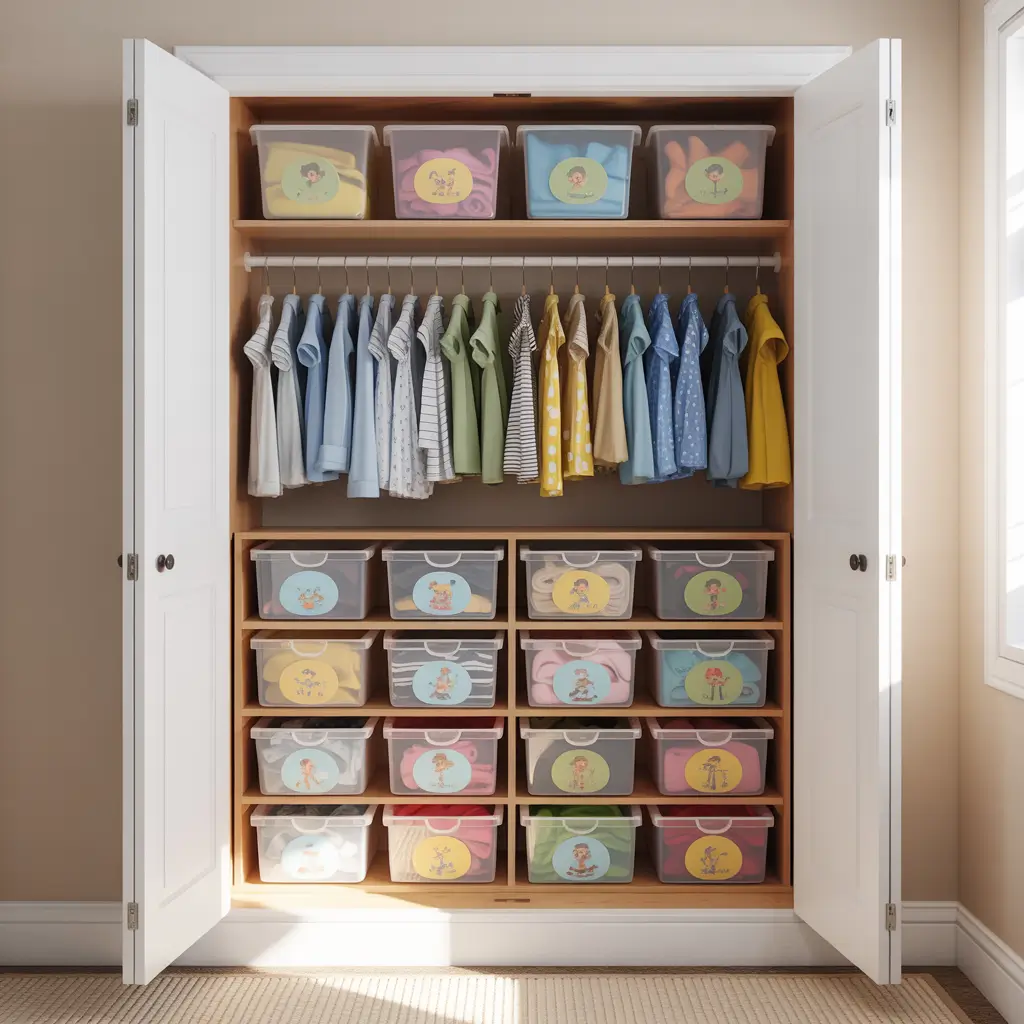
Ever watched a kid try to dig something out of a deep shelf? It’s like watching a tiny archaeologist who has zero patience and throws everything behind them. Pull-out bins solve this problem completely – they slide out, kids can see everything, and (theoretically) put things back.
I went a little overboard and bought twelve bins initially. Turns out, six is the magic number for most kids’ closets. Here’s my current setup:
- Underwear and socks (one bin each)
- Pajamas (because they change PJs like three times a night)
- Sports gear (all those tiny shin guards had to go somewhere)
- Accessories (hats, belts, the random superhero mask)
- School uniforms (if your kids wear them)
Making Labels That Actually Work
Picture labels are where it’s at for younger kids. I learned this the hard way after labeling everything with words my kindergartener couldn’t read. :/ Now I use a combination of pictures and words, printed on waterproof labels because kids spill everything.
You can get fancy with a label maker, but honestly? Printed pictures glued to index cards work just as well. Laminate them if you’re feeling ambitious, or just accept you’ll replace them every few months.
Also Read: 10 Inspiring Walk-In Closet Organization Ideas and Layout Ideas
Open Shelf Daily Wear Station
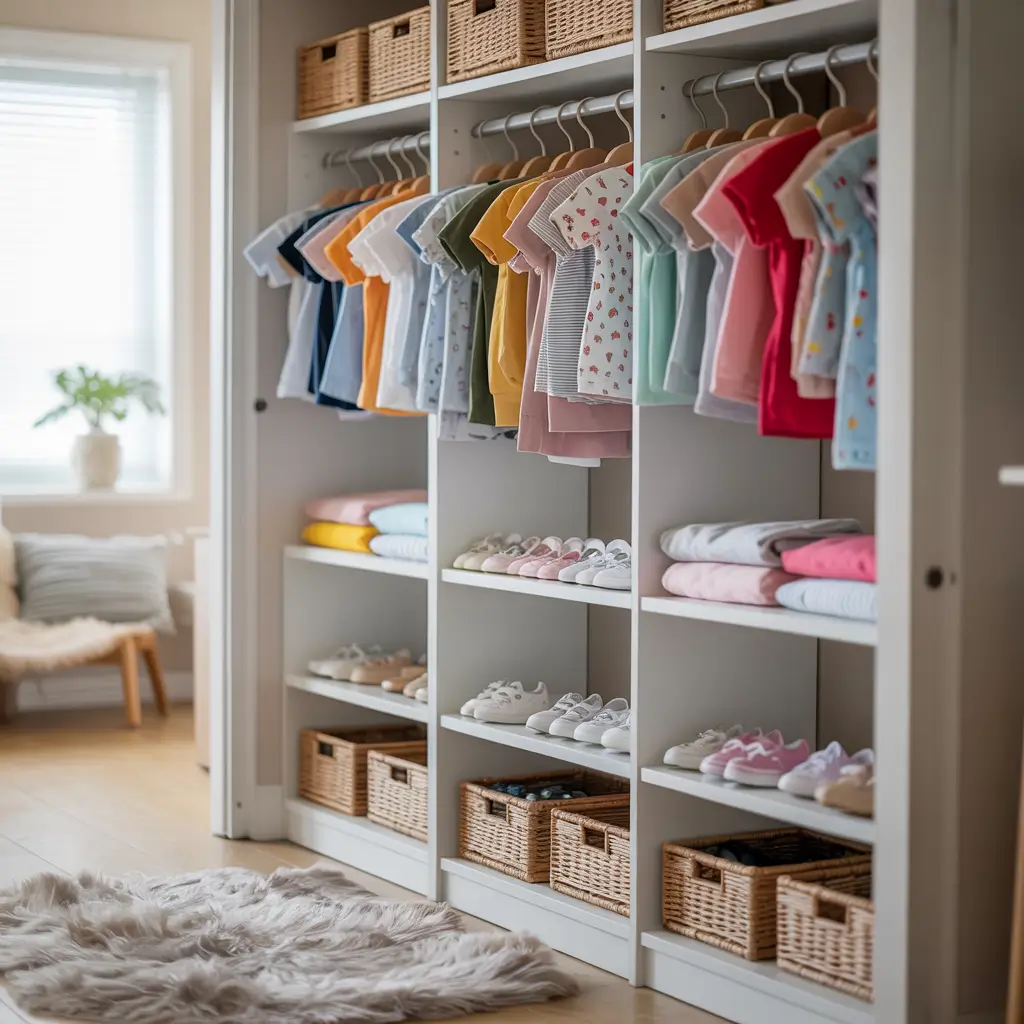
This idea came from pure desperation during a particularly rough morning routine. I cleared one shelf at kid height and made it the “outfit of the day” station. Every night, we put the next day’s complete outfit there – shirt, pants, underwear, socks, everything.
Morning chaos? Reduced by like 80%. The kids grab their stuff and get dressed without ransacking the entire closet. It’s literally just an open shelf, but it’s revolutionized our mornings. Sometimes the simplest solutions really are the best.
I’ve seen some parents create elaborate stations with hooks and cubbies, but honestly? A single shelf works perfectly. Keep it at chest height for your kid, make sure it’s wide enough for folded clothes, and you’re golden.
Seasonal Clothing Rotation Rack
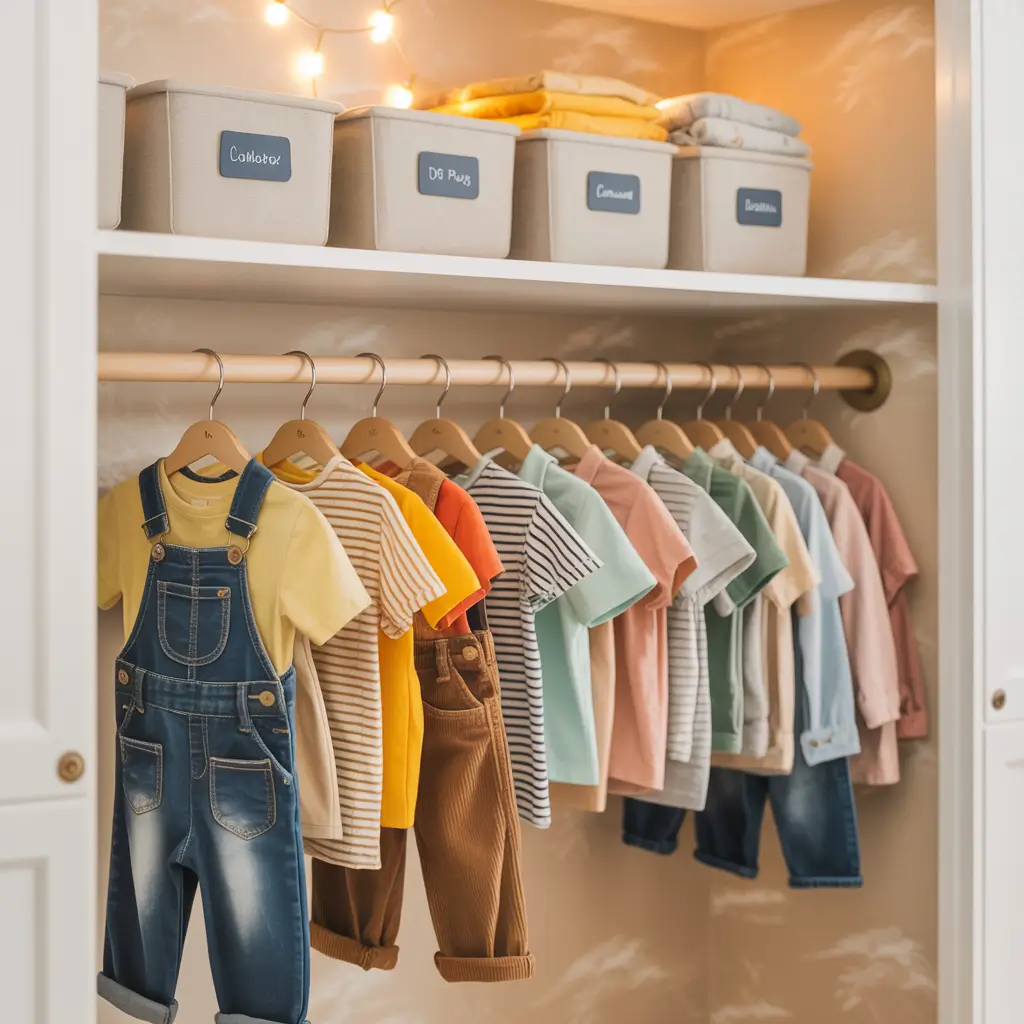
Why do we keep winter coats front and center in July? I used to do this until I realized how much space I was wasting. Now I rotate clothes seasonally, and it’s like having twice the closet space.
Get yourself a simple portable garment rack (about $20-30 online) and stick it in your basement, attic, or even behind a door. Out-of-season clothes go there, labeled in clear bags or bins. When seasons change, you swap them out. Revolutionary? No. Effective? Absolutely.
The Rotation Schedule That Actually Works
Here’s what I do:
- March: Winter stuff goes into storage, spring clothes come out
- June: Heavy spring items stored, full summer wardrobe out
- September: Summer clothes start rotating out, fall items in
- November: Full winter gear comes back
The best part? You’re not staring at snowsuits in August or tank tops in January. Plus, when you pull out the stored clothes, you can quickly sort what still fits and what needs donating.
Drawer-Based Closet Conversion
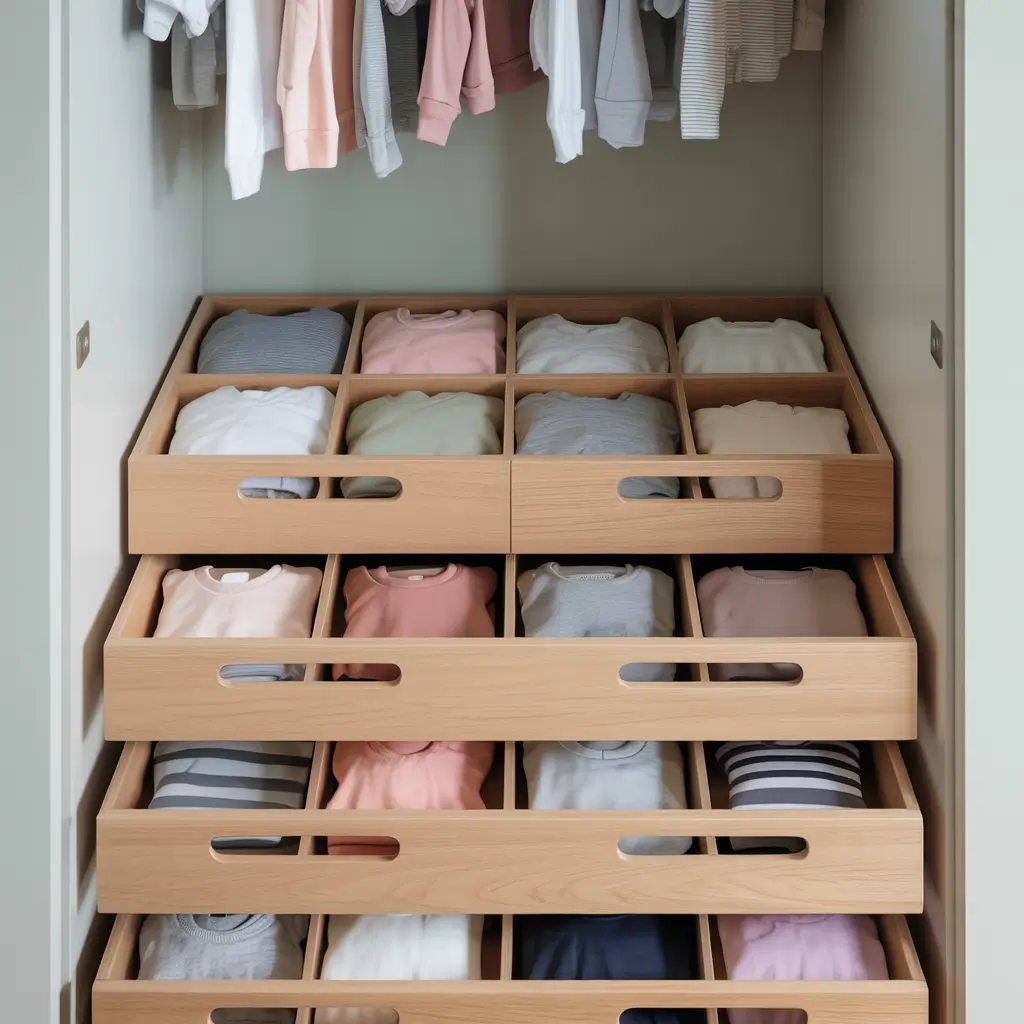
Some closets just aren’t made for hanging clothes – especially those weird, narrow ones in older houses. Instead of fighting it, I converted my son’s closet to mostly drawers, and it works so much better for his style anyway.
A simple 4-drawer dresser fits perfectly in most closets, leaving room on top for bins or folded items. My kid can see everything when he opens a drawer, unlike when clothes were hanging and he’d just grab whatever was in front. The visual aspect makes such a difference for kids who get overwhelmed by too many choices.
Want to know the unexpected benefit? Drawers contain the mess better. Even when he shoves everything in there (which happens daily), at least it’s hidden when the drawer closes. Small victories, people.
Also Read: 10 Creative Small Closet Organization Ideas and Decor Touches
Picture-Label Organization System
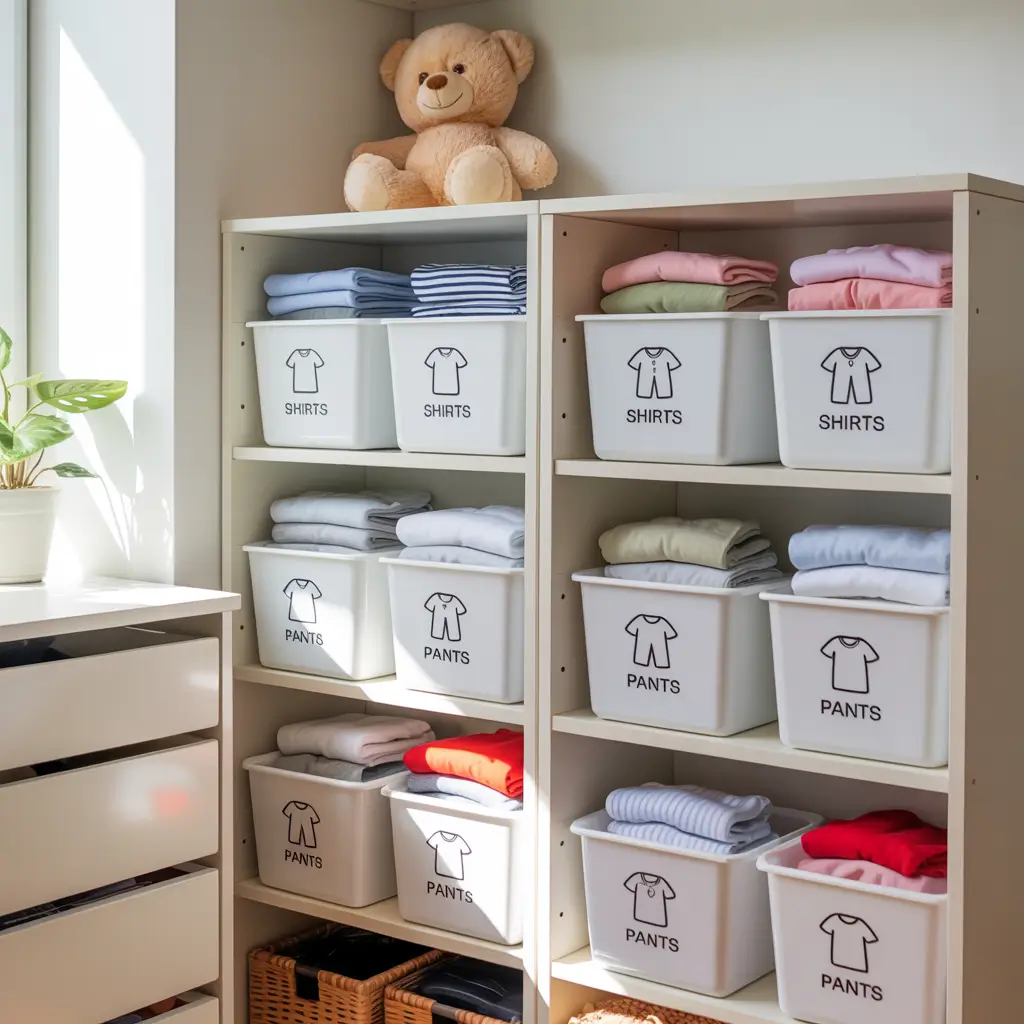
Remember when I mentioned picture labels for bins? Let’s talk about taking that concept closet-wide. Every section, shelf, and hanging area gets a picture label showing what goes there. It sounds excessive, but IMO it’s the only way to maintain any sort of system with kids.
I photograph the actual items that belong in each spot. Real pictures of their actual clothes work better than generic icons. My daughter’s dress section has a photo of her favorite dress, the shoe shelf shows her sparkly sneakers – you get the idea. She connects with the images better because they’re her actual stuff.
The magic happens when other people (babysitters, grandparents, spouses who claim they “don’t know where things go”) can maintain the system too. No more “but I didn’t know where to put it” excuses.
Creating Your Picture System
Steps that actually work:
- Take photos of 2-3 items from each category
- Print them at about 3×3 inches
- Laminate or cover with clear tape
- Attach with removable strips (not permanent adhesive!)
Update the photos maybe twice a year as their style changes. Yeah, it’s a bit of work upfront, but the payoff in reduced daily chaos is totally worth it.
Shared Sibling Closet Divider
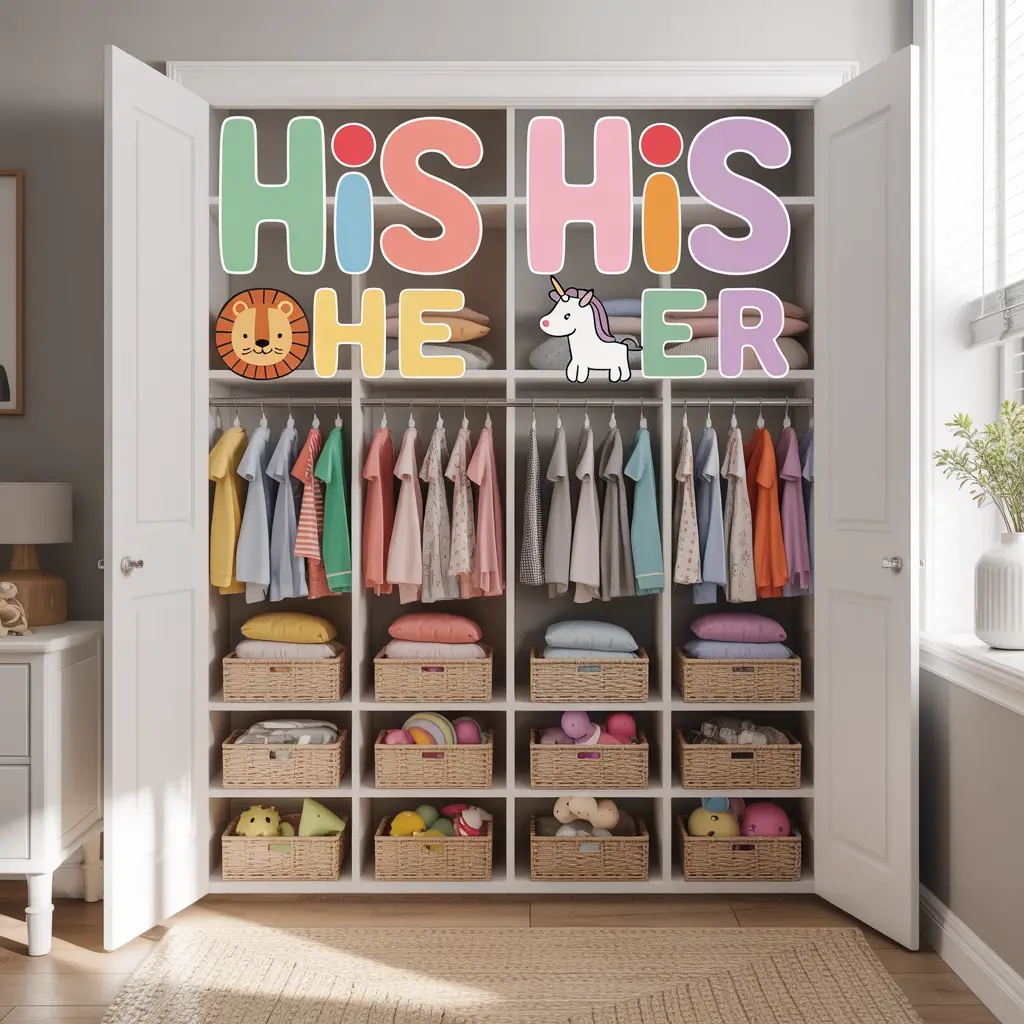
Got siblings sharing a closet? Welcome to the danger zone. Without clear boundaries, it becomes a war zone of “that’s mine!” and “she took my spot!” A physical divider changes everything – it’s like the Berlin Wall of closet organization, but in a good way.
I use a simple tension rod placed vertically to split the closet in half. Each kid gets their side, decorated however they want (within reason). My kids even picked different colored hangers for their sides, which accidentally made laundry sorting easier too.
The key is making the division super obvious. We used washi tape on the shelf above to mark the boundary, and I swear it reduced fights by 90%. They police their own borders now, which is hilarious but effective.
Door-Mounted Storage Organizer
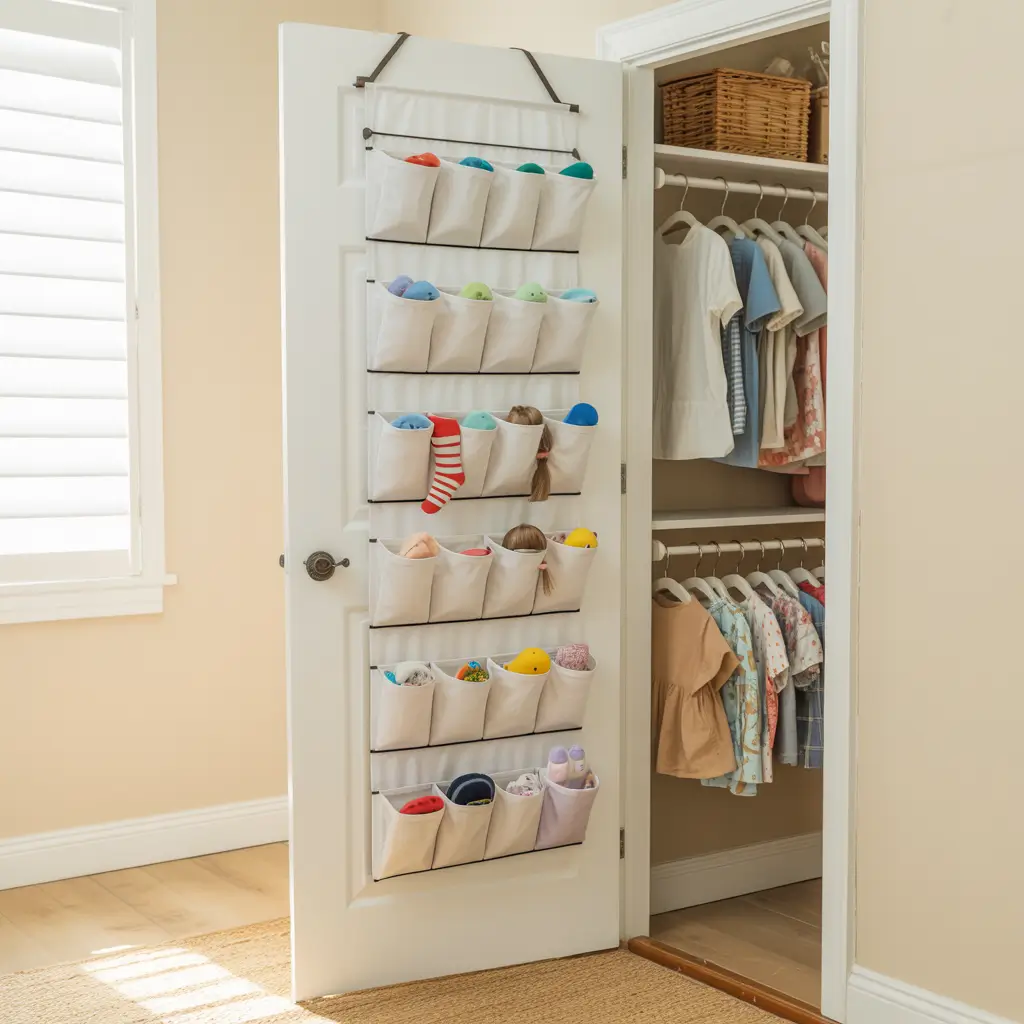
That closet door is prime real estate you’re probably wasting. Over-the-door organizers aren’t just for shoes – they’re perfect for all the small stuff that otherwise gets lost in the closet abyss.
I’ve got one with clear pockets on my daughter’s door. Top pockets hold hair accessories (so many hair ties, omg), middle sections have belts and small purses, bottom holds her collection of unnecessary but apparently vital tiny toys. Everything’s visible, nothing gets lost in drawer corners.
What Actually Works in Door Storage
From testing different setups, here’s what makes sense:
- Clear pockets beat fabric ones every time
- Adjustable heights matter as kids grow
- Reinforced stitching because kids yank on everything
- Machine washable (trust me on this one)
Skip the cute canvas ones that look good on Pinterest but hide everything inside. Visibility is key with kids’ stuff.
Also Read: 10 Stunning Closet Organization Ideas and Luxury Walk-In Looks
Capsule Wardrobe Closet Setup
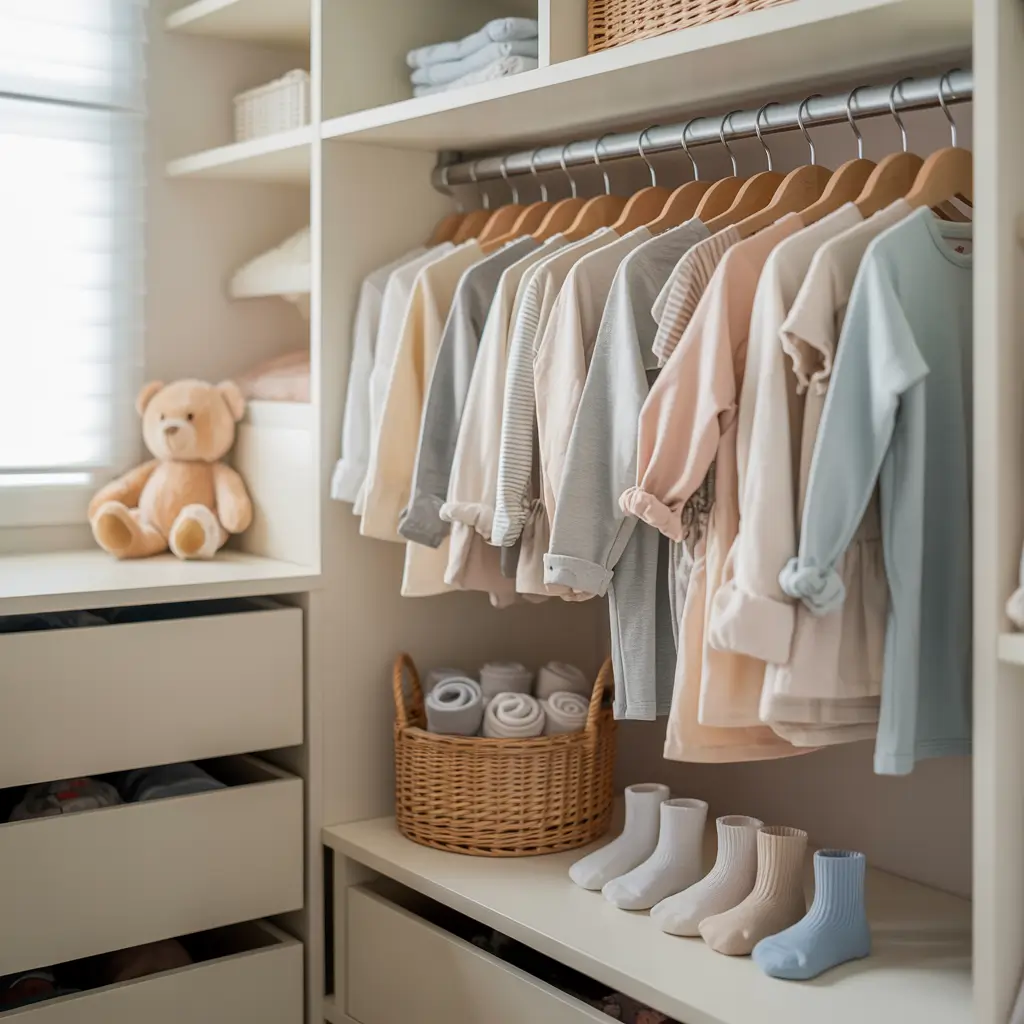
Okay, hear me out before you laugh – kids can totally rock a capsule wardrobe. Limiting choices actually makes mornings easier, and kids wear the same favorite outfits on repeat anyway. Why fight it?
I keep about 7-8 tops, 5 bottoms, and 2-3 dresses (for my daughter) in the main closet area. Everything coordinates, so any top works with any bottom. No more outfit disasters or “nothing matches” meltdowns. The rest goes in storage bins on the top shelf, rotated monthly if needed.
My friends thought I was crazy until they saw how smooth our mornings became. Less choice equals less decision fatigue for everyone. Plus, laundry is simpler when you’re washing the same small set of clothes regularly.
Building Your Kids’ Capsule
Start here:
- Pick a color scheme (neutrals plus 2-3 colors max)
- Choose versatile pieces that mix and match
- Keep favorites accessible, store the rest
- Rotate monthly to keep things fresh
Remember, kids grow fast. A smaller wardrobe means less to replace when they suddenly shoot up three inches.
Toy-and-Clothes Combo Closet
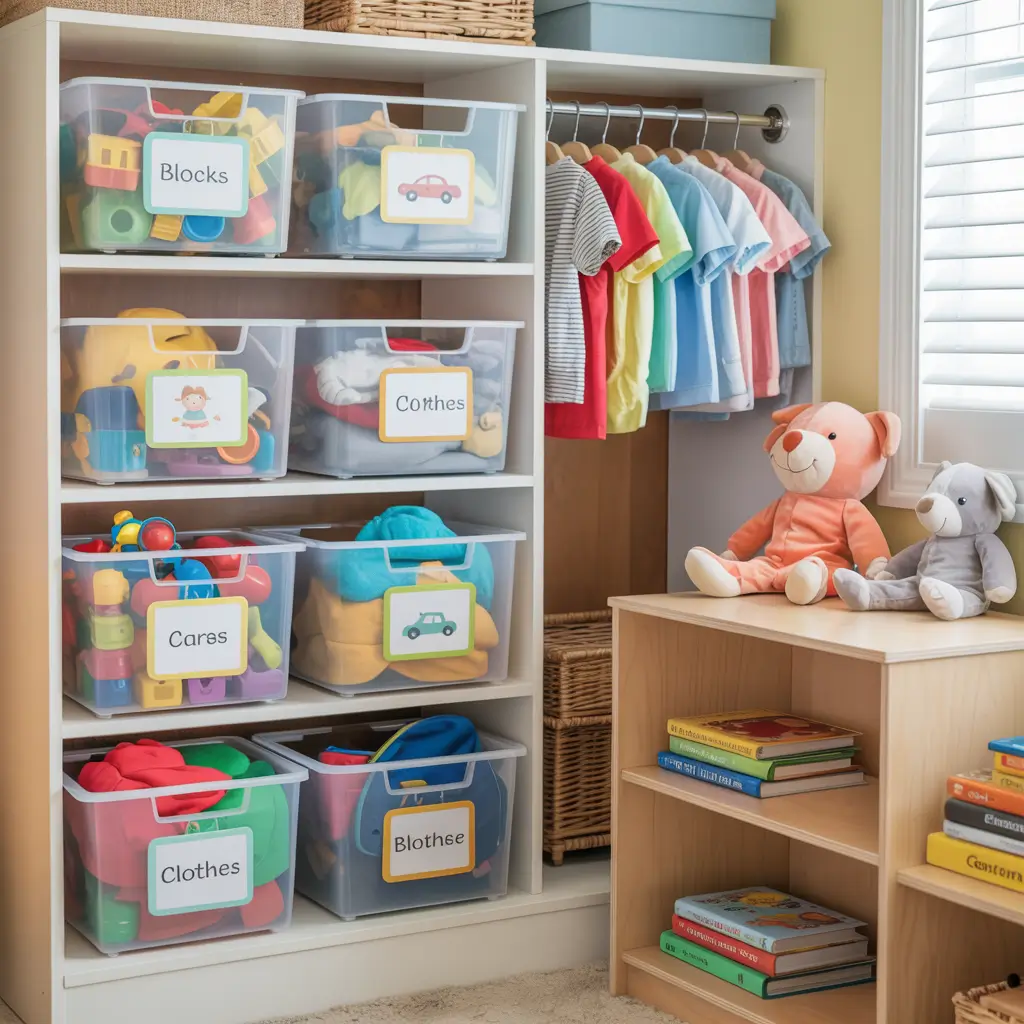
Real talk – kids don’t distinguish between toys and clothes the way we do. They’re all just “their stuff.” So why not organize accordingly? I turned the bottom third of the closet into toy storage, and it’s been surprisingly perfect.
The lower shelves hold bins of Legos, action figures, and art supplies. Clothes stay up top, toys down below. Kids can access their toys independently, and everything’s in one spot for cleanup. No more toys creeping into every room of the house (okay, fewer toys creeping everywhere).
What really sells this system? When kids can reach both clothes and toys, they feel more ownership of their space. My son actually cleans his closet now because it’s “his zone” with all his important stuff.
Grow-With-Me Adjustable Closet System
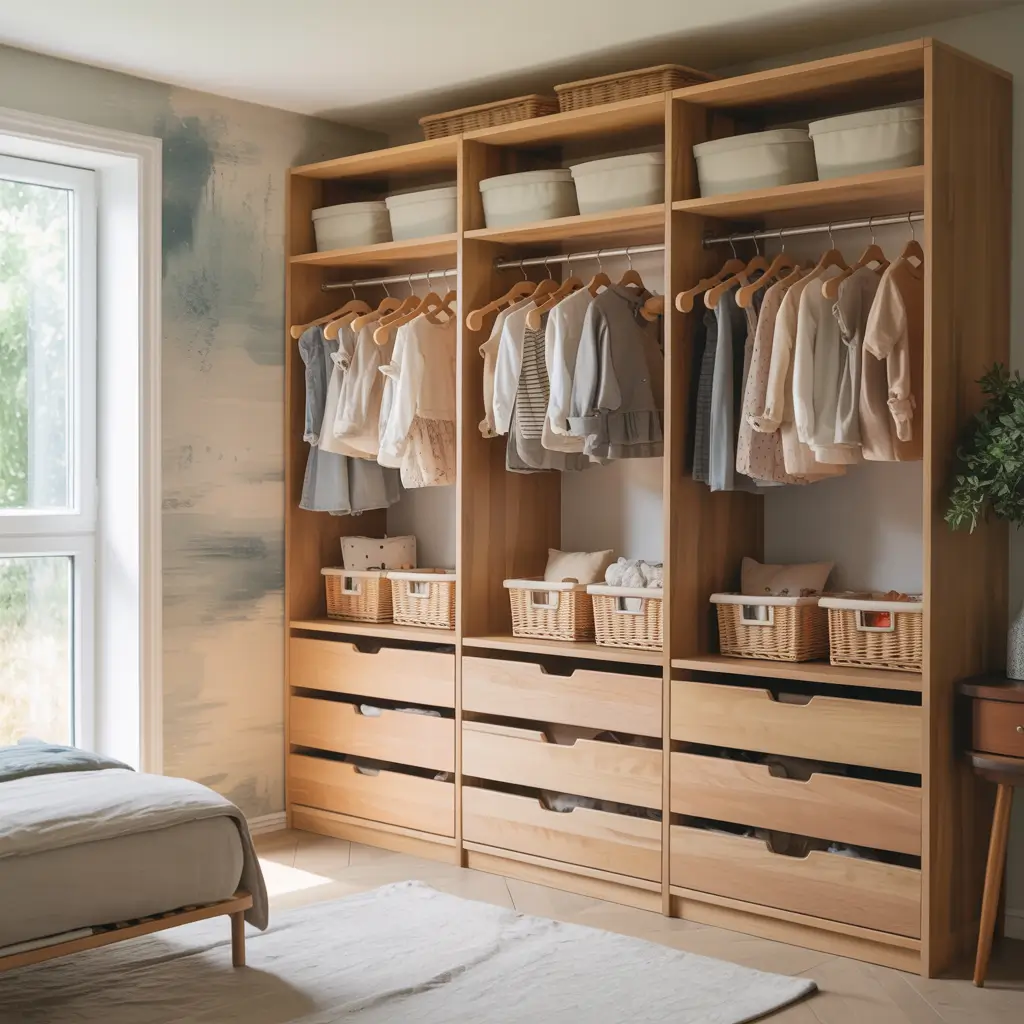
Here’s the thing nobody tells you – kids’ closet needs change dramatically every 18 months. The setup that works for a 4-year-old is useless for a 7-year-old. That’s why adjustable everything is your best friend.
I invested in an adjustable closet system with moveable rods, shelves that can change height, and modular components. Yeah, it cost more upfront than the basic wire shelving, but I haven’t had to redo the closet in three years. That’s a record in parent years.
Components Worth the Investment
Splurge on these adjustable pieces:
- Telescoping rods that extend as the closet needs change
- Adjustable shelf heights with multiple positioning options
- Modular drawer units you can add or remove
- Expandable dividers for shelves that grow with clothing sizes
The beauty is you’re not starting from scratch every time your kid hits a growth spurt or develops new organizational needs. You just adjust what you have.
The Bottom Line
Look, organizing kids’ closets isn’t going to be Instagram-perfect, and honestly, who cares? What matters is creating a system that works for your actual kids in your actual life.
These twelve ideas have worked for my family and dozens of other parents I know, but you know your kids best.
Start small, adjust as you go, and remember that “good enough” is perfectly fine when it comes to kids’ spaces. They’re going to grow out of everything in six months anyway.
Focus on systems that can evolve with them, and don’t stress when things aren’t perfect.
The goal isn’t a magazine-worthy closet – it’s fewer morning meltdowns, kids who can dress themselves, and maybe, just maybe, clothes that occasionally end up where they belong. If you achieve even half of that, you’re winning at this parenting thing.
Trust me, I’ve been there, and an organized(ish) closet makes everything just a little bit easier. And in parenting, we’ll take all the “easier” we can get, right?