10 Modern Minimal Kitchen Counter Decor Ideas for Stylish Kitchens
- Kitchen ideas
 Ben
Ben- 0
- 39 minutes read
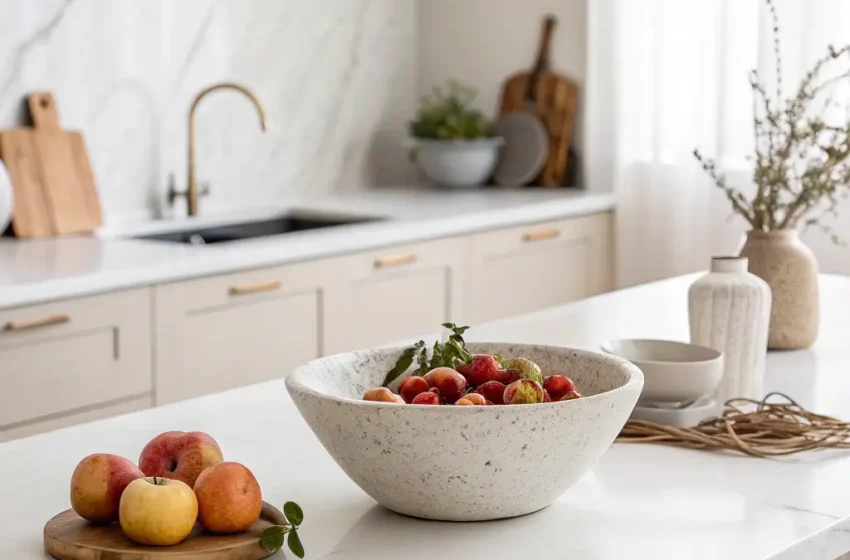
Minimalist kitchen counters sound amazing until you realize they can easily look sterile, empty, or like you just moved in yesterday.
I know because I went through that phase—clearing everything off my counters, feeling proud for exactly two days, then realizing my kitchen looked sad and unlived-in.
Turns out, minimal doesn’t mean empty; it means intentional.
After years of calibrating the perfect balance between “zen sanctuary” and “actual functional kitchen,” I’ve cracked the code on minimal counter decor that works in real life.
The secret? Every single item needs to earn its spot through beauty, function, or ideally both. No exceptions, no freeloaders.
These 10 minimal kitchen counter decor ideas will help you create that clean, breathable aesthetic without your kitchen looking like a showroom nobody actually cooks in.
Whether you’re naturally minimal or recovering from countertop clutter chaos, these strategies will transform your space into something that feels both calming and genuinely usable.
1. Sleek Neutral Vase Arrangements
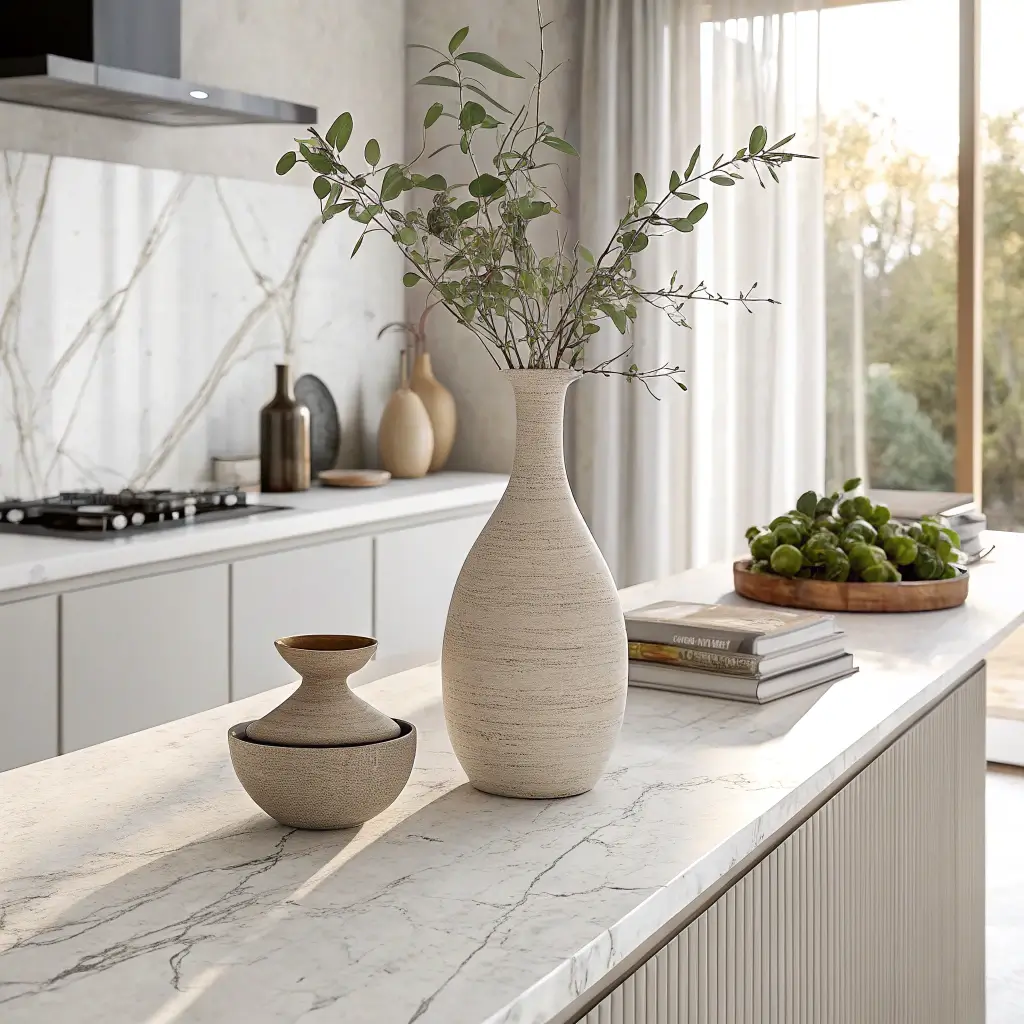
A single beautiful vase creates instant sophistication with minimal footprint. This is minimalism at its finest—one perfect object doing all the aesthetic heavy lifting.
Choosing Your Minimal Vase
The vase itself becomes the decor, so quality matters more than quantity here. Skip the elaborate patterns and choose simple, elegant forms.
Essential vase characteristics:
- Neutral colors (white, cream, grey, black)
- Interesting shape that stands alone
- Quality material (ceramic, stoneware, glass)
- Appropriate size for your counter scale
- Single stem holder or small bouquet capacity
What Goes Inside
Minimalist vase arrangements keep it simple. One or two stems maximum—think single tulip, eucalyptus branch, or dried pampas grass. The restraint is what makes it work.
My tall white ceramic vase lives on my counter year-round. Sometimes it holds one stem from the grocery store, sometimes a single branch from my yard, sometimes nothing at all. The vase is beautiful enough empty that I don’t stress when I forget to refill it.
2. Minimalist Herb Garden Corner
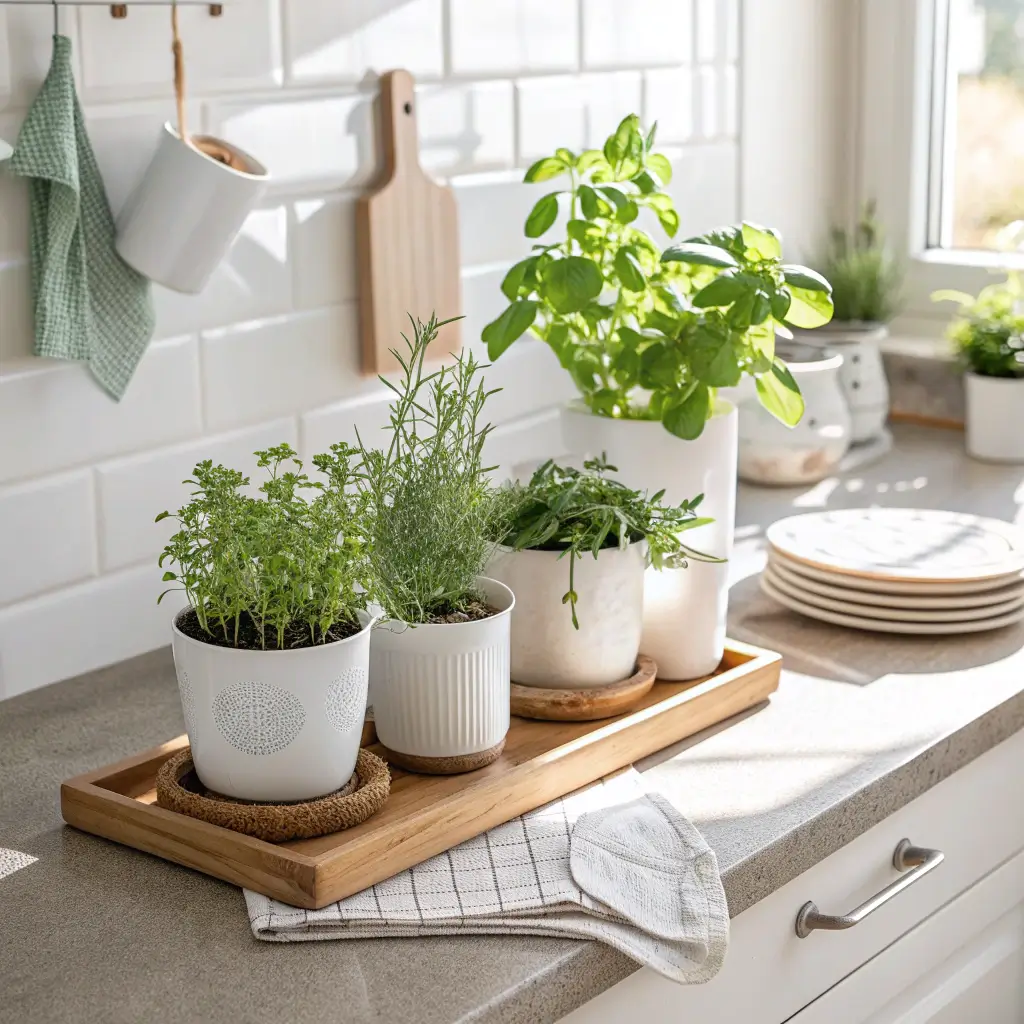
Fresh herbs bring life and function to minimal counters without cluttering them. This is one of the few minimal solutions that gives you actual ingredients.
Building Your Minimal Herb Setup
The key to keeping herb gardens minimal? Strict plant limits and matching containers. No random pots allowed.
Minimal herb garden essentials:
- 3 pots maximum (basil, rosemary, mint work well)
- Identical white ceramic pots
- Simple drainage trays underneath
- No decorative labels (the minimalist way)
- Near window placement for light
The Survival Factor
Here’s the reality: dead brown herbs destroy the minimal aesthetic fast. Choose herbs you actually use in cooking so you have motivation to keep them alive.
FYI, I keep exactly three herb pots in matching white ceramics. They’re plants I grab from constantly—basil for everything, rosemary for roasting, mint for tea. That functional use keeps me watering them, which keeps them looking good instead of becoming sad brown counter clutter.
3. Modern Ceramic Canister Set
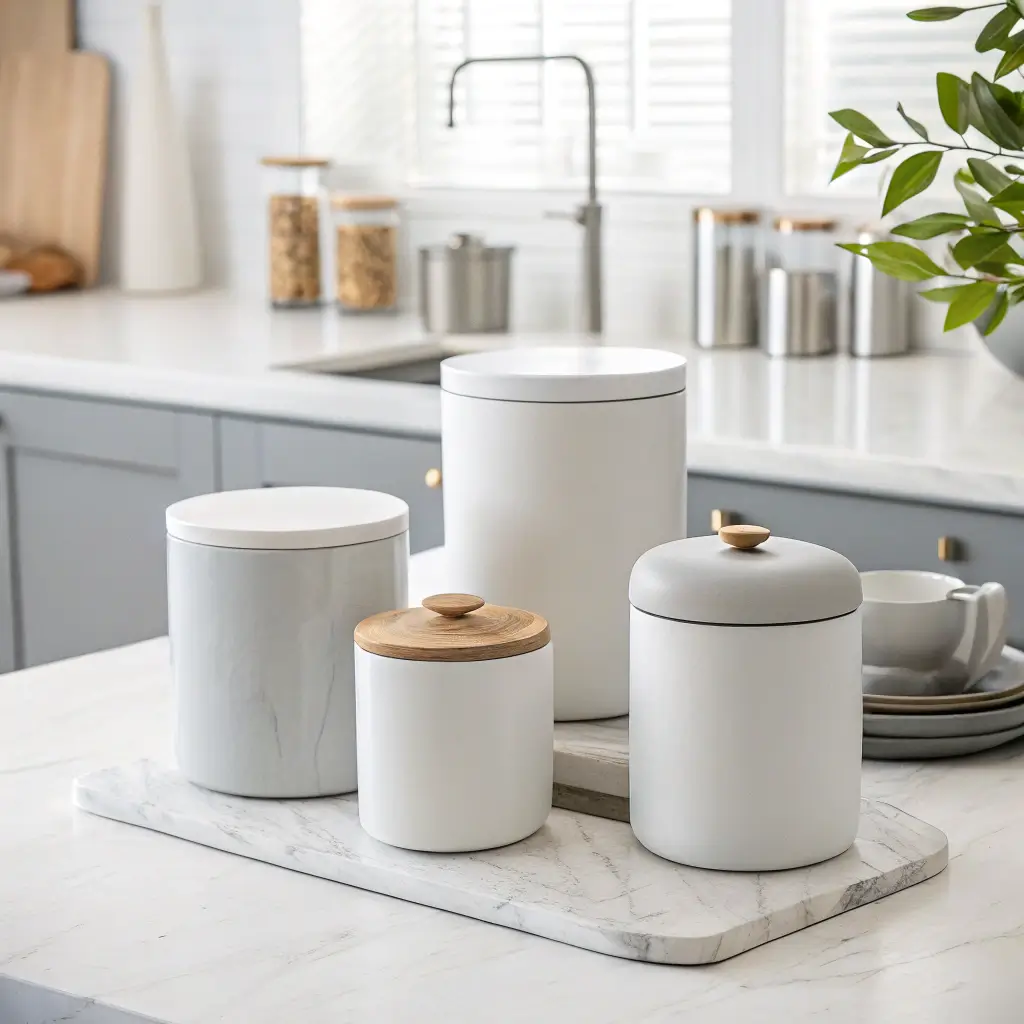
Canisters provide hidden storage that looks intentional on minimal counters. They organize necessities while maintaining clean visual lines.
Selecting Minimal Canisters
In minimalist kitchens, matching matters. Your canisters should look like a family, not random orphans gathered from different decades.
Canister set guidelines:
- Matching design (same material, color, shape)
- 3-4 canisters maximum for minimal impact
- Neutral colors that disappear into your palette
- Clean lines without fussy details
- Actual functionality (store things you use daily)
What Lives Inside
Store your most-used items—coffee, sugar, flour, tea. If you’re not reaching into them daily, they don’t deserve counter space in a minimal kitchen.
My four white ceramic canisters hold coffee, sugar, tea, and rice. They’re identical except for size, creating this calm repetition on my counter. The uniformity is what keeps them feeling minimal instead of cluttered.
Also Read: 12 Elegant Kitchen Counter Corner Decor Ideas Made Simple
4. Clean Cutting Board Display
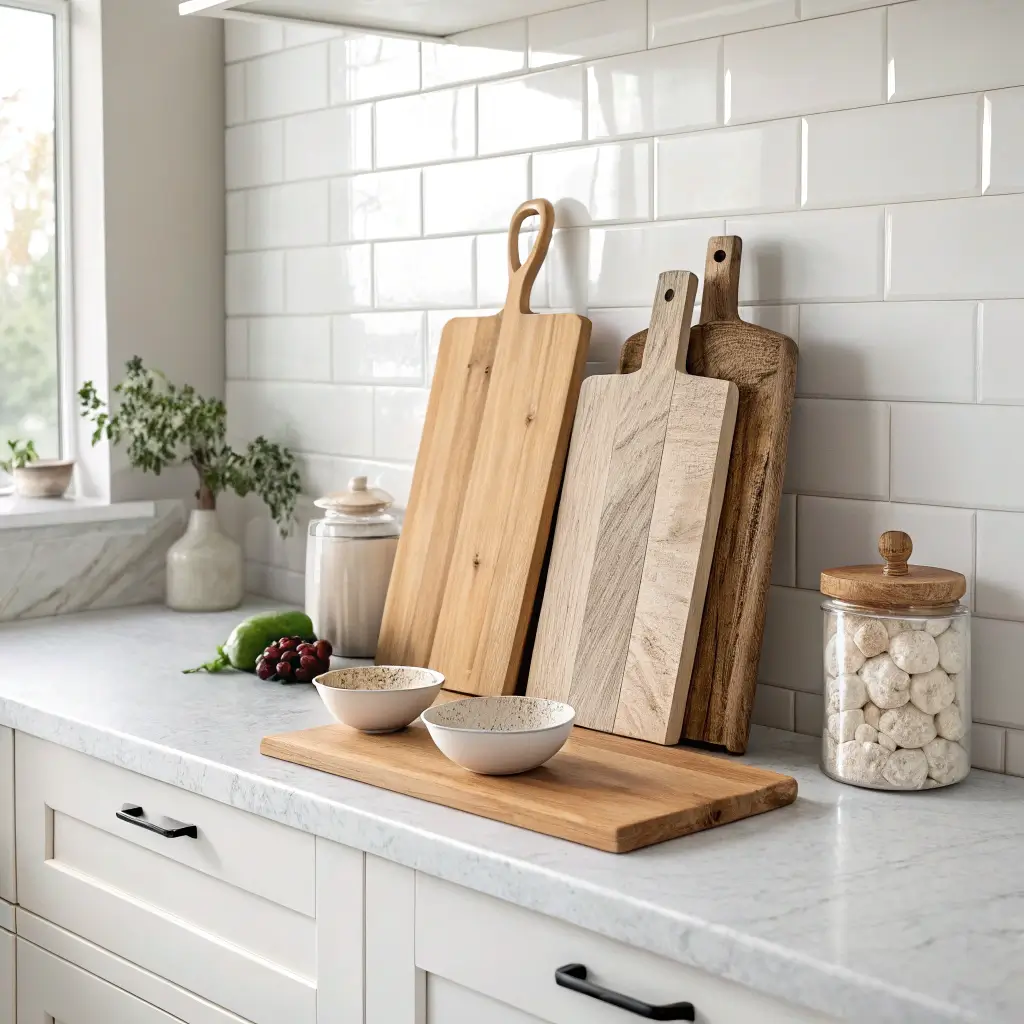
Cutting boards become functional art when displayed minimally. This works especially well because you actually use them, so they never feel like static decor.
The Minimal Display Method
Forget stacks of five cutting boards. Minimalism means choosing your single best board and making it count.
Cutting board display tips:
- One board only leaned against backsplash
- Beautiful material (marble, quality wood, slate)
- Appropriate size for your counter scale
- Actually use it regularly for food prep
- Simple lean (no elaborate stands needed)
Material Matters
Choose a board beautiful enough to display but practical enough to use. Marble looks stunning but needs care; wood develops character; bamboo stays minimal and light.
I lean one large maple cutting board behind my knife block. It’s gorgeous enough to leave out and tough enough to use daily for actual chopping. That dual purpose justifies its counter presence in my minimal setup.
5. Simple Stoneware Fruit Bowl
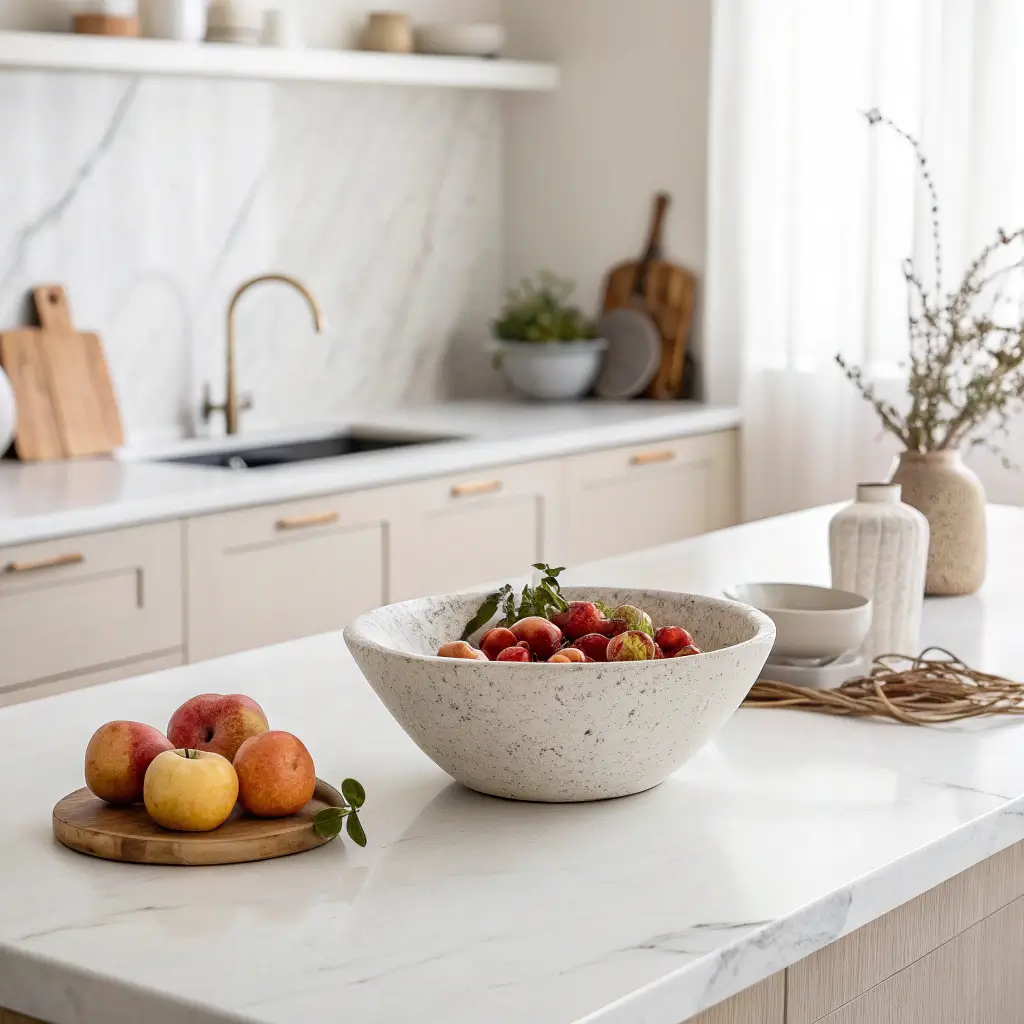
A single beautiful bowl holding fresh fruit provides color, health, and organic minimalism without fussiness.
Choosing Your Minimal Bowl
The bowl itself should be a design object. In minimal kitchens, mediocre containers don’t make the cut.
Fruit bowl essentials:
- Interesting shape or texture
- Neutral color (white, cream, grey, natural)
- Quality material (ceramic, stoneware, wood)
- Appropriate scale (not massive)
- Always keep it filled (empty bowls look sad)
Fruit Selection
Even your fruit choices matter in minimal kitchens. Choose 5-7 pieces in complementary colors—lemons, green apples, or mixed citrus all look intentional together.
My simple white stoneware bowl holds exactly five items at all times—usually lemons or apples because they last longer. That restraint keeps it looking curated instead of overflowing. Plus, visible fruit means I actually eat fruit instead of forgetting it exists.
6. Monochrome Coffee Station
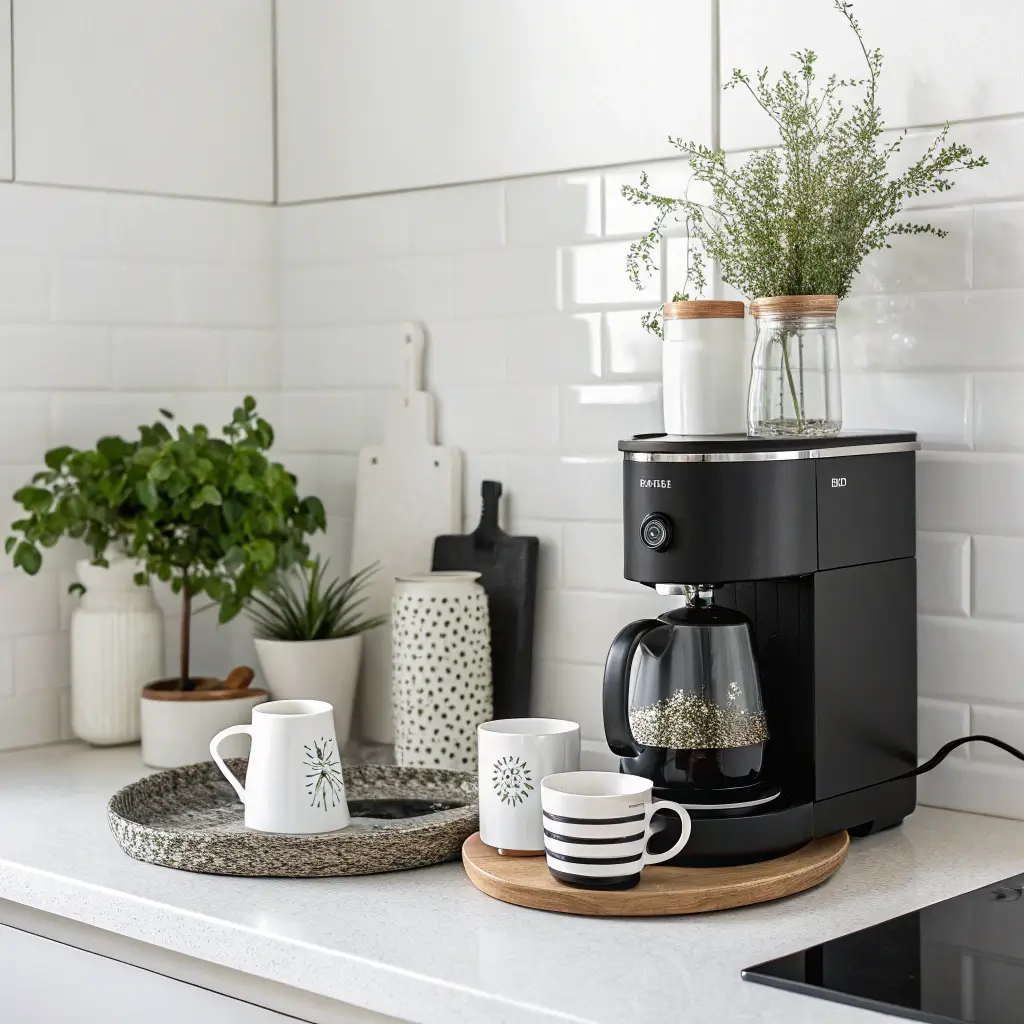
A dedicated coffee corner keeps everything you need organized in one minimal zone. The monochrome element is what maintains the minimal aesthetic.
Building Your Minimal Station
Every item in your coffee area should match your chosen color scheme—black, white, or one neutral tone throughout.
Monochrome coffee elements:
- Coffee maker in your chosen color
- Matching canisters for beans/grounds
- Coordinating mug storage
- Single-color accessories only
- Everything on one tray for containment
The Tray Trick
Putting your entire coffee setup on one tray creates boundaries that maintain minimalism. The defined space keeps the station from sprawling across your counter.
My all-black coffee corner lives on a black tray—black French press, black canister, black mug tree. The monochrome commitment is what keeps it feeling minimal instead of cluttered. One color family unifies everything.
Also Read: 10 Cozy Kitchen Countertop Decor Ideas and Rustic Accents
7. Compact Floating Shelves Decor
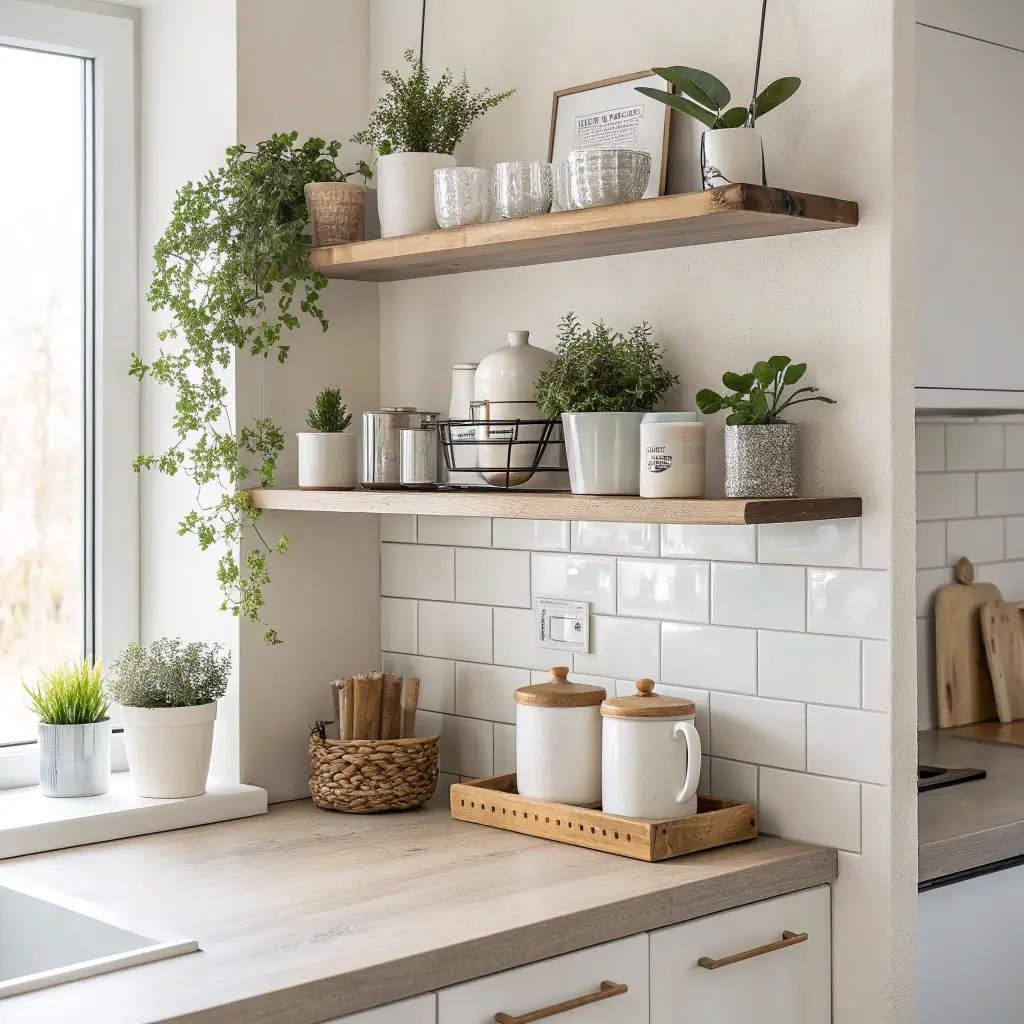
Floating shelves above counters create vertical storage that preserves horizontal minimalism. You’re using air space instead of precious counter real estate.
Minimal Shelf Styling
The key to minimal floating shelves? Strict limits on what goes up there. This isn’t bonus clutter storage.
Floating shelf guidelines:
- One or two shelves maximum
- Matching items displayed (all white, all glass, etc.)
- Significant empty space between objects
- Functional items you actually use
- Regular editing to prevent accumulation
Strategic Placement
Position floating shelves in dead space above your minimal counter setup. They should complement, not compete with, your counter styling.
I installed one white floating shelf above my coffee area. It holds four matching white mugs and two small plants. That’s it. The restraint is what keeps it feeling minimal instead of becoming another cluttered surface.
8. Elegant Minimal Tray Setup
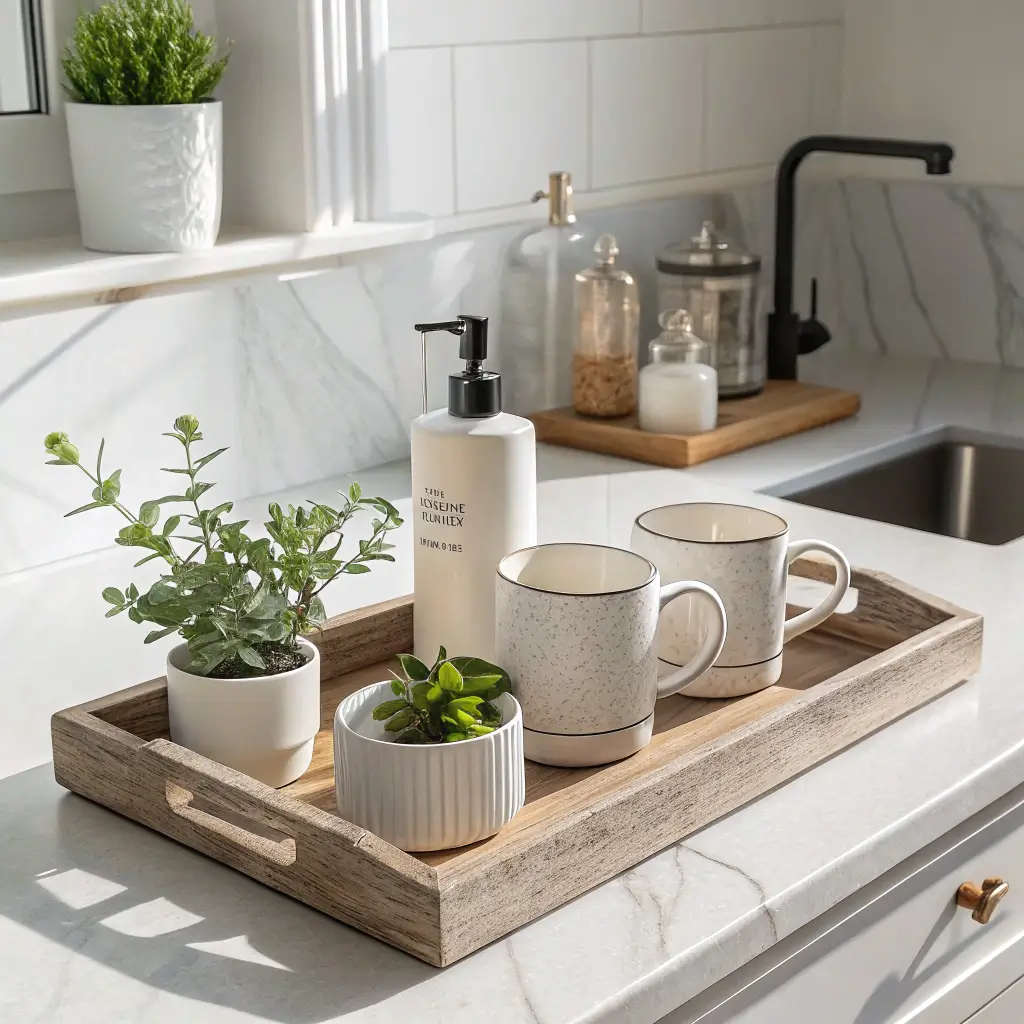
A beautiful tray corrals necessary items into one contained zone. This is possibly the easiest minimal trick that exists.
Choosing Your Tray
The tray itself needs to be design-worthy in minimal kitchens. This isn’t the place for plastic or cheap materials.
Minimal tray essentials:
- Quality material (marble, wood, metal)
- Neutral color fitting your palette
- Appropriate size for your counter
- Clean lines without decoration
- Contains 3-5 items maximum
What Goes On It
Use your tray for daily essentials that must live on the counter—olive oil, salt, pepper, maybe one small plant. Everything else goes in a cabinet to maintain minimalism.
My small marble tray holds exactly three things: olive oil dispenser, fancy salt, and balsamic vinegar. These are items I grab multiple times daily, so they earn their spot. The tray makes them look intentional instead of random.
9. Subtle Wall-Mounted Hooks Accent
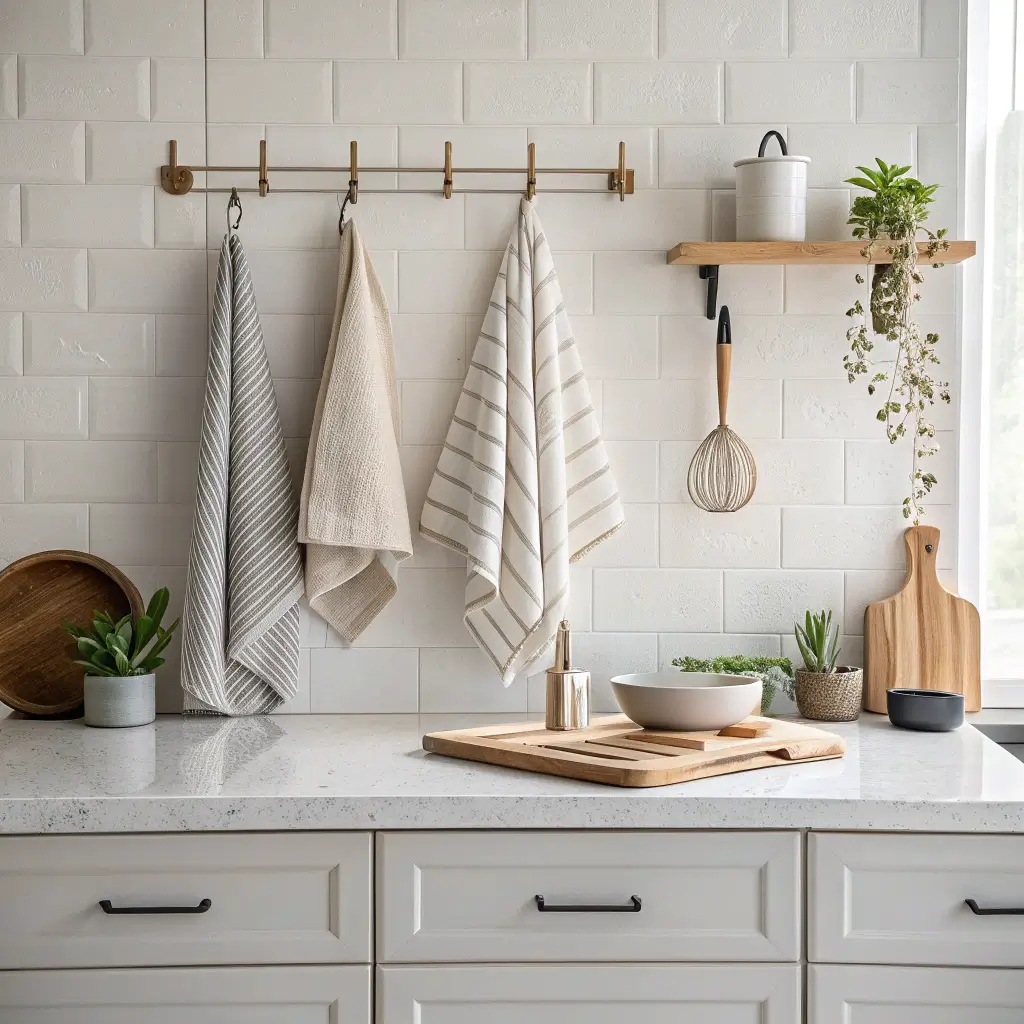
Wall hooks remove items from your counter entirely while creating intentional vertical interest. This is minimal problem-solving at its best.
Hook Placement Strategy
Choose hooks that match your kitchen’s hardware finish. The consistency maintains that minimal cohesion you’re after.
Wall hook guidelines:
- Matching finish to other hardware
- Simple design (no decorative flourishes)
- 3-5 hooks maximum in one area
- Functional use (mugs, utensils, dish towels)
- Above or beside counter, not on multiple walls
Making Hooks Minimal
What hangs on your hooks matters as much as the hooks themselves. Only hang items that match your color scheme to maintain visual calm.
I mounted three brass hooks above my coffee area. They hold two white mugs and one beige dish towel. The repetition of neutral colors keeps it looking minimal instead of random. Everything coordinates or it doesn’t make the cut.
Also Read: 12 Beautiful Small Kitchen Counter Decor Ideas on Budget
10. Glass Jar Organization Display
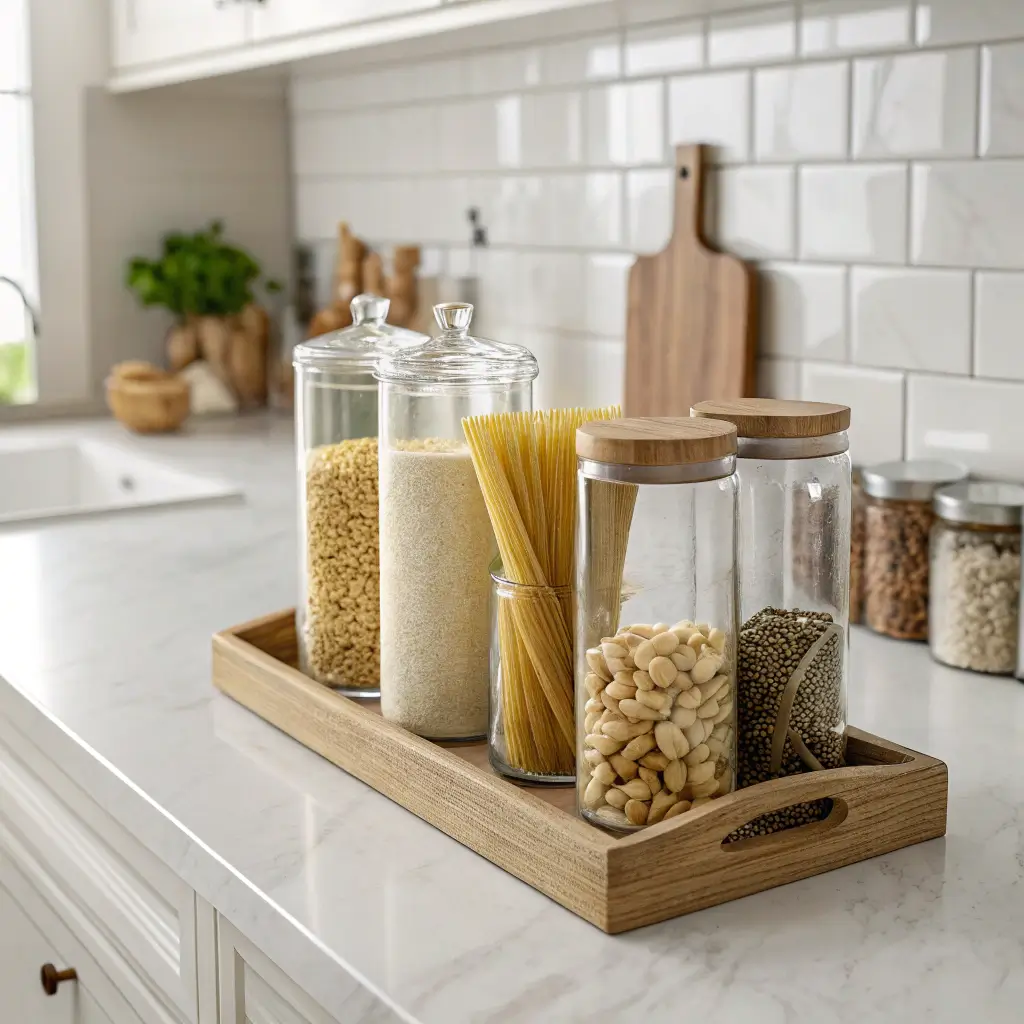
Clear glass jars provide visible storage that looks minimal when styled correctly. The key is identical jars containing similar-colored contents.
Creating Minimal Jar Displays
Random jars = clutter. Matching jars = minimalism. This distinction is crucial.
Glass jar display rules:
- Identical jars (same size, same style)
- Similar contents (all dry goods, all white/neutral)
- 3-4 jars maximum for minimal impact
- Labels optional (minimalism often skips them)
- Actually use what’s inside regularly
Content Choices
Fill jars with ingredients that look good together—white rice, pasta, flour, sugar. Avoid colorful contents that break your neutral palette.
IMO, my three matching glass jars hold pasta, rice, and flour. They’re identical except for contents, and even the contents are all similar neutral tones. That uniformity is what keeps them feeling minimal instead of cluttered :/
Making Minimal Counter Decor Actually Work
Now that we’ve explored these ten ideas, let’s talk about universal minimal principles.
The One-In-One-Out Rule
For every new item you add to your counter, remove something else. This prevents gradual accumulation that destroys minimalism.
The Daily Use Test
Before giving something permanent counter space, ask yourself: Do I reach for this item at least once daily? If not, it belongs in a cabinet.
Quality Over Quantity
Minimal kitchens demand better items, not more items. One beautiful wooden cutting board beats three mediocre ones every single time.
Regular Audits
Minimalism requires maintenance. Edit your counters monthly to prevent items from accumulating without you noticing.
Common Minimal Kitchen Mistakes
Let’s address what destroys minimal counter aesthetics.
Too Many “Minimal” Items
You can’t have ten different minimal displays. Choose 2-3 focal points maximum or you’ve created cluttered minimalism, which defeats the entire purpose.
Mixed Metals and Materials
Minimalism thrives on consistency. Mixing brass, chrome, and copper creates visual noise. Choose one metal finish and stick with it.
Forgetting Functionality
Minimal counters that prevent actual cooking aren’t minimal—they’re impractical. Maintain clear workspace for food preparation.
Neglecting Maintenance
Minimal surfaces show dust, crumbs, and mess more than cluttered ones. Daily wiping becomes essential to maintain the minimal aesthetic.
Your Minimal Counter Transformation
Ready to create your own minimal kitchen? Here’s your step-by-step plan.
Start by clearing everything off your counters completely. Yes, everything. This reset shows you how much space you actually have.
Next, identify items you genuinely use daily. Coffee maker? Definite keeper. Bread maker you’ve used twice? Storage time.
Then choose 2-3 ideas from this list that fit your lifestyle. Don’t try implementing all ten—that’s not minimal, that’s confused.
Finally, build slowly. Add one element, live with it for a week, assess if it works. Minimal kitchens evolve through careful curation, not overnight transformation.
The Philosophy Behind Minimal Counters
Minimalism isn’t about deprivation or following rigid rules. It’s about creating space—both physical and mental—through intentional choices.
When you limit counter items to true essentials and genuine beauty, you reduce visual noise. That reduction creates calm every time you enter your kitchen.
You’ll clean faster because there’s less stuff to move. You’ll cook easier because you have actual workspace. You’ll feel calmer because your environment isn’t screaming for attention.
Maintaining Your Minimal Kitchen
Creating minimal counters is one thing. Keeping them minimal requires different strategies.
Daily Habits
Wipe counters every evening, even if they look clean. Put items back immediately after use. Never let things “temporarily” sit out.
Weekly Checks
Every Sunday, audit your counters with fresh eyes. Did anything sneak out that doesn’t belong? Be ruthless about removing it.
Seasonal Edits
Change your single vase stem seasonally. Rotate which herbs you’re growing. These small refreshes keep minimal from feeling stagnant.
Living With Minimal Counters
Here’s what nobody tells you about minimal kitchen counters: they require different habits than cluttered ones.
You can’t just put things down anywhere because there’s no “anywhere” left. Everything needs a designated home, usually in a cabinet.
You’ll become more selective about new purchases because you know they need to justify counter space or cabinet real estate.
You’ll probably clean more consistently because mess shows immediately on clear surfaces. But you’ll also clean faster because there’s less stuff to work around.
Minimal Kitchen Counters: The Honest Truth
Minimal counter decor kitchen proves that less really can be more—when you do it thoughtfully. These ten ideas show how strategic choices create beauty through restraint.
The magic of minimal counters lies in their calm and clarity. Every item serves a purpose or brings joy (ideally both). When you nail this balance, your kitchen becomes a room that energizes rather than exhausts you.
Whether you choose neutral vases or glass jars, herb gardens or cutting board displays, the key is designing for how you actually cook. Minimal doesn’t mean impractical—it means intentional.
So stop letting your counters collect random stuff and start curating what deserves to stay. Clear those surfaces, choose your favorites from this list, and build a minimal setup that supports your real cooking life.
Your kitchen deserves the calm that minimalism provides. Now grab one beautiful item, put it on your counter, step back, and feel that satisfying emptiness around it.
That’s minimalism working—and your journey is just beginning :