12 Amazing White Kitchen Tiles Ideas and Sleek Designs
- Kitchen Tiles Ideas
 Ben
Ben- 0
- 58 minutes read
White kitchen tiles might seem like the safest, most predictable choice you can make. But here’s the truth: white done right creates stunning, sophisticated spaces that never go out of style.
I used to dismiss white tiles as boring. Plain. Uninspired. Then I renovated my own kitchen and discovered the incredible variety hiding within the “white tile” category.
The shape options, textures, patterns, and finishes available transformed my perception completely.
White tiles have dominated kitchen design for over a century because they work. They brighten spaces, enhance cleanliness perception, reflect light beautifully, and provide neutral backdrops that accommodate evolving décor preferences.
But “white tiles” covers everything from handmade zellige to sleek large format porcelain to intricate mosaics—each creating entirely different atmospheres.
The challenge isn’t whether white tiles will work in your kitchen. The challenge involves choosing which white tile approach matches your aesthetic vision and practical needs.
Ready to explore twelve distinct white kitchen tile ideas that prove this classic choice offers anything but boring results? Let’s find your perfect white.
1. Classic White Subway Tiles

Subway tiles have anchored kitchen design since the early 1900s. Their enduring popularity stems from perfect simplicity combined with remarkable versatility.
Why Subway Tiles Never Disappear
Classic white subway tiles (typically 3×6 inches) create clean, familiar aesthetics that work in virtually any kitchen style. From farmhouse to contemporary, traditional to industrial, these rectangular tiles adapt effortlessly.
The appeal of white subway tiles includes:
- Timeless recognition: Over a century of design heritage
- Universal compatibility: Works with any cabinet color or countertop material
- Affordable accessibility: Among the most budget-friendly tile options
- Easy installation: Manageable size suits confident DIYers
- Simple replacement: Individual damaged tiles replace easily
- Proven resale value: Universally appealing to potential buyers
Elevating Classic Subway Tiles
Plain white subway tiles can feel generic without thoughtful execution. Modern approaches add personality while maintaining the classic format.
Consider these subway tile upgrades:
- Beveled edges: Angled edges catch light and create shadow lines
- Handmade textures: Zellige-inspired irregularities add organic character
- Extended proportions: Longer formats (4×12 or 4×16 inches) create contemporary appearances
- Glossy versus matte: Finish choice dramatically affects overall aesthetic
- Pattern variations: Herringbone, vertical stack, or diagonal layouts
Grout selection transforms subway tile installations. Dark grout (charcoal or black) creates dramatic grid patterns emphasizing each tile. Matching white grout minimizes visible lines for seamless surfaces. Gray grout balances definition with subtlety—my personal favorite approach.
I installed classic white subway tiles with medium gray grout in my current kitchen. The subtle contrast adds enough definition to appreciate the pattern without overwhelming the clean aesthetic. Three years later, I still love this combination.
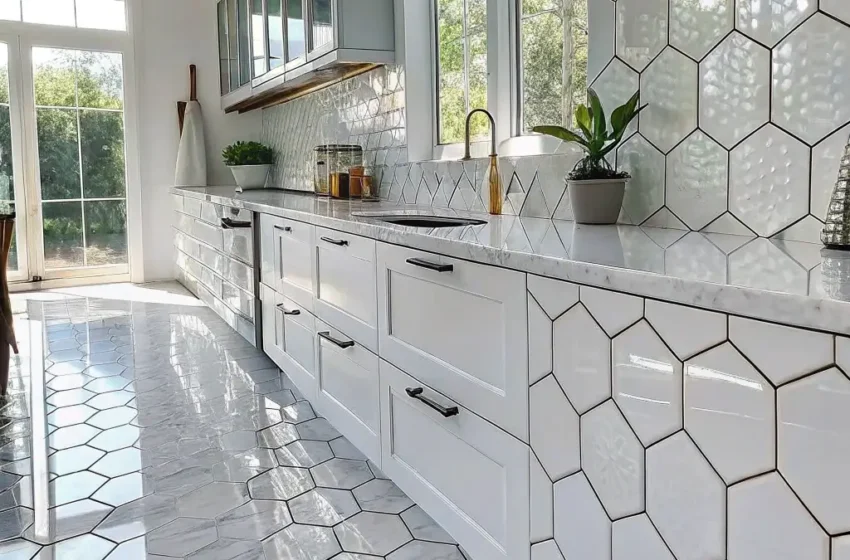
2. Glossy White Hexagon Tiles

Hexagons bring geometric interest that squares and rectangles simply cannot achieve. In glossy white, they create surfaces that sparkle with light-catching brilliance.
The Hexagon Advantage
Glossy white hexagon tiles combine classic color with contemporary shape. The honeycomb pattern adds visual texture through geometry alone, eliminating the need for color variation or complex designs.
Why glossy white hexagons captivate:
- Natural geometry: References honeycomb structures found throughout nature
- Light reflection: Glossy surfaces bounce illumination beautifully
- Versatile sizing: Available from tiny mosaics to large statement pieces
- Pattern interest: Shape creates visual complexity without busy designs
- Organic edge potential: Create flowing boundaries rather than straight lines
- Universal appeal: Works in traditional, modern, and eclectic spaces
Hexagon Tile Applications
Hexagon tiles shine in multiple kitchen applications:
Backsplash installations: Glossy white hexagon backsplashes add geometric interest behind ranges or sinks. Consider organic, flowing bottom edges rather than straight horizontal lines for dramatic effect.
Floor surfaces: Large white hexagon floor tiles create striking foundations. The shape adds interest that basic squares cannot match.
Wall features: Full walls of white hexagons create statement surfaces guests inevitably photograph.
Tile size affects hexagon appearance significantly. Small hexagon mosaics (1-2 inches) create intricate, detailed surfaces with many grout lines. Large hexagons (6-8 inches or bigger) produce cleaner, more contemporary looks with minimal interruption.
The glossy finish on white hexagons maximizes light reflection. Position these tiles where they’ll catch natural or artificial light for maximum sparkle effect.
3. Matte White Large Format Tiles
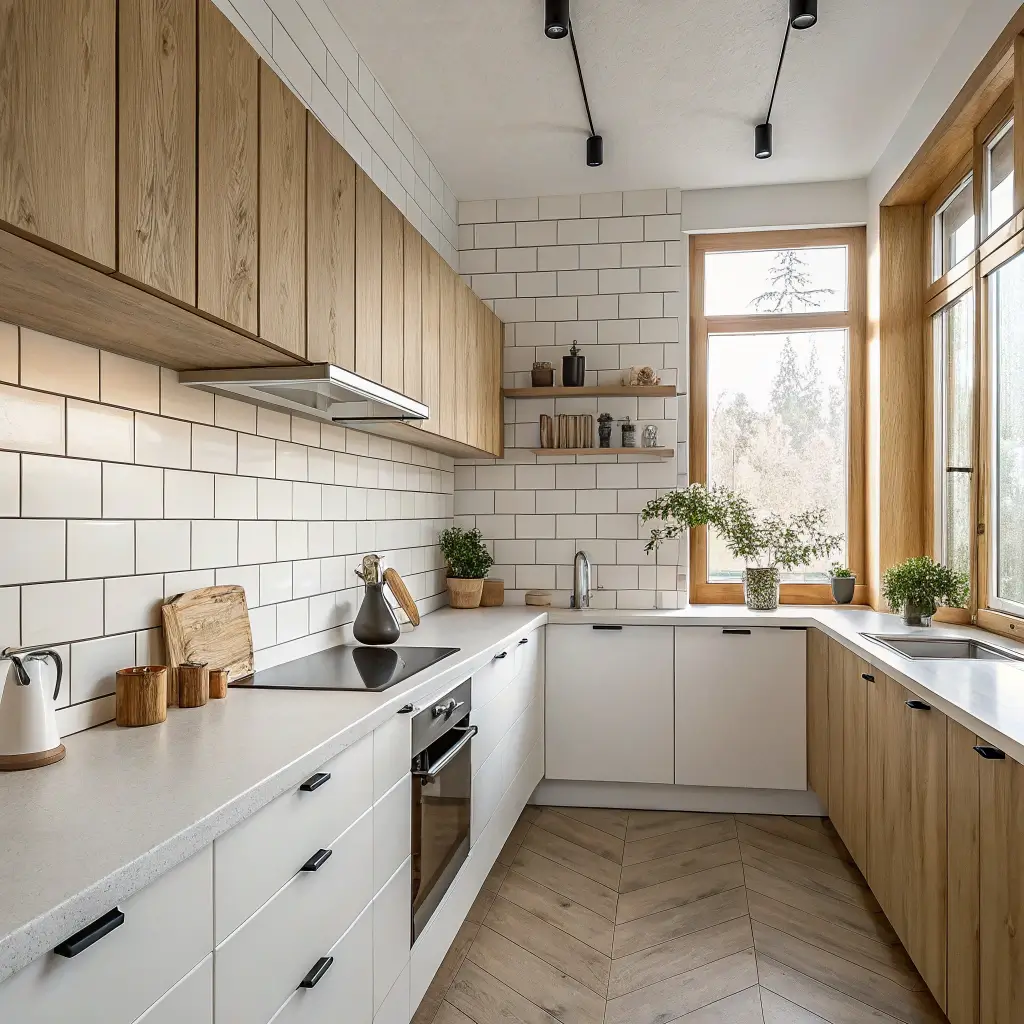
Clean lines, minimal grout, and contemporary sophistication—matte white large format tiles deliver the modern minimalist aesthetic many homeowners crave.
Understanding Large Format Appeal
Matte white large format tiles (typically 24×24 inches or larger) create seamless surfaces that feel intentionally designed. Fewer grout lines mean easier cleaning, reduced visual interruption, and expanded perceived space.
The advantages of large format white tiles:
- Seamless appearance: Minimal grout lines create continuous surfaces
- Space enhancement: Large tiles visually enlarge kitchens
- Easier maintenance: Less grout equals less cleaning effort
- Contemporary aesthetic: Aligns perfectly with minimalist design trends
- Matte sophistication: Soft finish feels warm rather than sterile
- Fingerprint resistance: Matte surfaces hide smudges better than glossy alternatives
Practical Considerations
Large format tiles require perfectly level surfaces for successful installation. Any subfloor imperfections become immediately apparent. Professional installation typically proves worthwhile—the precision required justifies the cost.
Consider these large format realities:
- Weight considerations: Large tiles challenge transportation and handling
- Cutting precision: Each cut matters significantly
- Waste potential: Irregular spaces create more material waste
- Installation expertise: Professional installation strongly recommended
- Rectified edges essential: Precisely cut edges allow minimal grout lines
For maximum impact, match large format floor tiles with wall applications. The continuous material flow creates cohesive, sophisticated spaces that impress consistently.
Matte finishes particularly suit large format white tiles. The soft surface prevents harsh glare while maintaining brightness—essential in kitchens with significant natural light.
Also Read: 10 Creative Modern Kitchen Tiles Ideas for Dream Kitchens
4. White Marble Effect Tiles
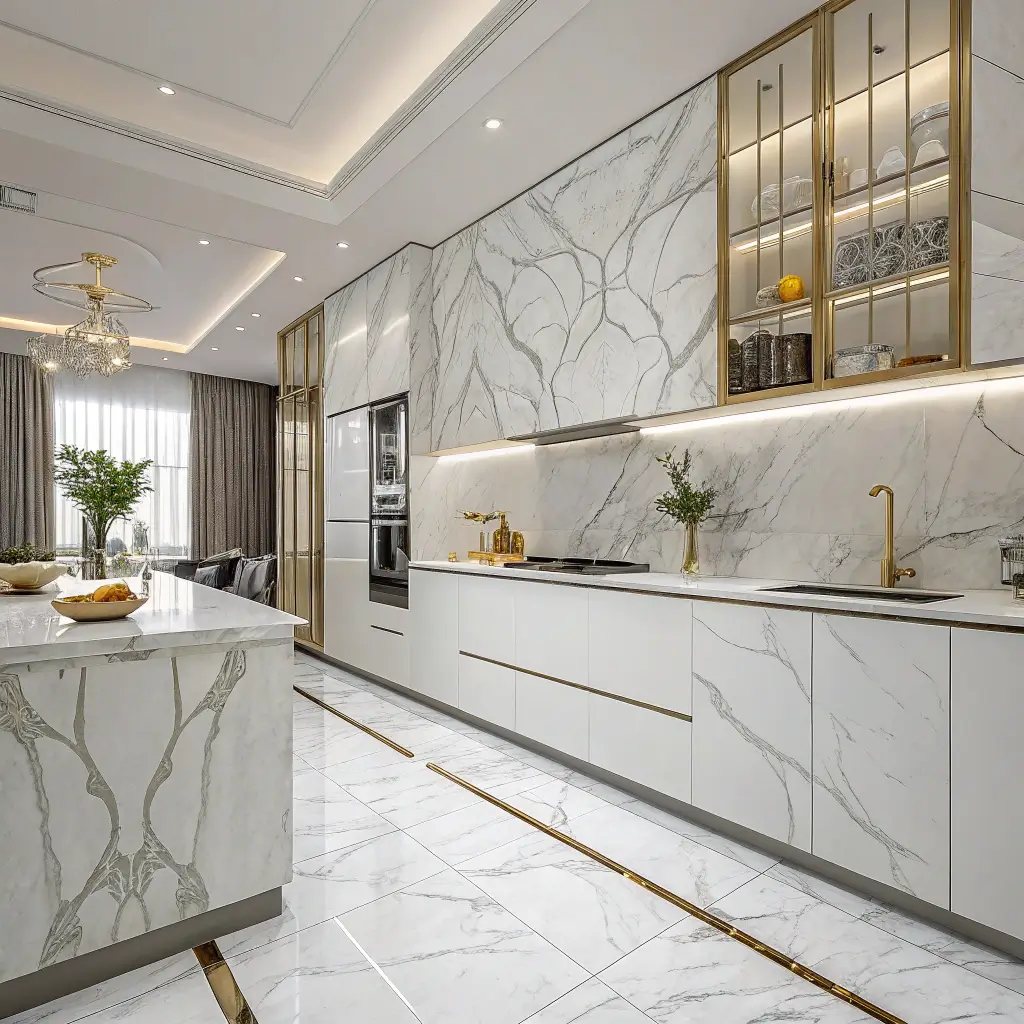
Real marble delivers luxury but demands high maintenance and higher budgets. White marble effect tiles offer the elegance without the drama.
The Marble Look Alternative
White marble effect tiles replicate natural marble’s distinctive veining, depth, and luminosity using porcelain or ceramic materials. Modern printing technology creates remarkably convincing results that fool most observers.
Why choose marble-effect over natural marble:
- Acid resistance: Porcelain won’t etch from lemon juice, vinegar, or tomato sauce
- Stain immunity: Properly glazed tiles resist absorption completely
- Cost effectiveness: Dramatically cheaper than natural marble
- Consistent appearance: No surprise variations between tiles
- Lower maintenance: Standard cleaning products work perfectly
- Durability: Harder surfaces resist scratches and chips better
Popular White Marble Styles
Carrara-inspired tiles feature soft gray veining on white backgrounds. This classic Italian marble look suits traditional kitchens beautifully.
Calacatta-style tiles show bolder, more dramatic veining with golden undertones. This rarer marble aesthetic creates striking contemporary focal points.
Statuario patterns combine dramatic veining with cooler undertones. The bold patterns make powerful statements in modern spaces.
For realistic marble appearances, choose large format tiles with book-matched veining. Position tiles so patterns flow continuously, mimicking natural marble slabs. Rectified edges with minimal grout lines enhance the seamless slab illusion.
IMO, marble-effect tiles represent one of the smartest kitchen tile investments available. You get luxury aesthetics with practical performance—the best of both worlds. 🙂
5. White Herringbone Pattern Tiles
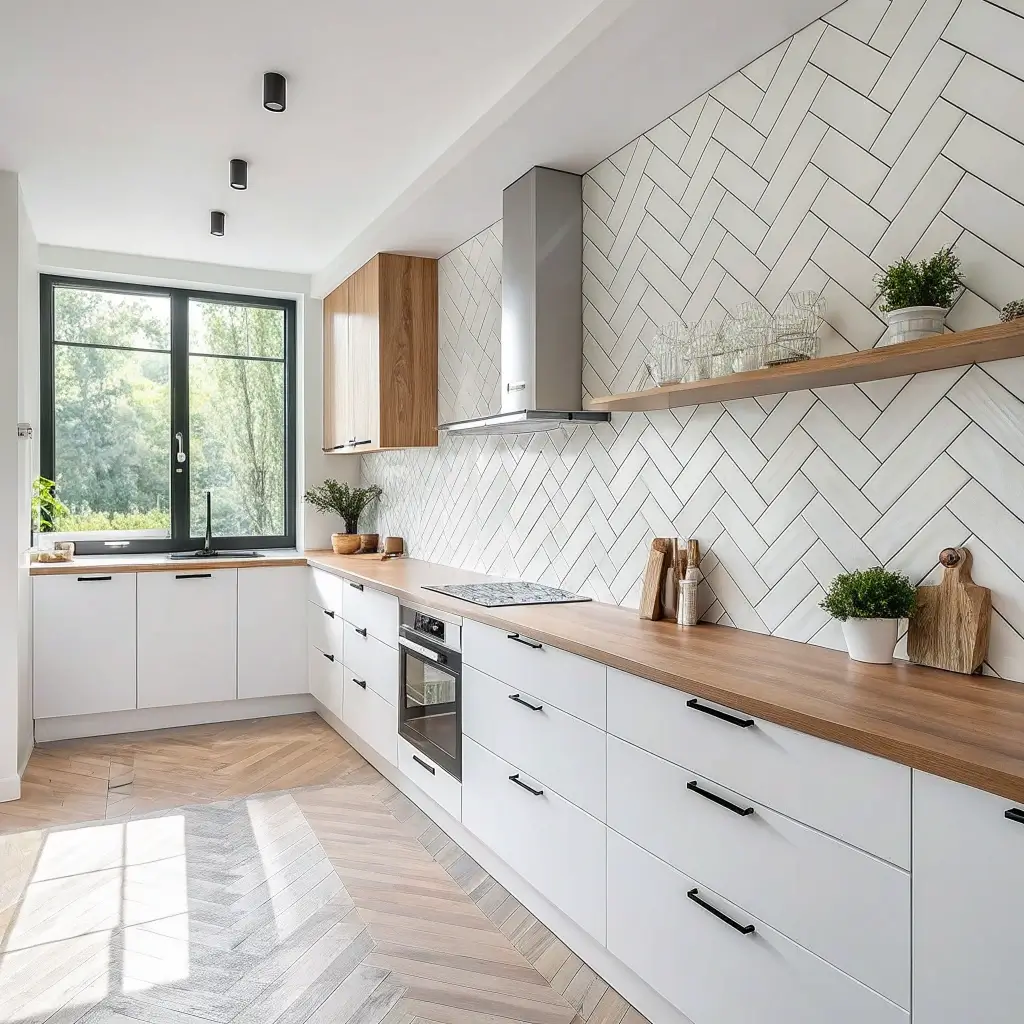
The herringbone arrangement transforms simple rectangular tiles into dynamic, sophisticated surfaces. In white, this pattern creates movement without color distraction.
Why Herringbone Works
White herringbone tiles position rectangular tiles at 45-degree angles, creating V-shaped patterns that draw the eye and add architectural energy. This classic pattern elevates simple tiles into statement installations.
The herringbone advantage:
- Visual movement: Pattern creates flow and directional energy
- Architectural interest: Adds sophistication beyond basic layouts
- Vertical emphasis: Can make ceilings appear higher
- Classic credentials: Historical pattern with proven appeal
- Size flexibility: Works with various tile proportions
- White compatibility: Pattern provides visual interest color would otherwise add
Herringbone Application Tips
White herringbone tiles work brilliantly as full-height backsplashes extending from countertop to ceiling. The pattern’s inherent vertical movement enhances this application beautifully.
Consider these herringbone factors:
- Tile proportions: 2×4, 2×6, or 3×6 inch tiles work best for herringbone
- Installation complexity: Herringbone requires more cuts and precision than running bond
- Grout visibility: The pattern exposes more grout than straight layouts
- Cost implications: Pattern complexity increases installation time and expense
- Edge finishing: Requires careful border treatment at pattern edges
I particularly love white herringbone tiles behind ranges. The dramatic pattern creates natural focal points that elevate entire kitchen designs without competing with other elements.
Professional installation strongly benefits herringbone projects. The precise angle cuts and alignment requirements challenge even experienced DIYers.
6. Textured White 3D Tiles
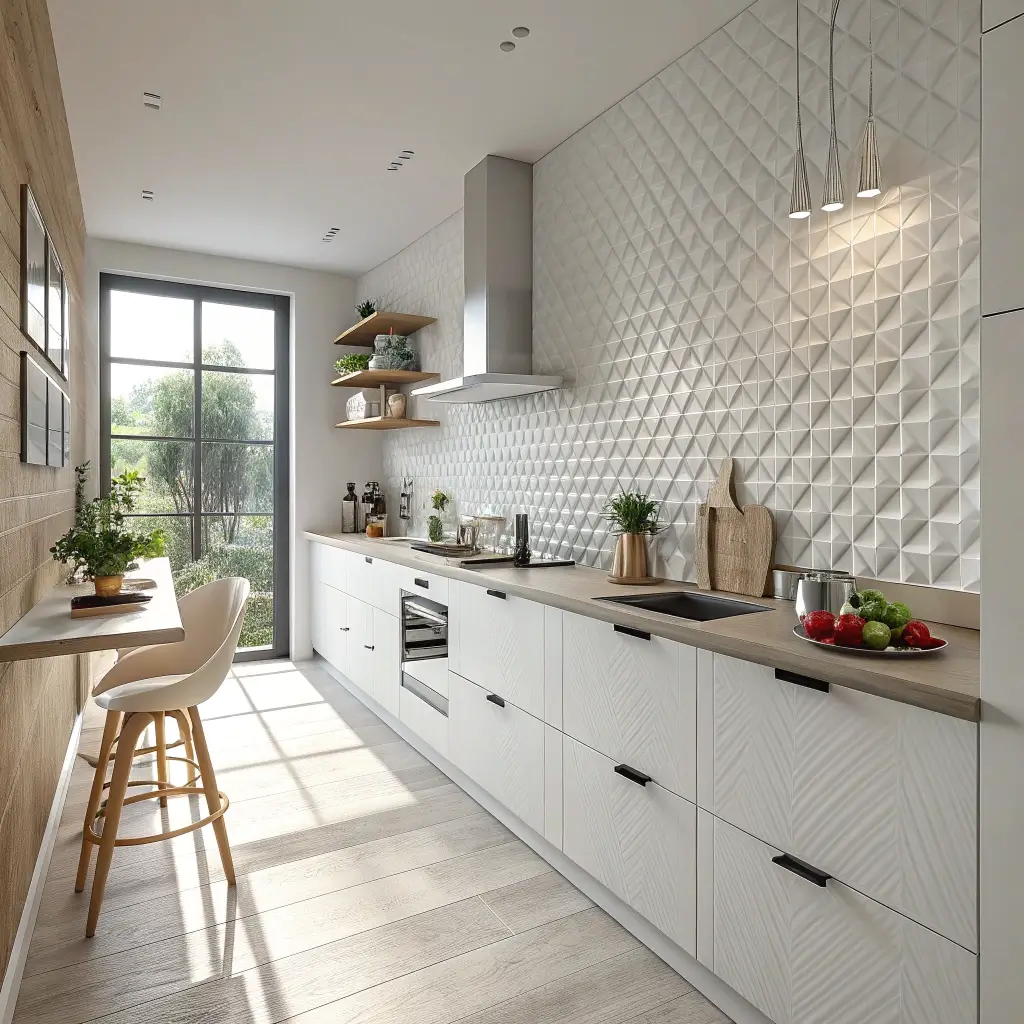
Flat tiles serve their purpose, but textured 3D tiles engage multiple senses and create surfaces that photographs simply cannot capture fully.
The 3D Tile Revolution
Textured white 3D tiles feature raised patterns, dimensional relief, and sculptural surfaces that catch light dramatically. These tiles transform plain walls into architectural features.
Why textured white tiles captivate:
- Shadow play: Raised patterns create constantly changing shadow effects
- Tactile interest: Surfaces beg to be touched
- Light interaction: Dimensional surfaces catch illumination uniquely
- Visual depth: 3D effects add perceived dimension to flat walls
- Artistic quality: Transform functional surfaces into design features
- White versatility: Texture provides interest that color would otherwise add
3D Tile Pattern Options
Popular textured white tile designs include:
- Wave patterns: Undulating surfaces mimicking water ripples
- Geometric relief: Raised geometric shapes creating structured patterns
- Organic textures: Natural-inspired surface variations
- Brick effects: Dimensional patterns referencing traditional brickwork
- Abstract designs: Artistic relief patterns without specific references
- Floral motifs: Raised botanical designs adding romantic character
Practical 3D Tile Considerations
Before committing to textured white tiles, consider maintenance implications. Deep textures collect dust and grease more readily than flat surfaces. Behind stovetops, heavily textured tiles require more frequent cleaning.
For backsplash applications, choose subtle textures rather than dramatically deep relief. Light dimensional variation catches shadows beautifully without creating excessive cleaning challenges.
3D tiles work particularly well in areas away from direct cooking splash—above sink windows, on accent walls, or in breakfast nook features where grease exposure remains minimal.
Also Read: 12 Elegant Green Kitchen Tiles Ideas for Timeless Design
7. White Mosaic Tiles with Silver Accents
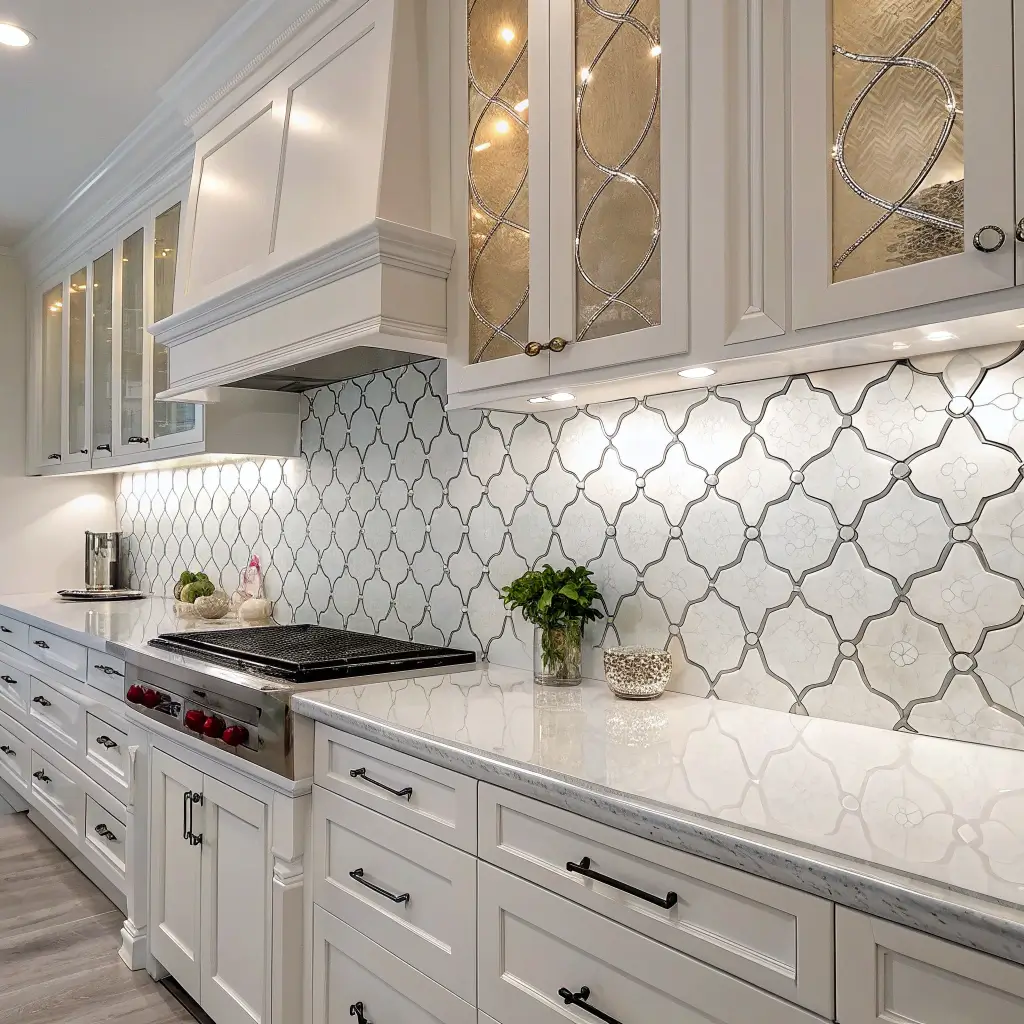
Pure white sometimes needs a sparkle companion. Silver accents within white mosaic tiles add glamour and light reflection that elevates ordinary surfaces.
The Metallic Accent Appeal
White mosaic tiles with silver accents combine predominantly white fields with scattered metallic elements. These pre-assembled mosaics deliver sophisticated variation without complex planning.
Why silver-accented mosaics work beautifully:
- Built-in sparkle: Metallic elements catch light automatically
- Balanced design: White dominance prevents metallic overwhelm
- Unified installation: Pre-assembled sheets ensure consistent accent distribution
- Easy coordination: Silver complements virtually any fixture finish
- Subtle luxury: Adds elegance without excessive bling
- Contemporary edge: Metallic elements feel current and designed
Silver Accent Options
Metallic elements within white mosaics vary considerably:
- Stainless steel tiles: Cool, contemporary, professional aesthetic
- Silver-glazed ceramics: Metallic surface treatment on standard tiles
- Mirror tiles: Highly reflective surfaces creating maximum sparkle
- Brushed nickel effects: Softer metallic appearance with subtle texture
- Aluminum elements: Lightweight metal with clean contemporary appeal
Application Recommendations
Silver-accented mosaics shine brightest as defined feature areas rather than complete surface coverage. Consider these applications:
- Behind cooktops: Create focal point backsplashes with sparkle
- Sink areas: Reflect light in frequently used zones
- Border treatments: Frame primary tile areas with metallic accents
- Niche features: Highlight built-in shelving or alcoves
Keep surrounding elements relatively simple. Silver accents naturally draw attention—competing with ornate cabinets or busy countertops creates visual chaos rather than designed sophistication.
8. White Chevron Tiles
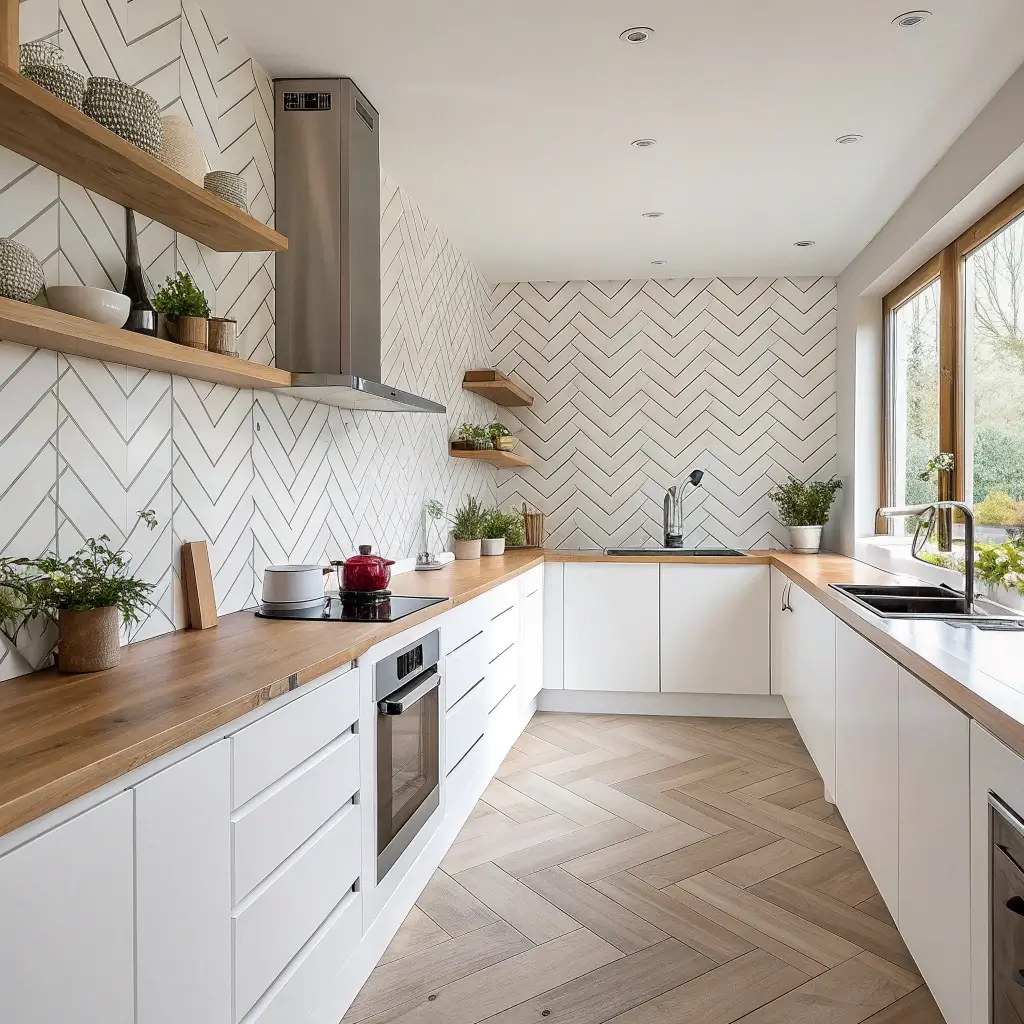
Similar to herringbone but with its own distinct personality, chevron patterns create dynamic directional movement that energizes white tile installations.
Understanding Chevron Versus Herringbone
White chevron tiles feature angled cuts at both ends, creating continuous V-patterns rather than herringbone’s staggered arrangement. The visual difference? Chevron creates unbroken lines while herringbone creates broken zigzags.
Chevron characteristics include:
- Continuous direction: V-shapes flow uninterrupted across surfaces
- Strong movement: More dramatic directional energy than herringbone
- Pointed aesthetic: Sharp, modern, architecturally precise
- True tile shape: Each tile cut specifically for chevron patterns
- Alignment importance: Pattern requires precise installation for clean lines
Chevron in White Kitchens
White chevron tiles deliver maximum pattern impact with minimal color distraction. The continuous V-lines create strong visual movement while white maintains brightness and neutrality.
Consider white chevron for:
- Statement backsplashes: Behind ranges or sinks as dramatic focal points
- Floor features: Define cooking zones within larger open spaces
- Full wall treatments: Create architectural drama from floor to ceiling
- Accent panels: Feature sections within otherwise neutral surroundings
The directional nature of chevron affects spatial perception. Vertical chevron draws eyes upward, enhancing ceiling height perception. Horizontal chevron emphasizes width, making narrow kitchens feel broader.
FYI, chevron tiles typically cost more than standard rectangular tiles due to the precise angle cuts required. Factor this premium into budget planning.
9. White Tiles with Light Gray Grout
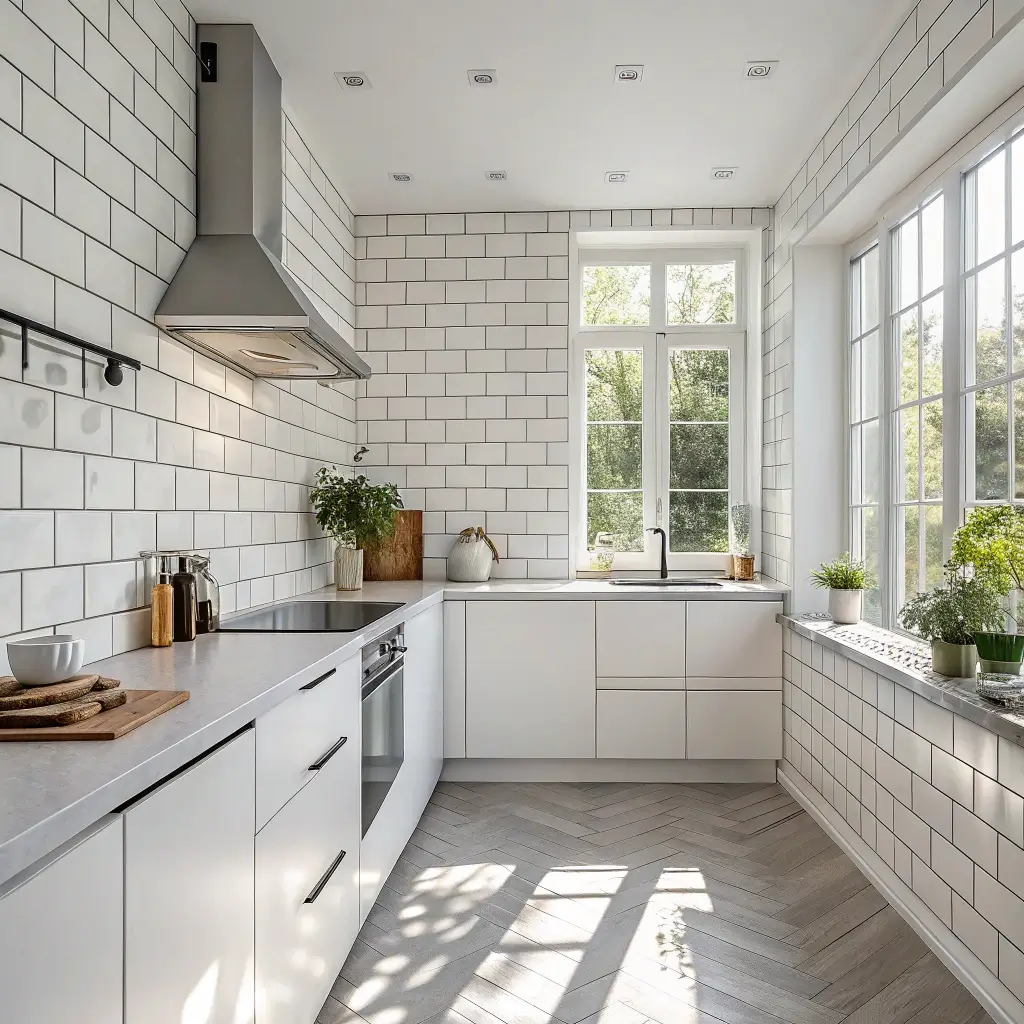
Sometimes the simplest changes create the most significant impact. Choosing light gray grout instead of white transforms basic white tiles dramatically.
The Power of Grout Selection
White tiles with light gray grout create subtle definition that emphasizes tile patterns without stark contrast. This approach balances clean aesthetics with visual interest.
Why gray grout works with white tiles:
- Subtle definition: Outlines tiles without overwhelming them
- Stain forgiveness: Gray hides minor discoloration better than white
- Contemporary edge: Adds modern sophistication to classic white
- Pattern emphasis: Highlights layouts like herringbone or hexagon
- Dirt tolerance: Everyday kitchen grime shows less prominently
- Versatile appeal: Works with warm and cool white tones equally
Choosing the Right Gray Tone
Gray grout spans considerable range from nearly white to charcoal. For subtle enhancement of white tiles:
- Light silver gray: Minimal contrast, clean appearance, maximum subtlety
- Medium gray: Noticeable definition without dramatic contrast
- Warm gray (greige): Softens white tiles with subtle warmth
Avoid jumping too dark too quickly. What looks subtle in small samples often appears stronger across large installations. When uncertain, choose lighter gray options.
I tested multiple gray grout samples before my own renovation. The color I initially loved appeared too dark once installed over larger areas. My second choice—a lighter gray—proved perfect. Always sample extensively before committing.
Grout Width Considerations
Grout visibility depends on line width as well as color. Narrow grout lines (1/16 inch) minimize gray grout visibility while still providing subtle definition. Wider lines (1/8 inch or more) emphasize the grout color more significantly.
Also Read: 10 Creative Kitchen Splashback Tiles Ideas for Stylish Spaces
10. White Penny Round Tiles
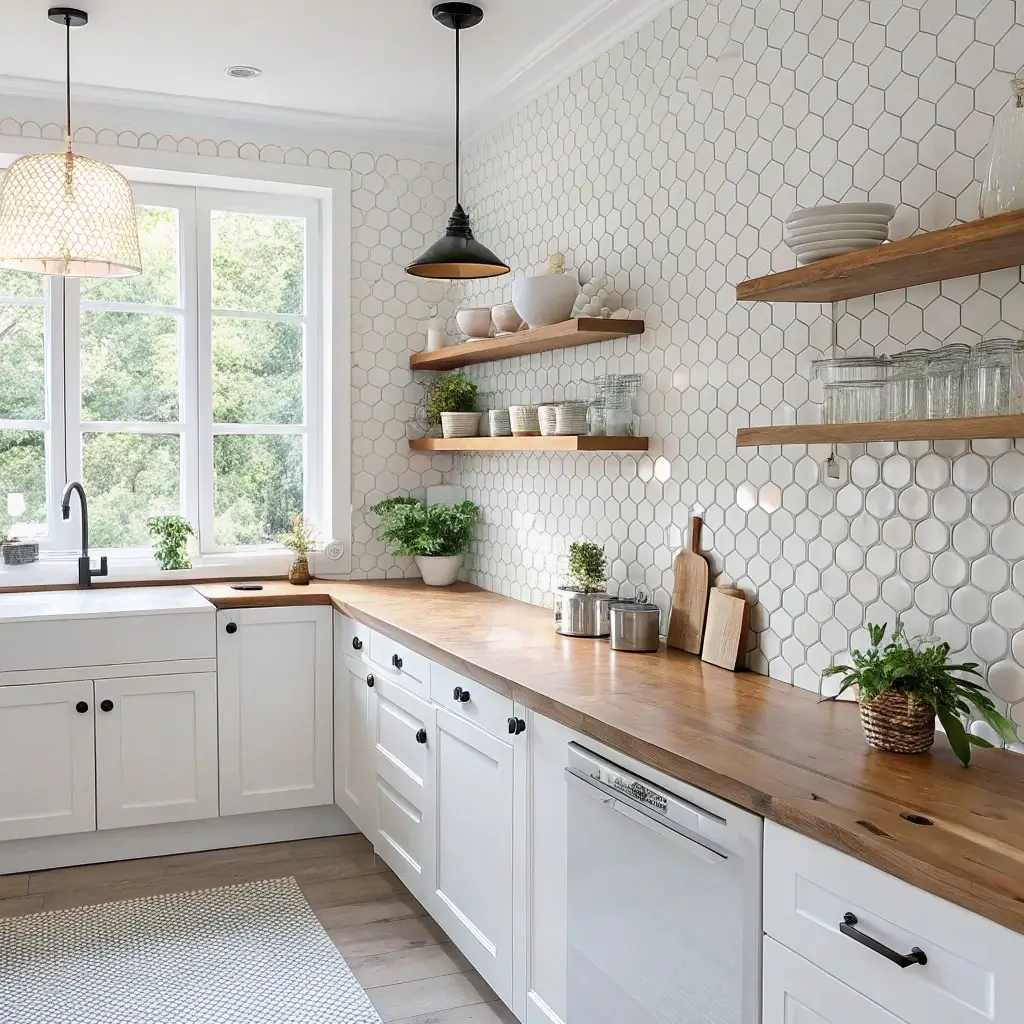
Small, circular, and undeniably charming—penny round tiles bring playful personality to white kitchen surfaces.
The Penny Tile Personality
White penny round tiles (typically 3/4 inch diameter) create dotted surfaces reminiscent of vintage bathrooms and retro diners. In kitchens, they add unexpected texture and nostalgic charm.
Why penny tiles appeal:
- Retro reference: Evokes mid-century and vintage aesthetics
- Textural interest: Curved surfaces create unique light interaction
- Playful personality: Less serious than geometric alternatives
- Grout prominence: Significant grout exposure affects overall appearance
- Flexible application: Works on floors, walls, or accent features
- Unique character: Stands apart from rectangular tile conventions
Penny Tile Applications
Penny round tiles work particularly well in these kitchen applications:
Backsplash features: White penny tiles behind sinks or cooktops create focal points with vintage charm. The small scale adds interest without overwhelming.
Floor accents: Define specific zones (breakfast nooks, transition areas) with penny tile flooring surrounded by larger format tiles.
Kitchen island fronts: Wrap island bases in penny tiles for unexpected texture and character.
Niche and shelf backgrounds: Small areas benefit from penny tiles’ intricate appearance.
Penny Tile Considerations
Penny tiles require significantly more grout than larger tiles. This grout-heavy nature affects both appearance and maintenance. Choose grout colors carefully—they dominate the overall look.
For white penny tiles, matching white grout creates cloud-like, continuous surfaces. Gray grout outlines each circle distinctly, emphasizing the penny pattern. Both approaches work beautifully depending on your aesthetic preference.
Installation involves handling many small pieces—typically sold on mesh-backed sheets for efficiency. Professional installation ensures proper alignment across these detailed surfaces.
11. White Patterned Ceramic Tiles
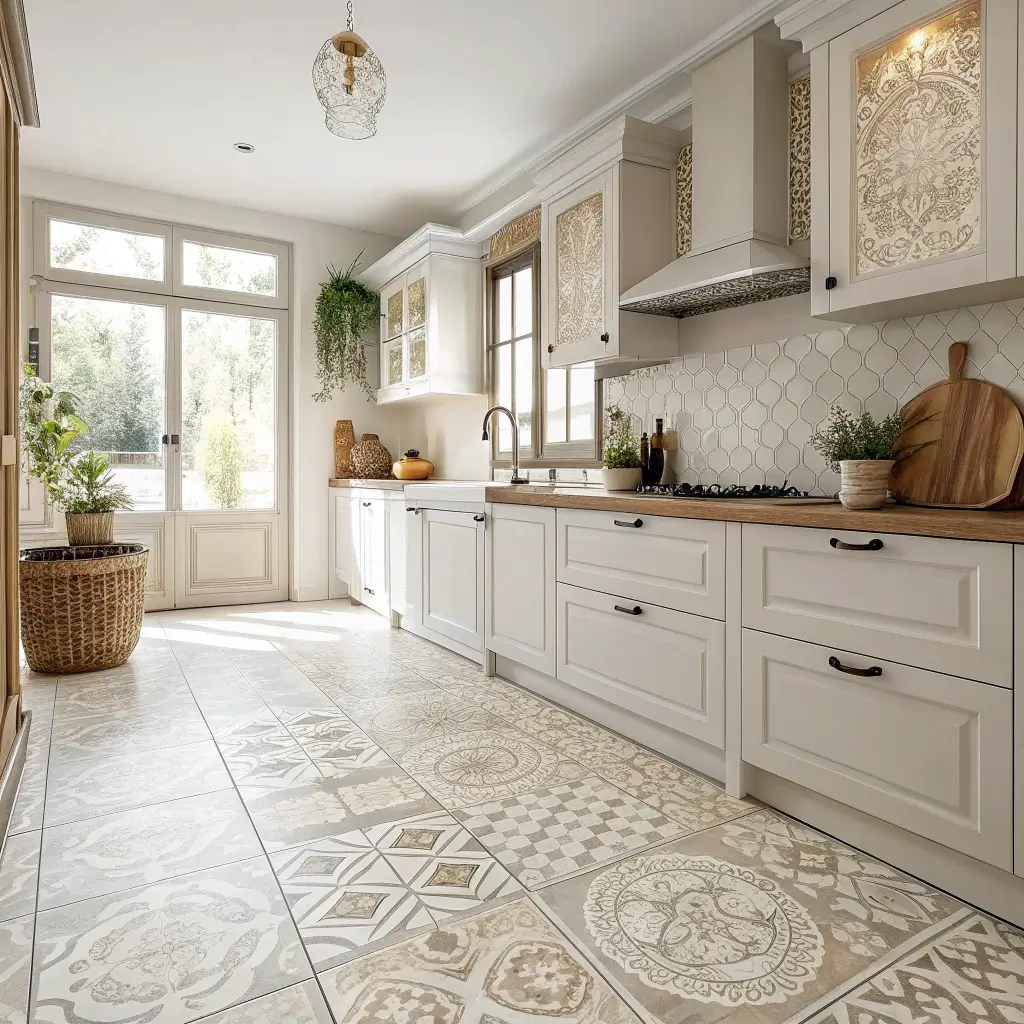
Pure white tiles offer clean simplicity, but white-on-white patterns add subtle complexity that rewards closer inspection.
Discovering White-on-White Patterns
White patterned ceramic tiles feature subtle designs—often slightly raised or in complementary off-white shades—that create visual interest without color contrast. These tiles appear solid from distance but reveal intricate patterns up close.
White-on-white pattern options include:
- Embossed geometrics: Raised patterns creating subtle texture
- Tone-on-tone prints: Off-white designs on pure white backgrounds
- Lace-inspired motifs: Delicate patterns referencing textile traditions
- Damask effects: Classic ornamental designs in subtle relief
- Abstract compositions: Modern artistic patterns in white tones
- Natural references: Botanical or organic patterns in subtle variation
The Understated Elegance Appeal
White patterned tiles suit homeowners who want interest without obvious statement-making. These tiles read as sophisticated white from across the room but reward closer inspection with detailed patterns.
Consider white patterned tiles for:
- Elegant traditional kitchens: Patterns reference historical design while maintaining neutral palettes
- Transitional spaces: Bridge traditional and contemporary aesthetics
- Layered design schemes: Add subtle texture without color competition
- Guest-impressing features: Create “discovery” moments when visitors notice subtle patterns
Lighting Considerations
White-on-white patterns depend heavily on lighting for visibility. Adequate task lighting illuminates subtle designs beautifully. Insufficient lighting makes patterned tiles appear plain.
Position white patterned tiles where natural or artificial light enhances their dimensional qualities. Under-cabinet lighting particularly benefits patterned backsplashes, casting shadows that reveal intricate designs.
12. White Glossy Tiles with Minimalist Finish
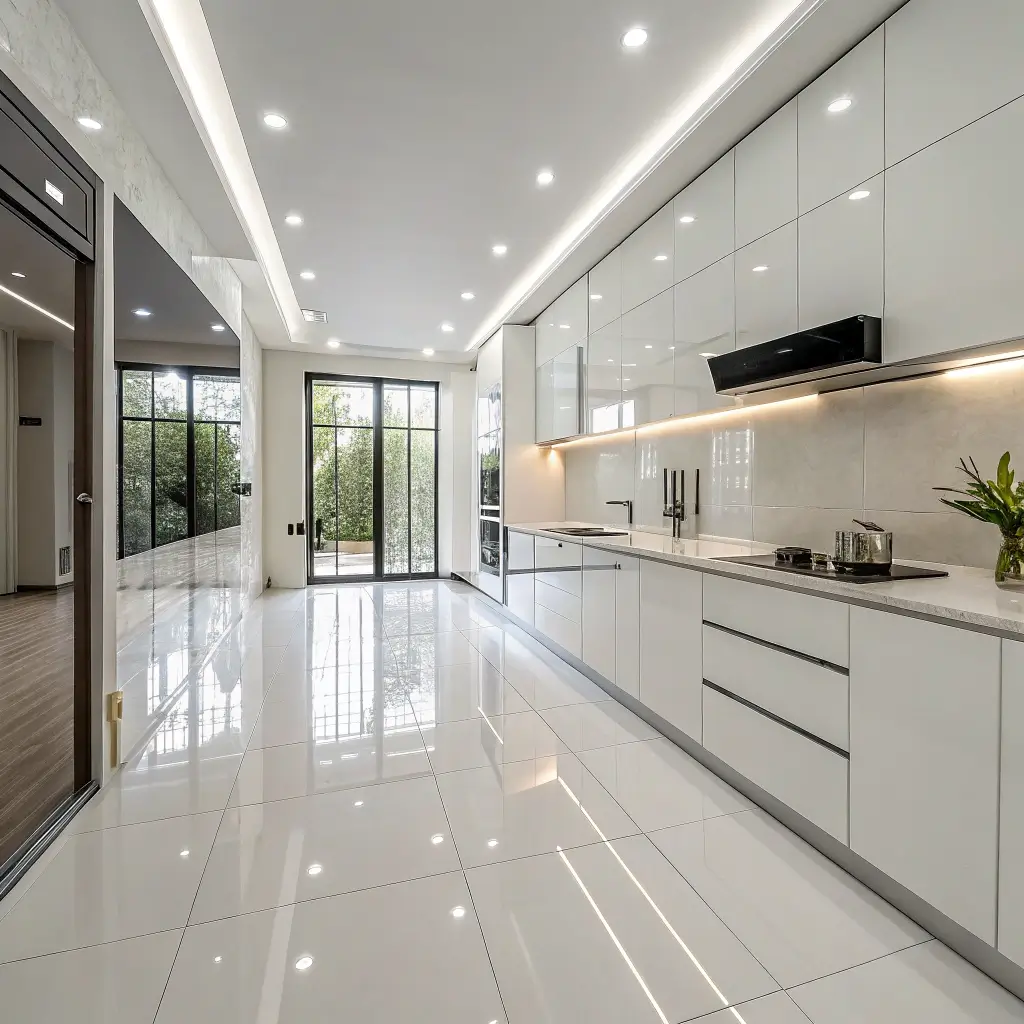
Sometimes maximizing simplicity creates the most powerful design statements. Ultra-glossy white tiles with minimalist finishes deliver clean, contemporary sophistication.
The Minimalist White Aesthetic
White glossy tiles with minimalist finishes strip away texture, pattern, and variation to create the purest possible white surface. These tiles maximize light reflection and spatial perception.
Minimalist white tile characteristics:
- Maximum reflection: High-gloss surfaces bounce light dramatically
- Pure color: No variation, pattern, or texture to distract
- Clean lines: Rectified edges allowing minimal grout lines
- Large formats: Bigger tiles reducing visual interruption
- Seamless appearance: Creates continuous light-reflecting surfaces
- Contemporary aesthetic: Aligns perfectly with modern minimalist design
Creating Successful Minimalist White Kitchens
Pure minimalist white requires thoughtful supporting design to avoid clinical sterility. Balance glossy white tiles with:
- Warm materials: Natural wood cabinets or countertops add necessary warmth
- Texture elsewhere: Woven baskets, fabric elements, or textured décor
- Strategic color: Small pops of color in accessories or plants
- Varied metallics: Brass, copper, or matte black fixtures add interest
- Organic elements: Fresh herbs, fruit bowls, or floral arrangements
The challenge with ultra-minimalist white? Everything shows. Fingerprints, water spots, dust, and dirt become immediately visible on high-gloss white surfaces. Expect regular cleaning requirements.
For those committed to minimalist aesthetics who accept maintenance realities, glossy white tiles create genuinely stunning contemporary kitchens. The light-filled, expansive atmosphere they produce justifies the cleaning effort for design-focused homeowners. 🙂
Choosing the Right White Kitchen Tiles
After exploring these twelve white kitchen tile ideas, you likely have favorites emerging. Before committing, consider these practical factors.
Understanding White Tone Variations
Not all whites match perfectly. Cool whites lean slightly blue or gray. Warm whites carry cream or yellow undertones. Ensure your chosen tiles complement cabinet colors, countertops, and existing fixtures.
Request samples and view them against your specific elements. What appears perfectly white in showrooms might clash with your existing warm-toned cabinets or cool-toned countertops.
Assess Your Lighting Conditions
Natural light dramatically affects white tile appearances. North-facing kitchens with limited sunlight benefit from warmer white tones that prevent cold, sterile atmospheres. South-facing kitchens with abundant light can handle cooler whites beautifully.
Match Your Maintenance Commitment
Be honest about cleaning habits. Glossy white tiles show every fingerprint and water spot. Matte finishes hide imperfections better. Dark grout conceals staining while white grout requires regular attention.
Consider Long-Term Satisfaction
White tiles represent classic choices that rarely date. However, specific formats and finishes cycle through popularity. Timeless shapes (subway, hexagon) typically age better than ultra-trendy options.
Final Thoughts
White kitchen tiles offer far more variety than most people initially realize.
From classic subway tiles to contemporary large format slabs, from vintage penny rounds to dramatic 3D textures, white encompasses incredible design diversity.
The key involves understanding which white tile approach matches your aesthetic vision, practical needs, and maintenance commitment.
Glossy versus matte, large versus small, patterned versus plain—each choice creates distinctly different atmospheres within the white color family.
I dismissed white tiles for years before discovering their remarkable versatility. Now I recommend exploring white options to everyone planning kitchen renovations.
The right white tiles create bright, timeless spaces that welcome changing décor preferences and consistently impress visitors.
Take time selecting your perfect white. Order generous samples. View them under various lighting conditions. Live with options before committing.
Your ideal white kitchen tiles await discovery—approach the search with patience and open expectations.
White might seem like the simple choice. Done thoughtfully, it becomes the brilliant choice. Now go find your perfect white.