10 Brilliant Small Home Interior Design Ideas to Maximize Space
- Home Interior Design
 Ben
Ben- 0
- 47 minutes read

Living in a shoebox? Join the club! I spent five years in a 450-square-foot studio apartment that made me feel like I was playing an endless game of Tetris with my furniture.
Every time I bought something new, I had to figure out what to get rid of or where to squeeze it in. Sound familiar?
Here’s what nobody tells you about small home design—it’s not about having less stuff or living like a minimalist monk. It’s about being smarter with the space you have.
After years of bumping into coffee tables and feeling like my walls were closing in, I finally cracked the code. The secret? Working with your space, not against it.
I’ve tested every small space hack out there (including some truly terrible Pinterest fails), and I’m here to share what actually works.
Whether you’re dealing with a tiny apartment, a compact house, or just a room that feels cramped, these 10 small home interior design ideas will transform your space without requiring a construction crew or a trust fund.
1. Smart Space-Saving Furniture Layouts
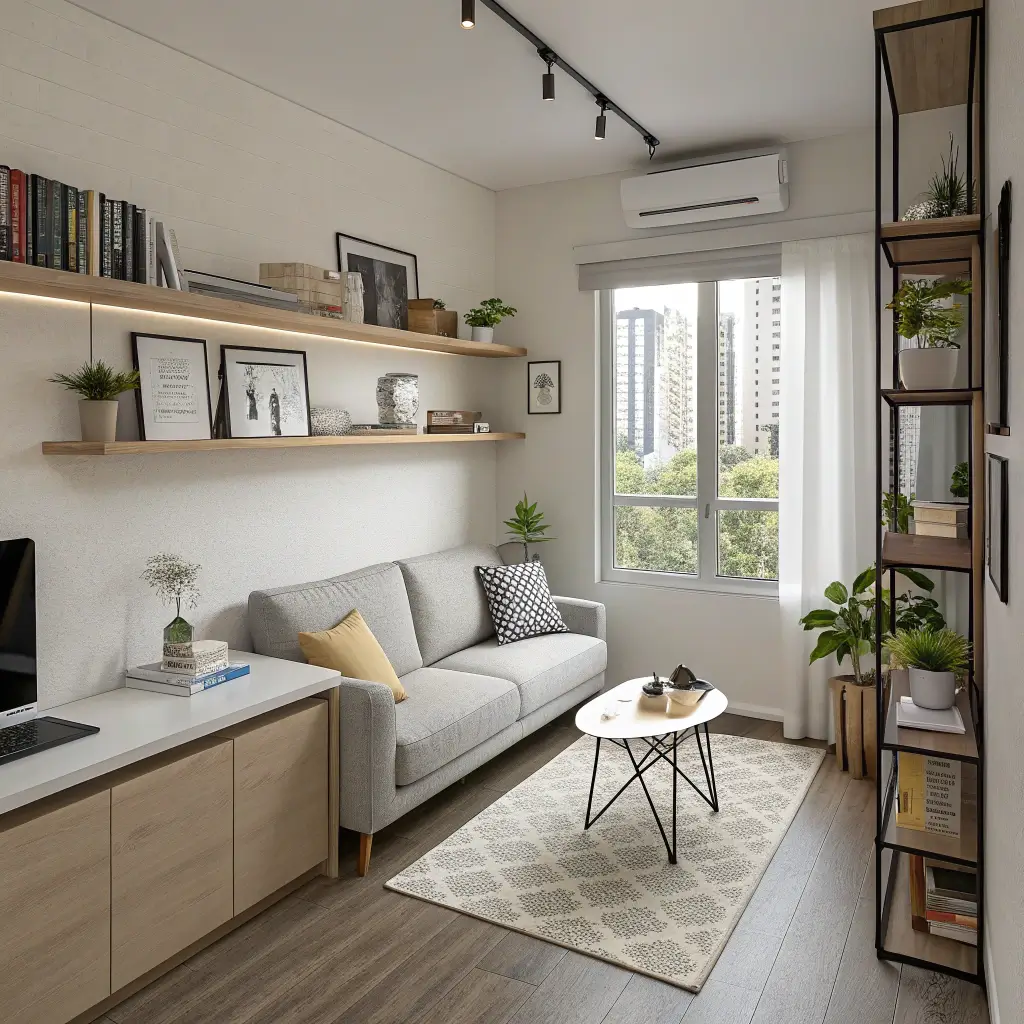
Let’s kick things off with the foundation of any small space—your furniture layout. Most people arrange their furniture the way they think it “should” go, but in small homes, traditional rules need to fly out the window.
The Traffic Flow Game-Changer
Creating clear pathways changes everything in a small space. I used to have my sofa pushed against the wall because that’s what everyone does, right? Wrong! Pulling it out just six inches and angling it slightly opened up my entire living room. Suddenly, I could walk around without doing that awkward sideways shuffle.
The key is mapping your daily routes. Where do you walk most often? From the bedroom to the bathroom? Kitchen to the front door? Keep these paths clear, even if it means your furniture placement looks unconventional.
Floating Furniture Magic
Here’s what blew my mind—floating furniture (pulling it away from walls) actually makes rooms feel bigger. It sounds counterintuitive, but it works because:
- It creates depth and dimension in the room
- Defines separate areas without walls
- Allows light to flow around the space
- Makes cleaning easier (bonus!)
- Creates hidden storage opportunities behind pieces
The Corner Conspiracy
Corners are goldmines in small homes. Instead of leaving them empty or stuffing them with random items, make them work:
- Angle a chair to create a reading nook
- Place a tall plant to draw the eye up
- Install corner shelves for vertical storage
- Position a floor lamp to brighten dark spots
I transformed my dead corner into a mini office with just an angled desk and a wall-mounted shelf. Best 10 square feet I ever reclaimed!
2. Vertical Storage Wall Design Ideas
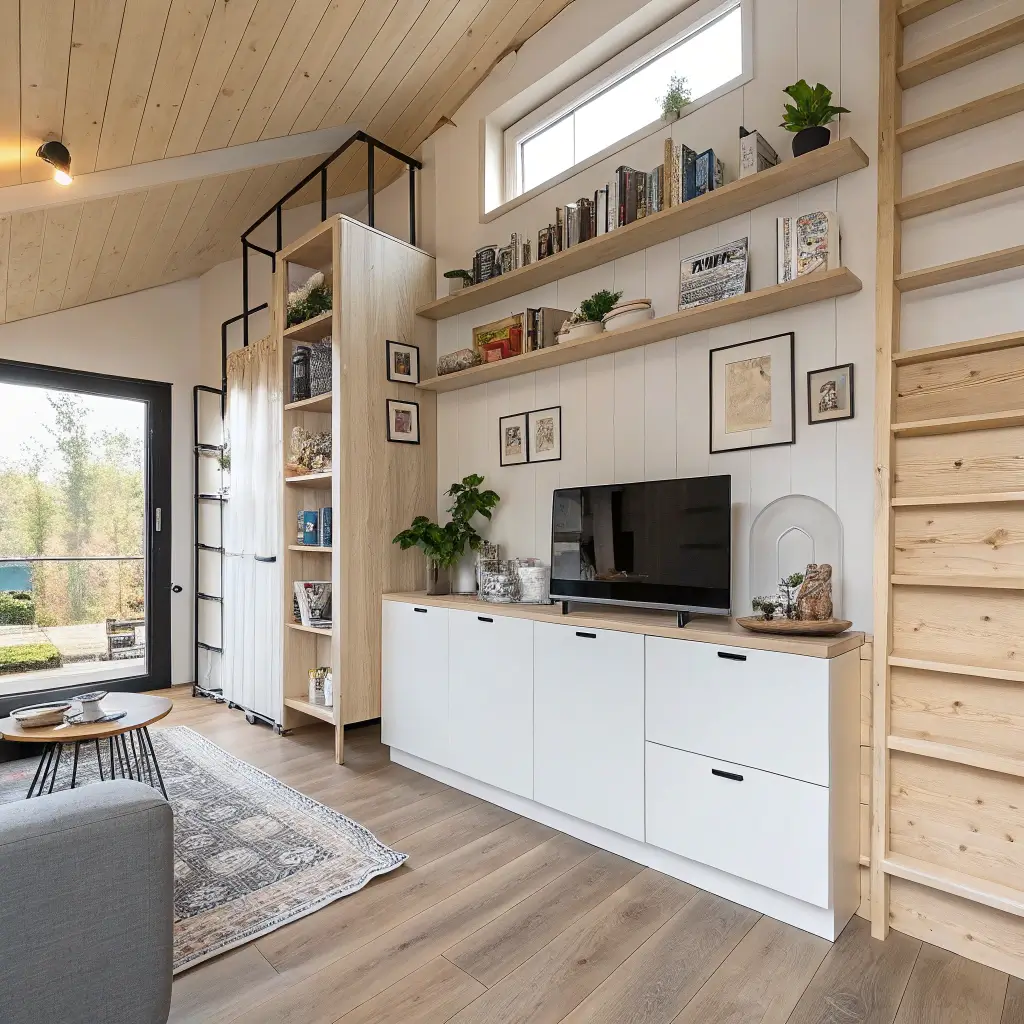
When floor space is precious, the only way is up! Vertical storage saved my sanity and my small home’s functionality.
Wall-Mounted Everything
Think of your walls as valuable real estate. Every square foot from floor to ceiling is potential storage space. I went a bit overboard at first—my apartment looked like a storage showroom—but I learned what works:
Start with the essentials. Mount your TV, install floating nightstands, and get your desk off the floor with a wall-mounted option. My floating desk freed up enough floor space for a yoga mat. Game changer!
The Shelf Life Revolution
Not all shelves are created equal. Here’s what I discovered through trial and error:
- Floating shelves work best in living areas (clean look)
- Ladder shelves add style while storing stuff
- Picture ledges display art without bulky frames
- Grid systems offer flexibility as needs change
- Ceiling-mounted shelves use often-forgotten space
Making It Look Intentional
The trick with vertical storage is making it look decorative, not desperate. Mix functional items with pretty ones:
- Books spine-in and spine-out for visual interest
- Plants at different heights to add life
- Baskets to hide ugly stuff (we all have it)
- Art pieces mixed with storage boxes
- Consistent color scheme to unify the look
My living room wall went from blank to beautiful with a mix of shelves holding books, plants, and storage baskets. Visitors think it’s purely decorative—little do they know it holds half my belongings!
3. Light Color Palettes for Small Homes
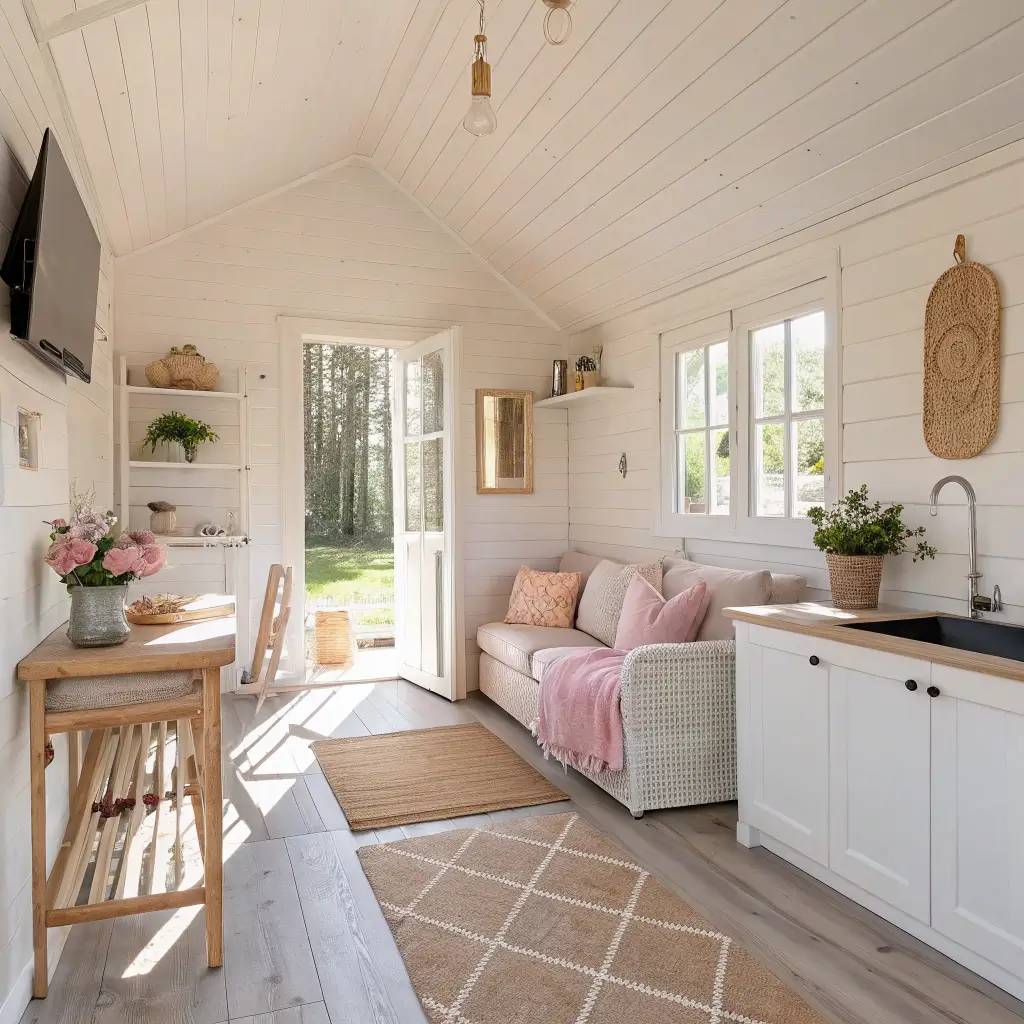
Color can make or break a small space. Dark colors aren’t always the enemy, but light palettes definitely make life easier when square footage is tight.
The White-But-Not-White Approach
Pure white everything gets boring fast. Trust me, I tried the all-white Scandinavian thing and felt like I was living in a medical facility. The solution? Warm whites and soft neutrals that add personality without closing in the space.
My go-to palette includes:
- Warm whites with yellow or pink undertones
- Soft grays that change with the light
- Pale blues for a calming effect
- Creamy beiges for warmth
- Sage greens for a nature touch
The Accent Color Strategy
Just because you’re using light colors doesn’t mean your home has to be bland. Pick one accent color and use it throughout your space:
- Navy blue pillows, art, and throws
- Terracotta pots, cushions, and ceramics
- Mustard yellow in small doses
- Forest green for richness
- Blush pink for softness
I chose navy as my accent and use it in every room—it creates flow and makes my tiny space feel cohesive instead of choppy.
Painting Tricks That Work
Some painting hacks actually deliver on their promises:
- Paint ceilings the same color as walls (makes them feel higher)
- Use one color throughout (creates flow)
- Paint door frames to match walls (less visual clutter)
- Try an accent wall in a slightly darker shade
- Paint radiators and pipes to make them disappear
That last tip transformed my ugly radiator from an eyesore to invisible. Why didn’t anyone tell me this sooner?
Also Read: 10 Trendy Interior Design Your Home Ideas for Stylish Interiors
4. Multi-Functional Furniture Styling
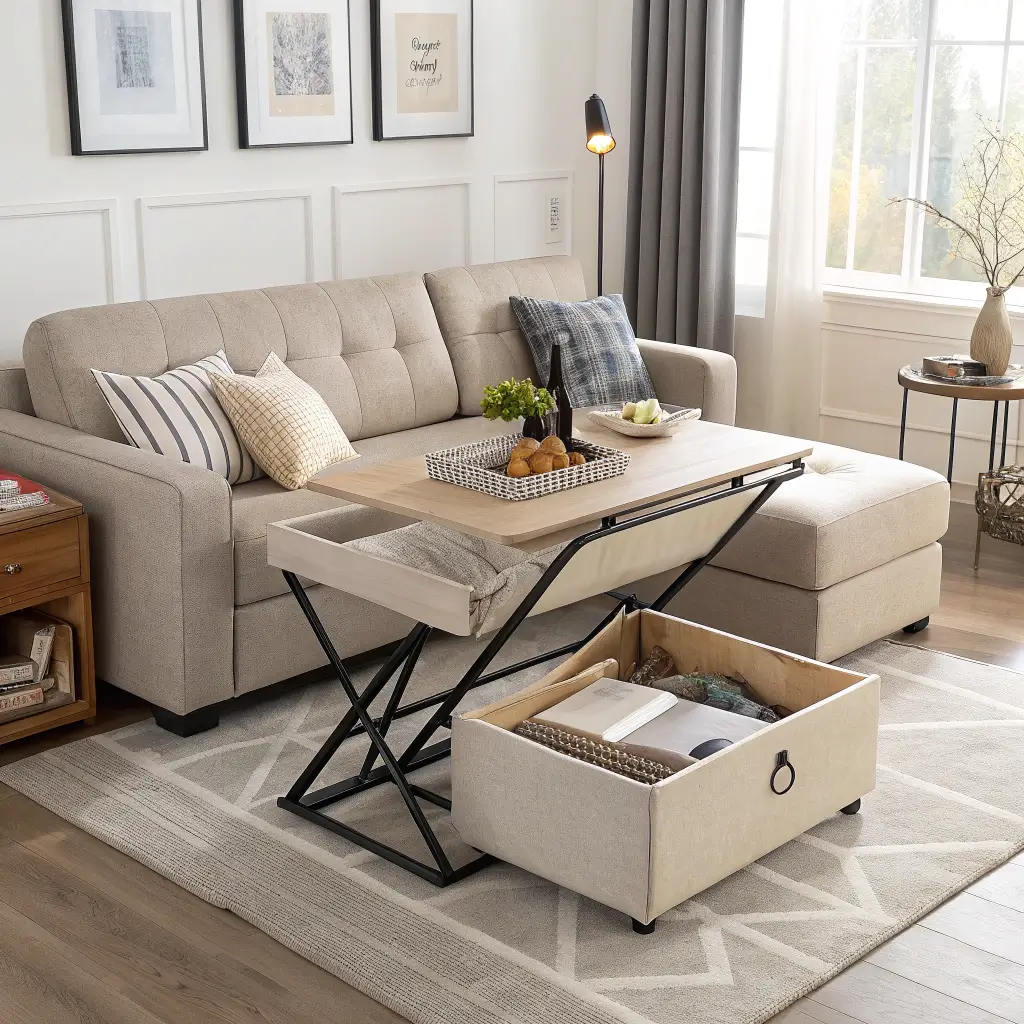
In small homes, furniture that does double (or triple) duty isn’t just nice to have—it’s essential. But multi-functional doesn’t have to mean ugly or obvious.
The Storage Ottoman Revolution
Ottoman storage changed my life. Seriously. I have three now, and they’re the hardest-working pieces in my home:
- Living room ottoman: stores blankets, magazines, and remote controls
- Bedroom bench ottoman: holds out-of-season clothes
- Entryway cube: contains shoes, umbrellas, and dog leash
The key is choosing ottomans that look like intentional furniture, not storage boxes with fabric slapped on top.
Transformer Furniture That Actually Works
Some convertible furniture is gimmicky, but these pieces earn their keep:
- Dining tables that extend (from 2-person to 6-person)
- Coffee tables that lift to desk height
- Sofas with built-in storage underneath
- Nesting tables that tuck away
- Wall beds that don’t look terrible
My coffee table lifts up to become my work-from-home desk. It saved me from buying a separate desk and keeps my laptop hidden when I’m off the clock.
Styling Multi-Functional Pieces
The secret to multi-functional furniture is making it look intentional:
- Choose quality over quantity (one great piece beats three mediocre ones)
- Stick to a consistent style (modern, traditional, etc.)
- Add decorative elements (trays, books, plants)
- Keep surfaces clear when not in use
- Invest in good-looking storage solutions
Nobody needs to know your stylish bench is actually storing your winter coats. That’s between you and your small space. 🙂
5. Mirror Placement Tricks to Enlarge Spaces
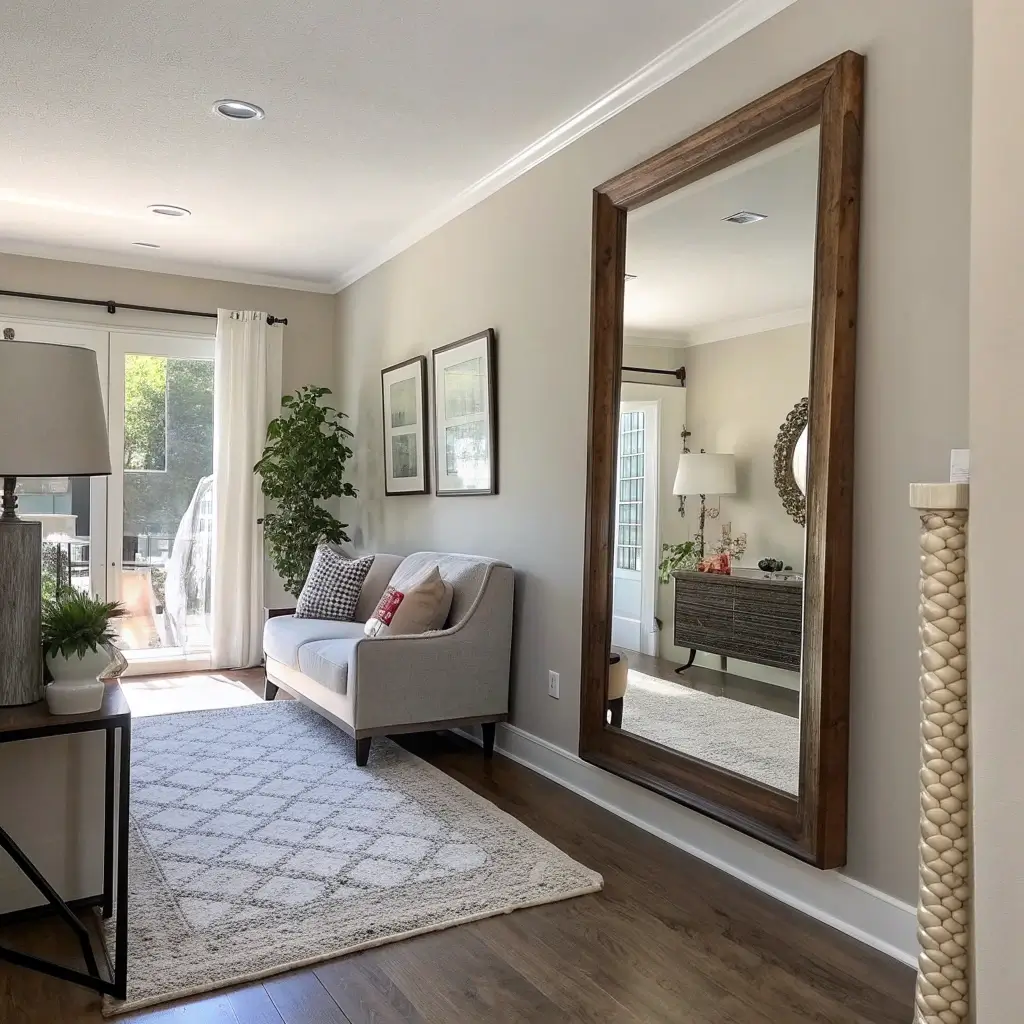
Mirrors are like magic for small spaces, but placement is everything. Put them in the wrong spot and you’re just staring at yourself while eating dinner.
The Strategic Mirror Map
Every mirror should have a purpose beyond checking your hair. Here’s where they work hardest:
- Opposite windows to bounce natural light
- Behind light sources to amplify brightness
- At the end of hallways to create depth
- Above furniture to create height
- In dark corners to eliminate shadows
I hung a large mirror opposite my only window, and suddenly my living room felt twice as bright. It’s like getting a second window for free!
Size and Style Matters
Not all mirrors work equally well in small spaces:
- Large mirrors make bigger impact than several small ones
- Frameless or thin frames reduce visual weight
- Leaning floor mirrors add height without wall damage
- Mirrored furniture doubles the effect
- Grouped mirrors can replace artwork
Avoiding Mirror Mistakes
Learn from my failures:
- Don’t place mirrors where they reflect clutter
- Avoid mirrors in the bedroom if they disturb sleep
- Skip mirrors that reflect directly into neighbors’ windows
- Don’t overdo it (mirror maze isn’t the goal)
- Check what’s reflected before hanging
I once hung a mirror that perfectly reflected my messy kitchen counter. Moved it two feet to the left, and now it reflects my nice bookshelf instead. Problem solved!
6. Minimalist Decor for Compact Interiors
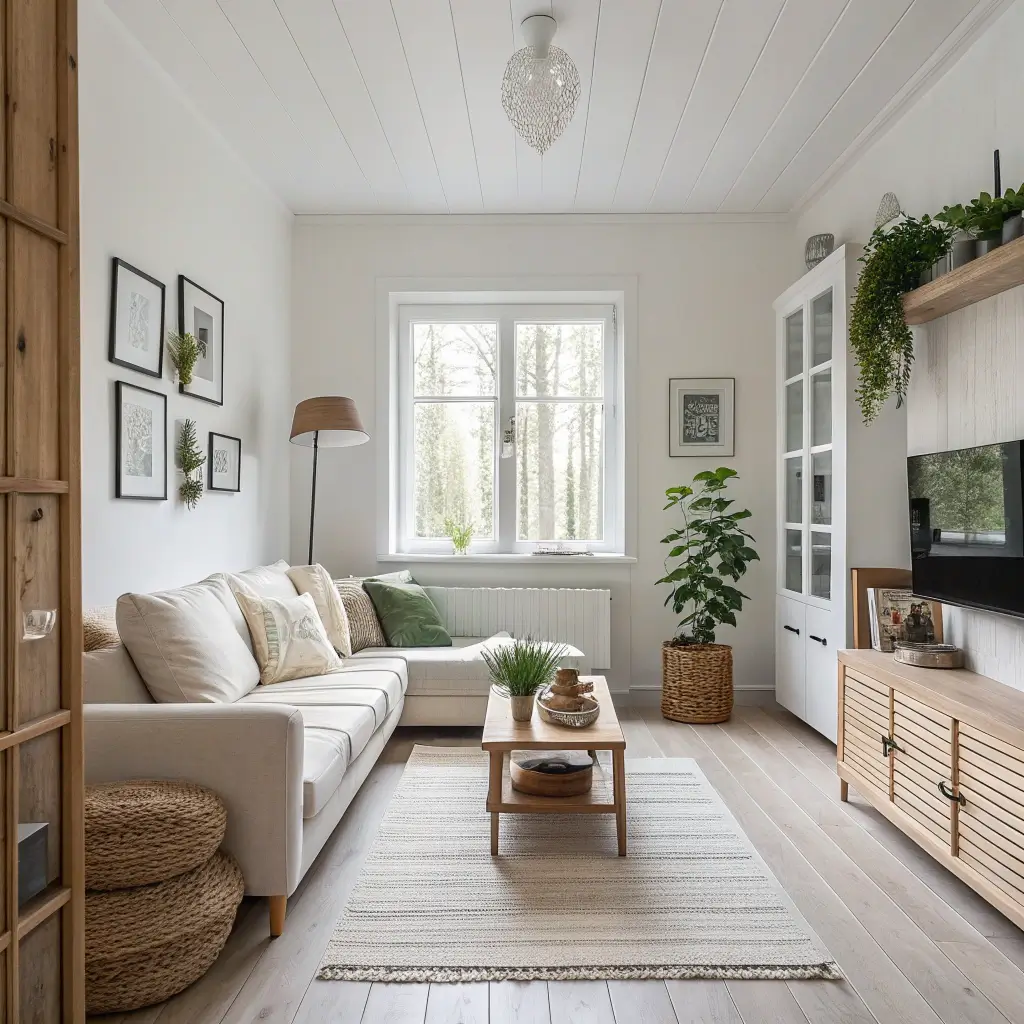
Minimalism in small spaces isn’t about having nothing—it’s about having the right things. After my maximalist phase nearly buried me alive, I found a middle ground that works.
The Edited Life Approach
Quality over quantity becomes your mantra. Instead of five cheap throw pillows, invest in two beautiful ones. Rather than covering every surface with knick-knacks, choose a few statement pieces.
My living room used to have 23 decorative objects (yes, I counted). Now it has seven, and it looks infinitely better. Each piece has breathing room and actually gets noticed.
Minimalist Doesn’t Mean Boring
Here’s how to keep personality in your pared-down space:
- Texture adds interest without clutter
- Plants bring life and clean the air
- Art makes statements when given space
- Books add color and personality
- One bold piece can anchor a room
The One-In-One-Out Rule
This rule saved my small space from reverting to chaos:
- Buy a new throw pillow? Donate an old one
- Get a new plant? Give one away
- New artwork arrives? Something else goes
- Receive a gift? Find its place or pass it on
It sounds harsh, but it keeps your space from slowly filling up with stuff. FYI, this rule has also saved me tons of money because I think twice before buying anything.
Also Read: 10 Trendy Home Interior Design Ideas for Every Room
7. Open-Plan Layout Ideas for Small Homes
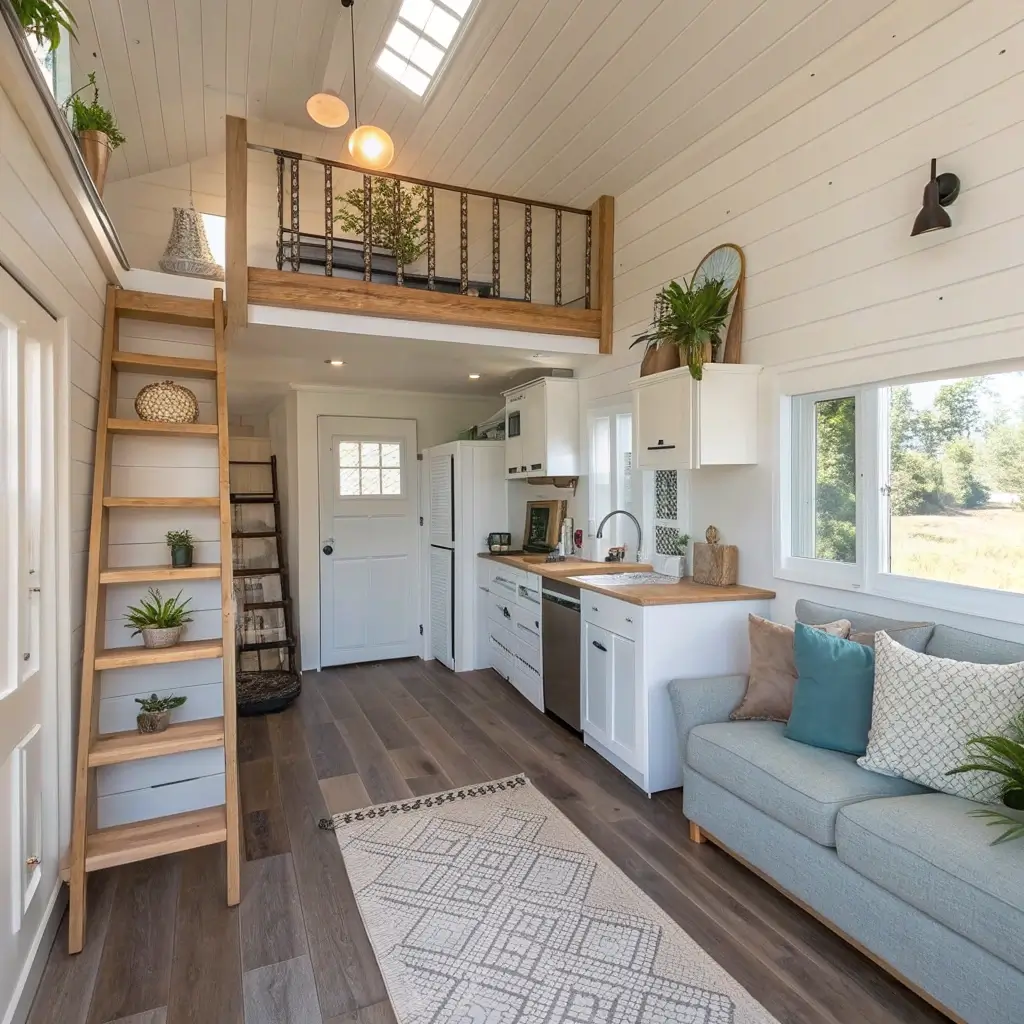
Breaking down visual barriers can make your small home feel significantly larger. But going open-plan in a tiny space requires strategy.
Removing Walls (Visual Ones)
You don’t need a sledgehammer to create an open feel. Visual barriers matter more than physical ones:
- Replace solid furniture with see-through pieces
- Use curtains instead of doors where possible
- Choose low-profile furniture that doesn’t block sightlines
- Keep window treatments minimal
- Remove unnecessary room dividers
I swapped my bulky bookshelf room divider for a sleek console table. Suddenly, I could see from one end of my apartment to the other. The space instantly felt 30% bigger.
Defining Zones Without Walls
Open plan doesn’t mean one big jumbled space. Create distinct areas using:
- Rugs to define seating areas
- Lighting to separate functions
- Furniture placement to create natural divisions
- Color to distinguish zones
- Ceiling treatments (if possible)
The Flow Factor
Good open-plan design guides you naturally through the space:
- Create clear pathways between zones
- Use furniture to direct traffic
- Keep main routes obstacle-free
- Position key pieces to draw the eye
- Maintain visual connections between areas
My “bedroom” is really just a corner of my studio, but a strategically placed bookshelf and rug make it feel like a separate room without closing off the space.
8. Hidden Storage Interior Solutions
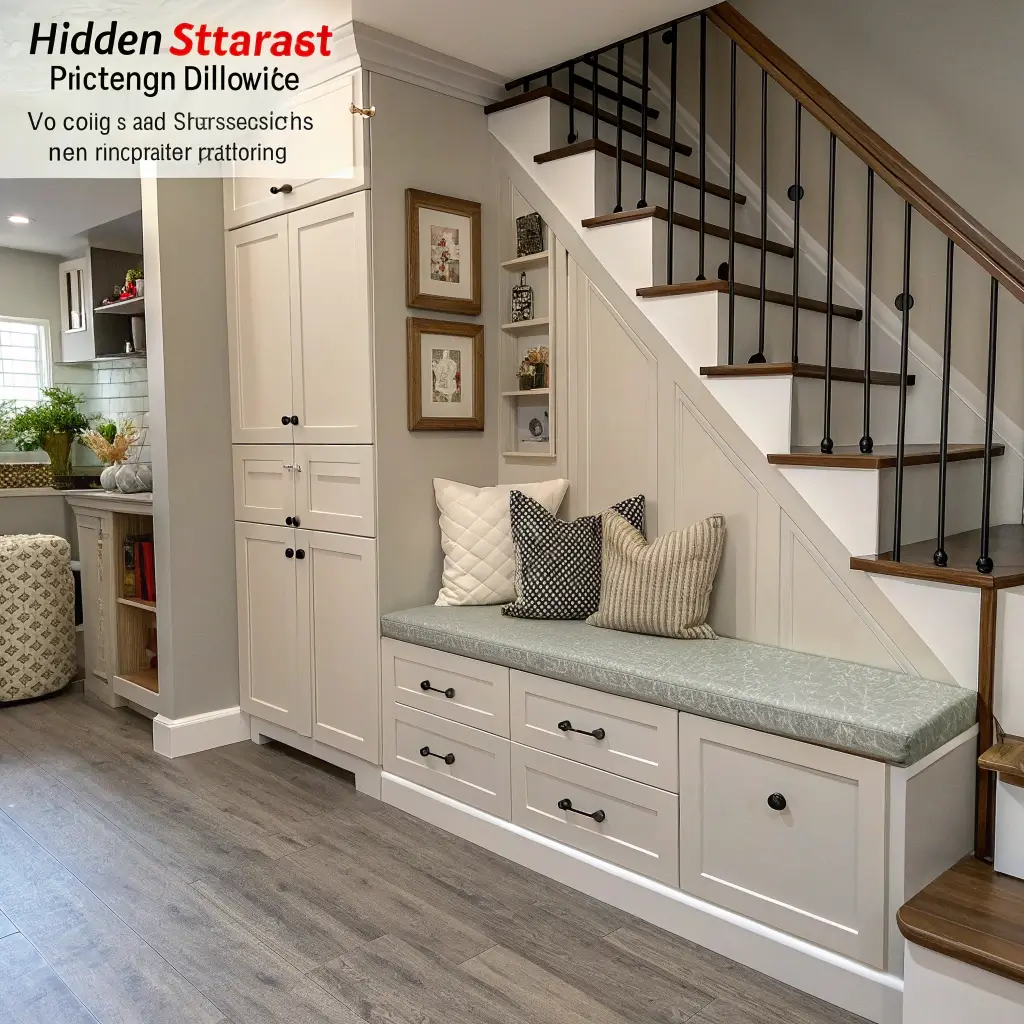
The best storage in small homes is the kind you don’t see. After living with visible clutter for years, discovering hidden storage felt like finding buried treasure.
Furniture With Secret Lives
Every piece of furniture is a potential storage opportunity:
- Bed frames with built-in drawers
- Hollowed-out bench seating
- Coffee tables with hidden compartments
- Dining benches with lift-up seats
- Sofas with storage underneath
My bed has four huge drawers that hold everything from extra bedding to out-of-season clothes. It eliminated my need for a dresser entirely.
Unexpected Storage Spots
Look beyond obvious places:
- Inside cabinet doors (spice racks, cleaning supplies)
- Under stair steps (pull-out drawers)
- Above door frames (seasonal items)
- Behind artwork (shallow cabinets)
- Under kitchen cabinets (toe-kick drawers)
Custom Solutions Worth The Investment
Sometimes DIY doesn’t cut it:
- Built-in wardrobes maximize every inch
- Custom kitchen islands with storage
- Window seats with hidden compartments
- Platform beds with massive storage
- Floor-to-ceiling cabinet systems
I splurged on built-in wardrobes, and they hold twice what my old freestanding closet did while taking up less visual space. Best money I ever spent on my small home.
9. Cozy Small Home Lighting Concepts
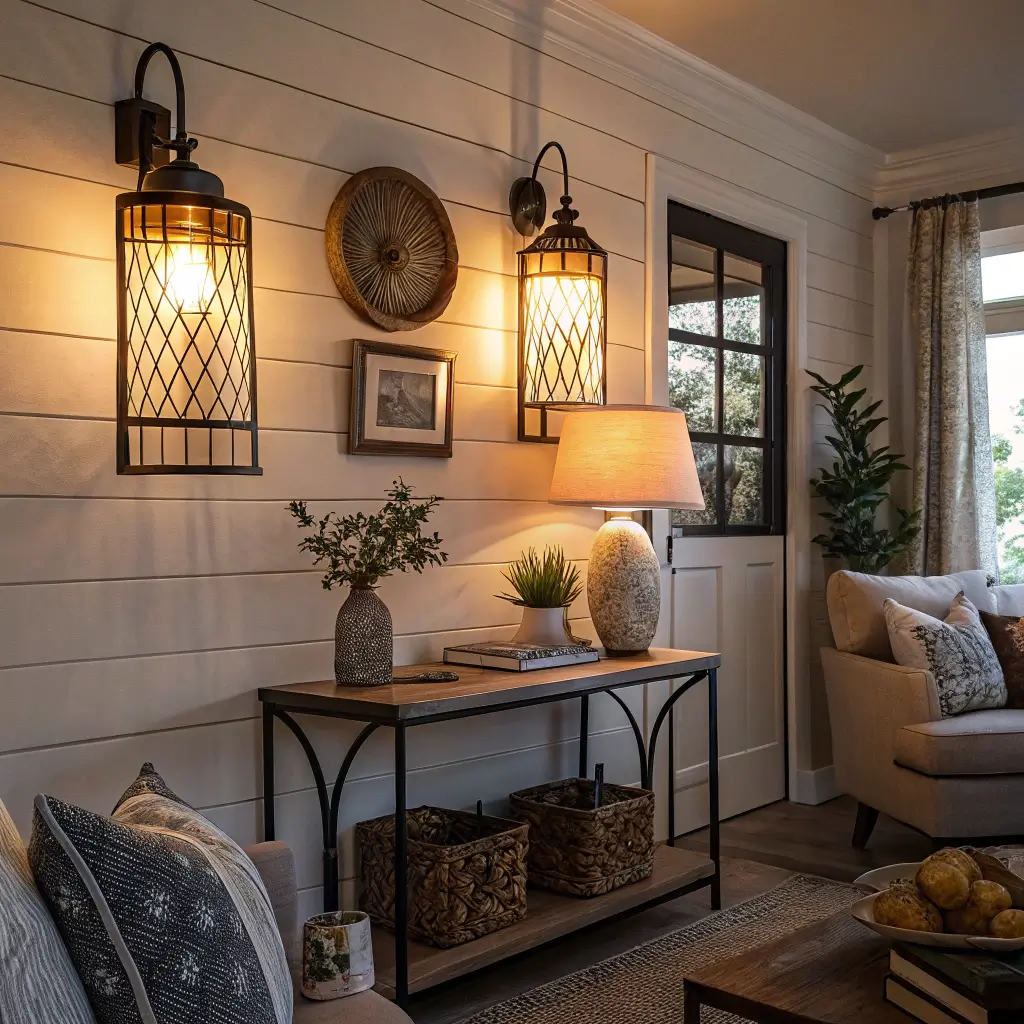
Lighting can make your small space feel either cramped and cave-like or open and airy. After living in the shadows for too long, I learned the power of proper illumination.
The Layer Cake Approach
One overhead light won’t cut it in small spaces. Layer your lighting:
- Ambient lighting for overall illumination
- Task lighting for specific activities
- Accent lighting to highlight features
- Natural light maximized wherever possible
My tiny living room has five light sources, and each serves a purpose. It sounds excessive, but the ability to adjust lighting for different moods and times of day is invaluable.
Small Space Lighting Heroes
These fixtures work overtime in tiny homes:
- Wall sconces save surface space
- Pendant lights draw eyes up
- LED strips under cabinets/shelves
- Floor lamps in corners brighten dead zones
- Table lamps add warmth
The Dimmer Switch Game-Changer
Installing dimmer switches transformed my space:
- Creates ambiance instantly
- Makes rooms feel larger at night
- Reduces harsh shadows
- Saves energy
- Adds perceived value
I put dimmers on every switch, and now my 500-square-foot apartment can feel like a cozy cave or bright workspace with just a twist. :/
Also Read: 15 Inspiring Simple Bedroom Interior Design Ideas on a Budget
10. Small Home Zoning Without Walls
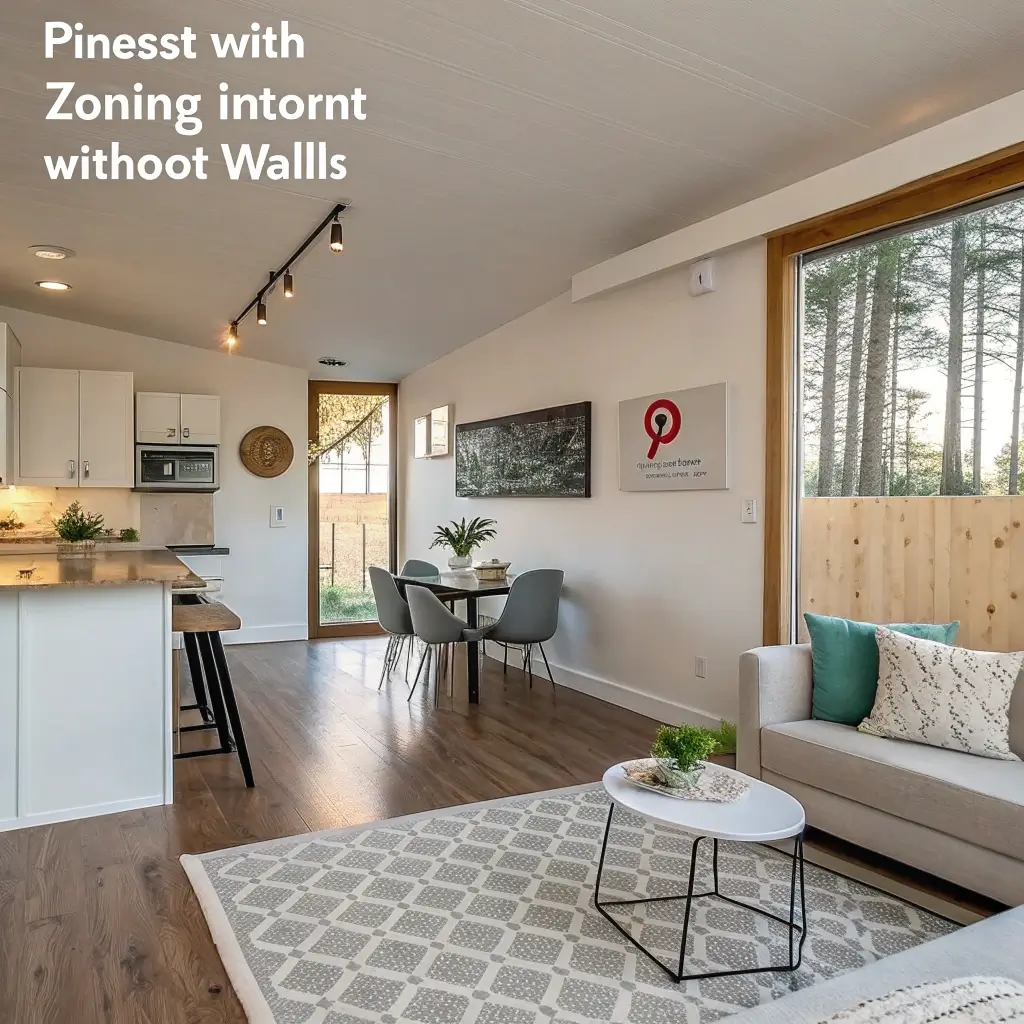
Creating distinct areas in an open space challenges even experienced designers. But with the right techniques, you can have separate “rooms” without building a single wall.
Visual Zoning Techniques
Use design elements to create boundaries:
- Different flooring materials or rugs
- Paint colors or wallpaper sections
- Ceiling height variations (if possible)
- Lighting to define areas
- Furniture arrangement as borders
My studio has three distinct zones created purely through rug placement and lighting. Guests often ask where my bedroom is—it’s right there, just visually separated!
The Psychology of Separation
Our brains need defined spaces for different activities:
- Sleep zone: calm, minimal stimulation
- Work zone: organized, good lighting
- Relaxation zone: comfortable, entertainment-focused
- Dining zone: clear surface, good ambiance
- Entry zone: organized, welcoming
Flexible Zoning Solutions
The beauty of zoning without walls is flexibility:
- Curtain dividers open and close as needed
- Rolling screens move where required
- Furniture on casters reconfigures easily
- Plants create living barriers
- Bookcases work as see-through walls
I use a ceiling-mounted curtain to separate my sleeping area at night. During the day, it’s completely open, and my apartment feels huge. Best of both worlds!
Making It All Work Together
Living room in a small home taught me more about design than any magazine ever could. It forced me to think creatively, choose carefully, and appreciate what I have.
The biggest lesson? Small spaces aren’t limitations—they’re opportunities to get creative. Every challenge led to a solution that made my home work better.
That awkward corner became a reading nook. The tiny kitchen inspired efficient cooking habits. The lack of storage forced me to evaluate what I actually needed.
Your small home can be everything you want it to be. It just takes intention, creativity, and maybe a few trips to IKEA. Start with one idea from this list. Live with it for a week.
Then try another. Before you know it, your small space will feel twice as big and infinitely more functional.
Remember, the best small home is one that works for your life. Not what looks good on Instagram, not what design blogs say you should do, but what makes your daily routine easier and your downtime more enjoyable.
That’s when a small house becomes a perfect home. IMO, that’s worth more than all the square footage in the world.