10 Unique Single Door Design Ideas to Inspire Your Decor
- Door Design
 Ben
Ben- 0
- 42 minutes read
Single doors are basically the introverts of the door world—they don’t need a partner to make a statement, and honestly, they’re often more practical than their double-door counterparts.
While everyone’s dreaming about grand double entrances, you’re here being smart about space, budget, and actual functionality.
I learned to appreciate single doors when I moved from a house with pretentious double doors (that I literally never opened both sides of) to an apartment with a thoughtfully designed single entrance.
That single door worked harder, looked better, and didn’t require coordinating two panels or dealing with that awkward middle seal. Sometimes less really is more, and single doors prove it every single day.
Whether you’re working with a standard opening, renovating on a budget, or just prefer the simplicity and versatility of a single door, these ten design ideas will show you exactly how one door can deliver maximum impact.
Let’s explore some options that prove you don’t need two of something to make it special.
Minimalist Wooden Single Door
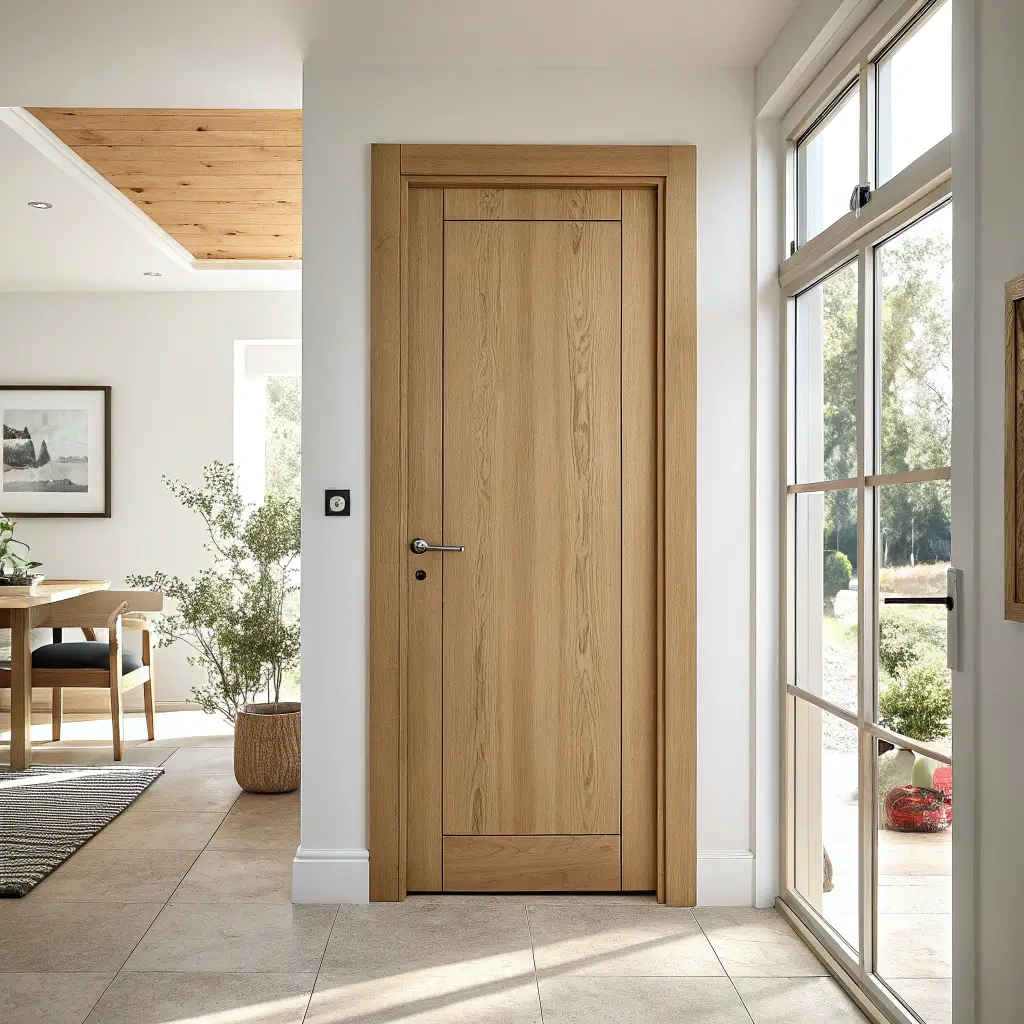
Minimalist wooden single doors are like that friend who shows up to parties perfectly put together without trying too hard. These clean-lined beauties strip away all the unnecessary details, letting the natural beauty of wood do the talking.
The Power of Simplicity
Minimalist design celebrates what’s not there—no raised panels screaming for attention, no ornate carvings collecting dust, no fussy moldings interrupting clean lines. Just smooth, flat surfaces where the wood grain becomes the hero of the story.
I replaced my six-panel colonial door with a flush walnut panel last year, and the transformation shocked me. My entrance went from “generic suburban home” to “I might actually know what I’m doing with design” overnight. The simplicity made everything else in my entryway look more intentional.
Material Selection Matters
When you strip away decorative elements, wood quality becomes crucial:
- White Oak: Light and contemporary with subtle grain
- Walnut: Rich, dark sophistication
- Maple: Clean and bright with minimal pattern
- Ash: Affordable with beautiful grain
- Teak: Luxury with natural durability
Hardware as the Only Accent
Since minimalist doors lack decorative distractions, hardware becomes your primary design element. Think long, linear handles in brushed stainless or matte black. Consider recessed pulls that sit flush with the surface. Maybe add a smart lock that looks more like art than security equipment.
The key is choosing hardware substantial enough to feel quality but simple enough not to overwhelm. I spent three weeks obsessing over handle options before choosing a simple recessed pull. Sometimes the best design decision is choosing restraint.
Glass Panel Single Door with Frames
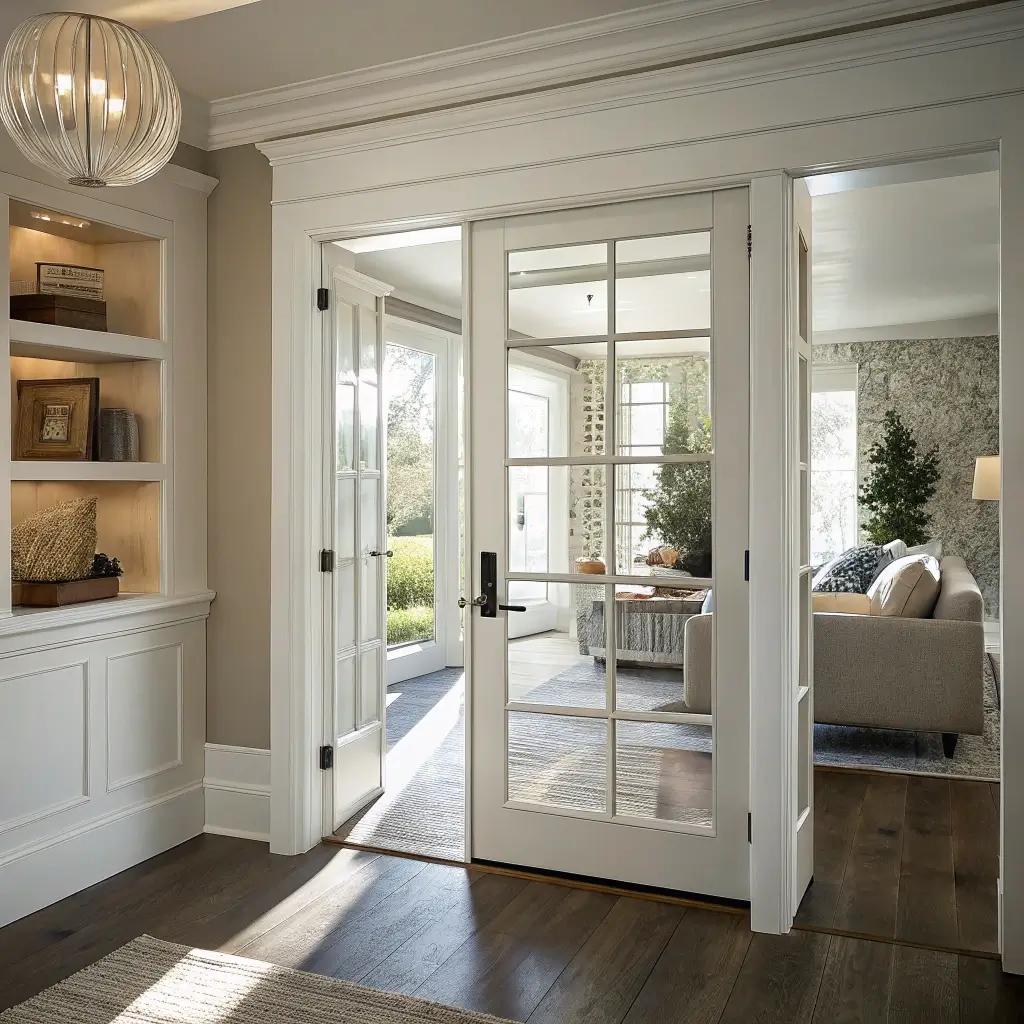
Glass panel doors solve the eternal entrance dilemma—wanting natural light without sacrificing privacy or security. These sophisticated hybrids prove you can literally have transparency without vulnerability.
Balancing Light and Privacy
The genius of glass panel doors lies in their flexibility. You control exactly how much transparency you want through glass type, panel placement, and frame design. Want maximum light? Go clear glass. Need privacy? Choose frosted or textured options.
My home office door features three vertical frosted glass panels, and it’s perfect. I get natural light from the hallway while maintaining privacy for video calls. Plus, the glass panels make my small office feel connected to the rest of the house rather than isolated.
Frame Materials and Styles
The frame dramatically affects the door’s personality:
- Wood frames: Warm and traditional
- Black metal frames: Modern and sophisticated
- White frames: Light and airy
- Bronze or brass: Elegant and timeless
- Frameless: Ultimate minimalism
Glass Options That Work
Different glass types serve different purposes:
- Clear tempered: Maximum light and views
- Frosted: Privacy with brightness
- Seeded: Vintage charm with obscurity
- Textured: Adding pattern and interest
- Smart glass: Electronic opacity control
Ever wondered why hotel bathrooms love frosted glass doors? They solve the light problem while maintaining privacy—it’s basically having your cake and eating it too.
Rustic Barn-Style Single Door
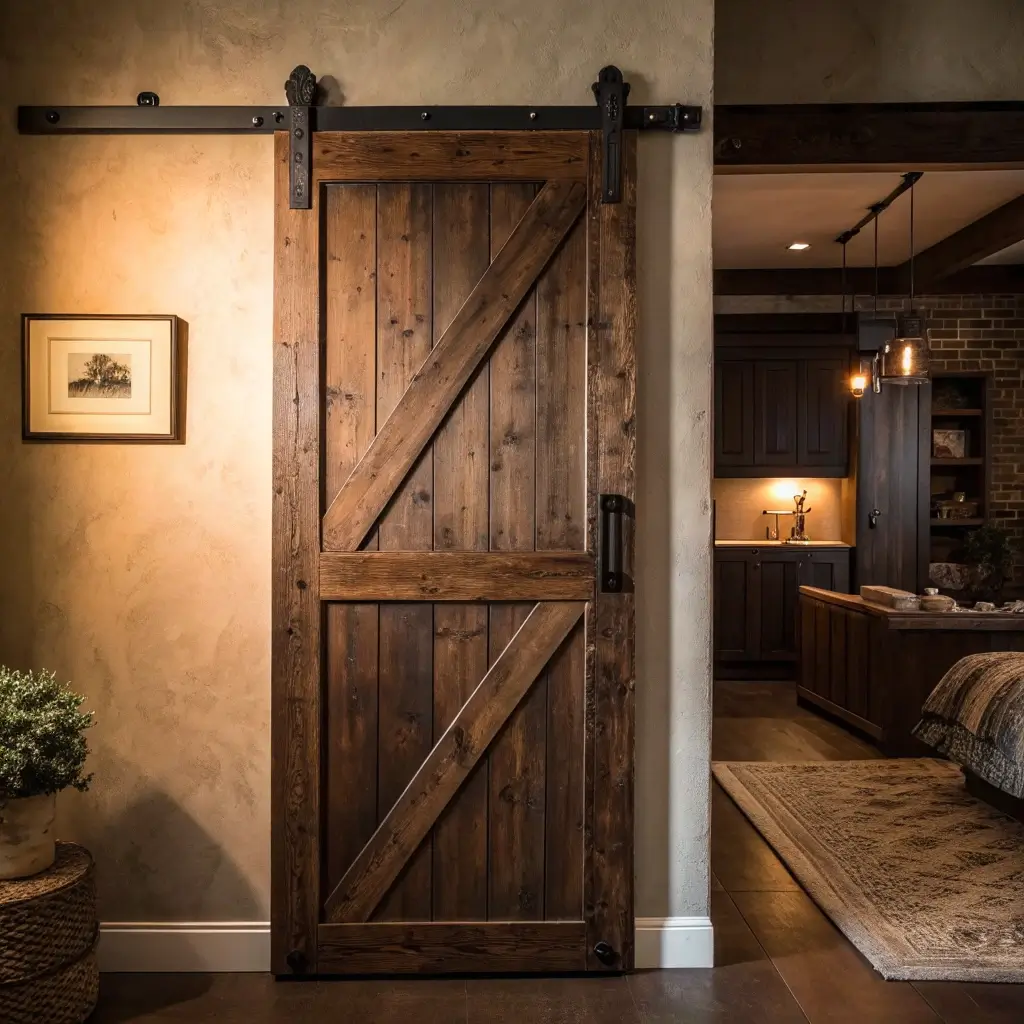
Rustic barn-style doors bring farmhouse charm to spaces that have never seen a farm. These sliding beauties combine practical space-saving with serious character, creating entrances that make people stop and stare.
The Sliding Advantage
Barn doors eliminate door swing entirely, making them perfect for tight spaces where traditional doors would bump into furniture or block pathways. The sliding mechanism turns a practical solution into a design feature that adds movement and interest.
I installed a barn door on my laundry room, and besides saving the space where a swinging door would hit my washer, it’s become a conversation piece. Guests always comment on it, and several have copied the idea for their own homes.
Material and Finish Options
Barn doors offer incredible variety in appearance:
- Reclaimed wood: Authentic character and history
- New wood with distressing: Instant vintage appeal
- Painted finishes: From crisp white to bold colors
- Natural wood: Showcasing grain beauty
- Mixed materials: Wood with metal accents
Hardware Makes the Difference
The exposed hardware on barn doors becomes part of the design. Black iron tracks create classic farmhouse vibes, while sleek stainless steel feels more contemporary. The rolling mechanism, handles, and guides all contribute to the overall aesthetic.
FYI, cheap barn door hardware will haunt you forever with squeaks and sticking. This is one place where investing in quality pays off in daily satisfaction.
Also Read: 10 Inspiring Door Design Interior Ideas for Small Spaces
Modern Metal Accent Single Door
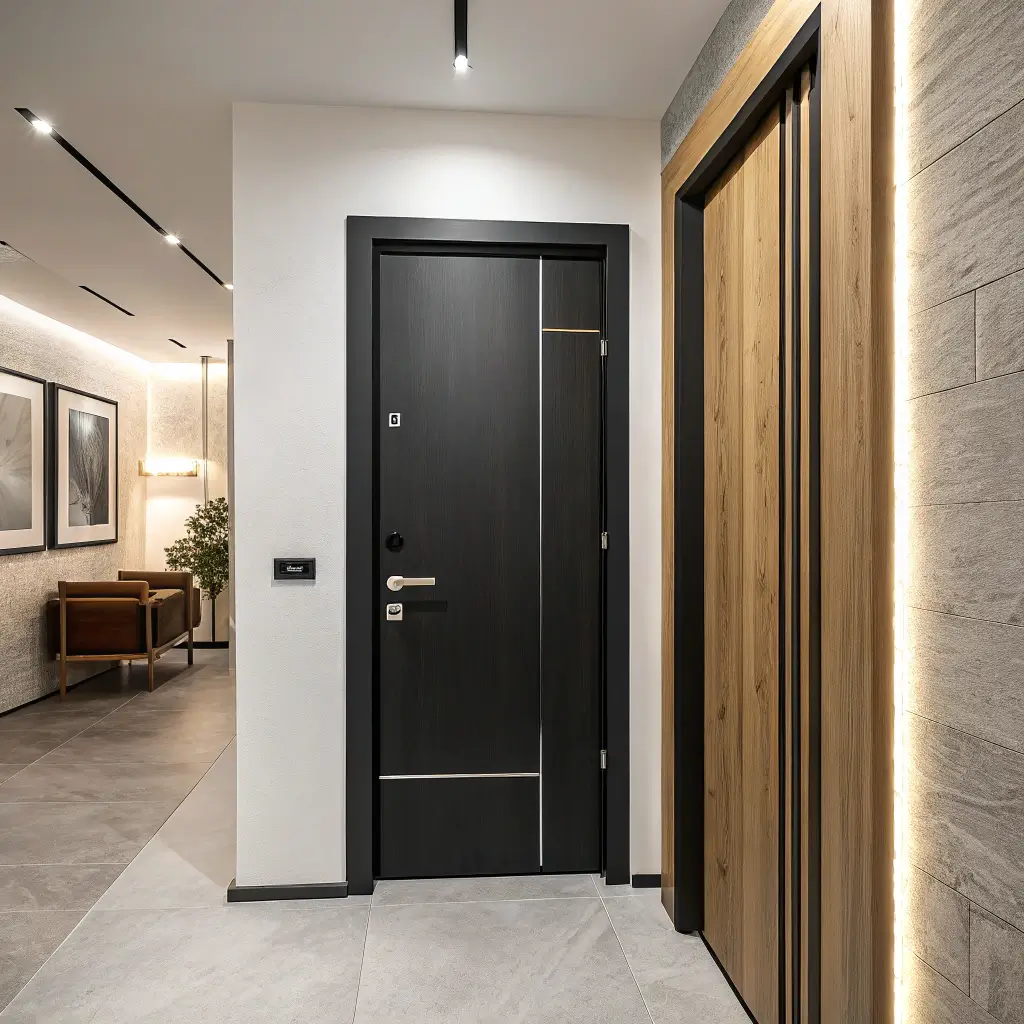
Modern metal accent doors combine materials for sophisticated contrast. These contemporary designs use metal elements to add industrial edge while maintaining the warmth of wood or the simplicity of solid panels.
The Material Mix
Metal accents can take various forms on single doors:
- Horizontal metal strips: Creating linear interest
- Vertical metal inlays: Adding height emphasis
- Corner brackets: Functional and decorative
- Handle integration: Making hardware part of design
- Edge banding: Defining boundaries with metal
Creating Visual Interest
The contrast between materials creates depth that single-material doors can’t achieve. Metal brings industrial cool while wood adds organic warmth. The combination feels both modern and approachable, sophisticated but not cold.
I designed a door with brass inlay strips creating a geometric pattern against dark walnut. The warm metals complement the wood while adding visual complexity that makes people look twice. Sometimes mixing materials creates magic.
Finish Coordination
Success with metal accent doors requires coordinating finishes:
- Match metal accents to other hardware in your space
- Consider how metals will age and patina
- Choose contrasting or complementary tones intentionally
- Think about reflection and how light plays off metals
- Maintain consistency across multiple doors
Painted Color Pop Single Door
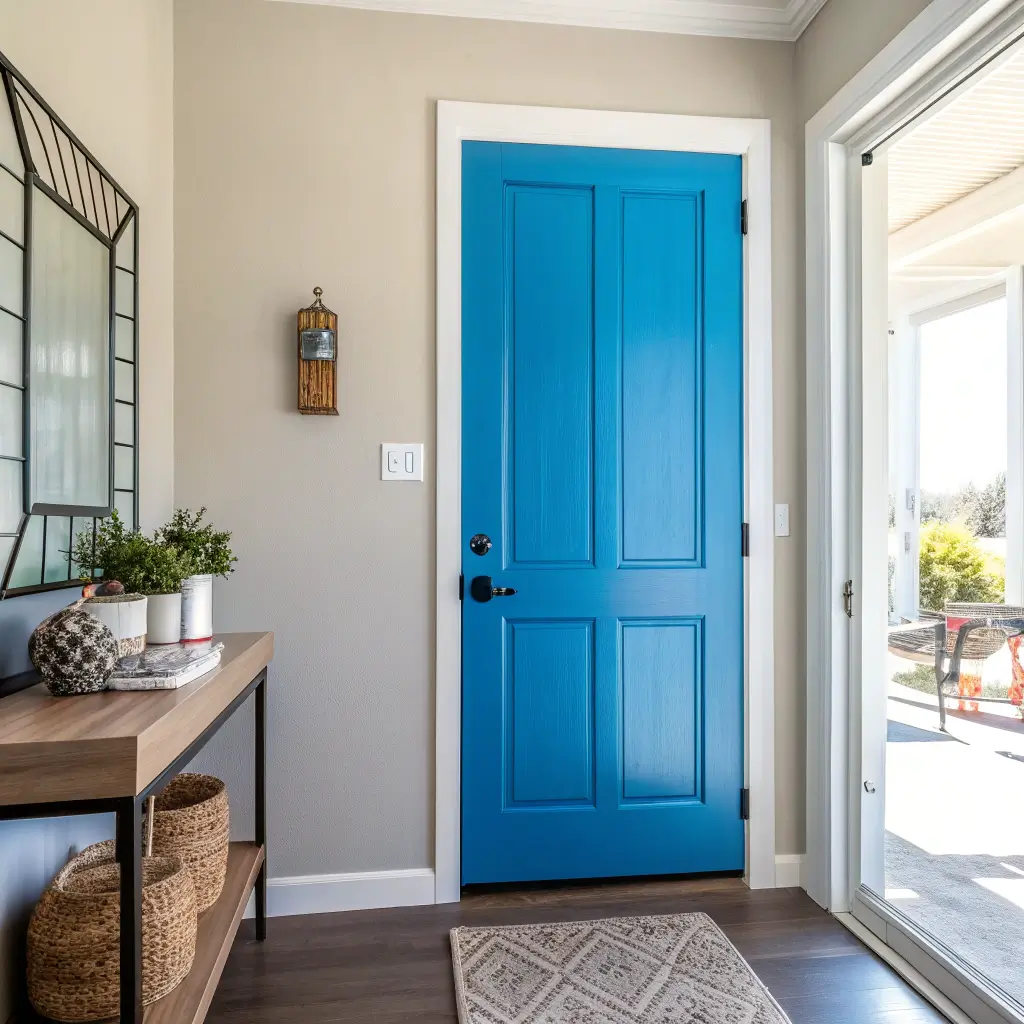
Colored single doors are for people who believe entrances should spark joy. These bold statements transform boring transitions into personality-packed moments that make you smile every time you walk through.
The Psychology of Color
Different colors create different emotional responses:
- Navy blue: Sophisticated and calming
- Emerald green: Rich and natural
- Coral: Energizing and welcoming
- Sunshine yellow: Happy and optimistic
- Deep purple: Creative and luxurious
I painted my bathroom door a gorgeous peacock blue, and it completely transformed my boring hallway. What was once just a path between rooms became a design feature that actually makes me happy. Sometimes the simplest changes create the biggest impact.
Making Bold Work
The key to successful colored doors is confidence and context:
- Choose colors that complement your overall palette
- Consider visibility from other rooms
- Think long-term—will you tire of this color?
- Balance bold doors with neutral surroundings
- Use quality paint that won’t fade or chip
Application Techniques
Achieving professional results requires proper technique:
- Sand and prime thoroughly
- Apply multiple thin coats rather than one thick coat
- Use quality brushes or sprayers
- Allow proper drying time between coats
- Finish with protective topcoat for durability
The investment in proper application pays off in a finish that looks professional rather than DIY disaster.
Carved Traditional Wooden Single Door
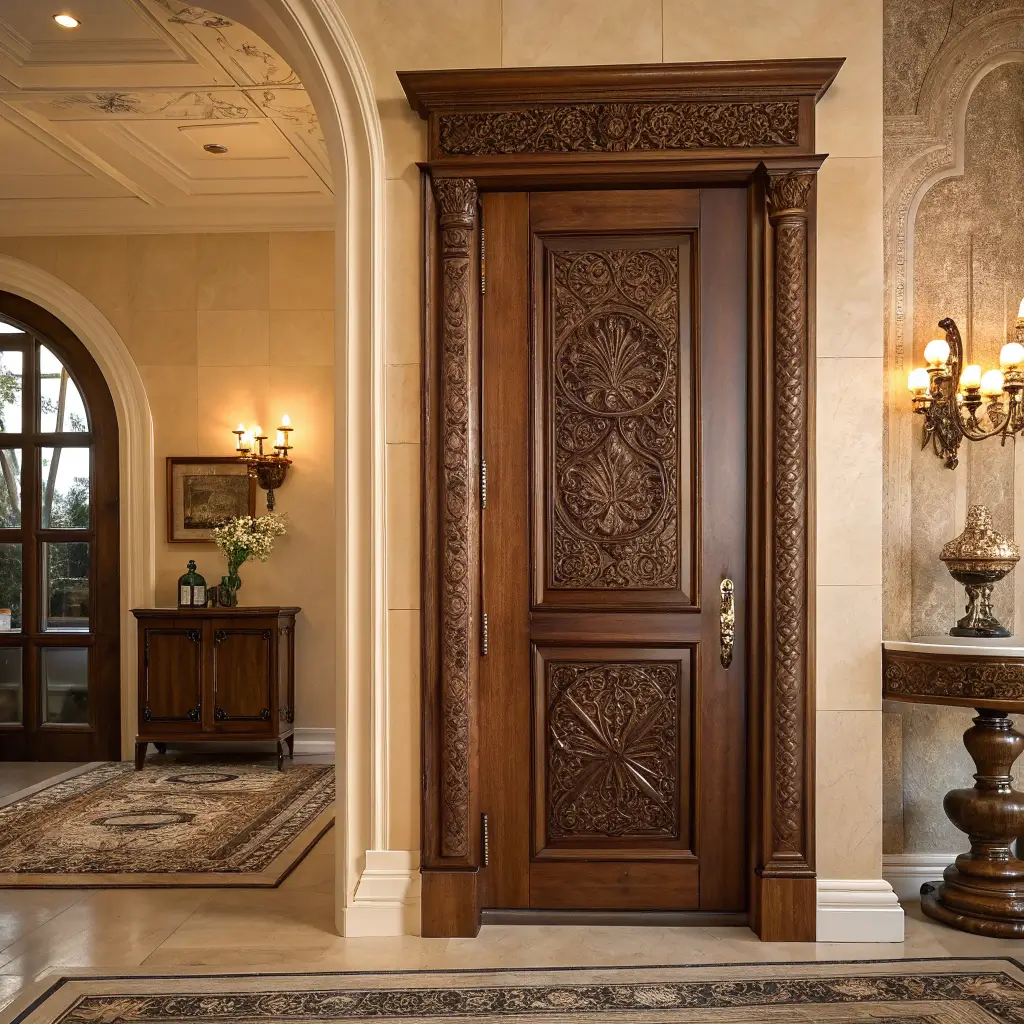
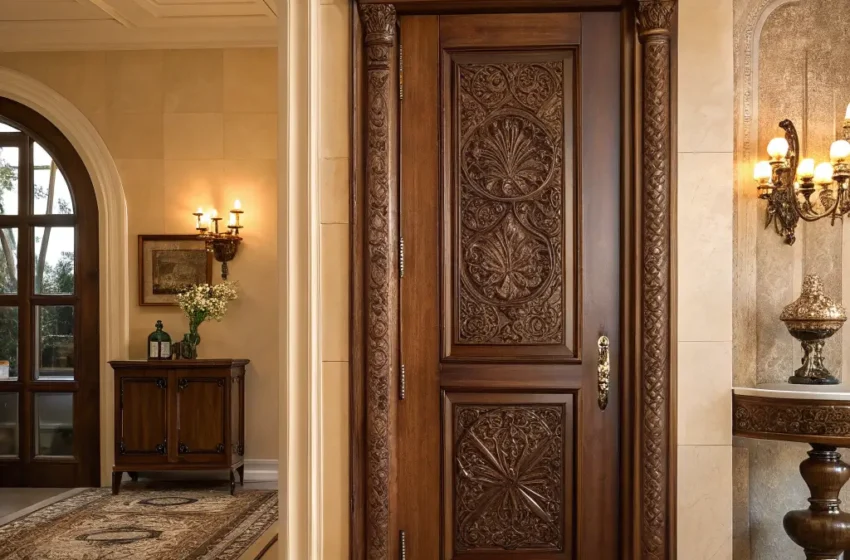
Carved wooden single doors turn functional necessities into artistic statements. These handcrafted beauties showcase woodworking skill while creating entrances that feel special and significant.
The Art of Wood Carving
Carved doors celebrate craftsmanship through intricate patterns and details. Traditional motifs like florals, vines, or geometric patterns add depth and shadow play that changes throughout the day as light shifts.
I visited a home with a hand-carved teak single door featuring traditional Indonesian patterns. That door commanded attention more effectively than any artwork in the house. Sometimes functional items can be the most impressive art pieces you own.
Carving Styles and Traditions
Different cultures offer distinct carving approaches:
- Indian: Intricate florals and spiritual symbols
- Spanish Colonial: Mission-inspired patterns
- Asian: Nature scenes and cultural motifs
- Gothic: Pointed arches and religious imagery
- Contemporary: Modern interpretations of traditional techniques
Investment and Care
Carved doors represent significant investments but offer lasting value:
- Hand-carved doors require skilled artisans
- Quality carved doors become family heirlooms
- Proper maintenance preserves details for generations
- Occasional oil treatment keeps wood healthy
- Professional restoration available if needed
The daily satisfaction of a beautiful carved door justifies the initial investment. Some things are worth spending money on, and doors you use every day definitely qualify.
Also Read: 12 Inspiring Iron Door Design Ideas and Elegant Door Designs
Frosted Glass Single Door for Privacy
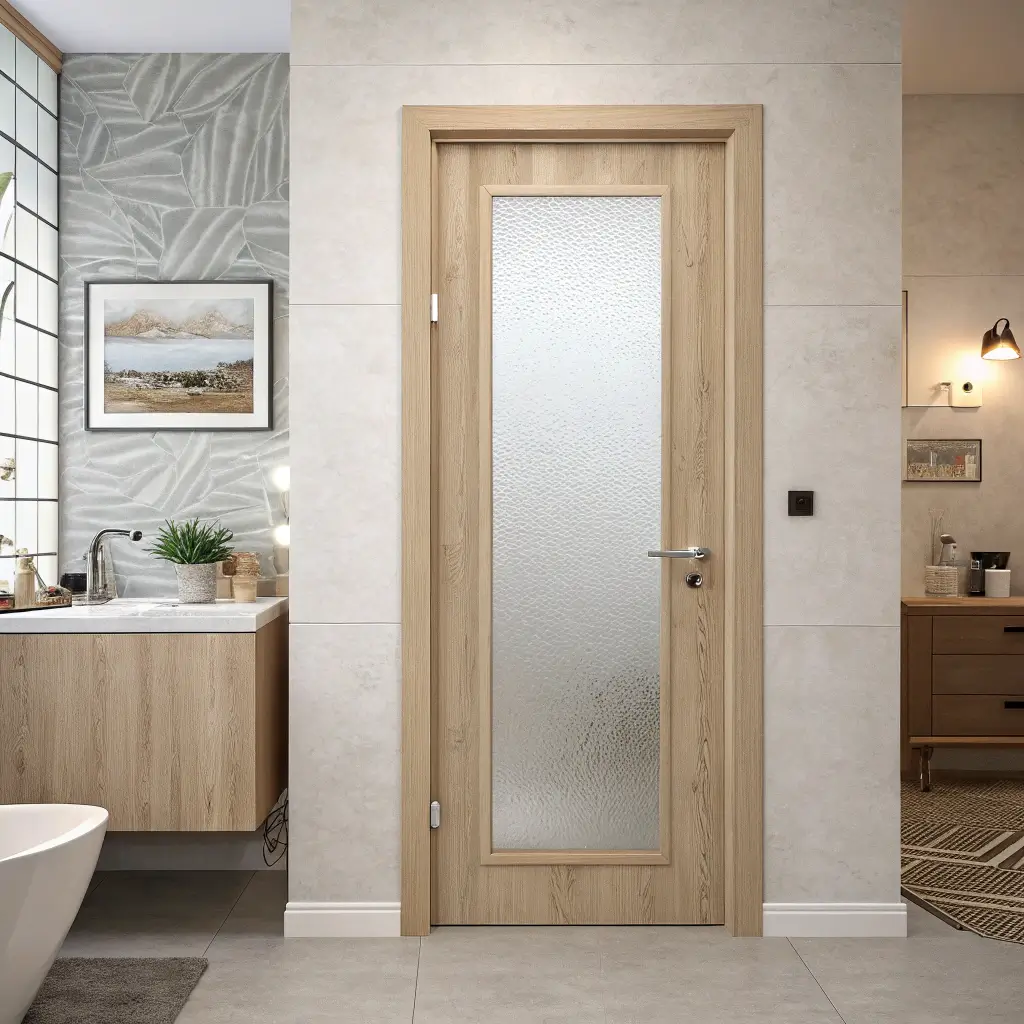
Frosted glass single doors solve the privacy puzzle without creating dark, closed-off spaces. These translucent beauties let light flow while keeping your business your own.
The Privacy-Light Solution
Frosted glass creates this perfect middle ground where light transmits freely but details remain obscured. You can see shapes and movement but nothing specific, making these doors ideal for bathrooms, bedrooms, or home offices.
My master bathroom has a frosted glass door, and it’s genius. Natural light from the bedroom floods the bathroom while I maintain complete privacy. Plus, the soft, diffused light creates this spa-like ambiance that makes morning showers feel more luxurious.
Frosting Techniques
Different methods create different effects:
- Acid-etched: Permanent, smooth finish
- Sandblasted: Textured with depth
- Frosted film: Budget-friendly and removable
- Gradient frosting: Variable opacity
- Pattern frosting: Decorative designs within the frost
Design Variations
Frosted glass doesn’t mean boring:
- Combine clear and frosted sections for visual interest
- Add subtle patterns or textures
- Use colored frosting for personality
- Incorporate geometric designs
- Mix frosted panels with solid materials
The versatility means you can customize frosted glass doors to match any design aesthetic while maintaining their primary function.
Sleek Sliding Single Door
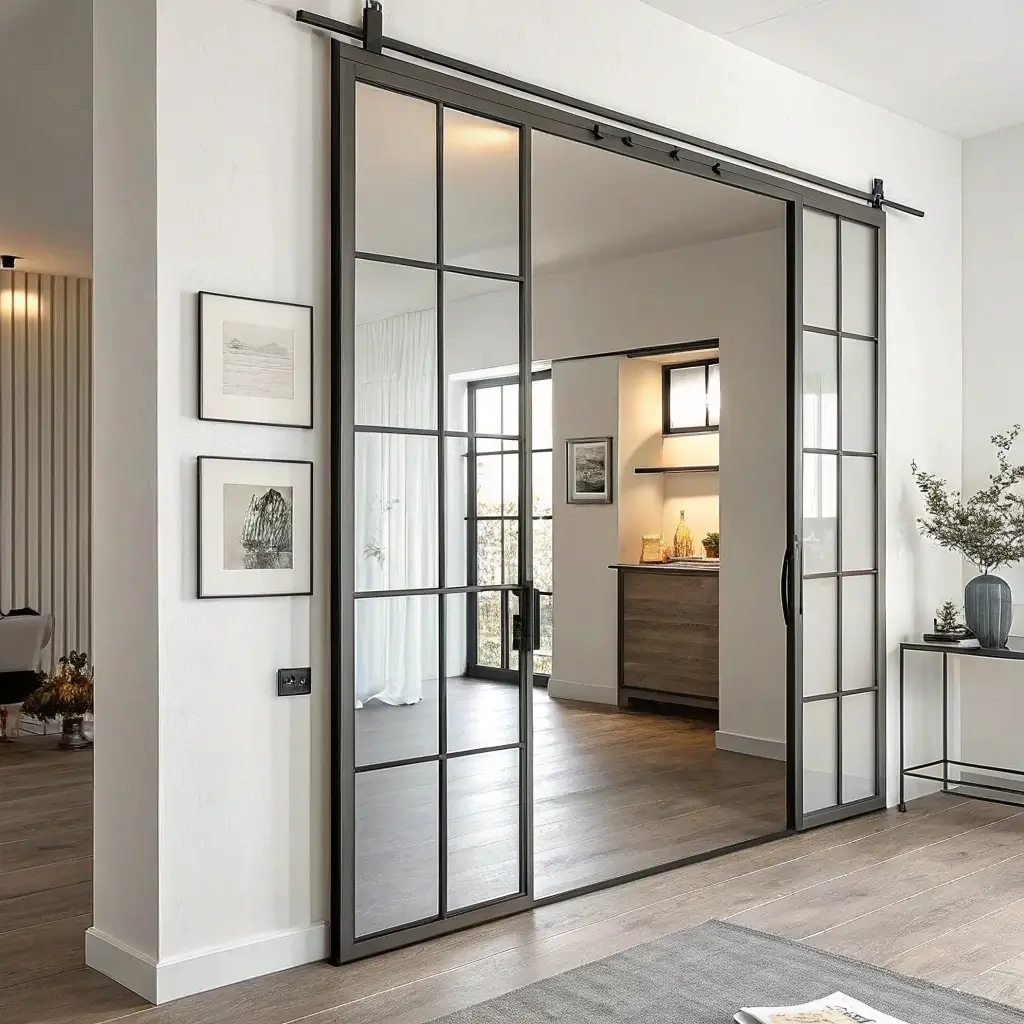
Sliding single doors bring contemporary functionality to spaces where traditional swinging doors just don’t work. These space-savers prove that sometimes the best design solutions are also the most practical.
The Space-Saving Magic
Sliding doors eliminate door swing entirely, freeing up floor space for furniture or just making tight spaces feel less cramped. In small homes or awkward layouts, this saved space can make the difference between functional and frustrating.
I installed a sliding door for my tiny powder room, and suddenly there was room for both a toilet and a sink without playing furniture Tetris every time someone needed to use the bathroom. Sometimes the simplest solutions are the best solutions.
Track and Hardware Systems
Modern sliding door hardware has evolved significantly:
- Soft-close mechanisms: Preventing slams
- Hidden tracks: Maintaining clean lines
- Barn door style: Exposed tracks as design features
- Pocket doors: Disappearing into walls
- Bypass systems: Multiple doors on same track
Material Options
Sliding doors work with various materials:
- Wood for warmth and tradition
- Glass for transparency and light
- Metal for industrial appeal
- Composite for durability and affordability
- Mixed materials for custom looks
The key is choosing materials that work with your specific sliding mechanism while matching your design aesthetic.
Industrial Steel and Wood Single Door
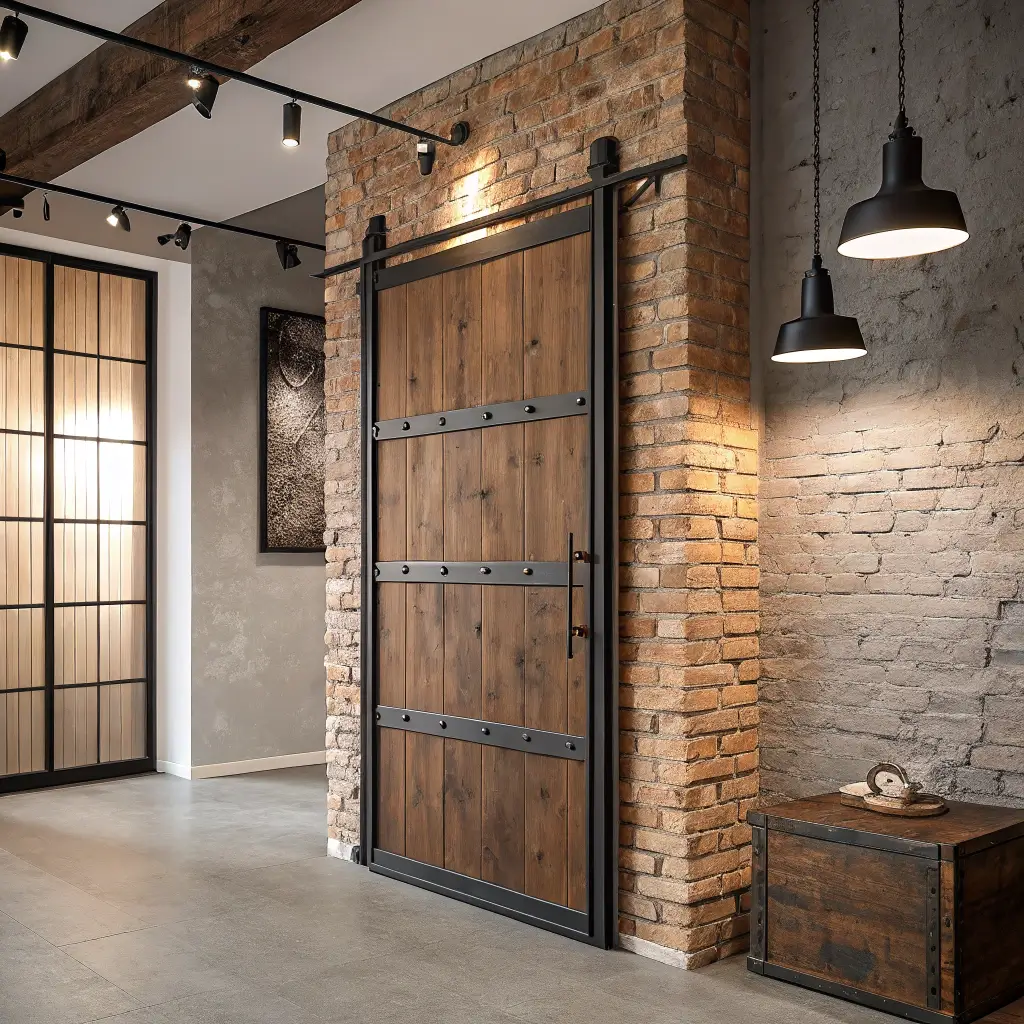
Industrial combination doors bring urban edge to residential spaces. These mixed-material beauties combine wood’s warmth with steel’s strength, creating entrances that feel both tough and welcoming.
The Material Marriage
Steel and wood together create perfect contrast—cold metal against warm wood, industrial against organic, modern against timeless. The combination works because each material makes the other look better.
My home office has a door with a steel frame and reclaimed wood panels, and it’s become my favorite feature in the house. The contrast creates visual interest while the materials tie together the industrial desk lamp with the wooden shelving.
Design Approaches
Different combinations create different effects:
- Steel frame with wood panels: Classic industrial
- Wood door with steel accents: Subtle industrial
- Mixed wood and metal panels: Contemporary patchwork
- Steel edge banding on wood: Defined boundaries
- Metal mesh with wood frame: Textural contrast
Finishing Options
The finishes you choose affect the overall vibe:
- Raw steel develops natural patina over time
- Powder-coated steel maintains consistent appearance
- Natural wood shows grain and character
- Painted wood allows color introduction
- Mixed finishes create additional complexity
IMO, the best industrial doors embrace imperfection rather than fighting it. A little wear and patina adds character rather than detracting from the design.
Also Read: 10 Bold Steel Door Design Ideas and Statement Entrances
Contemporary Textured Panel Single Door
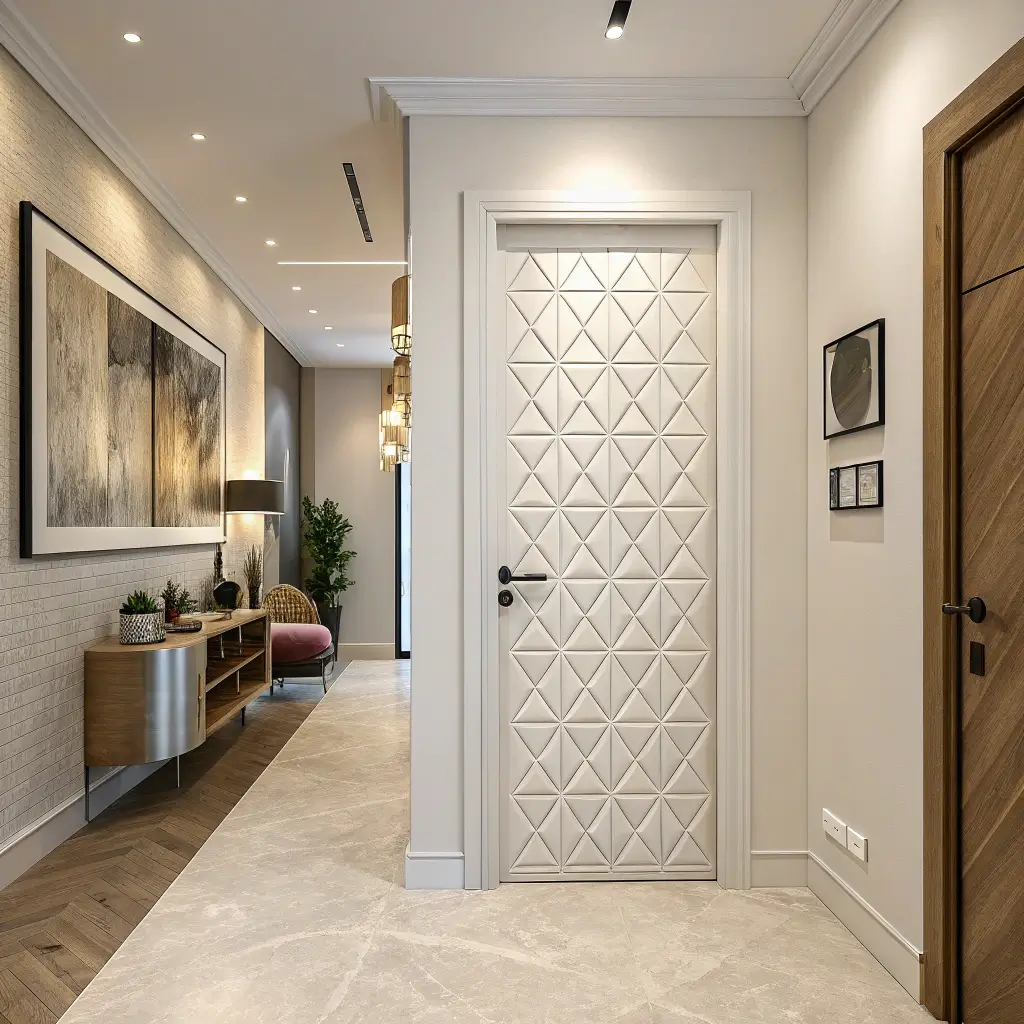
Contemporary textured panel doors add dimension through surface treatment rather than traditional raised panels. These modern interpretations prove that flat doesn’t mean boring when texture comes into play.
Texture Techniques
Modern doors achieve texture through various methods:
- Vertical grooves: Creating linear rhythm
- Horizontal scoring: Adding width emphasis
- Random patterns: Organic and unexpected
- Geometric indentations: Mathematical beauty
- Mixed depth panels: Creating shadow play
Creating Depth Without Bulk
The genius of textured panels lies in adding visual interest without physical bulk. The texture creates shadows and highlights that change throughout the day, making the door a dynamic element rather than static barrier.
I designed a door with subtle vertical grooves that you barely notice in direct light but become prominent when light hits from the side. That changing appearance keeps the door interesting rather than just functional.
Material Considerations
Different materials take texture differently:
- Solid wood allows for deep, pronounced textures
- MDF accepts routing for consistent patterns
- Composite materials offer stability with texture
- Veneered surfaces require careful texture application
- Metal can be embossed or hammered for texture
The material you choose should match both your design goals and your budget realities.
Making Your Single Door Decision
Choosing the right single door involves balancing aesthetics, function, space constraints, and budget. But here’s the secret—single doors offer incredible flexibility precisely because they don’t require the coordination and expense of double doors.
Start by assessing your specific needs. Tight on space? Consider sliding or pocket options. Want privacy with light? Explore frosted glass. Need serious style? Look at carved wood or bold colors. Let your lifestyle and space guide your design choices.
Don’t forget about proportion and scale. A single door should feel appropriate for its opening and surrounding architecture. Too small and it looks cheap; too grand and it feels pretentious. The goal is that Goldilocks sweet spot where everything feels just right.
Budget matters, but remember that doors last decades. Sometimes saving for the door you really want beats settling for something that’ll annoy you every day. These aren’t throw pillows you’ll replace next season—they’re long-term investments in your daily environment 🙂
Final Thoughts
Single doors deserve way more credit than they get. They’re efficient, versatile, often more practical than double doors, and capable of serious style when designed thoughtfully.
Whether you choose minimalist simplicity or carved complexity, industrial edge or traditional warmth, the right single door transforms spaces while respecting budget and spatial realities.
I’ve learned through multiple door upgrades that single doors often deliver better value and more design flexibility than their double-door counterparts.
They cost less, require simpler installation, take up less space, and offer just as much style potential when chosen wisely.
The key is treating your single door as the design opportunity it is rather than just accepting whatever came with your space.
Choose materials that excite you, finishes that complement your style, and hardware that feels substantial. Install it properly, maintain it respectfully, and enjoy the daily satisfaction of a well-chosen entrance.
So stop thinking of single doors as the budget option or the compromise choice. They’re smart, sophisticated solutions that prove one door can absolutely be enough—and sometimes, it’s even better than two.
After all, the best design isn’t about having the most or the biggest—it’s about choosing exactly what works for your space and your life. Single doors do exactly that, and they look damn good doing it.