10 Gorgeous English Cottage Bathroom Ideas and Pastel Hues
- Bathroom Design
 Ben
Ben- 0
- 30 minutes read
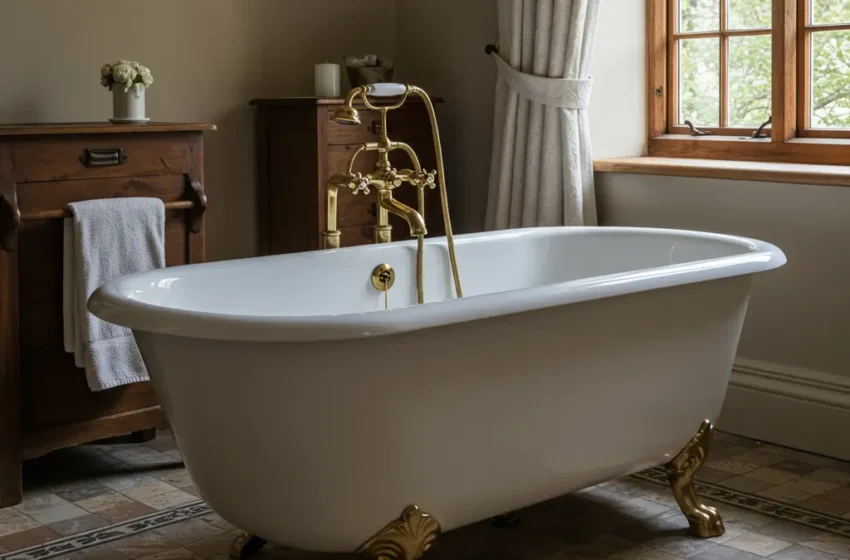
Picture this: you’re soaking in a clawfoot tub while rain patters against leaded glass windows, surrounded by vintage florals and the faint scent of lavender.
That’s the English cottage bathroom dream, and honestly, it’s been living rent-free in my head since I watched my first BBC period drama as a teenager.
There’s something undeniably romantic about these spaces that makes even the most mundane morning routine feel like an event worthy of Jane Austen’s attention.
I fell completely in love with English cottage bathrooms during a trip to the Cotswolds a few years back.
Our rental cottage had the most charming bathroom—all exposed beams, mismatched vintage tiles, and a massive copper tub that took forever to fill but made every soak feel like an absolute luxury.
I spent way too long in that bathroom taking photos instead of, you know, actually bathing. When I returned home to my sterile, white-everything apartment bathroom, I knew something had to change.
So whether you’re blessed with an actual English cottage or just want to bring some of that countryside magic into your suburban bathroom, these ten ideas will help you create a space that feels like it’s been plucked straight from the English countryside—tea and crumpets not included, unfortunately.
1. Cozy Vintage English Cottage Bathroom Makeover
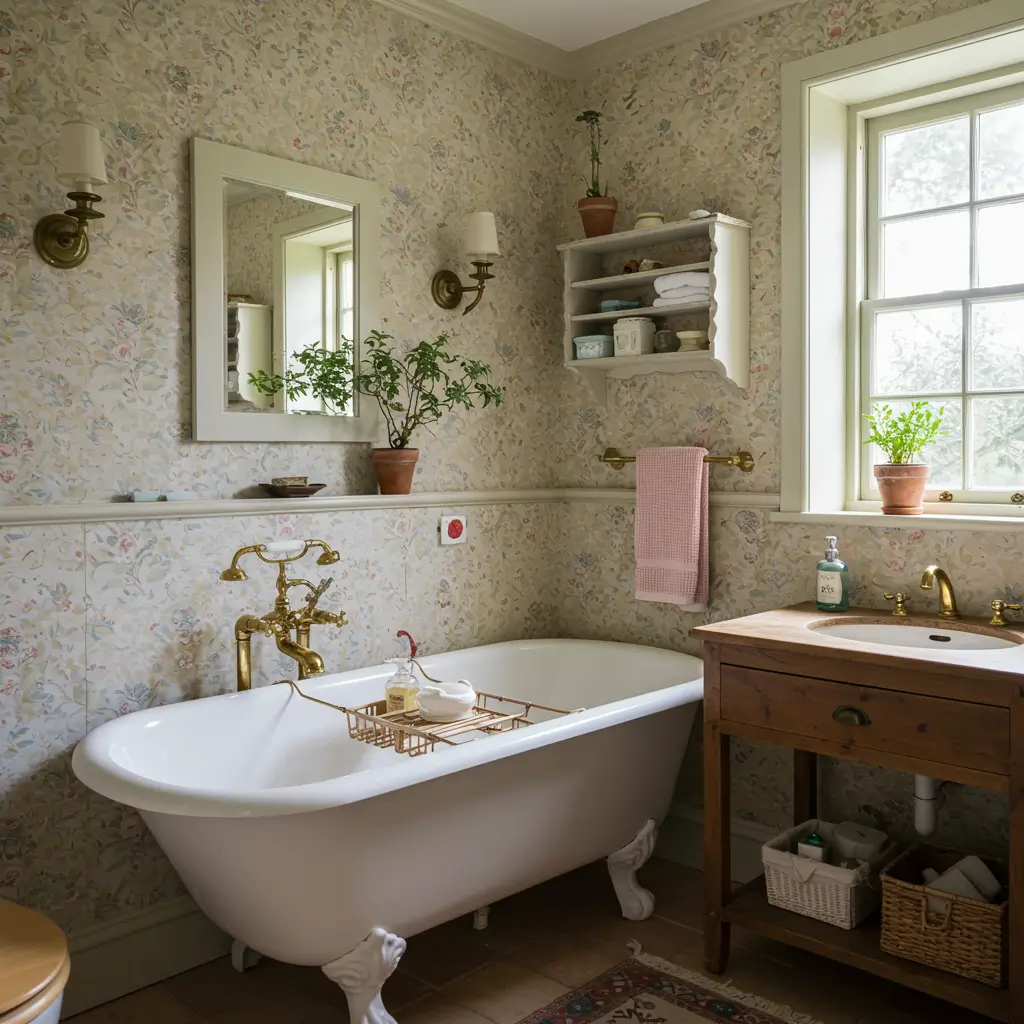
Creating an authentic vintage English cottage bathroom isn’t about buying everything new that looks old—it’s about layering character and history into a space that feels genuinely collected over time.
Embracing Authentic Vintage Elements
The best English cottage bathrooms tell stories through their elements. Hunt for genuine vintage pieces at antique shops, estate sales, and architectural salvage yards. That Victorian washstand with the marble top? Perfect vanity conversion waiting to happen. The old medicine cabinet with beveled mirrors? Bathroom gold.
I transformed my guest bathroom using a 1920s dressing table as a vanity, and it immediately gave the room personality that no big-box-store purchase could match. The wonky drawers actually work (mostly), and the patina on the brass handles adds character money can’t buy.
Mixing Eras Thoughtfully
English cottage style celebrates the mix—Victorian next to Georgian, Edwardian beside Arts and Crafts. The key lies in maintaining a cohesive color palette and scale that makes different eras feel intentional rather than chaotic.
Focus on functional vintage: mirrors that actually hang, fixtures that actually work, furniture that actually fits. Decorative vintage fills in around these essentials. That gorgeous Victorian pitcher and bowl set? Perfect for displaying, even if your plumbing works just fine.
Creating Patina and Age
Even new elements can feel vintage with the right treatment. Choose fixtures with living finishes that develop patina over time. Select tiles with handmade irregularities. Paint walls in historical colors that have depth and warmth.
Time-worn elements—distressed wood, tarnished metals, slightly foxed mirrors—tell the cottage story better than pristine perfection ever could.
2. Small English Cottage Bathroom Layouts That Work
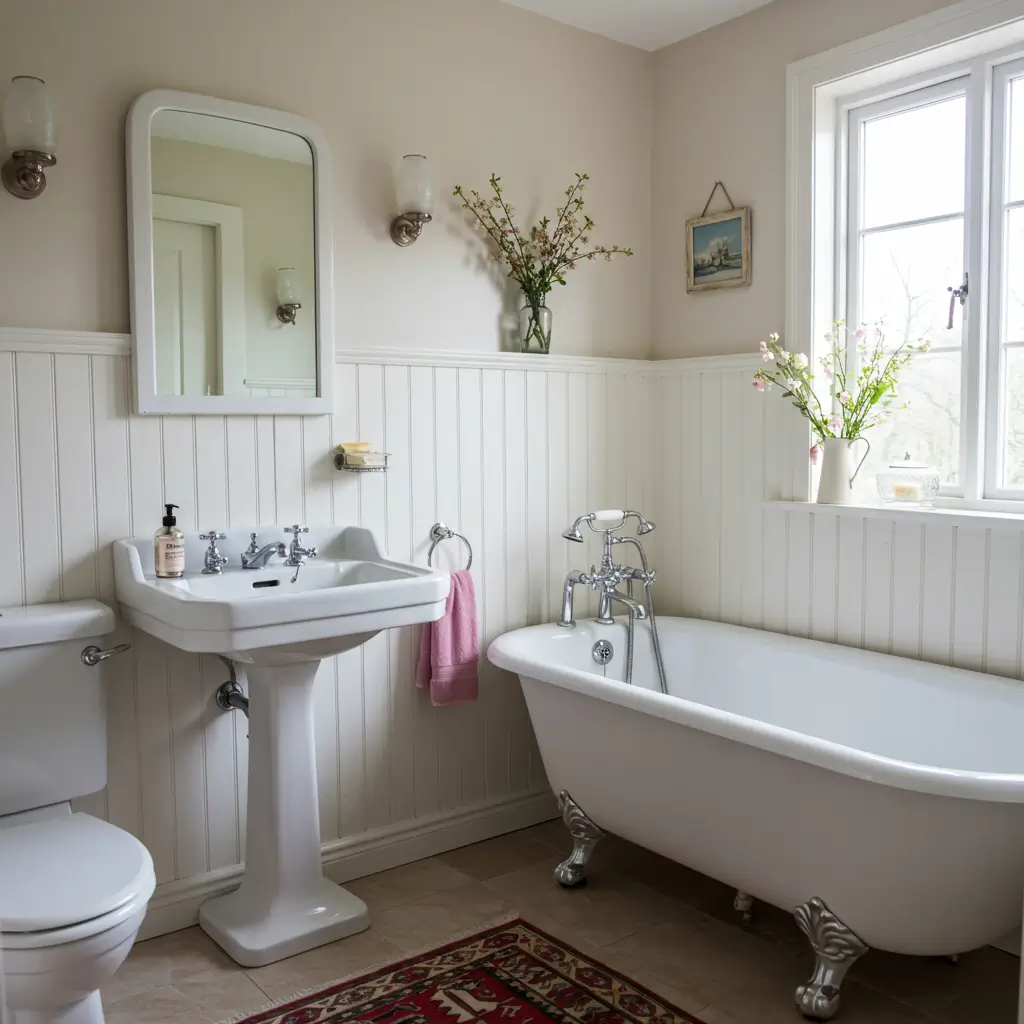
Real English cottages rarely blessed their inhabitants with spacious bathrooms. Those tiny spaces packed into converted closets and strange corners require creativity, but the results can be absolutely magical.
Making Every Inch Count
Small cottage bathrooms succeed through ruthless editing and multi-functional design. Pedestal sinks save floor space while maintaining period charm. Corner installations maximize awkward layouts. Vertical storage rises to meet low ceilings.
I worked with a client whose bathroom measured barely 35 square feet—about the size of a generous closet. We installed a compact clawfoot slipper tub, a tiny wall-hung sink, and open shelving that reached to the ceiling. The result felt cozy rather than cramped because we embraced the intimacy instead of fighting it.
Optical Illusion Techniques
Light colors on walls and ceilings push boundaries outward. Mirrors strategically placed double visual space. Consistent flooring (no transition strips) creates flow. These tricks make tiny bathrooms feel larger without sacrificing cottage character.
Keep patterns in proportion to the room. Tiny spaces call for smaller-scale florals and more delicate details. That dramatic wallpaper might look stunning in photos but could overwhelm a bathroom the size of a phone booth.
Vertical Garden Approach
When floor space runs short, go vertical. Tall, narrow cabinets store more than you’d expect. Pegboard installations hold baskets and hooks at various heights. Even the back of the door becomes prime real estate.
English cottage style actually suits small spaces beautifully—the coziness reads as charming rather than cheap.
3. Charming Pastel Color Schemes for Cottage Bathrooms
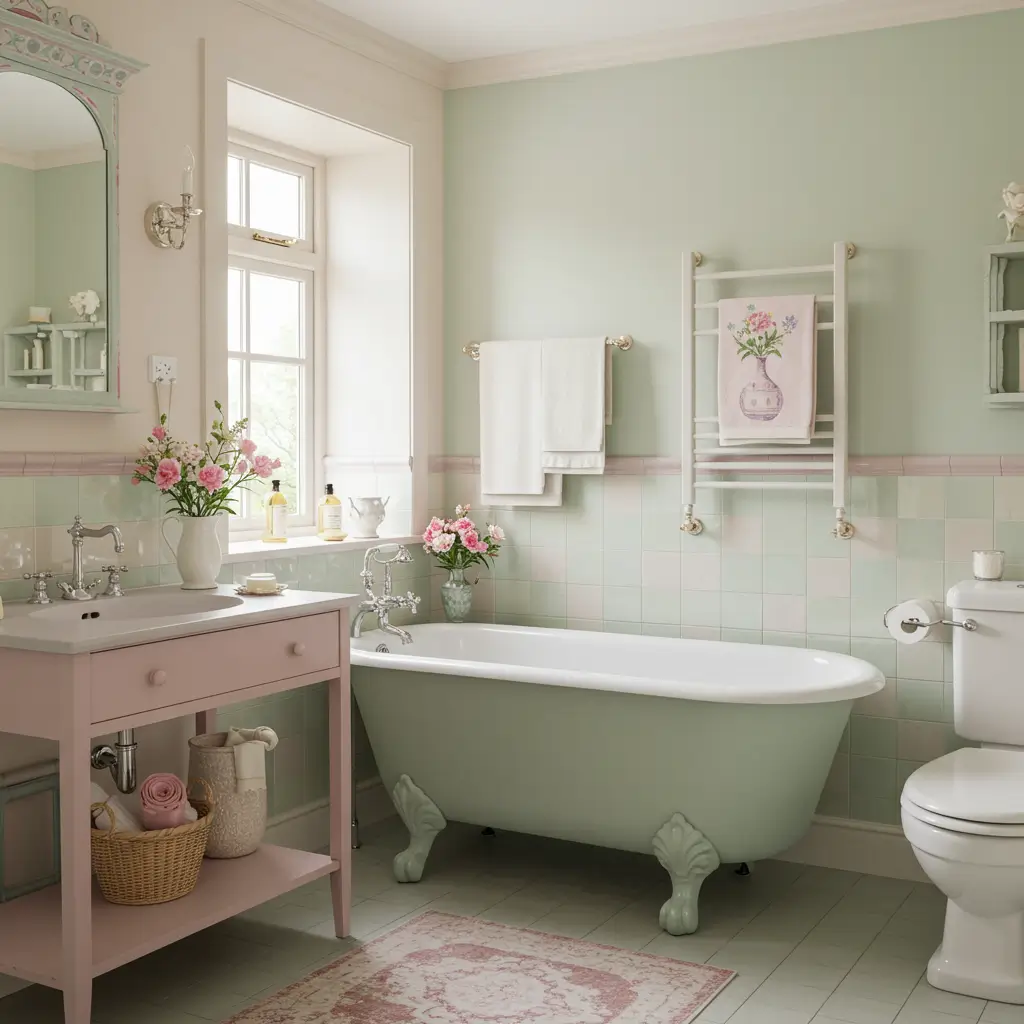
English cottage bathrooms embrace soft, faded colors that look like they’ve spent decades gently bleaching in afternoon sunlight. These aren’t bright, modern pastels but dusty, muted tones with depth and history.
Traditional English Color Palettes
Think Farrow & Ball rather than Behr. Sage greens, duck egg blues, blush pinks, and lavender grays define the English cottage palette. These colors feel historical without being heavy, romantic without being saccharine.
Paint companies now offer heritage collections that capture these perfect tones. Look for colors with warm undertones—that slight pink in a gray, the yellow in a green—that prevent the space from feeling cold.
Layering Multiple Pastels
Don’t limit yourself to one color. English cottage bathrooms often feature different pastels for walls, trim, and ceiling, creating dimensional interest without overwhelming the small space.
I painted my bathroom walls in the palest pink, the ceiling in soft blue, and the trim in cream. The combination sounds insane, but it creates this sunset-at-the-seaside feeling that makes every morning feel special.
Balancing Color with White
Pure white grounds pastel schemes and prevents them from feeling too precious. White towels, white fixtures, and white accents give the eye places to rest. The contrast actually makes the colors feel more intentional.
Use warm whites with undertones that complement your pastels rather than stark optical whites that can look harsh against vintage tones. FYI, this single choice can make or break your entire color scheme.
Also Read: 12 Serene Cottagecore Bathroom Ideas and Botanical Vibes
4. Freestanding Tubs in Classic English Style
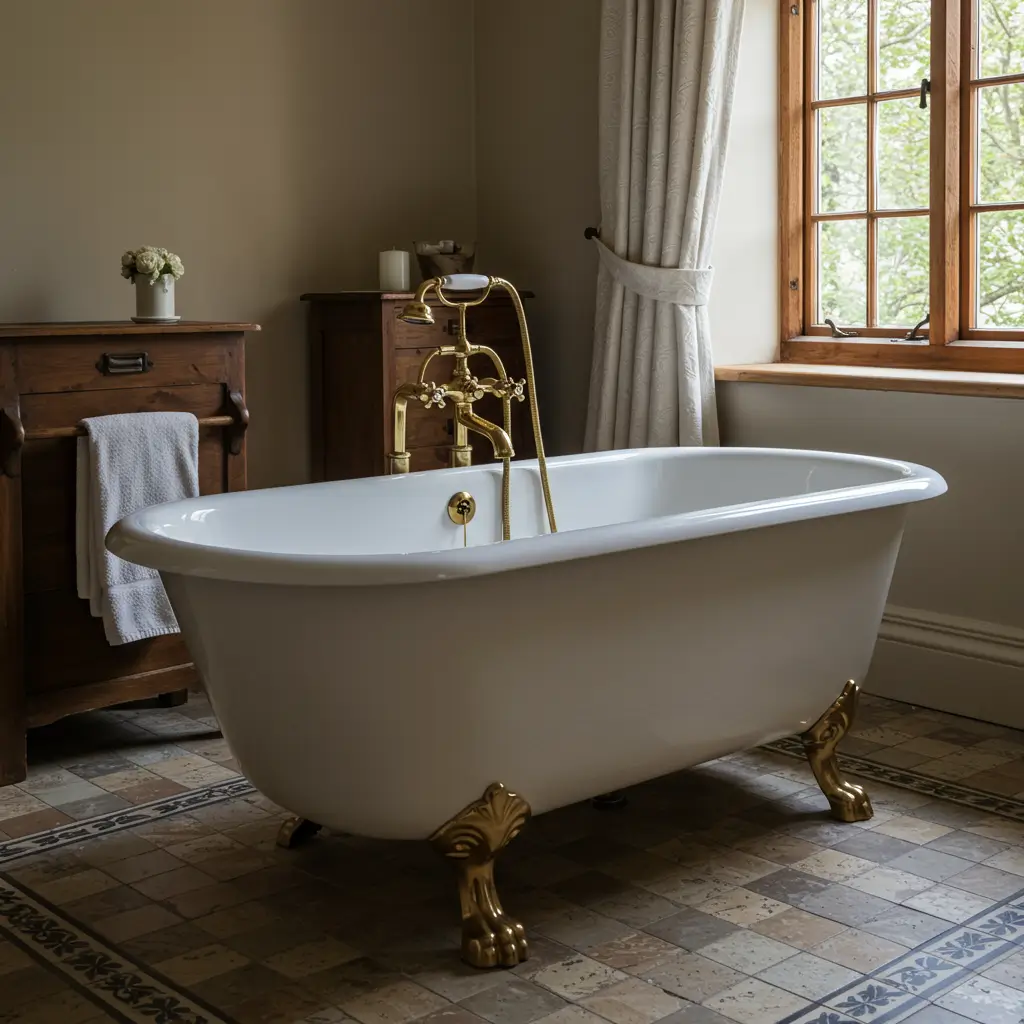
Nothing says English cottage bathroom quite like a gorgeous freestanding tub. These statement pieces anchor the room and provide the kind of bathing experience that makes showers seem positively pedestrian.
Choosing Your Tub Style
Clawfoot tubs remain the classic choice, with ball-and-claw, cannonball, and slipper variations available. Copper tubs bring warmth and develop gorgeous patina over time. Cast iron options hold heat beautifully for long, luxurious soaks.
Consider your space carefully—these tubs take up serious real estate and require proper floor support. That vintage clawfoot weighs hundreds of pounds empty; filled with water and a person, you need structural certainty.
Placement and Access
Freestanding tubs need breathing room to look their best. Position them to take advantage of windows for natural light and views. Leave space around all sides for cleaning and access.
Plumbing for freestanding tubs can be exposed or hidden. Exposed pipes in antique brass or nickel add to the cottage aesthetic. Floor-mounted fillers create drama. Wall-mounted options work when space is tight.
Making Tubs Practical
Let’s be honest—freestanding tubs can be slightly impractical. They’re harder to get into and out of, especially as we age. Handheld shower attachments add functionality. Anti-slip mats prevent accidents. Nearby grab points offer support when needed.
The romance of the cottage tub is worth the minor inconveniences, but plan for practical use, not just beautiful photos. 🙂
5. Rustic Wooden Accents for Cottage Bathroom Decor
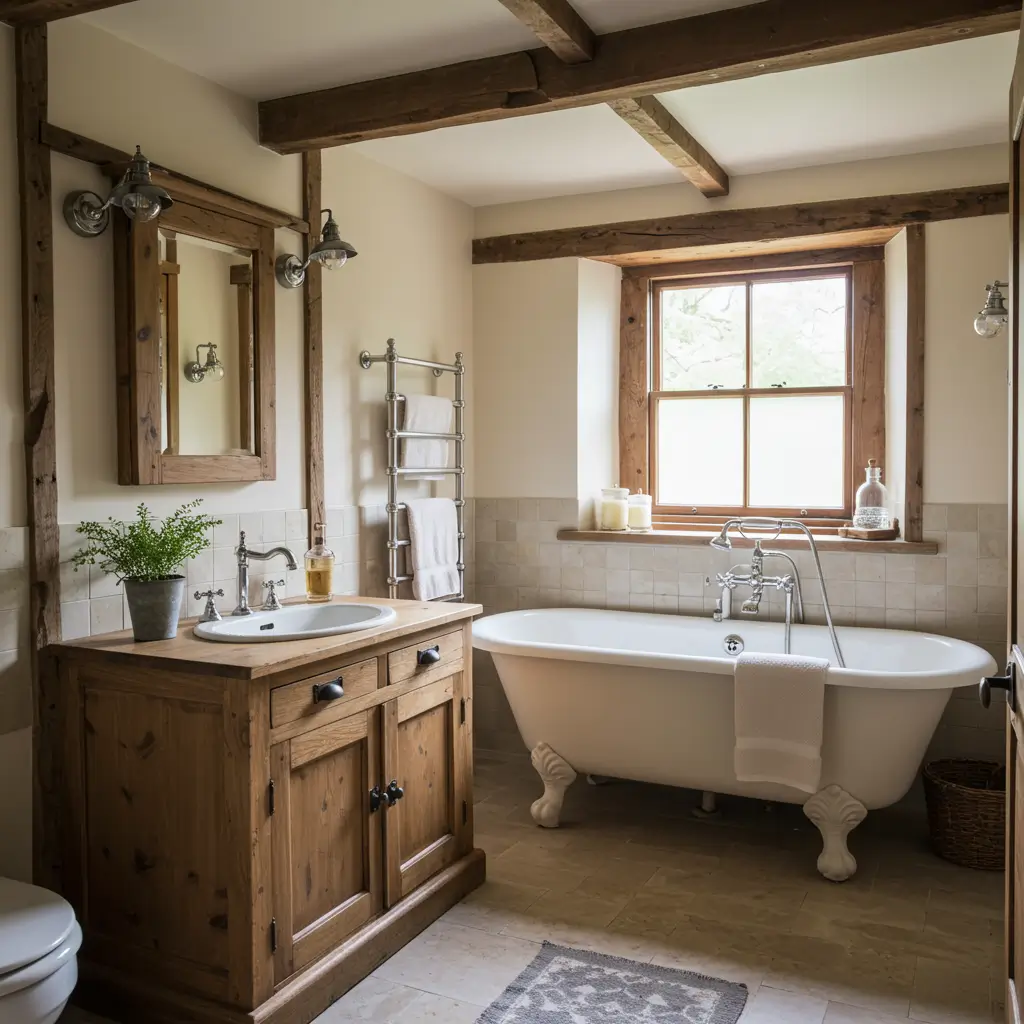
Wood brings warmth and texture to English cottage bathrooms, connecting indoor spaces to the natural world outside. But bathroom wood requires careful selection and treatment.
Choosing Bathroom-Appropriate Woods
Oak, cedar, teak, and reclaimed pine handle moisture better than most woods. Properly sealed pieces last for years in humid conditions. Avoid particle board and MDF that swell and deteriorate when exposed to steam and splashes.
Reclaimed wood adds instant history—old floor joists become shelving, salvaged doors transform into mirrors, barn wood creates accent walls. The weathering and nail holes tell stories that new wood simply can’t.
Wood Elements That Work
Floating shelves in rustic wood add storage with character. Wooden toilet seats feel surprisingly luxurious. Timber-framed mirrors anchor walls beautifully. Even simple wooden accessories—soap dishes, toothbrush holders, bath caddies—contribute to the cottage atmosphere.
I added reclaimed oak beams as a ceiling feature in my cottage bathroom renovation, and they completely transformed the space from generic to genuinely special.
Maintaining Wooden Elements
Wood in bathrooms requires vigilance. Proper ventilation prevents moisture damage. Regular sealing protects surfaces. Quick cleanup of splashes prevents water marks. The maintenance adds up, but the warmth wood brings justifies the effort.
Watch for signs of trouble—warping, discoloration, soft spots—and address issues immediately before they become serious problems.
6. Floral Tile Patterns for English Cottage Bathrooms
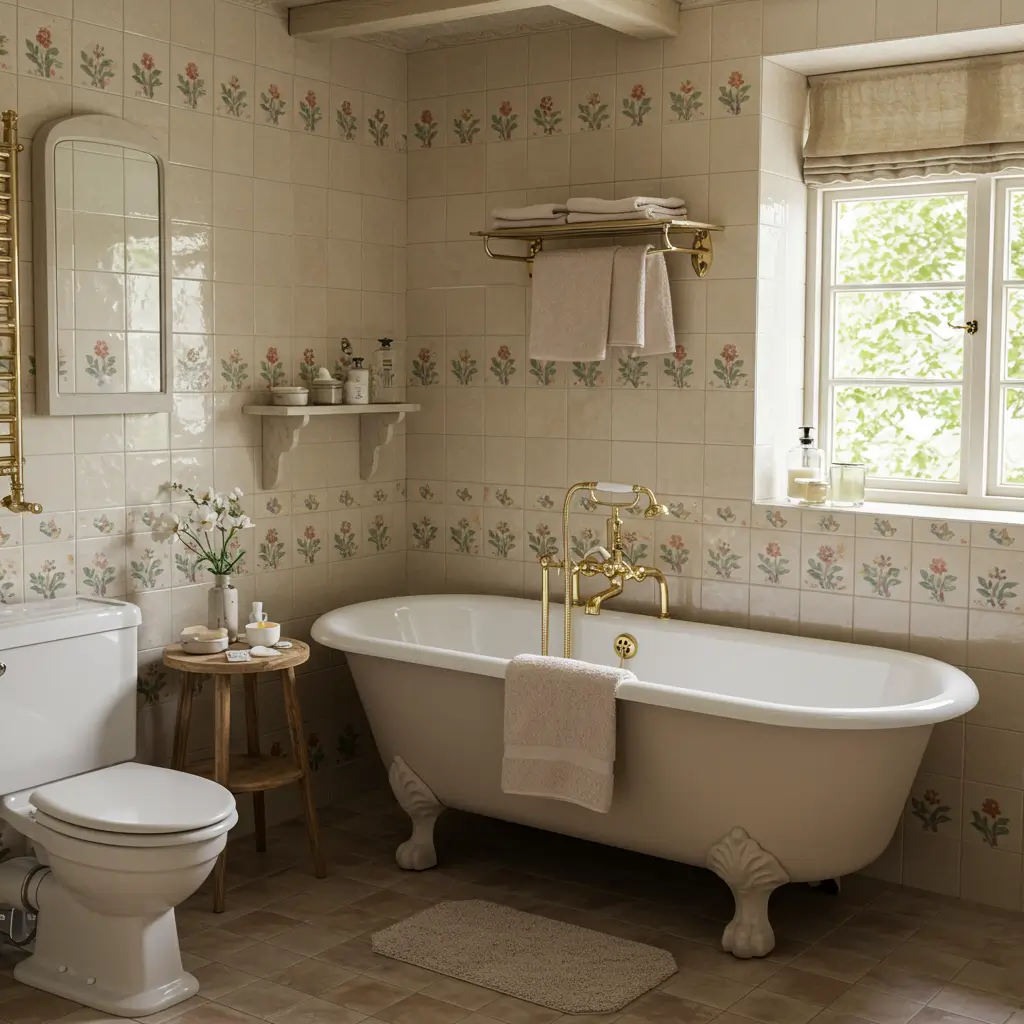
Florals and English cottage style go together like tea and biscuits. Tile offers a durable way to incorporate botanical patterns that won’t fade or peel over time.
Classic Floral Tile Options
Victorian encaustic tiles feature intricate floral patterns that have graced English homes for over a century. Modern reproductions capture the look without the restoration challenges. Hand-painted tiles offer one-of-a-kind botanical artwork.
Consider scale carefully—small spaces work better with smaller patterns or limited applications of larger motifs. An entire room covered in bold florals can overwhelm; a feature wall or floor border makes the statement without the chaos.
Where to Use Floral Tiles
Floors showcase patterns beautifully while keeping walls simple and serene. Backsplashes create focal points behind sinks and tubs. Feature walls announce your style dramatically.
I fell in love with Victorian geometric floral tiles and used them as a bath surround. The pattern draws the eye immediately upon entering and makes the simple clawfoot tub feel like the star of the room.
Balancing Florals with Solids
Complement floral patterns with solid-color tiles that pick up tones from the pattern. White metro tiles pair perfectly with almost any floral. Solid borders frame and contain busy patterns.
The goal involves featuring florals without overwhelming—let them star while supporting elements play backup.
Also Read: 10 Charming Cottage Bathroom Ideas and Small Space Hacks
7. Budget-Friendly English Cottage Bathroom Renovations
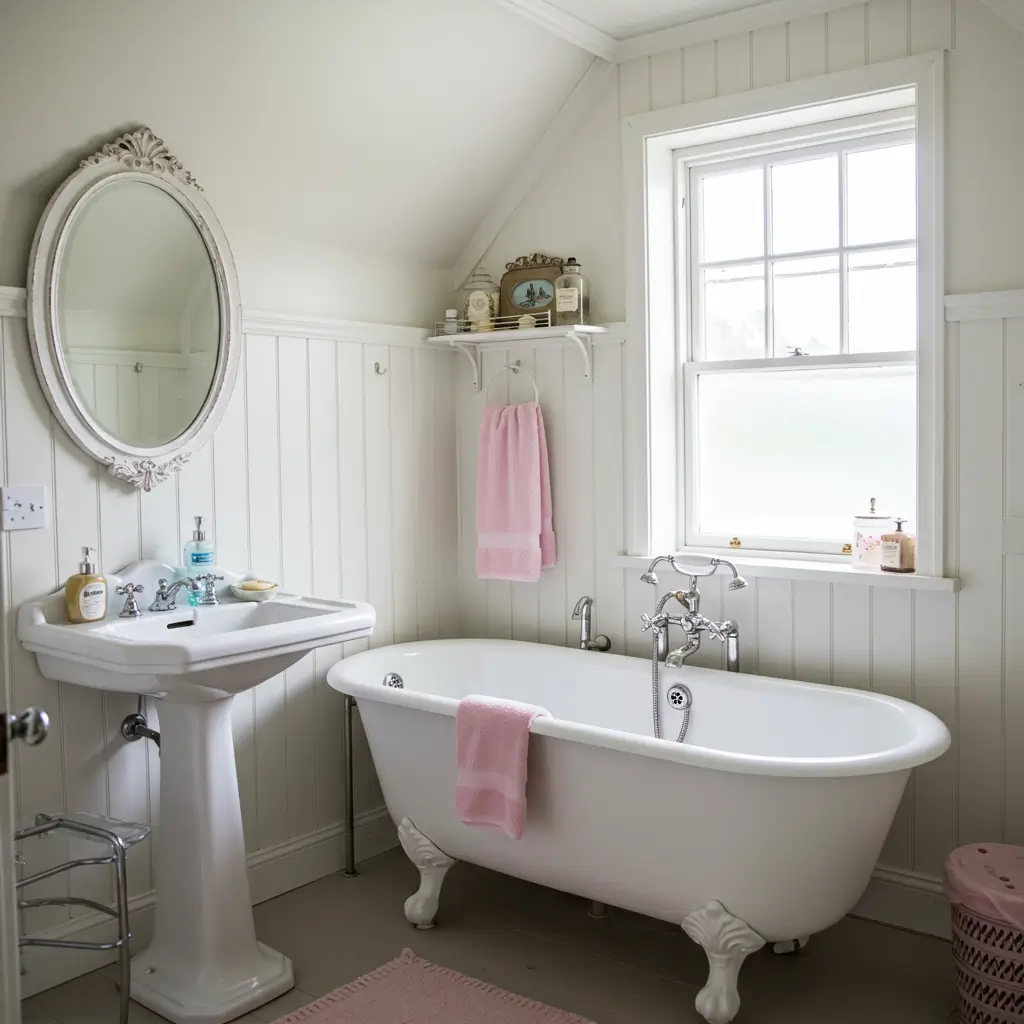
Creating cottage charm doesn’t require a country estate budget. Some of my favorite cottage bathrooms happened on shoestring finances with creativity substituting for cash.
High-Impact, Low-Cost Changes
Paint transforms everything for minimal investment. Swap fixtures and hardware for instant updates. Add cottage-style accessories for immediate character. These changes cost hundreds, not thousands.
Focus spending on what you see first—the vanity area, the main wall, the mirror. Save money on hidden elements and less visible corners.
Strategic DIY Projects
Build your own shelving from reclaimed wood. Paint and distress existing cabinets instead of replacing them. Create artwork from pressed flowers or vintage botanical prints. These projects add personal touch while saving serious money.
YouTube University teaches everything from tile installation to furniture painting. The skills you develop become investments that pay off across multiple projects.
Thrift Store Treasures
Vintage stores, estate sales, and salvage yards overflow with cottage bathroom potential. That tarnished brass fixture? Perfect with polish. The old window frame? Future medicine cabinet. Creativity unlocks value in items others overlook.
I furnished my entire powder room from thrift finds for under $150, and visitors constantly ask where I found such unique pieces.
8. Elegant Lighting Ideas for Cottage Bathrooms
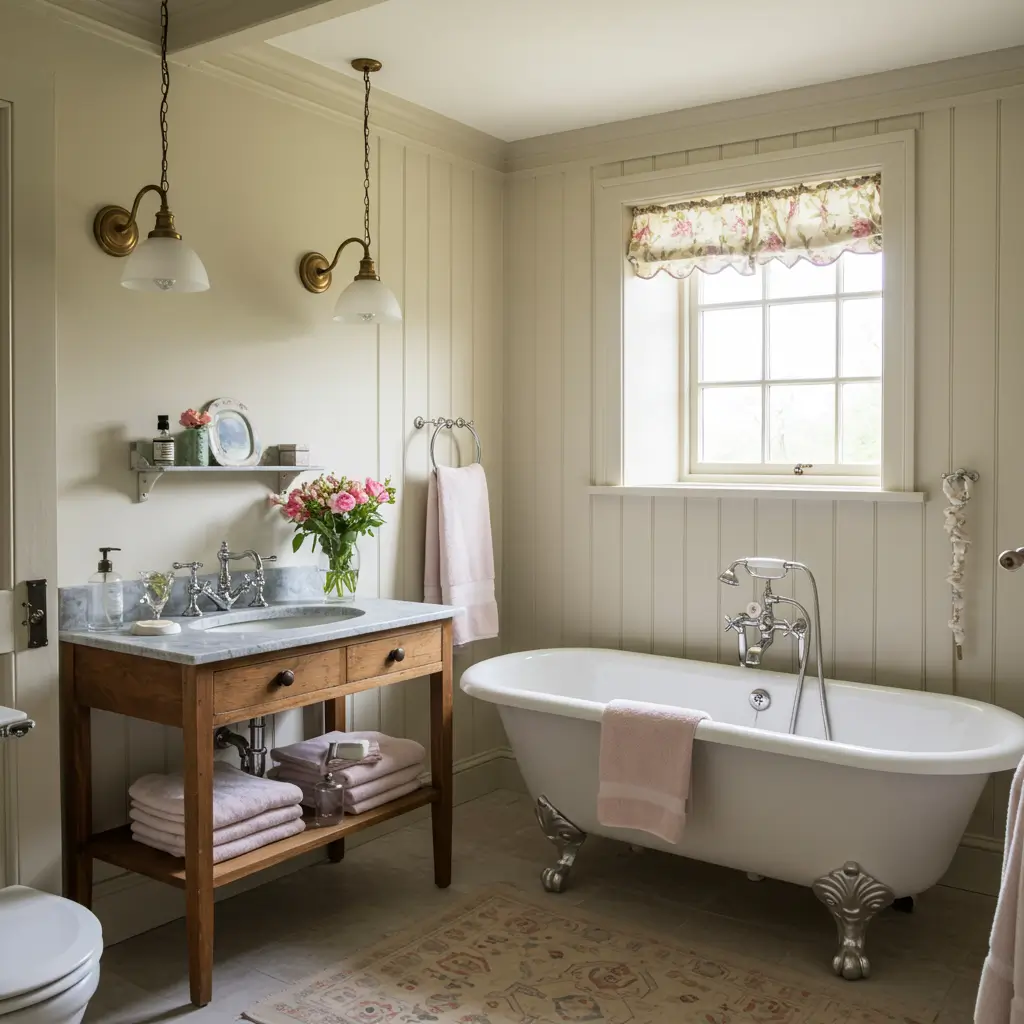
Lighting sets the mood, and English cottage bathrooms need illumination that flatters faces, creates ambiance, and enhances the romantic atmosphere.
Layered Lighting Approach
Combine multiple light sources for flexible, flattering illumination. Ambient lighting provides overall brightness. Task lighting at mirrors enables grooming. Accent lighting highlights architectural features and creates mood.
Dimmer switches allow adjustment throughout the day—bright for morning routines, soft for evening soaks. This single upgrade dramatically improves bathroom livability.
Vintage-Inspired Fixtures
Period-style sconces flank mirrors beautifully. Chandeliers (yes, really!) add unexpected glamour to cottage bathrooms. Pendant lights over tubs create dramatic focal points.
Look for fixtures with fabric shades that soften light, crystal elements that sparkle, or brass and nickel finishes that develop beautiful patina over time.
Candle Power
English cottage bathrooms embrace candle light enthusiastically. Tapers in vintage holders, pillars on window ledges, and floating candles in bowls all contribute to the romantic atmosphere.
Safety matters—never leave candles unattended, keep them away from flammable materials, and consider LED alternatives for worry-free ambiance.
9. Modern Meets Traditional: Cottage Bathroom Fusion
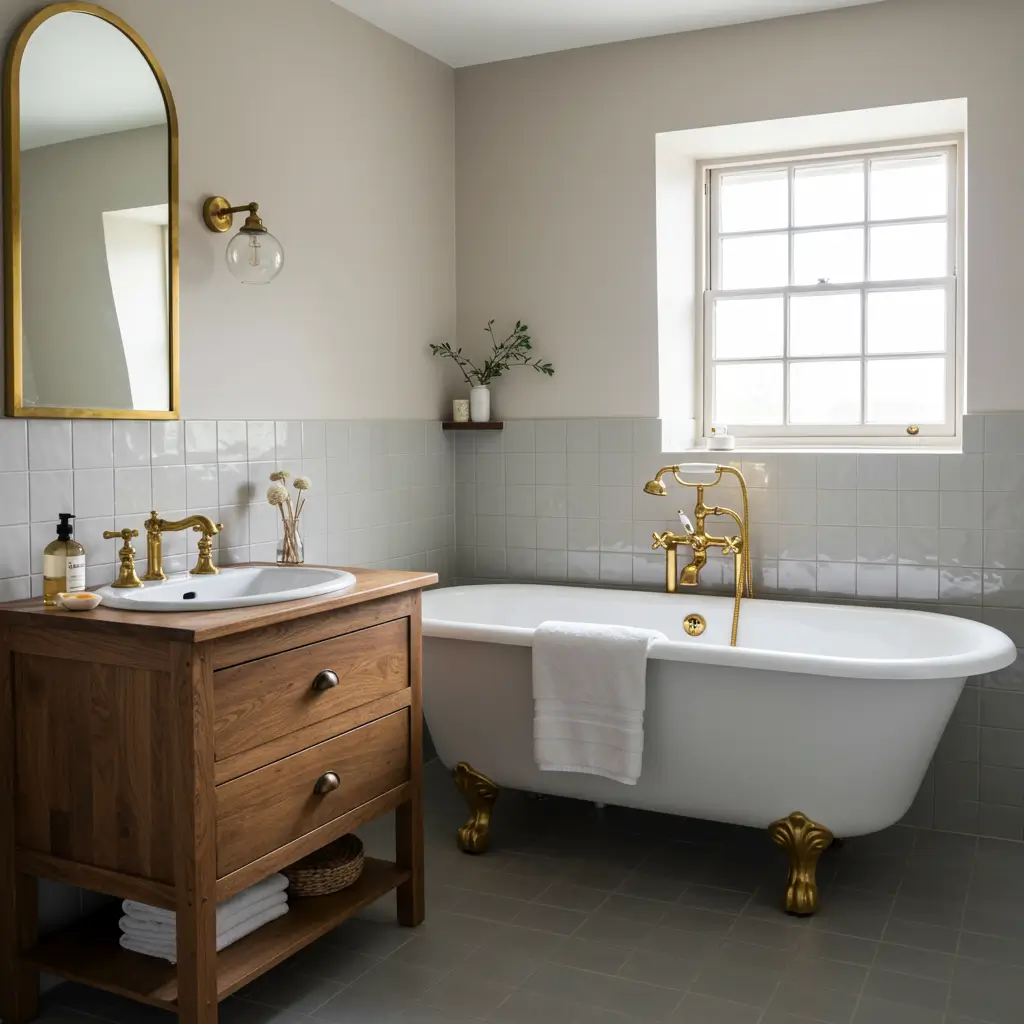
Pure period authenticity isn’t always practical—or desirable. The best contemporary cottage bathrooms blend traditional aesthetics with modern convenience for spaces that honor the past while serving the present.
Modern Conveniences in Traditional Packages
Underfloor heating warms cold tile floors without visible radiators. Thermostatic shower valves hide behind period-style trim. Dual-flush toilets conserve water while looking appropriately classic.
I absolutely insisted on a heated towel rail in my cottage bathroom—historically inauthentic but practically essential. The traditional design blends seamlessly while providing warm, dry towels every time.
Contemporary Materials, Classic Looks
Porcelain tiles replicate authentic Victorian encaustics without the maintenance challenges. Acrylic clawfoot tubs weigh far less than cast iron while looking identical. Engineered stone vanity tops resist staining better than original marble.
These materials serve modern life while maintaining the cottage aesthetic. Nobody needs to know your “marble” isn’t actually marble.
Technology Integration
Bluetooth speakers hide in vintage-style housings. Smart lighting responds to voice commands. Heated mirrors prevent fog without visible elements. Technology enhances rather than intrudes when thoughtfully incorporated.
IMO, the best cottage bathrooms feel timeless rather than period-specific—traditional enough to feel romantic, modern enough to function perfectly. :/
Also Read: 10 Unique Bathroom Door Design Ideas That Inspire Creativity
10. Storage Solutions for Small English Cottage Bathrooms
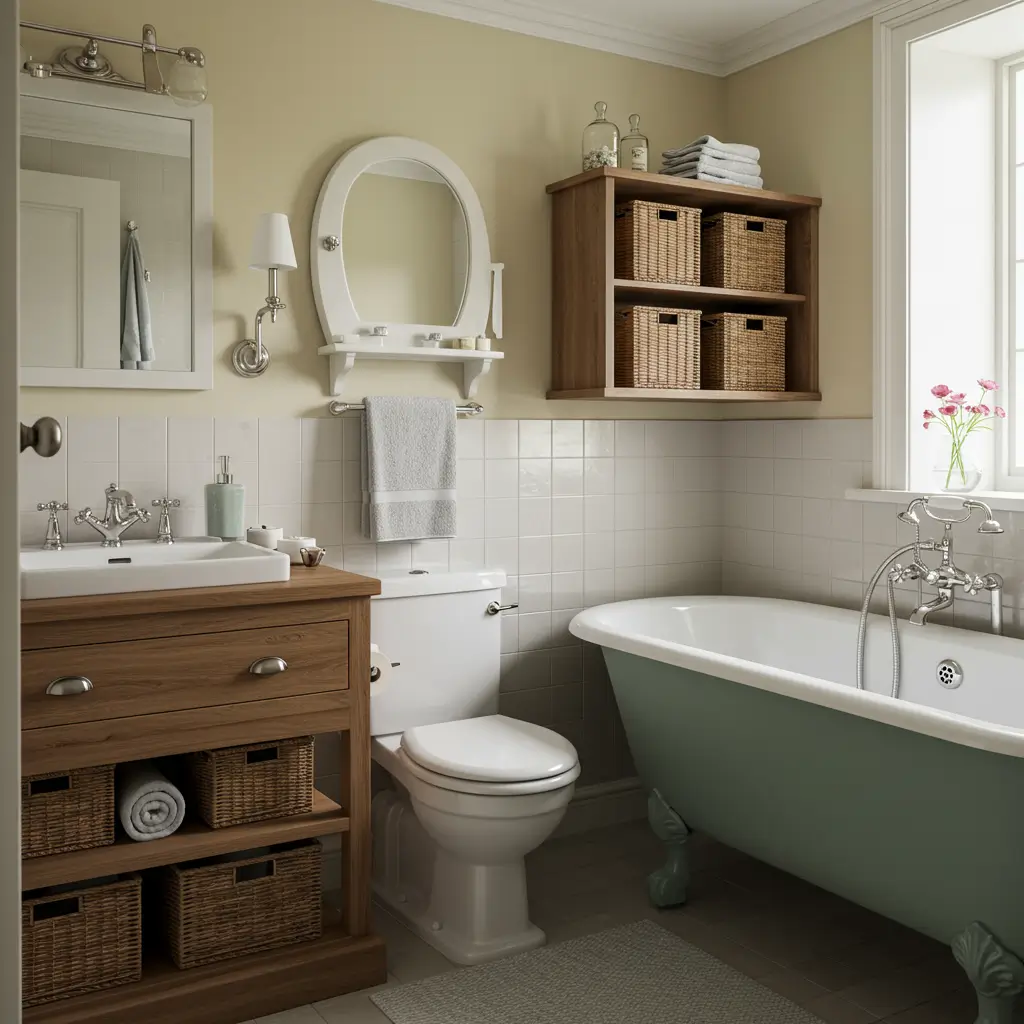
English cottage bathrooms demand creative storage that maintains character while containing clutter. These spaces shouldn’t look like they’re hiding chaos—they should feel effortlessly organized despite their modest dimensions.
Open vs. Closed Storage
Open shelving displays pretty items—folded towels, vintage bottles, potted plants—while keeping daily essentials accessible. Closed storage hides the less photogenic necessities—cleaning supplies, spare toilet paper, personal products.
Balance both types for function and aesthetics. Those beautiful apothecary jars on the open shelf? They’re actually hiding cotton balls and Q-tips.
Furniture Storage
Vintage furniture often incorporates storage beautifully. Old dressers convert to vanities with abundant drawer space. Linen cupboards hold towels and toiletries. Even small vintage cabinets provide hidden storage with character.
Look for pieces that fit your space precisely—cottage bathrooms rarely accommodate standard-sized furniture.
Vertical Solutions
Wall-mounted cabinets reach toward ceilings, using otherwise wasted space. Ladder shelving leans elegantly while providing multiple levels of storage. Over-door organizers hide out of sight but keep essentials accessible.
Don’t forget corners—triangular shelving and corner cabinets maximize these often-neglected areas.
Bringing English Cottage Magic to Your Bathroom
Creating an English cottage bathroom isn’t about achieving historical accuracy or matching magazine perfection.
It’s about capturing a feeling—warmth, romance, timelessness, and comfort that makes your daily routine feel special.
Start with elements that speak to you personally. Maybe that’s a gorgeous freestanding tub or perhaps just a vintage mirror and some pastel paint.
Build gradually, adding layers of character over time. The most authentic cottage bathrooms evolved slowly, and yours can too.
Whether you’re working with a tiny powder room or a generous master bath, the English cottage aesthetic adapts beautifully.
These spaces celebrate imperfection, embrace history, and prioritize atmosphere over sterile modernity.
Your perfect cottage bathroom exists somewhere between the pages of a Jane Austen novel and the realities of modern plumbing.
Find that balance, and you’ll create a space that makes every moment spent there feel like a small escape to the English countryside—without the dodgy heating and questionable wifi.
Now if you’ll excuse me, I have a date with a clawfoot tub and approximately seventeen candles. The rain has finally started, and my cottage bathroom moment has arrived!