10 Trendy Bathroom Sink Cabinet Ideas and Minimalist Design Tips
- Bathroom Design
 Ben
Ben- 0
- 48 minutes read
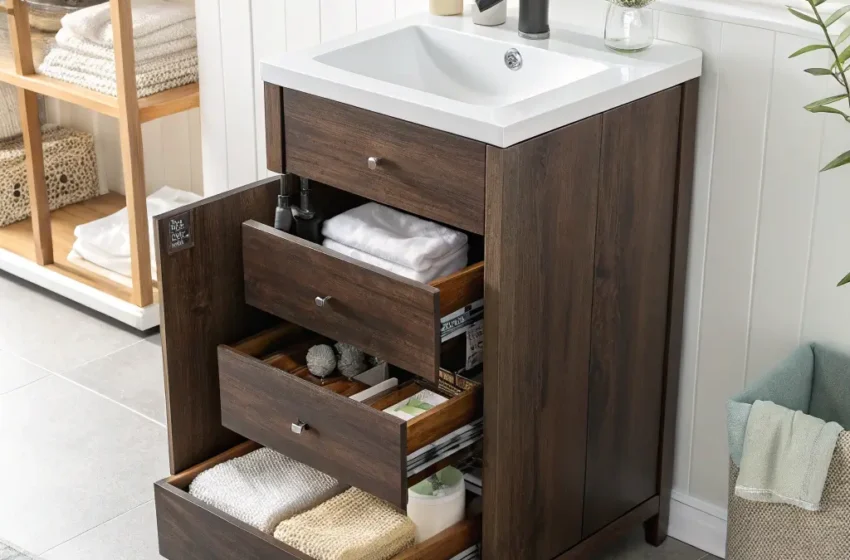
Your bathroom sink cabinet is basically the workhorse of your bathroom, silently suffering through toothpaste splatters, overflowing product collections, and that one time you tried to fix the plumbing yourself (we’ve all been there).
Yet most of us treat it like an afterthought—slapping in whatever builder-grade cabinet came with the house and calling it a day.
I lived with a sad, particle board vanity for three years before finally snapping and renovating. That flimsy cabinet with its broken drawer and perpetually sticky door haunted my mornings.
After transforming five different bathroom sink cabinets (yes, I have a problem, and yes, it’s called renovation addiction), I’ve discovered what actually works beyond just looking pretty in photos.
Let’s explore ten sink cabinet ideas that combine style, function, and the ability to survive real life.
1. Floating Vanity with Hidden Storage
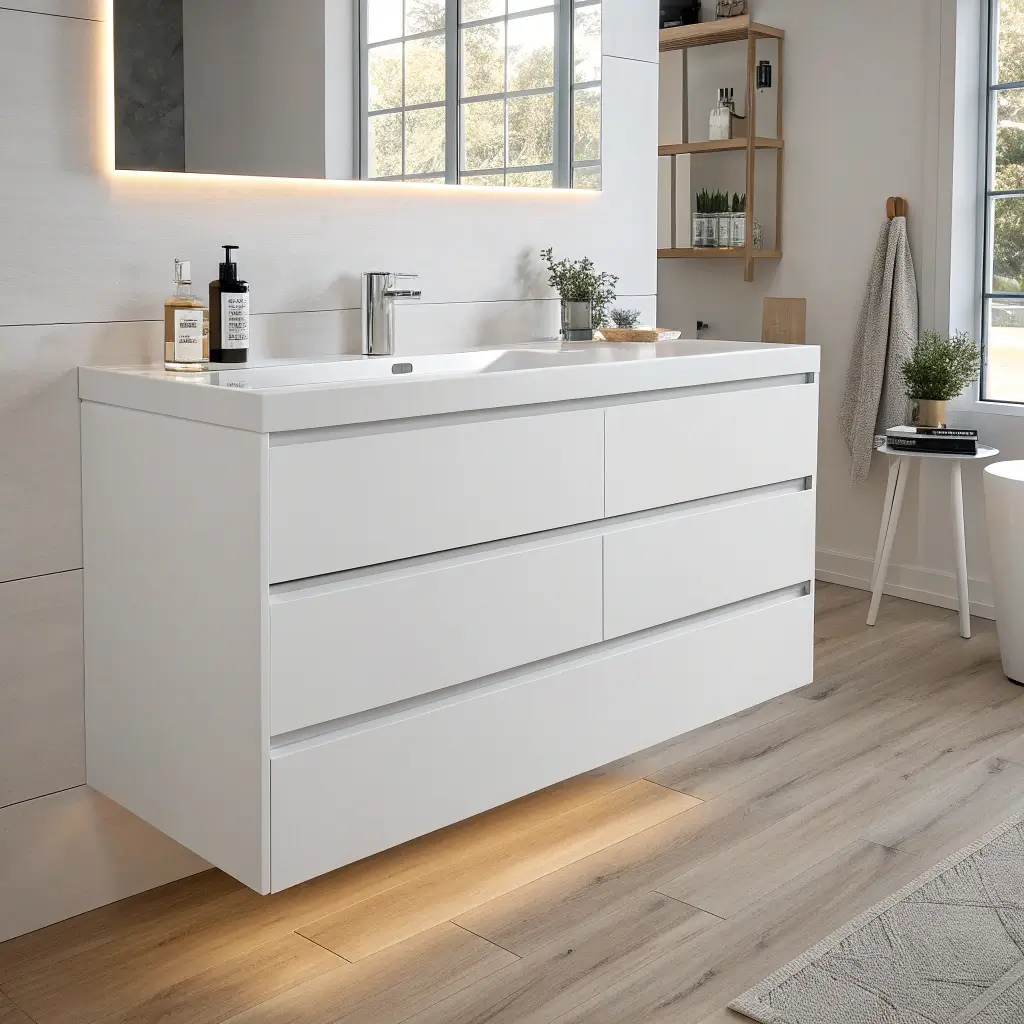
Floating vanities are like magic tricks for bathrooms—they create space where none existed and make even tiny bathrooms feel surprisingly roomy. I installed my first floating vanity in a bathroom so small that opening the door required strategic maneuvering, and suddenly the space felt twice as big.
The Science Behind the Float
Ever wonder why floating cabinets make bathrooms feel larger? It’s all about visual trickery. When you see uninterrupted floor space flowing beneath the cabinet, your brain interprets the room as more spacious. Plus, that exposed floor makes cleaning infinitely easier—no more weird dust bunnies collecting around cabinet bases.
I mounted mine 30 inches from the floor after extensive research (and measuring myself brushing teeth at various heights like a weirdo). The result? Perfect height for daily use and enough clearance underneath to make mopping actually possible.
Hidden Storage That Actually Hides
The “hidden storage” part sounds fancy, but it’s just smart design. My floating vanity features:
- Pull-out drawers with dividers (goodbye, jumbled makeup chaos)
- Hidden electrical outlets inside drawers (for charging toothbrushes and razors)
- Soft-close mechanisms (because 6 AM cabinet slams aren’t neighborly)
- Interior LED lighting (finally see what you’re grabbing)
- Magnetic strips on drawer sides (tweezers and scissors stay put)
The trick to maximizing hidden storage? Organizing vertically. I use drawer dividers religiously, creating specific homes for everything. Sounds obsessive? Maybe. But I can find my contact lens solution with my eyes closed now, which seems like peak adulting.
Installation Reality Check
Installing floating vanities requires proper wall support—trust me on this. My first attempt involved enthusiastically drilling into drywall, and three days later, the entire cabinet ripped from the wall at midnight. Nothing wakes you up quite like the sound of $400 worth of skincare hitting tile at 2 AM.
What you actually need:
- Studs (find them, don’t guess)
- Heavy-duty mounting brackets rated for the weight
- Professional help if you value your plumbing
- Level (crooked floating vanities look intentional to nobody)
- Patience and possibly wine
2. Rustic Wooden Sink Cabinet with Open Shelves
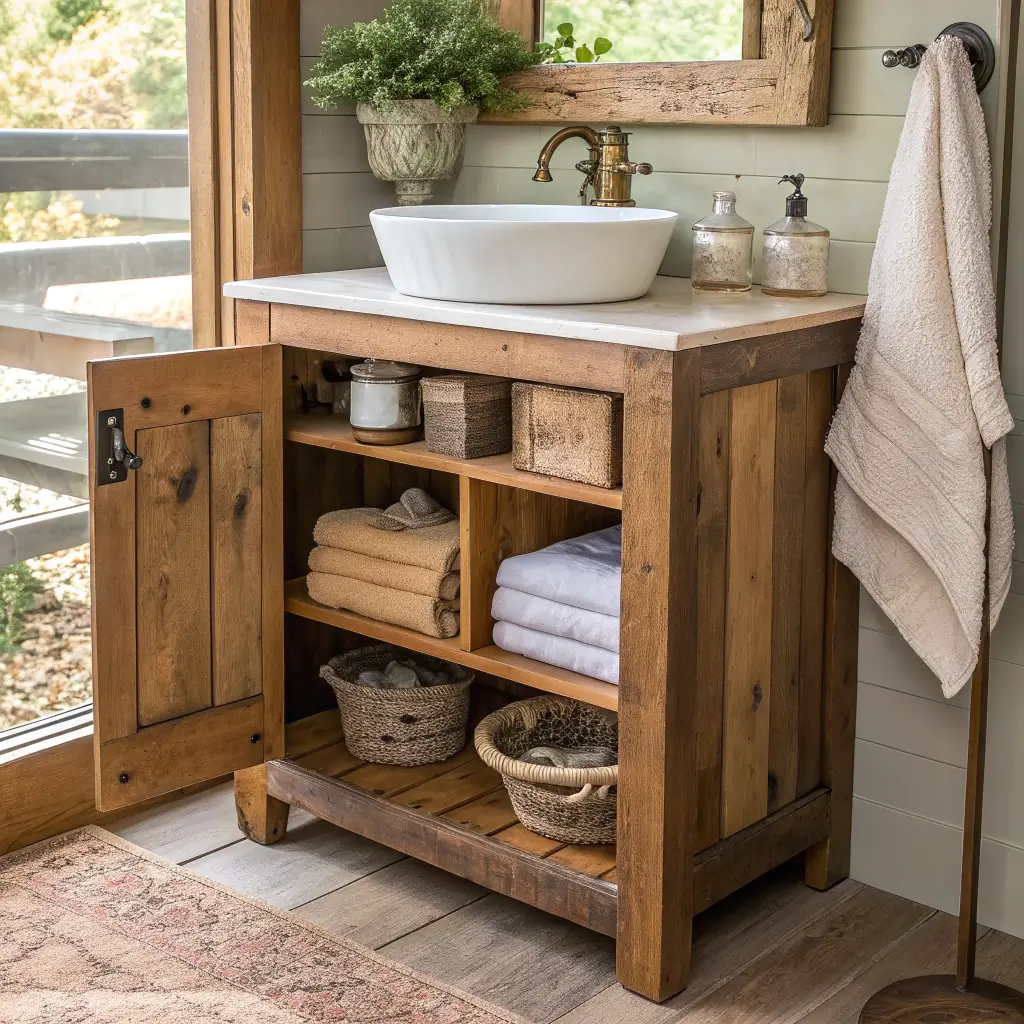
Rustic wooden cabinets bring warmth and character that sterile modern bathrooms desperately need. My current rustic vanity started life as an old farmhouse dresser I found at an estate sale for $80. After some conversion work, plumbing modifications, and protective sealing, it became my favorite bathroom feature.
Choosing Wood That Survives Bathrooms
Not all wood plays nice with humidity. I learned this expensive lesson when my beautiful pine cabinet warped into abstract art within six months. Choose moisture-resistant woods or seal everything within an inch of its life.
Best wood choices:
- Teak: Naturally water-resistant, expensive but worth it
- Cedar: Repels moisture and smells amazing
- Oak: Classic and durable when properly sealed
- Reclaimed barn wood: Character for days, needs serious sealing
- Walnut: Gorgeous and resilient with proper treatment
Open Shelving: The Love-Hate Relationship
Open shelves look amazing in photos and terrifying in real life if you’re messy (hi, it’s me). But here’s the secret—open shelving forces you to be organized. When everything’s visible, you can’t hide your chaos behind closed doors.
I use my open shelves for:
- Rolled white towels (instant spa vibes)
- Woven baskets holding products
- One small plant (because I’m fancy like that)
- Pretty soap dispensers
- Decorative containers for cotton balls
The ugly stuff? Hidden in the closed cabinet section below. Nobody needs to see my industrial-sized bottle of generic mouthwash.
Making Rustic Work in Modern Spaces
Worried rustic wood will clash with your sleek bathroom? Don’t be. Contrast creates visual interest. I paired my rustic cabinet with modern chrome faucets and white subway tile. The combination prevents my bathroom from looking like either a barn or a hospital—both vibes I actively avoid.
Balance rustic elements with:
- Contemporary hardware
- Clean-lined mirrors
- Modern lighting fixtures
- Simple, solid-color walls
- Sleek faucet designs
3. Modern Minimalist Cabinet with Matte Finish
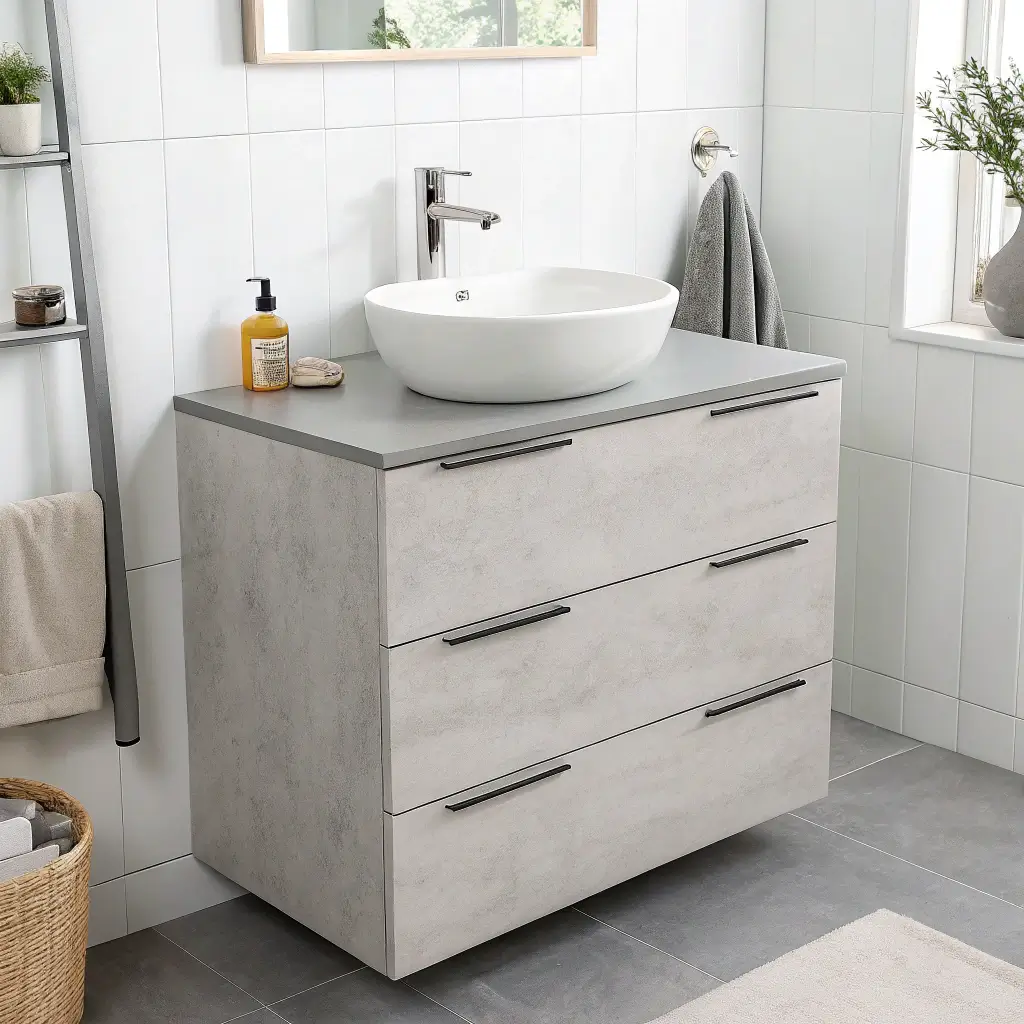
Minimalist cabinets changed my life—or at least my morning routine. When I switched from a cluttered traditional vanity to a sleek minimalist cabinet, I accidentally decluttered my entire bathroom. Turns out, when storage is limited and visible, you can’t hoard seventeen half-empty shampoo bottles.
The Minimalist Philosophy
Modern minimalist cabinets embrace clean lines, simple forms, and the radical idea that you don’t actually need storage for stuff you don’t use. Revolutionary, right? The matte finish adds sophistication without the high-maintenance drama of glossy surfaces.
Key minimalist features:
- Handleless push-to-open doors
- Integrated sinks (fewer crevices for grime)
- Hidden hardware
- Neutral colors (white, gray, black, natural wood)
- Simple geometric forms
Matte Finishes That Actually Last
I chose matte white for my minimalist cabinet after glossy white turned into a fingerprint museum within days. Matte finishes hide water spots, fingerprints, and the general chaos of daily use while still looking pristine.
Matte finish benefits:
- Hides minor imperfections
- Easier to maintain than glossy
- Sophisticated, modern appearance
- Doesn’t show water spots
- Softer, warmer feel than high-gloss
Living with Less (Storage)
Here’s the thing about minimalist cabinets—they work best when you’ve actually minimized your stuff. I spent a weekend purging before installing mine, tossing expired products, donating duplicates, and questioning every “backup” item I’d been hoarding.
My minimalist storage strategy:
- Keep only products I use weekly
- One backup of essentials only
- Multi-use products preferred
- Travel sizes for occasional items
- Ruthless quarterly decluttering
FYI, this approach saves money because you actually use what you buy instead of forgetting about it in cabinet depths.
Also Read: 12 Clever Bathroom Mirror Cabinet Ideas to Maximize Storage
4. Corner Sink Cabinet for Small Bathrooms
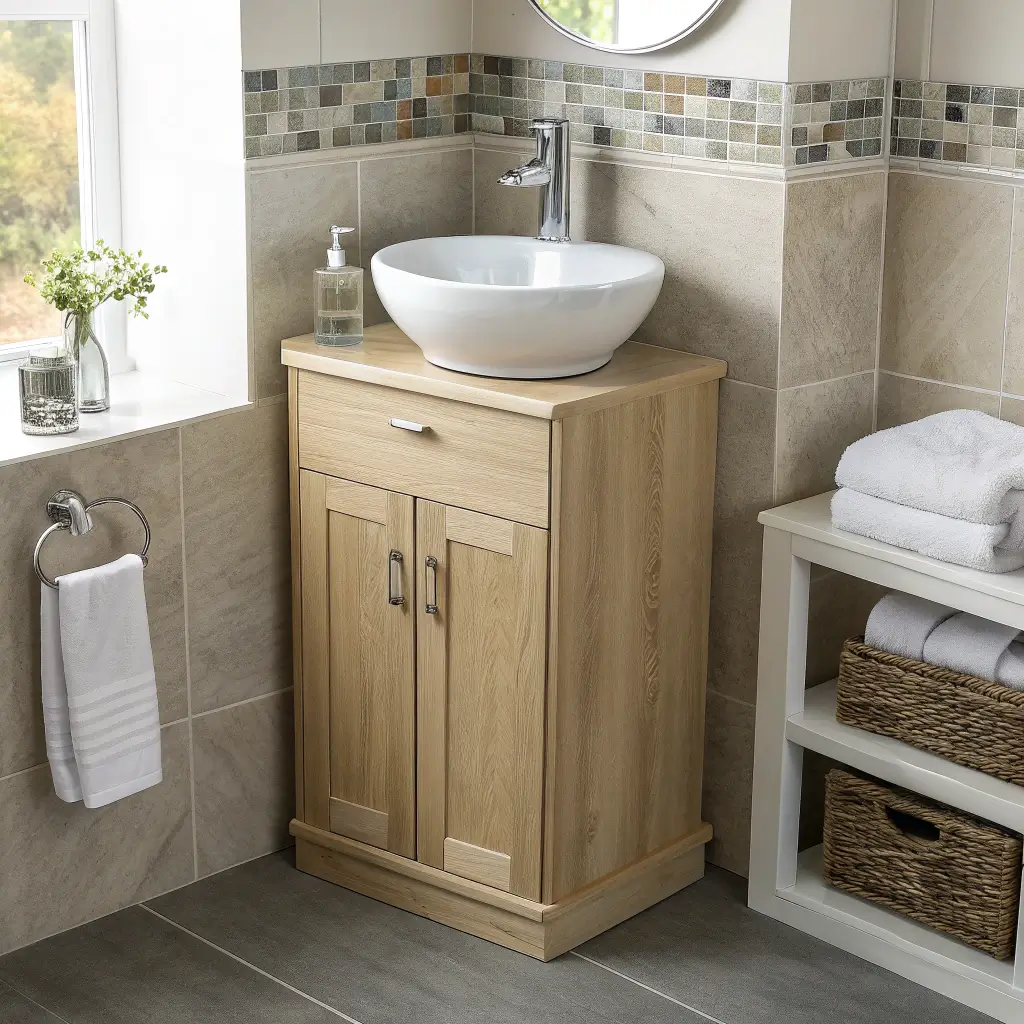
Corner sink cabinets are the ultimate space-saving ninjas. I installed one in a powder room so tiny that guests joked about feeling claustrophobic, and suddenly the room felt functional instead of suffocating.
Maximizing Awkward Corners
Corners are weird bathroom dead zones that collect dust and broken dreams. Corner sink cabinets transform that wasted space into functional storage. My corner cabinet holds everything a powder room needs while leaving the limited floor space actually walkable.
Why corner cabinets work:
- Utilize otherwise dead space
- Open up main wall areas
- Create better traffic flow
- Fit where standard cabinets won’t
- Make tiny bathrooms functional
Cabinet Configurations That Work
Corner cabinets come in different configurations, and choosing the wrong one turns your smart storage solution into an awkward mess. I tried a traditional square-corner cabinet first, and it jutted out so far that the bathroom door barely opened. Learn from my mistakes.
Diagonal corner cabinets: Angled front fits into corner, maximizes storage, easier to access than traditional corners, but requires specific measurements.
Wall-mounted corner units: Save floor space, float above the floor, modern aesthetic, limited storage capacity.
Compact corner pedestal sinks: Minimal footprint, work in tiny spaces, almost no storage, better than nothing.
Making Corner Installations Successful
Installing corner cabinets requires precision because you’re working with two walls and probably dealing with less-than-perfect corners. My bathroom corner measured 89 degrees instead of 90, which I discovered after buying the cabinet. Good times.
Installation tips:
- Measure corner angles (they’re rarely perfect)
- Check both walls for plumb and level
- Plan plumbing access carefully
- Consider door swing clearance
- Test fit before final installation
5. Vintage Cottage Bathroom Vanity Inspiration
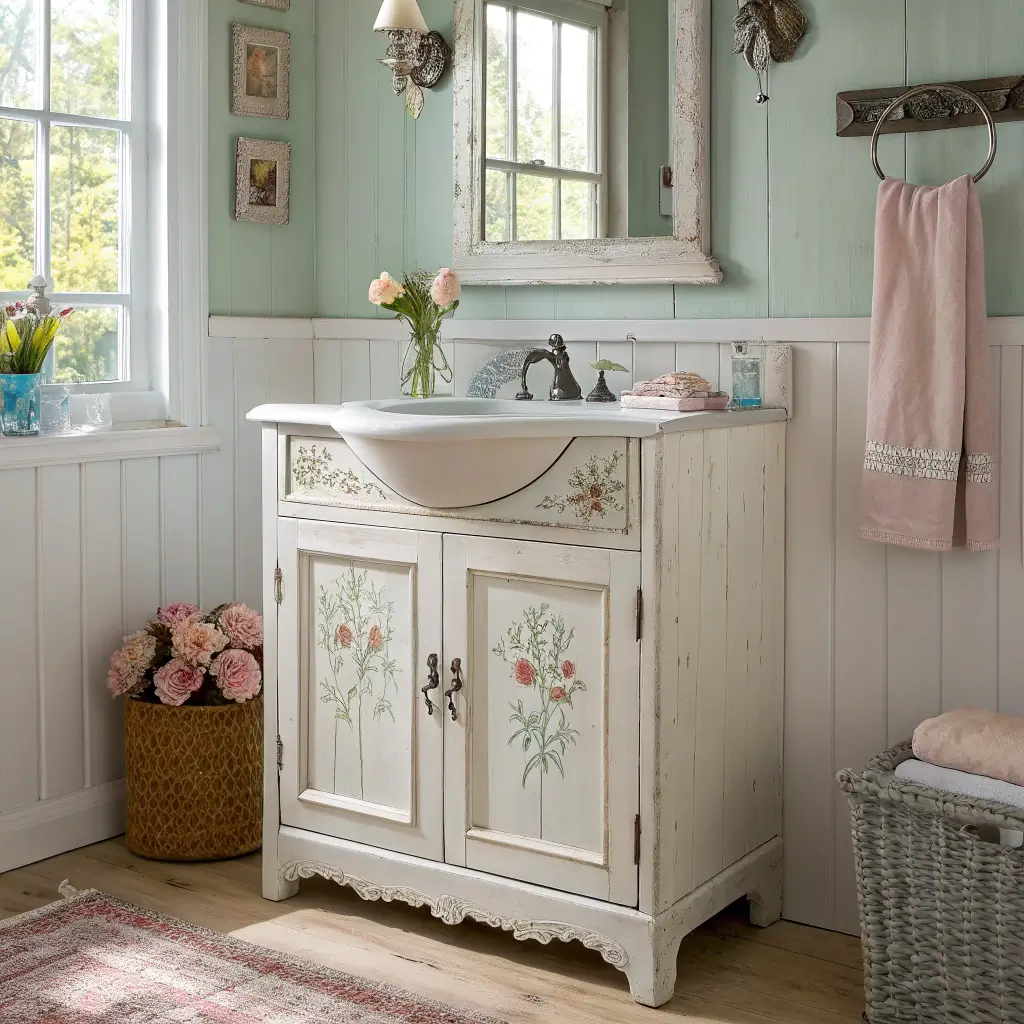
Vintage cottage vanities bring charm and character that new cabinets can’t replicate. My guest bathroom features a converted vintage washstand I found at a flea market, and guests always ask about it. There’s something magical about furniture with actual history.
Finding Authentic Vintage Pieces
Hunting for vintage vanities combines treasure hunting with gambling—you might score gold or total junk. I’ve experienced both. The “antique” vanity I bought online once arrived and was clearly particle board from the ’90s. Not exactly the vintage charm I envisioned.
Best sources for real vintage:
- Estate sales (arrive early, bring measurements)
- Architectural salvage yards (my happy place)
- Antique shops (expect higher prices)
- Auctions (set a firm budget first)
- Facebook Marketplace (scroll daily, move fast)
Converting Furniture to Vanities
Turning vintage furniture into functional vanities requires planning and possibly professional help. I attempted my first conversion armed with YouTube tutorials and confidence. The result? Functional but with, uh, character (translation: I messed up some measurements).
Conversion considerations:
- Height works for sink installation (30-36 inches ideal)
- Depth accommodates plumbing
- Structure handles moisture and weight
- Drawers can be modified for plumbing
- Surface accepts sink cutout
Protecting Vintage in Humid Spaces
Vintage furniture needs protection to survive bathroom humidity. I didn’t seal my first vintage vanity properly, and six months later the wood had swollen and finish had clouded. Expensive lesson learned.
Protection requirements:
- Multiple coats of marine-grade sealant
- Regular resealing schedule
- Immediate water cleanup
- Good bathroom ventilation
- Periodic conditioning treatments
6. Double Sink Cabinet with Built-In Organizers
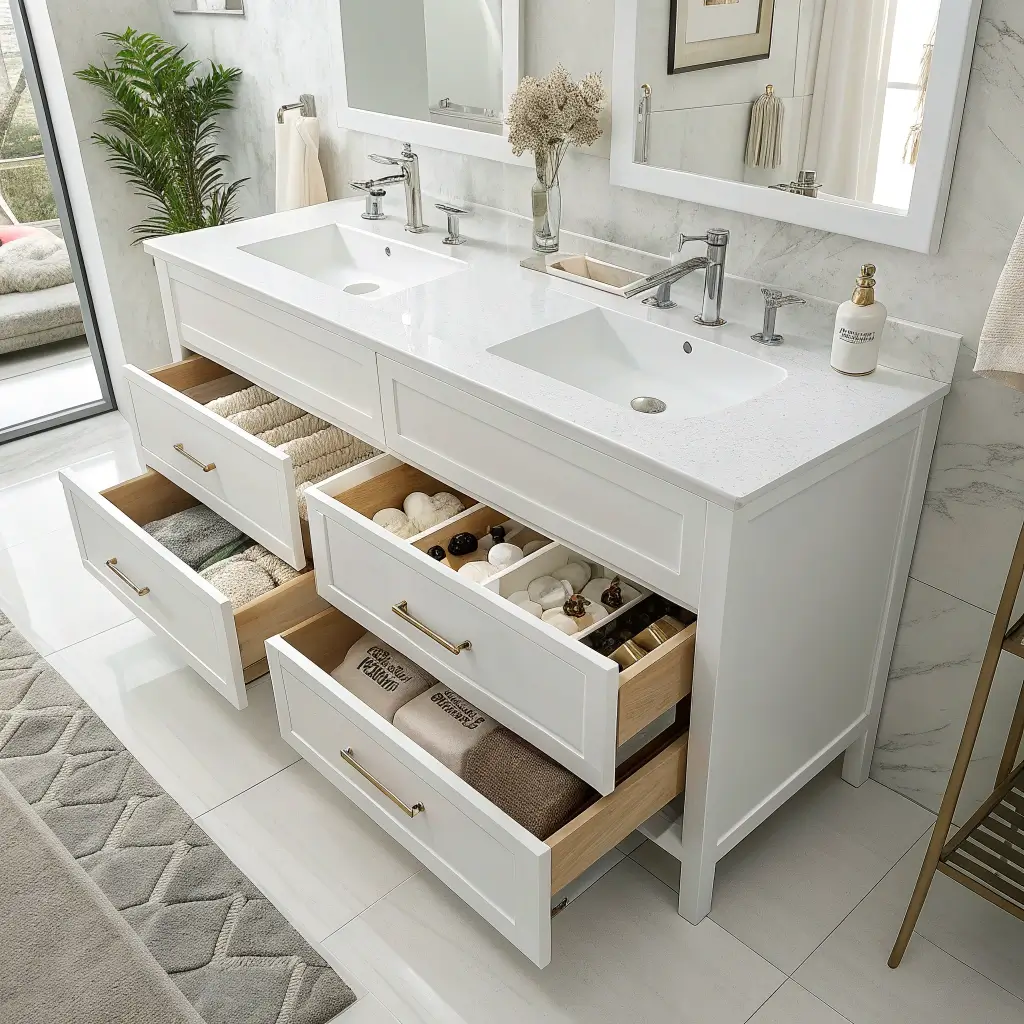
Double sink cabinets saved my relationship—or at least prevented some morning arguments. Sharing one sink with my partner meant negotiating counter space daily and passive-aggressively moving each other’s products. Double sinks eliminated the bathroom territory wars.
When Double Sinks Make Sense
Double sinks aren’t just for couples. They’re for anyone who values bathroom efficiency and doesn’t want to wait for sink access. But they require space—my first bathroom was too small, and cramming in double sinks made everything feel claustrophobic.
Consider double sinks when:
- Bathroom is at least 60 inches wide
- Multiple people share the bathroom
- You value simultaneous use
- Storage needs are substantial
- Resale value matters (buyers love double sinks)
Built-In Organization Systems
The beauty of modern double sink cabinets? Built-in organizers that prevent the chaos that comes with shared storage. My cabinet includes customized sections for each person’s stuff, eliminating the “where’s my toothbrush?” mystery.
Smart organizational features:
- Divided drawers (his, hers, shared)
- Pull-out organizers (no more diving into dark cabinets)
- Tiered interior drawers (maximize vertical space)
- Designated zones for categories
- Electrical outlets inside drawers
Choosing Between One Large Cabinet or Two Separate
Double sink cabinets come in two configurations, and the choice affects both aesthetics and function. I chose one continuous cabinet initially but later wished I’d gone with two separate units for easier installation and more flexibility.
Single large cabinet: Unified look, shared storage in center, professional appearance, harder to install, limited customization.
Two separate cabinets: Easier installation, individual storage, flexibility in placement, modern look, potential for misalignment.
Also Read: 10 Modern Bathroom Storage Cabinet Ideas for Sleek Spaces
7. Compact Cabinet with Pull-Out Drawers
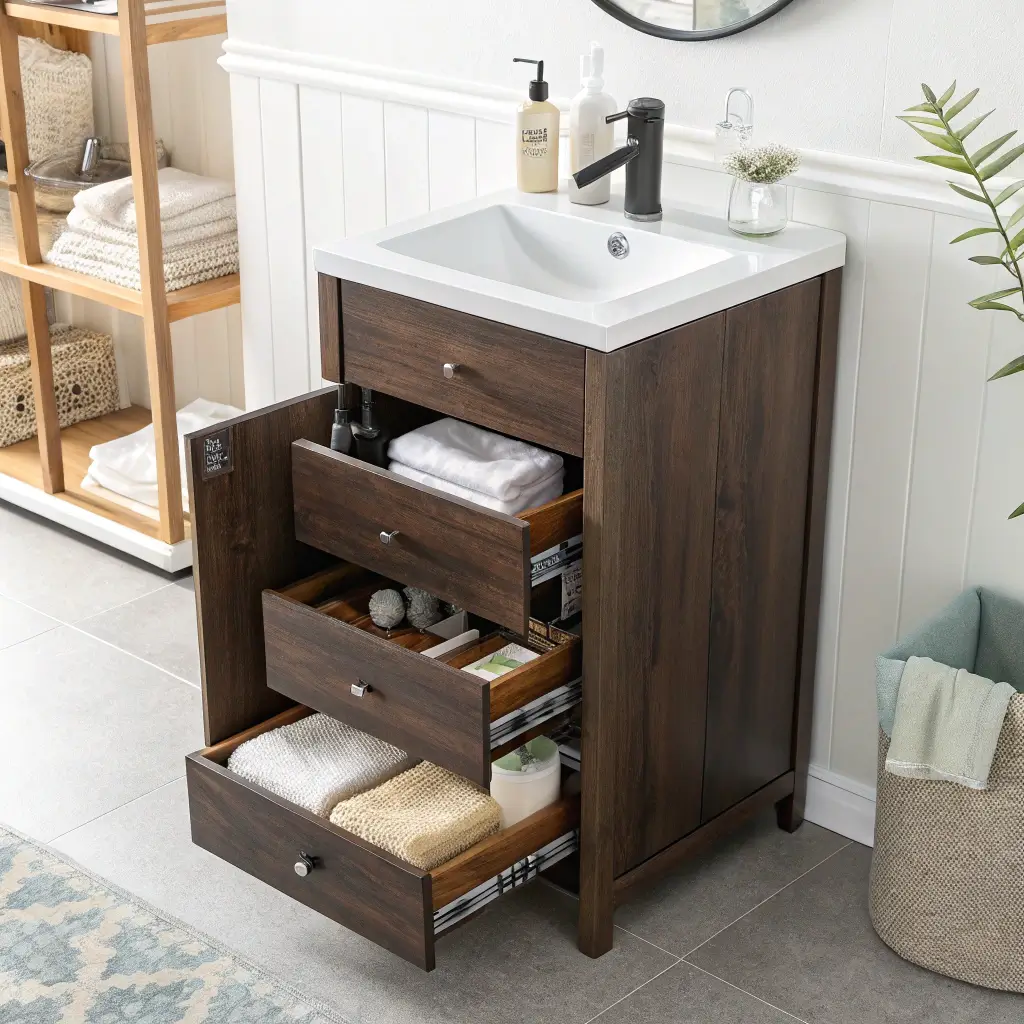
Pull-out drawers revolutionized my bathroom storage game. No more kneeling on cold tile, contorting myself to reach products hiding in dark cabinet corners. Everything pulls out to eye level—revolutionary? Maybe not. Life-changing? Absolutely.
Why Pull-Outs Beat Shelves
Fixed shelves in cabinets create dead zones where products disappear into darkness. I once found a bottle of expensive serum that had been missing for a year, expired and forgotten in the back corner. Pull-out drawers eliminate this frustrating product graveyard.
Pull-out advantages:
- See everything at once
- Access back items easily
- No dark corners for products to hide
- Better use of vertical space
- Elderly-friendly (no bending or reaching)
Custom Organization Within Drawers
Pull-out drawers are only as good as their organization. I installed drawer dividers in every single pull-out, creating zones for different categories. Sounds obsessive? Perhaps. But I can find anything in three seconds, even before coffee.
My organization system:
- Top drawer: Daily skincare and makeup
- Second drawer: Hair products and tools
- Third drawer: Medications and first aid
- Bottom drawer: Backup supplies and bulk items
- Interior dividers in all drawers
DIY Pull-Out Installation
Adding pull-out drawers to existing cabinets is totally doable as a DIY project. I converted my old fixed-shelf cabinet to pull-outs over one weekend using hardware store drawer slides and some basic tools.
What you’ll need:
- Drawer slide hardware (measure depth carefully)
- Boxes or drawers that fit your cabinet
- Drill and screws
- Level (crucial for smooth operation)
- Patience (first installation takes practice)
8. Sleek White Cabinet with Gold Accents
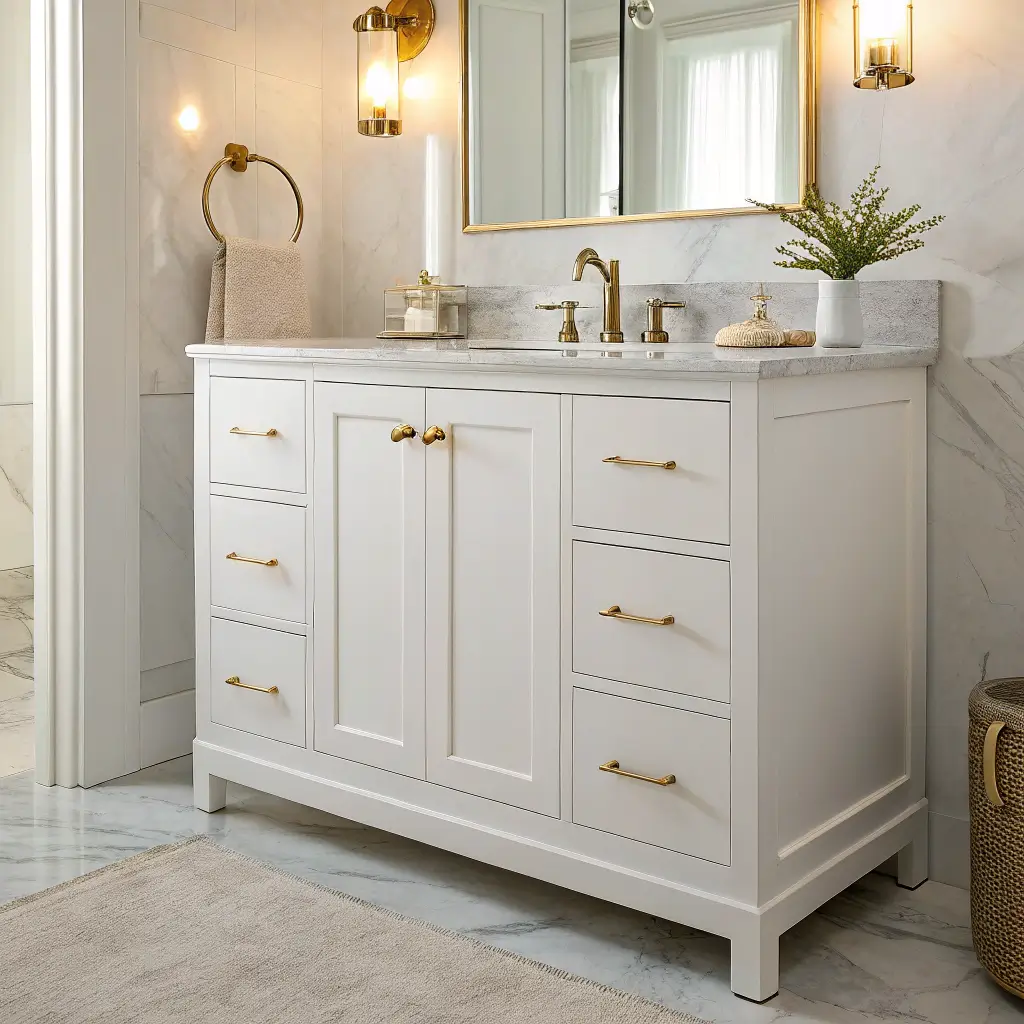
White cabinets with gold accents walk the line between classic and trendy, traditional and modern. I installed mine during a bathroom refresh, and the combination of crisp white and warm gold turned my boring bathroom into something magazine-worthy.
The Timeless Appeal of White
White bathroom cabinets never go out of style—they’re the little black dress of bathroom design. But not all whites are created equal. I learned this after painting my cabinet “pure white” and discovering it looked stark and cold under my bathroom lighting :/
Choosing the right white:
- Warm whites: Cream undertones, cozy feel, works with gold
- Cool whites: Gray undertones, modern feel, can feel sterile
- Off-whites: Softer than pure white, forgiving with age
- Antique whites: Slight yellow cast, vintage vibe
Gold Accents That Elevate
Gold hardware transforms basic white cabinets into something special. I upgraded from builder-grade chrome to brass pulls, and the difference was remarkable. Suddenly my basic cabinet looked like a design choice instead of a budget constraint.
Where to add gold:
- Drawer pulls and knobs
- Faucet fixtures
- Mirror frame
- Light fixtures
- Towel bars and hooks
- Decorative accessories
Mixing Metals Successfully
Can you mix gold with other metals? Absolutely—despite what design “rules” claim. My bathroom mixes brass hardware with chrome plumbing fixtures, and it looks intentional rather than confused.
Successful metal mixing:
- Choose one dominant metal (70% gold)
- Add one accent metal (30% chrome)
- Keep finishes similar (all matte or all shiny)
- Distribute mixed metals throughout space
- Trust your eye over rigid rules
9. Eco-Friendly Bamboo Bathroom Sink Cabinet
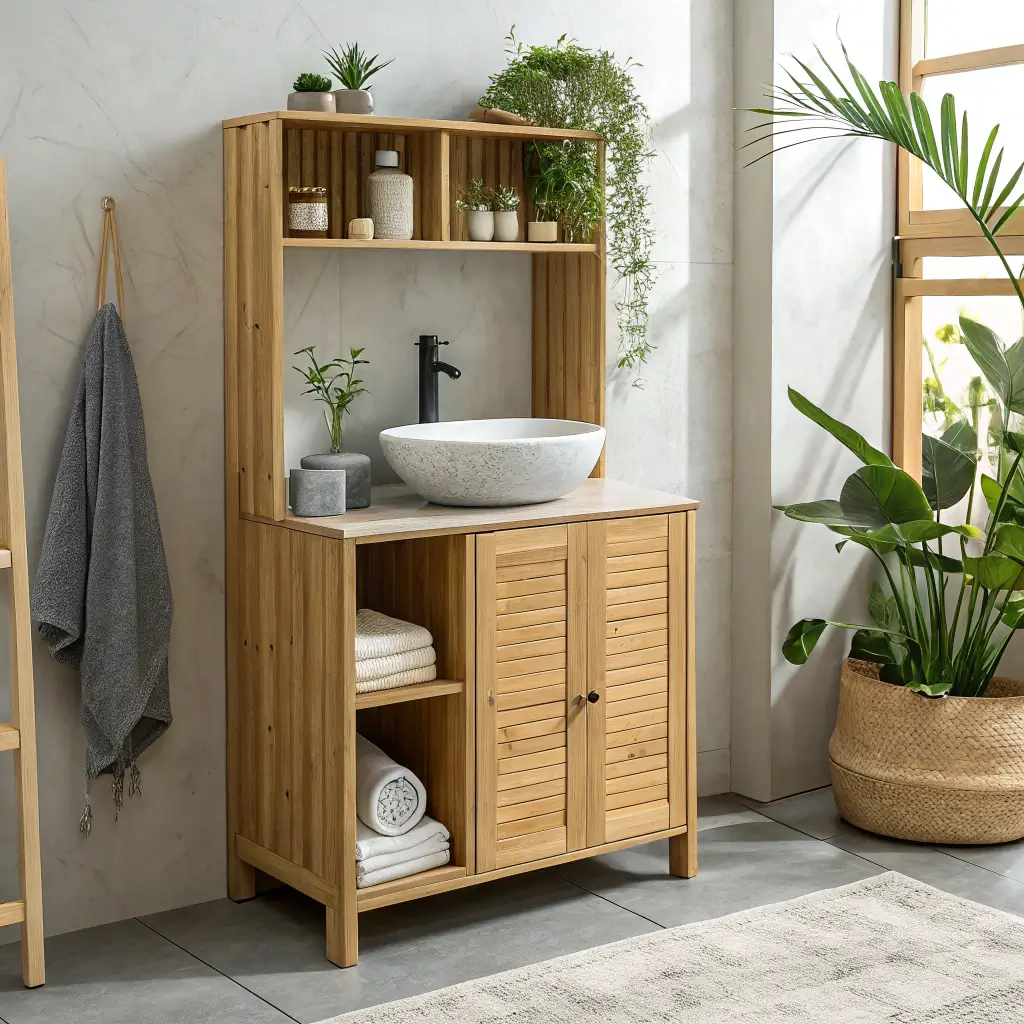
Bamboo cabinets bring sustainability to bathroom design without sacrificing style. I installed one in my master bath renovation, and it’s held up beautifully while making me feel slightly less guilty about my environmental impact.
Why Bamboo Makes Sense
Bamboo grows faster than traditional hardwoods, making it a renewable resource. But beyond the environmental benefits, bamboo is actually really practical for bathrooms. It naturally resists moisture better than many woods, which means less warping and swelling in humid environments.
Bamboo benefits:
- Rapidly renewable resource
- Naturally moisture-resistant
- Unique grain pattern
- Durable and hard-wearing
- Sustainable harvesting practices
Quality Matters with Bamboo
Not all bamboo cabinets are created equal. I almost bought a cheap bamboo vanity before discovering it used formaldehyde-based adhesives—defeating the whole eco-friendly purpose. Quality bamboo cabinets use water-based, low-VOC finishes and adhesives.
What to look for:
- Solid bamboo construction
- Low-VOC or no-VOC finishes
- Water-based adhesives
- Certification (FSC or similar)
- Quality hardware included
Styling Bamboo Cabinets
Bamboo’s natural warmth pairs beautifully with other natural materials. I combined mine with white marble countertops, brushed nickel fixtures, and lots of plants. The result feels organic and spa-like instead of trying too hard to be eco-conscious.
Complementary elements:
- Natural stone countertops
- Plants (real ones if you can keep them alive)
- Natural fiber baskets
- Wood or bamboo accessories
- Earth-tone color palette
Also Read: 12 Simple Bathroom Cabinet Organization Ideas and DIY Tricks
10. Industrial Style Cabinet with Metal Legs
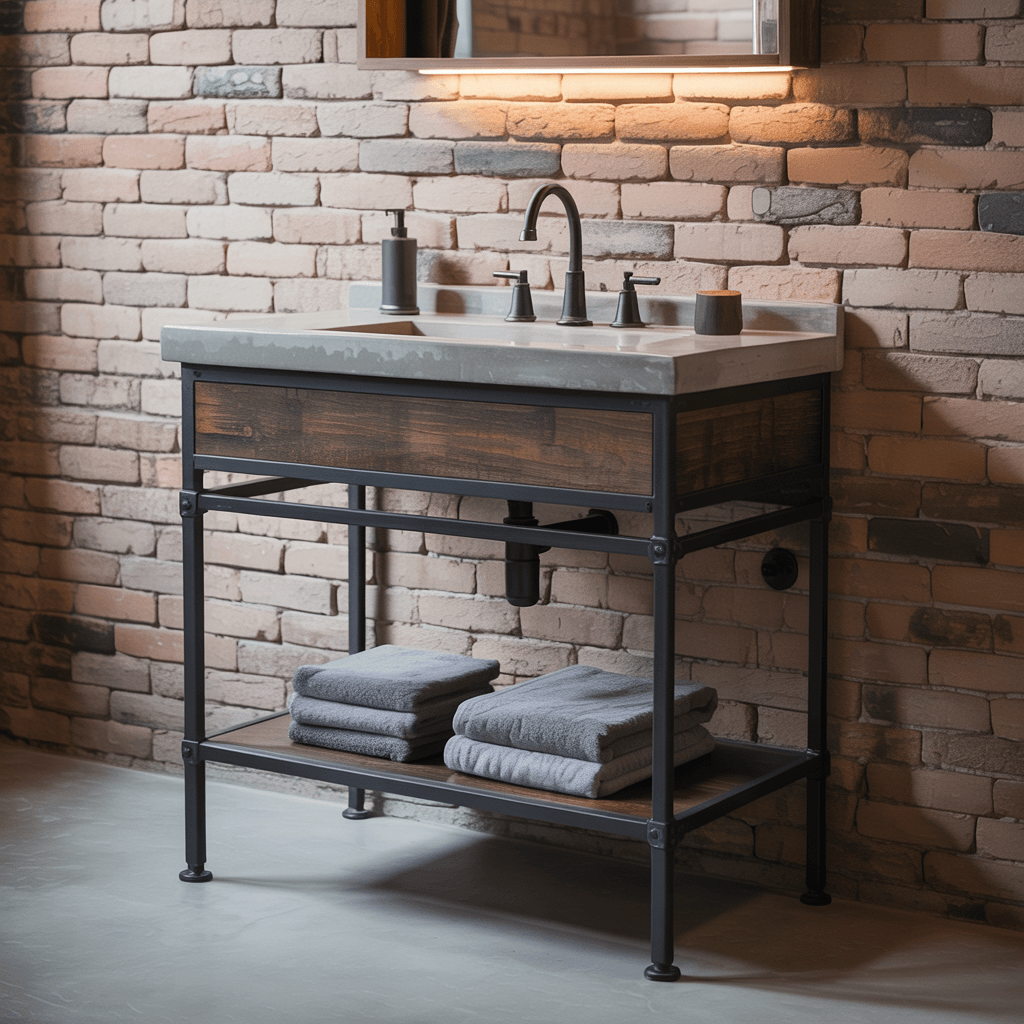
Industrial sink cabinets bring edge and character to bathrooms that traditional cabinets lack. I added one to my loft bathroom renovation, and it perfectly captures that urban-warehouse aesthetic I was chasing.
Capturing Industrial Aesthetic
Industrial style walks a fine line between cool and cold. The key? Balancing hard materials with warm elements. My industrial cabinet features black metal legs and a reclaimed wood top, combining toughness with warmth.
Essential industrial elements:
- Metal legs or frames (black, raw steel, or iron)
- Wood or concrete tops
- Minimal ornamentation
- Utilitarian hardware
- Exposed pipes (if you’re brave)
Metal Legs That Work in Bathrooms
Not all metal survives bathroom humidity. I chose powder-coated steel for my cabinet legs after researching corrosion resistance. Three years later, they still look perfect despite daily exposure to steam and splashes.
Best metal options:
- Powder-coated steel: Durable, rust-resistant, color options
- Stainless steel: Won’t rust, modern look, higher cost
- Cast iron: Incredibly sturdy, vintage appeal, needs sealing
- Aluminum: Lightweight, corrosion-resistant, less sturdy feel
Balancing Industrial and Comfort
All industrial elements make bathrooms feel cold and unwelcoming. IMO, the best industrial bathrooms mix hard edges with soft elements. I balance my metal-legged cabinet with plush towels, warm lighting, and plenty of wood accents.
Softening touches:
- Warm wood elements
- Soft textiles (towels, rugs)
- Ambient lighting
- Plants and greenery
- Warm paint colors
Creating Your Perfect Sink Cabinet Setup
Choosing the right bathroom sink cabinet isn’t about following trends or copying Pinterest—it’s about finding what works for your space, your style, and your actual life.
I’ve installed ten different sink cabinets across various bathrooms, and the best one is always the one that makes your daily routine easier while bringing you joy when you see it.
Start by honestly assessing your needs. Do you need tons of storage or just basics? Are you sharing with a partner who has their own product collection?
Is your bathroom tiny or spacious? Match your cabinet choice to your reality, not your fantasy bathroom that exists only in magazine spreads.
Remember, your sink cabinet is the foundation of your bathroom’s functionality. Choose wisely, install properly (or hire someone who will), and don’t settle for something that frustrates you daily just because it matches your towels.
Life’s too short for annoying cabinets.
Whether you go floating and minimalist, rustic and charming, or industrial and edgy, make it yours. Your bathroom sink cabinet should work with your life, not against it.
Now go create a bathroom setup that makes your morning routine something you actually look forward to—or at least something you don’t actively dread. That’s the dream, right?