
12 Cozy Bathroom Linen Cabinet Ideas for Modern Homes
- Bathroom Design
 Ben
Ben- 0
- 44 minutes read
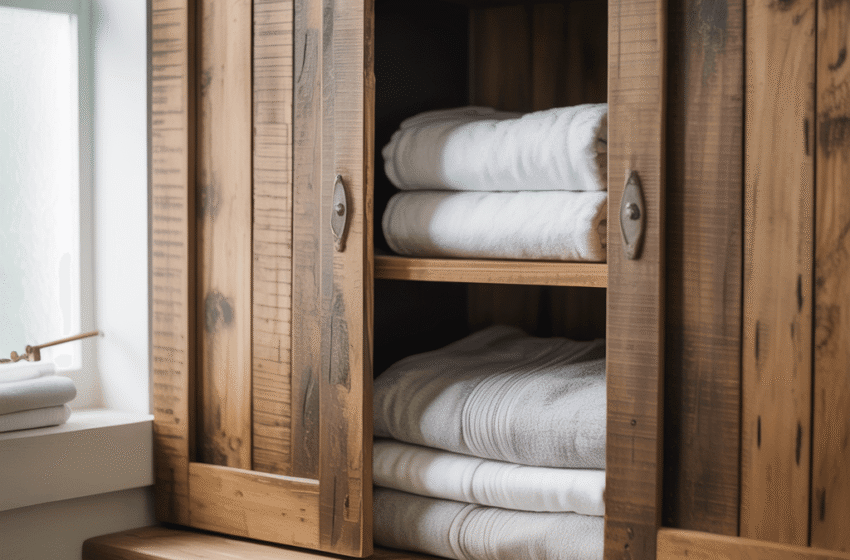
Your bathroom linens are living in chaos, aren’t they? Towels stuffed wherever they fit, washcloths playing hide-and-seek, and that fancy guest set you bought three years ago is… somewhere.
I get it. My linen situation was so bad that I once found a beach towel from 2019 crammed behind the toilet. Not my proudest moment.
After wrestling with linen storage in five different bathrooms (yes, I move a lot), I’ve finally cracked the code on what actually works. Spoiler alert: it’s not shoving everything into that tiny under-sink cabinet and hoping for the best.
Let’s explore twelve linen cabinet ideas that’ll transform your bathroom from textile disaster zone to organized oasis—and maybe even make folding towels feel less like punishment.
1. Tall Slim Floor-to-Ceiling Linen Cabinet
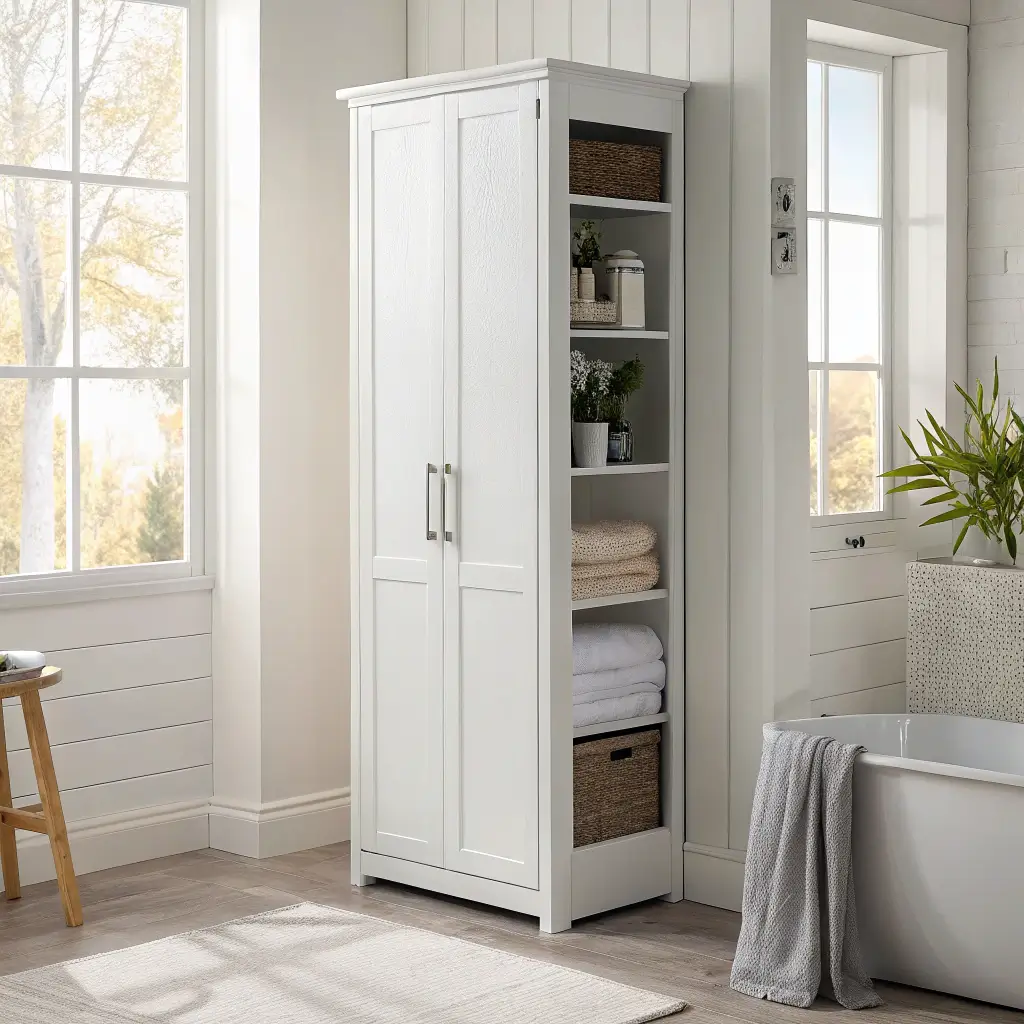
Vertical storage changed my bathroom game entirely. I installed a tall, slim linen cabinet that stretches from floor to ceiling in just 18 inches of floor space. This skinny tower holds more linens than my old hall closet, and I’m not even exaggerating.
Why Vertical Storage Wins
Think about it—most bathrooms have more vertical space than horizontal. Yet we keep trying to cram everything into low, wide cabinets that eat up precious floor real estate. My tall cabinet uses that ignored upper wall space, storing twelve bath towels, countless washcloths, and even my collection of “fancy” hand towels that only come out when my mother-in-law visits.
The best part? Everything stays at the right humidity level. Towels stored up high stay fresher longer because heat rises and takes moisture with it. Who knew physics would actually help with laundry storage?
Choosing the Right Tall Cabinet
Not all tall cabinets work in bathrooms. I learned this after my first particle board disaster literally fell apart after six months of bathroom humidity. Now I know better.
What to look for:
- Moisture-resistant materials (solid wood, treated MDF, or quality laminate)
- Adjustable shelves for different towel sizes
- Depth of at least 12 inches for folded bath towels
- Anti-tip hardware (tall = potentially tippy)
- Ventilation gaps or breathable backing
Maximizing Tall Cabinet Storage
Organization makes or breaks tall storage. I arrange mine by frequency of use—daily towels at eye level, guest linens up high, and beach towels in the no-man’s land at the very top. Each shelf has a purpose, and yes, I have a tiny label maker. Judge me all you want, but I never lose towels anymore.
My shelf arrangement:
- Eye level: Daily bath towels
- Waist level: Hand towels and washcloths
- Lower shelves: Kids’ towels (they can reach)
- Upper shelves: Guest linens
- Top shelf: Seasonal or rarely used items
2. Recessed Wall Linen Cabinet
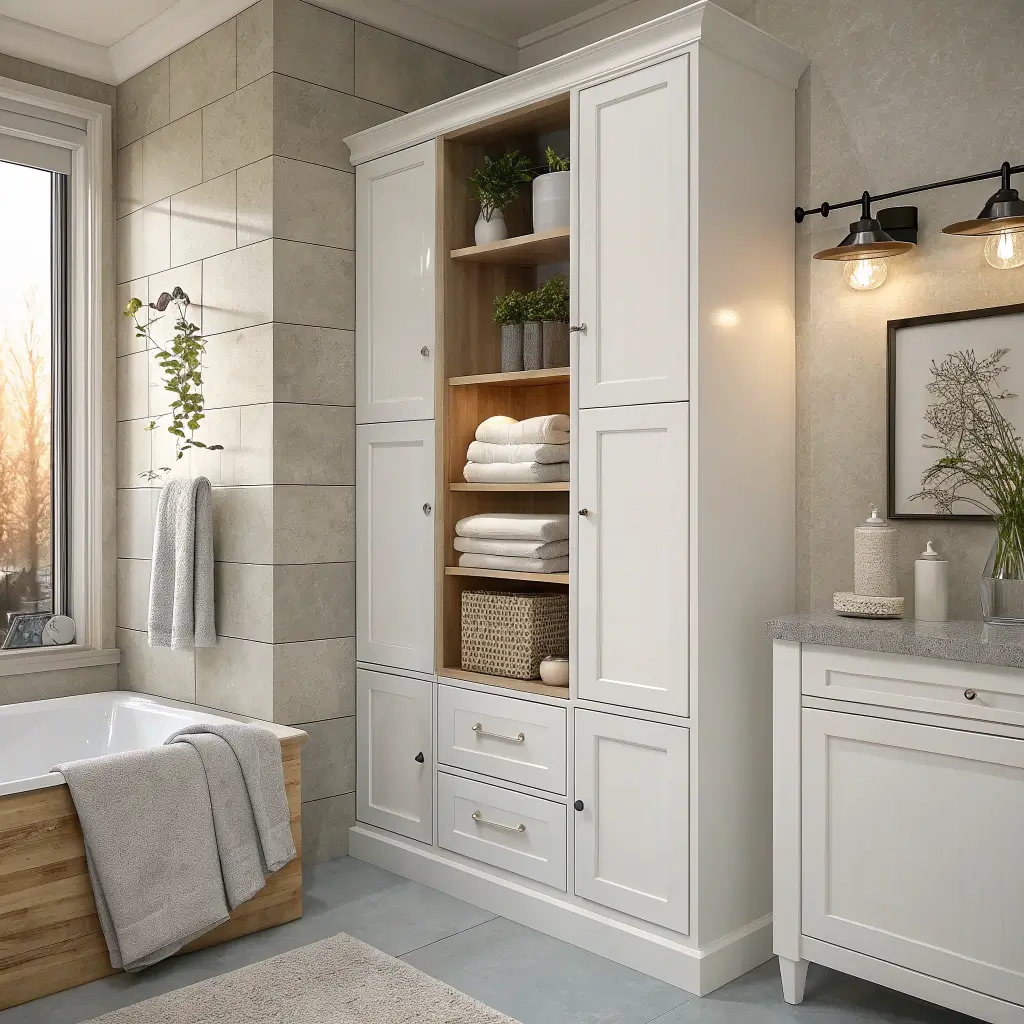
Recessed linen cabinets are like finding secret square footage in your walls. I discovered this magic when renovating my master bath—suddenly, I had a full linen closet hiding inside what used to be dead space between studs.
The Hidden Storage Revolution
Your walls are hiding approximately 3.5 inches of storage space between every stud. That might not sound like much, but multiply it by the height and width of a wall section, and you’ve got serious storage potential. My recessed cabinet holds six full sets of towels without protruding a single inch into the bathroom.
Installing recessed storage requires cutting into walls, which scared me initially. What if I hit plumbing? What if the walls collapsed? (Spoiler: walls don’t just collapse, but anxiety doesn’t care about logic.) I hired a contractor for the first one, watched carefully, then tackled the second myself.
Installation Reality Check
Let’s be honest about what recessed installation involves. You need to find the studs, check for plumbing and electrical, cut drywall precisely, frame the opening, and install the cabinet. It’s not a casual Sunday project unless you have serious DIY skills.
What you’re really dealing with:
- Stud finder (a good one, not the lying cheap one)
- Careful measurement of the wall cavity
- Potential rerouting of electrical or plumbing
- Drywall repair skills
- Proper framing knowledge
Making Recessed Storage Work
The key to recessed linen storage? Shallow shelves that maximize the limited depth. My shelves are only 3.5 inches deep, but rolled towels fit perfectly. It’s like Tetris, but with terry cloth.
3. Freestanding Vintage Linen Armoire
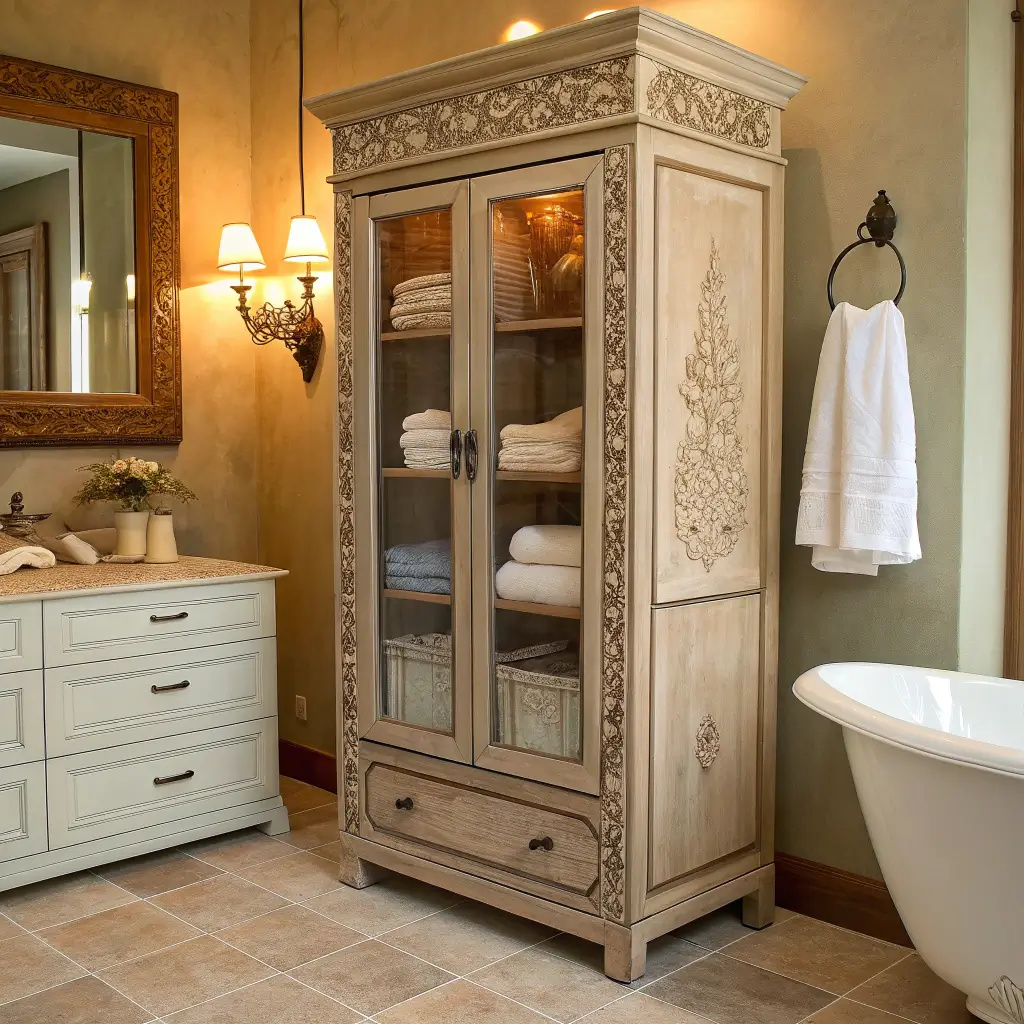
Sometimes you need storage that makes a statement, and nothing does that quite like a vintage armoire repurposed for linens. I found mine at an estate sale—a massive oak beast that probably weighs more than my car but holds every piece of linen I own with room to spare.
The Armoire Advantage
Armoires offer something built-ins can’t: flexibility. When I move (which happens more than I’d like to admit), my armoire comes with me. No renovation required, no holes to patch, just load it on a truck and go. Plus, it’s furniture that happens to store linens, not just storage that happens to exist.
My armoire has deep shelves, drawers at the bottom, and even a little secret compartment I discovered six months after buying it. Now it holds my “emergency chocolate” stash. Don’t judge—everyone needs bathroom chocolate sometimes.
Finding Your Perfect Vintage Piece
Hunting for the perfect armoire is part treasure hunt, part endurance test. I looked at probably twenty before finding “the one.” Some were too big, some too small, and one memorably smelled like my grandmother’s basement (not in a good way).
Where to find vintage armoires:
- Estate sales (get there early)
- Antique malls (pricier but more selection)
- Facebook Marketplace (scroll daily)
- Auctions (set a budget first!)
- Consignment shops (hidden gems)
Converting Armoires for Linen Storage
Most vintage armoires weren’t designed for bathroom linens. Mine came with a single rod for hanging clothes and one lonely shelf. Converting it took some creativity and a drill.
I added:
- Multiple adjustable shelves
- Cedar lining for freshness
- Battery-powered LED strips
- Small dehumidifier in the bottom
- Drawer dividers for washcloths
Also Read: 10 Space-Saving Bathroom Built In Cabinet Wall Storage Ideas for
4. Open-and-Closed Combo Linen Cabinet
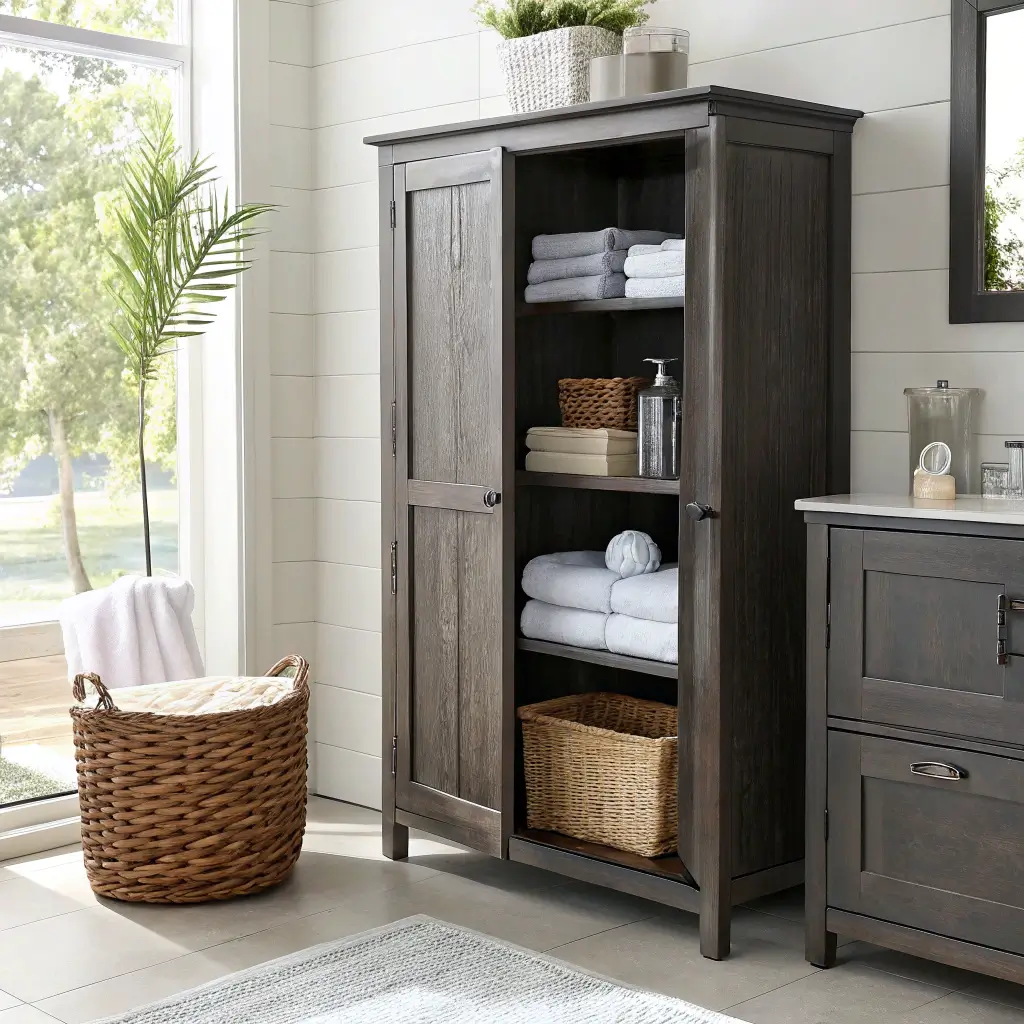
Why choose between displaying your pretty towels and hiding your ratty ones? My combo cabinet does both—open shelves for the Instagram-worthy linens, closed storage for everything else. It’s basically the mullet of storage solutions: business up front, party in the back.
The Best of Both Worlds
Open shelving looks amazing in photos but terrifying in real life if you’re not naturally neat. (Hi, it’s me, I’m not naturally neat.) The combo approach lets me display my nicest towels while hiding the mismatched washcloths and that beach towel with the embarrassing cartoon character my kid insists on keeping.
My setup:
- Top open shelves: Rolled white spa towels
- Middle closed section: Everyday towels
- Bottom open cubbies: Decorative baskets
- Hidden drawers: The towel graveyard
Styling Open Linen Storage
Open shelves require strategy. I learned this after my first attempt looked like a linen closet exploded. Now I follow strict rules that keep the open sections photo-ready while the closed parts handle real life.
Open shelf rules:
- Uniform folding or rolling (pick one, stick with it)
- Color coordination (or all white for easy mode)
- Leave breathing room (overcrowding looks messy)
- Add one non-linen element (plant, candle, etc.)
- Rotate displays seasonally
Organizing the Hidden Sections
Behind those closed doors, anything goes—almost. I still organize because digging through towel mountains at 6 AM isn’t fun. But the standards are relaxed. Mismatched sets? Fine. Imperfect folding? Nobody’s looking.
5. Corner Linen Storage Tower
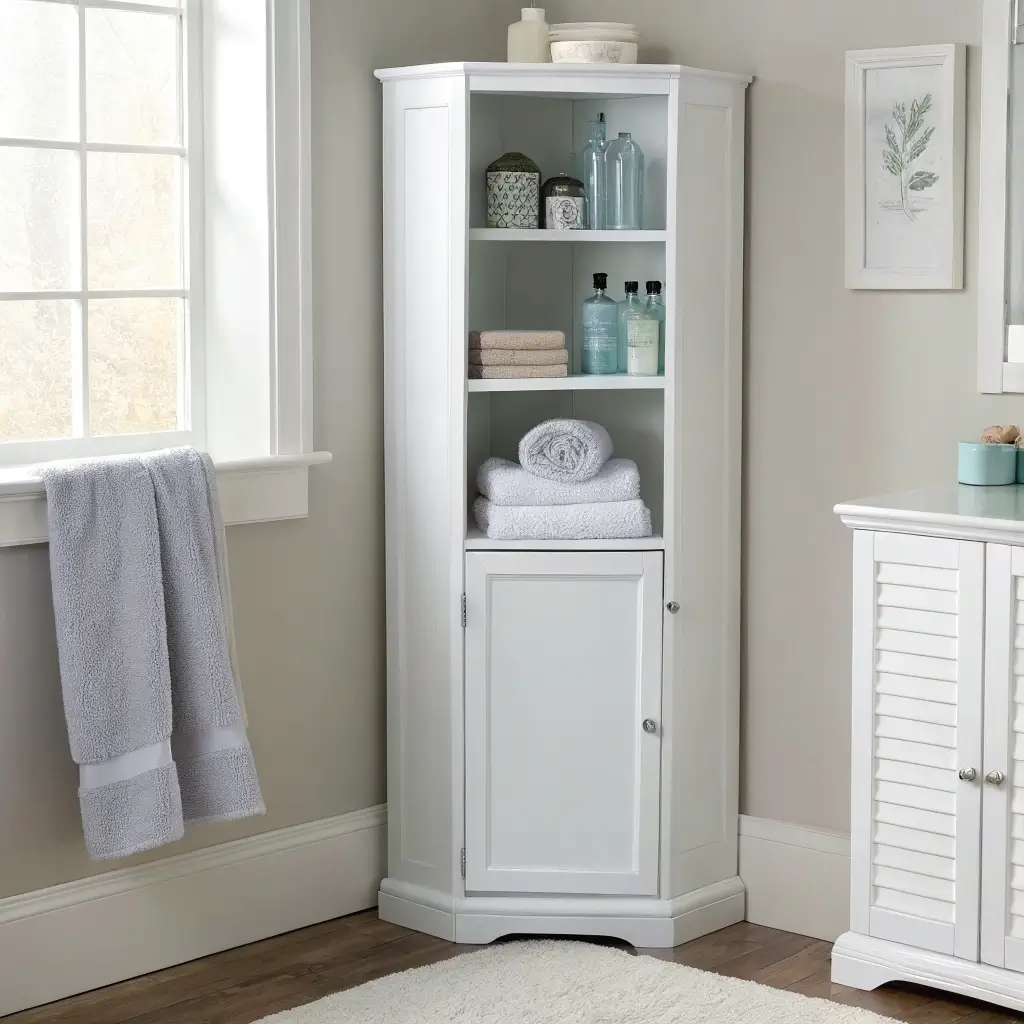
Corners are weird bathroom dead zones that most of us ignore. My corner linen tower transformed that awkward spot into my most efficient storage space. Eight cubic feet of linen storage in a spot that used to collect dust bunnies and sadness.
Making Corners Work
Corner cabinets fail when they don’t account for access. My first corner unit was so deep I needed a search party to find hand towels. Now I use a diagonal-front tower that makes everything visible and reachable.
The corner tower works because:
- Diagonal front maximizes access
- Tall design uses vertical space
- Multiple shelves prevent towel avalanches
- Corner placement doesn’t block traffic
- Rotating shelves (in fancier models) make everything accessible
Choosing Corner Configurations
Not all corner towers are equal. Some are basically triangular coffins for linens—things go in but never come out. Others are surprisingly functional. The difference? Design and access strategy.
What works in corners:
- Diagonal or angled fronts
- Open sides for easy reaching
- Pull-out drawers or baskets
- Lazy Susan mechanisms
- Proper lighting (corners are dark)
Corner Tower Organization
Organizing corner storage requires different thinking. You can’t just stack things front to back because “back” becomes a black hole. I organize mine in zones—each section has a specific linen type, and nothing gets buried.
6. Floating Linen Cabinet with Hidden Shelves
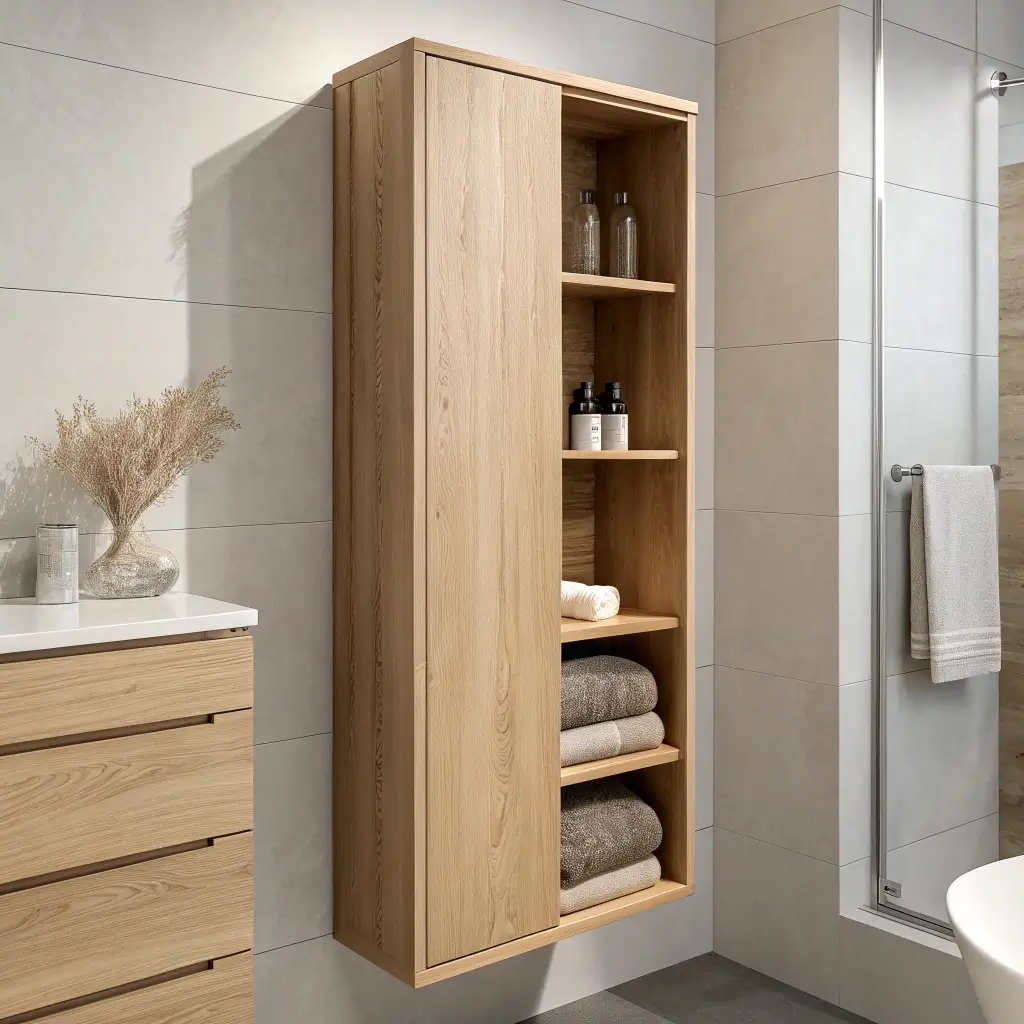
Floating cabinets with hidden shelves are like magic tricks for your bathroom. Mine looks like a simple floating box, but press the right spot and—surprise!—hidden shelves appear. Guests think I’m a minimalist. Little do they know I’m hiding twenty towels in there.
The Floating Illusion
Creating the floating effect while maintaining serious storage capacity requires solid mounting. I learned this after my first floating cabinet slowly started sinking down the wall. Nothing says “DIY fail” quite like a supposedly floating cabinet that’s clearly not floating.
Proper floating installation needs:
- Heavy-duty wall anchors or cleats
- Studs (find them, use them, love them)
- Level mounting (crooked floating cabinets look drunk)
- Weight distribution planning
- Hidden mounting hardware
Secret Storage Design
The hidden shelves work through clever door placement and interior configuration. What looks like a solid cabinet face actually conceals multiple compartments. It’s like a puzzle box, but for towels.
My hidden compartments store:
- Extra toilet paper (bathroom gold)
- Backup towels
- Seasonal linens
- Guest amenities
- My secret stash of fancy bath products
Living with Hidden Storage
The downside of hidden storage? Sometimes it’s too hidden. I once forgot about a whole set of guest towels for six months. Now I keep a tiny inventory list inside the cabinet door. Nerdy? Yes. Effective? Also yes.
Also Read: 10 Elegant Bathroom Storage Cabinet Ideas with Hidden Storage
7. Built-In Niche Linen Cabinet
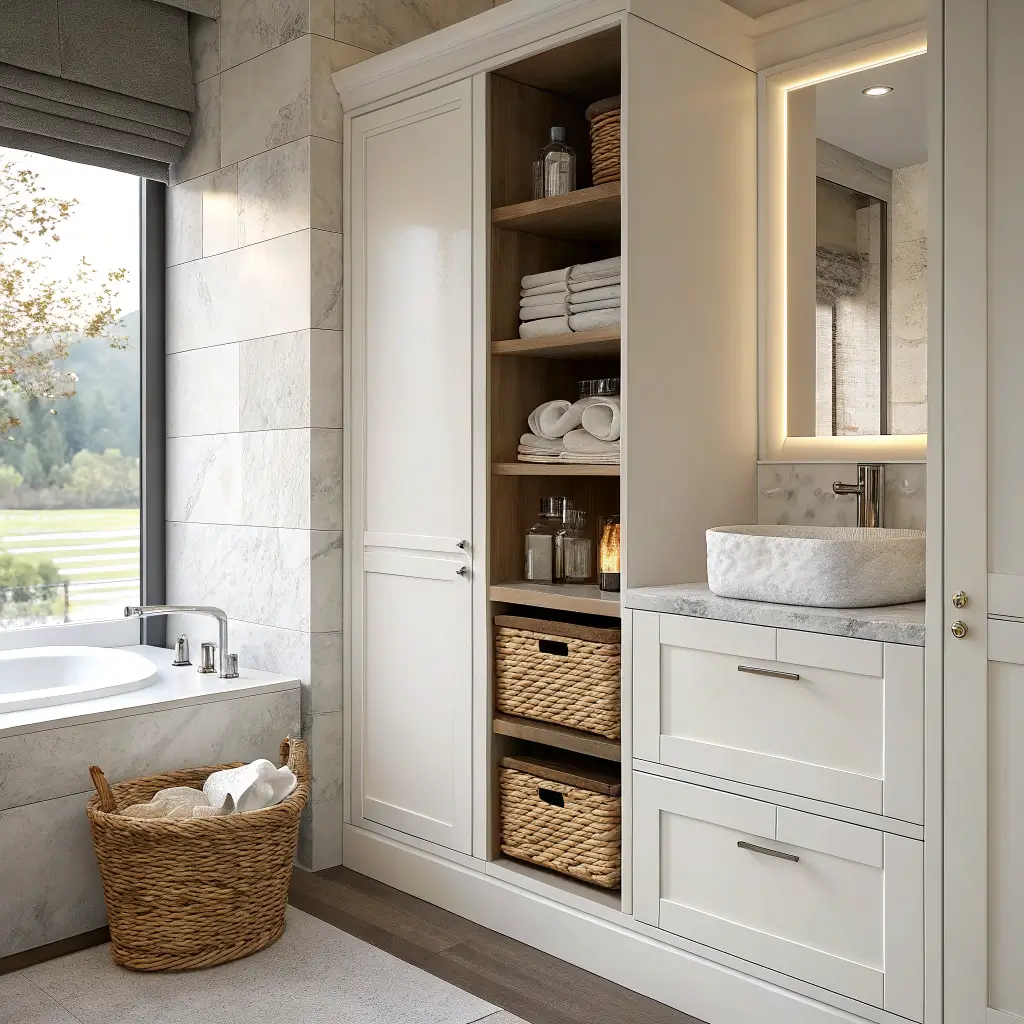
Built-in niche cabinets turn weird wall indentations into storage gold. My bathroom had this odd recessed area that was too shallow for regular furniture but too deep to ignore. Enter the built-in niche cabinet—custom storage that looks like it was always meant to be there.
Working with Existing Niches
Many bathrooms have these architectural quirks—weird indentations from plumbing chases, old medicine cabinet spots, or just random construction decisions. Instead of trying to hide them, niche cabinets celebrate them.
I measured my niche approximately forty-seven times before ordering a custom insert. Measure twice, cut once? More like measure seventeen times, still worry, measure again. But the perfect fit was worth the paranoia.
Creating New Niches
Don’t have a niche? You can create one, though it involves more construction than I initially expected. I watched my contractor create a niche in my guest bath, and it’s basically controlled wall destruction followed by careful rebuilding.
What creating a niche involves:
- Opening the wall (carefully)
- Framing the space
- Running any necessary electrical
- Waterproofing everything
- Installing your cabinet insert
- Making it look intentional
Niche Cabinet Organization
Niche cabinets are usually shallow, which actually helps with organization. Everything stays visible and accessible. No more towel archaeology expeditions to find that one washcloth.
8. Glass-Front Linen Display Cabinet
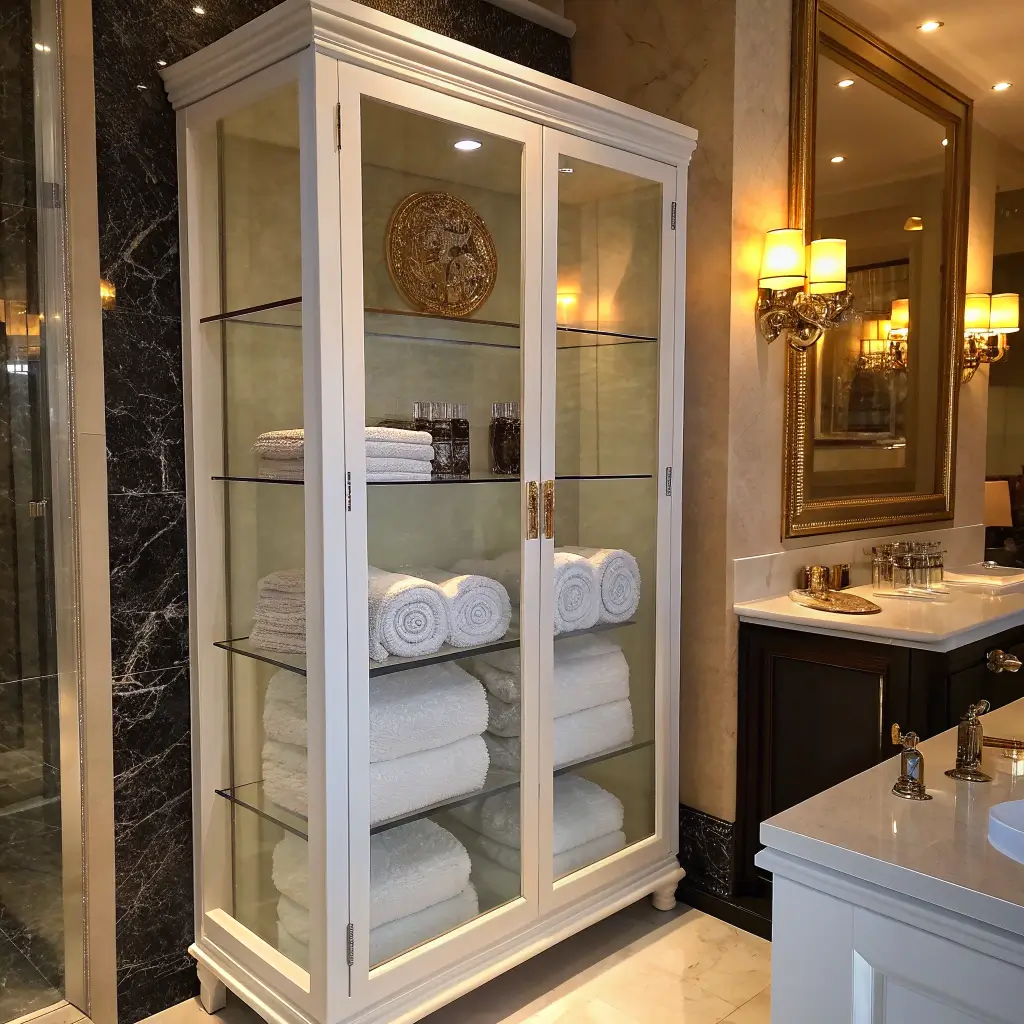
Glass-front cabinets force you to keep linens neat because everything’s on display. I installed one thinking I’d become magically organized. The reality? I did become more organized, but mostly because public shame is a powerful motivator.
The Display Pressure
Here’s the thing about glass-front linen storage—you can’t hide anything. That ratty towel from college? Visible. The washcloth that’s more stain than cloth? On display. This forced me to actually curate my linen collection like some kind of towel museum.
But you know what? It worked. My linens have never looked better because I literally can’t afford for them to look bad. FYI, this is both a blessing and a curse.
Choosing Glass Types
Not all glass is equal for cabinet doors. I learned this after installing clear glass and realizing everyone could see my imperfect folding from across the room. Now I have frosted glass on the bottom (hiding the everyday stuff) and clear on top (showing the pretty guest towels).
Glass options:
- Clear (full transparency, full pressure)
- Frosted (softens the view)
- Seeded (adds texture and interest)
- Colored (tinted for style)
- Textured (obscures while showing)
Styling for Display
Glass-front cabinets require intentional styling. I arrange my linens by color, maintain perfect folding, and even add small decorative elements. It’s exhausting but also weirdly satisfying.
9. Rustic Farmhouse Linen Cabinet
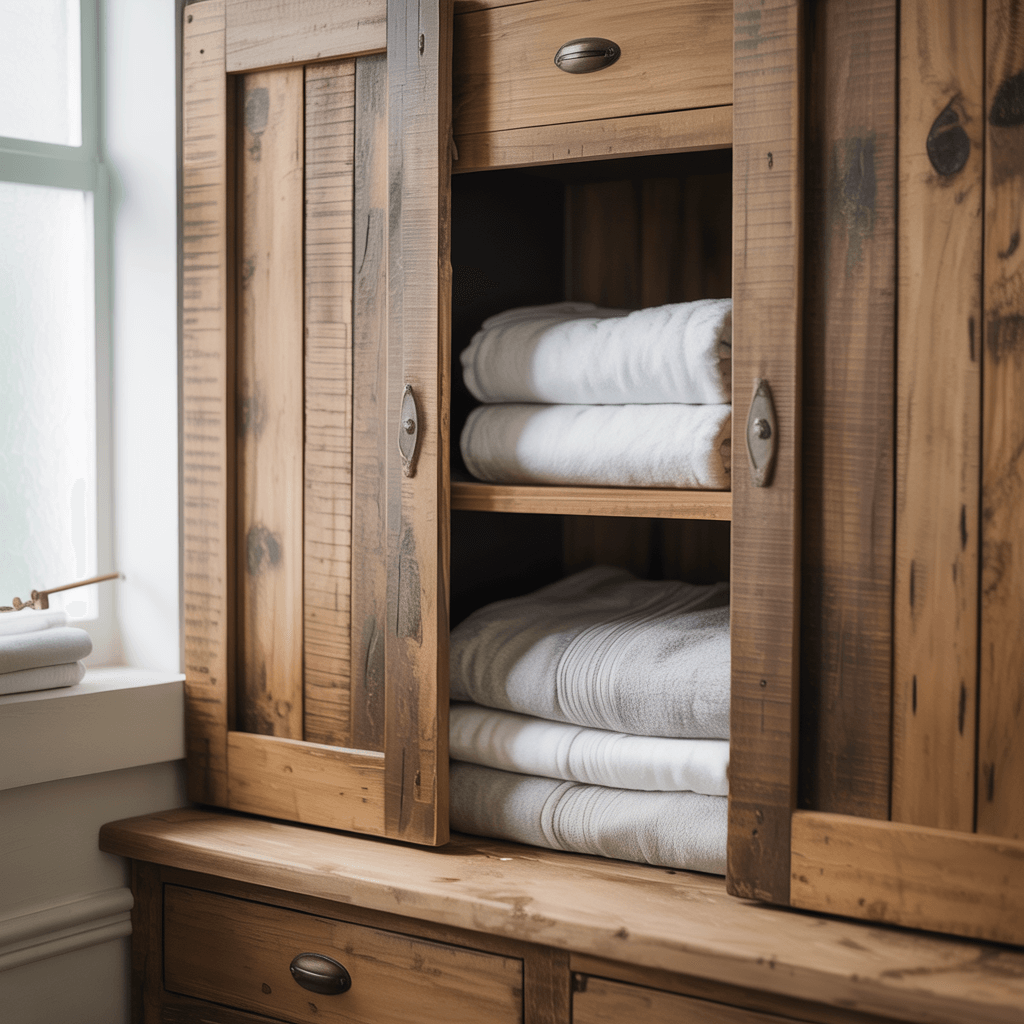
Rustic farmhouse linen cabinets bring warmth and character that modern storage can’t match. Mine started life as an old feed store cabinet, and now it holds towels instead of chicken feed. The transformation was easier than you’d think, and the character is irreplaceable.
Finding Rustic Pieces
True rustic cabinets have stories. Mine has original hardware from the 1940s and what I’m pretty sure are authentic chicken scratches. Finding these pieces requires patience and possibly a tetanus shot (kidding… mostly).
Where to hunt:
- Barn sales
- Agricultural auctions
- Antique malls in rural areas
- Architectural salvage yards
- That old shed behind grandma’s house
Converting Rustic Finds
Converting rustic pieces for bathroom use requires some work. My feed store cabinet needed serious cleaning, sealing, and shelf adjustment. But the result? A linen cabinet with more personality than anything from a big box store.
Conversion steps:
- Deep clean everything
- Check for pests (seriously)
- Seal wood for moisture protection
- Adjust or add shelves
- Preserve original character while ensuring function
Styling Farmhouse Storage
The beauty of rustic cabinets lies in their imperfection. I don’t need perfect folding or color coordination—the cabinet itself is the star. Mismatched linens actually add to the farmhouse charm.
Also Read: 12 Elegant Bathroom Cabinet Colors Ideas and Chic Combos
10. Minimalist Handleless Linen Cabinet
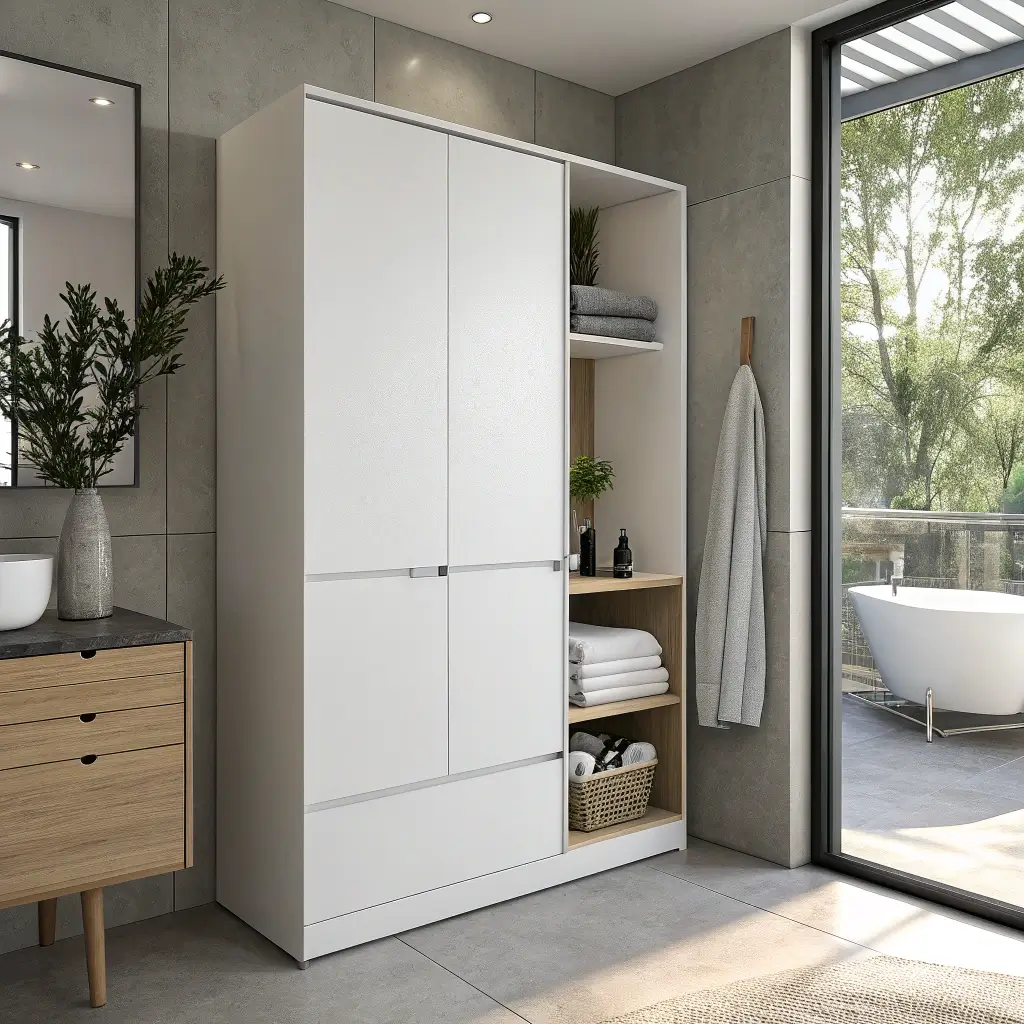
Handleless cabinets create clean lines that make my bathroom look like it belongs in a spa. Push-to-open mechanisms mean no hardware to clean around, catch towels on, or loosen over time. It’s storage that whispers instead of shouts.
The Clean Line Appeal
Minimalist storage isn’t about having less—it’s about visual simplicity. My handleless cabinet holds just as much as any other, but without the visual noise of handles, knobs, or pulls. The result? My bathroom feels calmer and more spacious.
The mechanisms behind handleless:
- Push-to-open latches
- Touch-release systems
- Magnetic closures
- Soft-close integration
- Hidden finger pulls
Living Without Handles
The adjustment to handleless took time. I initially pushed in all the wrong spots like I was trying to find a secret passage. Now muscle memory has taken over, and I can open cabinets in the dark (helpful for those middle-of-the-night towel emergencies).
Organization for Minimalist Cabinets
Minimalist exteriors work best with organized interiors. The clean outside lines would feel like a lie if you opened the door to chaos. I use dividers, bins, and careful folding to maintain the zen both inside and out.
11. Over-Toilet Linen Storage Cabinet
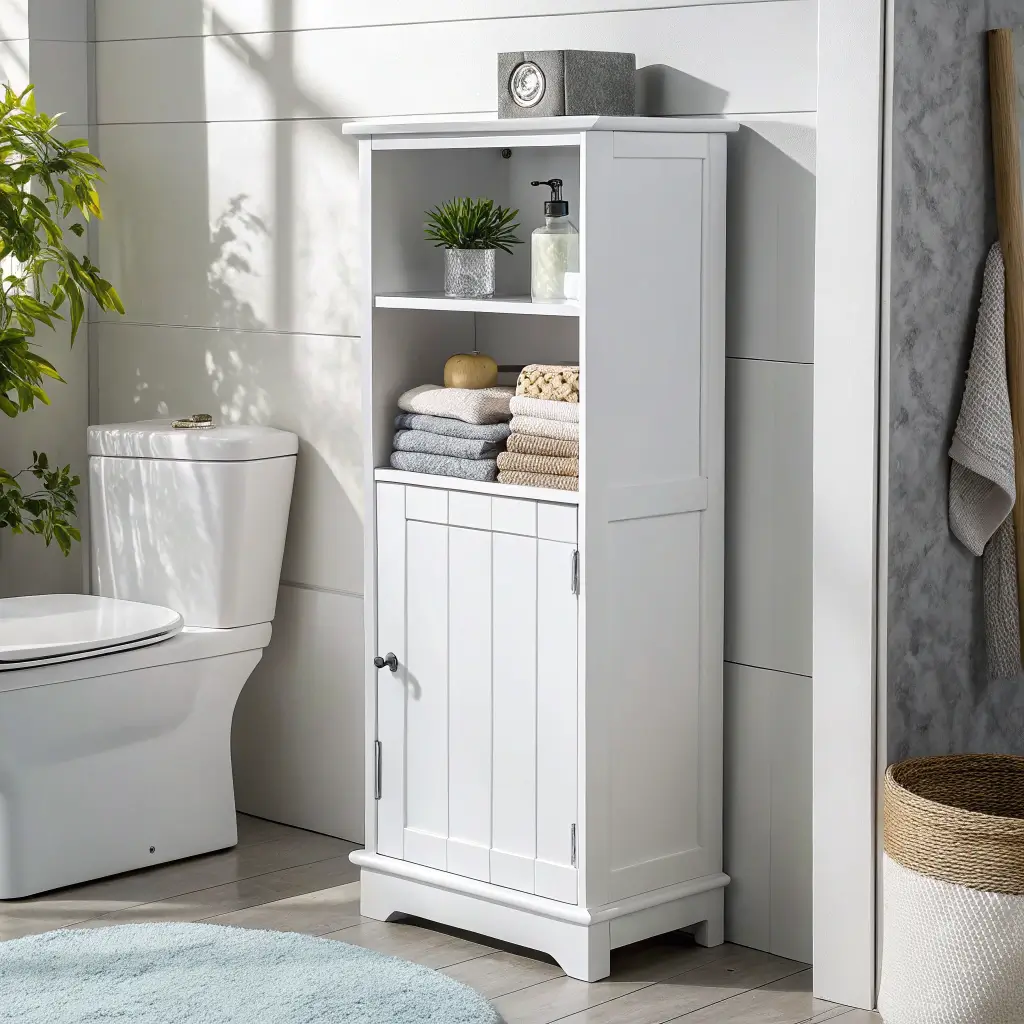
That space above your toilet is begging to store linens. My over-toilet cabinet transformed dead air into towel storage without sacrificing a single inch of floor space. It’s like finding free real estate in your bathroom.
Height and Depth Calculations
Positioning over-toilet storage requires precision. Too low and you’ll hit your head. Too deep and you’ll hit your head. Basically, avoid hitting your head. I learned this through painful experience.
The sweet spot:
- 24-30 inches above toilet tank
- 8-10 inches deep maximum
- Full width of toilet or slightly wider
- Open bottom shelf (reaching over toilet = risky)
- Secure mounting to wall studs
Safety and Accessibility
Storing linens above the toilet means considering what happens if something falls. Soft towels? Fine. Heavy wooden shelf? Not fine. I use lightweight materials and secure everything obsessively.
What Goes Up There
Not all linens belong above the toilet. I reserve this spot for lightweight, less-frequently used items. Guest towels, seasonal hand towels, and extra washcloths live up there. The everyday bath towels stay elsewhere because nobody wants to reach over a toilet every morning.
12. Narrow Pull-Out Linen Cabinet
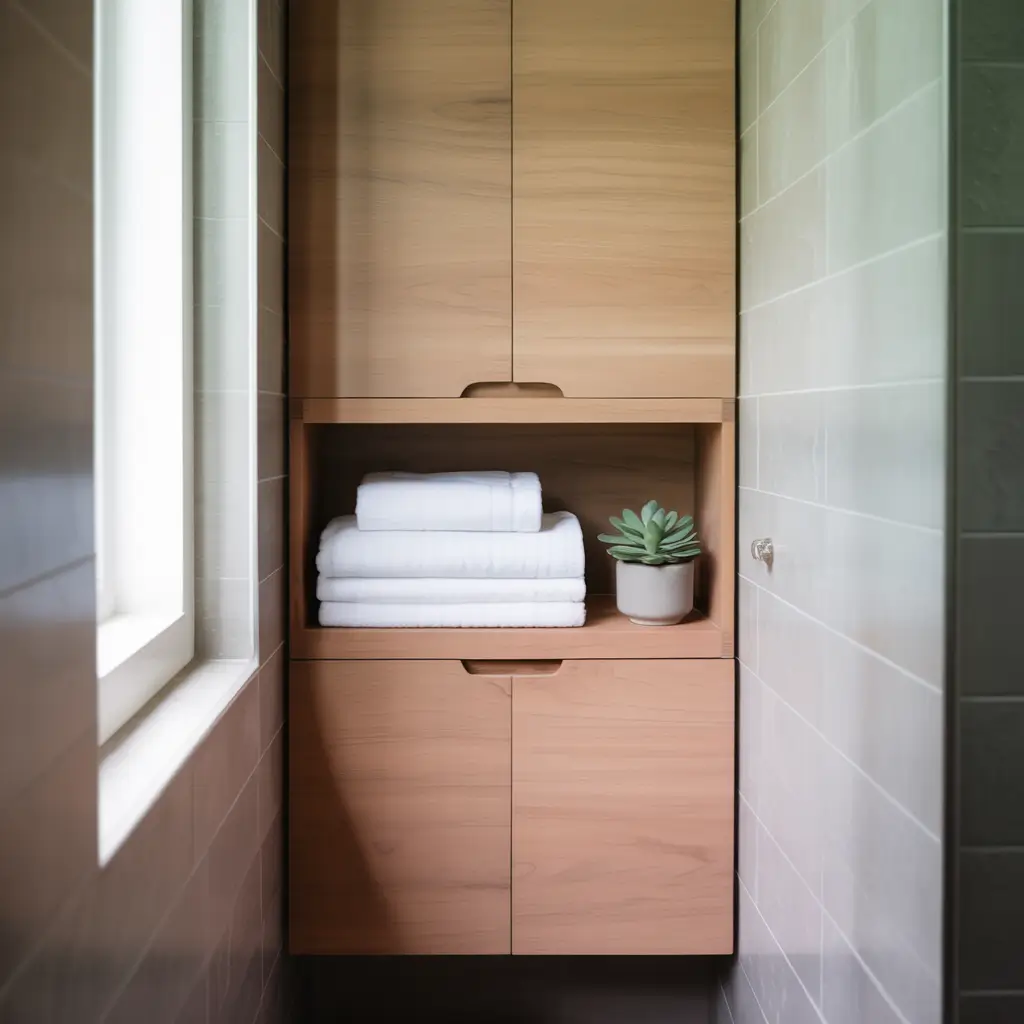
Pull-out linen cabinets are game-changers for narrow spaces. I installed one in a 6-inch gap between my vanity and wall, and that sliver now holds more washcloths than my previous entire cabinet. It’s like Mary Poppins’ bag but for bathroom textiles.
Maximizing Narrow Spaces
Every bathroom has these weird narrow gaps that seem useless. Between the toilet and vanity, next to the tub, beside the door—these spaces are actually storage gold waiting to happen. My 6-inch pull-out uses every bit of its narrow footprint.
Why pull-outs work:
- Full visibility when extended
- Use entire depth of space
- No reaching into dark corners
- Easy to organize
- Surprisingly large capacity
DIY vs. Professional Installation
I attempted a DIY pull-out installation. The keyword there is “attempted.” After three hours of fighting with drawer slides and creative cursing, I called a handyman. Sometimes knowing when to call for help IS the DIY skill 🙂
Organizing Pull-Out Storage
Narrow pull-outs need strategic organization. Everything must fit the width, and weight distribution matters (heavy bottom, light top, or your pull-out becomes a tip-out). I use small bins to subdivide the space and keep everything contained.
Creating Your Perfect Linen Storage System
After trying twelve different linen storage solutions, here’s what I’ve learned: the best system is the one you’ll actually use.
My fancy glass-front cabinet looked amazing but stressed me out. My simple pull-out tower isn’t Instagram-worthy but works perfectly for my real life.
Start by honestly assessing your linen situation. How many towels do you really need accessible? (Hint: probably fewer than you think.) Do you want display storage or hidden storage? Are you naturally neat or naturally… not?
Consider your bathroom’s quirks too. That weird corner, the space above the toilet, the gap beside the vanity—these aren’t problems, they’re storage opportunities waiting to be discovered.
IMO, the best bathroom storage solutions work with your space’s weirdness, not again
st it.
Mix and match solutions if needed. I use three different linen storage types in my master bath—a tall cabinet for everyday towels, hidden shelves for backup linens, and open shelving for display. Together they handle everything from beach towels to fancy guest sets.