10 Trendy Green Living Room Ideas and Furniture Styling
- Living Room Decor
 Ben
Ben- 0
- 38 minutes read

Remember that time you walked into someone’s living room and felt instantly calm, like you’d stepped into a secret garden? That happened to me at my friend Sarah’s place last spring—her sage green walls literally made me exhale tension I didn’t know I was holding.
Green living rooms have this magical ability to bring nature indoors while still looking incredibly sophisticated.
After experimenting with every shade of green imaginable in my own home (including one unfortunate lime green incident we don’t talk about), I’ve discovered what actually works.
These ten green living room ideas aren’t just pretty Pinterest fantasies—they’re real, livable designs that won’t make you feel like you’re living in a jungle or a hospital waiting room.
Ready to transform your space into something that feels both trendy and timeless? Let’s explore how green can revolutionize your living room.
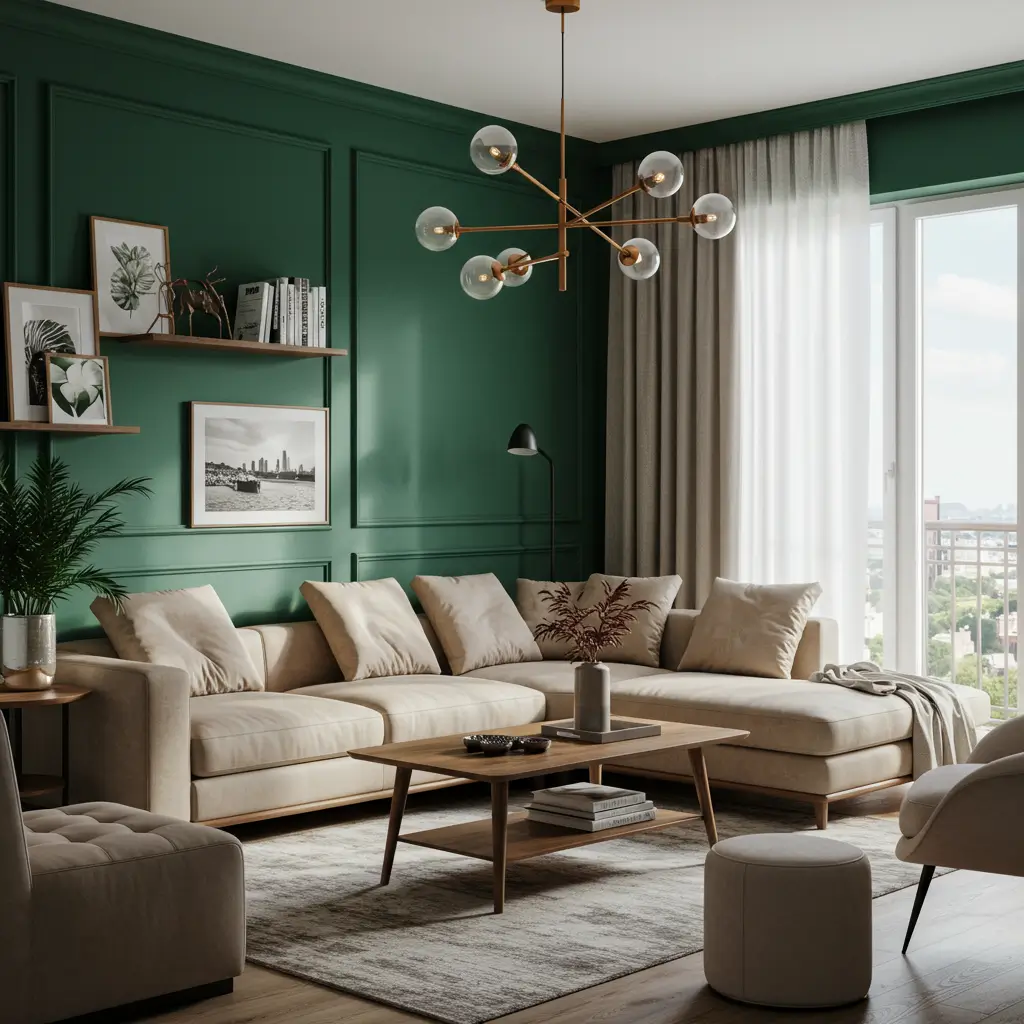
1. Emerald Accent Walls with Neutral Furniture
Emerald green accent walls are having a serious moment, and honestly, I’m here for it. I painted one wall in my living room this rich, jewel-toned green last year, and it completely transformed the space from boring beige box to sophisticated sanctuary. The color is bold without being overwhelming—it’s like wearing a statement necklace with a simple outfit.
Why Emerald Works So Well
The magic of emerald lies in its depth and complexity. Unlike flat greens that can feel one-dimensional, emerald has these subtle blue undertones that shift with the light. In morning sunlight, my wall looks fresh and energizing. By evening, with warm lamp light, it becomes moody and intimate.
What makes emerald accent walls successful:
- They create instant focal points
- The color pairs beautifully with almost any neutral
- Rich tones add luxury without expensive renovations
- They photograph amazingly (hello, Instagram!)
- The color doesn’t date as quickly as trendy shades
Balancing Bold with Neutral
Here’s where people mess up—they panic about the bold wall and overcompensate with too many other colors. I keep my furniture strictly neutral: a cream linen sofa, natural wood coffee table, and white shelving. The emerald wall becomes art itself, so you don’t need to compete with busy patterns or multiple colors.
My living room follows this formula: 60% neutral (walls, major furniture), 30% emerald (accent wall), and 10% metallic accents (brass lamps, gold picture frames). This ratio keeps things balanced without feeling boring.
Styling Your Emerald Wall
The beauty of an emerald accent wall is that it doesn’t need much decoration. I hung two simple brass mirrors at different heights, and that’s it. The wall makes enough of a statement on its own. If you must add art, stick to simple black and white pieces or natural wood frames—let the wall color be the star.
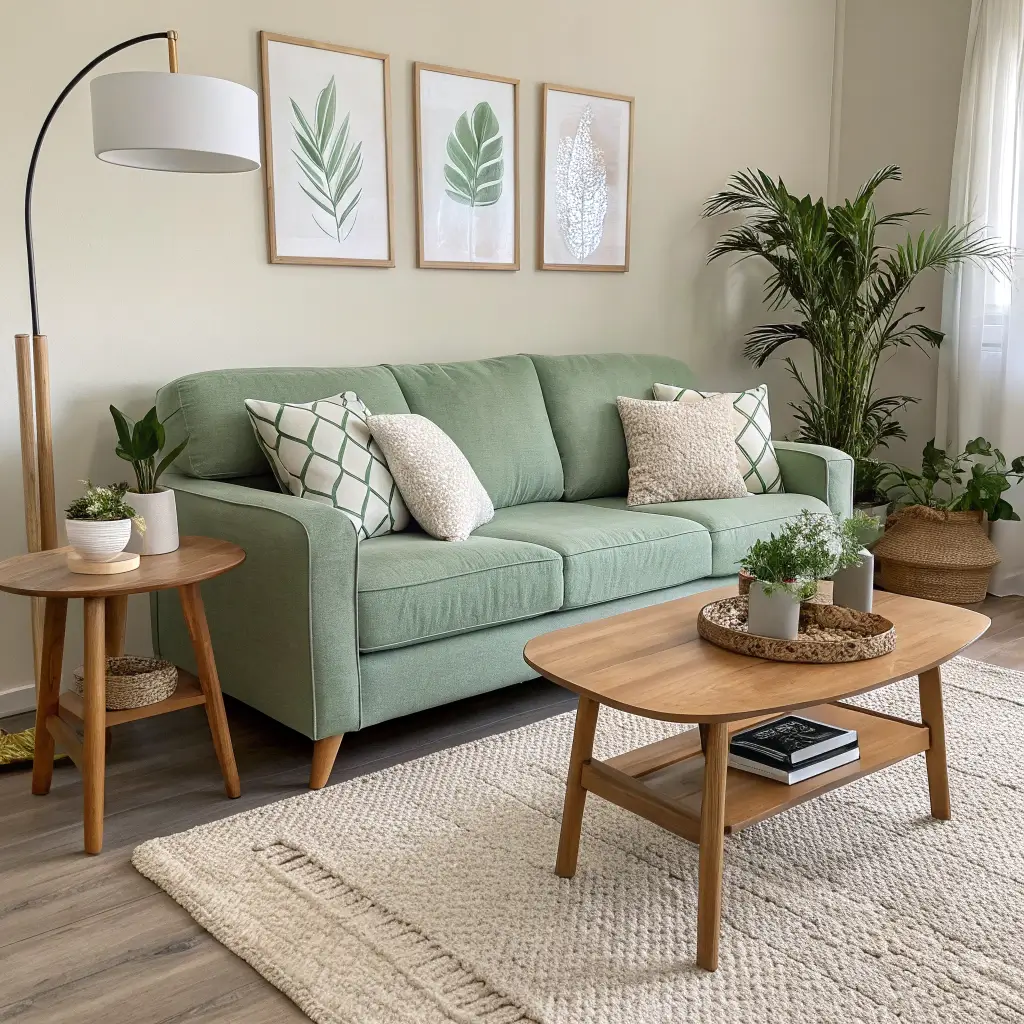
2. Sage Green Sofa with Natural Wood Accents
My sage green sofa purchase was a complete impulse buy that turned out to be the best decision ever. I was shopping for a sensible gray couch when this gorgeous sage velvet number caught my eye. Three years later, it’s still the piece everyone compliments, and it hasn’t gone out of style.
The Sage Green Sweet Spot
Sage green occupies this perfect middle ground—it’s definitely green, but it’s muted enough to work as a neutral. My sofa doesn’t scream for attention like a bright green would, but it’s infinitely more interesting than beige. It’s basically the Switzerland of green shades—diplomatic and gets along with everyone.
The color works in any season too. In summer, it feels fresh and botanical. In winter, it becomes cozy and grounding. I’ve redecorated around it three times, and it’s worked with every single color scheme.
Natural Wood Pairings
Sage green and natural wood are basically best friends. I paired my sofa with a live-edge walnut coffee table and oak floating shelves, and the combination feels effortlessly organic. The warmth of wood prevents the sage from feeling cold, while the green keeps the wood from feeling too rustic.
Wood types that work beautifully:
- Walnut for rich contrast
- Oak for classic warmth
- Pine for Scandinavian vibes
- Bamboo for modern eco-style
- Reclaimed wood for character
Accessorizing Sage Spaces
The key to styling a sage sofa is restraint. I use cream and white pillows with maybe one terracotta accent for warmth. Plants obviously work perfectly—it’s like they were meant to be together. My fiddle leaf fig next to the sofa creates this gradient of greens that feels intentional but not matchy-matchy.
3. Olive Green Boho Living Room Vibes

Olive green and boho style go together like coffee and mornings—they just make sense. I helped my sister design her living room around an olive green theme, and the result feels like a sophisticated version of that study abroad apartment in Barcelona everyone dreams about.
Creating Authentic Boho Atmosphere
Real boho isn’t about throwing every pattern and texture together and hoping for the best. The olive green acts as a grounding force that keeps the eclectic elements from feeling chaotic. We painted one wall olive and used it in textiles throughout the room—curtains, throw pillows, and a gorgeous vintage rug with olive undertones.
The color provides continuity while allowing for boho’s signature mix-and-match approach. Think of olive as the responsible adult in the room, keeping all the wild boho children in line.
Layering Textures and Patterns
Boho style demands texture, and olive green plays beautifully with natural materials. In my sister’s room, we layered:
- Macramé wall hangings against the olive wall
- Rattan furniture with olive cushions
- Moroccan poufs in complementary earth tones
- Jute rugs layered over hardwood
- Woven baskets for both storage and decoration
The Plant Factor
You can’t have boho without plants, and olive green creates the perfect backdrop. We went slightly overboard (is 15 plants too many? Asking for a friend), but the olive tones tie everything together. The room feels like an urban jungle that someone actually curated rather than abandoned.
Also Read: 10 Charming Cozy Green Bedroom Ideas for Relaxed Living
4. Mint Green and White Minimalist Space
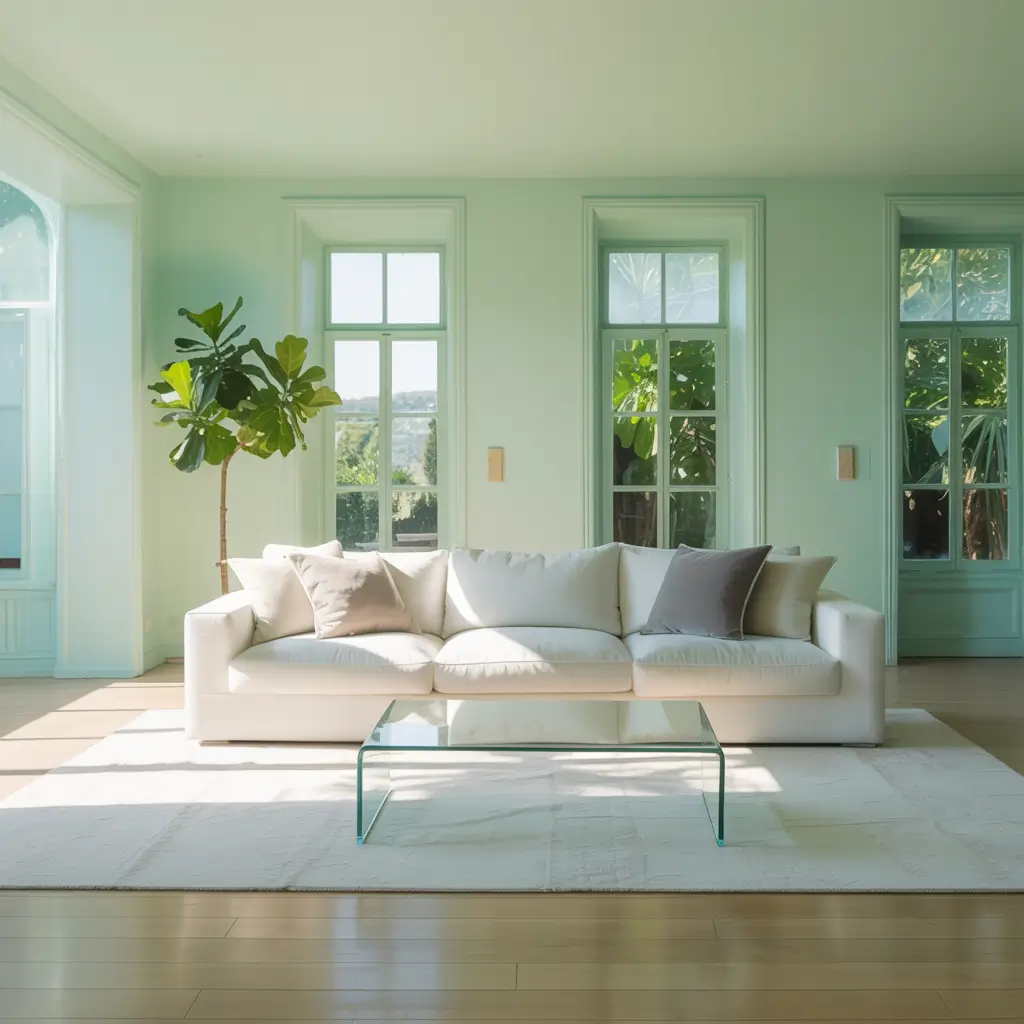
Mint green minimalism sounds like an oxymoron, but hear me out. I transformed my home office/second living room into a mint and white sanctuary, and it’s become everyone’s favorite room. The color adds personality to minimalism without compromising the clean aesthetic.
Why Mint Works for Minimalism
Traditional minimalism can feel cold and impersonal. Mint green adds just enough color to warm things up while maintaining that clean, uncluttered vibe. It’s like minimalism went on vacation and came back slightly more relaxed.
I chose the palest mint—almost more of a whisper of green than a shout. This subtlety is key for minimalist spaces. You want the color to enhance, not dominate.
The White Balance
The ratio matters here. I went with 70% white, 30% mint, and it feels perfectly balanced. White walls, white furniture frames, white shelving—then mint cushions, one mint accent chair, and mint ceramic accessories. The white keeps it minimal, the mint keeps it interesting.
FYI, not all whites work with mint. Cool whites can make mint look sickly. I learned this the hard way and had to repaint. Warm whites with tiny hints of cream create the perfect partnership.
Minimalist Doesn’t Mean Empty
My mint minimalist room has carefully chosen pieces:
- One stunning mint velvet accent chair
- Three white floating shelves with curated objects
- A simple white sofa with mint throw pillows
- One large piece of abstract art with mint accents
- A single sculptural floor lamp
Each piece serves a purpose and contributes to the overall aesthetic. Nothing is there just to fill space.
5. Forest Green Velvet Chairs with Gold Details
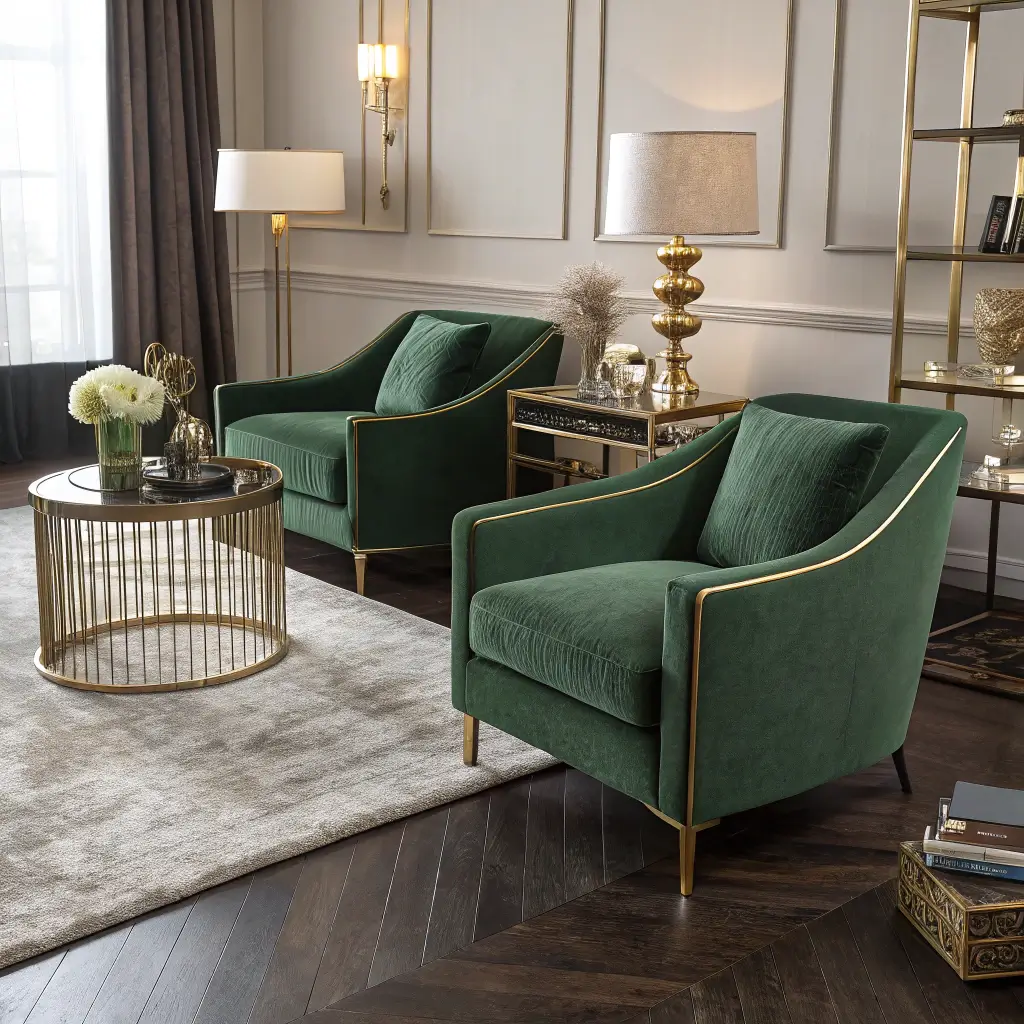
Forest green velvet chairs with gold accents are basically the jewelry of living room furniture. I bought a pair on sale (major score), and they transformed my entire living room from “nice” to “is this a boutique hotel?”
The Luxury Factor
There’s something about forest green velvet that screams expensive, even if you got it on clearance like I did. The deep green has this richness that makes everything around it look more sophisticated. Add gold legs or trim, and you’ve got furniture that looks like it belongs in a palace.
The velvet texture adds another layer of luxury. It catches light differently throughout the day, creating this dynamic visual interest that flat fabrics can’t achieve. Plus, it’s surprisingly practical—good velvet is actually easier to clean than most people think.
Gold Accent Strategy
Gold and forest green are a match made in design heaven, but restraint is key. I have gold legs on my chairs, a gold-framed mirror, and one gold side table. That’s it. Too much gold and you’re in Vegas casino territory.
Gold placement tips:
- Use gold as punctuation, not the whole sentence
- Mix gold finishes (brushed, antique, bright) for depth
- Balance gold throughout the room
- Let green be the star, gold is supporting cast
- Quality over quantity always
Styling Around Statement Chairs
When you have statement chairs, everything else needs to play supporting role. I kept my sofa neutral gray, my walls white, and my accessories minimal. The chairs do all the heavy lifting design-wise.
6. Greenery-Filled Modern Living Room
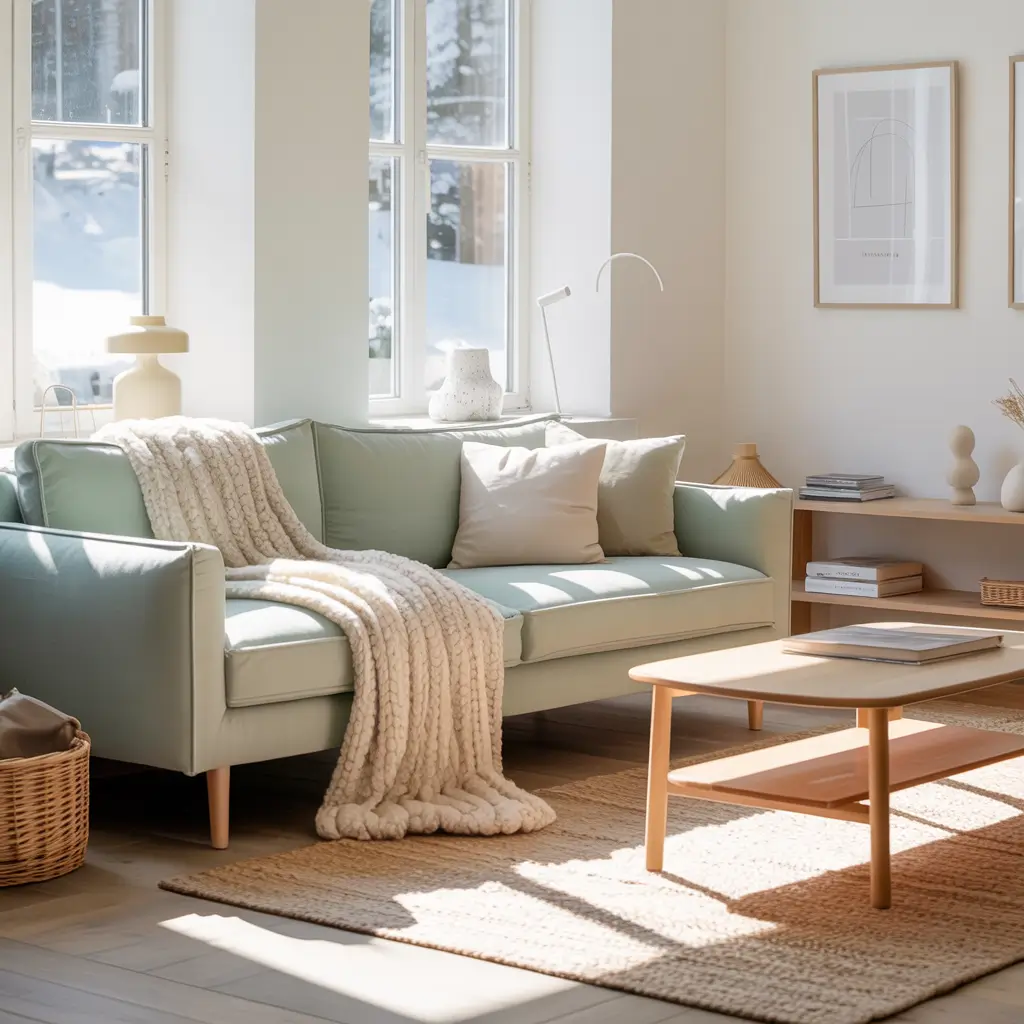
Sometimes the best green living room doesn’t involve paint at all. My current living room is basically a plant sanctuary with furniture mixed in, and I’ve never been happier. Real greenery brings life to modern spaces in ways paint never could.
Strategic Plant Placement
I have 23 plants in my living room (yes, I counted), but it doesn’t feel like a greenhouse because of strategic placement. Large floor plants anchor corners, trailing plants cascade from floating shelves, and small succulents cluster on the coffee table.
My placement strategy:
- Tall plants (fiddle leaf fig, rubber tree) frame the seating area
- Medium plants (monstera, snake plants) fill empty corners
- Trailing plants (pothos, philodendron) add vertical interest
- Small plants (succulents, cacti) accessorize surfaces
- One statement plant as a focal point
Choosing Low-Maintenance Greens
Not everyone has a green thumb (I killed three plants before finding my groove). I focus on forgiving plants that survive my occasional neglect:
- Snake plants (basically immortal)
- Pothos (thrives on neglect)
- ZZ plants (drought-tolerant champions)
- Rubber plants (sturdy and striking)
- Succulents (water once a month, done)
Modern Planters Make the Difference
The right planters transform plants from college dorm vibes to sophisticated modern decor. I invest in quality planters—white ceramic, black metal, or natural terracotta. Matching planters create cohesion even with varied plant types.
Also Read: 15 Inspiring Green Curtains Living Room Ideas for Comfort
7. Pastel Green Scandinavian Style Lounge
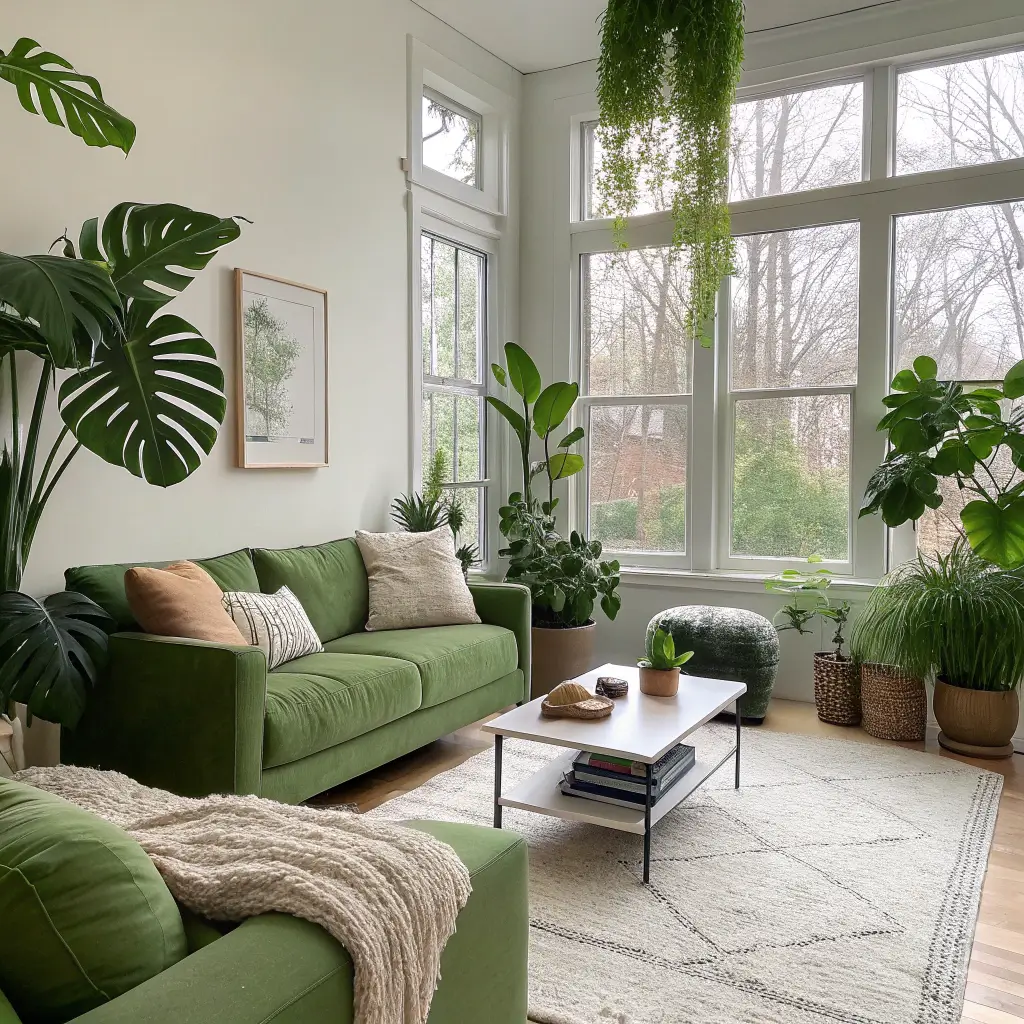
Scandinavian style and pastel green are basically soulmates. I redesigned my living room with this combo last winter, and it feels like a cozy Swedish café where everything is beautiful but still totally livable.
The Scandi-Green Balance
Traditional Scandinavian design can feel a bit monotonous with all that white and gray. Pastel green adds life without disrupting the calm, minimalist vibe. I used the palest sage on one wall and incorporated mint green textiles throughout.
The key is keeping the green soft and muted. Think morning mist, not lime popsicle. This subtlety maintains the Scandinavian principle of lagom—not too much, not too little, just right.
Hygge Meets Green
Creating that cozy hygge feeling with green requires the right textures:
- Chunky knit throws in pale green
- Linen cushions in various green shades
- Sheepskin rugs for contrast
- Natural wood elements for warmth
- Soft lighting to enhance the calm atmosphere
Functional Beauty
Scandinavian design demands functionality, and my green elements all serve purposes. The mint storage ottoman hides blankets, sage cushions provide actual comfort, and even my plants purify the air. Nothing is purely decorative—everything works.
8. Dark Green Feature Wall with Cozy Textures
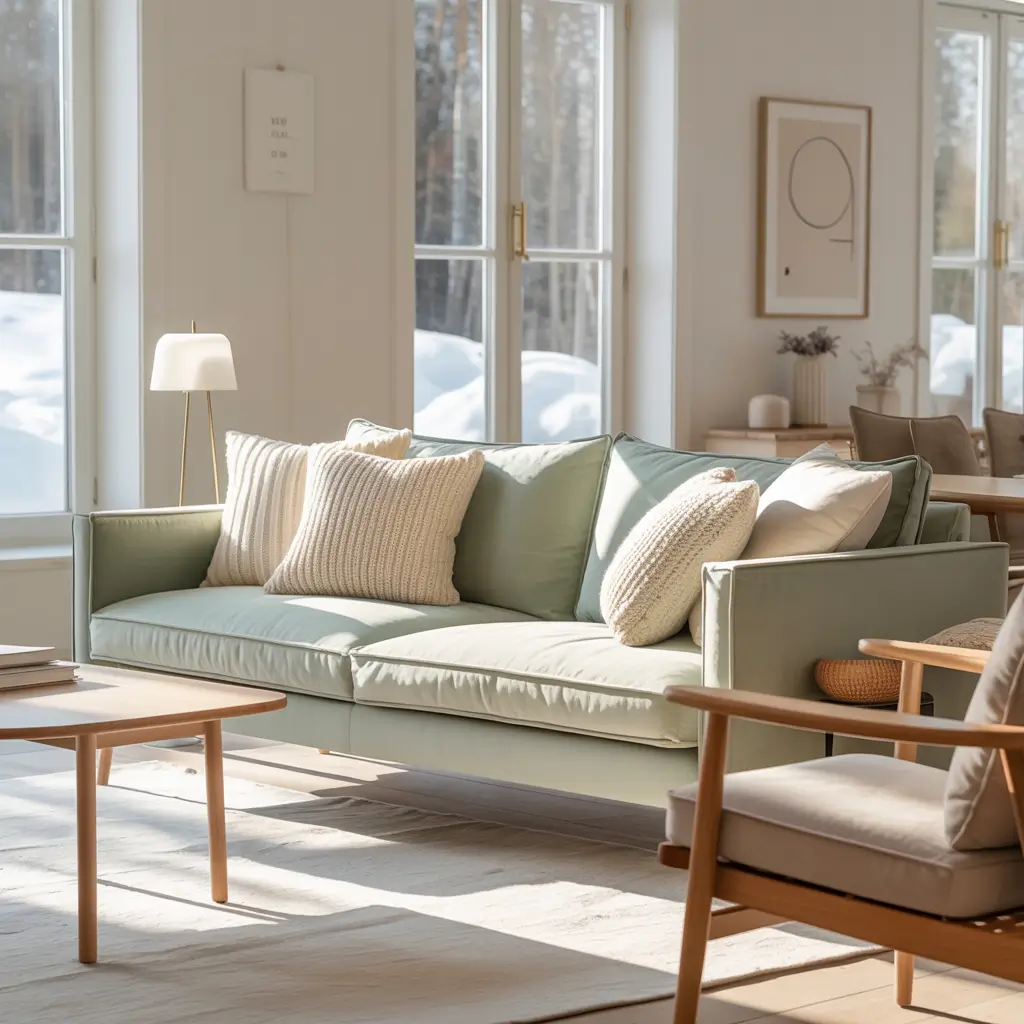
Dark green walls used to terrify me—wouldn’t they make the room feel like a cave? Then I painted one wall deep forest green and discovered the secret: it’s all about the textures you pair with it. My living room now feels like a cozy den instead of a dark hole.
Choosing the Right Dark Green
Not all dark greens are equal. Some lean blue (avoid unless you want aquarium vibes), others go brown (hello, 1970s). I tested seven samples before finding the perfect deep forest green with just enough warmth to feel inviting rather than oppressive.
The finish matters too. I chose eggshell rather than flat—it has just enough sheen to reflect light without looking glossy. This subtle reflection prevents the dark color from absorbing all light and creating that cave effect I feared.
Texture Is Everything
Dark walls demand textural interest to prevent flatness. I layered:
- Chunky cable knit throws
- Velvet cushions in cream and gold
- A jute rug for natural texture
- Faux fur accents for luxury
- Woven baskets for organic elements
These textures create visual interest and literal coziness. The room feels like somewhere you want to curl up with a book and never leave.
Lighting Dark Green Spaces
Proper lighting makes or breaks dark green walls. I use multiple light sources:
- Overhead pendant for general lighting
- Floor lamps in corners
- Table lamps for task lighting
- Candles for ambiance
- Fairy lights for whimsy (yes, I’m an adult with fairy lights, fight me)
9. Green and Beige Earthy Tone Living Room
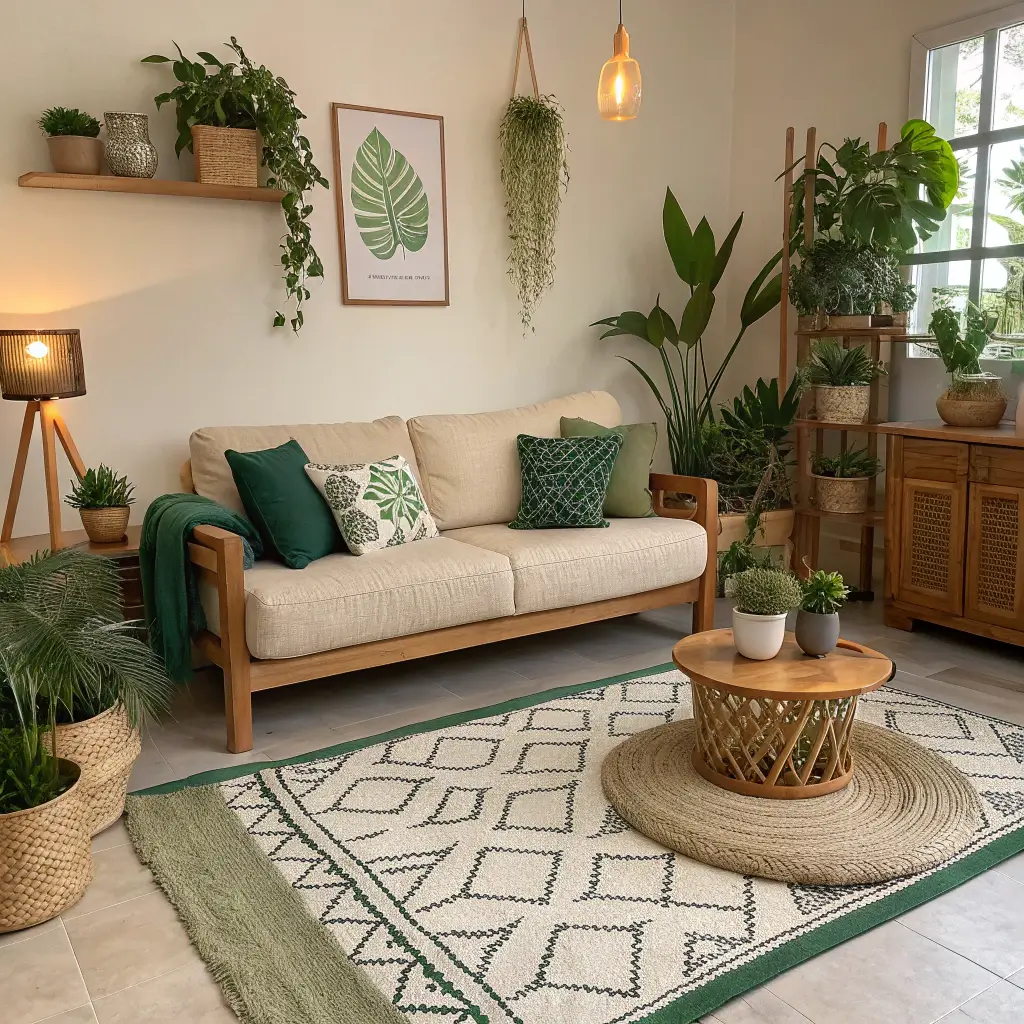
Green and beige might sound boring, but this combination creates the most livable, calming spaces I’ve ever designed. My parents’ living room uses this palette, and everyone who visits comments on how relaxing it feels.
Finding the Right Green-Beige Balance
The secret is choosing greens with warm undertones that complement beige rather than clash. Olive, sage, and eucalyptus work beautifully. Avoid cool greens like teal or mint—they make beige look dirty rather than warm.
I use a 40-40-20 rule: 40% beige (walls, large furniture), 40% green (curtains, accent chairs, artwork), and 20% accent colors (terracotta, cream, or brown).
Natural Materials Enhance Earth Tones
Earthy palettes beg for natural materials:
- Linen upholstery in both green and beige
- Rattan and wicker accents
- Raw wood furniture
- Stone or ceramic accessories
- Wool or jute rugs
These materials reinforce the natural vibe and add textural variety that prevents the neutral palette from feeling flat.
Making Earth Tones Interesting
The challenge with earth tones is avoiding blandness. I add interest through:
- Mixing patterns (stripes with botanicals)
- Varying textures dramatically
- Including one unexpected element (like a modern metallic lamp)
- Playing with scale (oversized art, tiny decorative objects)
- Adding fresh greenery for actual life
Also Read: 10 Smart Bathroom Basin Cabinet Ideas for Tiny Bathrooms
10. Vibrant Green Retro Living Room Makeover
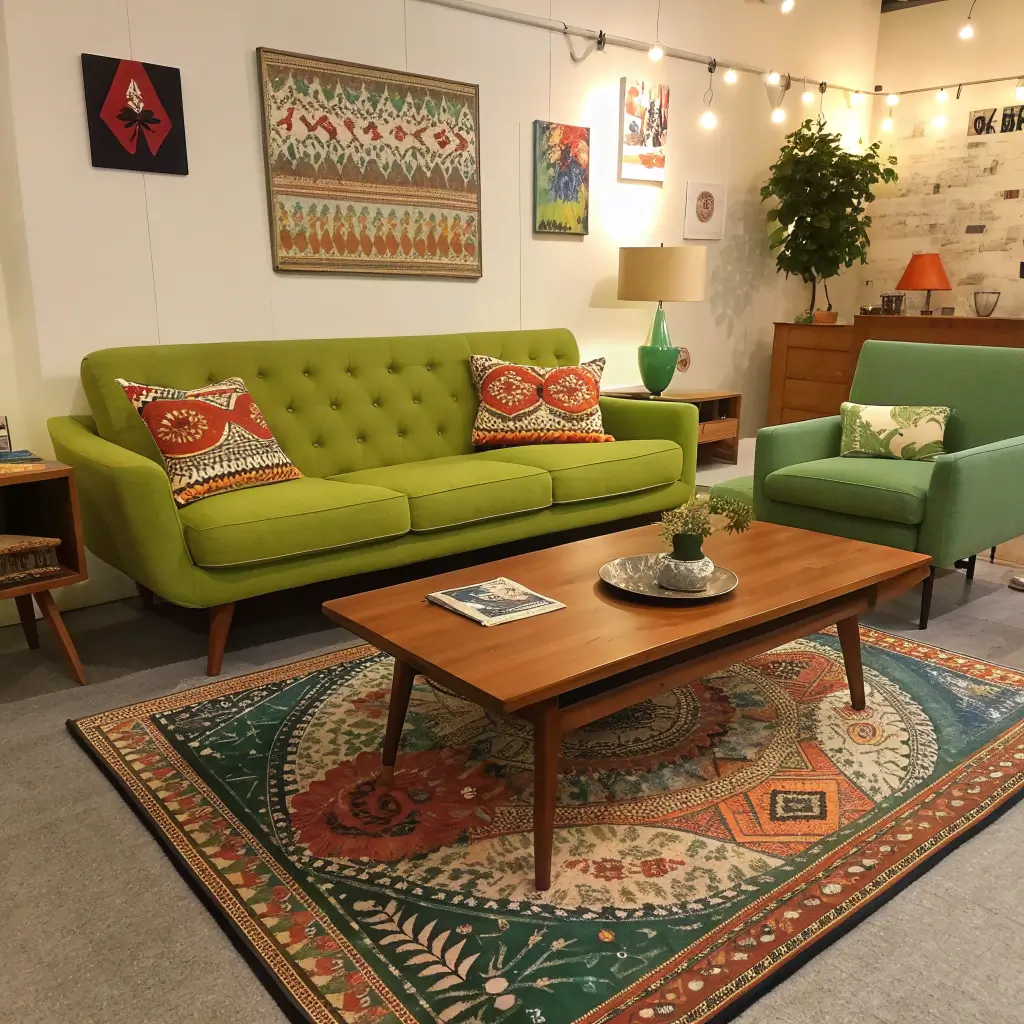
Going full retro with vibrant green takes courage, but the payoff is huge. I helped my cousin transform her boring beige living room into a 1960s-inspired green paradise, and now it’s the most fun room in her house.
Choosing Your Retro Green
Retro green isn’t subtle—we’re talking avocado, Kelly green, or chartreuse. My cousin went with a stunning jewel-toned Kelly green that makes everyone smile. It’s bold, unapologetic, and surprisingly energizing.
The key is committing fully. Half-hearted retro looks confused. We painted an accent wall, bought a green velvet sofa, and even found vintage green glass lamps. Go big or go home, right?
Mixing Retro with Modern
Pure retro can feel costume-y. We mixed vintage pieces with modern elements:
- Retro green sofa with modern clean lines
- Vintage brass accents with contemporary art
- 60s-inspired patterns on modern furniture shapes
- Old-school colors in current fabrics
- Vintage accessories with modern functionality
Pattern Play
Retro style loves patterns, and green provides the perfect base:
- Geometric prints in green and white
- Abstract florals with green elements
- Mod circles and squares
- Psychedelic swirls (in small doses)
- Bold stripes for impact
The trick is using green as the common thread that ties different patterns together without chaos.
Making Green Work in Your Living Room
After exploring all these green possibilities, here’s my honest advice: start small if you’re nervous. Maybe begin with green pillows or a single plant before committing to that emerald accent wall.
I’ve learned that green is surprisingly versatile—there’s a shade for every style and comfort level.
Consider your natural light situation too. North-facing rooms might need warmer greens (olive, sage) to counteract cool light. South-facing rooms can handle cooler greens (mint, seafoam) without feeling cold.
I learned this after painting my north-facing room mint and wondering why I always felt chilly.
Think about your lifestyle as well. Dark green walls are gorgeous but show every fingerprint if you have kids. Sage sofas are stunning but might not hide pet hair.
IMO, choosing a green that works with your actual life beats choosing one that only looks good in photos.
Don’t forget that green is naturally calming—color psychology is real, folks. Since adding green to my living room, I genuinely feel more relaxed in the space.
Maybe it’s the connection to nature, maybe it’s the break from boring beige, but something about green just works.
Most importantly, trust your instincts. If you love that vibrant Kelly green chair everyone says is “too much,” buy it anyway.
Your living room should make you happy, not impress some imaginary design critic. Green is meant to bring life and joy to your space—let it do its job.