10 Cozy Dark Green Living Room Ideas to Warm Your Home
- Living Room Decor
 Ben
Ben- 0
- 44 minutes read
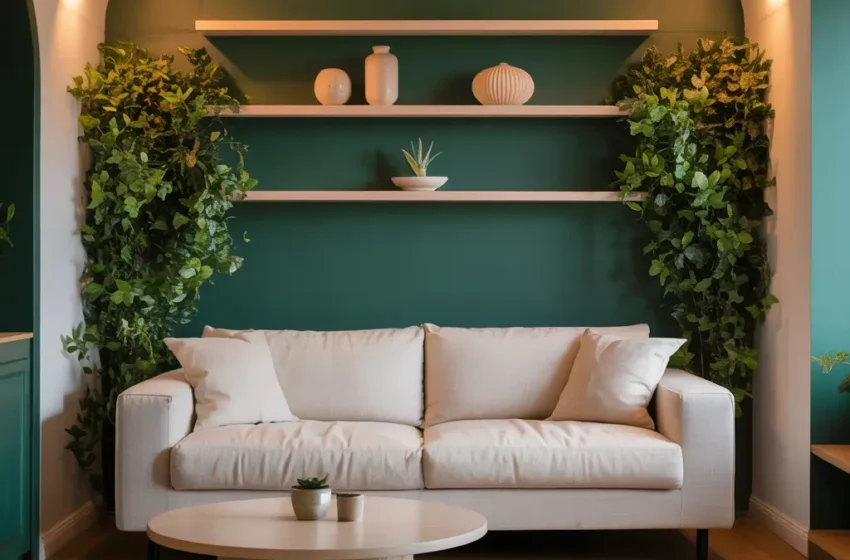
Dark green living rooms used to terrify me. Won’t they make the space feel like a cave? Will I feel like I’m living in a forest? Then I visited my friend Rachel’s apartment last fall and saw her stunning forest green walls in person.
The room felt moody, sophisticated, and somehow twice as cozy as any beige space I’d ever seen. I went home and immediately started researching paint swatches.
After transforming my own living room with dark green (and making a few mistakes along the way—RIP to that weird olive shade that looked like baby food), I’ve discovered that dark green is actually one of the most versatile, livable colors you can choose.
These ten ideas aren’t just pretty photos; they’re real, tested designs that work in actual homes where people spill coffee and let their dogs on the furniture. Ready to embrace the dark side of green? Let’s explore how to make these moody, dramatic spaces work for your life.
1. Cozy Dark Green Velvet Living Room
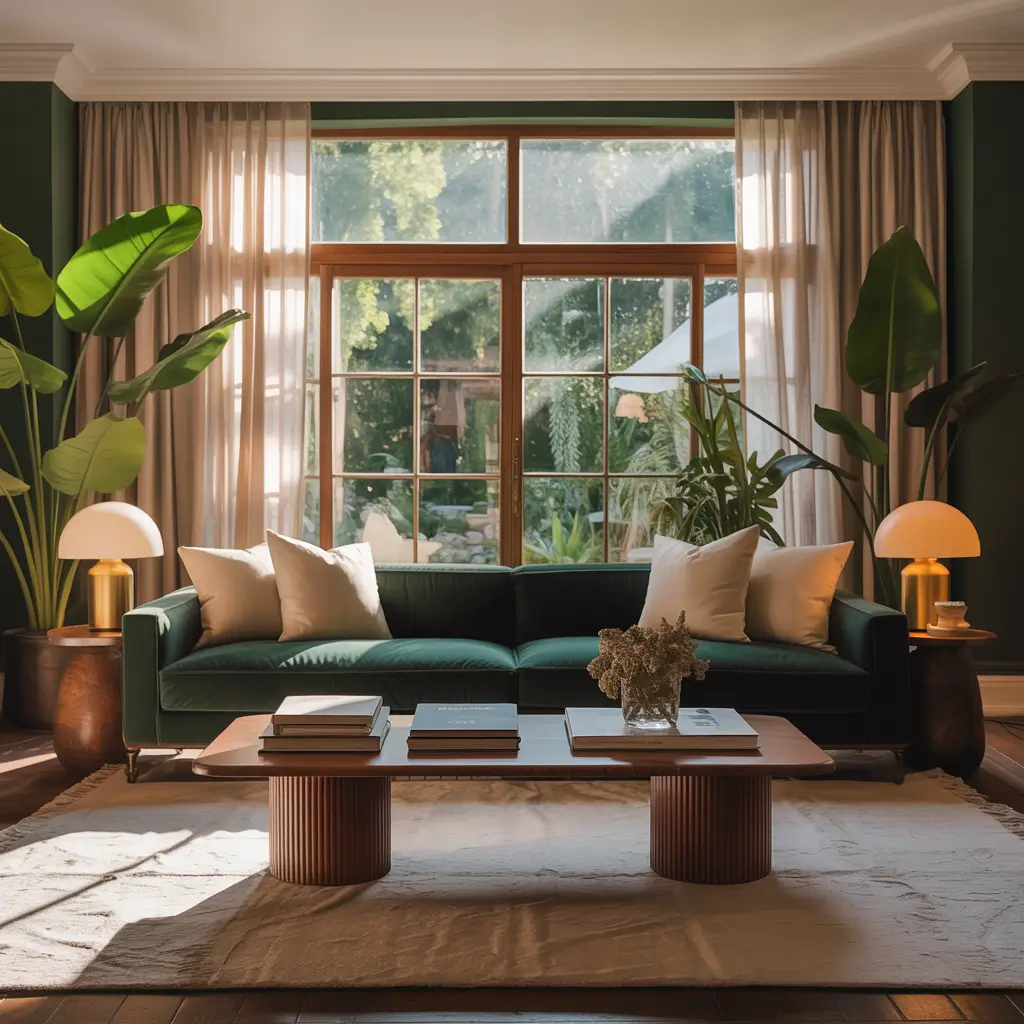
Dark green velvet is basically the definition of luxury without trying too hard. I painted three walls in my living room deep forest green last year and added a hunter green velvet sofa, and the combination creates this enveloping, cozy atmosphere that makes everyone want to stay forever. The velvet texture catches light in this amazing way that prevents the dark color from feeling flat or oppressive.
Why Velvet and Dark Green Are Soulmates
The magic of pairing velvet with dark green walls lies in the textural depth. Velvet has this incredible quality where it looks different depending on the angle and lighting. My hunter green sofa appears almost black in shadows and vibrant emerald where light hits it. This dynamic quality adds visual interest that solid dark walls alone can’t achieve.
I chose velvet specifically because flat fabrics would disappear against dark walls. The subtle sheen and texture of velvet creates necessary contrast while maintaining the moody, luxurious vibe. Linen would work too, but velvet just feels right with dark green—like they were meant to be together.
Creating Cozy Without Claustrophobic
The biggest dark green fear? Ending up with a cave instead of a cozy room. I prevent this by balancing the darkness strategically:
- Keep the ceiling white (non-negotiable for me)
- Use abundant warm lighting at multiple levels
- Add metallic accents that reflect light
- Include mirrors to bounce light around
- Layer in cream and warm neutrals
My fourth wall stays white with built-in shelving, creating breathing room that prevents the green from overwhelming. This breaks up the darkness while maintaining the cozy envelope effect.
Layering Textures for Warmth
Dark rooms demand textural variety to avoid flatness:
- Velvet sofa (smooth with subtle nap)
- Chunky knit throws in cream
- Faux fur pillows for contrast
- Jute rug for organic texture
- Smooth leather ottoman
I probably have seven different textures in my dark green living room, and each one contributes to the cozy, touchable atmosphere. Without this variety, the room would feel one-dimensional despite the dramatic color.
2. Modern Dark Green and Gold Luxury Space
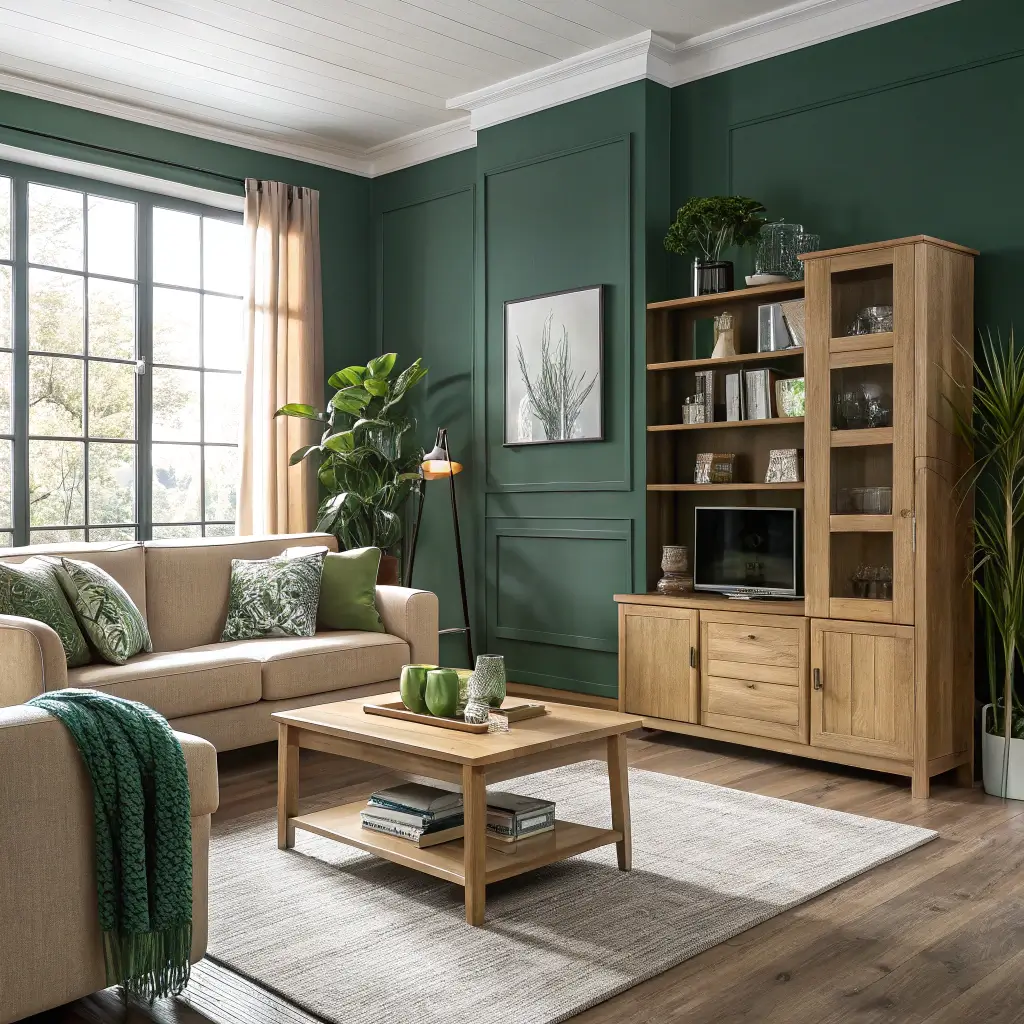
Dark green and gold together create instant sophistication that looks way more expensive than it actually is. My sister transformed her living room with deep emerald walls and gold accents throughout, and people genuinely think she hired an interior designer. The combination screams luxury without being pretentious about it.
The Psychology of Green and Gold
Something about dark green and gold together reads as elegant and established. Maybe it’s the jewel tone association, or maybe it’s that these colors appear together in nature (think forest floor dappled with sunlight). Whatever the reason, the combo works beautifully.
She painted her walls a saturated emerald and added gold through:
- Brass floor lamps and sconces
- Gold-framed mirrors and artwork
- Coffee table with gold legs
- Gold decorative objects
- Even gold coasters (commitment!)
Balancing Luxury Without Going Gaudy
Too much gold crosses from elegant into Vegas casino territory fast. I helped her follow the “less is more” rule—gold appears throughout but never dominates. The emerald walls are 60% of the visual weight, neutrals are 30%, and gold is just 10%. That 10% makes all the difference.
The trick is distributing gold evenly rather than clustering it. One gold lamp on each side of the room, one gold-framed mirror, gold coffee table legs—the eyes move around naturally without getting stuck on one overly gilded area.
Modern Furniture Shapes
Modern luxury demands clean-lined furniture. She chose:
- Sofa with straight arms and low profile
- Geometric coffee table (not ornate)
- Simple side tables with gold bases
- Streamlined media console
- Minimal decorative objects
The simple shapes let the color combination and metallic accents do the talking. Fussy, traditional furniture would fight with the bold walls instead of complementing them.
3. Dark Green Scandinavian Minimalist Living Room
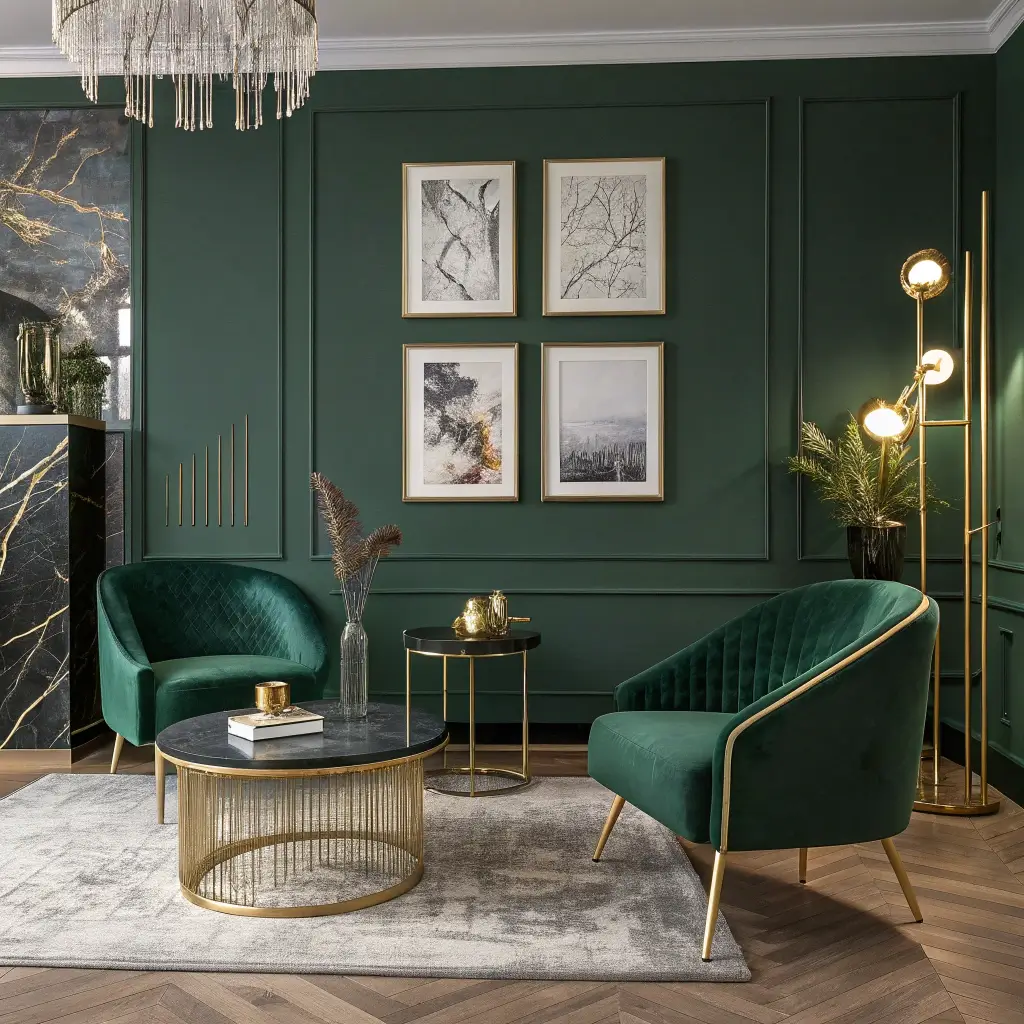
Dark green Scandinavian rooms sound contradictory—isn’t Scandi all about light and bright? But I visited Copenhagen last year and saw dark green in multiple minimalist homes. The combination works beautifully when you balance the darkness with Scandinavian principles of light, natural materials, and function.
Scandi Meets Moody
The secret to Scandinavian dark green rooms lies in restraint. I painted one wall in my home office deep pine green while keeping the other three walls white. This creates a focal point without overwhelming the Nordic aesthetic. The dark green adds drama that traditional Scandi sometimes lacks.
Choosing the right dark green matters here. I went with a cool, slightly grayed forest green rather than warm hunter green. This cooler tone harmonizes with Scandinavian design’s preference for cool, clear colors.
Light Wood as Essential Balance
Dark green walls need light wood to prevent heaviness:
- Pale oak coffee table
- Birch shelving units
- Ash wood chairs
- Light wood picture frames
- Natural wood plant stands
The contrast between dark walls and light wood creates the visual interest minimalist rooms need without adding clutter or busy patterns. It’s elegant simplicity at its best.
Minimalist Doesn’t Mean Empty
My dark green Scandi room includes carefully chosen pieces:
- One dark green accent wall
- Simple gray sofa with clean lines
- Light wood coffee table
- Two white ceramic table lamps
- Three strategically placed plants
- One large piece of simple artwork
Each item serves a purpose and contributes to the calm, uncluttered atmosphere. Nothing feels excessive or unnecessary, but the room doesn’t feel sparse either.
Also Read: 10 Trendy Green Living Room Ideas and Furniture Styling
4. Bohemian Dark Green Textured Lounge
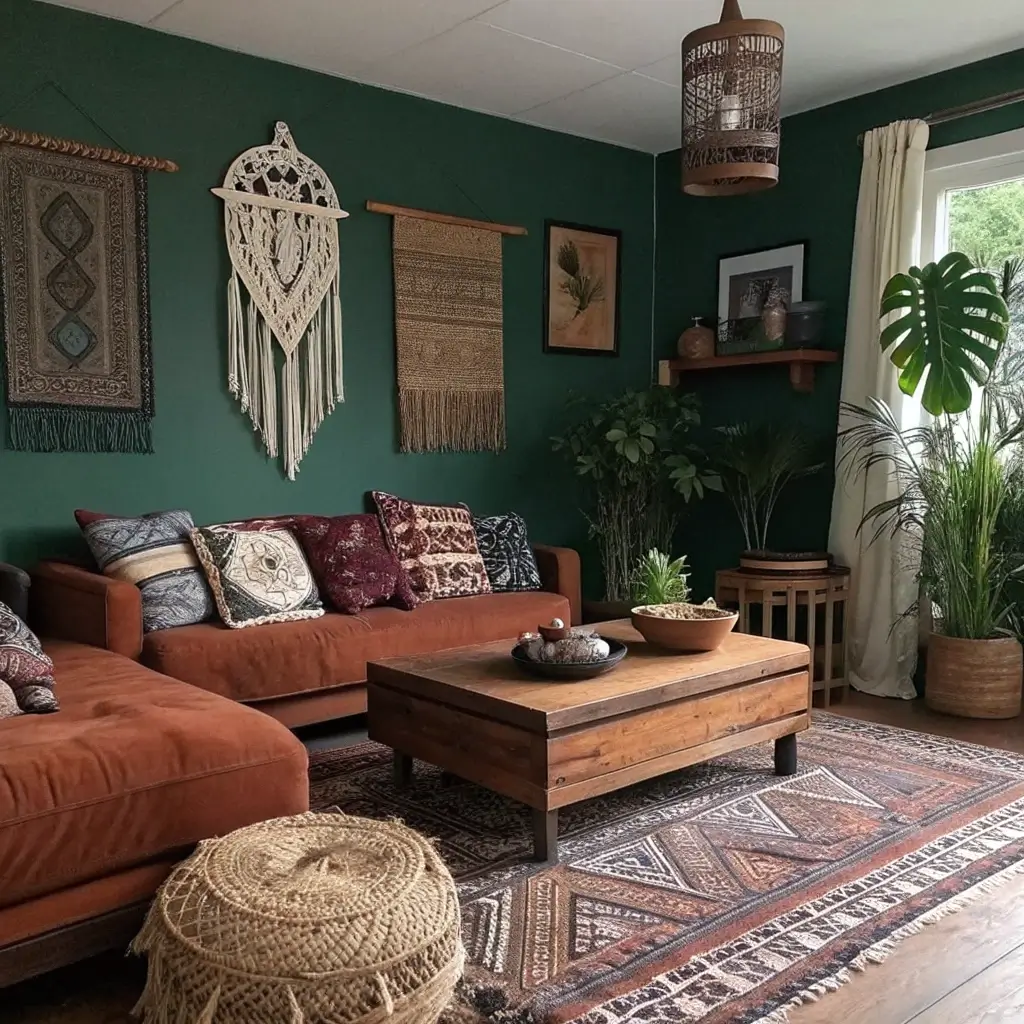
Dark green and boho style create this globally-inspired, eclectic vibe that feels collected rather than decorated. I helped my cousin design her living room around dark green walls and boho elements, and the result feels like a chic riad in Marrakech. The dark green grounds all the boho patterns and textures beautifully.
The Boho-Dark Green Connection
Boho celebrates natural materials and earthy colors, making dark green a perfect backdrop. We painted her walls a deep olive green with subtle brown undertones. This warmth complements boho’s terracotta, rust, and cream palette better than cooler greens would.
The dark walls actually help boho’s typically busy aesthetic by providing a solid, grounding element. Against lighter walls, all those patterns and textures can feel chaotic. The dark green creates cohesion.
Texture Layering Strategy
Boho demands maximum texture, and dark green walls handle it:
- Moroccan wedding blanket on sofa
- Macramé wall hanging (huge one)
- Woven rattan furniture
- Kilim pillows in various patterns
- Jute rug layered over vintage Persian
- Velvet cushions mixed with linen
We probably have twelve different textures in that room, and the dark green walls prevent it from feeling overwhelming. The solid color backdrop lets the textures shine.
Global Accents and Treasures
Boho loves global influences:
- Moroccan poufs for extra seating
- Indian brass trays as decorative objects
- Turkish textiles
- African mudcloth pillows
- Vintage finds from various countries
The dark green creates a gallery wall effect, letting these collected treasures stand out against the dramatic backdrop.
5. Minimalist Dark Green with White Accents
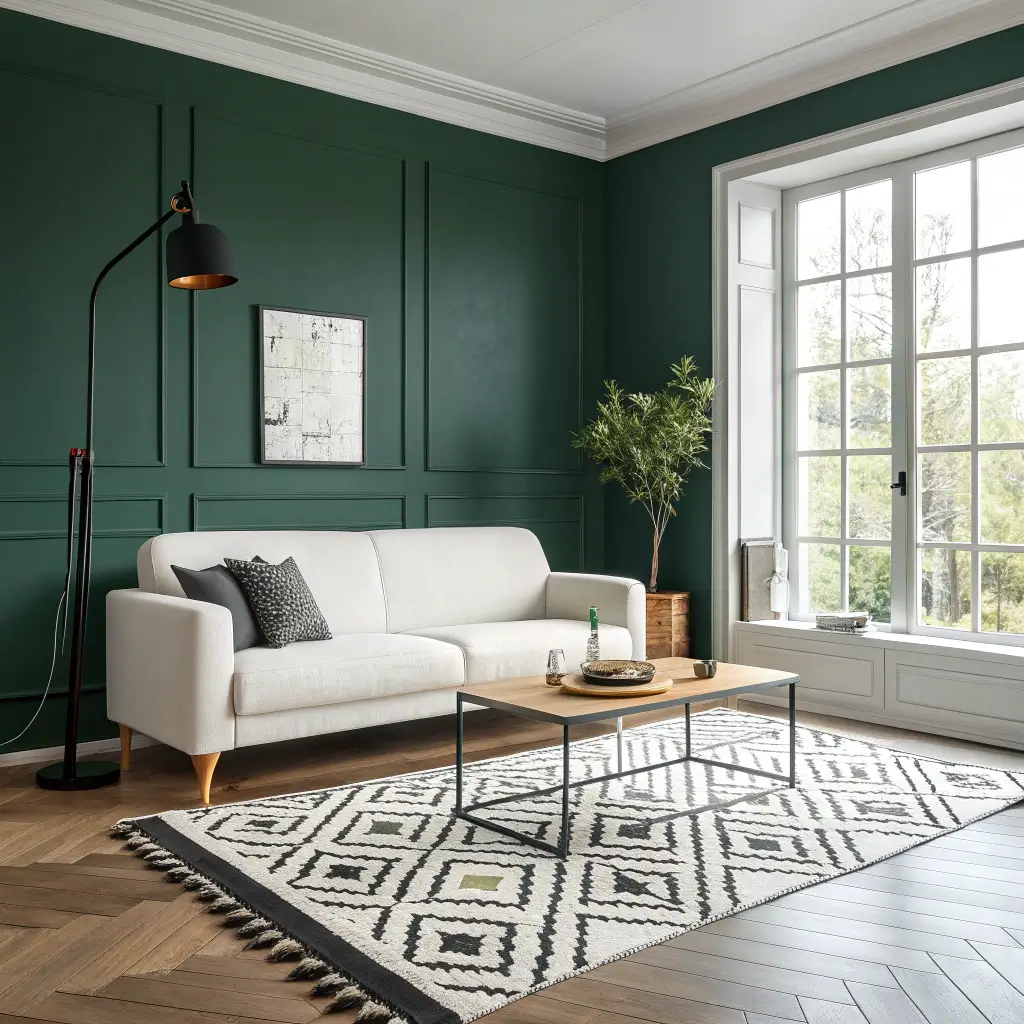
Dark green minimalism with white accents creates this striking, graphic look that feels incredibly sophisticated. I redesigned my guest room using this exact combination—deep forest green walls with strictly white furniture and accents—and the contrast is stunning.
The Power of Contrast
Something about dark green against crisp white creates immediate visual drama. My forest green walls make white furniture pop like snow against evergreens. The high contrast demands attention in the best way—bold without being chaotic.
I chose a saturated forest green rather than muddy olive. You need clear, decisive color to hold its own against bright white. Wishy-washy greens would look dingy next to crisp white.
Strategic White Placement
Distributing white requires intentional planning:
- White sofa (major anchor)
- White coffee table and side tables
- White shelving units
- White picture frames
- White lamps and light fixtures
- White decorative objects
The white appears throughout the room at various heights and locations, creating rhythm and preventing the dark green from overwhelming.
Keeping It Minimal
The beauty of this combo is its simplicity:
- Dark green walls (three walls)
- White ceiling and trim
- White furniture exclusively
- Minimal accessories
- One or two plants maximum
- No patterns (solid colors only)
I limit myself to ten items in this room beyond the furniture. This restraint lets the green-white contrast be the star.
6. Rustic Dark Green Living Room with Fireplace
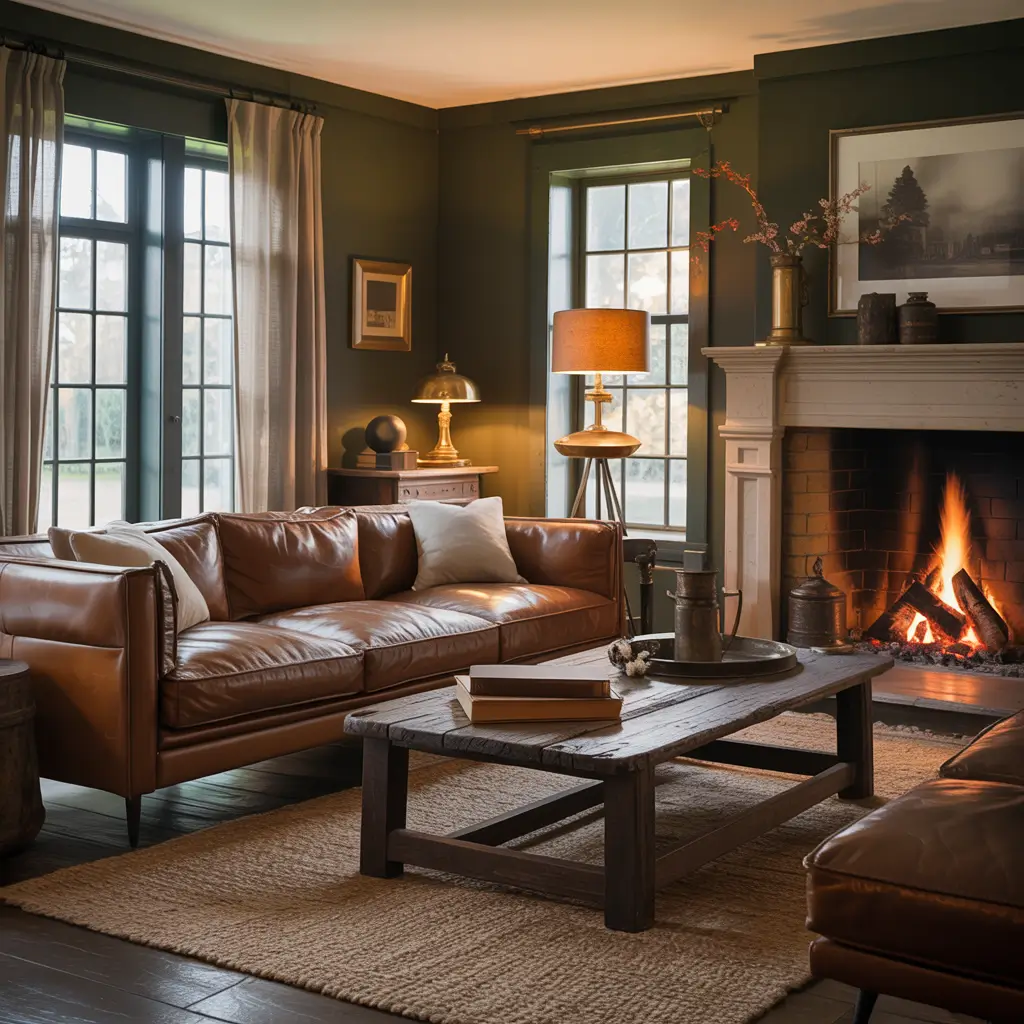
Dark green walls with rustic elements and a fireplace create this cozy cabin vibe that makes you want to curl up with a book forever. My parents transformed their living room using dark hunter green around their stone fireplace, and it feels like a sophisticated lodge.
The Fireplace as Focal Point
Dark green walls make fireplaces stand out dramatically. My parents’ stone fireplace looks incredible against deep hunter green—the natural stone texture pops against the solid color backdrop. The green enhances the rustic materials rather than competing with them.
We chose hunter green specifically for its warm undertones that complement the warm tones in the stone and wood. Cooler greens would clash with the rustic materials.
Rustic Material Combinations
Dark green loves natural, rustic materials:
- Reclaimed wood beams (exposed ceiling)
- Stone fireplace surround
- Leather furniture in cognac brown
- Rough-hewn coffee table
- Antler chandelier (yes, really)
- Wool plaid throws
These materials bring warmth that prevents the dark green from feeling cold or formal. Everything feels organic and connected to nature.
Creating the Cabin Vibe
Elements that enhance the rustic atmosphere:
- Wood stacked beside fireplace
- Vintage wool blankets
- Iron fireplace tools
- Leather-bound books displayed
- Antique wooden boxes
- Natural fiber rugs
The dark green creates a cocoon effect that makes the rustic elements feel even cozier and more inviting.
Also Read: 12 Chic Green Sofa Living Room Ideas and Modern Styling
7. Compact Dark Green Space-Saving Living Room
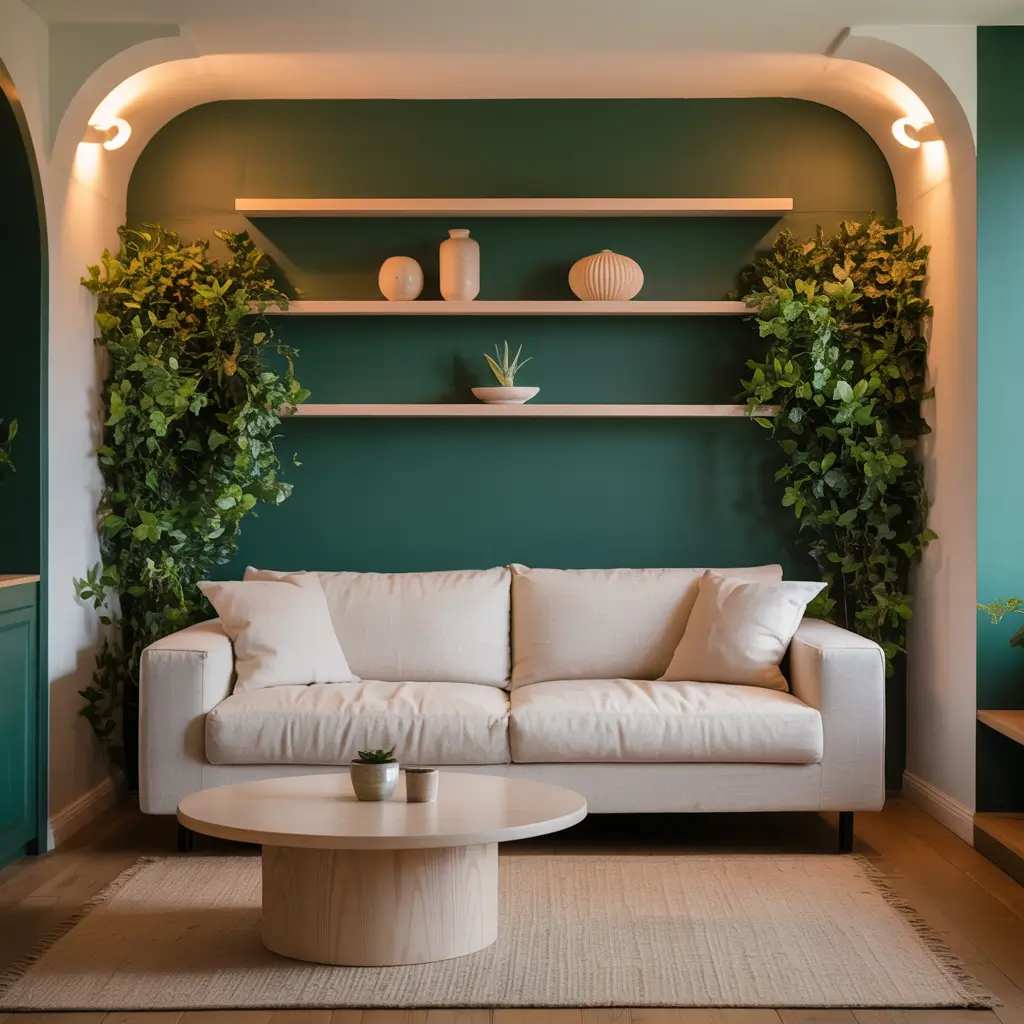
Dark colors in small spaces break all the traditional rules, but FYI, they actually work beautifully when done right. My apartment living room is barely 11×13 feet, and I painted it deep teal-green. Instead of shrinking the space, the dark color makes it feel intentional and designed rather than just small.
Why Dark Green Works in Small Rooms
The secret? Dark colors in small spaces create an enveloping, cozy feeling rather than a cramped one. My small living room feels like a jewel box now—intimate and special rather than inadequate. The dark green eliminates the visual boundaries, making you less aware of the actual dimensions.
I chose a deep teal-green with blue undertones because it has depth and richness. Flat, muddy greens would feel depressing in a small space. You need color with clarity and saturation.
Space-Saving Furniture Essentials
Small dark rooms need smart furniture choices:
- Floating media console (shows floor)
- Armless loveseat (saves width)
- Nesting tables (flexibility)
- Wall-mounted shelving (no floor footprint)
- Ottoman with storage
Every piece serves multiple purposes, and nothing takes up unnecessary space. The dark walls make the furniture feel more intentional.
Light Maximization Strategy
Small dark rooms absolutely require abundant light:
- Three light sources minimum
- All bulbs warm white (2700K)
- Large mirror reflecting window light
- Metallic accents to bounce light
- Sheer curtains, not heavy drapes
I probably overlighted my small dark living room, but it prevents the cave effect and maintains the cozy-not-cramped vibe.
8. Monochromatic Dark Green Elegant Lounge
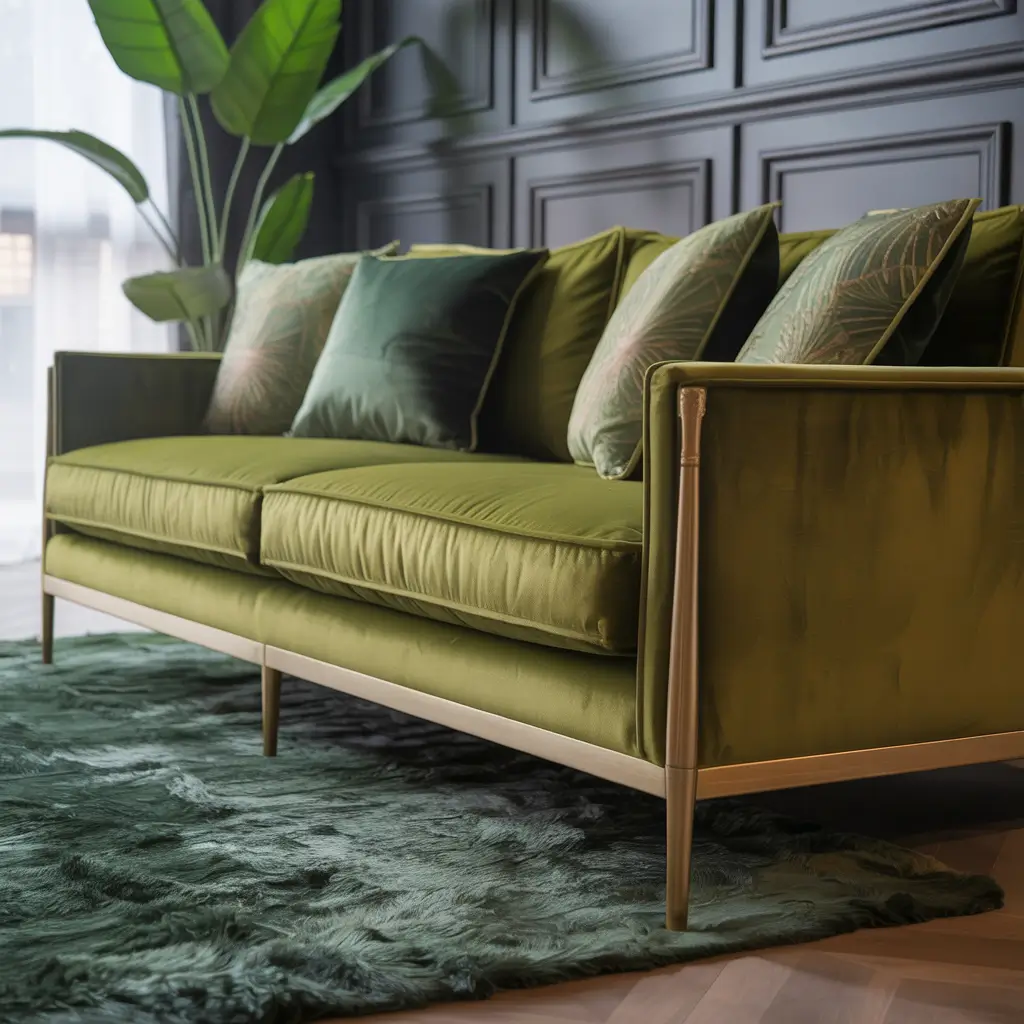
Going full monochromatic with dark green creates this incredibly sophisticated, designed look. My friend designed her entire living room in varying shades of green—from deep forest walls to sage accents—and the layered effect is stunning.
The Monochromatic Magic
Using multiple shades of one color creates depth and interest without pattern or competing colors. Her room includes:
- Deep forest green walls
- Hunter green velvet sofa
- Sage green accent chair
- Olive green pillows
- Mint green artwork
- Various green plants
The different greens create a gradient effect that’s calming and visually rich.
Texture Is Critical
Without color variation, texture becomes essential:
- Velvet sofa (luxe sheen)
- Linen curtains (soft drape)
- Wool rug (cozy texture)
- Silk pillows (subtle shine)
- Matte walls (flat backdrop)
Each green element has a different texture, preventing the monochromatic scheme from feeling flat or boring.
Breaking Up the Green
Pure monochrome can overwhelm, so we added:
- Brass accents throughout
- Natural wood coffee table
- White ceiling and trim
- Cream throw blanket
- One black metal lamp
These neutral touches provide visual rest and prevent green overload.
9. Dark Green Living Room with Patterned Wallpaper
Dark green wallpaper with patterns creates instant drama and personality. I installed botanical wallpaper in deep green on one wall, and it transformed my living room from nice to “wait, is this a boutique hotel?”
Choosing the Right Pattern
Not all patterns work with dark green. I chose botanical wallpaper with:
- Subtle metallic gold accents
- Large-scale leafy pattern
- Deep forest green background
- Hand-painted look
- Sophisticated rather than cutesy vibe
The pattern adds interest without business—it’s detailed enough to reward close inspection but reads as solid dark green from a distance.
One Wall vs. All Walls
IMO, dark patterned wallpaper works best on one accent wall. I papered the wall behind my sofa, keeping the other three walls solid dark green paint. This creates a focal point without overwhelming.
Going all walls with dark patterned wallpaper risks feeling too busy. Unless you’re committed to maximum drama, stick with one feature wall.
Styling Around Patterned Walls
The wallpaper is the star, so everything else stays simple:
- Solid color furniture (no patterns)
- Minimal accessories
- Simple artwork or none
- Solid curtains
- Limited decorative objects
I let the wallpaper do all the heavy lifting design-wise. Adding more patterns would create visual chaos.
Also Read: 10 Stylish Green Couch Living Room Ideas with Warm Accents
10. Indoor Jungle: Dark Green Plant-Filled Living Room
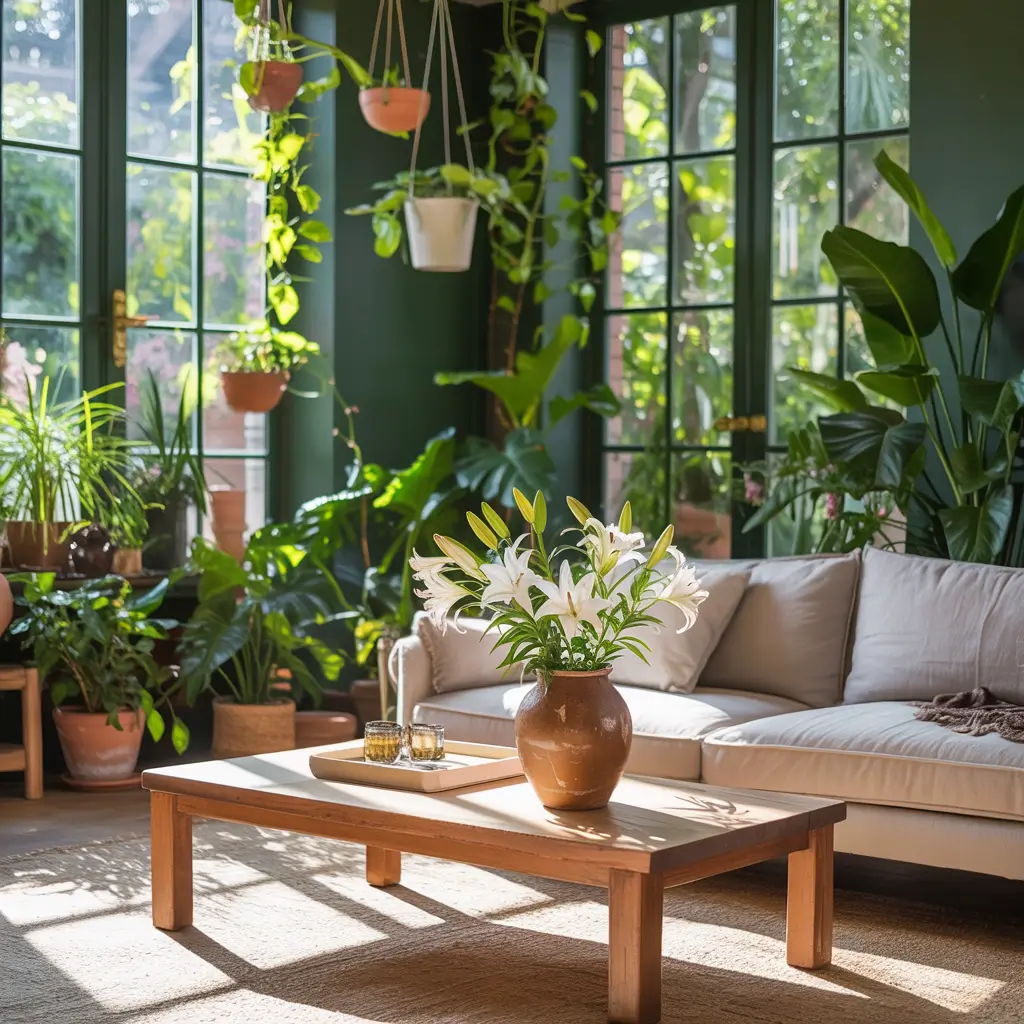
Dark green walls with abundant plants create this lush, jungle-like atmosphere that feels alive and energizing. I have 23 plants in my dark green living room (yes, I counted), and instead of feeling crowded, they make the space feel intentional and vibrant.
The Plant-Wall Synergy
Dark green walls create the perfect backdrop for plants. The various shades of green leaves pop against the solid dark background, creating this layered, dimensional effect. Every plant becomes a living piece of art.
I painted my walls deep pine green—cool enough to make bright green leaves stand out but warm enough to feel inviting rather than cold.
Strategic Plant Placement
Twenty-three plants could easily look chaotic. I organize them strategically:
- Large floor plants (fiddle leaf fig, monstera) anchor corners
- Medium plants (snake plants, pothos) fill shelving
- Trailing plants (philodendron, string of pearls) add vertical interest
- Small plants (succulents) cluster on surfaces
- One statement plant as focal point
Each plant has a specific location and purpose in the overall composition.
Low-Maintenance Green Choices
Not everyone has time for high-maintenance plants. I focus on forgiving varieties:
- Snake plants (basically indestructible)
- Pothos (thrives on neglect)
- ZZ plants (drought-tolerant champions)
- Philodendrons (easy and fast-growing)
- Rubber plants (sturdy and striking)
These plants survive my occasional forgetfulness and still look amazing against the dark walls.
Creating Jungle Atmosphere
Beyond plants, jungle vibes need:
- Natural materials (rattan, wood, jute)
- Earthy color palette
- Organic textures
- Minimal synthetic materials
- Good humidity (plants love it)
My dark green plant room feels like an urban jungle that somehow makes sense in a regular apartment.
Making Dark Green Living Rooms Work for You
After exploring ten different dark green living room approaches, here’s my honest take: dark green is one of the most versatile, livable colors you can choose.
It’s bold enough to make a statement but natural enough to feel timeless. I’ve lived with dark green walls for two years now and still love them as much as day one.
The key is choosing the right shade for your specific space and style. Cooler dark greens (with blue undertones like teal or pine) feel more modern and fresh.
Warmer dark greens (with brown or yellow undertones like hunter or olive) feel cozier and more traditional. Forest green sits in the middle, working beautifully across multiple styles.
Consider your natural light situation carefully. North-facing rooms might need warmer dark greens to counteract cool light. South-facing rooms can handle cooler dark greens without feeling cold.
I learned this after painting my north-facing room a cool teal and wondering why it felt so unwelcoming (fixed it by repainting in warmer forest green).