12 Chic Sage Green Living Room Ideas and Minimalist Touches
- Living Room Decor
 Ben
Ben- 0
- 29 minutes read
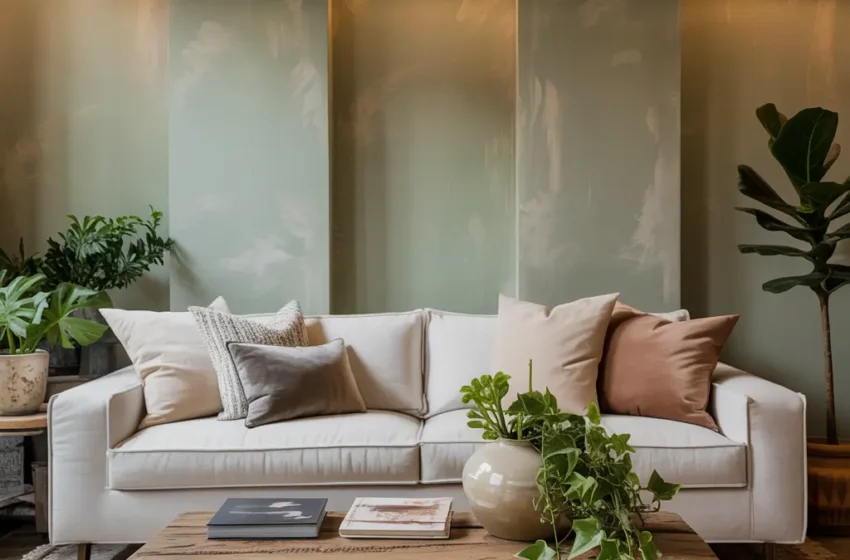
Sage green walked into my life four years ago and basically saved my living room from eternal blandness. I’d been stuck in a beige rut (you know the one – where everything looks like oatmeal) until I painted one wall sage on a whim.
That single wall changed everything. Suddenly, my space felt alive, sophisticated, and like somewhere I actually wanted to hang out instead of just exist.
Here’s what makes sage green so ridiculously perfect for living rooms: it’s basically nature’s neutral. It plays nice with literally everything you already own while adding actual personality to your space.
Unlike trendy colors that scream “2019 called and wants its millennial pink back,” sage green has this timeless quality that just works.
I’ve tried sage green in every possible way in my living room over the years, from tiny accents to full-wall commitments.
Some experiments worked brilliantly, others taught me valuable lessons (like maybe don’t paint your ceiling sage – trust me on this). Let me share twelve sage green living room ideas that actually work in real life, not just on Pinterest.
1. Soft Sage Accent Wall Living Room
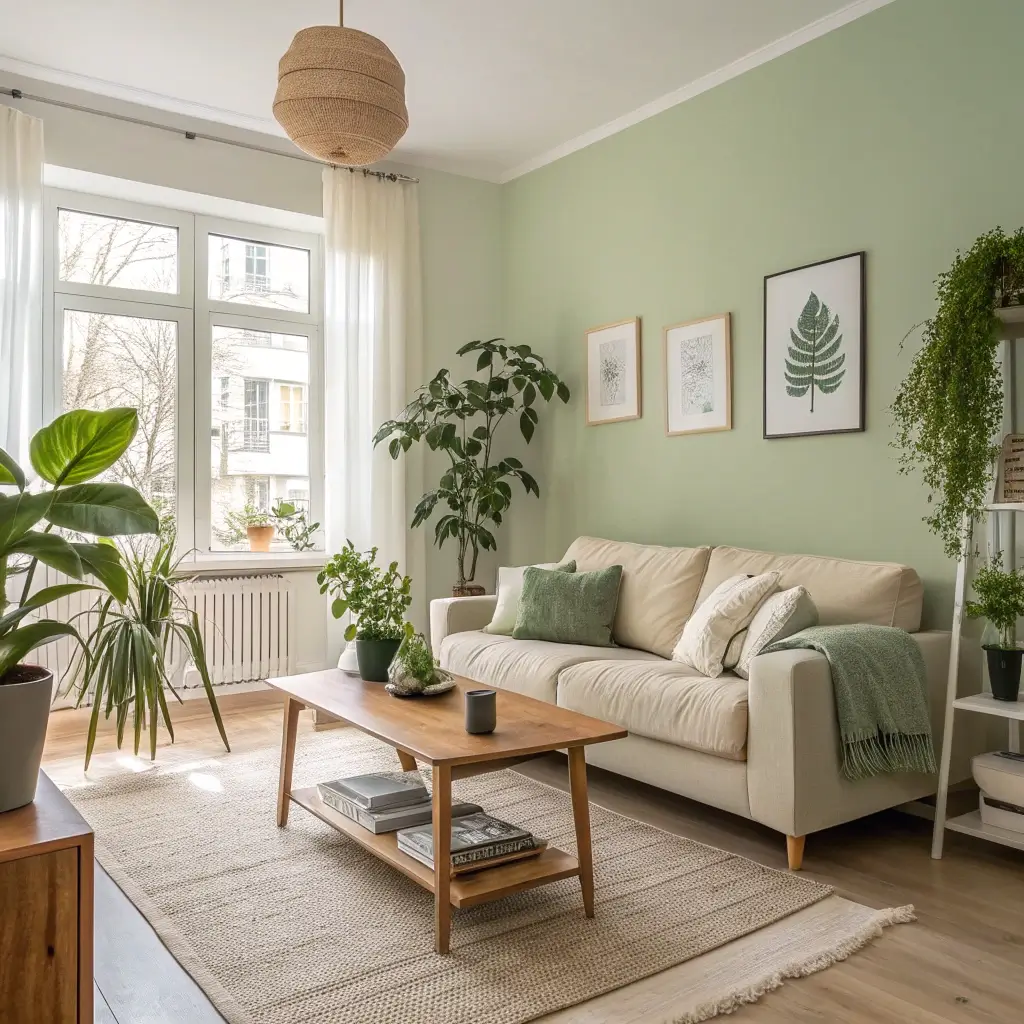
A soft sage accent wall hits that sweet spot between boring and overwhelming. I painted my first accent wall sage because I was too chicken to commit to all four walls, and it turned out to be the perfect introduction to color. The wall behind my sofa transformed from forgettable backdrop to the star of the show.
The beauty of a sage accent wall lies in its versatility. It works as a neutral base that makes other colors pop while adding enough interest to stand on its own. My white sofa suddenly looked intentional instead of basic. My wood furniture felt warmer. Even my black-and-white photos gained new depth.
Choosing the Right Wall
Pick your accent wall strategically. The wall behind your sofa usually works best – it’s naturally a focal point and you don’t stare at it constantly (sage fatigue is real). The wall with your TV can work too, though some people find colored walls behind screens distracting.
Test your paint extensively before committing. Sage can shift dramatically in different lights. What looks perfect at noon might turn weirdly gray at night. I paint massive swatches and live with them for a week. Yes, it looks ridiculous. No, I don’t care.
Consider the undertones in your sage. Some lean blue, others lean gray or yellow. Match the undertone to your existing decor. My slightly gray-sage works perfectly with my cool-toned furniture, but it would clash with warm woods.
2. Sage Green Sofa Styling Concept
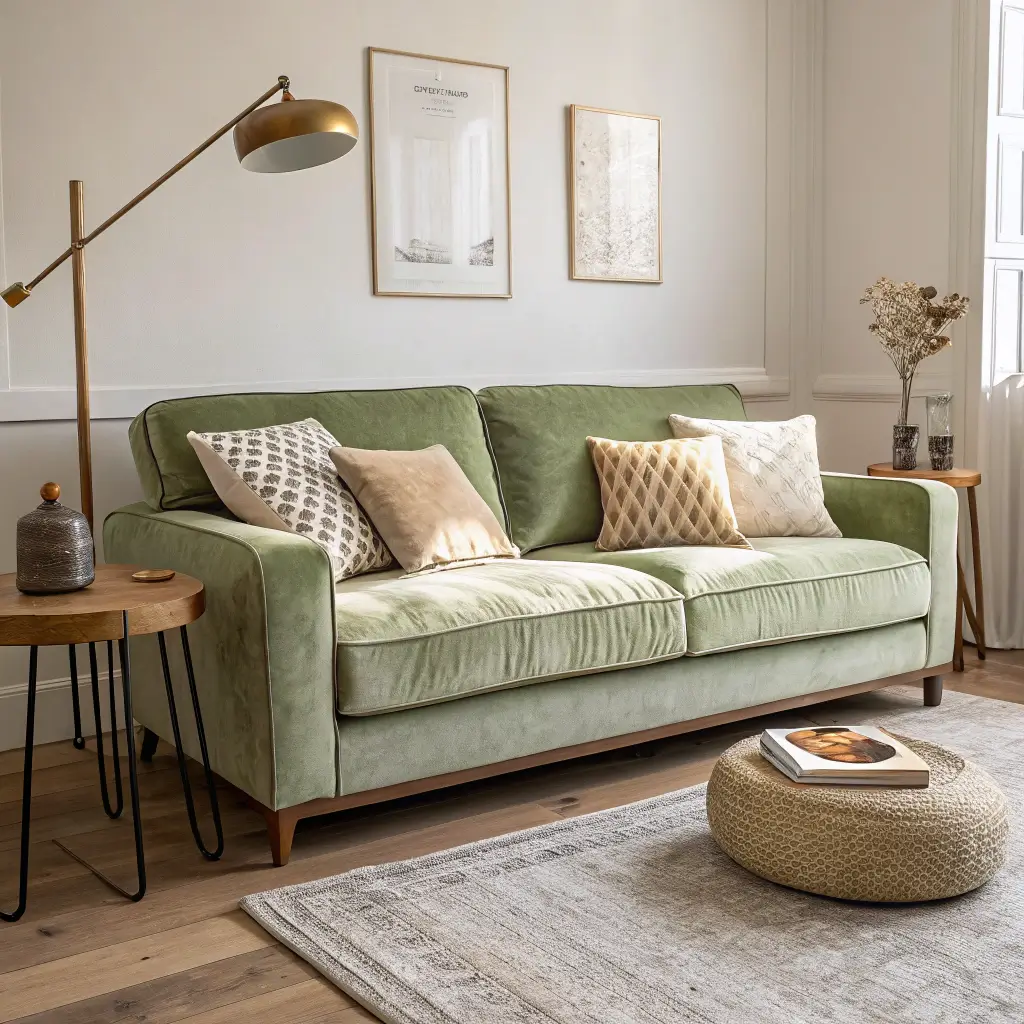
A sage green sofa changes the entire game. I resisted colored furniture for years (what if I get sick of it?), but my sage velvet sofa proved all my fears wrong. It’s been three years, and I love it more now than the day it arrived.
Sage sofas work because they’re colorful enough to be interesting but neutral enough to work with changing decor. Want to go boho? Add some terracotta pillows. Feeling minimal? Stick to white and wood. Christmas? Red accents look incredible. The sofa adapts to whatever mood you’re in.
Making a Sage Sofa Shine
Layer textures to prevent your sage sofa from looking flat. I mix velvet pillows with linen, add a chunky knit throw, maybe a leather pillow for contrast. The different textures catch light differently and create visual interest.
Don’t match everything to your sofa. That matchy-matchy sage-everything look screams “I bought the showroom set.” Instead, use complementary colors. Soft pinks, warm whites, rich browns, even navy – they all play beautifully with sage.
Consider your wall color carefully with a sage sofa. White walls keep things fresh and modern. Warm beige or greige adds coziness. I even know someone with burgundy walls and a sage sofa – sounds crazy but looks amazing.
3. Modern White and Sage Living Room
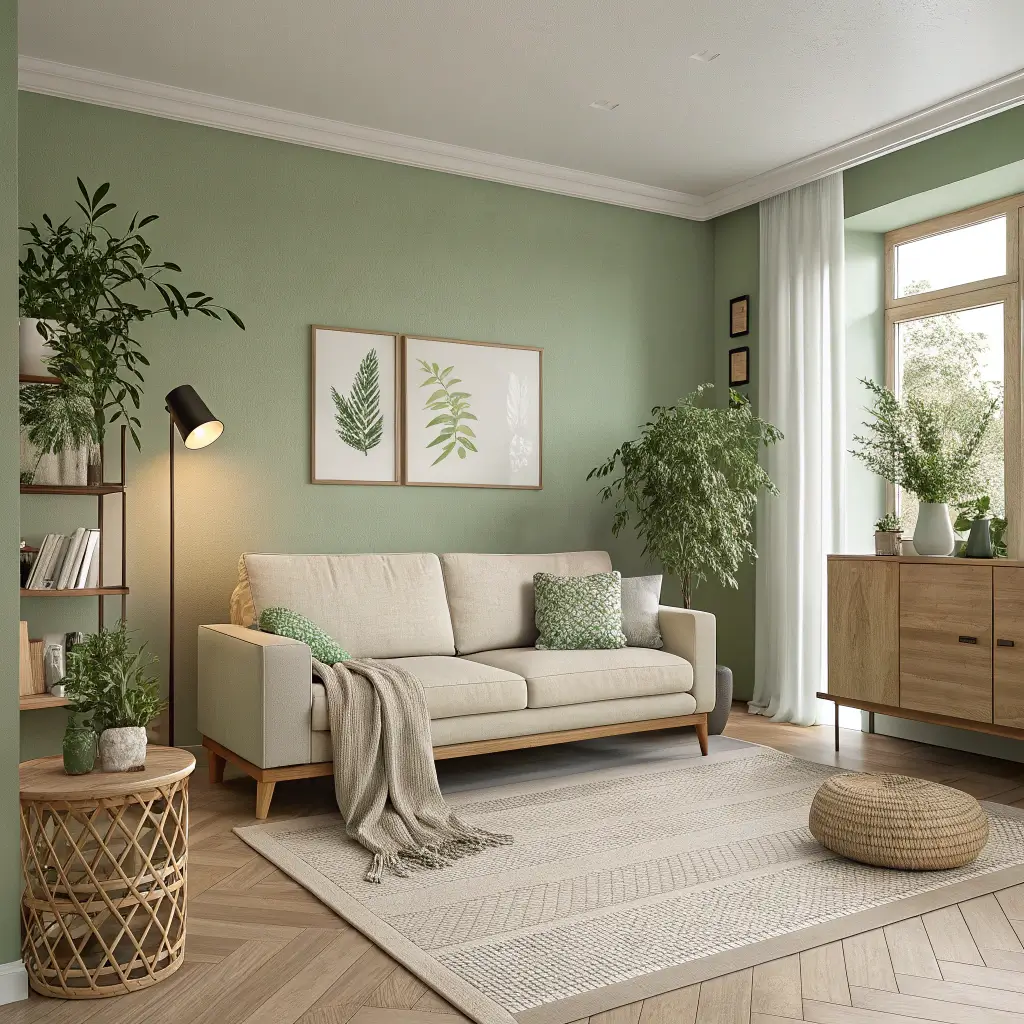
White and sage together create the kind of fresh, modern space that makes everyone ask “Did you hire a designer?” I discovered this combo by accident when I added sage pillows to my all-white living room. The transformation was so dramatic I immediately started planning bigger sage additions.
This combination works because white amplifies sage’s calming qualities while sage prevents white from feeling sterile. It’s like they bring out the best in each other. Plus, the high contrast creates visual interest without trying too hard.
Balancing White and Sage
Use the 60-30-10 rule for perfect balance. I do 60% white (walls, large furniture), 30% sage (curtains, accent chair, rug), and 10% accent colors (usually wood tones or black). This ratio keeps things harmonious without being boring.
Add different shades of both colors for depth. Not all whites are created equal – mix warm and cool whites. Same with sage – layer light and darker tones. My living room has at least three shades of each, and it prevents that flat, one-note look.
Bring in natural elements to bridge white and sage. Wood furniture, jute rugs, woven baskets – these organic materials make the color combo feel intentional and grounded. Plus, they add warmth to what could otherwise feel too clean.
Also Read: 10 Modern Green Curtains Living Room Ideas Trending Now
4. Cozy Sage Green Minimalist Space
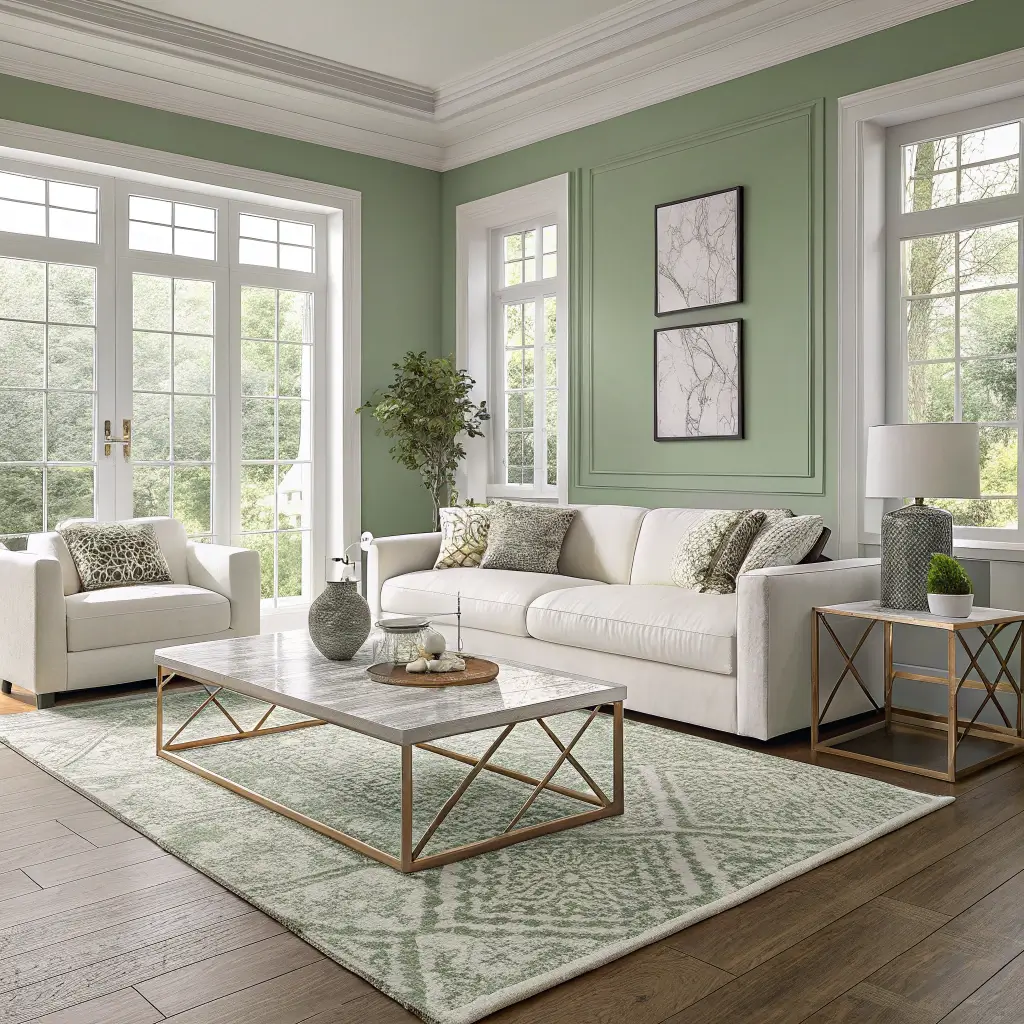
Minimalism and sage green might sound contradictory, but they actually create magic together. Sage adds warmth that pure minimalism often lacks while maintaining that clean, uncluttered vibe. I went through a major decluttering phase last year, and sage green saved my living room from looking like a sterile hospital waiting room.
The key to minimalist sage? Restraint and intention. Every sage element needs to earn its place. One sage accent wall, a single sage throw, maybe a ceramic vase – each piece should feel essential, not decorative.
Minimal But Not Boring
Quality becomes everything in minimalist spaces. That one sage element will get all the attention, so make it count. I invested in a gorgeous sage linen throw that cost more than I’d like to admit, but it anchors my entire living room.
Keep your sage muted for minimalist vibes. Bright sage feels too energetic for minimal spaces. Look for grayed or dusty sage tones that whisper rather than shout. They should enhance the calm, not disrupt it.
Texture replaces color in minimal design. Since you’re limiting color, vary your textures. A smooth sage wall, nubby sage pillow, maybe a glossy sage ceramic piece. The textural variety prevents your minimal space from feeling flat.
5. Sage Green and Natural Wood Living Room
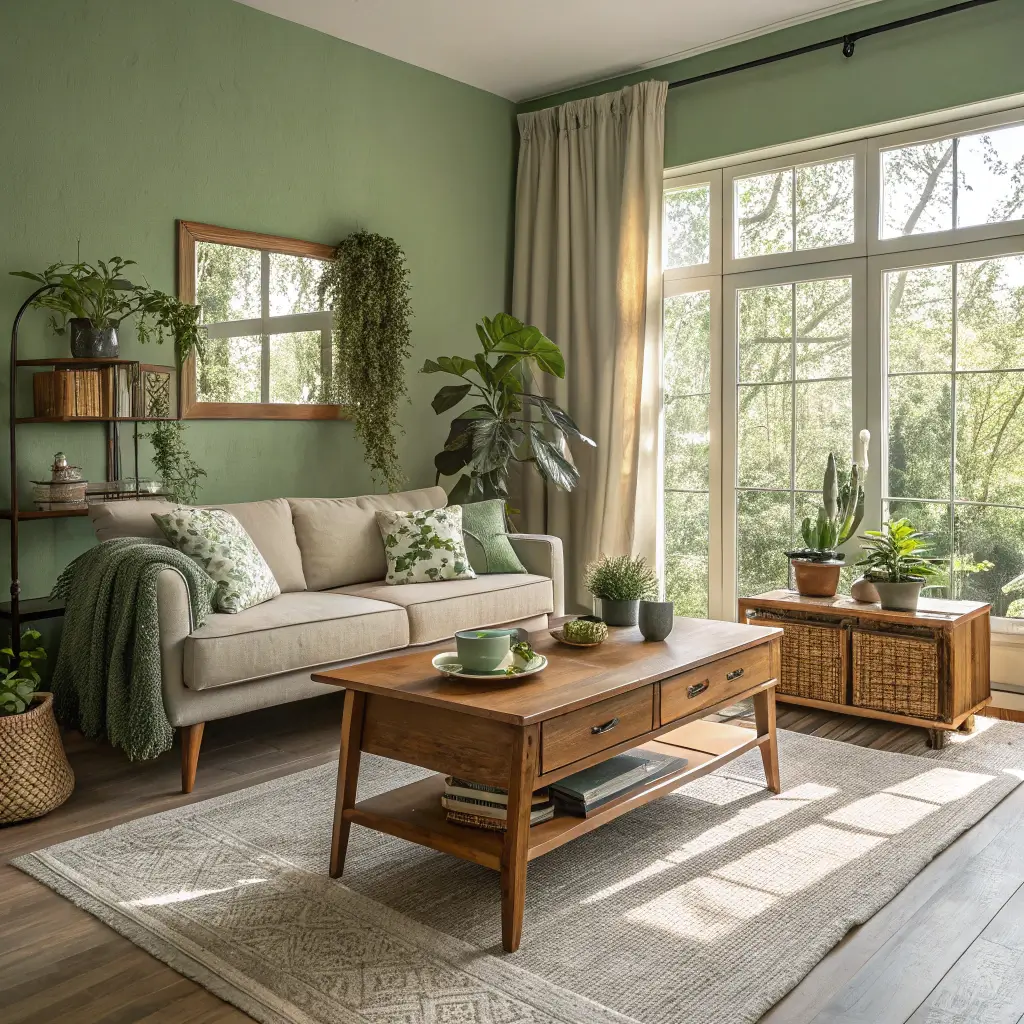
Sage green and wood together feel like bringing the forest indoors in the best possible way. This combo works on such a fundamental level – they literally grow together in nature. My living room has oak floors, a walnut coffee table, and sage walls, and visitors always comment on how “right” it feels.
Different woods pair differently with sage. Light woods like pine and birch keep things Scandinavian and fresh. Medium woods like oak add warmth without heaviness. Dark woods like walnut create sophisticated contrast. I’ve mixed all three, and sage unifies them beautifully.
Wood and Sage Harmony
Don’t try to match wood tones – embrace the mix. My mismatched wood furniture used to bug me until sage walls made everything look intentional. The green acts as a visual connector that makes different woods feel curated rather than random.
Layer in other natural materials. Leather, linen, jute, stone – these elements enhance the organic vibe. My leather chair against sage walls with a jute rug creates this layered natural look that feels expensive but mostly came from Facebook Marketplace.
Plants obviously work brilliantly here. Green plants against sage walls might sound redundant, but different greens together create beautiful depth. Plus, living plants with wood furniture and sage walls? That’s basically the holy trinity of natural design.
6. Boho Sage Green Living Room Decor
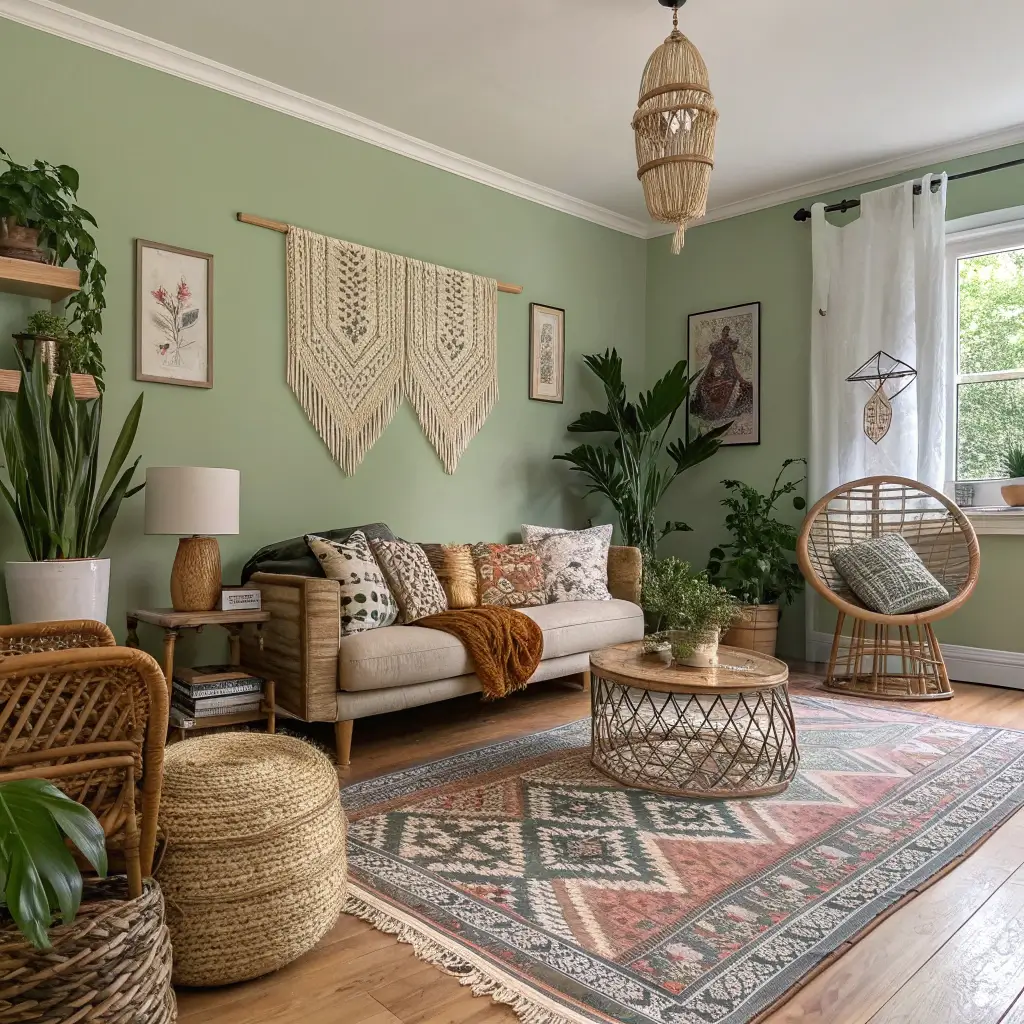
Sage green and boho style belong together like wine and cheese nights. The earthy tone grounds boho’s tendency toward chaos while maintaining that free-spirited vibe. My friend has the most incredible boho sage living room that looks collected over decades of travel (reality: mostly Target and thrift stores).
Boho sage works because you can layer endlessly without overwhelming the space. Sage provides a calming base that lets patterns, textures, and colors play without fighting. It’s like having a really chill friend who gets along with everyone.
Achieving Boho Without Chaos
Layer different shades of green fearlessly. Sage walls, olive pillows, emerald throws – in boho land, more is more. The natural color family keeps things cohesive even when you’re mixing patterns like crazy.
Mix cultural influences thoughtfully. Moroccan poufs, Indian textiles, Mexican blankets – sage green unifies different cultural elements. Just remember to appreciate, not appropriate. Know the stories behind your pieces.
Don’t forget the plants. Lots of plants. Hanging, standing, trailing – boho loves greenery, and sage walls create the perfect backdrop. I count at least fifteen plants in my friend’s boho sage paradise, and it works perfectly.
Also Read: 12 Stylish Green Living Room Decor Ideas for Every Home
7. Light Sage Green Small Living Room
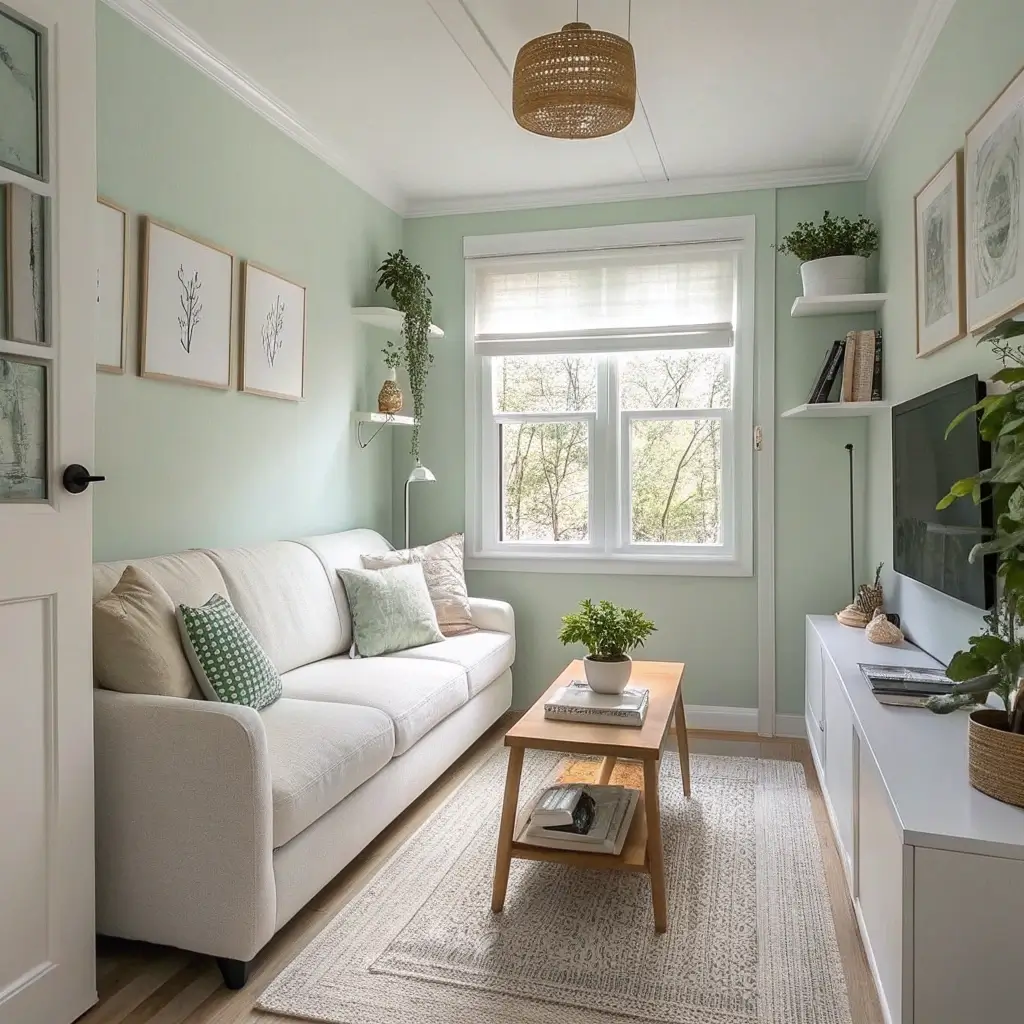
Light sage in small living rooms performs actual miracles. It adds color without weight, personality without closing in the walls. I learned this in my 500-square-foot apartment where every color choice could make or break the space.
The key with light sage in small spaces? Keep it airy and bright. Dark colors absorb light and make rooms feel smaller. Light sage reflects light while still giving you that gorgeous green presence. It’s basically having your cake and eating it too.
Maximizing Small Spaces
Paint all the walls, not just one. In small rooms, accent walls can actually make spaces feel more chopped up. All sage walls create flow and continuity. Trust me, it won’t be overwhelming if you choose the right light shade.
Use sage to create illusions. Paint your ceiling sage to make it feel higher. Extend sage onto built-ins to make them disappear. These tricks sound weird but work incredibly well. My painted sage bookshelf basically vanishes into the wall.
Keep everything else light and simple. Light sage walls, white or cream furniture, minimal accessories. The sage adds interest so everything else can stay basic. FYI, this approach also saves money – basic furniture looks intentional against interesting walls.
8. Sage Green Farmhouse Living Room
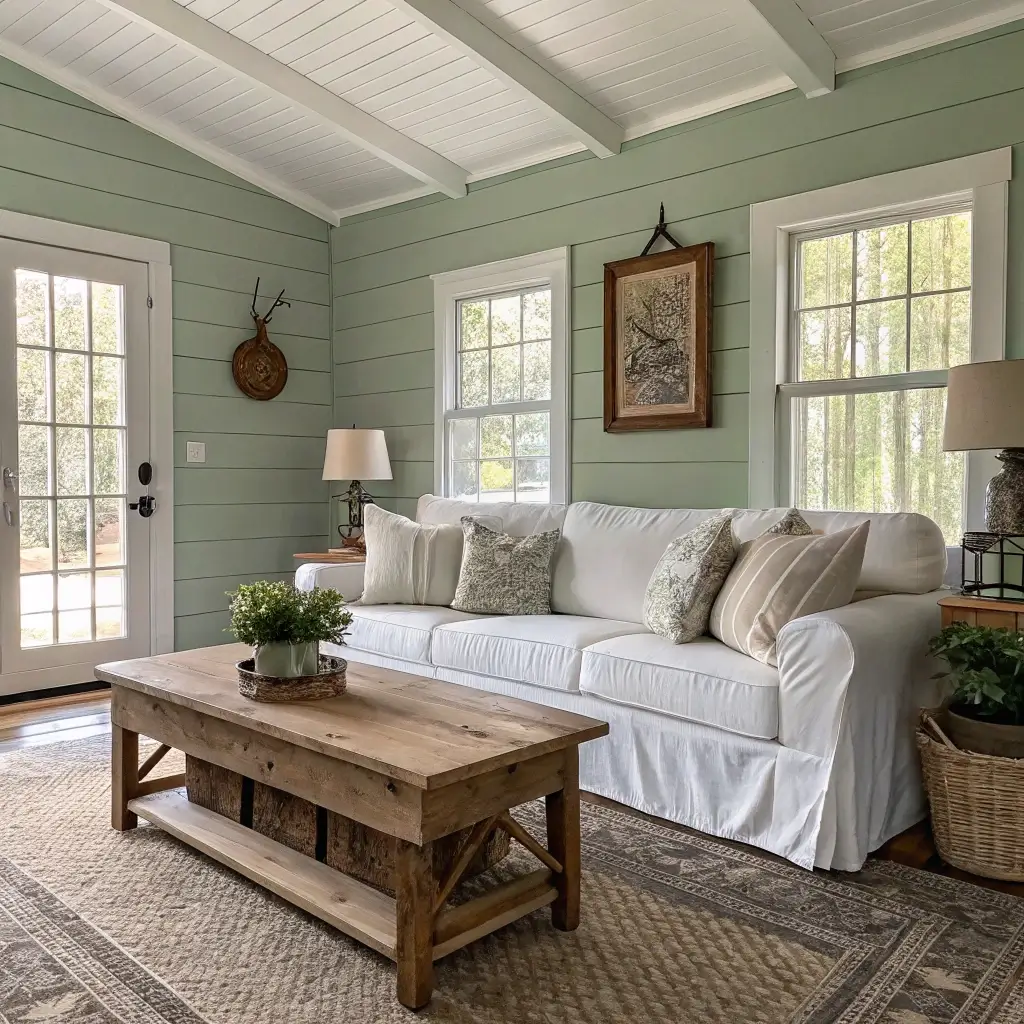
Sage green and farmhouse style create the coziest combination imaginable. It’s like wrapping your living room in a warm hug. I helped my sister design her farmhouse-inspired living room with sage as the base, and now everyone wants to move in with her.
Farmhouse sage works because both elements value comfort over perfection. Sage’s organic nature enhances farmhouse’s rustic charm. Plus, sage pairs beautifully with all those farmhouse staples – shiplap, barn wood, vintage finds.
Farmhouse Without the Clichés
Skip the obvious farmhouse trends. You don’t need a “Gather” sign to achieve the look. Instead, focus on authentic elements. Real wood, genuine vintage pieces, actual comfort. Sage ties these elements together naturally.
Mix metals confidently. Farmhouse loves mixed metals, and sage provides the perfect backdrop. Black iron, aged brass, copper – they all look amazing against sage walls. My sister’s mix of metal finishes looks collected, not chaotic.
Add pattern through textiles. Buffalo check, gingham, simple stripes – these farmhouse patterns pop against sage. But don’t overdo it. One patterned element per seating area keeps things balanced.
9. Sage Green and Gold Accent Living Room
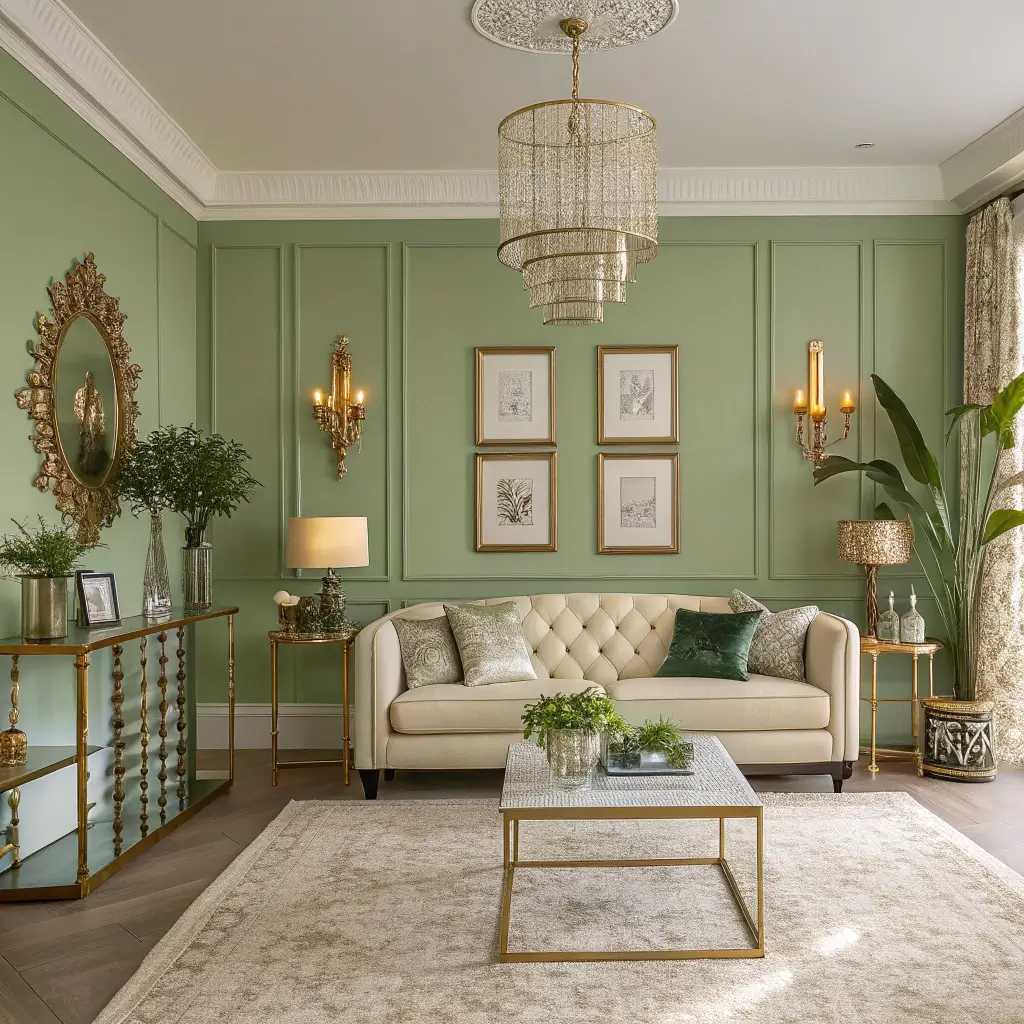
Sage and gold together create instant sophistication that looks way more expensive than it actually is. I discovered this combo at a fancy hotel and immediately came home to add gold touches to my sage living room. The transformation was like giving my space a promotion.
Gold warms up sage’s coolness while sage grounds gold’s flashiness. They balance each other perfectly. It’s elegant without being stuffy, glamorous without being gaudy.
Getting the Gold Balance Right
Use gold as an accent, not a theme. Gold picture frames, lamp bases, hardware – strategic touches that catch light. I learned the hard way that too much gold makes your living room look like King Midas had a breakdown.
Mix gold finishes for a collected look. Bright gold, antique brass, rose gold – variety prevents that “bought it all at once” vibe. My gold accents span three different finishes, and they look intentionally eclectic.
IMO, sage and gold work best with a third color. White keeps things fresh. Navy adds depth. Blush brings unexpected softness. That third color prevents the sage-gold combo from feeling too predictable.
Also Read: 12 Chic Grey and Green Living Room Ideas for Bright
10. Contemporary Sage Green Apartment Living Room
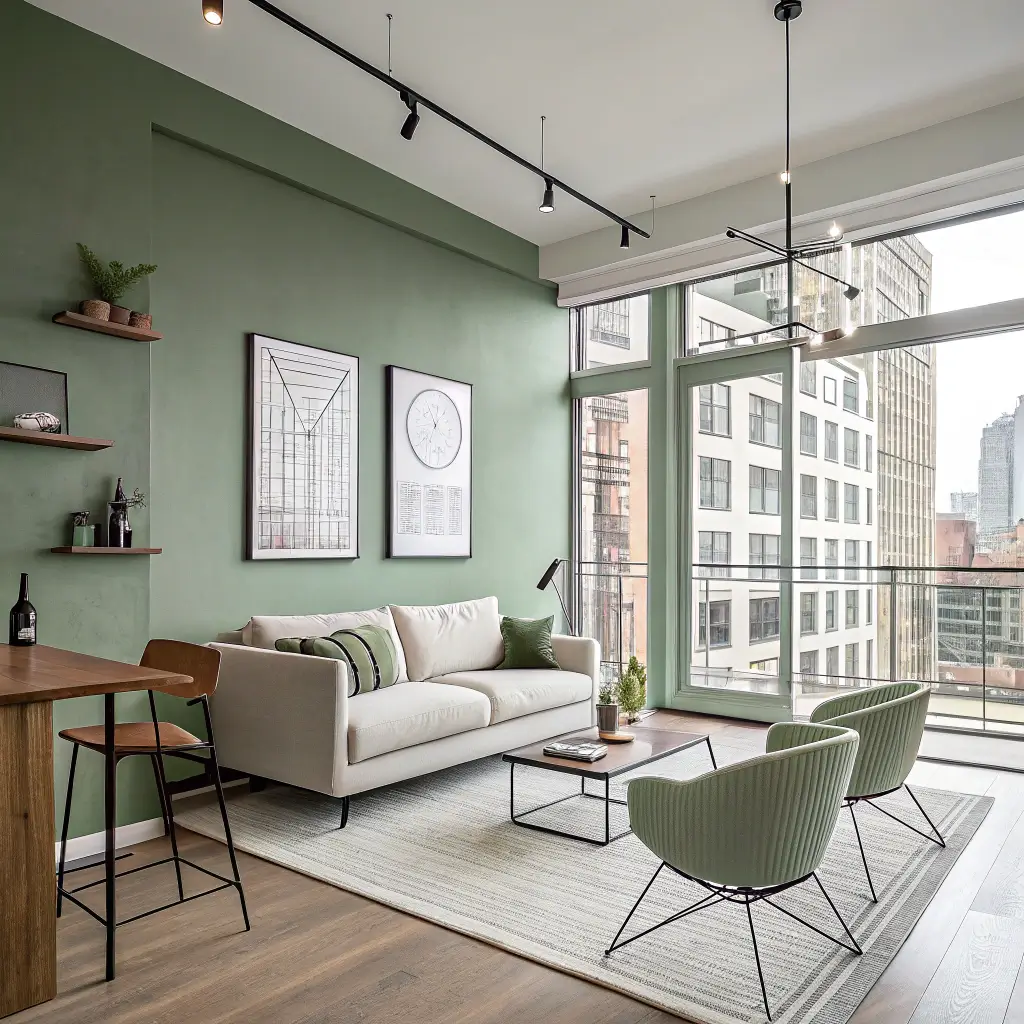
Contemporary design and sage green create this effortlessly cool vibe that makes rental apartments feel like real homes. I’ve moved three times in five years, and sage green has been my secret weapon for making each cookie-cutter space feel personal.
Contemporary sage works because it adds personality without permanent changes. Can’t paint? Sage sofa. White walls boring you? Sage curtains. The color brings life to neutral rentals without risking your deposit.
Apartment-Friendly Sage Solutions
Use removable options for commitment-phobes. Peel-and-stick wallpaper in sage patterns, temporary curtains, easily moveable furniture. I’ve created sage accent walls with removable wallpaper that looked completely permanent.
Focus sage in key areas for maximum impact. A sage area rug anchors the seating area. Sage curtains frame your view. A sage accent chair creates a focal point. Strategic placement makes more impact than scattered sage accessories.
Keep scale in mind. Apartment living rooms can’t handle oversized anything. Choose sage pieces that fit your actual space, not your dream space. My sage loveseat works way better than the sectional I wanted but couldn’t fit.
11. Sage Green Textured Wall Living Room
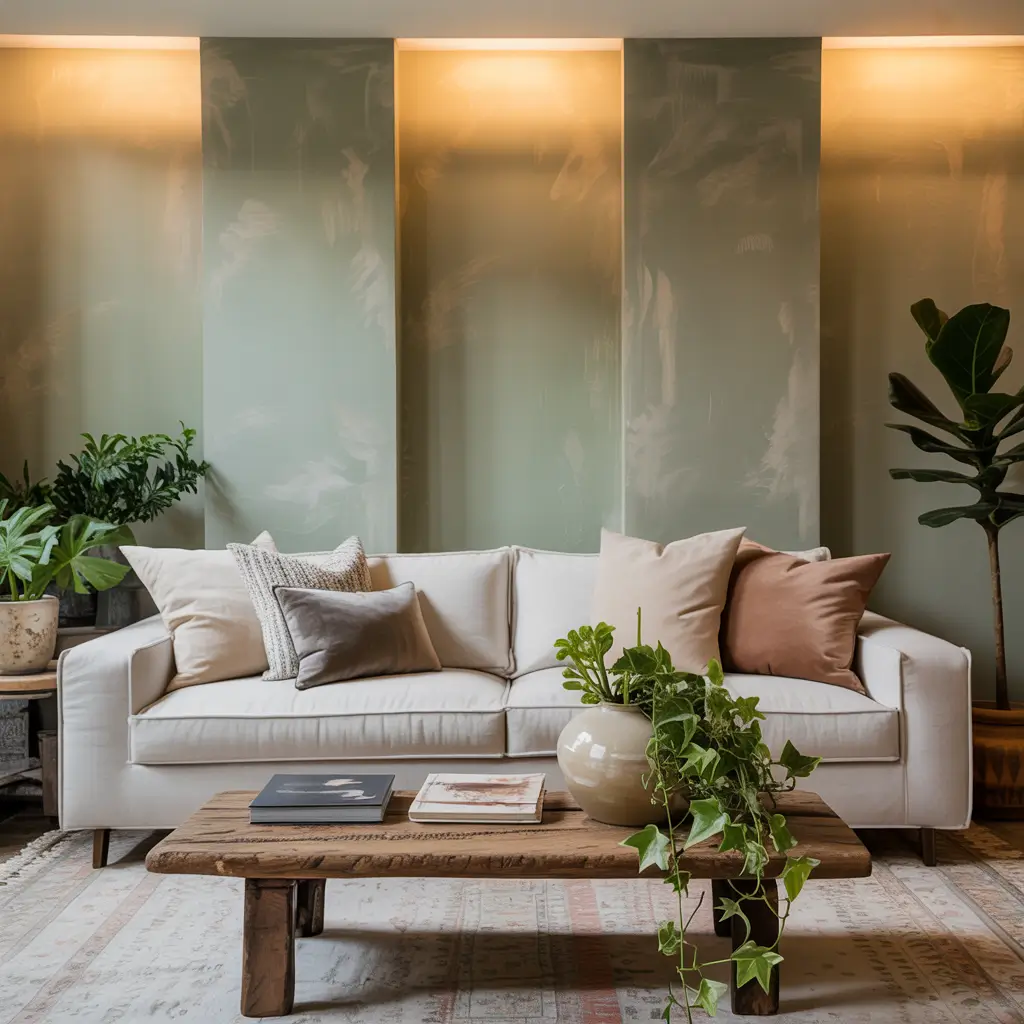
Textured sage walls take this color to the next level. I added board and batten to one wall before painting it sage, and the dimension created makes everyone want to touch it. Texture plus color equals instant interest.
Different textures create different moods. Smooth sage feels modern and clean. Grasscloth wallpaper in sage adds organic sophistication. Painted brick in sage brings industrial charm. The possibilities are endless and exciting.
Adding Texture Without Overwhelm
Start with one textured wall if you’re nervous. It’s enough to add interest without dominating the space. My textured sage wall behind the TV provides visual interest without being distracting.
Consider maintenance before committing. Some textures collect dust like crazy. Others are impossible to clean. Think about your actual lifestyle, not your Instagram lifestyle. I chose board and batten because it’s easy to dust.
Light plays differently on textured surfaces. What looks subtle at one angle might create dramatic shadows at another. Test your texture and color combo at different times of day. Morning light versus evening light can be totally different experiences :/
12. Sage Green Neutral Layered Living Room
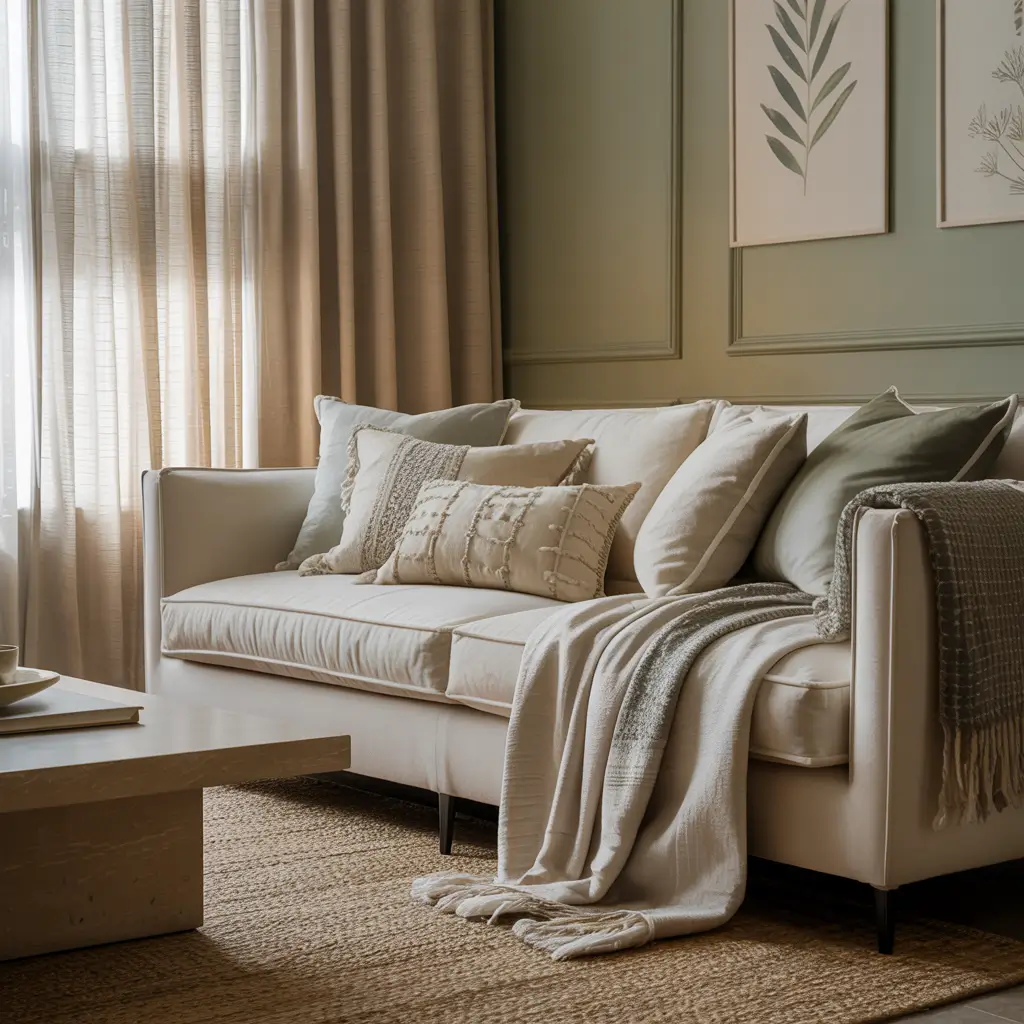
Layering sage with other neutrals creates depth that single-color rooms can’t match. I think of it as building a neutral parfait – each layer adds something while maintaining overall harmony. My current living room layers sage, cream, taupe, and warm gray, and it never feels boring.
The secret to successful layering? Vary your values. Light sage, medium taupe, dark gray – the contrast creates visual interest. All medium tones together just create mush. Trust me, I’ve been there.
Mastering Neutral Layers
Use sage as your color anchor among neutrals. While other neutrals can shift and change, sage remains constant. It prevents your layered neutrals from looking like you couldn’t make a decision.
Add texture to differentiate neutral layers. Smooth sage walls, nubby beige sofa, rough linen curtains – texture helps your eye distinguish between similar tones. Without texture, neutral layers blur together.
Don’t forget pattern. Neutral doesn’t mean solid. A sage and cream geometric pillow, striped neutral rug, or botanical print can add interest without adding color chaos. Patterns in neutrals feel sophisticated, not busy.
Making Sage Work in Your Space
So there you have it – twelve ways to bring sage green into your living room without looking like you fell into a herb garden.
The beauty of sage lies in its adaptability. Whether you want farmhouse cozy or contemporary cool, sage delivers.
The biggest tip I can offer? Start small if you’re nervous. A sage throw pillow won’t hurt anyone. Once you see how sage transforms your space, you’ll gain confidence for bigger moves.
Before you know it, you’ll be painting walls and buying sage sofas like it’s your job.
Remember, the best living room is one that makes you happy. Sage green happens to make a lot of people happy because it brings nature’s calm indoors.
But ultimately, your space should reflect you. If that means sage everything, go for it. If it means one sage accent, that’s perfect too.
The only real mistake with sage? Not trying it at all. This color has transformed every space I’ve used it in, from tiny apartments to sprawling houses.
So grab some paint samples, maybe a sage throw, and start experimenting. Your living room (and your stress levels) will thank you 🙂