10 Elegant Green Accent Wall Living Room Ideas with Style
- Living Room Decor
 Ben
Ben- 0
- 43 minutes read
Remember that time you walked into someone’s living room and immediately thought, “Wow, this person has their life together”? I had that exact moment at my friend Sarah’s place last month.
The secret? A gorgeous sage green accent wall that somehow made her entire IKEA-furnished apartment look like it belonged in Architectural Digest. That’s when I realized green accent walls are basically magic for living rooms.
After spending way too much time researching (and painting, repainting, and painting again), I’ve discovered that green accent walls can transform any living room from “meh” to “magnificent.”
Whether you’re working with a shoebox apartment or a sprawling family room, the right shade of green on the right wall can completely change how your space feels.
Ready to explore some ideas that’ll make your living room the envy of everyone who walks through your door? Let’s dive into ten green accent wall ideas that actually work in real life, not just on Pinterest.
1. Sage Green Minimalist Accent Wall
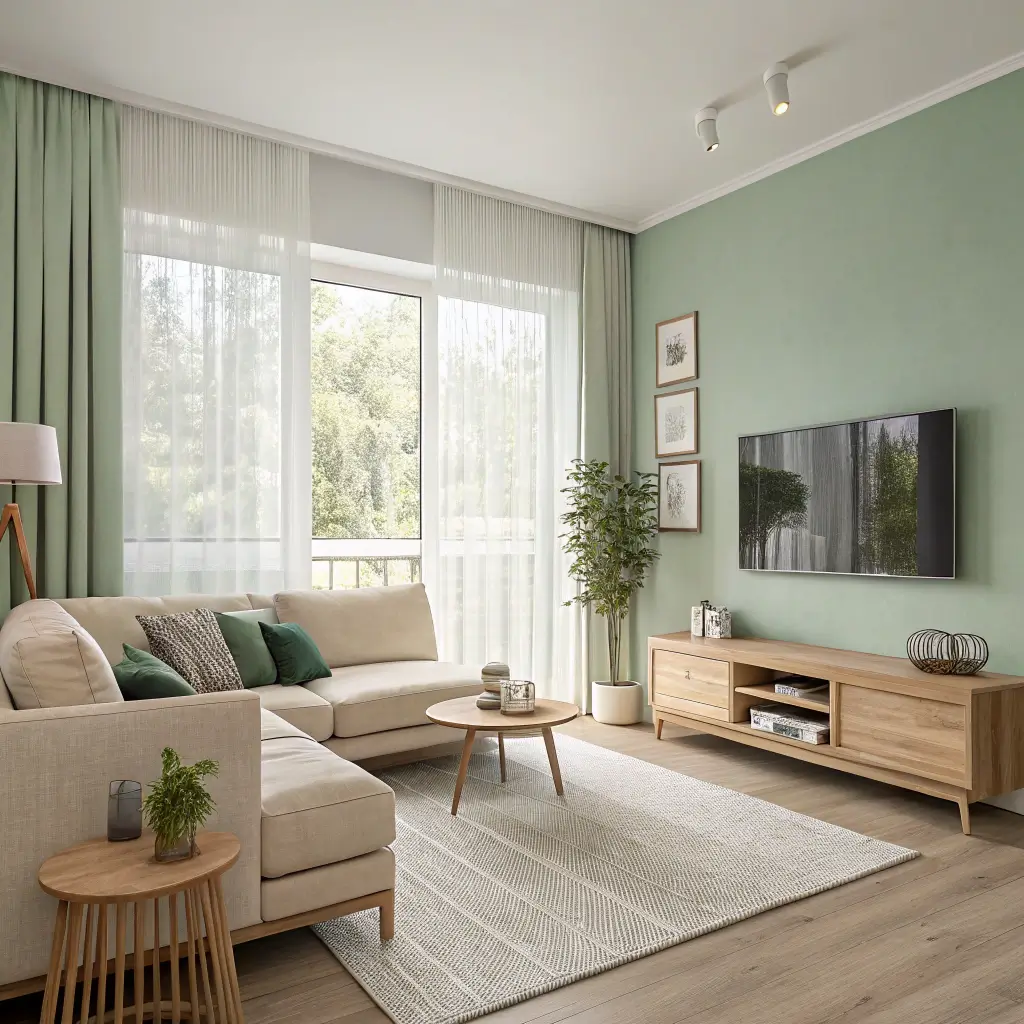
Sage green is having its moment, and honestly, it deserves all the hype. I painted my living room accent wall in Benjamin Moore’s October Mist (a gorgeous sage), and it completely transformed the vibe from “generic rental” to “sophisticated adult who reads design blogs.”
Why Sage Works So Well
The beauty of sage green lies in its versatility. It’s green enough to add personality but neutral enough that you won’t get sick of it in six months. My sage wall acts like a chameleon—it looks slightly different throughout the day as the light changes. Morning sun makes it appear fresh and energizing, while evening lamp light brings out warmer, cozier undertones.
I chose sage specifically because I wanted color without commitment. Unlike bold emerald or forest green, sage plays nicely with pretty much everything. My existing beige couch? Looks intentional now. Those random throw pillows I bought on sale? Suddenly they’re part of a cohesive color scheme.
Styling Your Sage Wall
The key to nailing a minimalist sage accent wall is restraint. I keep decorations on the wall itself to a minimum—just two simple brass-framed prints and a floating shelf with a few carefully chosen objects. The wall is the star, not what’s on it.
For furniture, I stick to clean lines and neutral colors:
- White or light wood furniture
- Natural textures like linen and jute
- Minimal patterns (solid colors work best)
- One or two plants for that nature connection
- Metallic accents in brass or gold
Making It Work in Small Spaces
Here’s something nobody tells you—sage green can actually make small living rooms feel larger. The soft, muted tone recedes visually, creating an illusion of more space. I’ve seen this work beautifully in tiny apartments where darker colors would feel oppressive.
2. Deep Emerald Luxury Focal Wall
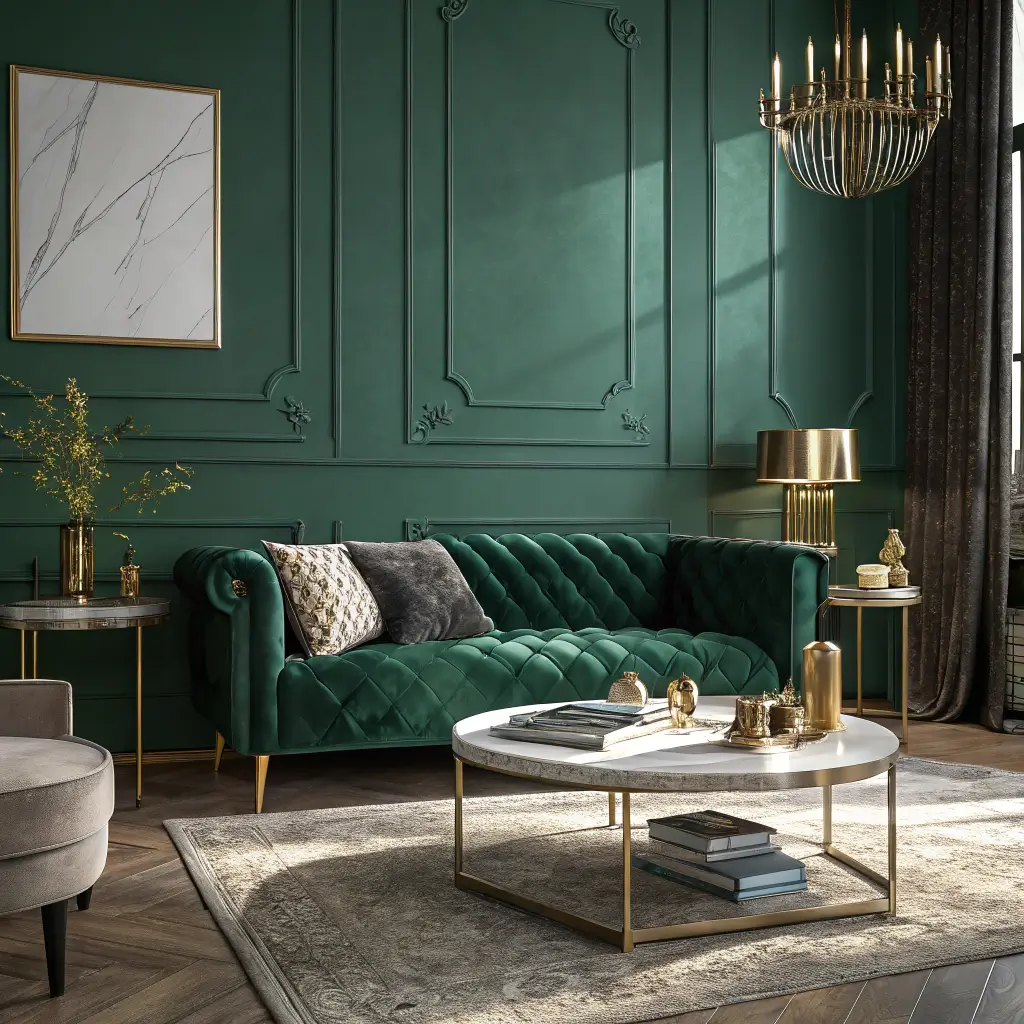
Want to feel like you’re living in a boutique hotel? Paint one wall deep emerald green. I helped my sister do this in her living room, and now everyone who visits asks if she hired an interior designer. (She didn’t—we just watched a lot of YouTube tutorials and crossed our fingers.)
Choosing the Right Emerald
Not all emerald greens are created equal. Some lean too blue, others too yellow. After testing eight different samples (yes, eight), we landed on Clare’s Current Mood. It has this incredible depth that looks sophisticated rather than overwhelming.
The finish matters too. We went with eggshell rather than flat because it has just enough sheen to reflect light without looking glossy. This subtle reflection prevents the dark color from absorbing all the light in the room—crucial when you’re going this bold.
Creating Balance
Deep emerald demands balance. You can’t just slap it on a wall and hope for the best. Here’s what worked in my sister’s space:
- Kept the other three walls white or very light gray
- Added plenty of lighting (this is non-negotiable with dark colors)
- Incorporated gold accents throughout the room
- Used a light-colored rug to ground the space
- Included mirrors to bounce light around
The Luxury Factor
There’s something about emerald green that screams expensive, even if everything else in your room is from Target. We paired the emerald wall with:
- Velvet throw pillows in complementary jewel tones
- A vintage brass floor lamp from Facebook Marketplace
- Simple white curtains for contrast
- One large piece of abstract art with gold details
The result? A living room that looks like it cost thousands to design but actually came together for under $500.
3. Olive Green Earthy Texture Wall
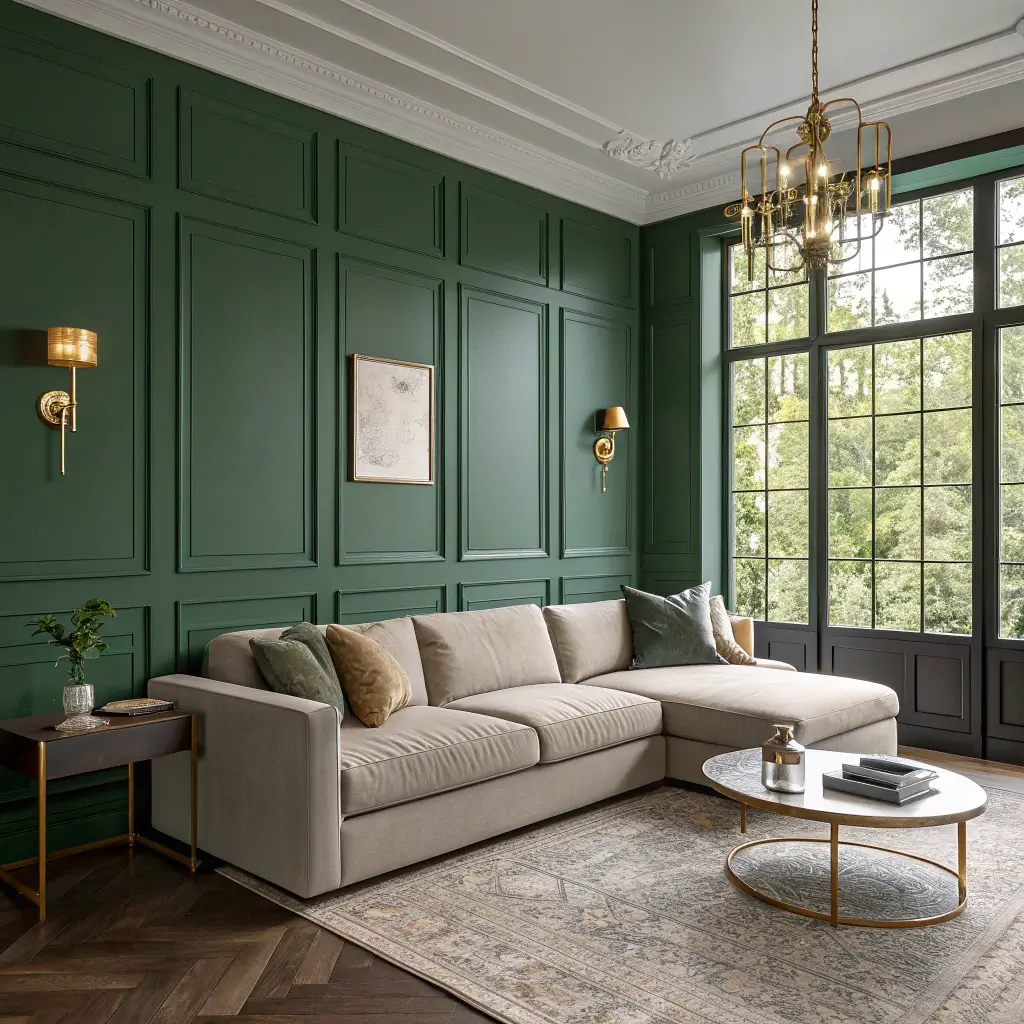
Olive green with added texture is basically a hug for your living room. I discovered this combination accidentally when I couldn’t decide between paint and wallpaper, so I compromised with textured paint techniques. Best accident ever.
Adding Texture to Your Olive Wall
Plain painted walls are fine, but textured walls add this whole other dimension. I used a technique called “cross-hatching” with olive green paint, and it created this subtle linen-like texture that everyone wants to touch.
Other texture options that work beautifully:
- Limewash for an old-world feel
- Grasscloth wallpaper in olive tones
- Board and batten painted olive
- Venetian plaster in green
- Sponge painting (yes, it’s back and better than before)
The Earthy Aesthetic
Olive green naturally lends itself to an earthy, organic aesthetic. I lean into this with:
- Natural wood furniture (the more grain, the better)
- Woven baskets for storage
- Terracotta pots with real plants
- Linen and cotton textiles
- Stone or ceramic accessories
The textured olive wall becomes the perfect backdrop for all these natural elements. It’s like bringing the outdoors inside without the bugs and unpredictable weather.
Lighting Considerations
Textured walls play with light differently than smooth ones. My olive textured wall creates subtle shadows that add depth throughout the day. I’ve found that warm white bulbs (around 2700K) bring out the best in olive green, making it feel cozy rather than muddy.
Also Read: 12 Elegant Green and Brown Living Room Ideas for Stylish
4. Forest Green Panelled Accent Wall
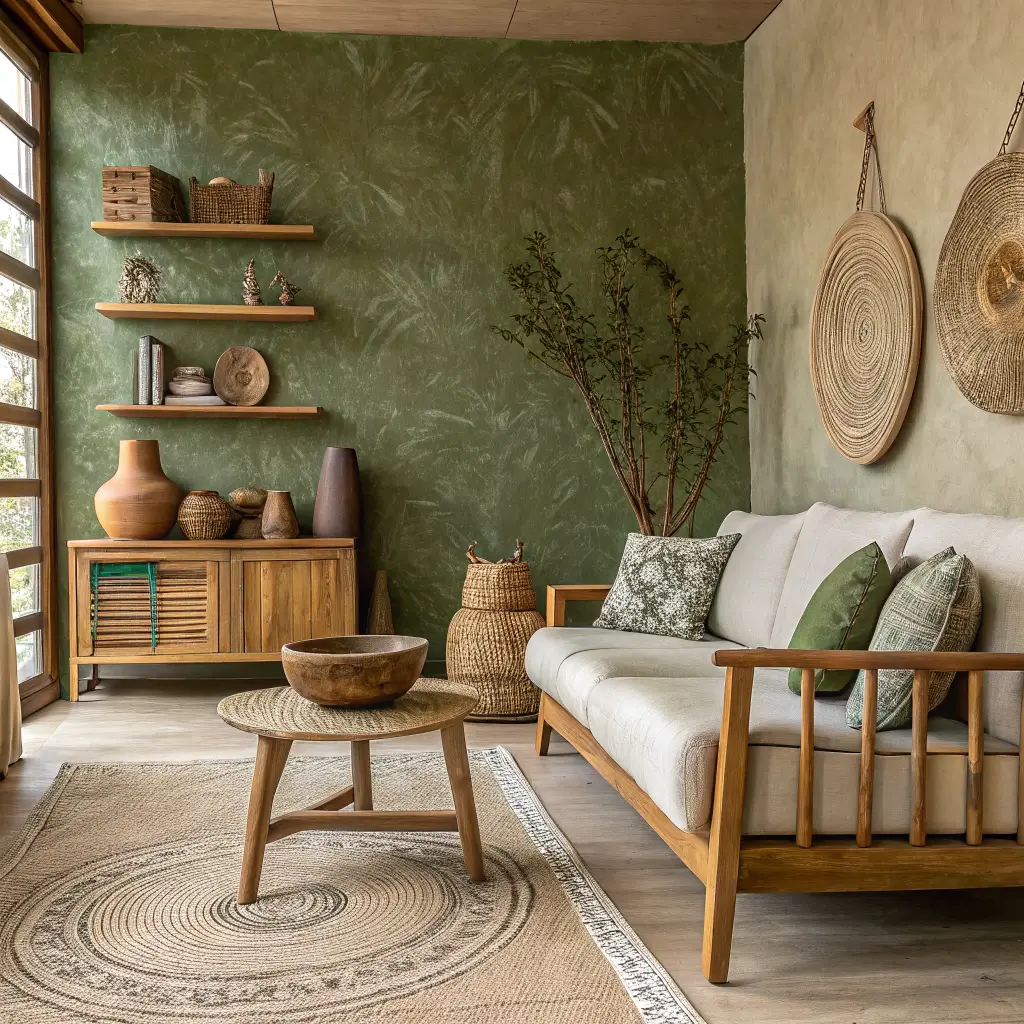
Wood paneling and forest green paint? Trust me on this one. I know paneling might give you flashbacks to your grandma’s basement, but modern paneling painted forest green is a completely different animal.
Modern Paneling Options
Forget those dark wood panels from the ’70s. Today’s options are sleek and sophisticated:
- Vertical shiplap for height
- Board and batten for classic appeal
- Geometric patterns for modern edge
- Beadboard for cottage charm
- Picture frame molding for elegance
I went with vertical shiplap on my accent wall, painted it in Benjamin Moore’s Hunter Green, and it looks like something from a high-end mountain lodge.
Installation Tips That Actually Help
Installing paneling sounds scary, but it’s actually pretty manageable. I did mine over a long weekend with help from my very patient partner. Some real-world tips:
- Measure your wall seventeen times (seriously, measure everything obsessively)
- Use a level for every single piece
- Paint before installing if possible (way easier)
- Invest in a good nail gun (your sanity will thank you)
- Accept that caulk is your best friend for hiding imperfect seams
Styling Your Paneled Wall
The texture of paneling adds visual interest, so you don’t need much else:
- Keep wall decor minimal
- Let the paneling pattern be the star
- Add one statement light fixture
- Include plants for softness against the geometric lines
- Use furniture that doesn’t compete with the wall pattern
5. Soft Mint Scandinavian Accent Wall
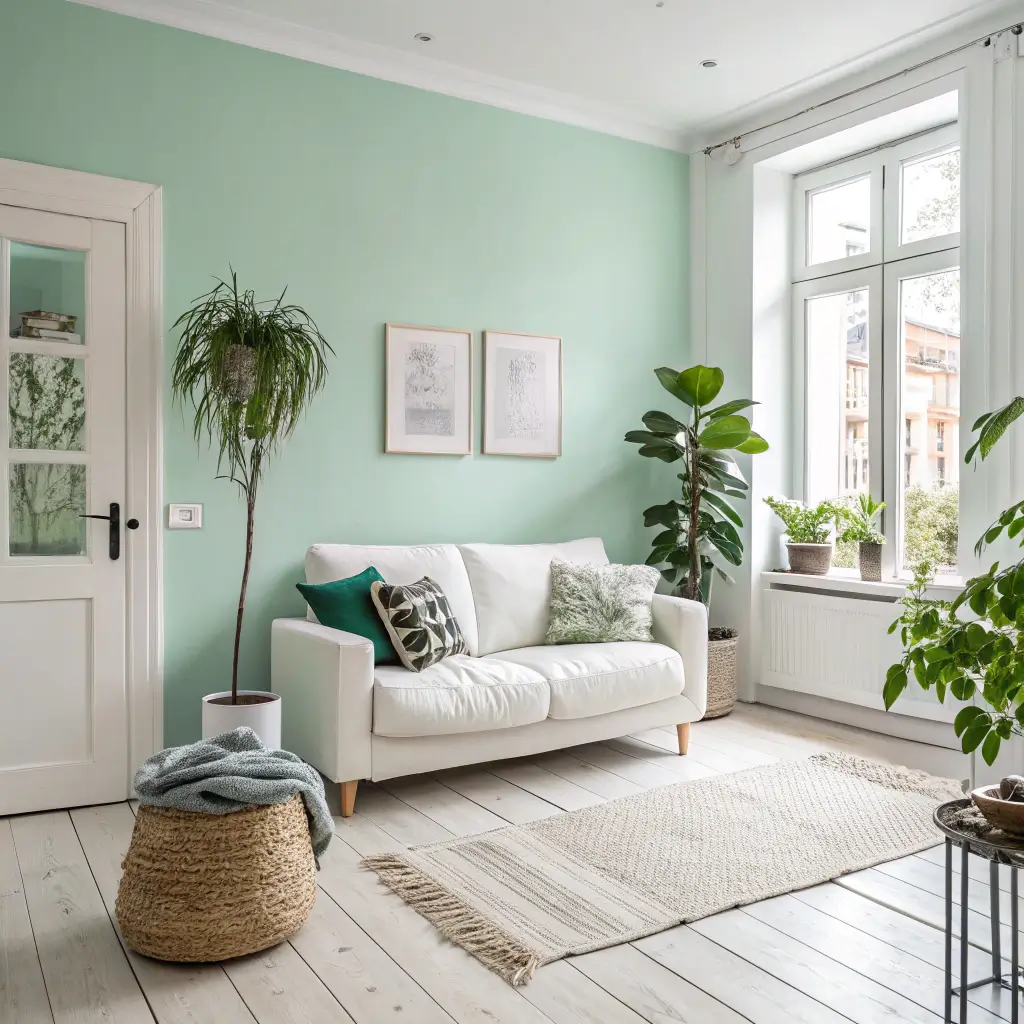
Mint green and Scandinavian design are like peanut butter and jelly—they just work. I painted my home office (which doubles as a sitting area) in the softest mint, and it’s become everyone’s favorite room in the house.
Finding Your Perfect Mint
The trick with mint is finding a shade that’s green enough to register as color but soft enough to maintain that Scandi simplicity. I tested five different mints before landing on Farrow & Ball’s Teresa’s Green—yes, it’s pricey, but the depth and quality are unmatched.
Avoid mints that are:
- Too blue (looks like toothpaste)
- Too yellow (reads as sickly)
- Too bright (overwhelming in large doses)
- Too gray (defeats the purpose of adding color)
The Scandinavian Approach
Scandinavian design with a mint accent wall requires discipline. You can’t just throw in random colors and patterns. I stick to:
- White, gray, and natural wood only
- Minimal decorative objects
- Functional furniture with clean lines
- Cozy textiles in neutral colors
- Maximum natural light
The mint wall adds just enough personality to prevent the space from feeling sterile, which can be a risk with Scandinavian minimalism.
Hygge Elements
To make the mint wall feel cozy (hygge, if you will), I add:
- Soft throw blankets in cream
- Sheepskin rugs
- Warm lighting from multiple sources
- Natural materials like wool and linen
- A few carefully chosen plants
6. Dark Green Fireplace Feature Wall
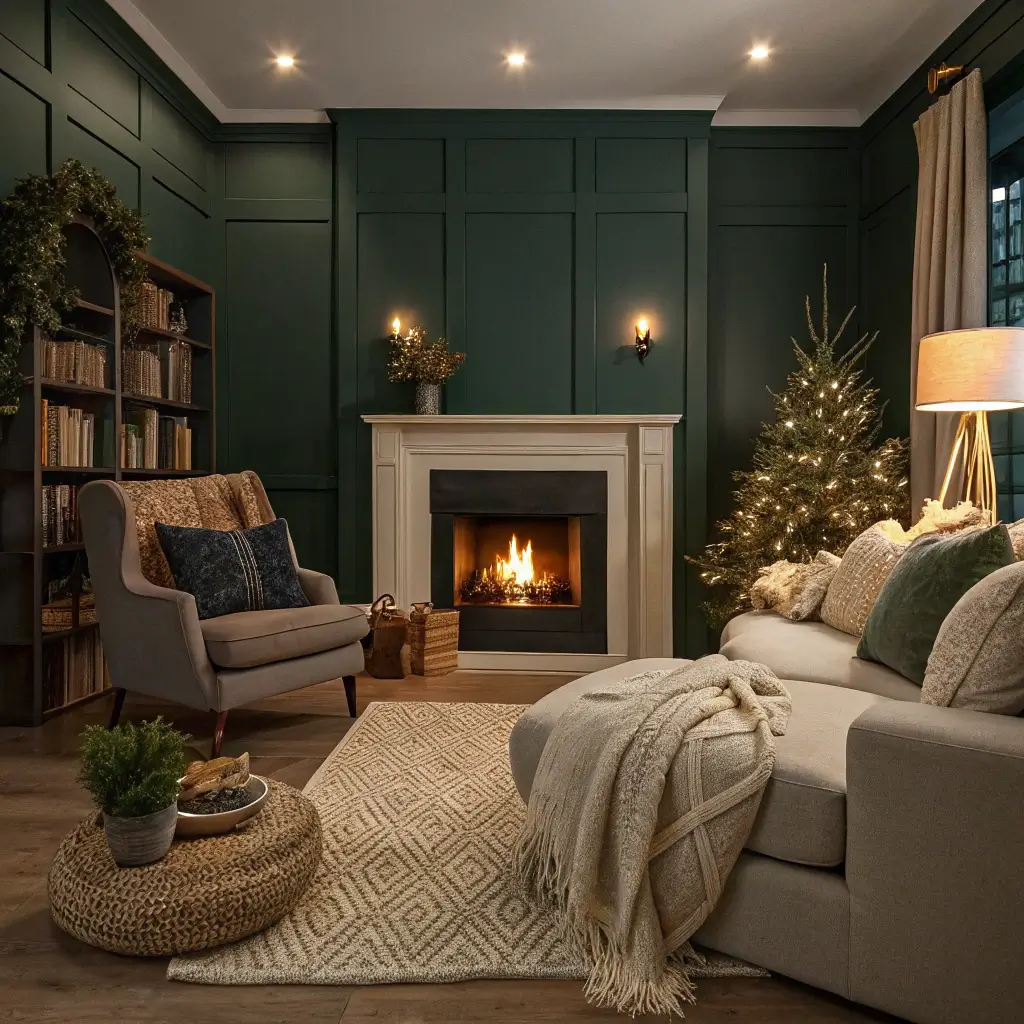
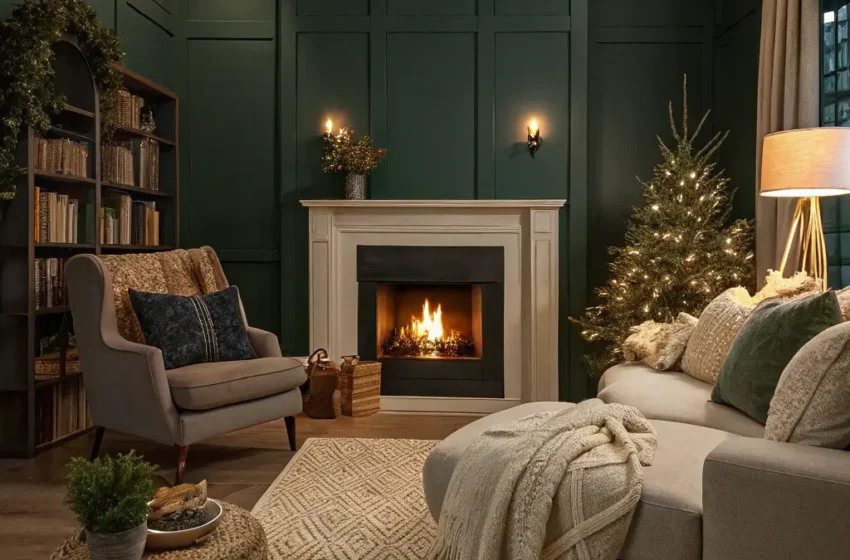
Got a fireplace? Make it the star with a dark green accent wall. I painted the wall around my fireplace in a deep bottle green, and it transformed a boring brick fireplace into the focal point everyone comments on.
Choosing Your Dark Green
Dark green around a fireplace needs to be rich and sophisticated. Some winners:
- Benjamin Moore’s Salamander (deep and moody)
- Farrow & Ball’s Studio Green (complex and elegant)
- Clare’s Current Mood (jewel-like depth)
- Sherwin Williams’s Jasper (earthy and grounding)
I went with Salamander, and it creates this incredible cozy feeling, especially when the fire’s going. It’s like the wall and fireplace were meant to be together.
Dealing with Brick or Stone
If you have exposed brick or stone around your fireplace, dark green creates amazing contrast. I kept my red brick natural and painted just the wall, and the combination feels both classic and fresh. The organic texture of brick or stone plays beautifully against the solid color.
Fireplace Styling Tips
With a dark green fireplace wall:
- Keep the mantel styling simple
- Use metallic accents (brass or copper work best)
- Add one large mirror or piece of art above
- Include plants on the mantel for life
- Layer in warm lighting to combat the darkness
FYI, the dark wall makes the fire appear brighter and more dramatic. It’s basically Instagram gold every time you light it.
Also Read:: 10 Beautiful Pink and Green Living Room Ideas to Try
7. Muted Green Arch Accent Wall
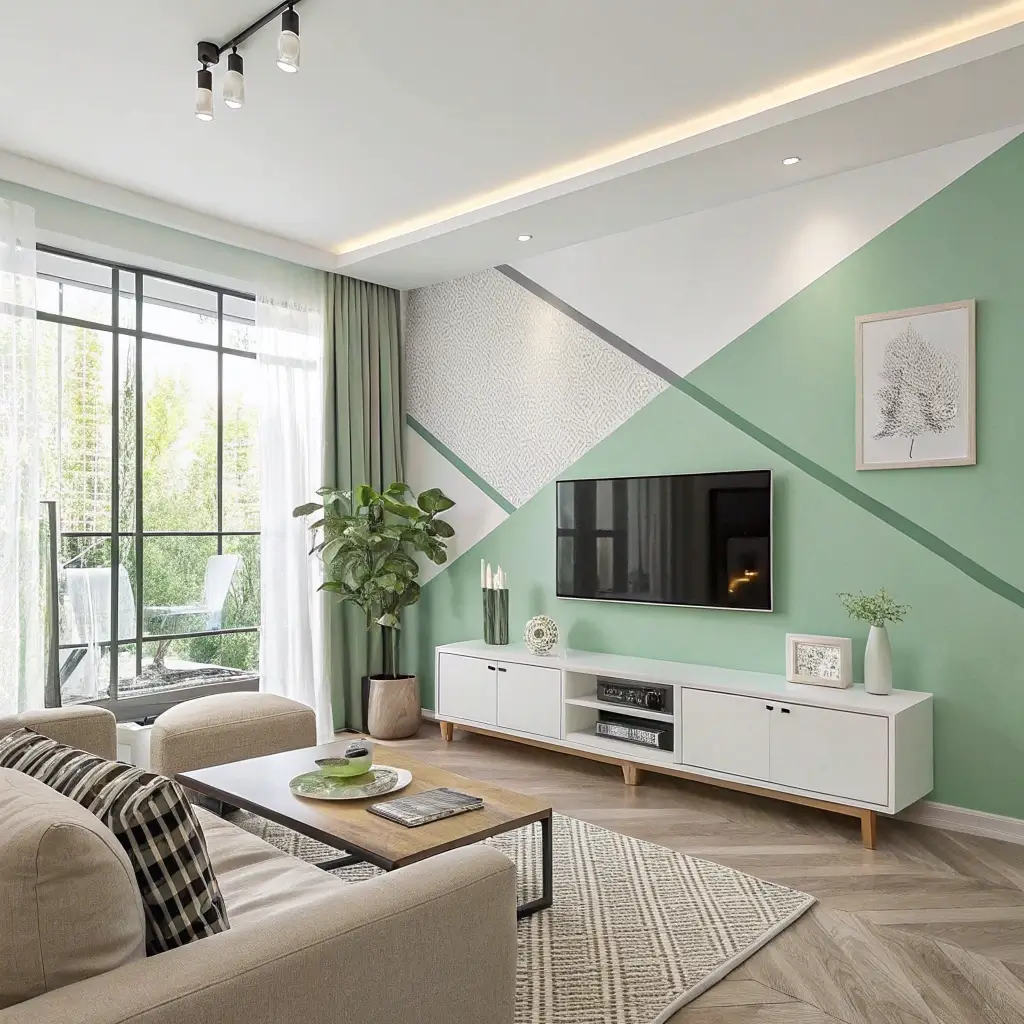
Painted arches are having a moment, and adding them to your accent wall takes things to the next level. I painted an arch on my muted sage green accent wall, and it looks like architectural detail that was always meant to be there.
Creating Your Arch
You don’t need to be an artist to paint an arch. I used:
- String and a pencil for the curve (old school but effective)
- Painter’s tape for clean lines
- Multiple thin coats for even coverage
- A slightly darker green for the arch than the wall
The arch breaks up the wall and adds this beautiful architectural interest without actual construction.
Color Combinations
For the arch effect, I’ve seen these combinations work beautifully:
- Sage wall with slightly darker sage arch
- Light green wall with terracotta arch
- Mint wall with white arch
- Olive wall with cream arch
- Any green with a gold metallic arch (bold but gorgeous)
Positioning Your Arch
Where you place your arch matters:
- Behind a sofa creates a built-in focal point
- Around a window enhances natural architecture
- Framing artwork adds importance
- Creating a reading nook defines the space
- Random placement can work if done confidently
8. Two-Tone Green and White Accent Wall
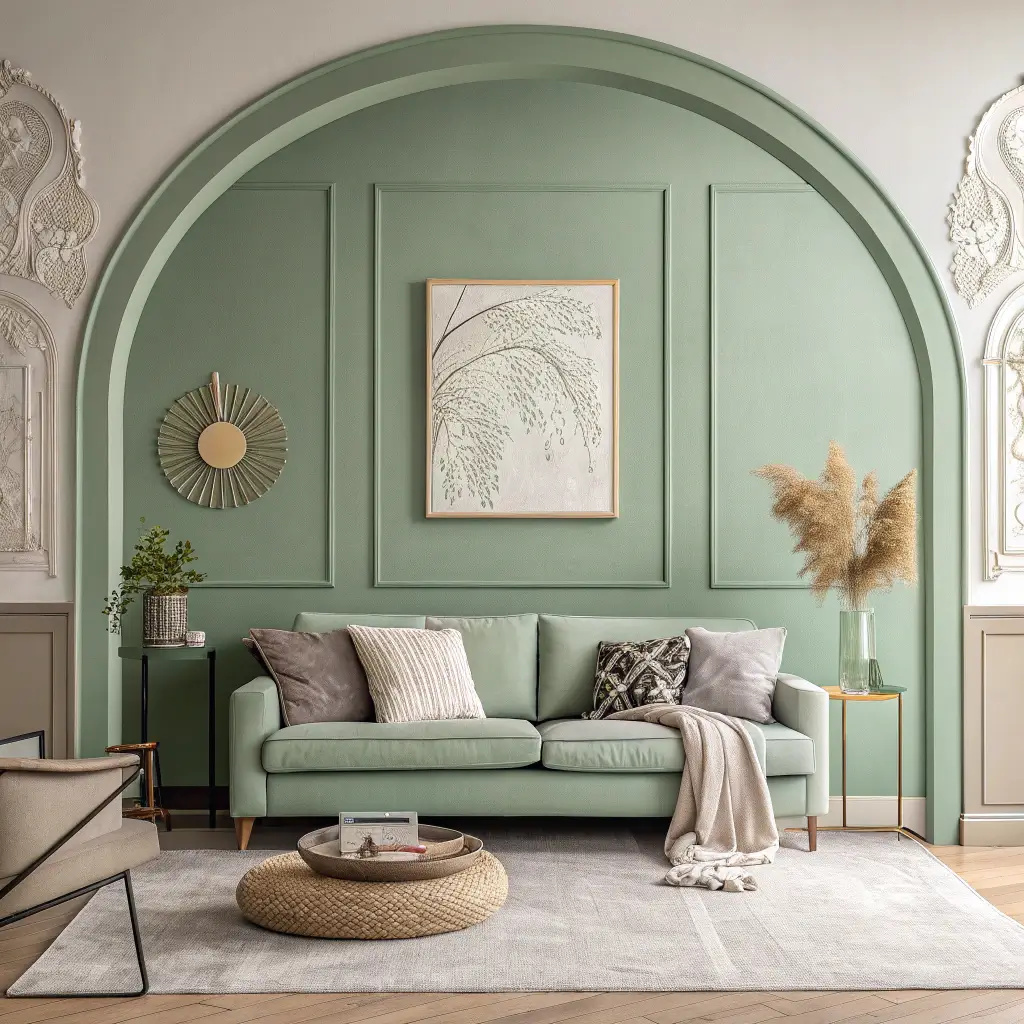
Why choose one color when you can have two? I painted my accent wall half white, half sage green (horizontal split), and it looks like something from a design magazine.
The Split Decision
Deciding where to split your wall is crucial:
- Horizontal split at chair rail height (classic)
- Vertical split down the middle (modern)
- Diagonal split (bold and dynamic)
- Geometric shapes (for the adventurous)
I went horizontal with green on bottom, white on top. It grounds the space while keeping things light and airy.
Execution Tips
Getting a clean line between colors requires:
- Quality painter’s tape (don’t cheap out here)
- Pressing tape edges with a credit card
- Removing tape while paint is slightly wet
- Touch-ups with a small brush
- Patience (lots of patience)
Making It Work
Two-tone walls can look messy if not done right. Keep the rest of the room simple:
- Stick to the two colors plus neutrals
- Avoid busy patterns
- Use solid color furniture
- Keep wall decorations minimal
- Let the paint treatment be the star
9. Green Botanical Wallpaper Feature Wall
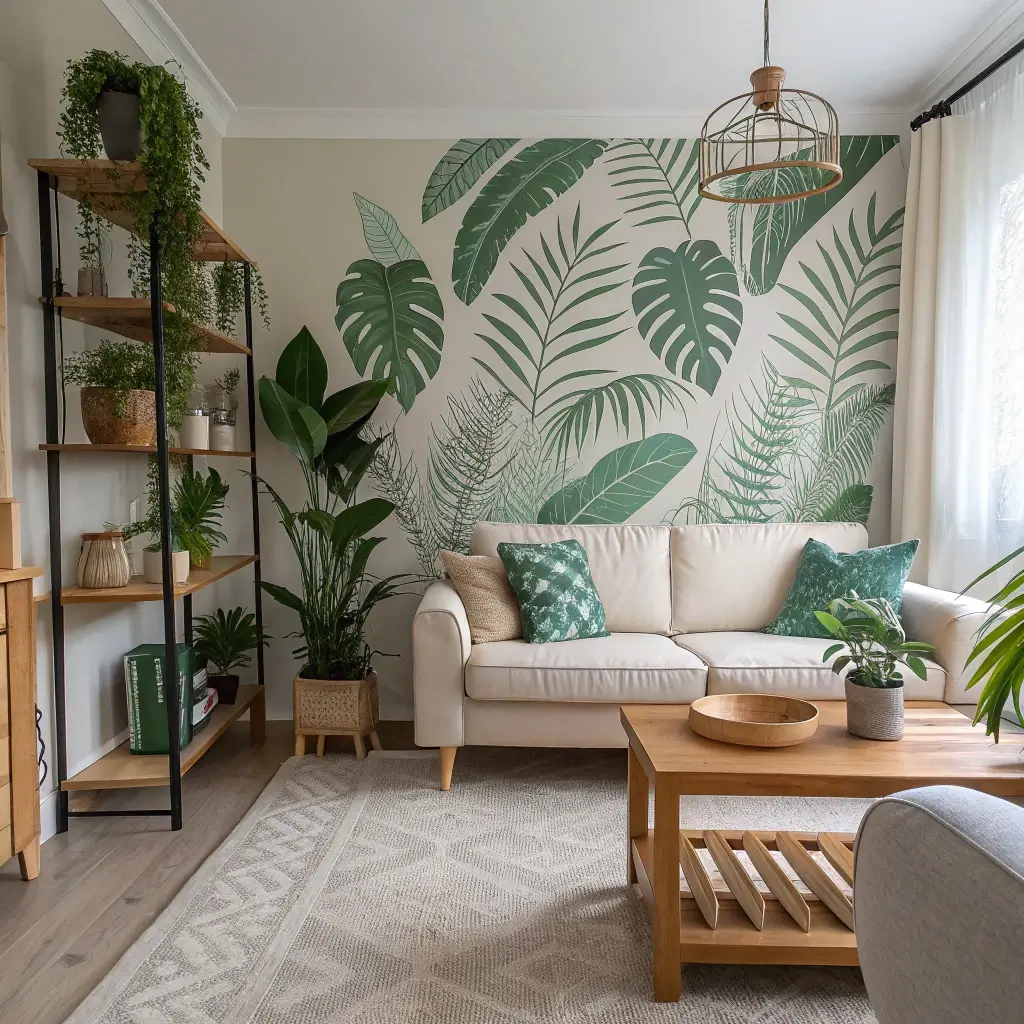
Sometimes paint isn’t enough. I covered one wall in botanical wallpaper with a dark green background, and it’s basically a piece of art that covers the entire wall.
Choosing Your Botanical
Botanical wallpapers range from subtle to statement-making:
- Large-scale tropical leaves (bold and dramatic)
- Delicate ferns (subtle and sophisticated)
- Abstract botanical (modern take)
- Vintage botanical prints (classic and timeless)
- Painted botanical (artistic and unique)
I chose large-scale monstera leaves on a deep green background. It’s bold but the green-on-green keeps it from being overwhelming.
Installation Reality Check
Wallpaper installation is… an adventure. After attempting it myself and ending up with bubbles everywhere, I hired a professional for round two. Worth every penny. If you’re going DIY:
- Get the right tools (smoothing brush, sharp blade, level)
- Have a patient helper
- Start with a small, hidden area
- Watch multiple tutorials first
- Accept that your first attempt might not be perfect
Styling Around Botanical Wallpaper
The wallpaper is the star, so everything else should support, not compete:
- Keep furniture simple and solid-colored
- Minimal wall decorations on the papered wall
- Echo the green in small doses throughout the room
- Add real plants to complement the botanical theme
- Use natural materials to enhance the organic feel
Also Read: 10 Bold Emerald Green Living Room Ideas to Wow Guests
10. Matte Green Modern Accent Wall
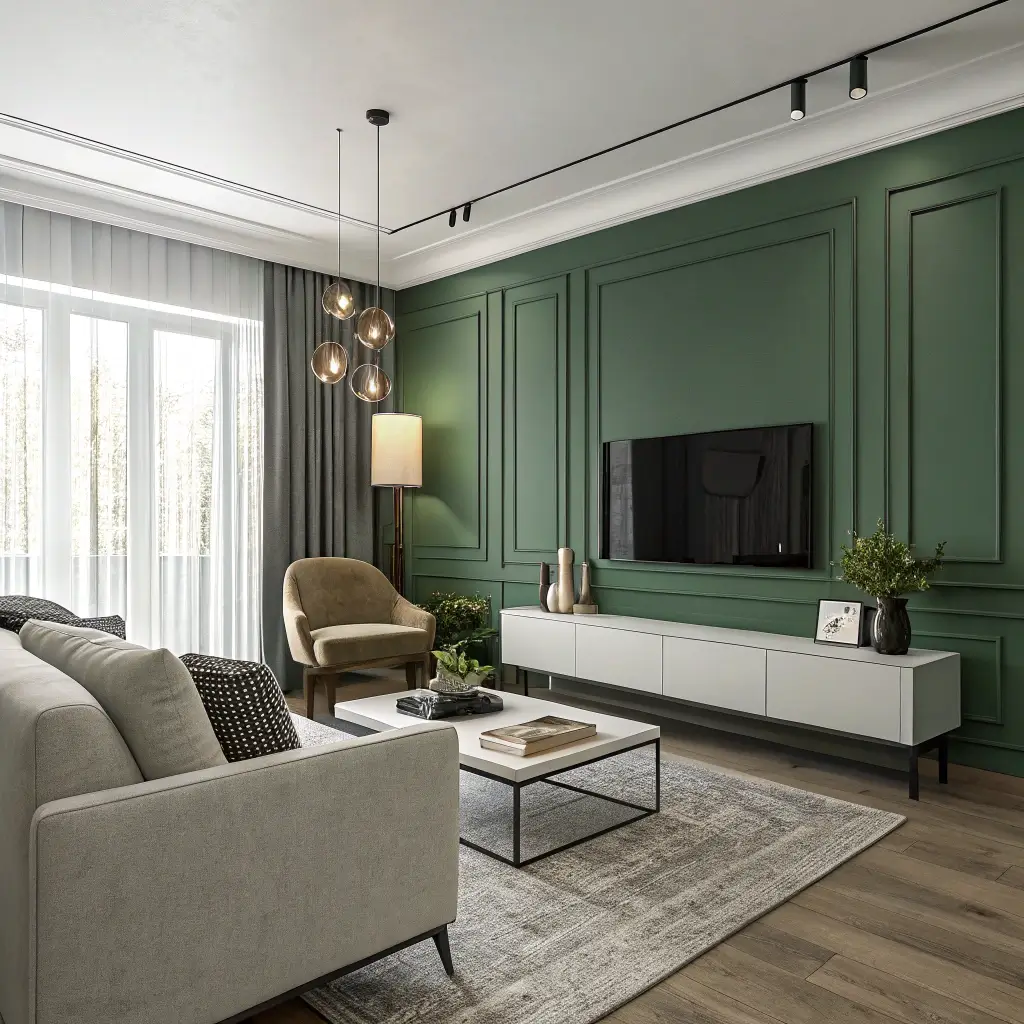
Matte green paint creates this sophisticated, gallery-like feeling that makes everything in your living room look more expensive. I painted my accent wall in a matte forest green, and it literally elevates everything around it.
Why Matte Matters
Matte paint has no shine, which creates this velvety, rich appearance. On a green accent wall, it:
- Absorbs light for a cozy feeling
- Hides wall imperfections better
- Creates a sophisticated backdrop
- Makes colors appear more saturated
- Provides a modern, contemporary look
The downside? Matte paint is harder to clean. I’ve learned to embrace the patina and touch up when necessary.
Color Selection for Matte
With matte paint, color selection is crucial because there’s no sheen to soften things:
- Test samples in different lights
- Go one shade lighter than you think (matte appears darker)
- Consider the room’s natural light
- Think about artificial lighting too
- Live with samples for at least a week
Modern Styling Tips
To enhance the modern matte green wall:
- Use contemporary furniture with clean lines
- Add one large piece of abstract art
- Include metallic accents (chrome or brass)
- Keep clutter to an absolute minimum
- Layer in different textures for interest
IMO, matte green walls photograph beautifully, which is a bonus if you’re into sharing your space on social media 🙂
Making Your Green Accent Wall Dreams Reality
After experimenting with virtually every shade of green known to humanity (slight exaggeration, but not by much), here’s what I’ve learned: green accent walls are incredibly forgiving and versatile.
Whether you go soft and subtle with sage or bold and dramatic with emerald, green brings life to living rooms in a way other colors simply can’t match.
The key is choosing the right shade for your space and lifestyle. Love entertaining? Go bold with emerald or forest green. Prefer quiet evenings with a book? Sage or mint might be your speed.
Want something unique? Try textured olive or two-tone treatments.
Don’t forget about lighting—it makes or breaks any accent wall, but especially green ones. Natural light brings out green’s best qualities, while warm artificial light prevents it from feeling cold or institutional.
I always recommend living with paint samples for at least a week, observing how they change throughout the day.
Most importantly, trust your instincts. If a certain shade of green makes you happy every time you see it, that’s the one. Your living room should be a space that brings you joy, not a slavish recreation of something from a magazine.
Green accent walls offer endless possibilities for personal expression while adding that sophisticated touch that makes a house feel like a home.