12 Trendy Green and Beige Living Room Ideas for Earthy Style
- Living Room Decor
 Ben
Ben- 0
- 52 minutes read
Green and beige together? I know what you’re thinking—sounds like your grandma’s 1970s living room, complete with shag carpet and wood paneling.
But hold up. Last month, I walked into my friend’s newly redesigned living room and literally gasped. She’d paired sage green walls with a gorgeous linen beige sofa, and the space felt like a $500-a-night Airbnb in Napa Valley.
That’s when I realized green and beige aren’t boring—we’ve just been doing them wrong.
These two colors are having a major comeback, and for good reason. They’re basically nature’s favorite color combo (just look outside), they’re incredibly calming, and unlike that millennial gray we’re all sick of, they actually bring warmth and life to a space.
After helping three friends redesign their living rooms with green and beige palettes this year, I’ve learned exactly what works, what doesn’t, and what makes people say “wow” the second they walk in. Ready to discover how these earthy tones can transform your living room from bland to brilliant?
Let’s explore twelve ideas that prove green and beige are the power couple your space needs.
1. Sage Green Walls with Soft Beige Sofa

Sage green walls with a beige sofa is basically the interior design equivalent of a warm hug. I painted my living room walls in Benjamin Moore’s October Mist (a dreamy sage) and paired it with a soft beige linen sofa from Article, and now everyone wants to hang out at my place.
Why This Combination Works Like Magic
The beauty of sage and beige lies in their shared undertones. Both colors have gray elements that tie them together naturally. My sage walls look different throughout the day—slightly green in morning light, almost gray by evening—while the beige sofa remains this constant, grounding element.
I chose this combo specifically because I wanted something calming but not boring. The sage adds just enough color to feel intentional, while the beige keeps things from feeling too trendy or overwhelming. It’s sophisticated without trying too hard.
Styling Your Sage and Beige Space
Once you’ve got your sage walls and beige sofa, the fun part begins. I layer in:
- Cream and white throw pillows for depth
- Natural wood coffee table (walnut works beautifully)
- Brass accents for warmth
- Plenty of plants (they’re basically required with sage walls)
- Textured throws in complementary neutrals
The key is keeping everything in the same warm, earthy family. No cool grays allowed—they’ll clash with both the sage and beige.
Making It Work in Different Light
North-facing rooms need warmer sages and beiges to combat cool light. My living room faces north, so I chose a sage with yellow undertones and a beige with hints of caramel. South-facing rooms can handle cooler versions of both colors without feeling cold.
2. Olive Green Accent Wall & Beige Textured Decor
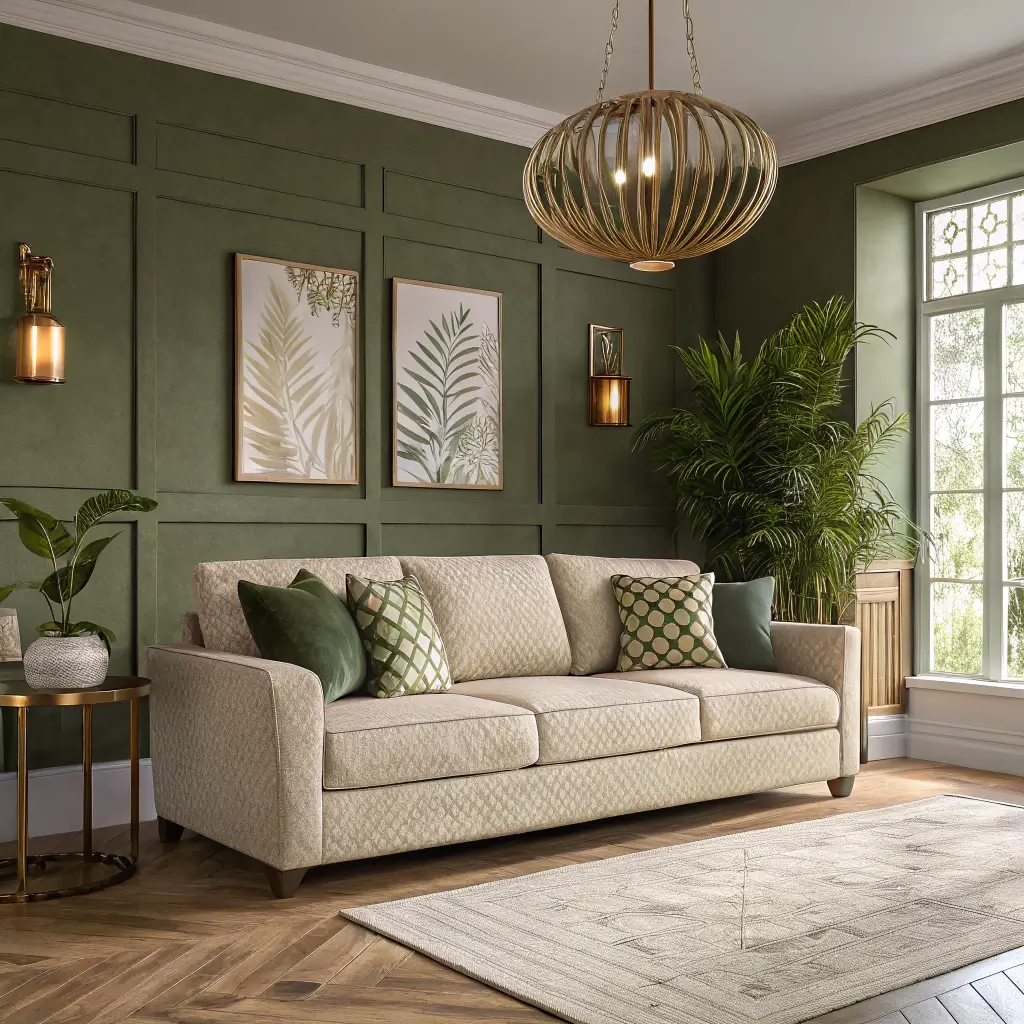
One olive green accent wall can completely transform a beige living room from “rental bland” to “designer chic.” I helped my sister create this look in her apartment, and her landlord actually asked if she’d hired a professional designer (she hadn’t—we just watched a lot of design shows).
Choosing Your Olive Shade
Not all olives are created equal. Some lean brown (muddy), others lean yellow (sickly). After testing six samples, we landed on Clare’s Current Mood in a custom mix—slightly lighter than their standard. It has depth without being too dark or military-looking.
The accent wall faces the main entrance, so it’s the first thing you see. This placement creates immediate impact while the other beige walls provide visual rest. It’s like having one really good piece of art instead of cluttering every wall.
Adding Textured Beige Elements
Against the olive wall, textured beige pieces become sculptural:
- Chunky knit poufs
- Woven wall hangings
- Jute rugs with high pile
- Linen curtains with natural wrinkles
- Ceramic vases with rough finishes
We found most of these pieces at HomeGoods and Target. The textures add interest without adding color competition. Everything works together to create this cohesive, earthy vibe.
Balancing Bold and Neutral
The trick with an olive accent wall is knowing when to stop. We kept everything else neutral:
- Beige sofa with simple lines
- Natural wood side tables
- White lampshades
- Minimal wall art on the olive wall
- No patterns except subtle textures
The olive wall is the star—everything else just supports it.
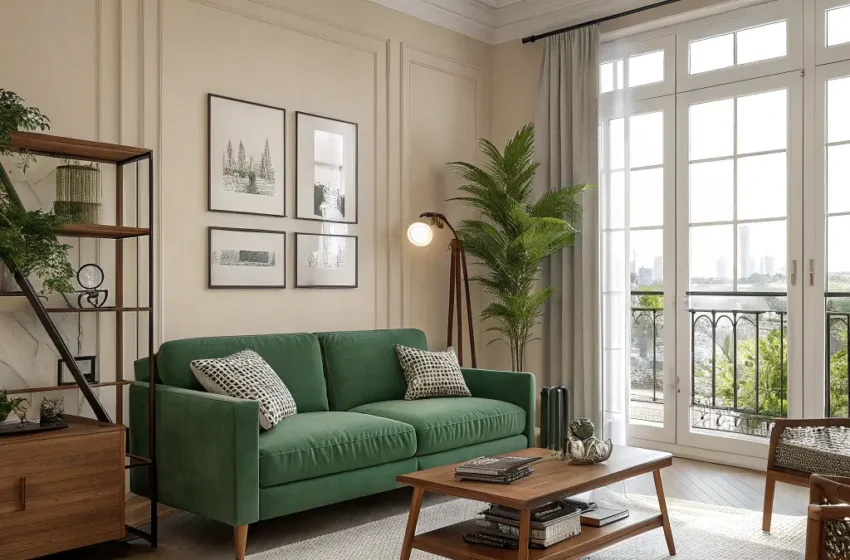
3. Beige Living Room with Green Velvet Accents
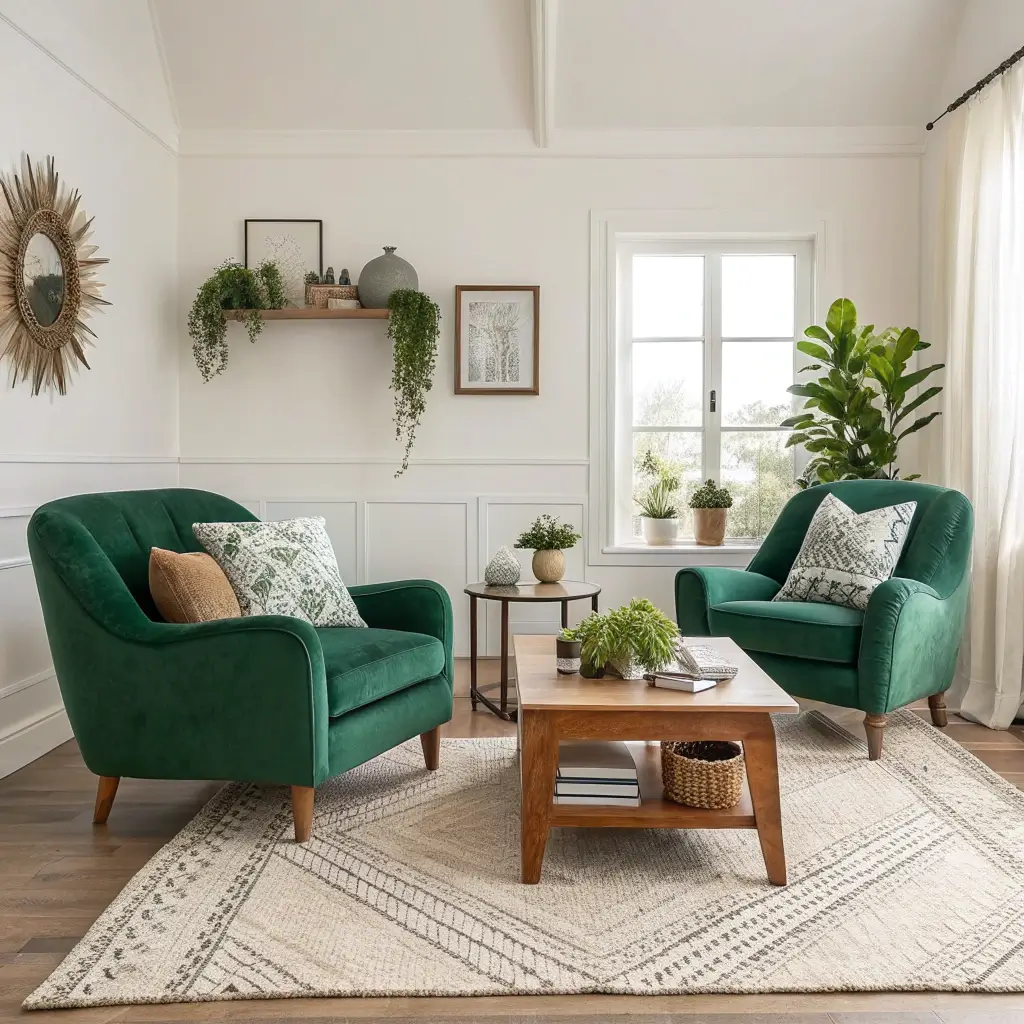
Starting with a beige base and adding green velvet accents is perfect for commitment-phobes (like me). You get the green-beige magic without painting walls or buying major furniture. I did this in my first apartment, and it looked way more expensive than my budget actually was.
The Power of Green Velvet
Green velvet hits different than regular green fabric. The way it catches light creates depth and richness that flat fabrics can’t match. I have two emerald velvet pillows and one forest green velvet ottoman, and they elevate my basic beige sofa instantly.
Velvet options that work beautifully:
- Emerald for drama
- Sage for subtlety
- Forest for richness
- Moss for earthiness
- Olive for sophistication
Strategic Accent Placement
You don’t need green velvet everywhere—that would be overwhelming. I follow the rule of three:
- Two velvet pillows on the sofa
- One velvet ottoman or chair
- One velvet throw (optional but luxurious)
This creates visual rhythm without going overboard. The beige background lets each green piece shine.
Supporting Cast Members
To make green velvet accents sing against beige:
- Add metallic elements (gold or brass)
- Include natural wood pieces
- Layer in cream and white
- Use plants to echo the green
- Keep patterns minimal
The goal is sophisticated coordination, not matchy-matchy boredom.
Also Read: 10 Elegant Green Accent Wall Living Room Ideas with Style
4. Two-Tone Green and Beige Minimal Living Room

Minimalism doesn’t mean colorless. My friend proved this with her two-tone green and beige living room that’s minimal but warm. She uses exactly two paint colors plus white, and the restraint actually makes the space feel more designed, not less.
The Minimal Color Strategy
She painted one wall sage green, kept two walls beige, and one wall white. That’s it. No accent colors, no patterns, just these three colors throughout the space. The limitation creates incredible cohesion.
The furniture follows suit:
- Beige linen sofa
- Sage green accent chair
- Natural wood coffee table
- White shelving
- That’s literally everything
Quality Over Quantity
When you’re working with minimal color, quality matters more:
- Premium paint with perfect color match
- High-quality fabrics that feel luxurious
- Solid wood over particle board
- Real plants, not fake
- Better to have three nice pieces than ten cheap ones
My friend saved for six months to buy that perfect sage chair instead of settling for something close enough. The patience paid off.
Adding Interest Without Clutter
Minimal doesn’t mean boring. She adds interest through:
- Varying textures within the color palette
- Playing with scale (one large plant instead of many small ones)
- Strategic lighting for ambiance
- Careful styling of the few decorative objects
- Maintaining lots of negative space
The space breathes, and the green-beige combo provides just enough visual interest.
5. Earthy Green Plants in a Warm Beige Space
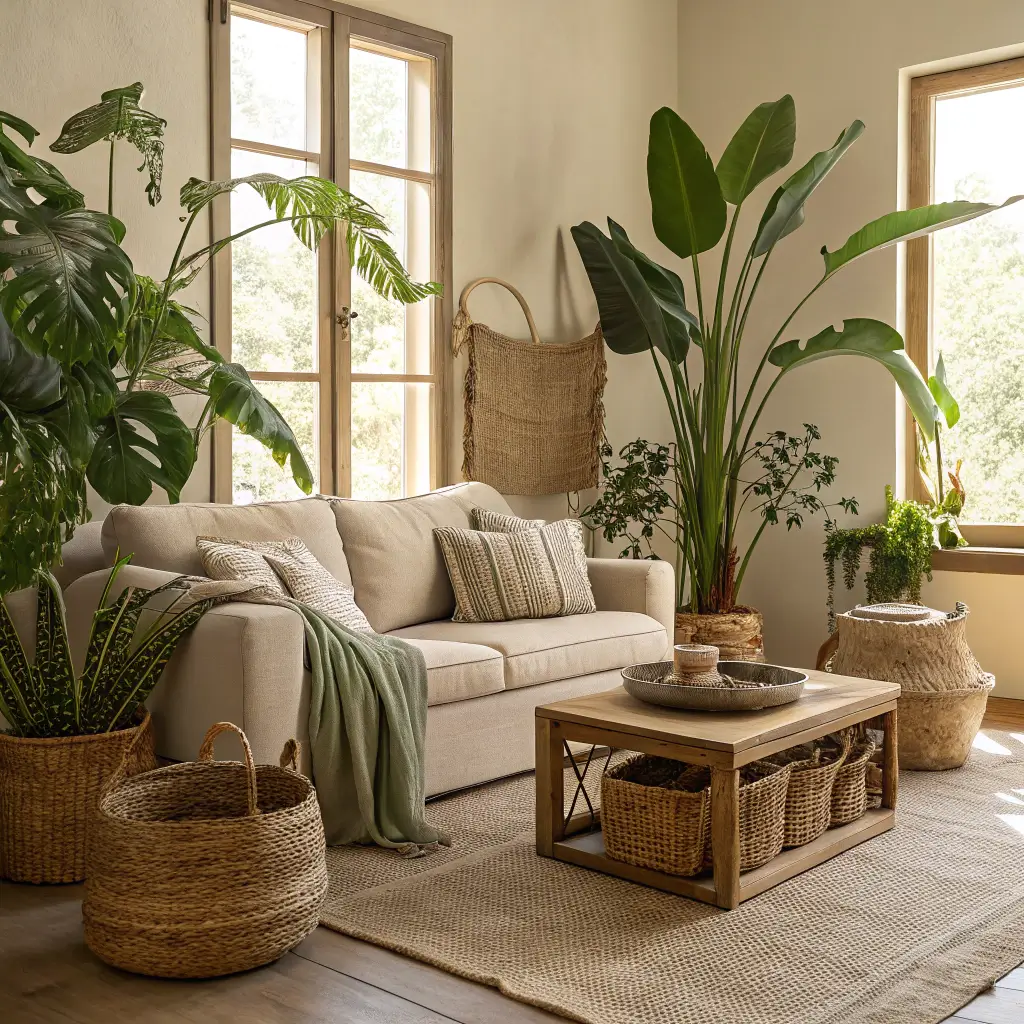
Sometimes the best green doesn’t come from paint or fabric—it comes from actual plants. My living room is basically beige everything with twenty-three plants (yes, I counted), and the natural green creates this incredible organic palette.
Building Your Plant Collection
Start small. I killed my first five plants before figuring out what worked in my space. Now I have:
- Two large floor plants (fiddle leaf fig and monstera)
- Multiple pothos on high shelves
- Snake plants in corners
- Succulents on the coffee table
- Trailing philodendrons from hanging planters
Each adds a different shade and texture of green against my beige backdrop.
Choosing Beige That Complements Green
Not all beiges work with living plants. Cool beiges can make green plants look sickly. I chose warm beiges with yellow undertones that make my plants pop:
- Warm sand for walls
- Caramel beige for the sofa
- Natural jute for the rug
- Honey-toned wood furniture
The warmth in the beige brings out the vibrancy in the plants.
Plant Styling Strategies
Random plants everywhere looks messy. I group mine strategically:
- Cluster different heights in corners
- Use matching planters for cohesion
- Create levels with plant stands
- Leave some surfaces plant-free
- Choose pots in beige, terracotta, or white only
The organized chaos feels intentional rather than jungle-like.
6. Modern Green and Beige Living Room with Wood Tones
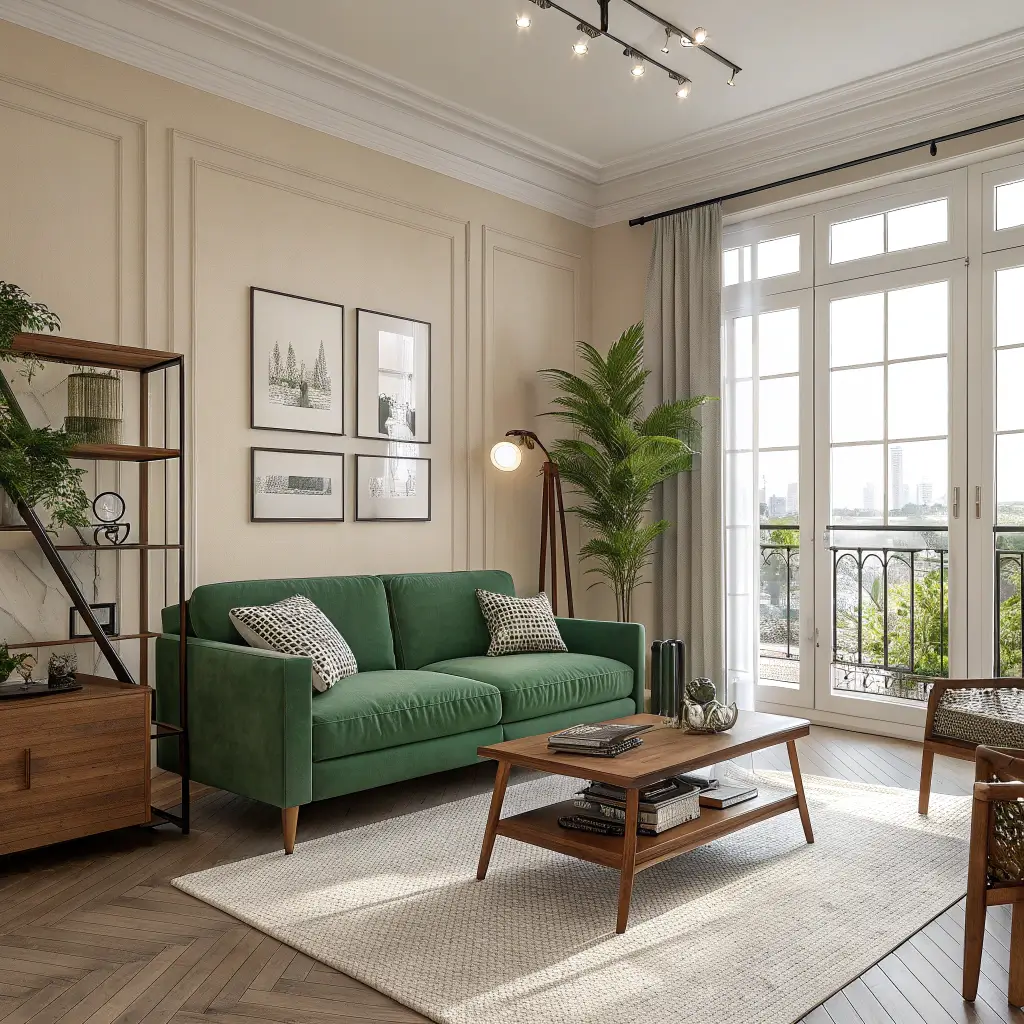
Adding wood tones to green and beige creates this perfect triangle of natural colors. My current living room uses all three, and it feels modern but warm—like a Scandinavian cabin met a California bungalow.
The Wood Factor
Wood bridges green and beige beautifully. I use:
- Walnut coffee table (rich and dark)
- Oak floating shelves (light and bright)
- Mixed wood picture frames
- Wooden bowls and accessories
The variety of wood tones adds depth without adding new colors. Everything stays in the natural family.
Modern Execution
To keep it modern rather than rustic:
- Choose furniture with clean lines
- Avoid overly distressed finishes
- Mix wood with metal accents
- Keep decorative objects minimal
- Use geometric shapes rather than ornate details
My room feels current, not like a log cabin.
Balancing Three Elements
The ratio matters. I use:
- 40% beige (walls and large furniture)
- 30% wood tones (furniture and floors)
- 20% green (accents and plants)
- 10% white/cream (breathing room)
This balance keeps everything harmonious without any one element dominating.
Also Read: 12 Elegant Green and Brown Living Room Ideas for Stylish
7. Light Beige Room with Dark Green Statement Furniture
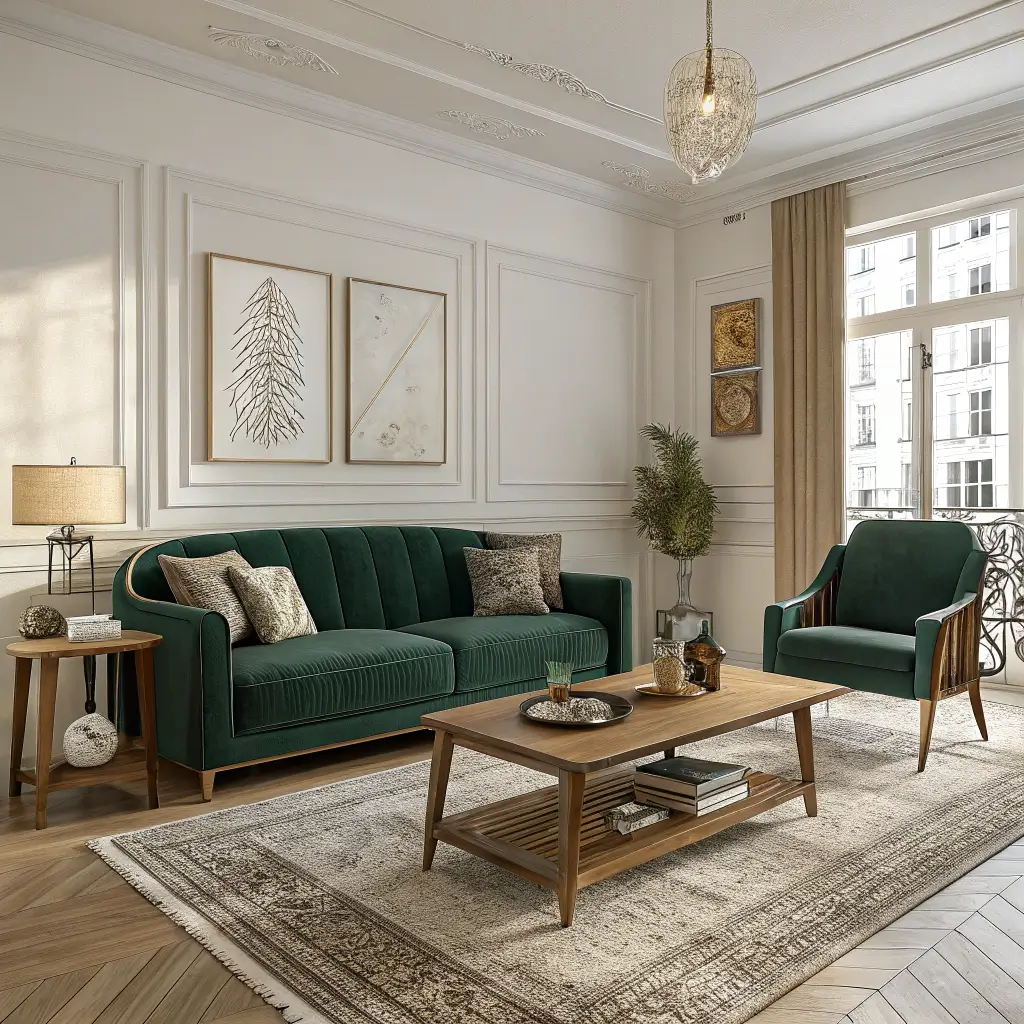
Flipping the script with light beige walls and dark green furniture creates unexpected drama. I bought a forest green velvet sofa on impulse (wine may have been involved), and against my beige walls, it looks absolutely stunning.
Going Bold with Green Furniture
Dark green furniture makes a statement without screaming for attention. My forest green sofa grounds the room and provides this gorgeous focal point that everyone compliments. Against light beige walls, it pops without overwhelming.
Other dark green pieces that work:
- Accent chairs
- Ottoman
- Media console
- Bookshelf
- Side tables
Supporting the Statement
When your furniture is the star, everything else plays supporting roles:
- Light beige walls stay neutral
- Simple window treatments
- Minimal wall art
- Neutral rug
- Subtle accessories
Let the green furniture do the talking.
Preventing Darkness
Dark furniture can make rooms feel heavy. I prevent this with:
- Abundant lighting (crucial!)
- Light walls and ceilings
- Mirrors to reflect light
- Metallic accents for sparkle
- Keeping some furniture light (like side tables)
The contrast between light and dark creates visual interest without cave vibes.
8. Cozy Green and Beige Living Room with Layered Textiles

Layering textiles in green and beige creates the coziest living room imaginable. Mine has approximately fifteen different textures (I might have a problem), but the layering makes the space feel expensive and inviting.
The Art of Layering
Start with your largest pieces and layer down:
- Beige sofa with green throw pillows
- Green throw blanket over beige
- Layered rugs (jute under a patterned green/beige)
- Multiple pillow textures
- Various throw weights and weaves
Each layer adds depth and interest while staying in the color story.
Texture Variety
Within green and beige, I use:
- Velvet (luxe and rich)
- Linen (casual and breathable)
- Wool (cozy and substantial)
- Cotton (crisp and clean)
- Jute (organic and textural)
The variety prevents monotony despite the limited color palette.
Seasonal Swapping
The beauty of textile layering? Easy seasonal changes:
- Lighter linens in summer
- Heavier wools in winter
- Velvet for holiday glamour
- Cotton for spring freshness
I store off-season textiles and swap them out. Same colors, different weights and textures.
9. Scandinavian Green and Beige Living Room Style
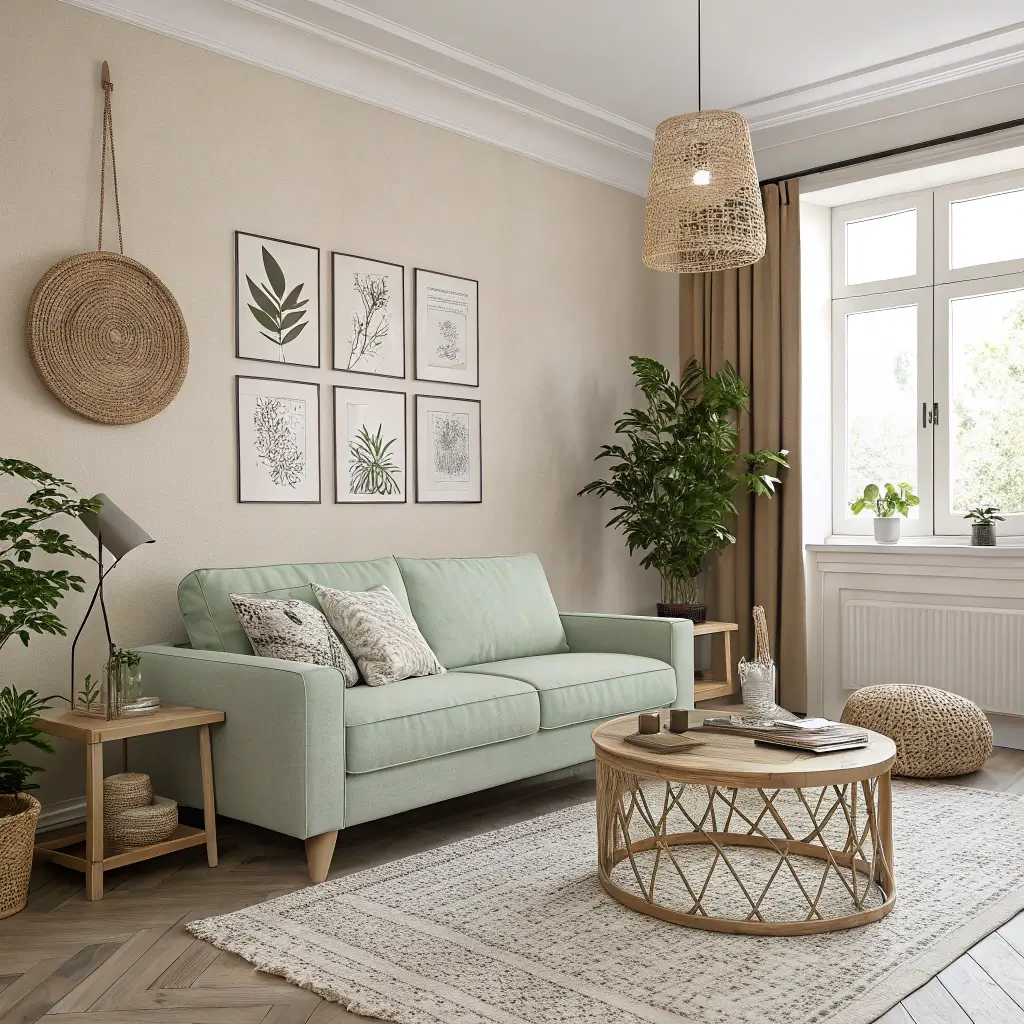
Scandinavian design usually means white and gray, but green and beige create a warmer take on Nordic style. I redesigned my home office using Scandi principles with green and beige, and it’s both calming and energizing.
The Scandi-Green-Beige Formula
Scandinavian design loves natural colors, making green and beige perfect:
- Light beige walls (warm white alternative)
- Sage green accents
- Blonde wood furniture
- Minimal decorative objects
- Maximum functionality
The palette feels fresh but not cold like traditional Scandi spaces.
Hygge Elements
Adding cozy touches within the green-beige palette:
- Soft sage throw blankets
- Beige sheepskin rugs
- Knitted pillows
- Warm lighting
- Natural materials only
FYI, green and beige actually feel more hygge than stark white because they’re warmer and more inviting.
Functional Beauty
Everything serves a purpose:
- Storage ottoman in sage green
- Beige sofa bed for guests
- Wall shelves that display and store
- Coffee table with hidden storage
- Minimal but meaningful decorations
The space works hard but looks effortless.
Also Read: 10 Beautiful Pink and Green Living Room Ideas to Try
10. Green and Beige Boho Living Room Aesthetic
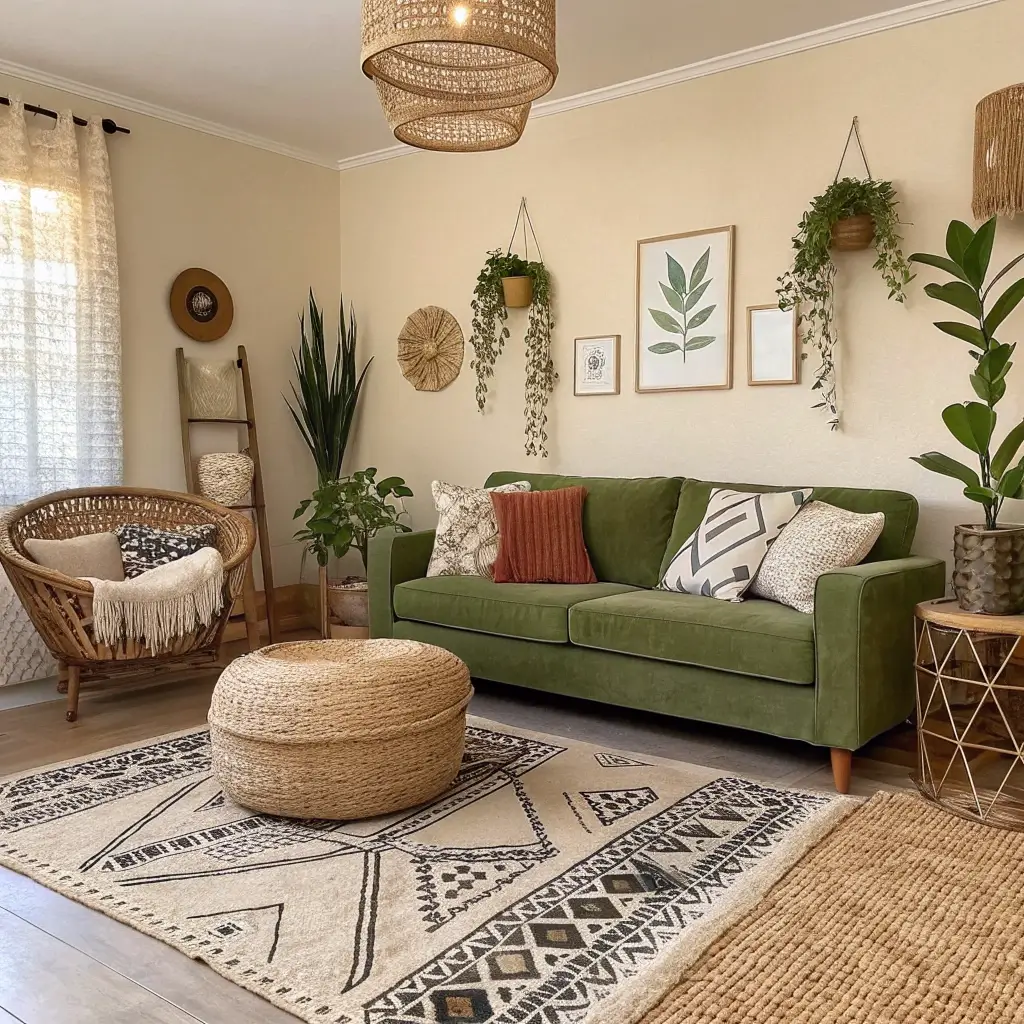
Boho style loves earth tones, making green and beige natural partners for this aesthetic. My friend created the perfect boho living room using only greens, beiges, and natural materials, and it looks like an anthropologie catalog (in the best way).
Boho Color Application
She uses multiple shades of both:
- Three different beiges (sand, camel, cream)
- Four greens (sage, olive, forest, mint)
- All in various patterns and textures
- Mixed without matching
- Layered for depth
The variety creates that collected-over-time boho vibe.
Pattern Play
Boho embraces pattern mixing within the green-beige palette:
- Geometric pillows
- Botanical prints
- Tribal patterns
- Abstract designs
- All featuring green and beige
The shared color palette unifies diverse patterns.
Global Influences
Adding worldly elements:
- Moroccan rugs in beige with green details
- Indian block-print pillows
- African baskets
- Japanese ceramics
- All in earth tones
The green-beige palette ties global elements together cohesively.
11. Neutral Beige Base with Muted Green Decor

Starting with all-beige and adding muted green through decor is perfect for renters or the commitment-shy. I do this in my rental, and I can take my whole color scheme with me when I move.
The Rental-Friendly Approach
Work with what you can’t change:
- Beige walls (every rental has them)
- Beige carpet (also standard issue)
- Add green through removable elements
- Create impact without permanent changes
My landlord’s boring beige became my perfect canvas.
Muted Green Decor Choices
Subtle green additions that make impact:
- Sage curtains
- Olive throw pillows
- Mint ceramics
- Green glass vases
- Botanical artwork
Each piece adds color without overwhelming the neutral base.
Creating Cohesion
To prevent the “stuff sitting on beige” look:
- Repeat green throughout the space
- Vary the shades slightly
- Include transitional pieces (green-beige patterns)
- Layer textures
- Maintain balance
The green feels integrated, not added on.
12. Green and Beige Living Room with Natural Stone Touches
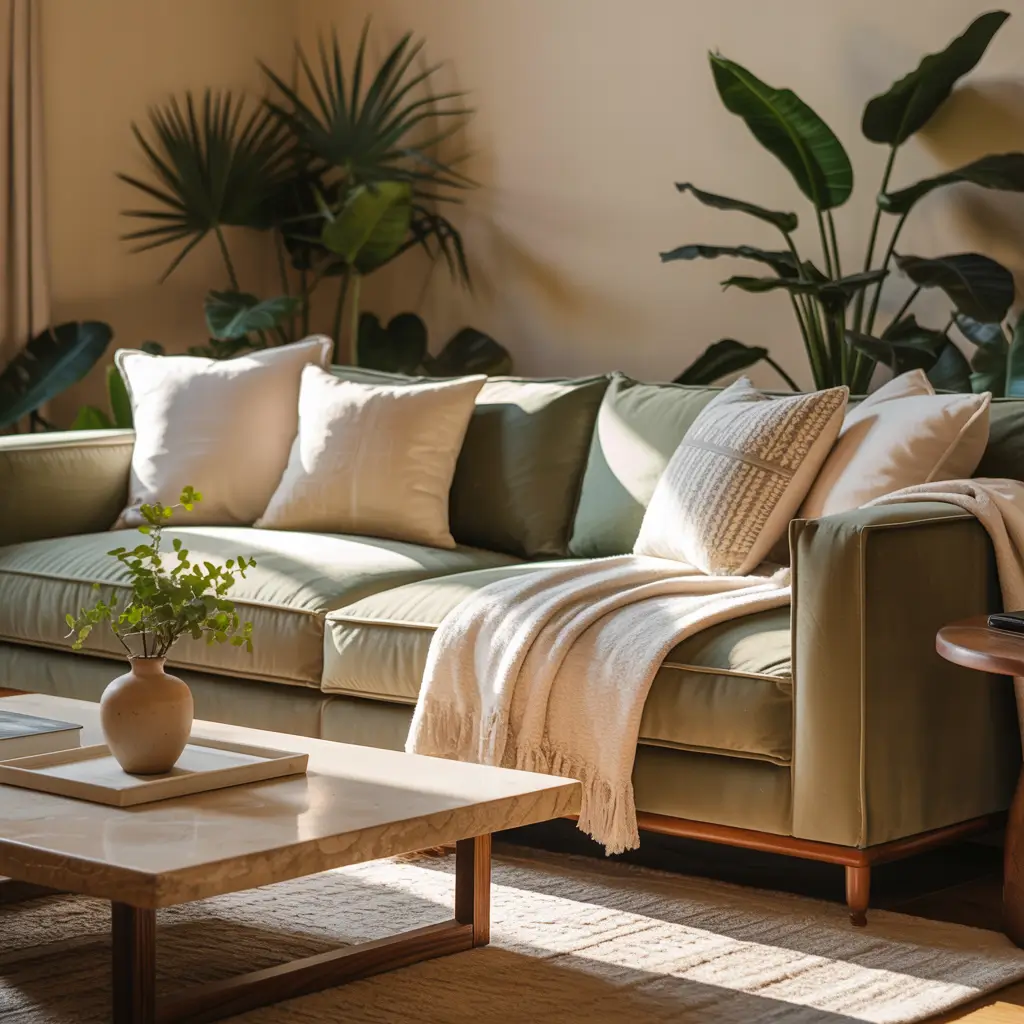
Adding natural stone to green and beige elevates the entire space. I added a marble coffee table to my green and beige living room, and it tied everything together while adding this element of luxury that makes the whole room feel more expensive.
Stone Selection
Stones that work beautifully with green and beige:
- Travertine (naturally beige with texture)
- White marble with beige veining
- Slate in green-gray tones
- Limestone in warm beige
- Granite with green flecks
I chose carrara marble with warm veining that bridges my sage walls and beige sofa perfectly.
Incorporating Stone Elements
Stone doesn’t have to mean major renovation:
- Coffee table top
- Side table accents
- Decorative objects
- Coasters and trivets
- Plant pots and vessels
Each piece adds that natural element that enhances the earthy palette.
Balancing Hard and Soft
Stone needs soft counterparts:
- Plush textiles
- Soft furniture curves
- Warm lighting
- Plants for life
- Wooden elements for warmth
The contrast between hard stone and soft fabrics creates perfect balance.
Making Green and Beige Work for Your Living Room
After exploring these twelve approaches, here’s what I know for sure: green and beige together create magic that trendy color schemes can’t touch.
They’re timeless, naturally harmonious, and surprisingly versatile. Whether you go bold with dark green furniture or subtle with sage accessories, this palette brings warmth and life to any living room.
The key is choosing the right shades for your space. Cool beiges need cool greens. Warm beiges love warm greens.
When in doubt, look to nature she’s been pairing these colors successfully for millions of years. Test samples in your specific lighting, and trust your instincts.
Don’t forget about texture—it’s what prevents green and beige from feeling flat. Layer different materials, mix smooth and rough, combine matte and shiny. The variation creates visual interest without adding competing colors.
IMO, green and beige is the perfect alternative to the gray-everything trend we’re all tired of. It’s sophisticated without being cold, natural without being boring, and versatile enough to work with any style from minimalist to boho.
Your living room deserves better than another gray sofa against gray walls. Give green and beige a chance—I promise you won’t regret it 🙂