10 Creative Wooden Ceiling Design Ideas for Modern Spaces
- Ceiling Design
 Ben
Ben- 0
- 25 minutes read
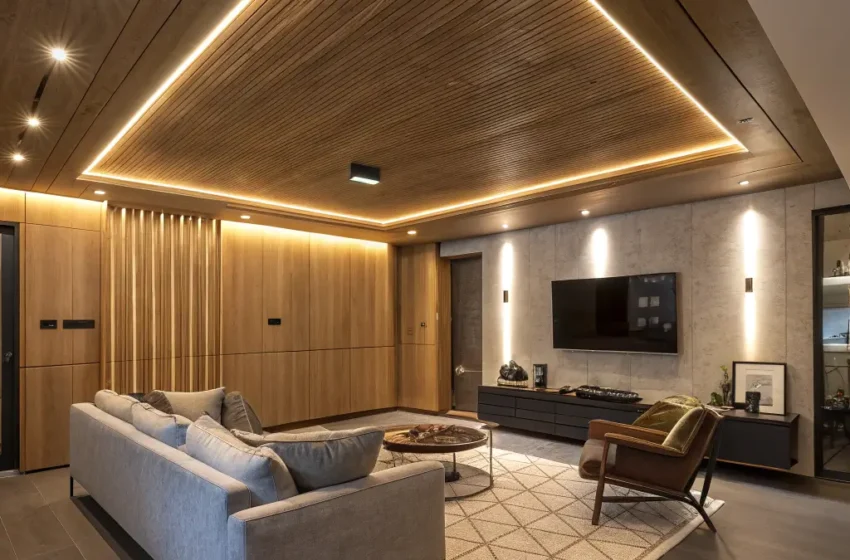
Wooden ceilings completely ruined regular ceilings for me. I walked into a friend’s cabin last winter, looked up at those gorgeous exposed beams, and suddenly my plain white ceiling at home looked about as exciting as printer paper.
That’s when I fell down the wooden ceiling rabbit hole, and honestly, I haven’t looked back since (or down, for that matter).
Here’s what makes wooden ceilings so addictive: they bring warmth, character, and this organic beauty that no other material can match. Whether you’re going for cozy cabin vibes or sleek modern aesthetics, wood delivers every single time.
Plus, there’s something deeply satisfying about having nature literally over your head – it’s like bringing the forest indoors without the bugs and bears.
I’ve installed wooden ceilings in four different rooms over the past two years, made some spectacular mistakes (pro tip: measure your wood BEFORE cutting, not after), and learned exactly what works in real homes versus what just looks good on Pinterest.
Let me share ten wooden ceiling ideas that’ll transform your space from basic to breathtaking.
1. Rustic Wooden Beam Ceiling Inspiration
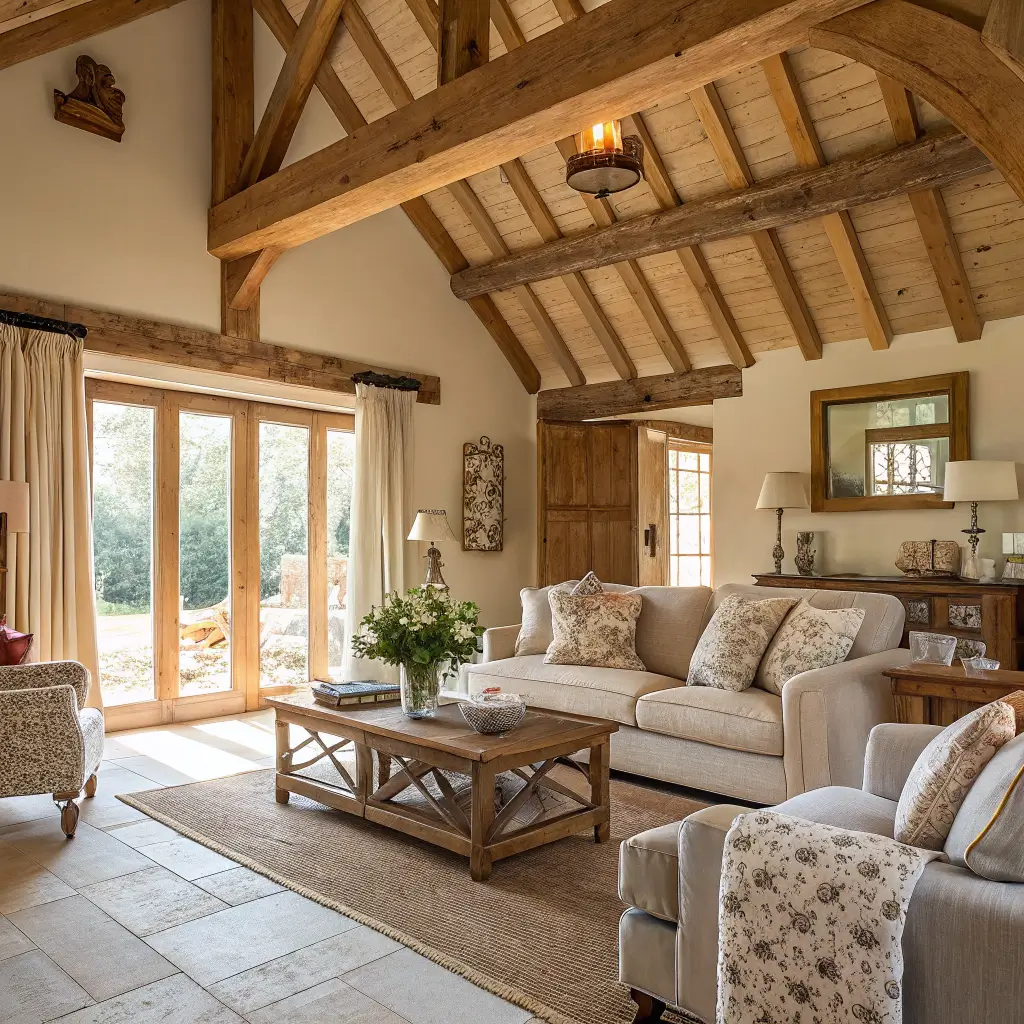
Rustic wooden beam ceilings make every room feel like a mountain lodge, even if you’re in downtown Detroit. I installed reclaimed barn beams in my living room, and now everyone who visits asks if my house is 200 years old. Nope, built in 1995, but those beams tell a different story.
The beauty of rustic beams lies in their imperfections. Every crack, nail hole, and weathered spot adds character that new wood could never replicate. My beams came from an actual demolished barn in Ohio, complete with authentic saw marks and decades of patina. They’re conversation starters that happen to hold up my ceiling.
Creating Authentic Rustic Vibes
Choose beams with visible history for maximum impact. Smooth, perfect beams don’t scream “rustic” – they whisper “Home Depot.” Look for reclaimed wood with character marks, old nail holes, and natural weathering. My beams even have old square nail marks that date back to the 1800s.
Space your beams based on room size and ceiling height. My 15×20 living room has five beams running across – enough to make a statement without feeling like you’re in a jail cell. Too many beams create a cramped feeling; too few look random and unfinished.
Don’t over-finish rustic beams. I made the mistake of applying glossy polyurethane to my first beam, and it looked like plastic wood. Light sanding to remove splinters, then a matte sealant to preserve the wood – that’s all you need.
2. Modern Minimalist Wooden Ceiling Designs
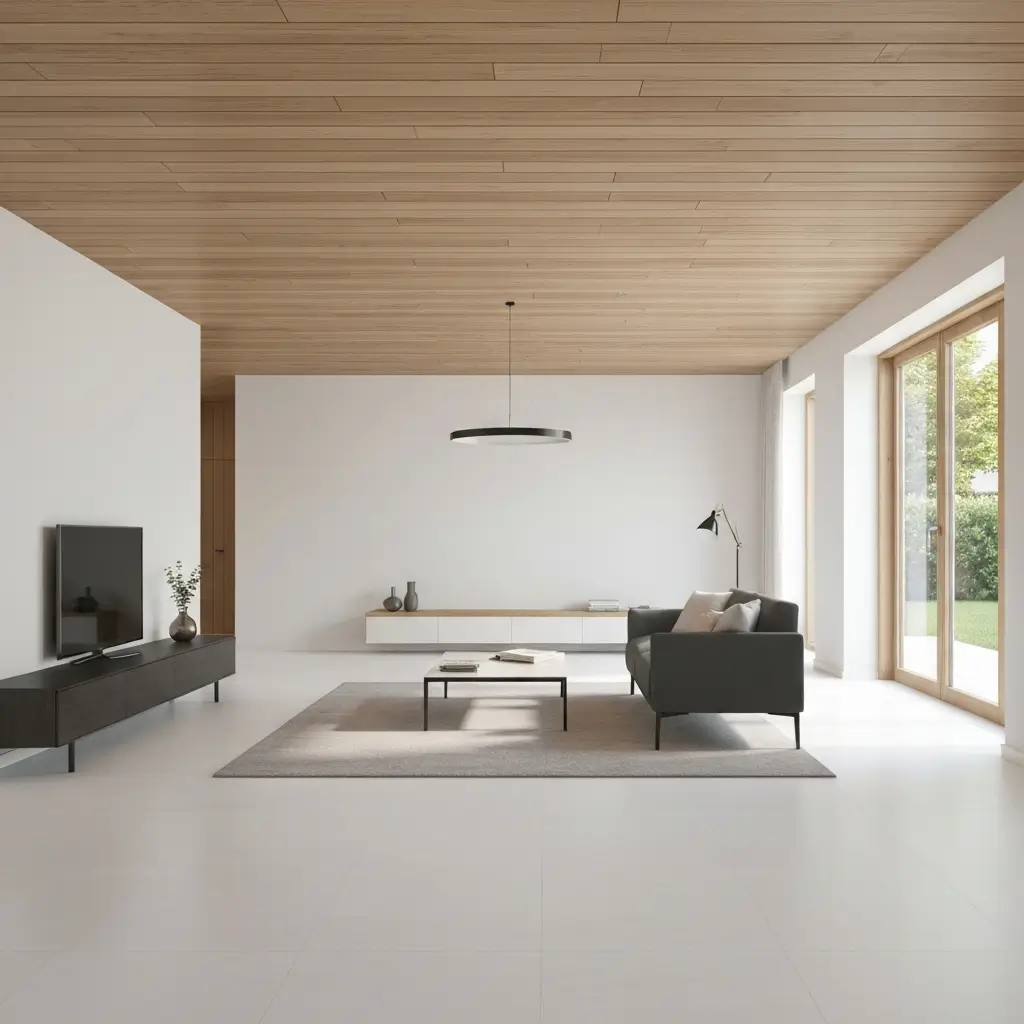
Modern minimalist wooden ceilings prove that wood doesn’t always mean rustic. My home office features sleek bamboo panels with invisible seams, creating this warm yet ultra-modern atmosphere that makes Zoom backgrounds jealous.
The key to modern wooden ceilings lies in clean lines and uniform finishes. No knots, no visible grain variations, just smooth wood that adds warmth without visual chaos. My bamboo panels run the entire length of the room without a single break, creating this seamless wooden sky overhead.
Achieving Minimalist Wood Perfection
Select woods with subtle grain patterns. Wild grain looks amazing in rustic designs but fights minimalist aesthetics. I chose bamboo specifically for its linear grain that adds texture without demanding attention.
Keep hardware and seams invisible. Visible screws or panel joints destroy minimalist vibes instantly. I used a hidden clip system that keeps everything smooth and clean. Yes, it cost more and took longer to install, but the seamless result justified every penny.
Maintain consistent color throughout. Minimalism doesn’t tolerate random color variations. I hand-selected each panel to ensure color consistency. One dark panel among light ones would’ve driven me crazy every single day.
3. Luxury Wooden Coffered Ceilings
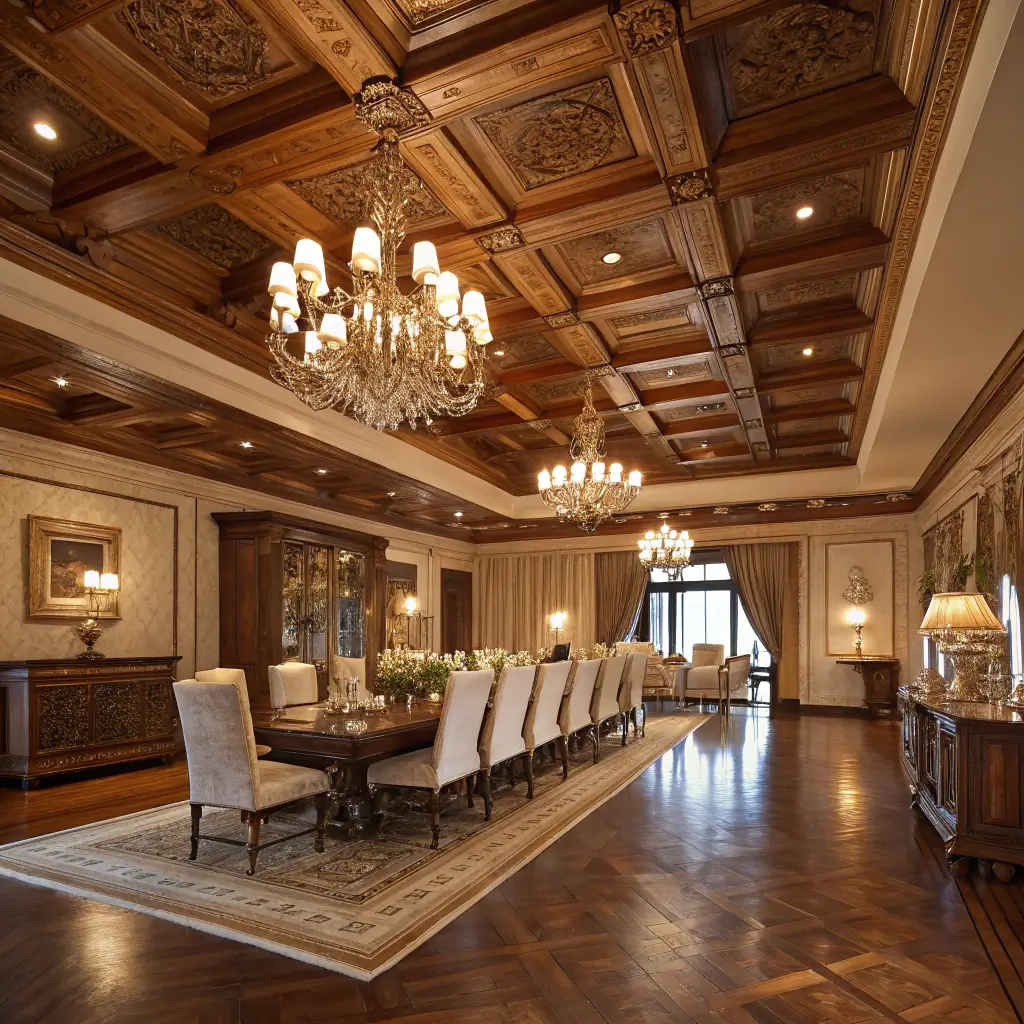
Wooden coffered ceilings bring old-world luxury that makes your dining room feel like a private club. I created a coffered ceiling using walnut-stained pine (because actual walnut would’ve required selling a kidney), and the result looks like something from a mansion.
The grid pattern of recessed panels adds incredible architectural depth while the wood brings warmth that painted coffers can’t match. Each coffer in my dining room has subtle LED uplighting that makes the wood grain glow during dinner parties. It’s dramatic without being overwhelming.
Coffering Like a Boss
Plan your grid to fit your room perfectly. Partial coffers at edges look terrible and scream “poor planning.” My 14×16 dining room has twelve coffers in a 3×4 grid – each one exactly the same size. This required adjusting my original plan, but symmetry matters more than stubbornness.
Mix wood tones for added depth. I used darker walnut stain on the beams and lighter honey oak in the recessed panels. This contrast creates shadow effects even in flat lighting. Single-tone coffers can look flat and boring.
FYI, coffered ceilings are dust magnets. Those beautiful recesses collect dust like they’re being paid for it. I installed tiny LED strips in each coffer partly for ambiance, mostly to highlight when cleaning is needed :/
Also Read: 12 Amazing Simple Ceiling Design Ideas for Cozy Interiors
4. Wooden Slat Ceilings for Small Spaces
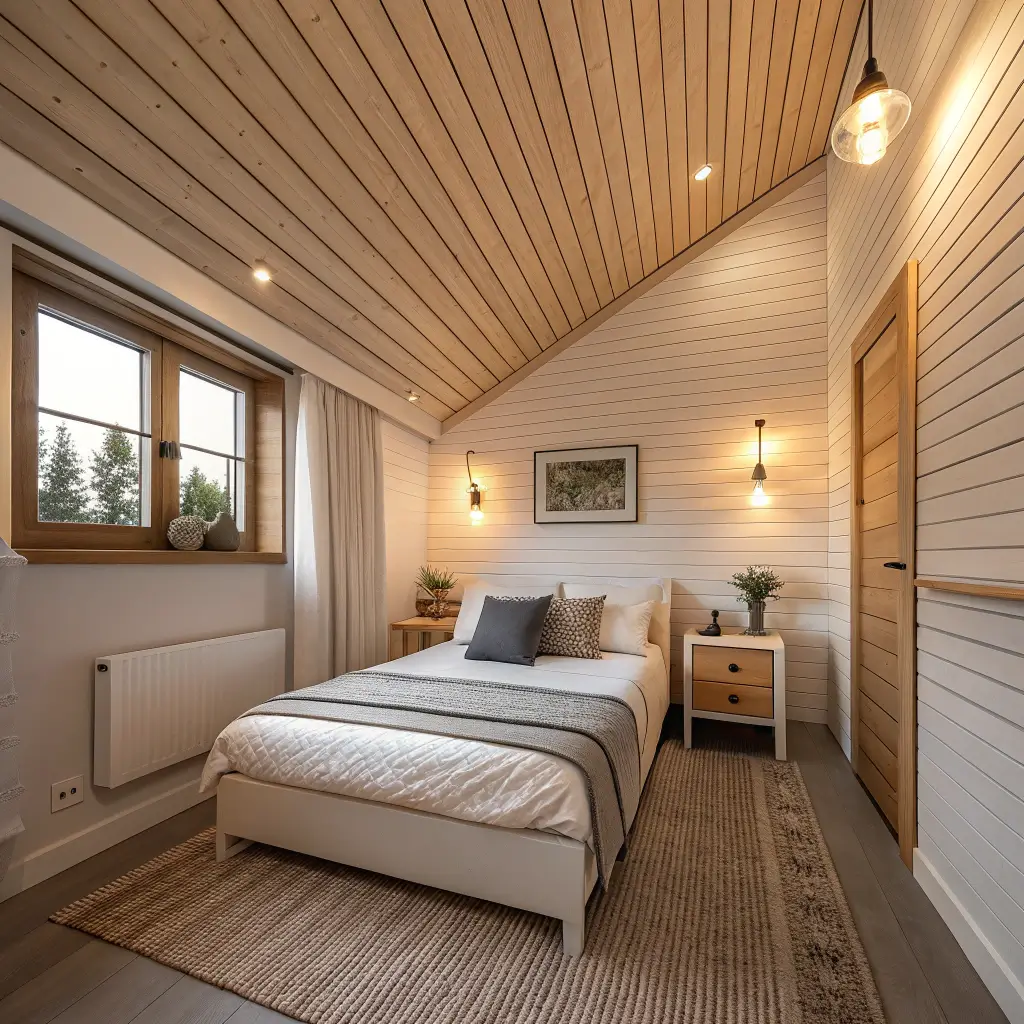
Wooden slat ceilings work magic in small spaces by creating visual movement that makes rooms feel larger. My tiny 8×10 guest bedroom got slat treatment, and visitors now think it’s bigger than the master (it’s definitely not).
The parallel lines draw the eye along their length, creating an illusion of extended space. I ran my slats perpendicular to the room’s longest dimension, making the narrow room feel wider. It’s basically an optical illusion that happens to look gorgeous.
Slat Success in Tight Spaces
Choose slat width based on room size. Narrow slats in tiny rooms create busy patterns that feel chaotic. Wide slats in large rooms look sparse. My small bedroom has 3-inch slats with 1-inch gaps – perfect proportion for the space.
Run slats strategically for spatial illusion. Lengthwise emphasizes length, crosswise emphasizes width. I initially installed mine wrong and made my narrow room look like a hallway. One reinstallation later, problem solved.
Light-colored wood keeps small spaces airy. I used whitewashed pine that reflects light while maintaining wood texture. Dark slats would’ve made my small room feel like a cave, no matter how trendy they looked.
5. DIY Wooden Ceiling Panel Ideas
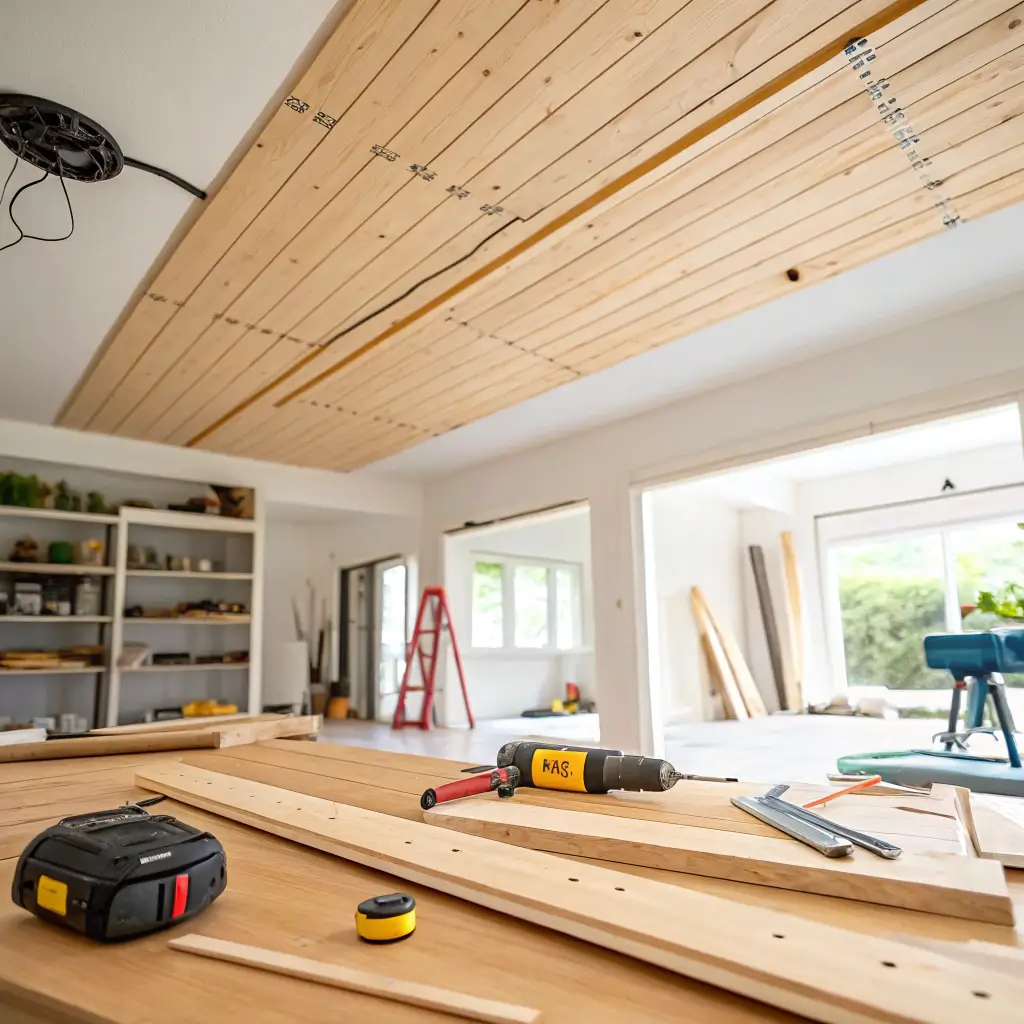
DIY wooden ceiling panels saved me thousands while delivering custom results. I created my own tongue-and-groove ceiling using basic pine boards, a router, and more patience than I knew I had. The result looks professional, costs amateur prices.
The DIY approach lets you customize everything – wood type, finish, pattern, even mixing species if you’re feeling adventurous. My kitchen ceiling combines pine and cedar panels in an alternating pattern that a contractor quoted at $5,000. My cost? $800 and a weekend of sweat.
DIY Without Disaster
Start with a small room for your first DIY attempt. I began with a closet, made my mistakes where nobody would see them, then tackled visible rooms with confidence. That closet ceiling isn’t perfect, but it taught me everything I needed to know.
Invest in proper tools or borrow them. Trying to install wooden ceilings with inadequate tools leads to frustration and poor results. I borrowed a friend’s nail gun and compressor – game changer. Hand-nailing ceiling boards is masochism disguised as DIY.
Account for wood movement in your design. Wood expands and contracts with humidity changes. I learned this when my too-tight installation started buckling during humid summer months. Leave small expansion gaps hidden by trim.
6. Scandinavian Style Wooden Ceilings
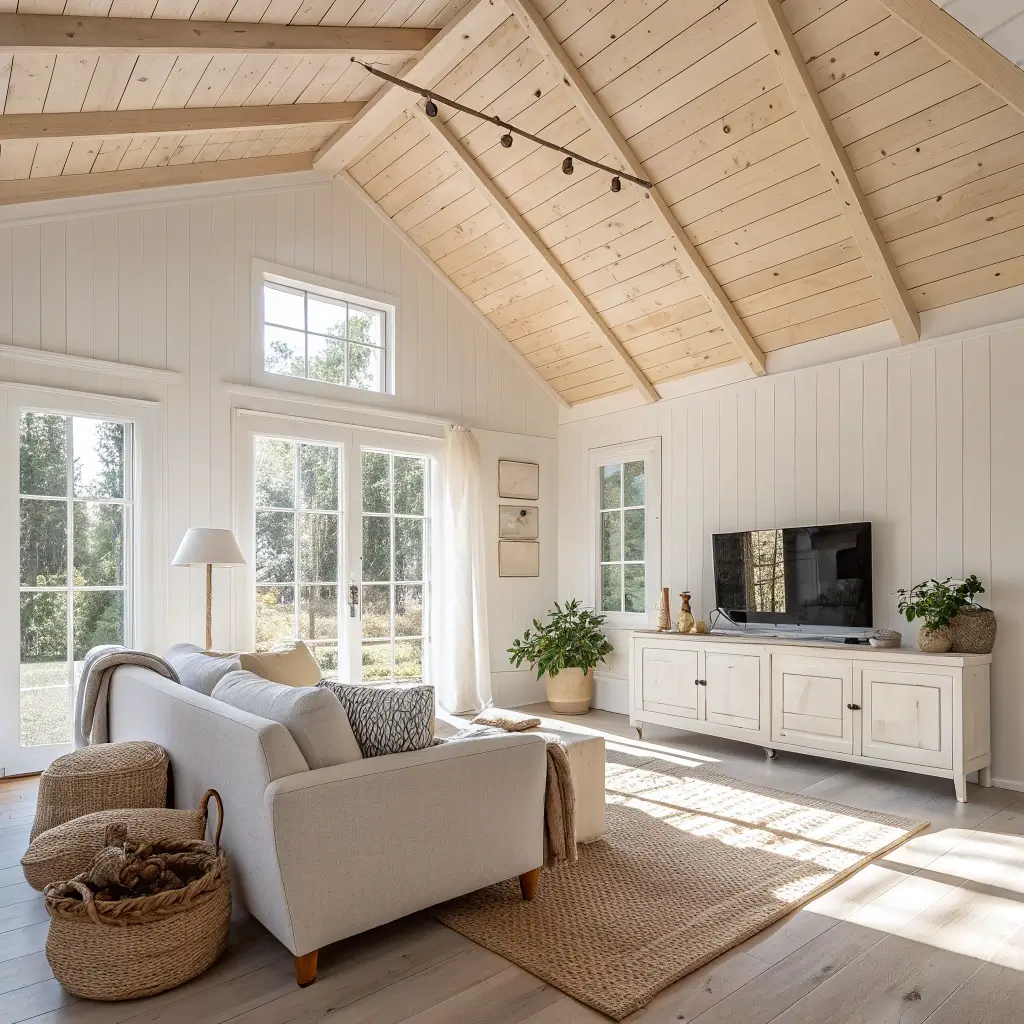
Scandinavian wooden ceilings bring that coveted Nordic coziness without requiring you to move to Stockholm. My bedroom features white-washed pine planks that create the perfect hygge atmosphere for Netflix binges and afternoon naps.
The Scandinavian approach to wood emphasizes light colors, natural textures, and simplicity. No fancy patterns or dark stains – just honest wood treated with respect. My white-washed ceiling maintains visible grain while brightening the entire room.
Nailing the Nordic Look
Choose light woods or white-wash darker ones. Scandinavian design loves pine, birch, and ash for their natural lightness. I white-washed regular pine boards, saving money while achieving that Nordic look. The technique is surprisingly simple and forgiving.
Keep installation patterns simple and uniform. Scandinavian design doesn’t do complicated. My boards run in simple parallel lines – no patterns, no angles, just clean simplicity. This restraint is harder than complexity but delivers better results.
Embrace the knots and imperfections. Scandinavians see wood’s natural marks as beauty, not flaws. I initially tried to hide knots with wood filler, then realized they added the character that made the ceiling interesting.
Also Read: 10 Beautiful Simple False Ceiling Design Ideas on Budget
7. Wooden Ceiling with Ambient LED Lighting
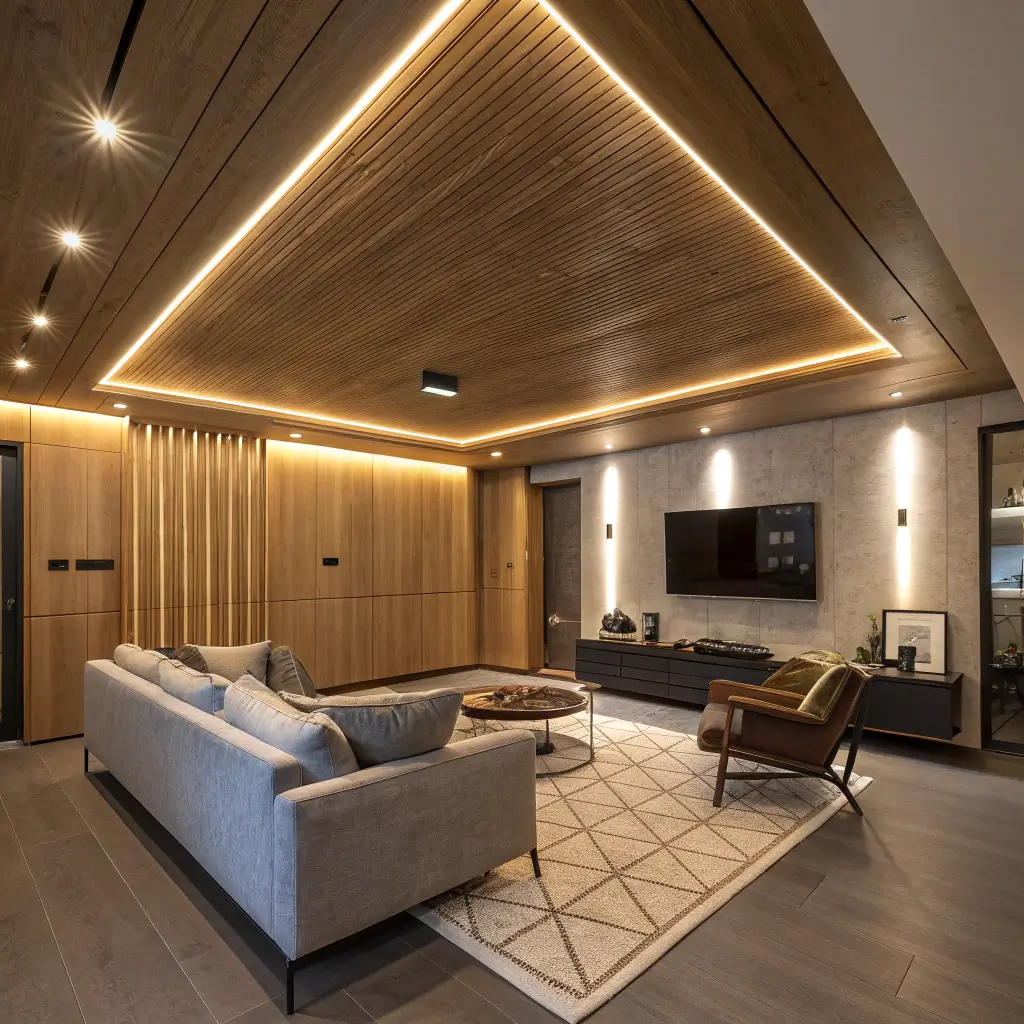
Wooden ceilings with integrated LED lighting create ambiance that painted ceilings could never achieve. My living room features oak panels with hidden LED strips between boards, creating this warm glow that makes everyone look good and feel relaxed.
The combination works because wood diffuses and warms LED light naturally. The grain creates subtle shadows and highlights that change as you move through the room. It’s like having a sunset permanently installed overhead.
Lighting Up Your Wood
Plan electrical before installing any wood. Running wires after installation means removing panels or visible conduits. I mapped every wire route before touching a single board. This planning prevented expensive demolition later.
Use warm white LEDs with wooden ceilings. Cool white LEDs make wood look gray and lifeless. I tested various color temperatures and settled on 2700K – warm enough to enhance the wood without looking orange.
Install dimmers for every LED circuit. The difference between bright task lighting and soft ambient glow transforms room function. My living room serves as workspace during day and relaxation zone at night, all controlled by dimmers.
8. Farmhouse Wooden Ceiling Makeovers
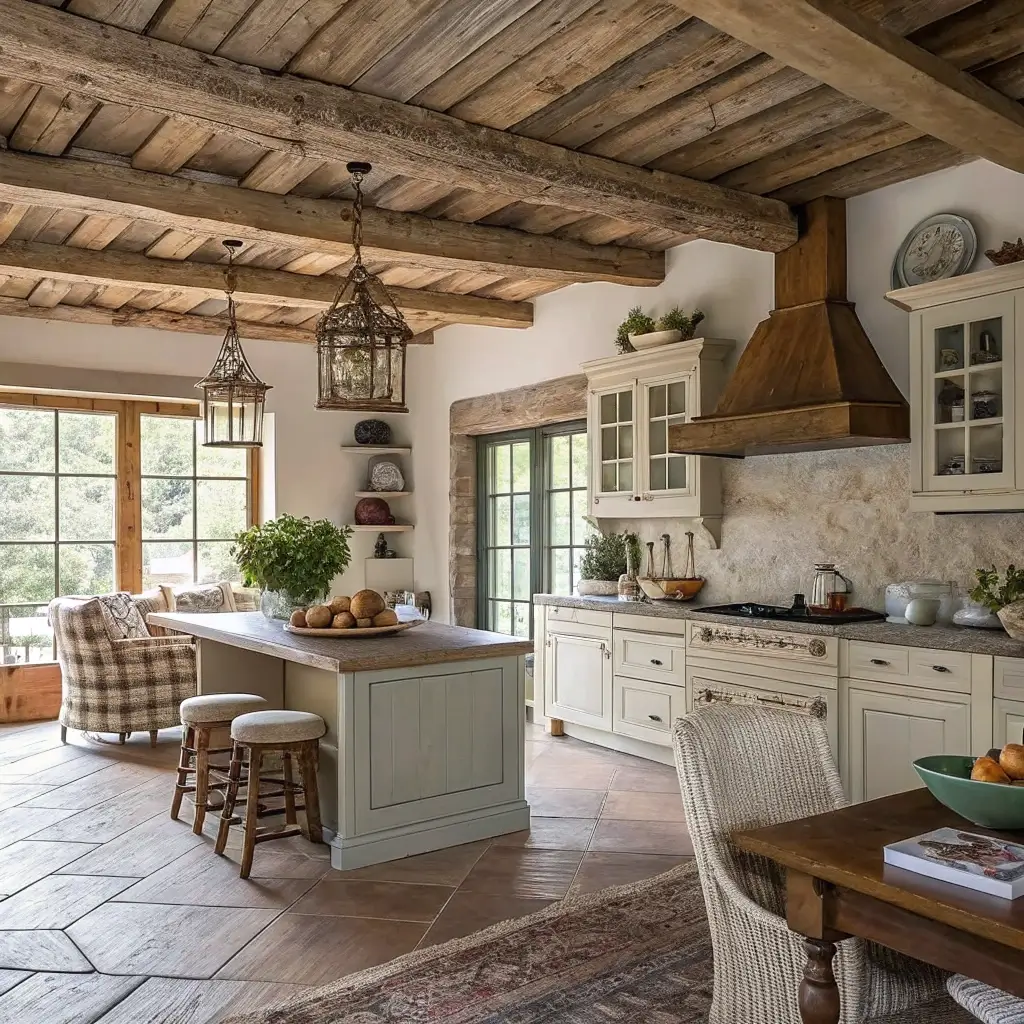
Farmhouse wooden ceilings bring that Joanna Gaines aesthetic without the Waco price tag. I transformed my boring kitchen with reclaimed shiplap (actually new wood distressed to look old because real reclaimed shiplap costs more than my car).
The farmhouse style celebrates wood’s imperfections while maintaining a clean, organized look. My kitchen ceiling has intentional gaps between boards, visible nail heads, and distress marks that I created with chains and hammers. Therapeutic and decorative!
Farming Your Ceiling Style
Distress new wood for authentic farmhouse character. I used chains, hammers, and screwdrivers to create dings and dents. Random violence against wood creates more realistic aging than careful distressing. Just avoid patterns – real wear is chaotic.
Mix board widths for visual interest. Uniform widths look manufactured. I combined 4-inch, 6-inch, and 8-inch boards randomly. This variation mimics how farmhouses were actually built with whatever wood was available.
Whitewash or gray-wash for that weathered look. Pure white looks too clean for farmhouse style. My gray-wash technique (watered-down gray paint wiped on and off) created perfectly weathered boards in minutes.
9. Dark Wood vs Light Wood Ceiling Comparisons
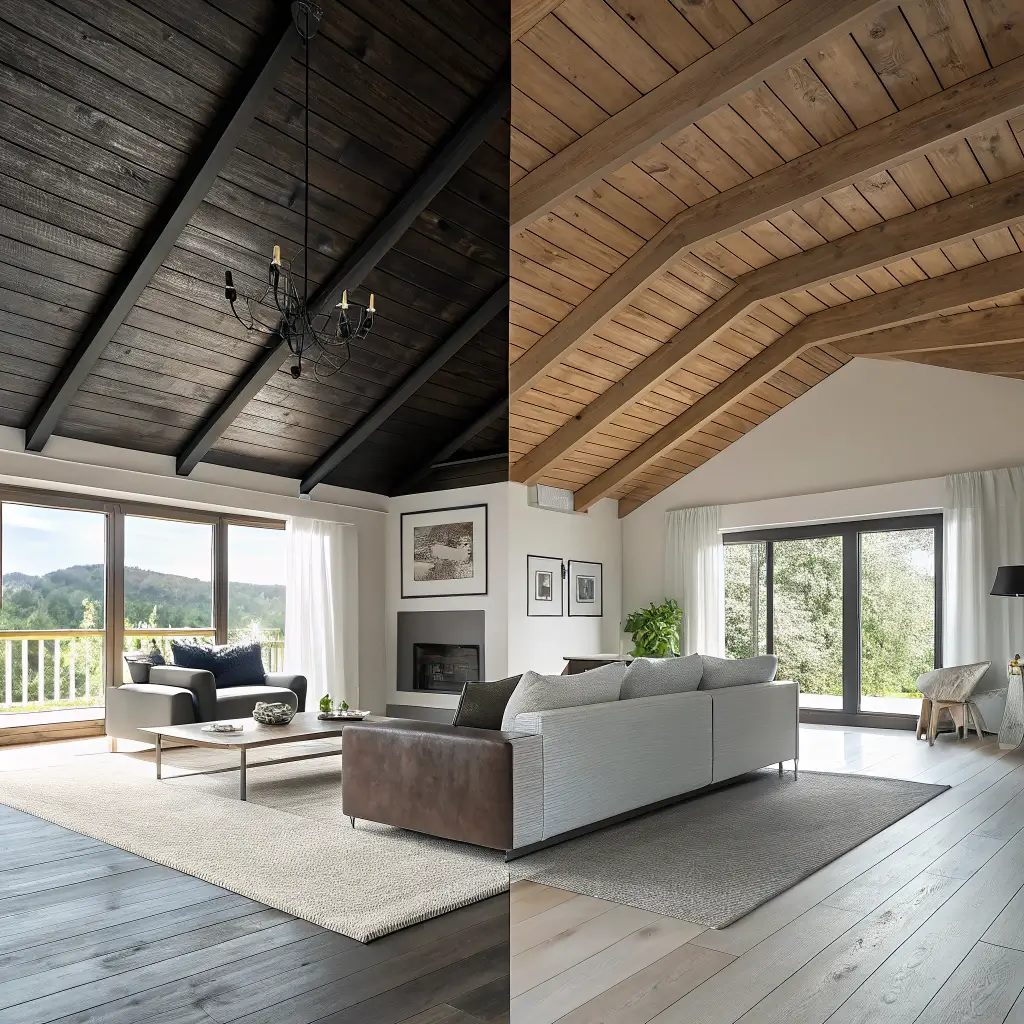
Dark wood ceilings create drama while light wood adds airiness, and I’ve tried both to mixed results. My media room’s dark walnut ceiling creates perfect movie ambiance but makes morning coffee feel like midnight. Meanwhile, my bathroom’s light birch ceiling makes the space feel huge but shows every speck of dust.
The choice between dark and light affects everything – room size perception, lighting needs, even mood. Dark wood in my small office made me feel like I was working in a very elegant coffin. Switched to light oak, and suddenly I had a workspace instead of a cave.
Choosing Your Shade Wisely
Consider room size before committing to dark wood. Dark ceilings visually lower height and can make small rooms claustrophobic. My 8-foot ceilings couldn’t handle dark walnut – felt like the ceiling was falling. Rooms with 10+ foot ceilings handle dark wood better.
Factor in natural light availability. North-facing rooms with dark ceilings become dungeons. South-facing rooms can handle dark wood because abundant natural light provides balance. I learned this expensive lesson with two complete ceiling re-dos.
IMO, medium tones offer the best flexibility. Not too dark, not too light – medium wood works everywhere. My honey oak family room ceiling adds warmth without drama or maintenance headaches. Sometimes compromise is actually perfect.
Also Read: 10 Inspiring Gypsum Ceiling Design Ideas and Luxe Room Vibes
10. Eco-Friendly Sustainable Wooden Ceiling Ideas

Sustainable wooden ceilings let you enjoy wood’s beauty without environmental guilt. I used FSC-certified bamboo in my home office and reclaimed wood in my dining room, creating gorgeous ceilings while keeping my eco-conscience clear.
Sustainable doesn’t mean sacrificing style. My bamboo ceiling looks more expensive than traditional hardwood while growing back in just five years. The reclaimed wood has character that new lumber could never match, plus I saved it from a landfill.
Sustaining Style and Planet
Research wood sources before buying. FSC certification ensures responsible forestry. Reclaimed wood gives old lumber new life. I found my reclaimed beams through a local architectural salvage company that sources from demolished buildings.
Consider rapidly renewable materials. Bamboo grows incredibly fast, making it super sustainable. Cork is another option, though less common for ceilings. My bamboo ceiling will outlast traditional wood while requiring fewer resources to produce.
Don’t dismiss engineered wood products. They use wood more efficiently than solid lumber. My guest room has engineered wood ceiling panels that use 50% less raw material than solid boards while looking identical once installed.
Looking Up to Your Wooden Future
There you have it – ten wooden ceiling ideas that prove overhead wood is about way more than just covering the boring bits above.
Each style brings its own character, from rustic charm to modern minimalism, farmhouse casual to sustainable chic.
The best wooden ceiling for your space depends on your room’s personality, your budget, and how much character you want overhead.
Start with one room, learn what works, then expand your wooden empire across your home. My journey began with one reclaimed beam and evolved into a full-house wooden ceiling obsession.
Remember that wooden ceilings aren’t just about aesthetics – they improve acoustics, add insulation value, and create warmth that painted ceilings never could.
Plus, they’re conversation starters that make every room more interesting.
Stop staring at that boring white expanse overhead and start planning your wooden transformation. Whether you go rustic, modern, or somewhere in between, wooden ceilings deliver character that lasts generations.
Your perfect wooden ceiling is waiting – just look up and imagine the possibilities! 🙂