12 Beautiful Ceiling Design Bedroom Ideas to Refresh Your Space
- Ceiling Design
 Ben
Ben- 0
- 37 minutes read
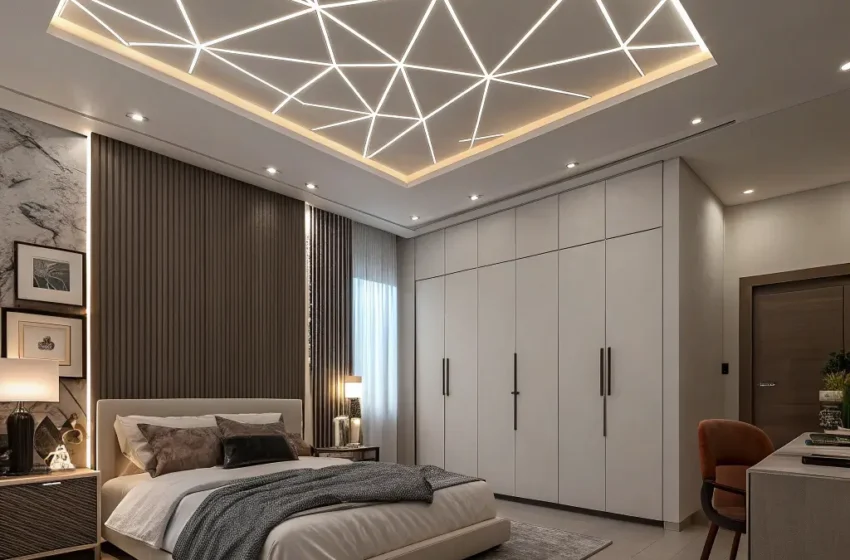
Bedroom ceilings are basically the most ignored surface in your entire house. I spent years staring at my boring flat white ceiling every night before finally doing something about it, and honestly? Installing a cove light ceiling in my bedroom changed not just how the room looks, but how I actually feel in the space.
It went from “place where I sleep” to “sanctuary I never want to leave.”
Here’s the thing about bedroom ceilings: they’re the last thing you see before falling asleep and the first thing you see when you wake up. Yet most of us treat them like afterthoughts, slapping on some builder-grade white paint and calling it done.
After helping five friends redesign their bedroom ceilings (yes, I’ve become the ceiling guru nobody asked for), I’ve discovered exactly what works, what doesn’t, and what makes you want to spend way too much time lying in bed just admiring the view above.
Ready to transform that fifth wall into something actually worth looking at? Let’s explore twelve bedroom ceiling ideas that’ll make you rethink everything you thought you knew about ceiling design.
1. Floating Cove Light Ceiling
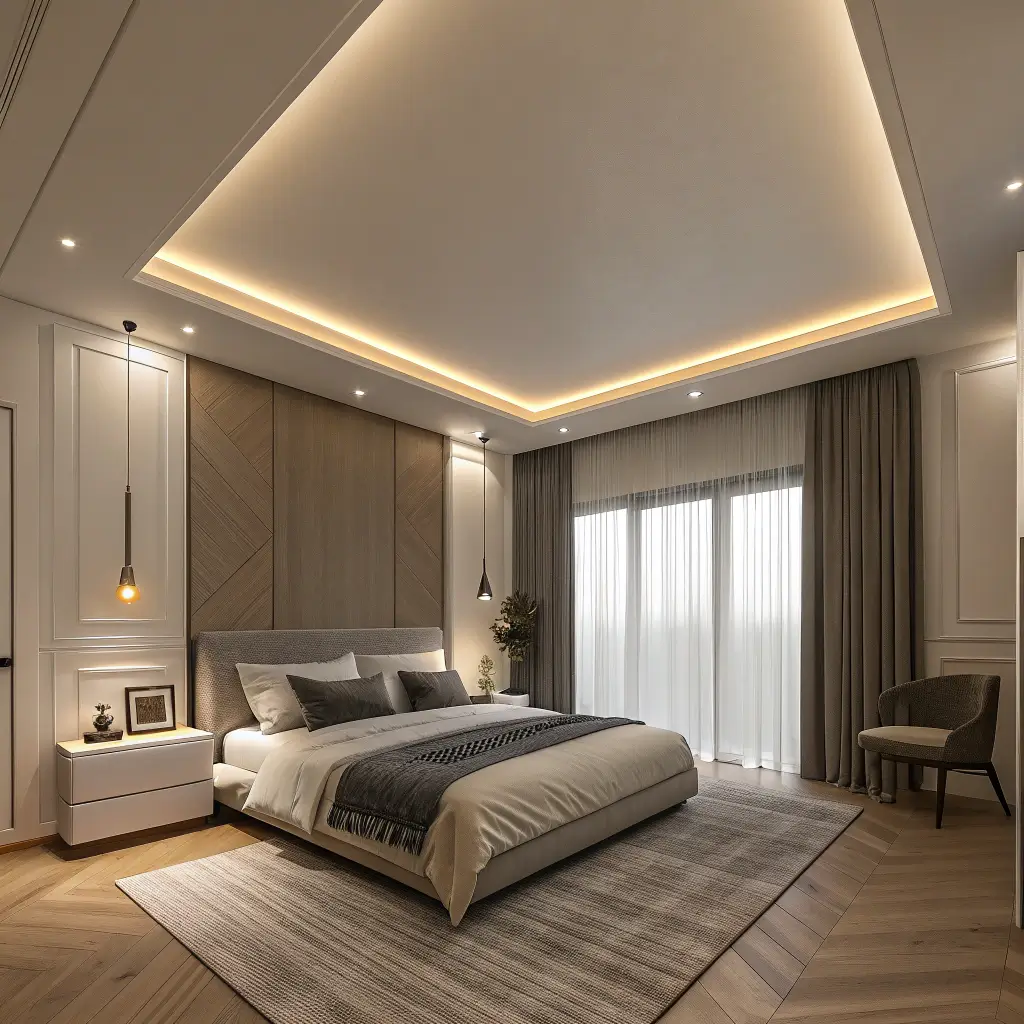
Floating cove light ceilings create this magical illusion that your ceiling is literally hovering above you. I installed this in my master bedroom two years ago, and the soft, indirect glow is so perfect for creating a relaxing atmosphere that I genuinely look forward to going to bed now.
Creating the Floating Effect
The magic happens when you create a recessed border around your ceiling perimeter and install LED strips facing upward. The light washes across the ceiling, creating this beautiful glow that makes it appear to float. My installation drops about 6 inches from the original ceiling, creating enough space for the LED strips while maintaining good ceiling height.
The floating effect works brilliantly because:
- It creates ambient lighting without harsh overhead fixtures
- Makes the room feel taller despite the dropped border
- Provides perfect mood lighting for relaxation
- Hides all the wiring and electrical work
- Looks expensive but costs way less than you’d think
I use warm white LEDs (2700K) on a dimmer switch, and being able to control the brightness from my phone has genuinely improved my sleep routine. Bright for getting ready, dimmed for winding down, barely glowing for those middle-of-the-night moments.
Installation Reality Check
Building a cove ceiling requires some construction skills. I hired a contractor for the framework (smart move), but I installed the LED strips myself and saved about $400 in labor. The key is getting the framework perfectly level—any deviation shows immediately when the lights are on.
Total cost for my 12×14 bedroom? About $800 including materials and partial labor. A fully professional installation would’ve been $1,500+, so the DIY lighting portion made sense.
2. Minimal Tray Bedroom Ceiling
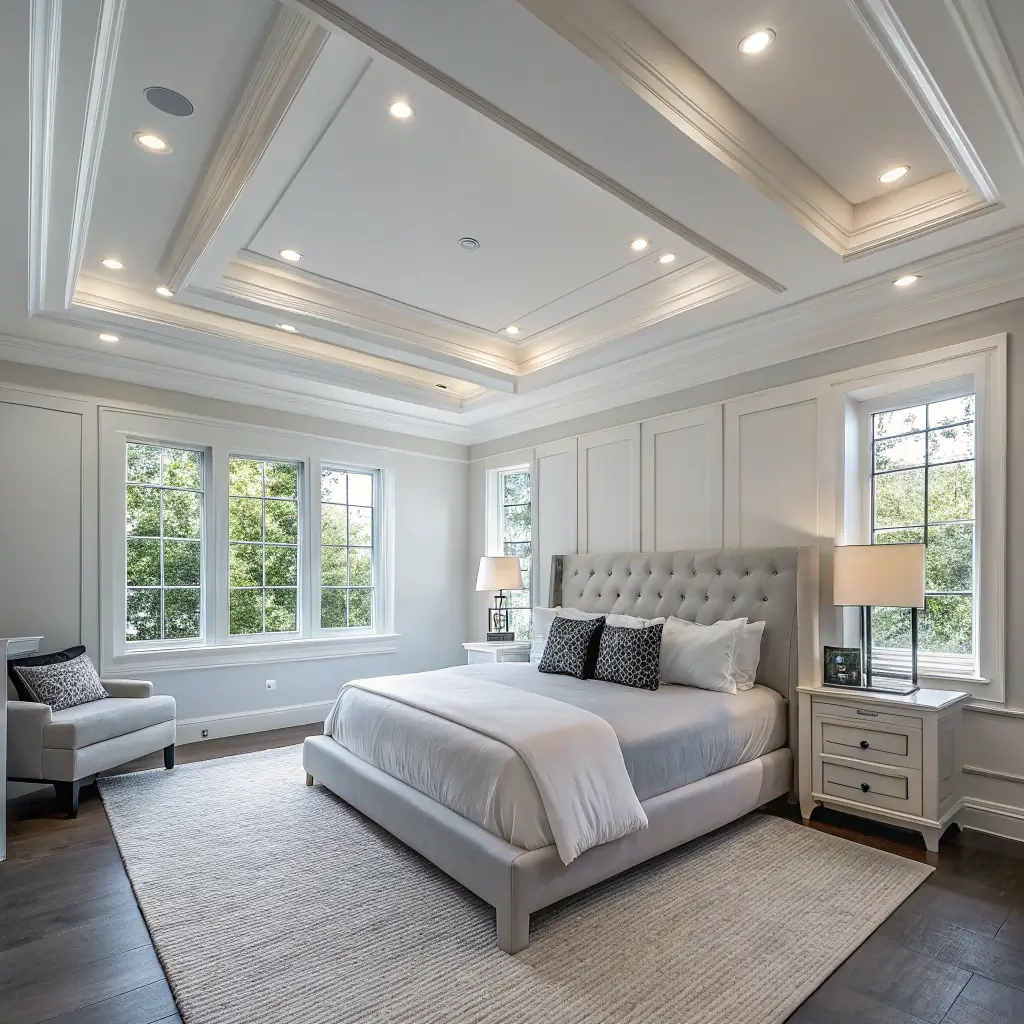
Tray ceilings add architectural interest without overwhelming your bedroom’s calm vibe. My friend installed a subtle tray ceiling in her bedroom, and the simple raised center section creates this elegant, hotel-like feeling that makes her space feel more luxurious.
The Tray Ceiling Advantage
A tray ceiling is basically an inverted tray—the center section sits higher than the perimeter. My friend’s design has a 12-inch step up in the center, painted the same white as the rest but creating subtle depth and dimension. She added recessed lights around the perimeter, and the effect is sophisticated without being showy.
Tray ceilings work especially well in bedrooms because:
- They add height without actual construction
- Create natural zones for different lighting
- Add luxury without being too dramatic
- Work with any decor style
- Increase perceived room size
Keeping It Minimal
The key to bedroom tray ceilings is restraint. You want subtle sophistication, not Vegas casino vibes. My friend kept her design simple—one level change, no complex curves or multiple steps. The minimalism maintains the calm bedroom atmosphere while adding visual interest.
She painted the tray section the same color as the walls rather than the ceiling, which creates this subtle definition without being obvious. It’s one of those details people notice without quite knowing why the room feels special.
3. Soft Curved POP Ceiling
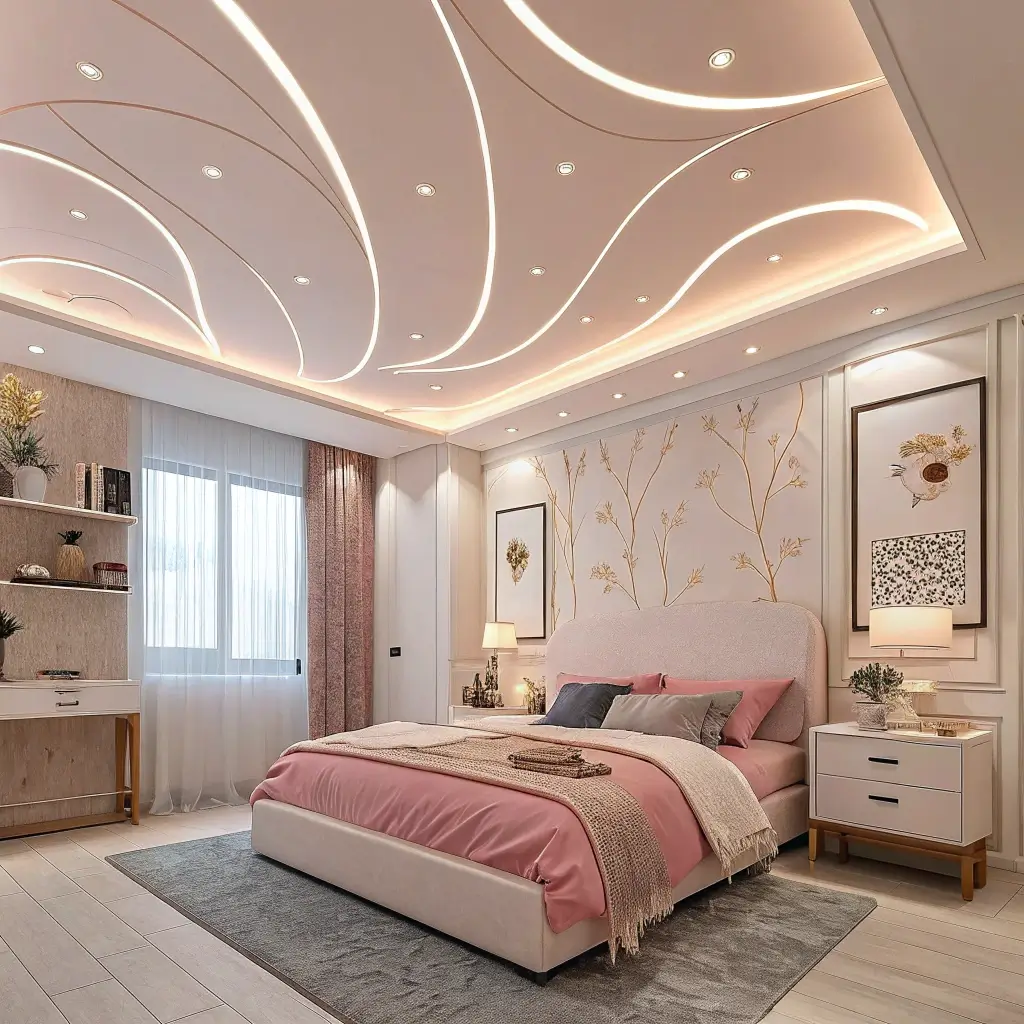
Curved POP (Plaster of Paris) ceilings bring softness to bedrooms in a way that angular designs can’t match. I helped my sister install gentle curves in her bedroom ceiling, and the organic shapes create this incredibly soothing atmosphere—perfect for a space dedicated to rest.
Why Curves Work in Bedrooms
Straight lines and sharp angles create energy and focus. Great for offices, not ideal for bedrooms. Curves, on the other hand, feel soft, organic, and calming. My sister’s ceiling has gentle wave-like curves flowing from the entry wall toward the bed, creating subtle movement without being distracting.
The curved POP design:
- Softens the room’s overall geometry
- Creates flow and movement
- Feels more organic and natural
- Reduces visual tension
- Makes the room feel more intimate
The Construction Challenge
Creating curves in POP requires serious skill. We hired an experienced contractor who specializes in curved work because amateur attempts at curves look, well, amateur. The contractor built the framework first, bent the POP carefully, and finished it smooth. The process took three days but the result is absolutely stunning.
Cost? About $1,200 for a 10×12 bedroom, which is more than a simple flat ceiling but less than complex geometric designs. IMO, totally worth it for the unique, calming result.
Also Read: 10 Simple Profile Light Ceiling Design Ideas with Soft Glow
4. Wooden Slat Accent Ceiling
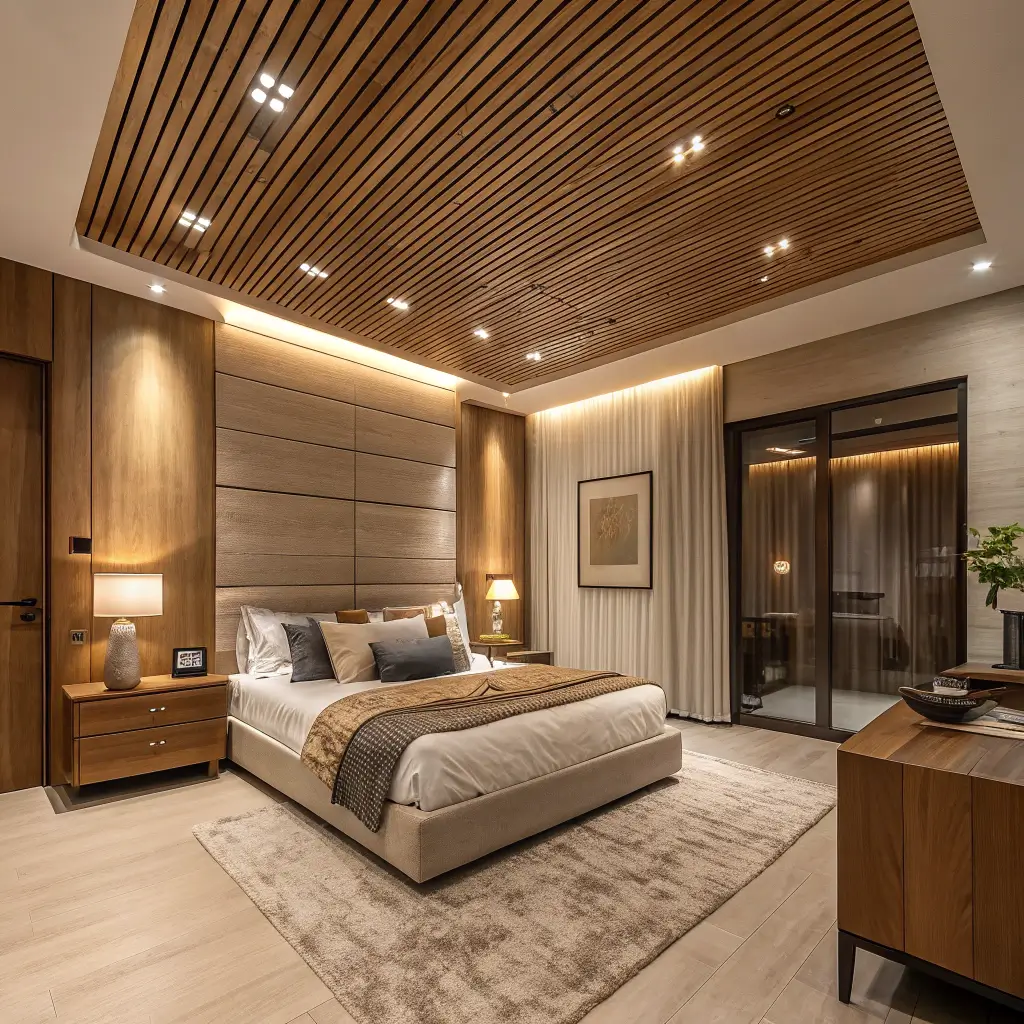
Wooden slat ceilings bring warmth and texture that painted surfaces can’t match. I installed wooden slats on my bedroom ceiling last year, and the natural material creates this incredible coziness that makes the room feel like a modern cabin retreat.
Installing Wooden Slats
My ceiling uses 2-inch wide oak slats spaced 3 inches apart, running the length of the room. The slats attach to furring strips, with LED strips hidden in the gaps for integrated lighting. The wood brings warmth while the gaps prevent the ceiling from feeling heavy or claustrophobic.
The installation took a weekend (I’m decent with power tools), and the materials cost about $600 for my bedroom. Professional installation would add another $400-600, but this is definitely a doable DIY project if you’re handy.
Choosing Your Wood
Not all wood works overhead. I chose oak for durability and beautiful grain, but other options include:
- Pine (budget-friendly, lighter color)
- Walnut (rich, dark, luxurious)
- Cedar (aromatic, naturally resistant)
- Bamboo (sustainable, contemporary)
Whatever you choose, seal it properly. Bedrooms have humidity from breathing and sleeping, and unsealed wood can warp over time.
5. Modern Geometric False Ceiling
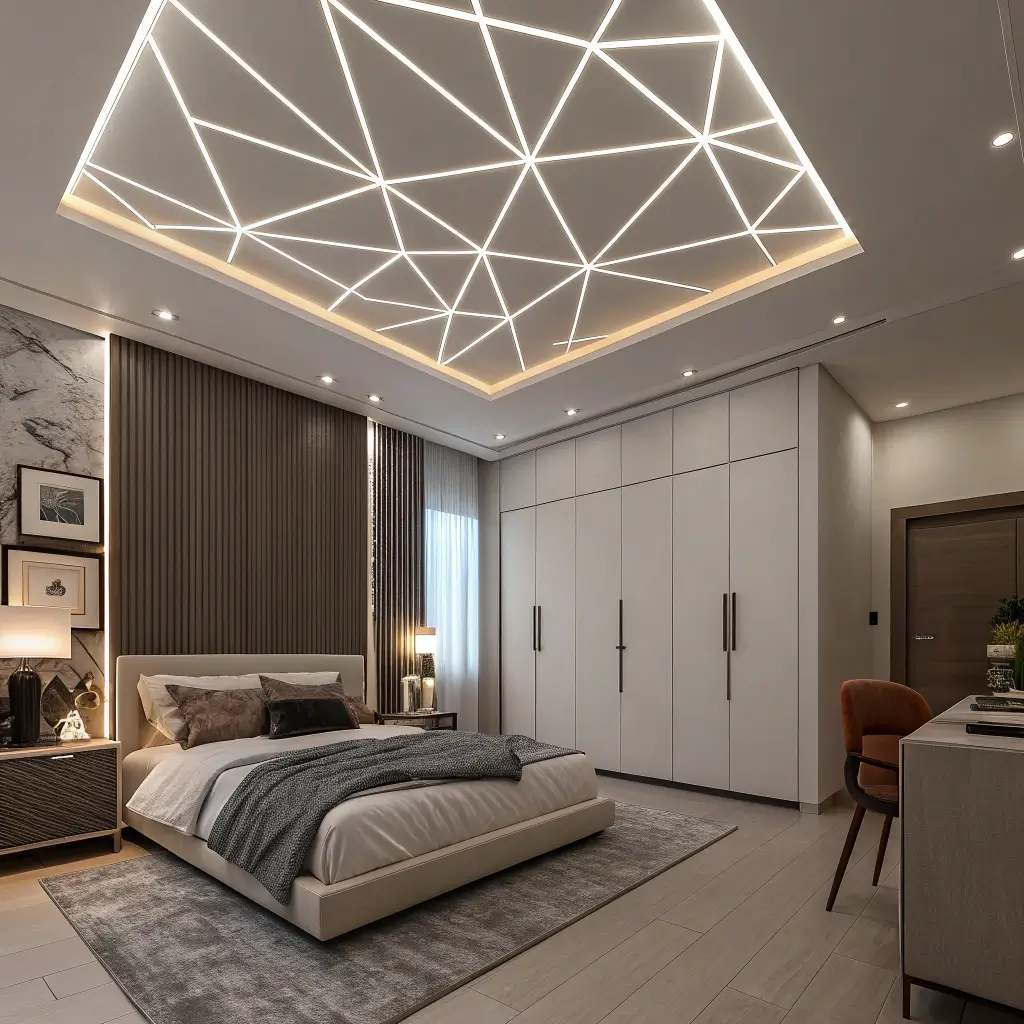
Geometric false ceilings create contemporary edge perfect for modern bedrooms. My friend’s architect designed a geometric pattern with offset rectangles, and while I was skeptical during construction, the finished ceiling is absolutely stunning—like living under modern art.
Planning Geometric Patterns
Geometric ceiling designs require serious planning. My friend’s ceiling took weeks to design using software to ensure proportions worked correctly. The pattern uses three rectangular sections at different heights, creating this dynamic, three-dimensional effect.
The key to geometric ceilings:
- Keep patterns simple (complex becomes chaotic)
- Use consistent geometry (random looks messy)
- Plan lighting integration carefully
- Ensure proportions relate to room size
- Work with professionals for execution
When Geometric Works
Geometric ceilings shine in contemporary bedrooms with modern furniture and clean lines. They clash with traditional or romantic bedroom styles. My friend’s bedroom is very minimalist—platform bed, simple furniture, no fuss—and the geometric ceiling fits perfectly.
This isn’t a design for everyone. If you prefer soft, traditional bedrooms, geometric ceilings will feel jarring. Know your style before committing.
6. Layered Gypsum Ceiling Design
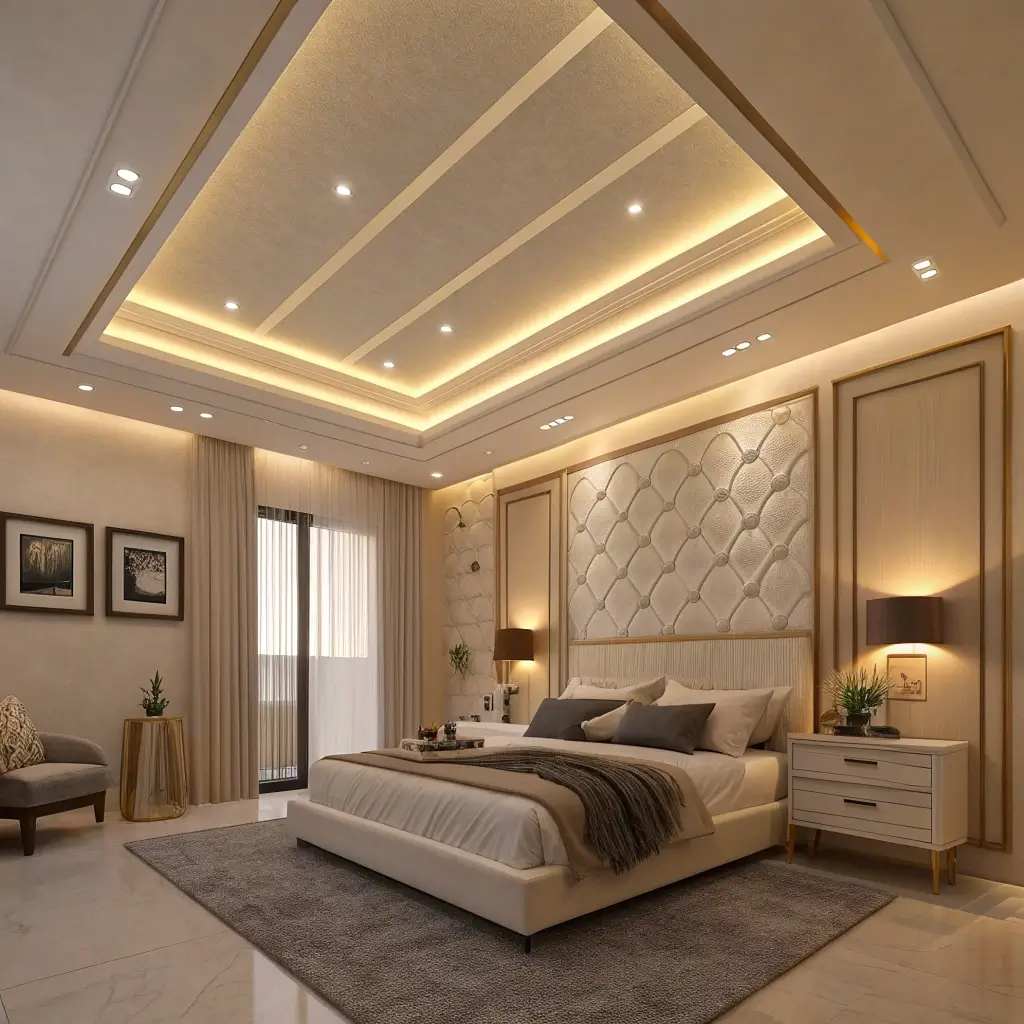
Layered gypsum ceilings create depth through multiple levels. I designed my guest bedroom with a three-layer gypsum ceiling, and the cascading levels add this architectural interest that makes the room feel more expensive and thoughtfully designed.
Creating Layers
My guest room ceiling has three distinct levels—the main ceiling, a mid-level border, and a central dropped section. Each layer sits about 3 inches below the previous one, creating this waterfall effect. LED strips between layers provide integrated lighting that highlights the architecture.
The layering creates:
- Incredible depth and dimension
- Multiple lighting zones
- Architectural drama
- Visual movement
- Five-star hotel vibes
Installation Complexity
Multi-layer ceilings require professional installation. The framework needs to be precise, the gypsum work smooth, and the finishing perfect. I hired a contractor who specialized in gypsum work, and the three-layer design took five days to complete.
Cost for my 11×13 guest room? About $1,800 including materials and labor. Not cheap, but the result transforms the room from basic guest room to impressive suite.
Also Read: 12 Beautiful POP Ceiling Design Ideas and Cozy Home Interiors
7. Warm LED Perimeter Ceiling
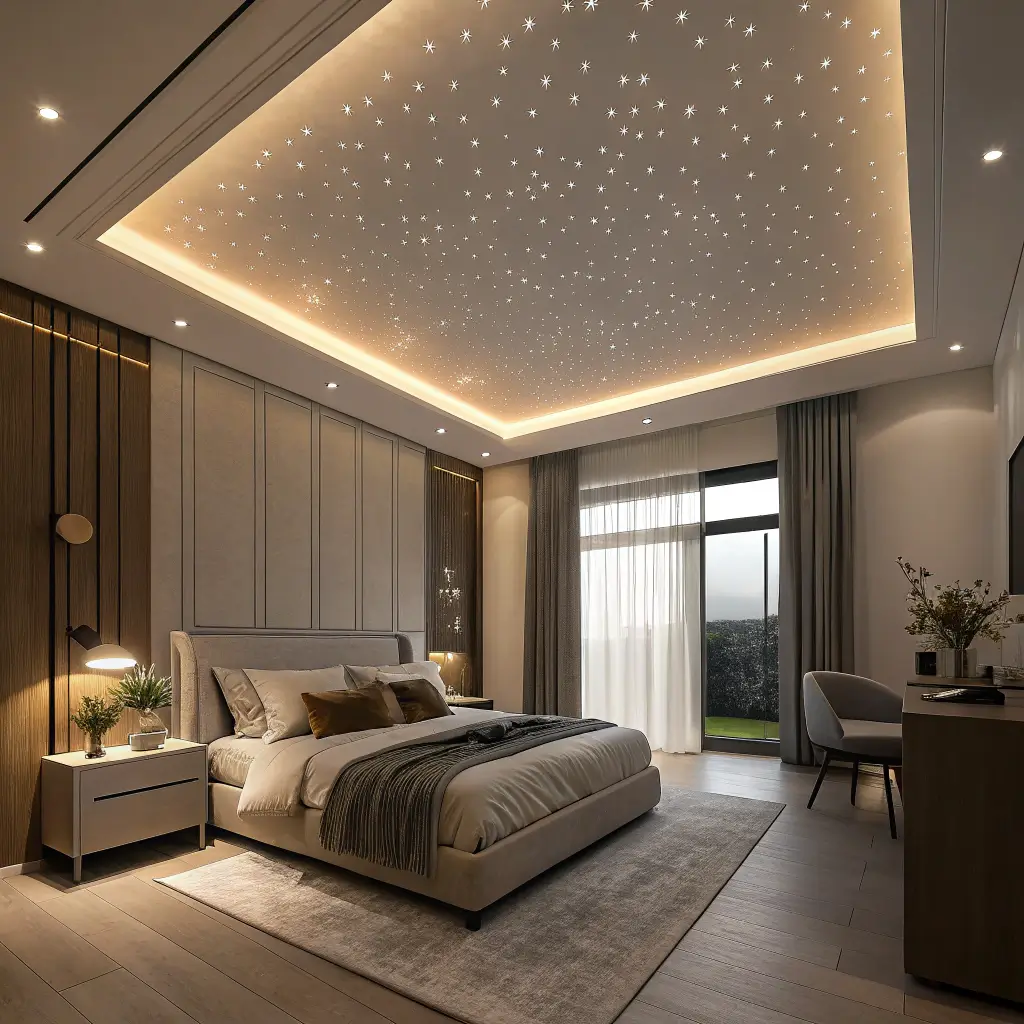
LED perimeter lighting creates soft, ambient glow perfect for bedrooms. I installed warm LED strips around my entire bedroom ceiling perimeter, and the indirect lighting is ideal for creating relaxing atmospheres without harsh overhead lights.
The Perimeter Strategy
My bedroom has LED strips installed in a recessed channel running around the entire ceiling edge. The strips face upward, washing light across the ceiling and creating this soft, diffused glow. I control everything with a smartphone app—dimming, brightness, even scheduling.
Perimeter LEDs work because:
- They provide ambient light without glare
- Create soft shadows (relaxing, not harsh)
- Offer complete control over brightness
- Hide the actual light source
- Cost relatively little ($200-400 for most bedrooms)
Getting the Color Right
Color temperature matters enormously in bedrooms. I use 2700K (warm white) because cooler temperatures make it hard to wind down. I tried 4000K once (neutral white) and it felt like sleeping in an office. FYI, stick with warm tones for bedroom lighting.
The dimming capability is crucial. Full brightness works for cleaning or getting dressed; dimmed to 20% creates perfect bedtime ambiance. Smart controls make adjusting lighting so easy that I actually use it rather than just leaving lights at one setting forever.
8. Two-Tone Bedroom Ceiling
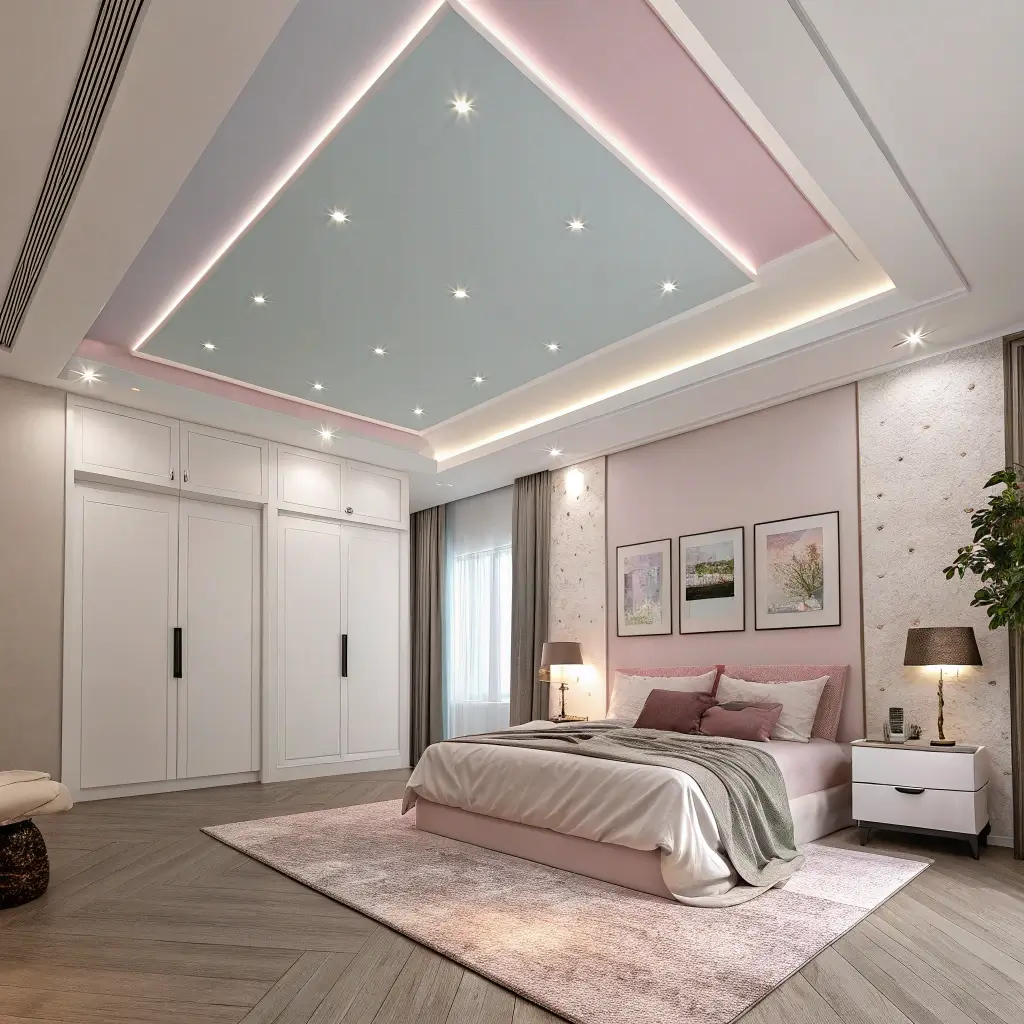
Two-tone ceilings use color to create visual interest and define spaces. My bedroom uses a two-tone approach—white ceiling with a gray painted tray section—and the subtle color variation adds depth without being obvious or overwhelming.
Choosing Your Colors
The key to two-tone bedroom ceilings is subtle contrast. You want definition, not drama. My white ceiling with gray tray creates gentle contrast that adds interest without disrupting the calm bedroom atmosphere. Too much contrast (like white with navy) would feel jarring in a sleep space.
Successful two-tone combinations:
- White ceiling with gray accent section
- Cream ceiling with soft taupe detail
- Pale blue ceiling with white trim
- Soft gray with slightly darker gray
- Warm white with barely-there beige
Application Strategy
I painted my main ceiling white and the tray section gray. The color change happens at the tray edge, creating a natural transition line. I used painters tape for crisp edges, and the whole painting project took one weekend.
The subtle color variation creates definition without requiring construction or complex ceiling work. It’s the easiest, most budget-friendly way to add ceiling interest—total cost was just paint ($80 for quality paint).
9. Matte Finish Contemporary Ceiling
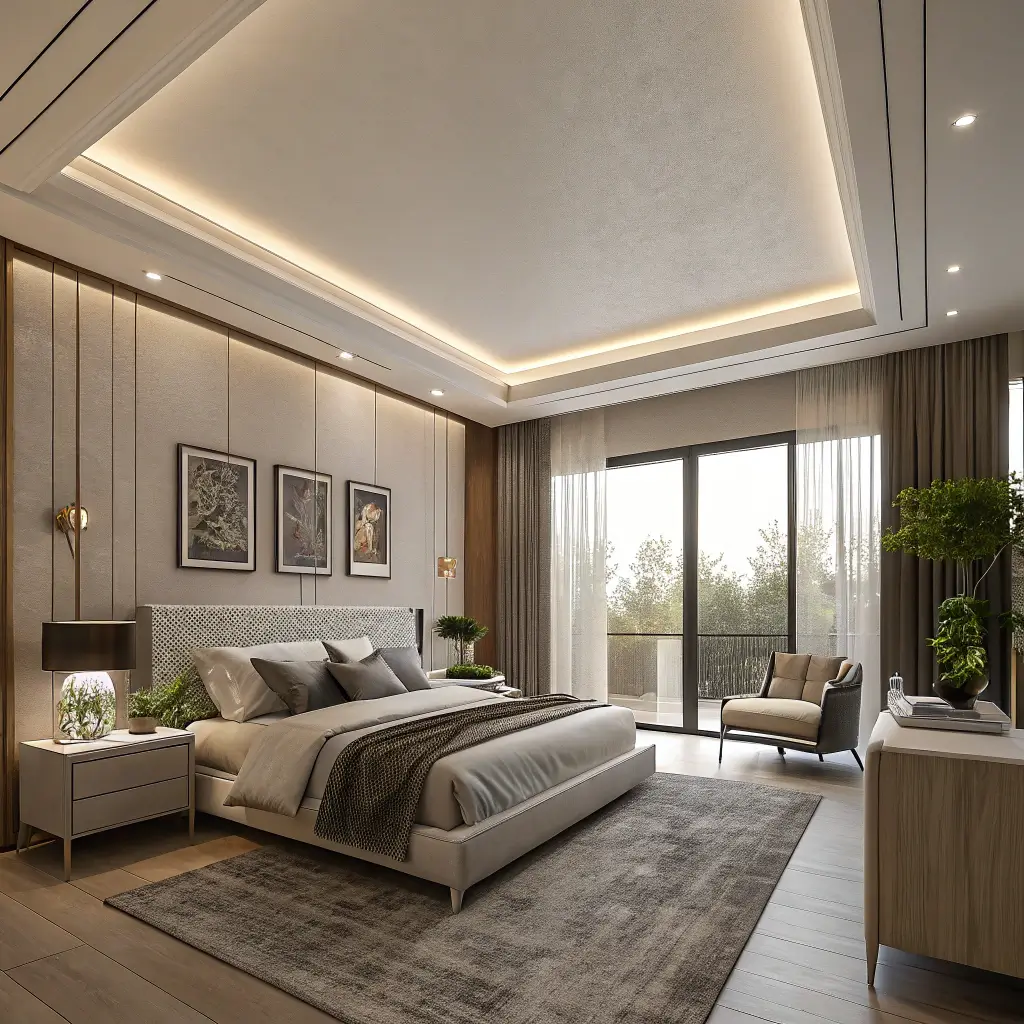
Matte finish ceilings create sophisticated, contemporary atmosphics perfect for modern bedrooms. I switched from flat white to matte gray in my bedroom, and the velvety finish adds this subtle richness that glossy paint could never achieve.
Why Matte Matters
Matte finishes absorb light rather than reflecting it, creating soft, sophisticated surfaces. My bedroom’s matte gray ceiling has this beautiful, almost chalky appearance that feels expensive and intentional. It shows no imperfections, hides minor flaws, and creates the perfect modern backdrop.
Matte finishes work in bedrooms because:
- They create calm, non-reflective surfaces
- Hide ceiling imperfections beautifully
- Feel more expensive than glossy
- Work perfectly with modern aesthetics
- Provide sophisticated backdrop for lighting
Application Tips
Matte paint requires good surface prep. Any imperfection shows (less than with glossy, but still visible). I filled all nail holes, sanded smooth, and primed before painting two coats of quality matte paint. The prep work matters more than the painting itself.
Cost? About $100 for premium matte paint for my bedroom. The finish makes such a difference that using quality paint rather than cheap stuff is absolutely worth the extra $30.
Also Read: 10 Creative Wooden Ceiling Design Ideas for Modern Spaces
10. Hidden Light Panel Ceiling
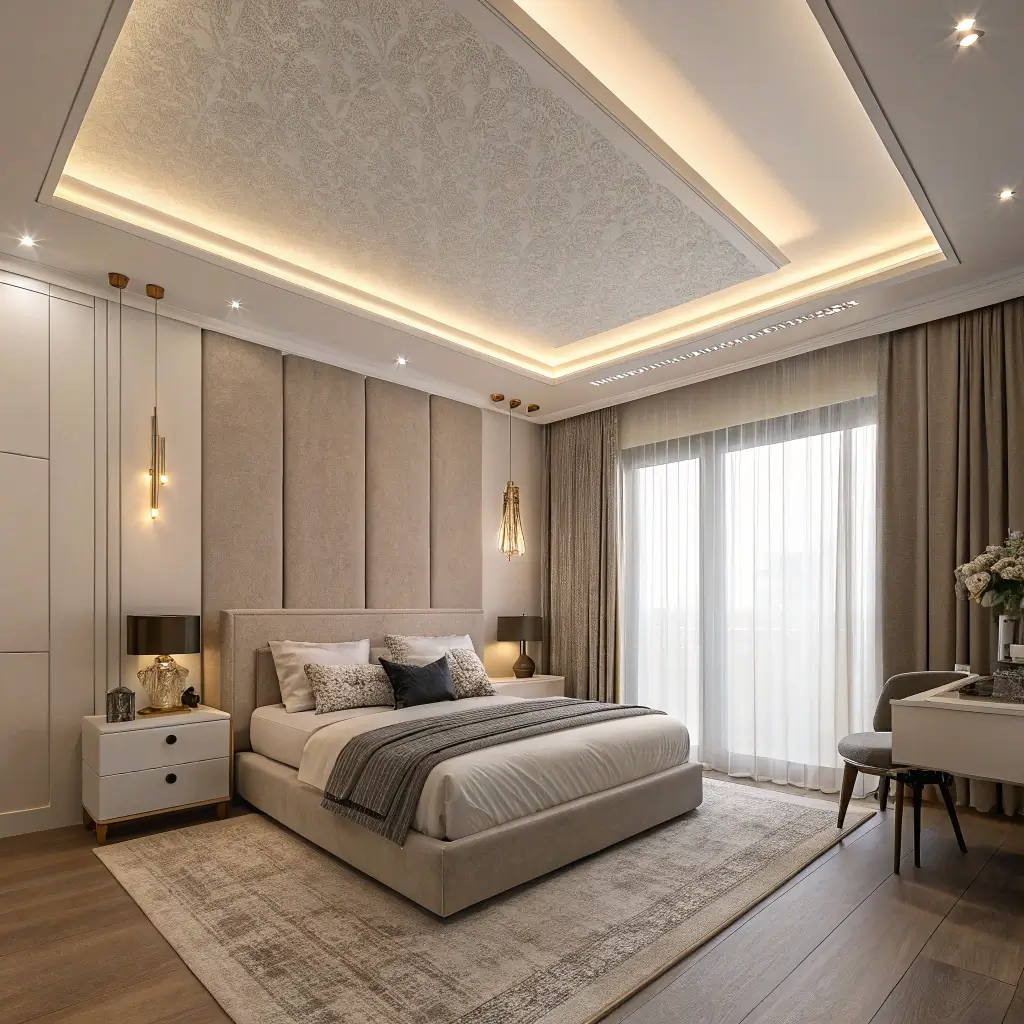
Hidden light panels create this futuristic effect where your ceiling appears to glow from within. My friend installed backlit panels in his bedroom, and the soft, even illumination creates this incredible ambiance—like sleeping under a softly glowing sky.
Creating the Panel Effect
The panels sit in a recessed frame in the ceiling with LED lights behind them. The light shines through translucent panels, creating soft, diffused illumination. My friend’s bedroom has three panels arranged in a row down the ceiling center, each about 2×4 feet.
The panel lighting provides:
- Soft, even illumination
- Adjustable brightness
- Futuristic, contemporary aesthetics
- No visible light sources
- Customizable panel sizes and arrangements
Installation Complexity
Installing backlit panels requires building recessed frames in your ceiling, installing LED strips behind the panels, and wiring everything properly. My friend hired professionals for this (wise choice), and the installation took three days for his bedroom.
Cost was about $2,000 for three panels including labor. Not cheap, but the unique result creates a bedroom unlike anything I’ve seen elsewhere. Sometimes splurging on something special makes sense.
11. Subtle Textured Ceiling Design
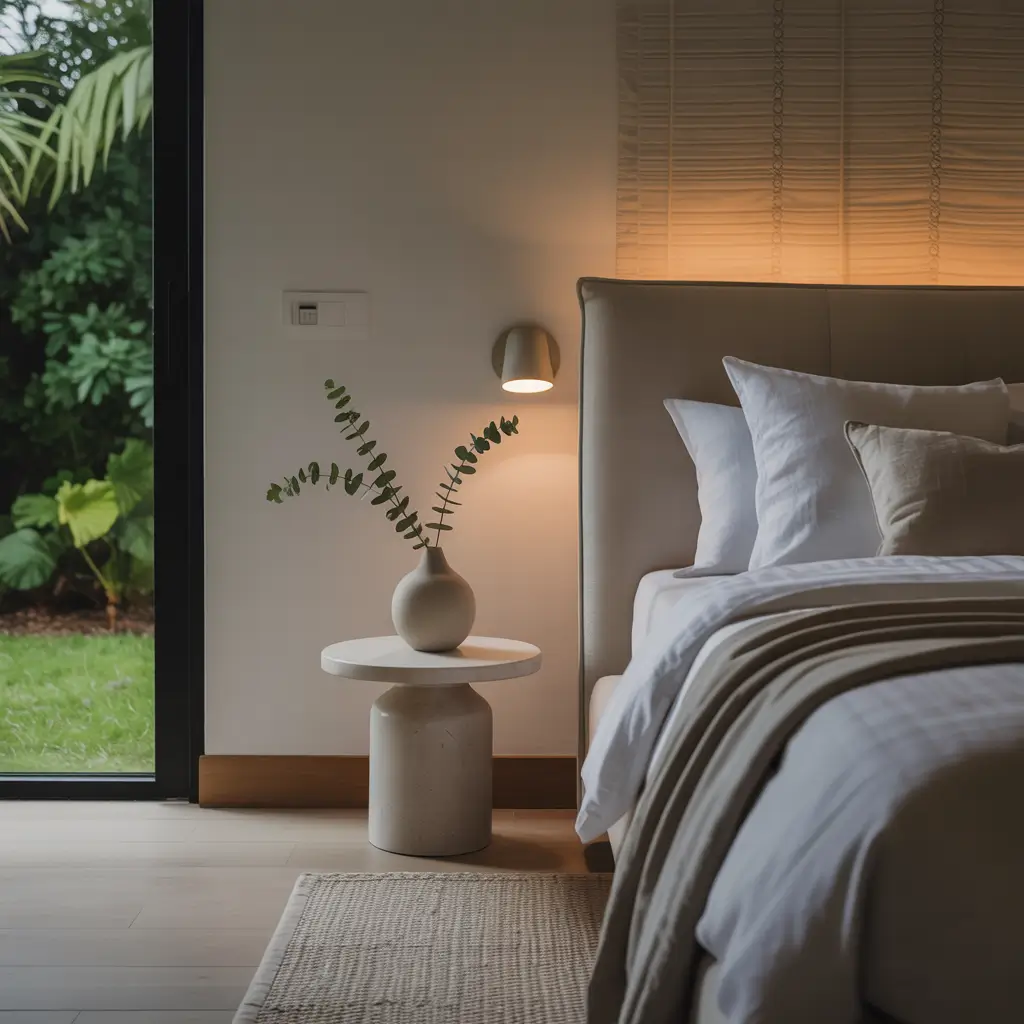
Textured ceilings add dimension without color or lighting. I added subtle texture to my bedroom ceiling using a skip-trowel technique, and the gentle shadows and depth create visual interest that flat paint never could.
Creating Texture
Textured ceilings use joint compound applied in patterns to create dimensional surfaces. My bedroom has a very subtle skip-trowel texture—random, organic patterns that catch light and create gentle shadows. The texture is subtle enough that you notice the depth without seeing obvious patterns.
Textured application works because:
- It adds depth without construction
- Creates shadows that change with light
- Hides minor imperfections
- Costs very little (mostly labor)
- Feels more organic than flat
DIY vs. Professional
I attempted texturing myself first (YouTube made it look easy). My first attempt looked like a toddler threw mud at the ceiling. I hired a professional who finished the job in four hours, and the result is beautiful, subtle, and even. Sometimes admitting you need help saves time and frustration :/
Professional texturing for my bedroom cost $300. Worth every penny compared to my amateur disaster attempt.
12. Modern Minimal Frame Ceiling
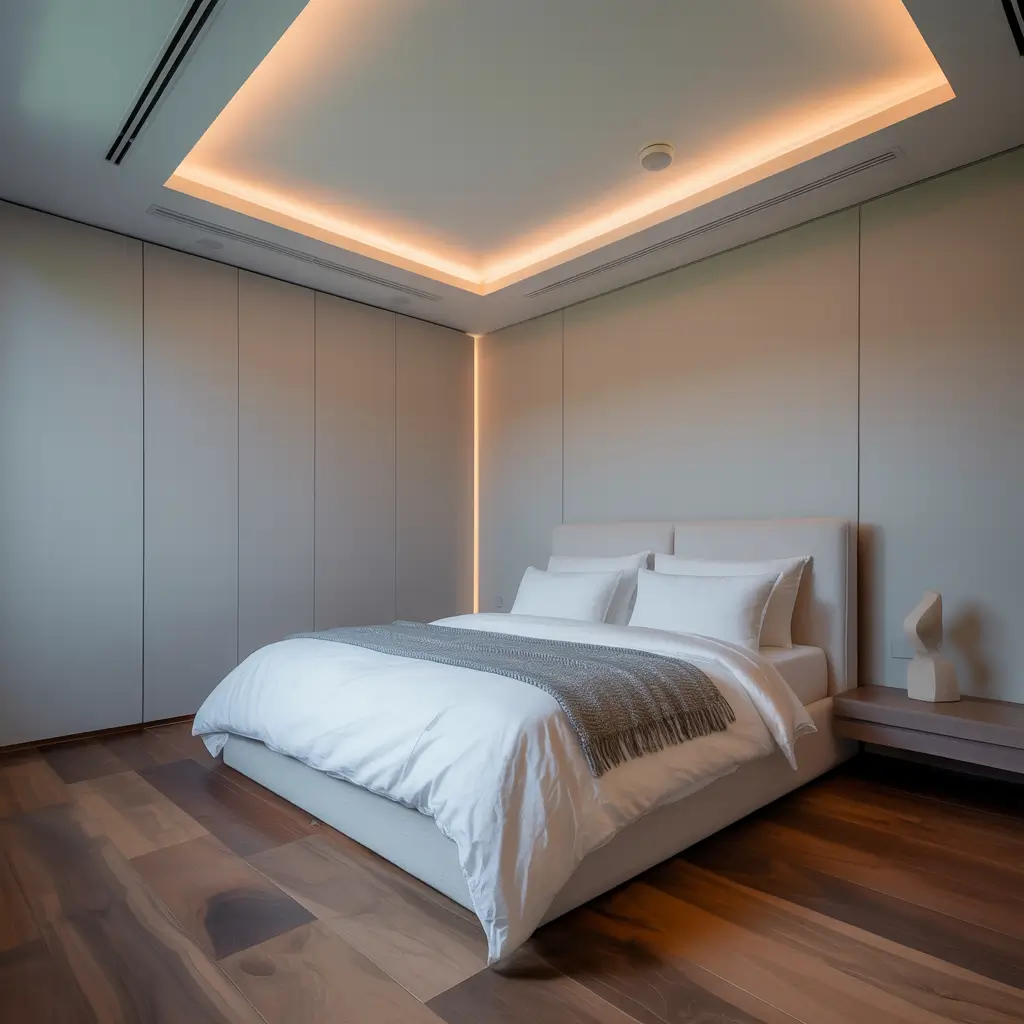
Frame ceiling designs create defined rectangles or shapes on your ceiling using simple trim or recessed borders. My minimalist friend installed a simple rectangular frame design, and the clean geometry adds architectural interest while maintaining his simple aesthetic.
Creating the Frame
My friend’s bedroom ceiling has a simple rectangular frame created with subtle crown molding, about 2 feet from the perimeter walls. Inside the frame, he painted a slightly different shade of white, creating gentle definition. The frame defines the ceiling without adding bulk or complexity.
Frame designs work well because:
- They add interest through simple geometry
- Create definition with minimal materials
- Work with any bedroom style
- Cost very little to implement
- Provide guidelines for lighting placement
Minimal Execution
The key to frame ceilings in bedrooms is subtlety. My friend’s frame uses 2-inch crown molding—substantial enough to create definition but minimal enough to maintain the simple aesthetic. He painted the frame the same color as the ceiling so you see the geometry without obvious trim.
The entire project cost under $200 for materials, and he installed it himself over a weekend. It’s proof that simple, thoughtful design creates impact without requiring huge budgets or construction crews.
Making Your Bedroom Ceiling Dreams Reality
After exploring these twelve bedroom ceiling designs, here’s what I know: the right ceiling transforms your bedroom from just a place to sleep into a space you actually want to spend time in.
Whether you choose floating cove lights, minimal trays, or wooden slats, you’re creating atmosphere that affects how you feel every single day.
The key is choosing designs that match your style, budget, and skill level. Start by identifying what you want your bedroom to feel like—relaxing, modern, cozy, sophisticated? Your ceiling design should support that feeling.
My warm LED perimeter creates calm; my friend’s geometric ceiling creates contemporary energy. Different goals, different solutions.
Consider your ceiling height carefully. Standard 8-foot ceilings need careful planning to avoid making rooms feel lower.
My 9-foot ceilings gave me room for drops and layers; lower ceilings need simpler approaches like paint, texture, or minimal lighting.
Budget realistically. Simple solutions like two-tone paint cost under $100. Complex installations like layered gypsum or backlit panels can run $1,500-2,000+.
My bedroom ceiling projects have ranged from $80 (paint) to $800 (cove lighting with partial DIY). Know what you can spend before falling in love with expensive options.