10 Inspiring Kitchen Ceiling Design Ideas for Small Kitchens
- Ceiling Design
 Ben
Ben- 0
- 28 minutes read
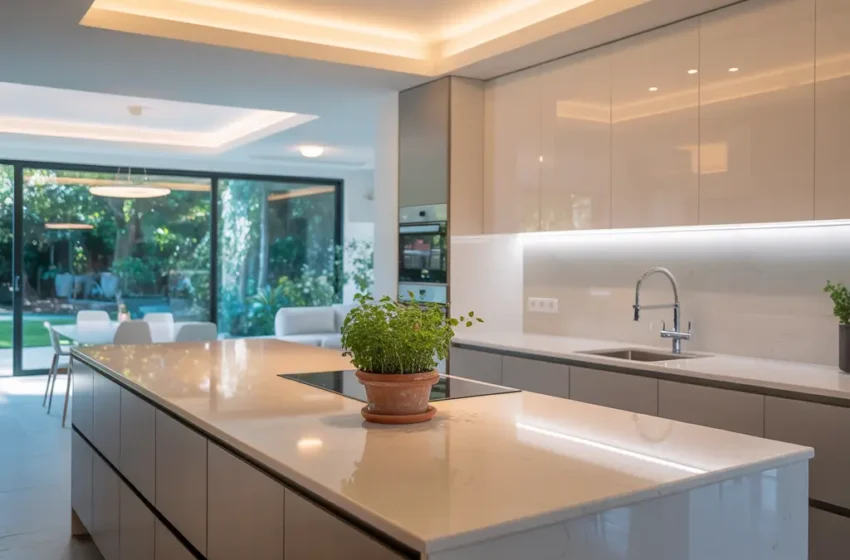
Look, I’ll be honest with you—when was the last time you actually looked at your kitchen ceiling? Like, really looked at it?
Yeah, I thought so. Most of us are so busy staring at our questionable countertop clutter or that one cabinet door that won’t close properly that we completely forget there’s a whole design opportunity hovering right above our heads.
But here’s the thing: your kitchen ceiling is basically the fifth wall (yes, I’m counting walls differently now, deal with it), and it’s about time we stopped treating it like some forgotten stepchild of interior design.
Whether you’re renovating, building from scratch, or just desperately trying to distract guests from your 1987 linoleum floors, these ceiling ideas are going to change the game. Trust me on this one.
1. Coffered Kitchen Ceiling
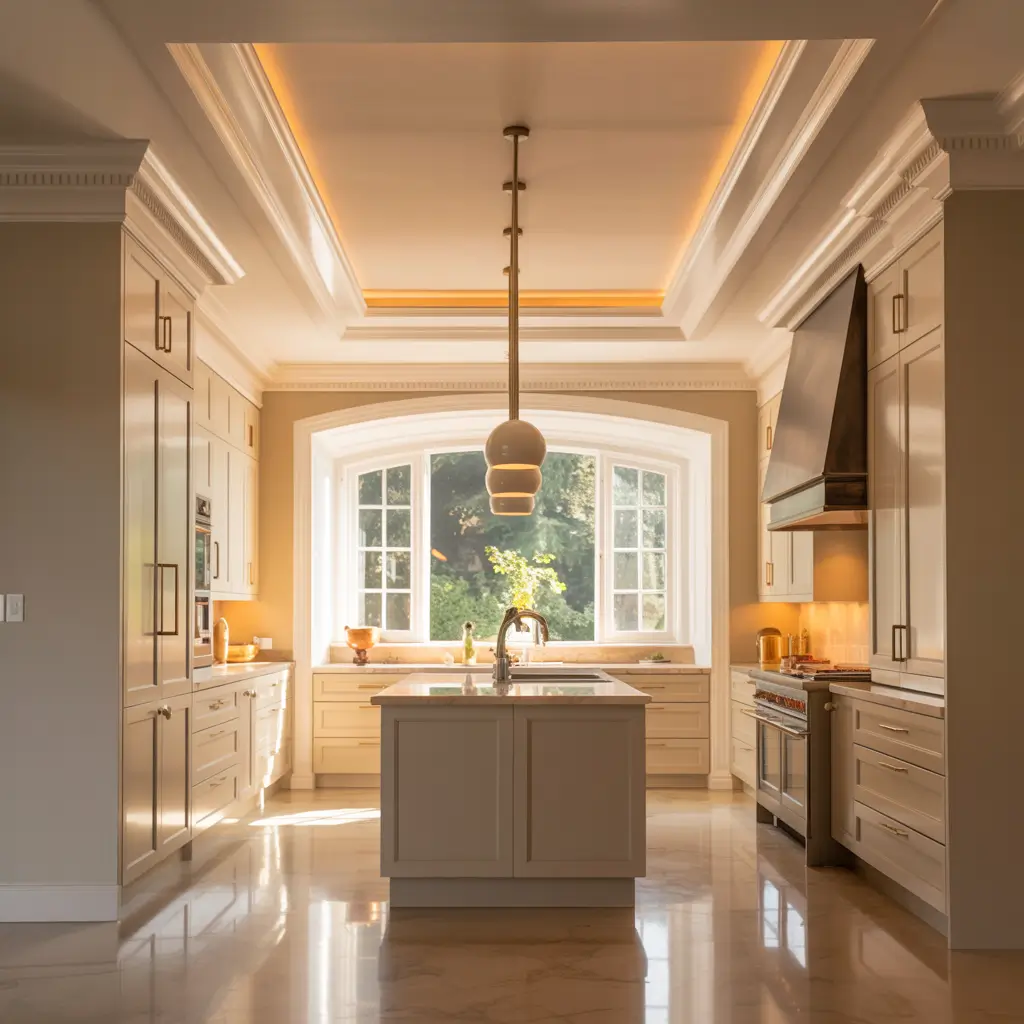
The Fancy Grid That Makes You Look Rich
Ever walked into someone’s kitchen and thought, “Wow, they’ve really got their life together”? Chances are, they had a coffered ceiling. These bad boys are essentially sunken panels—usually square or rectangular—that create this gorgeous grid pattern overhead. Think of it as giving your ceiling some serious architectural depth without actually raising the roof (because, let’s face it, that’s expensive).
I remember the first time I saw a coffered ceiling in a kitchen, and I was genuinely confused about why the ceiling looked so… intentional? Turns out, that’s the whole point. The recessed panels create shadows and dimension that make even a standard 8-foot ceiling feel more substantial.
Why It Works
The beauty of coffered ceilings is they work in both traditional and modern kitchens. Paint them white for a classic look, or go bold with contrasting colors in the recessed areas. You can even add LED strips in the coffers for some subtle mood lighting. FYI, this option does require some ceiling height to pull off—if you’re working with super low ceilings, you might want to skip ahead. Just being real with you here.
The installation isn’t exactly a weekend DIY project unless you’re pretty handy, but the visual impact? Absolutely worth it. It’s like adding crown molding but turned up to eleven.
2. Wooden Beam Ceiling
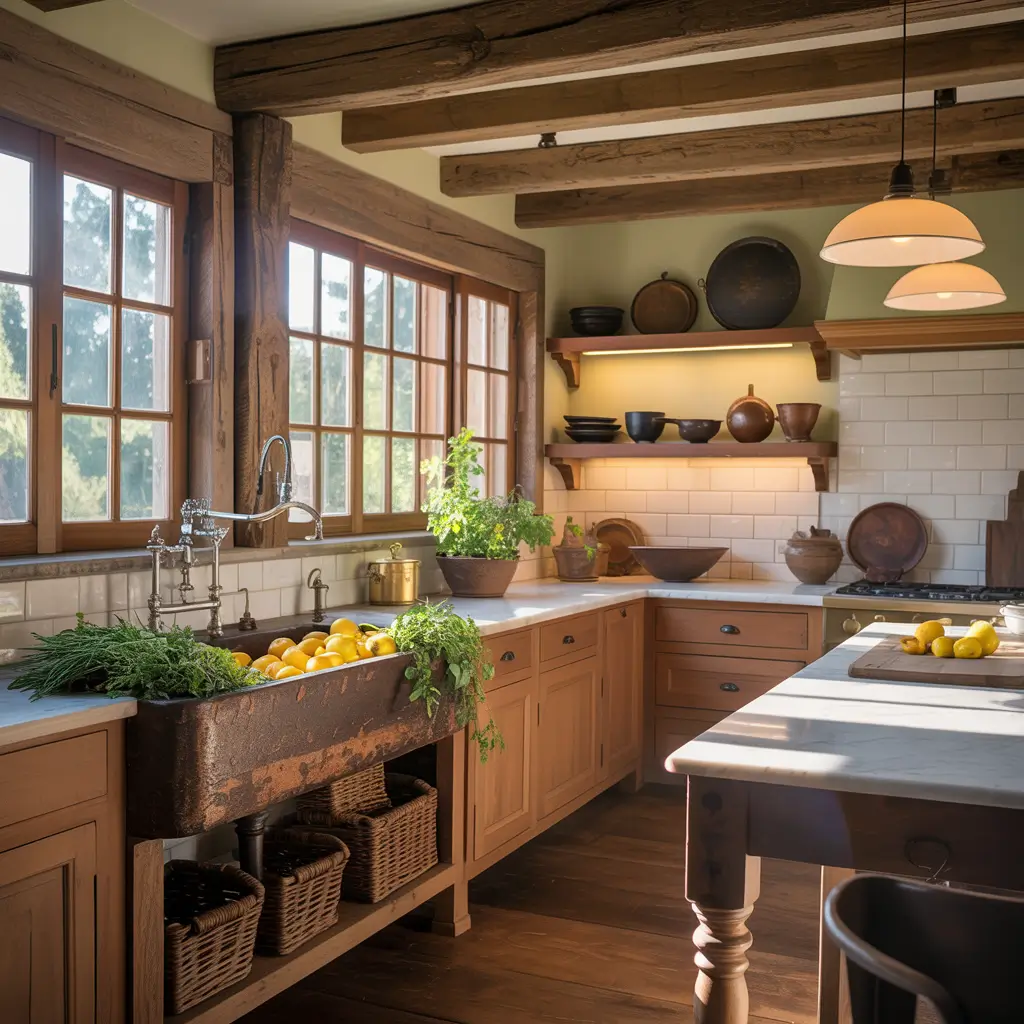
Rustic Meets Reality (In the Best Way)
Okay, so wooden beams might sound super farmhouse-y, and sure, they can be. But hear me out—exposed wooden beams are having a major moment, and they’re not just for people who own chickens and make their own butter.
I’ve got a friend who added reclaimed wood beams to her otherwise modern kitchen, and the transformation was insane. It added warmth and texture to what was previously a pretty sterile white box. The beams don’t even have to be structural (most aren’t, actually). You can install faux beams that look completely authentic but weigh way less and cost significantly less than the real deal.
Making It Work for You
Here’s where it gets fun: you can go full rustic with rough-hewn beams, or opt for smooth, stained wood for a more refined look. Paint them the same color as your ceiling for subtle texture, or leave them natural for maximum contrast. The spacing matters too—beams that run parallel to your kitchen island create nice visual flow, while perpendicular beams can make a narrow kitchen feel wider.
And honestly? Even if you’re in a modern industrial loft or a sleek contemporary space, adding a few well-placed wooden beams creates this unexpected warmth that’s hard to replicate with anything else. It’s like the ceiling equivalent of throwing on a cozy sweater.
3. Tray Ceiling with LED Lighting
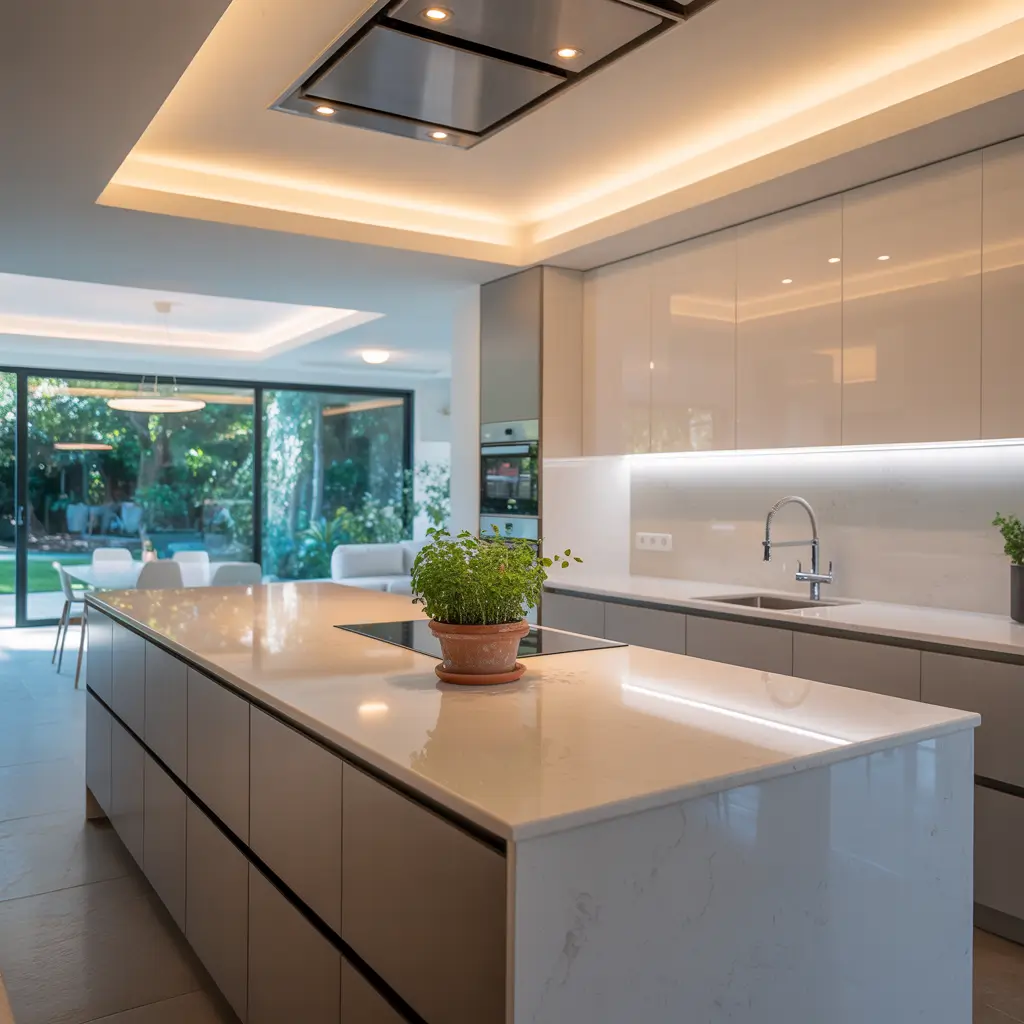
Because Who Doesn’t Love Good Ambient Lighting?
Tray ceilings are basically the overachievers of the ceiling world. You’ve got your main ceiling level, and then there’s this recessed center section that sits higher—creating a “tray” effect (hence the incredibly creative name). But the real magic happens when you add LED lighting around the perimeter.
Picture this: you’re cooking dinner, and instead of those harsh overhead lights making you look like you’re in a hospital cafeteria, you’ve got this soft, ambient glow emanating from the ceiling’s edge. It’s moody, it’s sophisticated, and it makes your kitchen feel like an actual grown-up designed it. 🙂
The Technical Stuff (Don’t Worry, I’ll Keep It Simple)
The LED strips sit in the recessed channel where the tray meets the main ceiling, washing light upward and creating this beautiful indirect illumination. You can get dimmable LEDs, color-changing ones (for when you’re feeling extra), or stick with warm white for that restaurant vibe.
IMO, this is one of the best options if you want drama without being too dramatic. It’s subtle enough for everyday use but impressive enough that people will definitely notice and compliment you on it. Plus, the installation is actually more straightforward than you’d think—especially if you’re already doing some ceiling work anyway.
The tray itself can be painted to match your ceiling, or you can go bold with wallpaper, a contrasting color, or even metallic finishes. I’ve seen people do everything from soft blue tones to dramatic black, and honestly, all of it looks amazing.
Also Read: 12 Beautiful Ceiling Design Bedroom Ideas to Refresh Your Space
4. Popcorn-Free Minimal Ceiling
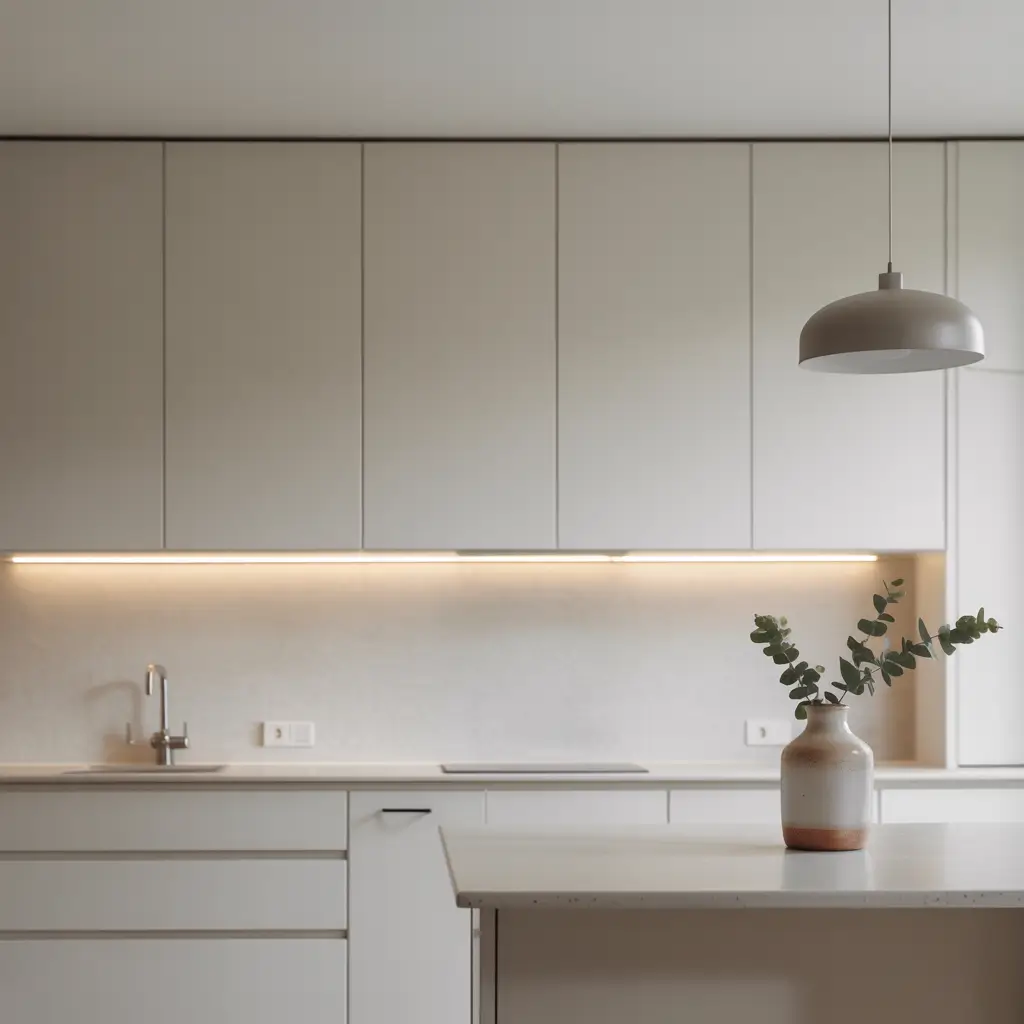
Less Is More (And Way Easier to Clean)
Let’s talk about the elephant in the room—or rather, the popcorn on the ceiling. If you’ve got textured popcorn ceiling in your kitchen, I’m not here to judge (okay, maybe a little), but it’s time for an intervention. Smooth, minimal ceilings are where it’s at, people.
I spent an entire weekend helping my sister scrape popcorn texture off her kitchen ceiling, and let me tell you, it was the worst and the best decision ever. The worst because it’s messy and tedious, and the best because the transformation was incredible. Suddenly, her kitchen looked modern, clean, and about 500% more appealing.
The Minimalist Approach
A smooth, flat ceiling painted in a crisp white or subtle off-white is the ultimate backdrop for any kitchen style. It reflects light beautifully, makes the space feel larger, and doesn’t trap dust and grease like textured ceilings do (seriously, have you ever tried to clean a popcorn ceiling in a kitchen? Don’t).
You can keep it simple with just paint, or add interest with a slightly different sheen—maybe matte walls with a satin ceiling, or vice versa. The key here is restraint. Let your cabinets, backsplash, and other design elements shine while your ceiling provides a clean, unobtrusive backdrop.
And for those of you with older homes where the popcorn ceiling might contain asbestos—please get it tested before you start scraping. Safety first, aesthetics second, folks.
5. Vaulted Ceiling with Skylight
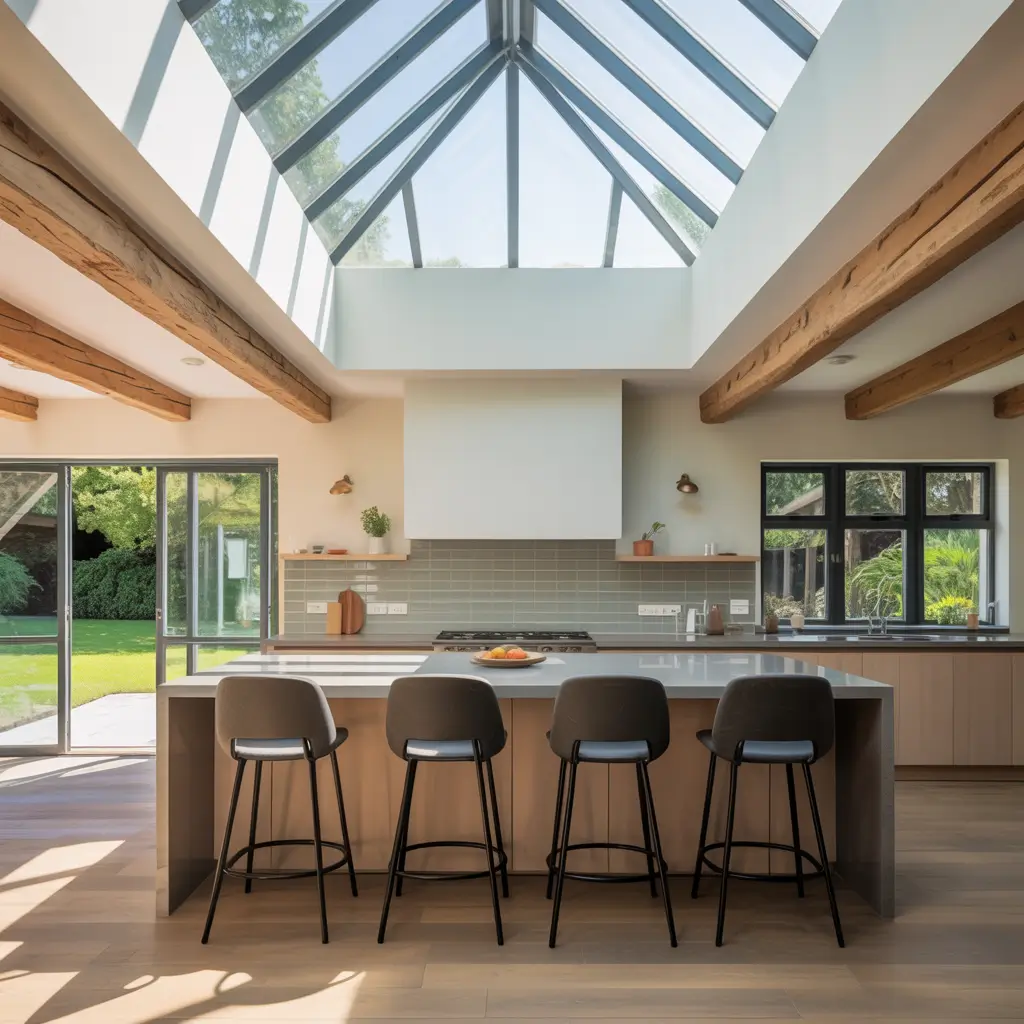
Natural Light Is the Ultimate Kitchen Accessory
Want to feel like you’re cooking in some fancy European villa? Vaulted ceilings with skylights are your answer. Now, I know what you’re thinking—”That sounds expensive and complicated.” And yeah, you’re not wrong. But if you’ve got the budget and the structural capability, this is hands-down one of the most dramatic kitchen transformations you can make.
The beauty of vaulted ceilings is they completely change the perception of space. Your kitchen suddenly feels open, airy, and connected to the outdoors. Add skylights, and you’re flooding the space with natural light, which makes everything—from your morning coffee ritual to your midnight snack sessions—feel more special.
Practical Considerations
Here’s the real talk: vaulted ceilings work best if you don’t have rooms directly above your kitchen. If you do, you’re looking at a much more complex (read: expensive) renovation. But if you’ve got an attic space or a single-story home, this becomes way more feasible.
Skylights come in all shapes and sizes now—from traditional fixed skylights to fancy tubular ones that can bring light into areas where a standard skylight wouldn’t work. Some even have remote-controlled shades for when you want to control the light (or keep out the heat in summer).
One thing I learned from my neighbor’s skylight installation: placement matters. You want the skylight positioned to maximize light without creating hot spots or glare on your work surfaces. A good contractor will help you figure this out, but it’s worth thinking about beforehand.
6. Painted Geometric Patterns
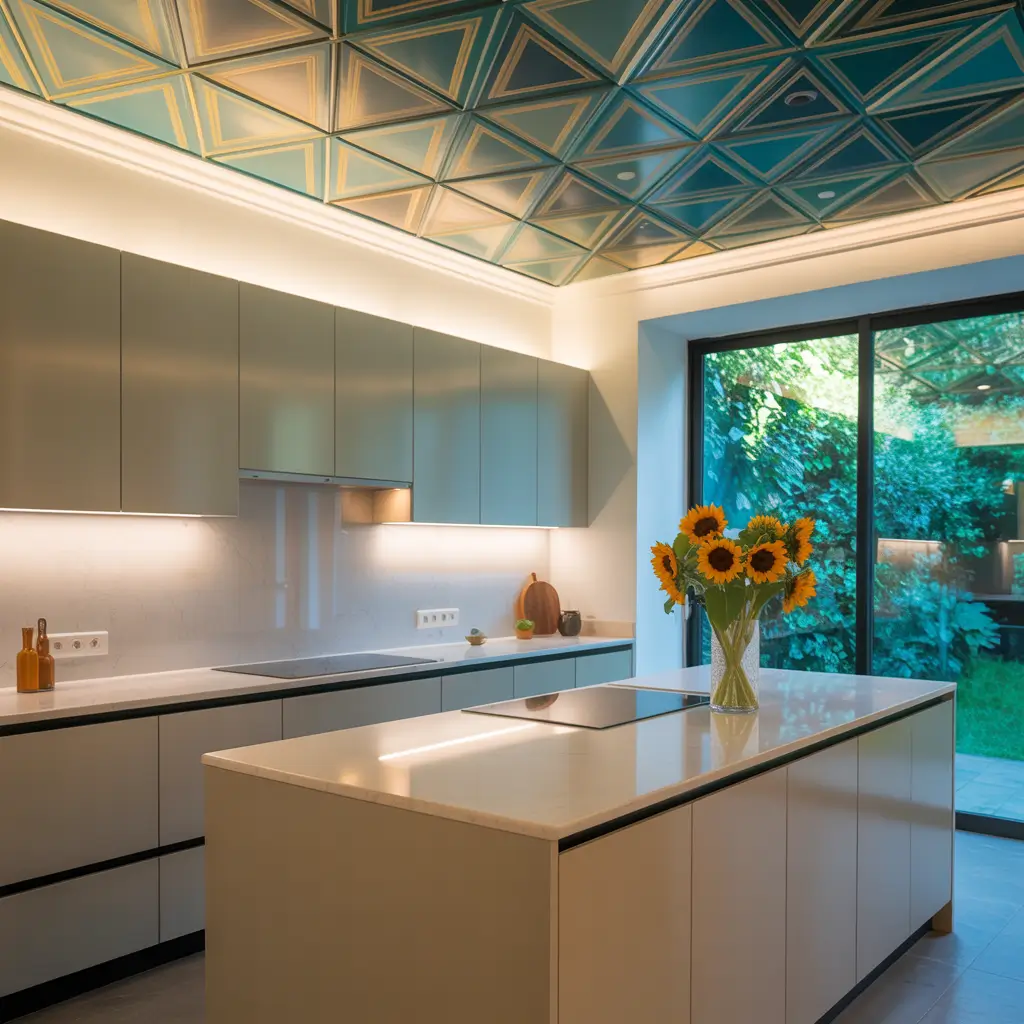
For When You’re Feeling Bold
Alright, this one’s not for the faint of heart, but if you’re the type who’s willing to take design risks, painted geometric patterns on your kitchen ceiling can be absolutely stunning. I’m talking chevrons, hexagons, diamonds—whatever speaks to your geometric-loving soul.
The first time I saw someone pull this off was in a friend’s tiny galley kitchen. She painted a diagonal stripe pattern across the ceiling in two shades of gray, and it completely transformed the space. Suddenly, this narrow, boring kitchen had personality and visual interest in a totally unexpected place.
How to Not Make It Look Like a Mistake
The key with geometric ceiling patterns is commitment and precision. You can’t half-ass this one (sorry, but it’s true). Get yourself some good painter’s tape, measure everything twice, and take your time. Or, you know, hire a professional if you’re not confident in your straight-line painting abilities—no shame in that game.
Colors matter too. High-contrast patterns make a bold statement but can feel overwhelming in a small kitchen. Subtle tonal variations create interest without being in-your-face about it. I’m personally a fan of geometric patterns in muted, sophisticated colors—think sage green and cream, or various shades of gray.
And here’s a pro tip: if you’re worried about committing to paint, there are now removable wallpapers designed for ceilings. Test drive your geometric pattern before you go full permanent. You’re welcome. 🙂
Also Read: 10 Simple Profile Light Ceiling Design Ideas with Soft Glow
7. Exposed Industrial Pipes Ceiling
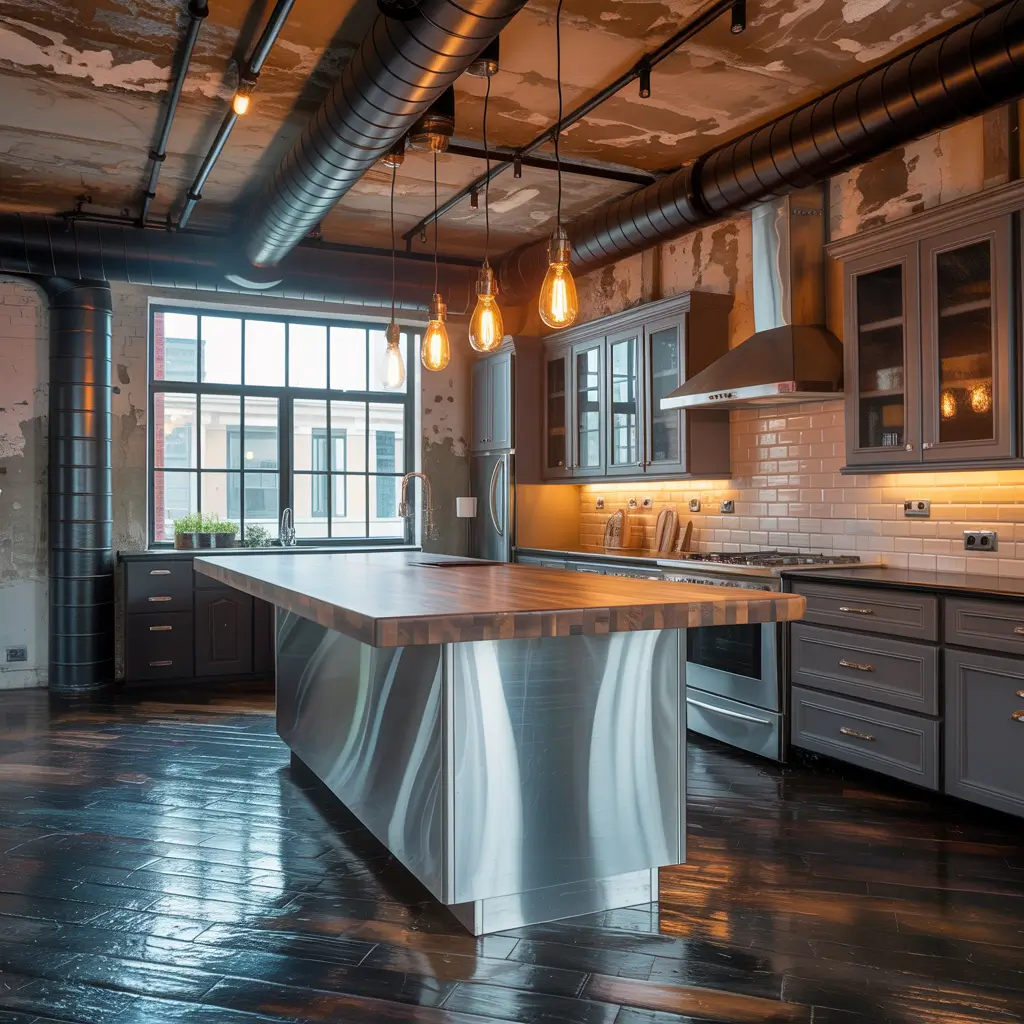
Raw and Real (No, Seriously)
Okay, so exposed pipes might sound more “unfinished basement” than “designer kitchen,” but stick with me here. When done right, exposed industrial elements on your ceiling create this uber-cool, urban loft vibe that’s actually pretty sophisticated.
I used to think exposed pipes were just what happened when you couldn’t afford a proper ceiling, but then I started noticing them in expensive restaurants and renovated loft spaces, and I got it. It’s intentional roughness. It’s beauty in utility. It’s… actually kind of awesome?
The Industrial Aesthetic
The trick is making it look intentional, not neglected. Paint all your pipes the same color—matte black is classic, but I’ve seen great installations with copper tones or even bold colors. Make sure everything is clean, well-maintained, and properly secured. Add some Edison bulb fixtures hanging from the exposed infrastructure, and suddenly you’re not living with unfinished construction—you’re making a design statement.
This works especially well if your kitchen already leans modern or industrial—think concrete countertops, stainless steel appliances, open shelving. But I’ve also seen it work surprisingly well in eclectic kitchens where the industrial ceiling contrasts with more traditional elements below.
Fair warning: exposed pipes and ductwork mean there’s less sound absorption, so your kitchen might be a bit echo-y. But that’s part of the charm, right? Right. :/ (Okay, maybe add some soft furnishings elsewhere to compensate.)
8. False Ceiling with Recessed Lights
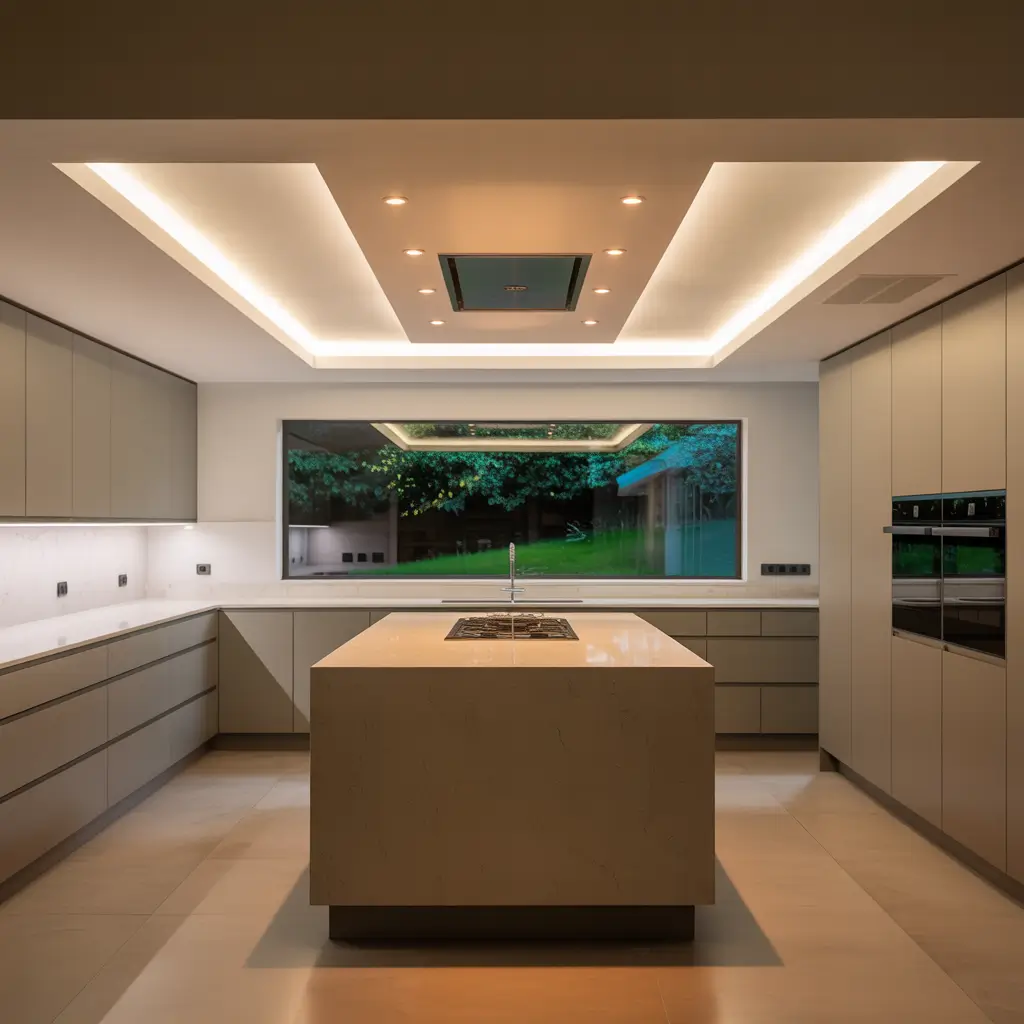
The Classic That Never Goes Out of Style
Let’s give it up for the reliable workhorse of kitchen ceiling designs: the false ceiling with recessed lighting. Also known as a dropped ceiling or suspended ceiling, this is basically where you install a secondary ceiling below the original one, creating space for wiring, ductwork, and—most importantly—beautiful recessed lighting.
I was skeptical about false ceilings for the longest time because they seemed so… basic? But then I actually saw a well-designed one with properly placed recessed lights, and I had to eat my words. The right lighting layout can completely transform how your kitchen functions and feels.
Getting the Lighting Right
Here’s where most people mess up: they either use too few lights (leaving dark corners) or too many (hello, airport terminal vibes). The sweet spot is usually every 4-6 feet, positioned to provide even illumination without creating harsh shadows.
You can get creative with the false ceiling itself too. Instead of just a flat dropped ceiling, consider multiple levels, curved edges, or cutouts that add architectural interest. Some people incorporate LED cove lighting around the perimeter—kind of like the tray ceiling we talked about earlier, but with more flexibility in the design.
The practical benefits are real too. Need to access plumbing or electrical later? Way easier when you’ve got a false ceiling. Want to hide those less-than-attractive HVAC ducts? False ceiling has your back. It’s functional and attractive, which is basically the holy grail of home design.
9. Glossy Stretch Ceiling
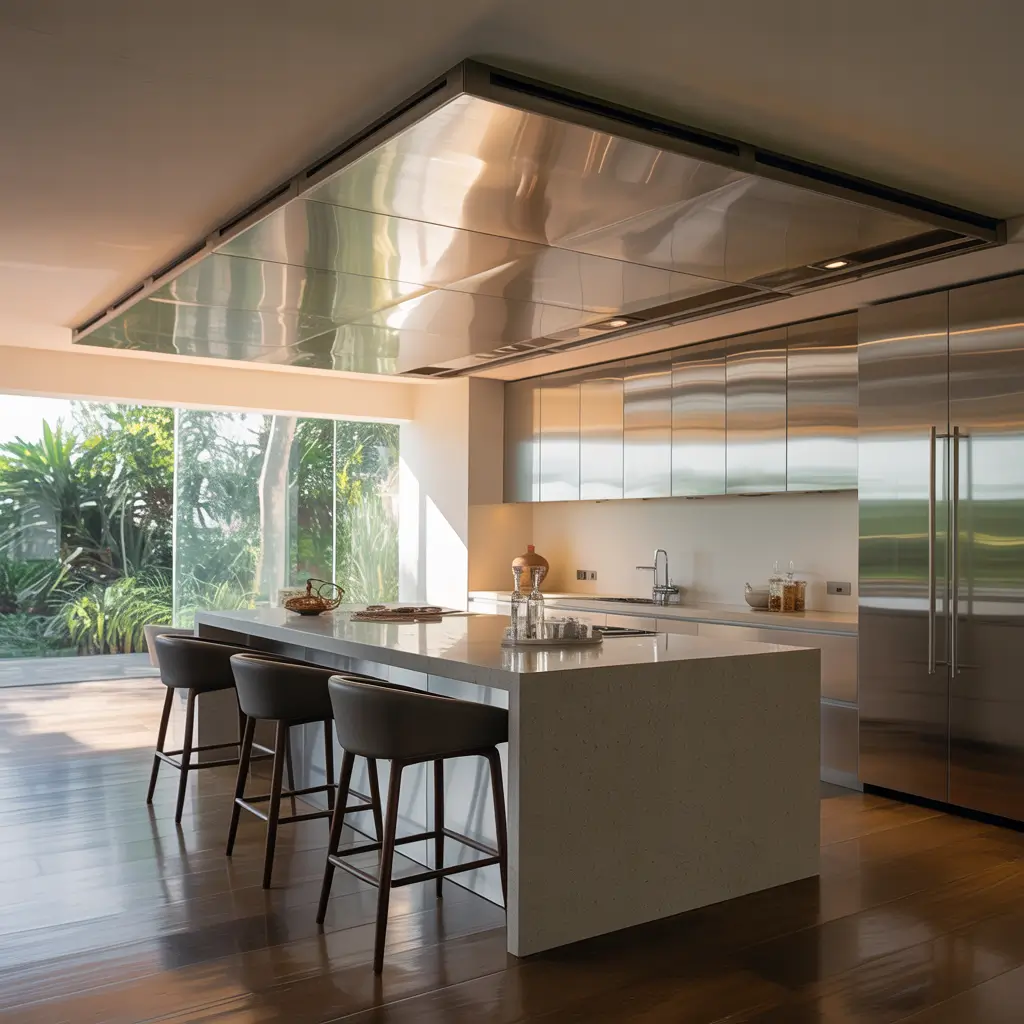
The Modern Marvel You Didn’t Know Existed
Okay, full disclosure: I only learned about stretch ceilings like two years ago, and they kind of blew my mind. Imagine a smooth, glossy, or matte PVC membrane stretched across your ceiling, creating this perfectly seamless surface. It sounds weird, but the results are seriously impressive.
The glossy versions are particularly cool in kitchens because they reflect light like nobody’s business, making the space feel bigger and brighter. It’s almost like having a mirror on your ceiling, but way less weird (and no, you won’t be staring at yourself while you cook—the reflection is more ambient and diffused).
Why You Should Consider This
Stretch ceilings are crazy practical for kitchens. They’re moisture-resistant, easy to clean (just wipe them down), and can hide all sorts of ceiling imperfections or old popcorn texture without the mess of removal. Plus, installation is relatively quick—usually done in a day or two.
You can also backlight them, integrate recessed lights, or even print custom designs or images on them (though maybe stick with solid colors for your kitchen unless you really want a photographic ceiling—no judgment).
The downside? They can be pricey, and you need a professional installer. This isn’t a DIY situation unless you’ve got specialized equipment and training. But if you’re doing a major kitchen renovation anyway and want something unique and modern, it’s worth getting a quote.
IMO, glossy stretch ceilings work best in contemporary or minimalist kitchens where that sleek, seamless look complements the overall aesthetic. In a rustic farmhouse kitchen? Maybe not so much.
Also Read: 12 Beautiful POP Ceiling Design Ideas and Cozy Home Interiors
10. Rustic Shiplap Ceiling
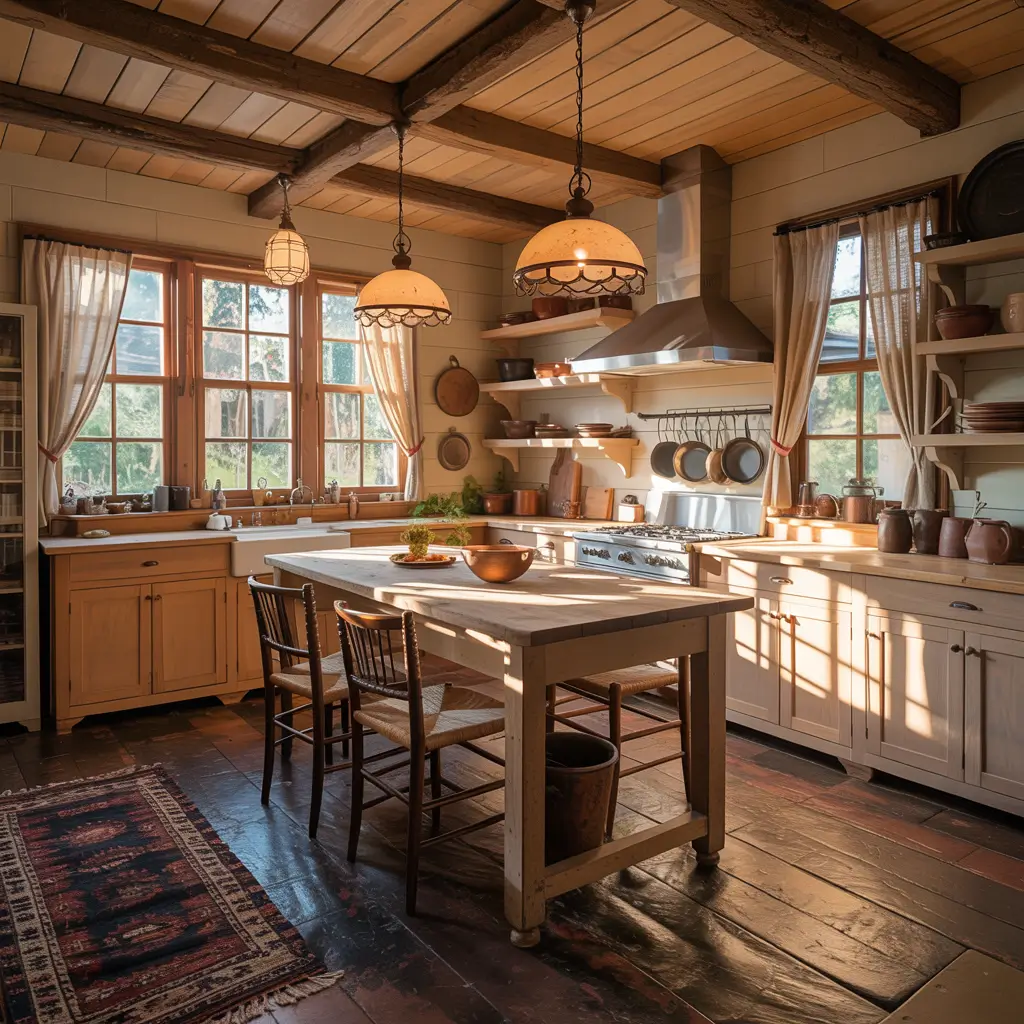
Farmhouse Charm Without the Farm
Last but definitely not least, let’s talk about shiplap ceilings. Yes, I know, Joanna Gaines has made shiplap ubiquitous, but you know what? Sometimes trends become trends because they actually look good. And shiplap ceilings? They look really, really good.
The horizontal lines of shiplap draw the eye across the ceiling, making even small kitchens feel wider and more expansive. The wood texture adds warmth and character, and it’s actually pretty straightforward to install if you’re even moderately handy (unlike some of the other options on this list).
Making Shiplap Work for Your Space
Here’s where you can get creative: paint it white for that classic farmhouse look, leave it natural for more rustic vibes, or go bold with color—I’ve seen gorgeous navy blue and sage green shiplap ceilings that absolutely sing.
You can use real wood shiplap, which is beautiful but requires more maintenance, especially in a kitchen where moisture and temperature changes happen regularly. Or you can opt for engineered wood or even MDF options that are more stable and budget-friendly.
One thing I learned the hard way (well, my cousin learned it, and I learned from watching): make sure you’re attaching the shiplap to ceiling joists or furring strips, not just drywall. Otherwise, you might end up with sagging issues down the line. Nobody wants a droopy ceiling situation.
The beauty of shiplap is its versatility. It works in farmhouse kitchens (obviously), but I’ve also seen it look amazing in coastal-style kitchens painted in light, beachy colors, or even in modern transitional spaces where it adds texture without competing with sleek cabinetry and contemporary finishes.
Wrapping This Up (Because Yes, Ceilings Matter)
So there you have it—ten legit ways to make your kitchen ceiling something worth looking at instead of that forgotten surface you only notice when you’re trying to remember if you dusted it this decade (spoiler: you probably didn’t).
Whether you’re all about that minimalist smooth ceiling life or ready to commit to something dramatic like vaulted ceilings with skylights, the point is this: your ceiling is prime real estate for adding character, functionality, and serious style to your kitchen.
Don’t let it just sit there being boring when it could be pulling its weight in the design department.
And look, I get it—some of these options are bigger investments than others. You don’t have to go from popcorn ceiling to full coffered masterpiece overnight. S
tart with something manageable like paint or LED strips, and work your way up to the more ambitious projects as your budget and confidence allow.