10 Creative Plaster Ceiling Design Ideas That Wow Guests
- Ceiling Design
 Ben
Ben- 0
- 35 minutes read
Look, I get it. You’ve been staring at that boring, flat ceiling for way too long, and something inside you is screaming for a change. Trust me, I’ve been there.
That plain white expanse above your head has so much untapped potential, and plaster ceiling designs are honestly one of the most underrated ways to completely transform your living space.
Here’s the thing—ceilings are often called the “fifth wall” of any room, yet most of us totally ignore them. We obsess over paint colors, furniture arrangements, and wall art, but what about the massive surface right above our heads?
That’s where plaster ceilings come in, and boy, do they pack a punch when it comes to visual impact.
I’ve spent years geeking out over interior design trends, and I can confidently say that plaster ceiling designs are making a massive comeback.
Whether you’re renovating an old home or building something fresh, these ideas will give you serious inspiration. So grab your favorite drink, settle in, and let’s explore ten absolutely stunning plaster ceiling design ideas that’ll make you want to start renovations tomorrow.
Why Plaster Ceilings Deserve Your Attention
Before we dive into the good stuff, let’s talk about why plaster ceilings are such a fantastic choice in the first place. Ever wondered why so many historic buildings and luxury hotels feature elaborate plaster work overhead? It’s not just about showing off wealth—though that’s definitely part of it.
Plaster offers incredible versatility that other ceiling materials simply can’t match. You can mold it, shape it, texture it, and customize it to fit literally any design vision you have in mind. Unlike drywall or basic paint, plaster allows for three-dimensional designs that create depth, shadow play, and architectural interest.
Plus, plaster is incredibly durable. We’re talking about a material that can last for decades—even centuries—with proper care. I’ve seen plaster ceilings in Victorian homes that still look absolutely magnificent after a hundred years. Try getting that kind of longevity from a drop ceiling, am I right?
The acoustic properties are another major bonus. Plaster naturally absorbs sound, making your rooms feel quieter and more intimate. If you’ve ever noticed how different a plaster-ceilinged room feels compared to one with exposed beams or metal panels, you know exactly what I’m talking about.
Now, let’s get to the designs that’ll make your jaw drop.
1. Modern Geometric Plaster Ceiling
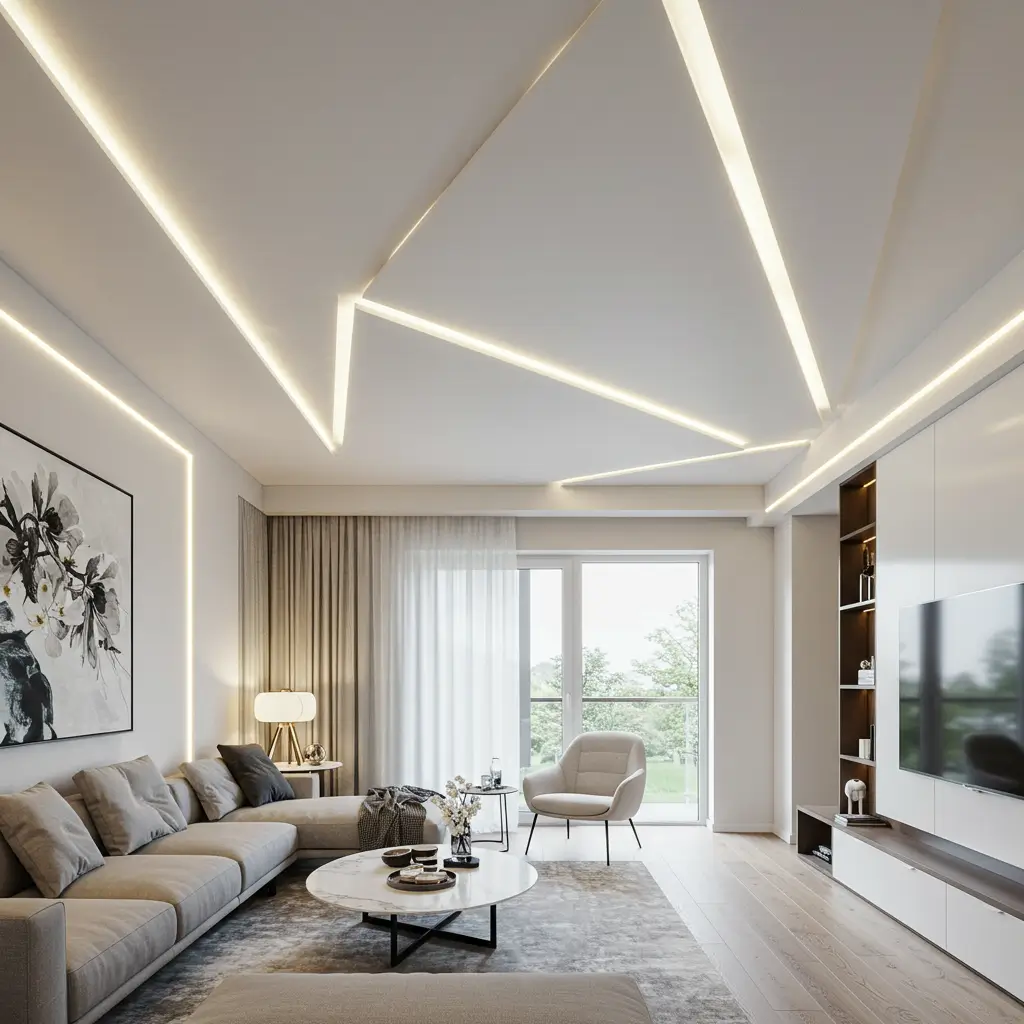
Okay, if you want something that screams “I have impeccable taste and I’m not afraid to show it,” geometric plaster ceilings are where it’s at. These designs feature bold shapes—think hexagons, triangles, squares, and abstract angular patterns—arranged in eye-catching configurations across your ceiling.
What Makes It Special
The beauty of geometric designs lies in their ability to add visual interest without overwhelming the space. You can go subtle with shallow relief patterns or make a bold statement with deep, dramatically shadowed shapes. The interplay of light and shadow throughout the day creates a dynamic ceiling that literally changes its appearance from morning to evening.
I remember walking into a friend’s newly renovated living room and being absolutely floored by their geometric plaster ceiling. The pattern used interconnected hexagons with recessed lighting tucked into strategic corners, and honestly, it looked like something straight out of an architecture magazine. IMO, this is one of the most impactful designs you can choose.
Best Rooms For This Design
Geometric plaster ceilings work wonderfully in modern living rooms, contemporary home offices, and entertainment spaces. They pair beautifully with minimalist furniture and clean-lined decor. If your aesthetic leans toward mid-century modern or Scandinavian design, this is your ceiling.
Design Tips
Keep your wall decor relatively simple when you go geometric overhead. You don’t want competing patterns fighting for attention. Stick to solid colors and simple artwork to let your ceiling take center stage. Also, consider the scale of your room—larger spaces can handle bigger, bolder patterns, while smaller rooms benefit from more subtle geometric textures.
2. Elegant Coffered Plaster Ceiling
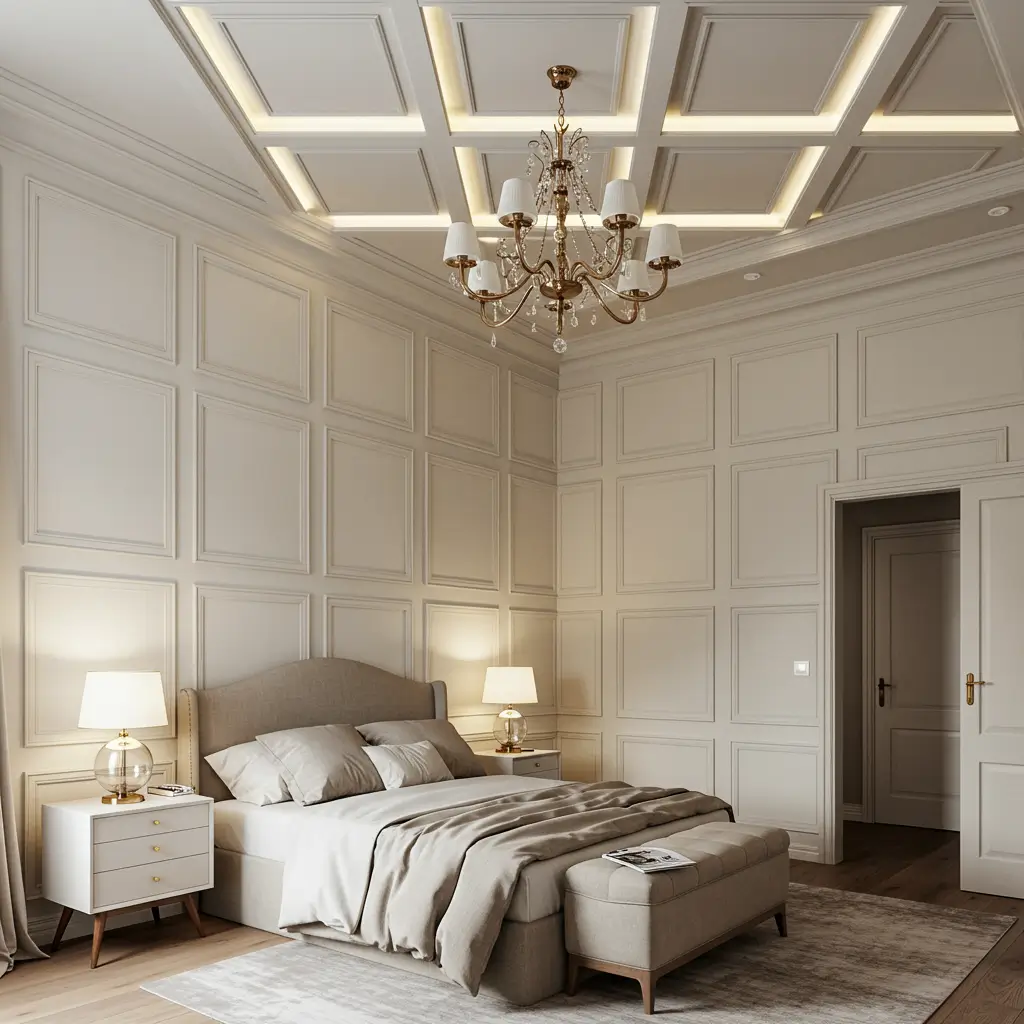
Oh man, coffered ceilings. These babies have been adding sophistication to homes since ancient Greek and Roman times, and they’re still absolutely killing it in modern interiors. A coffered ceiling features a grid of recessed panels—usually squares or rectangles—created by intersecting beams or moldings.
The Timeless Appeal
There’s something undeniably luxurious about coffered ceilings. They add depth, dimension, and an architectural gravitas that instantly elevates any room. The sunken panels create natural shadow lines that make your ceiling feel higher and more substantial.
What I love most about coffered plaster ceilings is their adaptability. You can go full-on traditional with ornate molding details and painted accents, or keep things contemporary with clean lines and monochromatic finishes. Either way, you’re adding serious value to your home—both aesthetically and financially.
Where They Shine Brightest
Dining rooms and formal living spaces practically beg for coffered ceilings. There’s something about sitting down to a nice dinner under those elegant recessed panels that just feels right. Home libraries, master bedrooms, and entryways also benefit enormously from this classic design.
Making It Work
The key to a successful coffered ceiling is proportion. The size of your coffers should relate to the size of your room—too small and they look busy, too large and they feel clunky. A good rule of thumb is to aim for coffers that are roughly one-eighth to one-tenth the width of your room. And please, for the love of good design, make sure your beams align with walls and windows. Random placement looks awkward and amateurish.
3. Minimalist Smooth Plaster Ceiling
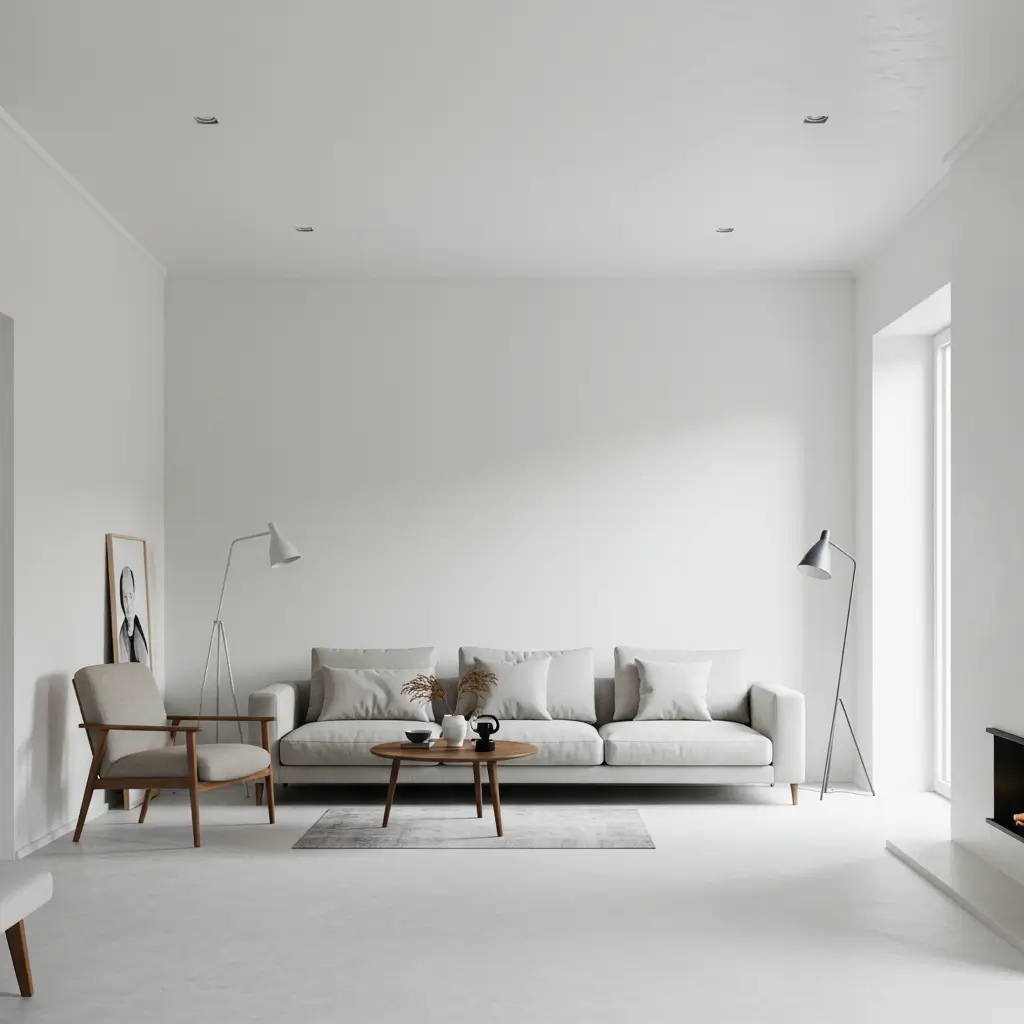
Sometimes, less really is more. If you’re someone who appreciates clean lines, uncluttered spaces, and the beauty of simplicity, a smooth plaster ceiling might be your perfect match. Don’t let the word “simple” fool you though—achieving that flawless, seamless finish requires serious skill.
The Beauty of Simplicity
A perfectly smooth plaster ceiling creates a sense of calm and spaciousness that textured or decorated ceilings simply can’t replicate. It’s like a blank canvas that allows your furniture, artwork, and architectural features to shine without competition.
The real magic happens when you consider the quality of light in a room with a smooth plaster ceiling. Without textures to create shadows or patterns to distract the eye, light moves freely and evenly across the surface. This creates an almost ethereal quality, especially in rooms with good natural lighting.
Achieving Perfection
Here’s the thing about smooth plaster ceilings—they demand perfection. Every imperfection shows. This means you need a skilled plasterer who knows how to apply multiple coats, sand properly, and achieve that butter-smooth finish. It’s not a DIY project unless you really know what you’re doing.
I attempted a smooth plaster repair in my first apartment (spoiler alert: bad idea), and let’s just say the result looked more like a lunar landscape than a sleek modern ceiling. Learn from my mistakes and hire a professional for this one.
Perfect Pairings
Smooth plaster ceilings work beautifully in minimalist and contemporary interiors. They’re fantastic in bedrooms where you want a calming atmosphere, in bathrooms where clean lines complement modern fixtures, and in any space where you want the architecture to take a backseat to your furnishings.
Also Read: 10 Unique Down Ceiling Design Ideas and Modern Decor Hacks
4. Luxury Crown Molded Ceiling
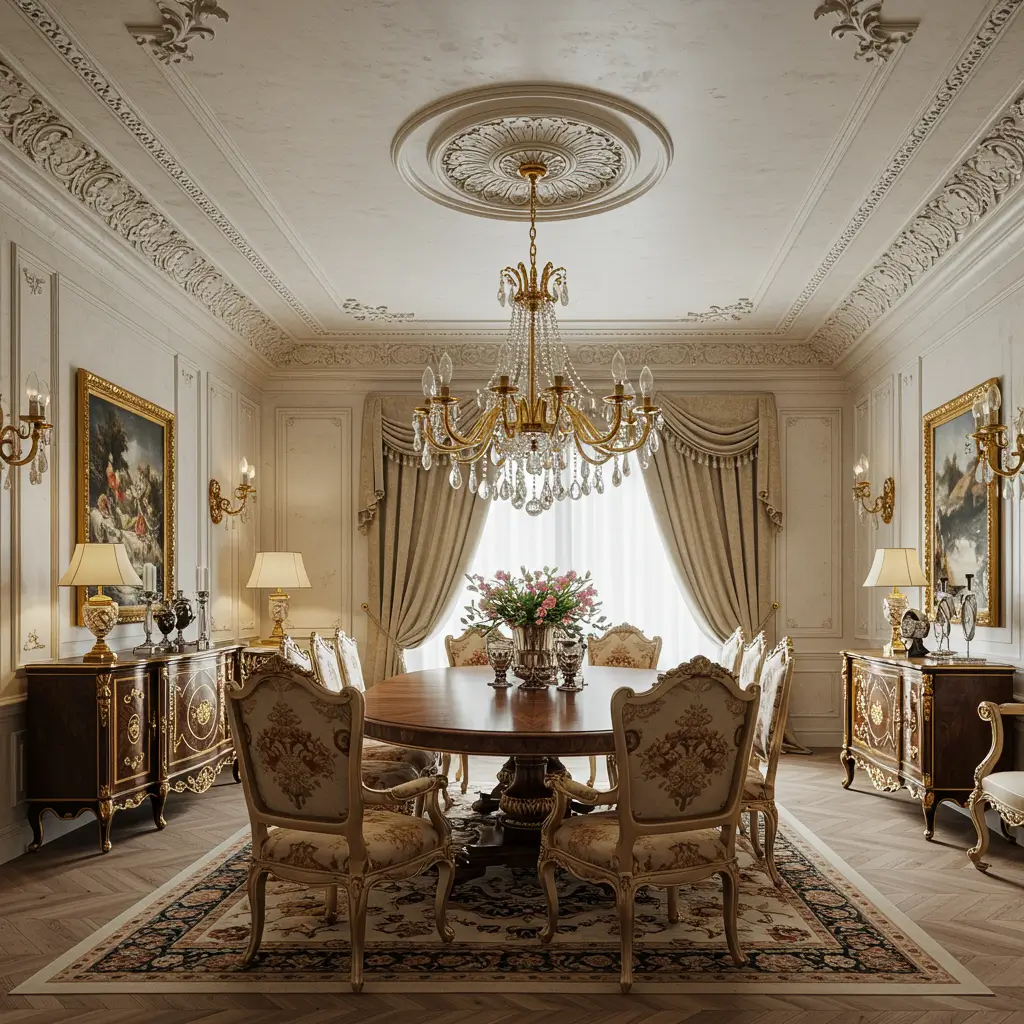
Want to add instant elegance to your home without tearing everything apart? Crown molded plaster ceilings deliver big impact with relatively straightforward installation. These designs feature decorative molding where your walls meet the ceiling, creating a polished, finished look that screams sophistication.
More Than Just Trim
Crown molding does way more than cover that awkward wall-ceiling junction. The right molding profile adds character, creates visual interest, and can even make your ceilings appear higher. The shadowing effect of layered moldings draws the eye upward and makes the entire room feel more grand.
What really gets me excited is the variety available. You can find plaster crown moldings in every style imaginable—from simple cove profiles to elaborate multi-layered designs featuring dentil details, egg-and-dart patterns, and acanthus leaves. FYI, larger rooms can handle more ornate moldings, while smaller spaces benefit from simpler profiles.
Installation Considerations
Crown molding installation isn’t as complex as some other plaster ceiling treatments, but it still requires precision. Corners are tricky—getting those miters just right takes practice and patience. Pre-fabricated corner pieces can save headaches for DIY enthusiasts, but complex designs really should be left to professionals.
The height of your ceilings matters too. Standard eight-foot ceilings look best with moldings in the three to five-inch range. Taller ceilings can accommodate larger, more dramatic profiles without overwhelming the space.
Style Pairings
Crown molded ceilings work in virtually any style home, from traditional colonials to transitional contemporaries. They’re particularly stunning in formal spaces like dining rooms, living rooms, and master bedrooms. Add a medallion around your chandelier, and you’ve got a ceiling that could grace the pages of any design publication.
5. Layered Tray Plaster Ceiling
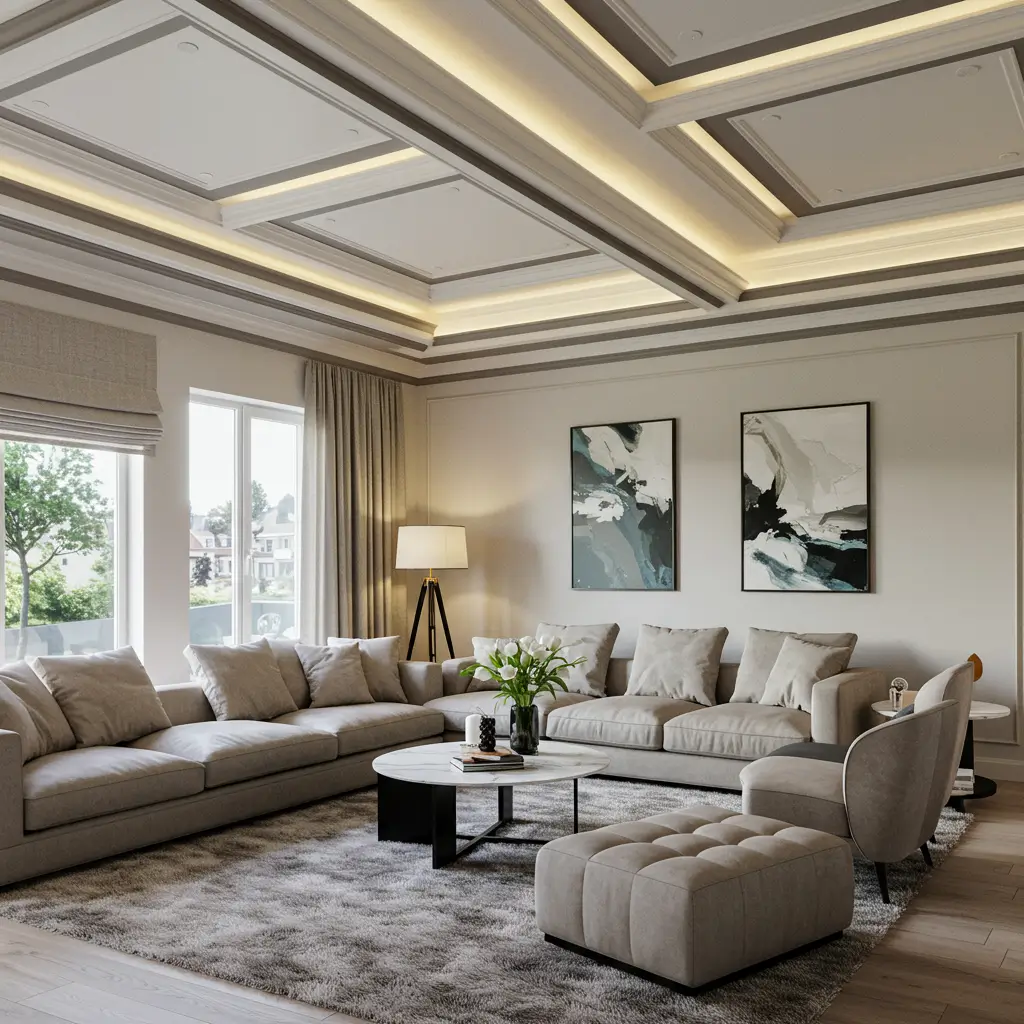
If you want drama—real, showstopping drama—layered tray ceilings deliver in spades. These designs feature multiple levels of recessed sections, creating a stepped effect that adds incredible depth and dimension to your overhead space.
Creating Dimension
Tray ceilings work by essentially “traying” out sections of your ceiling at different heights. The most basic version features a single raised or recessed area, but you can layer multiple trays for even more impact. Each layer creates its own shadow line, adding complexity and visual interest that flat ceilings simply can’t achieve.
The real magic happens when you add lighting. Rope lights or LED strips tucked into the ledges of each tray create a glowing effect that’s absolutely mesmerizing. You can change colors, dim them down for movie nights, or keep them bright for entertaining. It’s like having a light show built right into your ceiling.
Design Variations
You’ve got options here, my friend. Rectangular trays work beautifully in formal spaces, while circular or oval trays create softer, more organic shapes. Asymmetrical trays can add contemporary edge, and combined shapes—like a circle within a rectangle—create stunning focal points.
Some homeowners paint each tray level a slightly different shade of the same color, creating an ombre effect that adds even more depth. Others keep everything the same color but use different finish levels—matte walls with glossy tray interiors, for example—to create subtle contrast.
Where They Work Best
Tray ceilings are show-stealers in master bedrooms, formal living rooms, and dining spaces. They’re particularly effective over dining tables or beds, where the tray creates a natural “zone” that grounds the furniture below. Just make sure you have adequate ceiling height—you really need at least nine-foot ceilings to pull off multiple tray layers without making the room feel cramped.
6. Floral Patterned Plaster Ceiling
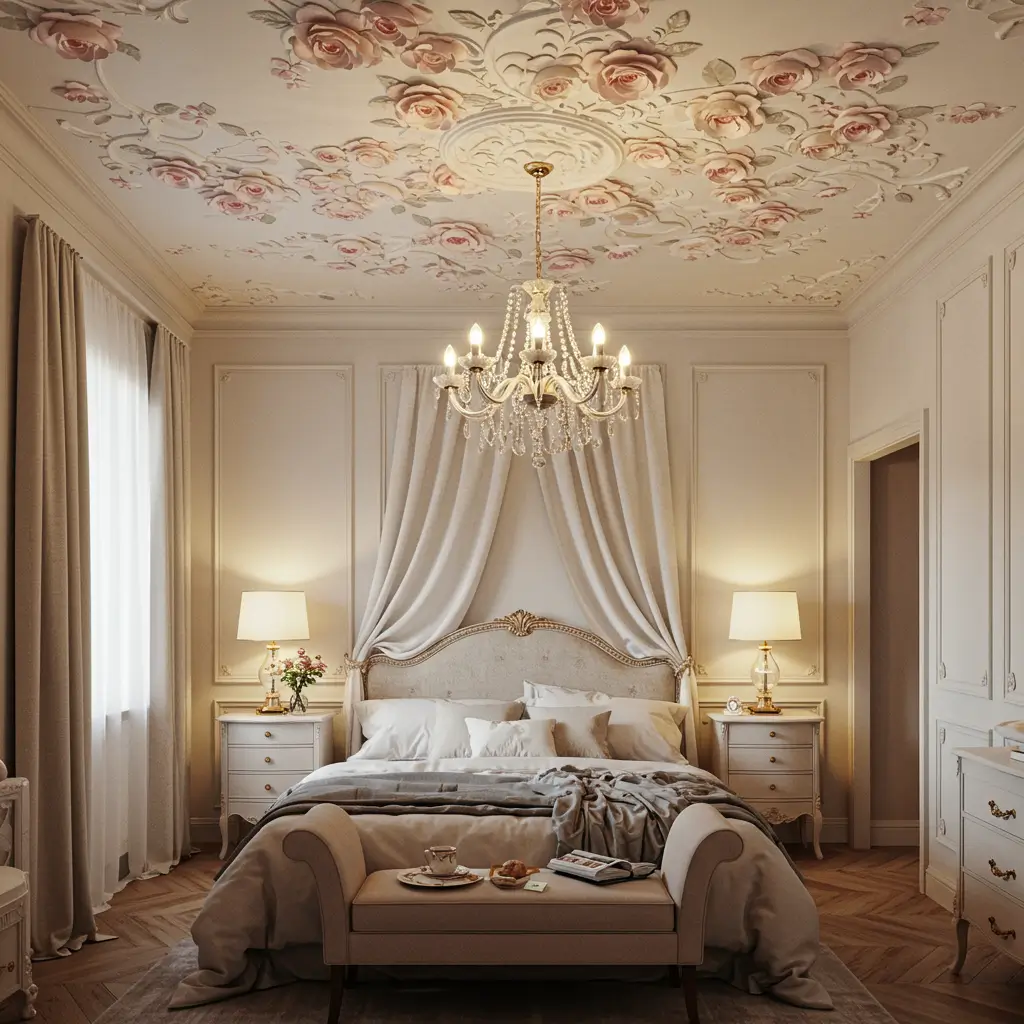
For those who love romantic, nature-inspired interiors, floral plaster ceilings offer breathtaking beauty that transforms any room into a botanical wonderland. These designs range from subtle leaf motifs to elaborate garden scenes featuring roses, vines, and flowing organic shapes.
Bringing Nature Indoors
There’s something inherently calming about natural patterns. Floral plaster designs tap into this biophilic tendency, creating ceilings that feel alive and connected to the natural world. Unlike wallpaper or painted florals, plaster floral work has dimension—petals curve, leaves overlap, and vines twist in three-dimensional glory.
I once visited a historic bed and breakfast with the most incredible rose-pattern plaster ceiling in the parlor. Even though the room had been renovated multiple times over the decades, they’d preserved that ceiling, and it absolutely stole the show. That’s the kind of impact we’re talking about here.
Choosing Your Botanical
Your floral design should complement your overall aesthetic. Victorian and traditional homes suit elaborate rose and acanthus patterns. Arts and Crafts interiors look amazing with stylized, geometric botanicals. Modern spaces can handle abstract floral interpretations with cleaner lines and simpler shapes.
Consider whether you want a centralized design—like a floral medallion around a light fixture—or an all-over pattern that covers the entire ceiling. Centralized designs work well in rooms with defined focal points, while all-over patterns suit larger spaces where the ceiling serves as the main attraction.
Making It Work Today
The key to using floral plaster ceilings in modern homes is balance. These ornate designs need breathing room, so keep your walls and furnishings relatively simple. White or light-colored plaster lets the pattern speak without overwhelming the space, though painted highlights on certain elements can add beautiful dimension.
Also Read: 12 Creative Drawing Room Ceiling Design Ideas to Inspire You
7. Rustic Textured Plaster Ceiling
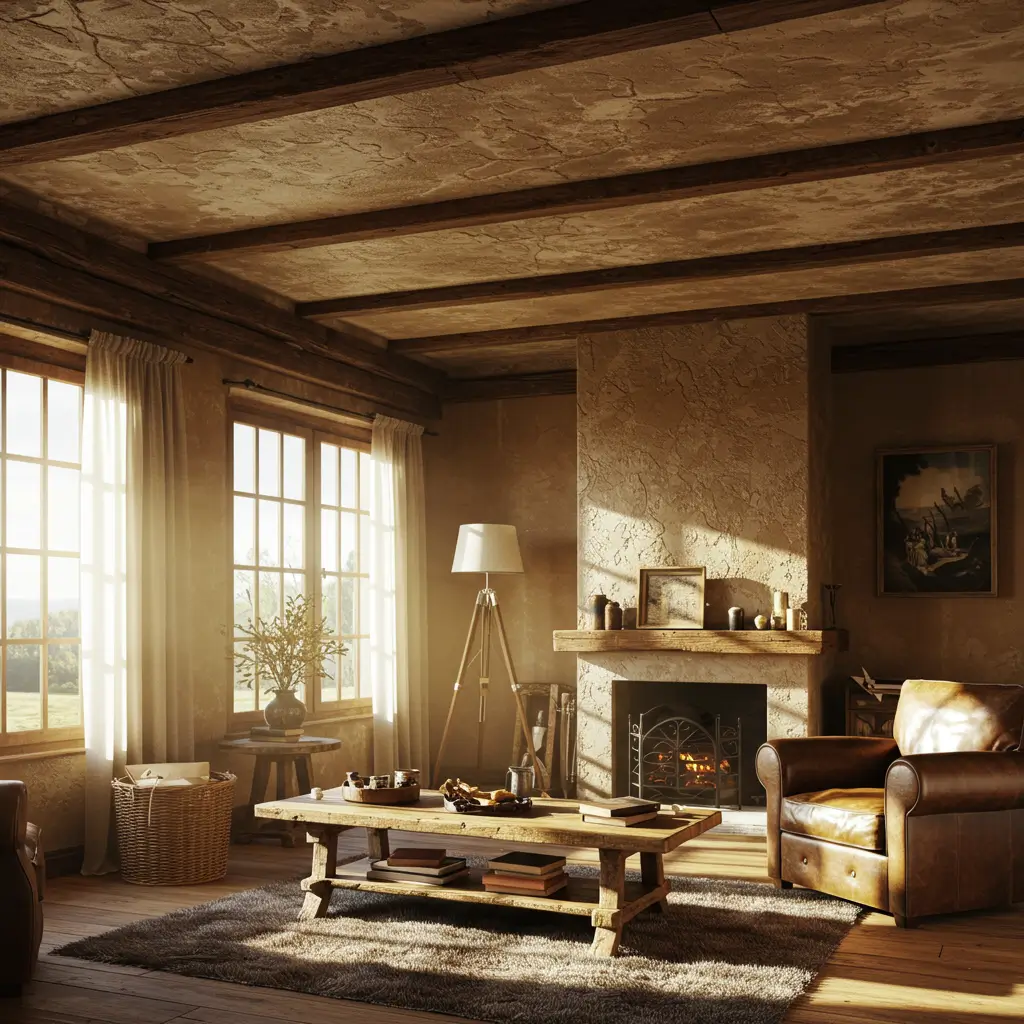
Who says plaster has to be smooth and polished? Textured plaster ceilings bring warmth, character, and a handcrafted feel that perfectly complements rustic, farmhouse, Mediterranean, and Tuscan-inspired interiors. These designs celebrate imperfection and embrace the natural beauty of plaster as a material.
Embracing Imperfection
Textured plaster ceilings feature intentional irregularities—trowel marks, subtle waves, and organic variations that create visual interest and tactile appeal. This isn’t about achieving machine-perfect smoothness; it’s about celebrating the handmade quality that gives plaster its unique character.
Different texturing techniques create dramatically different effects. Skip troweling creates a rough, stuccoed appearance. Venetian-style application builds up layers that can be burnished for subtle sheen. Spanish knife texturing creates larger, more dramatic patterns. Each technique suits different design aesthetics.
The Warmth Factor
There’s something undeniably cozy about textured plaster ceilings. They soften rooms, absorb sound, and create an intimate atmosphere that smooth surfaces can’t replicate. Combined with warm lighting, wooden beams, and natural materials, textured plaster helps create spaces that feel like warm embraces 🙂
My grandmother’s farmhouse had textured plaster ceilings throughout, and I’ve always associated that slightly rough, character-rich surface with comfort and home. Maybe that’s why I’m such a sucker for this style—it brings back all those cozy memories.
Where Texture Thrives
Kitchens with rustic or farmhouse vibes love textured plaster. So do family rooms, covered patios, and casual dining spaces. Mediterranean and Spanish Colonial homes practically demand textured plaster for authenticity. Even contemporary spaces can incorporate textured plaster ceilings when balanced with sleek, modern furnishings.
8. Circular Dome Plaster Ceiling
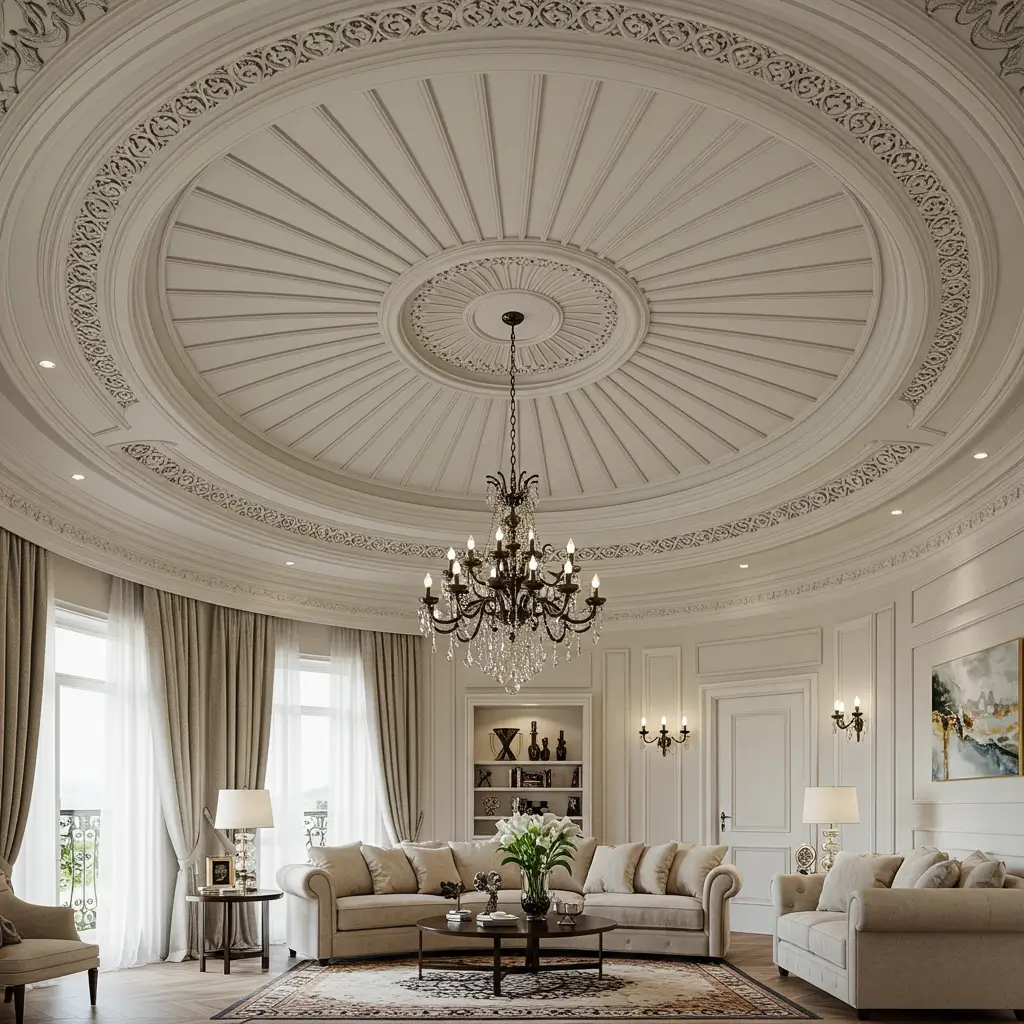
Want to create a true architectural statement? Domed plaster ceilings add drama, elegance, and a sense of grandeur that transforms ordinary rooms into extraordinary spaces. From subtle cove transitions to full Rotunda-style domes, these designs make a powerful impact.
The Drama of Curves
There’s a reason domes appear in the world’s most magnificent buildings—from the Pantheon to St. Peter’s Basilica to your favorite luxury hotel lobby. Curved ceilings draw the eye upward, create visual expansiveness, and add undeniable wow factor to any space.
Even modest-sized domes add incredible drama. A simple dome over a foyer, above a dining table, or in a master bathroom creates a focal point that guests will absolutely notice. These features say “someone thoughtful designed this space” in ways that flat ceilings never can.
Design Options
You’ve got choices when it comes to domed ceilings. Full domes create hemisphere-like shapes that curve from wall to wall. Coved ceilings feature curved transitions between wall and ceiling without the full dome effect. Barrel vaults create elongated, curved ceilings perfect for hallways or rectangular spaces.
Decorative elements can enhance your dome’s impact. Recessed coffers, ribbed details, painted murals, or central medallions all work beautifully with domed architecture. Lighting placement is crucial—a statement pendant or chandelier centered in the dome becomes the room’s undeniable star.
Making Domes Achievable
Here’s the reality check: true plaster domes require significant structural consideration and skilled craftsmanship. They’re not weekend DIY projects. However, modern construction techniques and prefabricated dome forms make these features more accessible than ever before.
If full-dome construction isn’t in your budget, consider a coved transition where your walls meet the ceiling. This creates similar visual softness and elegance without the structural complexity of a true dome.
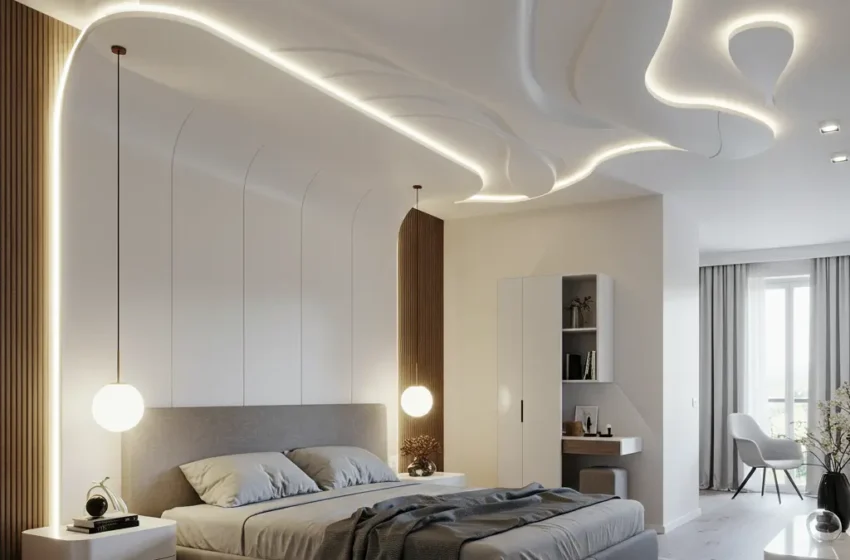
9. Wave-Inspired Plaster Ceiling
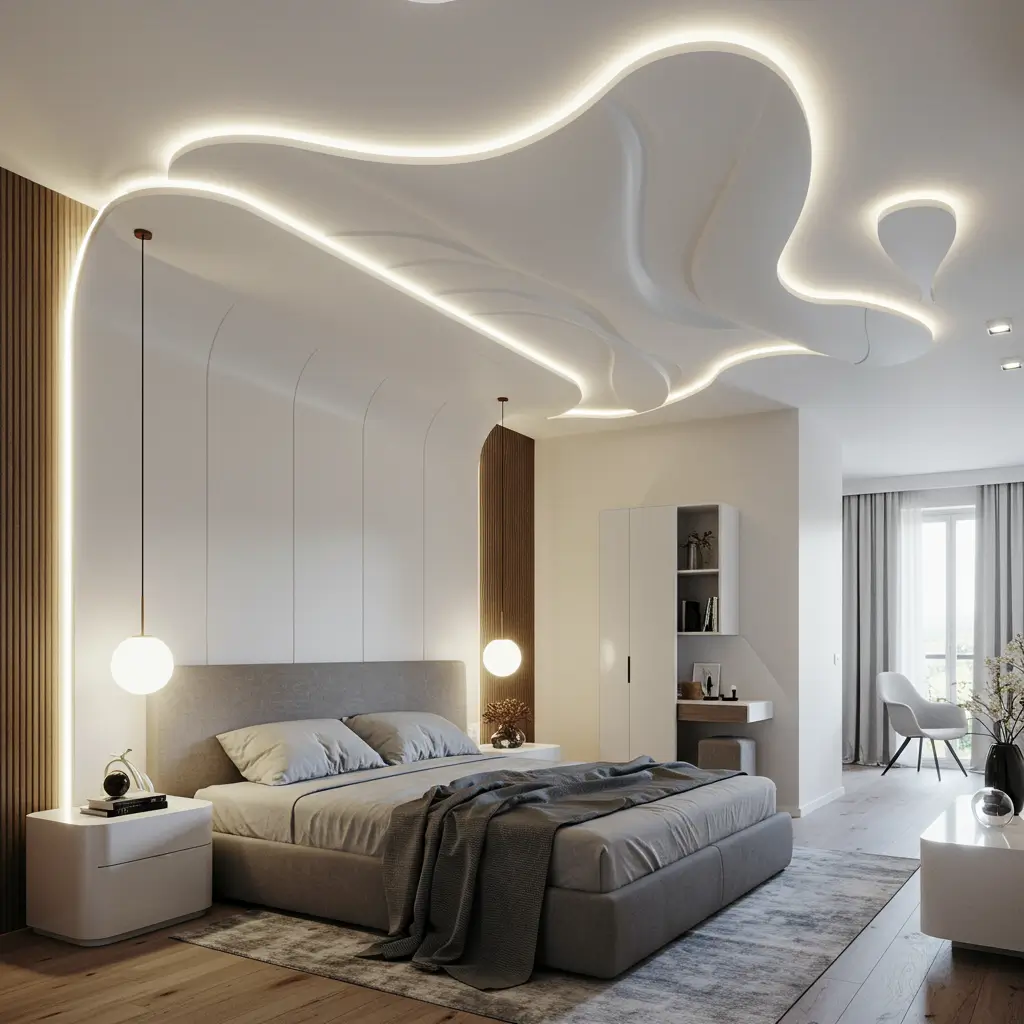
Ready for something truly unique? Wave-inspired plaster ceilings bring organic, flowing forms to your overhead space, creating undulating surfaces that seem almost alive. These designs range from subtle ripples to dramatic sculptural forms that transform ceilings into art installations.
Fluid Beauty
Wave patterns tap into our innate attraction to natural forms. Water, sand dunes, wind patterns—nature loves curves and flowing lines, and wave-inspired ceilings bring this organic beauty indoors. The result is ceiling surfaces that feel dynamic, calming, and utterly unique.
The interplay of light on wave-textured surfaces creates constantly changing effects throughout the day. Morning light emphasizes different contours than evening illumination. The ceiling essentially becomes a living surface that responds to its environment.
Contemporary Appeal
Wave-inspired ceilings fit perfectly in contemporary and organic modern interiors. They’re stunning in spaces where you want to create calm—meditation rooms, spa bathrooms, and bedrooms benefit enormously from these fluid forms. They also work beautifully in creative spaces like studios or home offices where inspiring environments boost productivity.
Technical Considerations
Creating wave-pattern plaster ceilings requires specialized skills and often custom formwork. This isn’t something every plasterer can tackle, so you’ll need to find craftspeople experienced in sculptural plaster work. The investment is worth it—these ceilings become true architectural features that add significant value to your home.
Color choices affect the wave effect dramatically. White and light colors emphasize the sculptural quality through shadow play. Deeper colors can create more subtle undulation effects. Some homeowners even use color gradients that follow the wave patterns for dramatic artistic impact.
Also Read: 10 Sophisticated Office Ceiling Design Ideas and Cozy Office Vibes
10. Contemporary LED Integrated Plaster Ceiling
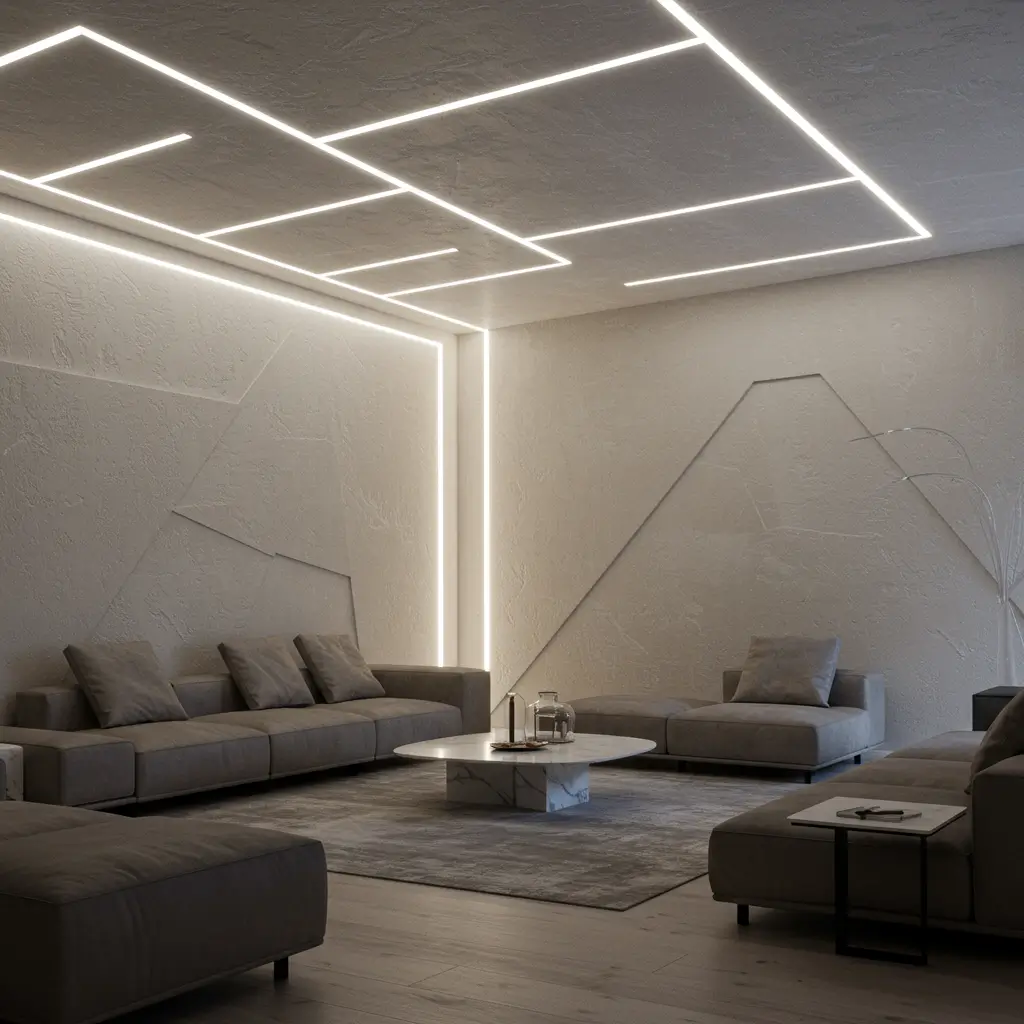
This is where traditional craftsmanship meets modern technology, and the results are absolutely spectacular. LED integrated plaster ceilings combine the beauty of plaster work with built-in lighting solutions that create stunning effects no chandelier can match.
The Best of Both Worlds
Imagine cove lighting tucked into layered plaster details, LED strips hidden within geometric patterns, or spotlights recessed into smooth plaster surfaces. These designs merge architectural beauty with functional illumination in ways that feel seamless and intentional.
The lighting possibilities are endless. You can create ambient washes that make your ceiling glow from within. You can add accent lighting that emphasizes plaster details. You can install color-changing LEDs for different moods and occasions. The ceiling becomes not just a surface but an active participant in your room’s atmosphere.
Planning Integration
The key to successful LED integration is planning during the design phase. You can’t easily add recessed lighting to an existing plaster ceiling without significant renovation. Wiring, LED strip placement, and access for maintenance all need consideration before any plaster work begins.
Working with both an electrician and your plasterer simultaneously ensures everything integrates properly. The LED channels need to be built into the plaster design, not added as afterthoughts. This collaborative approach creates results that look intentional and polished.
Smart Home Compatibility
Modern LED systems integrate beautifully with smart home technology. Voice control, smartphone apps, programmable scenes—your ceiling lighting can become fully automated and customizable. Imagine walking into your living room and having your ceiling automatically adjust to your preferred evening ambiance. That’s the power of integrated LED plaster ceilings.
These designs work particularly well in entertainment spaces, master suites, and kitchens where task lighting combines with ambient illumination. They’re also fantastic in commercial applications—restaurants, hotels, and retail spaces use integrated plaster ceilings to create memorable experiences for customers.
Choosing Your Perfect Plaster Ceiling Design
Alright, we’ve covered ten incredible options, but how do you actually choose? Here are some factors to consider as you narrow down your ideal plaster ceiling design.
Consider Your Architecture
Your home’s existing architectural style should guide your ceiling choice. Victorian homes suit ornate coffered or floral designs. Mid-century modern houses look amazing with geometric patterns. Farmhouses demand rustic textures. Fighting against your home’s natural style creates dissonance that never quite feels right.
Think About Room Function
Different rooms have different ceiling needs. Bedrooms benefit from calming designs like smooth surfaces or gentle waves. Dining rooms and living spaces can handle more drama—domes, elaborate coffering, or statement lighting integration. Kitchens often work best with practical designs that are easy to clean and maintain.
Budget Realistically
Plaster ceiling work ranges from relatively affordable (simple smooth ceilings, basic crown molding) to significant investments (full domes, elaborate sculptural work, LED integration). Know your budget before falling in love with designs that might stretch your finances too thin.
Find the Right Craftspeople
Quality plaster work requires skilled craftspeople. Not every contractor can deliver the finishes we’ve discussed here. Ask for portfolios, check references, and don’t be afraid to pay more for proven expertise. Bad plaster work is worse than no plaster work at all.
Final Thoughts
Your ceiling represents so much untapped design potential. Whether you choose dramatic domes, elegant coffering, or subtle smooth surfaces, plaster ceilings offer beauty, durability, and architectural impact that transform ordinary rooms into extraordinary spaces.
The key is choosing designs that complement your home’s architecture, suit your personal style, and work within your practical constraints. Take your time, gather inspiration, and find craftspeople who can bring your vision to life.
Now stop staring at that boring flat ceiling and start dreaming about what could be up there instead. Your fifth wall deserves some love, and plaster is ready to deliver it in spades. Happy renovating! 🙂