Natural Gas Fireplace: The Cozy Game-Changer You Didn’t Know You Needed

Look, I get it. You’re scrolling through your phone at 2 AM, probably wrapped in a blanket, thinking about how to make your living room less… boring.
Or maybe you’re just tired of freezing your butt off every winter while your heating bill skyrockets. Either way, you’ve stumbled onto natural gas fireplaces, and trust me, this rabbit hole is worth diving into.
I remember the first time I seriously considered getting one. I was at my buddy’s place, sipping coffee, and I noticed his fireplace was on—flames dancing, warmth radiating—but there was no wood, no ash, no mess.
Just pure, effortless coziness. I was hooked. That’s when I realized natural gas fireplaces aren’t just some fancy home upgrade; they’re a lifestyle choice that actually makes sense.
So let’s talk about why these things are absolute game-changers, what you need to know before buying one, and whether they’re worth the investment. Spoiler alert: they totally are.
What Exactly Is a Natural Gas Fireplace?
Alright, let’s start with the basics because not everyone grew up watching HGTV marathons (no judgment if you did, though).
A natural gas fireplace is essentially a fireplace that runs on—you guessed it—natural gas instead of burning wood or pellets. It connects directly to your home’s gas line, which means you flip a switch or press a button, and boom, instant fire. No kindling, no struggling with damp logs, no pretending you’re a Boy Scout trying to get the flame going. It’s modern convenience meets timeless ambiance.
These fireplaces come in different styles—inserts, built-ins, freestanding units—you name it. Some look super traditional with fake logs that mimic the real deal, while others go full contemporary with glass beads or river rocks. The variety is honestly kind of overwhelming at first, but that’s also what makes them so versatile.
How Do They Actually Work?
Here’s the thing: natural gas fireplaces are surprisingly simple once you understand the mechanics. The gas flows through a burner system (kind of like your stove burner but way prettier), and when ignited, it creates those beautiful flames you see. Most modern units have electronic ignition systems, so you literally just press a button or use a remote control. FYI, some even have smartphone apps now because apparently, everything needs an app these days 🙂
The flames heat up ceramic logs or other decorative media, which then radiates warmth into your room. Unlike wood-burning fireplaces where most of the heat escapes through the chimney, gas fireplaces are way more efficient at actually warming your space. We’re talking about 70-85% efficiency versus the measly 10-30% you get from traditional wood burners. Math doesn’t lie, people.
Why I’m Obsessed with Natural Gas Fireplaces
Okay, confession time. I’m genuinely obsessed with these things, and here’s why you should be too.
The Convenience Factor Is Unreal
Remember those romantic movies where the couple struggles adorably with starting a fire? Yeah, that’s cute on screen, but in real life, it’s annoying AF. With a natural gas fireplace, you get the ambiance without the hassle. Cold evening? Press a button. Romantic date night? Press a button. Just want to stare at flames while contemplating life’s mysteries? Press. The. Button.
I can’t tell you how many times I’ve appreciated this convenience. After a long day at work, the last thing I want to do is haul wood, crumple newspaper, and spend 20 minutes trying to get a fire started. My gas fireplace? Ready to go in literally seconds. It’s like having a fireplace with a cheat code enabled.
Your Heating Bill Will Thank You
Let’s talk money because, IMO, that’s what really matters when making home improvements. Natural gas is typically cheaper than electricity in most areas. Running a gas fireplace to supplement your heating system can actually reduce your overall energy costs, especially if you have zone heating needs.
Think about it this way: instead of heating your entire house to 72 degrees, you can lower your thermostat to 68 and use your gas fireplace to warm up the room you’re actually using. It’s smarter, more efficient, and your wallet won’t hate you come January when the bills roll in.
I did the math for my own house (because I’m a nerd like that), and I saved roughly 20% on heating costs during the coldest months just by using my gas fireplace strategically. Your mileage may vary, but those savings add up fast.
Clean Living—No Ash, No Soot, No Drama
Ever cleaned out a wood-burning fireplace? It’s disgusting. You’re basically shoveling ash, dealing with soot that gets everywhere, and somehow, no matter how careful you are, you end up looking like you just crawled out of a coal mine.
Gas fireplaces? None of that nonsense. There’s no ash to clean, no creosote buildup, and you don’t need to sweep your chimney every year. The maintenance is minimal—usually just an annual inspection to make sure everything’s running safely. Clean, convenient, and hassle-free. What’s not to love?
Types of Natural Gas Fireplaces: Which One’s Right for You?
This is where things get fun because you’ve got options, my friend. Lots of options.
Gas Fireplace Inserts
These are perfect if you’ve already got a traditional wood-burning fireplace that’s basically useless. A gas insert fits right into your existing fireplace opening, converting it into a gas-burning unit. It’s like giving your old fireplace a modern makeover without the massive renovation.
I’ve seen some seriously gorgeous transformations with inserts. They come with realistic-looking logs, adjustable flames, and blowers to help distribute heat better. Plus, they seal off that drafty chimney that’s been wasting your heat for years.
Pros of inserts:
- Retrofit existing fireplaces easily
- Highly efficient heat output
- No major construction needed
- Usually more affordable than built-ins
Cons of inserts:
- Limited design flexibility
- Requires existing fireplace structure
- Some models can be bulky
Built-In Gas Fireplaces
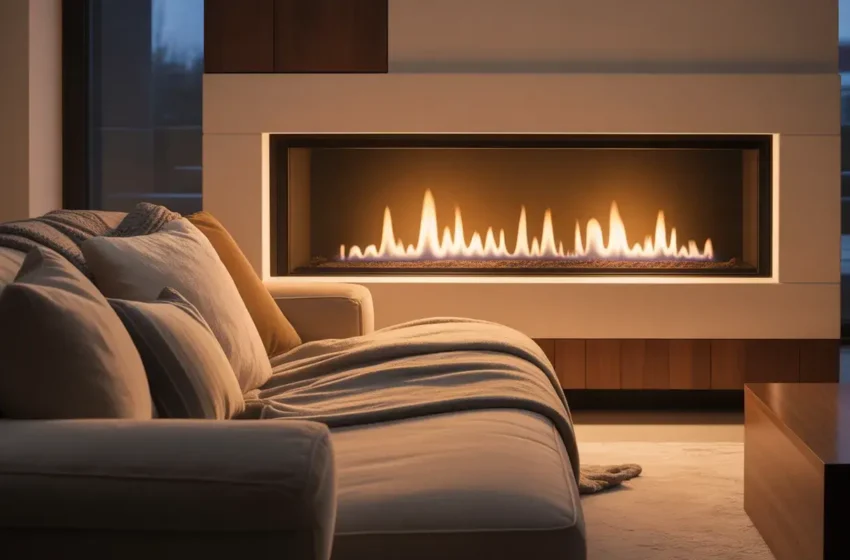
If you’re building new or doing a major renovation, built-in units are the way to go. These are installed directly into your wall and can be customized to match your exact vision. Want a sleek, linear fireplace that’s 6 feet wide? Done. Prefer a traditional look with a mantel? Easy.
Built-ins give you maximum design freedom, and honestly, they look incredibly polished and intentional. They scream “I hired a designer” even if you totally didn’t.
Freestanding Gas Stoves
These are like the quirky cousin in the fireplace family. Freestanding gas stoves sit in your room (usually with a vent pipe going through the wall or ceiling) and provide 360-degree heat distribution. They’ve got that cozy cabin vibe, and they’re surprisingly efficient.
Perfect for basements, dens, or anywhere you want to add warmth without major construction. They come in traditional cast-iron styles or more modern designs, depending on your aesthetic.
Vent-Free vs. Direct Vent: The Eternal Debate
Alright, we need to address this because it’s kind of a big deal.
Direct vent fireplaces pull air from outside for combustion and vent exhaust gases back outside through a sealed system. They’re super safe, don’t affect your indoor air quality, and are allowed pretty much everywhere. The downside? They require exterior venting, which means installation can be more complex and expensive.
Vent-free fireplaces don’t need any venting at all. They burn so cleanly that you can just let them do their thing without exhausting anything outside. They’re easier to install and often cheaper. The catch? Some states and localities don’t allow them due to air quality concerns, and they can add moisture to your indoor air. Also, and this is important, they come with oxygen depletion sensors for safety, but some people just don’t like the idea of any combustion happening without venting.
Personally? I’m team direct vent. The peace of mind knowing everything’s vented outside is worth the extra installation cost. But I won’t judge you if you go vent-free—just make sure it’s legal where you live and that you’ve got proper ventilation in your home.
Installation: DIY or Call the Pros?
Here’s where I’m gonna be real with you: unless you’re a licensed plumber and electrician with fireplace installation experience, call the pros. Seriously.
Natural gas is no joke. One wrong connection, one tiny leak, and you’re dealing with potential carbon monoxide poisoning or, worst case scenario, an explosion. This isn’t like assembling IKEA furniture where the worst thing that happens is a wobbly shelf. We’re talking about your family’s safety here.
Professional installation typically costs anywhere from $2,500 to $10,000 depending on the type of fireplace, complexity of installation, and whether you need to run new gas lines. Yeah, it’s not cheap, but it’s money well spent. Plus, professionals ensure everything meets local building codes, which is crucial for insurance purposes and resale value.
That said, if you’re just installing a vent-free unit and you already have a gas line nearby, the installation might be on the simpler (and cheaper) end of the spectrum. But still—get quotes from licensed contractors. This is not the time to hire your buddy who “knows a guy.”
Features That Actually Matter
When you start shopping for natural gas fireplaces, you’ll encounter a million features and options. Some are legitimately useful; others are just marketing fluff. Let me break down what’s actually worth paying attention to.
Remote Controls and Smart Features
Being able to control your fireplace from your couch is genuinely convenient. Many modern units come with remote controls that let you adjust flame height, heat output, and even turn the unit on and off. Some fancy models integrate with smart home systems, so you can control them via Alexa or Google Home.
Is this necessary? No. Is it awesome? Absolutely. There’s something deeply satisfying about saying “Alexa, turn on the fireplace” and watching flames appear like you’re some kind of wizard.
Blowers and Heat Distribution
A good blower system makes a massive difference in heat distribution. Without one, the heat mostly rises straight up. With one, warm air gets pushed into your room more effectively. If you’re buying a fireplace primarily for heating (not just ambiance), make sure it has a quality blower system.
Some units have variable-speed blowers that you can adjust, which is nice for controlling noise levels. Because yes, blowers do make some noise—not awful, but noticeable if you’re trying to watch a quiet movie.
Realistic Flames and Logs
This might seem superficial, but hear me out: if you’re spending thousands on a fireplace, it should look good. Modern gas fireplaces have come a long way in creating realistic flames. Look for units with multi-flame burner systems that create varied, natural-looking flames instead of uniform blue ones.
The ceramic logs also matter. High-quality logs have detailed textures, varied colors, and look convincingly like real wood. Cheap ones look… well, cheap. It’s worth seeing units in person at a showroom before buying because pictures don’t always do them justice.
Safety Considerations (Because I Care About You)
Natural gas fireplaces are generally safe when properly installed and maintained, but there are some things you need to know.
Annual Inspections Are Non-Negotiable
Get your gas fireplace inspected by a professional every year. They’ll check for gas leaks, ensure the venting system is working properly, clean components, and verify that all safety features are functioning. This typically costs $100-200 and is worth every penny.
I learned this the hard way when I skipped an inspection year (lazy, I know), and the next year’s technician found a small crack in the heat exchanger. Could’ve been a serious problem if left unchecked. Don’t be like past me—schedule that annual inspection.
Carbon Monoxide Detectors Are Essential
Even with direct vent fireplaces, you should have working carbon monoxide detectors in your home. Place one near your fireplace and one near your bedrooms. Test them regularly and replace batteries as needed.
Carbon monoxide is odorless and colorless, so you can’t detect it without proper equipment. A detector is cheap insurance against a potentially deadly situation.
Keep the Area Clear
This seems obvious, but you’d be surprised. Don’t store flammable materials near your fireplace. Keep furniture, curtains, and decorations at least 3 feet away. And please, for the love of all that’s holy, don’t dry your wet socks by draping them over the fireplace :/ I’ve seen it happen, and it’s both dangerous and ridiculous.
Cost Breakdown: What You’re Really Looking At
Let’s talk numbers because I know that’s what you’re wondering.
Initial purchase and installation:
- Fireplace unit: $1,500 – $6,000
- Professional installation: $2,500 – $10,000
- Total upfront: $4,000 – $16,000
Yeah, it’s a chunk of change. But remember, this is a long-term investment that adds value to your home and provides years of comfort.
Operating costs: Natural gas prices vary by region, but on average, running a gas fireplace costs about $0.70 to $1.50 per hour. If you use it 4 hours a day for 4 months (the typical heating season), you’re looking at roughly $340-720 annually. That’s pretty reasonable for the amount of use and enjoyment you get.
Maintenance costs: Annual inspections run $100-200. Occasionally you might need to replace the thermocouple or other components, but major repairs are rare with quality units.
The Environmental Angle
Ever wondered if gas fireplaces are environmentally friendly? It’s a fair question.
Natural gas burns cleaner than wood—that’s just a fact. Wood-burning fireplaces release particulate matter, carbon monoxide, and other pollutants into the air. Gas fireplaces produce significantly fewer emissions, especially when properly vented.
That said, natural gas is still a fossil fuel, so it’s not zero-impact. If you’re deeply committed to environmental sustainability, you might consider electric fireplaces (though they lack the authentic flame experience) or explore options like bioethanol fireplaces.
For most people, though, gas fireplaces represent a reasonable middle ground between environmental impact, cost, and functionality. They’re definitely better than wood-burning options from an air quality perspective.
Real Talk: Are They Worth It?
After everything I’ve told you, the big question remains: should you actually get one?
Here’s my honest take. If you value convenience, enjoy the ambiance of a fireplace, and want an efficient supplemental heating source, then yes, absolutely worth it. The upfront cost is significant, but the daily enjoyment, energy savings, and increased home value make it a smart investment.
I use mine constantly during the colder months. It’s become the gathering spot in my house—where we have morning coffee, where friends congregate during parties, where I sit and read on quiet evenings. It’s transformed how I use and enjoy my living space.
On the flip side, if you’re renting, planning to move soon, or rarely home to enjoy it, maybe hold off. The return on investment requires some time and usage to really manifest.
Final Thoughts
Natural gas fireplaces represent the perfect marriage of old-world charm and modern convenience.
You get the warmth, ambiance, and coziness of a traditional fireplace without the backbreaking work, mess, and inefficiency that comes with burning wood.
Are they perfect? No. They require professional installation, annual maintenance, and a decent upfront investment. But for most homeowners who prioritize comfort and convenience, these trade-offs are absolutely worthwhile.
If you’re seriously considering one, my advice is simple: visit some showrooms, see different models in action, get multiple quotes from licensed installers, and don’t cheap out on the unit itself.
A quality gas fireplace will serve you well for decades.
Now if you’ll excuse me, it’s getting chilly, and my fireplace is calling my name. Just gotta press that button… 🙂