10 Simple Bedroom Furniture Layout Ideas and Chic Setups
- Bedroom Design
 Ben
Ben- 0
- 34 minutes read
Remember that time you pushed your dresser to three different walls in one afternoon, and it still looked wrong? Yeah, we’ve all been there.
Arranging bedroom furniture feels like solving a puzzle where the pieces keep changing size, and someone forgot to include the picture on the box.
I spent years thinking bedroom layouts were just about making everything fit. Then I hired a designer friend to help me with my disaster of a master bedroom, and she completely blew my mind.
Turns out, furniture placement isn’t just about cramming stuff into a room—it’s about creating flow, maximizing function, and actually making your space feel bigger than it is.
After redesigning my own bedroom five times (I’m not obsessive, just particular), helping friends tackle their furniture fiascos, and studying what actually works, I’ve discovered that the right layout can transform even the most awkward bedroom into a functional sanctuary.
Let’s explore ten furniture layout ideas that’ll make you wonder why you didn’t try them sooner.
Understanding the Basics Before We Dive In
Before we jump into specific layouts, let’s talk about what makes a furniture arrangement actually work. You need clear pathways—at least 24 inches between pieces for comfortable movement. Your bed needs proper clearance on at least one side, preferably both. And please, for the love of good design, stop pushing everything against the walls like you’re preparing for a dance battle in the middle of your bedroom.
Traffic flow matters more than you think. Map out how you move through your bedroom daily. From door to bed, bed to closet, bed to bathroom—these paths should be obstacle-free. Nothing ruins a peaceful morning faster than navigating a furniture maze while half-asleep.
Now let’s get into these game-changing layouts that’ll revolutionize how you think about bedroom furniture arrangement.
1. Floating Bed Minimalist Layout
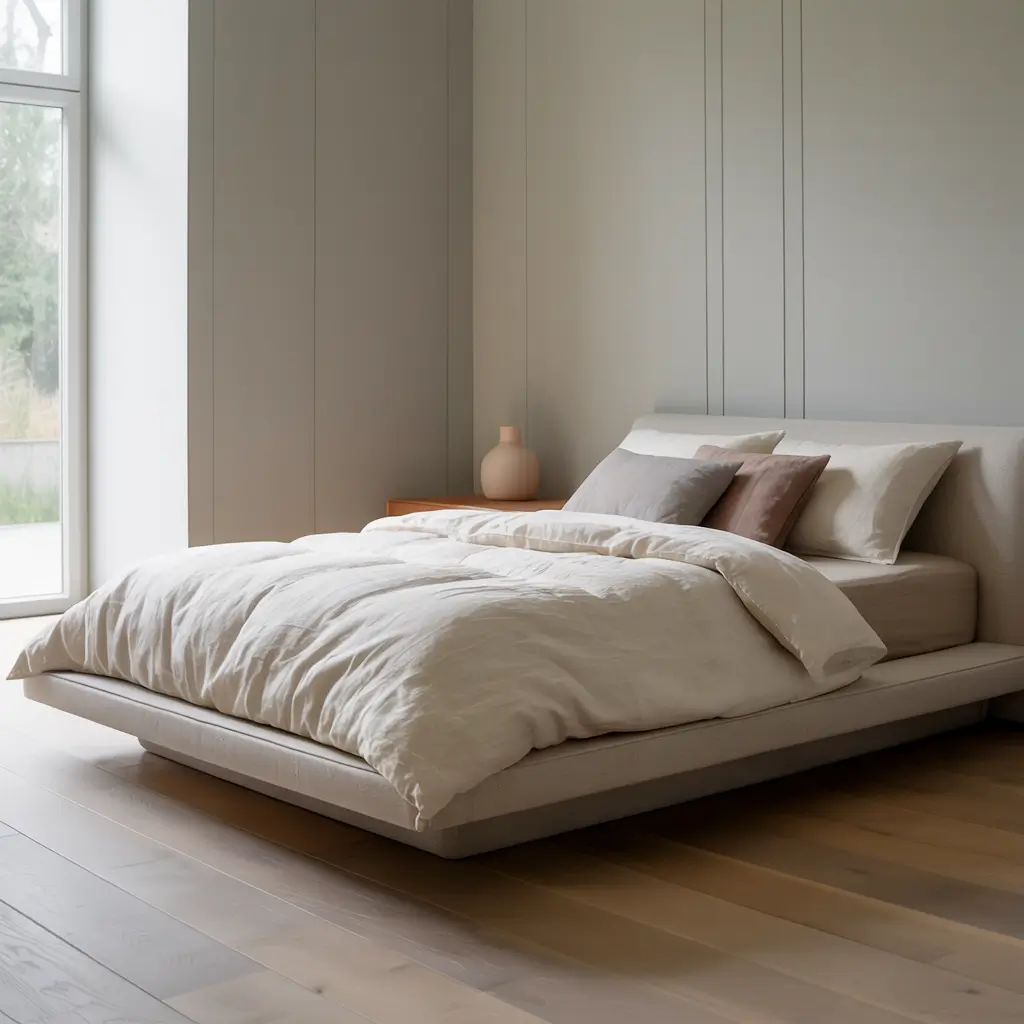
The floating bed layout breaks the cardinal rule most of us grew up with—it pulls the bed away from the wall entirely. This might sound crazy if you’re working with limited space, but hear me out.
Why Floating Works
Positioning your bed in the center of the room (or at least away from walls) creates an incredible sense of luxury and spaciousness. You’re essentially creating a furniture island that becomes the undeniable focal point. This layout works best in bedrooms that are at least 12×12 feet, giving you enough room to walk comfortably around all sides.
I tried this in my current bedroom after seeing it in a boutique hotel. The bed sits about two feet from the wall behind it, creating space for a narrow console table that holds books, plants, and ambient lighting. It feels infinitely more sophisticated than my old wall-hugging setup.
Making It Practical
The key to a successful floating bed layout is ensuring you have enough clearance on all sides. Aim for at least 30 inches of walking space around the bed. This might mean downsizing from a king to a queen, but trust me, the trade-off is worth it.
Use the space behind your floating bed strategically. A slim console, floating shelf, or even just carefully arranged plants can turn that gap into a design feature rather than wasted space. Some people run LED strips behind their headboard for a subtle glow that makes the bed appear to actually float.
Supporting Furniture Placement
With a floating bed, your nightstands become even more important. Choose substantial pieces that can stand on their own as furniture statements, not just bed accessories. Position them slightly forward of the bed to maintain that floating illusion.
Keep other furniture minimal and intentional. A single dresser along one wall, maybe a reading chair in a corner. The floating bed is your star—everything else plays a supporting role.
2. Symmetrical Twin Bed Arrangement
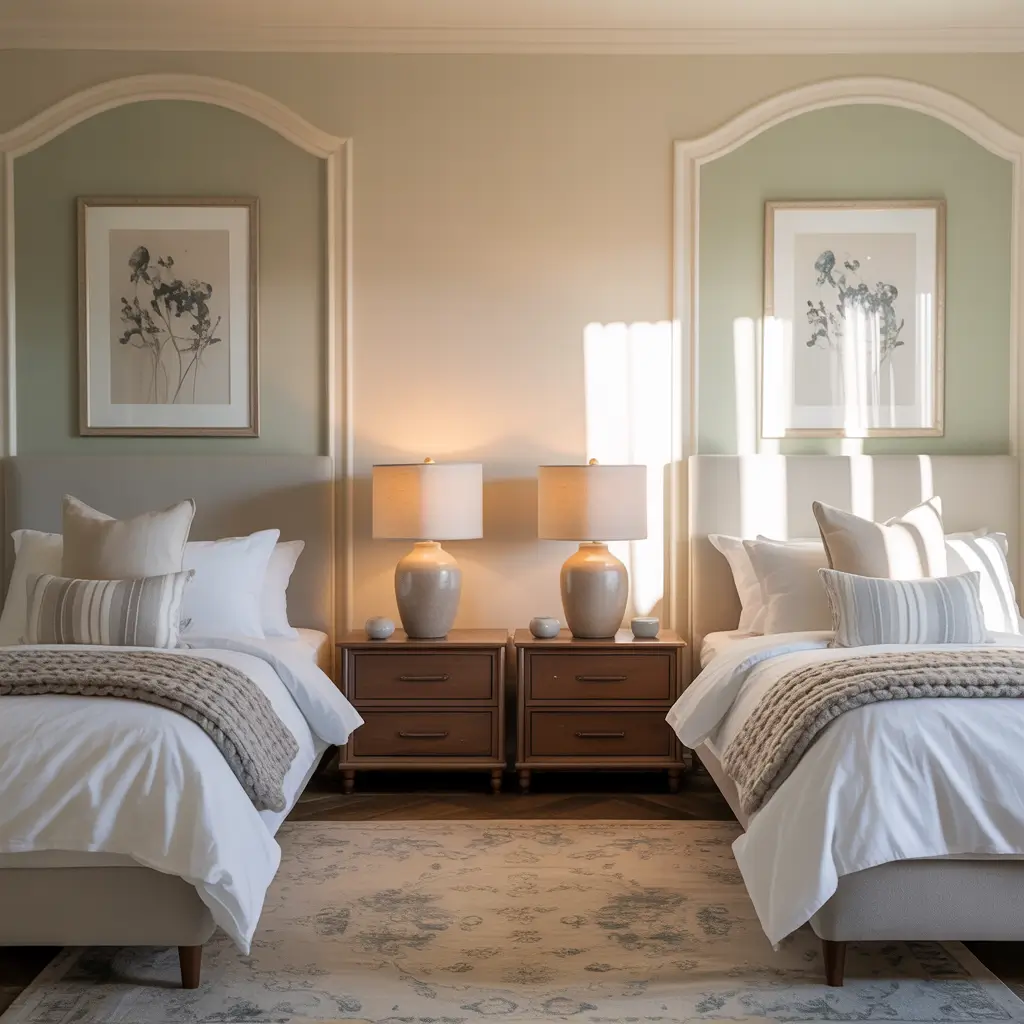
Twin beds might conjure images of 1950s sitcoms, but this classic layout is having a serious moment. Whether you’re designing a guest room, kids’ room, or even a sophisticated master suite, symmetrical twin beds create visual harmony that’s hard to beat.
The Power of Pairs
Two beds positioned identically along a wall create instant balance that our brains find inherently pleasing. Space them at least 24 inches apart—enough room for a shared nightstand or small table between them. This gap prevents the beds from looking cramped while maintaining their visual connection.
The symmetry extends beyond just the beds. Matching nightstands, identical lamps, coordinated bedding—everything works in pairs. This doesn’t mean boring, though. You can play with color and pattern while maintaining that balanced structure.
Smart Spacing Strategies
In smaller rooms, consider placing twin beds in an L-configuration. One bed along each wall meeting in a corner creates an interesting dynamic while maximizing floor space. This works particularly well in kids’ rooms where the corner becomes a natural play zone.
For larger rooms, floating both twin beds away from walls creates a hotel-suite vibe. Position them perpendicular to the main wall with a console table behind both headboards. This arrangement feels sophisticated and intentional, not like a children’s room.
When Twins Make Sense
Guest rooms practically beg for twin beds. They offer flexibility for various guest combinations while looking pulled-together when empty. I converted my guest room to a twin setup, and it’s been brilliant—couples push them together, singles spread out, and friends each get their own space.
Even master bedrooms can rock the twin look. Couples with different sleep schedules or preferences might find separate beds revolutionary. Plus, you can still push them together when you want—best of both worlds.
3. L-Shaped Large Bedroom Design

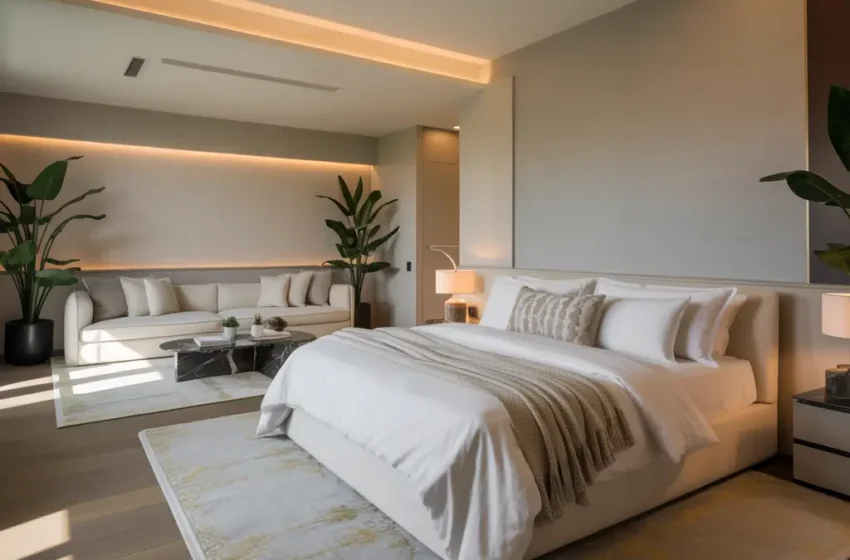
Got a spacious bedroom that feels empty no matter how you arrange it? The L-shaped layout creates defined zones that make large rooms feel cozy and functional rather than cavernous.
Creating Distinct Zones
The L-shaped design divides your bedroom into two distinct areas. The sleeping zone occupies one “leg” of the L, while the other becomes a sitting area, workspace, or dressing zone. This division happens through furniture placement, not walls, maintaining openness while creating purpose.
Position your bed along one wall as the anchor of your sleeping zone. Add nightstands, maybe a bench at the foot. This cluster of bedroom furniture establishes the primary zone clearly.
The Secondary Space
The other leg of your L becomes whatever you need most. Love reading? Create a cozy library corner with a comfortable chair, side table, and bookshelf. Need workspace? A desk and chair transform it into a home office that doesn’t interfere with sleep vibes.
My master bedroom uses this layout with the bed zone along the north wall and a sitting area in the L extension. Two chairs and a small table near the windows create a morning coffee spot that feels completely separate from the sleeping area. It’s like having a suite without building any walls.
Connecting the Zones
The trick to successful L-shaped layouts lies in visual connection. Use area rugs to define each zone while maintaining color consistency. A large rug under the bed area and a complementary smaller rug in the secondary zone create cohesion without confusion.
Lighting plays a huge role too. Different lighting for each zone—soft and dim for sleeping, brighter task lighting for working or reading—reinforces the separate purposes while maintaining overall bedroom unity.
Also Read: 10 Stylish Small Bedroom Layout Ideas for Modern Homes
4. Corner Wardrobe Optimization Layout
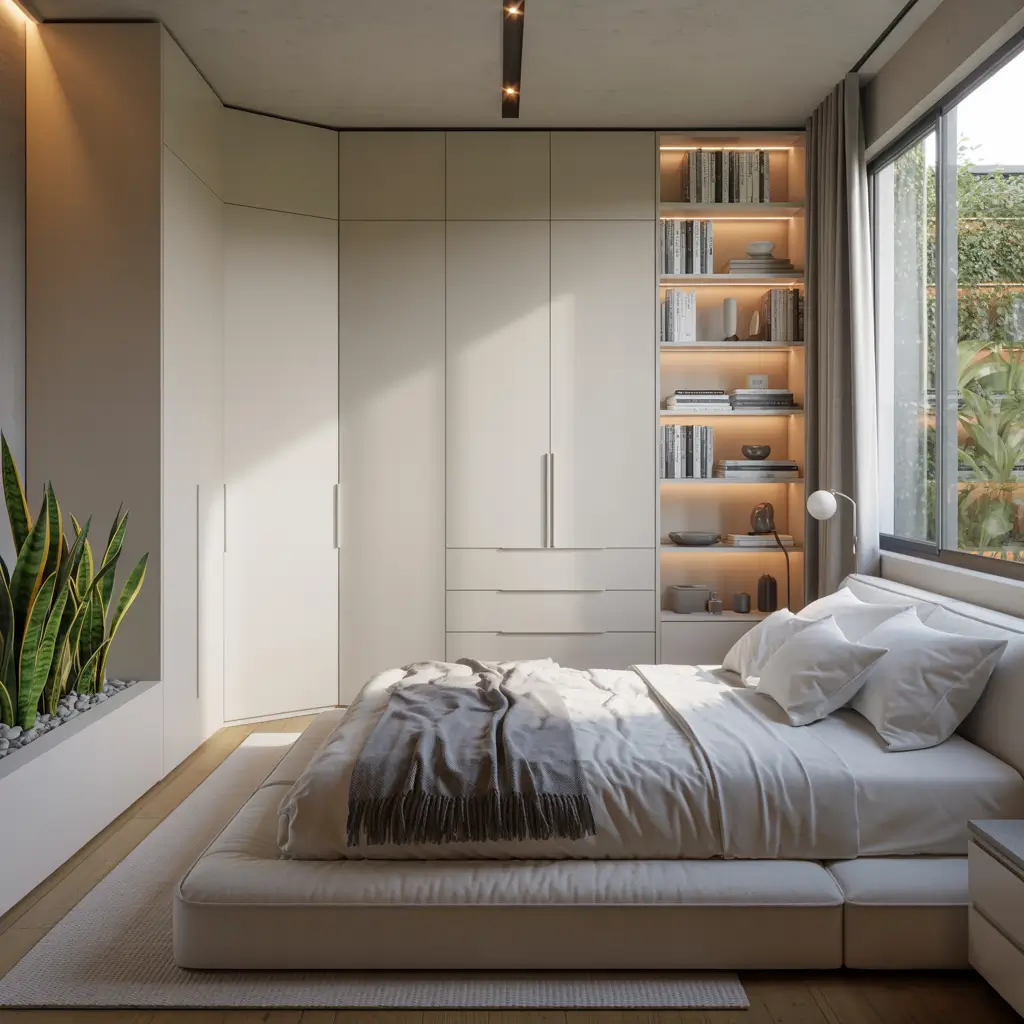
Corners are the Bermuda Triangle of bedroom design—stuff goes in and never quite fits right. The corner wardrobe optimization layout solves this problem by making the corner your storage command center.
Maximizing Dead Space
Position a wardrobe or armoire at a 45-degree angle across a corner. This creates a striking focal point while maximizing storage in previously wasted space. The diagonal placement also softens the room’s angles, making it feel less boxy.
Behind the angled wardrobe, you’ve created a hidden storage nook. Perfect for storing suitcases, seasonal items, or anything you don’t need daily access to. It’s like finding free storage space you didn’t know existed.
Building Around the Corner
With your corner wardrobe as anchor, arrange other furniture to complement this angle. Position your bed parallel to one wall but angled slightly toward the corner wardrobe. This creates visual flow that draws the eye around the room naturally.
A dresser can sit along the adjacent wall, creating an L-shape with the corner wardrobe. This furniture arrangement defines a clear dressing zone while maintaining easy access to both storage pieces.
Why Corners Work
I discovered corner placement accidentally when my wardrobe wouldn’t fit flat against any wall in my first apartment. That 45-degree angle not only solved the fit issue but made my tiny bedroom feel significantly larger. The diagonal line tricks your eye into perceiving more space than actually exists.
Corner wardrobes also create interesting shadow lines and depth that flat-against-wall placement can’t achieve. Plus, that hidden storage triangle behind? Total game-changer for holiday decorations and out-of-season clothes.
5. Small Room Multifunction Layout
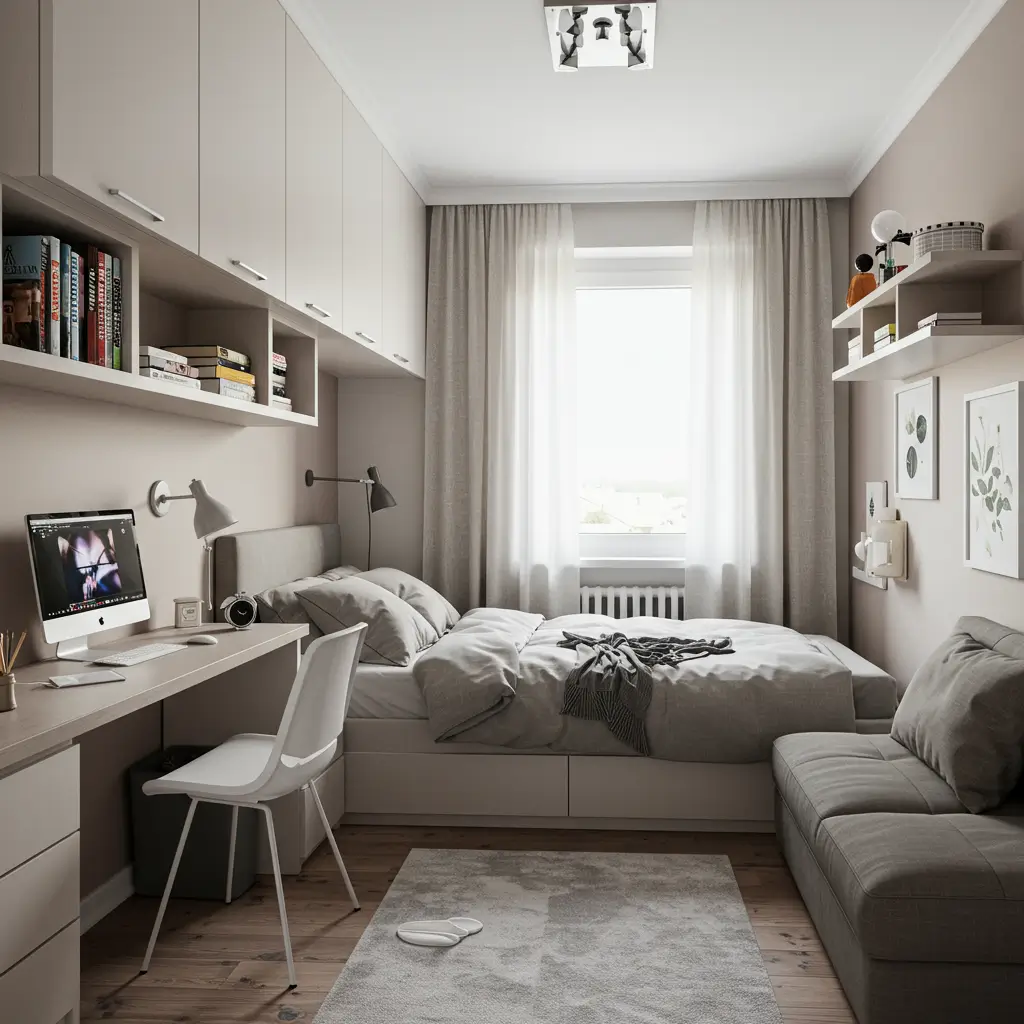
Small bedrooms demand furniture that works overtime. This layout squeezes maximum function from minimal square footage without feeling cramped or chaotic.
The Hero Pieces
Your bed becomes command central in small room layouts. Choose one with built-in storage—drawers underneath, shelving in the headboard, or a lift-up mattress revealing hidden storage. This single piece replaces multiple furniture items.
Wall-mounted nightstands or floating shelves free up floor space while providing necessary surface area. Even better, install swing-arm wall lamps that eliminate the need for table lamps entirely.
Vertical Victory
Think up, not out. Tall, narrow dressers take up less floor space than wide, low ones while offering similar storage capacity. Floor-to-ceiling shelving along one wall creates massive storage without crowding the room.
Mount your TV on the wall instead of using an entertainment center. Install hooks behind the door for robes and bags. Every vertical surface becomes potential storage, leaving your floor clear for actual living.
Double-Duty Everything
That bench at your bed’s foot? It better have storage inside. Your mirror? Mount it on a jewelry cabinet. Even your headboard can incorporate shelving or hidden compartments. In small bedrooms, single-function furniture is a luxury you can’t afford.
FYI, the best small room investment I ever made was a storage ottoman that serves as seating, a coffee table, and holds my entire collection of extra blankets. Multi-functional furniture isn’t just smart—it’s essential for small space sanity.
6. Open Space Zen Bedroom Plan

Sometimes the best furniture layout is… less furniture. The Zen bedroom plan embraces minimal pieces and maximum open space, creating a serene environment that promotes actual rest.
Essential Pieces Only
This layout includes only what you absolutely need: a bed, one or two small nightstands, and minimal storage. Everything else lives elsewhere. That chair you never sit in? Gone. The dresser stuffed with clothes you don’t wear? Donated.
Position your bed low to the ground—platform beds or even mattresses on simple frames work perfectly. Low furniture maintains sight lines and makes ceilings feel higher, contributing to that spacious Zen feeling.
Strategic Emptiness
The magic of Zen layouts lies in what’s not there. Open floor space isn’t wasted—it’s intentional breathing room that allows energy (and you) to move freely. This emptiness feels luxurious rather than sparse when done right.
Keep pathways extra wide. Instead of the minimum 24 inches, aim for 36 or more. This generous spacing creates a sense of flow that makes your bedroom feel like a meditation retreat rather than just a sleeping space.
Natural Elements
Replace traditional furniture pieces with natural alternatives. A live-edge wood slab becomes a minimalist nightstand. A meditation cushion substitutes for a chair. These organic elements maintain function while enhancing the Zen aesthetic.
My friend transformed her chaotic bedroom into a Zen sanctuary, and the difference amazed me. She kept only her bed and two floating nightstands. The resulting space feels twice as large and infinitely more peaceful. Sometimes less really is more.
Also Read: 10 Creative Plaster Ceiling Design Ideas That Wow Guests
7. Window-Focused Cozy Layout
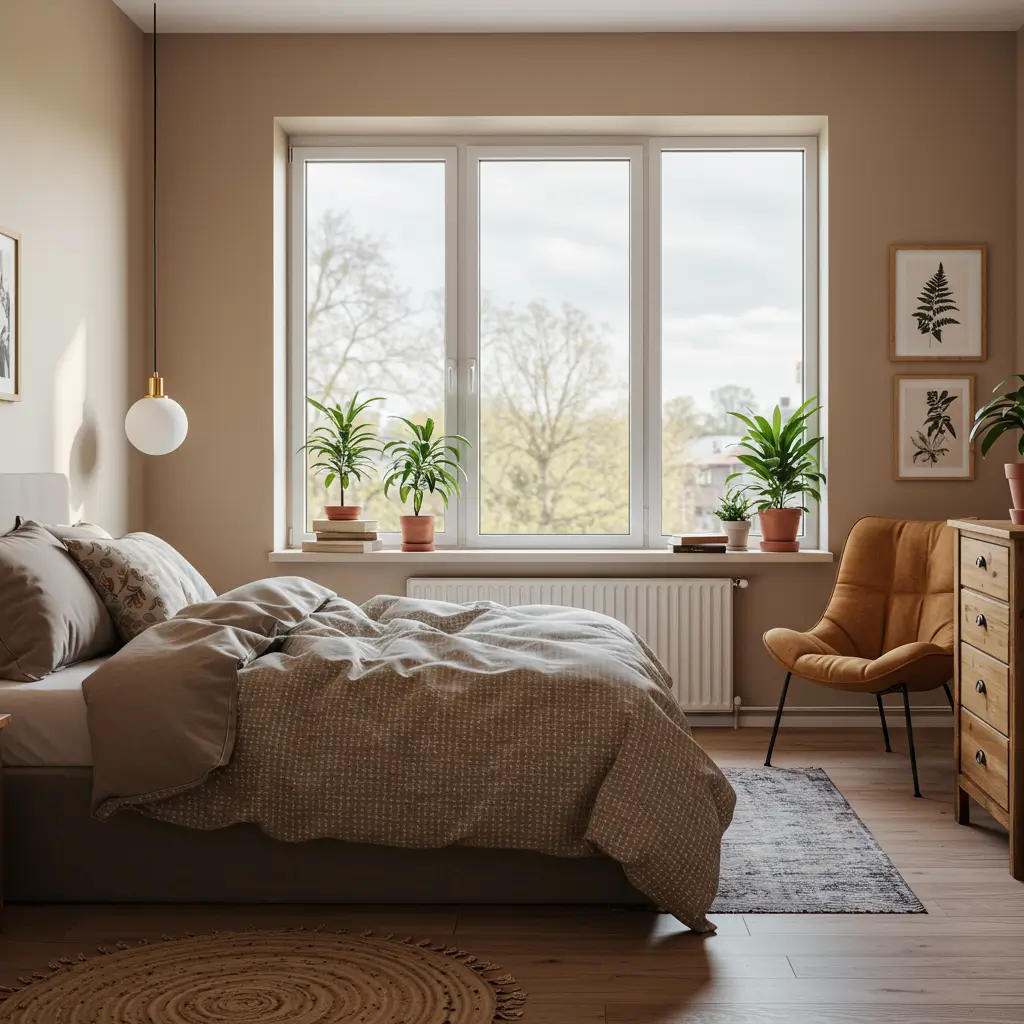
Natural light changes everything. This layout positions furniture to maximize daylight and views, creating a bedroom that feels connected to the outside world.
Bed Placement Strategy
Position your bed perpendicular to the window rather than directly under or facing it. This placement lets you enjoy natural light without getting blinded by morning sun. You wake up to gentle, indirect light—nature’s alarm clock at its finest.
If you have multiple windows, angle your bed to capture light from different directions throughout the day. Morning light from the east, afternoon glow from the west—your bedroom becomes a sundial of sorts.
Creating Window Nooks
That space right by the window? Perfect for a reading chair or small desk. Position a comfortable chair at an angle that catches optimal light for reading. Add a small side table for your coffee and current book stack.
Window seats with built-in storage maximize awkward window spaces. Even without built-ins, a storage bench under a window creates a cozy spot while hiding clutter. These window-focused areas become natural magnets for relaxation.
Supporting the View
Arrange other furniture to maintain clear sight lines to windows. Keep tall pieces like wardrobes and dressers on walls perpendicular to windows rather than blocking any natural light or views.
I rearranged my bedroom to focus on my single window, and it transformed the entire space. That window corner with a chair has become my favorite spot for morning coffee and evening reading. Never underestimate the power of a good view, even if it’s just of your neighbor’s tree.
8. Walkaround Bed Luxury Setup
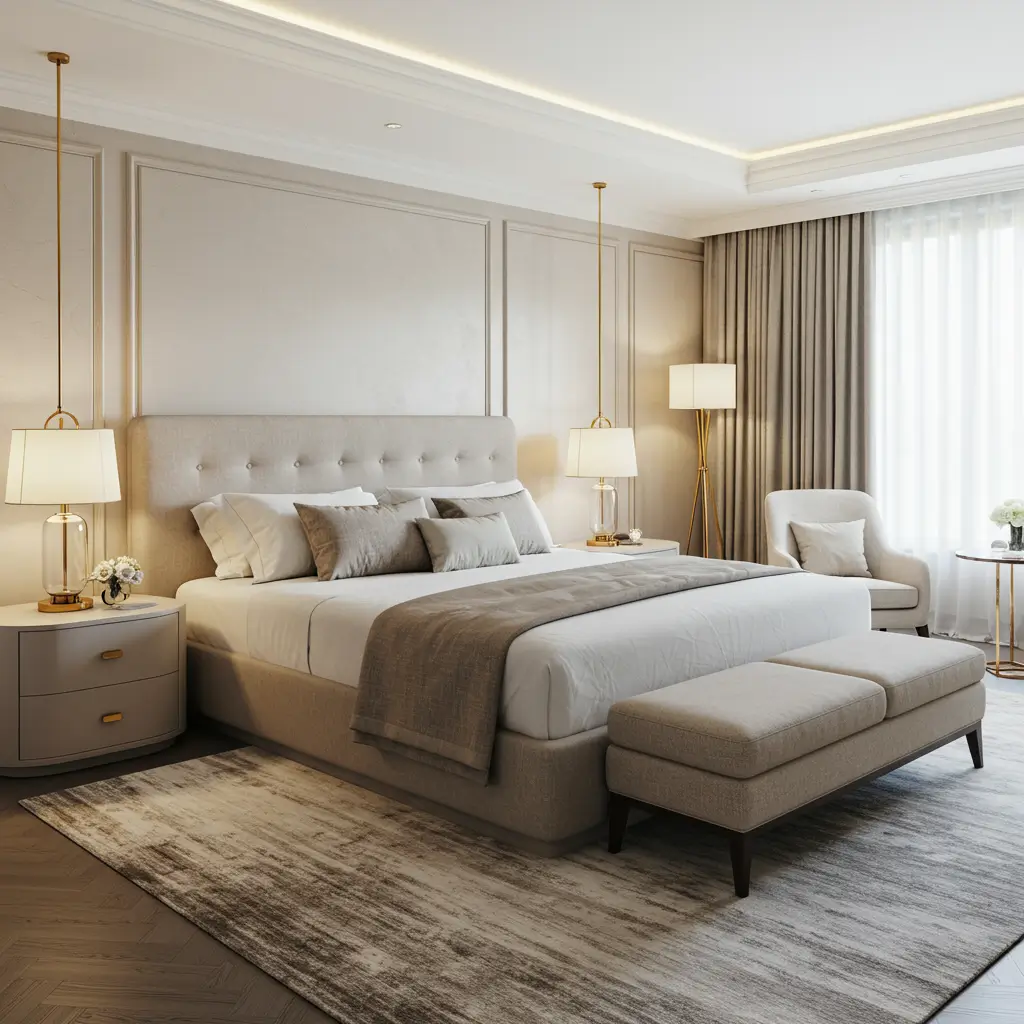
Want to feel like you’re living in a five-star hotel? The walkaround bed layout creates that luxury suite experience by ensuring clear access to all sides of your bed.
The Island Effect
Center your bed in the room with at least 30 inches of clearance on all sides. This might mean choosing a smaller bed size, but the payoff in perceived luxury is enormous. You’re creating a bedroom where the bed truly rules as the centerpiece.
This layout only works in bedrooms with adequate square footage—typically 14×14 feet minimum for a queen bed. But if you have the space, the impact is immediate and impressive.
Symmetrical Support
With walkaround access, symmetry becomes crucial. Matching nightstands on both sides, identical lamps, coordinated artwork—everything balances perfectly around your bed island. This creates the polished, intentional look of high-end hotel design.
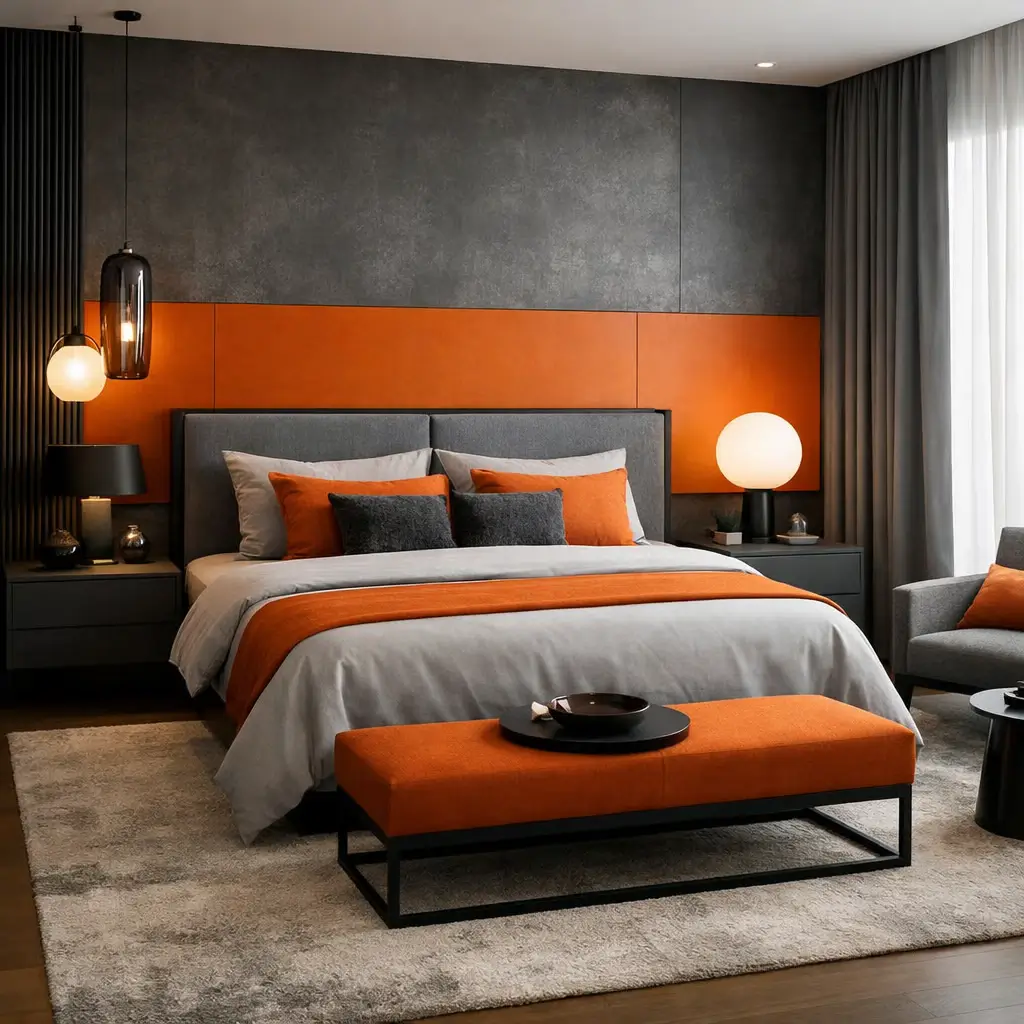
A bench or ottoman at the foot of the bed completes the luxury setup. Choose something upholstered that complements your bedding. This piece provides seating and a surface for laying out clothes or bags.
Strategic Storage
Since your bed floats in the room, other furniture needs strategic placement along walls. A long, low dresser works better than tall pieces that might overwhelm the space. Position it opposite the bed or along a side wall.
Use the wall behind your bed for drama—a statement headboard, bold wallpaper, or dramatic art. This becomes your bedroom’s focal wall, emphasized by the bed’s prominent position.
9. Compact Studio Bedroom Arrangement
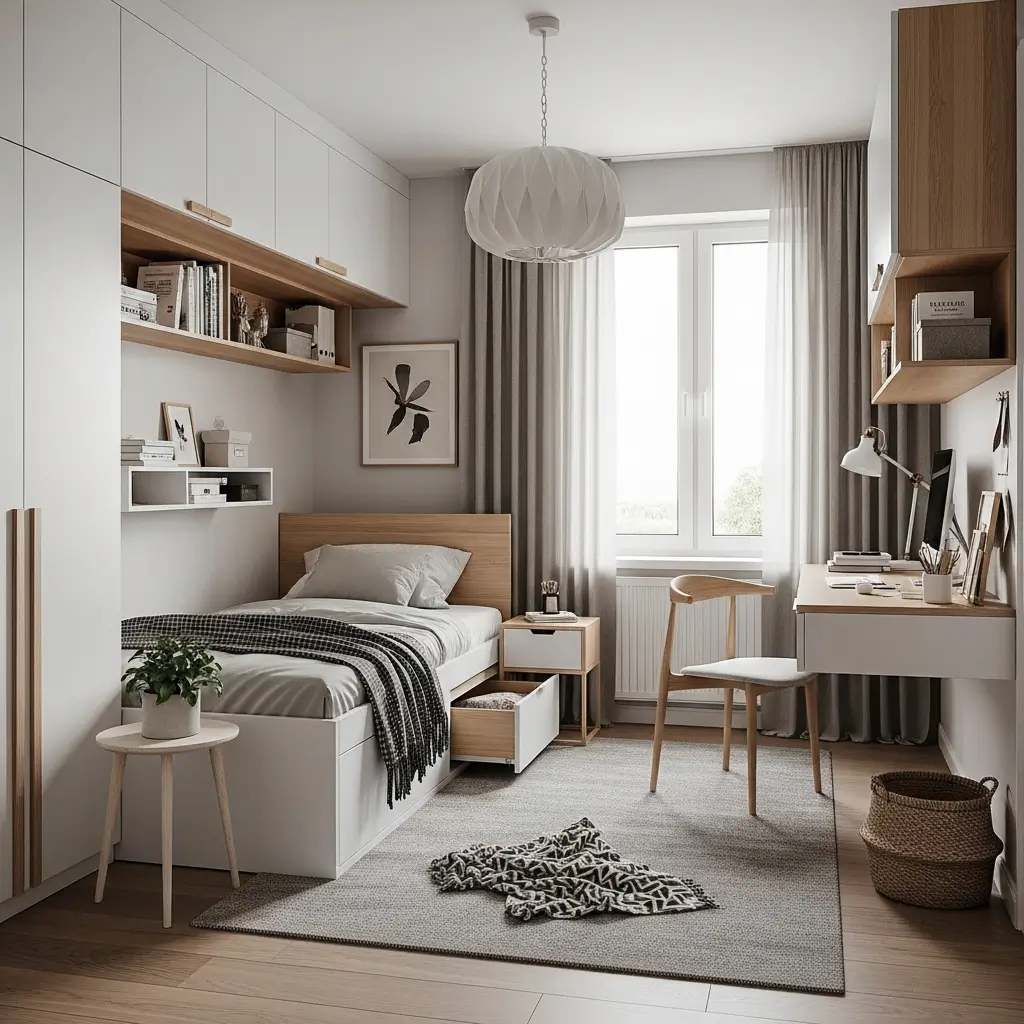
Studio apartments blur the lines between bedroom and living space. This arrangement creates a defined sleeping area without walls, using furniture placement to establish boundaries.
Defining Sleep Space
Position your bed in the corner farthest from the entrance and kitchen. This creates maximum psychological distance between sleeping and active areas. Your bed should feel like a destination, not something you trip over walking to the fridge.
Use a bookshelf, curtain, or even a strategically placed dresser to create a visual barrier. This doesn’t need to be floor-to-ceiling—even a low bookshelf creates enough separation to trick your brain into recognizing distinct zones.
Multipurpose Positioning
Every piece of furniture needs to earn its spot twice over. Your dresser might double as a TV stand. A storage bench provides seating and hides linens. That console table behind your sofa? It’s also your nightstand.
I lived in a 400-square-foot studio for two years and learned that furniture placement is everything. My bed sat behind a bookshelf room divider, creating a “bedroom” that felt completely separate from my living space despite being in the same room.
Scale Matters
Choose furniture scaled appropriately for studio living. A full bed often works better than a queen, leaving more room for living. Low-profile pieces maintain sight lines and prevent the space from feeling cramped.
Avoid bulky furniture that dominates the space. Legs on everything—bed, dresser, side tables—creates visual lightness that keeps your studio feeling open despite the furniture density.
Also Read: 10 Unique Down Ceiling Design Ideas and Modern Decor Hacks
10. Dual-Purpose Work & Sleep Layout
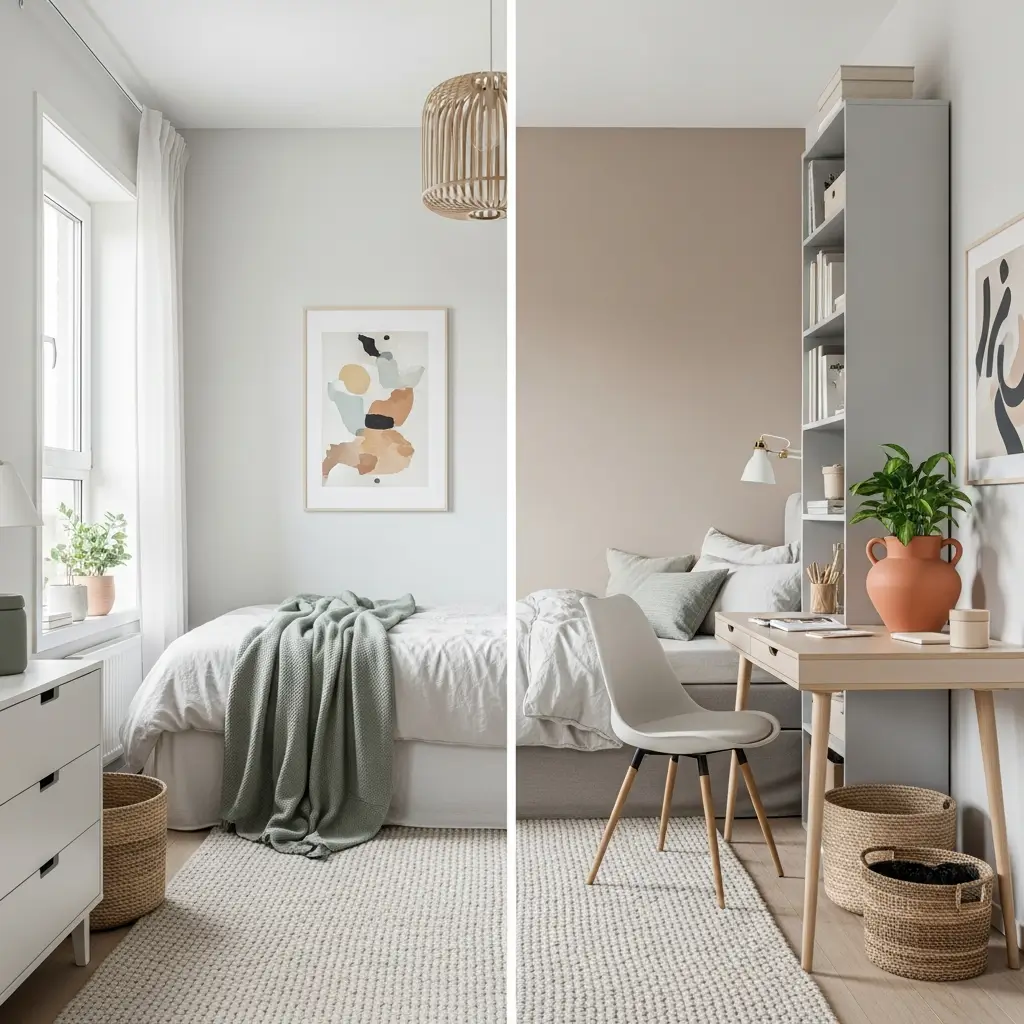
Remote work changed everything, including how we use our bedrooms. This layout successfully combines workspace and sleep space without letting one function compromise the other.
Separation Strategies
Position your desk facing away from the bed. Looking at your bed while working triggers rest mode, and staring at your desk from bed keeps your brain in work mode. Physical orientation matters more than you’d think.
Create visual barriers between work and sleep zones. A bookshelf, curtain, or even a tall plant can provide enough separation. The goal is preventing direct sight lines between your pillow and your laptop.
Smart Desk Placement
Corner desks maximize space while creating a defined work zone. The corner position naturally separates your workspace from the sleeping area while providing ample surface area for actual work.
If possible, position your desk near a window for natural light during work hours. This also helps maintain work-life boundaries—when the sun sets, work ends. Natural light cues help your brain transition between modes.
Maintaining Bedroom Vibes
Choose a desk that complements your bedroom furniture rather than screaming “office.” Wood tones that match your nightstands, or a sleek console table that doubles as a desk, maintains bedroom aesthetics while providing function.
Hide work supplies in attractive storage. Decorative boxes, stylish filing systems, or a small cabinet keeps office supplies accessible but invisible. Your bedroom should still feel like a bedroom, even with a workspace included 🙂
Making Your Furniture Layout Work
Here’s the thing about bedroom furniture layouts—there’s no universal solution. Your perfect arrangement depends on your room’s size, shape, and quirks, plus how you actually live in the space.
Start with your biggest pain point. Constantly bumping into furniture? Try the floating or walkaround layouts. Need more storage? Corner wardrobe or multifunction layouts might be your answer.
Room feeling chaotic? The Zen approach could bring the peace you’re seeking.
Don’t be afraid to experiment. Push furniture around, try unconventional angles, break the “rules” if something works better for you. That weird layout that makes no sense on paper might be perfect for your specific space.
Remember, furniture arrangement isn’t permanent. Seasons change, needs evolve, and sometimes you just want something different. The beauty of furniture layouts is that they’re completely changeable—no renovation required.
Most importantly, trust your instincts. If a layout feels good to you, it’s probably right, regardless of what any design “expert” says. Your bedroom should support your life, your habits, and your comfort. Everything else is just furniture :/
Now stop reading and start rearranging. Your perfect bedroom furniture layout is waiting to be discovered!