12 Chic Floating Shelves Living Room Ideas for Modern Interiors
- Floating Shelves
 Ben
Ben- 0
- 36 minutes read
Your living room walls are just sitting there, begging for something more exciting than that generic “Live, Laugh, Love” sign from Target.
I get it – I spent years staring at blank walls in my apartment, thinking I needed some massive entertainment center or expensive artwork to make the space feel complete.
Then I discovered floating shelves, and honestly, it changed everything.
Here’s the thing: floating shelves aren’t just trendy Instagram props. They’re functional, versatile, and can completely transform how your living room looks and works. I’ve installed them in three different homes now, and each time, they’ve solved storage problems while making the space look way more put-together than it actually is.
Whether you’re dealing with a tiny apartment where every square inch counts, or you’ve got a spacious living room that feels a bit too empty, these 12 floating shelf ideas will give you the inspiration (and confidence) to finally do something with those walls.
Trust me, once you see what these bad boys can do, you’ll wonder why you waited so long.
1. Minimalist Floating Shelves Above the Sofa
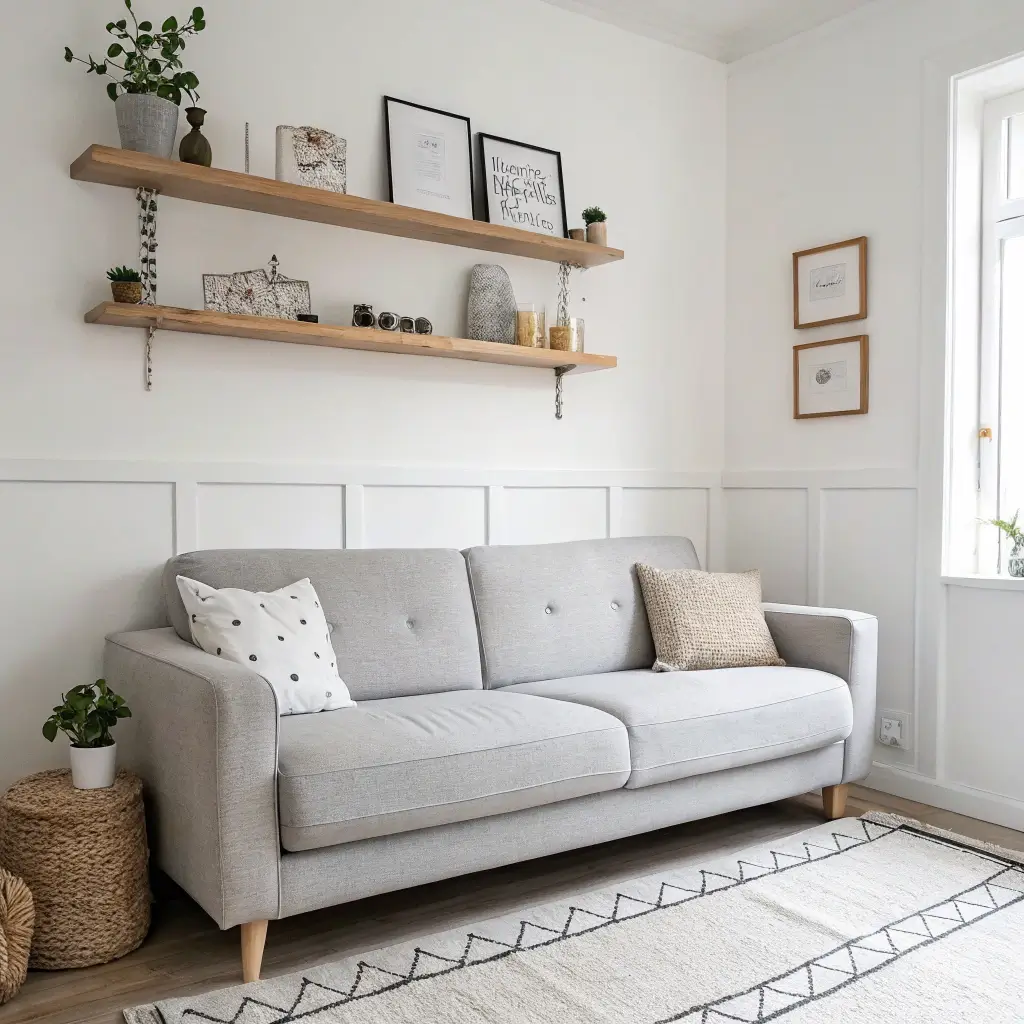
That massive wall above your sofa? Yeah, the one that’s been mocking you since you moved in? It’s practically screaming for some minimalist floating shelves. I installed three sleek white shelves above my couch last year, and suddenly my living room went from “college dorm vibes” to “actual adult lives here.”
The beauty of going minimalist with your above-sofa shelves lies in the simplicity. You don’t need to overcomplicate things – just clean lines and careful curation. My shelves hold exactly seven items total, and somehow that restraint makes everything look more expensive than it actually is.
Getting the Spacing Right
Here’s what nobody tells you about installing shelves above your sofa: the spacing makes or breaks the whole look. I learned this the hard way when my first attempt looked like a ladder leaning against the wall. Not cute.
Space your shelves 12-18 inches apart for the best visual flow. I went with 15 inches between each shelf, which gives enough room to display books vertically without looking cramped. The bottom shelf sits about 10 inches above the sofa back – high enough that nobody’s going to bonk their head, but low enough that I can actually reach it without a stepladder.
Make sure your shelf arrangement doesn’t extend beyond the width of your sofa. Mine are about 6 inches shorter on each side, which creates this nice framed effect that looks intentional rather than random.
What to Actually Put on Them
Less is definitely more when you’re going for that minimalist vibe. I keep three books on one shelf (always odd numbers – it’s a design thing), a small succulent on another, and a single piece of pottery on the third. The empty space around each item is just as important as the items themselves.
Stick to a consistent color palette to maintain that clean look. Everything on my shelves is either white, black, or natural wood. No rainbow of spines or random colored objects to mess up the zen.
2. Floating Shelves Framing the Living Room TV
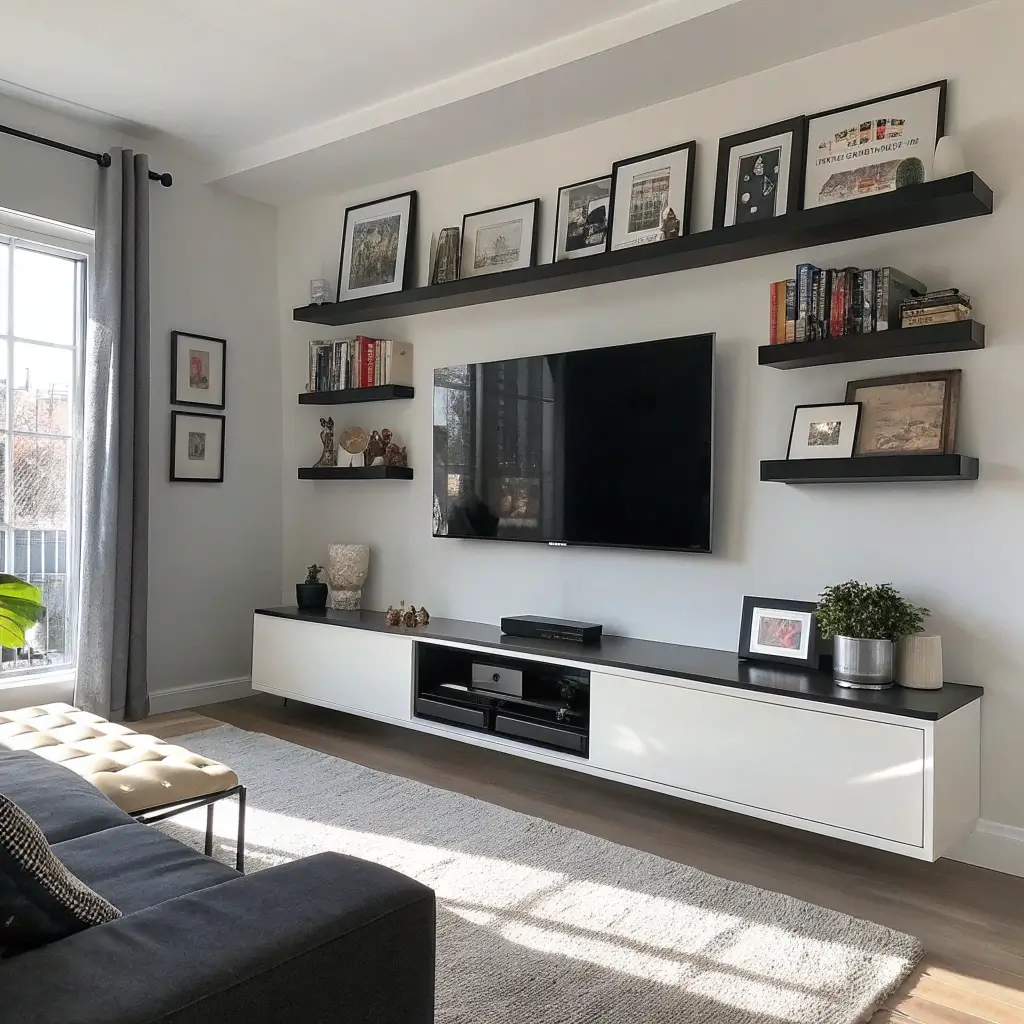
Remember when everyone had those massive entertainment centers that ate up half the living room? Yeah, those days are over. I ditched mine for floating shelves flanking my TV, and it’s the best decision I’ve made for my living room.
Creating a frame around your TV with floating shelves turns that black rectangle into an actual design element. Instead of being this tech eyesore, it becomes part of a cohesive wall arrangement that looks purposeful.
The Layout That Works
Mount your shelves so they extend slightly beyond your TV’s width on each side. My 55-inch TV has shelves that reach about 8 inches past each edge, creating a balanced frame that doesn’t feel too tight or too sprawling.
Keep the shelves at different heights to add visual interest. I’ve got two on the left at different levels and three on the right. The asymmetry actually makes the arrangement more dynamic than perfectly matched shelves would.
Don’t place shelves directly above or below your TV if you can help it. I tried this initially, and it just created too much visual weight in one spot. The side placement distributes everything better and doesn’t interfere with your viewing experience.
Styling Around Your Screen
Choose items that complement rather than compete with your TV. I learned quickly that anything too bright or busy near the screen becomes distracting when you’re trying to watch something. Neutral colors and simple shapes work best here.
Mix functional and decorative elements. My TV-adjacent shelves hold a combination of books, small plants, and a few decorative boxes that secretly store remotes and gaming controllers. Everything looks intentional, but half of it is actually hiding ugly necessities.
3. Corner Floating Shelves for Small Living Rooms
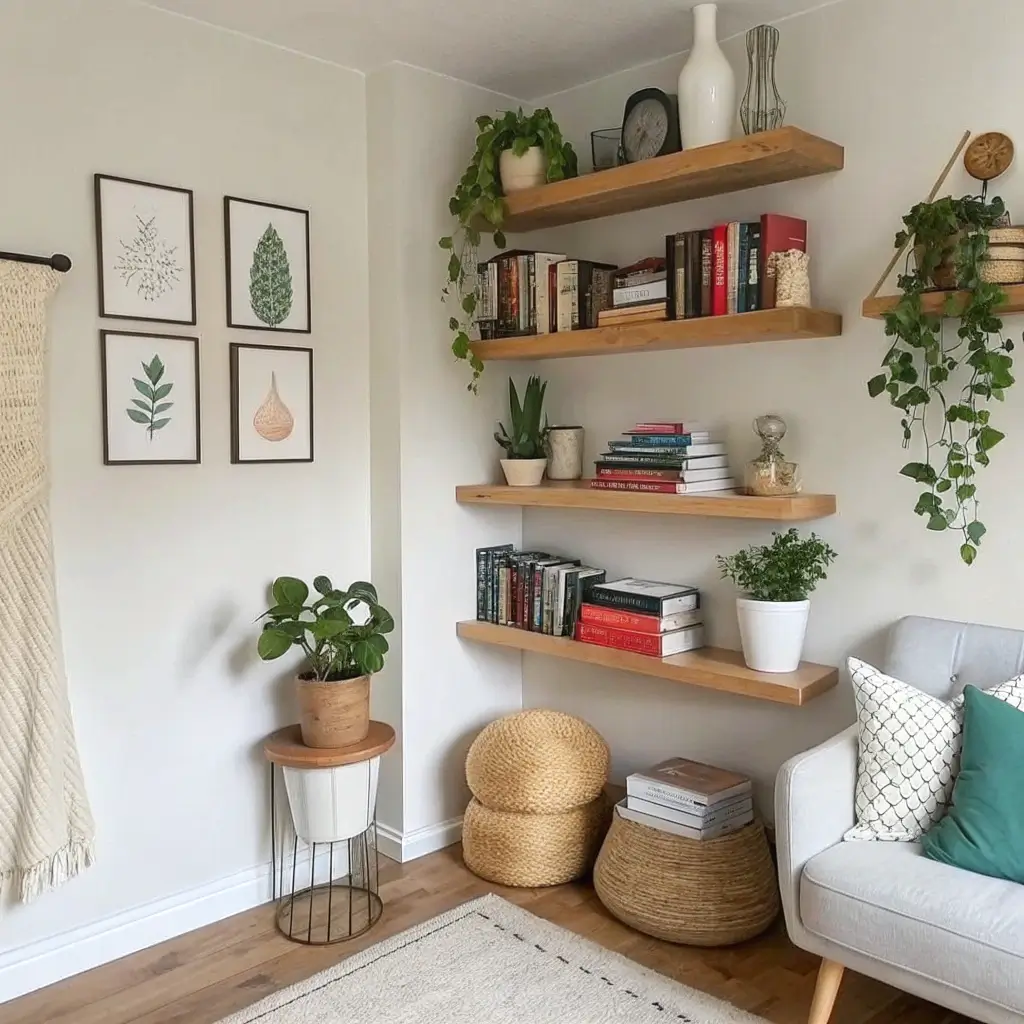
Corners are the most underutilized space in any living room, especially when you’re working with limited square footage. I installed corner floating shelves in my 600-square-foot apartment, and suddenly I had storage space I didn’t even know existed.
Corner shelves work magic in small spaces because they don’t protrude into the room like traditional furniture would. They’re using space that’s literally just sitting there doing nothing.
Making Corners Work Hard
Install your corner shelves at varying heights to create visual interest. I have three shelves in my corner, starting about 3 feet from the floor and going up at 16-inch intervals. This creates a ladder effect that draws the eye upward, making my low ceilings feel higher.
Choose shelves specifically designed for corners rather than trying to make regular shelves work. Trust me on this – I tried to DIY it with regular shelves and brackets, and the whole thing looked wonky. Purpose-built corner shelves have the right angle and support system.
What Works in Corners
Keep your corner shelf styling simple since these shelves are typically smaller than wall-mounted ones. I use mine for a cascading plant on the top shelf, a few favorite books in the middle, and a small decorative object on the bottom.
Consider the viewing angle when styling corner shelves. They’re visible from multiple parts of the room, so make sure they look good from different perspectives. I learned this after realizing my “perfectly styled” corner looked amazing from the sofa but weird from the dining area.
Also Read: 10 Creative Floating Shelves Ideas for Blank Walls
4. Asymmetrical Floating Shelf Wall Design
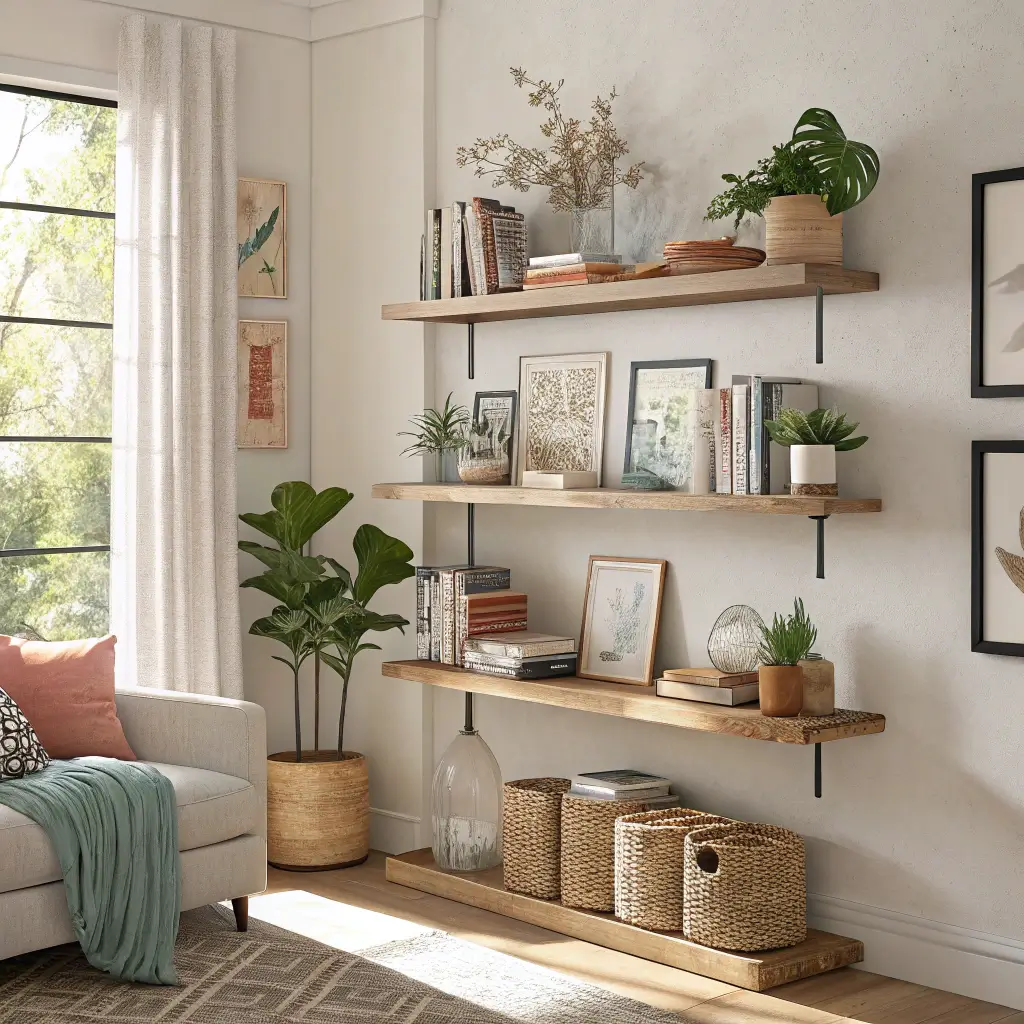
Symmetry is overrated. There, I said it. My asymmetrical shelf wall gets more compliments than anything else in my living room, and it took way less planning than trying to make everything perfectly balanced.
Asymmetrical arrangements feel more organic and collected-over-time rather than “I bought this as a set from West Elm.” They add personality and visual interest that perfectly matched shelves just can’t achieve.
Creating Intentional Asymmetry
Start with one longer shelf as your anchor, then build around it with different lengths. My main shelf is 48 inches, with shorter shelves of 24, 36, and 18 inches arranged around it at different heights. The key is making it look purposeful rather than random.
Keep some element consistent to tie everything together. Even though my shelves are different sizes and positions, they’re all the same wood tone. This creates cohesion within the chaos.
Think about visual weight distribution. While the arrangement isn’t symmetrical, the “weight” should still feel balanced. I have more shelves on the left side, but the items displayed on the right are slightly larger, which evens things out.
Styling Your Asymmetrical Display
Let each shelf have its own personality. My longest shelf holds books, the medium ones display plants and ceramics, and the smallest showcases a single special object. Each serves a different purpose but works within the overall composition.
Use consistent spacing between shelves even if their positions vary. I maintain about 14 inches between each shelf, regardless of their lengths or positions. This invisible grid helps the arrangement feel intentional.
5. Floating Shelves with Plants for a Cozy Look
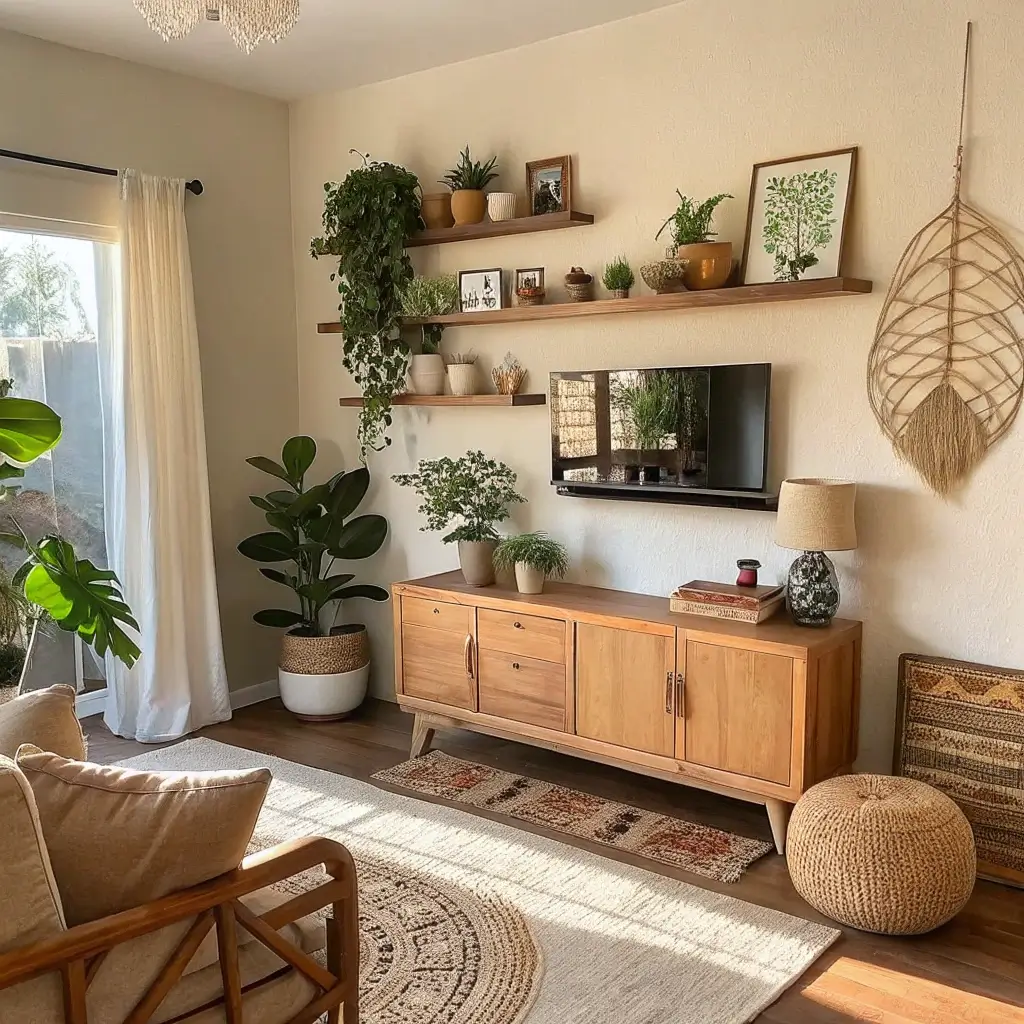
Want to turn your living room into an urban jungle without sacrificing floor space? Floating shelves loaded with plants are your answer. I’ve got what my friends call a “plant wall,” and honestly, it’s the best thing I’ve ever done for my mental health and my living room’s vibe.
Plants on floating shelves create layers of visual interest while literally bringing life to your walls. Plus, they’re constantly changing and growing, so your display never gets stale.
Choosing the Right Plants
Pick plants based on the light your shelves receive. My south-facing wall gets tons of light, so I can grow almost anything. But my friend tried copying my setup on a north wall and killed three plants before realizing light matters. Oops.
Trailing plants create the most drama. My pothos cascades down from the highest shelf, creating this waterfall effect that everyone notices immediately. String of pearls and philodendrons work great for this too.
Mix plant sizes and types for variety. I combine tall snake plants with bushy ferns and tiny succulents. The variety prevents that “plant shop display” look and feels more natural.
Plant Shelf Logistics
Always use saucers or waterproof containers. Water damage on floating shelves is no joke – I learned this after destroying a shelf with an overzealous watering session. Now everything sits in a proper tray.
Consider weight when loading up with plants. Soil and water are heavier than you think. My plant shelf required extra-sturdy brackets after the standard ones started sagging. Better safe than sorry when you’re dealing with potential plant avalanches.
Plan for growth when spacing your plants. That cute little monstera will become a monster (see what I did there?). Leave room for plants to spread out, or be prepared to reorganize every few months.
6. Modern Black Floating Shelves Statement Wall
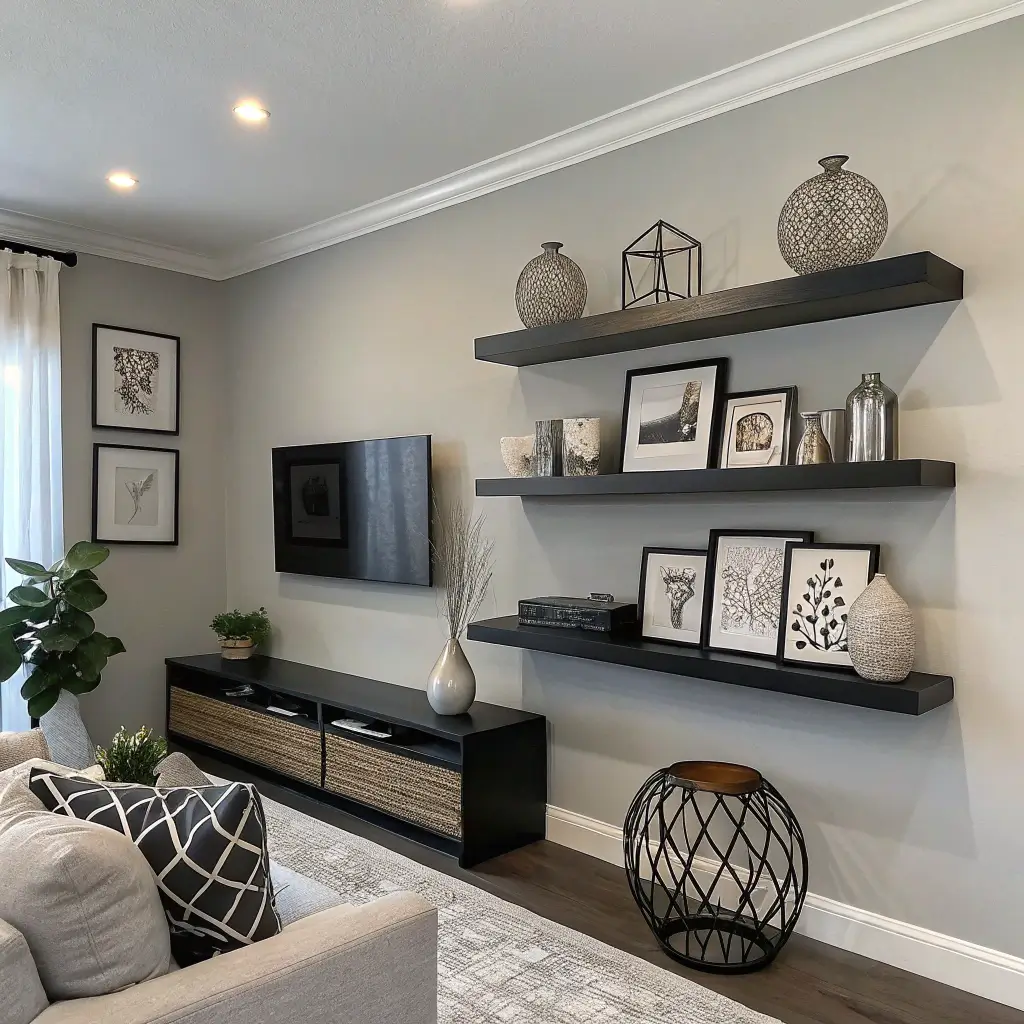
Black floating shelves are having a moment, and I’m here for it. I installed a grid of black shelves on my white living room wall, and it looks like something straight out of a design magazine.
Black shelves make a bold statement without overwhelming the space. They’re dramatic enough to be interesting but neutral enough to work with any decor style.
Making Black Shelves Pop
Contrast is everything with black shelves. They need a light-colored wall to really stand out. My white walls make the black shelves look crisp and modern. Black on black just disappears – learned that from a failed attempt in my previous apartment.
Keep the shelf thickness proportional to your wall size. Chunky black shelves can overpower a small wall, while super thin ones might look flimsy on a large wall. My 2-inch thick shelves hit the sweet spot for my 12-foot wall.
Space black shelves generously. They create strong visual lines, so cramming them together creates a prison bar effect. Not the vibe we’re going for.
Styling Black Shelves
Choose lighter objects to create contrast. White ceramics, light wood, and glass all pop beautifully against black shelves. I avoid dark objects that would disappear into the shelf.
Add metallic accents for glamour. Gold and brass pieces look especially stunning on black shelves. My brass bookends and copper plant pots add just enough shine without going full disco.
Keep it edited. Black shelves are already making a statement, so you don’t need to overdo the styling. I follow a “less is more” approach and let the shelves themselves be part of the design.
Also Read: 10 Chic Floating Shelves Bathroom Ideas for Elegant Spaces
7. Floating Shelves with Hidden Storage Style

Here’s a secret: not everything in your living room needs to be on display. I found these floating shelves with hidden compartments, and they’re basically the Swiss Army knives of storage.
Hidden storage shelves look like regular floating shelves but conceal storage inside. It’s perfect for hiding remotes, chargers, and all that random stuff that clutters up your living room.
Types of Sneaky Storage
Drawer shelves are my personal favorite. They look like solid shelves but pull out to reveal storage. I keep all my gaming stuff in one – controllers, games, cables – completely hidden but easily accessible.
Flip-top shelves open upward for storage access. These work great for things you don’t need daily but want nearby. Mine holds extra throw blankets and seasonal decor.
Some shelves have hidden compartments behind a sliding panel. Super sleek and nobody even knows the storage exists. I use mine for important documents and valuables.
Making Hidden Storage Work
Don’t overload hidden compartments. Just because you can’t see the clutter doesn’t mean the shelf can support unlimited weight. I learned this when my overloaded drawer shelf started sagging. Not cute.
Choose hidden storage shelves that match your decor style. They come in everything from rustic wood to modern lacquered finishes. Mine are walnut to match my coffee table, creating a cohesive look.
8. Rustic Wood Floating Shelves for Warm Living Rooms
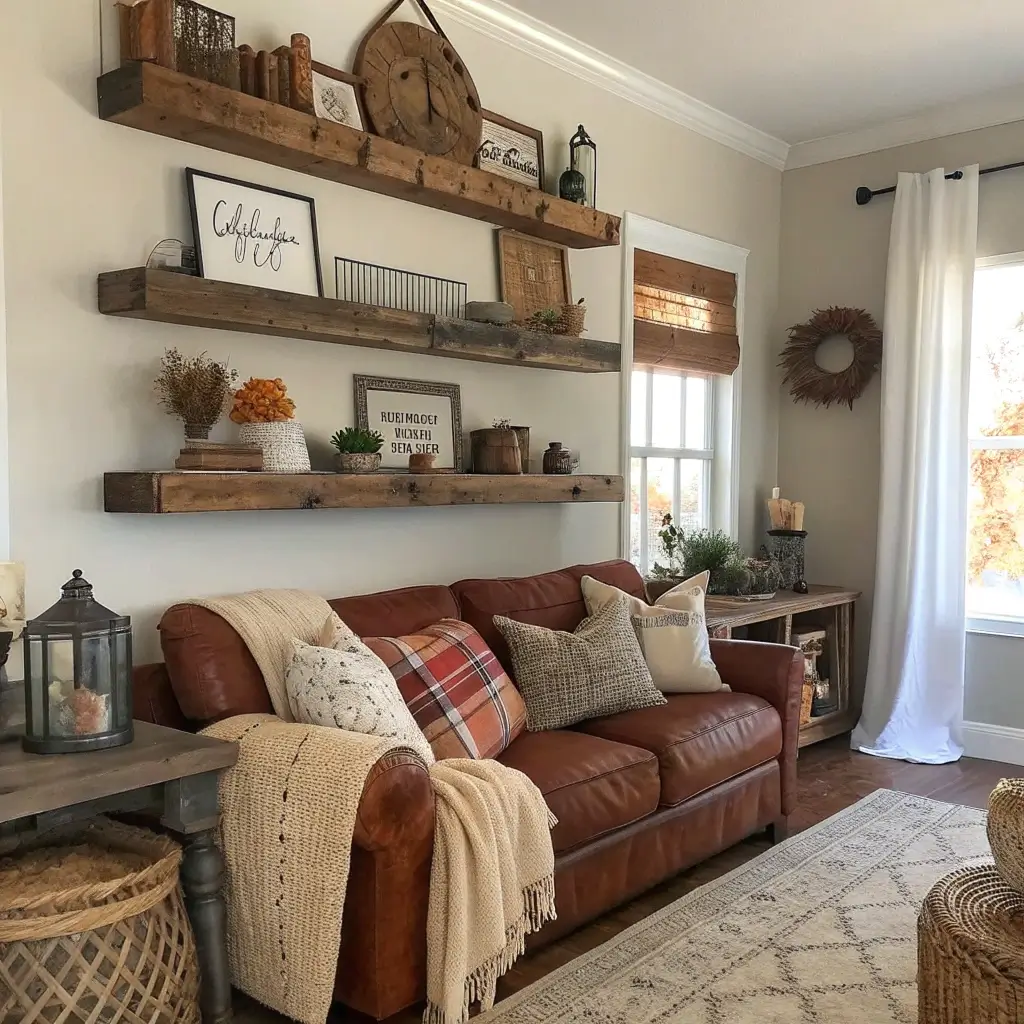
There’s something about rustic wood floating shelves that instantly makes a living room feel more inviting. I installed reclaimed barn wood shelves in my otherwise modern living room, and the contrast is absolutely perfect.
Rustic shelves add character that new, perfect shelves just can’t match. Every knot, grain pattern, and imperfection tells a story and adds warmth to your space.
Choosing Your Wood
Reclaimed wood isn’t just trendy – it’s actually gorgeous and sustainable. My shelves came from an old barn in Pennsylvania, complete with nail holes and saw marks that add so much character.
Consider the wood tone in relation to your existing furniture. My medium-brown barn wood complements my leather sofa without matching exactly. Matchy-matchy is out; coordinating is in.
Make sure any reclaimed wood is properly treated and sealed. You don’t want bugs or splinters in your living room. I had mine professionally sealed, and they still look rustic but feel smooth.
Styling Rustic Shelves
Embrace the farmhouse vibe without going full country. I mix vintage books with modern ceramics and industrial accents. The combination feels fresh rather than like a time capsule.
Let the wood grain be part of your design. I don’t cover my entire shelves with objects – seeing the beautiful wood is part of the appeal.
9. Floating Shelves Styled as a Mini Gallery Wall
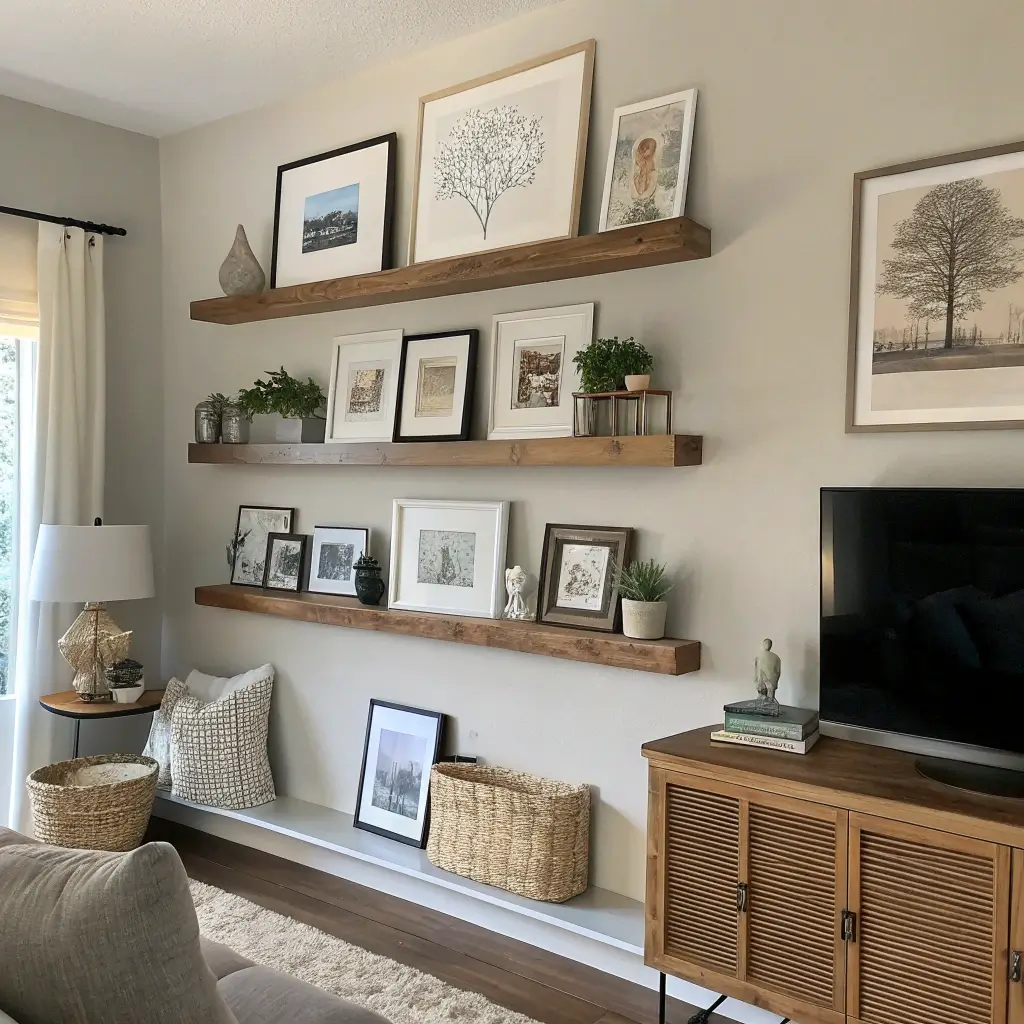
Why choose between shelves and a gallery wall when you can have both? I combined floating shelves with framed art to create a 3D gallery wall that’s functional and beautiful.
This hybrid approach gives you the best of both worlds – the visual interest of art plus the functionality of shelving. It’s perfect for people who can’t commit to just one or the other (guilty as charged).
Planning Your Gallery Shelf Combo
Start with your largest art piece as an anchor. I began with a 24×36 print, then arranged shelves and smaller frames around it. This creates a focal point that grounds the entire arrangement.
Maintain consistent spacing between all elements. I use 4-inch gaps between everything, whether it’s shelf-to-shelf or shelf-to-art. The uniformity creates cohesion despite mixing different elements.
Consider the overall shape of your arrangement. Mine forms a loose rectangle, but you could do a triangle, circle, or organic shape depending on your wall and preference.
Mixing 2D and 3D Elements
Use shelves to display dimensional art. Small sculptures, pottery, and objects add depth that flat art can’t provide. My ceramic vase collection finally has a proper home.
Coordinate colors between art and shelf objects. I chose artwork with blues and greens that complement the plants and ceramics on my shelves. Everything feels connected rather than random.
Also Read: 12 Modern Coffee Bar with Floating Shelves Ideas for Apartments
10. Floor-to-Ceiling Floating Shelf Layout
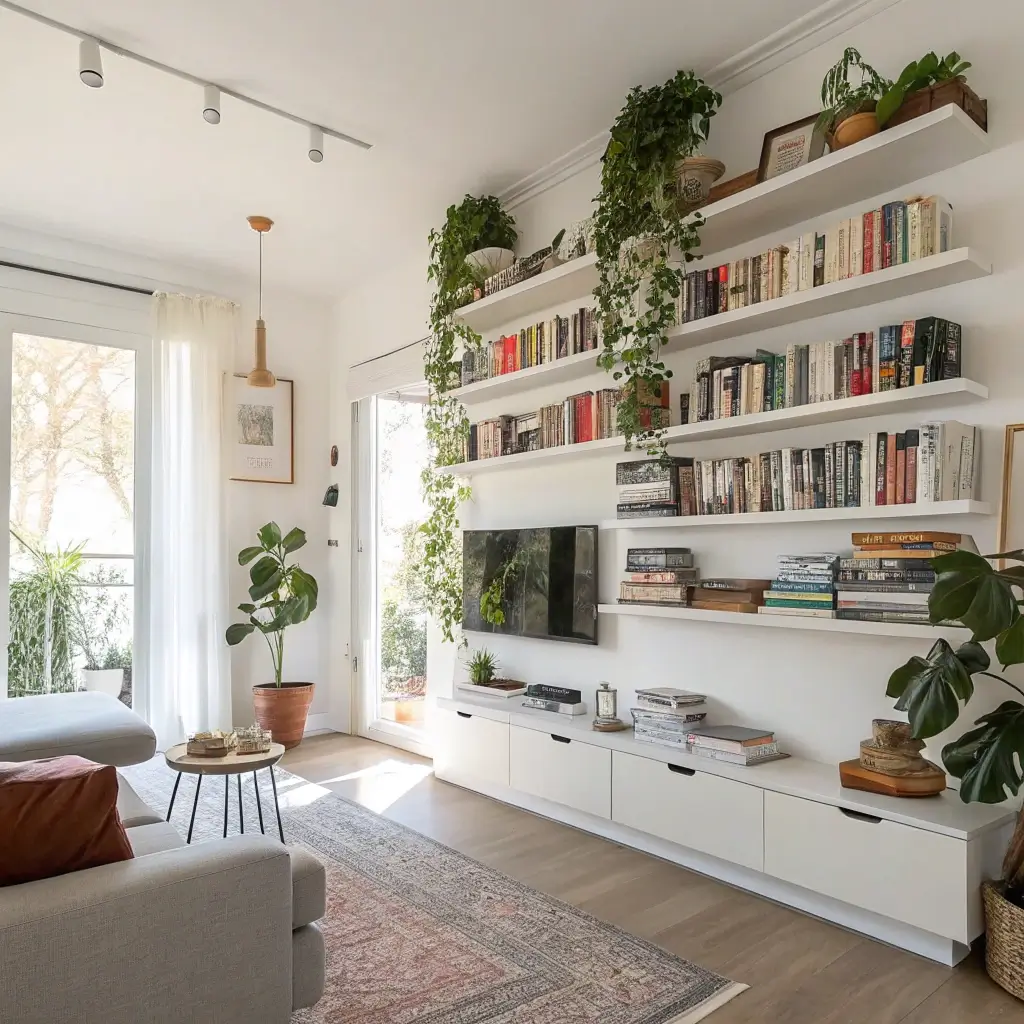
Go big or go home, right? My floor-to-ceiling floating shelf wall transformed my living room into a legit library, and I’ve never felt fancier.
This dramatic approach maximizes storage while creating a stunning focal point. It’s basically built-in shelving without the built-in price tag.
Planning Your Vertical Empire
Start with careful measurements. My 9-foot ceilings accommodate seven shelves with comfortable spacing. Don’t cram in too many shelves – you need breathing room between them.
Vary shelf lengths for visual interest. Not every shelf needs to span the entire wall. I alternate between full-width and 3/4-width shelves, creating a more dynamic look.
Consider accessibility for upper shelves. Be realistic about what goes where. My top shelves hold things I rarely need, while everyday items stay within easy reach. A stylish ladder helps access the high stuff.
Styling Top to Bottom
Create visual anchors at different heights. I have clusters of larger objects at eye level, chest level, and near the ceiling to guide the eye up and down the wall.
Use the lower shelves for heavier items. Books and large objects go low, while lighter decorative pieces can go higher. This isn’t just about aesthetics – it’s about not having heavy things fall on your head.
11. Floating Shelves with LED Lighting Accents

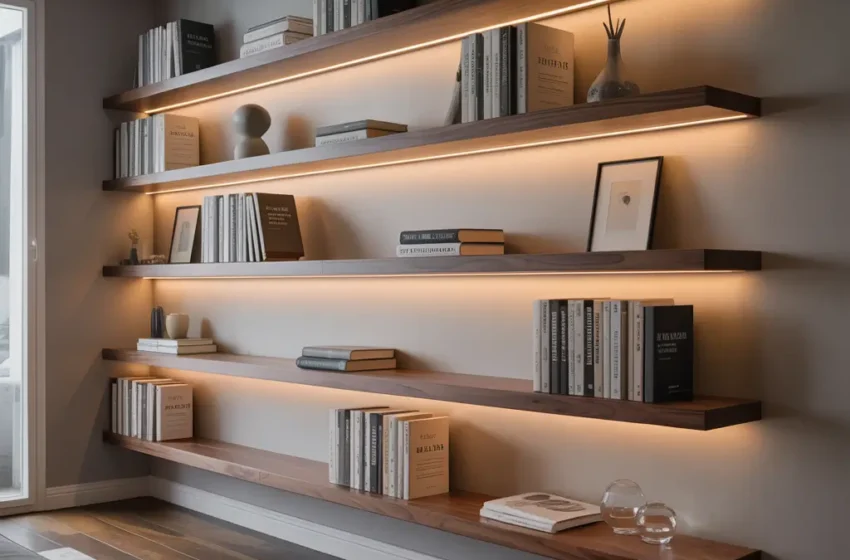
Adding LED strips to floating shelves is like giving them a glow-up – literally. I installed strips under each shelf in my living room, and now I can create different moods with just a remote control.
LED lighting transforms basic shelves into architectural features. Plus, it makes everything you display look more expensive and gallery-worthy.
Installing LED Magic
Choose warm white LEDs for a cozy feel. I tried cool white first, and my living room looked like a hospital. Warm white creates that inviting glow everyone wants.
Install strips along the underside of shelves for downlighting. This illuminates the items below without creating harsh shadows. My books and objects look like they’re in a museum display.
Consider color-changing LEDs for versatility. Mine can do any color, but honestly, I keep them on warm white 99% of the time. The color options are fun for parties though 🙂
Making Lighting Work
Use diffusion strips to soften harsh LED points. Nobody wants to see individual LED dots – it ruins the effect. Diffusion creates that smooth, professional glow.
Connect all shelves to one controller for consistency. Having to adjust each shelf separately is annoying. I learned this after installing individual strips initially – what a pain!
12. Neutral Floating Shelves for a Calm Living Room
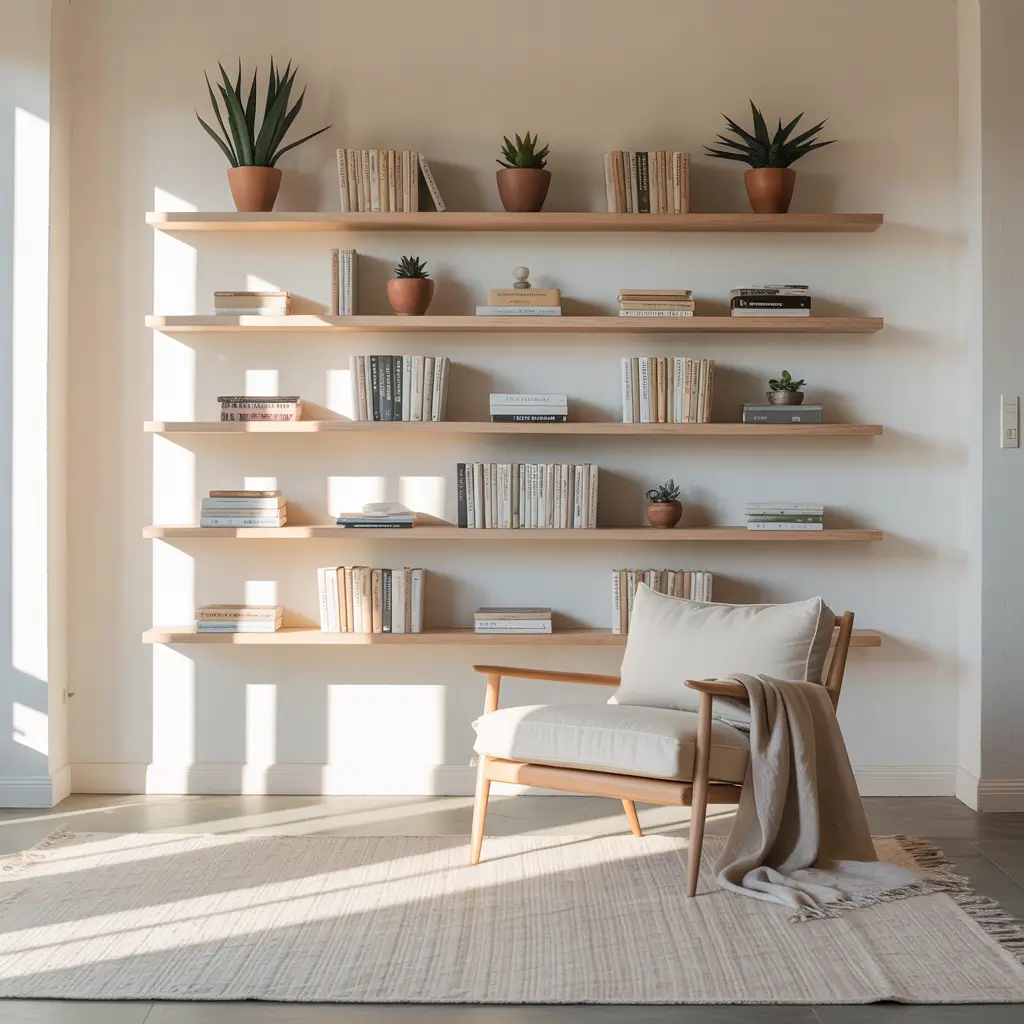
Sometimes you just want your living room to be a chill zone, and neutral floating shelves deliver that zen vibe perfectly. My all-neutral shelf setup makes my living room feel like a spa, minus the whale sounds.
Neutral doesn’t mean boring – it means sophisticated and timeless. These shelves work with any decor style and won’t look dated in five years.
Choosing Your Neutral Palette
Pick neutrals with undertones that complement your space. My shelves are warm gray, which works with my beige sofa and white walls. Cool grays would clash with my warm-toned furniture.
Mix textures within your neutral palette. Smooth ceramics, rough linen, and natural wood all in neutral tones create interest without adding color chaos.
Don’t forget that wood counts as neutral. Natural wood shelves paired with white and beige accessories create a perfectly calm, cohesive look.
Styling Neutral Shelves
Layer different shades of the same color. I use three shades of beige/tan on my shelves, which adds depth without breaking the neutral vibe.
Add one natural element per shelf. A small plant, a piece of driftwood, or a stone object brings life to neutral shelves without disrupting the calm aesthetic.
Making Floating Shelves Work for Your Living Room
After installing floating shelves in multiple living rooms, here’s what I know for sure: they’re not just trendy – they’re genuinely transformative. The key is choosing the right style for your space and lifestyle.
Start small if you’re shelf-shy. Install one or two and see how you like them before committing to a whole wall. I started with two shelves above my sofa and now have them on three walls. They’re addictive, FYI.
Invest in quality brackets and proper installation. Nothing ruins the floating shelf magic faster than sagging or falling shelves. Use a stud finder, level everything properly, and don’t cheap out on brackets. Your future self will thank you.
Remember that styling is an ongoing process. I rearrange my shelf displays seasonally, and it keeps my living room feeling fresh. Don’t feel like you need to nail the perfect arrangement immediately – it evolves over time.
Most importantly, make them work for your life. Pretty shelves that don’t function for your needs are just wall decoration.
Mine hold books I actually read, plants I actually water (usually), and objects that make me happy. That’s the real secret to floating shelf success.