12 Creative Cupboard Organization Ideas for Small Spaces
- Cupboard Design
 Ben
Ben- 0
- 30 minutes read

You know that avalanche waiting to happen every time you open your cupboard?
Yeah, I’m talking about the one where you gently open the door and brace yourself for the inevitable cascade of Tupperware lids, mystery spices from 2019, and that one lonely can of chickpeas you swear you’ll use someday.
I used to play what I called “cupboard roulette” every morning—carefully extracting my coffee mug while holding my breath, hoping nothing would topple. One day, a can of tomato paste literally jumped out and hit me on the head.
That was my wake-up call. I decided enough was enough and dove deep into the world of cupboard organization.
After years of trial, error, and way too many organizational products that didn’t quite work, I’ve discovered twelve game-changing cupboard organization ideas that actually stick.
These aren’t just Pinterest-pretty solutions that fall apart after a week—they’re practical systems that make daily life smoother.
Let’s transform your chaotic cupboards into organized havens that’ll make you feel like a responsible adult (even if you’re eating cereal for dinner three nights a week).
1. Tiered Spice Rack Organization
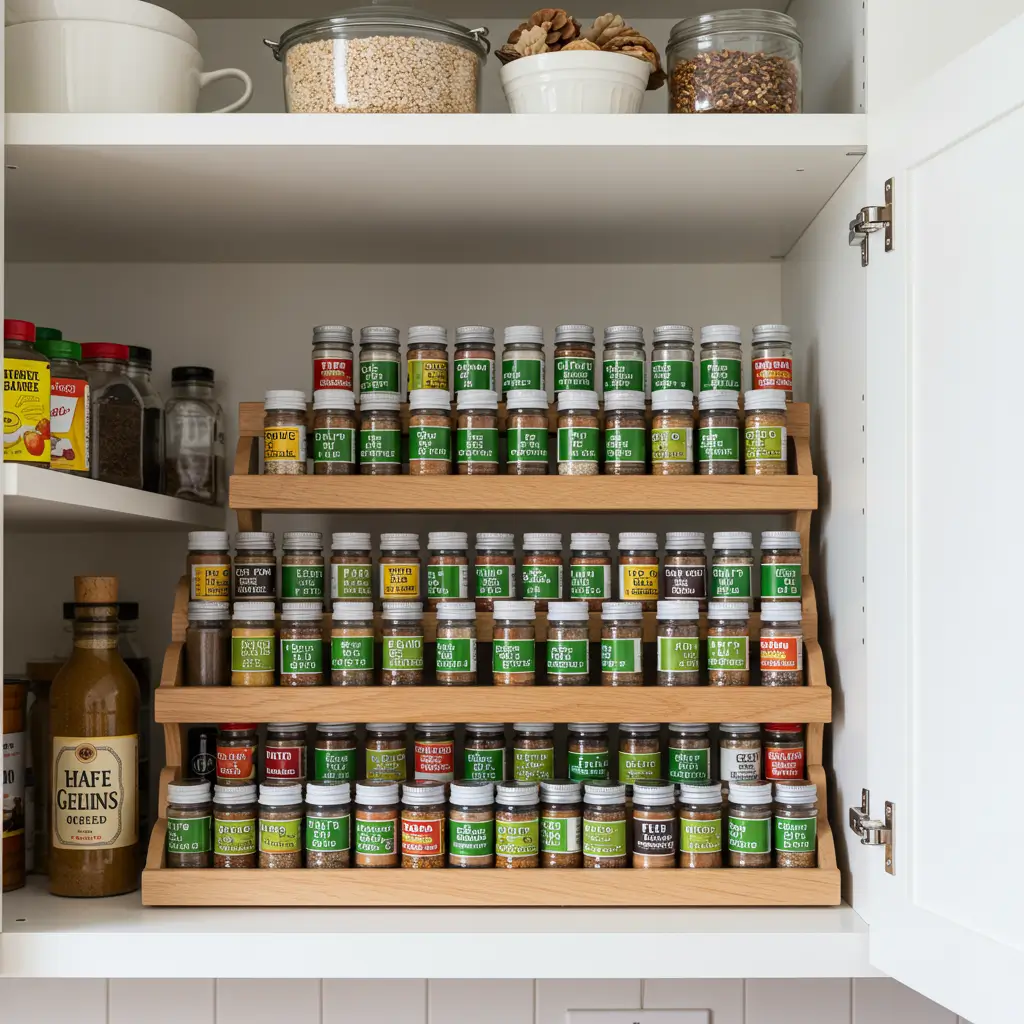
Spice chaos is real, people. If you’ve ever bought duplicate cumin because you couldn’t find the one buried in the back, you need tiered organizers in your life yesterday.
Why Tiered Works
Tiered spice racks create stadium seating for your spices—every bottle visible, every label readable. No more excavating through layers of bottles to find that elusive paprika. These simple risers transform a jumbled mess into an organized display where you can see everything at a glance.
I installed a three-tier system in my spice cupboard, and it genuinely changed how I cook. Instead of sticking to the same five spices I could easily find, I actually use my full collection now. Turns out I own cardamom! Who knew?
Implementation Tips
Measure your cupboard height before buying tiered organizers. Some are too tall for standard cupboards and end up wasting vertical space. Adjustable tiers work best since you can customize spacing based on your bottle sizes.
Alphabetize your spices on the tiers. Yes, it sounds obsessive, but when you’re cooking and need something quickly, alphabetical order saves time and sanity. Group by type if alphabetical feels too rigid—baking spices together, savory spices together, etc.
2. Pull-Out Pantry Shelves
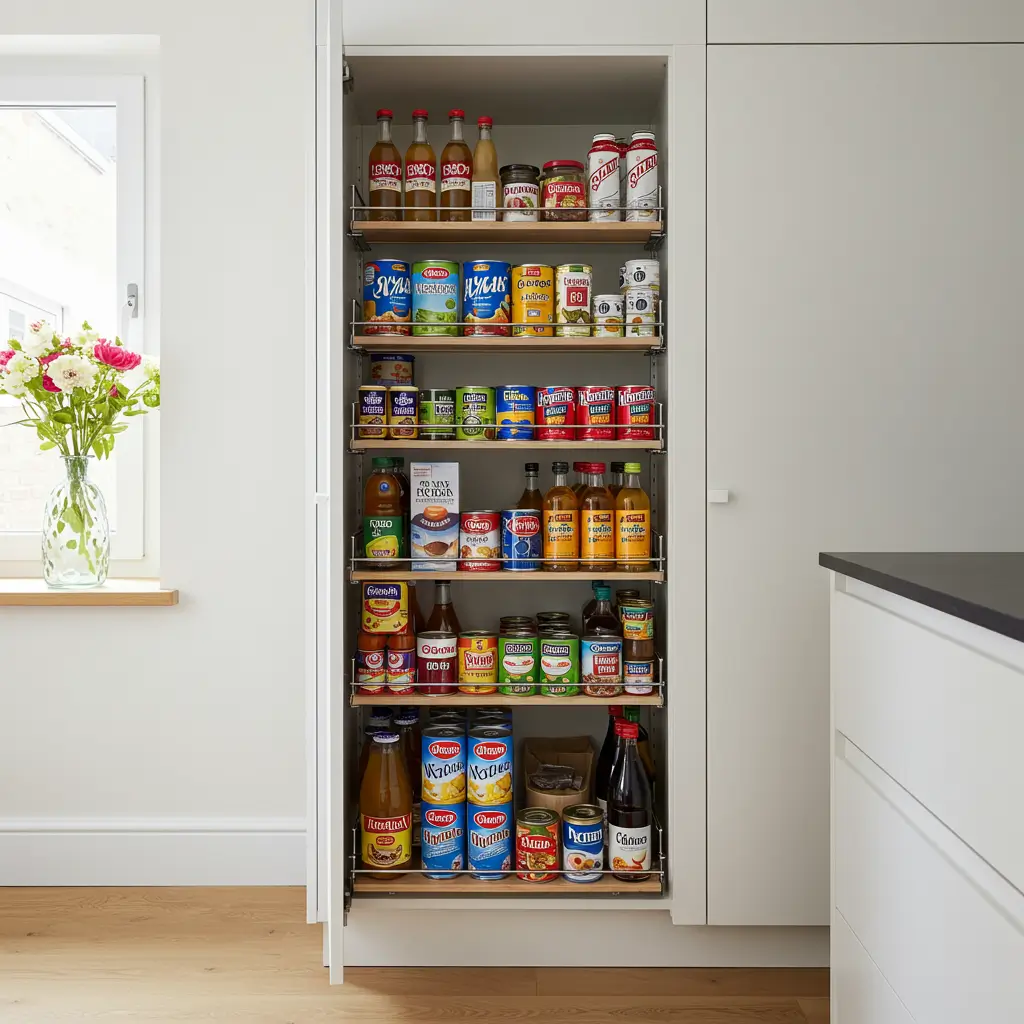
Pull-out shelves are basically magic. They transform deep, dark cupboard caves into accessible storage where nothing gets lost in the back ever again.
The Pull-Out Advantage
Deep cupboards create black holes where food goes to expire. Pull-out shelves solve this by bringing everything forward with a simple glide. You can see and reach items in the back without removing everything in front—revolutionary, really.
These systems work on heavy-duty rails that support significant weight. I’ve got pull-out shelves holding canned goods, oils, and vinegars, and they glide smoothly every time. It’s oddly satisfying to pull out a fully loaded shelf that reveals exactly what you have.
Installation Considerations
Professional installation ensures smooth operation and proper weight distribution. DIY is possible if you’re handy and patient, but measure twice (or three times) and drill once. Misaligned rails create shelves that stick or won’t close properly.
Choose full-extension slides that pull out completely, not just partially. Half-extension slides defeat the purpose—you still can’t see or reach everything. Soft-close features prevent slamming and add that luxury kitchen feel.
3. Clear Container Storage System
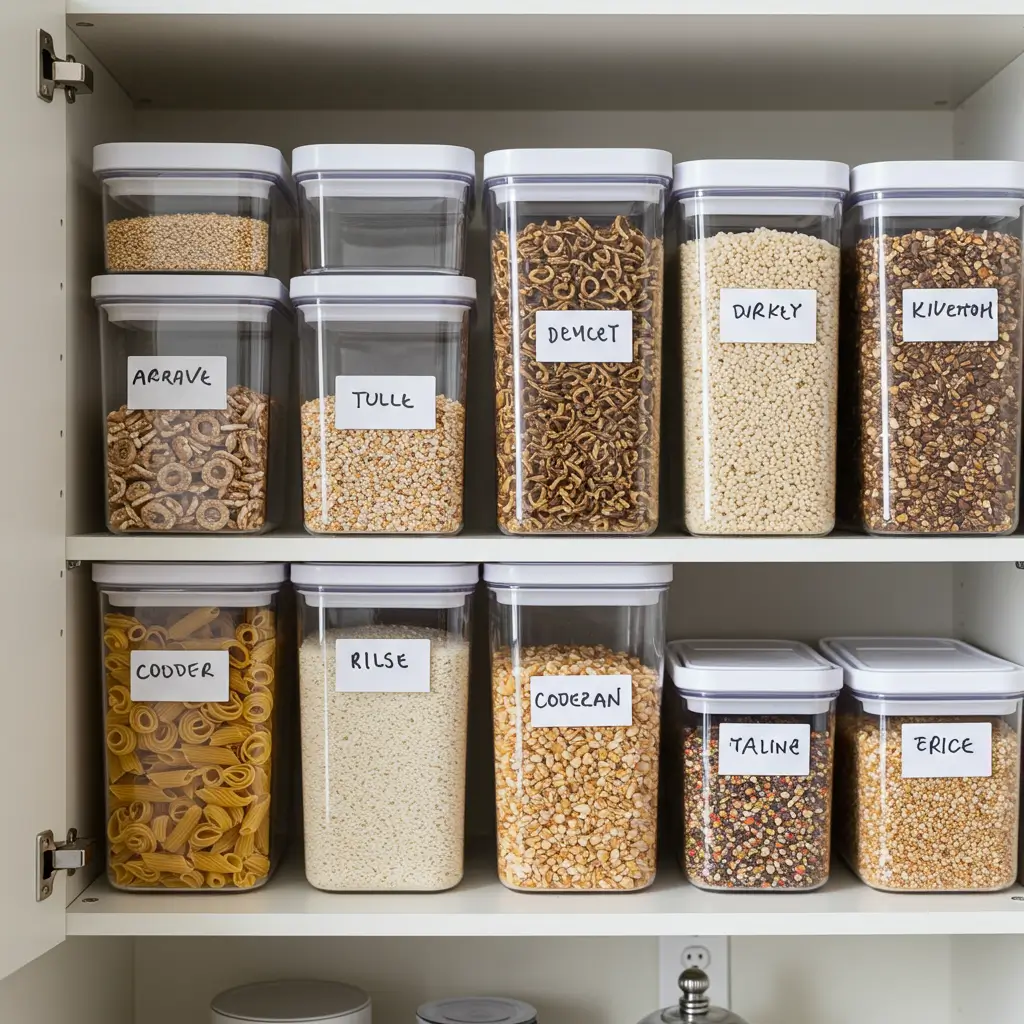
Clear containers are the unsung heroes of cupboard organization. They transform chaotic boxes and bags into uniform, stackable, visible storage that actually makes sense.
Why Clear Containers Change Everything
You can see exactly what you have and how much is left. No more mystery flour that might be all-purpose or might be cake flour—just label it clearly. No more buying pasta when you already have three boxes hiding behind the cereal.
I switched to clear containers for all my dry goods, and my grocery bill actually decreased. I stopped buying duplicates and started using what I already had. Plus, everything stacks neatly, maximizing vertical space.
Choosing and Using Containers
Invest in quality airtight containers that actually seal. Cheap ones let moisture in and freshness out. Square or rectangular containers use space more efficiently than round ones—they stack and align perfectly without wasted gaps.
Label everything—seriously, everything. Even if you think you’ll remember, label it. Use a label maker for that professional look, or just good old masking tape and marker. Include purchase or expiration dates if you’re really committed to organization.
Also Read: 10 Elegant Modern Cupboard Design Ideas to Refresh Homes
4. Hanging Cupboard Door Racks

The inside of cupboard doors is prime real estate that most people completely ignore. Hanging racks turn these forgotten surfaces into functional storage for small items.
Maximizing Door Space
Over-the-door organizers come in endless configurations—hooks for measuring cups, narrow shelves for spices, pockets for cleaning supplies. This vertical space keeps frequently used items accessible without taking up shelf space.
I installed hooks on my kitchen cupboard doors for measuring spoons and cups. Now I grab them instantly instead of digging through a drawer. My cleaning supply cupboard door holds spray bottles and brushes, keeping the interior shelf space free for bulkier items.
Installation and Selection
Choose door racks that fit your cupboard door thickness and hinge style. Some require removing doors for installation, while others simply hook over the top. Measure your door and the clearance it needs to close properly before buying.
Don’t overload door racks. They’re perfect for lightweight items but struggle with heavy bottles or appliances. The constant opening and closing puts stress on mounting points—keep it reasonable or risk everything crashing down.
5. Lazy Susan Turntable Setup

Lazy Susans are called lazy for a reason—they make accessing corner cupboard items so easy it almost feels like cheating. Spin to win, baby.
The Rotating Solution
Corner cupboards are notoriously difficult to organize. Things pushed to the back become unreachable without contortionist moves. Lazy Susans bring everything full circle (literally) with a simple spin.
These rotating platforms work brilliantly for oils, condiments, canned goods, or spices. Group similar items together on each turntable level. I use a two-tier Lazy Susan for my baking supplies—vanilla extract, food coloring, sprinkles—all accessible with a quick spin.
Choosing the Right Turntable
Size matters with Lazy Susans. Measure your cupboard dimensions and choose a turntable that rotates freely without hitting cupboard walls. Non-slip surfaces prevent items from sliding off during rotation.
Tiered Lazy Susans double your storage in the same footprint. Just ensure enough vertical clearance between tiers for your items. Nobody wants to bonk bottles together while trying to spin.
6. Stackable Drawer Organizers
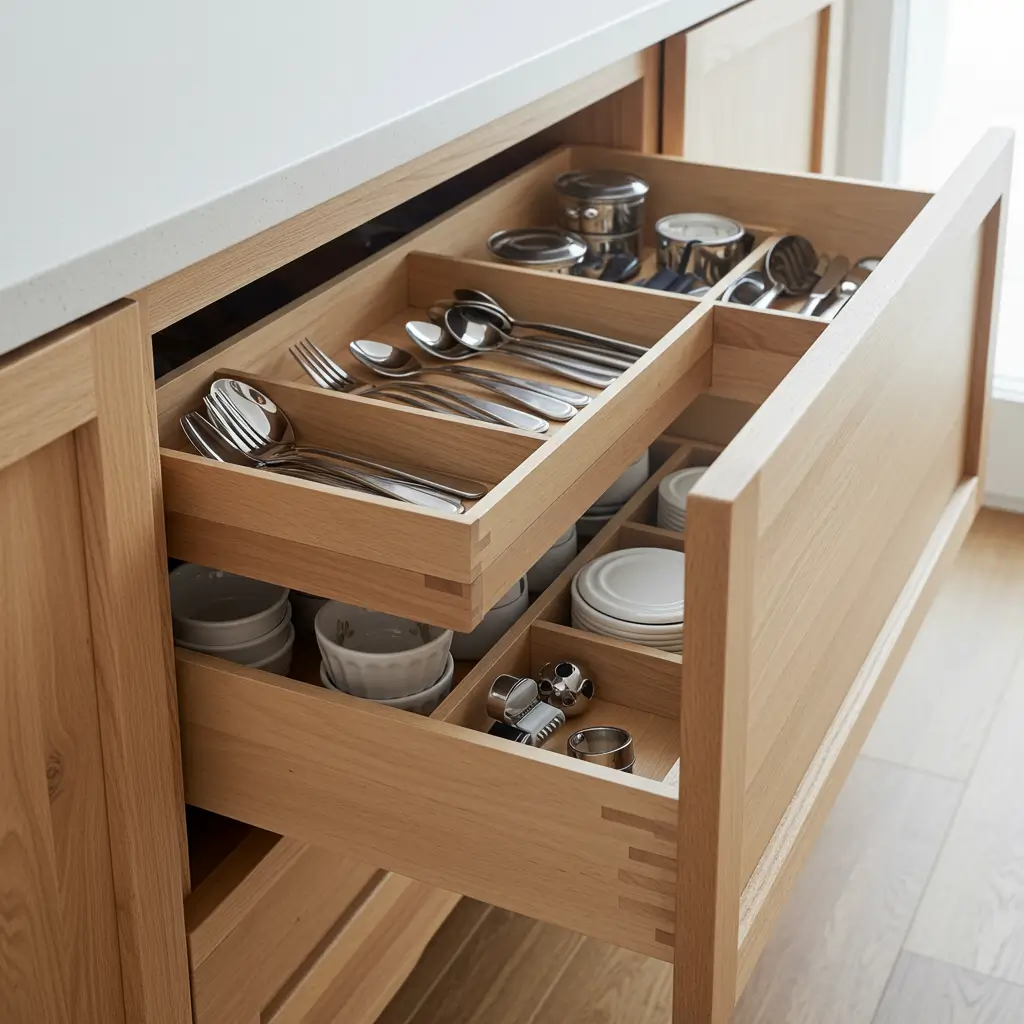
Stackable organizers are like LEGO for your cupboards—build up instead of out, creating customized storage that adapts to your needs.
The Stacking Strategy
Stackable bins and organizers maximize vertical space while keeping items separated and accessible. Use them for everything from snacks to cleaning supplies to medicine. The beauty is flexibility—reconfigure as needs change.
I love stackable organizers for kid snacks and lunch supplies. Each child has their designated level, making packing lunches easier and reducing the “I can’t find anything” whining. Everyone can see and reach their stuff independently.
Making Stacking Work
Choose organizers with stable bases that don’t wobble when stacked. Clear ones let you see contents without pulling everything down. Uniform sizes stack better than random shapes—invest in matching sets.
Don’t stack too high. You should reach top tiers without using a step stool or risking a container avalanche. Three to four tiers is usually the sweet spot for safety and accessibility.
Also Read: 12 Stylish Kitchen Cupboard Designs and Colorful Inspirations
7. Vertical Plate and Pan Storage
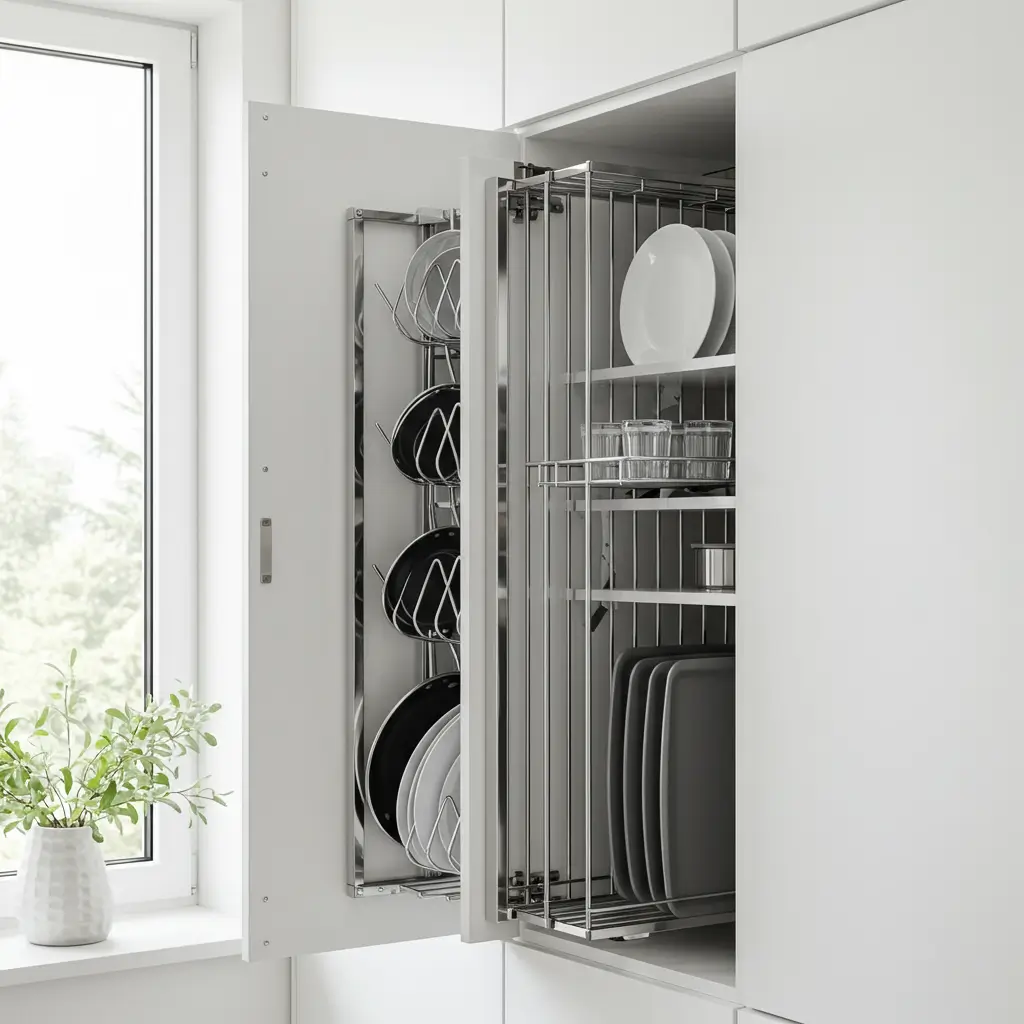
Storing plates and pans horizontally wastes space and makes accessing bottom items annoying. Vertical storage fixes both problems elegantly.
Going Vertical
Vertical dividers let you file plates like books instead of stacking them in precarious towers. Pull out the one you need without disturbing the rest. Same concept works for baking sheets, cutting boards, and pan lids—game-changing for kitchen organization.
I installed vertical dividers in my cupboard and suddenly accessing my sheet pans didn’t require removing five other pans first. It’s the small wins that make cooking more enjoyable and less frustrating.
DIY vs. Ready-Made
Adjustable dividers accommodate different plate sizes and heights. Some install permanently with screws; others use tension to hold position. Choose based on whether you own or rent and how permanent you want the solution.
DIY options include tension rods or even repurposed file organizers. They work but may not be as sturdy as purpose-built kitchen organizers. Test weight capacity before loading expensive dishes.
8. Basket and Bin Labeling System
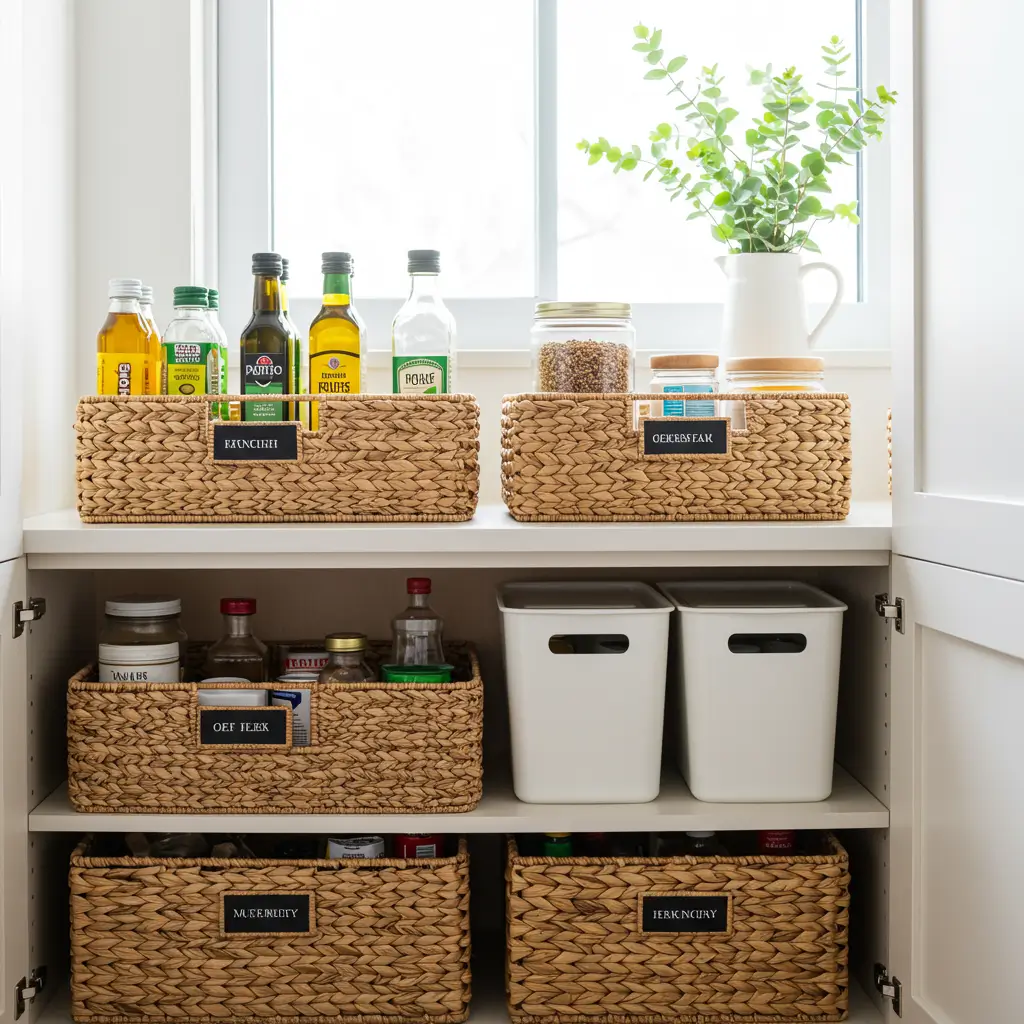
Labels might seem unnecessary when you can see what’s in containers, but they’re the secret to maintaining organization long-term. They keep everyone in your household accountable.
The Power of Labels
Labels create homes for items. When everything has a designated spot, putting things away becomes automatic. Family members (or roommates) know exactly where things go, reducing the “where does this go?” questions.
I labeled every basket and bin in my pantry, and my partner finally stopped asking where things belonged. The labels train people to maintain the system you’ve created. It’s like having a personal organization assistant built into your cupboards.
Label Like a Pro
Use a label maker for consistency and durability. Handwritten labels work but often look messy and may not survive cupboard humidity. Chalkboard labels offer flexibility if contents change frequently.
Be specific with labels. “Snacks” is too vague—break it down into “Sweet Snacks,” “Salty Snacks,” “Protein Bars,” etc. Specific labels make maintaining organization easier because there’s no ambiguity about where things belong.
9. Modular Cupboard Dividers
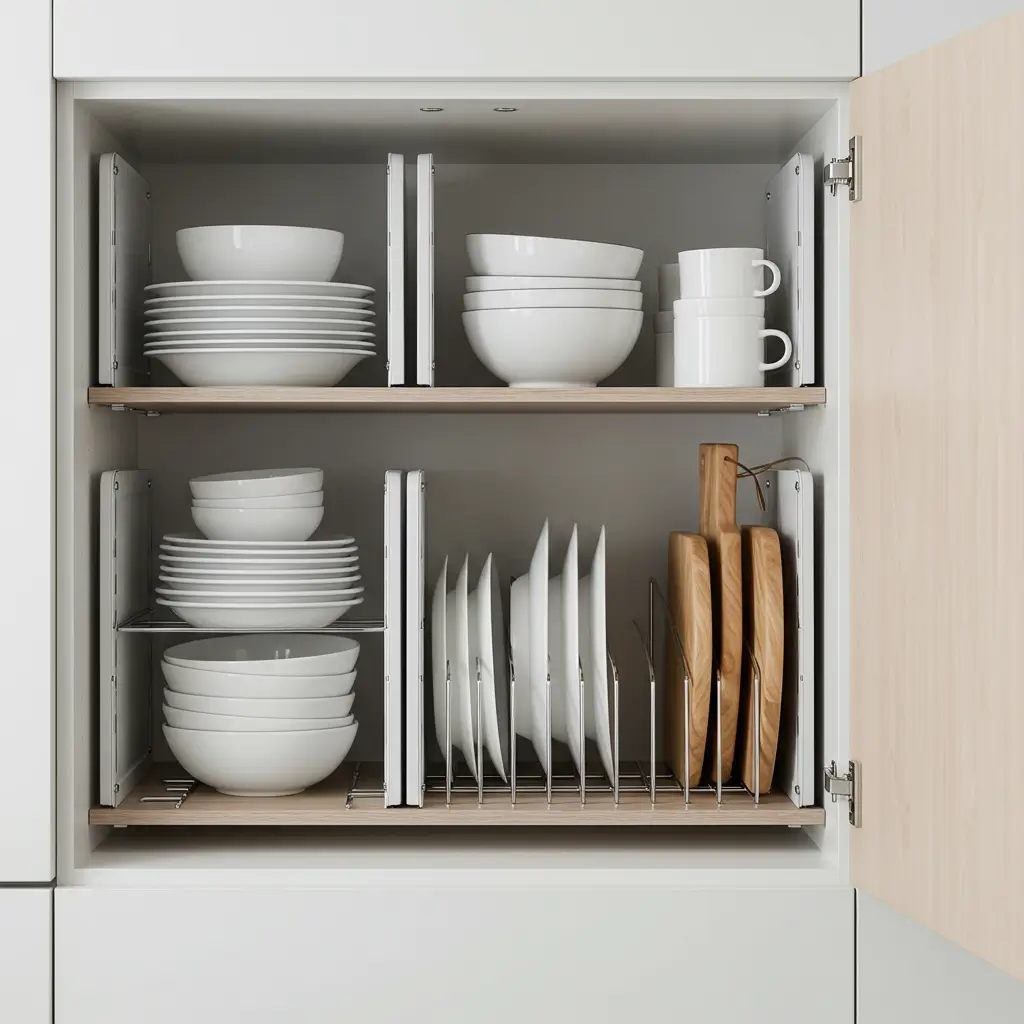
Modular dividers are the chameleons of cupboard organization—they adapt to whatever you need them to be. Rearrange, resize, and reconfigure as your storage needs evolve.
Flexibility for the Win
Unlike permanent shelving, modular dividers move and adjust. Need wider compartments for large containers this month? Adjust the dividers. Switching to smaller items next month? Reconfigure again. This adaptability makes them perfect for changing needs.
I use modular dividers in my linen cupboard, and they’ve adapted through three different organizational phases. Started with towel storage, switched to gift wrap organization, now they’re holding craft supplies. Same dividers, different purposes.
Choosing Modular Systems
Look for expandable dividers that adjust to different cupboard widths. Spring-loaded or adjustable mechanisms ensure snug fits without gaps where items can tip over. Sturdy materials prevent warping under weight.
Start with a basic set and add pieces as needed. Many modular systems work together, letting you build customized solutions over time. This also spreads out costs instead of requiring huge upfront investment.
Also Read: 10 Chic Cupboard Ideas Bedroom and Minimalist Inspirations
10. Sliding Drawer Inserts for Utensils

Drawer inserts organize utensils, but sliding versions take it up a notch. Multiple tiers mean everything has a spot without requiring enormous drawers.
The Sliding Advantage
Sliding inserts create two or three tiers within one drawer. The top tier slides aside to reveal lower tiers, tripling your storage capacity. Perfect for utensil-heavy kitchens or anyone who loves kitchen gadgets.
I installed a sliding insert in my utensil drawer, and suddenly I could keep all my cooking tools organized instead of stuffing them wherever they’d fit. Garlic press, apple corer, measuring spoons—all have designated spots I can actually access.
Installation and Use
Measure drawer dimensions precisely before ordering sliding inserts. They need to fit snugly to slide smoothly without shifting around. Some systems mount to drawer sides; others sit loose but sized perfectly.
Don’t overload tiers. Sliding mechanisms struggle under excessive weight. Keep heavy items on bottom tiers and lighter items on top. This maintains smooth sliding action and prevents wear on mechanisms.
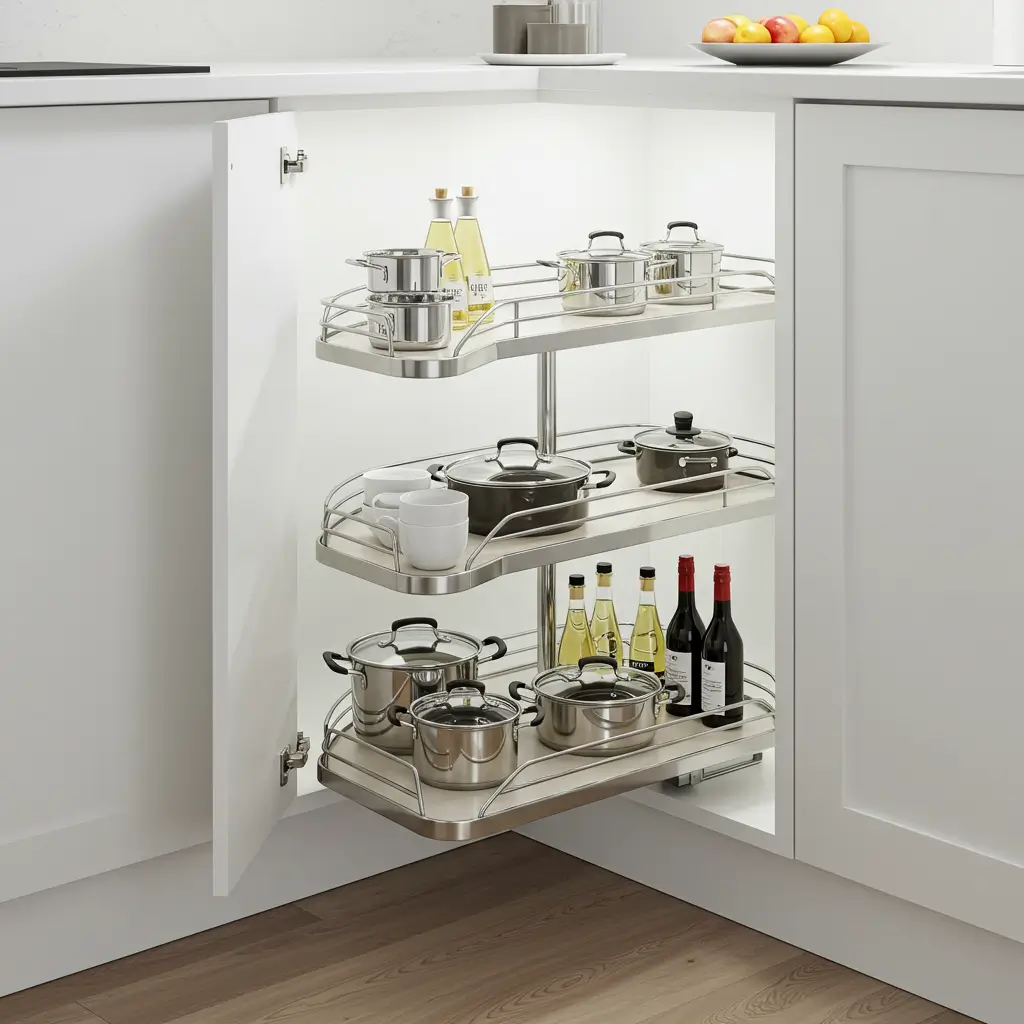
11. Corner Cabinet Carousel
Corner cabinets are storage black holes where things disappear forever. Carousels transform these awkward spaces into accessible, efficient storage that actually works.
Spinning Solutions
Corner carousels feature rotating shelves that bring items from the back to the front with a simple spin. No more crawling into cupboards or using long grabbers to reach items. Everything rotates to you.
These systems come in full-circle or kidney-shaped configurations. Full circles maximize storage but waste some space in corners. Kidney shapes are designed specifically for corner angles, using space more efficiently.
Making Carousels Work
Choose carousels with smooth bearing systems. Cheap ones stick and make annoying noises. Quality mechanisms spin effortlessly even when loaded. This makes a huge difference in daily use.
Don’t overload carousel shelves beyond weight limits. Excessive weight damages rotating mechanisms and makes spinning difficult. Distribute weight evenly around the carousel for balanced rotation.
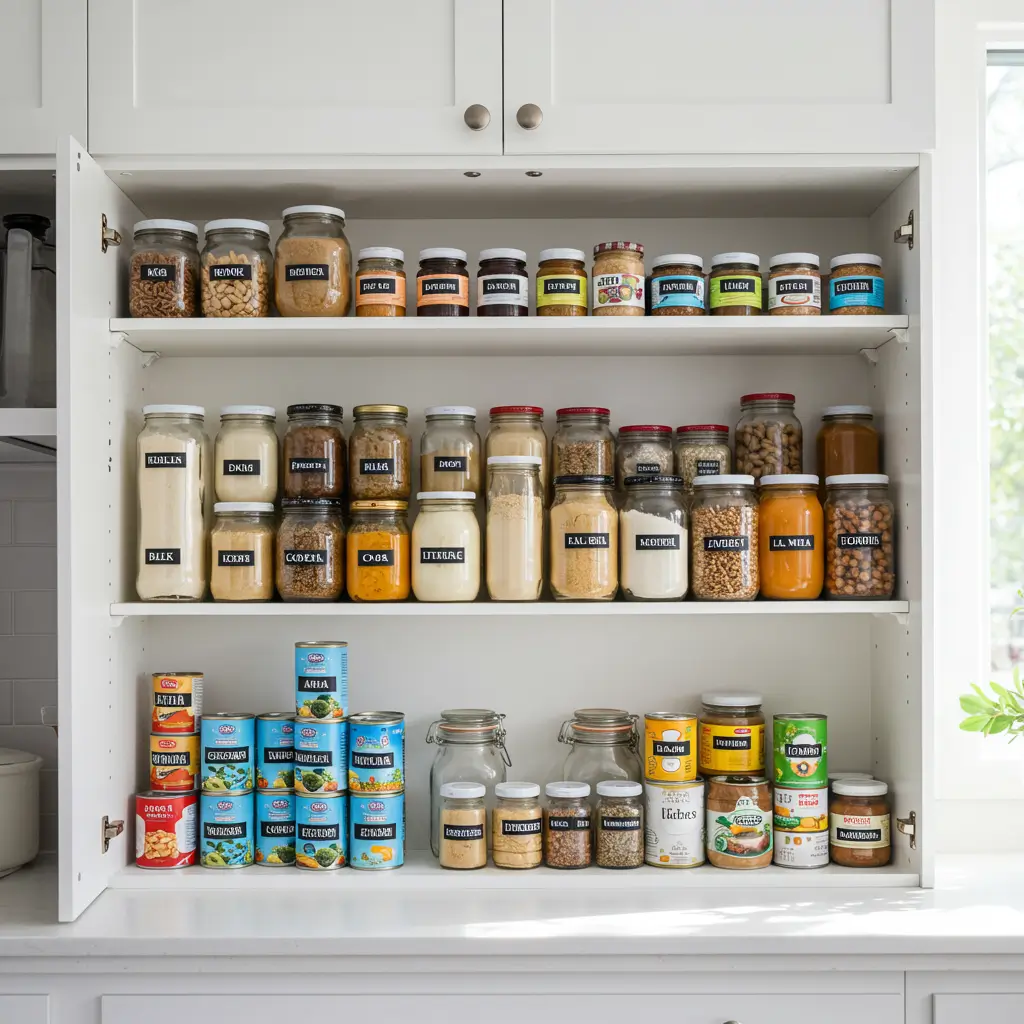
12. Transparent Jar and Can Display
Sometimes the prettiest organization is functional organization. Transparent jars turn pantry staples into visual displays while keeping everything fresh and accessible.
Form Meets Function
Glass jars showcase colorful ingredients—different pasta shapes, rice varieties, beans, candy. The visual appeal motivates you to keep cupboards organized because they look so good. Plus, you see exactly what needs restocking.
I switched from cardboard boxes and plastic bags to glass jars for dry goods, and my pantry went from chaotic to Instagram-worthy. Bonus: ingredients stay fresher in sealed jars than in partially open boxes.
Jar Selection and Display
Choose uniform jar sizes and shapes for cohesive looks. Square jars use space more efficiently than round. Ensure lids seal properly to maintain freshness—this isn’t just about aesthetics.
Arrange jars by height or color for maximum visual impact. Label tops for overhead cupboard storage or fronts for eye-level shelves. This system works beautifully with open shelving too.
Putting It All Together
The secret to successful cupboard organization isn’t finding one perfect solution—it’s combining strategies that work for your specific space and habits.
Maybe you need tiered spice racks plus pull-out shelves. Or clear containers with labeled bins and door racks.
Start with one cupboard. Don’t try to organize everything at once or you’ll burn out and give up. Pick the most frustrating cupboard and implement one or two solutions. Once that’s working smoothly, move to the next cupboard.
Measure everything before buying organization products. The number of containers I’ve purchased that didn’t quite fit is embarrassing. Save yourself the hassle and measure cupboard dimensions, door clearance, and shelf heights.
Maintain your systems. Even the best organization fails if you don’t put things back properly. Those first few weeks require conscious effort, but then it becomes habit. Labels help everyone maintain the system, not just you.
Remember that organization is personal. What works for minimalists might not work for families with kids. What works for passionate cooks might not work for takeout enthusiasts. Choose solutions that match your lifestyle, not someone else’s ideal.
Be willing to adjust. If something isn’t working after a month, try a different approach. Organization should make life easier, not add stress. The right system disappears into your routine—you use it without thinking.
Invest in quality products for permanent solutions. Cheap organizers break, warp, or fail within months. Quality pieces last years and actually save money long-term. That said, start with budget options to test systems before committing to expensive upgrades.
FYI, once you experience organized cupboards, you’ll never want to go back to the chaos. Opening a cupboard and immediately finding what you need, without moving six things first, is genuinely life-changing.