10 Smart Small Cupboard Design Ideas for Modern Homes
- Cupboard Design
 Ben
Ben- 0
- 26 minutes read
Let’s face it – we’re all secretly hoarders who just want our stuff to look organized, right? You know that feeling when you open someone’s perfectly arranged cupboard and think, “How the heck do they keep it so neat?”
Well, I’m about to spill the tea on small cupboard designs that actually work, not just those Pinterest-perfect setups that fall apart the moment you actually use them.
I’ve been obsessing over storage solutions for years (yeah, I’m that person), and small cupboards have become my favorite puzzle to solve.
They’re like the Swiss Army knives of home storage compact, efficient, and surprisingly versatile when you know what you’re doing.
Floor-to-Ceiling Slim Cupboard: The Vertical Victory
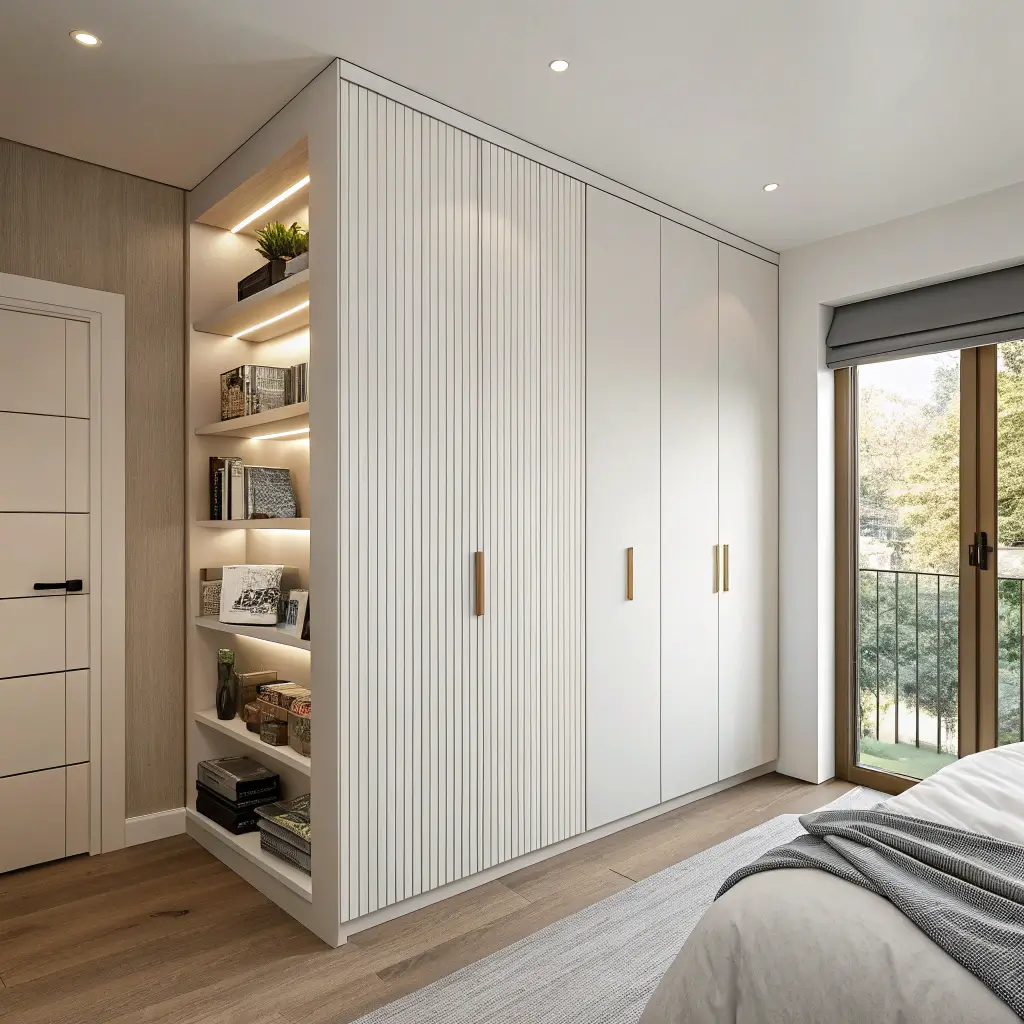
Remember when your mom told you to think vertically? She was onto something! Floor-to-ceiling slim cupboards are basically the supermodels of storage – tall, sleek, and they make everything around them look better.
I installed one of these bad boys in my hallway last year, and honestly, it changed my life. No more dumping grounds by the front door! These cupboards typically measure just 12-16 inches deep, but don’t let that fool you. You’d be amazed at what you can fit in there when you organize it right.
Why This Design Rocks
The beauty of going vertical? You’re using that dead air space nobody thinks about. Most of us have 8-10 foot ceilings, yet we cram everything into furniture that’s maybe 5 feet tall. Makes zero sense when you think about it, doesn’t it?
I love dividing mine into zones – everyday items at eye level, seasonal stuff up top, and cleaning supplies down below. Pro tip: invest in some step stools that actually look good. You’ll need them, and they might as well add to your decor instead of being an eyesore.
The slim profile means these cupboards work literally anywhere. Squeeze one between your fridge and wall, tuck it into that awkward corner in your bedroom, or line up a couple in your bathroom. They’re like the ninjas of storage – barely noticeable until you need them.
Wall-Mounted Floating Cupboard: The Space-Saving Sorcerer
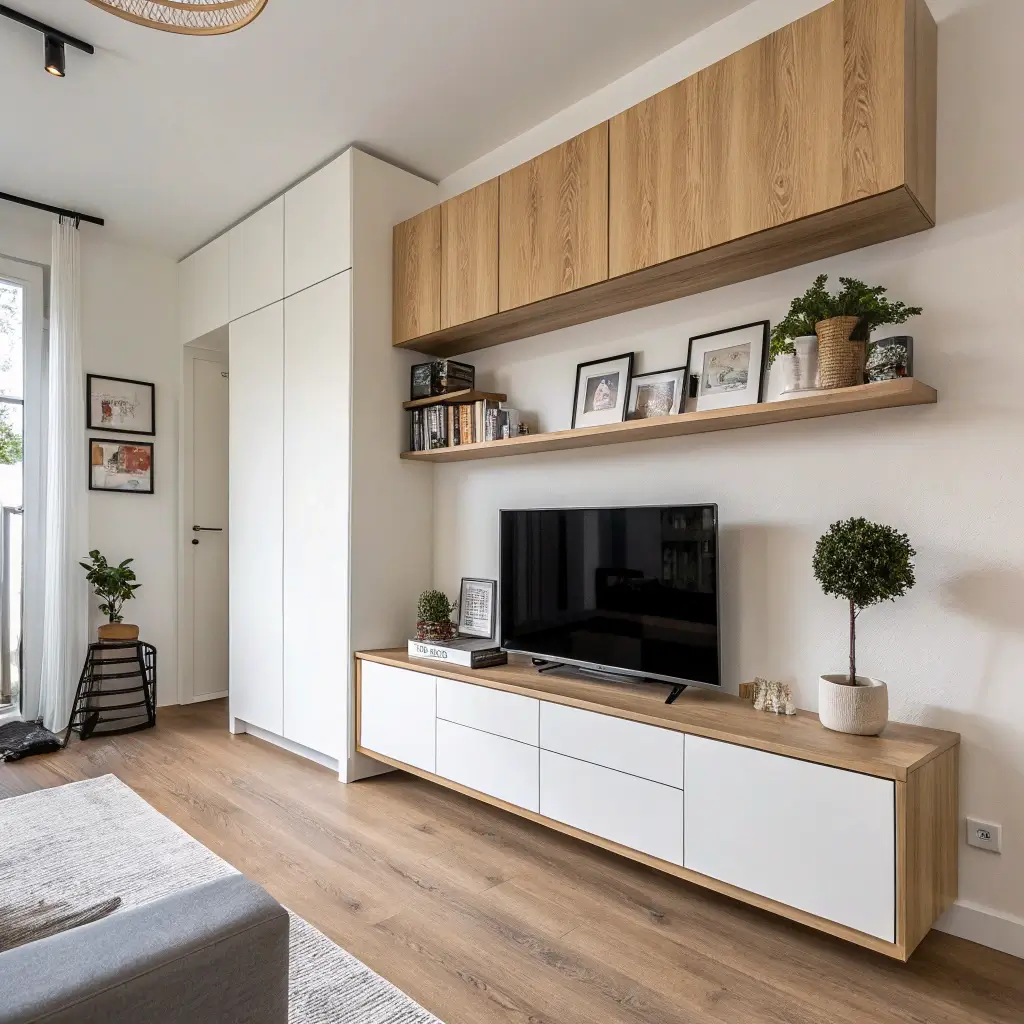
Okay, can we talk about how floating cupboards make me irrationally happy? There’s something about furniture that doesn’t touch the floor that just feels… cleaner? More modern? Less likely to collect dust bunnies? All of the above!
I recently helped my sister install floating cupboards in her tiny apartment bathroom, and the transformation was insane. Suddenly, her cramped space felt twice as big. The secret? Your eyes can see the floor continuing underneath, which tricks your brain into thinking there’s more space.
Installation Tips from Someone Who’s Messed Up Before
Here’s where I need to get real with you – don’t cheap out on the mounting hardware. I learned this the hard way when my first floating cupboard decided to, well, stop floating at 2 AM. The crash woke up the entire building, and explaining that to my neighbors was… not fun.
Find your wall studs, people! I don’t care if the cupboard weighs as much as a feather – mount it properly. Those hollow wall anchors might seem fine, but trust me, they’re not your friends when you’re storing your grandmother’s china.
The ideal height for floating cupboards? I keep mine at about 15-18 inches from the counter or floor. High enough to clean underneath, low enough that I’m not playing basketball every time I need something. Though honestly, the height depends on who’s using them – my 6’2″ partner has different ideas about “reachable” than my 5’4″ self does!
Sliding Door Compact Cupboard: The Smooth Operator
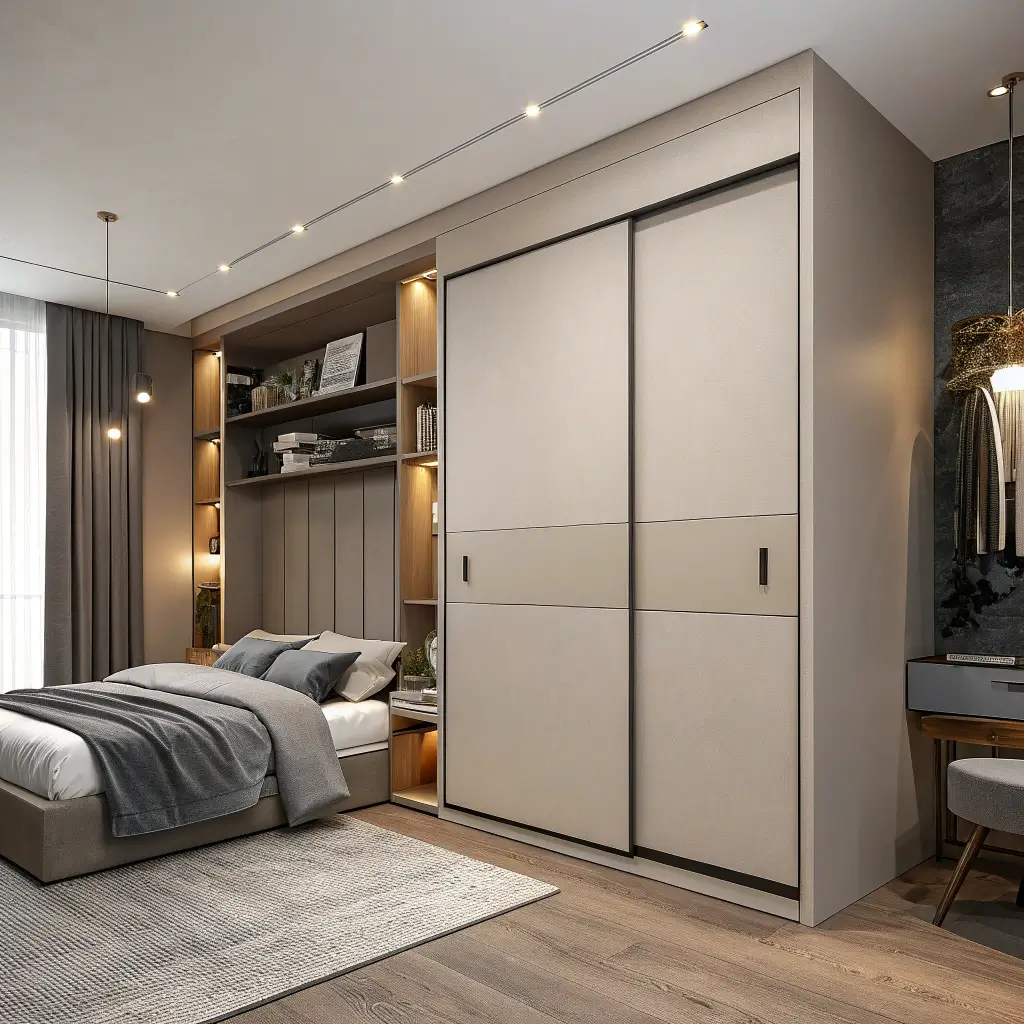
Who decided that cupboard doors need to swing open and knock everything off your counters? Sliding doors are where it’s at, especially when you’re dealing with tight spaces. They’re like the introvert of door designs – quiet, unobtrusive, and they don’t demand extra room to function.
I’ve got one of these in my kitchen, wedged between the stove and refrigerator. Traditional doors? They’d hit both appliances. Sliding doors? They glide past like butter on hot toast. Plus, there’s something oddly satisfying about that smooth sliding action – it’s like a little ASMR moment every time you open it 🙂
Making the Most of Sliding Systems
The trick with sliding door cupboards is organizing the interior differently. Since you can only access half the cupboard at a time, you need to think strategically. I keep frequently used items on both sides, with less-used stuff in the middle where the doors overlap.
Don’t overlook the door tracks either. Keep them clean! I ignored mine for months, and they started making this horrific grinding noise that made my cat flee the room every time I opened the cupboard. A quick vacuum and some WD-40 fixed it right up.
Want to get fancy? Try soft-close sliding mechanisms. They’re a bit pricier, but man, the gentle glide shut makes you feel like you’re living in a luxury hotel. Every. Single. Day.
Also Read: 12 Cozy Pantry Cupboard Ideas to Organize Effortlessly
Corner-Fit Space-Saver Cupboard: The Angle Expert
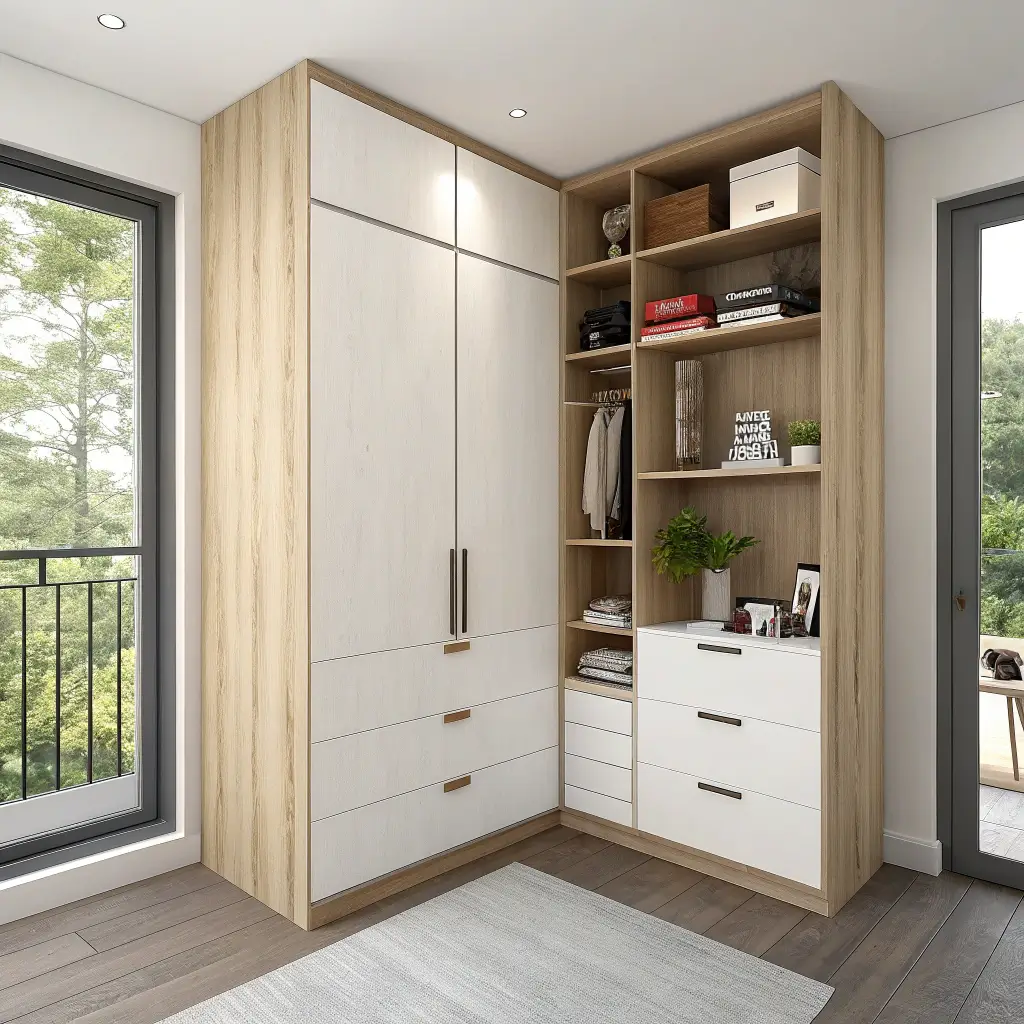
Corners are the Bermuda Triangle of home storage – stuff goes in and mysteriously disappears forever. But corner-fit cupboards? They’re like hiring a detective to solve the case of the missing space.
I’ll admit, I was skeptical at first. How much could you really fit in a corner? Turns out, way more than you’d think! My corner cupboard holds all my baking supplies, and I bake a LOT (stress baking is real, folks).
Design Variations That Actually Work
You’ve got two main options here: diagonal corner cupboards that cut across the corner at a 45-degree angle, or L-shaped ones that follow the wall lines. I prefer the L-shaped design because you get more storage, but diagonal ones look sleeker if aesthetics are your priority.
The game-changer? Lazy Susans or pull-out drawers. Without them, you’re basically playing hide-and-seek with your belongings every time you need something from the back. I installed a two-tier lazy Susan in mine, and finding my vanilla extract no longer requires a flashlight and a prayer.
Here’s something nobody tells you – measure your corner carefully before buying. Not all corners are perfect 90-degree angles (shocking, I know). My apartment’s corners are slightly off, which I discovered after ordering a “perfectly square” corner cupboard. Let’s just say there was some creative problem-solving involved.
Mirror-Front Small Cupboard: The Illusionist

This one’s genius – cupboards that double as mirrors. It’s like having your cake and eating it too, except the cake is storage and the eating is… checking your outfit? Okay, that metaphor got away from me, but you get the idea!
I installed a mirror-front cupboard in my entryway, and guests always compliment my “beautiful mirror.” Little do they know it’s hiding my collection of random cables, spare keys, and that emergency chocolate stash. The mirror does double duty by making the space look bigger AND giving me a last-minute appearance check before leaving the house.
Placement Strategy for Maximum Impact
The key to mirror-front cupboards is strategic placement. You want them where a mirror makes sense anyway – entryways, bedrooms, bathrooms, or at the end of hallways. Putting one in your kitchen might be weird unless you really enjoy watching yourself cook.
One thing I learned the hard way? Fingerprints. Oh my god, the fingerprints. Especially if you have kids or, in my case, a partner who apparently has magnets in his fingers that attract to every reflective surface. Keep some glass cleaner handy, or invest in those anti-fingerprint coatings. Your sanity will thank you.
Open-Shelf Hybrid Cupboard: The Best of Both Worlds

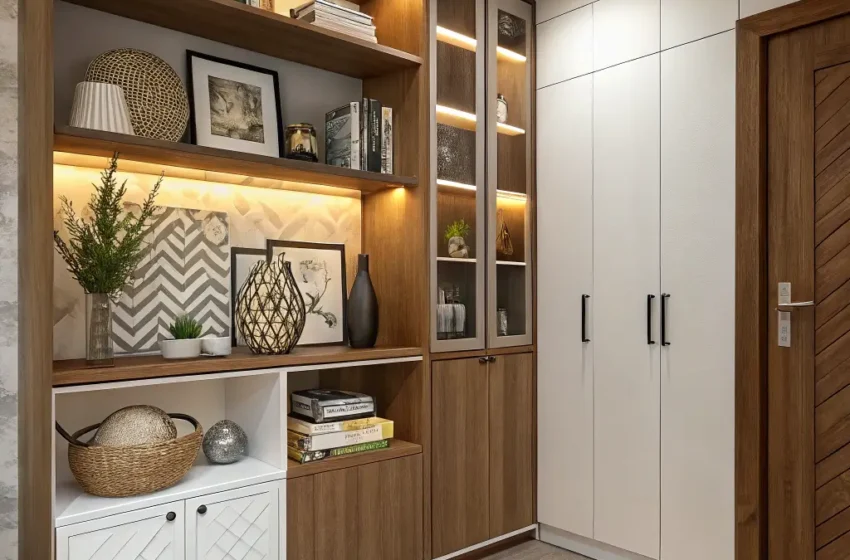
Can’t decide between open shelving and closed storage? Why not both? Open-shelf hybrid cupboards are having a moment, and honestly, I’m here for it. They’re like the mullet of storage solutions – business up top, party on the bottom (or vice versa, depending on your design).
My living room cupboard has open shelves on top for displaying books and plants, with closed storage below for hiding the less photogenic stuff. It’s perfect for those of us who want the Instagram-worthy open shelving look but also need to hide our junk somewhere.
Styling Your Hybrid Like a Pro
The secret to making these look good? The 70/30 rule. Keep about 70% of your open shelves filled with purposeful items, leaving 30% as breathing room. Nobody wants to see your shelves looking like a game of Tetris gone wrong.
I organize my open sections by color and height – it sounds pretentious, but it actually makes finding things easier. Plus, it looks intentional rather than like you just shoved everything up there and hoped for the best (even though that’s exactly what I did the first time).
FYI, dust is your enemy with open shelving. I dust mine weekly, which sounds excessive until you see what accumulates in just seven days. It’s like my shelves are hosting secret dust parties when I’m not looking.
Also Read: 10 Stylish Wooden Cupboard Design Ideas to Inspire You
Hidden Handle Minimal Cupboard: The Sleek Sensation

Handles are so last year. Hidden handle cupboards – also called handleless or push-to-open – give you that ultra-clean, minimalist look that makes everything else in your room look more expensive by association.
I went full minimalist in my home office with these, and the clean lines are chef’s kiss. No handles jutting out, no hardware to catch on your clothes, just smooth surfaces that look like they belong in a Danish design museum.
The Push-to-Open Revolution
Most hidden handle designs use either a push-to-open mechanism or a recessed groove. I prefer push-to-open because it feels like magic every time – just tap the door and it pops open. Makes me feel like I’m living in the future, even if the rest of my life is firmly stuck in chaos mode.
The groove style works great too, especially if you’re worried about the push mechanisms wearing out. I’ve got groove-style ones in my kitchen, and they’ve survived three years of me yanking them open while cooking. The grooves can collect dust and crumbs though, so keep a brush handy for cleanup.
Warning: these mechanisms can be sensitive. My cat figured out how to open the push-to-open cupboards, and now I regularly find her napping with my towels. Consider magnetic locks if you have clever pets or curious toddlers!
Loft-Style Overhead Cupboard: The Ceiling Hugger

Ever looked up at your ceiling and thought, “What a waste of space”? Loft-style overhead cupboards are here to fix that. They’re like the penthouse suite of storage – up high, out of the way, but always there when you need them.
I installed these above my desk, and they’re perfect for storing stuff I need maybe once a month. Tax documents, seasonal decorations, that yoga mat I swear I’ll use again someday – they all live up there in organized bliss.
Making Heights Work for You
The trick with overhead cupboards is getting the height right. Too low and you’ll bonk your head (ask me how I know). Too high and you’ll need climbing gear to reach anything. I keep mine about 18 inches from the ceiling – high enough to not feel oppressive, low enough that a standard step ladder works.
One genius hack I discovered? Label the bottom of each cupboard. When you’re standing below looking up, you can actually see what’s inside without playing the guessing game. It’s saved me from so many unnecessary climbing expeditions.
Also, invest in lightweight storage boxes for these cupboards. You don’t want to be hauling heavy containers over your head. I learned this lesson when a box of books nearly gave me an unexpected concussion. Now everything up there is in lightweight plastic bins, clearly labeled, and definitely not trying to kill me :/
Fold-Out Compact Cupboard: The Transformer

Remember Transformers? These cupboards are basically that, minus the robots and explosions. Fold-out cupboards give you workspace when you need it and disappear when you don’t. They’re perfect for tiny homes, studios, or anywhere you need furniture to multitask harder than you do on Monday mornings.
My favorite implementation? A fold-out desk cupboard in my guest room. When closed, it looks like a regular cupboard. Open it up, and boom – instant home office for visitors. It’s gotten me so many “where did you get this?!” reactions that I should probably start charging a finder’s fee.
Maximizing the Fold-Out Feature
The key to fold-out cupboards is balance – literally. Make sure whatever folds out is properly counterweighted, or you’ll end up with a cupboard door that wants to slam shut on your laptop. Not speaking from experience or anything…
I organize mine with lightweight items on the fold-out section and heavier storage in the main cupboard body. This keeps the mechanism from wearing out and prevents that terrifying moment when you wonder if the whole thing’s about to collapse.
These work amazingly for craft rooms, home bars, or even mini vanities. My friend has one that folds out into a complete makeup station, with LED lights and everything. It’s like having a secret room, except it’s just a cupboard. IMO, that’s even cooler.
Also Read: 10 Stylish Kitchen Cupboard Organization Ideas for Modern Kitchens
Built-In Niche Cupboard: The Custom Fit Champion
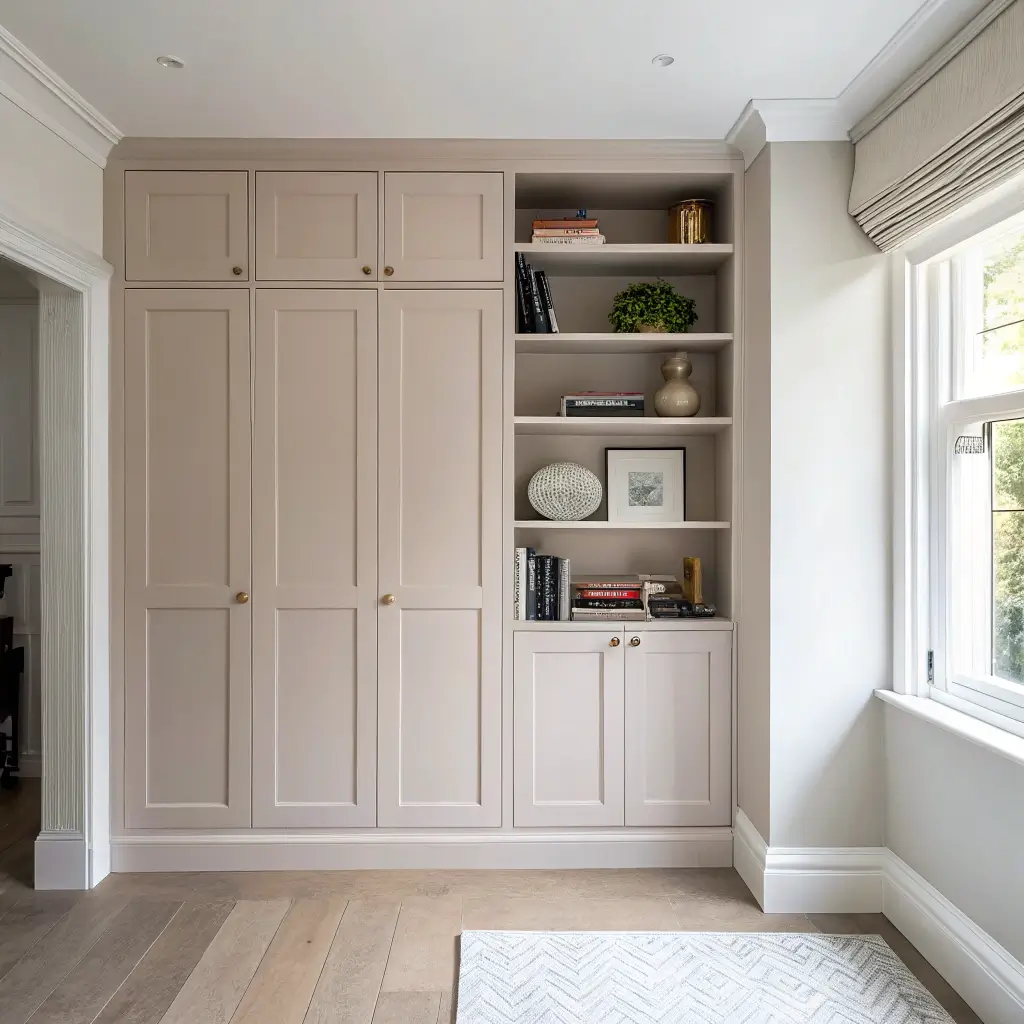
Last but definitely not least, built-in niche cupboards are the couture of storage – custom-fitted to your exact space. They turn those weird architectural quirks into storage gold. Got an awkward alcove? Boom, cupboard. Random wall indent? Storage opportunity!
I had one built into the weird space under my stairs, and it’s become my favorite storage spot. It fits perfectly, looks like it was always meant to be there, and holds an embarrassing amount of stuff I probably don’t need but refuse to throw away.
Planning Your Perfect Niche
Here’s the thing about built-in niche cupboards – measure three times, build once. Seriously. These need to fit like a glove, or they’ll look wonky forever. I’ve seen too many DIY attempts that ended up with gaps you could fit a hand through.
Consider the door swing carefully. In tight niches, bi-fold or sliding doors often work better than traditional ones. My under-stairs cupboard has accordion doors, which seemed weird at first but actually maximize the accessible storage space.
Don’t forget about lighting! Niche spaces tend to be darker, so adding some LED strips inside makes a huge difference. I can actually see what I’m grabbing instead of playing the “mystery box challenge” every time I need something.
Bringing It All Together: Your Small Cupboard Game Plan
So there you have it – ten small cupboard designs that actually work in real life, not just in magazine spreads. The best part? You don’t have to pick just one. Mix and match based on your space and needs.
Start with the area that bugs you most. Is it that corner collecting dust? Try a corner-fit design. Tight on floor space? Go vertical with floor-to-ceiling or try floating options.
Want to impress visitors? Mirror-front or hidden handle designs will have them asking for your interior designer’s number (spoiler: it’s you).
Remember, the best storage solution is the one you’ll actually use. Don’t install push-to-open cupboards if you know you’ll forget how to open them every time. Skip the overhead options if you’re afraid of heights.
There’s no shame in choosing function over form – though with these designs, you really can have both.
What’s your biggest small space storage challenge? I bet one of these cupboard designs could solve it.
And hey, if you try any of these and they transform your space, I want to see pictures! Nothing makes me happier than seeing clever storage solutions in action (yes, I know that’s weird, but we all have our things).
Happy organizing, and may your cupboards be forever clutter-free! Well, at least for the first week after you organize them. After that, all bets are off – we’re only human, after all.