10 Modern Book Shelves Ideas and Chic Home Décor Tips
- Floating Shelves
 Ben
Ben- 0
- 26 minutes read
Books everywhere. On the floor, stacked on tables, shoved in closets, and that precarious pile on your nightstand that threatens to topple over every time you reach for your phone. Sound familiar?
Yeah, I’ve been there, and let me tell you – finding the right bookshelf solution changed my life from “chaotic book hoarder” to “sophisticated literary collector.”
I’m basically a bookshelf evangelist at this point.
After years of trying every storage solution imaginable (including that phase where I thought cardboard boxes were “industrial chic”), I’ve discovered that the right bookshelf doesn’t just store books it transforms your space and makes you look like you actually know what you’re doing with interior design.
Floating Corner Bookshelves: The Space-Saving Miracle Worker
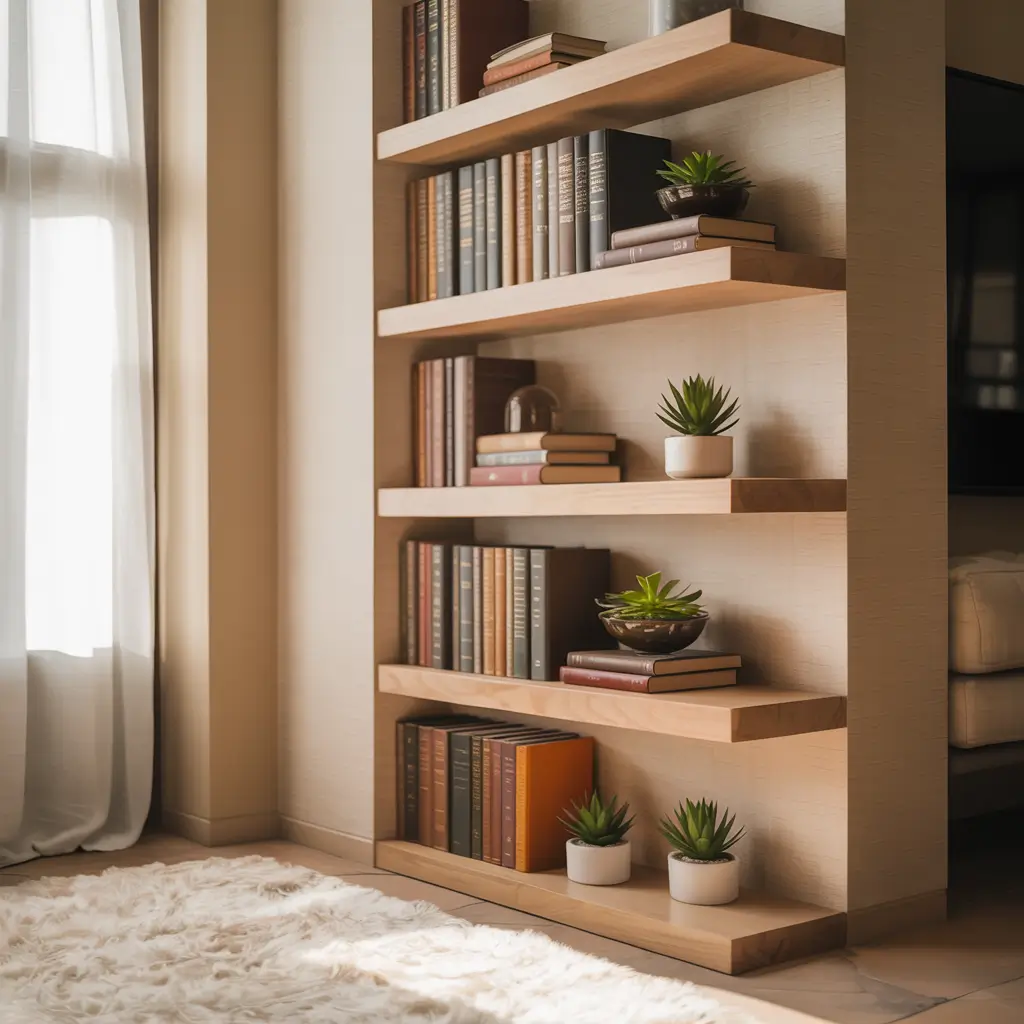
Corner spaces drive me crazy. They’re like that awkward pause in conversation – you know something should go there, but what? Enter floating corner bookshelves, the hero we all needed but didn’t know existed.
I installed my first set of floating corner shelves two years ago, and honestly, I felt like a genius. That dead corner in my bedroom suddenly became a literary focal point. The best part? They don’t eat up floor space, so my room still feels open and airy instead of cramped with furniture.
Making Corners Work Harder Than Your Morning Coffee
The trick with floating corner shelves is getting the height right. I learned this after installing my first shelf at shoulder height and promptly walking into it three times in one week. Now I keep them at least 6 feet up or below hip level – basically anywhere my clumsy self won’t collide with them.
You want to know what really sells the floating shelf look? Hiding those brackets like they’re state secrets. I use brackets that sit flush against the wall, painted the same color as the wall itself. The books look like they’re levitating, and visitors always do that confused head-tilt thing trying to figure out how they’re staying up.
Weight distribution matters more than you’d think with corner shelves. I made the rookie mistake of loading one side with my hardcover Stephen King collection while leaving the other side empty. The shelf didn’t fall, but it developed a concerning tilt that made me nervous every time I walked past. Now I balance the weight evenly, and my anxiety levels thank me.
Ladder-Style Bookshelf Display: The Trendy Classic That Actually Works
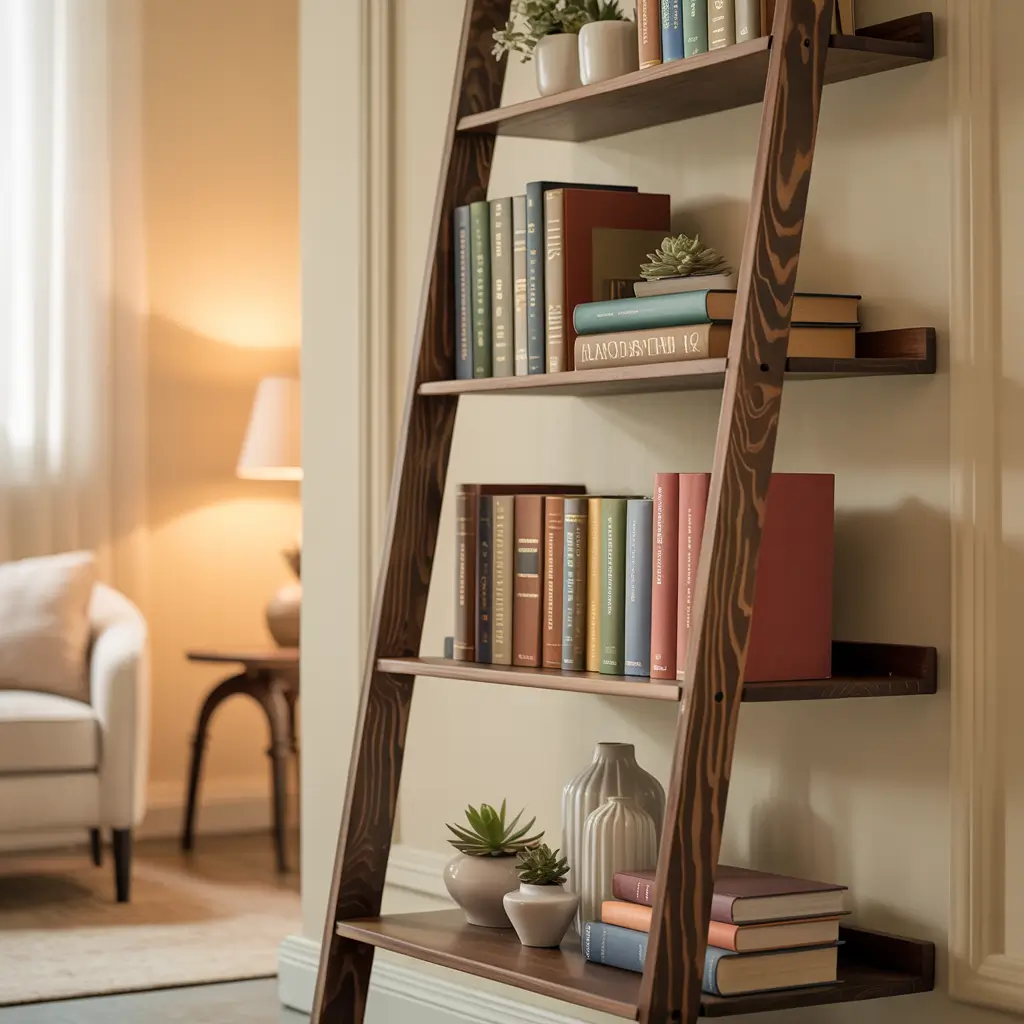
Remember when ladder shelves exploded onto the scene and everyone suddenly needed one? Well, I’m here to tell you they’re not just a passing trend – they’re genuinely brilliant for book storage.
My ladder bookshelf lives in my living room, and it’s become the piece everyone comments on. It leans against the wall at the perfect angle, creating this casual “I just happened to arrange my books beautifully” vibe that took me three hours to achieve. But hey, nobody needs to know that!
Styling Your Ladder Shelf Without Looking Like a Pinterest Fail
The graduated shelf sizes on ladder bookcases mess with people’s heads. Everyone’s instinct is to put big books on the big shelves at the bottom, but that makes it look bottom-heavy and weird. I mix sizes throughout – a few coffee table books on the narrow top shelf actually create visual interest instead of looking precarious.
Here’s my secret weapon: bookends aren’t necessary on ladder shelves! The slight backward lean keeps everything in place. I discovered this after spending $50 on decorative bookends that I never ended up using. They now live in a drawer, judging me for my poor financial decisions.
Don’t just stack books horizontally or vertically – mix it up! I arrange some books spine-out, some stacked flat with a small plant on top, and others displayed cover-out. It breaks up the monotony and makes the whole thing look less like a library and more like a curated display.
Built-In Wall Bookshelves: The “I Have a Library” Flex
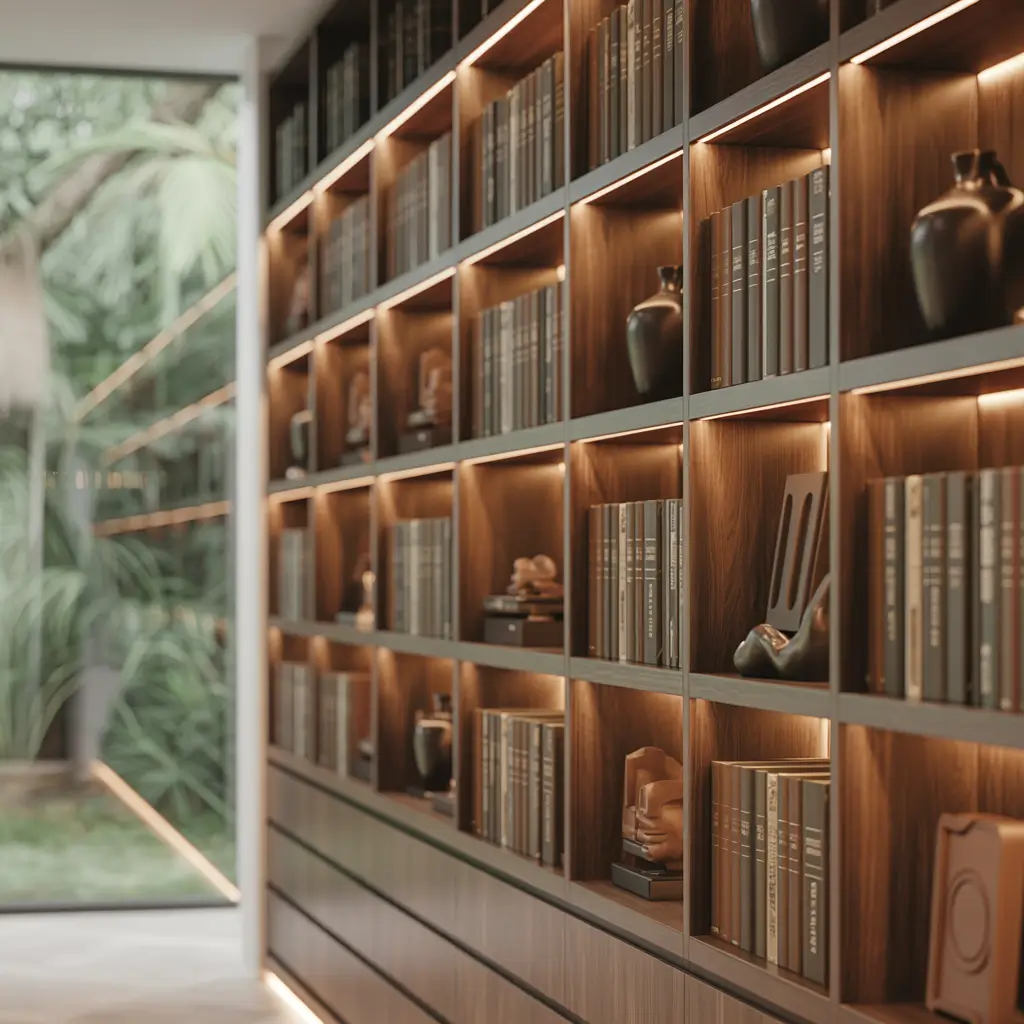
Built-in wall bookshelves are the Mount Everest of book storage – impressive, commanding, and they make everyone who sees them slightly jealous. I finally got built-ins installed last year, and I swear my IQ looks 20 points higher just standing next to them.
The transformation is insane. My spare room went from “place where stuff goes to die” to “sophisticated home library” faster than you can say “floor-to-ceiling shelving.” Even my mother-in-law was impressed, and that woman finds fault with everything.
Planning Your Built-In Paradise
Measure your book collection before designing built-ins. Seriously. I didn’t, and now I have shelves perfectly spaced for paperbacks when half my collection is oversized art books. Some adjustable shelves save the day, but fixed shelves at the wrong height haunt you forever.
Consider access to electrical outlets when planning built-ins. I forgot about this and now have to snake a lamp cord across three shelves to reach the nearest outlet. It works, but it’s not exactly the clean aesthetic I was going for. Learn from my mistakes!
The depth of built-in shelves matters more than height or width, IMO. Standard paperbacks need about 8 inches, but hardcovers and special editions need more. I went with 12-inch deep shelves, and they accommodate everything except my ridiculous atlas collection. Those bad boys live on top of the bookshelf, pretending they’re decor.
Also Read: 10 Inspiring Floating Shelves Decor Ideas and Plant Styling Tips
Minimalist Open Frame Shelves: Less Structure, More Style
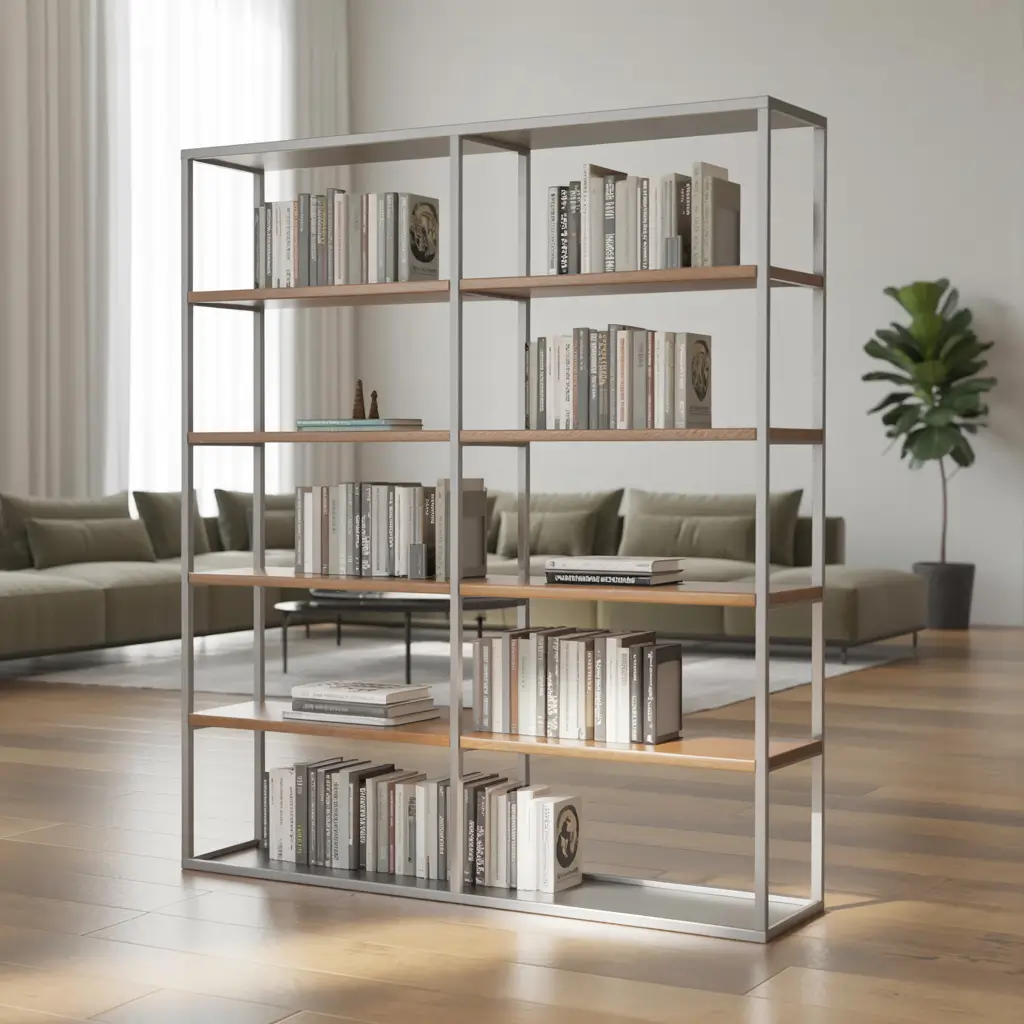
Minimalist open frame shelves are having a moment, and I’m fully on board. They’re like the skeletal structure of a bookshelf – just the essential bits without any extra fluff. My office has these, and they make the space feel twice as big.
The lack of backing means light flows through, preventing that heavy, blocked-in feeling traditional bookcases create. Plus, you can access books from both sides if you position them right. I use mine as a subtle room divider between my work area and reading nook.
The Art of Minimal Shelf Styling
Here’s the thing about minimalist shelves – they show everything. That torn dust jacket you’ve been meaning to fix? Visible. The tea stain on that paperback’s spine? On full display. I learned to embrace the imperfection or upgrade to prettier editions of my favorite books.
Negative space is your friend with minimalist shelving. I follow the 70/30 rule – 70% books, 30% empty space or decorative objects. Any fuller and it defeats the minimalist purpose. Any emptier and people ask if you’re moving out.
Color coordination becomes crucial when everything’s visible. I’m not saying you need to arrange by rainbow (although it does look amazing), but grouping similar colored spines together creates visual calm. My shelves have zones – dark spines together, bright covers in another section, and neutral tones bridging the gaps.
Rustic Wooden Crate Shelves: The DIY Dream That Actually Delivers
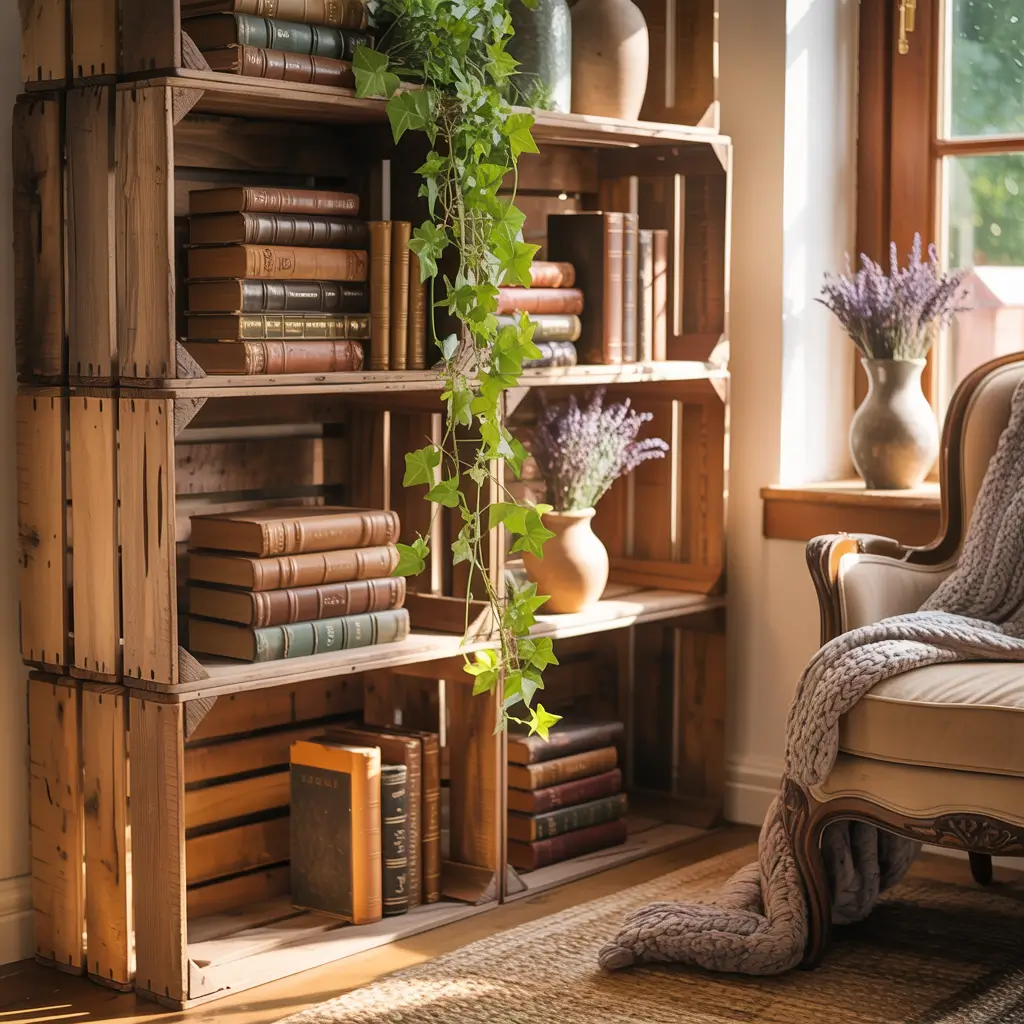
Who knew old wooden crates could look so good? Not me, until I stumbled upon this idea during a particularly desperate storage situation. Now my rustic crate shelves are the most complimented feature in my apartment.
I started with authentic vintage crates from a flea market, but honestly, new crates work just as well if you rough them up a bit. Stack them, mount them, arrange them however you want – it’s like adult Lego but with better aesthetic results.
Creating Your Crate Shelf Masterpiece
The beauty of crate shelves lies in their flexibility. Don’t like the configuration? Rearrange them! I switch mine up every few months when I get bored. It’s like getting new furniture without spending money or arguing with anyone about assembly instructions.
Sand those edges, people! I learned this lesson via splinter. Rustic doesn’t mean dangerous. A quick sanding keeps the character while removing the hazards. Your fingers will thank you every time you reach for a book.
Secure them properly if you’re stacking crates. My first attempt relied on gravity and hope. Then my cat decided to use them as a climbing structure. The resulting book avalanche was spectacular but not something I want to repeat. Now everything’s bracketed to the wall, and Mr. Whiskers can climb to his heart’s content.
Geometric Wall Bookshelves: The Conversation Starter
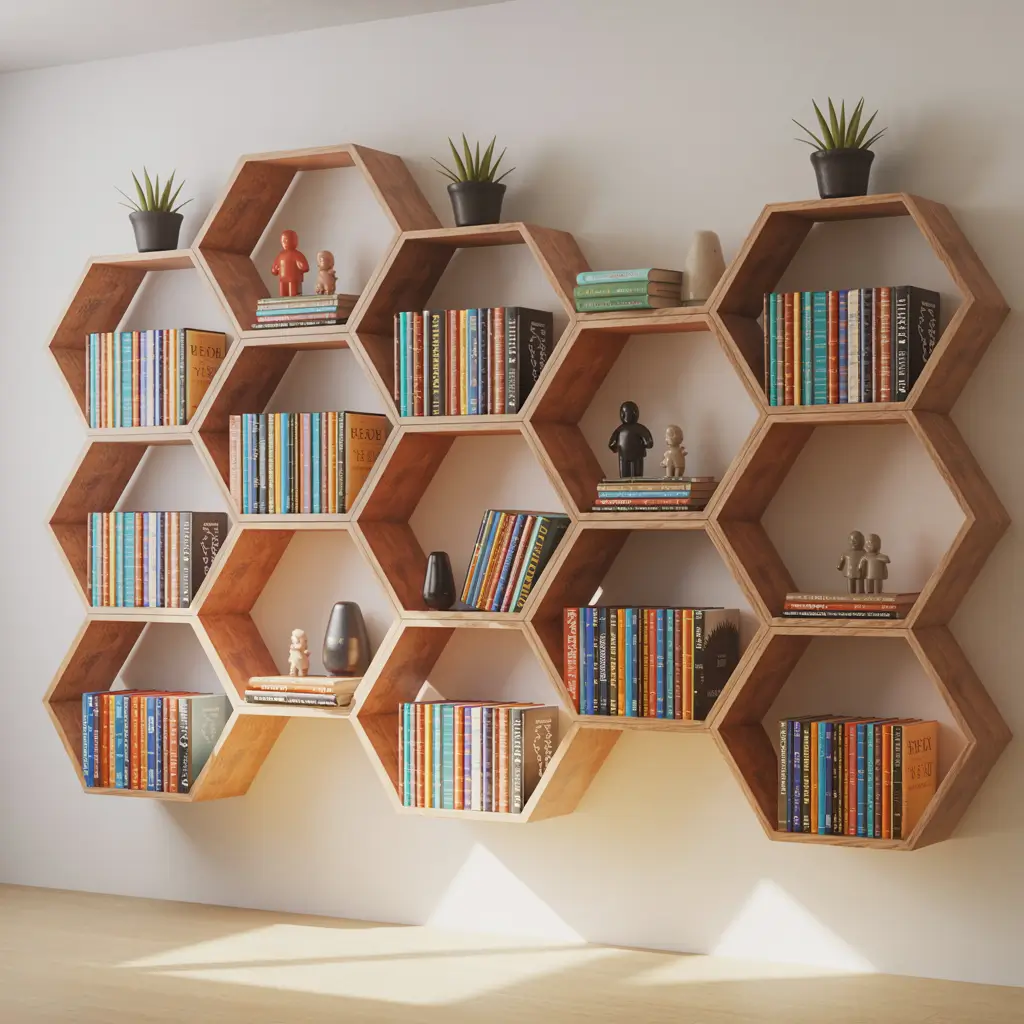
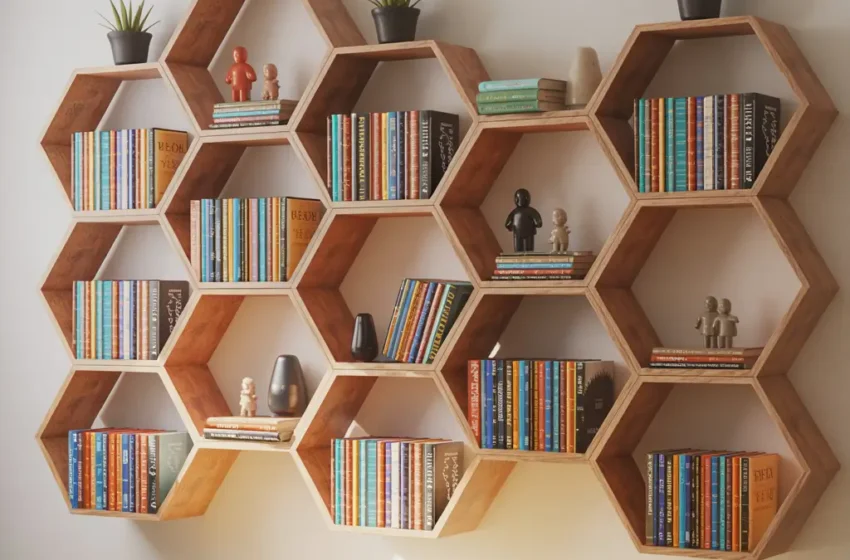
Geometric bookshelves are like functional art for your walls. Hexagons, triangles, asymmetric shapes – they turn book storage into a design statement. My geometric shelves get more attention than my actual art collection, which says something about either the shelves or my taste in art.
I went with a honeycomb pattern in my hallway. Six hexagonal shelves arranged in a cluster, each one holding different books and objects. It looks like something from a design magazine, but really it just took patience and a very understanding partner who held shelves while I figured out spacing.
Mastering the Geometric Game
Balance is everything with geometric shelving. Too many shapes and your wall looks chaotic. Too few and it looks unfinished. I started with three shelves, realized it looked sad, added three more, and found my sweet spot. Your wall size will dictate your magic number.
Play with orientation! Hexagons don’t all have to point the same way. Triangles can point up, down, or sideways. I spent an entire afternoon arranging and rearranging before mounting anything. Painter’s tape mockups saved me from a wall full of unnecessary holes.
These shelves work best with smaller book collections or mixed displays. Cramming them full of books defeats the geometric impact. I keep 3-5 books per shelf max, supplemented with small plants, ceramics, or that weird rock collection I pretend is sophisticated.
Also Read: 12 Unique DIY Floating Shelves Ideas and Decorative Touches
Hidden Compartment Bookshelves: The Secret Agent Setup
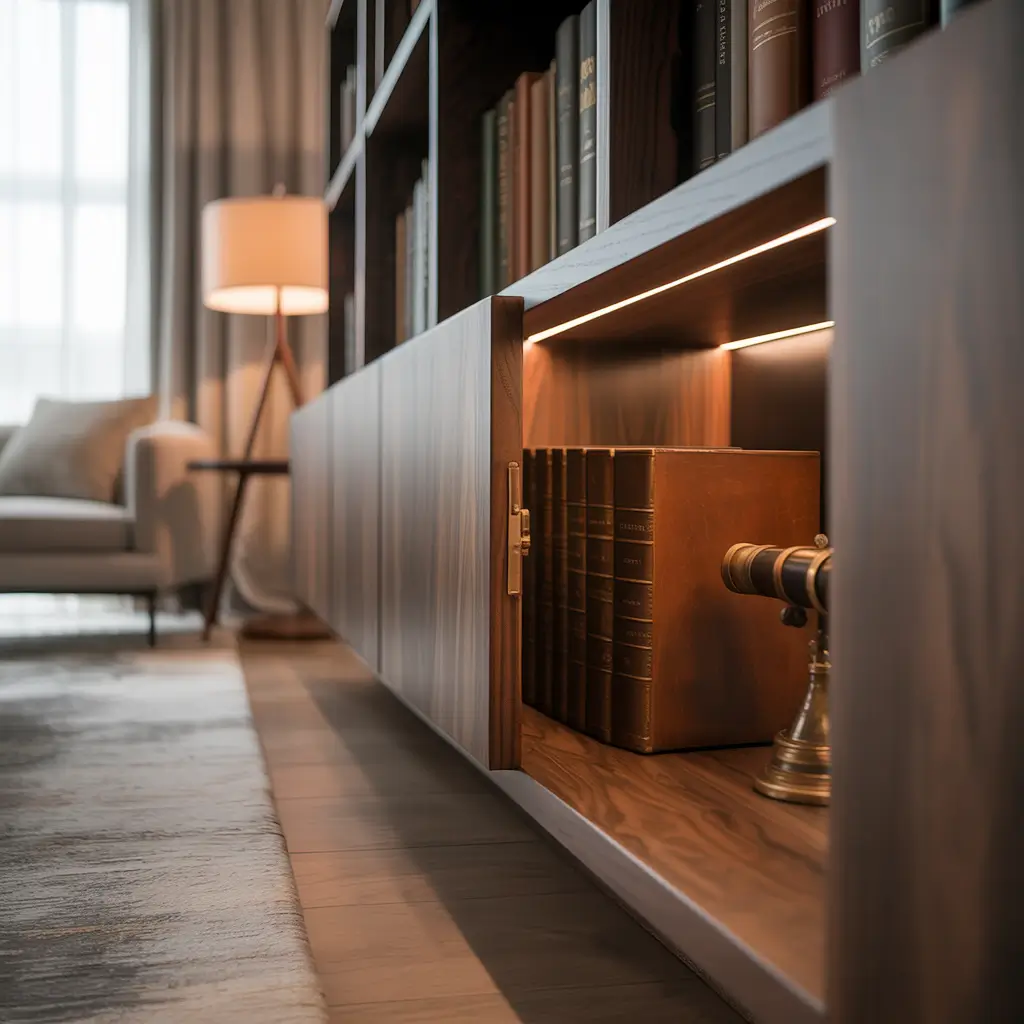
Hidden compartment bookshelves make me feel like I’m in a spy movie every single day. Pull the right book, and a secret drawer opens. Push a panel, and there’s hidden storage. It’s completely unnecessary and absolutely wonderful.
My hidden compartment shelf hides my journal, important documents, and yes, emergency chocolate. The compartments look like regular shelf backing, but they’re actually carefully disguised doors. Visitors have no idea they’re looking at secret storage, which brings me way too much joy 🙂
Creating Your Own Hidden Storage
The key to good hidden compartments? Make them actually hidden. I’ve seen attempts where the “secret” door has visible hinges and an obvious handle. That’s not hidden; that’s just a door you’re pretending doesn’t exist.
Consider what you’ll actually store in hidden compartments. I initially thought I’d hide valuables, then remembered I don’t own valuables. Now they hold gift wrap, private documents, and things I don’t want on display but need to access occasionally.
Magnetic latches are your best friend for hidden compartments. No visible hardware, just a smooth surface that pops open when you know where to press. I feel like a genius every time I open mine, even though I literally just followed a YouTube tutorial.
Bookshelf Room Divider: The Wall That Isn’t
Open-plan living sounds great until you realize everyone can see your unmade bed from the living room. Enter the bookshelf room divider – the hero of studio apartments and open floor plans everywhere.
My bookshelf divider separates my living and sleeping areas without making my apartment feel like a maze. Books face both directions, so each “room” gets its own library view. It’s functional, beautiful, and way cheaper than building an actual wall.
Making Division Work Without Feeling Divided
Height matters with room dividers. Too tall and you block light and feel boxed in. Too short and what’s the point? I went with 6-foot shelves – tall enough for privacy, short enough that light flows over the top.
Anchor room dividers properly! They’re not against a wall, so stability becomes crucial. I learned this when mine decided to lean dramatically during a dinner party. Nothing kills the mood quite like catching a falling bookshelf while holding a wine glass.
Double-sided access means double the styling opportunity. I keep fiction facing the living room and non-fiction facing the bedroom. It’s like having two completely different bookshelves that happen to share a spine. Very philosophical if you think about it too hard.
Color-Coded Book Display Shelves: The Rainbow Connection
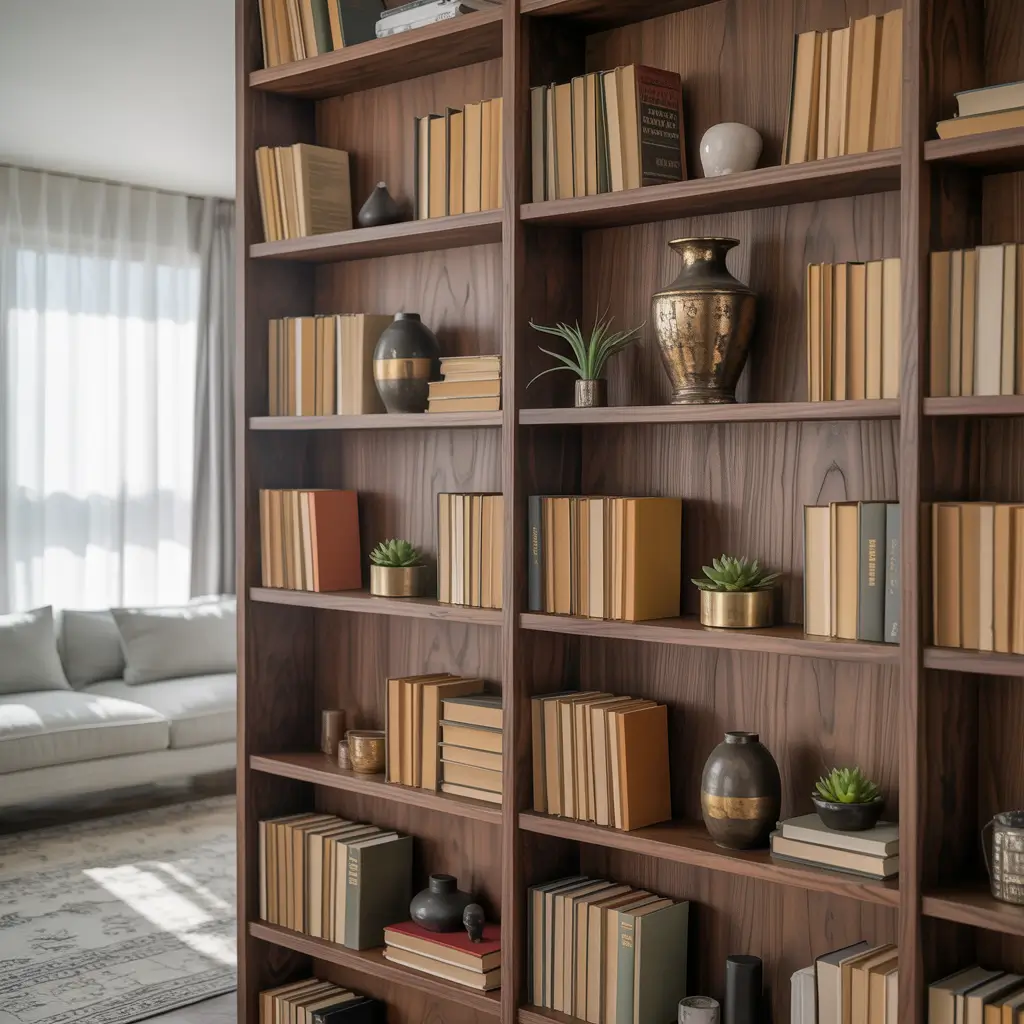
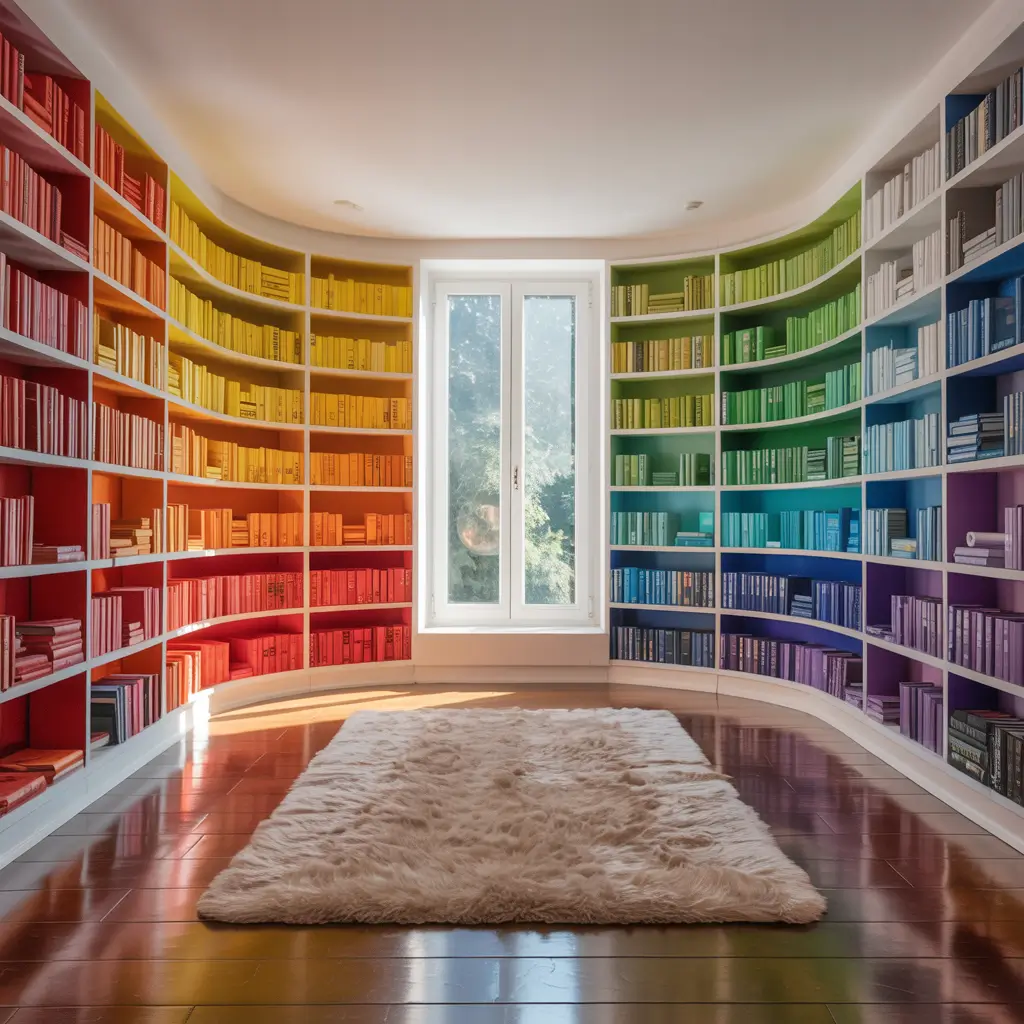
Color-coding books is polarizing – people either love it or think you’ve lost your mind. I’m firmly in the love camp. My rainbow shelves bring me joy every single day, and isn’t that what home decor should do?
The transformation from chaos to rainbow took an entire weekend and more reorganizing than I care to admit. But now my books look like an art installation instead of random storage. Even my most literary snob friends admit it looks incredible, though they mutter about “finding nothing” under their breath.
Creating Your Own Book Rainbow
Start with a book inventory before going full rainbow. I discovered I own way too many books with black covers and not nearly enough orange ones. This led to some strategic book shopping to fill gaps, which my bank account didn’t appreciate but my shelves definitely did.
Decide on your color flow direction. I go dark to light, left to right, but vertical rainbows work too. Some people do gradients within each shelf. There’s no wrong answer, just different levels of obsession. Pick your fighter.
Don’t stress about perfect color matches. Books aren’t paint swatches. That “green” book might be more teal, and that’s okay. The overall effect matters more than perfect color science. Unless you’re a perfectionist like me, in which case, godspeed and maybe invest in some book covers.
Also Read: 12 Elegant Built-In Shelves Living Room Ideas That Wow
Hanging Rope Bookshelves: The Nautical Necessity
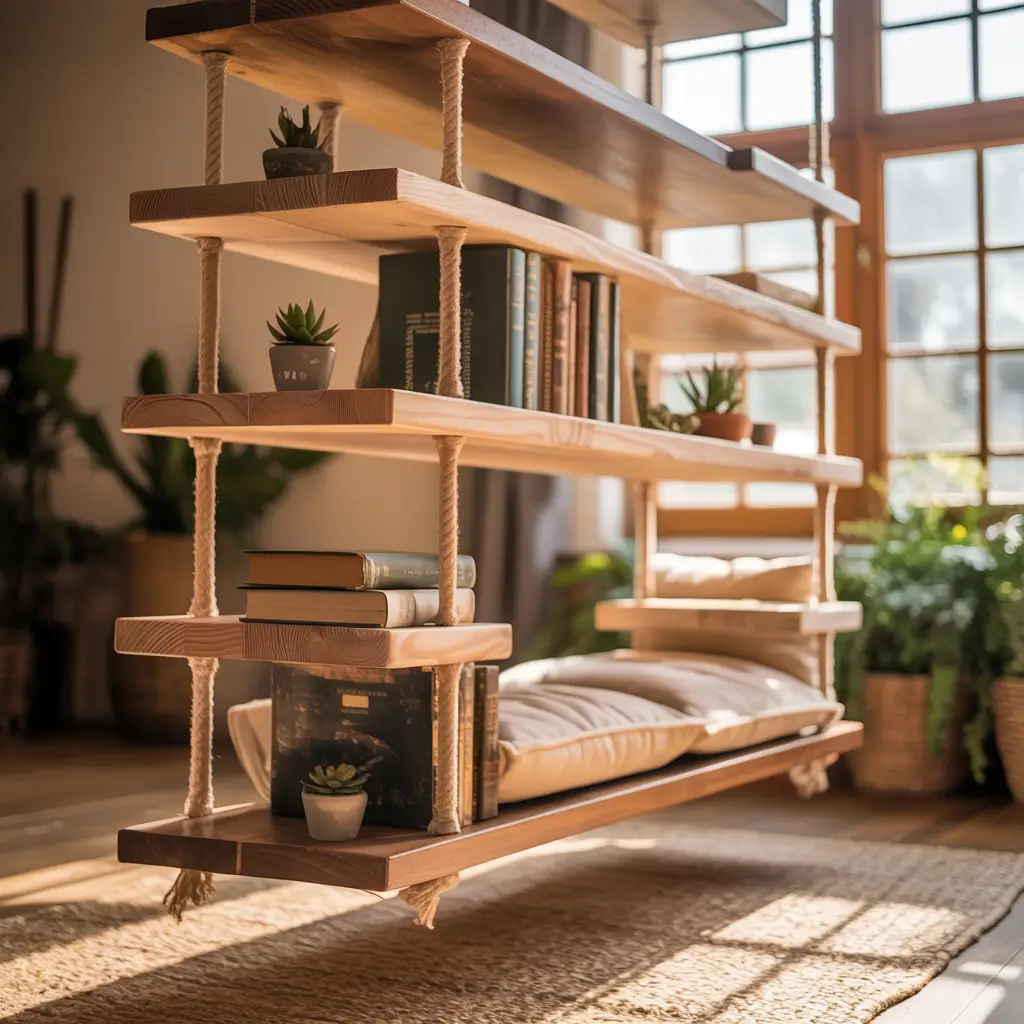
Hanging rope bookshelves bring maritime vibes without the seasickness. They’re perfect for beach houses, but honestly, they work anywhere you want a casual, relaxed feeling. Mine hang in my sunroom, swaying slightly in the breeze from the window, looking impossibly cool.
I built mine from scratch with thick rope and reclaimed wood planks. The whole project cost less than $50 and took one afternoon. The hardest part was making sure everything hung level – rope has its own ideas about physics that don’t always align with human expectations.
Mastering the Rope Shelf Hang
Ceiling mounting points need serious consideration. Find those joists! I cannot stress this enough. Drywall anchors might hold a plant, but they won’t hold books. Trust me, or trust my former downstairs neighbor who experienced a literary rainfall at 2 AM.
The rope thickness affects both aesthetics and function. Thin rope looks delicate but can cut into wood over time. Thick rope looks substantial but might overwhelm small shelves. I use 3/4 inch rope – sturdy enough for books, not so thick it looks like I robbed a shipyard.
Knots matter more than you’d think. Learn a proper knot or two – YouTube University has your back here. My first attempt used basic knots that slowly loosened over time. Nothing says “relaxing reading nook” like constantly worrying your shelves might drop :/
The Bottom Line: Your Books Deserve Better
Look, books are more than just paper and ink – they’re adventures, knowledge, escapes, and sometimes impromptu coasters (though we don’t talk about that). They deserve better than being shoved in boxes or stacked in precarious towers.
The right bookshelf transforms not just your storage situation but your entire space.
Whether you go full rainbow, embrace the geometric trend, or build secret compartments for your diary, the key is choosing what works for your life and your books.
Start with one idea that speaks to you. You don’t need to revolutionize your entire home library system overnight. I started with one floating shelves corner shelf and now have four different bookshelf styles throughout my home.
Each one solves a different problem and brings its own character to the space.
Your books are waiting for their proper home. Give them the shelf they deserve, and they’ll reward you with an organized, beautiful space that makes you smile every time you walk past.
Plus, you’ll finally have an answer when people ask, “Have you really read all these?” (The answer is no, but the shelves make it look believable!)