12 Elegant Display Shelves Ideas for Modern Interiors
- Floating Shelves
 Ben
Ben- 0
- 28 minutes read
Your favorite things deserve better than being shoved in a drawer or stacked in a closet where nobody sees them. I learned this after keeping my vintage camera collection hidden for three years because I “didn’t have anywhere to display them.”
Turns out, I was just missing the right display shelves to transform my treasures from dust collectors into the focal point of my living room.
Display shelves are like stages for your personality – they showcase what makes you interesting while solving the eternal “where do I put this?” problem.
After experimenting with virtually every display shelf style imaginable (and making some truly regrettable choices along the way), I’ve discovered which ones actually work for real homes with real collections.
Let me save you from my mistakes and show you the display solutions that’ll make visitors actually ask about your stuff instead of politely ignoring it.
Floating Corner Shelves: The Dead Space Miracle Workers
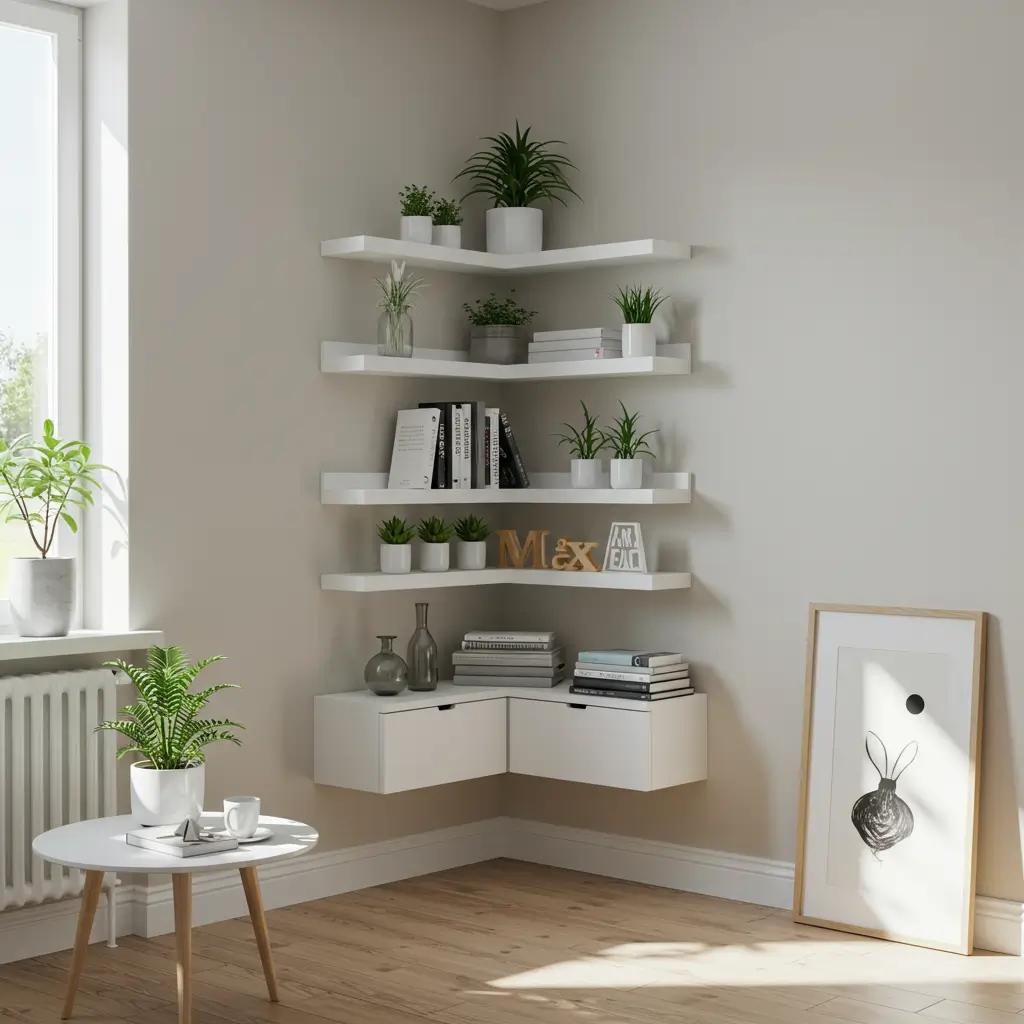
Floating corner shelves turn those awkward angles nobody knows what to do with into prime display territory. I installed a set of three in my dining room corner last year, and suddenly my grandmother’s teacup collection had the perfect home. The corner placement creates this cozy little display nook that draws people in.
The magic happens because corners naturally frame objects, creating a stage-like effect. Your displayed items don’t compete with everything else in the room – they get their own special zone. Plus, floating shelves in corners use space that would otherwise just collect dust and maybe a sad fake plant.
Making Corner Displays Pop
Choose triangular or curved corner shelves over simple L-shapes. I tried basic L-shaped shelves first, and they created this harsh angle that made everything look awkward. Rounded corner shelves guide the eye smoothly around the display.
Layer heights strategically in corner arrangements. I keep my tallest items on the bottom shelf, medium on the middle, and small treasures up top. This creates a pyramid effect that feels balanced and intentional rather than randomly stacked.
Light your corner displays properly or they become dark holes. Corners eat light for breakfast. I installed a small LED spotlight aimed at my corner shelves, and suddenly my display went from “I think there’s something there” to “wow, look at those details.”
Rustic Wooden Wall Display: The Warmth Generator
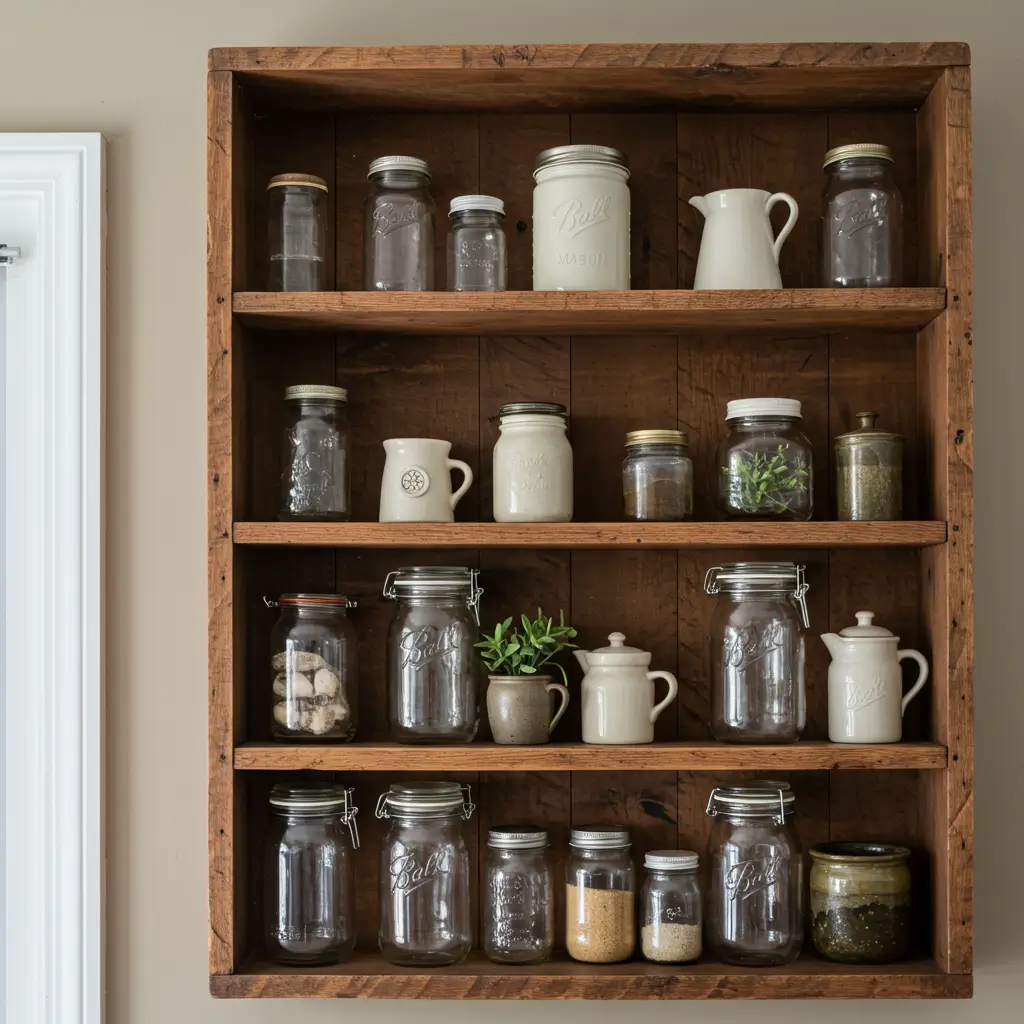
Rustic wooden display shelves bring that farmhouse-meets-sophisticated vibe that makes everything look more expensive and curated. I built mine from reclaimed barn wood, and now my book collection looks like it belongs in a country estate library instead of my suburban apartment.
The weathered wood texture adds character that new materials can’t touch. Each shelf has its own personality with unique grain patterns, knots, and that patina that screams “I have history.” Your displayed items automatically look more important sitting on wood that has stories to tell.
Styling Rustic Display Shelves Like a Pro
Mix modern items with vintage ones on rustic shelves. All old everything can look like a museum. I display my sleek modern camera alongside vintage photos, creating contrast that makes both look better.
Don’t overthink the finish on rustic display shelves. I spent hours trying to make mine look “perfectly weathered” and they looked fake. Embracing natural imperfections creates authenticity that styling can’t achieve.
Space items generously on rustic shelves. The wood itself is visually busy, so crowding creates chaos. I follow the 60% rule – fill about 60% of the shelf space, leaving plenty of breathing room between displayed items.
Minimalist Ladder Shelf: The Lean and Stylish Solution
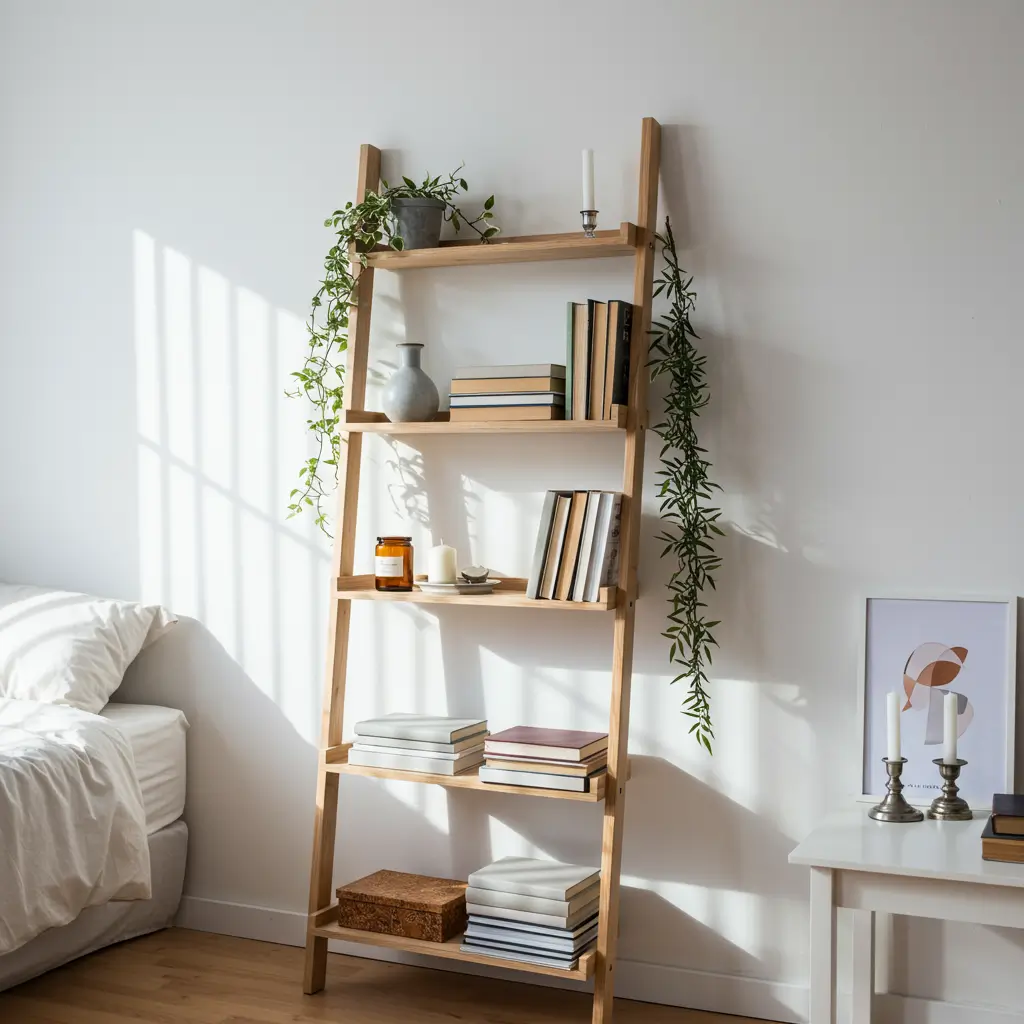
Minimalist ladder shelves lean casually against your wall while displaying your treasures with quiet sophistication. I love these because they work in literally any room and style – I’ve got one in my bedroom for accessories and another in my bathroom for pretty toiletries.
The graduated shelf sizes create natural organization zones. Larger items fit on the wide bottom shelves, smaller pieces nest perfectly on the narrow top rungs. It’s like the shelf designed itself based on common sense.
Mastering the Minimalist Ladder Look
Keep your color palette cohesive on ladder displays. The minimalist vibe falls apart with too many competing colors. I stick to whites, grays, and natural wood tones on my bedroom ladder shelf, with maybe one accent color maximum.
Secure ladder shelves even though they lean. I thought gravity was enough until my cat decided to climb mine like it was Mount Everest. Two small wall anchors at the top prevent disasters while staying invisible.
Style in odd numbers for visual appeal. Three books stacked here, five small frames there – odd groupings look more natural than even ones. I don’t know why this works, but interior designers swear by it, and honestly, they’re right.
Also Read: 10 Creative Wooden Shelves Ideas and Cozy Room Vibes
Geometric Wall Shelves: The Statement Makers
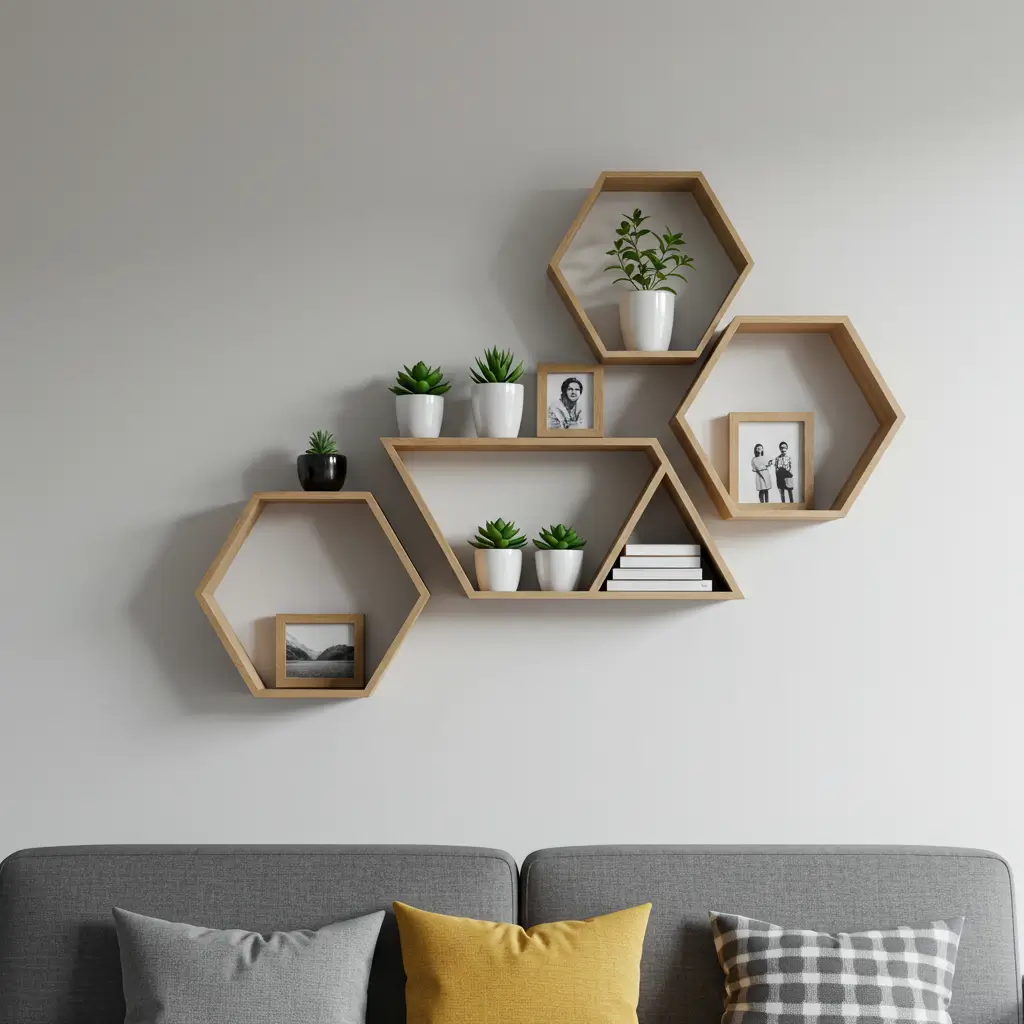
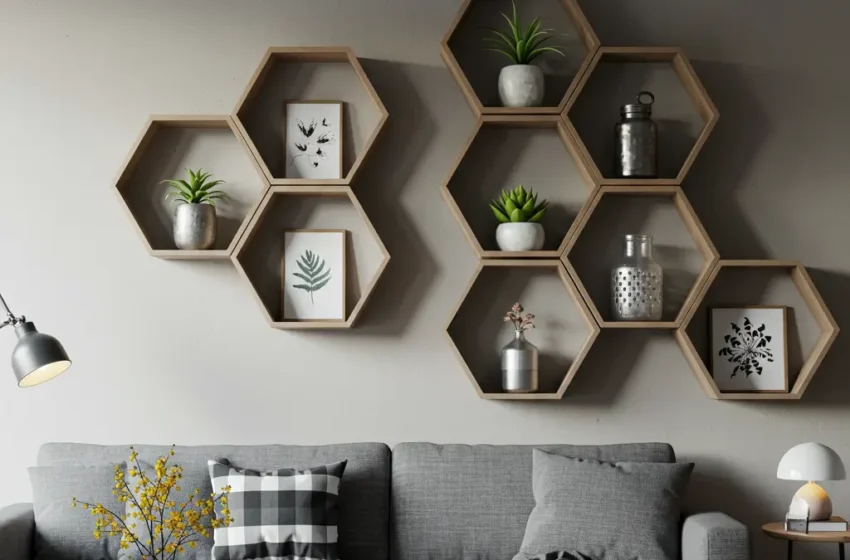
Geometric display shelves turn your wall into functional art. Hexagons, triangles, asymmetric shapes – these shelves make people stop and actually look at what you’re displaying. My hexagon shelf cluster showcases my succulent collection, and visitors always comment on the display before they even notice the plants.
The bold shapes create visual interest that regular rectangular shelves can’t match. You’re not just displaying items; you’re creating an installation. Each geometric shelf becomes its own little frame highlighting whatever sits inside.
Creating Your Geometric Gallery
Plan your arrangement before drilling anything. I used painter’s tape to mock up my hexagon cluster on the wall first. This saved me from the permanent mistake of random geometric chaos.
Don’t fill geometric shelves to capacity. The shape is part of the display. I keep mine about 50% filled, letting the interesting silhouette contribute to the overall effect.
Mix orientations for dynamic impact. All my hexagons point different directions, creating movement that draws the eye around the entire display. Uniform orientation looks too rigid for geometric shelves.
Glass Floating Display Shelf: The Invisible Showcase
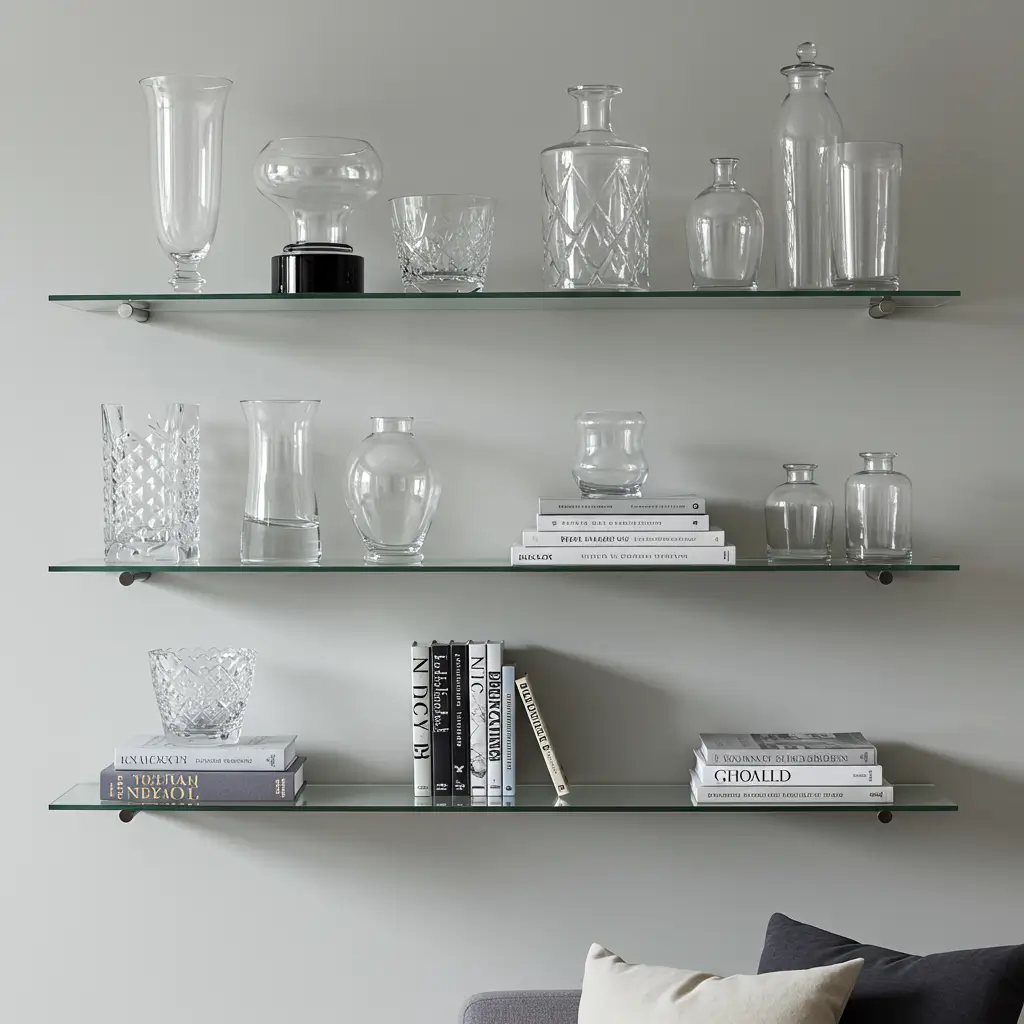
Glass display shelves practically disappear, making your displayed items appear to float on air. I installed two in my kitchen for my vintage glassware collection, and the transparency lets light pass through while creating this ethereal display effect.
The invisible factor works especially well in small spaces. Unlike solid shelves that visually chop up walls, glass maintains sight lines while still providing display space. My tiny powder room feels twice as big with glass shelves instead of wooden ones.
Glass Display Success Strategies
Use tempered glass always, not regular glass. I learned this after hearing my neighbor’s regular glass shelf explode when something heavy hit it. Tempered glass costs more but won’t create a dangerous situation if it breaks.
Clean glass shelves religiously or embrace fingerprints. There’s no middle ground. I wipe mine down weekly with glass cleaner because smudgy glass shelves defeat the whole “elegant display” purpose.
Backlight glass shelves for dramatic effect. I installed LED strips behind my glass shelves, and now my glassware collection glows like it’s in a museum. The setup took twenty minutes and completely transformed the display.
Industrial Pipe Shelves: The Urban Edge Display
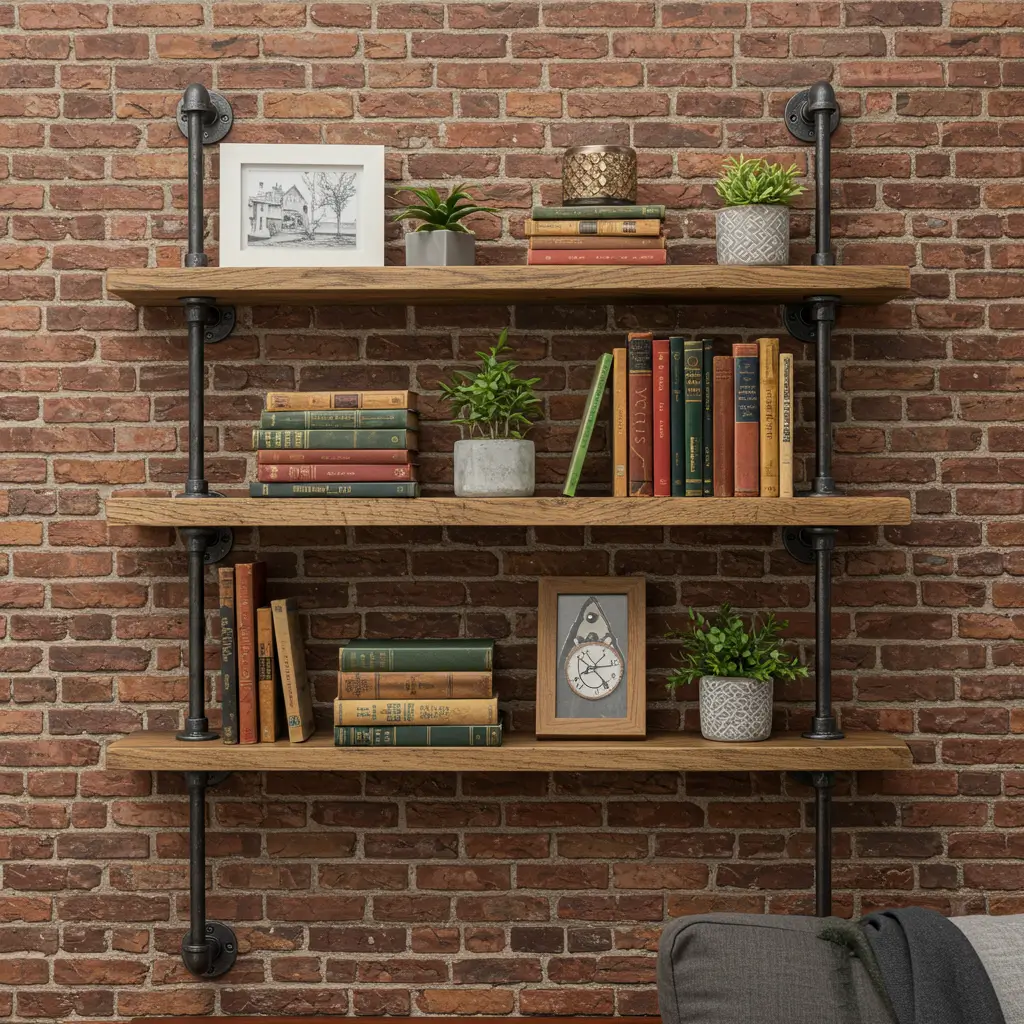
Industrial pipe display shelves bring that Brooklyn loft aesthetic to any space. The raw pipes and wood combination creates an edgy backdrop that makes even basic items look cooler. I installed these in my home office for my vintage typewriter and camera collection – instant sophisticated man-cave vibes.
The exposed hardware becomes part of the design rather than something to hide. Every pipe joint, elbow, and flange contributes to the industrial story. It’s honest construction that celebrates function as form.
Building Your Industrial Display
Choose black iron pipes over galvanized for true industrial appeal. Galvanized screams “plumbing supply” while black iron whispers “curated design choice.” The aesthetic difference justifies the price difference every time.
Mix pipe configurations to create visual interest. I use T-joints, elbows, and straight runs in my setup, creating shelving that looks custom-designed rather than assembled from a kit.
Seal pipes to prevent rust and make cleaning easier. Bathrooms and kitchens have humidity that iron doesn’t love. I apply clear matte spray sealant to all my industrial pipe shelves, and they still look perfect after two years.
Also Read: 12 Creative DIY Closet Shelves Ideas and Stylish Organization
Tiered Plant Display Shelf: The Living Gallery
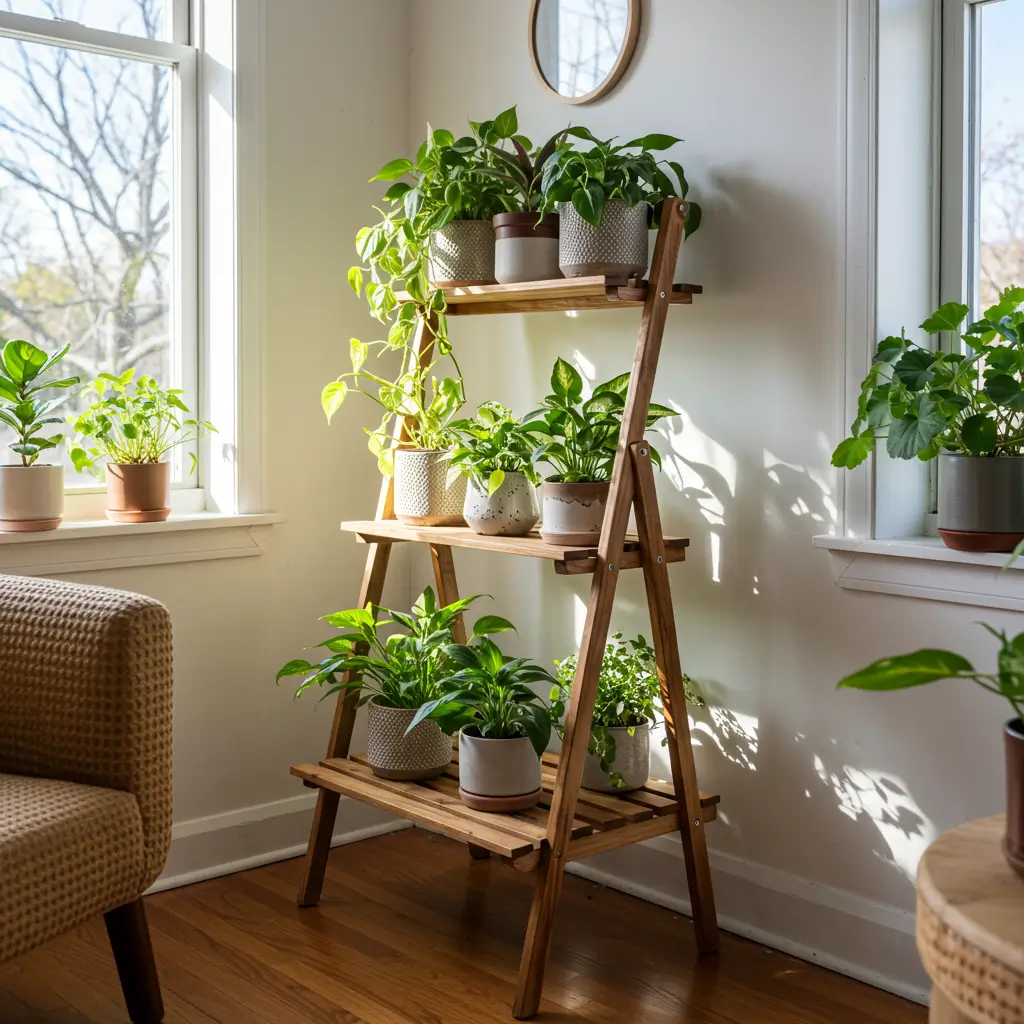
Tiered plant display shelves turn your green collection into a vertical garden installation. Each level gets its own microclimate and light exposure, letting you showcase plants with different needs together. My five-tier plant shelf holds everything from sun-loving succulents on top to shade-preferring ferns at the bottom.
The graduated heights create visual flow that guides the eye upward. Trailing plants cascade down from upper shelves while upright plants stand proudly on lower levels. It’s like conducting an orchestra, but with chlorophyll.
Growing Your Tiered Display
Position tiered plant shelves based on light, not aesthetics. I made this mistake once, putting my beautiful tier shelf in a dark corner. My plants died, and the shelf just displayed failure. Now I always prioritize plant needs first.
Use waterproof trays on every tier. One overenthusiastic watering session taught me this lesson when water cascaded from the top shelf down through all five levels. Now each tier has its own drainage system.
Vary plant types across tiers for visual interest. All trailing plants or all upright ones looks monotonous. I mix textures, colors, and growth patterns to create a dynamic display that changes as plants grow.
Hexagon Modular Shelves: The Customizable Collection
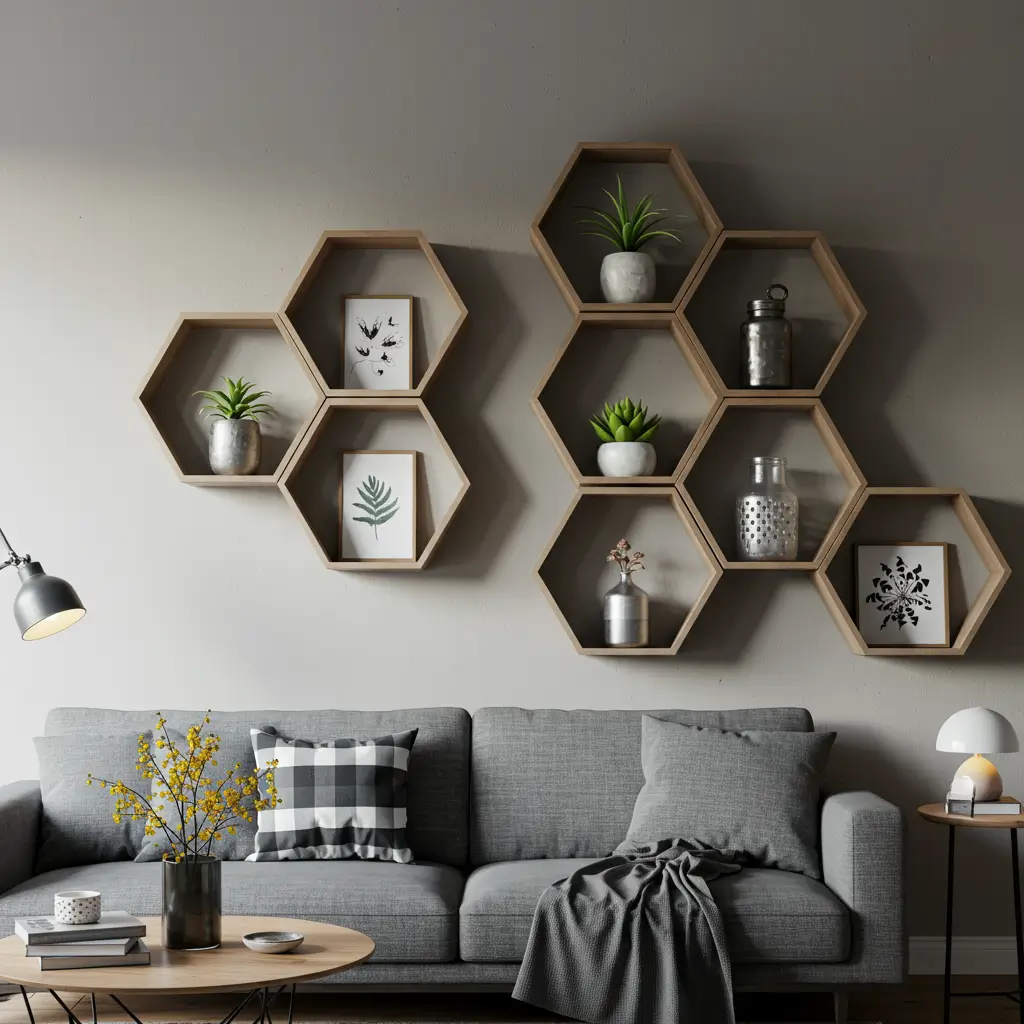
Hexagon modular display shelves let you build and rebuild your display wall infinitely. Each hexagon unit connects to others, creating honeycomb patterns that you can expand or reconfigure whenever inspiration strikes. I started with three hexagons and now have twelve – they’re addictive.
The modular nature means your display grows with your collection. New treasures? Add another hexagon. Downsizing? Remove a few units. It’s like adult Legos that hold your stuff.
Modular Hexagon Mastery
Start small and plan for expansion. I bought twelve hexagons immediately and overwhelmed my wall. Beginning with a small cluster lets you test placement and grow organically.
Mix empty hexagons with filled ones. Not every unit needs to hold something. Strategic empty spaces create breathing room and make displayed items stand out more.
Create color zones within your hexagon wall. I group similar colored items in certain sections – blues here, neutrals there, metallics in another zone. This creates cohesion in what could become visual chaos.
Shadow Box Wall Shelf: The Depth Dimension
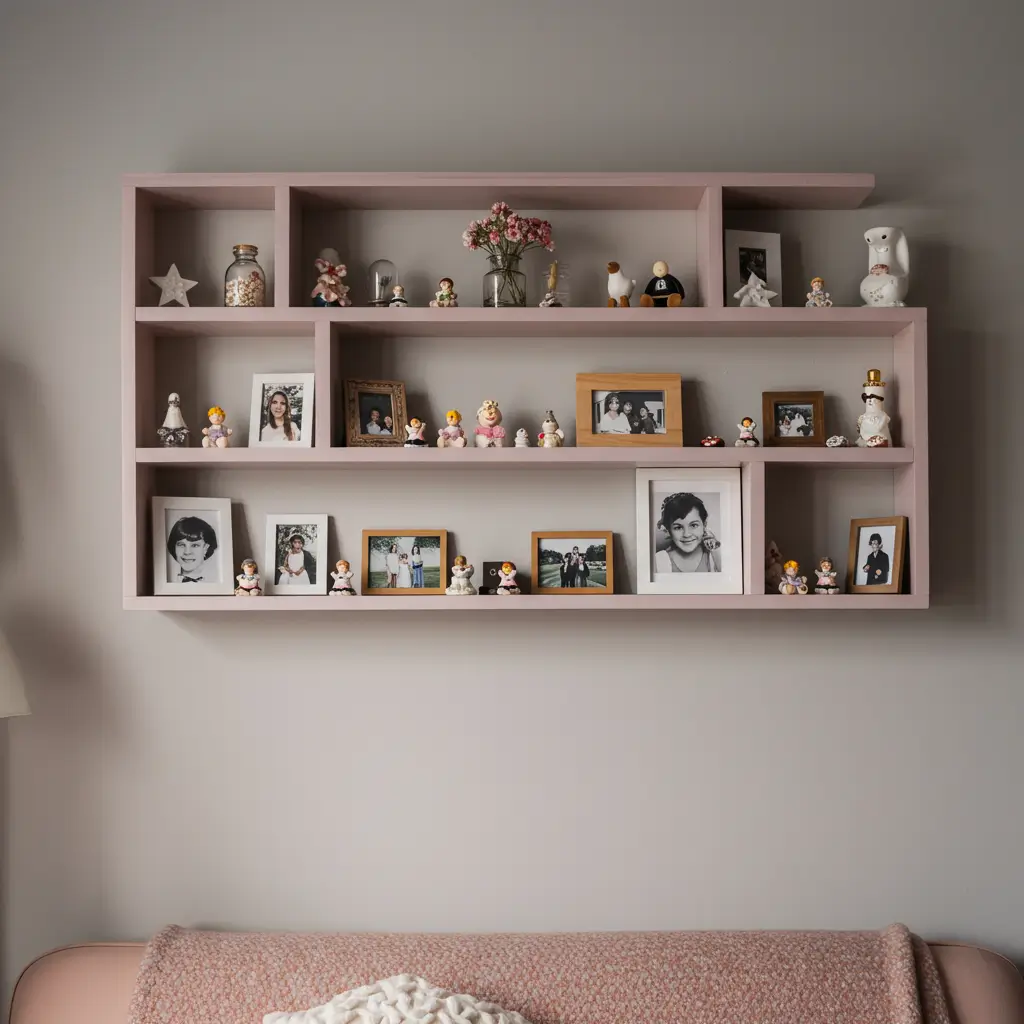
Shadow box display shelves add literal depth to your displays, creating mini dioramas for your treasures. The boxed construction protects delicate items while creating this curated museum vibe. I use shadow boxes for my vintage watch collection, and each piece gets its own protected showcase.
The raised sides prevent items from falling off while creating clear boundaries for each displayed object. No more worrying about earthquakes or enthusiastic cats knocking your precious things to the floor.
Shadow Box Display Techniques
Choose shadow box depth based on what you’re displaying. I made one set too shallow for my watch collection – the pieces stuck out awkwardly. Now I always measure my items first and add an inch for clearance.
Create themes within each shadow box. Instead of random objects, I group by color, era, or material. One box showcases only silver watches, another features leather bands, creating cohesive mini-collections.
Add backgrounds to shadow boxes for extra pop. I line mine with velvet or colored paper that complements the displayed items. A navy blue background makes my silver watches shine dramatically.
Also Read: 10 Beautiful Store Shelves Design Ideas and Eye-Catching Displays
Vintage Ladder Display: The Rustic Charm Leaner
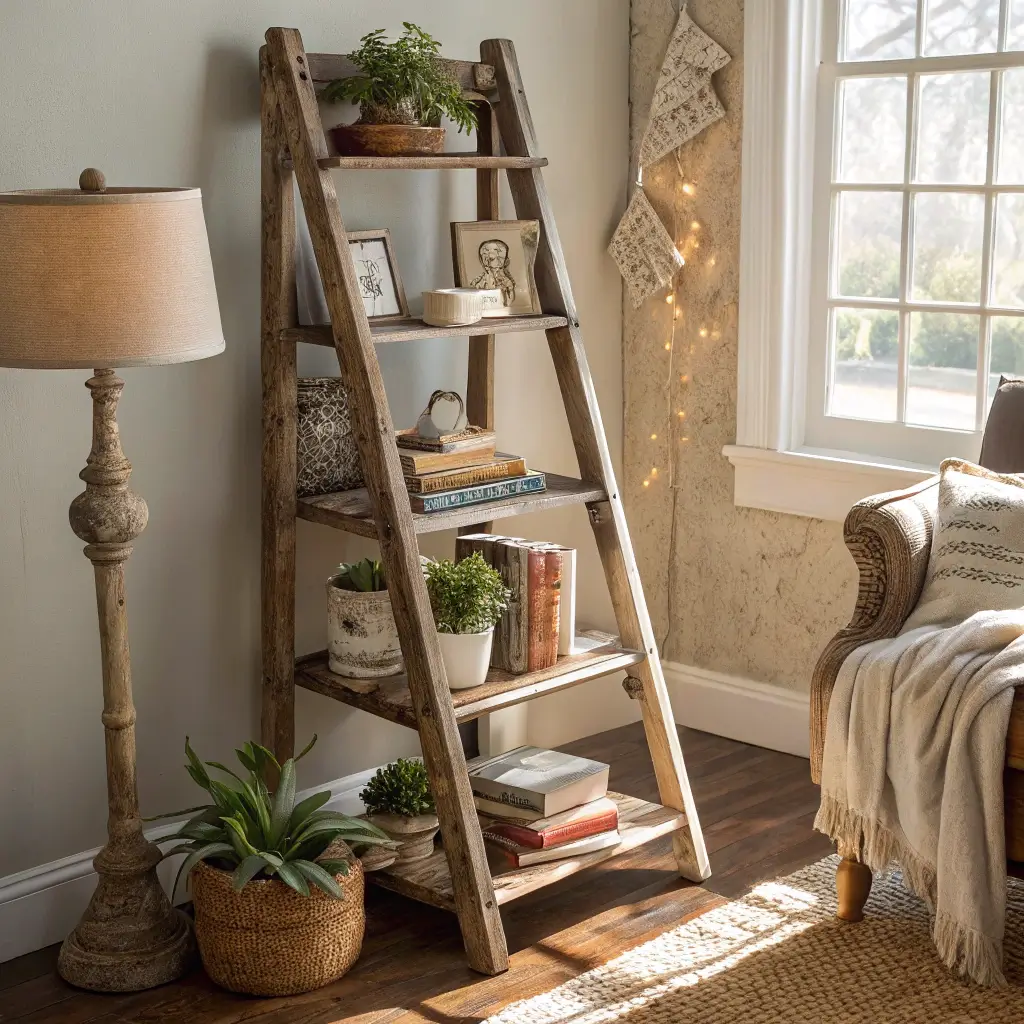
Vintage ladder display shelves repurpose actual old ladders into charming displays. I found a weathered wooden ladder at a flea market for $15, leaned it against my wall, and now it holds my favorite cookbooks and vintage kitchen tools. Instant character without building anything.
The imperfect, time-worn quality adds authenticity you can’t fake. Each rung tells stories of previous work done, making your displayed items part of a continuum rather than just stuff on a shelf.
Vintage Ladder Success
Secure vintage ladders to prevent tipping. Old wood plus gravity plus displayed items equals potential disaster. I use furniture straps anchored to wall studs – invisible but essential.
Treat wood for indoor use without ruining the patina. I clean thoroughly and apply a clear matte sealant that protects without adding shine. The weathered look stays intact while being safe for indoor display.
Style vintage ladders asymmetrically. Perfect balance looks wrong on imperfect ladders. I lean items against rungs, drape textiles, and create intentional imbalance that feels organic and collected-over-time.
Wall-Mounted Book Ledges: The Literature Showcase
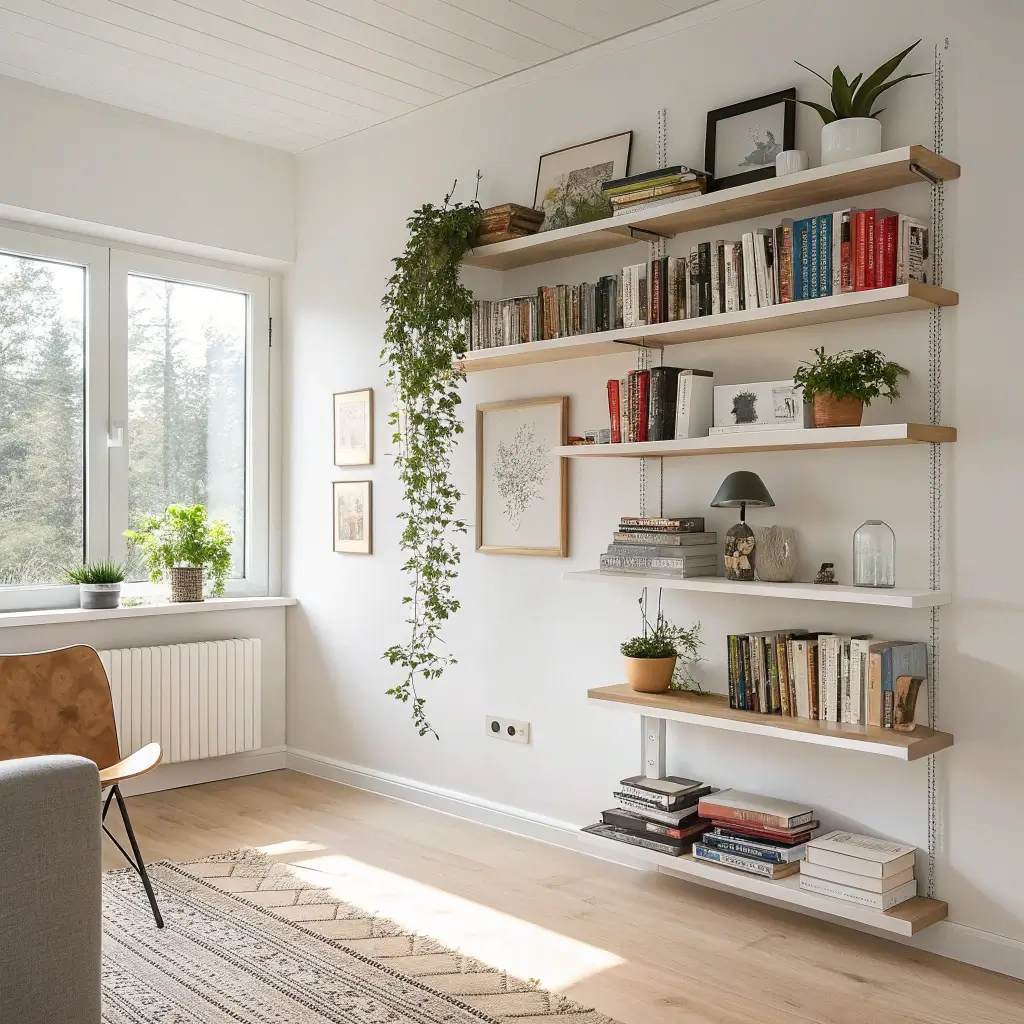
Wall-mounted book ledges display books cover-forward instead of spine-out, turning your reading collection into wall art. I installed three ledges in my daughter’s room for her picture books, and bedtime became easier when she could actually see which books were available.
The forward-facing display works for adults too. My cookbook ledges in the kitchen showcase beautiful cover designs while keeping recipes accessible. Plus, I actually remember which cookbooks I own when I can see them.
Book Ledge Display Magic
Rotate books seasonally or by mood. I change my ledge books monthly, keeping displays fresh and giving different titles their moment in the spotlight. This also helps me rediscover books I’d forgotten about.
Mix books with other objects for dimension. All books can look flat. I add small plants, candles, or decorative objects between books, creating varied heights and textures.
Keep ledges shallow to prevent books from falling. Deep ledges tempt you to double-stack, which defeats the display purpose. I stick to 4-inch deep ledges – just right for single rows.
Reclaimed Wood Floating Shelf: The Eco-Chic Statement
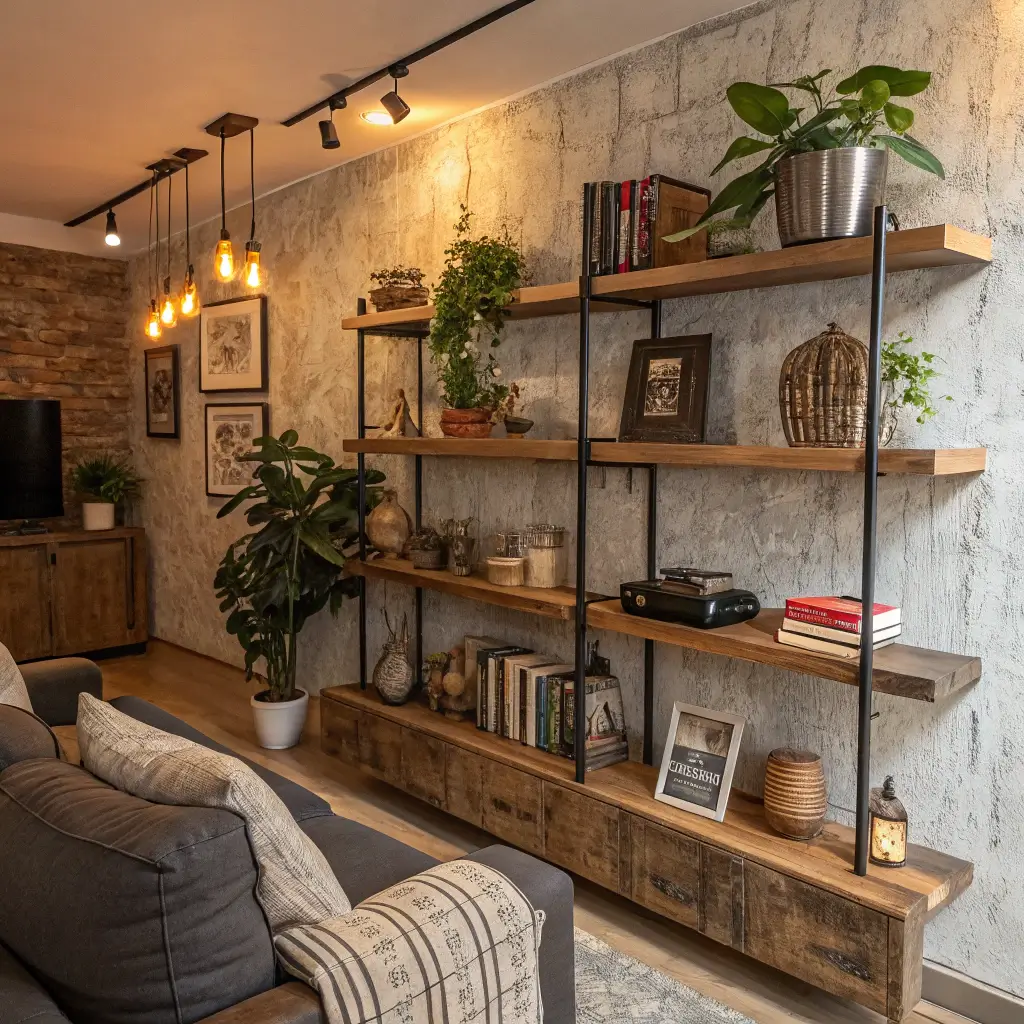
Reclaimed wood floating display shelves bring instant character and sustainability cred to your walls. Each piece has history visible in its grain, nail holes, and weathering. My living room has three reclaimed wood shelves displaying my travel souvenirs, and people always ask about the wood before they even notice what’s on it.
The imperfect surfaces create interesting backdrops that make displayed items look more intentional. Perfect new wood can make collections look staged, but reclaimed wood suggests curation over time.
Reclaimed Wood Display Wisdom
Source reclaimed wood carefully and check for pests. I once brought home beautiful barn wood with bonus carpenter ants. Not ideal. Now I inspect thoroughly and treat if necessary before bringing wood inside.
Seal reclaimed wood while preserving character. Raw wood sounds appealing until it gets water rings or mystery stains. I use multiple coats of matte polyurethane that protect while maintaining that weathered aesthetic.
Embrace asymmetry in reclaimed wood displays. These shelves aren’t meant to look perfect. I install mine at slightly varied heights, celebrating the handmade quality rather than fighting it :/
Making Display Shelves Work for Your Collections
Here’s what years of displaying everything from vintage cameras to succulents taught me: the best display shelf makes you actually want to look at your stuff.
I’ve installed gorgeous shelves that I never properly styled because they were too fussy or didn’t suit what I wanted to display.
Match your shelf style to your collection’s vibe. Industrial pipes work for vintage tools but might overwhelm delicate teacups. Glass shelves showcase glassware perfectly but can look cold displaying books.
I always consider what I’m displaying before choosing the shelf style.
Remember the 3-level rule for great displays: vary height, depth, and visual weight. I layer tall items with short ones, push some pieces back and pull others forward, and balance heavy visual items with lighter ones.
This creates dimensional displays instead of flat lineups.
Don’t forget about lighting. Even the perfect shelf with amazing items looks mediocre in bad light. I add dedicated lighting to all my display shelves – LED strips, spotlights, or even just strategic lamp placement. Good lighting transforms displays from “nice” to “wow.”
Edit your displays ruthlessly. IMO, less is almost always more with display shelves. I remove items regularly, keeping only pieces I truly love or find beautiful.
A few special things displayed well beat dozens of items competing for attention.