10 Gorgeous Hexagon Shelves Ideas and Stylish Arrangements
- Floating Shelves
 Ben
Ben- 0
- 27 minutes read
Hexagon shelves have moved way past the “Pinterest trend” phase—they’re now a serious design solution for people who need storage that actually works.
I’ve installed these in client homes ranging from 400-square-foot studios to sprawling suburban houses, and the verdict is consistent: when you get the composition right, hexagons deliver both function and that hard-to-fake visual interest that makes a room feel finished.
What I appreciate most is how forgiving they are. Unlike rigid bookcase systems, you can start with three units, live with them for a month, then add two more without the whole arrangement looking like an afterthought.
That flexibility matters when you’re renting, moving frequently, or just don’t want to commit to a permanent built-in.
In this post, I’m walking through 12 real-world hexagon shelf setups—some I’ve worked on directly, others I’ve studied closely—to show you what actually works beyond the styled product shots.
You’ll see tight clusters, sprawling grids, color experiments, and lighting tricks, plus the practical details that separate “looks amazing for a photo” from “looks amazing and holds my stuff for years.”
Modular Floating Honeycomb in Mixed Finishes
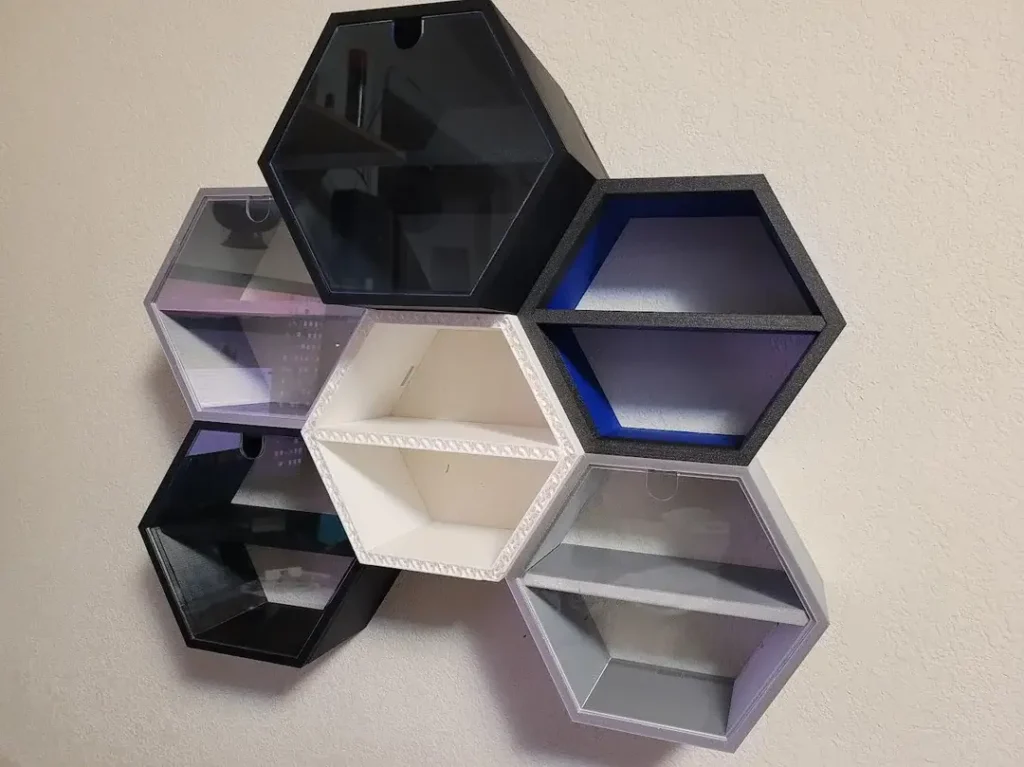
The beauty of modular parametric systems is that you’re not locked into one finish or one layout forever. In r/SimplifyAndAddCoffee‘s setup, they clustered seven hexagons in a tight honeycomb, mixing black, white, gray, and units with colored back panels—blue and purple accents that tie the whole wall together. The frames themselves are slim, almost like outlines, which keeps the wall from feeling heavy even though there are multiple shelves stacked close together.
What makes this work is the internal dividers in some units—those little shelves inside the hexagons let you stack smaller objects without everything looking chaotic. I’ve found that when clients try to fill wide-open hexagons with tiny items, it ends up reading as clutter. The dividers impose a bit of order, almost like drawers within the larger geometric frame. Budget-wise, modular kits with customizable interiors usually run $180–$350 for a set of six to eight, depending on whether you choose plastic, laminate, or powder-coated metal frames.
One consideration: if you’re mixing finishes, commit to a consistent frame width and depth so the units nest together cleanly. Mismatched thicknesses create awkward gaps that no amount of styling can hide, and you’ll spend way too much time shimming and adjusting.
Classic Natural Wood Honeycomb Display
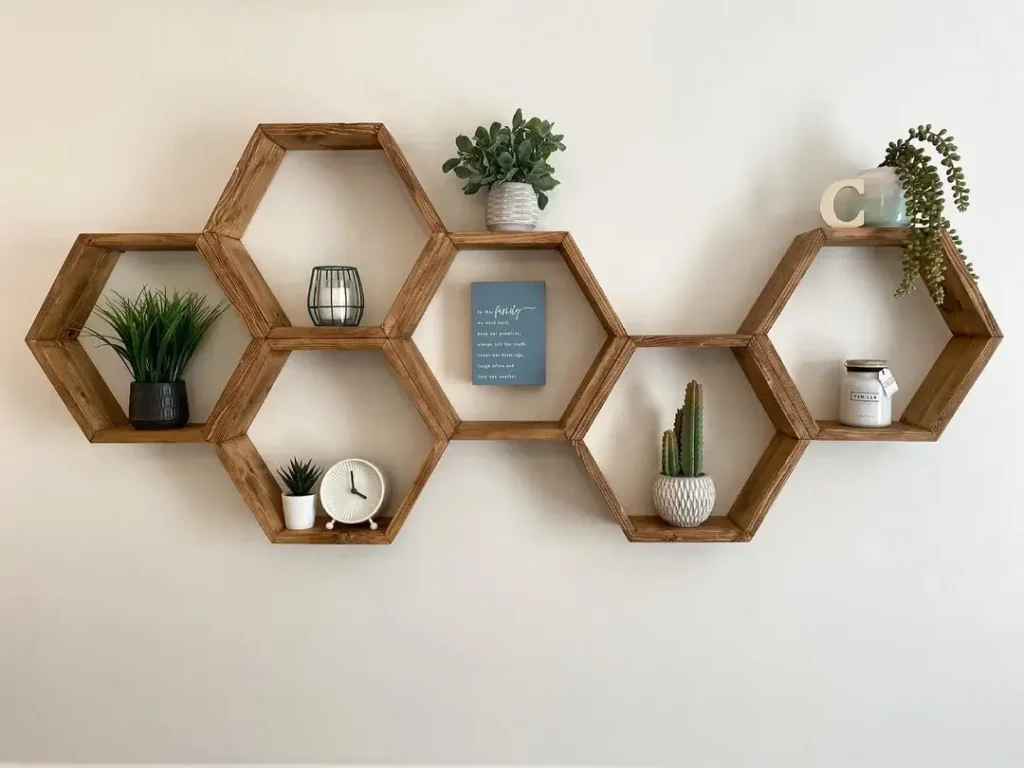
r/drewityourself went with seven solid wood hexagons in a warm honey-toned finish, arranged in a classic honeycomb cluster above the sofa. This is the style most people picture when they think “hexagon shelves,” and for good reason—it’s calming, symmetrical, and reads as intentional without being too precious. The wood grain adds texture, and the clean lines let the objects inside—plants, a family sign, candles—do the talking.
I like this approach for living rooms where you don’t want the shelving to compete with art or a feature wall. The neutral wood acts as a frame, much like matting around a print, and the negative space between each hexagon keeps the eye moving without overwhelming the viewer. The client here used one hexagon per category: one for greenery, one for a quote board, one for a small clock and plant combo. That “one shelf, one idea” rule is something I repeat constantly because it prevents the jumbled gift-shop vibe that kills otherwise good designs.
Cost-wise, solid wood hexagons—especially in oak or similar hardwoods—range from $140–$280 for a set of five to seven, and they’re heavy, so factor in heavy-duty anchors and possibly a stud finder. If your walls are plaster or older drywall, you may need toggle bolts rated for 30+ pounds per shelf.
Bold Multi-Color Hex Shelves for Plant Lovers
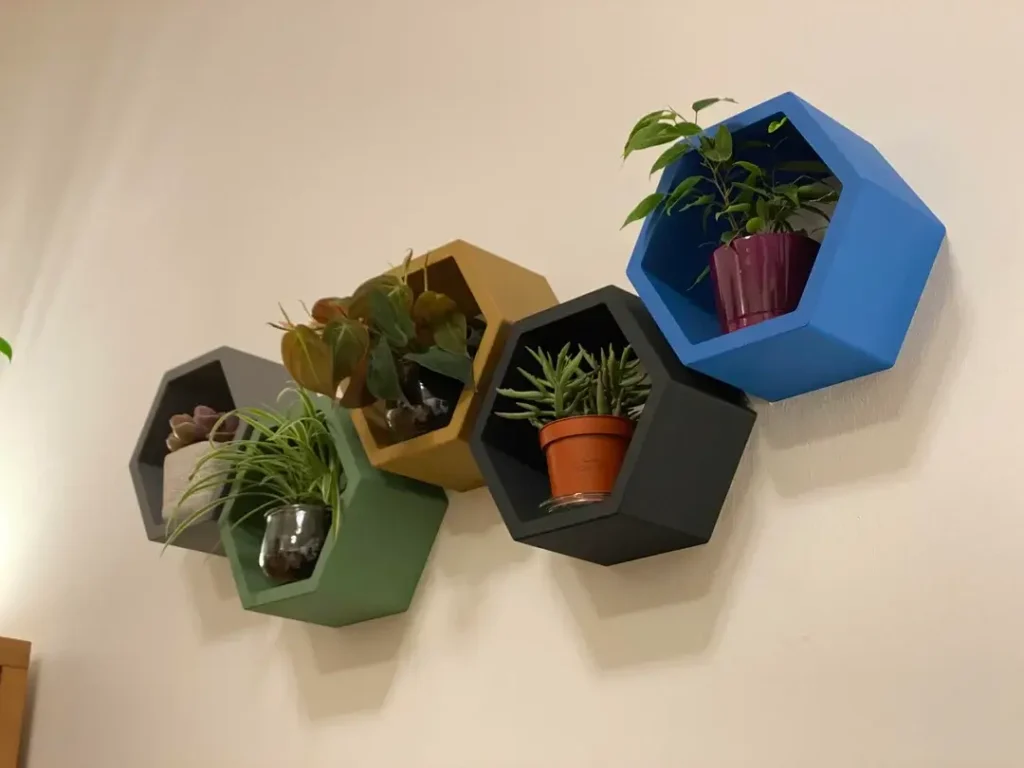
This setup from r/w00lfy111 is all about saturated color: bright blue, mustard yellow, olive green, sage, and charcoal gray hexagons arranged in a loose, asymmetrical cluster. Each shelf holds a small potted plant—some trailing, some upright—and the variety in both color and plant type creates a lively, almost gallery-like effect on what would otherwise be a plain white wall.
Color can go wrong fast if you’re not careful. Here’s what works: the frames are all painted in matte finishes, which keeps the look grounded rather than toy-like, and the palette pulls from nature (earth tones, sky blues, plant greens) so it feels cohesive even though there are five different hues. I’d recommend this approach if your room is otherwise neutral and you want one bold focal point. If you’ve already got patterned rugs, colorful furniture, and busy curtains, adding multicolor shelves will tip into chaos.
One pro tip I picked up from a color consultant: photograph your wall with the paper templates in different colors before you commit. Your phone camera will show you immediately if the tones fight with your existing lighting—warm LEDs can make cool blues look muddy, and vice versa. DIY painting adds $15–$40 in supplies; pre-finished colored shelves cost more, closer to $130–$280 for four to six units.
Also Read: 10 Stunning Built-In Desk and Shelves Ideas for Small Spaces
Large-Scale Garage Workshop Honeycomb Grid
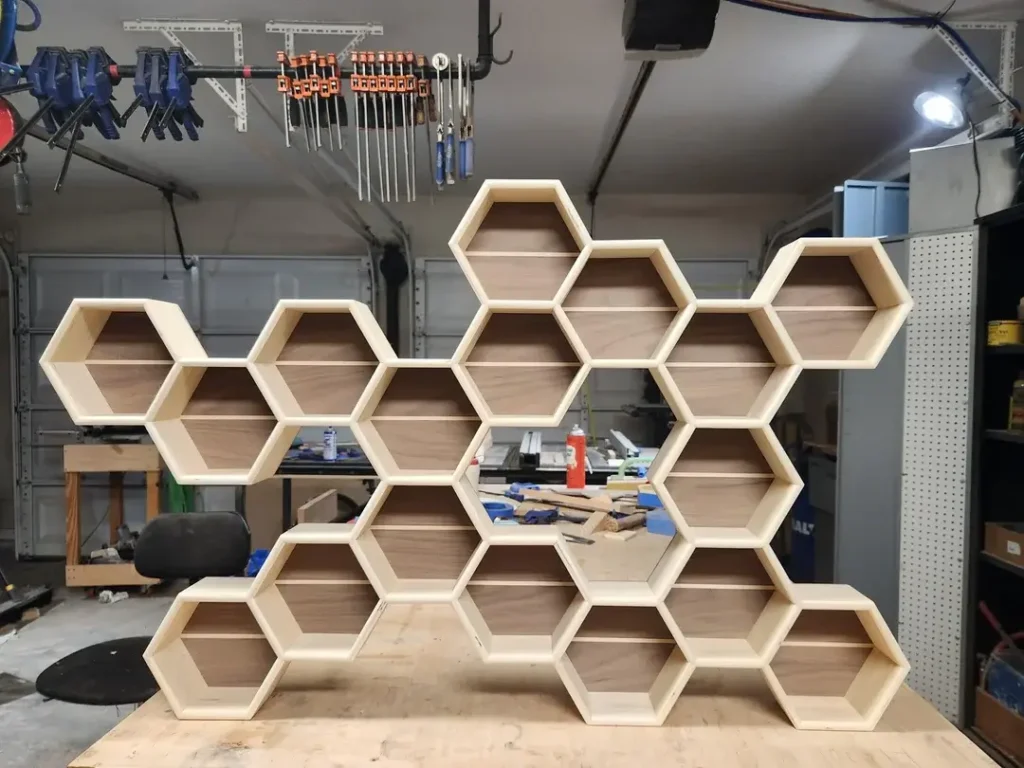
r/LordFett84 built an ambitious floor-to-ceiling honeycomb grid in their garage workshop—over 20 hexagons in raw, unfinished wood, all fitted together like a massive puzzle. This isn’t decor; it’s functional workshop storage for tools, hardware bins, and project materials. The scale is impressive, and the uniformity of the grid gives the garage an almost architectural quality, like built-in cabinetry but with better airflow and visibility.
The key challenge with a grid this large is structural support. Each shelf needs to handle real weight—screwdrivers, drill bits, paint cans—and if you’re not anchoring into studs or using a proper rail system, you’re asking for trouble. I’d suggest building the grid in sections, mounting each section to the wall independently, then fitting them together so the load distributes across multiple anchor points. You can also add a horizontal rail behind the middle row to prevent sagging over time.
Material cost for a 20-unit raw wood grid runs roughly $300–$600 if you’re cutting and assembling yourself, plus another $40–$80 for quality anchors, brackets, and a decent level. The time investment is real—plan for a full weekend—but the payoff is a custom storage system that outlasts any plastic bin rack you’d buy off the shelf.
Freestanding Outdoor Hexagon Garden Planter
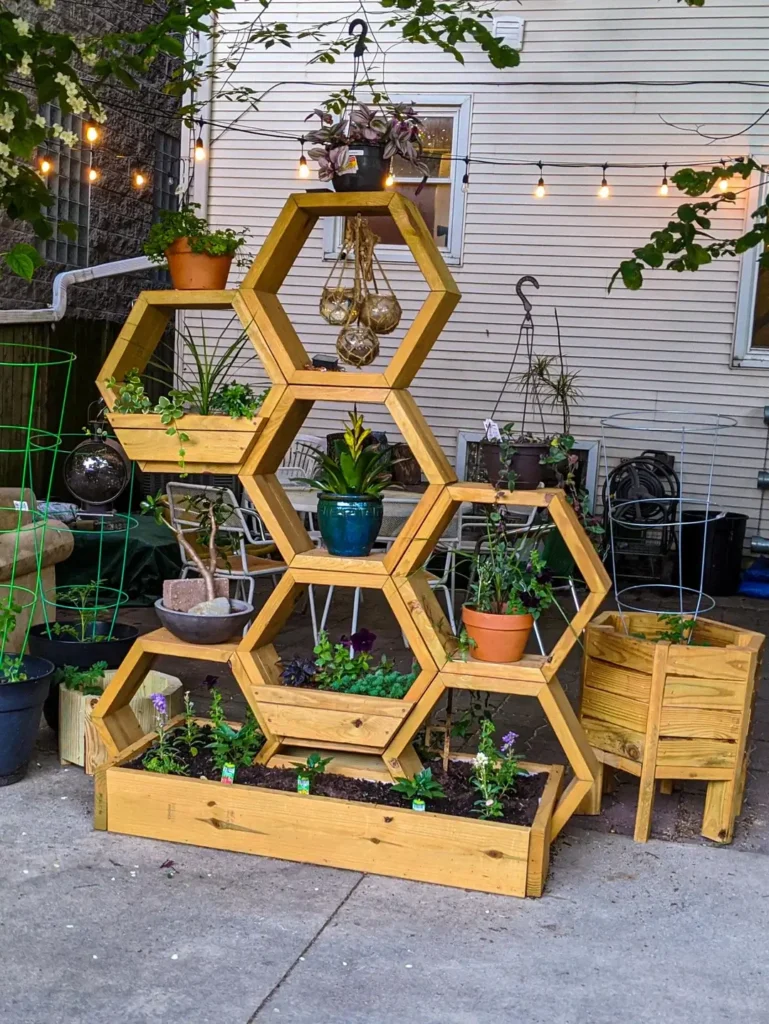
Here’s a completely different take from r/thread9000: a freestanding outdoor hexagon structure that functions as both a vertical planter and a decorative garden feature. The frame is built from treated lumber in a warm yellow-brown stain, with planter boxes integrated into the lower hexagons and open shelves above for hanging plants, decorative orbs, and string lights. The whole thing sits on a patio, anchored by the weight of the soil and plants rather than wall-mounted hardware.
This is brilliant for renters or anyone who doesn’t want to drill into exterior walls. The structure is modular—you could disassemble it, move it to a new house, and reassemble in an afternoon. The lower planter boxes are deep enough for herbs, flowers, or trailing vines, and the upper shelves hold smaller pots and decor. I’ve recommended similar setups for clients with small balconies or courtyards where floor space is limited but vertical space is wide open.
Construction requires basic carpentry skills—cutting hexagon frames, attaching them at angles, building the planter boxes—and you’ll want to use exterior-grade screws and wood glue to handle weather. Budget around $120–$250 for lumber, hardware, and stain, depending on size. If you’re in a region with harsh winters, plan to bring the structure indoors or cover it, as freeze-thaw cycles can warp untreated joints.
Dark Stained Mid-Century Freestanding Shelf
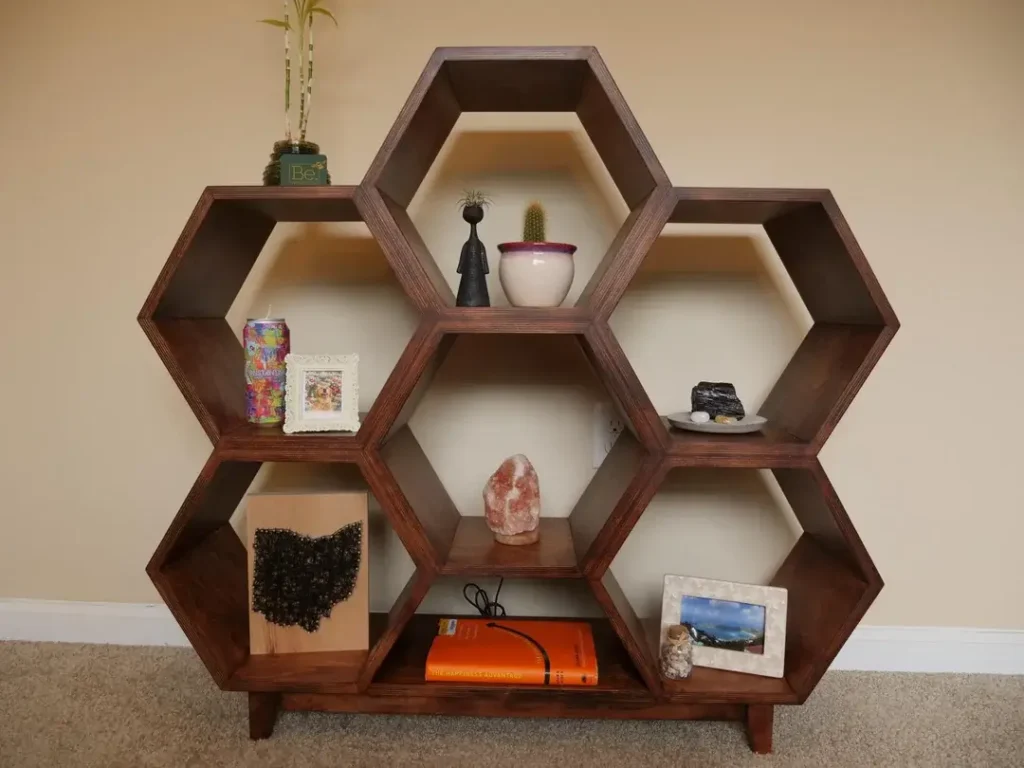
r/howto built a gorgeous freestanding hexagon shelf unit in dark walnut stain, with seven hexagons arranged in a classic honeycomb and mounted on short legs so it sits on the floor rather than hangs. The dark wood and mid-century legs give it a retro, almost Scandinavian vibe, and the open geometry keeps it from looking heavy despite the rich finish. Inside, they’ve styled it with small plants, books, a Himalayan salt lamp, and travel mementos.
Freestanding units are ideal if you’re dealing with tricky walls—plaster, brick, metal studs—or if you just don’t want to commit to drilling. The downside is footprint: this piece takes up floor space, so it’s better suited for corners, alcoves, or against a wall where you wouldn’t put furniture anyway. The legs also introduce a height consideration; if you’re using the shelves for daily storage, make sure the top hexagons are still within comfortable reach, not so high that you need a step stool.
Material-wise, solid hardwood with quality joinery and legs will cost $250–$500 if you’re commissioning a custom build, or you can DIY with pre-cut hexagon kits and add your own base. Staining and sealing add another $20–$40 and a weekend of drying time, but the finish protects the wood and deepens the grain, which is worth the wait.
Also Read: 12 Elegant Display Shelves Ideas for Modern Interiors
Asymmetric Wall-Mounted Display with Mixed Sizes
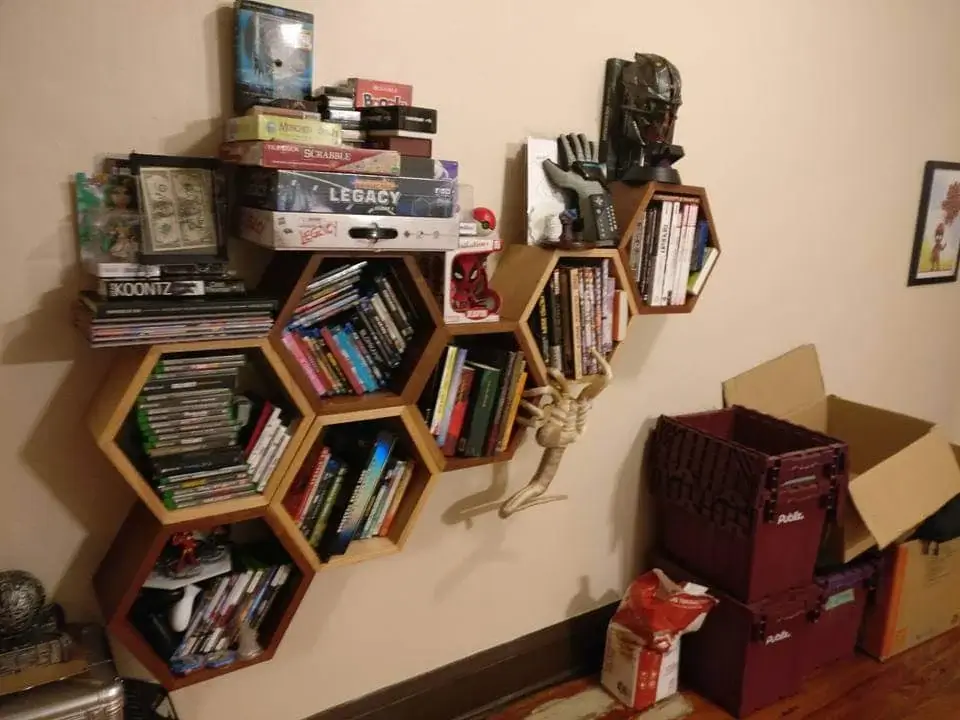
This installation by r/DarkReformer breaks the symmetry rule in the best way: six hexagons in varying sizes—some large, some small—arranged in an organic, almost random pattern above a low bookshelf. The frames are natural wood, and the sizes range from maybe 8 inches across to 14 inches, which creates visual rhythm without the rigidity of a grid. Inside, they’ve mixed books, small collectibles, and a helmet (looks like a sci-fi or gaming prop), turning the shelves into a personal curio cabinet.
Asymmetric layouts require more planning than you’d think. I usually start with the largest hexagon as the anchor, place it first, then build outward with smaller units, checking balance as I go. The trick is to avoid clustering all the small ones in one area—that creates a lopsided weight, both visually and literally. Paper templates help here; tape them up, step back, photograph with your phone, and adjust until it feels right.
Mixed-size kits are available from some manufacturers, typically $100–$220 for a set of four to six shelves in graduated dimensions. If you’re buying individually, make sure the frame thickness and mounting hardware are consistent so the installation process doesn’t turn into a puzzle of incompatible brackets.
Industrial Gray with Craft Storage
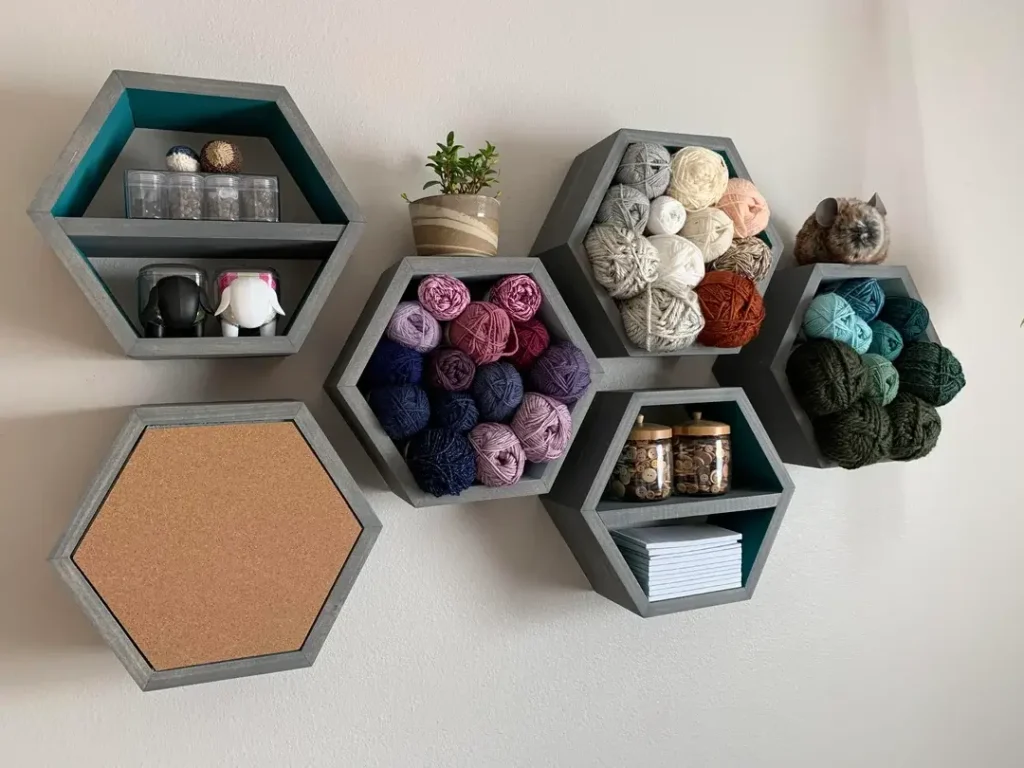
r/Kay2good used seven gray hexagons to organize a craft room, filling them with yarn balls, notions, jars of buttons, and a cork board for pinning inspiration. The gray frames have a slightly industrial feel—maybe concrete-effect paint or a matte powder coat—and the shelves are arranged in a tight cluster so the whole wall reads as one functional unit. One shelf even includes a built-in shelf inside the hexagon, which is perfect for stacking small jars without them rolling around.
For craft storage, I always recommend choosing hexagons with a bit of depth—at least 4 to 5 inches—so items don’t teeter on the edge. Shallow shelves (2 to 3 inches) are fine for lightweight decor, but yarn, fabric, and tools need room. The cork board insert is a smart detail; you can DIY this by cutting cork to fit the back panel and securing it with adhesive or small tacks, giving you a pinnable surface without a separate bulletin board cluttering the wall.
Budget for a seven-unit craft storage setup runs $120–$260, and if you’re adding custom inserts like cork, dividers, or small bins, add another $20–$50. The payoff is a system that looks curated rather than utilitarian, which makes a huge difference if your craft space doubles as a guest room or open-concept living area.
Corner Bathroom Hexagon Display
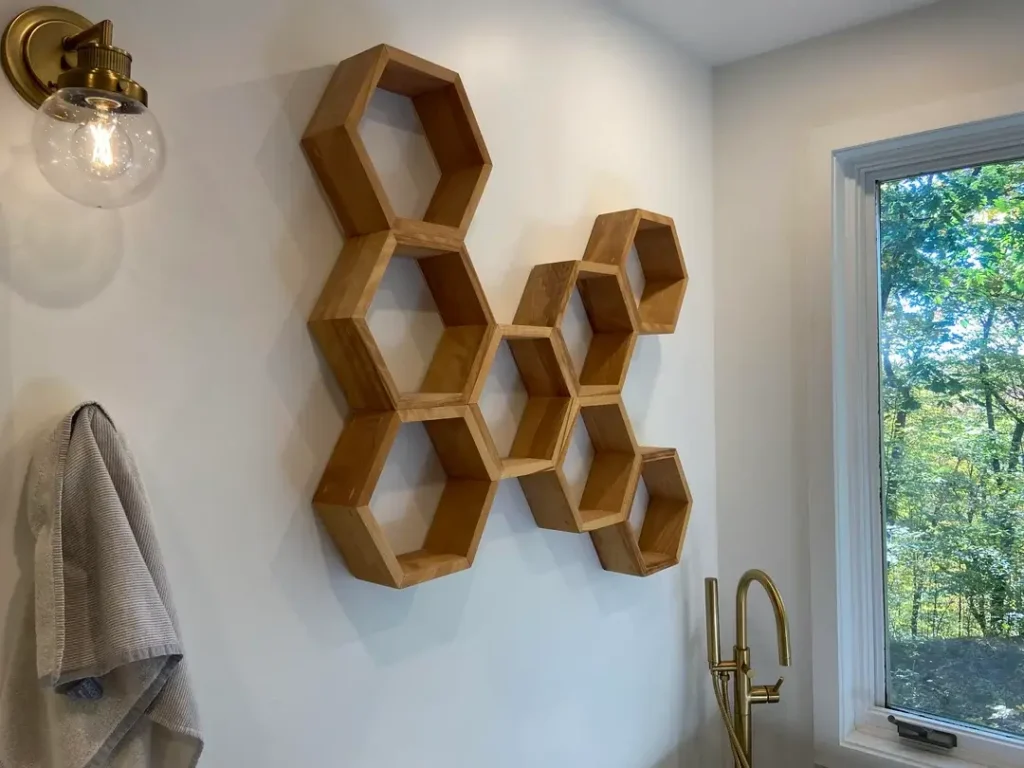
In r/threevl‘s bathroom, they’ve installed a compact three-hexagon cluster in natural wood, arranged vertically in a corner near a window. The shelves hold small potted plants, a framed photo, and a Buddha statue—minimal, zen, and completely functional in a space where every inch counts. The natural light from the window keeps the plants healthy, and the wood adds warmth to what could otherwise be a cold, tiled room.
Bathrooms present unique challenges: humidity, limited wall space, and the need for easy cleaning. I’d recommend sealing wood shelves with a water-resistant finish—polyurethane or a marine-grade varnish—especially near showers or tubs. Metal frames with powder coating hold up better in damp environments, but if you love the wood look, just plan to wipe down the shelves regularly to prevent mildew.
A three-unit set for a bathroom typically costs $60–$140, and since you’re not covering a huge area, you can splurge a bit on nicer finishes or heavier-gauge materials. Anchoring is critical; tile and drywall behind tile require special drill bits and anchors, so budget extra time and maybe a few practice holes on a hidden spot.
Also Read: 10 Creative Wooden Shelves Ideas and Cozy Room Vibes
Elevated Minimalist Design with Built-In Lighting
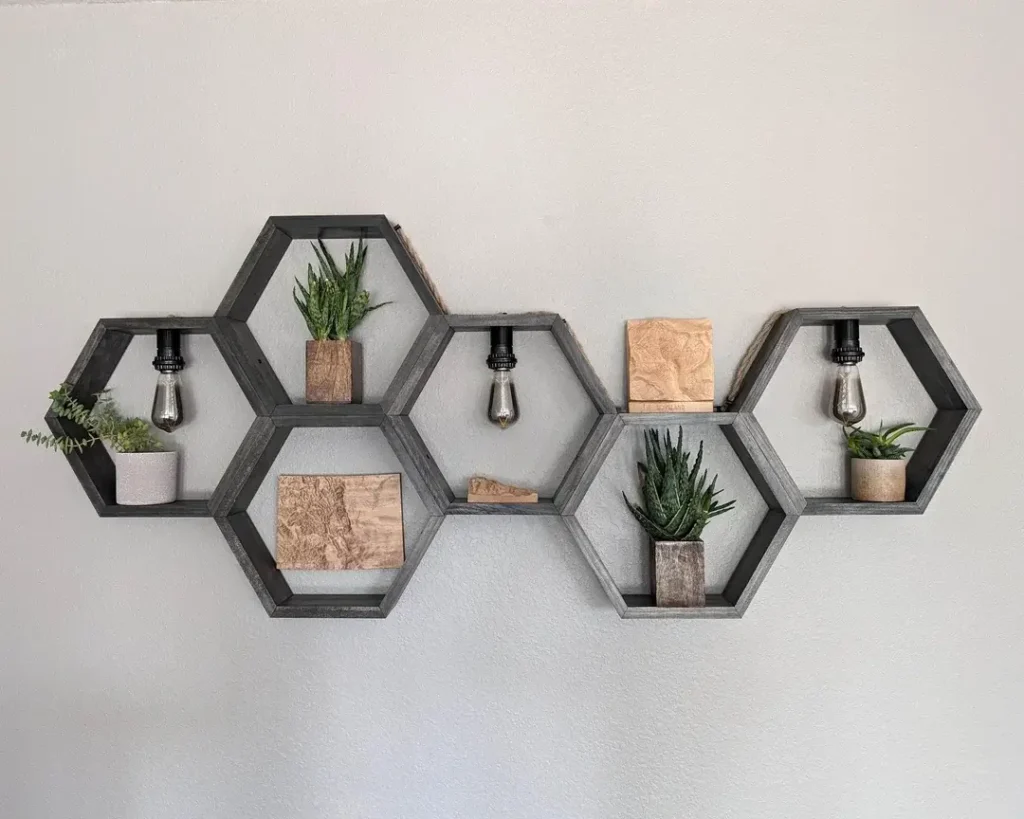
r/MidpointDesigns took their hex shelves to the next level by integrating LED strip lighting into the back of each hexagon frame, casting a soft glow onto the wall behind. The shelves themselves are dark gray—maybe charcoal or graphite—and they’re arranged in a horizontal cluster with some units featuring interior shelves and wood accents. Small succulents and decorative items sit inside, and the lighting creates a shadowbox effect that makes the whole installation feel like a museum display.
Lighting transforms hexagon shelves from static storage into dynamic decor, and it’s easier than you might think. Peel-and-stick LED strips run $15–$40 for a kit with a remote, and most are dimmable so you can adjust brightness depending on the time of day. I always route the power cable through a discreet channel or behind the shelves so it doesn’t dangle—cable clips cost $5–$10 and save you from a messy, DIY-looking finish.
One caution: if you’re placing LEDs close to the back panel, use diffusers or frosted strips to avoid harsh spotlighting. Direct LEDs can create glare, especially if you’ve got glossy objects or mirrors nearby. Warm white (2700–3000K) is your friend here; cool white tends to look clinical in living spaces unless you’re going for a very modern, gallery-like vibe.
Open-Frame Hexagons for Living Room Decor
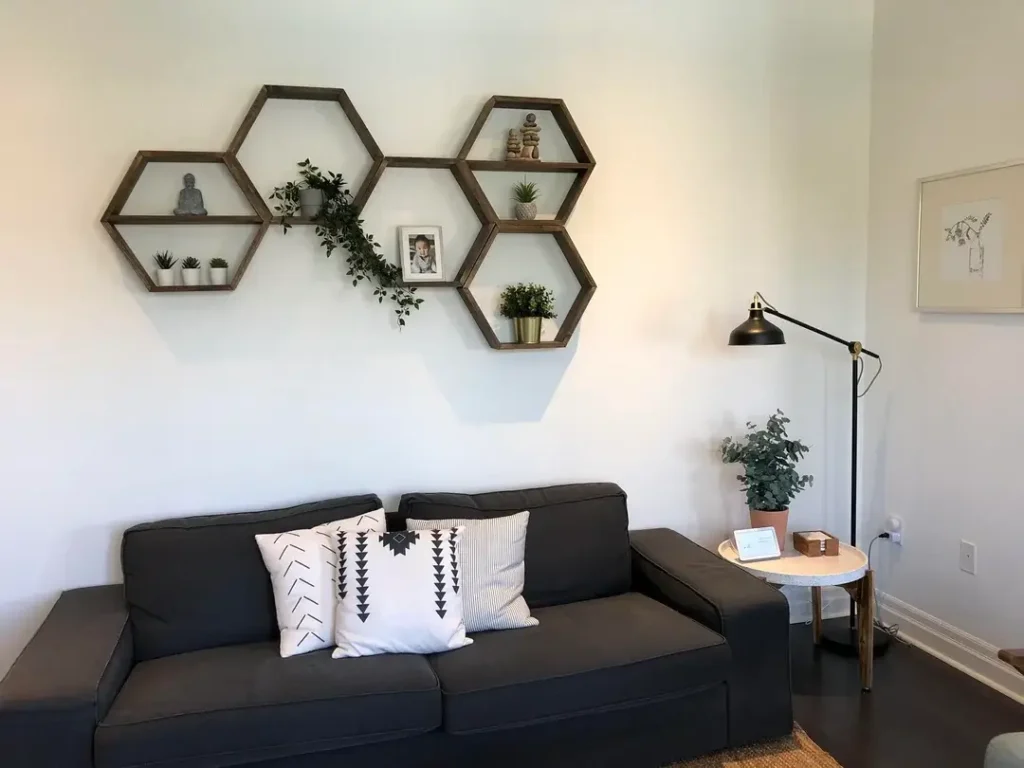
This setup from r/Stwdnscrewed features six open-frame hexagons in a rich medium-brown stain, arranged in a classic honeycomb above a dark gray sofa. The frames are thicker—maybe 2 to 3 inches deep—giving them a chunky, substantial presence, and they’re filled with a curated mix: small plants, a framed photo, a Buddha figurine, and trailing greenery that spills over the edges. The whole arrangement feels intentional but not stiff, like someone actually lives here.
Open frames without back panels create a lighter, airier look and are ideal if you’re dealing with a small room where heavy furniture might close in the space. The tradeoff is stability—open frames can twist or sag if not properly braced, so use corner brackets or internal supports, especially on larger shelves. I’ve also seen clients add removable back panels later if they decide they want more color or a defined backdrop, which is a nice option for renters who can’t paint the wall.
Cost for six open-frame hexagons in solid wood runs $120–$240, and you’ll want anchors rated for at least 20 pounds per shelf. If you’re adding trailing plants, consider the weight of the pot plus soil plus water—those can add up quickly, and a shelf that holds a dry succulent might bow under a hanging pothos in a ceramic planter.
Teal and Gray Accent Wall Installation
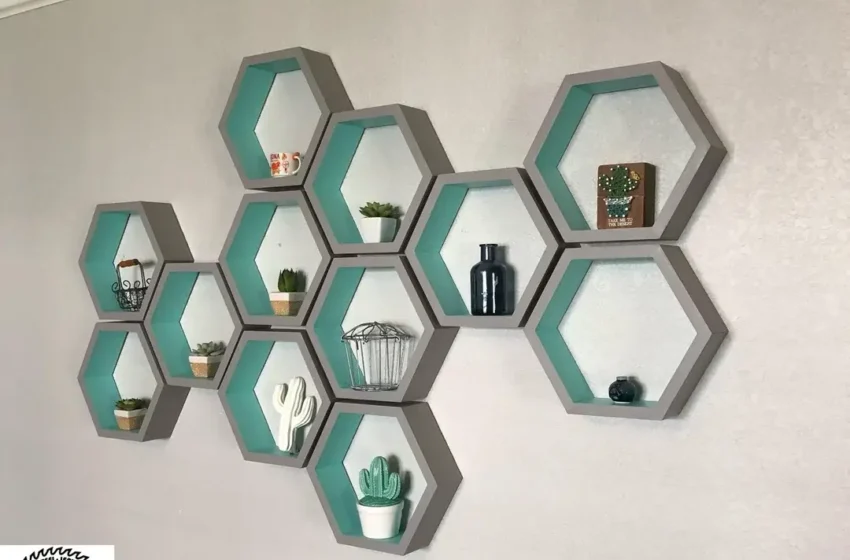
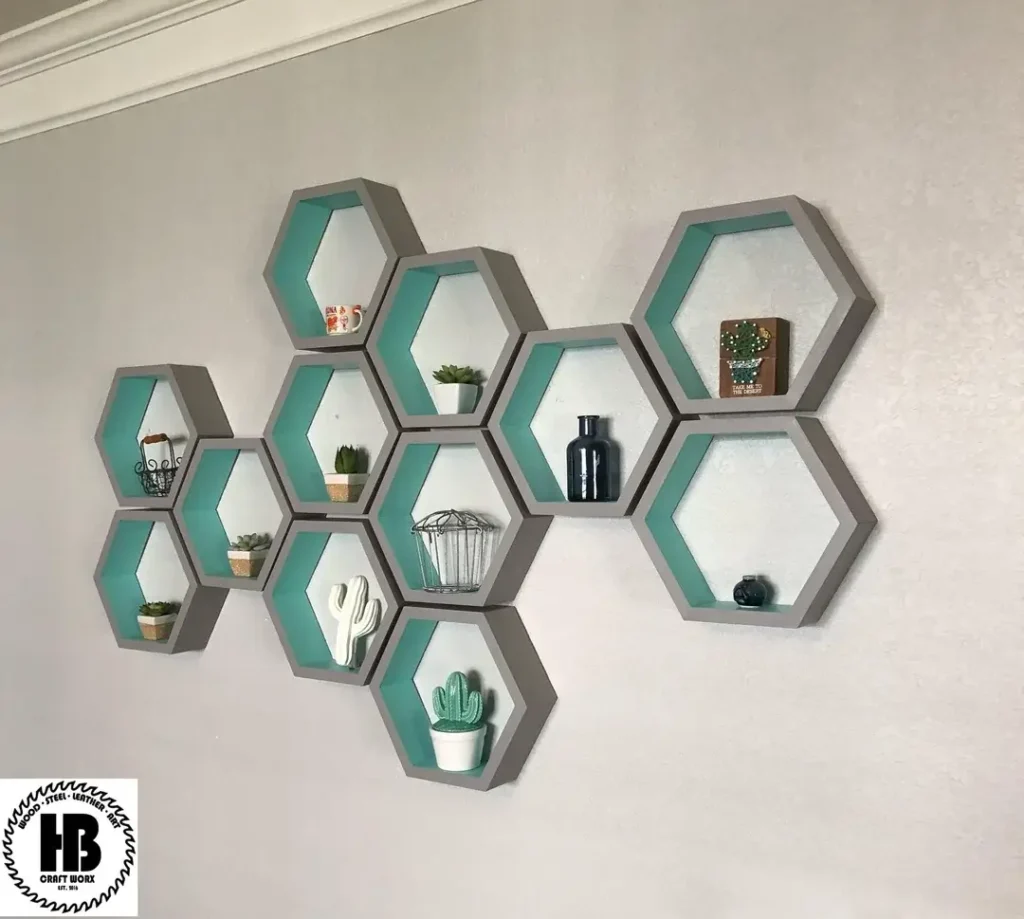
r/disneyfan2314 painted the interior of each hexagon in a soft teal, while the frames themselves are a warm gray—a subtle two-tone treatment that gives the shelves depth and makes them pop against a white wall. The arrangement is asymmetrical but balanced, with roughly a dozen hexagons clustered in a loose cloud shape. Inside, they’ve styled the shelves with small plants, cacti, decorative objects, and a few empty hexagons left bare for breathing room.
This is one of my favorite ways to use color without overwhelming a space. By painting only the back panel or interior, you get a hit of personality while the neutral frames keep everything grounded. The teal here feels fresh and modern but not trendy—muted enough to age well. If you’re going this route, test your colors in situ; paint a large piece of cardboard, tape it to the wall, and live with it for a day or two under different lighting conditions before committing.
Two-tone finishes can be DIY or purchased pre-finished. DIY adds $20–$50 for paint, primer, and brushes; pre-finished runs higher, around $140–$300 for six to eight units. If you’re painting yourself, use a small foam roller for smooth coverage and tape off the edges carefully so you don’t get bleed between the frame and the interior color.
Final Thought
Hexagon shelves aren’t a one-size-fits-all solution, but when you match the style, scale, and installation method to your actual space and needs, they deliver.
Whether you’re clustering a few units for a minimalist moment or building a sprawling grid for serious storage, the geometry does a lot of the heavy lifting—your job is to keep the composition balanced, anchor everything safely, and resist the urge to overcomplicate.
Start small if you’re unsure. Three well-placed hexagons can anchor a corner or fill an awkward wall niche without committing you to a full honeycomb.
Test your layout with paper templates, invest in proper anchors, and don’t skip the level—crooked hexagons are more noticeable than you’d think. And if you’re adding color or lighting, make sure it serves the room, not just the Instagram shot.
Which of these 12 setups speaks to your space? Let me know in the comments, and if you’ve installed hexagon shelves yourself, I’d love to hear what worked (and what you’d do differently next time).