10 Unique LEGO Shelves Ideas and Colorful Inspiration
- Floating Shelves
 Ben
Ben- 0
- 26 minutes read
LEGO collectors, we need to talk about storage. You’ve spent countless hours (and let’s be honest, way too much money) building those incredible sets, but now they’re scattered across random surfaces, collecting dust, and causing that mini heart attack every time someone walks past the Millennium Falcon.
I’ve been there – my Star Wars collection lived on a wobbly bookshelf for years until my cat decided to investigate and sent the Death Star crashing to its demise. Again.
The right LEGO shelving transforms your collection from chaotic clutter into an impressive display that makes visitors stop and stare. And trust me, there’s nothing quite like watching someone’s face light up when they see your builds properly showcased.
After rebuilding that Death Star (twice), I became obsessed with finding the perfect display solutions. I’ve tested everything from custom-built shelves to creative DIY hacks, and I’m here to share what actually works for serious LEGO enthusiasts.
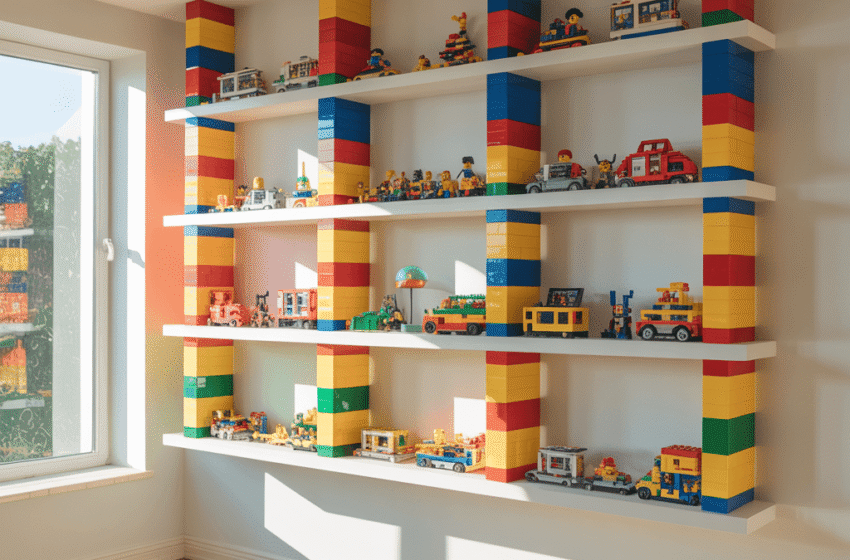
Floating LEGO Brick Shelves: The Meta Display Choice
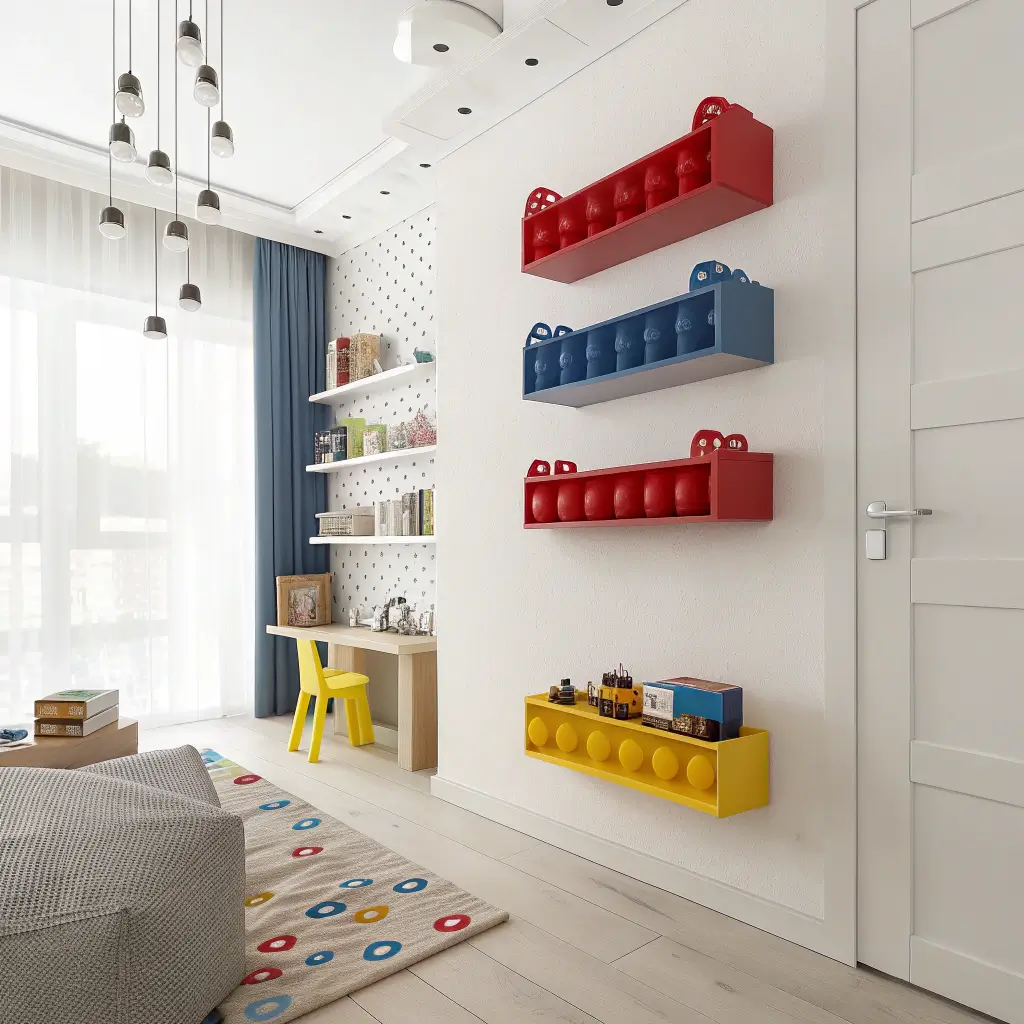
Floating shelves shaped like giant LEGO bricks are the ultimate meta display solution – using brick-shaped storage to display brick creations. My living room features three red 2×4 brick shelves, and they make every visitor smile before they even see the collection. The irony isn’t lost on anyone, and that’s exactly the point.
These oversized brick replicas typically come with internal shelving that perfectly accommodates smaller LEGO sets and minifigures. The hollow interior provides surprising storage capacity while the exterior screams “a LEGO fan lives here” in the best possible way.
Making Brick Shelves Work
Choose colors that complement your room’s palette. I went with classic red, but brick shelves come in every LEGO color imaginable. My friend’s gaming room has bright yellow brick shelves that pop against dark walls, creating a focal point that draws the eye immediately.
Consider the actual interior dimensions before purchasing. Some brick shelves look great but have awkwardly shallow interiors that won’t fit standard sets. I measured my most common set sizes first, then bought shelves with at least 8 inches of depth. Nothing frustrates like a shelf that can’t hold what you bought it for.
Mount them at varying heights for visual interest. My three brick shelves create a stepped pattern across the wall, giving each level its own visual moment. The staggered arrangement also makes reaching different sets easier during rotation.
Colorful LEGO Wall Grid: The Organized Rainbow
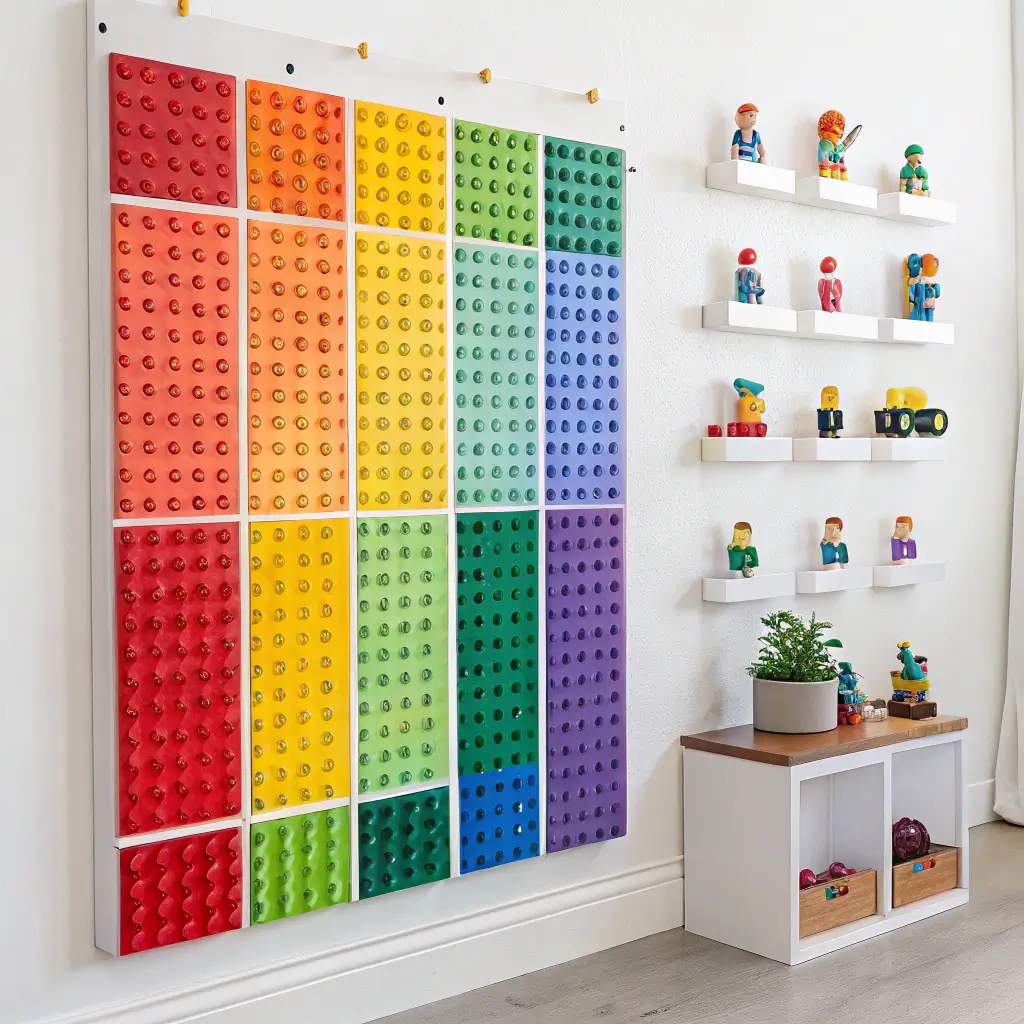
Wall grid systems let you display LEGO sets on colored pegboard-style backgrounds that recreate that iconic LEGO plate texture. My nephew’s room has a massive green baseplate-style grid covering half a wall, with shelves attached at different levels. It looks like a giant building surface that holds his actual builds – seriously cool.
The grid approach works because it references LEGO’s visual language while providing flexible, reconfigurable storage. You can move shelf attachments around as your collection grows, making this one of the most adaptable display solutions out there.
Grid Display Strategies
Pick a grid color that contrasts with your most prized builds. Green works amazingly for City and Creator sets, while gray plates showcase space and Star Wars builds beautifully. I helped my nephew choose green because most of his collection features colorful buildings that pop against the baseplate-style background.
Install hooks and pegs alongside shelves for minifigure display. The grid system accepts multiple attachment types, so mixing shelves with hanging displays creates visual variety. My nephew hangs his superhero minifigures at eye level while larger sets sit on shelves below.
Leave some grid space visible between displays. Covering every inch defeats the purpose of the textured background. I recommend filling about 70% of the grid, letting that signature LEGO stud pattern show through in strategic spots.
LEGO Minifigure Display Ledges: The Tiny Hero Gallery
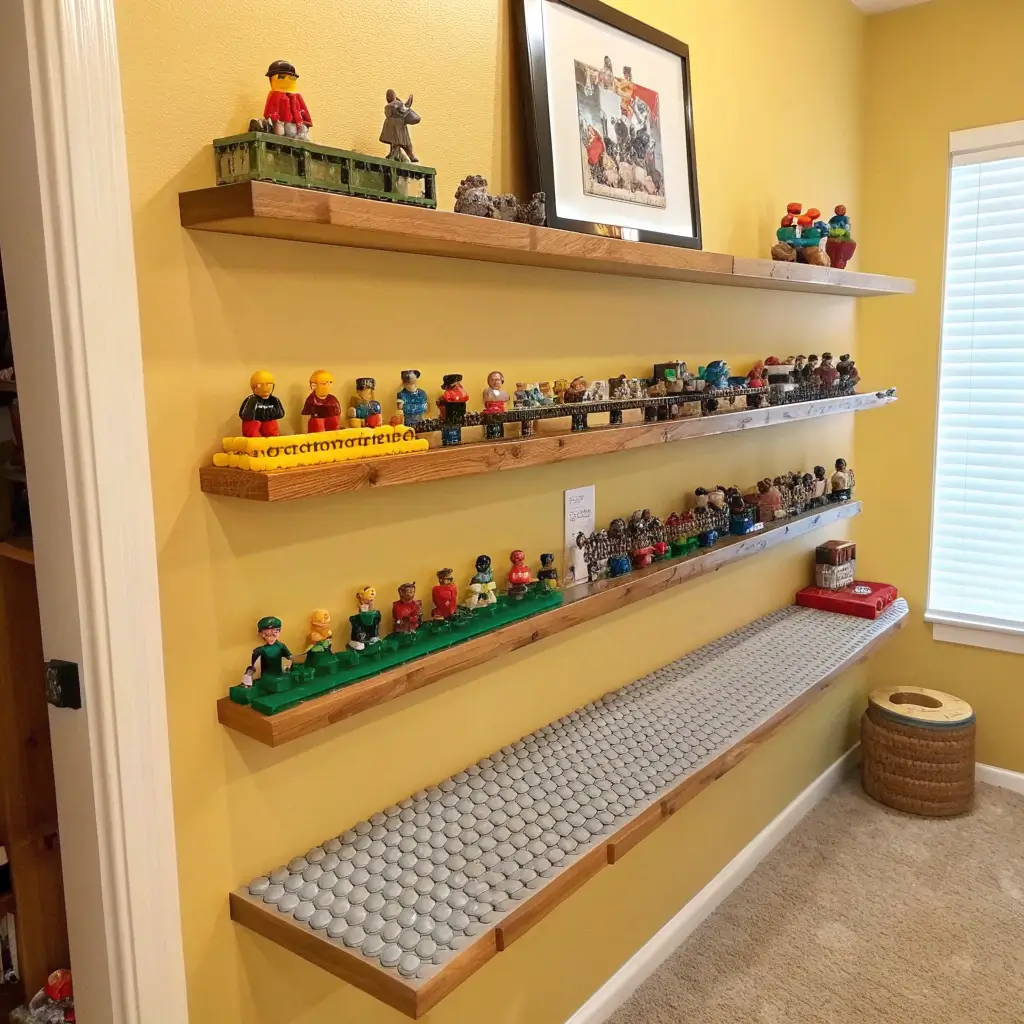
Picture ledge shelves provide the perfect narrow platform for showcasing minifigure collections. I installed four white ledges specifically for my complete series of collectible minifigures, and now they’re lined up like a tiny army surveying my living room. Each ledge holds roughly 30 figures standing upright, creating an impressive visual without taking up much wall depth.
The shallow design of picture ledges works perfectly for minifigures because they’re only about 2 inches deep. You can fit multiple rows by mounting ledges at different heights, turning an entire wall into a minifigure museum.
Minifigure Display Mastery
Organize figures by theme, color, or series for maximum visual impact. I sort my collectible series by release order, creating a timeline across the ledges. My friend organizes by color, creating rainbow gradients that look stunning from across the room.
Add risers for back-row visibility. Even on narrow ledges, you can create depth with small acrylic risers that elevate back-row figures. I use half-inch risers that let second-row minifigures peek over front-row heads, ensuring no figure gets hidden.
Consider lighting for dramatic effect. LED strips under each ledge illuminate my figures beautifully, creating shadows that add drama. The warm white glow makes evening viewing sessions genuinely enjoyable – yes, I stare at my minifigures sometimes, don’t judge.
Also Read: 12 Creative Nursery Shelves Ideas and Fun Room Designs
Corner LEGO Step Shelves: The Space Maximizer
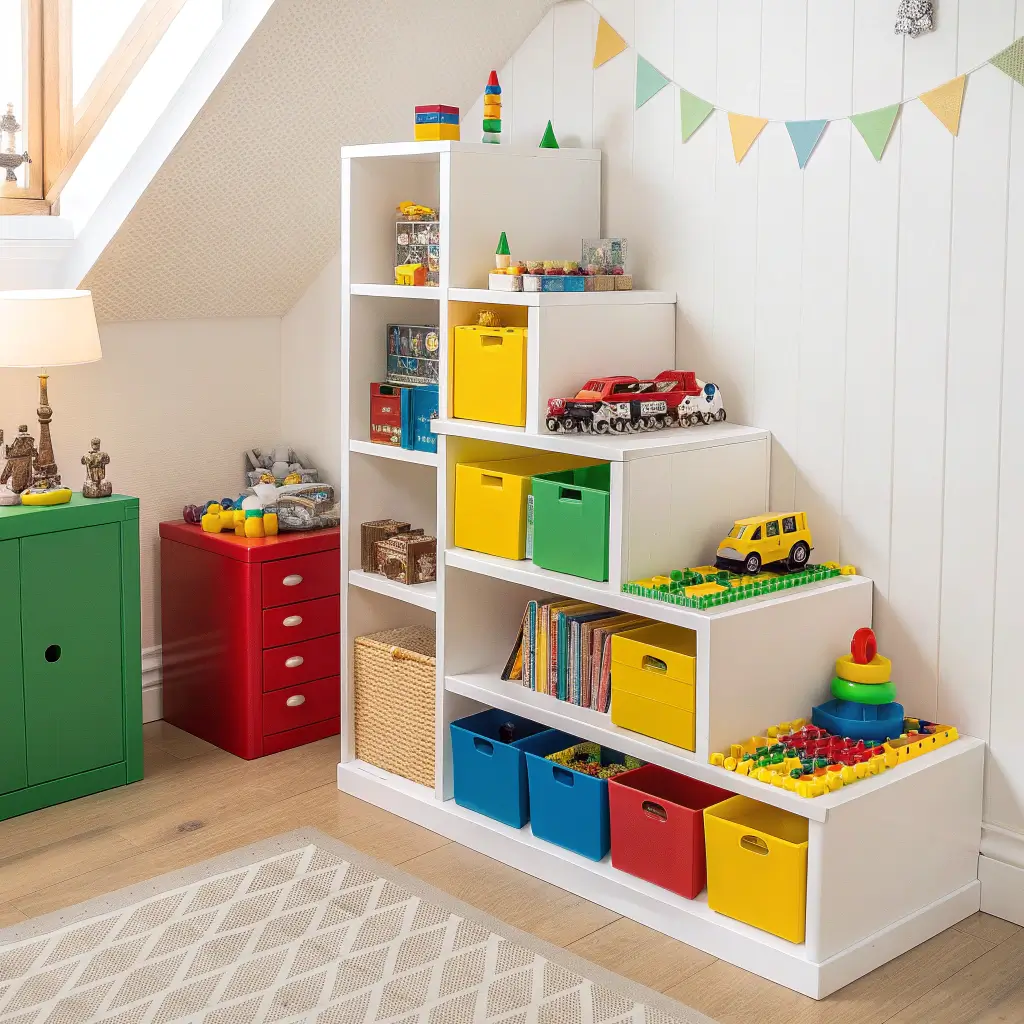
Corner step shelves transform those awkward room angles into prime display real estate. My office corner holds a stepped unit that displays my complete modular building collection in ascending order, with the smallest buildings at floor level climbing to the tallest at the top. The stepped design creates depth that flat shelves can’t match.
Corner placement means your display becomes visible from multiple angles, which large builds deserve. My Haunted House looks completely different depending on where you’re standing, and the corner position shows off every side.
Corner Display Considerations
Match shelf depth to your largest sets. Corner shelves often have shallower depths than regular shelves, which can be problematic for deep builds like modular buildings. I specifically chose 14-inch deep shelves to accommodate the full depth of LEGO architecture sets.
Secure corner units to walls on both sides. The L-shape can create stability issues if only anchored on one wall. My unit connects to studs on both adjacent walls, eliminating any wobble even when I’m rearranging heavy sets.
Light from above when possible. Corner spots often lack natural light, making displays look dim. I installed a small spotlight aimed at my corner shelves, bringing out colors and details that disappear in shadow.
LEGO Brick-Inspired Cubes: The Modular Marvel
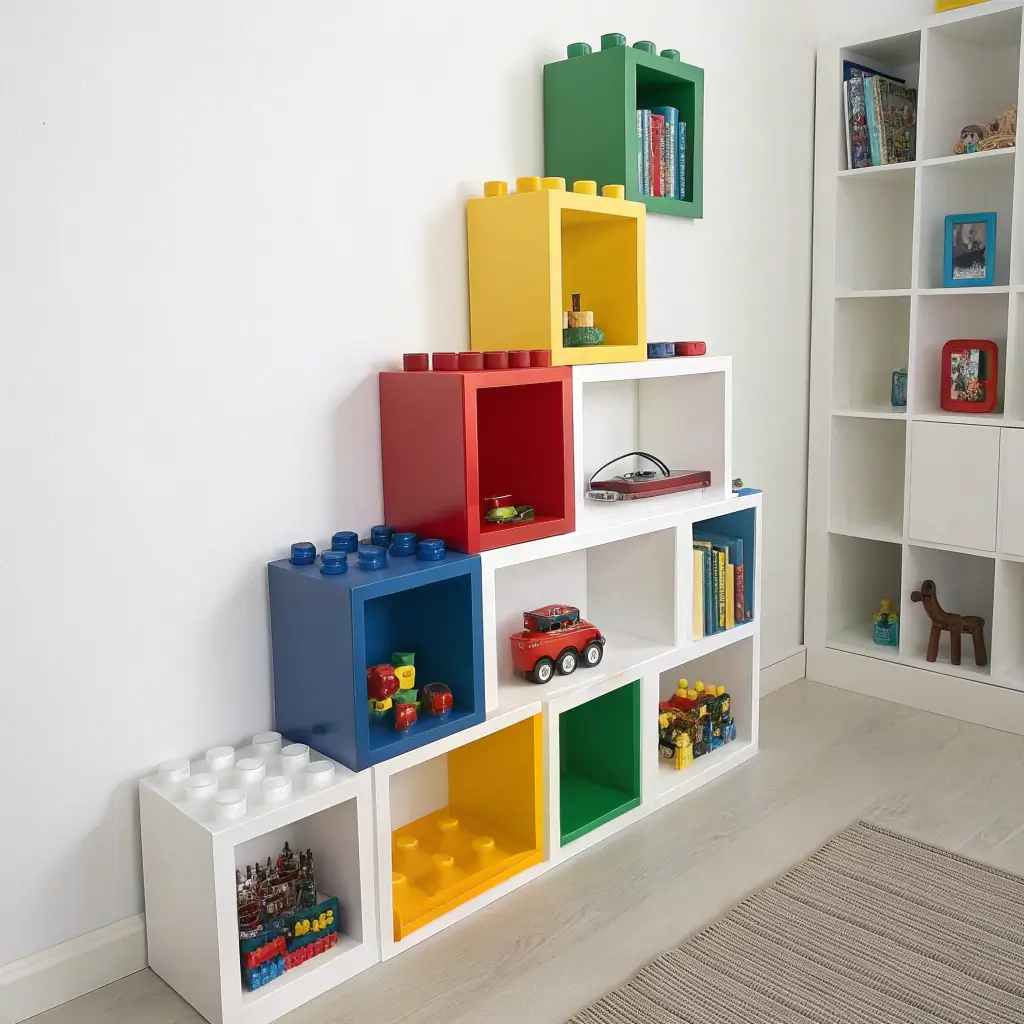
Cube storage units styled after LEGO bricks provide that building-block aesthetic while offering serious storage capacity. My cube system features eight units in different LEGO colors arranged in a pattern that references classic brick builds. Each cube holds either displayed sets or boxed overflow storage – function meets form perfectly.
The modular nature of cube storage mirrors LEGO’s own philosophy of building block by block. I rearrange my cubes seasonally, creating new configurations that keep my display feeling fresh without buying new furniture.
Cube Configuration Tips
Mix open cubes with closed storage for visual balance. I keep about 60% of my cubes open for display while 40% have fabric bins hiding spare pieces and boxed sets. The combination looks intentional rather than cluttered.
Stack cubes with proper anchoring. Tall cube configurations can become top-heavy, especially loaded with LEGO sets. I anchor my stacked cubes to wall studs, preventing any tipping incidents. Safety matters, especially with valuable collections.
Leave space between cubes for breathing room. Cramming cubes together creates a wall effect that overwhelms. I maintain 2-inch gaps between some units, creating visual separation that makes each display area feel distinct.
Hanging LEGO Brick Shelves: The Floating Magic
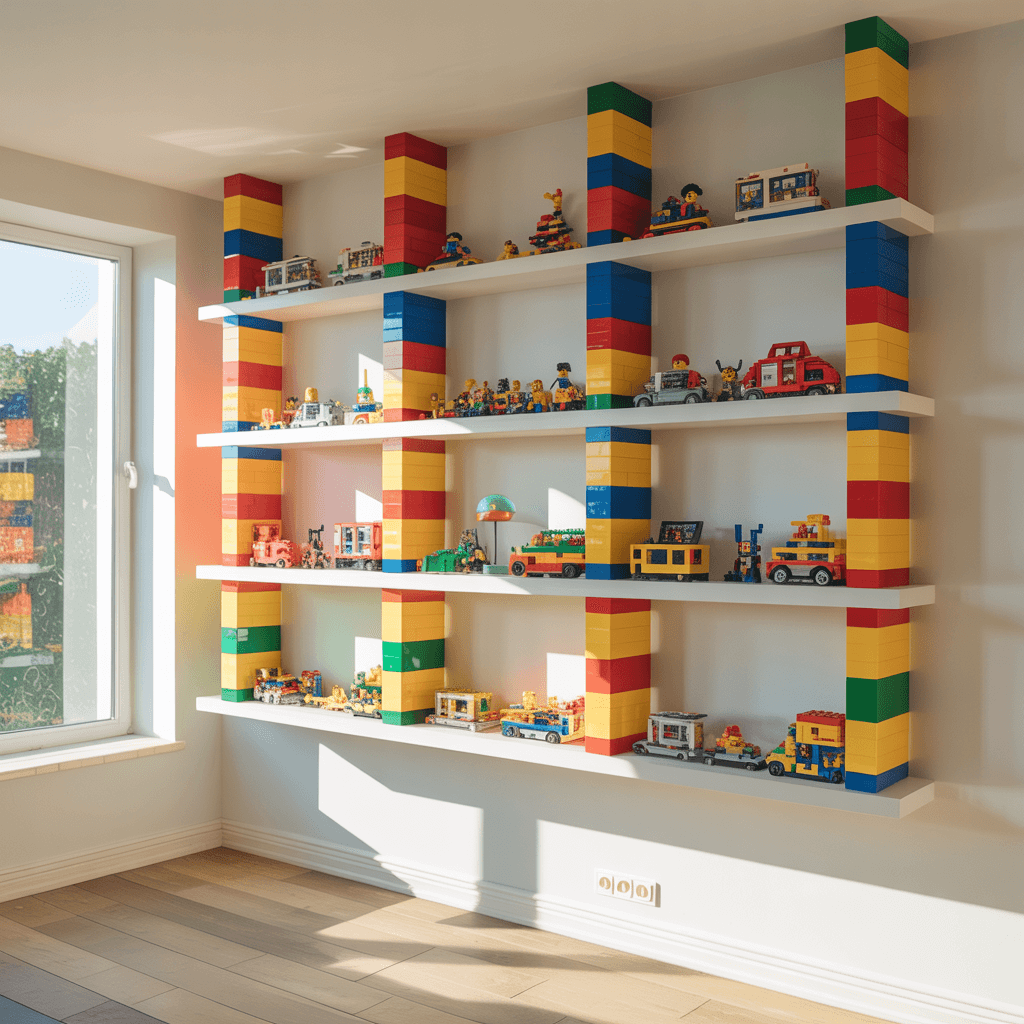
Hanging shelves suspended by cables or rope create a floating effect that makes LEGO sets look like they’re defying gravity. My friend’s kids’ room has three hanging platforms that hold their current builds, swaying slightly and adding movement to an otherwise static display. The effect is genuinely magical.
The suspended design uses ceiling space rather than wall space, freeing up walls for other purposes. This works especially well in small rooms where every square inch of wall matters.
Hanging Shelf Success
Use proper ceiling anchors rated for significant weight. LEGO sets are heavier than they look, and cheap anchors fail dramatically. I recommend toggle bolts into ceiling joists – overkill maybe, but watching shelves crash down isn’t fun for anyone.
Consider sway when positioning. Hanging shelves move slightly, which can be problematic near walls or other shelves. I leave at least 6 inches of clearance around my hanging displays to prevent collision damage.
Keep fragile builds on stable shelving. The gentle movement of hanging shelves stresses loose connections over time. I use my hanging platforms for sturdier builds while delicate creations stay on solid surfaces.
Also Read: 10 Modern Office Shelves Ideas for Minimalist Style
Modular Stackable LEGO Shelves: The Growing Collection Solution
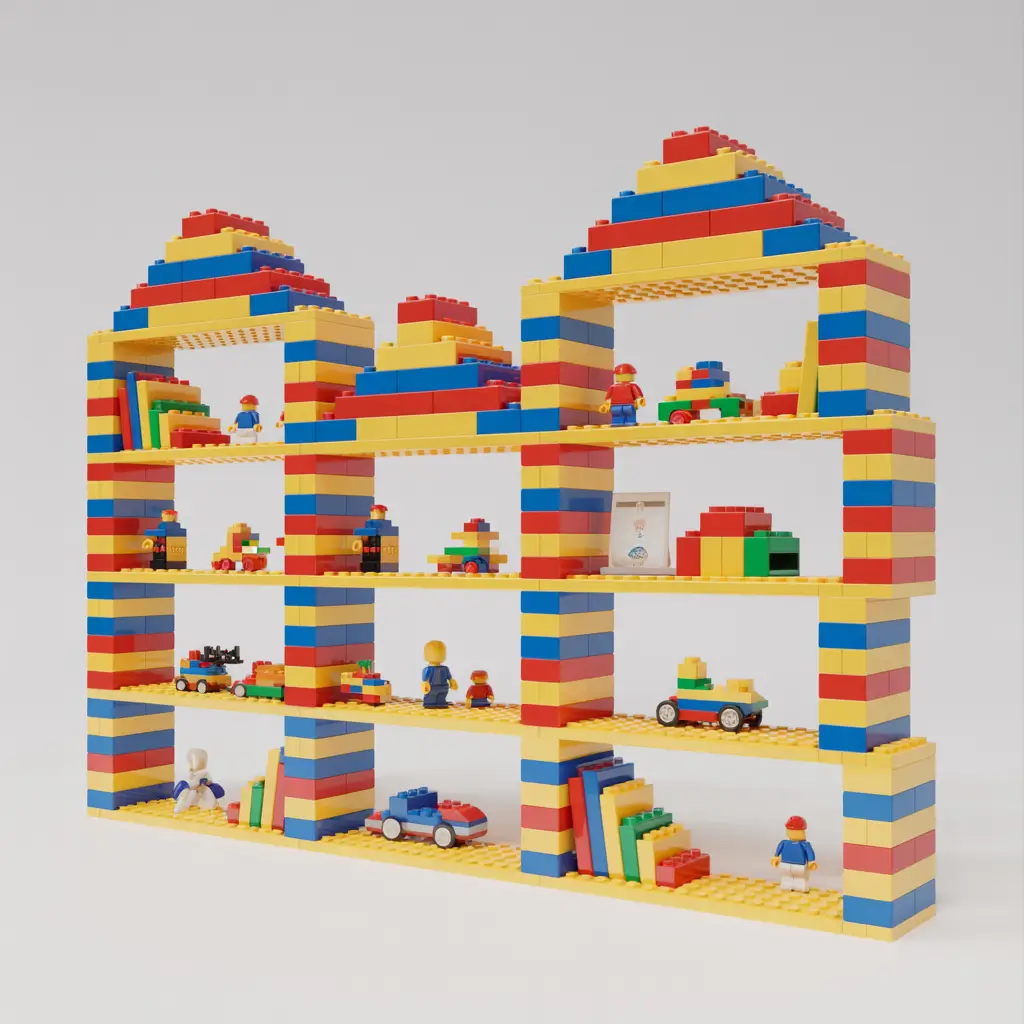
Stackable modular shelving grows with your collection without requiring entirely new furniture. My LEGO room started with two stackable units and now has eight, all matching perfectly because I bought a system designed for expansion. The consistency makes my ever-growing collection look organized rather than chaotic.
The beauty of truly modular systems is their flexibility. When I acquired the entire Ideas collection, I simply added two more stacking units rather than reorganizing everything or buying different shelving.
Modular System Selection
Invest in quality from the start. Cheap stackable systems wobble when extended, creating safety concerns. I chose slightly more expensive furniture designed for actual stacking, and the stability difference is noticeable. My eight-unit tower stands rock solid.
Verify stacking height limits before building tall. Most stackable systems have maximum recommended heights. I checked that my system supported the eight units I eventually wanted, avoiding disappointment later.
Plan for future expansion when choosing locations. My modular unit sits against a wall with nothing above it, leaving room for additional stacks. Friends who position stackable shelving under artwork or windows box themselves out of future growth.
LEGO Tower Wall Shelf: The Vertical Statement
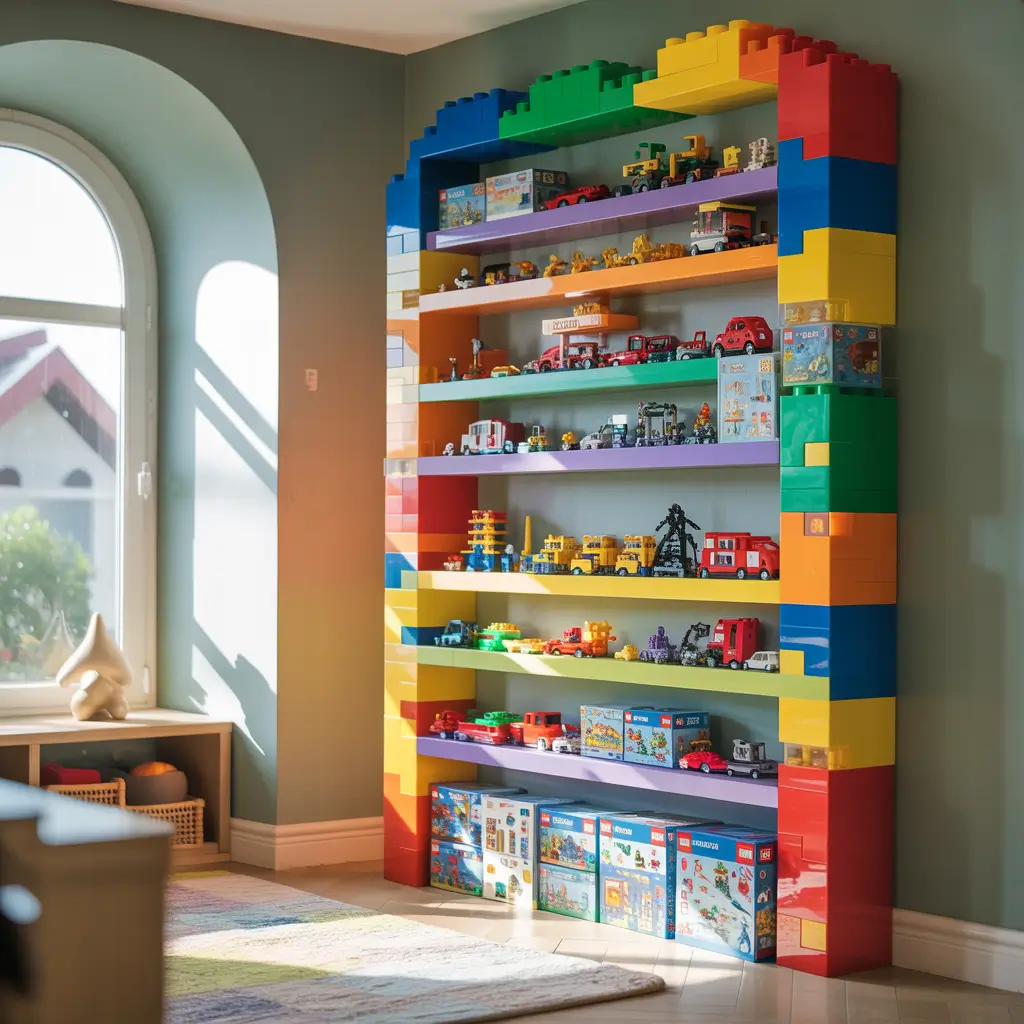
Vertical tower shelves create floor-to-ceiling displays that showcase collections impressively while using minimal floor footprint. My tall tower holds my complete Architecture series, with each level dedicated to a different scale or theme. The vertical arrangement makes even modest collections look substantial.
Tower shelving works especially well for sets that benefit from viewing at different heights. My Eiffel Tower sits at eye level for maximum impact, while base-heavy structures sit lower where their foundations get proper appreciation.
Tower Shelf Tactics
Calculate your ceiling height and shelf spacing. My tower has seven adjustable shelves in an 8-foot column, giving me roughly 13 inches between each level. This spacing accommodates most LEGO sets while maximizing vertical capacity.
Place your most impressive builds at eye level. The prime real estate on any tower shelf is the zone between 4 and 6 feet from the floor. I put my largest and most intricate builds in this sweet spot where they get maximum attention.
Distribute weight evenly from bottom to top. Top-heavy tower shelves become stability hazards. I keep heavier sets on lower shelves and lighter builds toward the top, creating a stable base that supports the entire structure.
DIY LEGO Bookend Shelves: The Functional Display
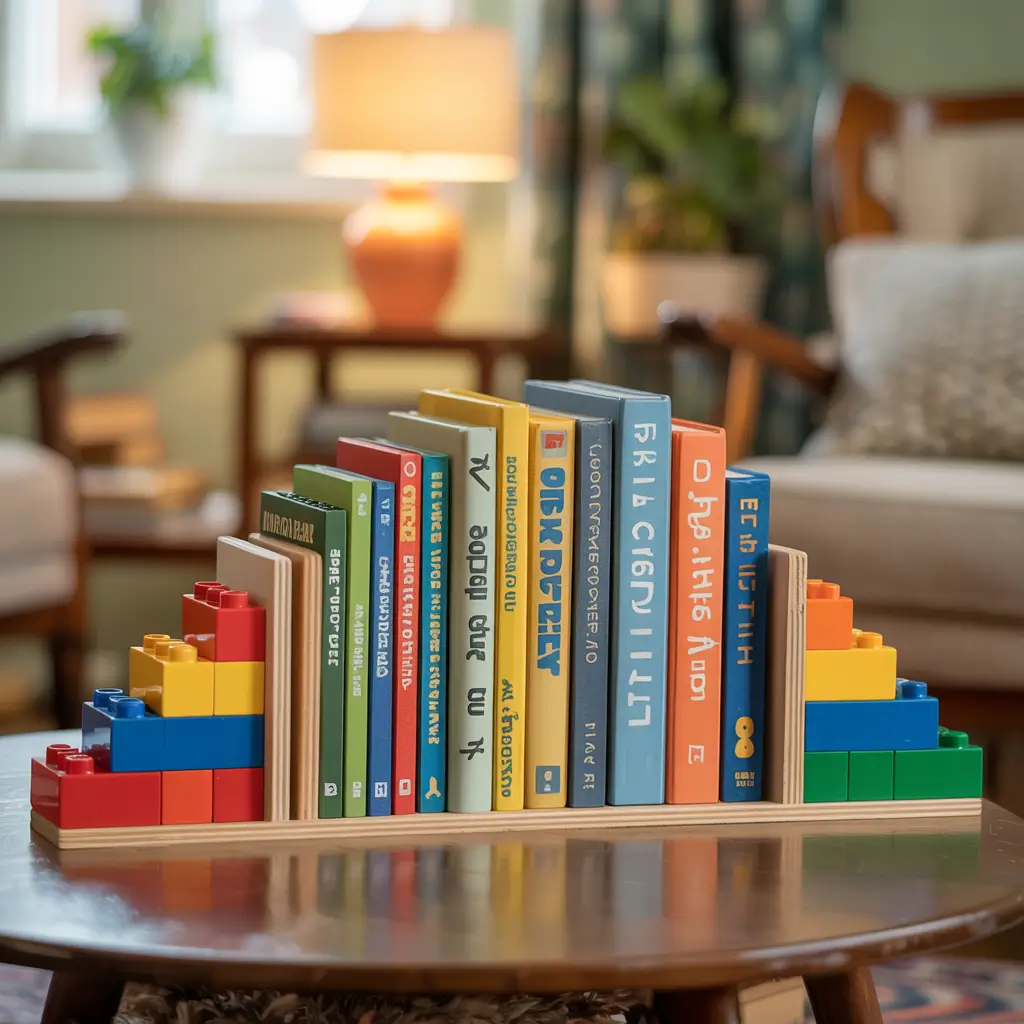
Bookend-style shelves incorporate LEGO displays into functional furniture that serves double duty. I built custom bookends that hold minifigures while supporting my actual book collection. The combination means my LEGO display earns its place by doing real work rather than just looking cool.
This approach works brilliantly for spaces that can’t dedicate entire walls to LEGO. My home office shelf has LEGO bookends that keep serious books organized while displaying my favorite minifigures – professional and playful at once.
Bookend Shelf Ideas
Build DIY bookends with LEGO-compatible surfaces. I glued actual baseplates to wooden bookend backs, creating surfaces where I build small vignettes that change regularly. The displays become part of the bookends rather than sitting on them.
Choose heavy, stable bookend designs. Lightweight bookends fall over when books push against them. My wooden bookends weigh several pounds each, holding everything upright regardless of book weight or minifigure additions.
Match bookend style to your room’s aesthetic. My office bookends are natural wood with subtle LEGO integration. My kid’s room has bright primary-colored bookends that embrace the LEGO aesthetic fully. Context determines appropriate style.
Also Read: 10 Stunning Bar Shelves Ideas for Small Corners
LEGO-Themed Rotating Shelf: The 360-Degree Showcase
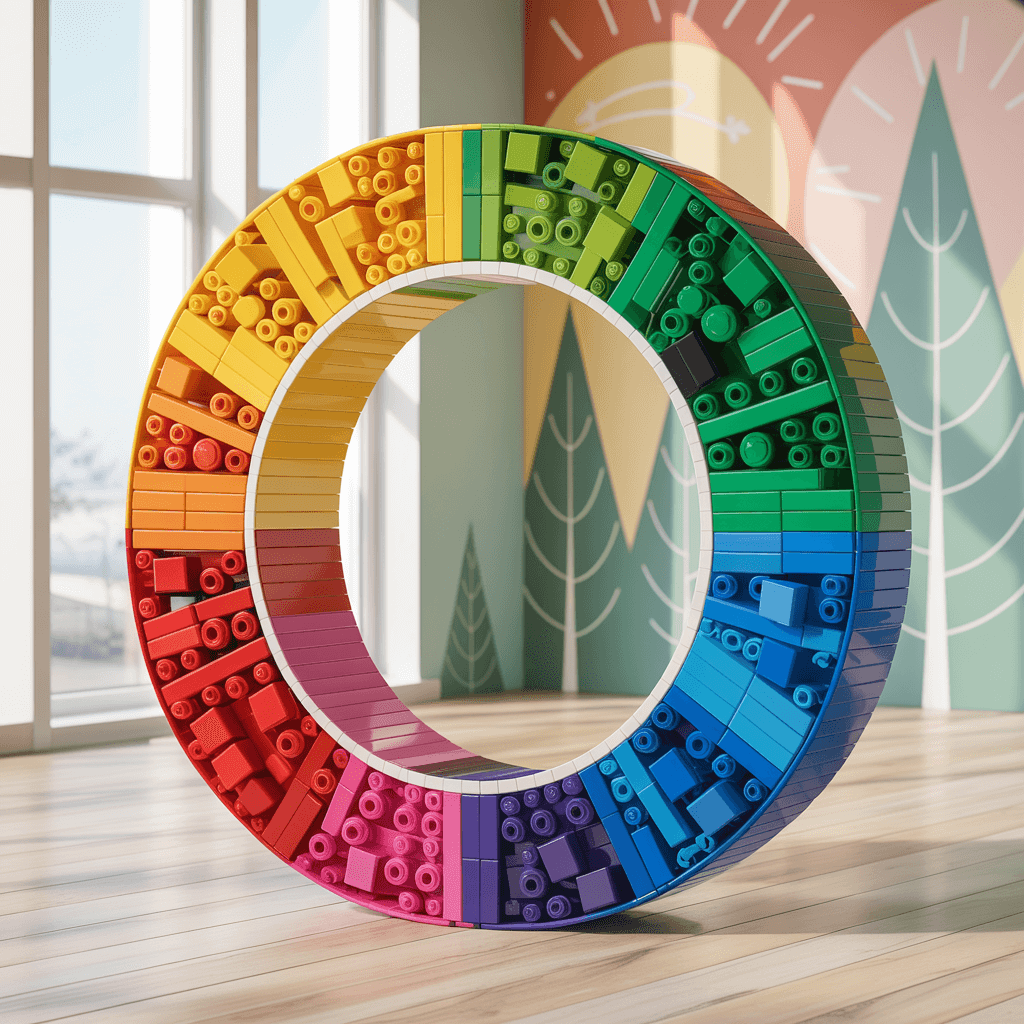
Rotating display platforms let you showcase builds from every angle without moving anything. My Ninjago City sits on a motorized rotating platform that slowly spins, revealing details that fixed displays hide. Visitors can stand in one spot and see the entire build over about 90 seconds.
The rotating approach works especially well for builds with intricate back details that most display setups hide. My modular buildings have amazing alley scenes that nobody saw until I started using rotation.
Rotation Station Setup
Choose platform size based on your largest builds. My 12-inch rotating platform handles most sets, but my largest modulars require a 16-inch platform I use separately. Measure your builds before buying platforms.
Consider motor noise in shared spaces. Cheap motorized platforms can hum annoyingly. I invested in a quiet motor that operates silently – essential for living room displays where constant buzzing would drive everyone crazy :/
Use rotation for featured builds, not entire collections. I rotate one or two “featured” pieces while the rest of my collection sits on static shelving. The rotation draws attention to specific builds without making my entire display into a spinning carnival.
Making LEGO Shelving Work for Your Collection
Here’s what years of LEGO collecting taught me about display shelving: the best solution matches your space, your collection size, and how much you actually interact with your builds.
I’ve made gorgeous displays that failed because I couldn’t access sets for playing or photographing.
Think about maintenance when choosing shelving. Open displays collect dust constantly – my floating shelves require monthly cleaning to keep builds looking fresh. Enclosed displays reduce dusting but limit visibility.
Consider how much maintenance you’re willing to do.
Plan for collection growth from day one. FYI, LEGO collections only grow, they never shrink. My first shelving solution maxed out within a year because I underestimated how quickly sets accumulate. Build extra capacity into whatever system you choose.
Consider display rotation to keep things fresh. I don’t display my entire collection at once – that would require a warehouse.
Instead, I rotate seasonal and thematic displays, keeping my visible collection manageable while stored sets wait their turn.
Safety matters more than aesthetics. Every shelf holding LEGO should anchor to walls, especially in homes with children or pets.
My cat taught me this lesson the expensive way. No display is worth risking valuable sets or anyone’s safety.
Your LEGO collection deserves proper display that shows off your builds, protects your investment, and makes you smile every time you walk past.
Whether you go with themed brick shelves, modular systems, or creative DIY solutions, the right shelving transforms scattered sets into an impressive collection that reflects the time, money, and love you’ve put into building.
Now stop leaving that Millennium Falcon on the coffee table and give it the display it deserves!