10 Beautiful Cafe Interior Design Ideas for Small Spaces
- Home Interior Design
 Ben
Ben- 0
- 24 minutes read
Remember the last time you walked into a cafe and immediately knew you’d found your new spot? That wasn’t an accident.
After spending the last five years bouncing between coffee shops for work (freelance life, am I right?), and eventually helping design three local cafes, I’ve learned that great cafe design is equal parts psychology, comfort, and straight-up magic.
Here’s the thing – your coffee can be perfect, your pastries heavenly, but if your space feels like a hospital waiting room with espresso machines, you’re done.
I’ve watched cafes with mediocre coffee thrive because their interior made people feel something, while shops with award-winning beans failed because sitting inside felt like being in a corporate break room.
These ten cafe interior design ideas aren’t just pretty concepts; they’re tested approaches that create spaces where people actually want to hang out, work, and most importantly, keep coming back.
Minimalist Scandinavian Cafe Interiors
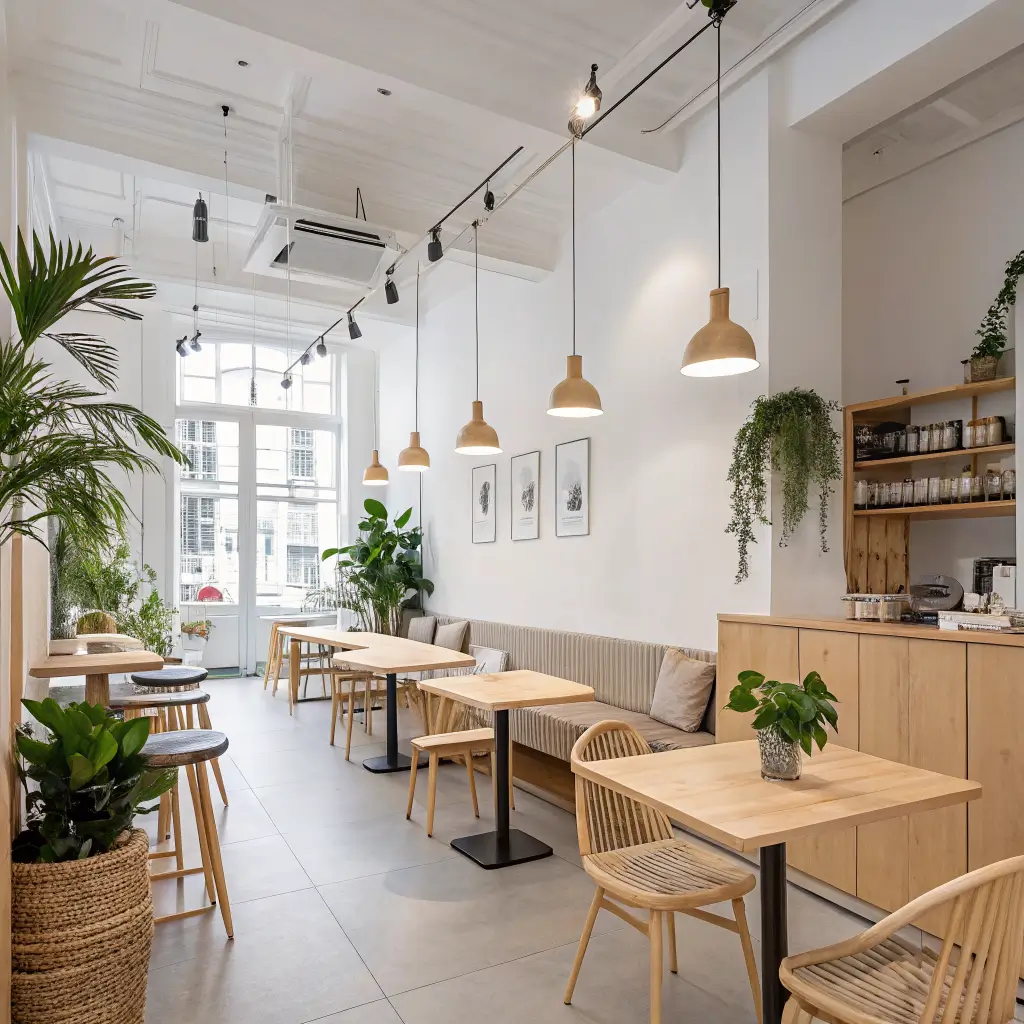
Scandinavian cafe design is like that friend who seems effortlessly put-together at 6 AM – clean, functional, and somehow cozy despite being minimal. I fell in love with this style at a tiny Copenhagen cafe where I spent an entire afternoon supposedly working but mostly just absorbing the vibe.
The Scandinavian formula strips away everything unnecessary while amplifying what matters: comfort, light, and that elusive hygge feeling. You’re not creating emptiness; you’re creating breathing room where coffee and conversation can be the stars.
Essential Scandinavian cafe elements:
• Light wood everything – floors, furniture, counters
• White walls that maximize natural light
• Simple pendant lights with warm bulbs
• Minimal but comfortable seating
• Plants for life without clutter
The game-changer I discovered when implementing this style is that less furniture can actually mean more customers. One cafe I worked with removed half their tables, spaced everything out properly, and somehow increased capacity because people weren’t avoiding the cramped feeling anymore.
Have you noticed how Scandinavian cafes always smell like fresh coffee and nothing else? That’s intentional. No competing scents from heavy cleaners or air fresheners – just pure coffee aroma enhanced by clean, neutral spaces.
Rustic Industrial Cafe Design Concepts
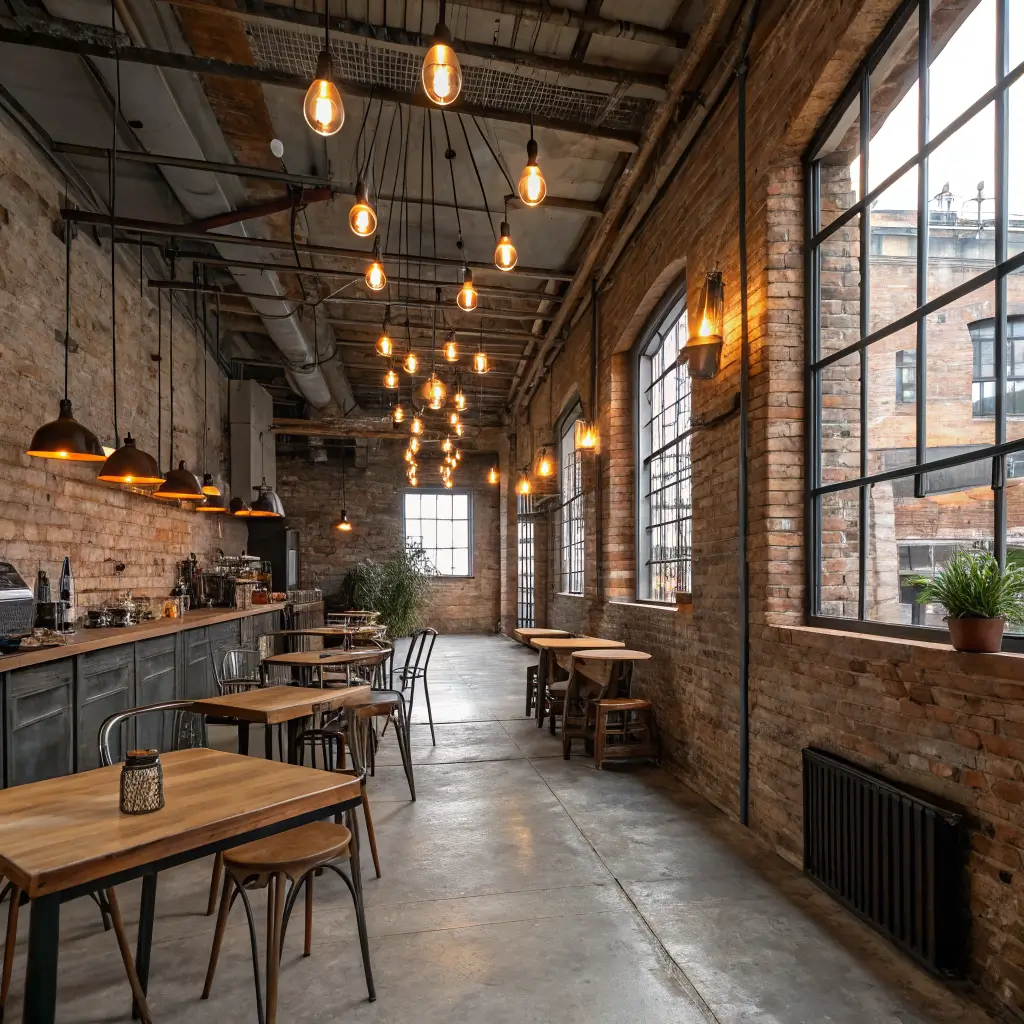
Industrial design makes your cafe feel like the cool converted warehouse everyone wants to hang out in, even if you’re actually in a strip mall. This style saved one of my client’s cafes from looking like every other coffee shop on Main Street.
Creating authentic industrial vibes means embracing raw materials and exposed elements rather than hiding them. Those pipes in your ceiling? Feature, not flaw. That concrete floor? Perfect as-is.
Key industrial elements that work:
• Exposed brick walls (real or really good wallpaper)
• Metal fixtures and Edison bulb lighting
• Reclaimed wood paired with steel
• Concrete or polished cement surfaces
• Vintage industrial furniture pieces
What surprised me about industrial design is how warm it can feel when done right. Add leather seating, warm lighting, and wood accents to those hard surfaces, and suddenly your edgy industrial space feels inviting rather than cold.
My favorite industrial cafe trick? Use copper pipes as design elements – shelving, table bases, even menu holders. They’re relatively cheap, easy to work with, and instantly add that industrial authenticity everyone’s after.
Cozy Boho-Chic Coffee Shop Ideas
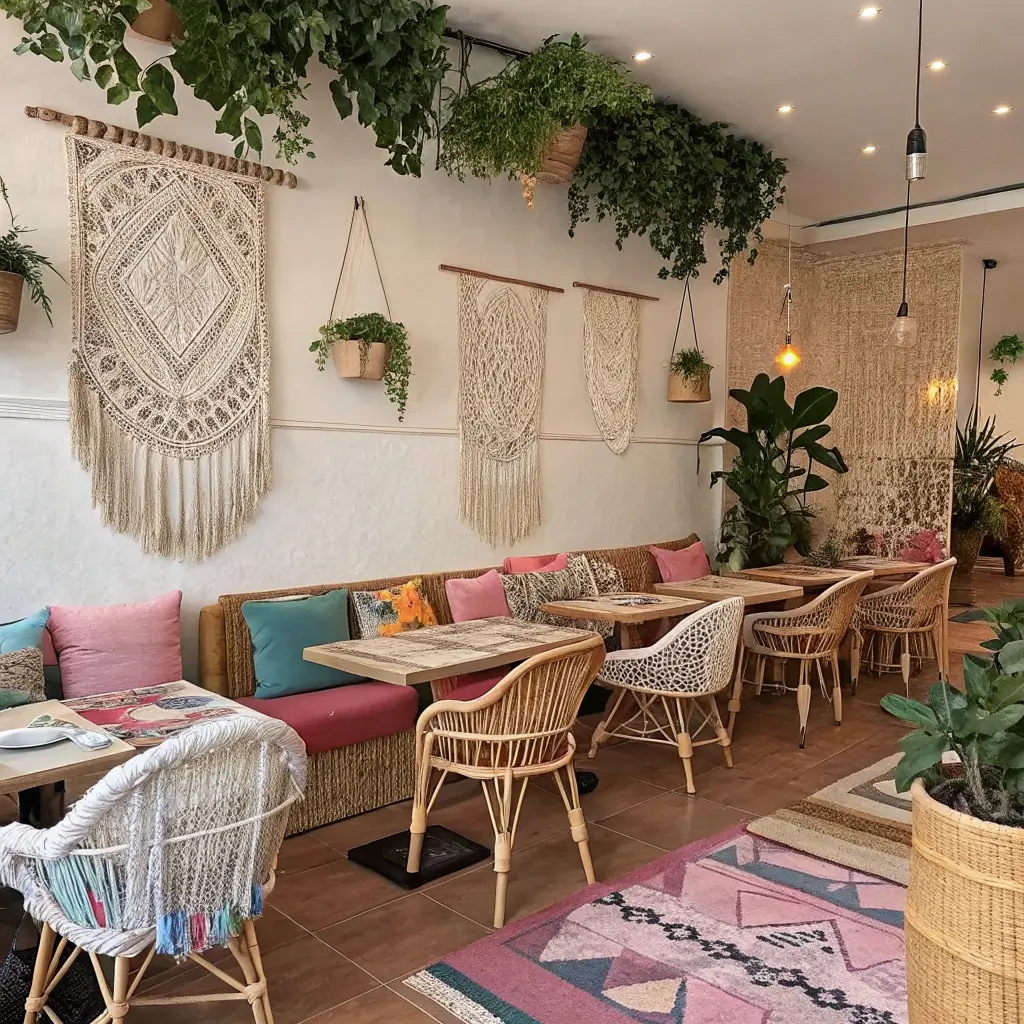
Boho-chic cafes are where your inner artist meets your coffee addiction and they have a beautiful, pattern-filled baby. This style works because it feels personal and collected rather than corporate and calculated.
True boho style in cafes creates spaces that feel like they evolved naturally over time. Every element tells a story, whether it’s actually vintage or just looks like it should be.
Creating boho cafe magic:
• Mixed patterns that somehow work together
• Vintage rugs layered over simple floors
• Macramé plant hangers everywhere
• Mismatched but cohesive seating
• Gallery walls with local art
I helped design a boho cafe that became the neighborhood’s living room within months. The secret was making it feel undesigned – like a really cool friend’s apartment rather than a business. We used furniture from five different decades, and it worked because we stuck to a consistent color palette.
The challenge with boho is knowing when to stop. You want eclectic, not chaotic. My rule: if you can’t see the coffee machine from the entrance because of all the stuff, you’ve gone too far.
Also Read: 12 Beautiful Interior Design Living Room Ideas and Chic Styles
Modern Urban Cafe Layout Inspirations
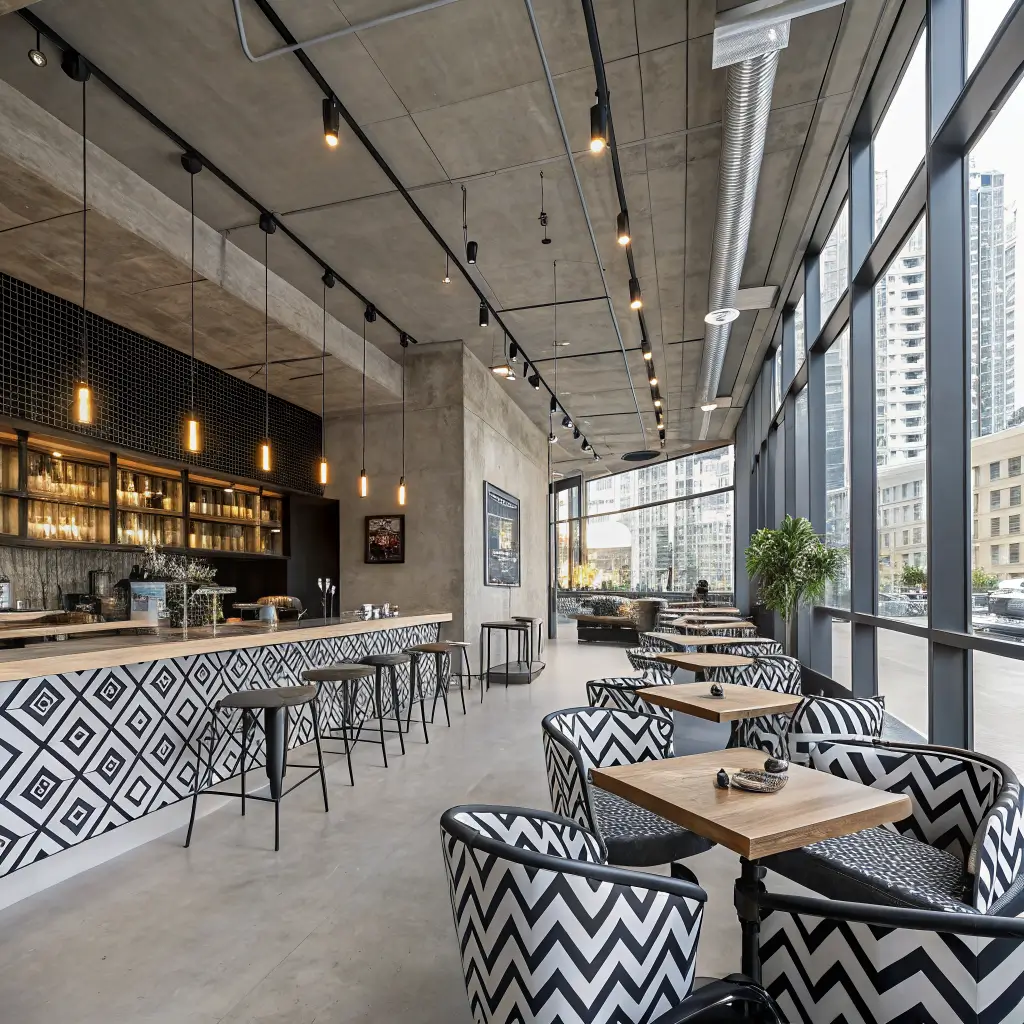
Modern urban cafes understand that city dwellers need efficiency with their aesthetics. After working in Manhattan cafes where every square foot costs a fortune, I learned that urban design is about making density feel intentional rather than cramped.
Urban cafe design acknowledges the reality of city life – limited space, diverse customers, and the need for quick turnover without feeling rushed.
Urban layout essentials:
• Communal tables for space efficiency
• Bar seating along windows
• Mobile furniture for flexibility
• Charging stations at every possible spot
• Standing counters for quick coffee runs
The breakthrough I witnessed was when one cafe created zones for different urban tribes. Communal tables for remote workers, cozy corners for dates, and a quick-grab counter for commuters. Everyone found their spot without feeling like they were in the wrong place.
My favorite urban move? Mirrors on the back wall. They double your visual space and create energy by reflecting the street life outside. Urban cafes should feel connected to their city, not isolated from it.
Vintage Retro Cafe Decor Styles
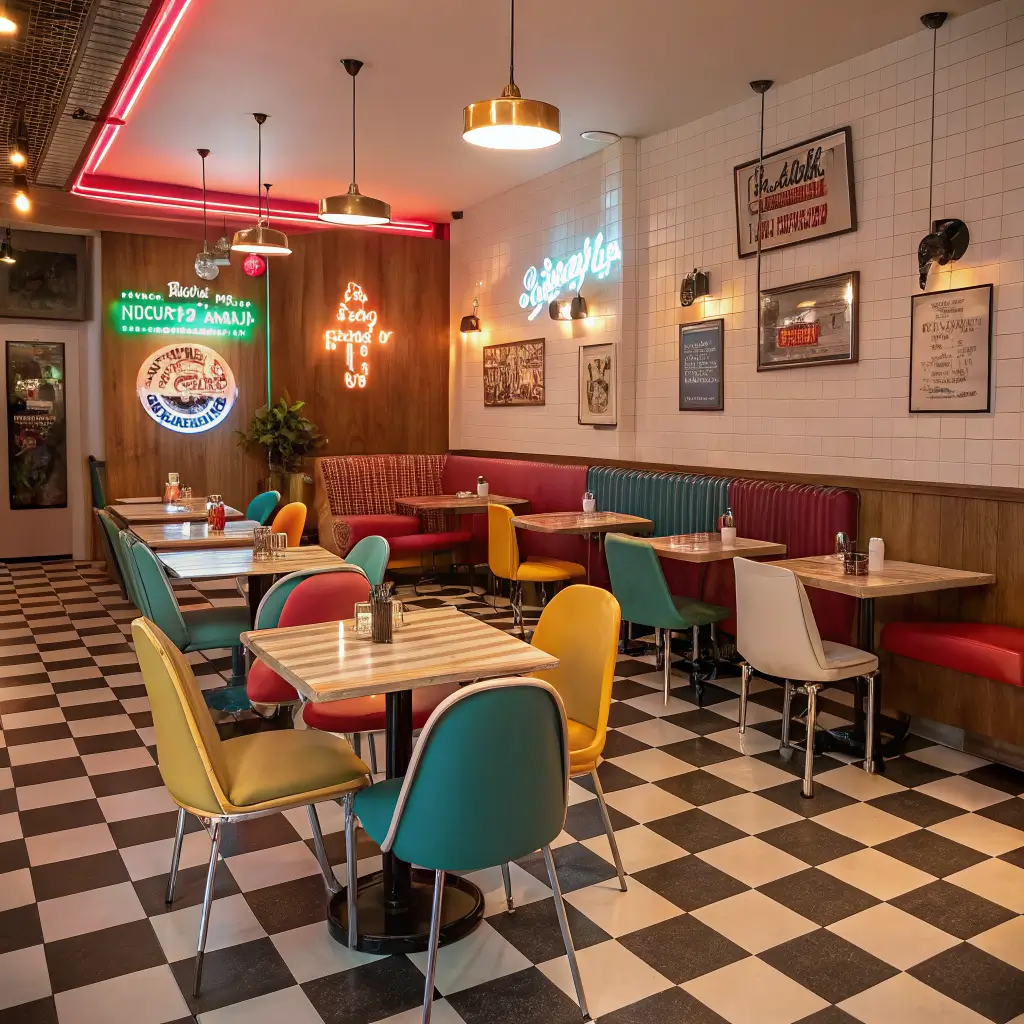
Vintage cafes tap into nostalgia for eras most of us never actually experienced but somehow miss anyway. I designed a 1950s-inspired cafe that made everyone feel like they were in a feel-good movie, complete with checkered floors and red vinyl booths.
Successful vintage design requires commitment to a specific era rather than throwing all old things together and calling it vintage. Pick your decade and stick to it.
Vintage elements that transport customers:
• Era-appropriate color schemes
• Authentic or reproduction furniture
• Vintage signage and typography
• Period-correct music (this matters more than you think)
• Display cases with vintage props
What I learned is that vintage doesn’t mean uncomfortable. We used modern booth filling with vintage-style vinyl covers. Customers got the aesthetic without the authentic backache.
FYI, the most Instagrammed spot in that vintage cafe? The bathroom, which we decorated with vintage magazine ads. Sometimes the smallest details create the biggest impact.
Nature-Inspired Green Cafe Interiors
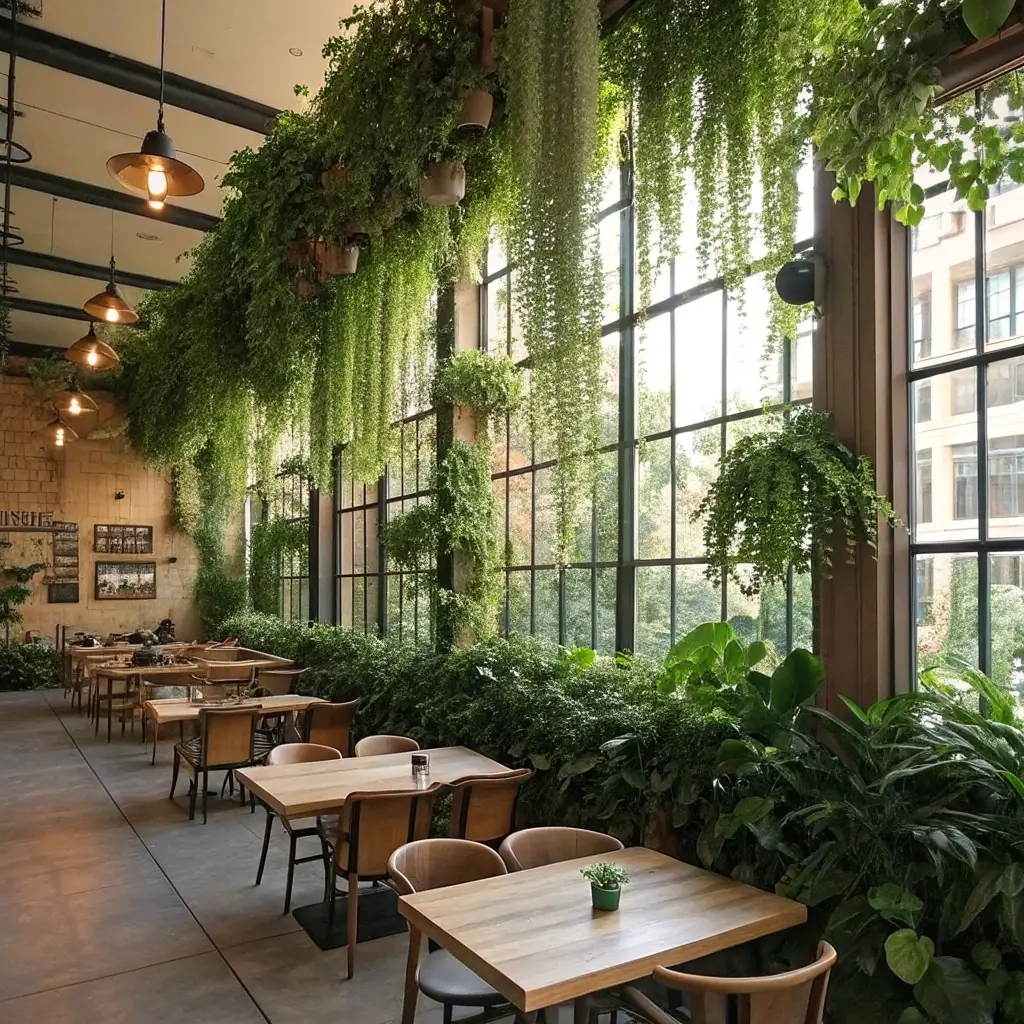
Green cafes – and I mean literally green with plants – create an oasis that makes people forget they’re in a commercial space. After the pandemic, everyone craves nature, and cafes that deliver this are winning.
Biophilic design in cafes isn’t just about throwing in some plants. It’s about creating an ecosystem where humans, coffee, and nature coexist beautifully.
Creating a green cafe paradise:
• Living walls or vertical gardens
• Natural materials throughout
• Skylights or grow lights for plants
• Natural color palettes inspired by nature
• Water features for ambient sound
I worked on a cafe that installed a living wall, and their Instagram engagement increased 300%. But more importantly, customers stayed longer and reported feeling calmer. The plants literally improved the air quality and the mood simultaneously.
The maintenance concern is real, but here’s the secret: mix real plants with high-quality fake ones in hard-to-reach places. Nobody’s climbing up to check if that hanging fern is real, and you’ve just saved yourself weekly ladder adventures.
Also Read: 10 Elegant Office Interior Design Ideas for Professional Style
Compact Small Space Cafe Designs
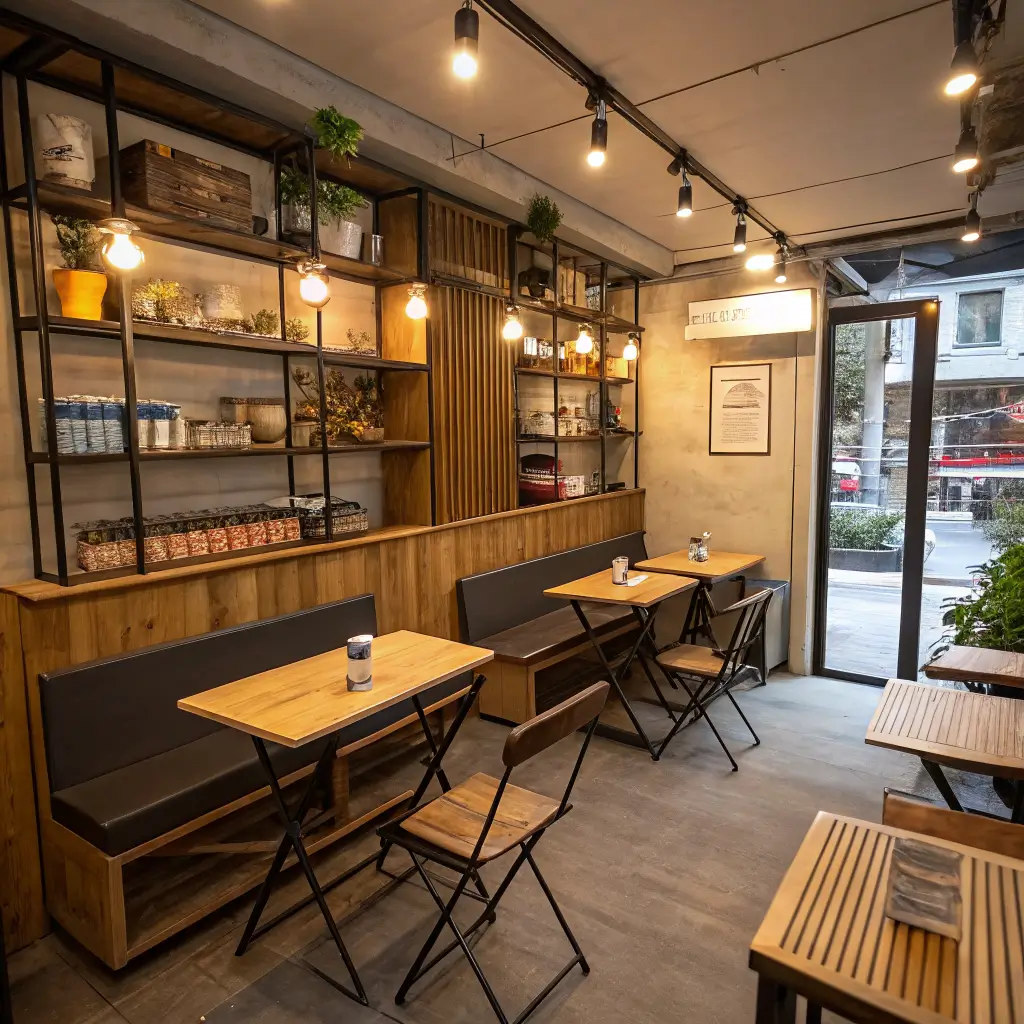
Small cafes can be mighty cafes. My favorite coffee shop is 200 square feet, and there’s always a line. Small spaces force creativity and can create intimacy that massive cafes never achieve.
Small space success comes from embracing limitations rather than fighting them. Every element must multitask, and every inch must work.
Small space strategies that work:
• Wall-mounted everything possible
• Foldable furniture for flexibility
• Vertical storage and display
• Mirrors to expand visual space
• Outdoor seating when possible
The revelation came when I realized small cafes can charge more. The intimacy and exclusivity of a tiny, well-designed space allows for premium pricing. One 150-square-foot cafe I know charges $7 for a latte and has a wait list for their 8 seats.
My favorite small space hack? A rail system on the ceiling for hanging plants, lights, and even menu boards. It keeps everything off the precious counter and floor space while adding visual interest overhead.
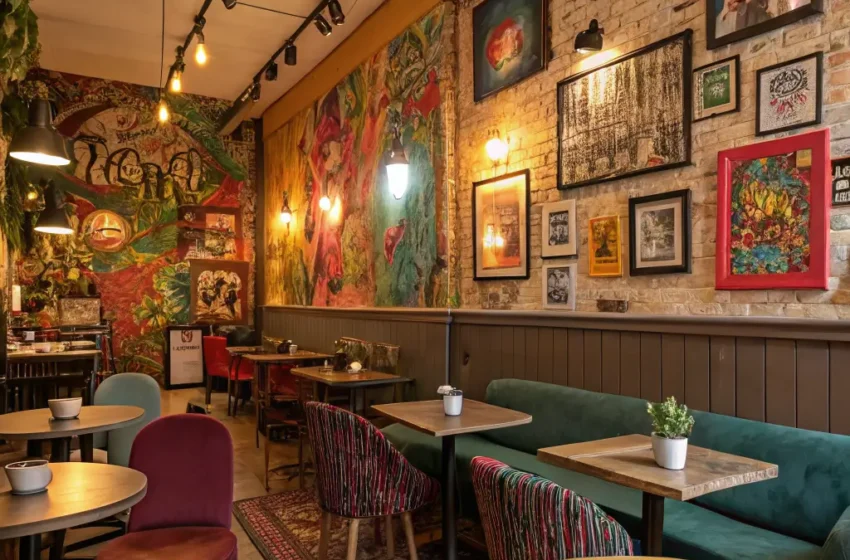
Artistic & Creative Wall-Focused Cafes
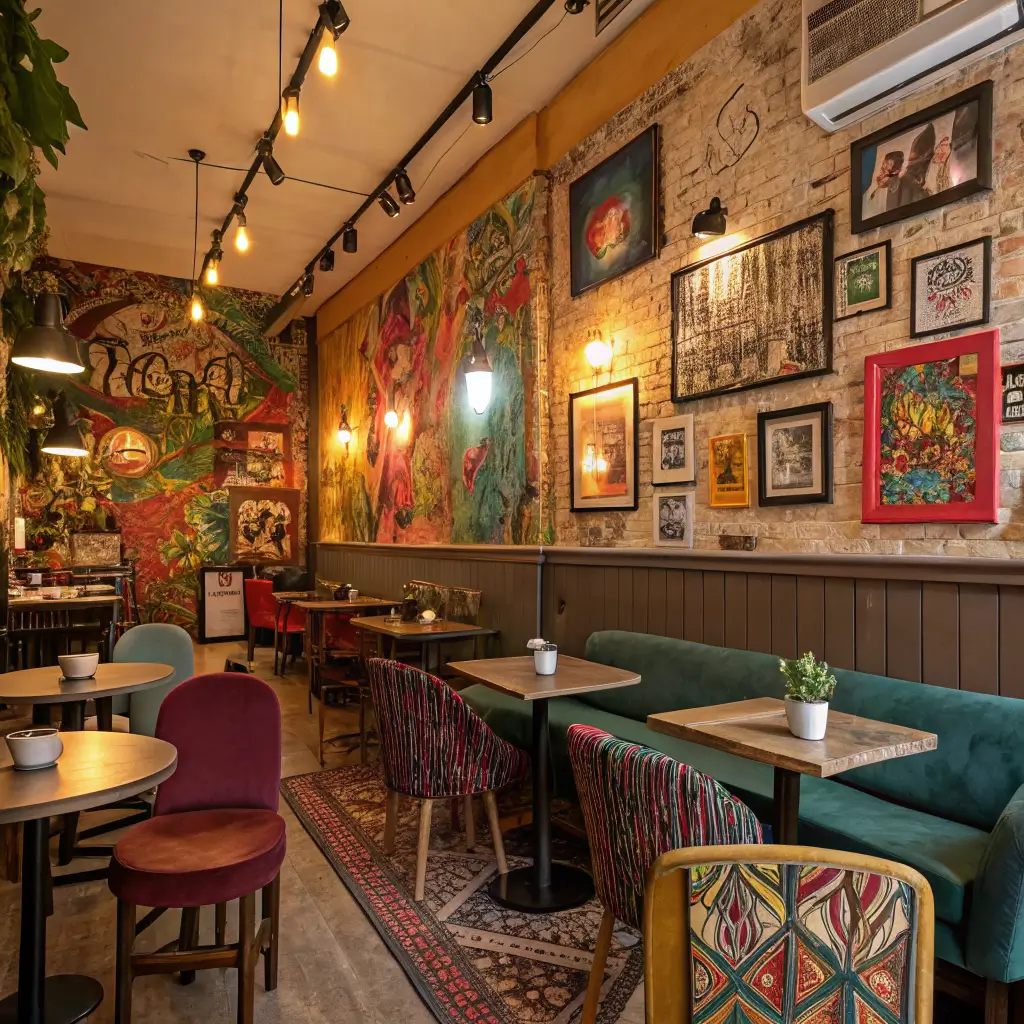
Walls are free real estate in cafes, and creative wall design can transform a boring box into an experience. I’ve seen cafes become destinations purely because of their wall game.
Wall-focused design treats vertical surfaces as the main attraction rather than an afterthought. Your walls tell your story, display local art, or become art themselves.
Wall ideas that wow:
• Rotating local artist exhibitions
• Floor-to-ceiling chalkboard menus
• Mural walls (commissioned or DIY)
• Gallery walls with cohesive themes
• Interactive walls customers can contribute to
One cafe I consulted for had blank walls and no budget. We created a “community wall” where customers could pin polaroids, notes, and art. It cost $50 in supplies and became their most talked-about feature.
Have you noticed how people always sit facing the most interesting wall? Use this psychology by making every wall Instagram-worthy. Your customers become your marketing team when every angle is photogenic.
Luxury Elegant Cafe Ambiance Ideas
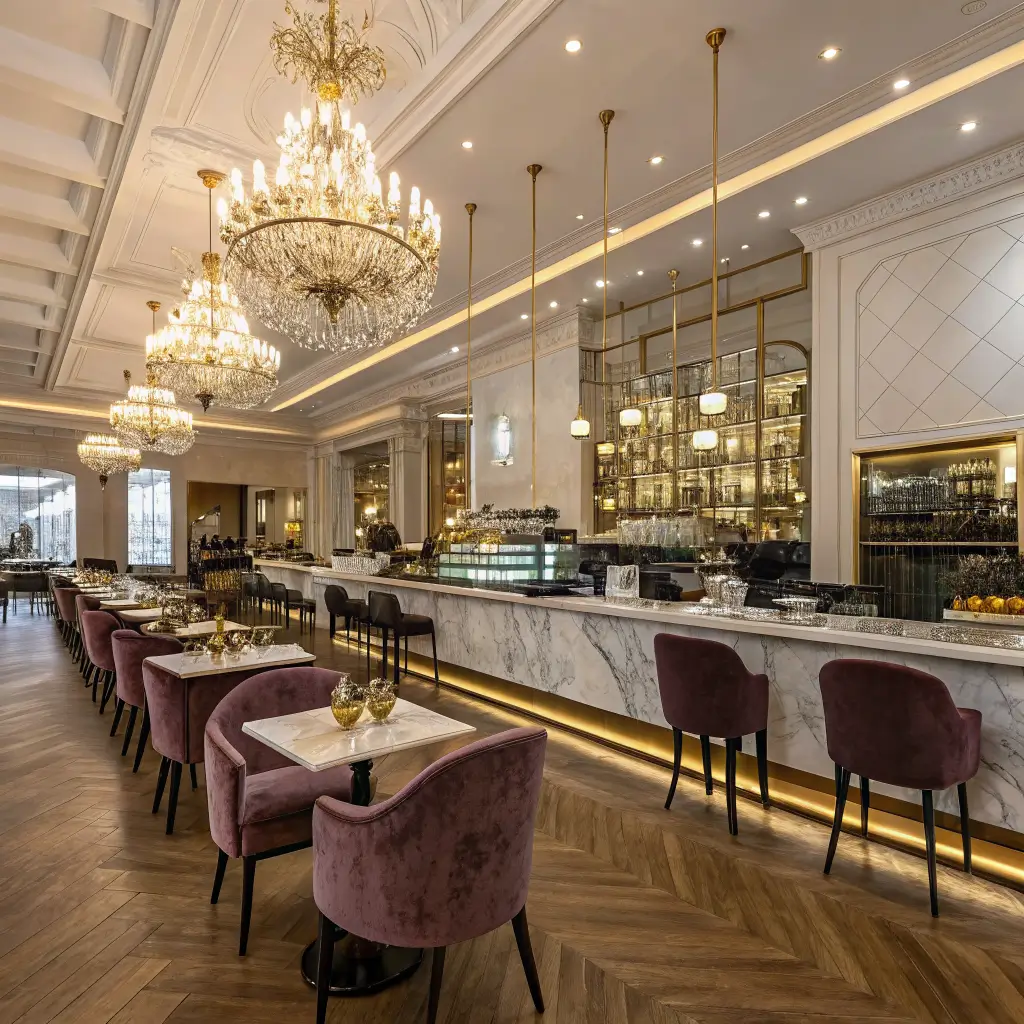
Luxury cafes prove that coffee shops don’t have to be casual. Sometimes people want to feel fancy with their flat white, and elegant cafe design delivers that experience.
Creating luxury in cafes means upgrading every touchpoint – from the door handle to the coffee cup. It’s about making customers feel special, not just caffeinated.
Elegant elements worth the investment:
• Marble or quality stone surfaces
• Plush seating in rich fabrics
• Crystal or designer lighting fixtures
• Real flowers changed daily
• Premium serveware and actual silverware
I helped transform a standard cafe into a luxury destination by focusing on three high-impact changes: marble tabletops, velvet banquette seating, and a stunning chandelier. The investment paid off in three months through increased prices and customer retention.
The surprise about luxury cafes? They often have lower operational costs. Customers linger less in formal settings, increasing table turnover, and they’re more careful with nice things, reducing replacement costs.
Also Read: 12 Elegant Home Interior Design Ideas to Elevate Your Home
Trendy Instagrammable Cafe Corners
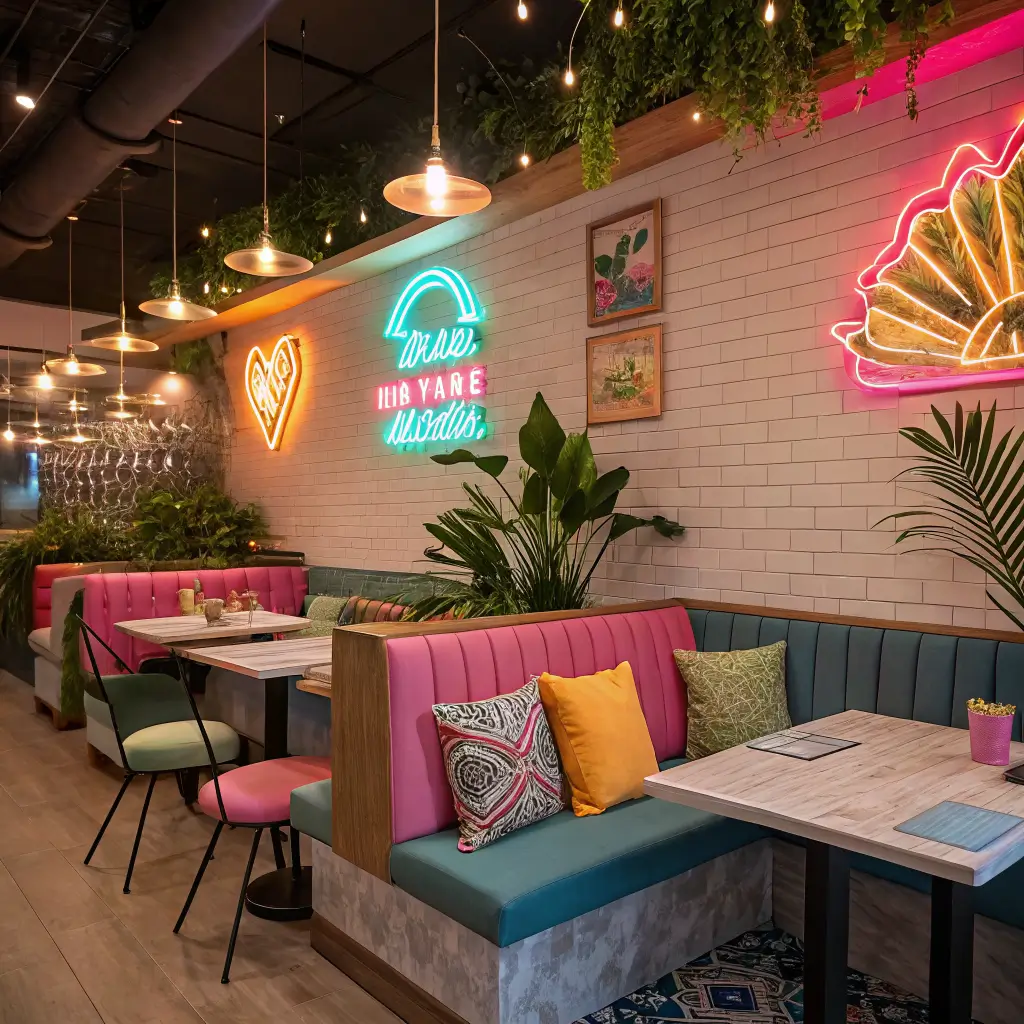
Like it or not, Instagram drives cafe traffic. Creating Instagrammable moments isn’t selling out; it’s smart business. Every cafe I’ve designed in the last three years has needed at least one “Instagram wall.”
Instagrammable design creates specific moments that photograph well while still functioning as a real cafe. You’re designing for two experiences – being there and sharing it online.
Instagram-worthy elements:
• Neon signs with quotable phrases
• Flower walls or balloon installations
• Unique seating like swings or pods
• Pattern play with tiles or wallpaper
• Lighting that flatters everyone
The cafe that nailed this best created five different photo spots throughout their space. Customer dwell time increased because people wanted to photograph each area, and they ordered more to justify staying longer.
IMO, the best Instagrammable moments feel authentic to your brand. That generic angel wings mural? Skip it. A unique installation that reflects your cafe’s personality? That’s gold. 🙂
Making Your Cafe Interior Design Work
After exploring these ten cafe interior design ideas, here’s the real talk: the best cafe design is the one that matches your coffee, your customers, and your neighborhood.
I’ve seen minimalist cafes fail in artistic neighborhoods and boho cafes flop in financial districts.
Start by understanding who you’re serving and what they need from a cafe experience. Remote workers need WiFi and outlets. Parents need space for strollers. Students need affordable seating options.
Design for your actual customers, not your dream customers.
The biggest lesson I’ve learned? Perfect is the enemy of good in cafe design. That slightly wonky table adds character. The mismatched chairs create visual interest. The hand-painted sign shows personality.
Cafes aren’t supposed to be perfect; they’re supposed to be inviting.
Remember, cafe design evolves. Start with a strong foundation and one signature element, then build as you learn what your customers love. Every successful cafe I know has redesigned something based on customer behavior.
That cozy corner nobody sits in? Maybe it needs better lighting. That communal table everyone avoids? Perhaps it’s too close to the bathroom.
Your cafe’s interior is a conversation with your customers. Make it interesting enough that they want to keep talking, comfortable enough that they want to stay, and memorable enough that they want to come back.
The coffee might bring them in the first time, but the space is what makes them regulars. Now stop overthinking it and start creating – your future regulars are waiting for their new favorite spot. :/