12 Beautiful Restaurant Interior Design Ideas and Luxe Ambiance
- Home Interior Design
 Ben
Ben- 0
- 28 minutes read
You know that moment when you walk into a restaurant and instantly know it’s going to be good? Before you’ve even seen a menu or tasted the food, something about the space just clicks.
After spending eight years eating my way through restaurants (for research, obviously) and eventually helping design five of them, I can tell you that this feeling isn’t accidental – it’s carefully crafted through smart interior design.
Here’s the brutal truth: your food can be Michelin-star worthy, but if diners feel like they’re eating in a hospital cafeteria, they’re not coming back.
I’ve watched restaurants with incredible chefs fail because the space felt wrong, while places with decent-but-not-amazing food thrive because the interior made people want to stay, linger, and post about it online.
These twelve restaurant interior design ideas aren’t just trendy concepts; they’re proven approaches that create spaces where people make memories, not just eat meals.
Minimalist Modern Bistro Interiors
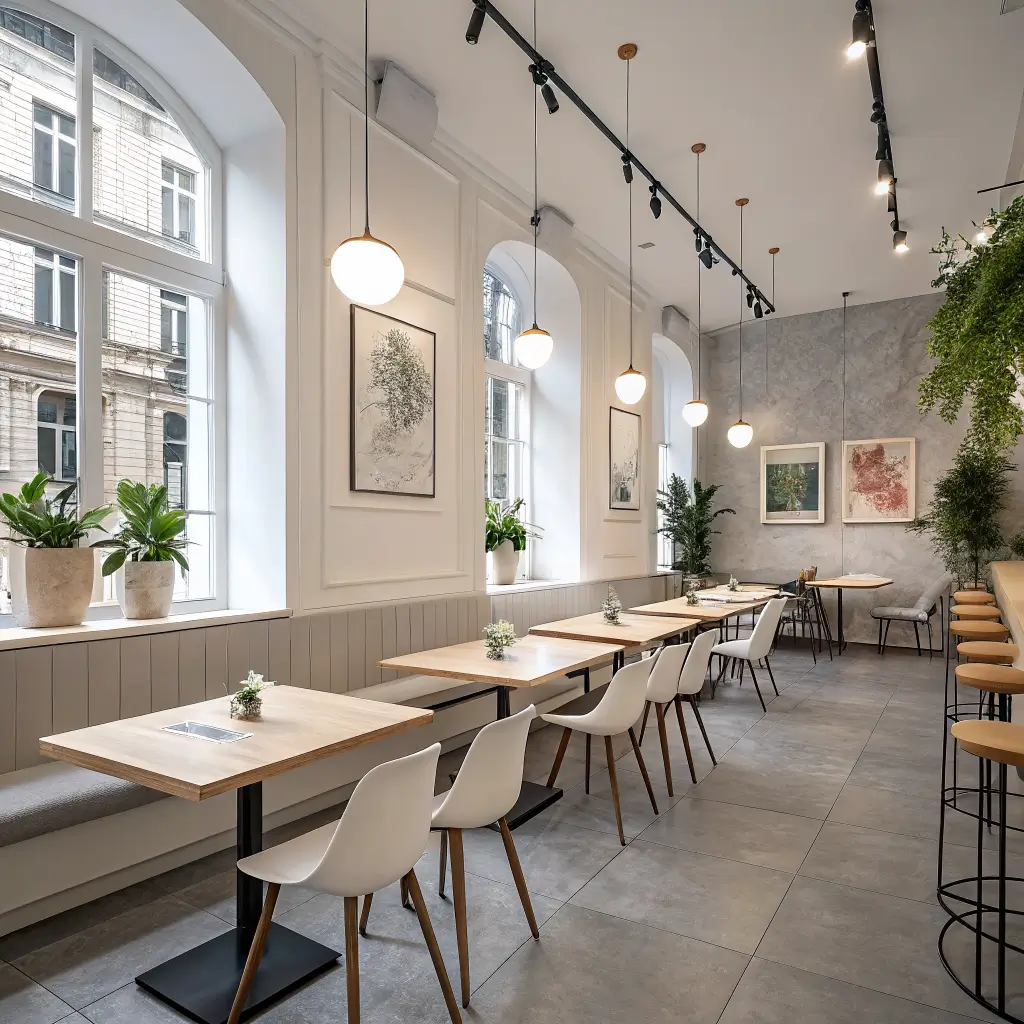
Minimalist bistro design is like that perfectly plated dish where every element has a purpose – nothing extra, nothing missing. I fell in love with this style at a tiny Tokyo restaurant where the entire design philosophy seemed to be “what if we removed everything that doesn’t matter?”
The minimalist formula strips your restaurant down to its essence: great food, comfortable seating, perfect lighting, and absolutely nothing that distracts from the dining experience. You’re creating clarity, not emptiness.
Essential minimalist bistro elements:
• Clean lines in furniture and architecture
• Neutral color palette with one accent maximum
• Hidden storage to maintain visual calm
• Quality materials that speak for themselves
• Strategic negative space that feels intentional
The game-changer I discovered when implementing this style is that less visual noise means more focus on the food. One bistro I worked with removed all wall art, simplified their table settings, and suddenly their plating looked like art because there was nothing competing for attention.
Have you noticed how the best minimalist restaurants feel expensive even with simple furniture? That’s because when you remove distractions, quality becomes impossible to hide. Every scratch shows, every cheap material stands out, which forces you to invest in pieces that actually last.
Rustic Farmhouse Restaurant Design
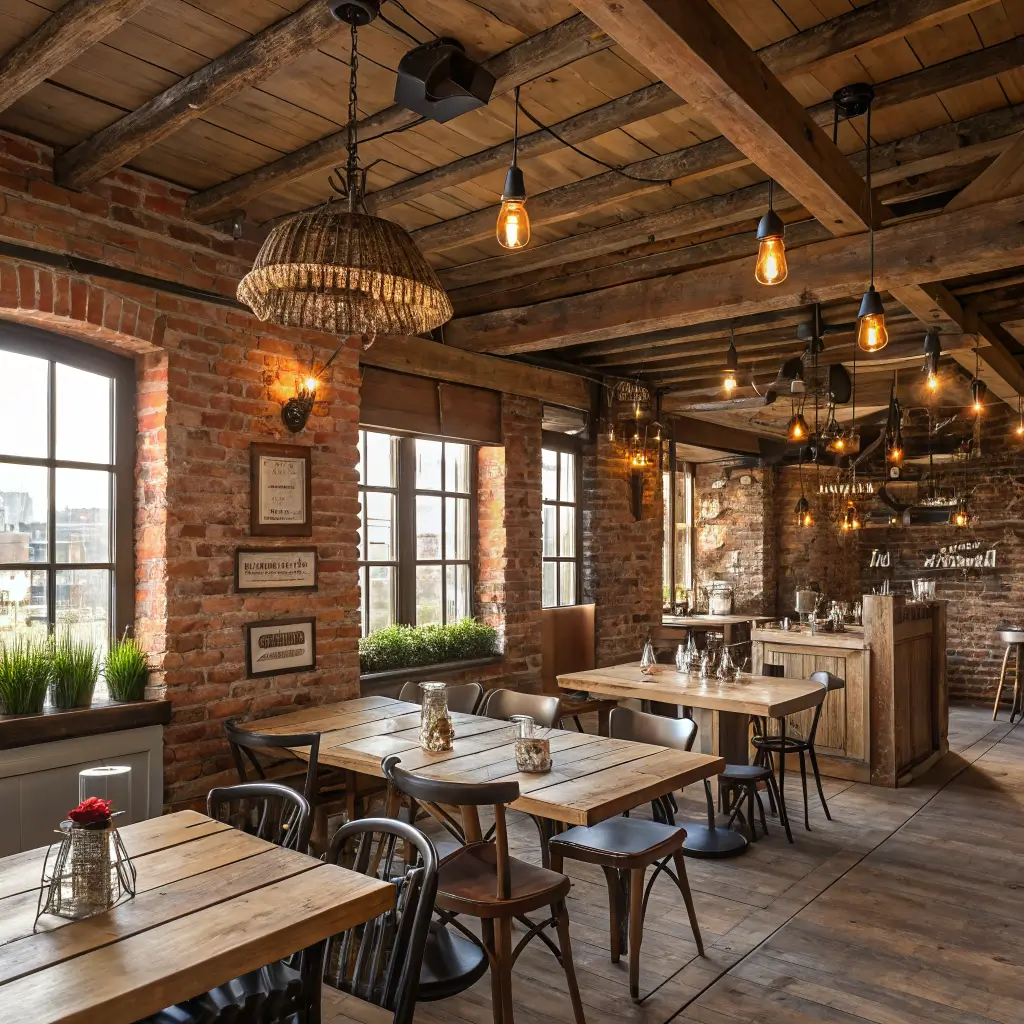
Farmhouse restaurants tap into our collective fantasy of eating at grandma’s house – if grandma had a commercial kitchen and a liquor license. This style has staying power because it promises comfort before you even sit down.
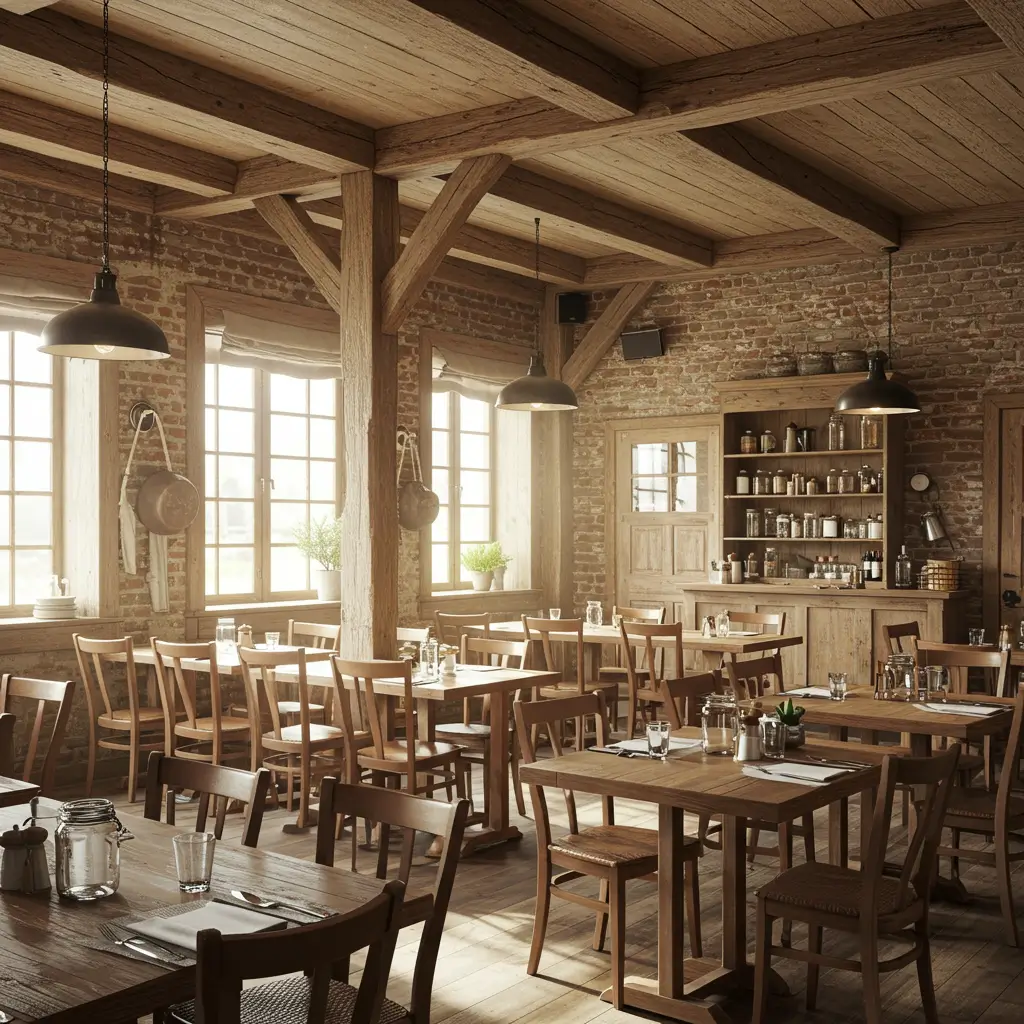
Creating authentic farmhouse vibes means embracing imperfection and warmth. Real wood with real wear, mismatched chairs that somehow work together, and lighting that makes everyone look good after 6 PM.
Key farmhouse elements that work:
• Reclaimed wood everything (tables, walls, shelving)
• Mix of seating styles (booths, chairs, benches)
• Open shelving displaying ingredients or dishes
• Warm Edison bulb lighting
• Vintage accessories that tell stories
What surprised me about farmhouse design is how forgiving it is for restaurant operations. Scratches add character. Worn spots become patina. That wine stain? It’s now part of the table’s story. One farmhouse restaurant I designed hasn’t renovated in five years and looks better now than opening day.
My favorite farmhouse trick? Use real vintage church pews for banquette seating. They’re built to last centuries, surprisingly comfortable with cushions, and create instant conversation starters.
Industrial Chic Café Concepts
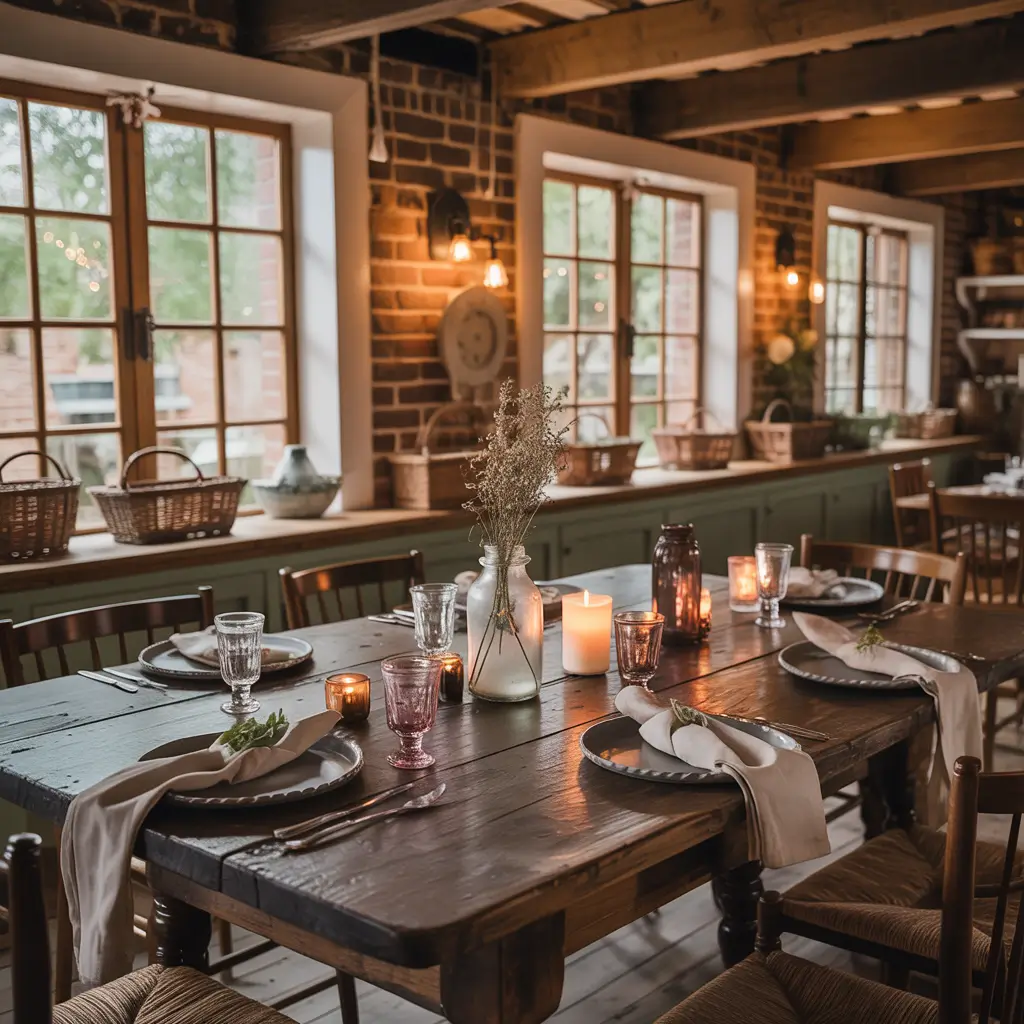
Industrial design makes your restaurant feel like that cool converted warehouse where interesting people discuss interesting things over interesting food. It’s urban without trying too hard, edgy without being uncomfortable.
Industrial chic in restaurants embraces the bones of your building rather than hiding them. Exposed pipes become design features. Concrete floors eliminate your flooring budget. That brick wall you were going to cover? It’s now your main attraction.
Creating industrial restaurant magic:
• Exposed structural elements as features
• Metal and wood material combinations
• Pendant lighting with visible bulbs
• Leather and metal seating
• Open kitchen concepts when possible
I helped convert an old print shop into a restaurant, and the industrial elements told the building’s story better than any mural could. We kept the old printing press as a display piece, used industrial shelving as room dividers, and the original loading dock became the coolest private dining area in town.
The challenge with industrial? Acoustics can be brutal. Hard surfaces everywhere means conversations bounce around like pinballs. Solution: strategic soft elements like leather banquettes, fabric panels disguised as art, and that modern miracle, acoustic spray on the ceiling.
Also Read: 10 Beautiful Cafe Interior Design Ideas for Small Spaces
Cozy Bohemian Dining Spaces
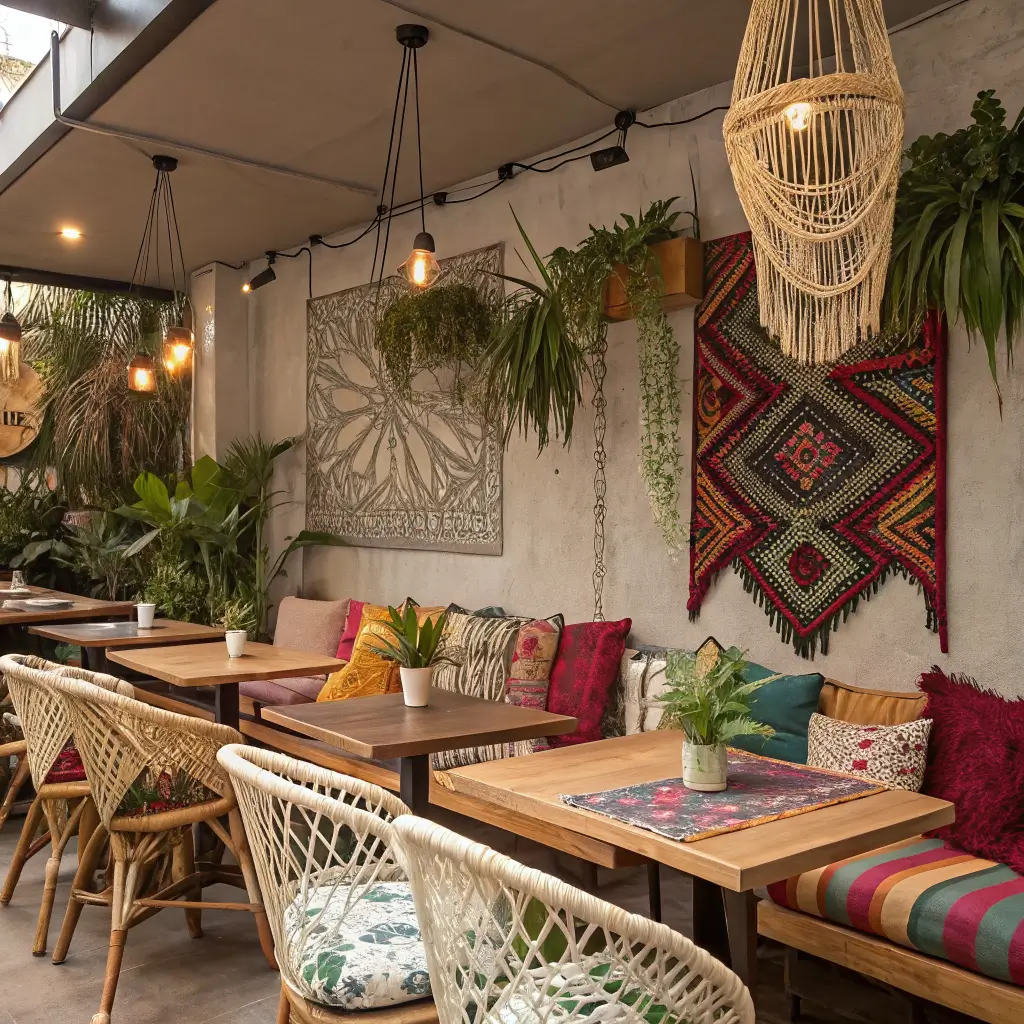
Bohemian restaurants are where your inner artist, world traveler, and comfort-seeker all agree to have dinner together. This style works because it feels personal and collected rather than designed and corporate.
True boho restaurant style creates spaces that feel like they evolved over years of collecting treasures, even if you opened last Tuesday. Every element has a story, whether real or beautifully fabricated.
Boho elements that transport diners:
• Layered rugs and textiles
• Mix of furniture from different eras
• Plants everywhere (real or quality fake)
• Eclectic art and wall treatments
• Warm, layered lighting from multiple sources
I designed a boho restaurant where we bought everything from estate sales and thrift stores, then unified it with a consistent color palette. Total furniture budget: $3,000. Number of times we’ve been featured in design blogs: 47 and counting.
The secret to boho that doesn’t look chaotic? Stick to a color story. We used jewel tones throughout – emerald, sapphire, ruby – which made mismatched furniture feel intentional rather than random.
Luxury Fine Dining Ambiance
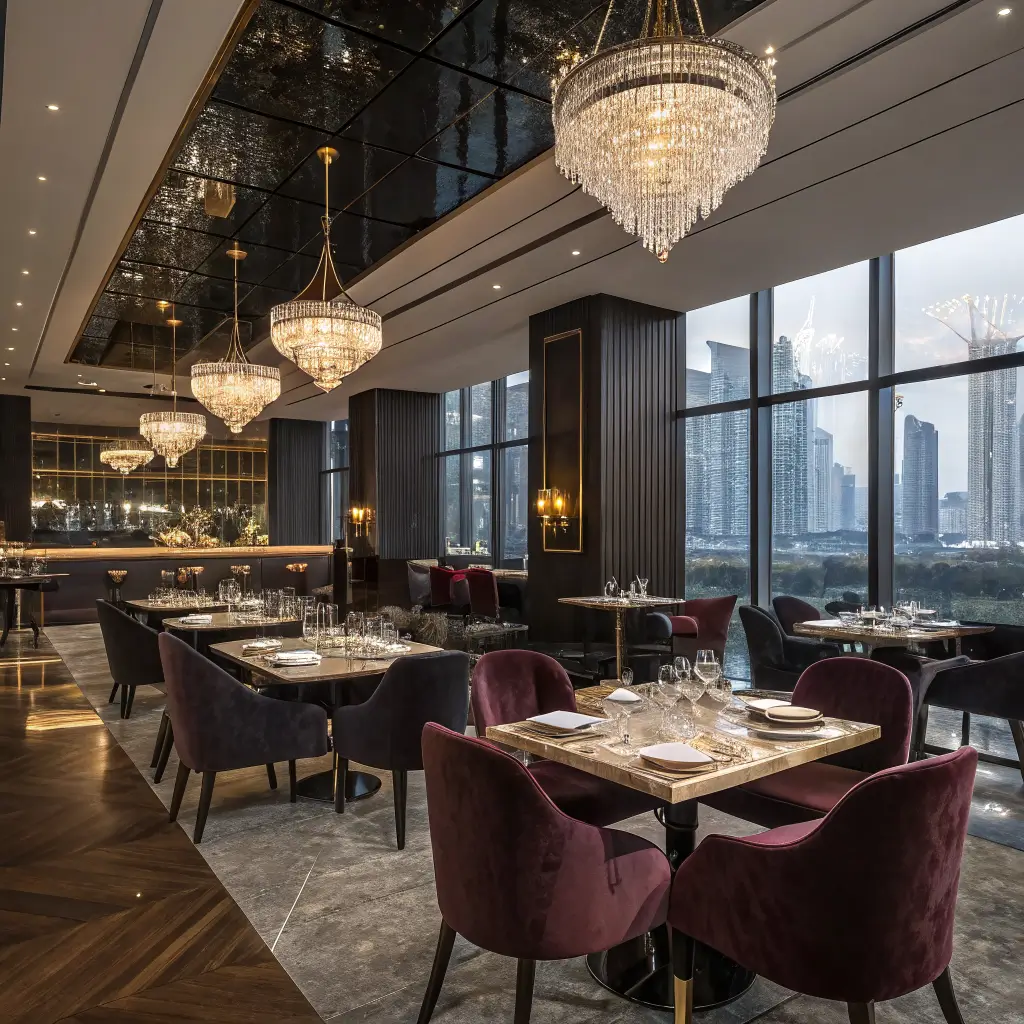
Fine dining design is theater where your guests are both audience and actors. Every element should make diners feel special, worthy, celebrated. I learned this at a restaurant where they spent $10,000 on door handles because “the experience starts the moment you touch the door.”
Creating luxury in restaurants means upgrading every single touchpoint. The host stand, the coat check, the bathroom (especially the bathroom) – everything signals that this isn’t just dinner, it’s an event.
Luxury elements worth the investment:
• Custom lighting that flatters everyone
• Acoustic treatments for intimate conversation
• Premium materials (real marble, solid wood, genuine leather)
• Proper table spacing for privacy
• Bathroom amenities that surprise and delight
The revelation came when I realized luxury dining is about control. Controlling sound so conversations feel private. Controlling light so everyone looks attractive. Controlling temperature so nobody’s uncomfortable. You’re creating a bubble where the outside world doesn’t exist.
FYI, the most luxurious touch I’ve seen? A restaurant that photographs every table setting and adjusts it throughout the night to maintain perfection. That’s commitment to the experience.
Scandinavian Inspired Interiors
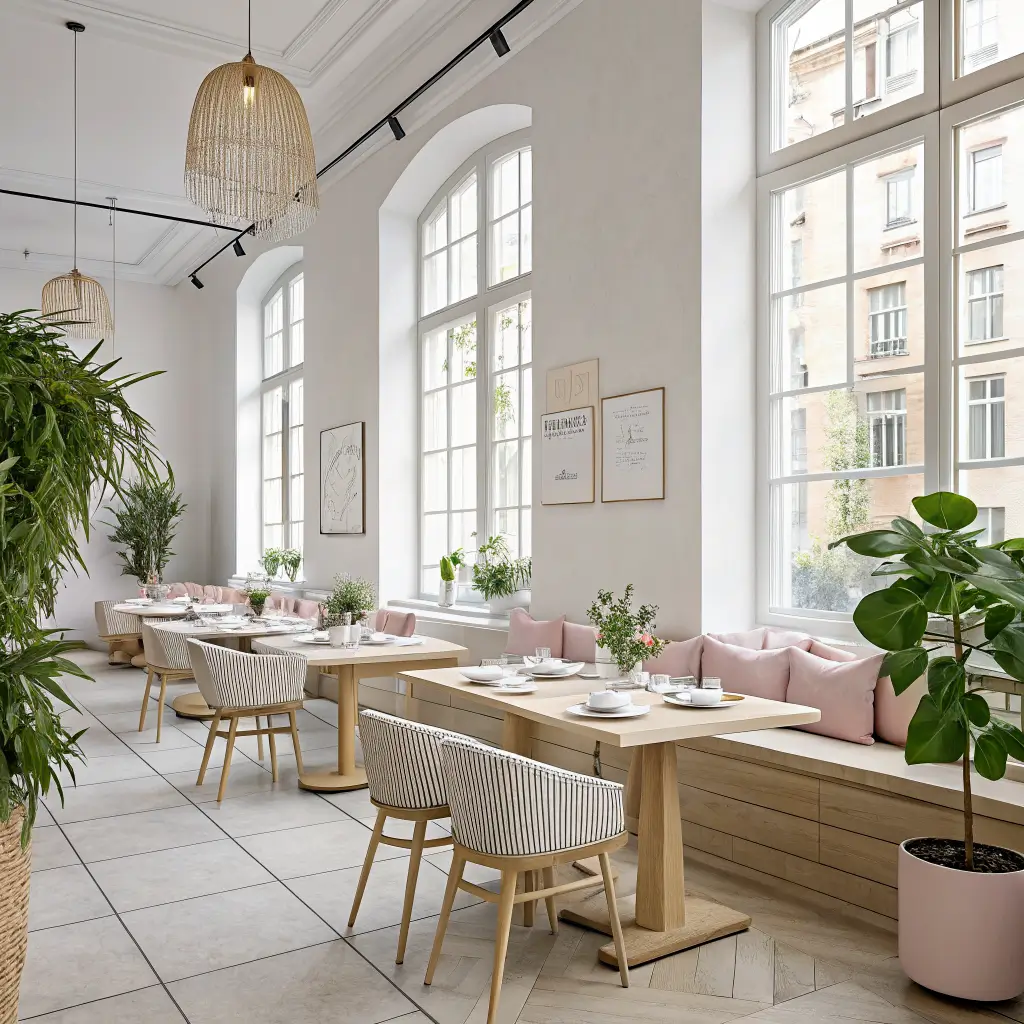
Scandinavian restaurant design brings hygge to dining – that Danish concept of cozy contentment that makes you want to order another bottle of wine and stay all evening. After eating through Copenhagen, I understood why this style works globally: it makes everyone feel calm.
Scandinavian restaurant principles focus on natural materials, abundant light, and comfort without excess. It’s minimalism with warmth, simplicity with soul.
Creating Scandinavian restaurant vibes:
• Light wood tones throughout
• White walls to maximize brightness
• Comfortable seating you can sit in for hours
• Natural textiles and materials
• Candles on every table (real ones if fire codes allow)
What transformed my understanding was realizing Scandinavian design is about democracy in dining. No bad tables. No uncomfortable chairs. Every seat should offer the same quality experience. One restaurant achieved this by custom-designing every single piece of furniture to fit perfectly in their space.
The surprising challenge? This style photographs as boring if you’re not careful. Solution: one dramatic element – maybe a stunning light fixture or a living wall – that gives Instagram something to love.
Also Read: 12 Beautiful Interior Design Living Room Ideas and Chic Styles
Tropical Themed Restaurant Decor
Tropical restaurants promise escape, and in a world where everyone needs a vacation, this theme resonates. But there’s a fine line between tropical paradise and tiki bar cliché. I’ve designed both, and trust me, you want paradise.
Modern tropical design brings the vacation vibe without the cheese factor. Think sophisticated island resort, not spring break in Cancun.
Tropical elements that work:
• Real plants (lots of them)
• Natural materials like bamboo and rattan
• Color palette inspired by nature, not neon
• Water features for sound and movement
• Natural light or warm artificial alternatives
I worked on a tropical restaurant in Minnesota (yes, Minnesota), and we made it work by committing completely. Heated floors to keep tropical plants happy. A retractable roof for summer. Sound design with subtle ocean waves. When you’re asking people to suspend disbelief, you better make it worth it.
My favorite tropical hack? Partner with a local greenhouse for plant rental and maintenance. They keep everything alive and rotate plants seasonally. Your tropical paradise stays lush without anyone on staff knowing the difference between a monstera and a money tree.
Retro Vintage Diner Vibes
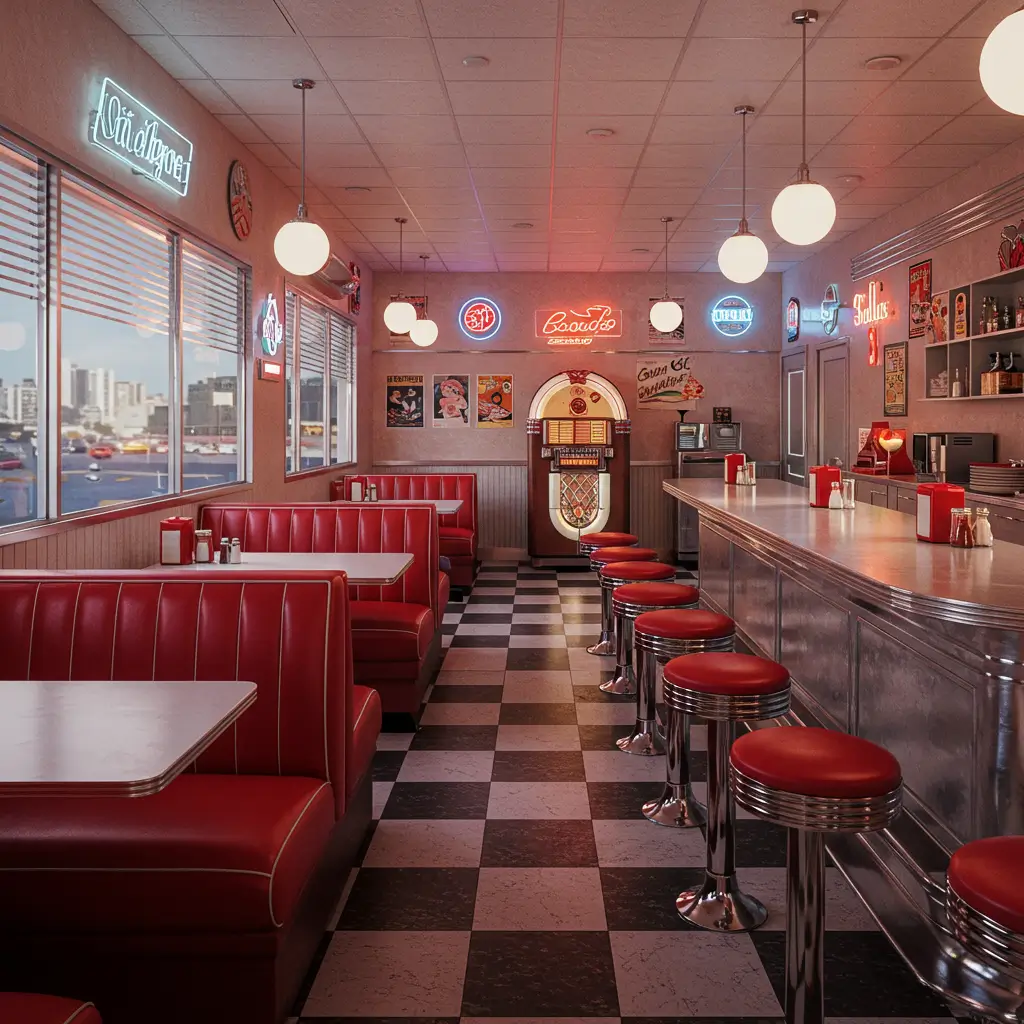
Vintage diners tap into nostalgia for an America that maybe never existed but definitely should have. Chrome, vinyl, and neon create instant mood, but modern vintage goes beyond cliché into something genuinely special.
Successful vintage restaurant design requires picking your era and committing fully. Are you a 1950s diner? 1970s disco den? 1980s power lunch spot? Choose your decade and stick to it religiously.
Vintage elements that transport diners:
• Era-appropriate color schemes and patterns
• Authentic or high-quality reproduction furniture
• Period music (this matters more than decor)
• Vintage signage and typography
• Service style that matches the era
I designed a 1960s-inspired restaurant where we went so deep into the theme that servers trained on period-appropriate language. No “you guys,” no “no problem,” just “yes ma’am” and “right away, sir.” The tips increased 30%.
The modern twist that makes vintage work? Updated comfort. Vintage-look booths with modern ergonomics. Classic aesthetics with contemporary ventilation. Yesterday’s style with today’s standards.
Eco-Friendly Sustainable Design
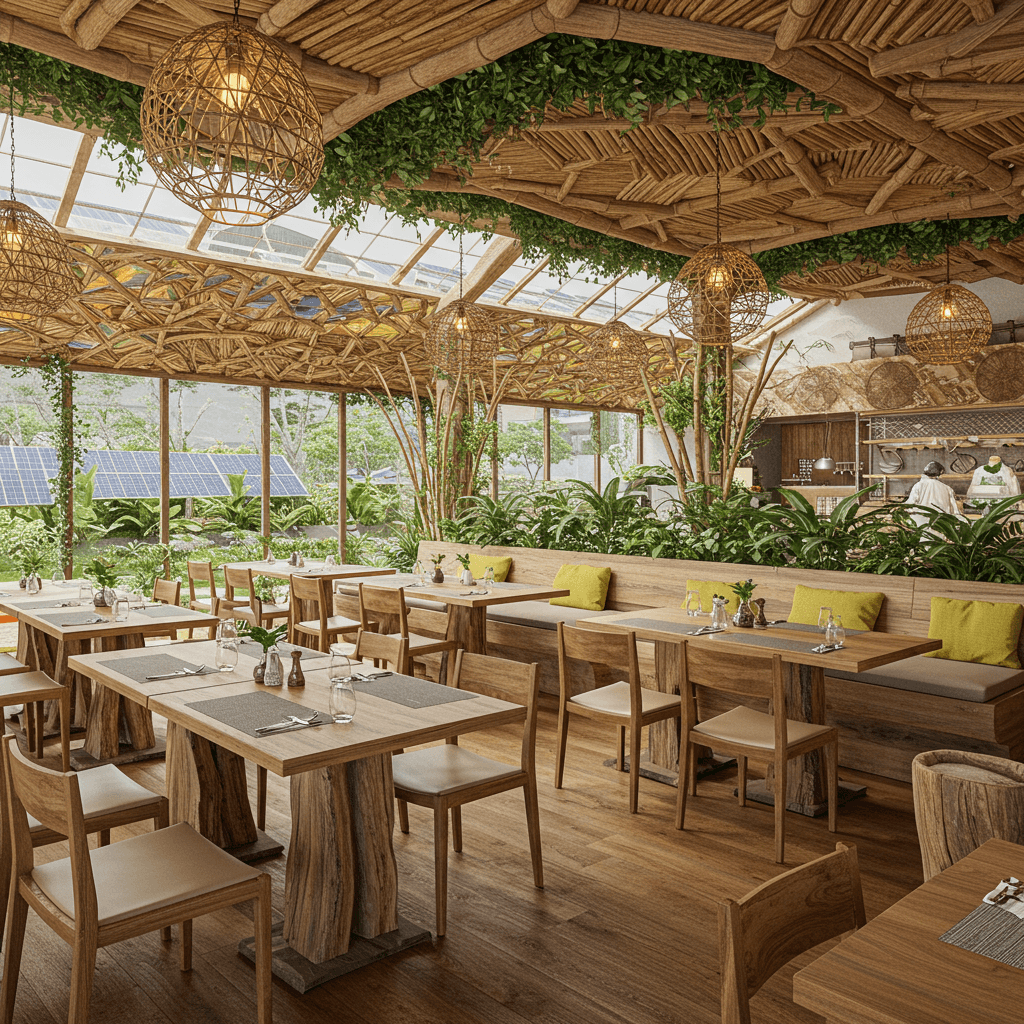
Sustainable restaurant design isn’t just about saving the planet (though that’s nice too) – it’s about telling a story that modern diners want to hear. Every reclaimed board and recycled fixture says “we care about tomorrow” louder than any mission statement.
True sustainable design goes beyond bamboo straws and LED bulbs. It’s about creating spaces that last longer, work better, and tell authentic stories about where materials come from.
Sustainable elements that matter:
• Reclaimed materials with provenance
• Energy-efficient systems that actually work
• Local materials and craftspeople
• Durable choices that won’t need replacing
• Design that ages gracefully
I worked with a restaurant that built everything from materials within 50 miles. The story became part of the experience. That table? Made from the old city pier. The bar top? From a tree that fell in the town square. Diners literally ate surrounded by local history.
The surprising benefit? Sustainable design often costs less long-term. Quality materials last longer. Energy-efficient systems reduce operating costs. And the PR value of genuine sustainability? Priceless.
Also Read: 10 Elegant Office Interior Design Ideas for Professional Style
Futuristic Tech-Integrated Dining
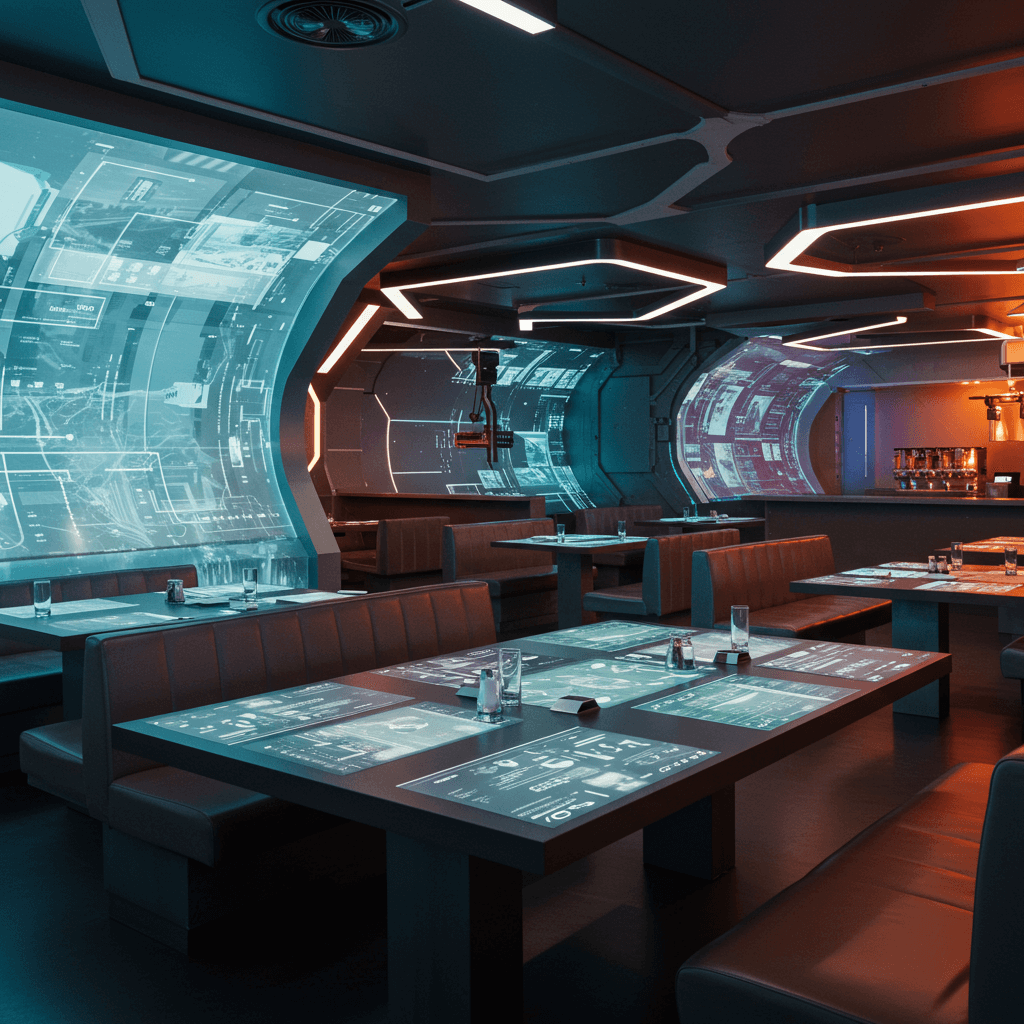
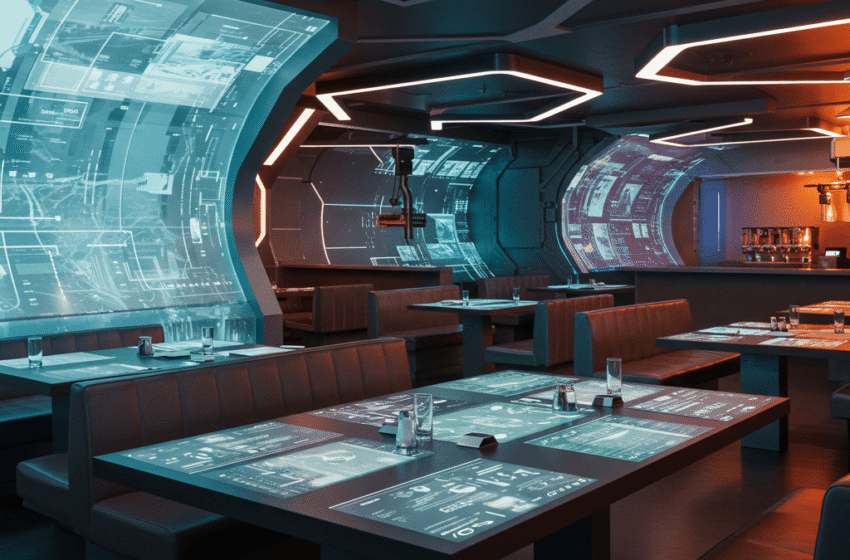
Tech-integrated restaurants aren’t just about tablets for ordering (please, no more tablets). Smart restaurant design uses technology to enhance the human experience, not replace it.
Intelligent tech integration should feel magical, not mechanical. The best restaurant tech is invisible until you need it, then it’s exactly where you expect it to be.
Tech that actually improves dining:
• Adjustable lighting controlled by time and occupancy
• Sound masking systems for conversation privacy
• Climate control that responds to crowd density
• Wireless charging built into tables
• Digital art that changes with the menu or season
The breakthrough came when I saw a restaurant with tables that sensed when you sat down and automatically adjusted the lighting and called the server. Not a screen in sight, just subtle sensors making the experience smoother.
IMO, the best restaurant tech solves problems diners didn’t know they had. That coat check that texts when you’re leaving? Genius. The bathroom stall indicator visible from your table? Revolutionary. Technology should reduce friction, not add features.
Mediterranean Coastal Interiors
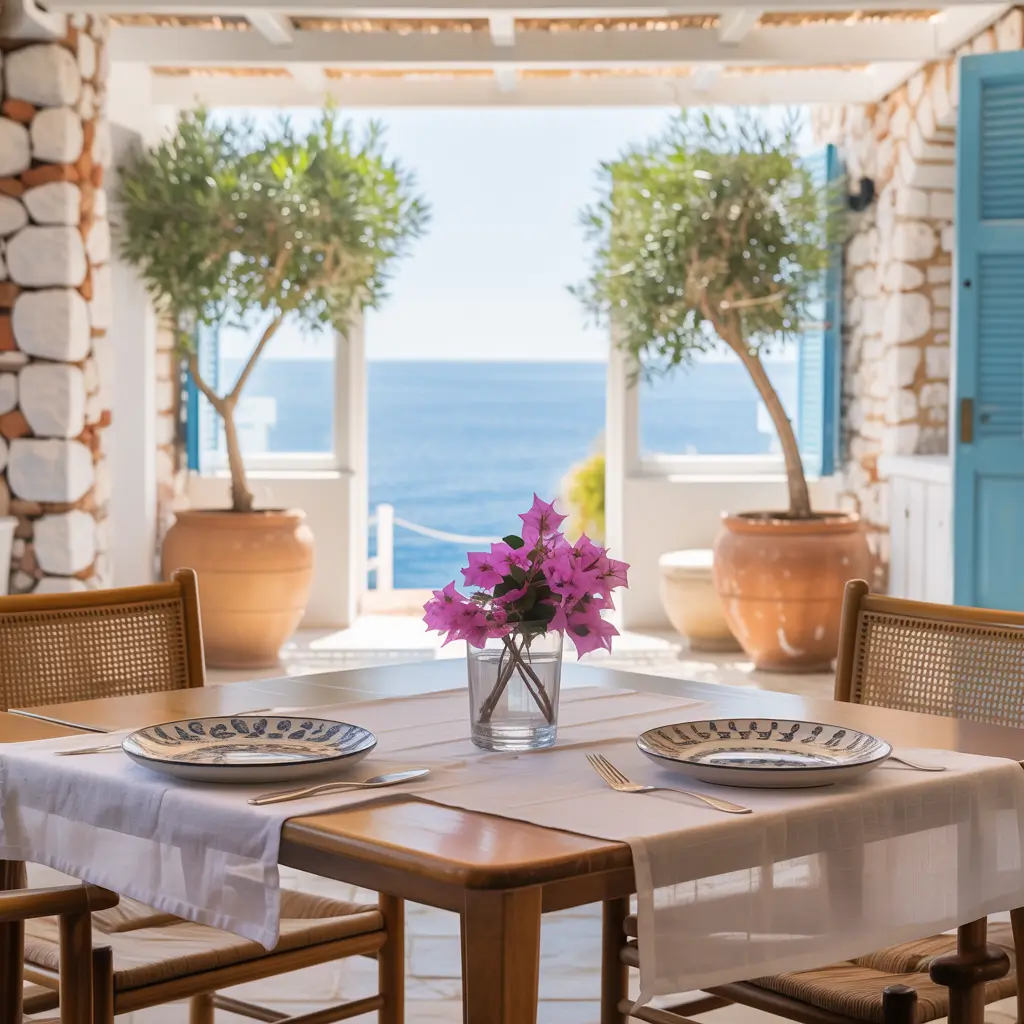
Mediterranean restaurants promise sun, sea, and the kind of meal that makes you forget your phone exists. This style works because it triggers vacation memories even if you’ve never left Ohio.
Authentic Mediterranean design captures the ease and elegance of coastal dining without requiring an actual coast. It’s about the feeling of leisure, not literal nautical themes.
Mediterranean elements that transport:
• White and blue color palette with warm wood
• Textured white walls (stucco or faux techniques)
• Terra cotta accents and tile work
• Soft, natural fabrics
• Arched doorways and curved elements
I designed a Mediterranean restaurant in a strip mall (yes, really), and we transformed a box into Santorini through strategic design. Curved half-walls created intimate spaces. A painted sky ceiling added height. Strategic mirrors reflected our single window into seemingly dozens.
The secret ingredient? Smell. We worked with an HVAC specialist to subtly introduce rosemary and lavender into the air system. Combined with the visuals, diners’ brains completely bought the Mediterranean illusion.
Artistic Gallery-Style Restaurants
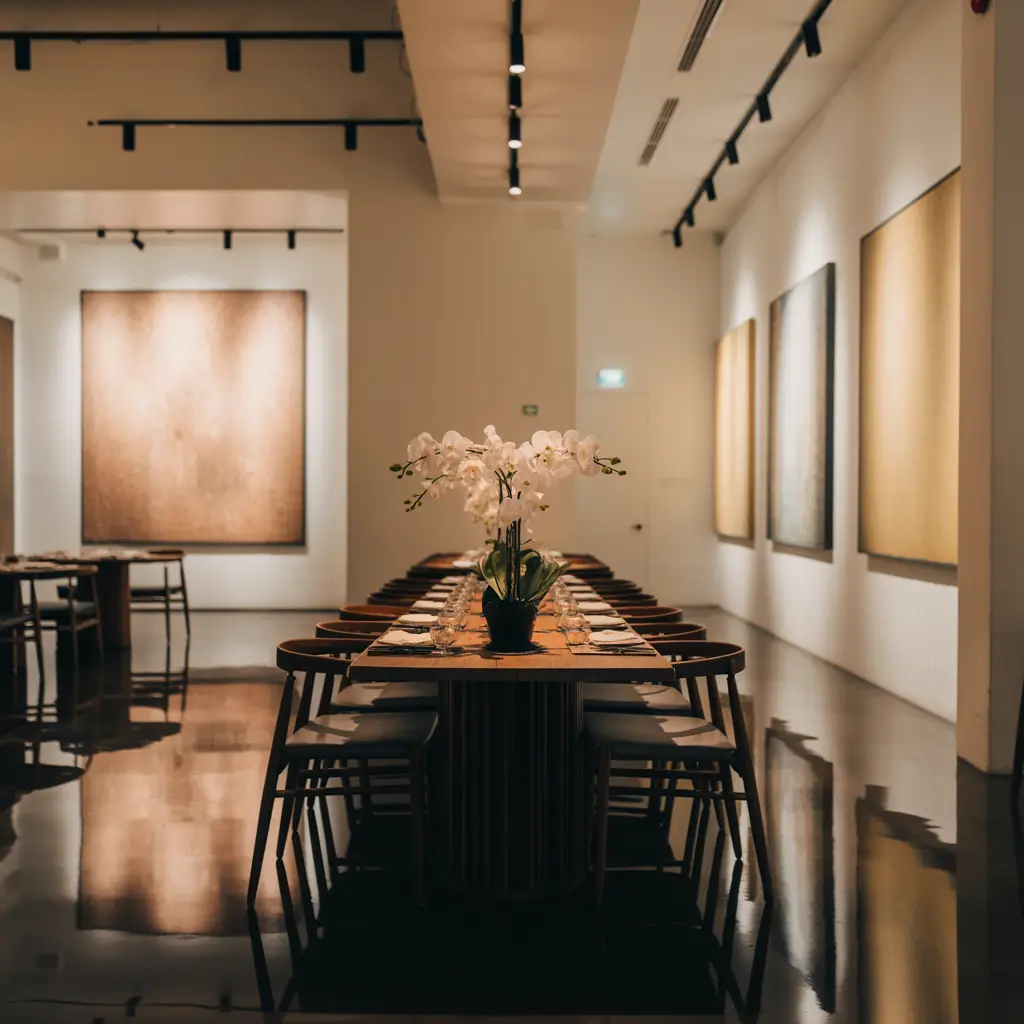
Gallery restaurants make art the co-star alongside food. This isn’t just hanging pictures; it’s creating a dynamic space where cuisine and culture meet. The best gallery restaurants change regularly, giving diners reasons to return beyond the menu.
Creating gallery dining spaces means treating your walls as valuable real estate for cultural exchange, not just decoration. Local artists get exposure, you get free decor that changes regularly, everyone wins.
Gallery restaurant essentials:
• Proper art lighting (this is crucial)
• Clean walls that don’t compete with art
• Flexible hanging systems for easy rotation
• Clear sightlines to appreciate art from seats
• Stories about artists available (QR codes work great)
The restaurant that nailed this concept changes their art monthly with opening receptions. First Thursday of each month is basically a party with food. They’ve created a cultural hub, not just a restaurant. The community involvement has made them bulletproof against competition.
Have you noticed how gallery restaurants photograph differently every month? That’s marketing gold – regular customers share the new installations, creating constant social media content without any effort from you. :/
Making Restaurant Interior Design Work for Your Vision
After exploring these twelve restaurant interior design ideas, here’s what I need you to understand: the best restaurant design is the one that aligns with your food, your service style, and your neighborhood’s needs.
I’ve seen minimalist restaurants fail in neighborhoods craving warmth and rustic restaurants flop in urban cores wanting edge.
Start by understanding your story. What experience are you promising? Who are you serving? What problem are you solving beyond hunger? Your interior should answer these questions before anyone opens a menu.
The biggest lesson from designing restaurants? Perfect execution of a simple idea beats mediocre execution of a complex one.
That rustic farmhouse restaurant with three design elements done perfectly will outperform the place trying to be industrial-tropical-vintage-sustainable all at once.
Remember, restaurant design is never really finished. The best restaurants evolve based on how people actually use the space. That corner nobody sits in might need better lighting.
The Instagram wall everyone loves might need reinforcement. Your design should grow with your business.
Your restaurant’s interior is a promise to diners about what kind of experience they’re about to have. Make it honest, make it comfortable, and make it memorable.
The food might fill their stomachs, but the space fills their need for experience, escape, and connection. Get that right, and you’re not just feeding people – you’re creating the backdrop for their stories. And that’s what keeps them coming back, long after they’ve forgotten what they ordered.