12 Bold Industrial Interior Design Ideas for Unique Spaces
- Home Interior Design
 Ben
Ben- 0
- 37 minutes read
So you want that cool, warehouse-converted-to-luxury-loft look without actually living in an abandoned factory? Join the club. I fell hard for industrial design after visiting a friend’s Brooklyn apartment that used to be a textile warehouse.
The exposed pipes, brick walls, and concrete floors shouldn’t have worked together, but somehow the space felt more put-together than my supposedly “designed” apartment.
Here’s the thing about industrial interior design – it’s not just throwing some metal furniture in a room and calling it a day.
There’s an art to balancing raw materials with comfort, mixing hard edges with soft textures, and making cold materials feel warm and inviting.
After transforming three spaces with industrial elements (and making plenty of mistakes along the way), I’ve learned what actually works versus what just looks good on Pinterest.
Let me walk you through twelve industrial design ideas that’ll transform your space from basic to badass. And no, you don’t need exposed ceiling beams or a trust fund to pull these off.
1. Loft-Style Urban Living Room
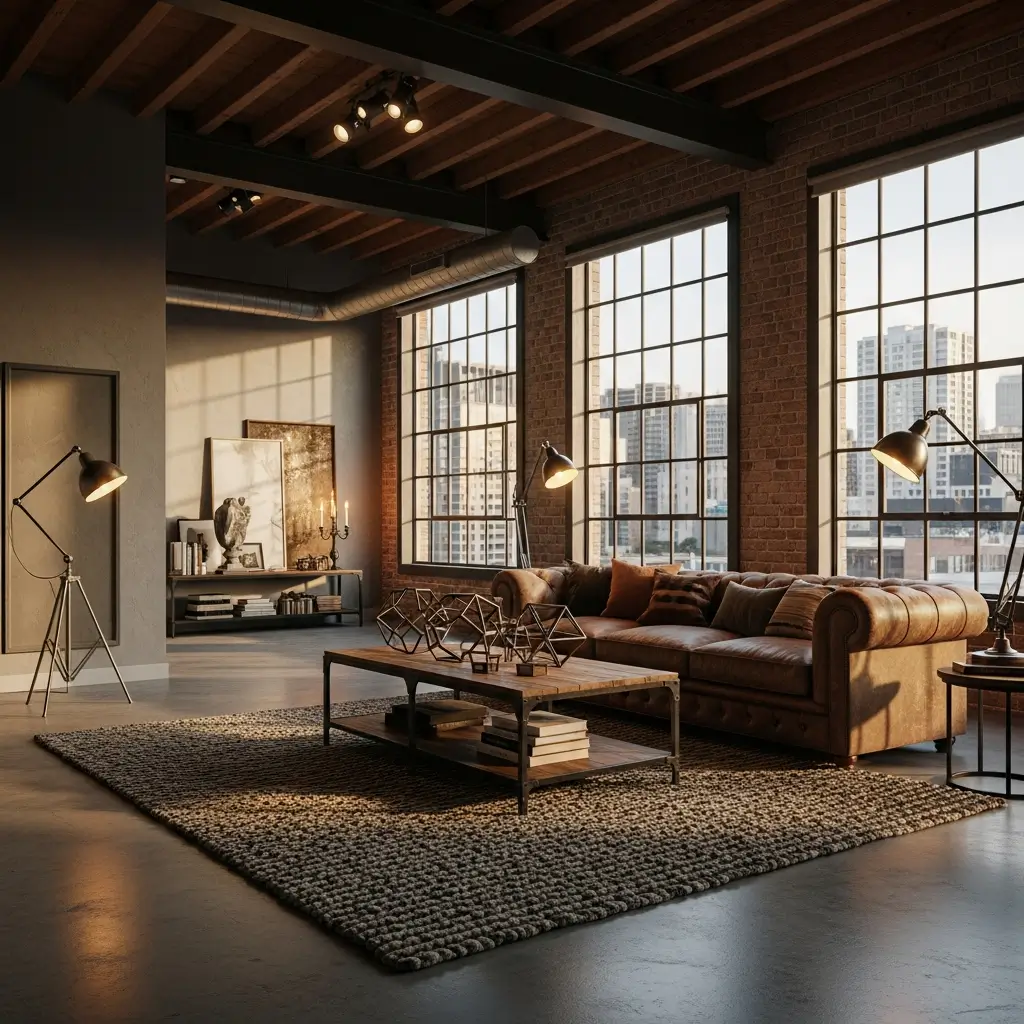
The loft-style living room is basically the poster child of industrial design. Think high ceilings, open spaces, and furniture that looks like it could survive the apocalypse while still being comfortable enough for Netflix marathons.
Start with the bones of the room. Exposed elements are your friend – ceiling beams, ductwork, pipes – if it’s structural, show it off. I spent a weekend stripping the drywall from one ceiling beam in my living room, and that single exposed beam changed the entire feel of the space. Just make sure you know what’s load-bearing before you start swinging a hammer.
The furniture in a loft-style living room needs to have presence. Oversized leather sofas in cognac or black anchor the space. Add a reclaimed wood coffee table that looks like it weighs 500 pounds (even if it doesn’t). Metal and wood combinations work beautifully – think hairpin legs on everything or industrial pipe shelving units.
Creating Zones Without Walls
Loft living means open spaces that need definition. Use area rugs to create separate zones – one for the living area, another for reading or working. Different lighting fixtures help too. A dramatic pendant light over the seating area versus track lighting near the bookshelf tells your brain these are different spaces.
Your color palette should stay neutral but not boring:
- Grays and blacks for the industrial edge
- Warm browns from leather and wood
- Pops of color through art or throw pillows (but keep it minimal)
- Metallic accents in copper, brass, or gunmetal
2. Exposed Brick Kitchen Makeover
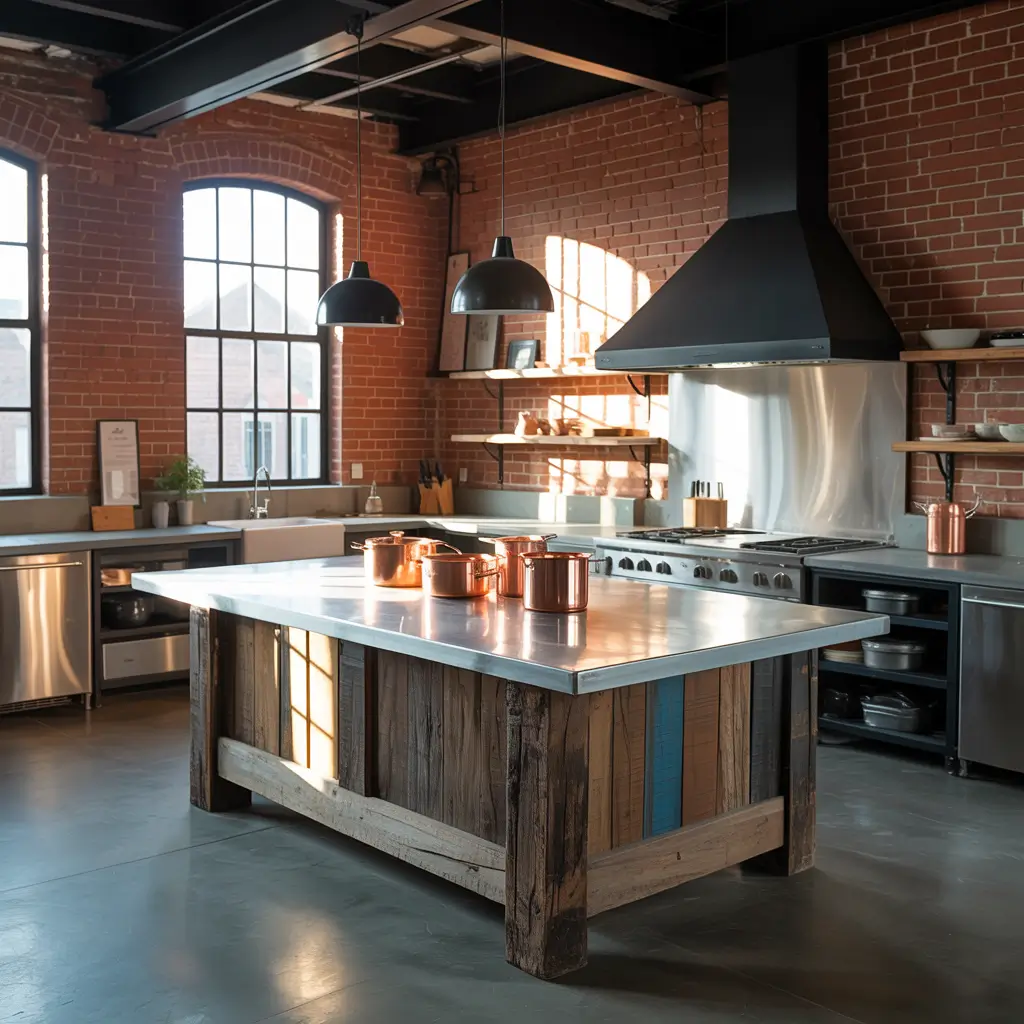
Nothing screams industrial quite like exposed brick in the kitchen. But here’s what nobody tells you – real exposed brick is a pain to maintain in a kitchen. Grease splatters, steam, cooking residue – it all sticks to those beautiful rough surfaces.
The solution? Seal that brick properly or go for brick veneer panels that give you the look without the maintenance headache. I learned this lesson the hard way after spending hours scrubbing pasta sauce off unsealed brick. Not fun.
Pair your brick with contrasting materials. Stainless steel appliances obviously work, but don’t stop there. Open metal shelving instead of upper cabinets keeps the industrial vibe while making the space feel larger. Concrete countertops or butcher block add to the raw aesthetic without breaking the bank.
Making Brick Work in Modern Kitchens
The key to exposed brick in kitchens? Balance it with modern elements:
- Sleek cabinet hardware in matte black or brass
- Industrial pendant lights over the island
- Metal bar stools with worn leather seats
- Open shelving displaying simple dishware
Consider painting some brick white if the red feels too heavy. Whitewashed brick brightens the space while maintaining texture. Just please, for the love of good design, don’t paint all of it. The contrast between painted and natural brick adds depth you can’t get any other way.
3. Minimalist Industrial Bedroom
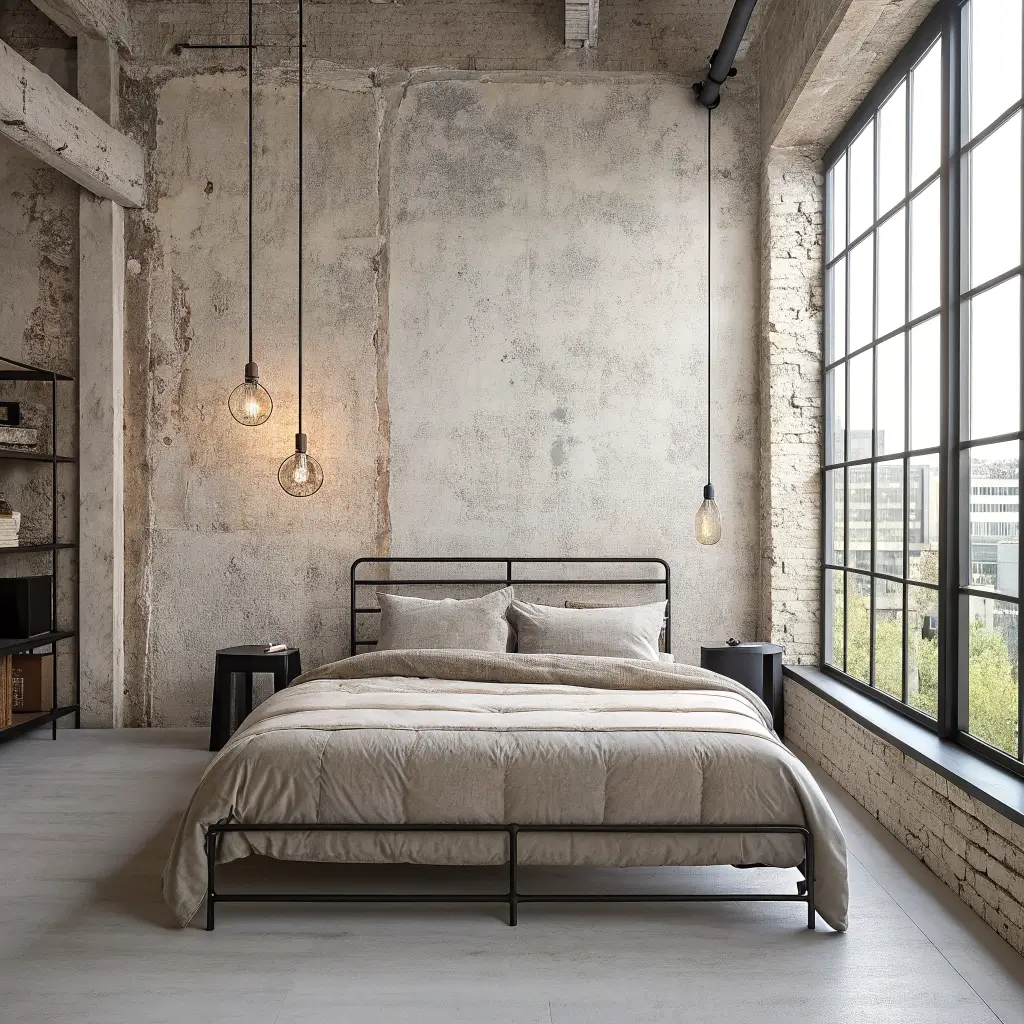
Industrial bedrooms walk a fine line. You want that raw, edgy aesthetic but you also need the space to feel restful. Nobody wants to feel like they’re sleeping in a warehouse (well, most people don’t).
Start with a statement bed frame. Metal frames with clean lines work perfectly – think black iron or brushed steel. Platform beds with reclaimed wood headboards nail the industrial-meets-cozy vibe. My current bed frame combines black metal with weathered oak, and it’s literally the only piece of bedroom furniture people comment on.
Keep the color palette muted. Grays, whites, and blacks dominate, with warmth coming from wood tones and textiles. Layer textures like crazy – chunky knit throws, linen bedding, a worn leather bench at the foot of the bed. These soft elements prevent the room from feeling cold.
Warming Up Industrial Bedrooms
Industrial doesn’t mean uncomfortable:
- Soft lighting from Edison bulb fixtures or industrial sconces
- Plush area rugs to warm up concrete or hardwood floors
- Minimal but meaningful decor – one large piece of art instead of cluttered walls
- Natural elements like a single plant or wooden accents
Also Read: 10 Unique Interior Wall Design Ideas with Bold Patterns
4. Rustic Metal Dining Space
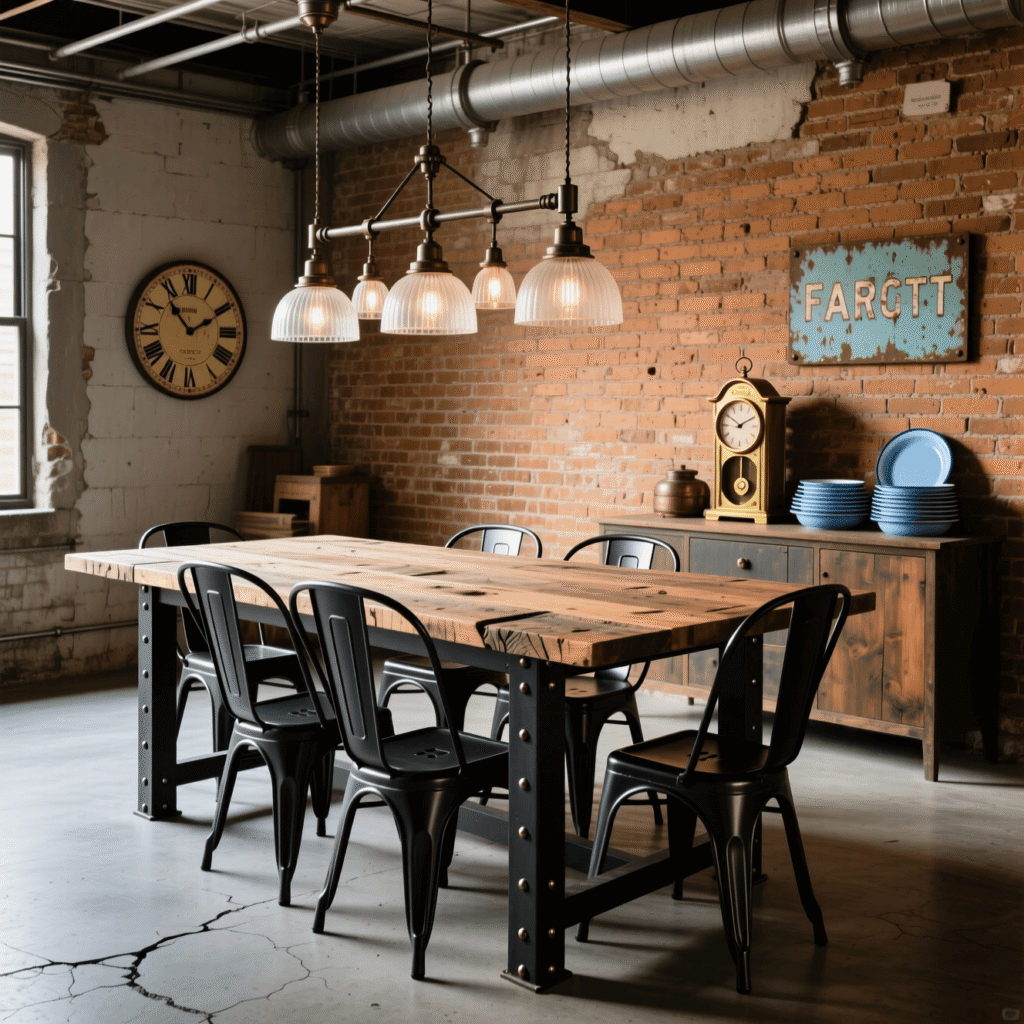
The dining room offers the perfect opportunity to go bold with industrial elements. This is where you can really play with the rustic-meets-refined aesthetic that makes industrial design so appealing.
Your dining table sets the entire tone. Reclaimed wood tops with metal bases create that perfect industrial blend. I bought a live-edge walnut slab and attached hairpin legs myself – saved about $2000 and got exactly what I wanted. The natural wood edge against the stark metal legs? Pure industrial poetry.
Seating options make or break the industrial dining space. Mix and match for authenticity – metal chairs, wooden benches, even a leather banquette if you have the space. The mismatched look actually feels more intentional than a perfectly coordinated set.
Lighting That Makes a Statement
Industrial dining rooms demand dramatic lighting:
- Linear suspension lights running the length of the table
- Cage pendants in clusters for visual interest
- Pulley systems that adjust height (functional and cool)
- Edison bulb chandeliers for vintage industrial vibes
The beauty of industrial dining spaces? They actually get better with age. Scratches on the table become character. Worn spots on chairs tell stories. Unlike precious furniture you’re afraid to use, industrial pieces invite you to actually live with them.
5. Concrete and Wood Home Office
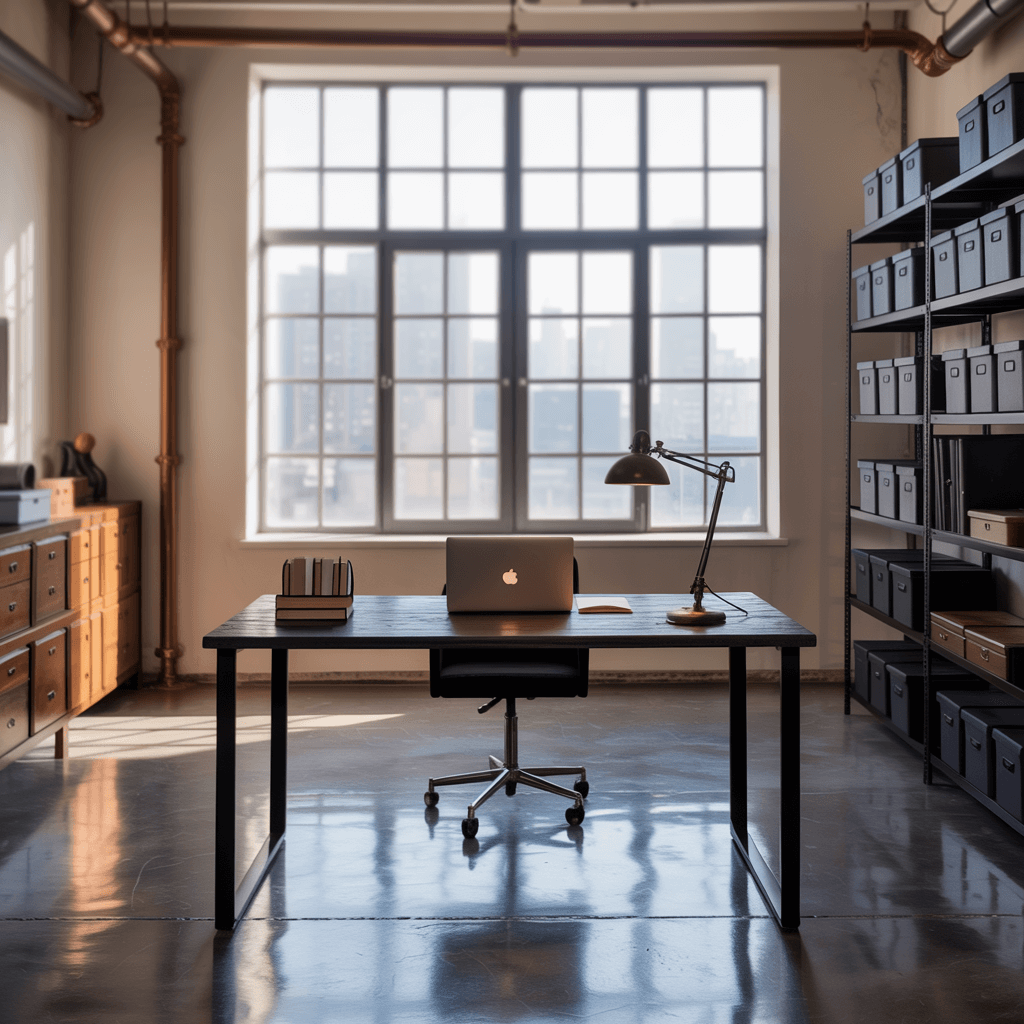
Working from home doesn’t mean settling for boring office furniture. An industrial home office combining concrete and wood elements creates a space that’s both inspiring and functional.
Concrete doesn’t mean pouring actual concrete in your spare bedroom (though you could). Concrete-look surfaces on desks or shelving give you the aesthetic without the weight and installation hassle. I used concrete contact paper on an old desk top, sealed it properly, and now everyone thinks I have a custom concrete desk. Total cost? Under $30.
Wood warms up the cold concrete. Floating wood shelves against concrete-finish walls create beautiful contrast. A reclaimed wood desk with metal legs bridges both materials perfectly. Add a worn leather chair, and suddenly your Zoom background makes you look like a creative director at some hip agency.
Productivity Meets Style
Industrial offices need smart storage:
- Wire mesh organizers for visible storage
- Metal filing cabinets (vintage ones are gold)
- Pipe shelving systems that adjust as needs change
- Pegboard walls for flexible organization
Don’t forget about tech integration. Cable management becomes part of the aesthetic – exposed conduits and vintage-style cloth cords add to the industrial look instead of detracting from it.
6. Vintage Industrial Lighting Ideas
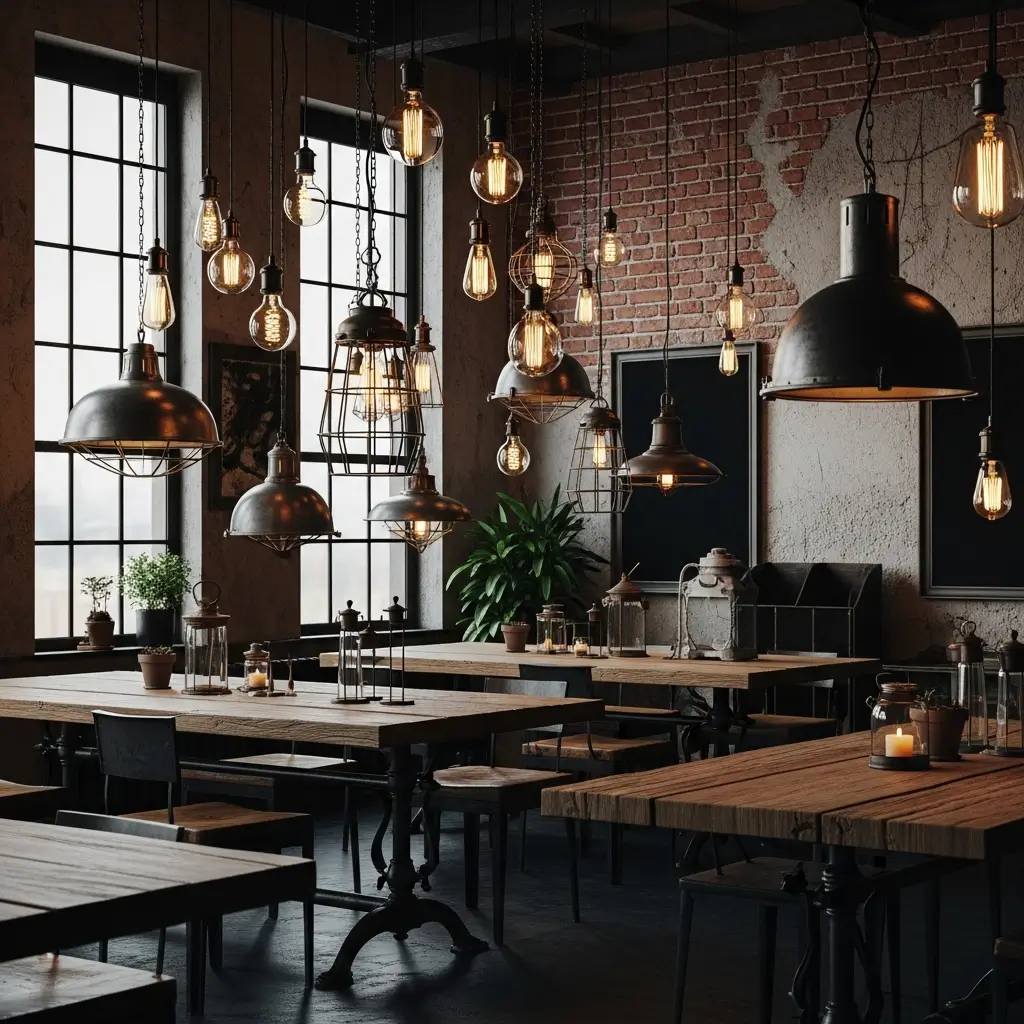
Lighting makes or breaks industrial design. The right fixtures transform a space from trying-too-hard to effortlessly cool. And here’s a secret – vintage industrial lighting is often cheaper than new “industrial-style” fixtures.
Start haunting flea markets, architectural salvage yards, and estate sales. Original factory lights, old desk lamps, vintage cage lights – these pieces have authenticity mass-produced fixtures can’t match. I scored three matching warehouse pendants for $50 total at an estate sale. New “reproductions” would’ve cost $300 each.
Types of Industrial Lighting That Work
Essential industrial lighting styles:
- Barn lights with metal shades for focused task lighting
- Cage pendants that show off Edison bulbs
- Articulating sconces for adjustable wall lighting
- Track lighting for flexibility in open spaces
- Floor lamps with tripod bases or industrial materials
The bulb matters as much as the fixture. Edison bulbs give warm, ambient light perfect for living spaces. LED versions save energy without sacrificing the vintage look. Just avoid going overboard – one or two exposed bulb fixtures make a statement, ten make your home look like a lightbulb store.
Mixing Lighting Styles
Don’t limit yourself to one type. Layer your lighting:
- Ambient lighting from pendants or ceiling fixtures
- Task lighting from adjustable desk or floor lamps
- Accent lighting highlighting architectural features
- Natural light maximized through minimal window treatments
Also Read: 12 Elegant Interior Design Kitchen Ideas and Luxe Finishes
7. Open-Plan Industrial Loft Layout
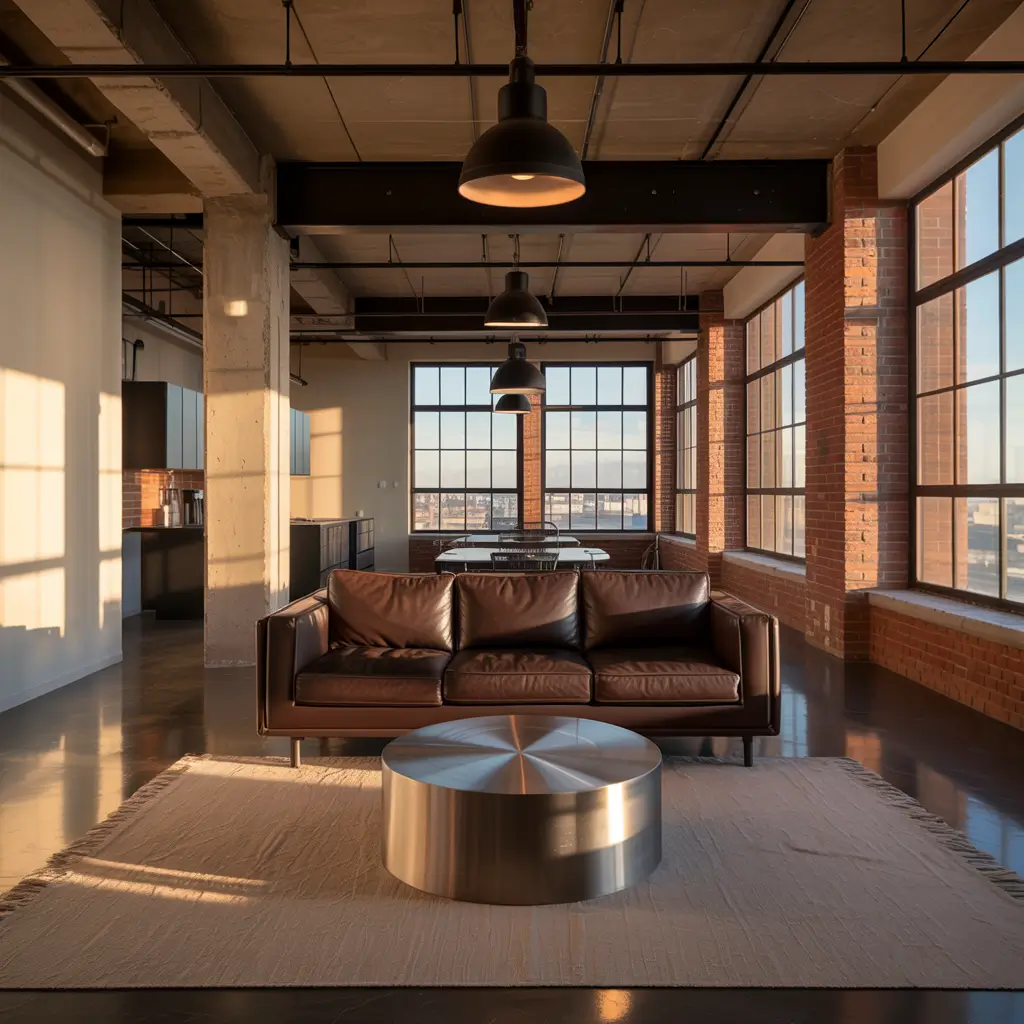
Open-plan layouts and industrial design go together like coffee and Monday mornings – they just make sense. The challenge? Creating distinct spaces without walls while maintaining that flowing loft feel.
Define zones through flooring changes. Polished concrete in living areas transitioning to wood in sleeping spaces creates natural boundaries. Different rug styles for different zones work too – a Persian rug in the living area, jute in the dining space, nothing in high-traffic zones.
Furniture placement becomes crucial. Your sofa backs can act as walls, separating living from dining areas. Bookcases perpendicular to walls create divisions without blocking light. That kitchen island isn’t just for cooking – it’s a natural barrier between kitchen and living spaces.
Making Open Plans Livable
Tips for functional open layouts:
- Consistent color palette throughout prevents visual chaos
- Repeated materials tie different zones together
- Strategic storage keeps clutter from taking over
- Sound management through rugs and soft furnishings (concrete echoes!)
Remember, open plan doesn’t mean everything visible all the time. Curtains on ceiling tracks can temporarily divide spaces when needed. Industrial design embraces function, so practical solutions that look intentional totally work.
8. Industrial Bathroom with Raw Finishes
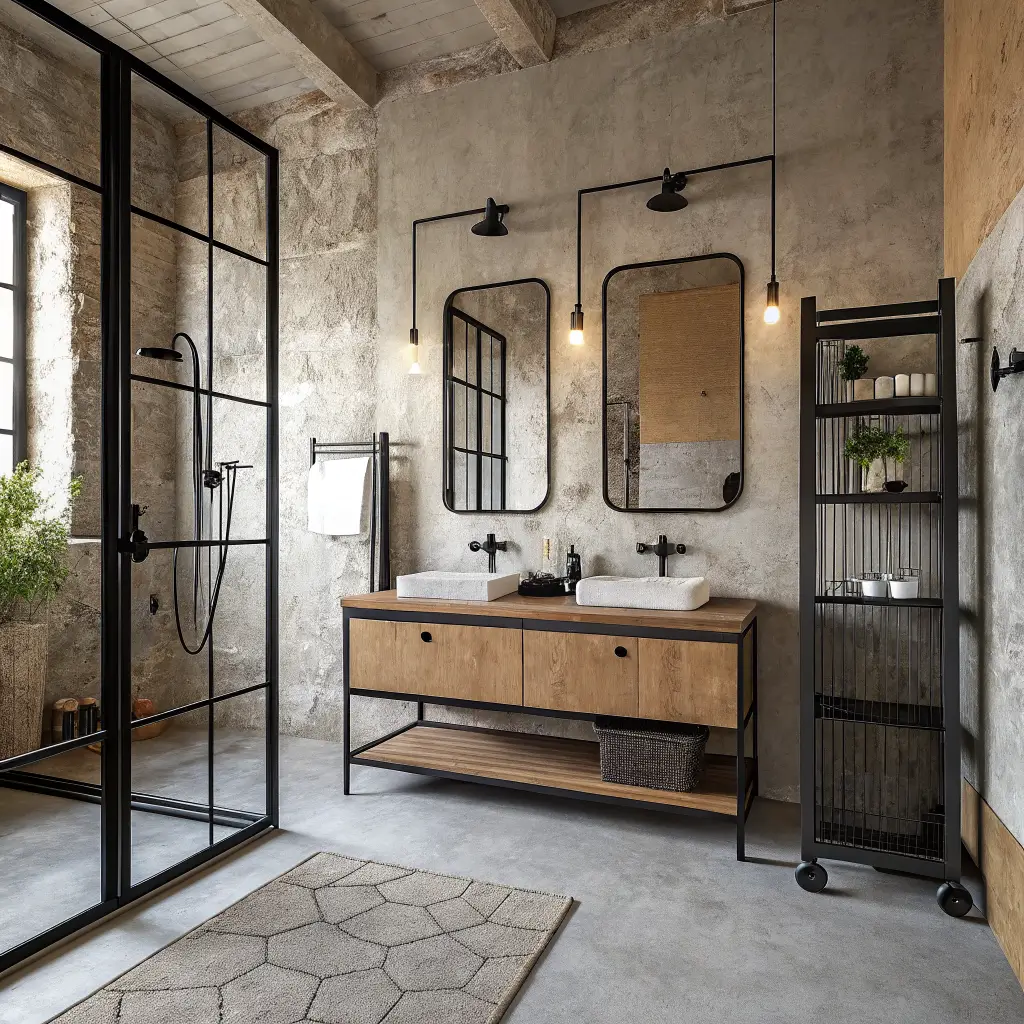
Industrial bathrooms prove that raw doesn’t mean rough. Concrete, metal, and wood can create spa-like retreats that happen to look badass.
Concrete walls or floors in bathrooms scare people, but properly sealed concrete is actually super practical. Water-resistant, easy to clean, and unique – what’s not to love? If real concrete seems too committed, large format concrete-look tiles give similar vibes with easier installation.
Black fixtures changed the bathroom game IMO. Matte black faucets, shower heads, and hardware against white subway tiles or concrete walls? That contrast makes everything pop. Add a vessel sink on a reclaimed wood vanity, and you’ve got industrial elegance.
Softening Hard Surfaces
Bathrooms need comfort too:
- Plush bath mats in neutral tones
- Wooden bath accessories for warmth
- Plants that thrive in humidity
- Vintage mirrors in metal frames
- Turkish towels adding texture without fuss
9. Reclaimed Wood Shelving Decor
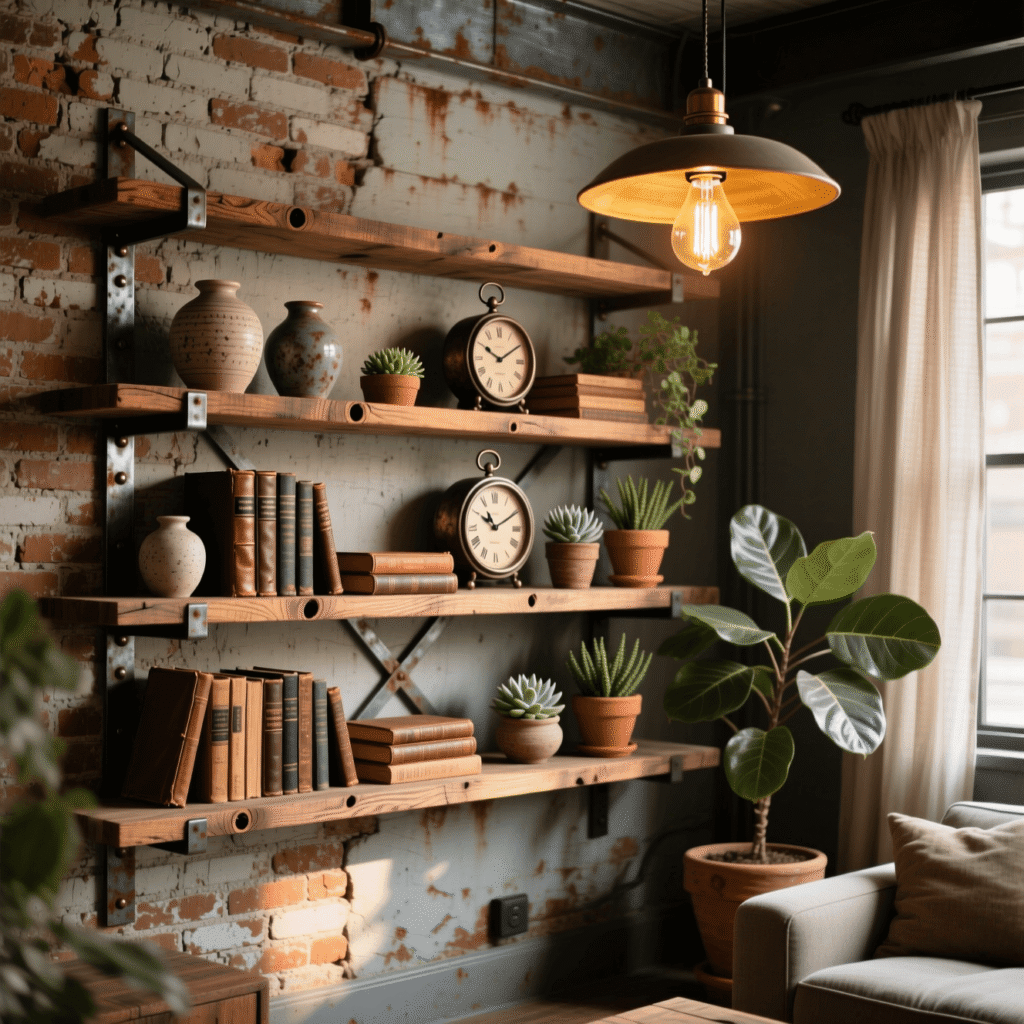
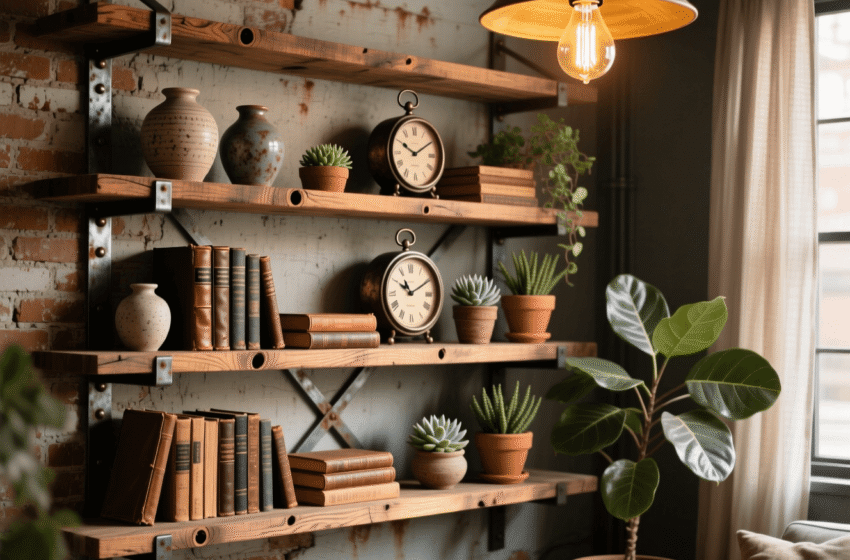
Reclaimed wood shelving serves double duty – storage and statement piece. The combination of weathered wood and industrial brackets creates instant character on any wall.
Source your wood thoughtfully. Old barn wood, shipping pallets, demolished buildings – each source brings different character. Sand lightly to remove splinters but keep the patina. That worn surface tells a story new wood can’t fake.
Bracket choice matters as much as the wood. Black pipe brackets create the classic industrial look. Heavy-duty metal brackets work for a more refined aesthetic. L-brackets disappear, letting the wood star. Mix bracket styles for collected-over-time authenticity.
Styling Industrial Shelves
What to display:
- Minimal book collections spine-in for color coordination
- Glass vessels and ceramic pieces for contrast
- Small plants in concrete or metal planters
- Vintage finds like old cameras or typewriters
- Nothing – empty space prevents cluttered looks
Also Read: 12 Inspiring Modern Interior Design Ideas and Elegant Interiors
10. Industrial Entryway & Storage Solutions
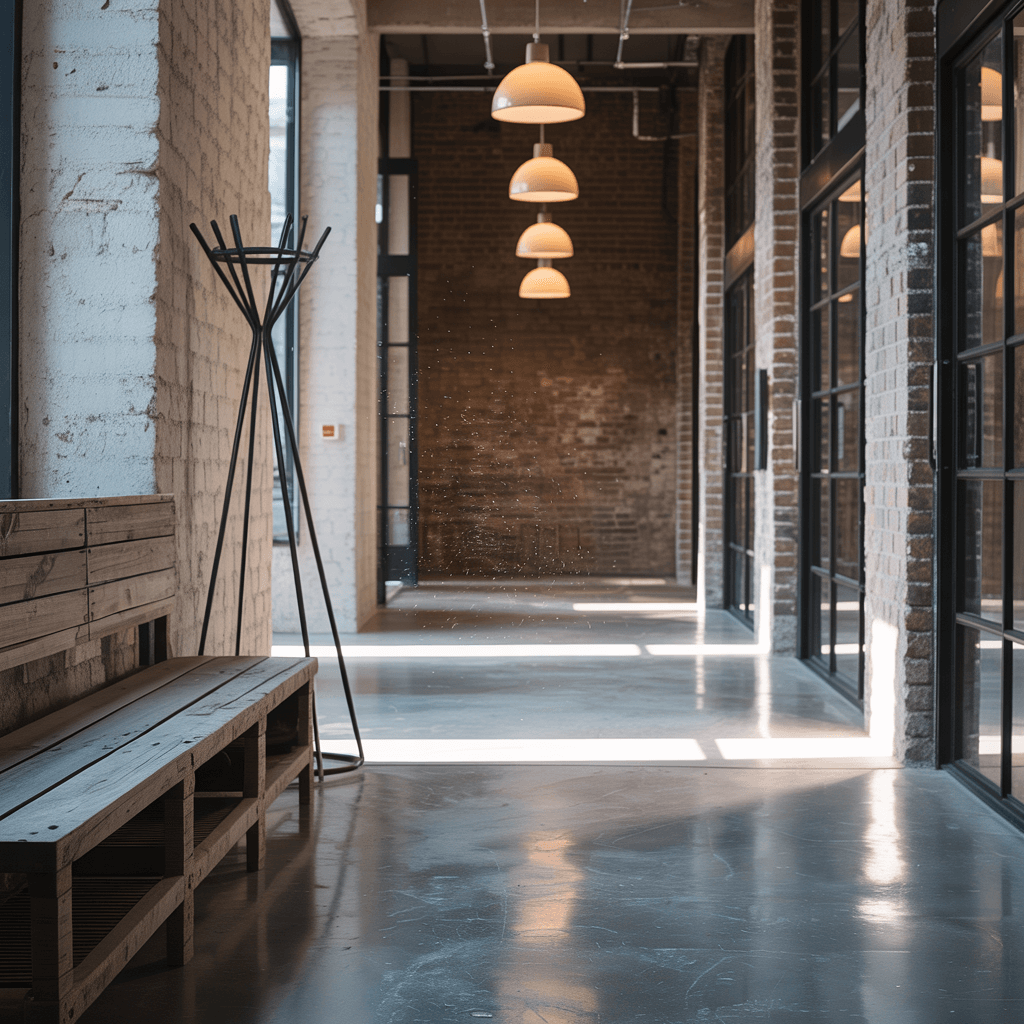
First impressions matter, and an industrial entryway sets the tone for your entire home. This is where you can go bold with industrial elements since people don’t linger here long enough to get overwhelmed.
Pipe coat racks kill two birds with one stone – storage and style. Build one from plumbing pipes and flanges for under $100, or buy vintage ones that actually came from factories. Add a weathered wood bench with metal legs for putting on shoes, and throw in some wire baskets for gloves and scarves.
Maximizing Small Entryways
Industrial solutions for tight spaces:
- Wall-mounted bike racks that look sculptural
- Metal grid panels for hanging everything
- Vintage lockers for hidden storage
- Industrial mirrors making spaces feel larger
- Concrete planters adding life without softness
11. Mixed-Metal Accent Wall Designs
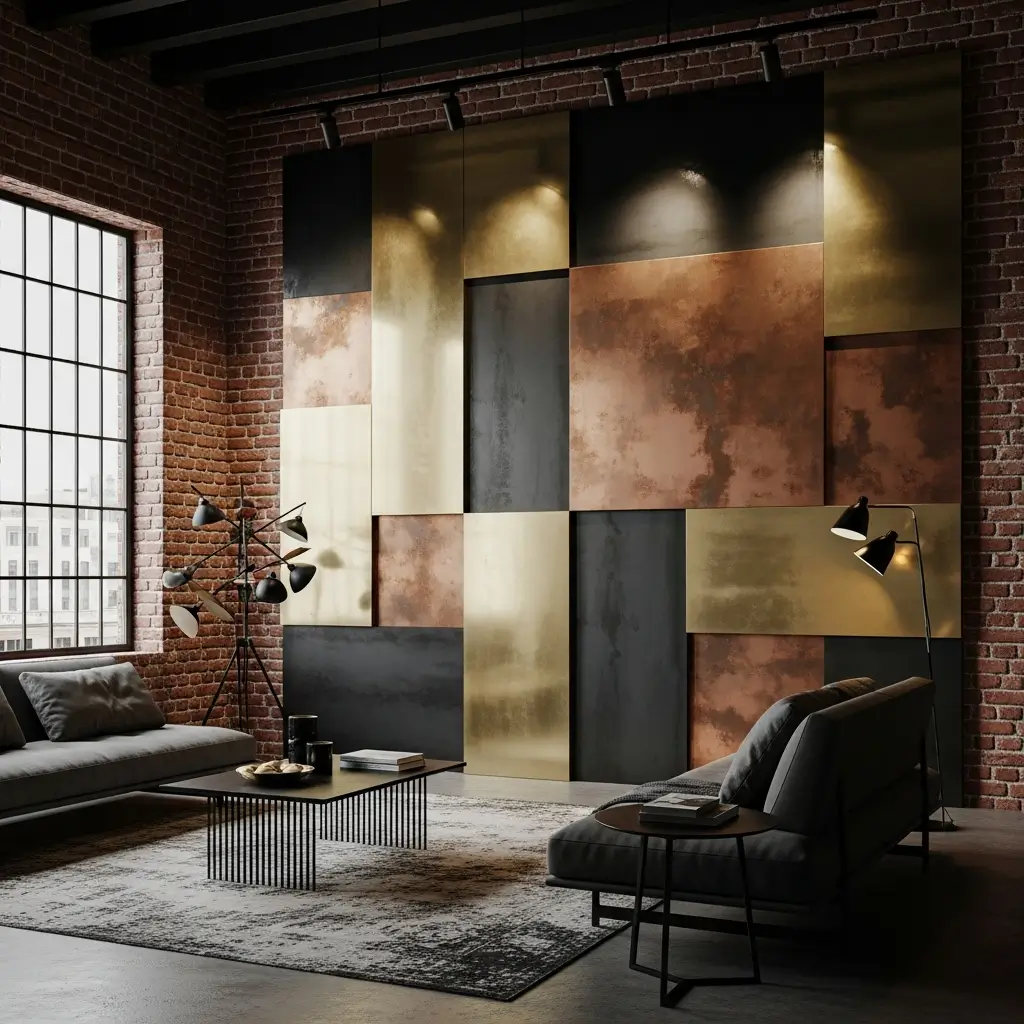
One metal is good. Multiple metals together? That’s advanced industrial design. Mixed-metal accent walls create focal points that demand attention without screaming for it.
Corrugated metal panels, copper sheets, aged steel – combine different metals for depth and interest. Patina variations add organic elements to industrial materials. That rust isn’t damage; it’s character. The tarnish on copper isn’t neglect; it’s nature’s artwork.
Installing Metal Walls
Practical considerations:
- Weight – secure properly to studs
- Edges – file smooth or add trim for safety
- Maintenance – some metals need sealing
- Sound – metal can echo, plan accordingly
12. Industrial Outdoor Patio Inspirations
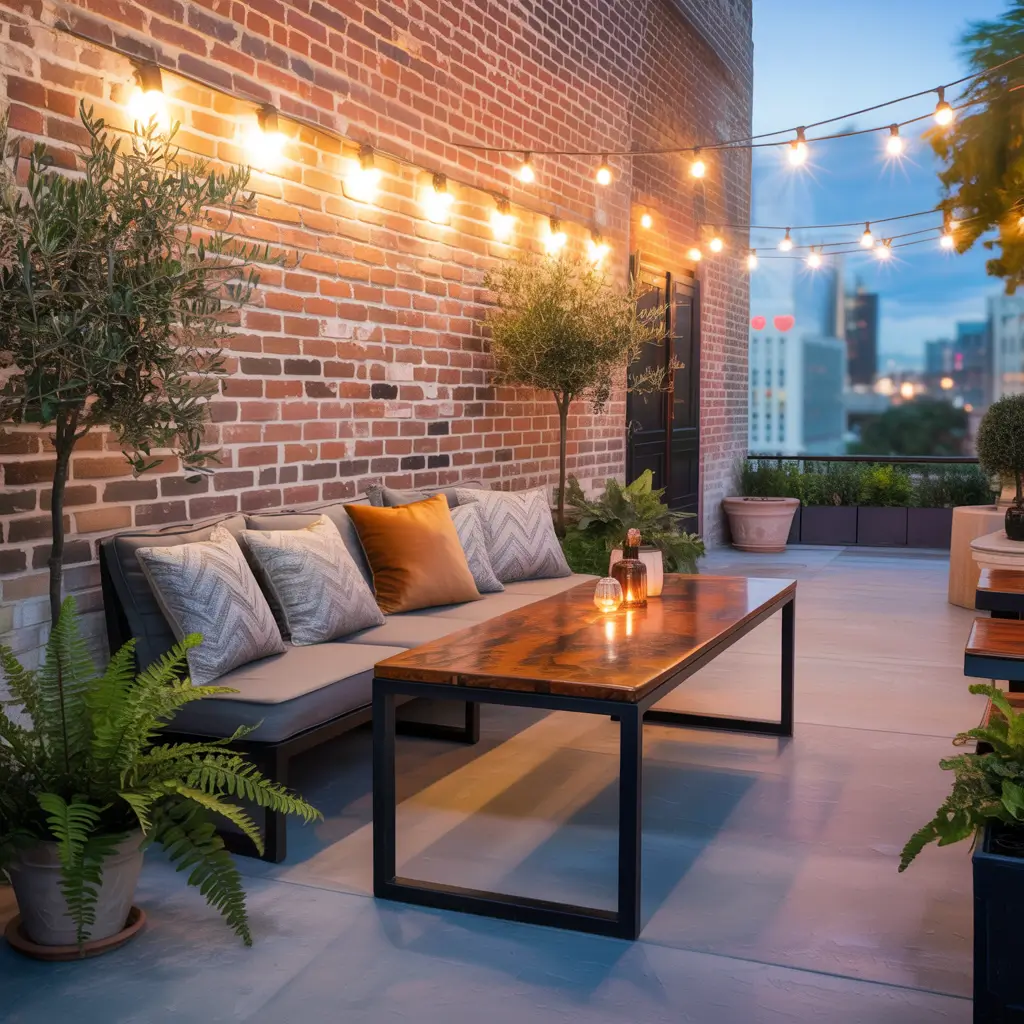
Who says industrial design stops at your back door? Industrial patios blend indoor comfort with outdoor durability, creating spaces that handle weather while looking incredible.
Start with flooring. Concrete pavers or stained concrete create that industrial base. Add an outdoor rug for comfort – yes, they make outdoor rugs that actually last now. Metal furniture with weather-resistant cushions balances hard and soft.
String lights aren’t just for college dorms anymore. Commercial-grade string lights with exposed bulbs create ambiance while staying true to industrial aesthetics. Add a fire pit made from corten steel or a repurposed metal drum, and you’ve got an outdoor room worth using :/
Weather-Proofing Industrial Elements
Outdoor industrial needs extra consideration:
- Sealed wood to prevent rot
- Rust-resistant metals or embrace the rust
- Covered storage for cushions and textiles
- Proper drainage for concrete surfaces
Bringing It All Together
Here’s what I’ve learned about industrial interior design – it’s not about making your home look like a factory. It’s about embracing raw materials, celebrating function, and finding beauty in simplicity.
The best industrial spaces feel authentic, lived-in, and somehow both rough and refined.
Start small if you’re nervous. Add one industrial element – maybe vintage lighting or a reclaimed wood shelf. See how it feels. Build from there. The beauty of industrial design is its flexibility.
Mix it with other styles, soften it with textiles, warm it with plants. Make it yours.
The imperfections are the point. That scratched metal, that weathered wood, that exposed brick with its uneven color – these aren’t flaws to hide.
They’re character to celebrate. In a world of mass-produced perfection, industrial design reminds us that beauty exists in the raw, the real, and the imperfect.
Now stop reading about it and go find some reclaimed wood or vintage lighting. Your space is waiting for its industrial transformation, and trust me, once you start, you’ll wonder why you waited so long.
Just maybe start with one room before you go full loft-conversion crazy like some of us did 🙂