12 Modern Clinic Interior Design Ideas for Sleek Layouts
- Home Interior Design
 Ben
Ben- 0
- 41 minutes read
Remember the last time you walked into a medical clinic and thought, “Wow, I could hang out here all day”? Yeah, me neither.
Most clinics still rock that 1990s vibe with fluorescent lighting that makes everyone look slightly green and waiting room chairs that seem designed to punish your spine.
But here’s the thing – clinic design has evolved dramatically, and smart practitioners realize that a well-designed space can actually improve patient outcomes and staff satisfaction.
I’ve spent the last five years helping medical professionals transform their clinics from anxiety-inducing medical chambers into healing spaces that patients don’t dread visiting.
After working on everything from tiny rural practices to multi-floor urban wellness centers, I’ve learned that good clinic design isn’t about throwing money at fancy furniture. It’s about understanding how space affects both patients and practitioners, then creating environments that work for everyone.
These twelve clinic interior design ideas come from real projects, real budgets, and real constraints.
Whether you’re opening your first practice or desperately need to update that waiting room that hasn’t changed since the Bush administration (the first one), these ideas will help you create a clinic that heals through design, not despite it.
1. Modern Minimalist Clinic Reception
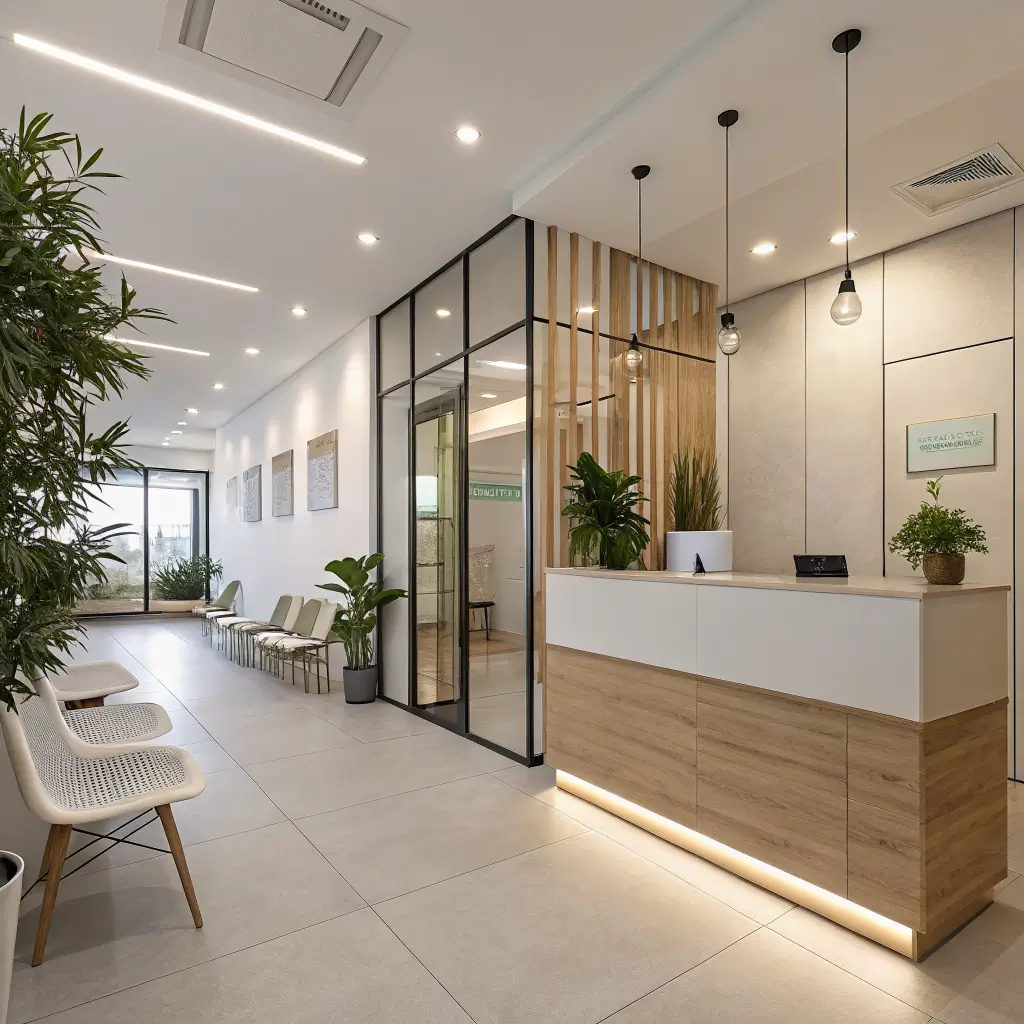
Modern minimalist clinic receptions prove that less clutter equals less stress – for both patients and staff. The first clinic I redesigned had a reception area that looked like an office supply store exploded. Papers everywhere, five different filing systems, and enough sticky notes to wallpaper a small room. We stripped it down to essentials, and patient check-in times dropped by 40%.
The key to minimalist reception design lies in hidden functionality. Everything has a place, but that place isn’t visible. Built-in storage behind clean panels, cable management systems that make cords disappear, and digital systems that eliminate paper chaos. My favorite transformation involved a reception desk with invisible drawers – push to open, no handles, just smooth surfaces that look like art.
Color psychology plays a huge role here. Neutral palettes with one accent color create calm without boredom. White and gray with touches of sage green, or cream and wood with navy accents. The goal is creating a space that whispers “medical professional” without screaming “hospital.”
Essential Minimalist Elements
Creating calm through simplicity:
- Floating reception desks that don’t dominate the space
- Hidden storage solutions for all administrative needs
- Digital check-in systems reducing paper clutter
- Single statement artwork instead of wall collage chaos
- Quality over quantity in every furniture choice
- Clear sightlines from entrance to reception
The maintenance factor surprises people. Minimalist spaces actually stay cleaner because there’s nowhere for dust and germs to hide. Plus, your cleaning staff will thank you when they don’t have to navigate around seventeen decorative items.
2. Luxury Spa-Like Waiting Room
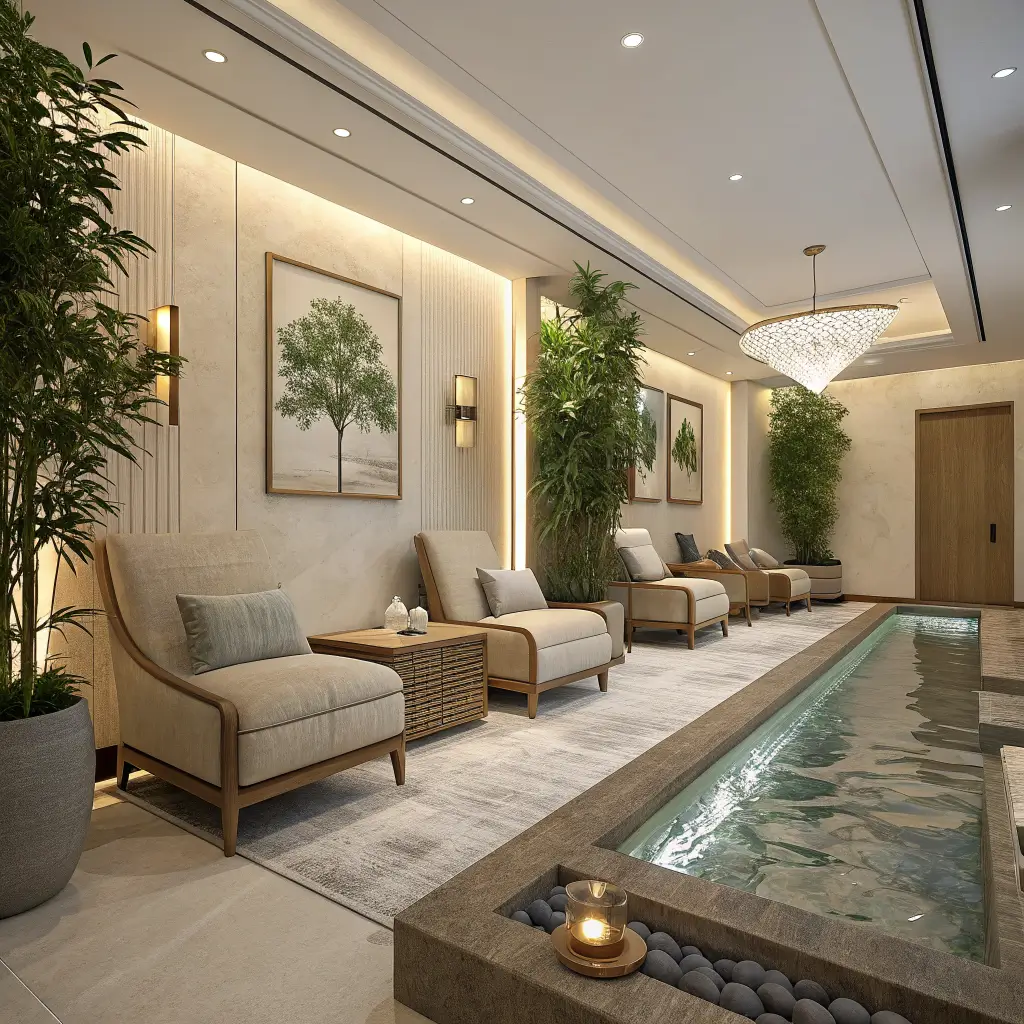
Luxury spa-like waiting rooms transform the dreaded wait into something patients almost enjoy. I worked with a dermatology clinic that wanted to compete with high-end spas, and honestly, their waiting room now makes my living room look shabby.
The furniture makes all the difference. Forget those connected plastic chairs that force strangers into awkward proximity. Individual seating with soft fabrics, proper lumbar support, and enough personal space creates comfort that reduces perceived wait times. One clinic installed massage chairs as an option – their online reviews went through the roof.
Amenities elevate the experience beyond basic waiting. Filtered water stations with real glasses (not paper cups), phone charging stations built into side tables, and reading materials that aren’t from 2015. A pediatrician friend added a coffee bar with decent coffee, and parents literally thank her for it during appointments.
Spa Waiting Room Essentials
Luxury touches that matter:
- Soft, adjustable lighting instead of harsh fluorescents
- Sound management through soft music or water features
- Temperature control that actually works
- Fresh plants or living walls for air quality
- Quality seating with washable, antimicrobial fabrics
- Subtle aromatherapy (nothing overwhelming)
The ROI on spa-like waiting rooms surprises skeptics. Patients choose clinics based on comfort, especially for elective procedures. That initial investment pays for itself through patient retention and referrals.
3. Compact Urban Clinic Design
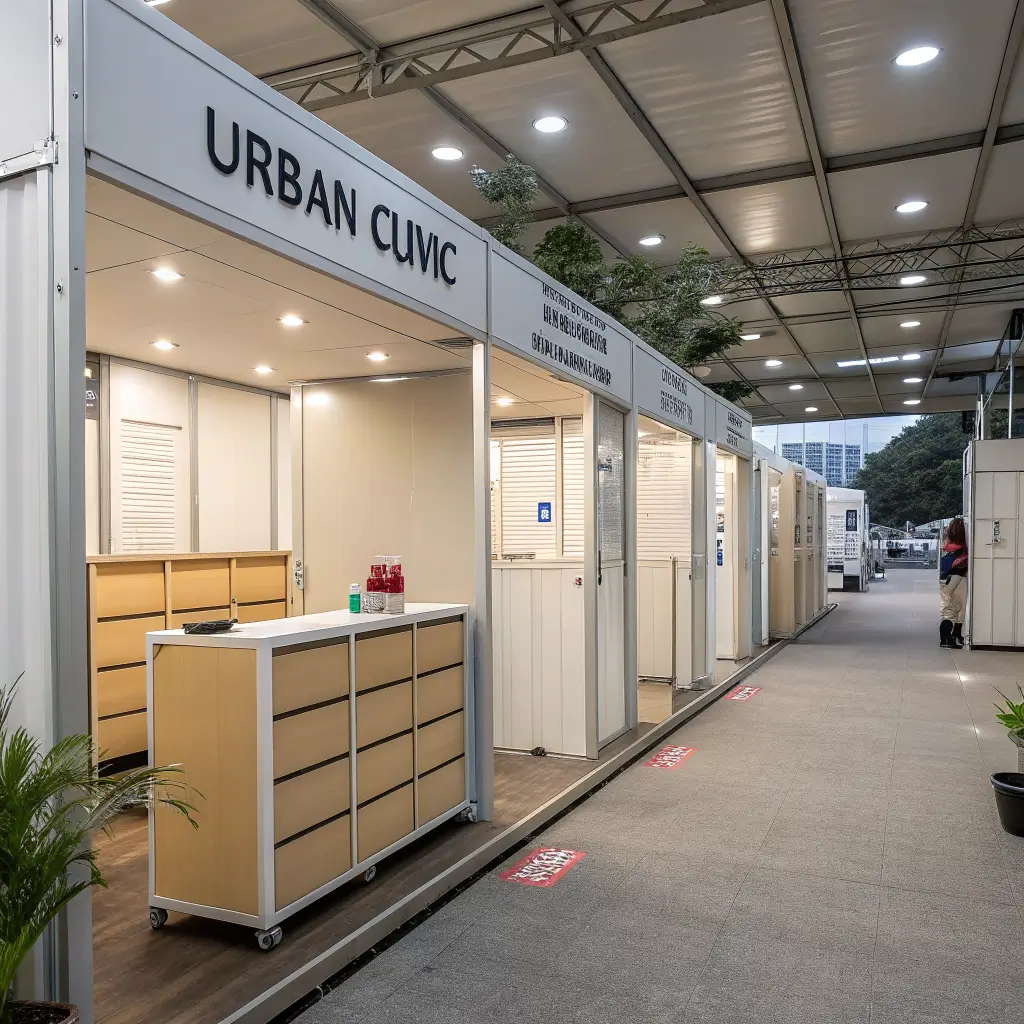
Compact urban clinics face unique challenges – maximum function in minimum square footage while maintaining a professional atmosphere. My first urban clinic project was 800 square feet total. We made it work by thinking vertically and getting creative with multipurpose spaces.
Modular furniture saves compact clinics. Examination tables that fold into the wall, rolling stools that nest together, and equipment on mobile carts that can move between rooms. Every piece needs to justify its footprint. That decorative plant in the corner? It better be air-purifying or it’s gone.
Flow becomes critical when space is tight. One-way patient traffic prevents hallway bottlenecks. Clear signage reduces confusion. Strategic mirror placement makes spaces feel larger without sacrificing functionality. I learned this after watching two patients do an awkward hallway dance trying to pass each other in a narrow corridor.
Maximizing Small Clinic Spaces
Urban efficiency strategies:
- Wall-mounted everything to free floor space
- Multi-functional rooms that adapt to needs
- Vertical storage utilizing full ceiling height
- Pocket doors saving swing space
- Built-in furniture maximizing every inch
- Digital records eliminating filing cabinets
The biggest mistake? Trying to fit suburban clinic designs into urban spaces. Embrace the constraints and design specifically for your footprint.
Also Read: 10 Inspiring Kitchen Interior Design Modern Ideas for Style
4. Pediatric Clinic with Playful Touch
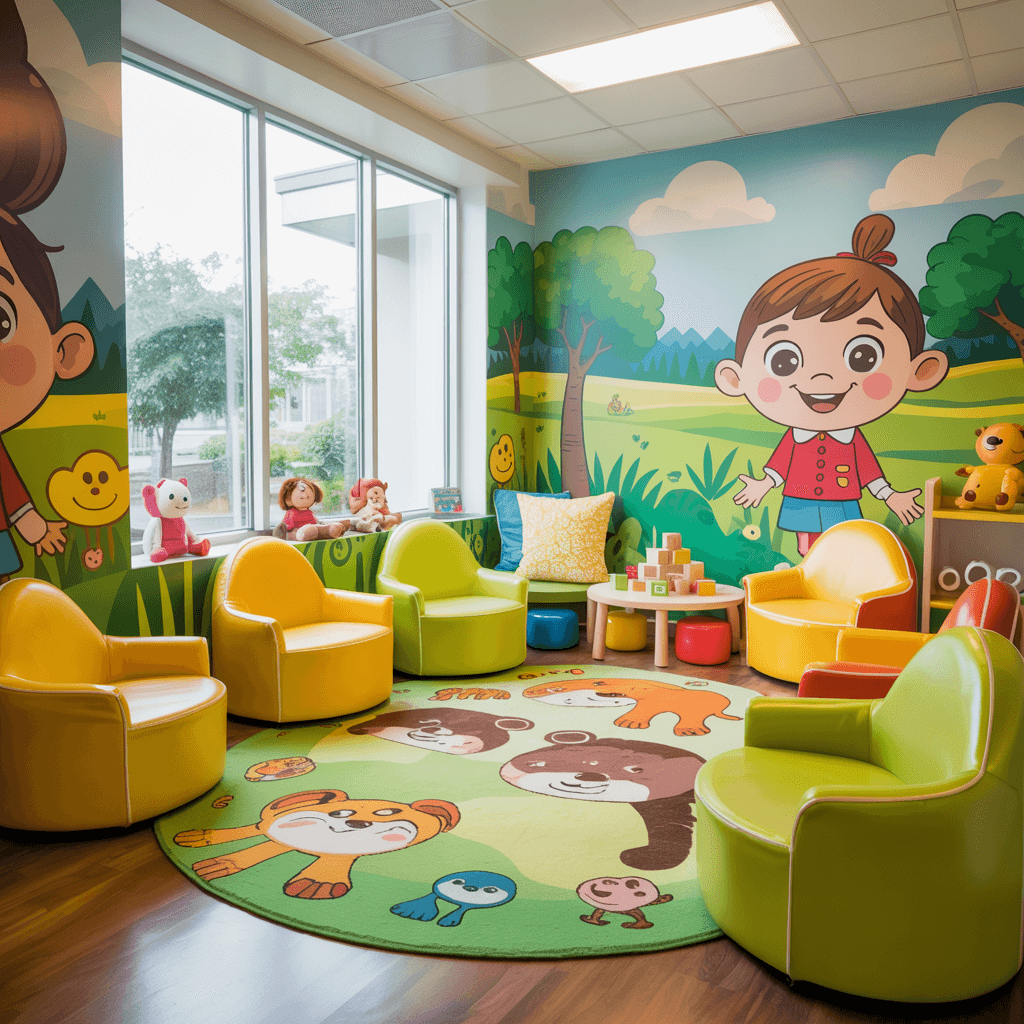
Pediatric clinics with playful touches make doctor visits less terrifying for kids and less stressful for parents. The secret isn’t covering every surface with cartoon characters – it’s creating engaging environments that distract and delight without overwhelming.
Interactive elements beat passive decorations every time. Wall-mounted activity panels, projection mapping that responds to movement, and even simple magnetic walls with moveable pieces. One pediatric clinic installed a two-story slide from the second-floor exam rooms to the exit. Kids literally beg to come back.
Safety drives every playful choice. Rounded corners on everything, antimicrobial surfaces that can handle constant cleaning, and secured elements that can’t become projectiles. That adorable reading nook needs to be adorable AND indestructible. I watched a two-year-old try to eat a waiting room chair once. Kids are creative destructors.
Kid-Friendly Design Elements
Playful yet practical features:
- Themed exam rooms that tell stories
- Height-appropriate elements for child perspective
- Separate infant and toddler zones for age-appropriate play
- Washable everything because kids are messy
- Calming colors that energize without overstimulating
- Parent comfort zones within sight of play areas
The challenge is balancing playful with professional. Parents need to trust the medical expertise, even if the walls feature friendly dinosaurs. FYI, avoid clowns – nobody likes clowns anymore.
5. Eco-Friendly Green Clinic
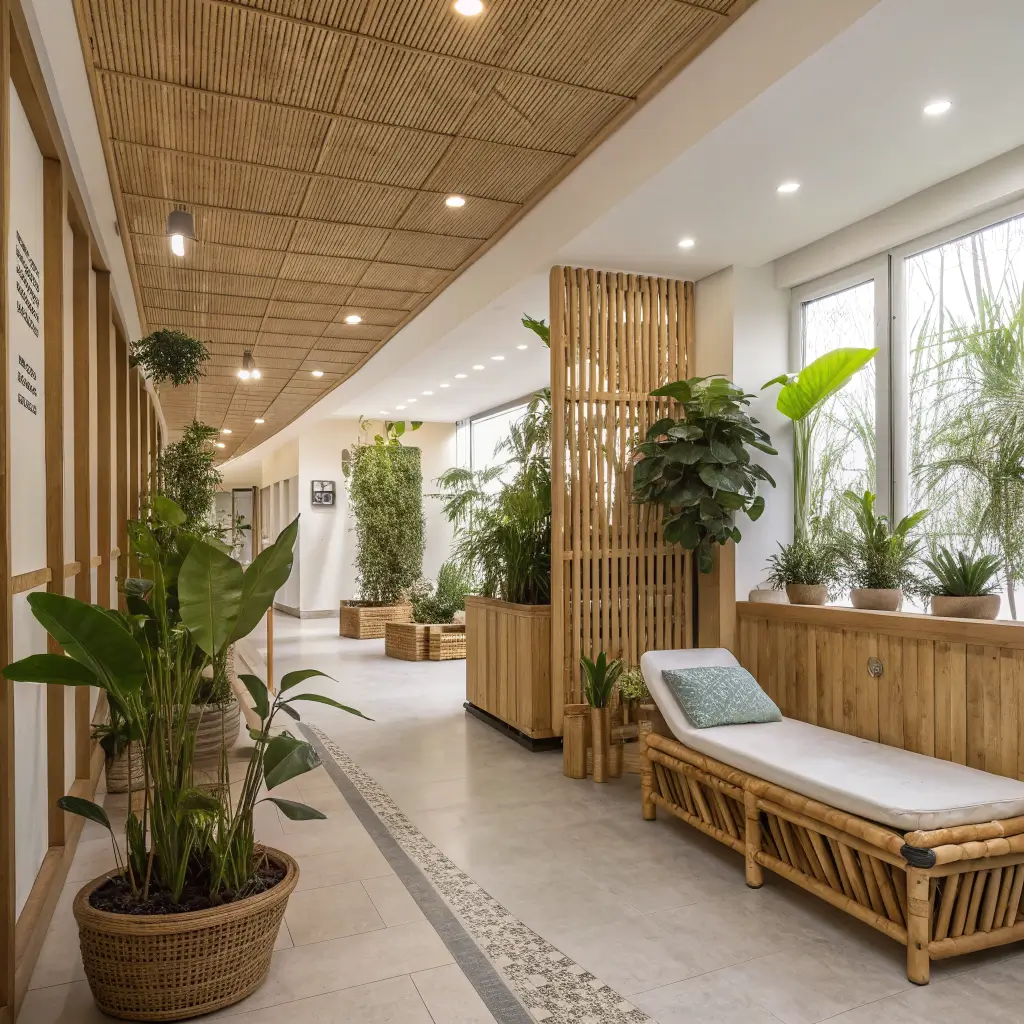
Eco-friendly green clinics prove that sustainability and healthcare align perfectly. Beyond the obvious environmental benefits, green clinics report lower operating costs, healthier indoor air quality, and even improved patient satisfaction scores.
Material choices define green clinic interiors. Bamboo flooring, recycled content furniture, low-VOC paints – every element contributes to sustainability. One clinic used reclaimed wood from local barns for accent walls, creating beautiful spaces while supporting the local economy.
Energy efficiency goes beyond LED bulbs. Smart HVAC systems, solar panels, rainwater harvesting – the technology exists to make clinics nearly carbon neutral. My favorite project achieved LEED Gold certification while actually reducing construction costs through smart material choices.
Sustainable Clinic Features
Green design that delivers:
- Natural ventilation reducing HVAC dependence
- Recycled and recyclable materials throughout
- Water-efficient fixtures in all areas
- Native landscaping requiring minimal maintenance
- Energy monitoring systems for optimization
- Waste reduction programs built into design
Patients increasingly choose healthcare based on values. Green clinics attract environmentally conscious patients who become loyal advocates for your practice.
6. High-Tech Futuristic Clinic
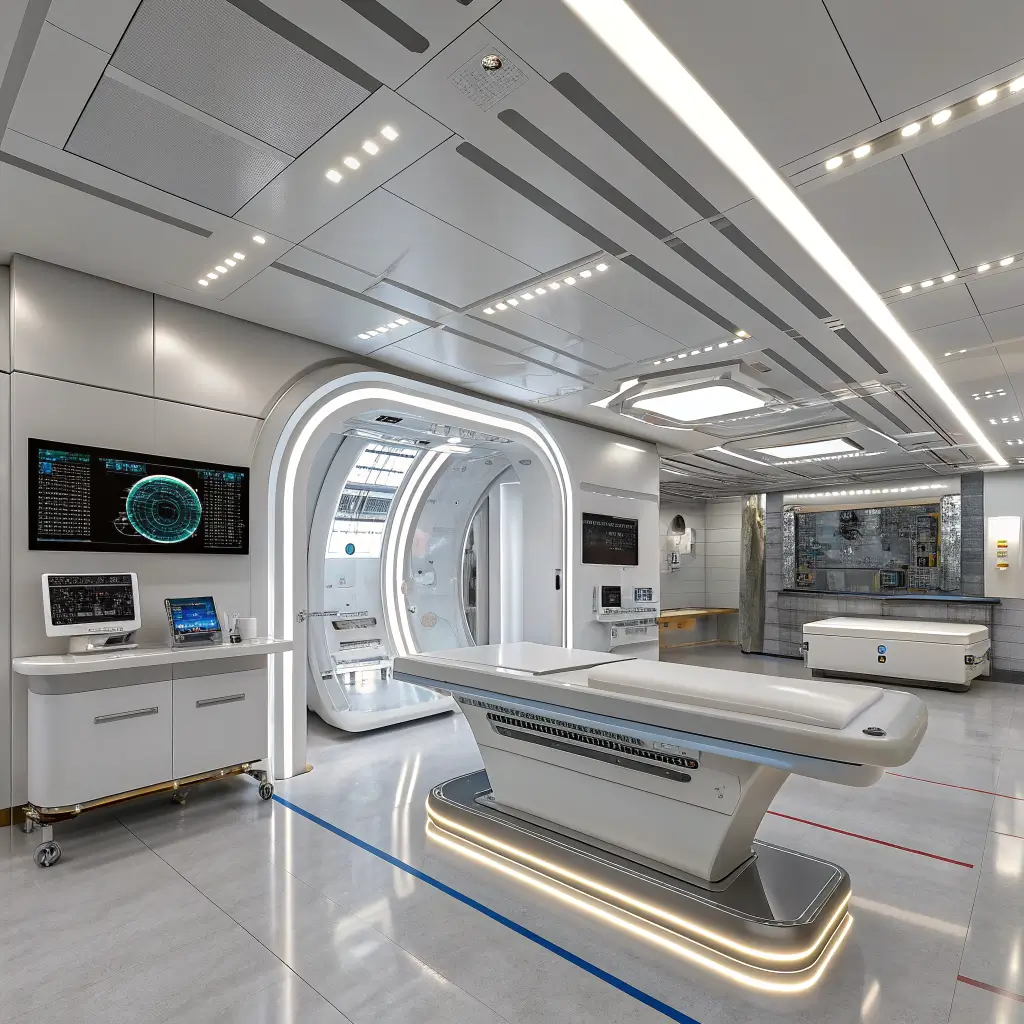
High-tech futuristic clinics embrace technology to streamline operations and wow patients. This isn’t about having gadgets for gadgets’ sake – it’s about using technology to improve healthcare delivery while creating memorable experiences.
Digital integration starts at entry. Facial recognition check-in, AI-powered triage systems, holographic wayfinding – the future is here if you want it. One clinic installed smart glass that turns opaque for privacy at the touch of a button. Patients love the James Bond vibes.
Exam room technology enhances care quality. Digital imaging displayed on wall-mounted screens, telemedicine capabilities built into every room, and voice-activated recording systems that let doctors maintain eye contact while documenting. The efficiency gains are remarkable.
Future-Forward Features
Tech that improves healthcare:
- Biometric monitoring in waiting areas
- AR/VR for patient education and anxiety reduction
- Automated supply management systems
- Smart surfaces that self-sanitize
- Integrated health tracking from wearables
- AI-assisted diagnostic displays for real-time analysis
The learning curve is real though. Staff training becomes crucial when implementing high-tech solutions. Start small and scale up as comfort grows.
Also Read: 12 Minimalist Wardrobe Interior Design Ideas for Clean Spaces
7. Bright Hygienic Dental Clinic
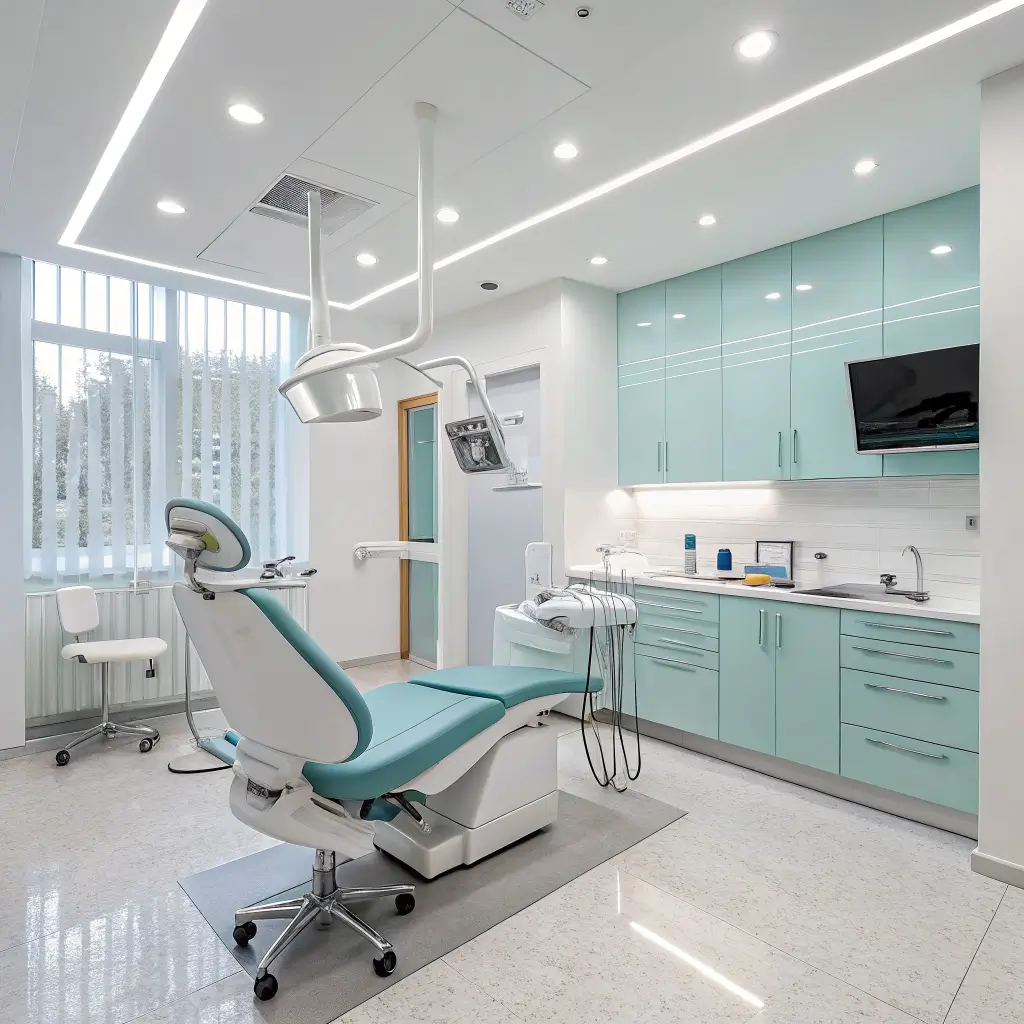
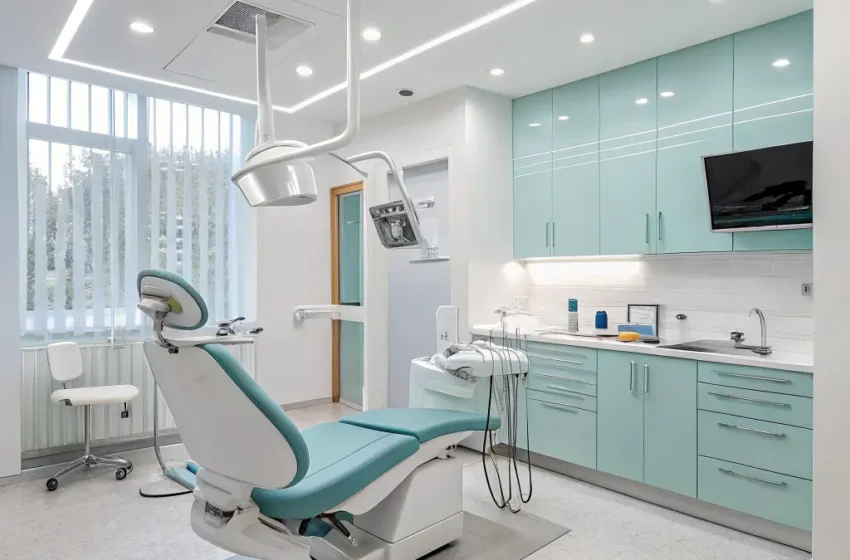
Bright hygienic dental clinics address the unique anxiety that makes grown adults avoid necessary dental care. The design challenge? Creating spaces that scream “clean” without feeling cold or clinical.
White doesn’t equal sterile anymore. Warm whites, soft creams, and pale woods create brightness without the operating room vibe. One dental clinic used white marble with gold veining throughout – luxurious yet impeccably clean-looking.
Transparency builds trust in dental settings. Glass partitions, open sterilization areas, visible organization systems – patients relax when they can see the hygiene protocols in action. My dentist installed a glass wall showing the autoclave area. Watching instruments being sterilized actually reassures patients.
Dental Design Essentials
Bright and trustworthy elements:
- Abundant natural light reducing clinical feel
- Visible cleanliness through open storage
- Calming ceiling features for patients lying back
- Sound dampening to muffle drill noise
- Entertainment systems for distraction
- Aromatherapy combating medical smells
The psychology matters enormously. Dental anxiety affects 75% of adults – good design can literally improve public health by making dental visits less terrifying.
8. Wellness Clinic with Natural Lighting
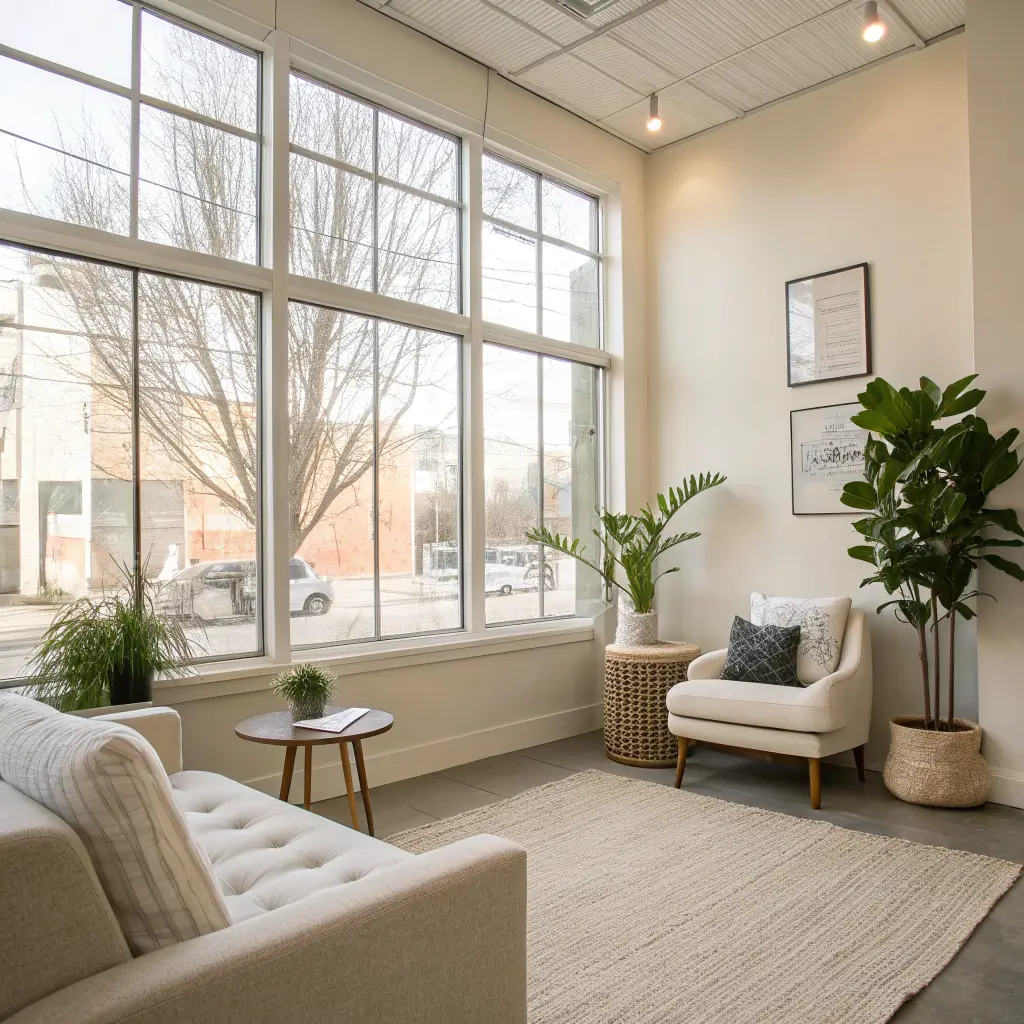
Wellness clinics with natural lighting harness the healing power of sunlight that no artificial bulb can replicate. Studies show natural light improves patient recovery, reduces staff errors, and even decreases the need for pain medication. That’s design working as medicine.
Strategic window placement maximizes daylight penetration. Skylights, clerestory windows, light tubes – every natural light source counts. One wellness clinic oriented all treatment rooms to face east for morning light therapy. Patients specifically request appointments in those rooms.
Controlling natural light prevents problems. Automated blinds, UV-filtering glass, and oriented overhangs manage glare and heat while maintaining benefits. Nobody wants to squint during acupuncture or roast during massage therapy.
Natural Light Optimization
Harnessing daylight effectively:
- Light shelves bouncing light deeper into spaces
- Reflective surfaces amplifying available light
- Circadian lighting systems mimicking natural rhythms
- Seasonal adjustments for changing sun angles
- Backup artificial lighting matching daylight color
- Privacy solutions that don’t block light
The energy savings alone justify the investment. Natural light reduces electricity costs while improving everyone’s mood – patients and staff alike.
9. Luxury Cosmetic Clinic Interior
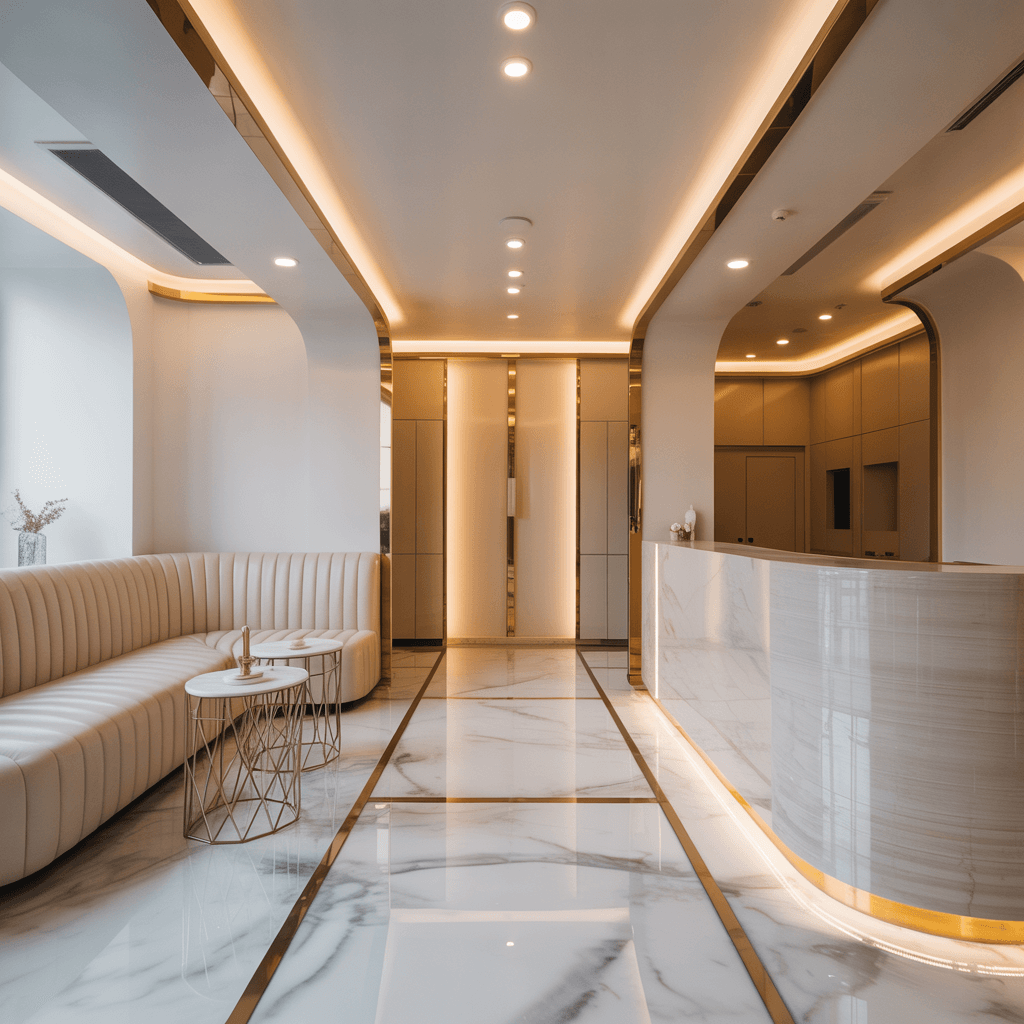
Luxury cosmetic clinic interiors understand that patients are purchasing confidence, not just procedures. The space needs to promise transformation before any treatment begins. These clinics compete with high-end spas and hotels, not other medical facilities.
Materials communicate luxury instantly. Marble, brass, velvet, crystal – the textures and finishes patients associate with high-end experiences. One cosmetic surgeon installed a chandelier in every treatment room. Excessive? Maybe. Effective? Absolutely.
Privacy becomes paramount in cosmetic settings. Individual consultation rooms, private recovery areas, discrete entrances – patients pay premium prices for confidentiality. The most successful cosmetic clinic I designed has a VIP entrance with underground parking. Celebrities love it.
Luxury Design Elements
Premium touches that justify prices:
- Custom millwork for seamless storage
- Designer furniture from recognized brands
- Art collections creating gallery ambiance
- Premium amenities like champagne service
- Spa-quality treatment rooms with heated beds
- Concierge-level service areas for comfort
The Instagram factor can’t be ignored. Every corner needs to be photo-worthy because patients will share their experience online. IMO, that selfie wall pays for itself in free marketing :/
Also Read: 10 Simple Small Office Interior Design Ideas for Tiny Rooms
10. Small Rural Clinic Layout
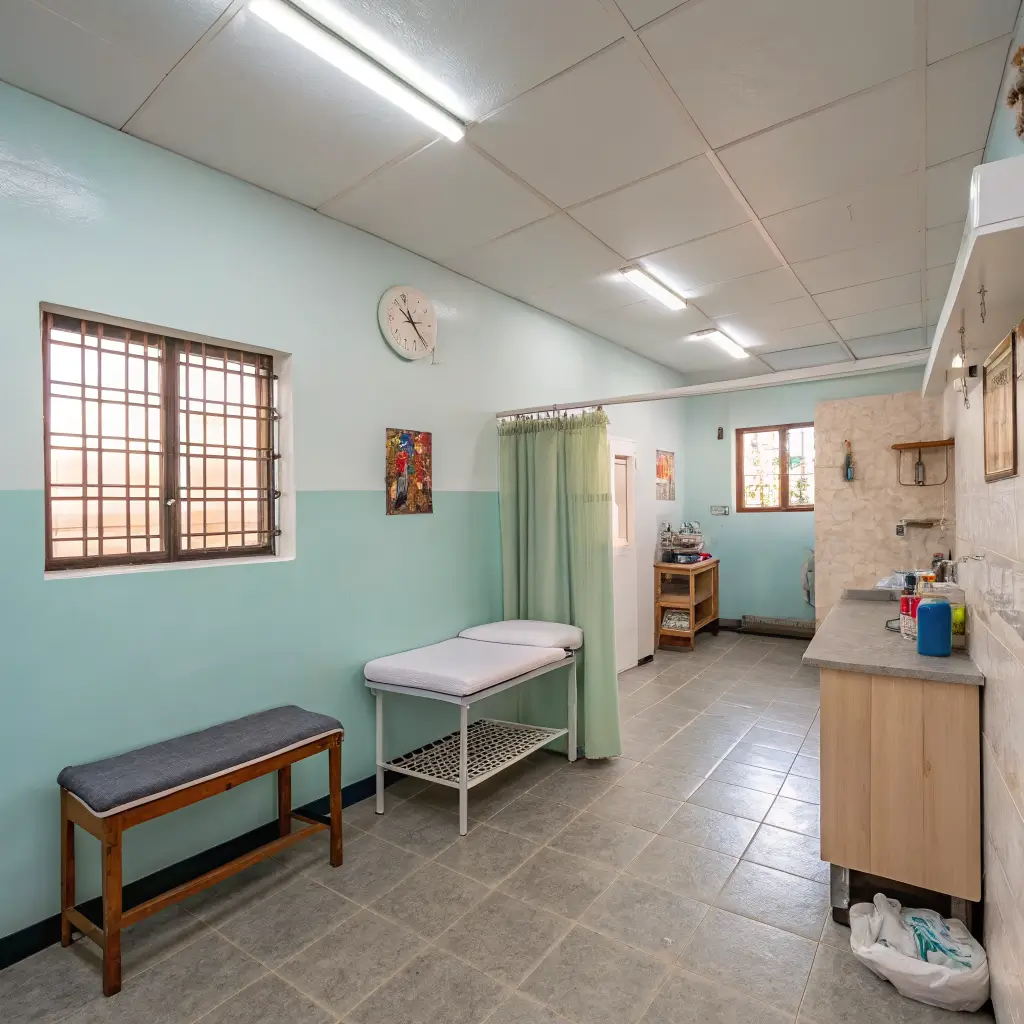
Small rural clinic layouts face unique challenges – serving diverse medical needs with limited resources while maintaining community trust. These clinics often function as the sole healthcare provider for entire towns, making smart design even more critical.
Flexibility drives rural clinic design. Multi-purpose rooms that transform from pediatric to geriatric care, equipment that serves multiple functions, and layouts that accommodate everything from emergencies to routine checkups. One rural clinic uses modular walls to reconfigure spaces based on daily needs.
Community connection matters more in rural settings. Local artwork, familiar materials, and design that reflects regional culture help patients feel comfortable. The most successful rural clinic I worked with displays historical photos from the town and uses reclaimed wood from a beloved local barn.
Rural Clinic Essentials
Small-town functionality:
- Adaptable spaces for varied services
- Durable materials for heavy use
- Easy maintenance with limited staff
- Emergency readiness in every design choice
- Community gathering spaces for health education
- Telemedicine capabilities for specialist consultations
Budget constraints require creativity. Repurposed materials, volunteer labor, and phased renovations make improvements possible even with limited funding.
11. Open Concept Clinic Design
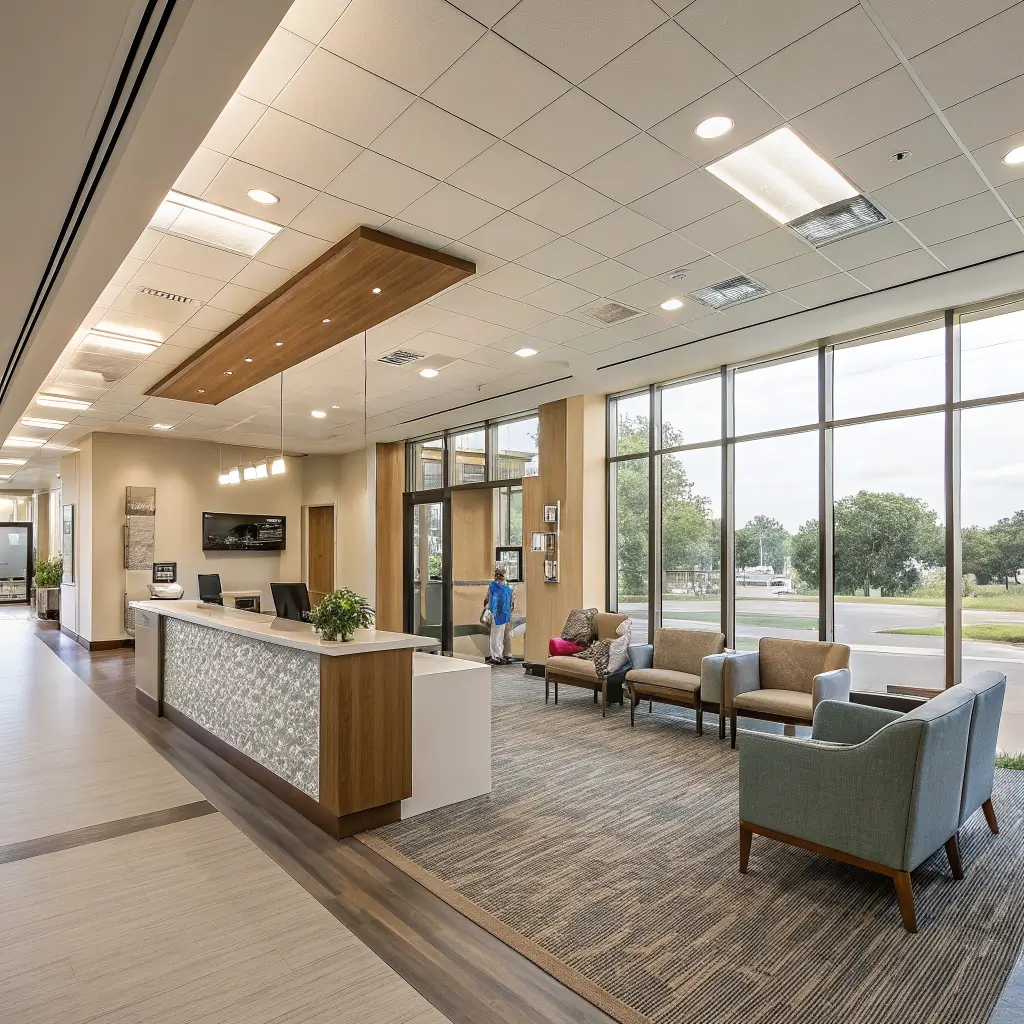
Open concept clinic designs challenge traditional medical layouts by removing barriers between spaces while maintaining necessary privacy. This approach creates collaborative environments that improve both patient care and staff communication.
Strategic zoning replaces walls in open concepts. Different flooring materials, ceiling heights, and lighting define areas without physical barriers. One clinic uses color-coded zones – blue for consultation, green for treatment, yellow for administration. Patients navigate intuitively.
Acoustic management becomes critical without walls. Sound-absorbing materials, white noise systems, and strategic speaker placement maintain privacy despite openness. That HIPAA compliance isn’t optional, even in open designs.
Open Design Strategies
Balancing openness with function:
- Visual barriers without full walls
- Flexible partitions for temporary privacy
- Clear sightlines for staff coordination
- Activity-based zones for different functions
- Central nursing stations with 360° visibility
- Private pods within open areas
The collaboration benefits are real. Staff communication improves dramatically when barriers disappear. Just make sure everyone’s on board – some practitioners prefer traditional separation.
12. Zen-Inspired Serene Clinic
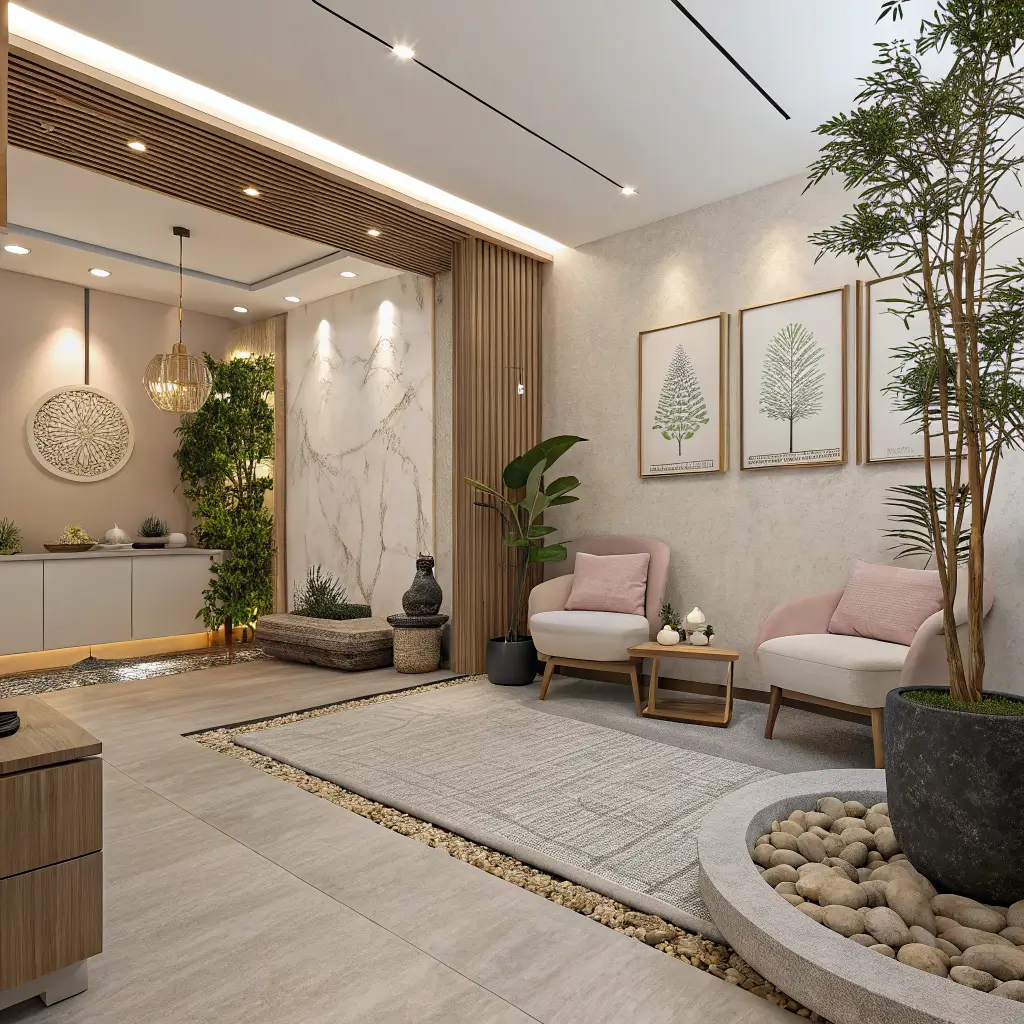
Zen-inspired serene clinics create healing environments through mindful design. This isn’t about adding a Buddha statue and calling it zen – it’s about understanding how space, light, and materials affect human psychology and designing accordingly.
Simplicity defines zen clinic aesthetics. Natural materials, neutral colors, and uncluttered spaces create visual calm that translates to mental calm. One psychiatrist’s office uses only three colors throughout – warm gray, natural wood, and white. Patients consistently report feeling calmer just walking in.
Water elements add sensory serenity. Fountains, aquariums, or even recordings of water sounds create ambient noise that masks conversations and medical equipment sounds. My favorite implementation was a rain wall in a therapy clinic’s waiting room – mesmerizing and calming.
Zen Design Elements
Creating serenity through design:
- Natural materials like wood and stone
- Soft, indirect lighting avoiding harsh shadows
- Minimal decorations preventing visual chaos
- Indoor plants improving air and ambiance
- Comfortable silence through sound design
- Seamless transitions between spaces
The measurable impact surprises skeptics. Blood pressure readings are lower in zen-designed waiting rooms. Anxiety scores drop. That’s design as medicine.
Transforming Your Clinic Through Design
After exploring these twelve clinic interior design ideas, here’s what matters most: your clinic’s design should reflect your practice’s values while serving your patients’ needs.
Maybe you need high-tech efficiency, or perhaps zen serenity better suits your approach. The best clinic design is one that authentically represents who you are while making patients feel valued and comfortable.
Start with one area that needs the most help. Is your waiting room driving patients away? Are exam rooms too cramped? Fix the biggest pain point first, then build from there.
Small changes like better lighting or comfortable seating can dramatically improve patient experience without breaking budgets.
Remember that clinic design directly impacts health outcomes. Stressed patients heal slower, anxious patients avoid necessary care, and uncomfortable environments create negative associations with healthcare. Good design isn’t just aesthetic – it’s therapeutic.
The perfect clinic interior makes patients want to return (though hopefully not because they’re sick) and makes staff excited to come to work. Whether you’re designing from scratch or updating existing spaces, these twelve ideas prove that medical spaces can be both functional and inspiring.
Now stop putting off that waiting room refresh – your patients have suffered through those uncomfortable chairs long enough, and honestly, so have you 🙂