10 Inspiring Shop Interior Design Ideas for Trendy Shops
- Home Interior Design
 Ben
Ben- 0
- 34 minutes read
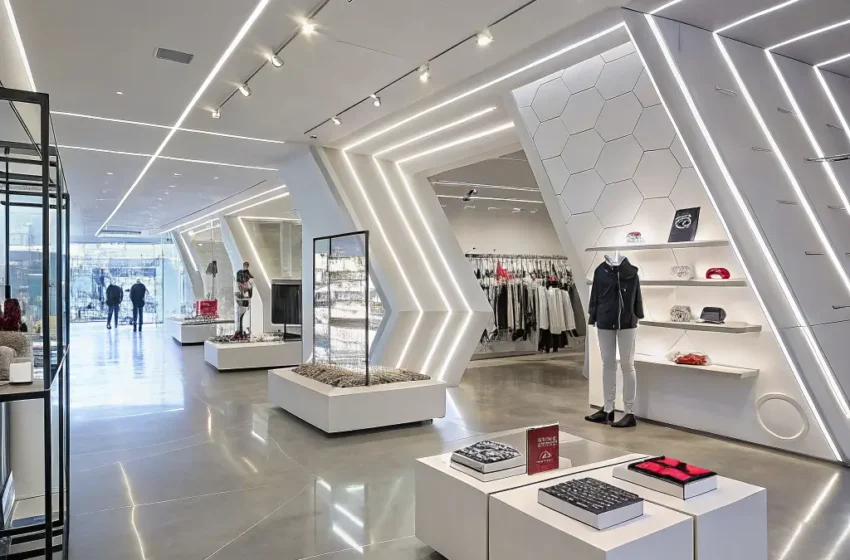
Ever walked into a shop and immediately felt like staying forever? That’s not an accident. I learned the power of shop interior design firsthand when I helped my cousin redesign her struggling boutique – within three months, her average customer dwell time tripled and sales increased by 40%.
The only thing that changed was how the space looked and felt.
The truth about retail success is brutal but simple: customers decide within seconds whether your shop feels worth exploring. You could have the best products in the world, but if your interior feels off-putting, cluttered, or forgettable, shoppers will browse quickly and leave faster.
Your shop interior design isn’t just decoration – it’s a silent salesperson working 24/7.
These ten shop interior design ideas cover everything from minimalist boutiques to cozy cafés, helping you create spaces that customers remember, photograph, and most importantly, buy from.
Whether you’re opening a new venture or desperately need to refresh a tired space, these concepts will transform how people experience your shop.
1. Minimalist Boutique Shop Interior Ideas
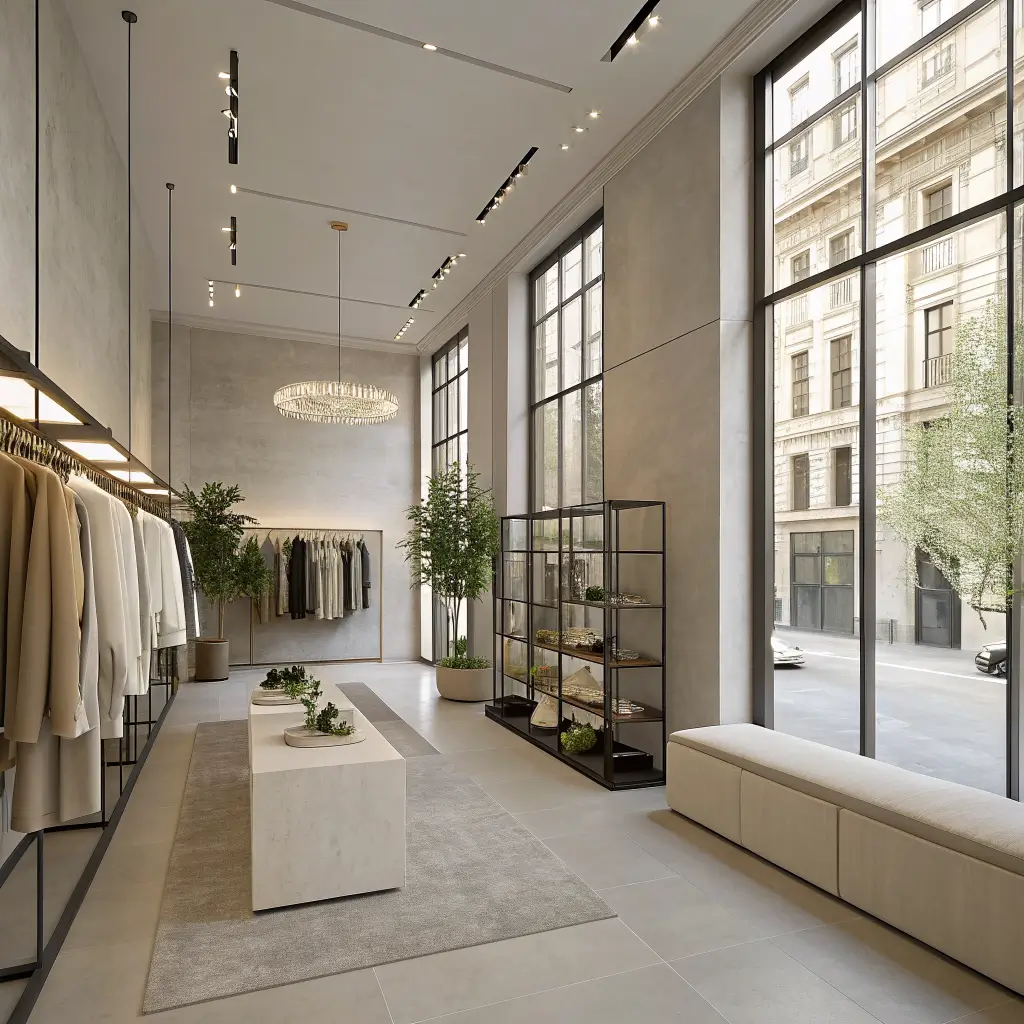
Minimalist boutique interiors prove that less really is more when it comes to selling products. This approach strips away visual noise so your merchandise becomes the undeniable star of the show.
The psychology behind minimalist retail is powerful. When customers aren’t overwhelmed by visual clutter, they can actually focus on your products and make purchasing decisions more easily. A boutique owner I know removed 60% of her display fixtures and watched her sales per square foot increase dramatically.
White walls, clean lines, and strategic product placement define minimalist boutique design. Every item on display should earn its spot – if something isn’t selling or adding visual value, it shouldn’t be there. This ruthless editing creates a curated experience that customers associate with quality.
Creating Effective Minimalist Retail Spaces
Essential minimalist elements:
- Limited product displays featuring only hero items
- Consistent color palette throughout the space
- High-quality materials that speak for themselves
- Strategic negative space around merchandise
- Intentional lighting highlighting key products
- Clean, uncluttered checkout areas
The minimalist approach works best for premium products and brands that want to convey exclusivity and thoughtful curation.
2. Cozy Café Interior Design Inspirations
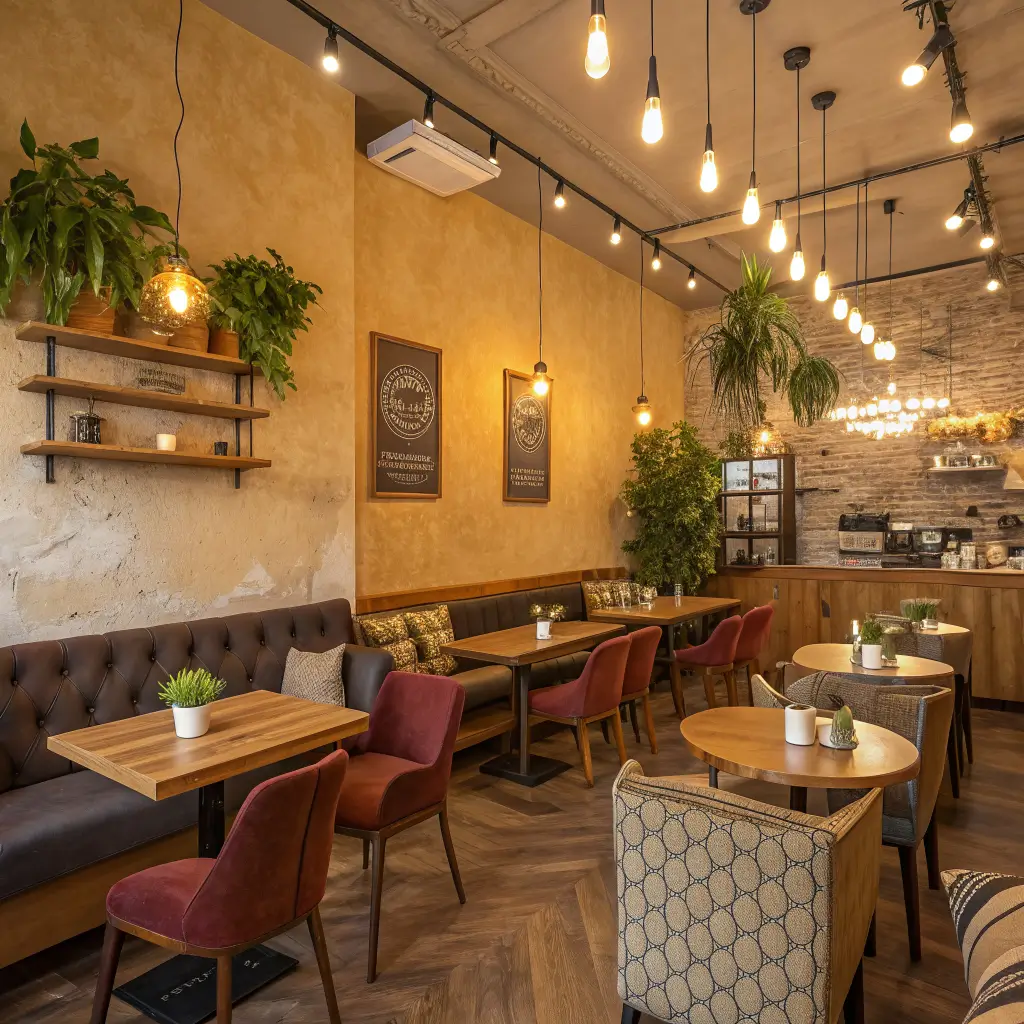
Cozy café interiors create spaces people want to linger in – and lingering customers become repeat customers who bring friends. This design approach transforms your café from a quick-stop into a destination.
The seating strategy makes or breaks cozy café design. Mix comfortable armchairs with standard seating to create variety that accommodates both quick coffee runs and three-hour study sessions. My favorite local café has exactly four cozy corners with oversized chairs – and they’re always occupied first.
Lighting sets the cozy mood instantly. Warm, dimmable lights create intimacy that harsh overhead fluorescents can never achieve. Layer your lighting with pendants, wall sconces, and table lamps to create that inviting glow that makes people want to stay.
Cozy Café Design Elements
Building warmth and comfort:
- Mixed seating options from stools to sofas
- Warm lighting with multiple sources
- Natural materials like wood and leather
- Personal touches including books and plants
- Comfortable temperature year-round
- Background music at conversation-friendly volumes
Cozy café design attracts remote workers, students, and social gatherers who value atmosphere as much as coffee quality.
3. Luxury Retail Store Layout Ideas
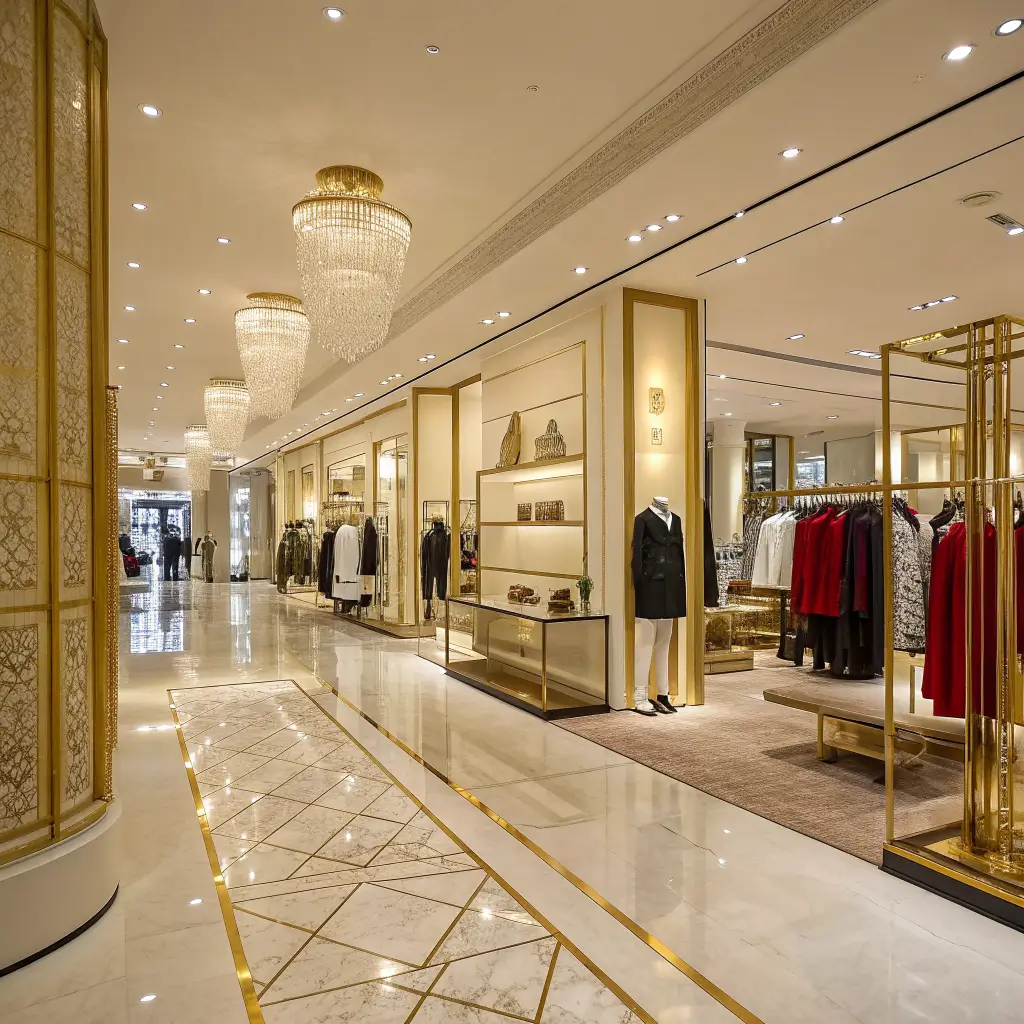
Luxury retail interiors communicate premium quality before customers even touch your products. This design approach justifies higher price points and creates experiences that match exclusive brand positioning.
Space is the ultimate luxury in retail design. Generous aisles, uncrowded displays, and breathing room signal exclusivity more effectively than any ornate decoration. When I consulted on a jewelry store redesign, we cut inventory display by 50% and increased average transaction value significantly.
Material quality cannot be faked in luxury retail. Real marble, solid wood, quality metals – customers touch surfaces, and cheap materials betray premium positioning immediately. Every surface a customer might contact should feel as luxurious as your products.
Luxury Retail Presentation
Premium design essentials:
- High-quality flooring that feels substantial
- Adequate spacing between product displays
- Dramatic lighting showcasing merchandise
- Premium fixtures made from quality materials
- Private consultation areas for high-value purchases
- Immaculate maintenance at all times
Luxury design works for jewelry, high-end fashion, premium beauty, and exclusive home goods retailers positioning at the top of their markets.
Also Read: 12 Unique Interior Design Portfolio Ideas and Room Inspirations
4. Small Space Shop Makeover Ideas
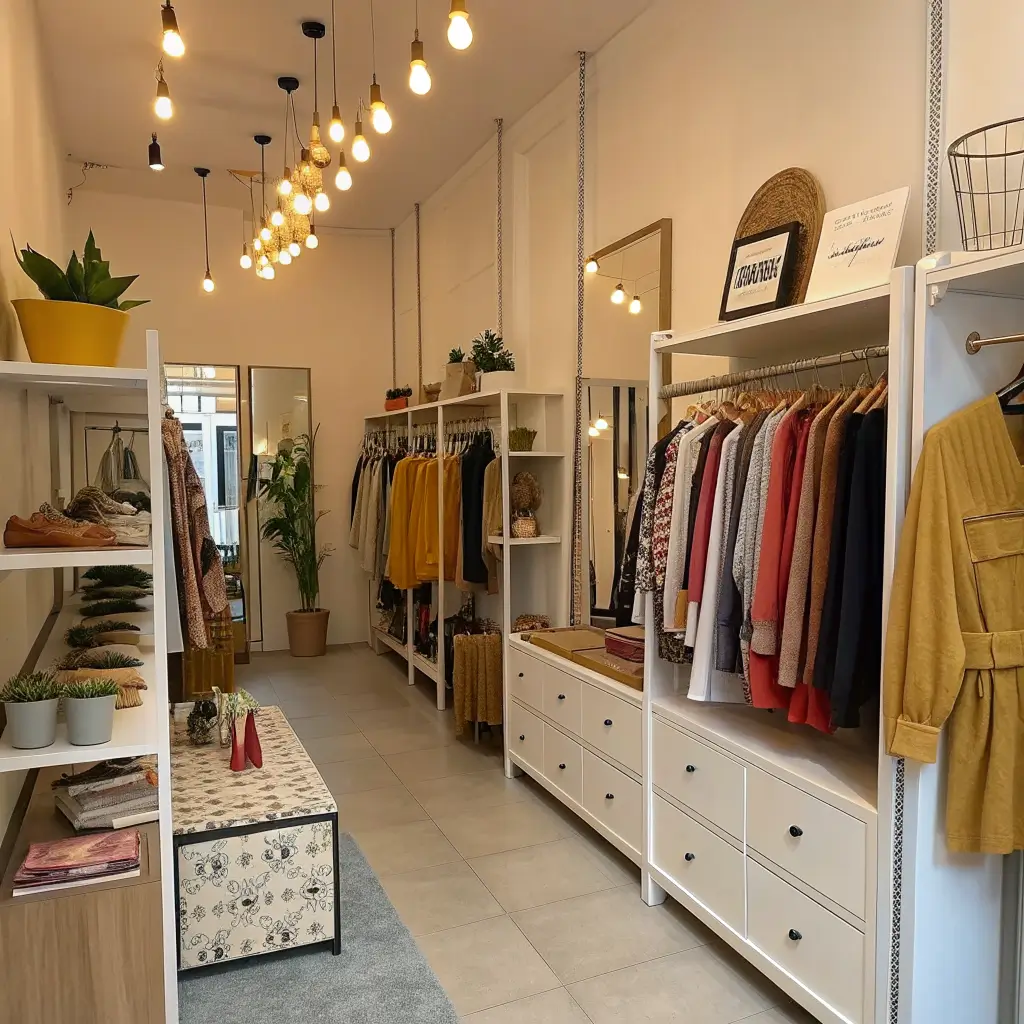
Small space shop design proves that square footage doesn’t determine success – smart design does. These compact retail solutions maximize every inch while maintaining an open, welcoming atmosphere.
Vertical merchandising saves small shops from feeling cramped. Use walls from floor to ceiling for display and storage, keeping valuable floor space clear for customer movement. I’ve seen 400-square-foot shops that feel more spacious than poorly designed 1,000-square-foot stores.
Multi-functional fixtures become essential in small spaces. Display tables with storage underneath, hanging racks that slide, and foldable elements allow you to adapt your space throughout the day. The flexibility prevents small shops from feeling static and claustrophobic.
Maximizing Compact Retail Spaces
Small space solutions:
- Vertical displays utilizing full wall height
- Mobile fixtures that reconfigure easily
- Strategic mirrors creating spatial illusion
- Light colors expanding visual space
- Minimal checkout footprint without compromising function
- Ceiling-mounted elements freeing floor area
Small space design is essential for urban boutiques, kiosks, and pop-up shops operating with limited square footage.
5. Modern Concept Store Interior Designs
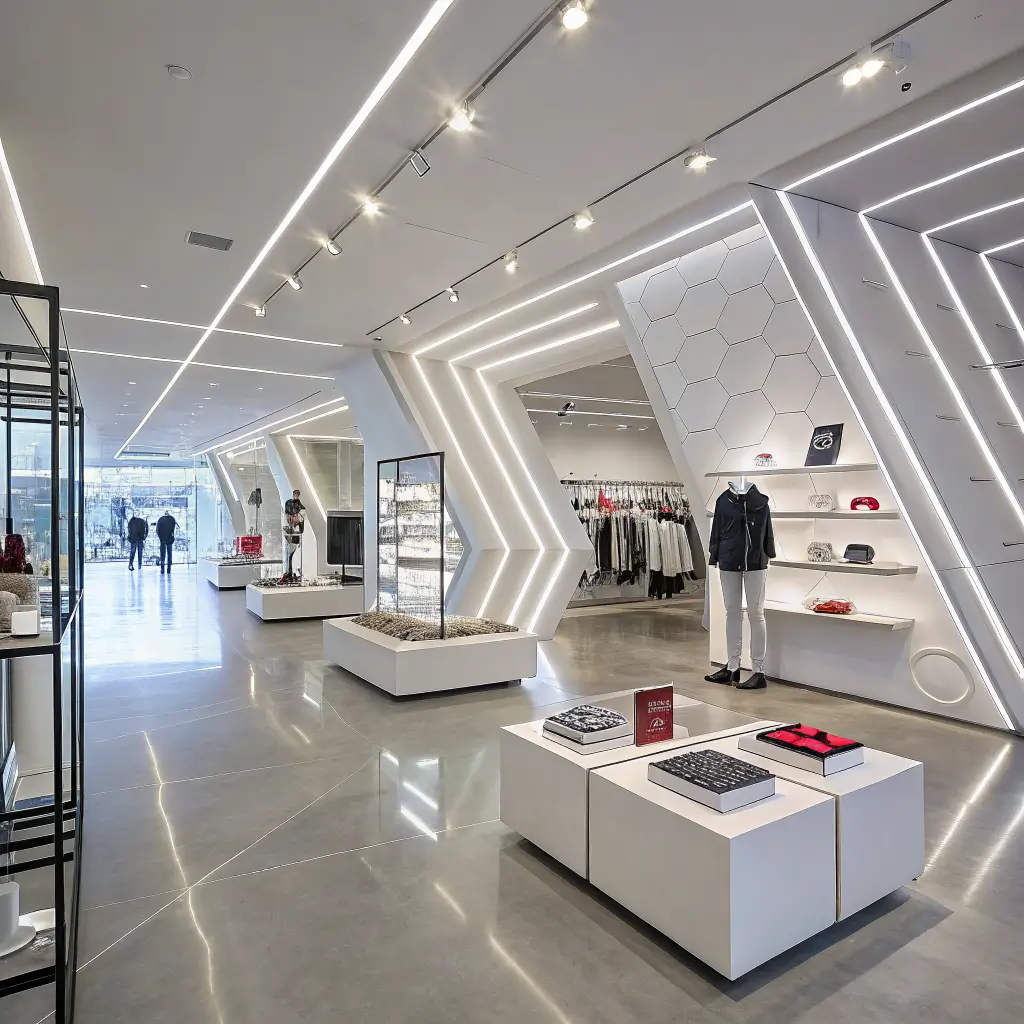
Modern concept store interiors blur the line between retail and experience – these aren’t just shops, they’re destinations that give people reasons to visit beyond purchasing.
The experience integration defines concept stores. Include café elements, gallery spaces, workshop areas, or lounge zones that expand your shop’s purpose. A concept store I frequent combines fashion retail with a working art studio – customers watch artists create while shopping.
Technology integration should feel seamless, not gimmicky. Digital displays, interactive elements, and smart features enhance rather than complicate the shopping experience. The tech should serve customers, not just impress them.
Concept Store Design Strategies
Creating experiential retail:
- Multi-use zones serving different purposes
- Event-capable spaces for workshops and launches
- Technology integration enhancing customer experience
- Community elements encouraging gathering
- Rotating installations keeping spaces fresh
- Photography-worthy features driving social sharing
Concept store design attracts brand-conscious consumers seeking experiences beyond transactional shopping.
6. Eco-Friendly Shop Interior Ideas
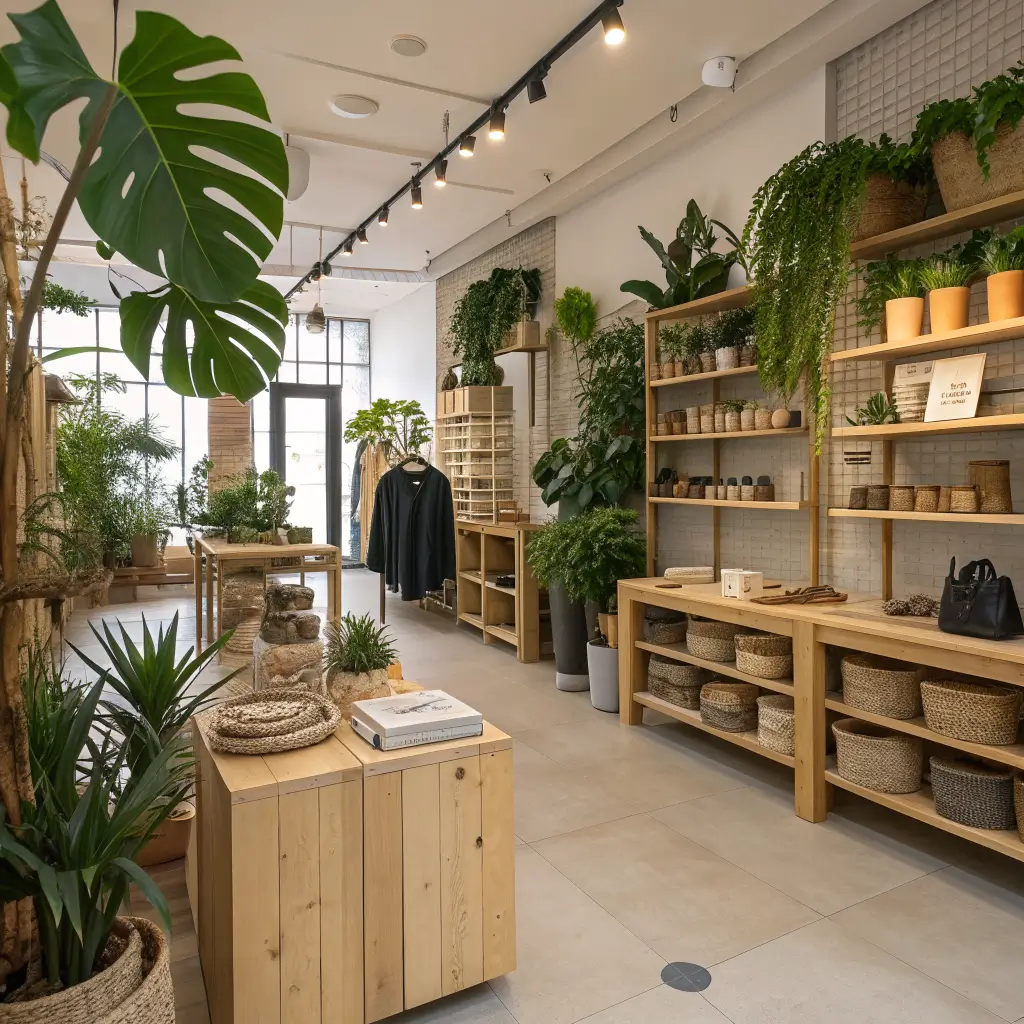
Eco-friendly shop interiors demonstrate your environmental values through every design choice – attracting the growing segment of consumers who vote with their wallets for sustainability.
Material authenticity matters to eco-conscious customers. Reclaimed wood, recycled materials, and sustainable fixtures should be genuine, not greenwashed. Customers increasingly research claims, and fake sustainability damages credibility more than admitting environmental efforts are works in progress.
Visible sustainability tells a story. Don’t hide your eco-friendly choices – display reclaimed material origins, highlight energy-efficient features, and share the sustainability journey. This transparency builds trust with environmentally conscious shoppers.
Sustainable Shop Design Elements
Eco-friendly retail choices:
- Reclaimed and recycled materials throughout
- Energy-efficient lighting with LED technology
- Natural ventilation reducing HVAC dependence
- Local sourcing for fixtures and materials
- Living elements like plants and green walls
- Minimal packaging displays and solutions
Eco-friendly design attracts sustainability-focused consumers, health-conscious shoppers, and eco-lifestyle brands.
Also Read: 10 Timeless Japanese Interior Design Ideas for Serene Homes
7. Vintage Style Store Decor Inspirations
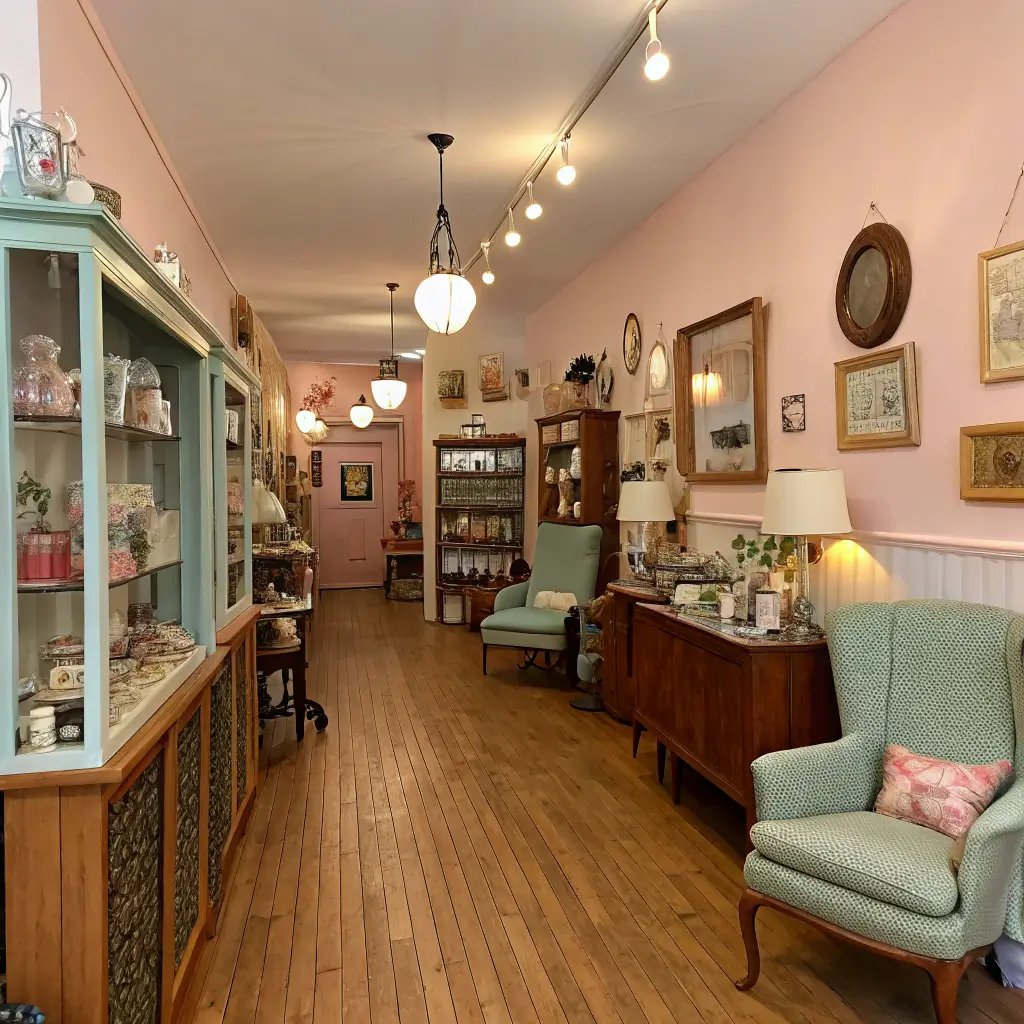
Vintage style store interiors create nostalgic atmospheres that differentiate you from generic retail environments. This approach connects emotionally with customers who value authenticity over sterile modernity.
Authenticity separates vintage style from costume. Real vintage fixtures and genuine antiques create atmosphere that reproduction pieces cannot match. Hunt flea markets, estate sales, and architectural salvage for pieces with actual history.
The era mixing creates interest when done thoughtfully. Combine elements from different decades unified by color palette or material family. My favorite vintage shop blends Victorian display cases with mid-century chairs – the contrast creates visual richness.
Vintage Style Design Elements
Creating nostalgic retail:
- Authentic vintage fixtures with real history
- Warm, period-appropriate lighting
- Layered textures and patina surfaces
- Curated collections of vintage accessories
- Mixed eras unified by common elements
- Storytelling displays highlighting item histories
Vintage design works beautifully for antique shops, record stores, bookshops, and specialty food retailers.
8. Trendy Pop-Up Shop Design Ideas
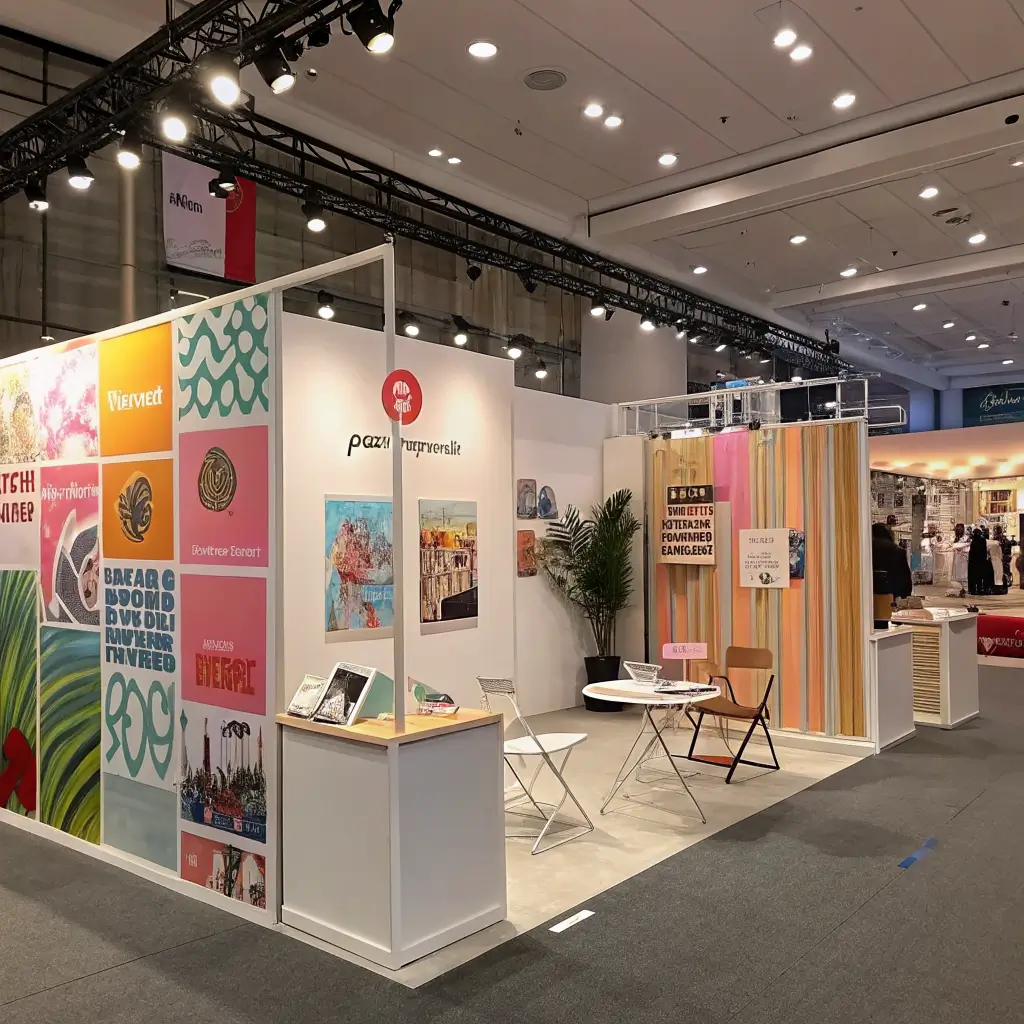
Pop-up shop interiors prioritize maximum impact with minimal investment – these temporary spaces need to capture attention immediately while remaining flexible and portable.
The installation mindset serves pop-ups well. Think modular, transportable, and reusable rather than permanent. Every element should pack flat, assemble quickly, and survive multiple installations. FYI, this approach actually saves money while increasing design flexibility.
Social media appeal drives pop-up success. Create at least one highly photographable moment that customers will share organically. This Instagram-worthy element extends your pop-up’s reach far beyond physical visitors.
Pop-Up Design Strategies
Temporary retail excellence:
- Modular fixtures that transport easily
- Bold visual statements for immediate impact
- Interactive elements encouraging engagement
- Photography opportunities built into design
- Quick assembly without specialized tools
- Brand consistency across multiple locations
Pop-up design suits seasonal retailers, brand activations, and market vendors maximizing temporary opportunities.
9. Bright and Airy Shop Layout Concepts
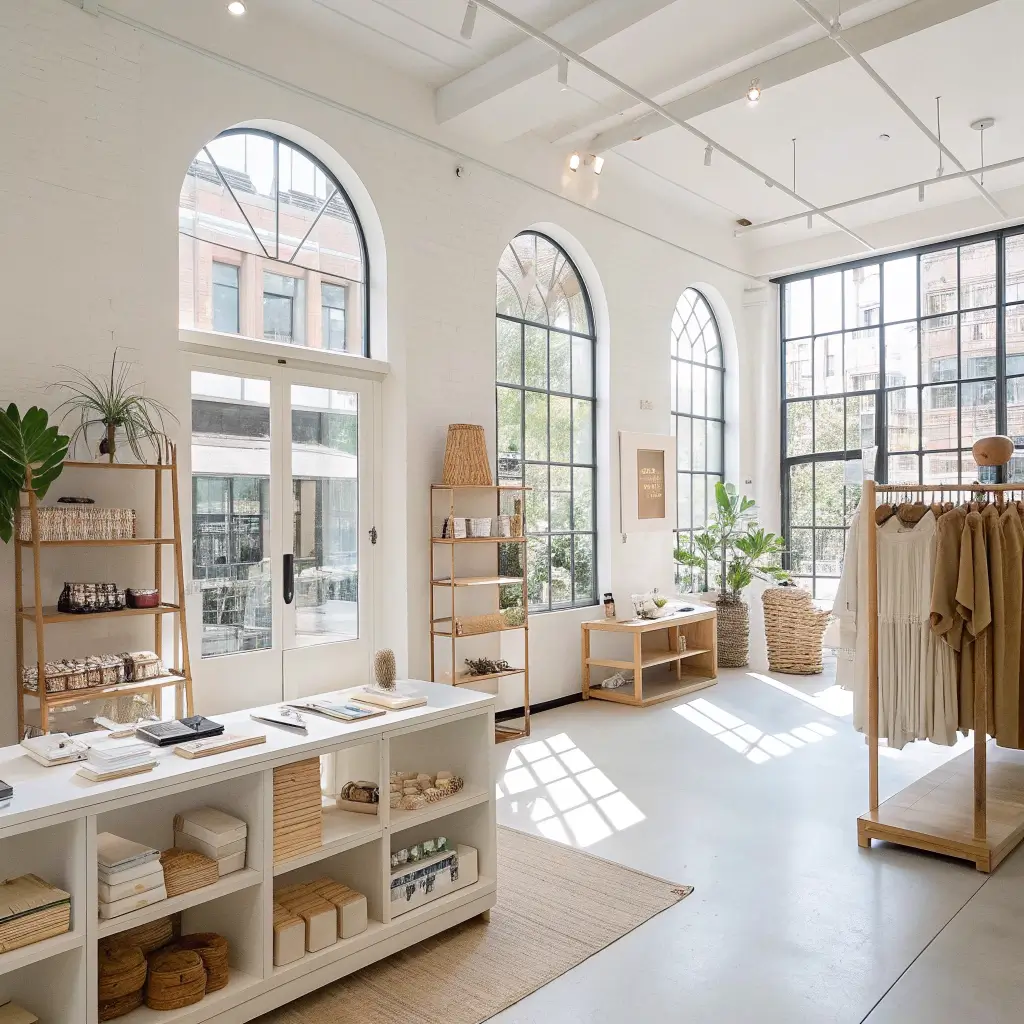
Bright and airy shop interiors create welcoming atmospheres that lift customer moods and encourage exploration. This approach uses light and space to make shopping feel pleasant rather than pressured.
Natural light transforms retail environments completely. Maximize windows, add skylights if possible, and remove anything blocking light from entering your space. A gift shop I consulted for uncovered bricked-over windows, and the revealed natural light increased customer dwell time dramatically.
White and light colors amplify available light. Paint walls, ceilings, and even floors in light tones to bounce illumination throughout your space. The brightness creates a clean, fresh atmosphere that customers associate with quality.
Bright Retail Design Elements
Creating light-filled spaces:
- Maximum natural light exposure
- Light reflective surfaces throughout
- Minimal visual obstructions blocking light
- Strategic mirror placement bouncing light
- Supplemental lighting matching daylight color
- Airy display fixtures that don’t block views
Bright, airy design works especially well for wellness shops, home goods stores, and boutiques selling lifestyle products.
Also Read: 10 Stylish Interior Ceiling Design Ideas and Trendy Room Looks
10. Chic Fashion Store Interior Inspirations
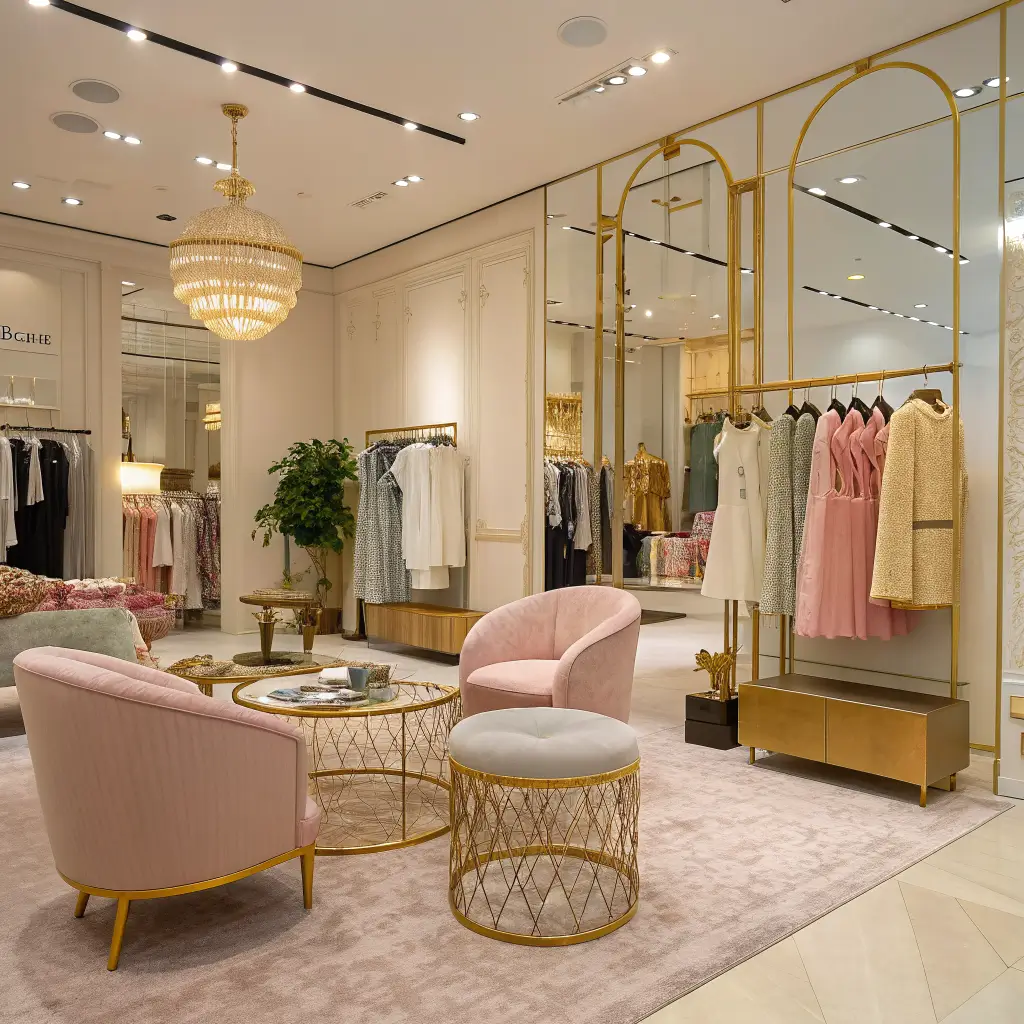
Chic fashion store interiors create runway-worthy environments that elevate your merchandise and inspire customers to see themselves in your clothes.
The fitting room experience often determines sales conversion. Invest heavily in flattering lighting, adequate space, and comfortable seating in fitting areas. I’ve watched customers abandon purchases at mediocre fitting rooms and buy enthusiastically at shops with thoughtfully designed try-on spaces.
Visual merchandising in fashion retail requires constant attention. Rotate displays regularly, create complete outfit vignettes, and maintain impeccable presentation at all times. Fashion customers notice details – wrinkled clothes or dusty surfaces undermine your chic positioning immediately.
Chic Fashion Retail Design
Stylish store elements:
- Exceptional fitting rooms with flattering lighting
- Outfit vignettes suggesting complete looks
- Statement fixtures that feel editorial
- Full-length mirrors throughout the space
- Comfortable seating for shopping companions
- Seasonal updates keeping displays fresh
Chic design is essential for fashion boutiques, accessory shops, and contemporary clothing retailers positioning as style destinations.
Implementing Your Shop Interior Vision
After exploring these ten shop interior design ideas, you’ve probably noticed a common thread: successful retail design always serves the customer experience.
Every choice – from lighting to layouts to materials – should make shopping easier, more enjoyable, and more memorable.
Start by understanding your specific customers. What do they value? What makes them comfortable? What would make them stay longer?
Your shop interior should answer these questions before addressing your personal preferences. IMO, the best shop designs feel like they read customers’ minds :/
Budget constraints don’t excuse poor design. Many impactful changes cost little or nothing – rearranging fixtures, improving lighting, decluttering displays, and adding plants can transform spaces without major investment.
Start with changes you can afford, then build toward larger improvements.
Test and iterate constantly. Watch how customers move through your space, where they linger, what they touch, and where they avoid.
This observation reveals design failures that intuition misses and opportunities that strategic thinking overlooks.
Remember that shop interior design directly impacts your bottom line. Every customer who stays longer has more opportunity to buy. Every visitor who photographs your space provides free marketing.
Every person who feels welcome becomes a potential repeat customer and brand advocate.
Your shop interior tells a story about your brand before you speak a single word. Make sure that story attracts the customers you want, communicates the values you hold, and creates experiences worth returning for.
Because in retail, the container matters almost as much as what’s inside – and the shops that understand this truth are the ones that thrive while others wonder what went wrong.