12 Chic Lobby Interior Design Ideas with Statement Decor
- Home Interior Design
 Ben
Ben- 0
- 39 minutes read
Your lobby has about seven seconds to make an impression before visitors form their opinion of your entire building. Seven seconds. That’s less time than it takes to order coffee, yet that initial judgment sticks.
I watched a potential client walk into our office building’s outdated lobby, visibly grimace, and I knew we’d lost their business before the meeting even started.
The lobby serves as your building’s handshake – and nobody trusts a weak handshake. Whether you’re designing for hotels, offices, residential buildings, or any other space, your lobby communicates who you are and what visitors can expect.
A stunning lobby builds confidence, creates comfort, and sets expectations that the rest of the experience will deliver.
These twelve lobby interior design ideas cover every style from minimalist elegance to tropical paradise.
Each concept addresses different functional needs while creating memorable first impressions that last far longer than those critical seven seconds.
1. Modern Minimalist Hotel Lobby Design
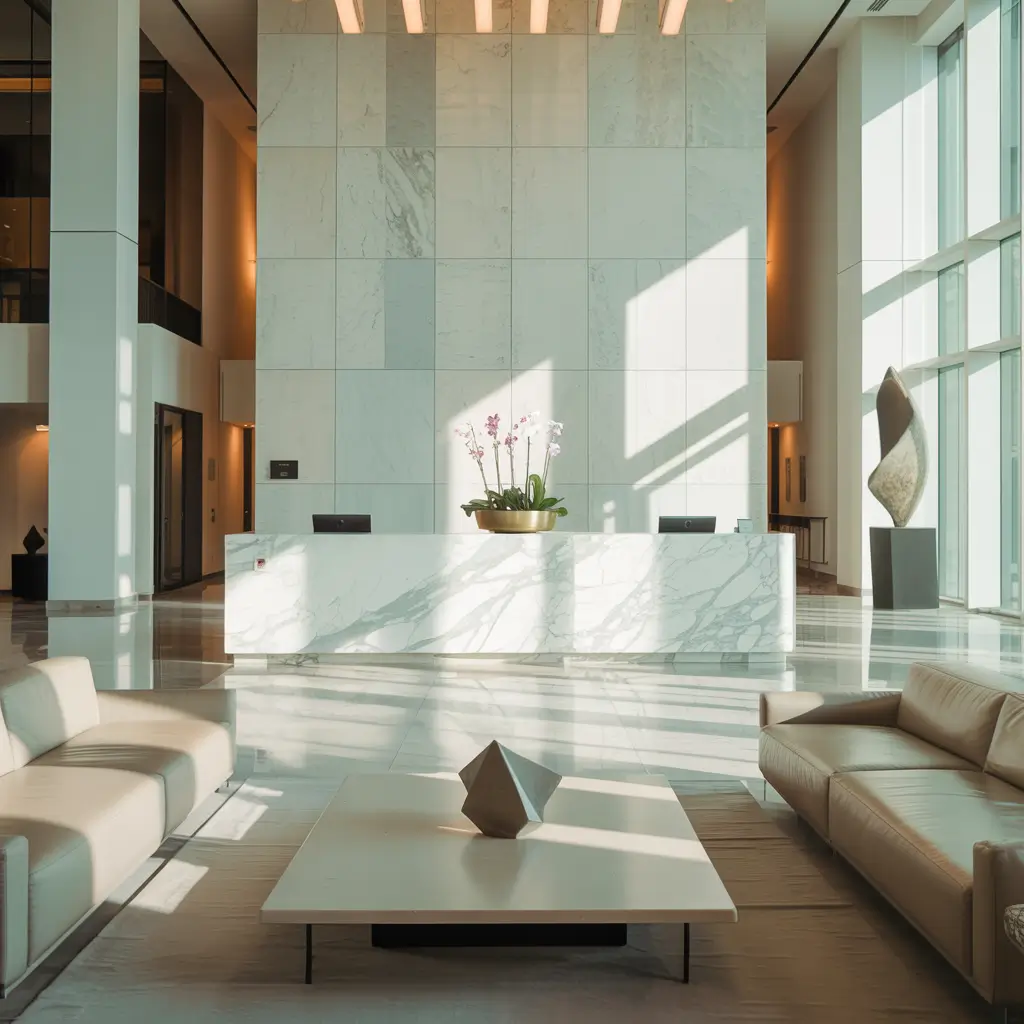
Modern minimalist hotel lobbies prove that luxury often lies in restraint rather than excess. This approach creates sophisticated spaces through careful editing, quality materials, and intentional emptiness.
The beauty of minimalist lobbies comes from what you leave out. Every element must earn its place through either function or exceptional aesthetic contribution. I stayed at a minimalist hotel where the lobby contained exactly one stunning sculpture, two perfect sofas, and a reception desk. Nothing else. The simplicity itself felt luxurious.
Material quality becomes paramount when you strip away decorative elements. Polished concrete, natural stone, quality metals, and fine textiles speak for themselves without competing decorations. Cheap materials in minimalist spaces look exactly that – cheap.
Minimalist Lobby Essentials
Creating impactful simplicity:
- Limited furniture pieces of exceptional quality
- Generous negative space as intentional design
- Neutral color palette without visual competition
- Single focal point commanding attention
- Natural light maximized throughout
- Hidden operational elements maintaining clean aesthetics
Minimalist design works exceptionally well for boutique hotels, design-forward businesses, and luxury residential buildings wanting to communicate sophisticated simplicity.
2. Cozy Residential Lobby Inspiration
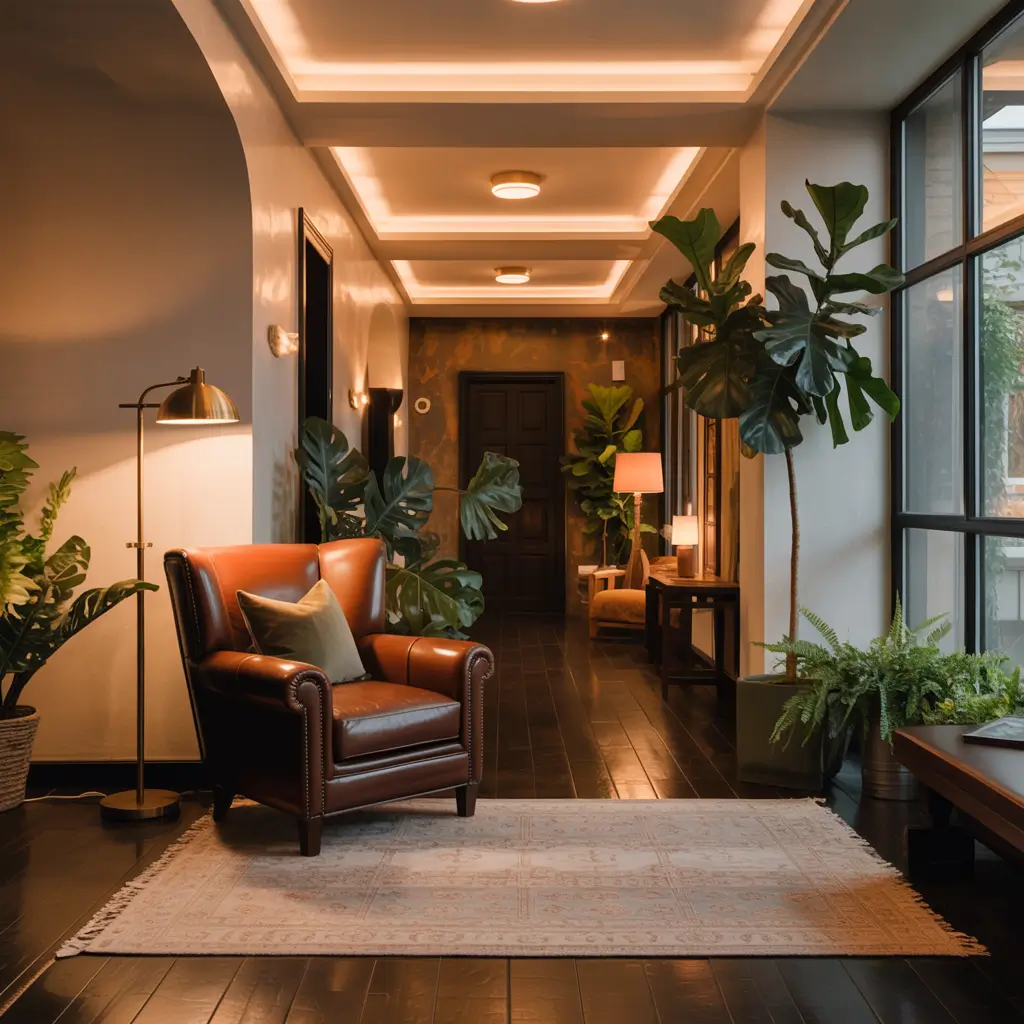
Cozy residential lobbies create welcoming transitions from public streets to private homes. This design approach recognizes that residents need to decompress between outside chaos and home sanctuary.
The seating strategy defines cozy residential lobbies. Comfortable arrangements that invite lingering – a reading chair by the window, a settee for waiting guests – transform lobbies from pass-through spaces to brief resting points. My apartment building’s lobby has two armchairs by a fireplace, and I’ve watched neighbors become friends while chatting there.
Scale matters enormously in residential lobbies. Furniture and decorations should feel domestic rather than institutional – this isn’t a hotel lobby trying to impress strangers but a shared living room for neighbors.
Residential Lobby Warmth
Building community spaces:
- Comfortable seating arranged for conversation
- Warm lighting from multiple sources
- Residential-scale furniture avoiding commercial coldness
- Personal touches reflecting building character
- Practical elements – mail area, package storage
- Seasonal decorations creating ongoing interest
Cozy design appeals to apartment buildings, condominiums, and senior living communities where residents want welcoming daily transitions.
3. Luxurious Corporate Office Lobby Ideas
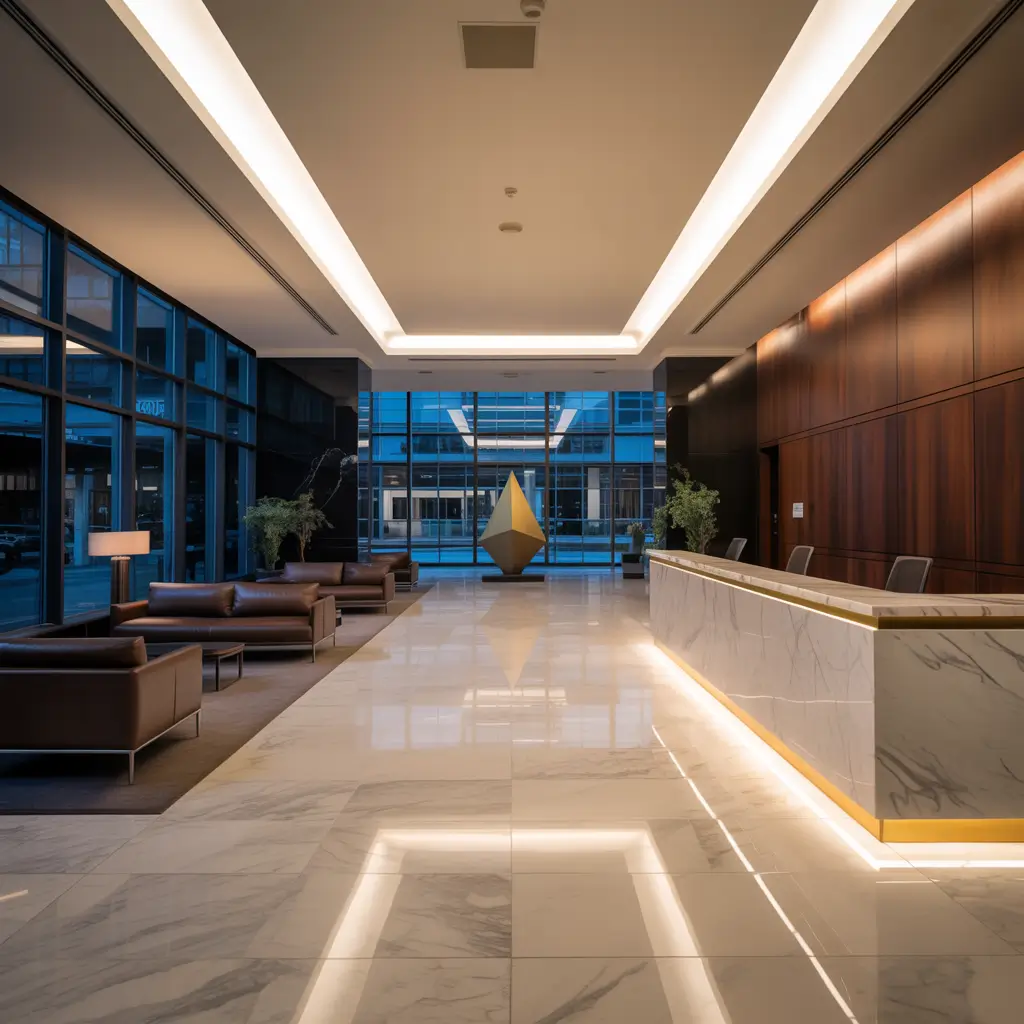
Luxurious corporate lobbies communicate success, stability, and premium quality to clients, partners, and potential employees. This design approach treats the lobby as a three-dimensional business card.
The reception desk becomes the focal point of corporate lobbies. Custom millwork, quality materials, and strategic placement ensure the desk commands attention while supporting efficient visitor management. One corporate lobby I designed featured a floating reception desk backed by a living wall – clients commented on it before every meeting.
Art selection in corporate lobbies requires thoughtful curation. Original pieces or quality reproductions that reflect company values tell visitors who you are without saying a word. Generic hotel-style art communicates nothing meaningful.
Corporate Lobby Investment Areas
Creating business impact:
- Statement reception desk as the hero element
- Branded elements subtly incorporated
- Quality seating for waiting visitors
- Professional artwork reflecting company culture
- Premium materials throughout visible areas
- Technology integration for modern impressions
Corporate lobby design benefits law firms, financial institutions, and premium service companies where first impressions directly affect business outcomes.
Also Read: 10 Inspiring Spa Interior Design Ideas for Serene Ambiance
4. Scandinavian Style Lobby Concepts
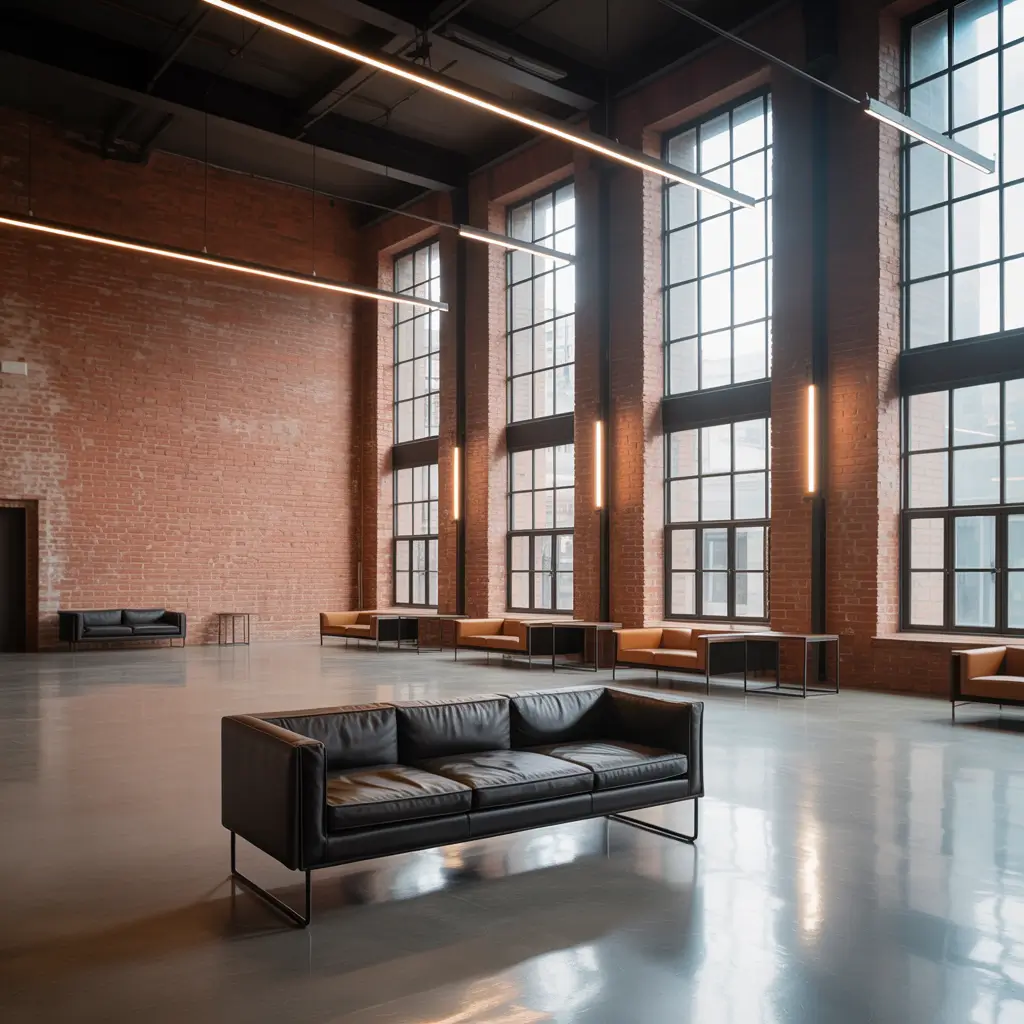
Scandinavian style lobbies bring Nordic warmth and functionality to commercial spaces. This approach creates welcoming environments through natural materials, soft lighting, and human-centered design.
Light wood dominates Scandinavian lobby aesthetics. Birch, oak, and pine in natural finishes create warmth that darker materials or painted surfaces cannot achieve. The wood grains themselves become decoration, eliminating the need for additional ornament.
The hygge philosophy influences every design decision. Comfort, coziness, and contentment guide choices about seating, lighting, and spatial arrangement. Visitors should feel genuinely welcomed, not just processed.
Scandinavian Lobby Elements
Building Nordic welcome:
- Light wood finishes on floors, walls, and furniture
- Natural fiber textiles in neutral tones
- Soft ambient lighting with multiple sources
- Plants and greenery adding life
- Clean lines in all furniture choices
- Functional simplicity without coldness
Scandinavian design works beautifully for wellness businesses, creative agencies, and Nordic-inspired hospitality brands seeking approachable sophistication.
5. Sleek Industrial Lobby Designs
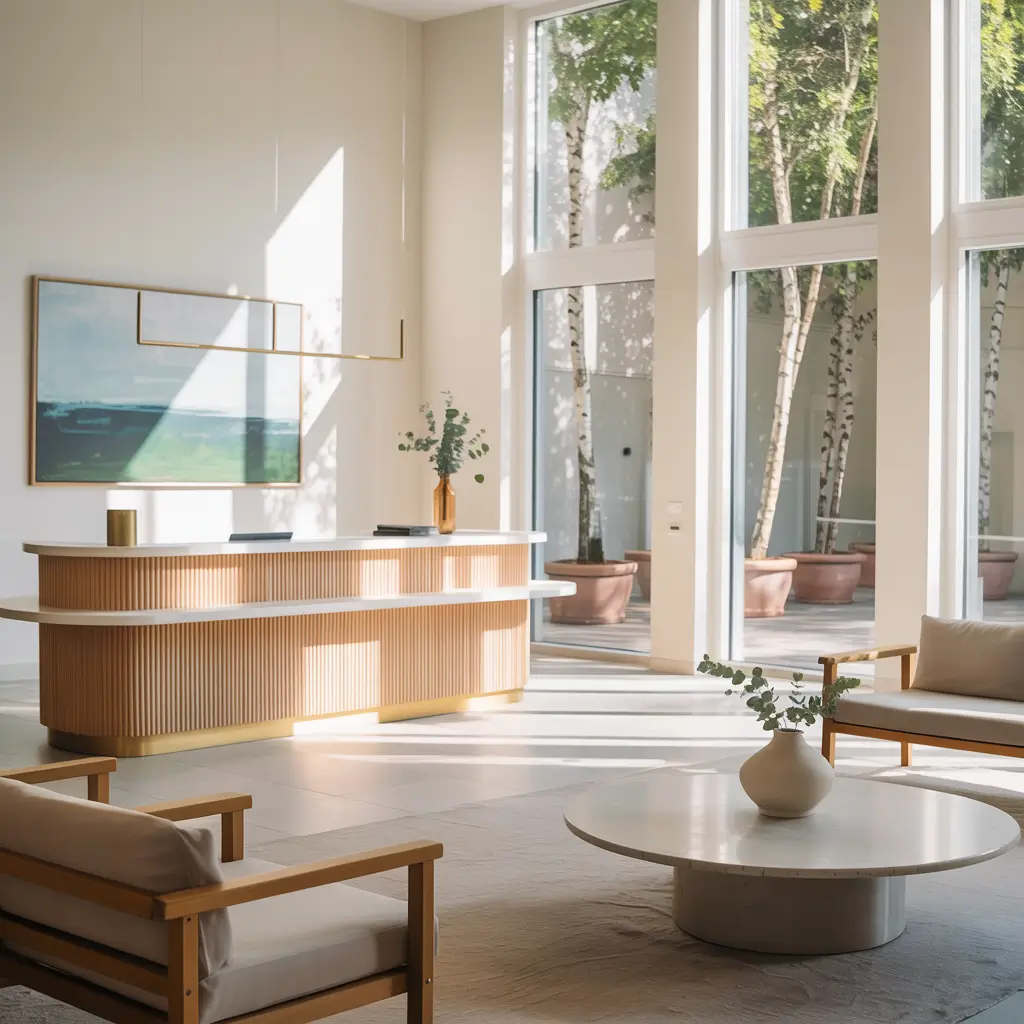
Sleek industrial lobbies transform raw materials into refined statements. This design approach celebrates authenticity through exposed elements, honest materials, and metropolitan edge.
The industrial palette includes typically hidden materials. Exposed concrete, visible ductwork, steel beams, and brick walls become features rather than problems requiring concealment. My favorite industrial lobby kept the building’s original freight elevator doors as the backdrop for reception – industrial history as design element.
Warmth prevents industrial lobbies from feeling cold or unwelcoming. Leather seating, wood accents, and strategic soft lighting balance hard industrial materials with comfortable human touches.
Industrial Lobby Components
Creating urban authenticity:
- Exposed structural elements as features
- Raw material surfaces – concrete, metal, brick
- Warm lighting softening industrial hardness
- Leather and wood adding comfort
- Vintage industrial objects as decoration
- Open ceiling plans revealing infrastructure
Industrial design attracts tech companies, creative agencies, and converted warehouse spaces embracing urban aesthetic authenticity.
6. Vibrant Colorful Lobby Spaces
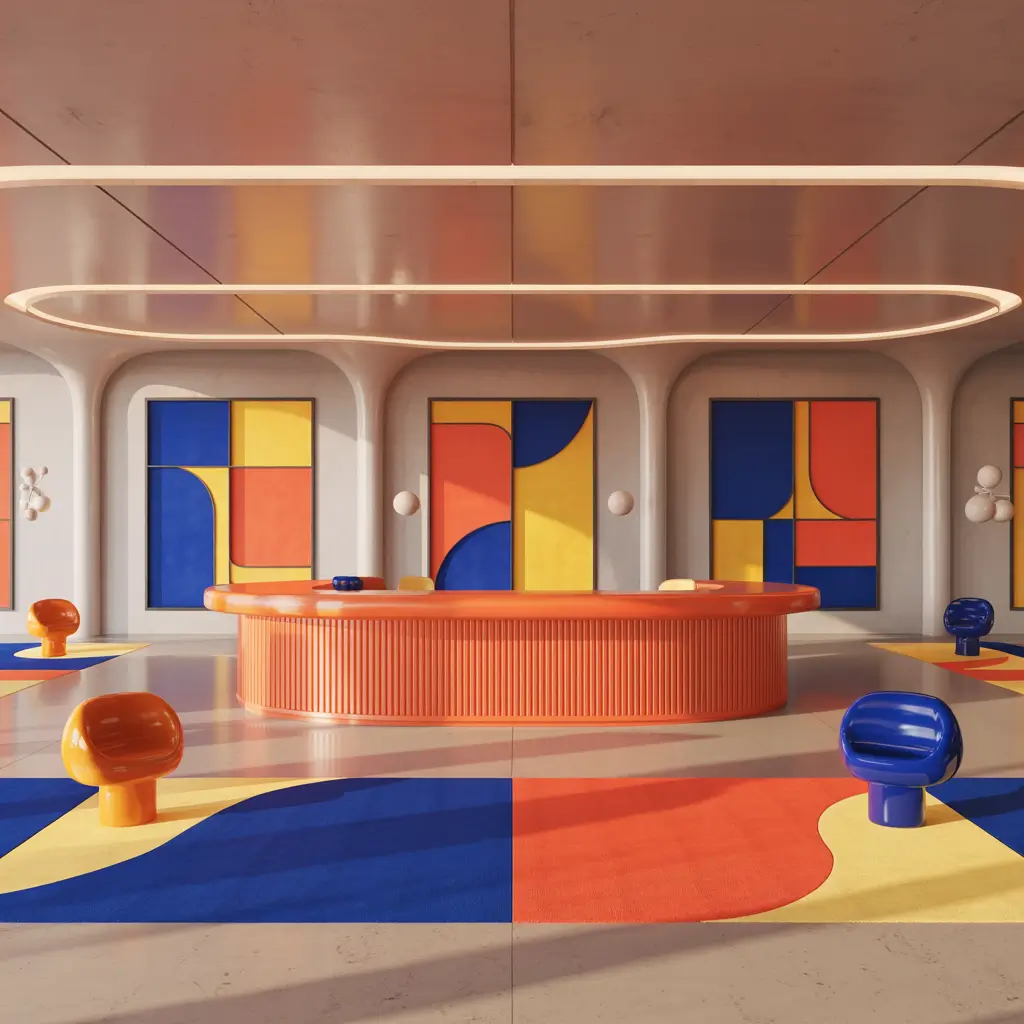
Vibrant colorful lobbies announce that boldness and creativity define the experiences beyond. This design approach uses color psychology to energize, inspire, and differentiate.
Color commitment separates vibrant lobbies from timid attempts. Go bold or go home – half-hearted color efforts look like accidents rather than design decisions. One children’s museum lobby I visited used floor-to-ceiling primary colors, and kids literally ran inside with excitement.
Strategic color placement prevents chaos. Choose one or two dominant colors with supporting neutrals rather than rainbows competing for attention. Even vibrant spaces need visual rest areas.
Colorful Lobby Strategies
Creating energetic spaces:
- Bold color commitment without half-measures
- Strategic color zoning preventing visual chaos
- Neutral rest areas balancing intensity
- Quality materials in chosen colors
- Lighting supporting colors rather than washing out
- Brand alignment in color selection
Colorful design suits creative businesses, children’s facilities, and hospitality brands wanting memorable differentiation.
Also Read: 12 Chic Minimalist Interior Design Ideas for Sleek Living
7. Elegant Marble & Gold Lobby Interiors
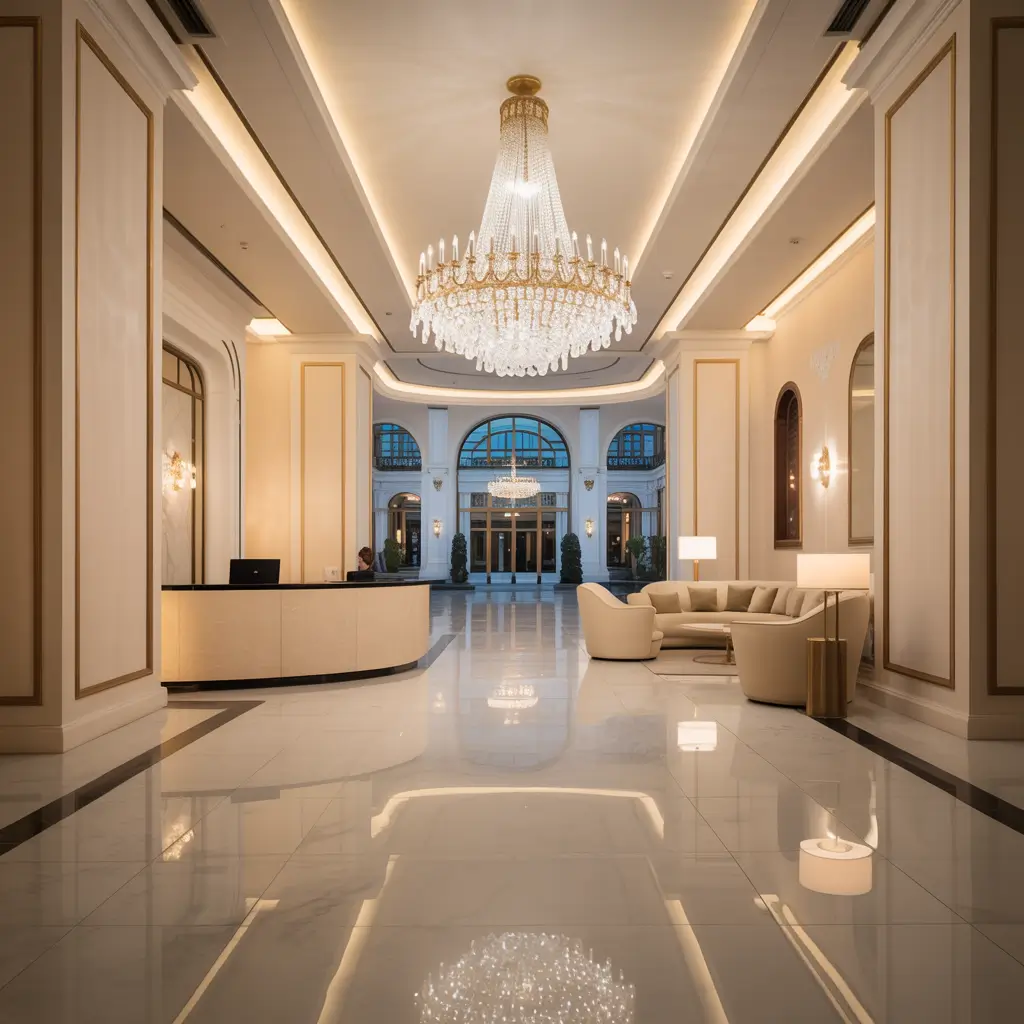
Elegant marble and gold lobbies communicate timeless luxury through classical materials. This approach creates prestigious environments that immediately signal premium quality.
Marble selection determines the entire aesthetic. Carrara for classic elegance, Calacatta for drama, Emperador for warmth – each marble type creates distinct atmospheres. The veining patterns themselves become artwork requiring no additional decoration.
Gold elements require restraint to maintain elegance. Brushed or aged gold finishes on fixtures, frames, and accents add warmth without venturing into gaudy territory. The goal is understated luxury, not Las Vegas casino.
Marble & Gold Design Elements
Building prestigious environments:
- Quality marble on floors, walls, or accent features
- Gold-tone fixtures in refined finishes
- Crystal or glass lighting as focal points
- Neutral supporting elements letting marble shine
- Fresh flowers adding life to stone surfaces
- Impeccable maintenance protecting investments
Marble and gold design benefits luxury hotels, high-end residential buildings, and prestigious corporate headquarters commanding premium positioning.
8. Small Space Lobby Layout Solutions
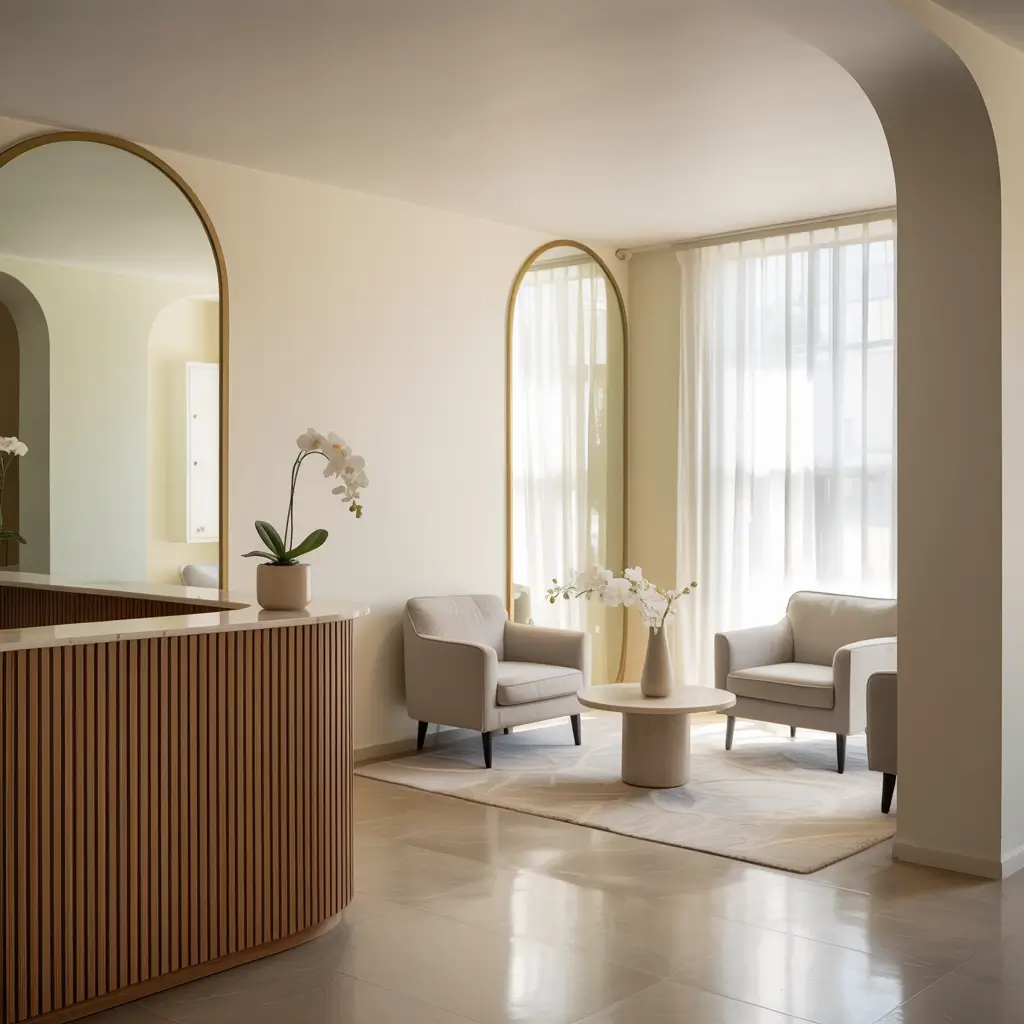
Small space lobby design proves that limited square footage demands smarter design, not smaller ambitions. These strategies maximize impact within constrained footprints.
Vertical thinking expands small lobbies dramatically. Wall-mounted elements, tall plants, and dramatic lighting draw eyes upward, creating the illusion of more space. My smallest lobby project felt surprisingly spacious because we used a floor-to-ceiling mirror that doubled visual depth.
Furniture selection requires ruthless editing in small lobbies. Every piece must justify its footprint through either essential function or significant aesthetic contribution. If something serves neither purpose, it doesn’t belong.
Small Lobby Maximization
Expanding limited spaces:
- Vertical elements drawing attention upward
- Strategic mirrors multiplying visual space
- Light colors expanding perceived dimensions
- Multi-functional furniture earning floor space
- Hidden storage reducing visible clutter
- Scaled proportions appropriate to space
Small space solutions help boutique businesses, historic buildings, and urban locations with limited entrance footprints.
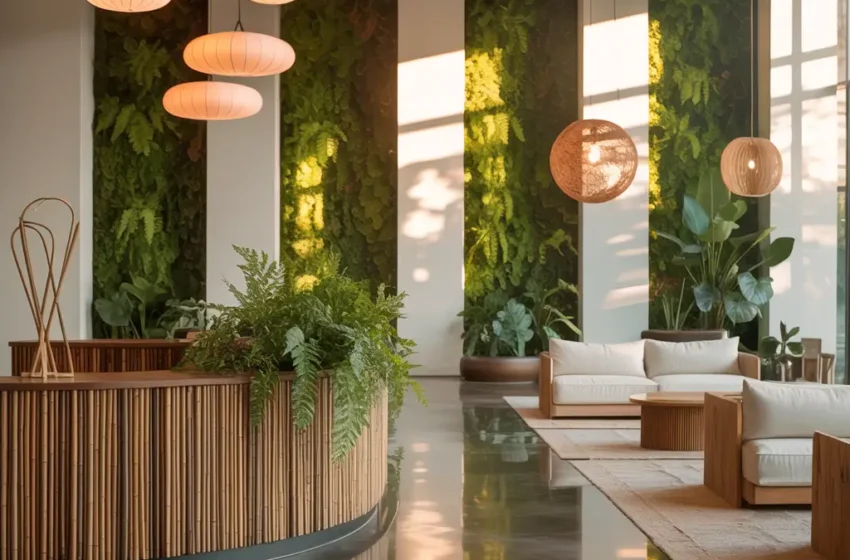
9. Eco-Friendly Sustainable Lobby Designs
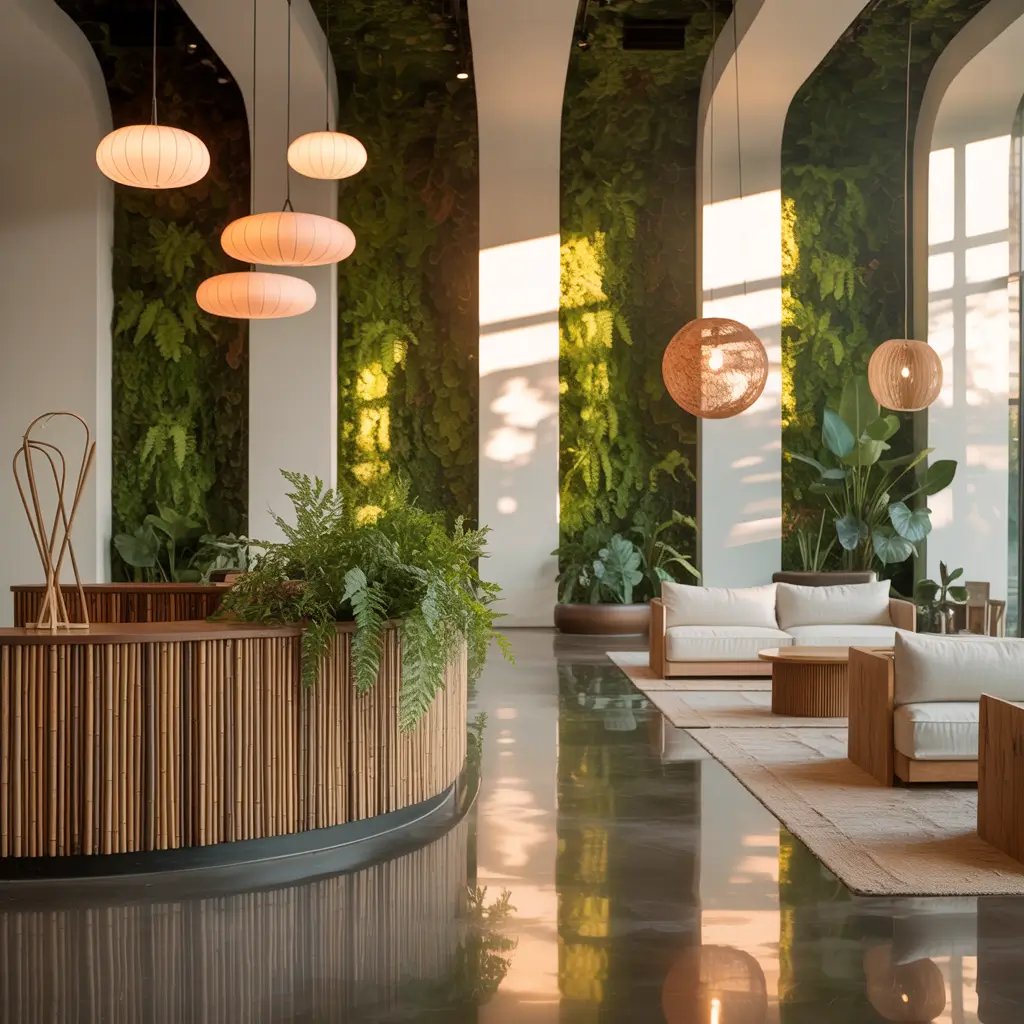
Eco-friendly lobby designs demonstrate environmental values through visible material choices. This approach attracts the growing population seeking alignment between their values and the spaces they inhabit.
Material authenticity matters to environmentally conscious visitors. Reclaimed wood, recycled materials, and certified sustainable sources should be genuine, not greenwashed. Increasingly, visitors research claims – fake sustainability damages credibility.
Living elements provide both aesthetics and function. Green walls purify air, potted plants add oxygen, and natural light reduces energy consumption while communicating environmental commitment visually.
Sustainable Lobby Features
Building environmental credibility:
- Certified sustainable materials throughout
- Living walls or abundant plants purifying air
- Natural daylight maximized by design
- Energy-efficient lighting and systems
- Low-VOC finishes ensuring air quality
- Visible sustainability stories through signage
Sustainable design attracts green-certified buildings, wellness brands, and environmentally positioned companies targeting conscious consumers.
Also Read: 10 Inspiring Camper Interior Design Ideas and Multi-Functional Furniture
10. Contemporary Art-Focused Lobby Ideas
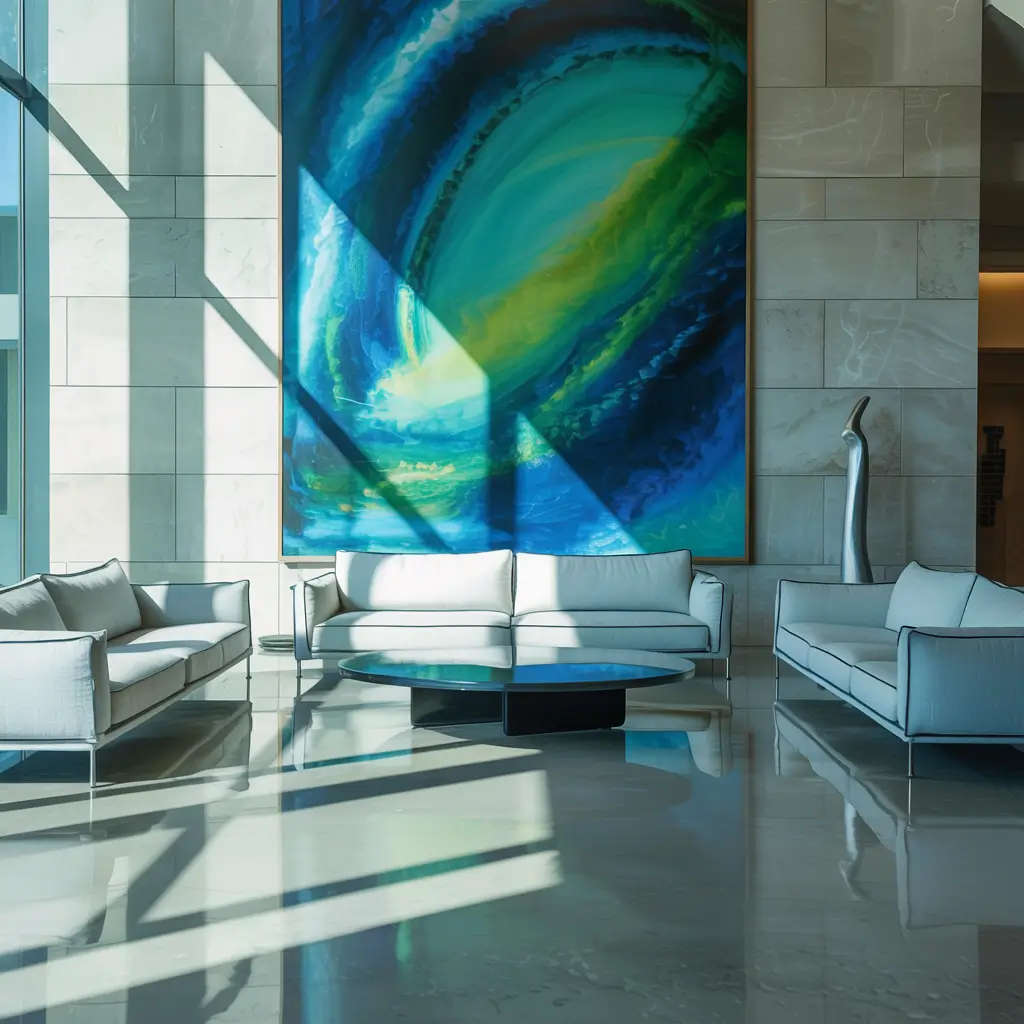
Contemporary art-focused lobbies transform entrance spaces into gallery experiences. This approach uses rotating or permanent art collections as primary design elements.
Art selection defines the entire lobby atmosphere. Commission original pieces, partner with galleries, or build permanent collections that communicate organizational identity through creative expression. FYI, the art selection process often reveals organizational values more clearly than any brand guidelines.
Display methods affect art impact significantly. Proper lighting, adequate spacing, and appropriate mounting ensure artwork receives gallery-quality presentation. Bad lighting can ruin masterpieces.
Art-Focused Lobby Components
Creating gallery experiences:
- Statement artwork as primary focal points
- Gallery-quality lighting showcasing pieces
- Rotating exhibitions maintaining fresh interest
- Artist information adding educational value
- Minimal competing elements letting art dominate
- Climate control protecting art investments
Art-focused design suits cultural institutions, creative agencies, and hospitality brands wanting memorable cultural positioning.
11. Tropical Resort Lobby Inspiration
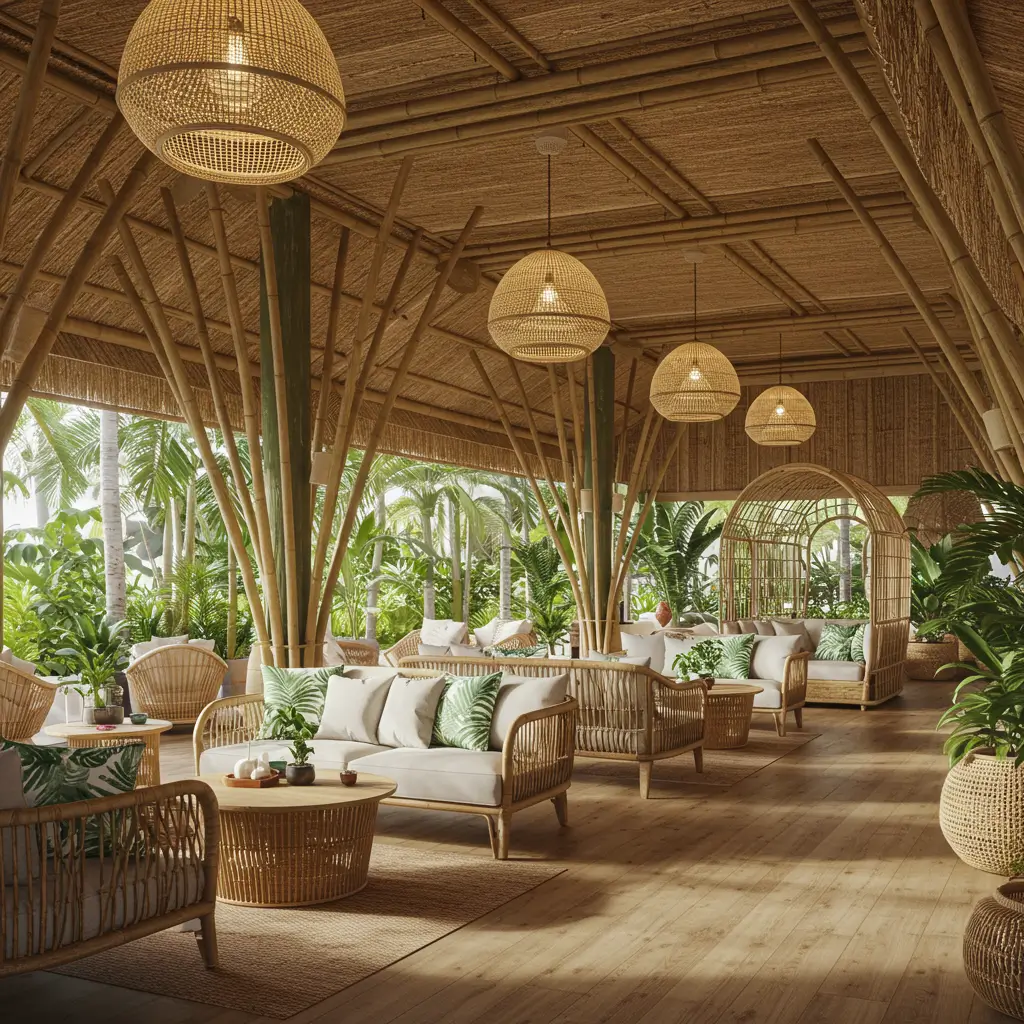
Tropical resort lobbies transport visitors to paradise from the moment they arrive. This design approach creates immersive vacation atmospheres regardless of actual geographic location.
Indoor-outdoor flow defines tropical lobby success. Open-air elements, visible gardens, and seamless transitions blur boundaries between interior and exterior spaces. The best tropical lobby I experienced had no walls – just a roof structure over reception surrounded by gardens.
Plant life drives tropical authenticity. Palms, tropical flowers, and lush greenery create the sensory density that defines paradise. Air conditioning systems must accommodate plant needs alongside guest comfort.
Tropical Lobby Elements
Building paradise entrances:
- Abundant tropical plants creating green density
- Natural materials – bamboo, teak, rattan
- Water features adding sound and movement
- Open-air elements connecting to outdoors
- Warm lighting mimicking golden sunshine
- Tropical scents completing sensory immersion
Tropical design works for resorts, vacation rentals, and businesses seeking destination-style atmospheres IMO.
12. Chic Reception Area with Statement Lighting
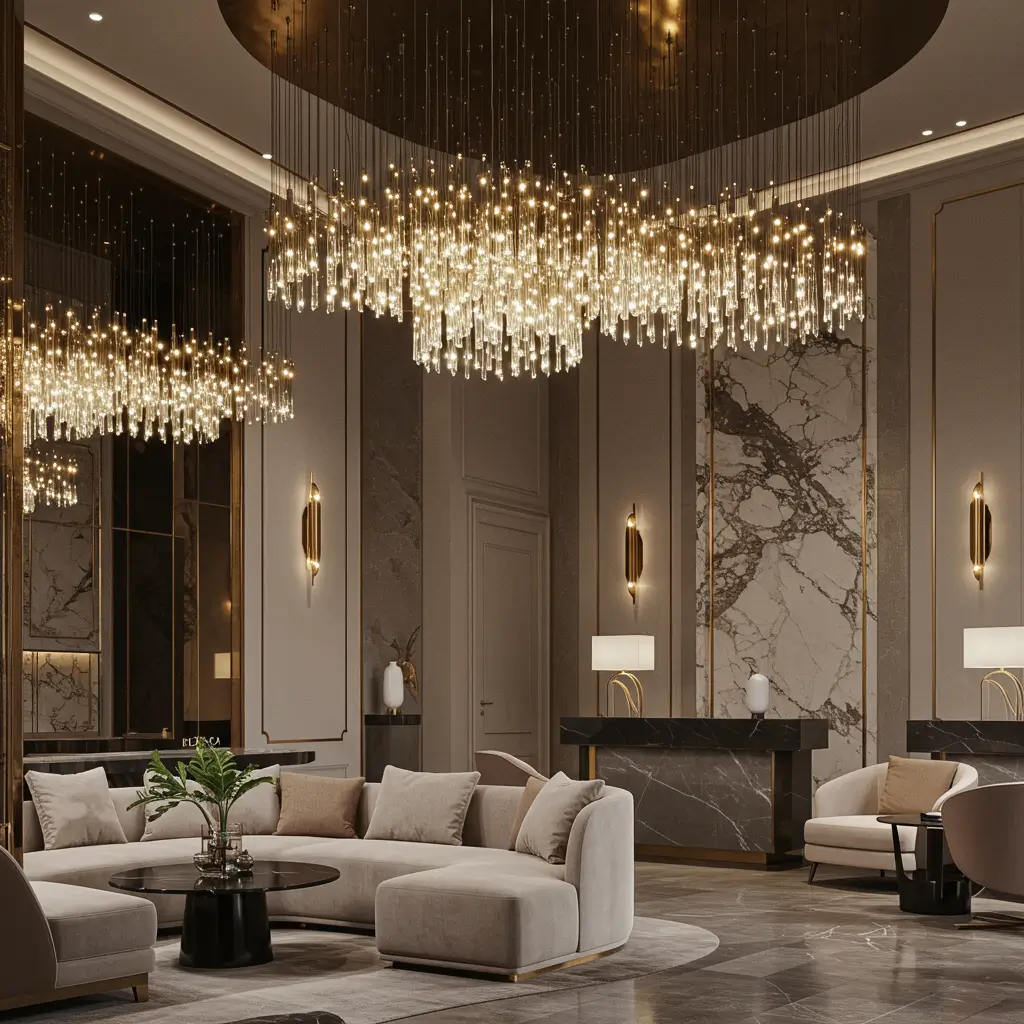
Chic reception areas with statement lighting use dramatic illumination as primary design elements. This approach recognizes that lighting shapes atmosphere more powerfully than any other single element.
The statement fixture commands immediate attention. Chandeliers, sculptural pendants, or custom installations become focal points that define the entire lobby character. One hotel lobby I visited featured a cascading crystal installation that took my breath away before I noticed anything else.
Supporting lighting requires equal consideration. Task lighting at reception, ambient lighting for seating areas, and accent lighting for artwork layer together to create complete lighting scenes that serve both function and atmosphere.
Statement Lighting Strategies
Creating dramatic impact:
- Hero fixture as primary focal point
- Layered lighting serving different functions
- Dimmable systems allowing mood adjustment
- Natural light integration with artificial sources
- Architectural lighting emphasizing features
- Energy efficiency despite dramatic impact
Statement lighting benefits boutique hotels, fashion brands, and entertainment venues where dramatic first impressions matter.
Creating Your Perfect Lobby
After exploring these twelve lobby interior design ideas, you’ve probably noticed that successful lobbies always balance aesthetics with function.
A stunning lobby that confuses visitors or fails to support operations isn’t truly successful.
Start by understanding your specific lobby’s purpose. Who enters this space, and what do they need? Business visitors need efficient check-in and comfortable waiting.
Residents need welcoming transitions home. Hotel guests need impressive arrival experiences. Design for your actual users, not theoretical ideals.
Traffic flow analysis should precede aesthetic decisions. Map how people move through your lobby – where do they enter, where do they need to go, where might they wait?
Good design supports intuitive movement rather than fighting against natural paths.
Budget allocation requires strategic thinking. Invest heavily in areas visitors touch and see closely – reception desk surfaces, seating upholstery, and entrance flooring. Background areas can use more economical solutions without compromising visitor experience.
Maintenance implications influence material longevity. Choose finishes that maintain beauty despite heavy traffic – some gorgeous materials become maintenance nightmares in high-use lobby environments.
Lighting deserves obsessive attention. The same lobby looks completely different under various lighting conditions – design for morning energy, afternoon calm, and evening ambiance through controllable systems.
Sound often gets overlooked in lobby design. Acoustic treatments, background music, and sound-absorbing materials affect visitor comfort as much as visual elements.
Your lobby tells visitors who you are before anyone speaks to them. Make sure that story matches the experience you want to deliver, the values you want to communicate, and the impression you want visitors to carry forward.
Because in the end, great lobby design isn’t about trends or photo opportunities – it’s about creating spaces where first impressions become lasting positive memories :/