12 Inspiring Interior Design Sketches Ideas for Cozy Spaces
- Home Interior Design
 Ben
Ben- 0
- 39 minutes read
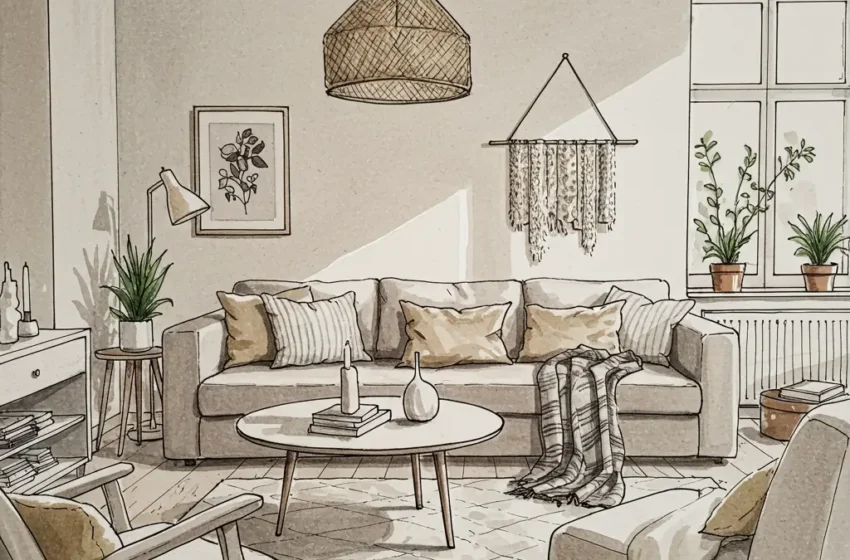
Staring at an empty room and trying to imagine furniture placement is like trying to do algebra in your head – theoretically possible, but why torture yourself?
I learned this lesson after attempting to “wing it” with my living room redesign and ending up with a sofa blocking the only natural light source. Rookie mistake that could’ve been avoided with literally five minutes of sketching.
Interior design sketches aren’t just for professionals with fancy degrees and expensive markers. They’re your blueprint for avoiding expensive furniture mistakes, testing wild ideas without commitment, and communicating your vision to contractors who otherwise interpret “modern” as “whatever’s on sale.”
After sketching dozens of room layouts (some brilliant, many terrible), I’ve discovered that putting pencil to paper saves both money and regret.
These twelve interior design sketch ideas will guide you through creating visual plans for every space in your home.
Whether you’re working with graph paper and a pencil or using digital tools, these sketching approaches will help you design with confidence instead of crossing your fingers and hoping that couch fits.
1. Minimalist Living Room Sketch Ideas
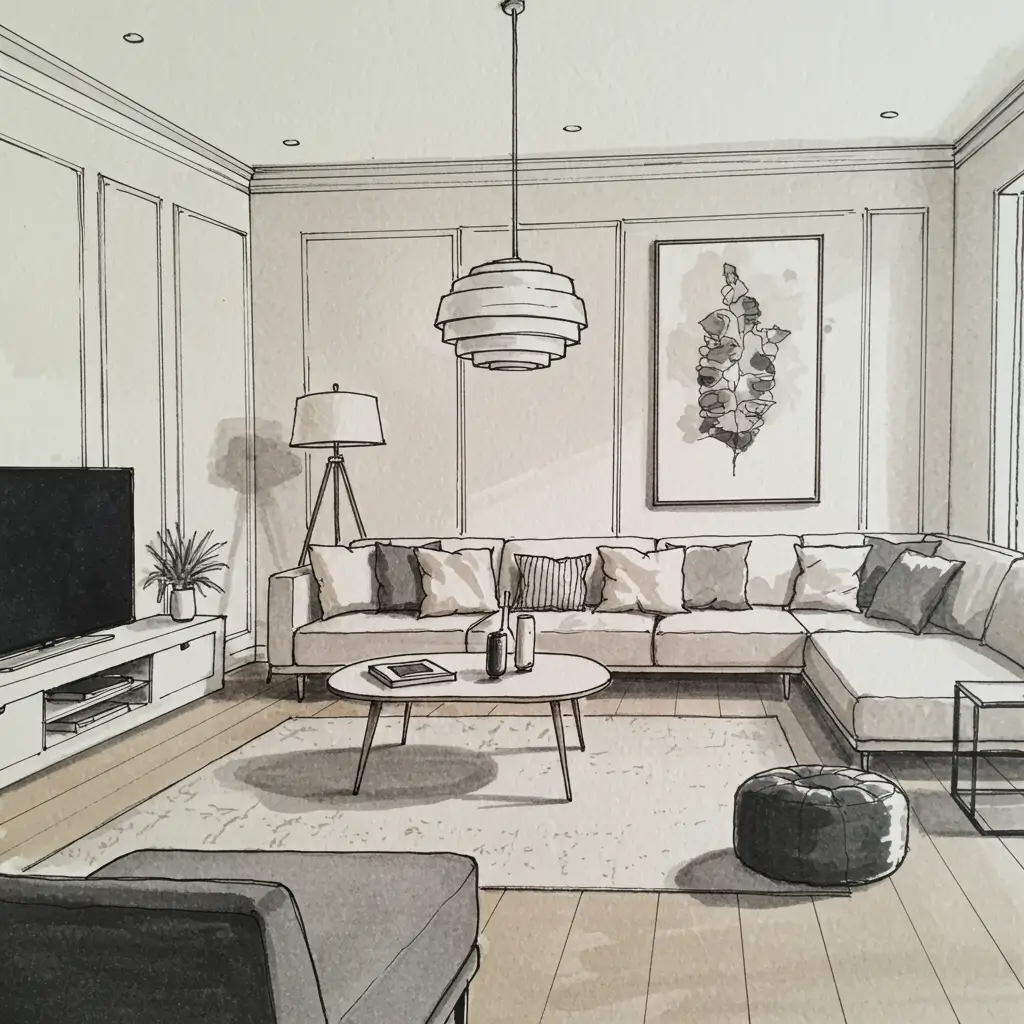
Minimalist living room sketches require drawing less while planning more – the ultimate design paradox. This sketching approach focuses on essential elements, negative space, and the precise placement of each carefully chosen piece.
The key to minimalist sketching lies in restraint. Draw only what will actually exist in the space – no decorative clutter, no “maybe” furniture pieces, no aspirational items. My first minimalist sketch had about twelve items on it; I edited down to six, and the room finally made sense.
Scale becomes critically important in minimalist sketches. Each piece must justify its footprint through either function or exceptional beauty. Sketch furniture to exact measurements, note sightlines, and mark circulation paths to ensure the minimalism feels intentional rather than empty.
Minimalist Sketch Essentials
Key elements to include:
- Precise furniture dimensions with measurements
- Clear circulation paths marked throughout
- Window and light source indicators
- Negative space zones intentionally preserved
- Focal point identification (fireplace, view, etc.)
- Material notes for key pieces
Minimalist sketches teach you that every line you draw represents a decision – and sometimes the best decision is drawing nothing at all.
2. Cozy Bedroom Layout Sketches
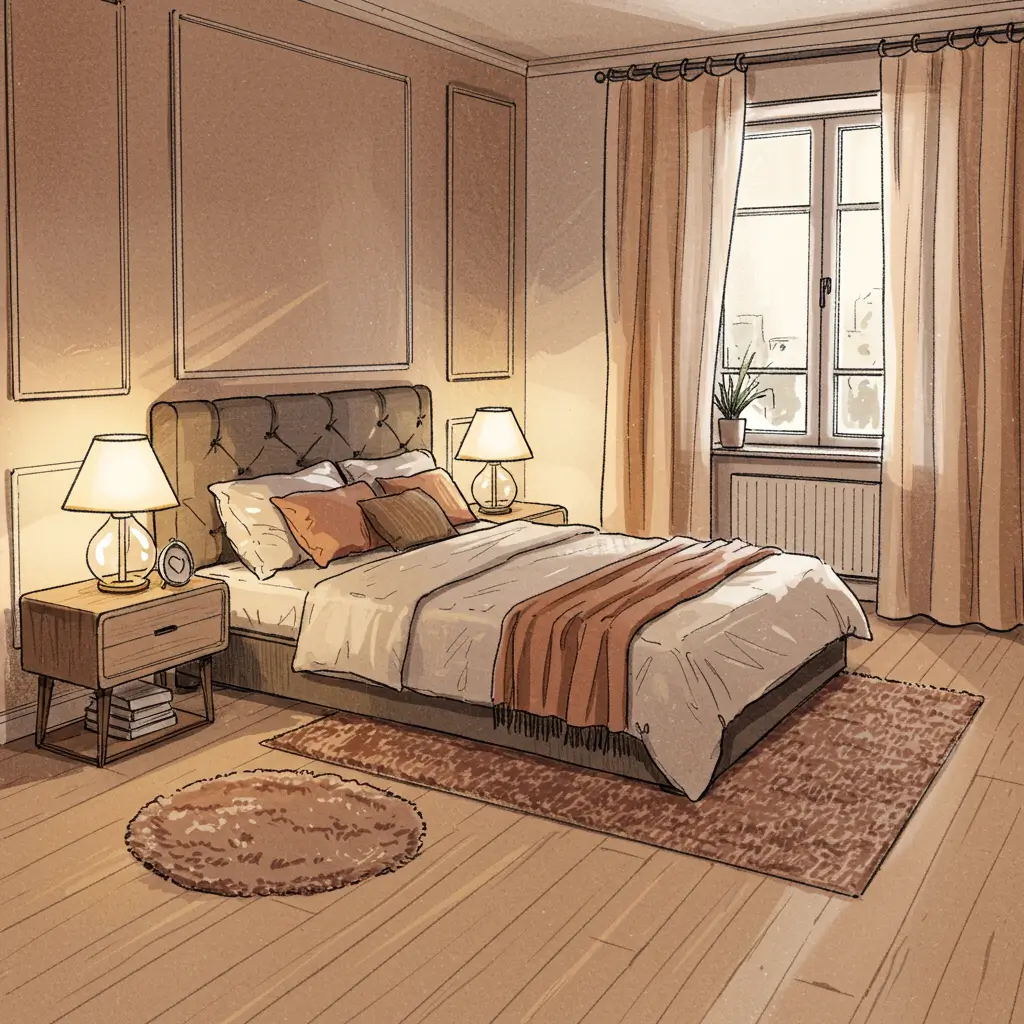
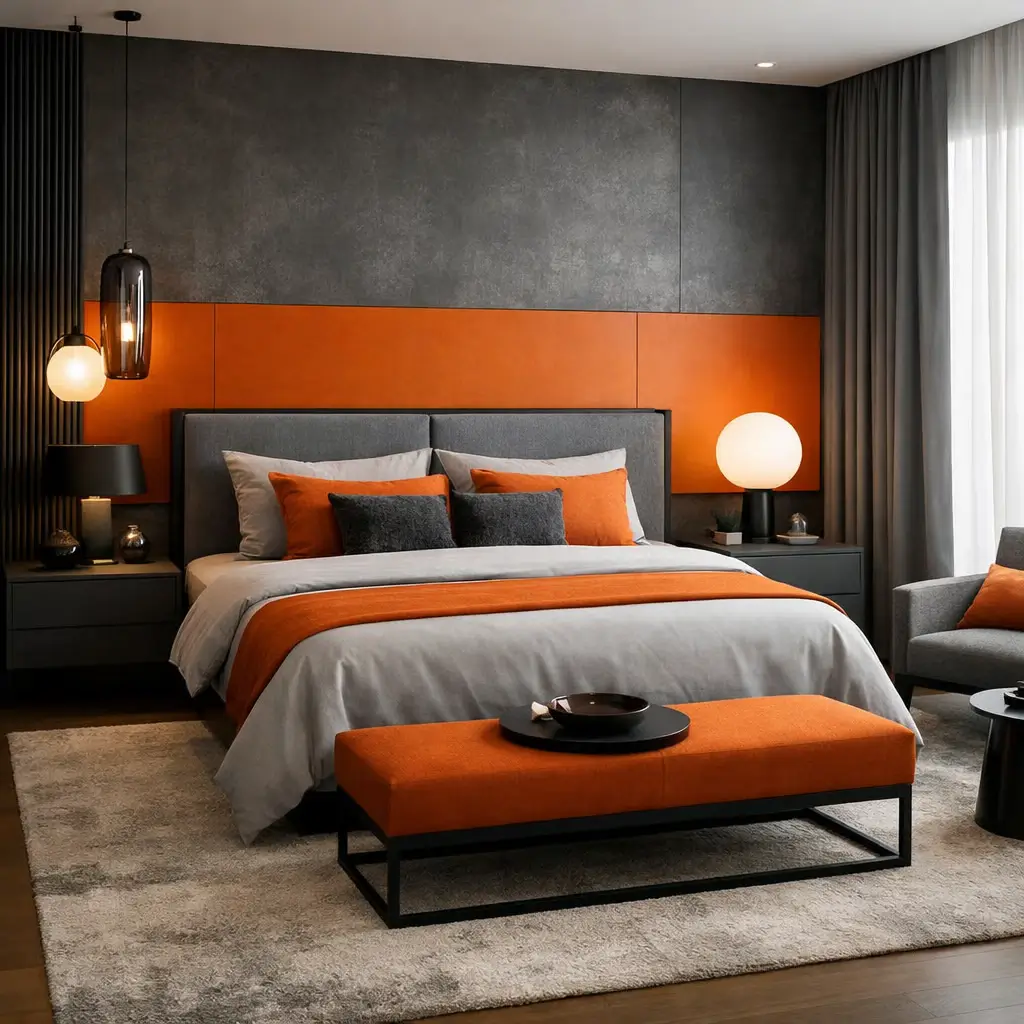
Cozy bedroom sketches prioritize comfort over cleverness, creating spaces that support rest rather than impressing Instagram. This sketching style focuses on bed placement, layered lighting, and creating intimate zones.
The bed placement determines everything in bedroom sketches. Position it first, then build the room around it – not the other way around. I spent an embarrassing amount of time sketching beds in every possible position before discovering that centering it on the longest wall was obvious for a reason.
Lighting layers show up clearly in good bedroom sketches. Mark overhead lights, bedside lamps, and ambient lighting separately to ensure you create multiple mood options. Nobody wants only harsh overhead lighting when they’re trying to wind down.
Bedroom Sketch Components
Essential bedroom elements:
- Bed placement with headboard orientation
- Nightstand positions and table lamp heights
- Closet access paths remaining clear
- Window treatment notes for light control
- Rug placement defining zones
- Electrical outlet locations for practical planning
The coziest bedroom sketches show thoughtful attention to what happens in beds – reading, sleeping, lazy Sunday mornings – and design accordingly.
3. Modern Kitchen Design Sketch Concepts
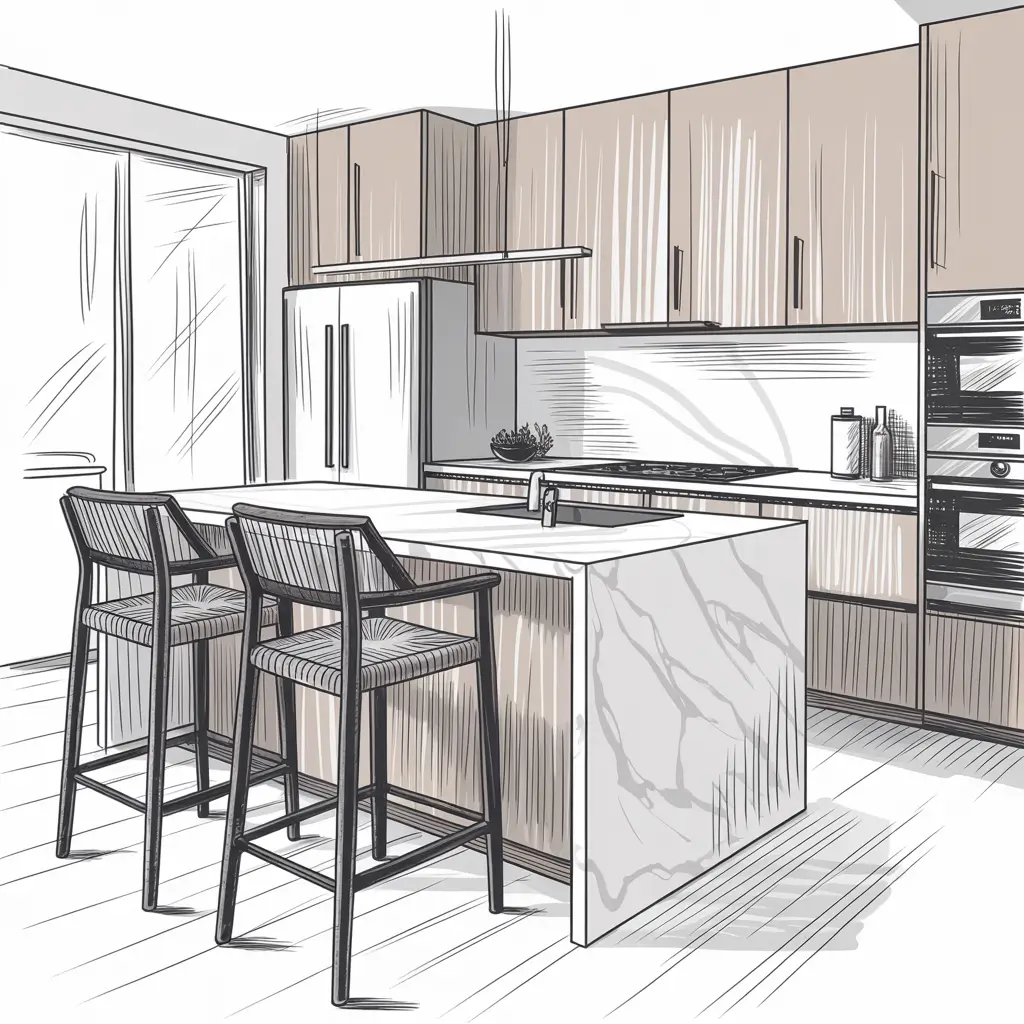
Modern kitchen sketches require technical precision that other rooms don’t demand. This sketching approach combines the work triangle principle, appliance placement, and contemporary aesthetic choices.
The kitchen work triangle still matters in modern sketches. Draw lines connecting your sink, stove, and refrigerator – if this triangle feels awkward on paper, it’ll be frustrating in real life. Trust me, I’ve cooked in poorly triangulated kitchens, and it’s like dancing with a partner who has two left feet.
Cabinet elevation sketches complement floor plans in kitchen designs. Side-view drawings show upper cabinet heights, open shelving arrangements, and how different elements stack vertically. This prevents that “why is everything at weird heights” problem.
Modern Kitchen Sketch Details
Critical kitchen planning elements:
- Appliance placements with exact dimensions
- Counter workspace between major elements
- Cabinet and storage configurations
- Island or peninsula dimensions if applicable
- Lighting placement over work surfaces
- Material transitions between surfaces
Kitchen sketches save thousands by revealing problems before contractors start cutting expensive materials.
Also Read: 10 Elegant Condo Interior Design Ideas for Cozy Corners
4. Small Apartment Space Planning Sketches
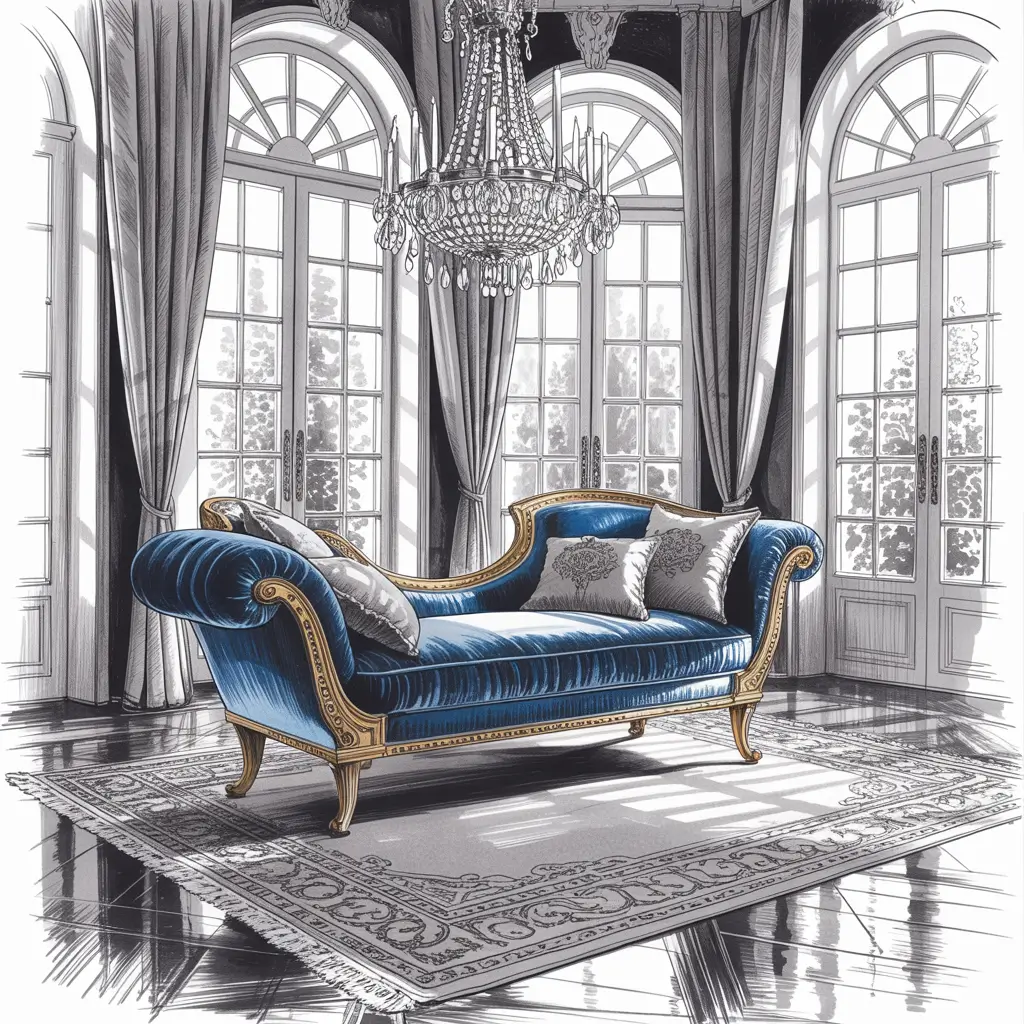
Small apartment sketches transform limitations into opportunities through creative spatial problem-solving. This sketching style emphasizes multi-functional zones, flexible furniture, and visual tricks that expand perceived space.
The zoning approach works brilliantly in small space sketches. Use different shadings or colors to indicate living, dining, sleeping, and working areas – even when they overlap in the same physical space. My studio apartment sketch showed how one area could be “office” by day and “dining” by night.
Furniture scale becomes make-or-break in compact sketches. Draw everything to accurate scale or you’ll end up with furniture that overwhelms the space. Graph paper saves lives here – assign each square a real measurement and stick to it religiously.
Small Space Sketch Strategies
Space-maximizing sketch techniques:
- Multi-use zones clearly marked
- Furniture that transforms noted with arrows
- Vertical storage solutions indicated
- Traffic flow paths ensuring movement
- Window and natural light maximized
- Visual boundaries without physical walls
Small space sketches prove that smart planning makes 500 square feet live like 800.
5. Luxury Interior Concept Drawings
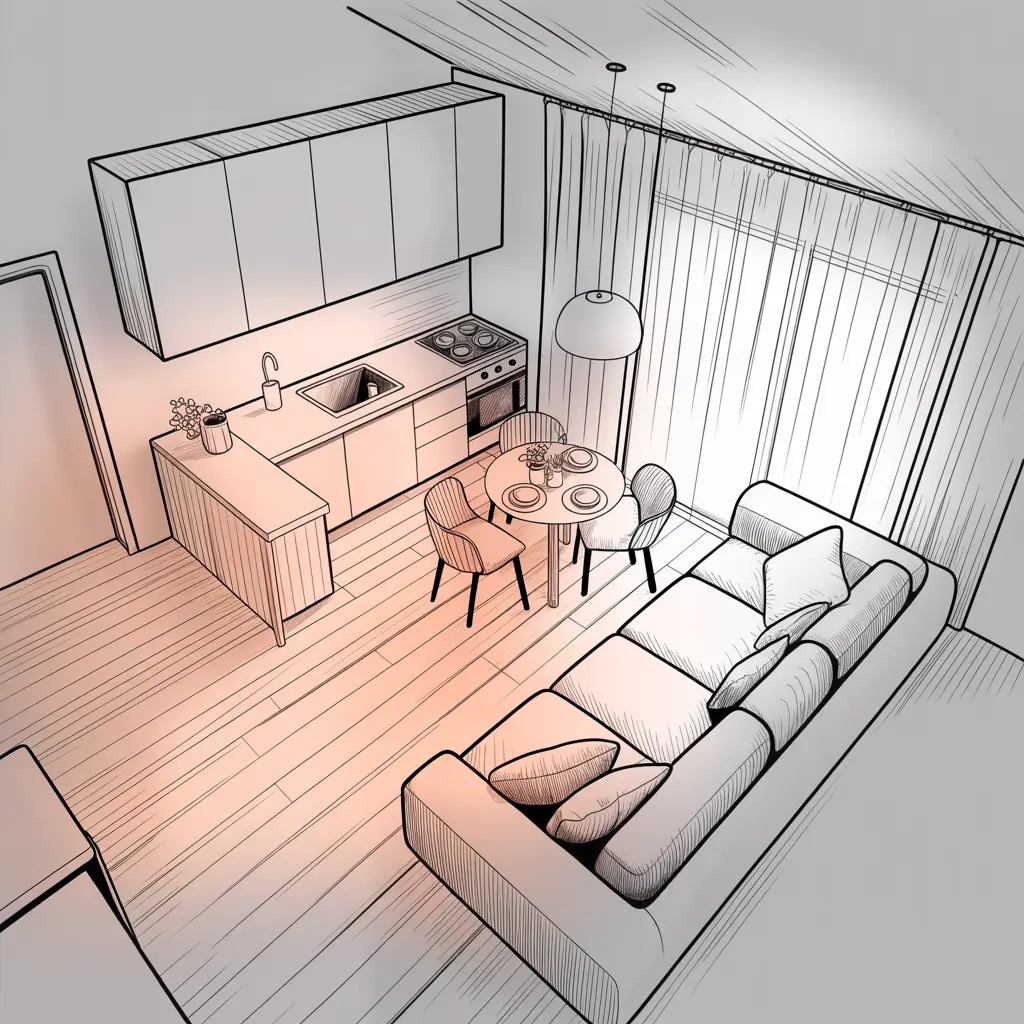
Luxury interior sketches communicate opulence, quality, and sophisticated restraint. This sketching approach focuses on premium materials, custom elements, and the kind of details that separate expensive from merely pricey.
Material notation matters enormously in luxury sketches. Don’t just draw a counter – note that it’s honed Calacatta marble with book-matched veining. These details guide purchasing decisions and help contractors understand your vision. FYI, I learned this after a contractor substituted materials because my sketch just said “stone countertop.”
Custom millwork shows up clearly in luxury concept drawings. Sketch built-in cabinetry, coffered ceilings, and architectural details that create that “designed by professionals” look. These elements can’t be afterthoughts – they require structural planning.
Luxury Sketch Annotations
High-end design details to specify:
- Premium material selections with specific names
- Custom furniture dimensions and details
- Architectural elements like crown molding
- Lighting fixtures with style references
- Hardware and finish specifications
- Textile and upholstery notes
Luxury sketches should communicate quality through precision – sloppy sketches undermine expensive visions.
6. Scandinavian Style Room Sketches
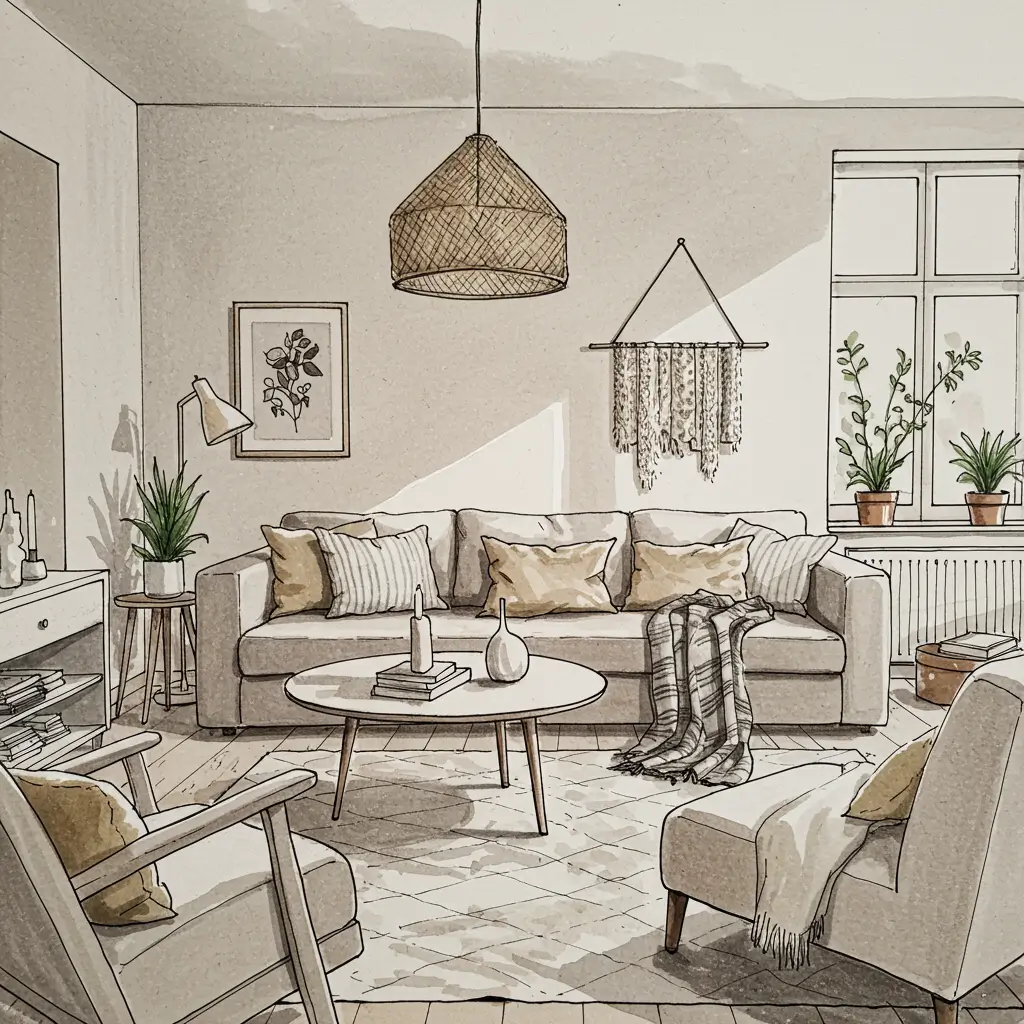
Scandinavian style sketches blend minimalism with warmth, creating drawings that show restraint while maintaining livability. This sketching approach emphasizes natural materials, light manipulation, and hygge-inducing elements.
The furniture profiles in Scandinavian sketches show clean lines with organic touches. Draw pieces with visible wood grain indicators, noting natural finishes rather than painted surfaces. The sketches should communicate that every element connects to nature somehow.
Light source documentation becomes essential in Nordic-inspired sketches. Mark every window, note light direction throughout the day, and plan artificial lighting that mimics natural warmth. Scandinavian design treats light as a material you design with, not just a functional necessity.
Scandinavian Sketch Elements
Nordic design sketch components:
- Natural wood furniture with grain direction
- Light-colored surfaces maximizing brightness
- Textile layers for warmth and texture
- Plant placement adding life
- Candle and soft lighting locations
- Cozy corners for hygge moments
Scandinavian sketches should feel calm just looking at them – if your drawing feels busy, the room will too.
Also Read: 10 Amazing Door Design Interior Ideas and Chic Inspirations
7. Open-Plan Living Area Sketch Ideas
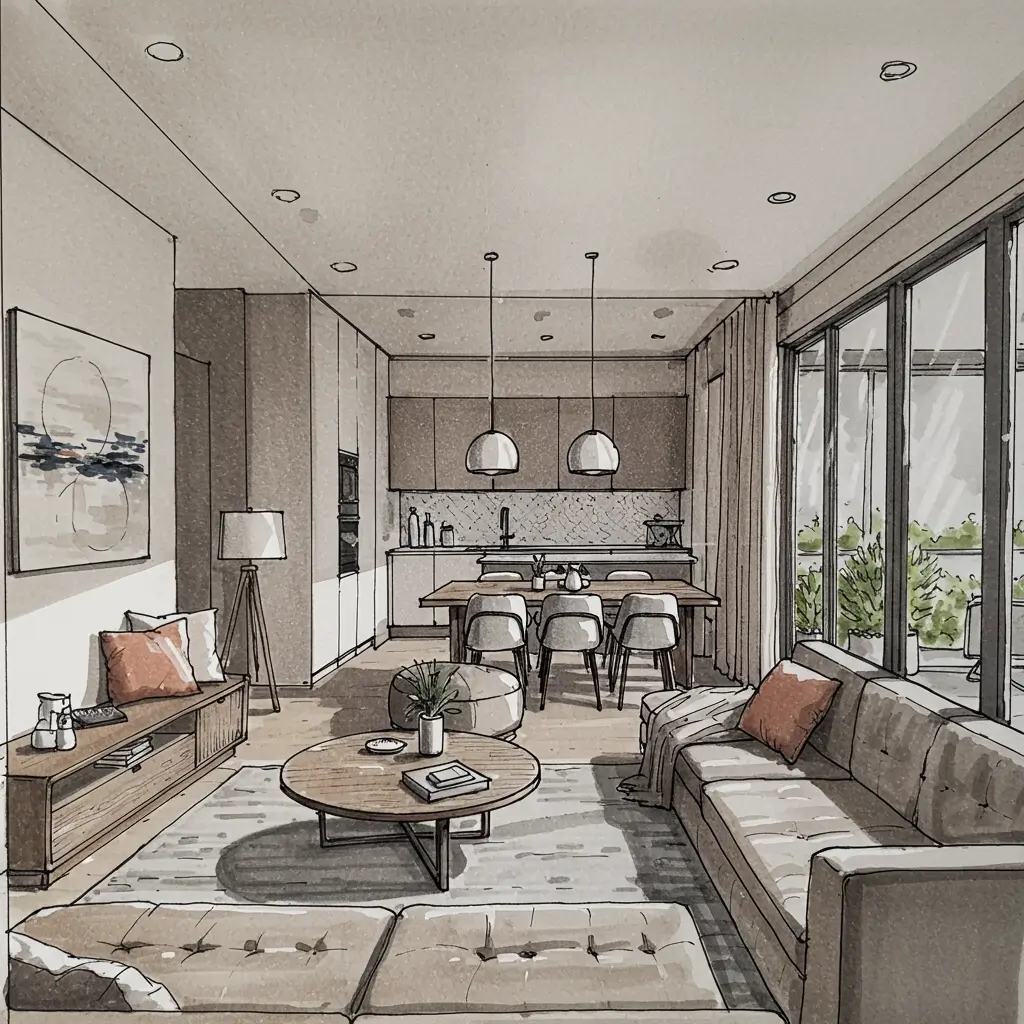
Open-plan sketches require defining zones without walls, creating flow while maintaining distinct functional areas. This sketching style shows how spaces connect while preserving individual character.
The furniture arrangement creates invisible boundaries in open-plan sketches. Use sofas as room dividers, rugs to define zones, and lighting to separate areas – all visible in your drawing. I sketched probably fifteen iterations before finding the arrangement that made my open-plan space feel cohesive rather than scattered.
Sightline planning prevents open-plan chaos. Draw arrows showing what you see from each major seating position – you want appealing views, not staring directly at the kitchen trash can from your dining table.
Open-Plan Sketch Techniques
Multi-zone planning approaches:
- Rug outlines defining separate areas
- Furniture groupings creating rooms
- Lighting zones for different moods
- Consistent sightlines throughout
- Traffic patterns avoiding collisions
- Visual connections between zones
Open-plan sketches reveal whether your “open concept” will feel spacious or just confusing.
8. Colorful Bohemian Interior Sketches
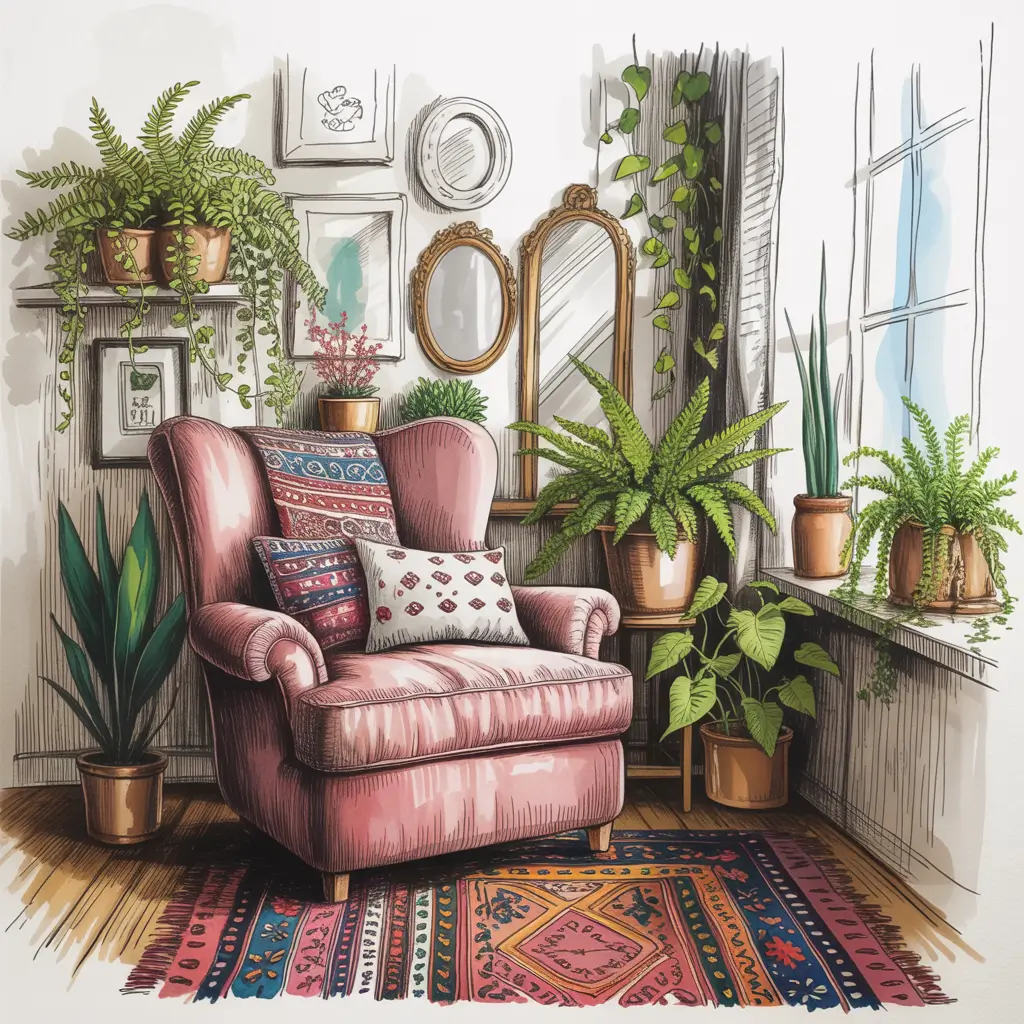
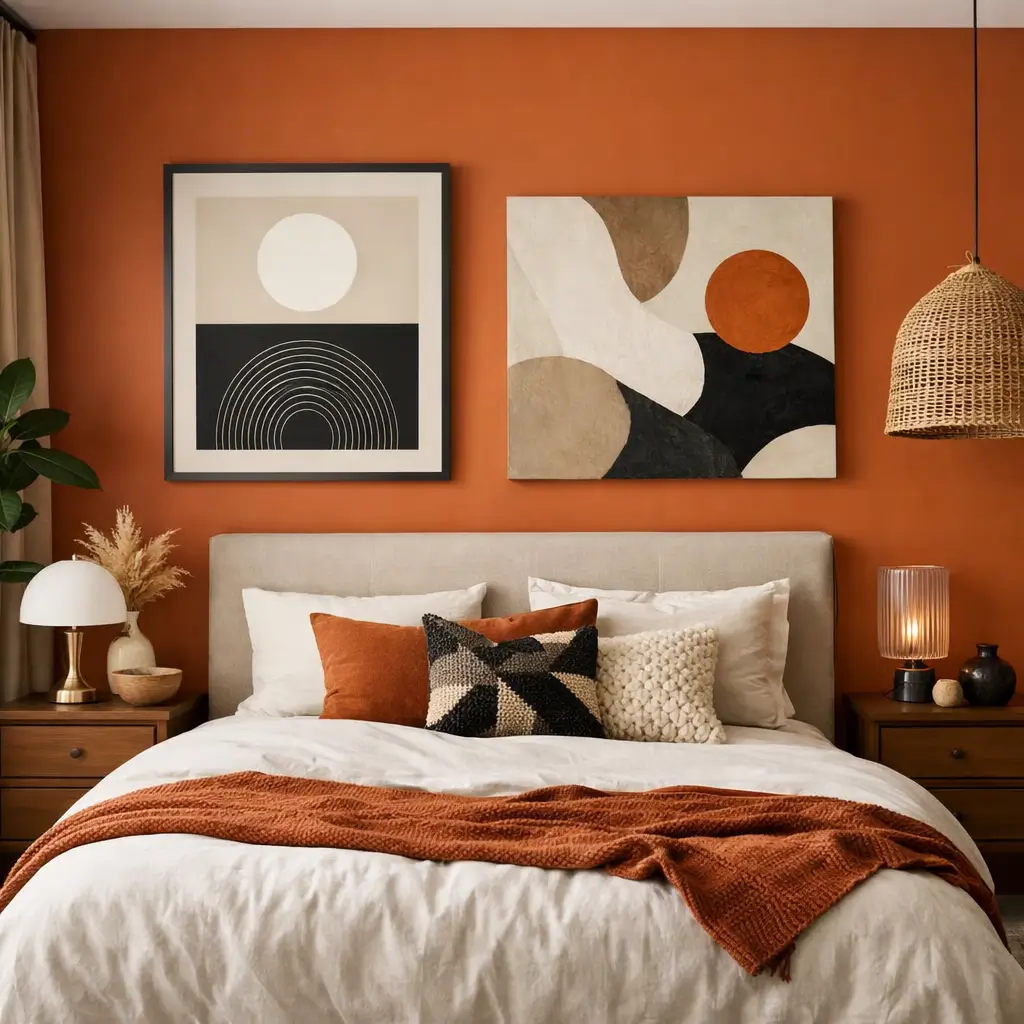
Bohemian sketches celebrate organized chaos and layered personality. This sketching approach embraces pattern mixing, global influences, and collected-over-time aesthetics.
Color notation becomes playful in boho sketches. Use colored pencils or markers to show the vibrant palette you’re planning. My bohemian guest room sketch looked like a rainbow exploded on it, but that visual mess helped me understand which colors dominated versus accented.
Layering indicators show the depth that defines bohemian style. Draw rugs on rugs, mark textile layers, show hanging plants at different heights – the sketch should communicate abundance without appearing cluttered.
Bohemian Sketch Details
Capturing eclectic style elements:
- Color coding for vibrant palettes
- Pattern mixing with different textures
- Global textile indicators (kilims, ikats, etc.)
- Plant placement at multiple levels
- Layered lighting including string lights
- Collected objects creating character
Bohemian sketches should look lived-in even before the room exists – that’s when you know you’ve nailed the vibe.
9. Office & Workspace Design Sketch Concepts
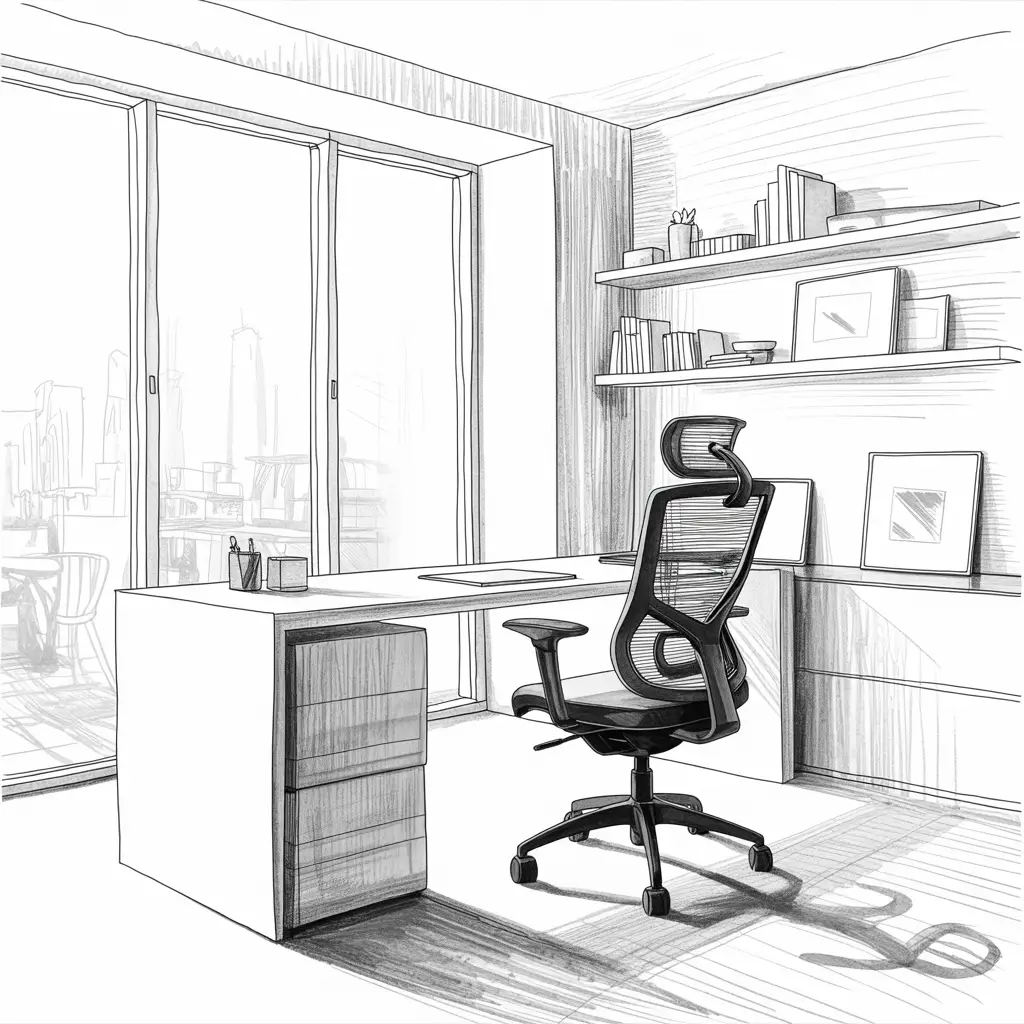
Office sketches prioritize productivity, ergonomics, and reducing distraction. This sketching approach treats your workspace as a tool for better work rather than just a room with a desk.
The ergonomic considerations show up clearly in good office sketches. Draw desk height, chair positioning, and monitor eye-level to ensure comfort during long work sessions. My first home office sketch ignored ergonomics completely – the back pain taught me to sketch smarter.
Technology integration requires planning in workspace sketches. Mark cable management solutions, outlet placements, and equipment positioning before installation. Nothing ruins a beautiful office like cords everywhere.
Office Sketch Essentials
Productive workspace elements:
- Ergonomic positioning with measurements
- Natural light access without screen glare
- Storage solutions keeping surfaces clear
- Technology placement with cable routing
- Comfortable seating properly sized
- Inspiration boards or display areas
Office sketches should solve practical problems first, look pretty second – reversed priorities create beautiful but useless workspaces IMO.
Also Read: 12 Chic Lobby Interior Design Ideas with Statement Decor
10. Rustic Home Interior Sketch Ideas
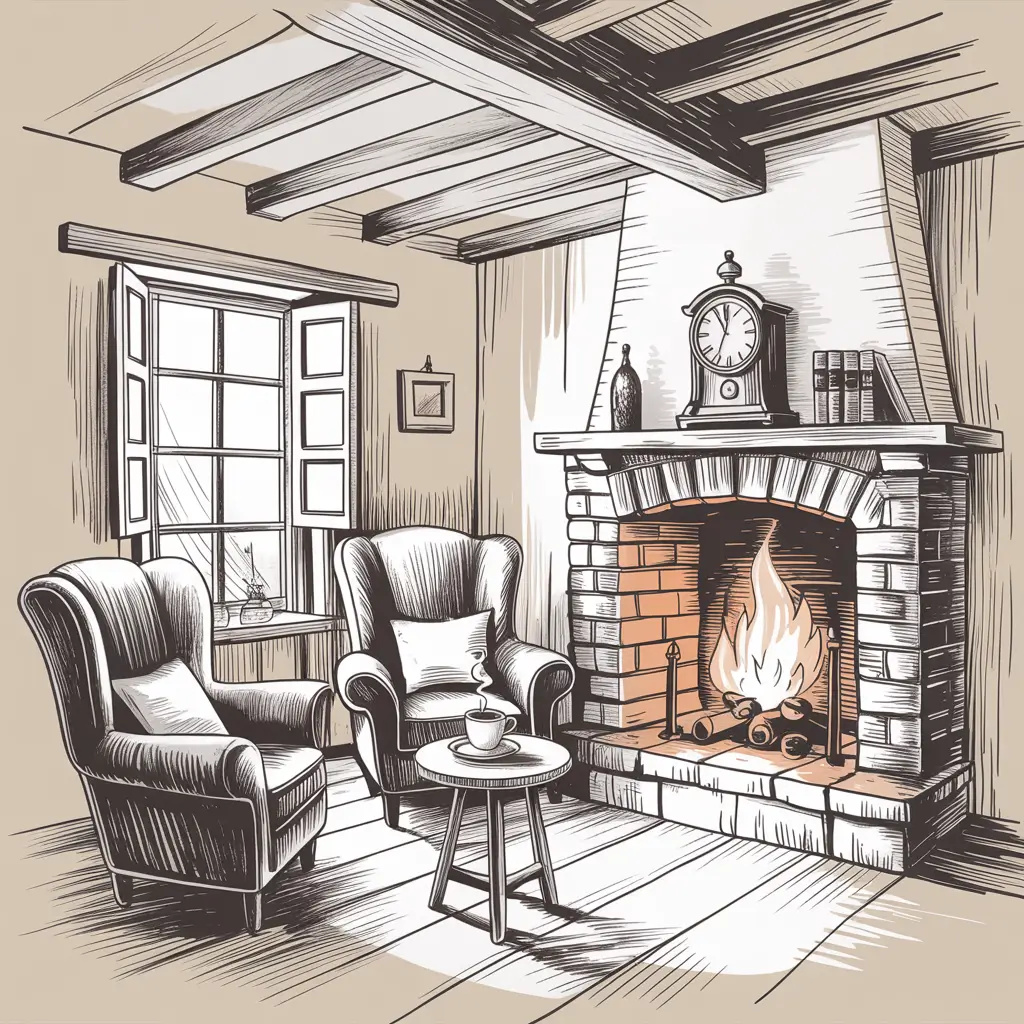
Rustic interior sketches emphasize natural materials, weathered textures, and organic imperfection. This sketching style indicates reclaimed wood, stone elements, and the kind of character that can’t be manufactured.
Material texture notation distinguishes rustic sketches from generic drawings. Use cross-hatching for wood grain, stippling for stone textures, and notes indicating reclaimed versus new materials. These details guide purchasing and help contractors understand your vision.
The asymmetry in rustic sketches reflects organic authenticity. Unlike modern designs demanding perfect symmetry, rustic sketches can show mismatched elements that create collected-over-time character.
Rustic Sketch Annotations
Capturing organic character:
- Material age indicators (reclaimed, weathered, etc.)
- Texture notes for surfaces
- Natural element integration (stone, wood, iron)
- Imperfection allowances as design features
- Warm lighting sources (lanterns, Edison bulbs)
- Handcrafted details versus manufactured
Rustic sketches communicate that perfection isn’t the goal – authenticity is.
11. Compact Studio Apartment Layout Sketches
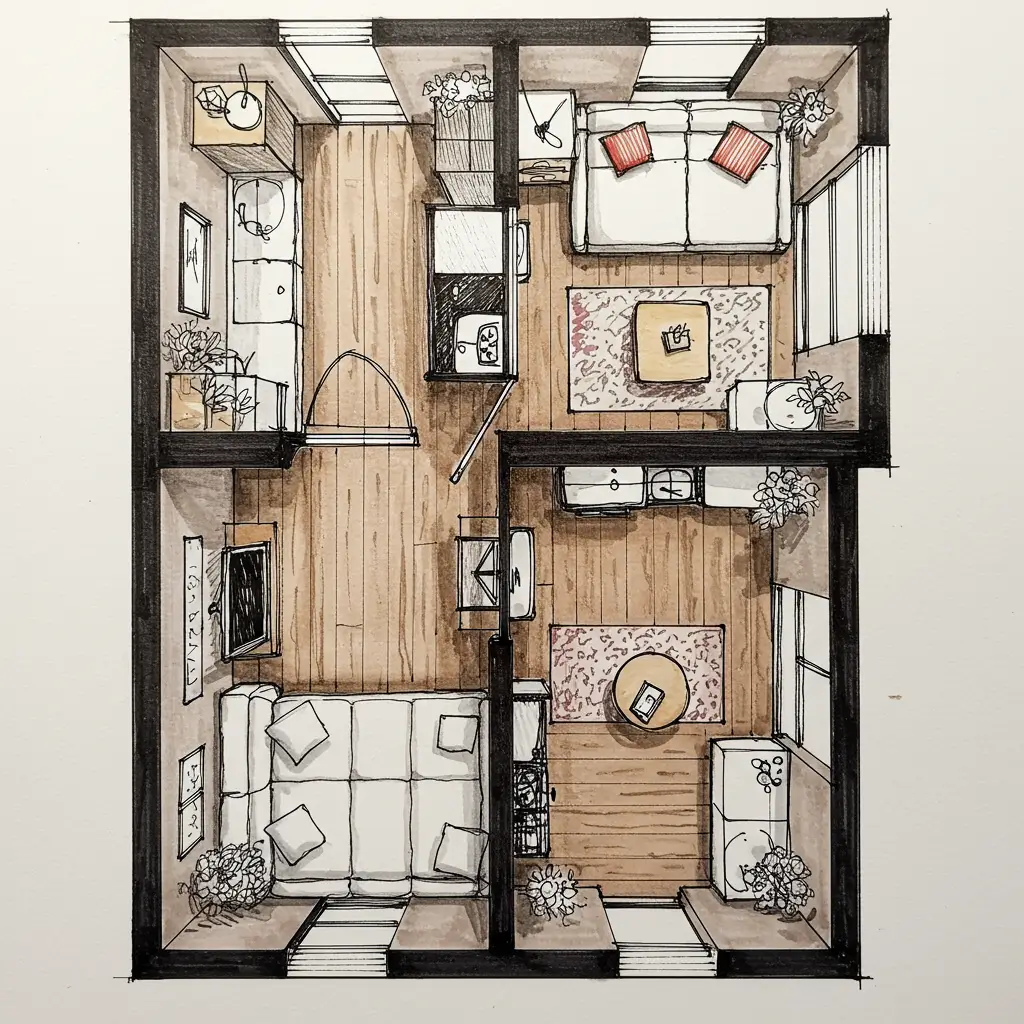
Studio apartment sketches solve the challenge of fitting every life function into one room without creating visual or functional chaos. This sketching approach emphasizes transformation, separation without walls, and strategic zoning.
The transformation sequence shows how studios adapt throughout the day. Draw your studio at different “modes” – sleeping mode, working mode, entertaining mode – with arrows showing what moves where. This reveals whether your plan actually works for real life.
Privacy solutions show up in good studio sketches. Mark curtain tracks, room dividers, or strategic furniture placement that creates psychological separation between sleeping and living areas.
Studio Sketch Strategies
Multi-function planning:
- Convertible furniture with transition notes
- Zone definitions without permanent walls
- Storage solutions maximizing vertical space
- Privacy screens or divider placements
- Transformation sequences showing different uses
- Traffic flow in various configurations
Studio sketches must prove that one room can genuinely support an entire life – not just theoretically, but practically :/
12. Creative Furniture Arrangement Sketches
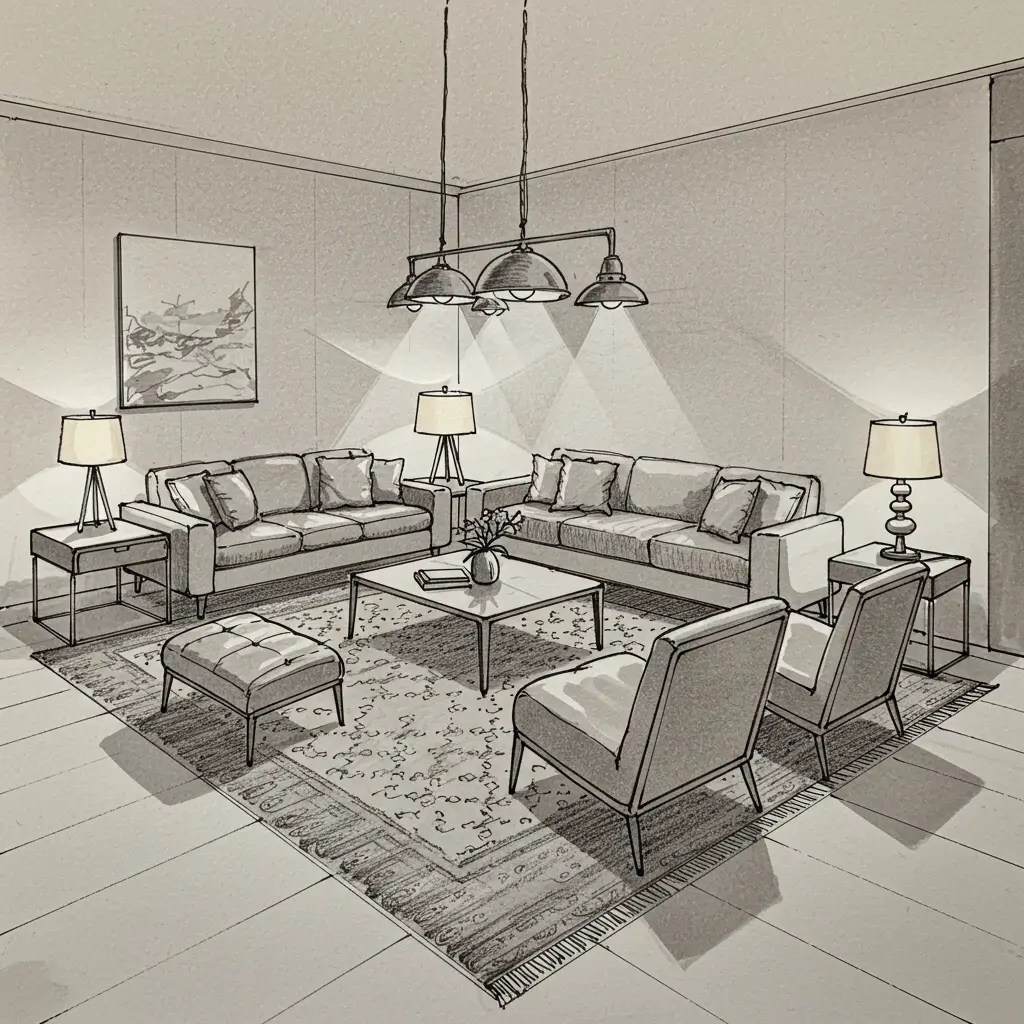
Creative furniture arrangement sketches explore unconventional layouts that challenge standard room setups. This sketching approach encourages experimenting with diagonal placements, unexpected groupings, and conversation-focused arrangements.
The floating furniture concept shows up in these experimental sketches. Draw furniture away from walls, create conversation circles, and try diagonal placements that make rectangular rooms more interesting. My living room didn’t feel right until I sketched the sofa at 45 degrees – suddenly everything clicked.
Multiple layout options on one page help comparison. Sketch three or four different arrangements using the same furniture to visualize how dramatically placement affects room flow and feeling.
Creative Arrangement Techniques
Experimental layout approaches:
- Furniture floating away from walls
- Diagonal placements adding interest
- Conversation groupings prioritizing interaction
- Unexpected focal points beyond TVs
- Asymmetrical balance creating dynamic spaces
- Multiple sketches for direct comparison
Creative arrangement sketches prove that the same furniture can create completely different rooms depending on placement alone.
Bringing Your Sketches to Life
After exploring these twelve interior design sketch ideas, you’ve probably realized that sketching isn’t about artistic talent – it’s about thinking through design decisions before they become expensive mistakes.
Start with the roughest sketches imaginable. Stick figures for people, boxes for furniture, scribbles for plants – nobody’s judging your artistic skills. The goal is testing ideas and solving spatial problems, not creating museum-worthy drawings.
Tools matter less than you think. Graph paper and a pencil work as well as expensive design software for most planning purposes.
I’ve created successful room designs on napkins and failed miserably with professional CAD programs. The thinking matters more than the medium.
Measure twice, sketch once. Accurate measurements prevent the tragedy of buying furniture that doesn’t fit.
Trust me, returning a sofa because your sketch dimensions were wishful thinking rather than actual measurements is both expensive and embarrassing.
Share sketches with contractors, furniture sellers, and anyone helping with your design. A rough sketch communicates vision better than lengthy verbal descriptions that everyone interprets differently.
Your sketch ensures everyone literally sees the same picture.
Don’t fear mistakes on paper – that’s exactly where they should happen. Cross out bad ideas, sketch over failed concepts, and fill pages with rejected layouts. Each “wrong” sketch teaches you something that moves you closer to the right design.