12 Creative Small House Interior Design Ideas to Maximize Space
- Home Interior Design
 Ben
Ben- 0
- 49 minutes read

Living in 650 square feet taught me something crucial: small spaces force you to get creative or lose your mind.
After downsizing from a 2,000-square-foot suburban home to a tiny urban cottage last year, I discovered that small house interior design isn’t about accepting limitations — it’s about outsmarting them. And honestly? My small house feels more spacious and organized than my old place ever did.
The trick isn’t buying smaller furniture or giving up your belongings. It’s about understanding how our brains perceive space and using that knowledge to create optical illusions, maximize functionality, and eliminate waste.
Every single square foot needs to work harder when you’re dealing with limited space, but that doesn’t mean sacrificing style or comfort.
1. Smart Space-Saving Furniture Ideas
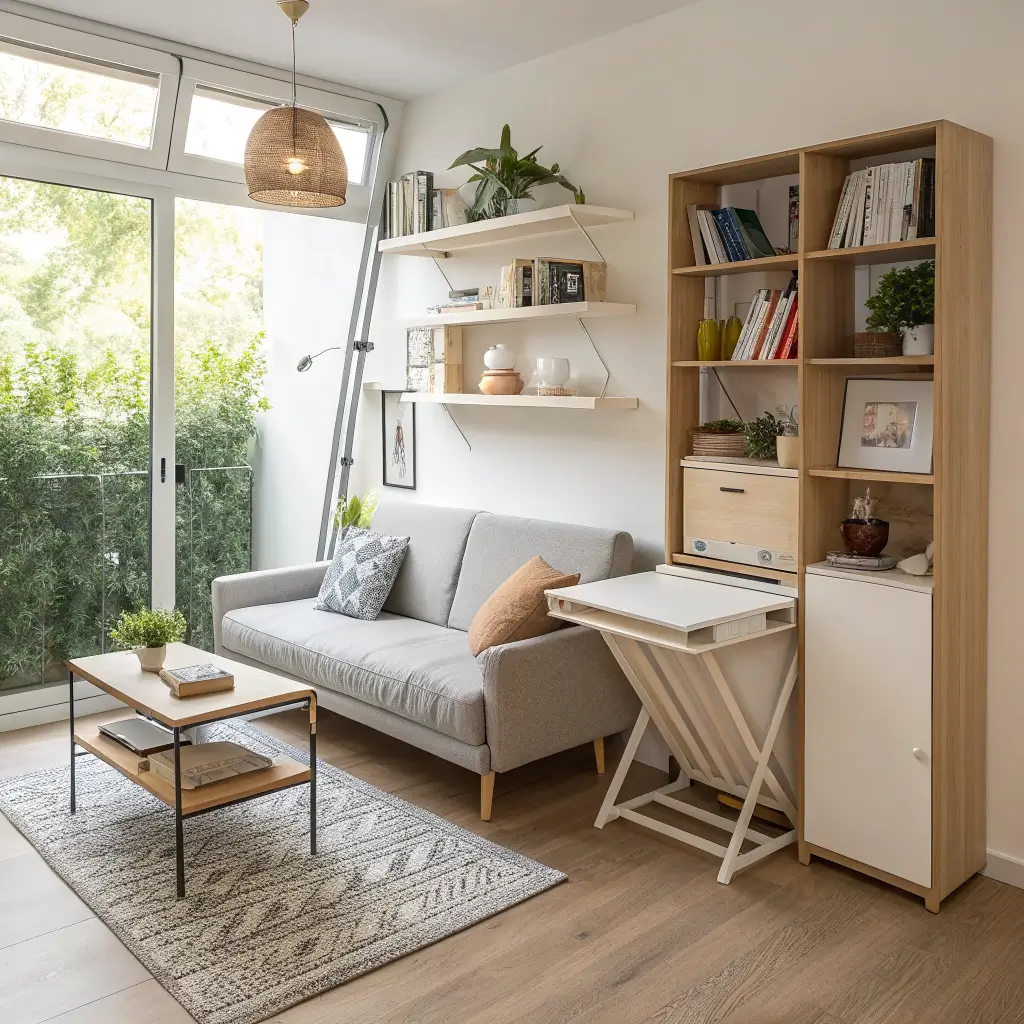
Let me tell you about the day I realized my coffee table was completely useless. It sat there, taking up precious floor space, holding nothing but a couple of magazines and collecting dust. That’s when I discovered the world of smart, multi-functional furniture that transformed my small house from cramped to surprisingly spacious.
The Game-Changing Pieces
Ottoman storage benches became my new obsession. Mine holds all my winter blankets, doubles as extra seating when friends come over, and serves as a coffee table with a tray on top. Three functions, one piece of furniture. That’s the kind of math small house living requires.
Consider these space-saving champions:
- Nesting tables that tuck away when not needed
- Wall-mounted desks that fold flat against the wall
- Expandable dining tables with leaves that store inside
- Beds with built-in drawers underneath
- Modular sofas that reconfigure based on needs
- Hollow ottomans for hidden storage
- Bar carts that roll wherever you need them
The Murphy Bed Debate
Everyone asks about Murphy beds. Are they worth it? After living with one for six months, here’s my verdict: absolutely, but only if you commit to using it properly. If you’re too lazy to fold it up daily (guilty as charged sometimes), you’ve just got an expensive regular bed. But when I do use it correctly, my bedroom transforms into a yoga studio, home office, or whatever I need that day.
The real winners in my house? Convertible furniture pieces that don’t require daily transformation. My dining table extends from seating four to eight people. My sofa has a pull-out bed for guests. These pieces work their magic only when needed, not every single day.
2. Small House Layouts That Feel Bigger
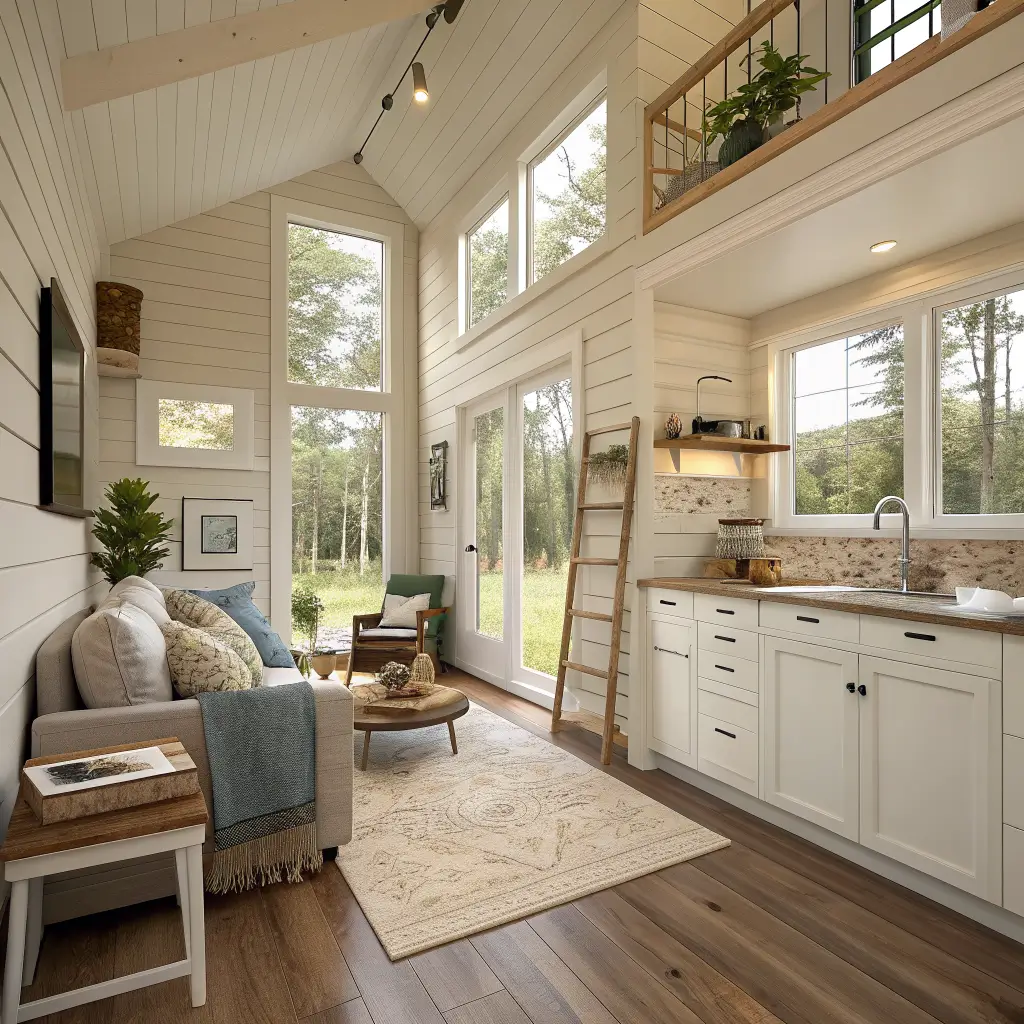
Your furniture arrangement matters more than the furniture itself. I learned this after hiring a designer friend for two hours of consultation (best $200 I ever spent). She rearranged my exact same furniture, and suddenly my living room felt 30% larger. How? Strategic placement that promotes flow and creates clear pathways.
The Float-Don’t-Push Rule
Stop pushing all your furniture against the walls. Seriously, stop it. Floating furniture creates better traffic flow and actually makes rooms feel larger. Pull your sofa a few inches from the wall, angle that accent chair, and watch your room breathe.
Here’s what works:
- Create distinct zones even in single rooms
- Use rugs to define separate areas
- Keep major pathways 30-36 inches wide minimum
- Position furniture at angles to add visual interest
- Leave breathing room between pieces
Sight Lines Matter
Keep sight lines clear across your space. When you walk in your front door, you should see through to a window or the back of the house if possible. Unobstructed views make spaces feel infinitely larger. This might mean choosing a glass coffee table over wood, or a backless bookshelf as a room divider.
I relocated my tall bookshelf from the middle of my living room to a corner, and the difference shocked me. That one move opened up the entire space and created a clear path from my entrance to my back windows.
3. Minimalist Interior Design for Small Homes
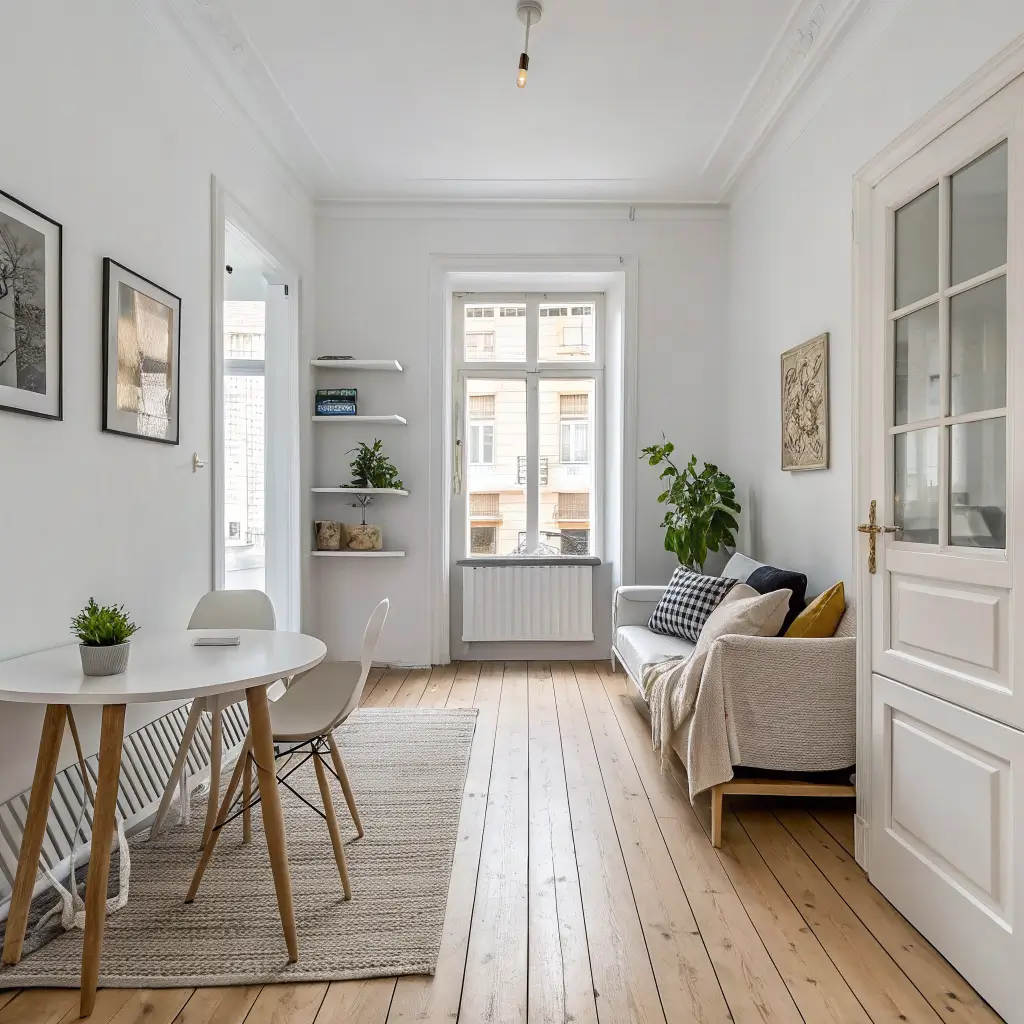
Here’s a truth bomb: minimalism and small house living are best friends. But minimalism doesn’t mean living in a stark white box with one chair and a succulent. It means being intentional about what you keep and displaying it beautifully.
The One-In-One-Out Rule
Adopt this rule religiously. Buy a new sweater? Donate an old one. New kitchen gadget? Something else goes. This prevents the slow accumulation that eventually suffocates small spaces. My closet stays manageable, and I actually wear everything I own now.
Quality Over Quantity
Invest in fewer, better pieces. One gorgeous armchair beats three mediocre ones. A single piece of statement art trumps a gallery wall in a small space. This approach costs more upfront but saves money long-term because you’re not constantly replacing cheap items.
My minimalist must-haves:
- Neutral color palettes with one or two accent colors max
- Hidden storage to maintain clean surfaces
- Multi-functional pieces that eliminate redundancy
- Natural materials that add warmth without clutter
- Negative space as an actual design element
The 80% Rule
Keep surfaces 80% clear. Your coffee table, kitchen counters, dresser tops — they should have breathing room. That remaining 20% displays carefully chosen items that bring joy or serve daily purposes. Everything else hides in clever storage solutions.
Also Read: 10 Stunning Mediterranean Interior Design Ideas for Warm Homesc
4. Hidden Storage Ideas for Small Houses
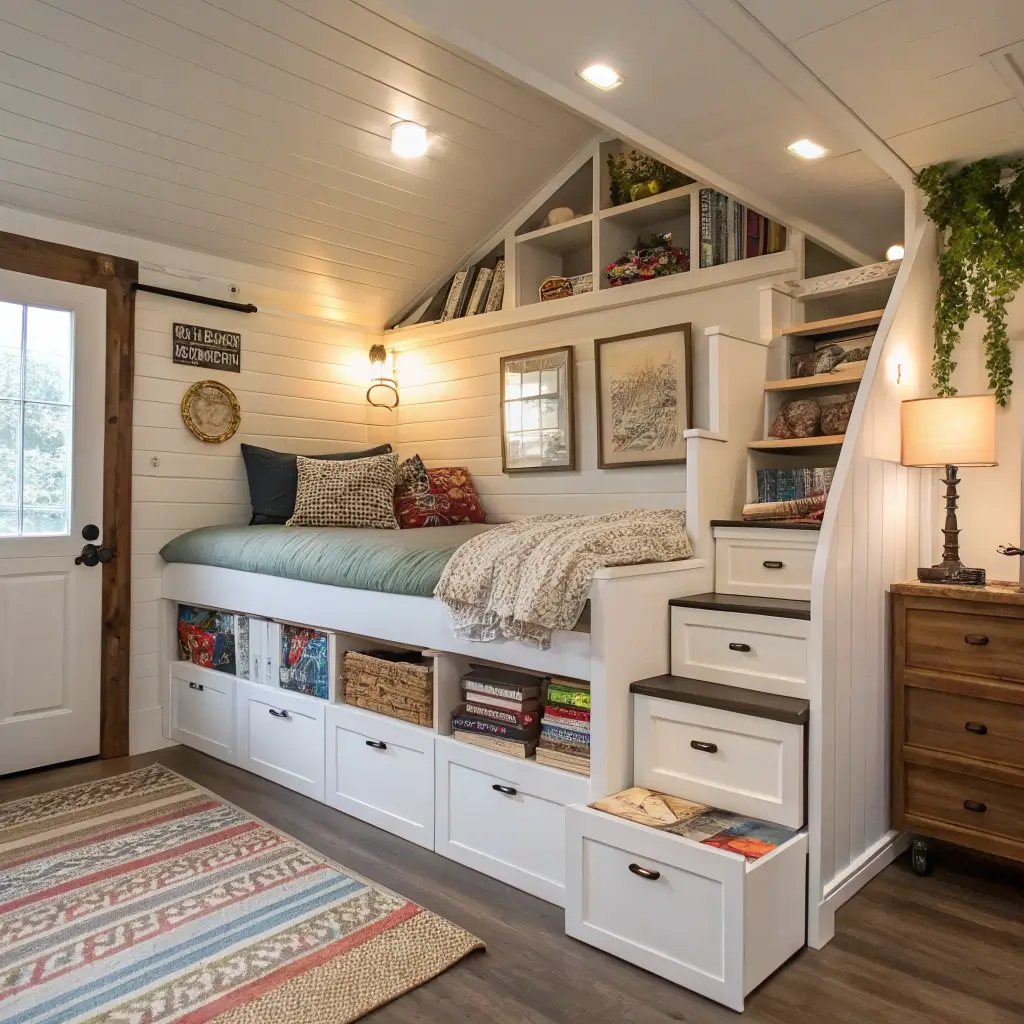
Storage is the secret sauce of successful small house living. But here’s the kicker — visible storage makes spaces feel cluttered, even when organized. The solution? Hide everything you possibly can.
Unexpected Storage Locations
Look up, look down, look behind. Storage opportunities exist everywhere:
- Toe-kick drawers under kitchen cabinets
- Ceiling-mounted nets in kids’ rooms for stuffed animals
- Behind-door organizers on every door
- Under-stair pull-out drawers
- False bottoms in drawers for important documents
- Hollow window seats with lifting tops
The Bed Storage Goldmine
Your bed probably represents the largest piece of furniture in your house. Make it work harder. Platform beds with built-in drawers changed my life. I fit an entire season’s wardrobe underneath. Add vacuum-sealed bags, and you’ve got even more capacity.
But wait, there’s more: headboards with shelving, bed frames with bookshelf sides, and even hydraulic lift beds that reveal massive storage cavities. My friend installed a hydraulic bed and fits her entire Christmas decoration collection underneath. Genius.
Custom Built-Ins
If you own your small house, custom built-ins deliver the best bang for your buck. They maximize every inch of awkward spaces. That weird alcove? Perfect for floor-to-ceiling shelving. The space beside your chimney? Built-in cabinets. Under the eaves in your attic? Pull-out storage drawers.
I invested $3,000 in custom hallway built-ins, and they hold everything from linens to board games to out-of-season clothes. Worth every penny.
5. Light Color Interior Ideas for Small Spaces
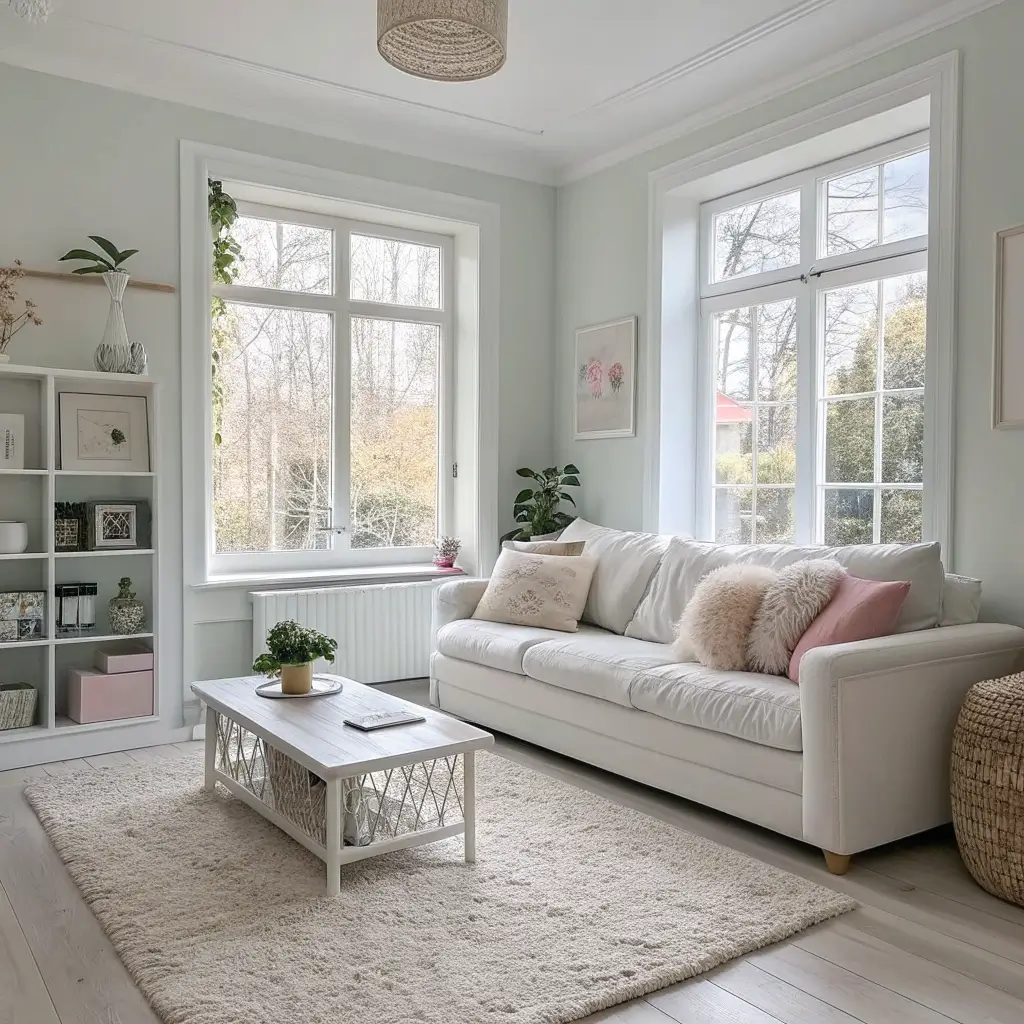
Dark colors make small spaces feel smaller — this isn’t opinion, it’s physics. Dark surfaces absorb light while light colors reflect it, creating an airy, open feeling. But “light” doesn’t have to mean boring white boxes.
Beyond Basic White
White works, but so do:
- Soft grays with warm undertones
- Pale blues that mimic the sky
- Warm beiges and creams
- Soft sage greens
- Barely-there pastels
- Light wood tones
My living room walls are “Cloud White” by Benjamin Moore, but my bedroom uses “Healing Aloe,” a pale green that feels fresh without overwhelming the space. The key? Choosing colors with high light reflective values (LRV) — aim for 60 or above.
The Monochromatic Approach
Paint walls, trim, and ceiling the same color for a seamless look that eliminates visual boundaries. This trick alone makes rooms feel significantly larger. Different sheens add subtle variation — flat on walls, eggshell on trim, semi-gloss on doors.
Strategic Dark Accents
Light doesn’t mean eliminating all dark colors. Strategic dark accents add depth and prevent spaces from feeling washed out. Think:
- A single dark accent wall
- Dark furniture legs that “disappear”
- Black window frames for definition
- Dark hardware as jewelry for the room
6. Multi-Functional Room Design Ideas
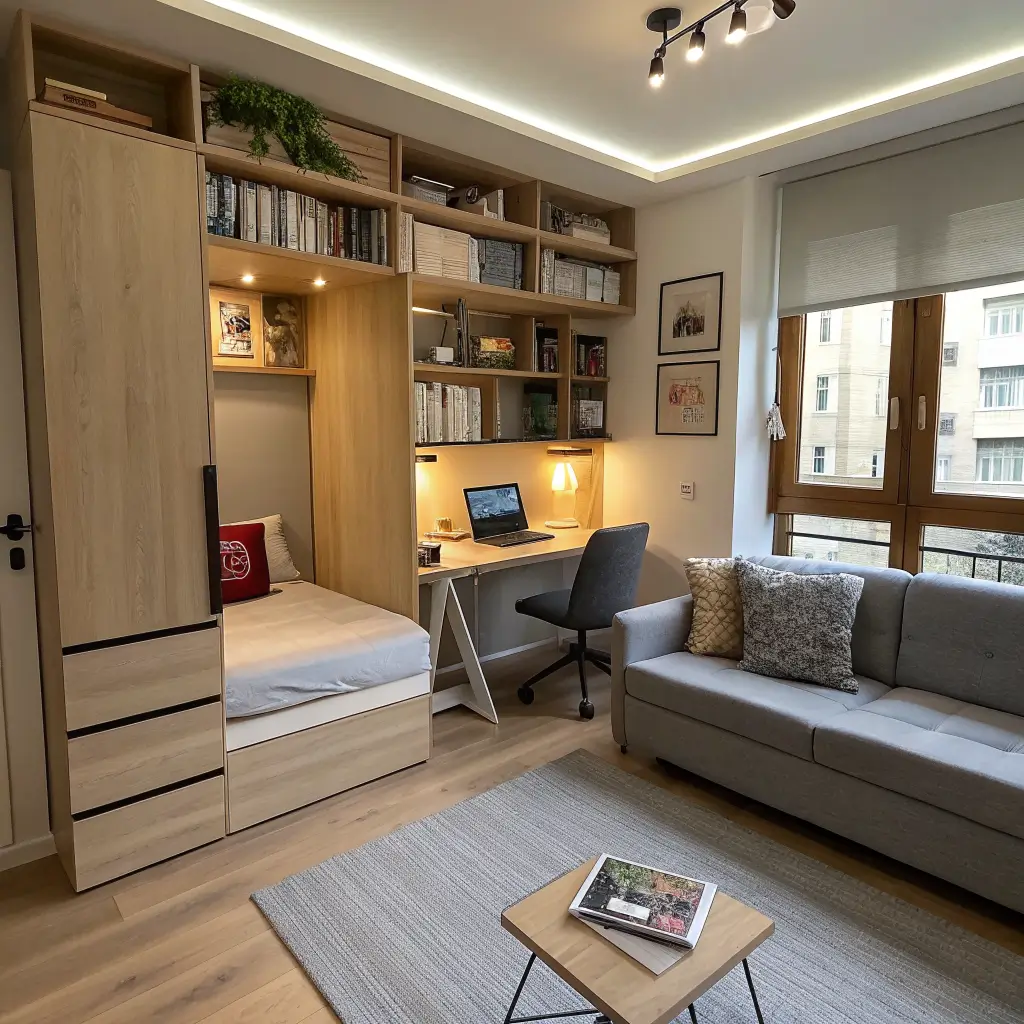
Every room in a small house needs multiple personalities. Your dining room is also your home office. Your living room doubles as a guest room. Embracing multi-functionality instead of fighting it makes small house living actually enjoyable.
The Zones Strategy
Divide rooms into zones without walls:
- Rugs define separate areas
- Lighting creates distinct moods
- Furniture placement establishes boundaries
- Color changes signal different functions
- Curtains or screens provide temporary division
My living/dining combo uses three tricks: a large rug anchors the living area, pendant lights define the dining space, and a console table creates a visual barrier between them.
Convertible Spaces
Design rooms that transform based on need. My home office becomes a guest room thanks to:
- A desk that folds into the wall
- A daybed instead of a traditional sofa
- Wall-mounted monitors that swing aside
- Rolling storage that tucks into closets
The transformation takes five minutes, and guests never know they’re sleeping in an office.
Time-Based Room Functions
Consider when you use different room functions. Morning coffee nook becomes evening bar. Breakfast table transforms to homework station after school. This temporal approach maximizes every hour of your space’s potential.
Also Read: 12 Inspiring Interior Design Sketches Ideas for Cozy Spaces
7. Cozy Small House Interior Inspiration
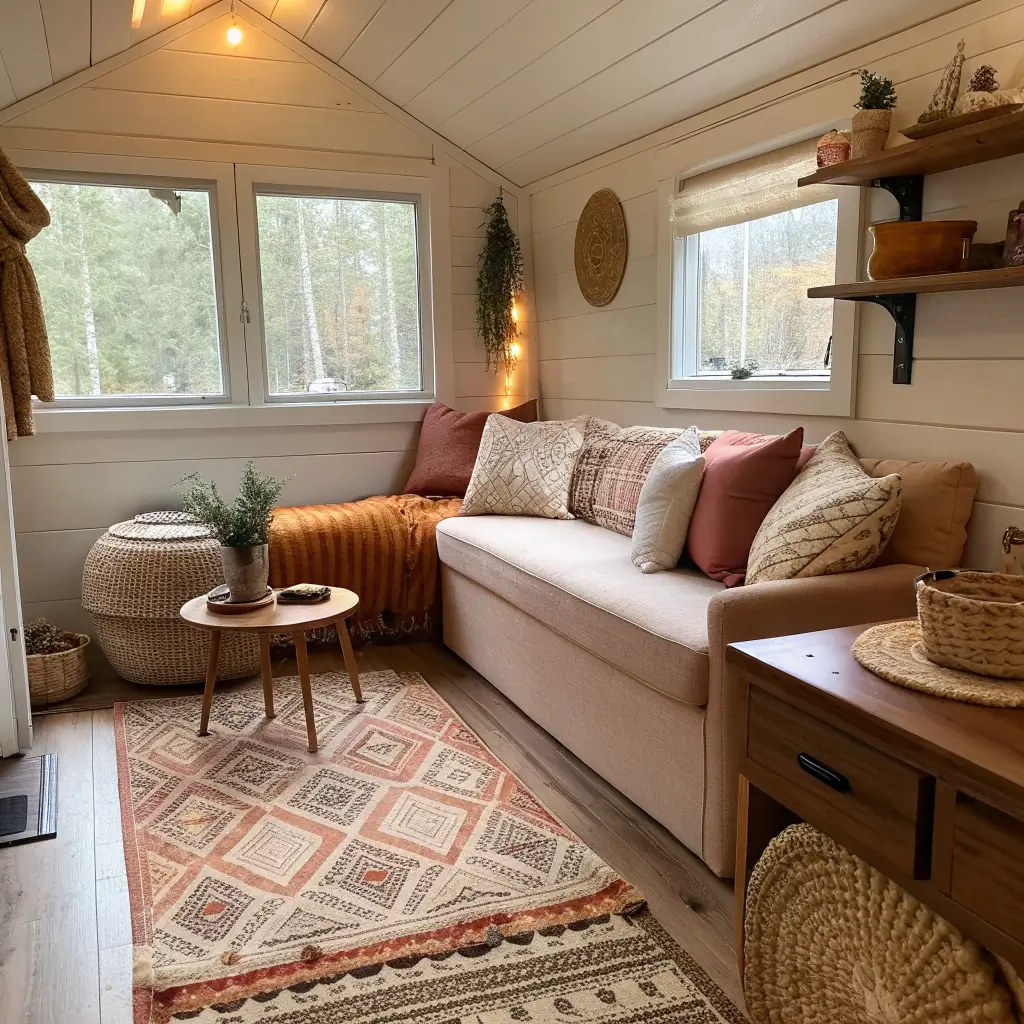
Small doesn’t mean cold or impersonal. Some of the coziest homes I’ve visited were under 800 square feet. The secret? Creating warmth through layers, textures, and thoughtful details rather than sheer size.
Texture Is Everything
Layer textures to add depth without clutter:
- Chunky knit throws on smooth leather sofas
- Nubby linen pillows on sleek chairs
- Soft rugs on hard floors
- Rough wood against smooth walls
- Velvet curtains with sheer unders
Warm Lighting Strategies
Harsh overhead lighting kills cozy vibes instantly. Instead:
- Layer multiple light sources at different heights
- Use warm bulbs (2700K-3000K color temperature)
- Add dimmers everywhere possible
- Incorporate candles for instant atmosphere
- String lights aren’t just for college dorms
I have seven light sources in my 120-square-foot living room. Excessive? Maybe. But the ambiance is incredible.
Personal Touches
Display meaningful items, not just decorative objects. Family photos, travel souvenirs, handmade items — these create emotional warmth that no amount of throw pillows can replicate. Just edit ruthlessly. Five meaningful items beat twenty random decorations.
8. Vertical Storage Ideas for Small Homes
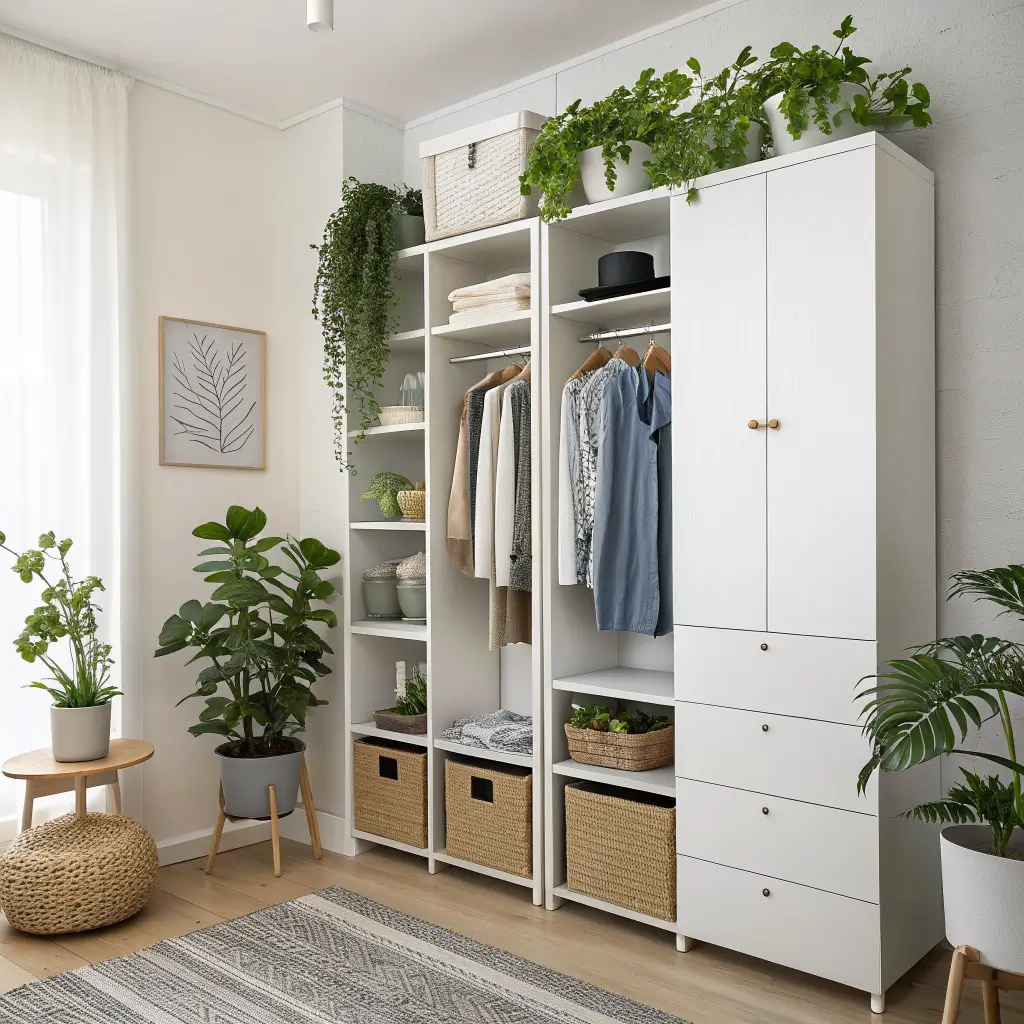
When floor space runs out, go vertical. Most small houses have surprisingly high ceilings that go completely unused. Time to change that.
Floor-to-Ceiling Solutions
Maximize every vertical inch:
- Bookshelves that reach the ceiling
- Kitchen cabinets extended upward
- Vertical bike storage
- Hanging pot racks
- Ceiling-mounted clothing rods
- Wall-mounted TV instead of stands
My kitchen cabinets now extend to the ceiling with a library ladder for access. The top shelves hold items I use twice a year, but that’s still better than storing them in a rental unit.
The Power of Pegboards
Pegboards aren’t just for garages anymore. I installed a massive pegboard in my kitchen for pots, pans, and utensils. Another in my office holds supplies. They’re infinitely customizable and keep everything visible but organized.
Vertical Room Dividers
Use tall shelving units as room dividers that provide storage on both sides. My bedroom/office separator holds books facing the office, clothes baskets facing the bedroom. Double the function, same footprint.
9. Modern Interior Design Ideas for Small Houses
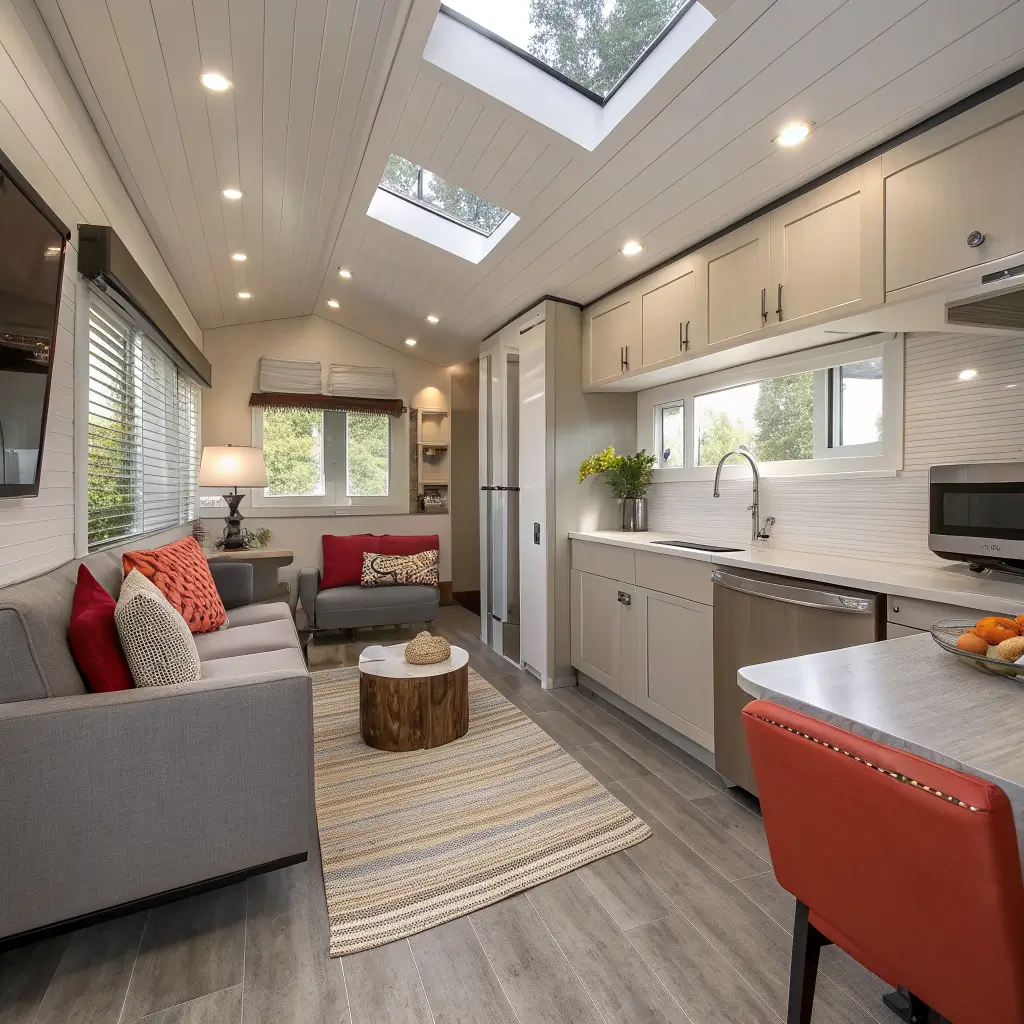
Modern design and small spaces work beautifully together because modern style emphasizes clean lines, minimal ornamentation, and functional beauty — exactly what small spaces need.
The Modern Small House Formula
Stick to these principles:
- Clean lines over ornate details
- Solid colors over busy patterns
- Hidden hardware for seamless looks
- Built-in everything possible
- Tech integration that doesn’t dominate
- Natural materials in simple forms
Smart Home Technology
Modern means embracing technology that saves space:
- Wall-mounted tablets for home control
- Wireless charging stations built into furniture
- Smart mirrors with built-in lighting
- Compact appliances with multiple functions
- Voice-controlled everything to reduce physical switches
My smart home setup eliminated dozens of physical items — remote controls, light switches, thermostats — all replaced by voice commands or phone apps.
The Less-Is-More Aesthetic
Modern design celebrates negative space. Empty wall sections, clear surfaces, and uncluttered floors actually become design features. This philosophy naturally suits small houses where every item needs justification for its existence.
Also Read: 10 Elegant Condo Interior Design Ideas for Cozy Corners
10. Budget-Friendly Small House Makeover Ideas
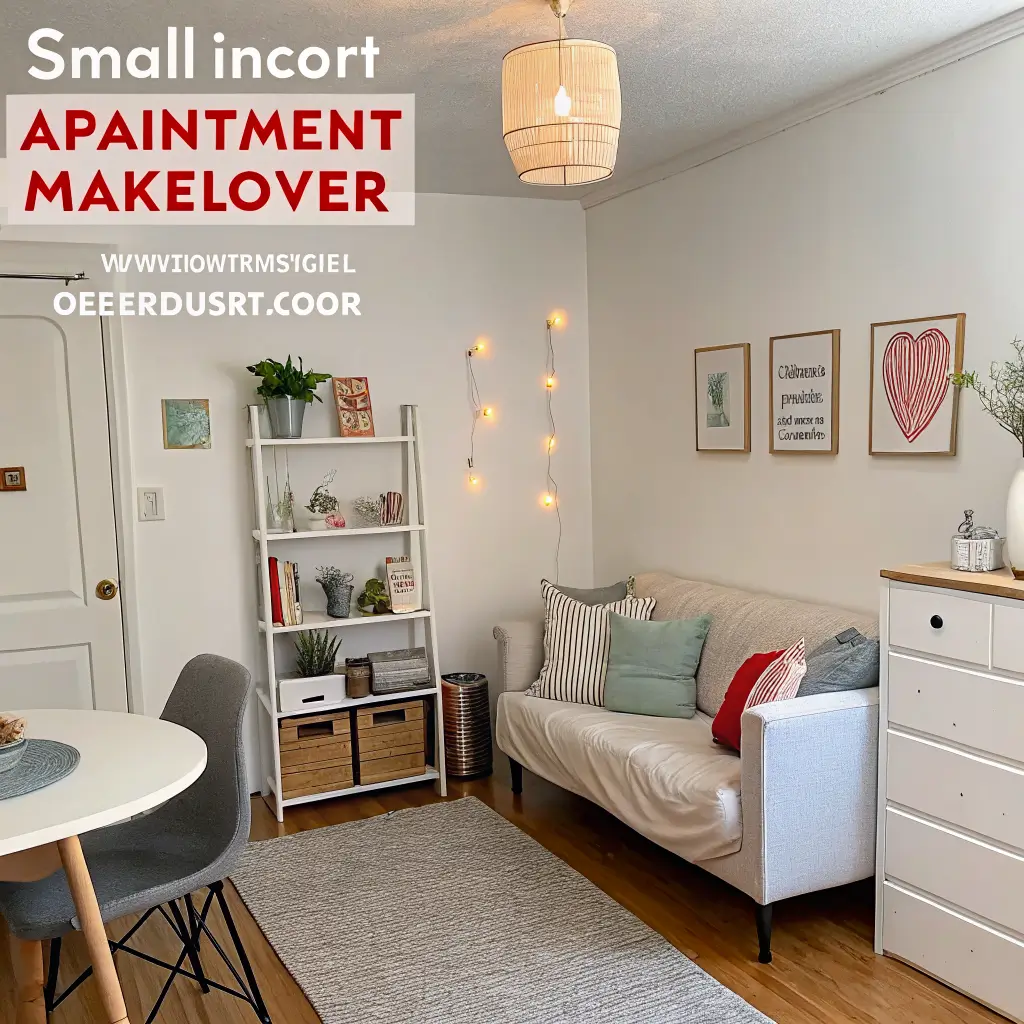
You don’t need $50,000 to transform a small house. Some of my best design wins cost less than dinner out. Strategic, budget-conscious changes deliver massive impact in small spaces.
Paint Is Magic
Never underestimate paint’s transformative power:
- Paint everything the same color for cohesion ($100)
- Paint ceiling same as walls to eliminate boundaries ($30)
- Paint furniture to match your scheme ($20)
- Paint interior doors a bold color for interest ($50)
I spent $200 painting my entire house the same warm white, and it immediately felt twice as large and infinitely more sophisticated.
DIY Storage Solutions
Build your own storage for fraction of retail prices:
- Floating shelves from hardware store boards ($40)
- Closet organizers from wire shelving ($75)
- Under-bed boxes from plywood ($30)
- Pegboard walls for any room ($50)
YouTube University taught me everything. My DIY floating shelves cost $40 versus $200 for store-bought equivalents.
Thrift Store Treasures
Second-hand shopping works especially well for small spaces because you need fewer pieces:
- Vintage mirrors for expanding space visually
- Unique storage baskets and boxes
- Quality furniture needing minor repairs
- Lamps for better lighting
- Artwork for personality
FYI, my entire living room came from thrift stores and Facebook Marketplace. Total cost: under $500. It looks like a designer space because everything coordinates perfectly.
11. Mirror Decor Ideas to Make Small Homes Look Bigger
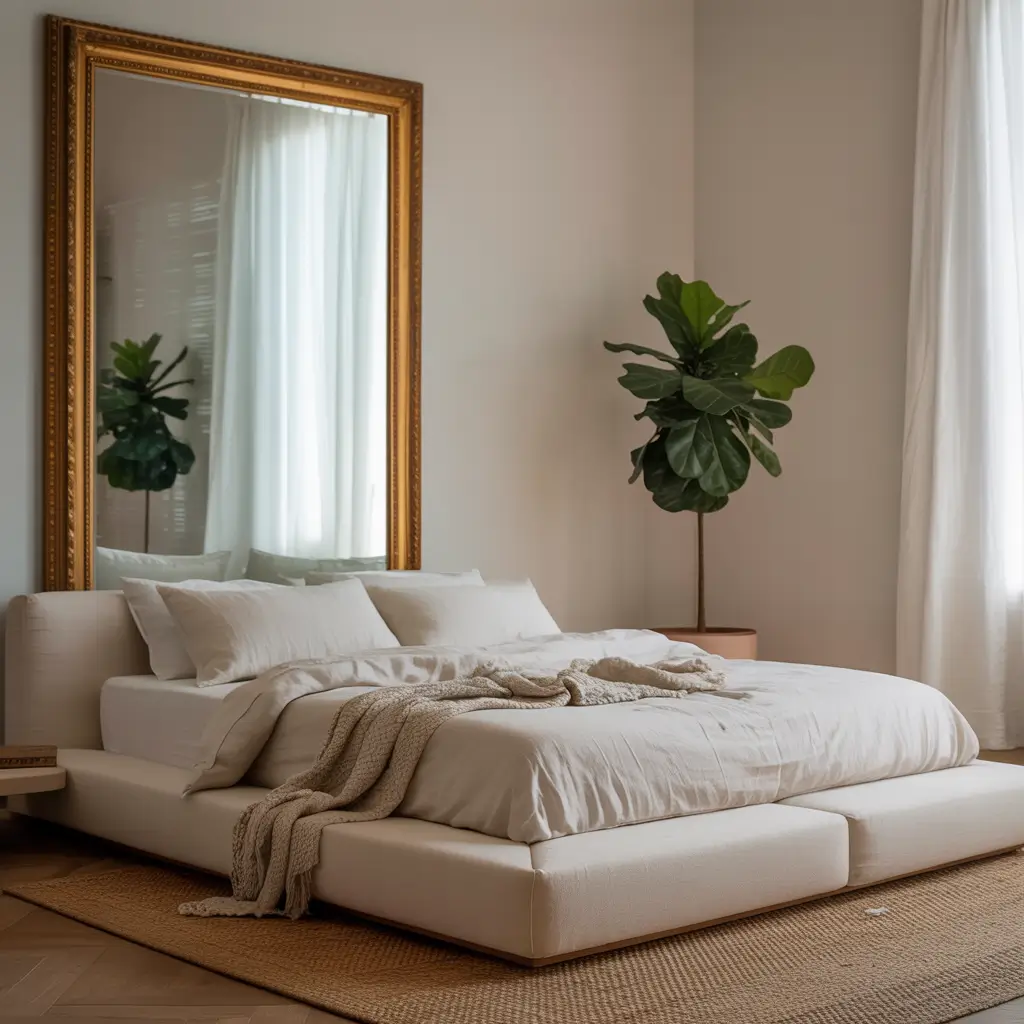
Mirrors are small space secret weapons. They double visual space, reflect light, and create depth where none exists. But random mirrors everywhere looks like a funhouse. You need strategy.
Strategic Mirror Placement
Position mirrors to maximize impact:
- Opposite windows to double natural light
- Behind light sources to amplify brightness
- At the end of hallways to extend length
- Above mantels as focal points
- As closet doors to eliminate visual weight
- In dark corners to brighten dead zones
My hallway mirror trick: a full-length mirror at the hallway’s end makes it appear twice as long. Cost: $40 from IKEA. Impact: priceless.
Mirror Styles That Work
Not all mirrors suit small spaces:
- Frameless mirrors feel less heavy
- Antiqued mirrors add character without bulk
- Grouped small mirrors create gallery walls
- Oversized mirrors make bold statements
- Mirrored furniture reflects without wall commitment
The Ceiling Mirror Controversy
Mirrored ceilings? Usually no. But mirror tiles on one section of ceiling can work brilliantly. My friend installed mirror tiles above her dining table, and it reflects her chandelier beautifully while making the room feel taller. Just don’t overdo it — nobody wants disco fever flashbacks.
12. Open-Concept Interior Ideas for Small Houses
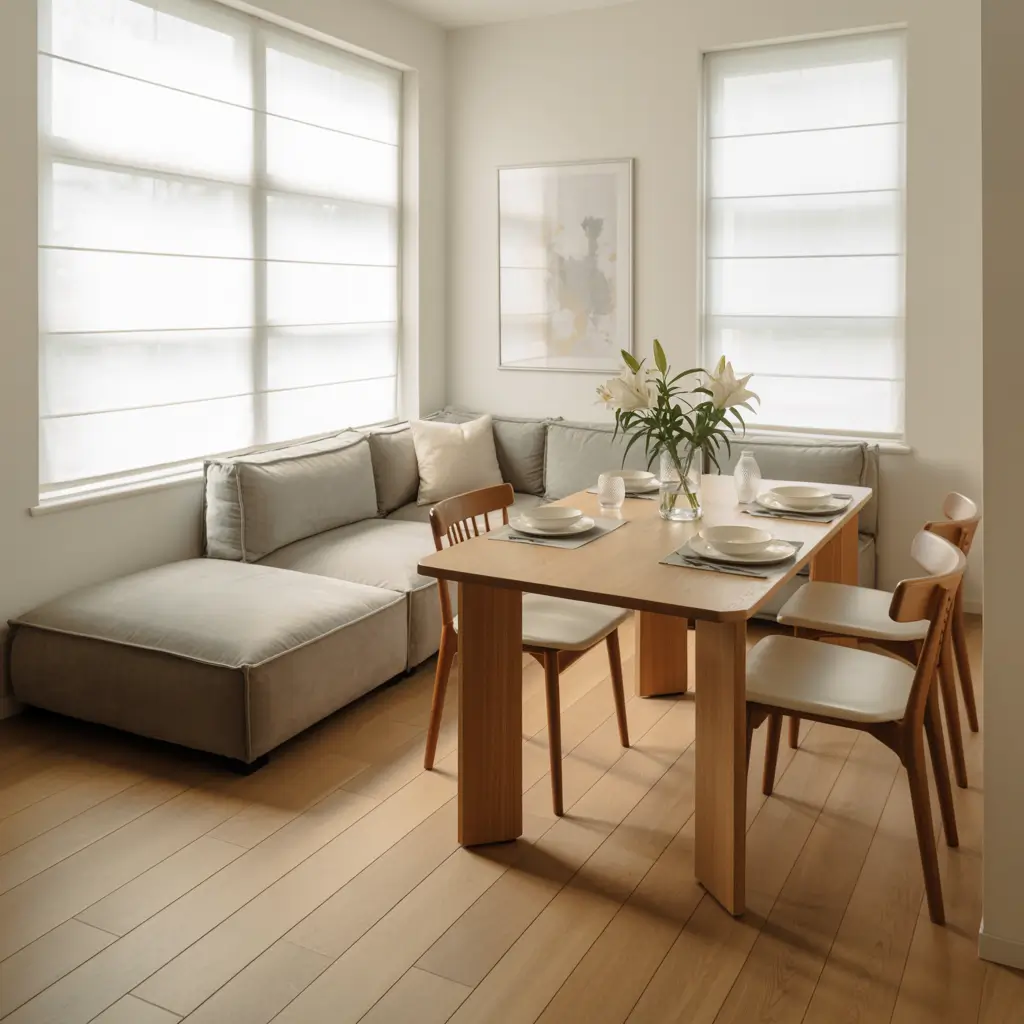
Walls eat space. Every wall needs clearance on both sides, cutting into precious square footage. Open-concept design eliminates these space-stealers while creating flow and flexibility.
Removing Walls Safely
Before swinging that sledgehammer, know what you’re doing:
- Hire a structural engineer to identify load-bearing walls
- Check permits requirements in your area
- Consider partial removal for compromise
- Plan for electrical/plumbing rerouting
I removed the wall between my kitchen and living room (non-load-bearing, thank goodness), gaining 15 square feet of usable space just from the wall’s footprint.
Defining Spaces Without Walls
Open concept doesn’t mean one giant undefined room:
- Kitchen islands separate cooking from living
- Different flooring signals zone changes
- Ceiling treatments define areas
- Furniture placement creates boundaries
- Color shifts establish different zones
The Noise Factor
Let’s be real: open concept means noise travels. My solution:
- Soft furnishings absorb sound
- Rugs on hard floors reduce echo
- Curtains dampen noise
- White noise machines mask sounds
- Strategic furniture placement blocks sound paths
IMO, the space gains outweigh noise concerns, but plan accordingly if you’re noise-sensitive :/
Bringing It All Together
Living in a small house interoir taught me that limitations breed creativity. Every challenge forced me to find clever solutions that I’d never have discovered in a larger space.
My small house feels more organized, more intentional, and more “me” than any large house ever could.
Start with one idea that resonates most. Maybe it’s finally buying that storage ottoman, or painting everything white, or removing that unnecessary wall. Small changes compound quickly in small spaces.
Within months, you’ll have a home that feels spacious, functions beautifully, and proves that square footage has nothing to do with quality of life.
The best part? When friends visit my 650-square-foot house, they always say the same thing: “It feels so much bigger than my place!” Their places are usually twice the size.
That’s the power of smart small house interior design — making every inch count while creating spaces that feel abundant rather than restricted.
Remember: small house living isn’t about sacrifice. It’s about being smart, creative, and intentional with the space you have.
And honestly? I wouldn’t trade my perfectly designed small house for a McMansion. Okay, maybe for a mansion-mansion, but definitely not a McMansion 🙂