10 Inspiring 80s Interior Design Ideas and Nostalgic Décor Tips
- Home Interior Design
 Ben
Ben- 0
- 31 minutes read
Remember when you thought the 80s were dead and buried along with your mom’s shoulder pads? Well, plot twist—80s interior design is back, and it’s bringing all the bold, unapologetic energy we didn’t know we needed.
I’ll be honest, when I first started noticing 80s design popping up everywhere, I was skeptical. But after diving into this aesthetic (and maybe getting a little obsessed), I’ve realized that the 80s knew something we forgot: life’s too short for boring rooms.
So grab your neon leg warmers and let’s talk about 10 ways to bring this decade back without making your home look like a time capsule.
Vibrant 80s Living Room Makeovers
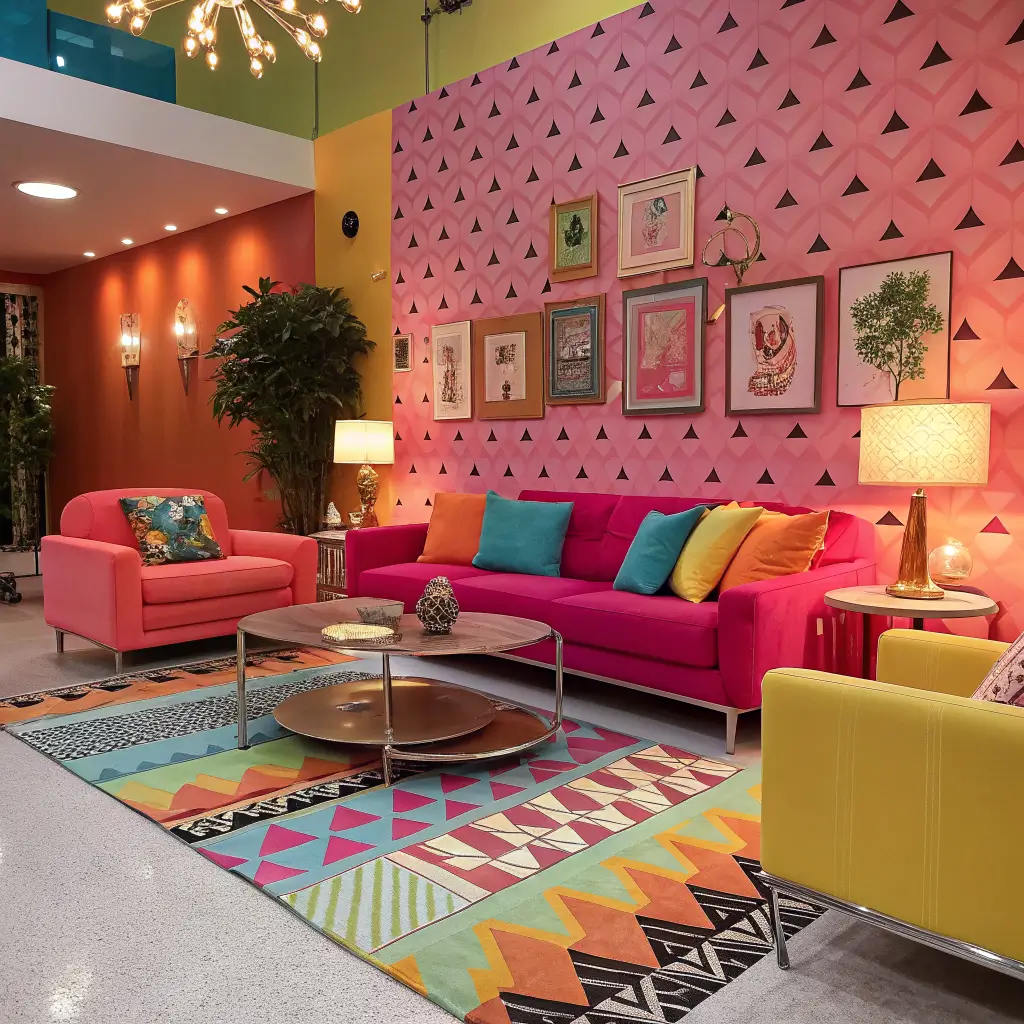
The 80s living room wasn’t afraid of anything—especially not color. We’re talking jewel tones, pastels, and everything in between living together in glorious, chaotic harmony.
Here’s what makes an 80s living room actually work in 2026: commitment. You can’t half-ass this aesthetic. Either you’re in with the bold colors and geometric patterns, or you’re not. I tried doing a “subtle 80s” living room once, and it just looked confused.
Key elements that’ll transform your space:
- A statement sofa in teal, mauve, or coral (bonus points if it’s modular)
- Glass coffee table with a geometric base (extra points for brass or chrome)
- Layered lighting—floor lamps, table lamps, and maybe a track lighting system
- Abstract art in bold colors
- Plants—lots of them, preferably in ceramic pots with geometric patterns
The trick is balancing the bold with the functional. Your living room should still feel like a place where you can actually relax, not a museum exhibit. I’ve found that sticking to one or two main colors and then going wild with patterns within that palette keeps things cohesive.
And honestly? There’s something liberating about decorating a room that doesn’t take itself too seriously. The 80s taught us that homes should be fun 🙂
Retro 80s Bedroom Color Combos
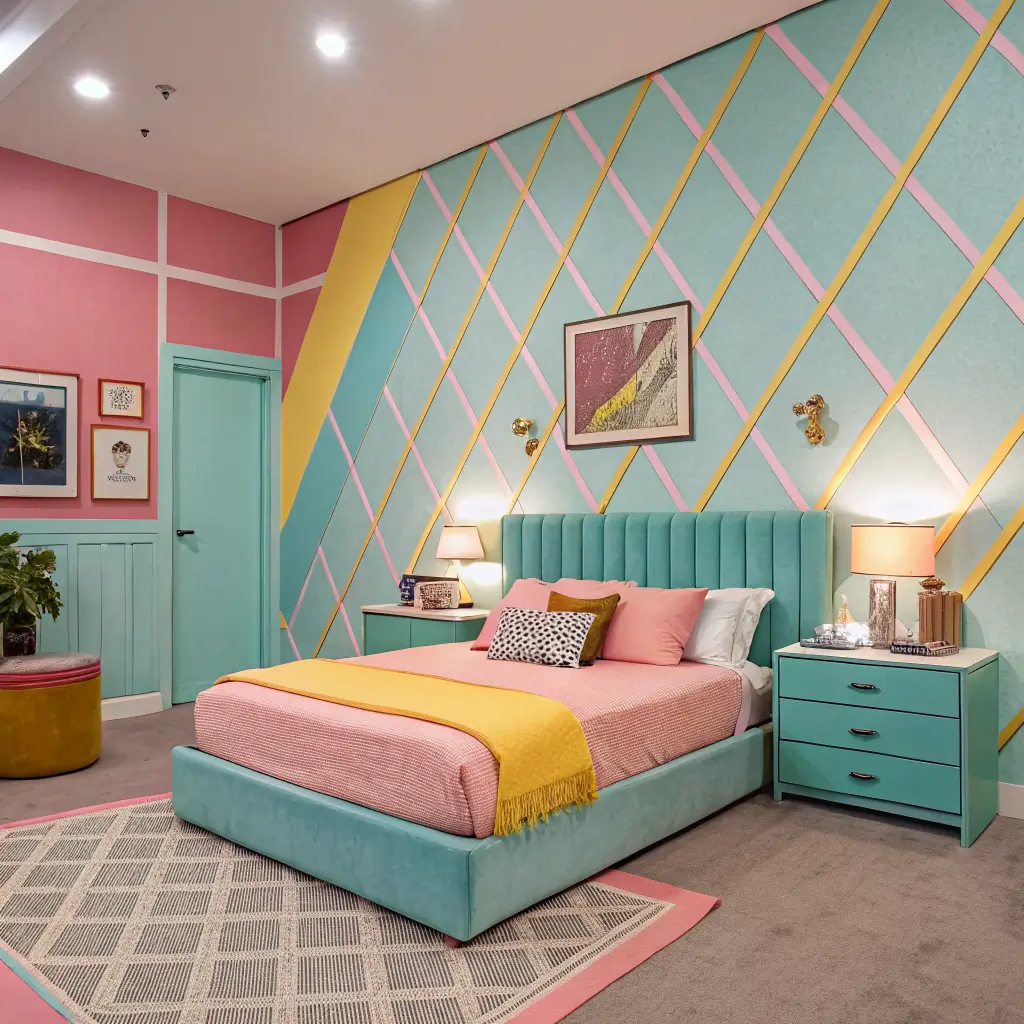
Okay, confession time: I painted my bedroom in an 80s color scheme, and my friends thought I’d lost my mind. Peach walls with dusty rose accents. But guess what? I’ve never slept better, and that room photographs like a dream.
The 80s had some wild bedroom color combinations that somehow worked. Peach and grey. Mint and mauve. Dusty pink and seafoam green. These aren’t combinations you’d naturally think of, but when you put them together, magic happens.
Here’s how to nail the 80s bedroom vibe:
- Pick two main colors from the 80s palette (think pastels with one jewel tone)
- Use one color for walls, the other for textiles
- Add geometric bedding—think Memphis design or abstract patterns
- Mirrored nightstands or dressers (the 80s loved reflective surfaces)
- Vertical blinds or bold patterned curtains
- Wall-to-wall carpeting in a neutral shade
The bedroom is where you can really experiment because it’s your private space. Nobody’s judging your color choices here. I went for blush pink walls with grey and white geometric bedding, and it creates this weird cocoon effect that’s simultaneously energizing and calming.
Pro tip: Use the 60-30-10 rule. 60% dominant color, 30% secondary color, 10% accent. This keeps things from looking like a unicorn exploded in your bedroom.
Bold Geometric 80s Office Designs
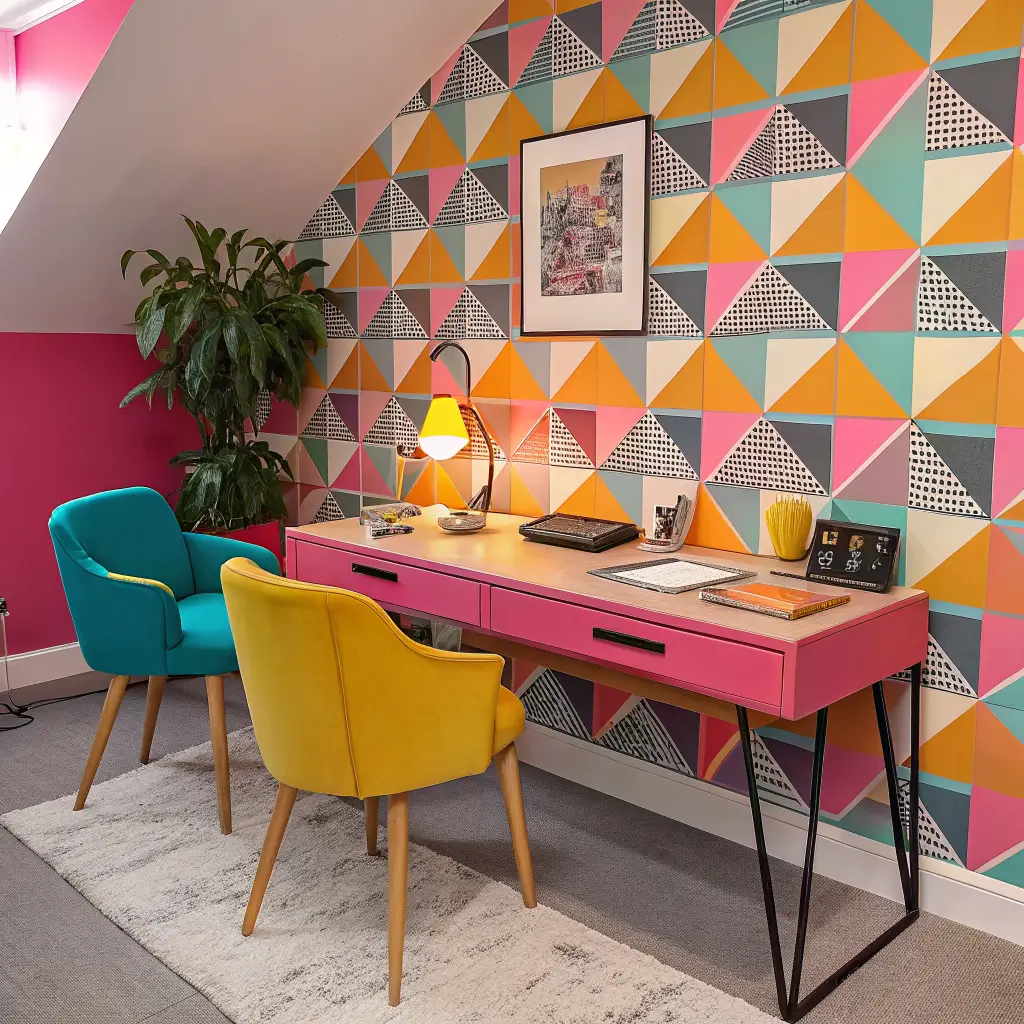
Ever wonder why modern offices feel so sterile? Because we forgot that the 80s made work spaces actually exciting.
The 80s office was all about power, presence, and patterns. Geometric shapes everywhere—on carpets, walls, furniture, even the art. It was bold, it was confident, and it said “I’m here to make deals and look good doing it.”
I’ve incorporated 80s office elements into my workspace, and the productivity boost is real. There’s something about being surrounded by bold design that makes you feel more capable. Maybe it’s psychological, maybe it’s the caffeine, but I’m not questioning it.
Essential 80s office elements:
- Geometric area rug (zigzags, triangles, or abstract patterns)
- Lacquered desk in black, white, or a bold color
- Memphis-style desk accessories
- Angular shelving units
- Neon or colored desk lamp
- Abstract prints in primary colors
- Wire organizers (very 80s, very practical)
The key here is creating an environment that feels intentional and energized. The 80s didn’t do boring offices—every space had personality. Your office should make you feel like Gordon Gekko minus the insider trading, obviously.
Also Read: 12 Beautiful Office Interior Design Luxury Ideas & Chic Decor
Neon Accents for 80s Style Kitchens
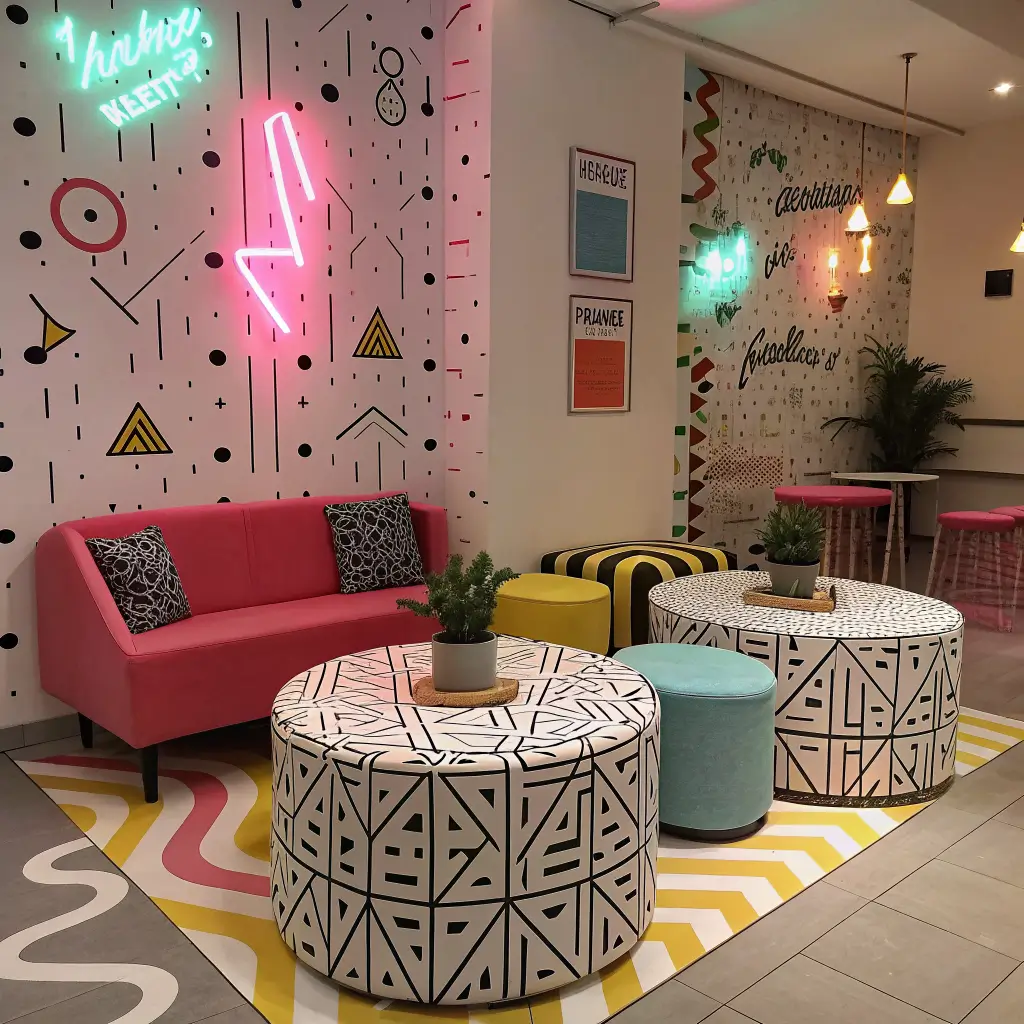
Let’s address the elephant in the room: neon in the kitchen sounds insane. But hear me out—strategic neon accents can transform a bland kitchen into something that actually makes you want to cook.
I’m not saying paint your entire kitchen neon pink (though if that’s your vibe, you do you). I’m talking about small pops of neon that add energy without overwhelming the space. The 80s kitchen was playful, colorful, and unapologetically fun.
Ways to add neon without going overboard:
- Neon open sign or custom neon art
- Bright colored small appliances (toasters, mixers, kettles)
- Neon-trimmed dishware displayed on open shelving
- Colorful tile backsplash with geometric patterns
- Neon bar stools or dining chairs
- LED strip lighting under cabinets in color-changing options
The 80s kitchen wasn’t afraid of mixing metals either. Chrome, brass, and colored appliances all coexisted. Modern kitchens are so matchy-matchy, but the 80s said “who cares?” and threw everything together.
My favorite 80s kitchen move? A neon pink KitchenAid mixer on a white counter. It’s functional art that makes me smile every time I see it. Plus, it’s a conversation starter that never gets old.
Memphis-Inspired 80s Lounge Corners
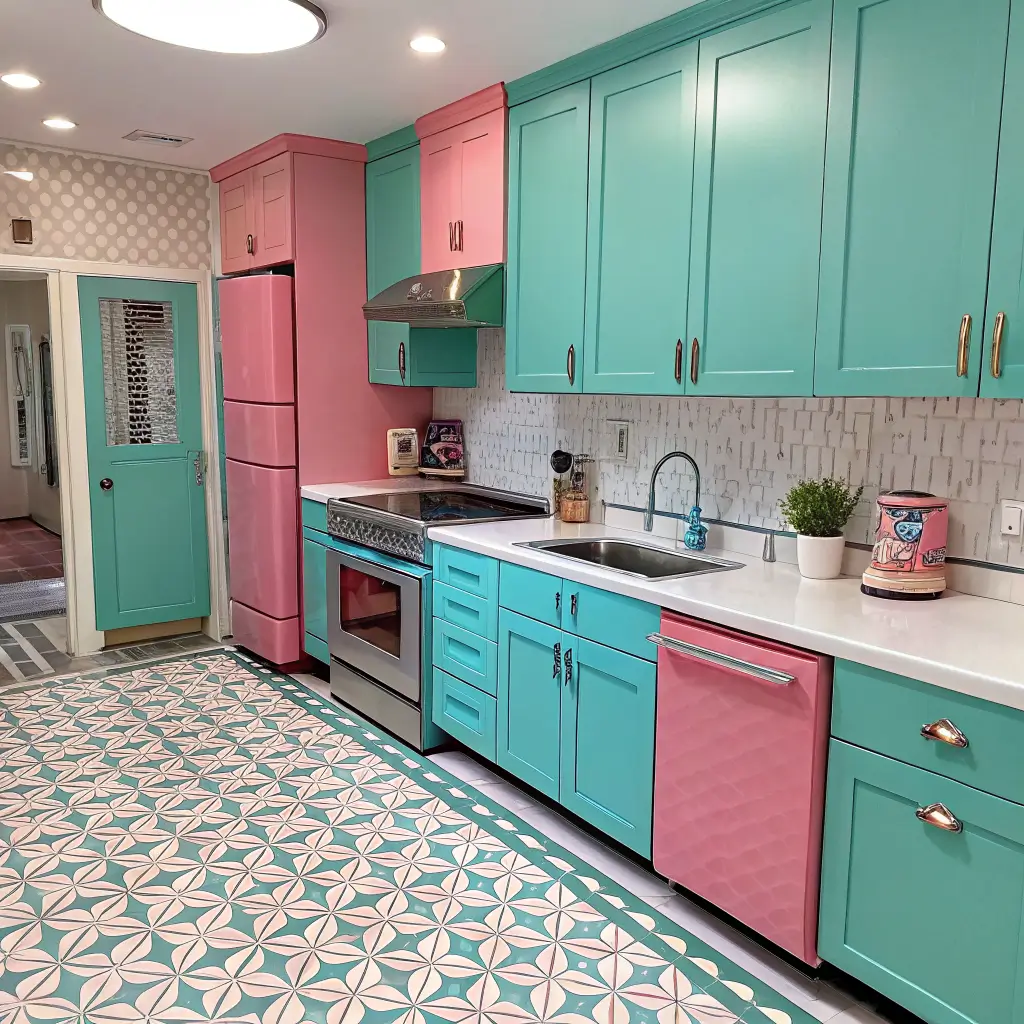
If you don’t know Memphis design, Google it right now. I’ll wait. Mind-blowing, right?
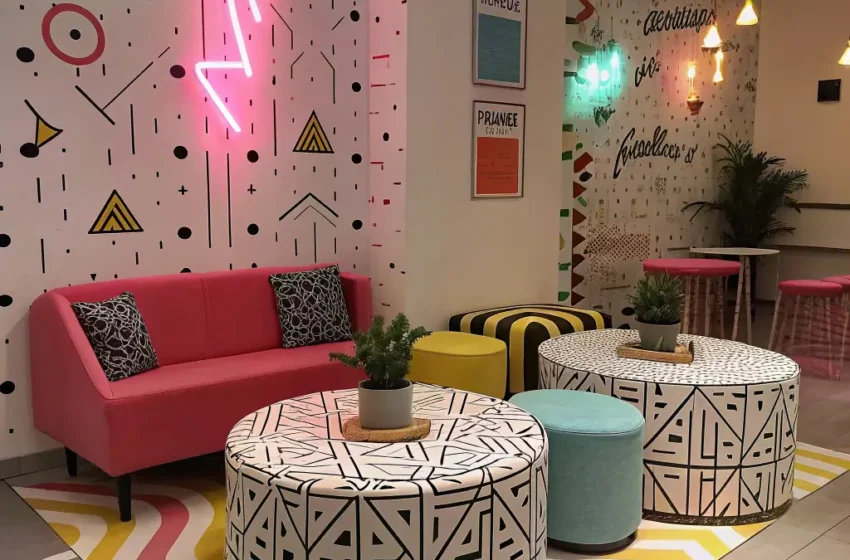
Memphis design defined the 80s aesthetic—bold colors, geometric shapes, and patterns that shouldn’t work together but somehow do. It’s like someone gave a toddler design software and unlimited confidence, and the results are spectacular.
Creating a Memphis-inspired lounge corner is easier than you’d think:
- Start with a bold, angular chair or loveseat
- Add a side table with geometric shapes (circles, triangles, squiggles)
- Layer in patterns—dots, stripes, zigzags
- Use primary colors plus black and white
- Include sculptural elements (vases, art pieces, lamps)
- Don’t be afraid of mixing wood tones and metallics
I have a Memphis-style reading corner in my apartment, and it’s genuinely my favorite spot. The bold design creates this bubble of energy that makes everything feel more exciting. Reading a book? Suddenly you’re in a design manifesto. Scrolling on your phone? You’re doing it in style.
The beauty of Memphis design is that there are no rules. If it looks interesting and makes you happy, it works. The 80s were all about breaking design conventions, and Memphis took that mission seriously.
Vintage 80s Lighting Ideas
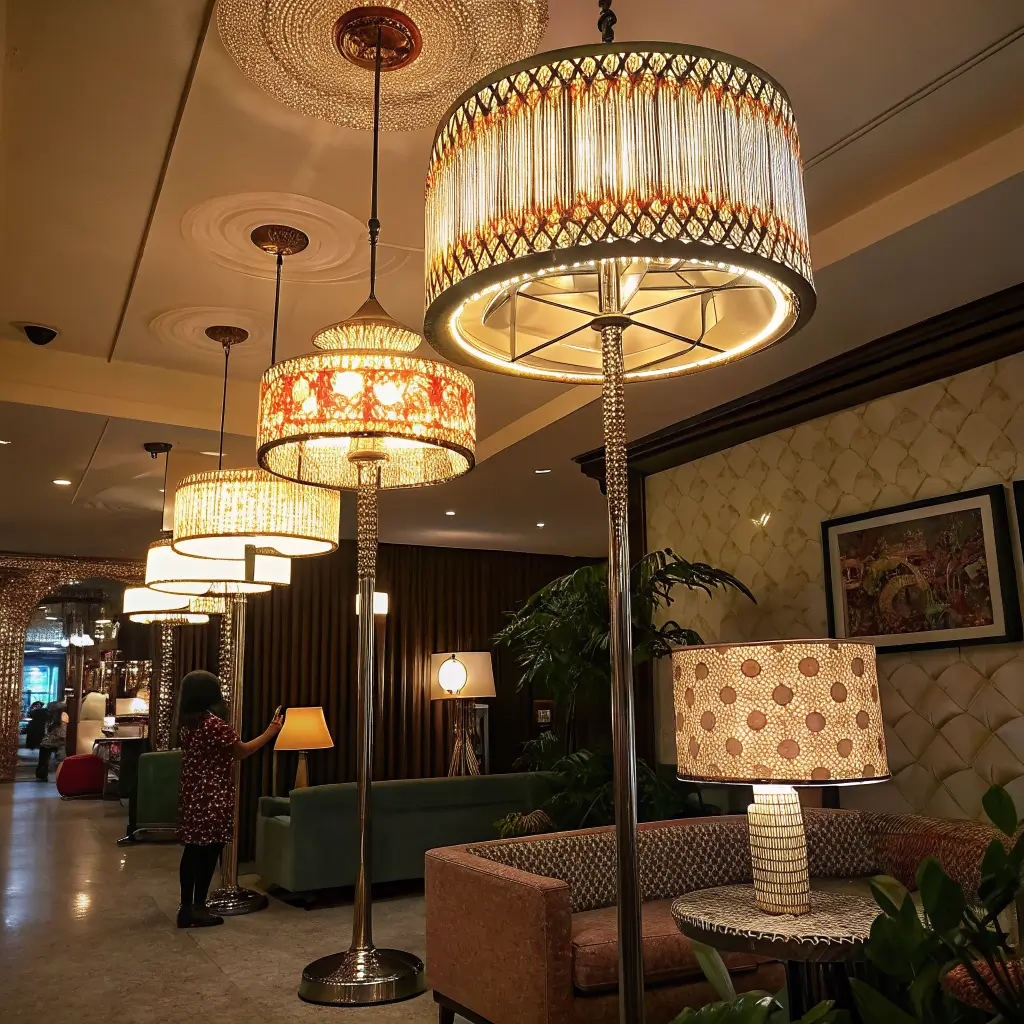
80s lighting was extra in the best possible way. Track lighting, torchiere lamps, neon tubes, glass block walls with lights inside—the decade understood that lighting isn’t just functional, it’s theatrical.
I’ve collected vintage 80s lighting fixtures for years, and they completely change the vibe of a space. Modern lighting is so focused on being invisible or minimal, but 80s lighting wanted to be seen, appreciated, and maybe start a conversation.
Iconic 80s lighting to hunt down:
- Halogen torchiere floor lamps (the ones that point up)
- Track lighting systems (adjustable spotlights)
- Neon tube lights (pink, blue, or multicolor)
- Geometric table lamps with colored shades
- Paper or rice paper globe pendants
- Chrome or brass pharmacy lamps
- Novelty neon signs
The track lighting thing is especially practical because you can aim light exactly where you need it. Plus, there’s something very “80s penthouse apartment” about adjustable spotlights that makes you feel fancy.
My personal favorite? A hot pink neon tube light in my entryway. Does it serve a practical purpose? Not really. Does it make me smile every single day? Absolutely. That’s the 80s energy we need more of, IMO :/
Also Read: 10 Charming French Interior Design Ideas for Dream Rooms
80s Home Décor DIY Hacks
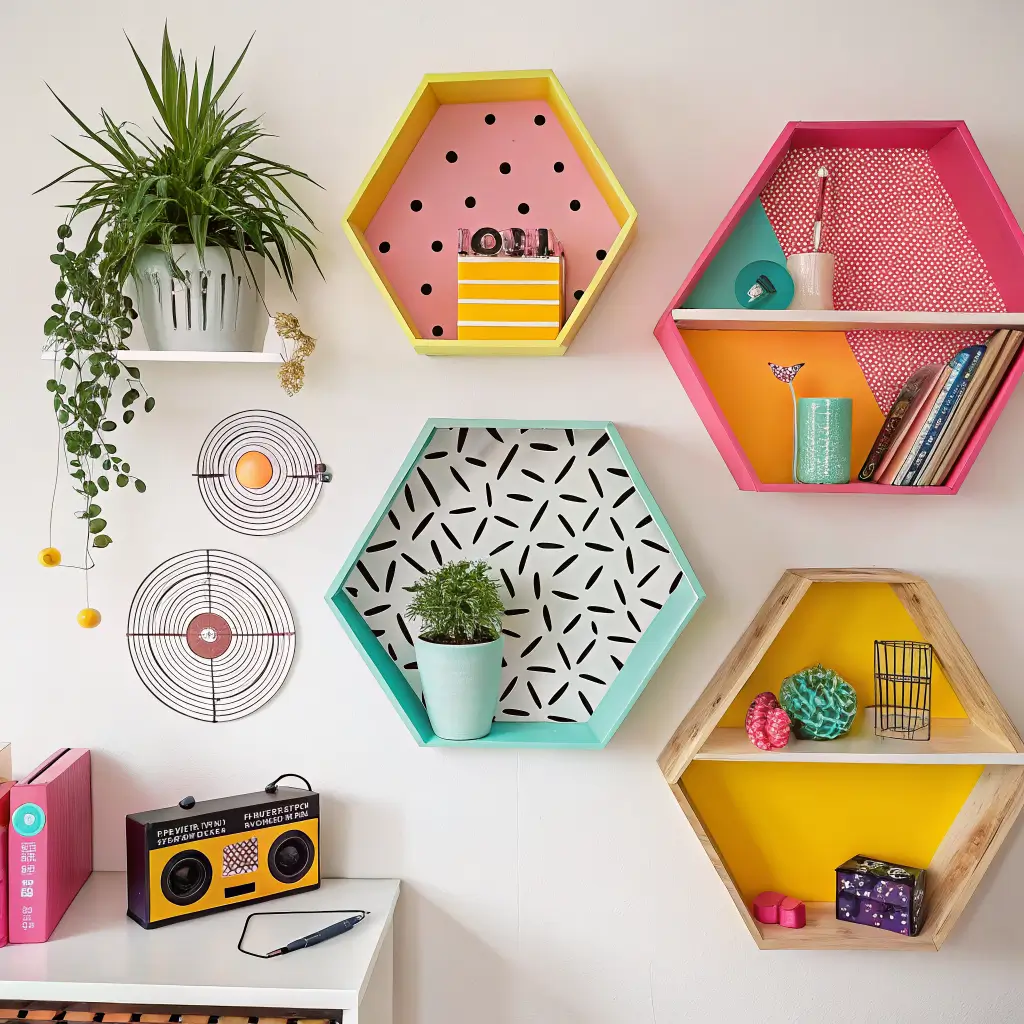
Here’s the secret nobody tells you: you don’t need a trust fund to nail the 80s aesthetic. The decade was actually pretty DIY-friendly if you know what to look for.
I’ve thrifted and DIY’d most of my 80s pieces, and honestly, that’s part of the fun. The 80s were about creativity and making things work with what you had. Very punk rock, very resourceful.
DIY projects that’ll give you instant 80s vibes:
- Spray paint old furniture in bold colors (lacquer finish for authenticity)
- Create geometric wall art using painter’s tape and acrylic paint
- Make Memphis-inspired throw pillows with fabric paint
- Transform thrift store lamps with colorful spray paint and new shades
- DIY neon rope light installations (way cheaper than real neon)
- Decoupage geometric patterns onto furniture surfaces
- Create your own abstract art using primary colors
The painting technique is key here. The 80s loved lacquered, glossy finishes. Matte everything wasn’t a thing yet. So when you’re spray painting that old side table, go for the high-gloss finish. It makes a huge difference in authenticity.
I’ve also found that geometric patterns are incredibly forgiving for DIYers. Imperfect lines? That’s just part of the Memphis aesthetic. Wonky shapes? Even better. The 80s celebrated imperfection in a way that modern design doesn’t.
Chic 80s Minimalist Interiors
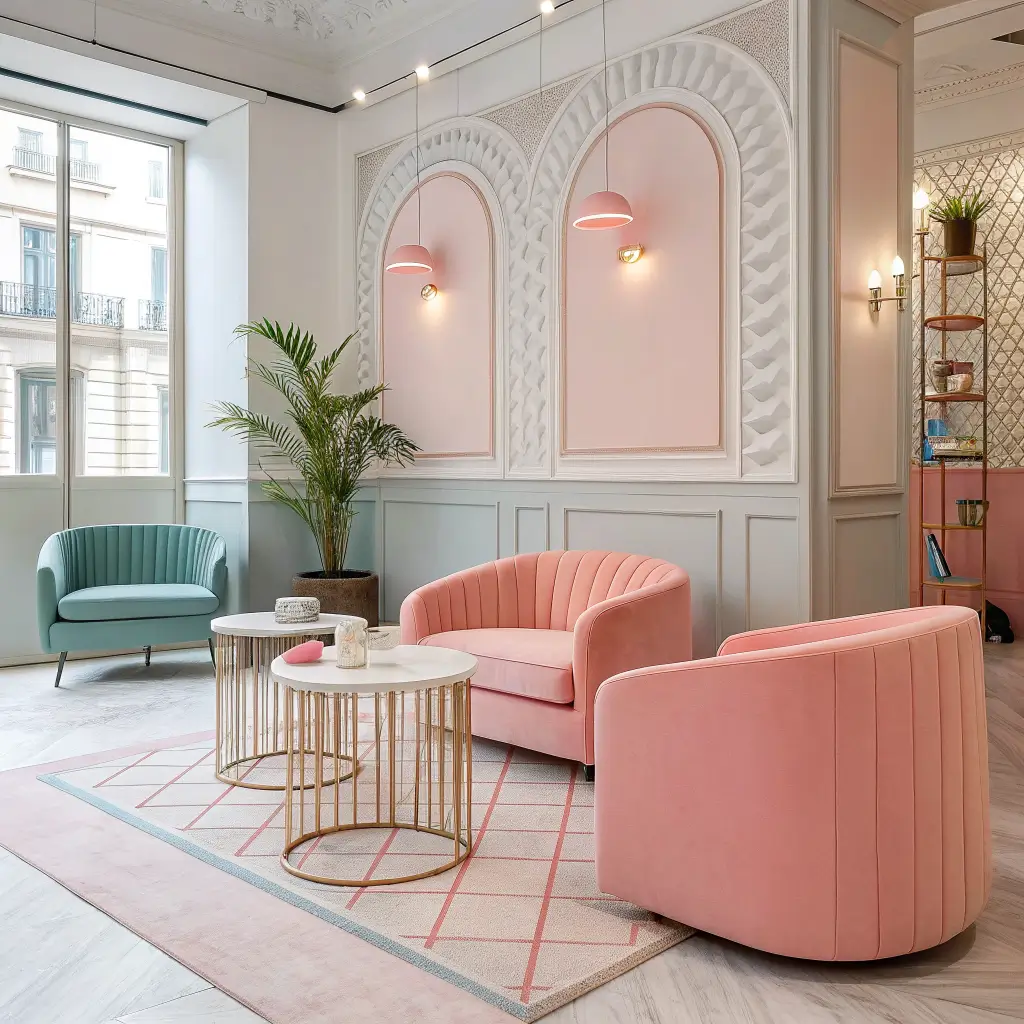
Wait, the 80s had minimalism? Yes, and it was way more interesting than the minimalism we see today.
80s minimalism still had personality. It used bold colors sparingly, incorporated geometric shapes, and wasn’t afraid of making statements. Think white walls with one neon accent, clean lines with unexpected pops of pattern.
I’ll be honest—I prefer 80s minimalism to modern minimalism because it doesn’t feel like you’re living in a showroom. It’s minimal but not sterile, simple but not boring.
How to achieve 80s minimalist style:
- White or neutral base with one bold accent color
- Clean-lined furniture in geometric shapes
- Limited but impactful décor pieces
- Glass and chrome materials
- Strategic use of mirrors to expand space
- One statement lighting fixture per room
- Vertical blinds or minimal window treatments
The difference between 80s minimalism and modern minimalism? The 80s version had confidence. It used negative space intentionally, not apologetically. Each piece in the room earned its place by being either functional or gorgeous—preferably both.
My living room follows 80s minimalist principles: white walls, grey sofa, but with a teal geometric rug and a brass arc floor lamp. Minimal items, maximum impact. That’s the 80s minimalist formula.
Statement 80s Wall Art & Posters
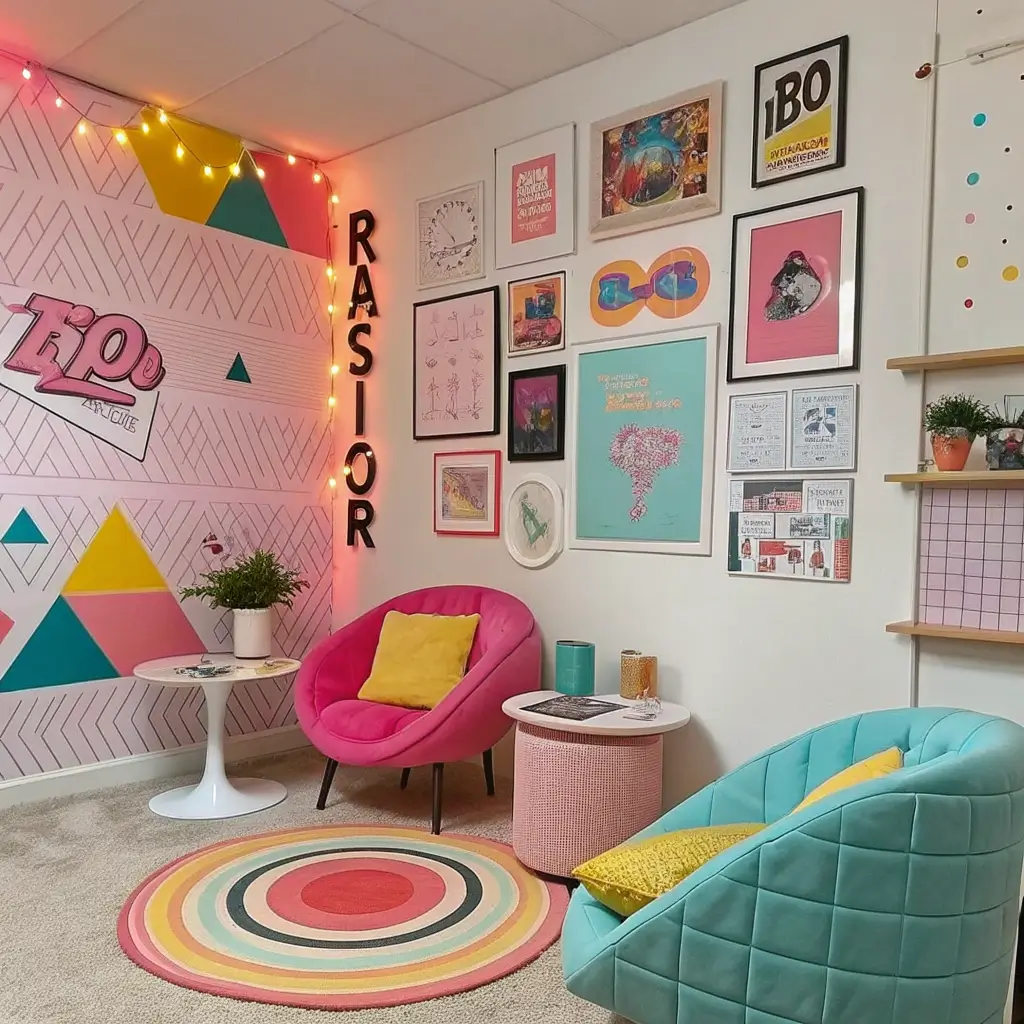
The 80s didn’t do subtle wall art. If you were hanging something, it better make people stop and look.
Bold, graphic, and often abstract—that’s 80s wall art in a nutshell. We’re talking geometric prints, neon colors, inspirational quotes in wild typography, and music or movie posters that dominated entire walls.
I’ve been collecting 80s-style art, and the prices range from “thrift store score” to “small car payment,” so there’s something for every budget. The key is choosing pieces that genuinely excite you, not just what Instagram says is cool.
Types of 80s wall art to incorporate:
- Abstract geometric prints in primary colors
- Vintage concert or movie posters (Blade Runner, anyone?)
- Neon-style typography prints
- Memphis design posters
- Pop art in bold colors
- Large-scale photography with colored filters
- Framed album covers from 80s artists
The 80s taught us that bigger is better when it comes to wall art. Don’t be afraid of oversized pieces. A gallery wall of tiny frames? That’s not 80s. One massive print that commands the room? Now we’re talking.
FYI, you can find tons of 80s-style printables online that you can frame yourself. Print them at your local print shop on quality paper, grab some colorful frames, and boom—instant 80s gallery wall for under a hundred bucks.
Also Read: 10 Stylish 70s Interior Design Ideas and Boho Chic Spaces
80s Retro Furniture Styling Tips
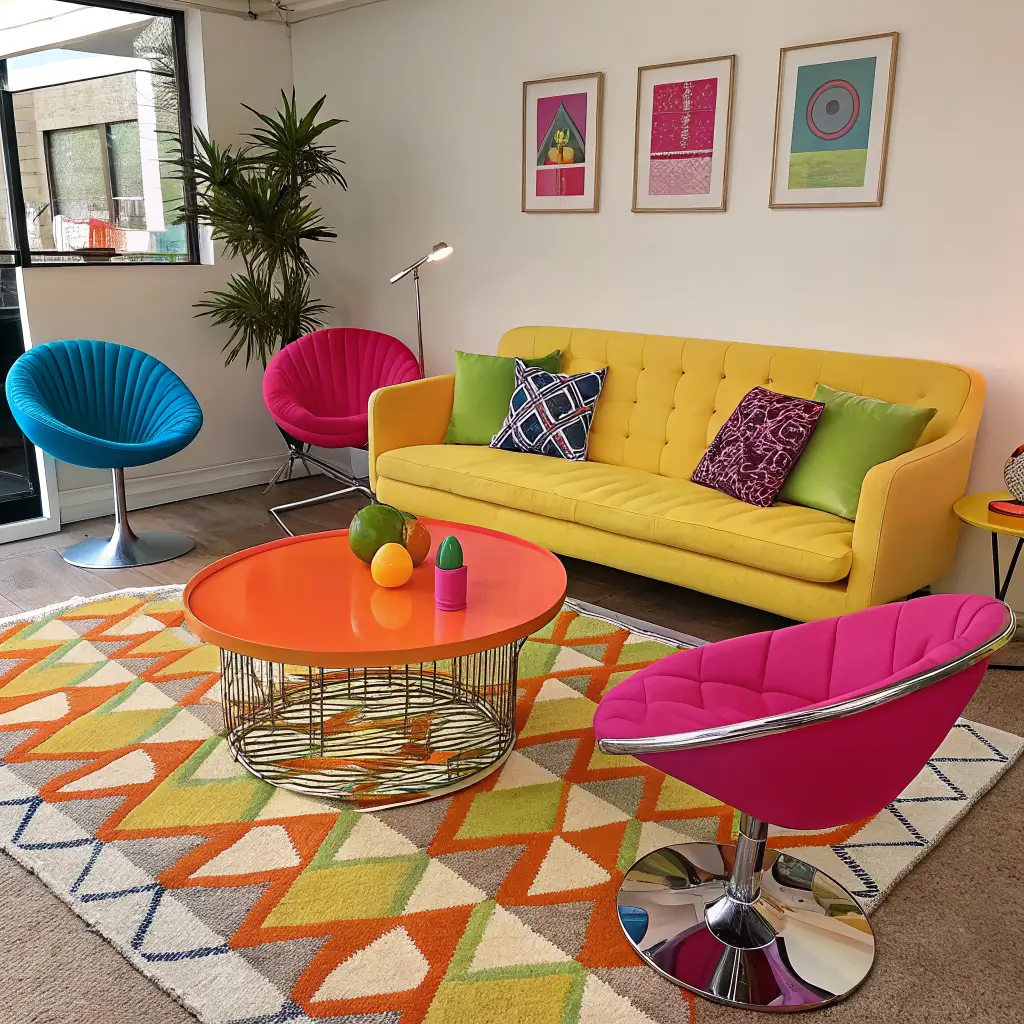
80s furniture was wild. Modular sofas, glass tables, lacquered everything, and shapes that seemed to defy physics—the decade took furniture design and said “let’s make it interesting.”
The styling is what makes or breaks 80s furniture. You can’t just plop an 80s piece in a modern room and call it a day. It needs context, it needs companions, it needs the right environment to shine.
I’ve learned this the hard way after buying a gorgeous Memphis-style chair that looked ridiculous until I styled the entire corner around it. Now it’s the star of my living room, but it took work to get there.
Furniture styling secrets:
- Layer different textures (glass, chrome, fabric, lacquer)
- Mix angular and curved pieces
- Use modular furniture for flexibility
- Don’t be afraid of colored furniture (teal, mauve, coral)
- Incorporate mirrored or reflective surfaces
- Choose furniture with geometric shapes
- Remember that bold patterns can live on furniture too
The 80s embraced furniture as sculpture. Each piece should be interesting from every angle. Modern furniture tends to be practical first, beautiful second. The 80s flipped that priority, and honestly, I respect it.
My best furniture find? A modular sectional in dusty rose that I can rearrange into about seven different configurations. It’s practical, it’s bold, and it makes my living room feel like I actually thought about the design instead of just ordering whatever was on sale.
Conclution
Look, the 80s interior got a bad rap for a long time. People dismissed it as tacky, excessive, and dated. But here’s the thing—the 80s were brave. They took risks, celebrated individuality, and created spaces that had genuine personality.
You don’t have to go full 80s in every room (though honestly, why not?). But incorporating even a few of these ideas will add energy and character to your space.
The decade taught us that homes should reflect who we are, not what some minimalist design blog says we should be.
So whether you’re going all-in with Memphis furniture and neon lights, or just adding a geometric rug and some bold wall art, embrace the 80s spirit. Be bold. Be colorful. Be unapologetically you.
Now if you’ll excuse me, I have a hot pink lamp to install and zero regrets about it 🙂