12 Inspiring Contemporary Interior Design Ideas and Chic Decor

Let me guess—you’ve scrolled through approximately ten thousand “contemporary interior” photos, and they all start to blur together into one giant beige-and-white nightmare. I feel you.
Contemporary design has this reputation for being cold, sterile, and about as welcoming as a dentist’s waiting room. But here’s the secret nobody tells you: contemporary done right is actually warm, livable, and way more interesting than traditional design.
I’ve spent years experimenting with contemporary aesthetics (my partner would say “obsessing,” but let’s not split hairs), and I’ve cracked the code on making it feel like an actual home, not a showroom.
Let’s talk about 12 contemporary interior design ideas that’ll transform your space without making it look like you hate fun.
Sleek Minimalist Living Room Concepts
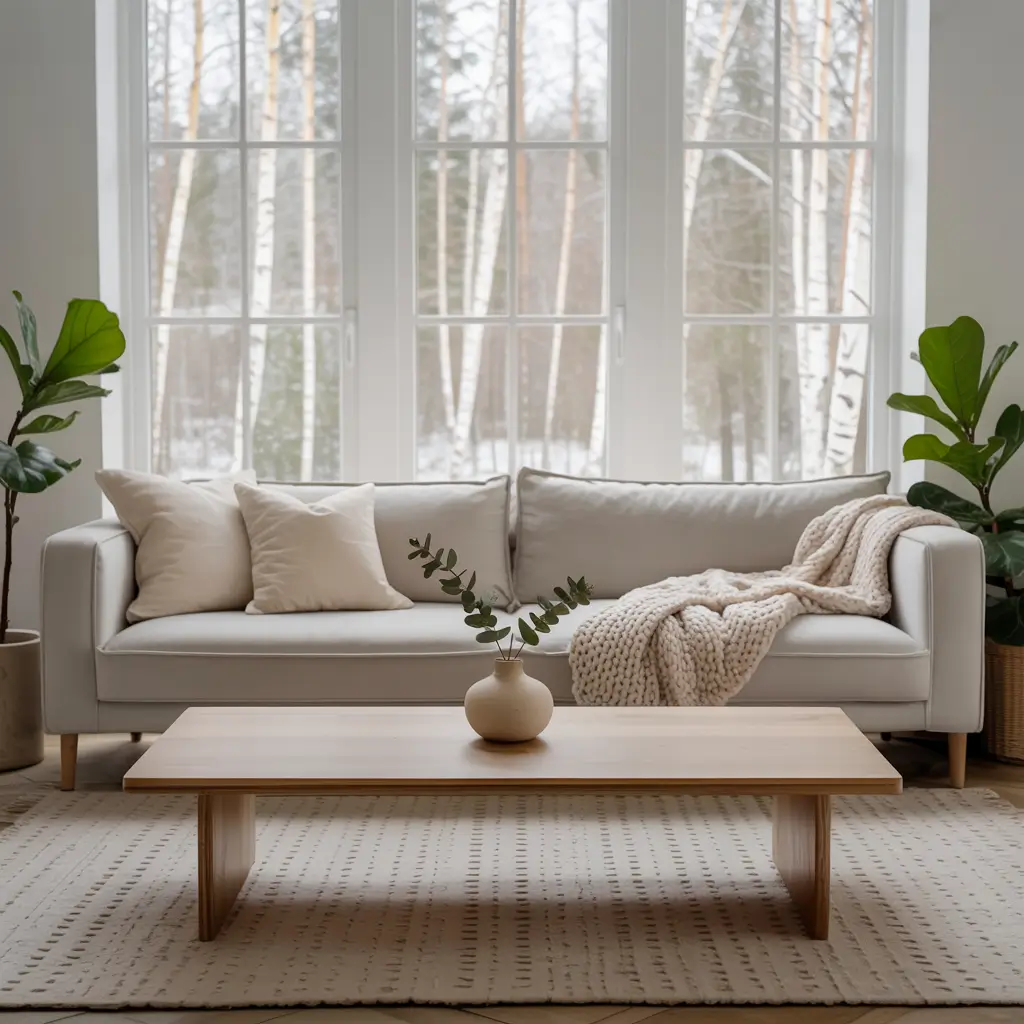
Minimalist living rooms get a bad rap because most people confuse “minimalist” with “empty and sad.” Real minimalism is about intentional choices, not deprivation.
I redesigned my living room using minimalist principles, and the number of times people have said “wow, this is so relaxing” is genuinely surprising. Turns out, when you’re not visually assaulted by seventeen throw pillows and three competing patterns, your brain can actually chill out.
The contemporary minimalist living room works because it respects negative space. You’re not trying to fill every corner—you’re creating breathing room for your mind and your stuff.
Essential minimalist elements:
- Low-profile sectional in a neutral tone (think grey, beige, or even charcoal)
- Clean-lined coffee table with hidden storage
- Single statement art piece instead of gallery wall chaos
- Recessed or track lighting for clean ceiling lines
- One sculptural plant in a simple pot
- Textured throw blanket in a tonal shade
- Maximum three color palette throughout the space
The trick here is quality over everything. When you only have five pieces of furniture, each one needs to be amazing. That cheap coffee table you grabbed on sale? It’s gonna stick out like a sore thumb in a minimalist space.
I learned this the hard way after trying to skimp on a sofa. In a room with minimal furniture, that sofa becomes the focal point by default. Invest in pieces that’ll last and actually make you happy to look at every day.
Bold Accent Wall Inspirations
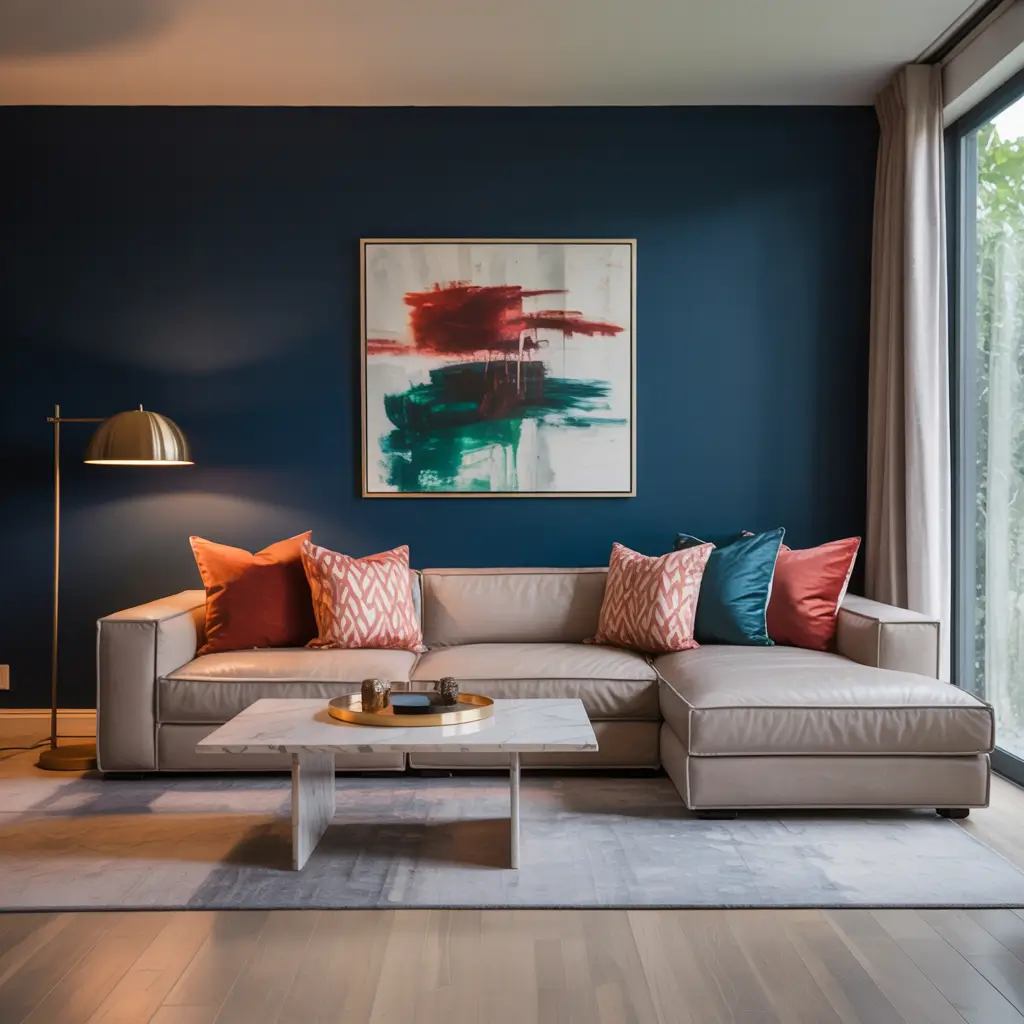
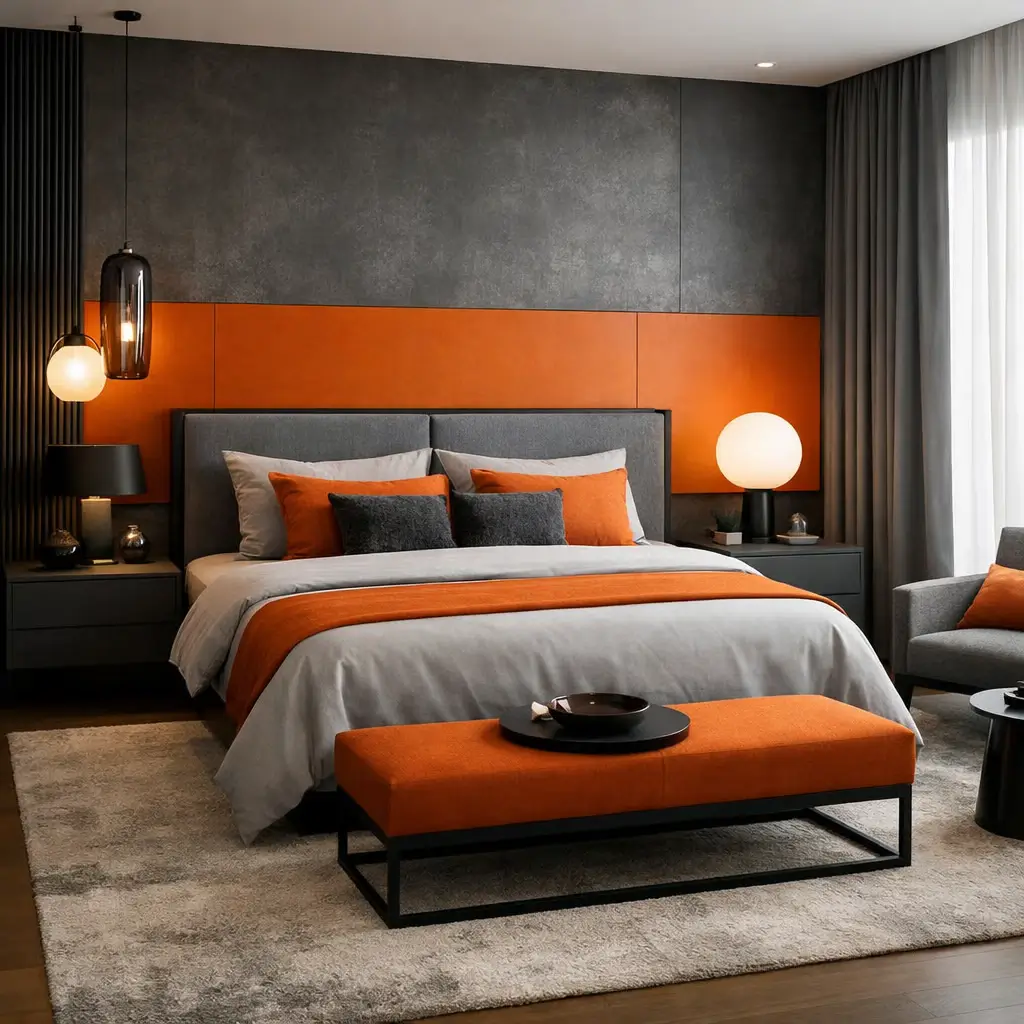
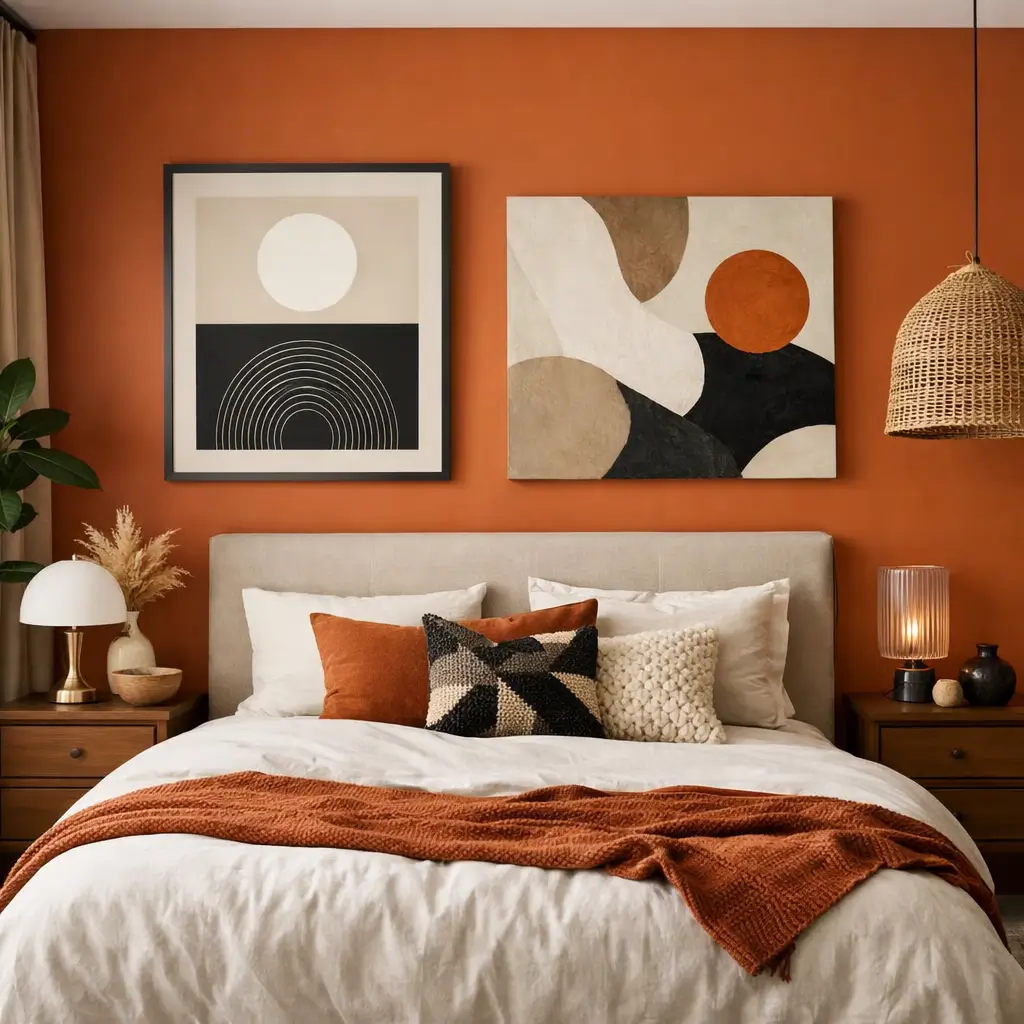
Contemporary design doesn’t mean boring walls, and accent walls are where you can let your personality actually show up to the party.
One bold wall transforms the entire room’s energy without committing every surface to something you might regret in six months. I’ve done accent walls in three different rooms, and each time, it’s been the catalyst that made everything else click into place.
The contemporary approach to accent walls is different from traditional design. You’re not just slapping a different color up there and calling it done—you’re creating intentional visual impact.
Accent wall options that actually work:
- Deep, moody colors (navy, forest green, charcoal, even black)
- Textured materials like wood slats or 3D wall panels
- Stone or brick veneer for organic contrast
- Geometric wallpaper in a bold pattern
- Floor-to-ceiling built-in shelving painted in contrast color
- Metallic finishes like brass or copper panels
- Large-scale abstract mural
Here’s what most people get wrong: they choose an accent wall randomly. The accent wall should be the natural focal point of your room—usually the wall your eye hits first when you enter, or the wall behind your main furniture piece.
My living room has a charcoal accent wall behind the sofa, and it anchors the entire space. Without it, everything felt floaty and disconnected. With it? Instant cohesion and drama without overwhelming the room.
Modern Open-Plan Kitchen Designs
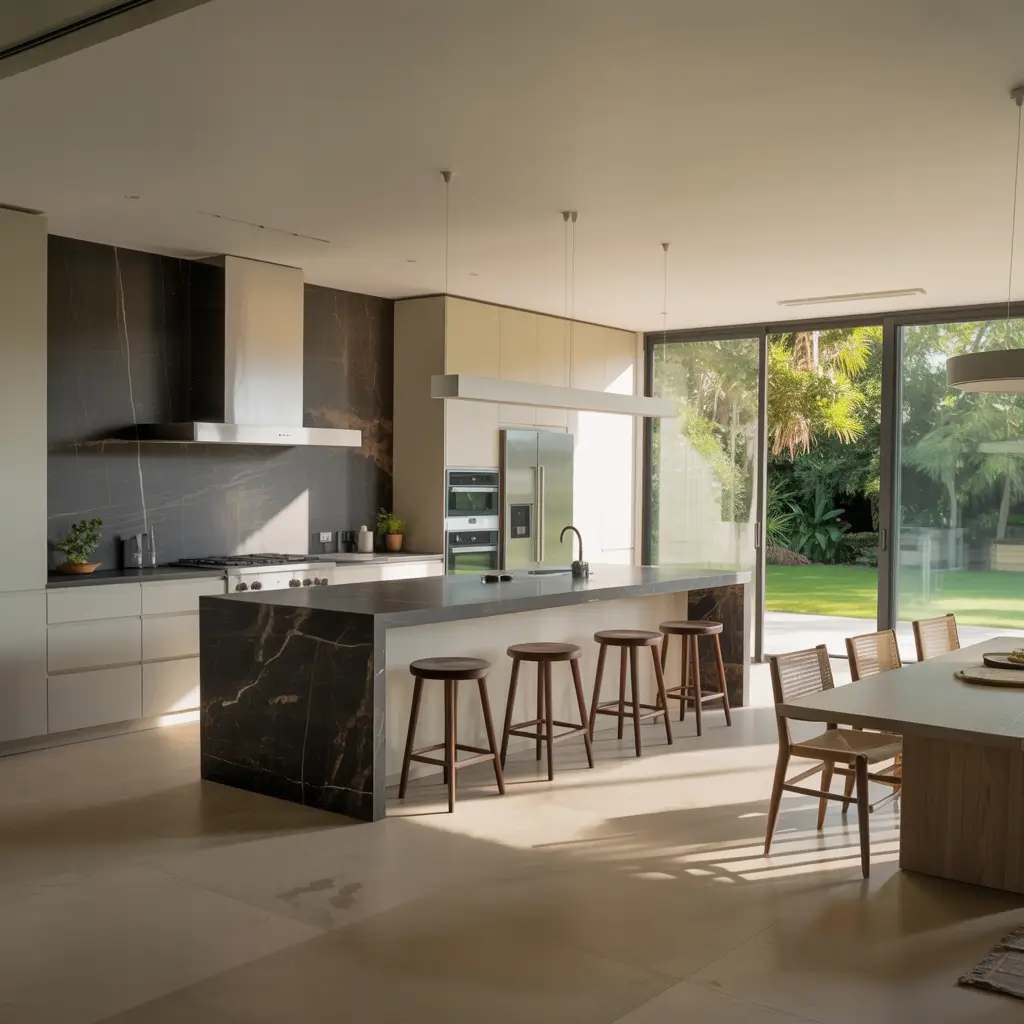
Open-plan kitchens are everywhere, but most of them feel more like “we knocked down a wall and hoped for the best” rather than intentional design.
Contemporary open-plan kitchens create distinct zones without physical barriers—it’s all about visual cues and smart layout planning. I helped redesign my sister’s kitchen-living-dining combo, and the transformation from chaotic to cohesive was honestly shocking.
The key is making each zone feel purposeful while maintaining flow between them. You want conversation to move easily from kitchen to living area, but you don’t want cooking smells attacking your sofa.
Open-plan kitchen essentials:
- Large island that functions as both prep space and casual dining
- Pendant lighting over island to define the kitchen zone
- Consistent flooring throughout (no jarring transitions)
- Color palette that flows but allows zoning (lighter in living, bolder in kitchen)
- Open shelving to maintain visual connection between spaces
- Strategic furniture placement to suggest boundaries
- Integrated appliances for streamlined look
One game-changer: the range hood as a design element. Instead of trying to hide it, contemporary design makes it a statement piece. A sculptural stainless steel hood becomes art that also happens to ventilate your cooking.
The biggest mistake I see? Completely matching kitchens and living areas. They should complement each other, not clone each other. Use the same color family but vary the intensity—maybe grey cabinets in the kitchen, charcoal accent wall in the living area.
Also Read: 10 Elegant Bar Interior Design Ideas for Luxury Interiors
Chic Contemporary Bedroom Makeovers
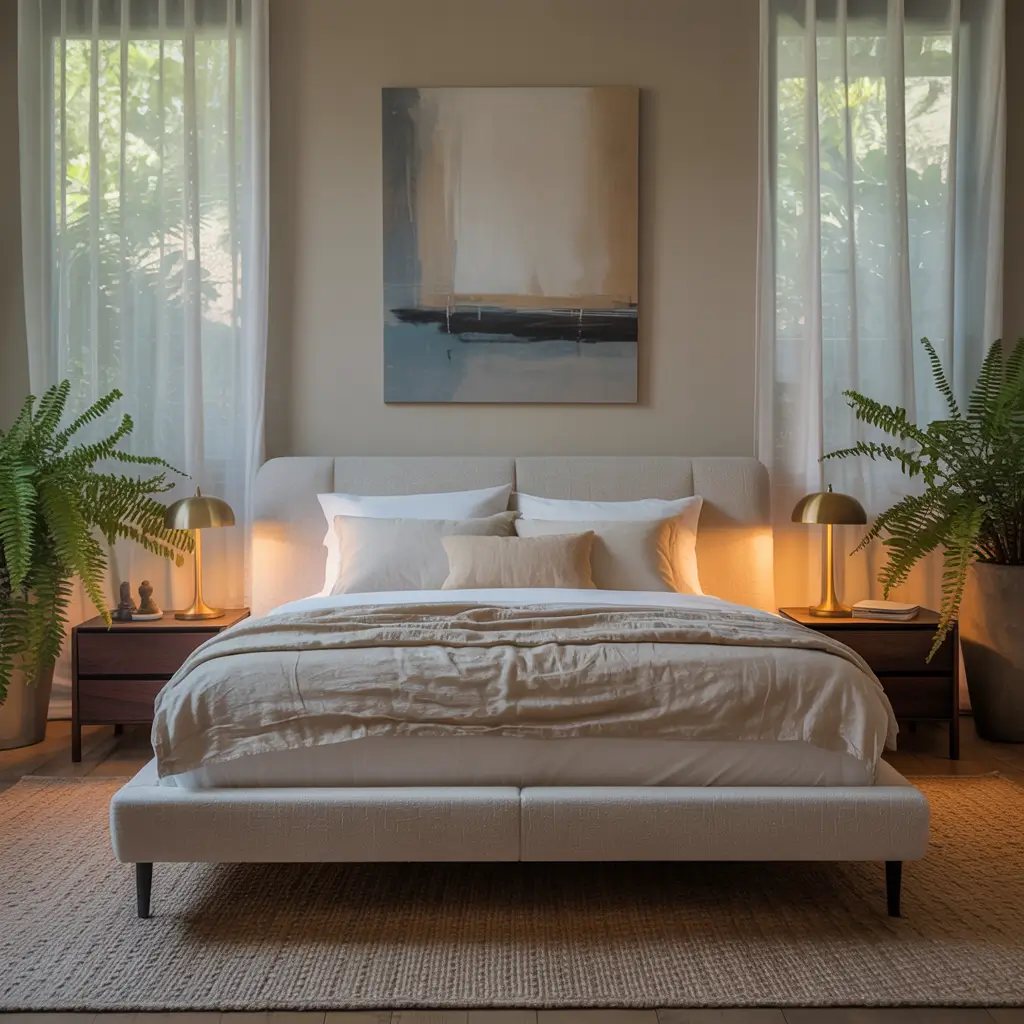
Bedrooms are where contemporary design really shines because the “less is more” philosophy actually helps you sleep better. Who knew?
Contemporary bedrooms prioritize calm and function—you’re creating a retreat, not a storage unit disguised as a sleeping space. I redesigned my bedroom last year, and my sleep quality legitimately improved. Turns out, visual clutter actually affects your rest.
The contemporary bedroom strips away everything unnecessary and focuses on what matters: quality sleep, easy morning routines, and a space that feels like an escape.
Contemporary bedroom must-haves:
- Platform bed with clean lines (upholstered or wood frame)
- Matching nightstands with minimal hardware
- Layered lighting (overhead, bedside, ambient)
- Blackout curtains or shades in a sleek style
- One large piece of art above the bed
- Quality bedding in neutral tones with texture variation
- Minimal décor on surfaces (three items max per nightstand)
Here’s a controversial opinion: get rid of the dresser. If you can fit your clothes in a closet system, removing the dresser opens up so much visual and physical space. Your bedroom instantly feels larger and calmer.
The color palette in contemporary bedrooms tends toward muted and sophisticated—think whites, greys, taupes, with maybe one deeper accent color. I went with soft grey walls and white bedding with a navy throw, and it’s like sleeping in a fancy hotel every night 🙂
Stylish Small Space Solutions
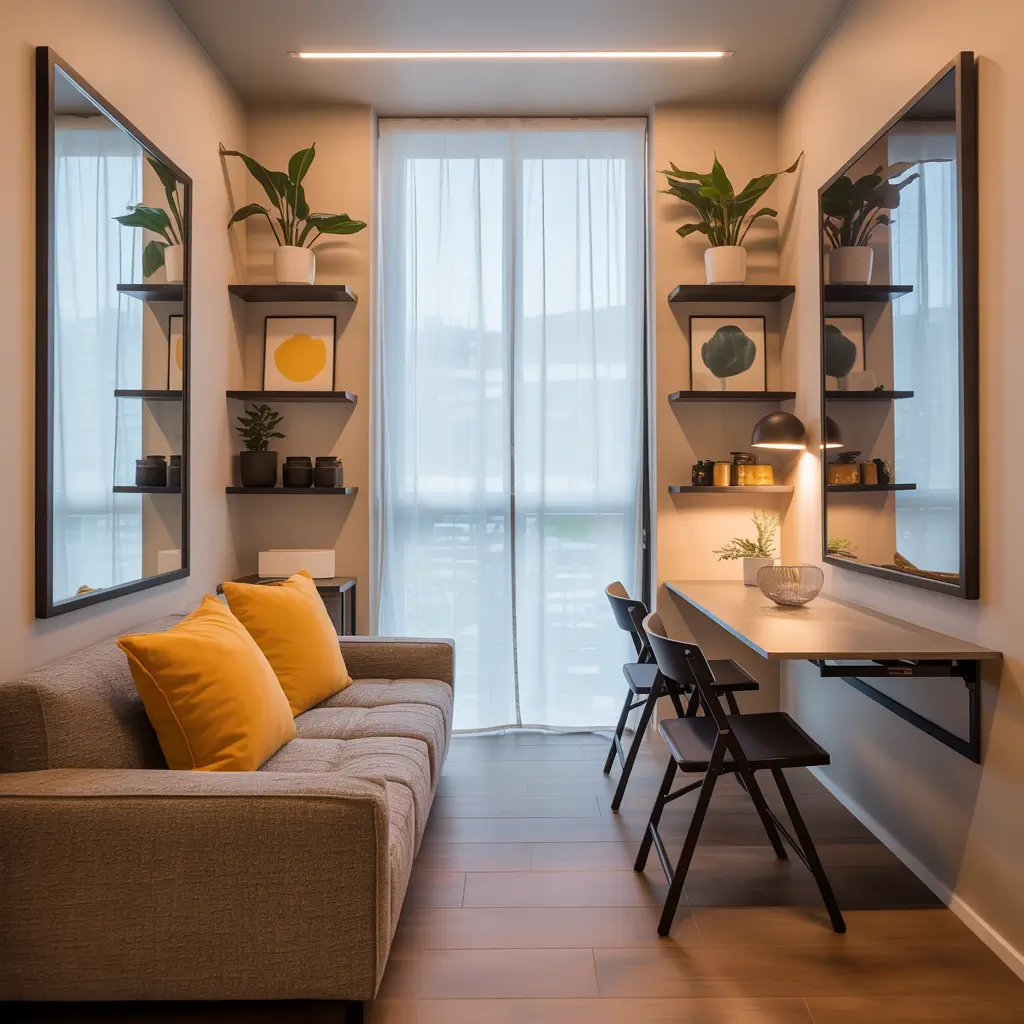
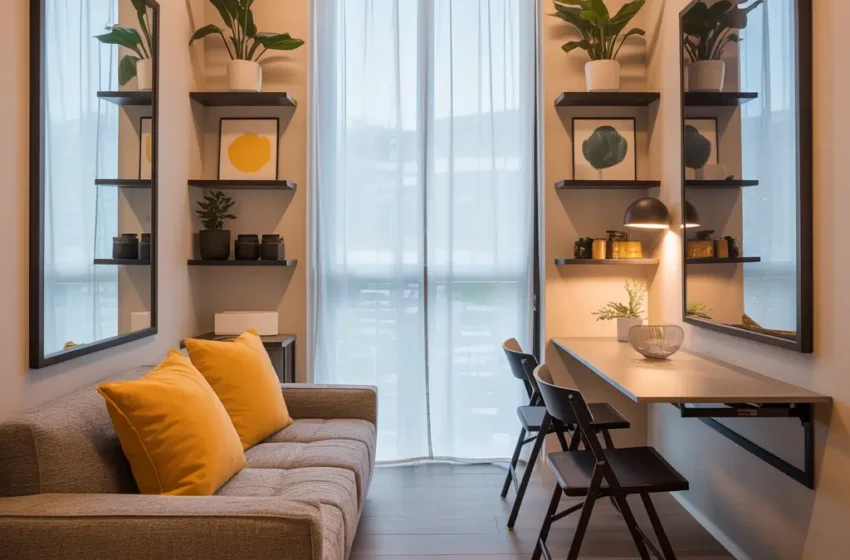
Small spaces are actually where contemporary design flexes its real muscles. Contemporary principles solve small space problems better than any other aesthetic because the focus on function and clean lines naturally maximizes space.
I live in a apartment that’s generously called “cozy” (translation: tiny), and contemporary design strategies have made it feel twice as large. The secret? Every single piece serves multiple purposes.
Small space contemporary strategies:
- Wall-mounted furniture to free up floor space
- Mirrors strategically placed to bounce light and create depth
- Vertical storage solutions that draw the eye up
- Furniture with exposed legs (makes rooms feel less heavy)
- Light color palette with strategic dark accents
- Glass or acrylic furniture that’s functional but visually lightweight
- Multi-functional pieces (storage ottomans, expandable tables)
The biggest small-space mistake? Using furniture that’s too small. Counterintuitive, I know. But one properly-sized sofa looks better than three tiny pieces scattered around trying to fill space. Scale matters more than quantity, FYI.
Floating furniture is your friend in small spaces. That console table mounted to the wall instead of sitting on the floor? You just gained visual space without losing function. The TV mounted instead of on a bulky stand? Same effect.
Contemporary Home Office Ideas
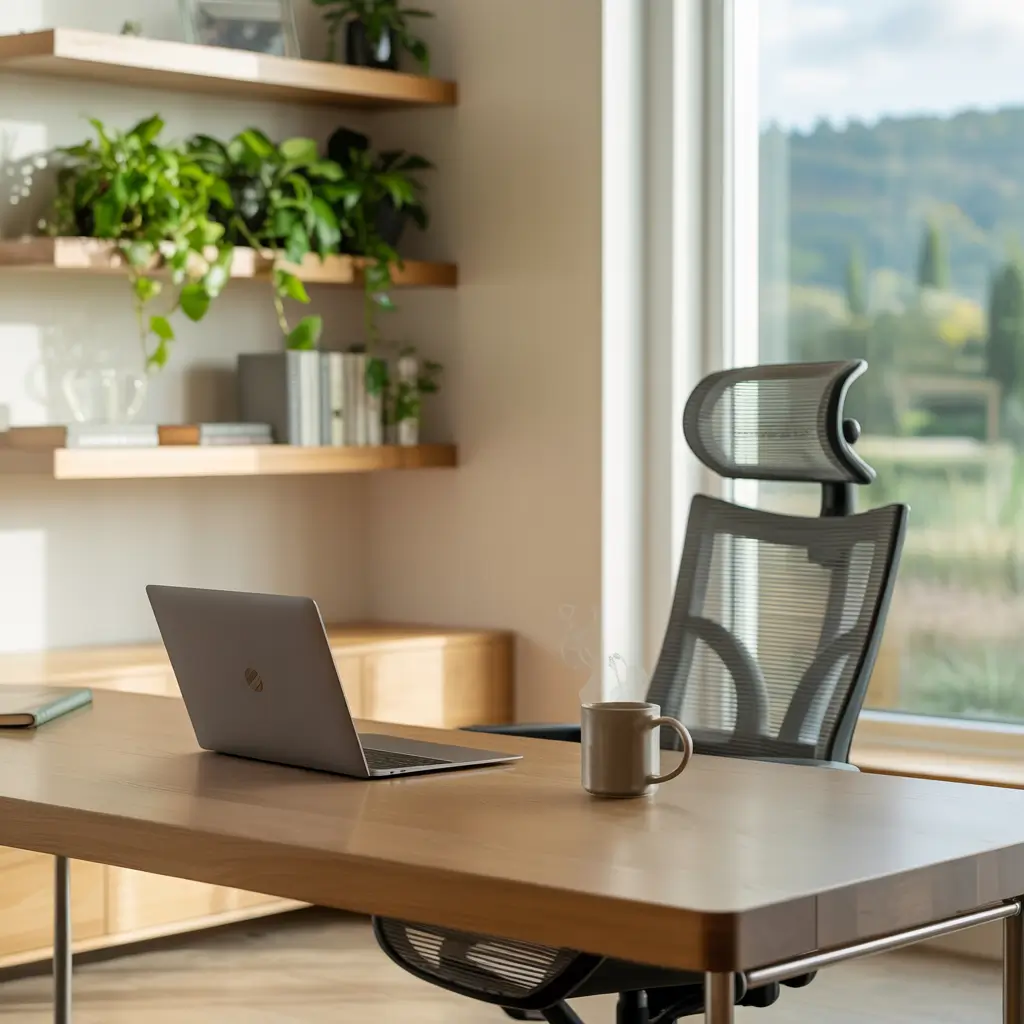
Post-pandemic, everyone realized their home office situations were tragic. Contemporary design fixes this by creating dedicated work zones that actually support productivity.
I’ve worked from home for years, and I’ve gone through about fifteen different office configurations. The contemporary approach finally gave me a space where I can focus for more than ten minutes without my brain screaming for stimulation or a nap.
Contemporary offices balance aesthetic appeal with serious function. You need storage, you need good lighting, you need ergonomic furniture—but you also need to not hate looking at your space for eight hours daily.
Home office contemporary essentials:
- Clean-lined desk with cable management built in
- Ergonomic chair that doesn’t look like it belongs in a spaceship
- Task lighting plus ambient lighting (layering is crucial)
- Floating shelves for books and supplies
- Minimal desktop accessories in matching finishes
- One large monitor or dual monitors on a clean mount
- Storage that closes (hide the clutter when work ends)
- One personal item that makes you happy
The color scheme matters more in offices than anywhere else. You want stimulation without distraction—neutral base with pops of energizing color. I went with white walls, a walnut desk, and teal accents. Productive but not boring.
Cable management cannot be ignored in contemporary offices. Visible cords destroy the clean aesthetic immediately. Invest in cord organizers, cable trays, and wireless gear where possible. Your design will thank you.
Also Read: 10 Inspiring 80s Interior Design Ideas and Nostalgic Décor Tips
Statement Lighting Trends
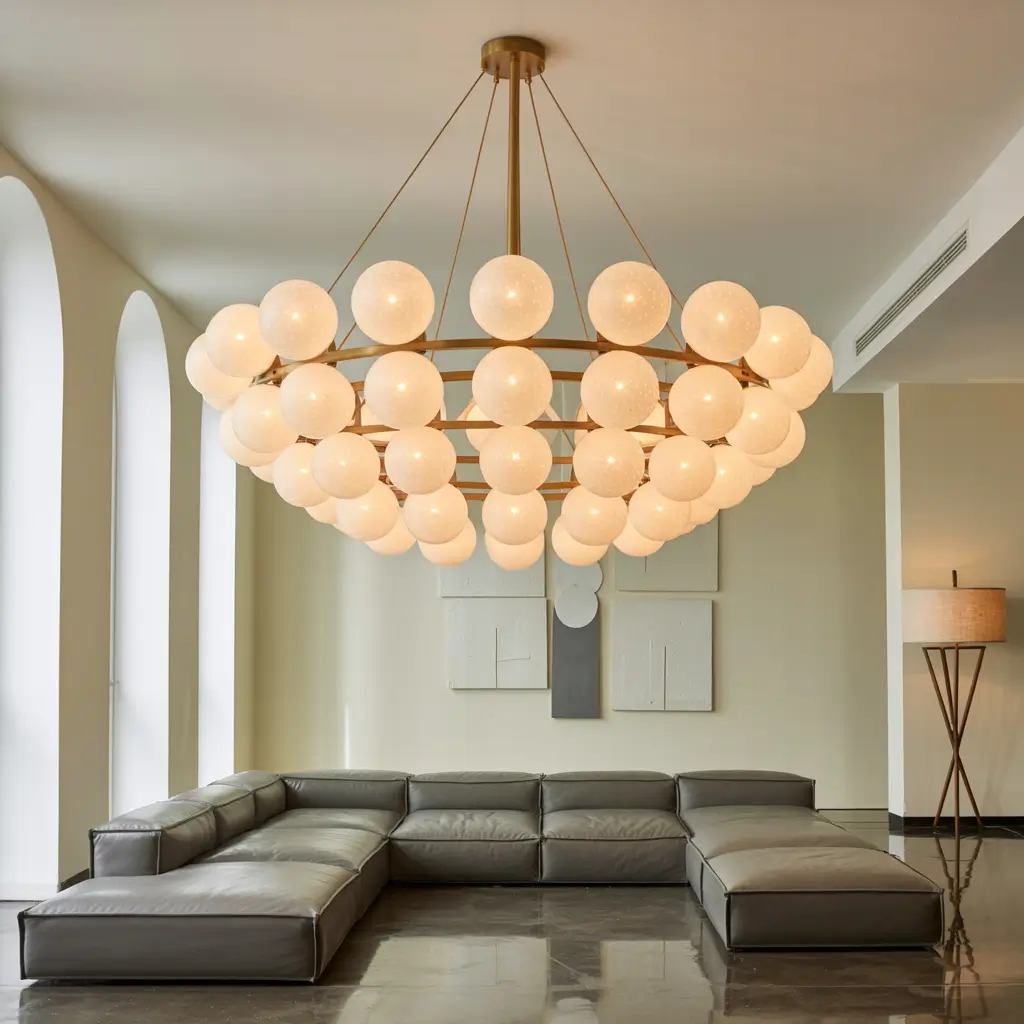
Contemporary lighting goes beyond “thing that makes room bright.” It’s sculpture that happens to provide illumination.
I’m low-key obsessed with contemporary lighting fixtures (my search history is embarrassing), and I’ve learned that lighting choices make or break a contemporary space. You can have perfect furniture and the right colors, but bad lighting ruins everything.
Contemporary lighting creates layers—you’re not relying on one ceiling fixture to do all the work. You’re creating ambient, task, and accent lighting that work together to set the mood.
Contemporary lighting options:
- Sculptural pendant lights with geometric shapes
- Arc floor lamps for dramatic overhead lighting without hardwiring
- LED strip lighting for indirect ambient glow
- Dimmer switches on everything (non-negotiable)
- Statement chandeliers in unexpected materials
- Track lighting for adjustable gallery-style illumination
- Minimalist sconces with directional capabilities
One trend I’m fully here for: oversized pendant lights. Instead of a bunch of small lights, one dramatic fixture makes the statement. I have a massive brass globe pendant over my dining table, and it’s the conversation starter at every dinner party.
The finish matters too. Contemporary lighting tends toward matte black, brushed brass, or chrome—nothing too shiny or ornate. The goal is clean lines and interesting shapes, not visual chaos.
Elegant Neutral Color Palettes
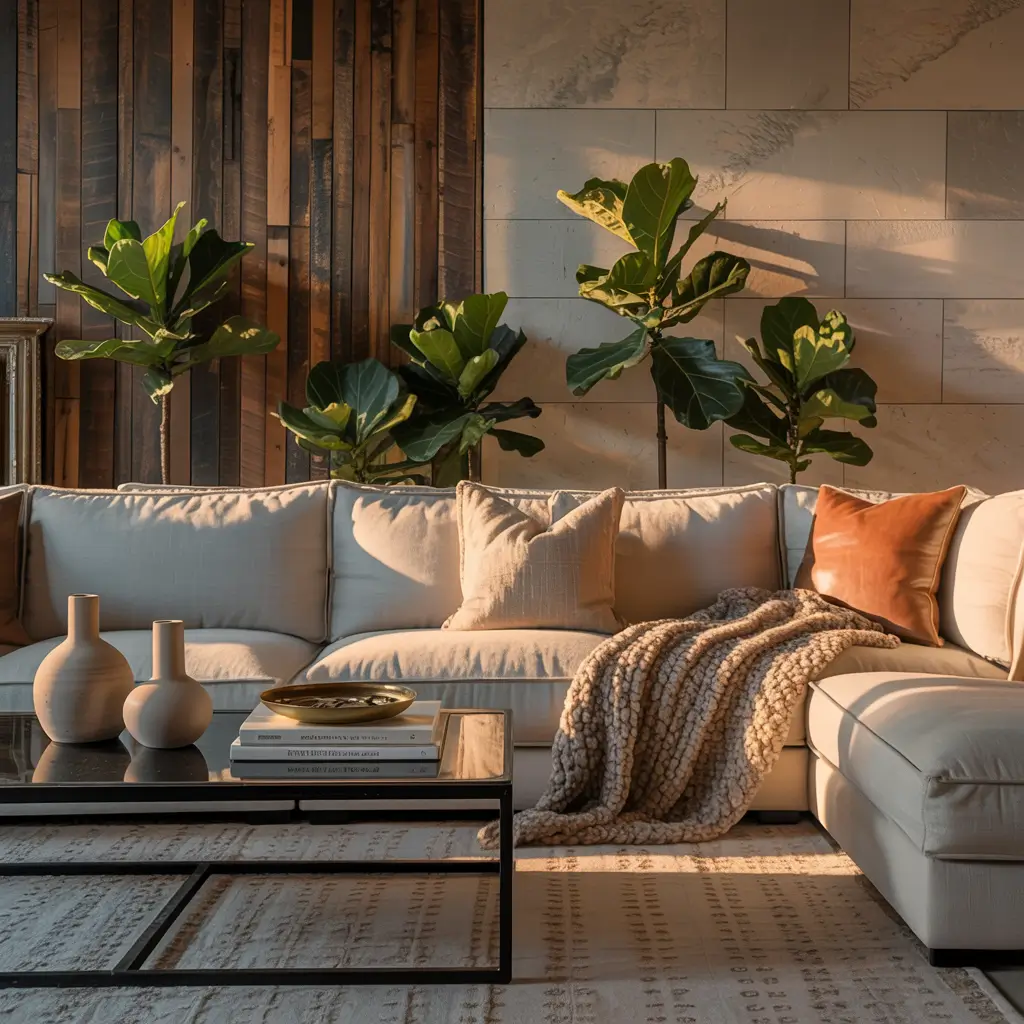
Neutrals get accused of being boring, but contemporary neutrals are anything but. The magic is in the layering and texture, not the color itself.
I used to think neutral meant beige everything, and honestly, that’s depressing. Contemporary neutral palettes use a range of tones—warm and cool, light and dark—to create depth and interest without introducing bright colors.
My entire living room is technically neutral (greys, whites, taupes, black accents), but I’ve never once heard someone call it boring. Why? Because I’ve layered different shades and textures to create visual interest without color chaos.
Contemporary neutral palette building blocks:
- Warm white as your base (not stark white, that’s hospital vibes)
- Multiple shades of grey from light to charcoal
- Warm wood tones for organic contrast
- Black accents for definition and grounding
- Taupe or greige for warmth without color commitment
- Cream or ivory for softer contrast than white
- Metallic accents (brass, copper, chrome) for subtle shine
The rule I follow: vary your tones within the neutral family. All cool greys looks cold. All warm taupes can feel muddy. Mix warm and cool neutrals, and suddenly you’ve got depth and sophistication, IMO.
Texture becomes crucial in neutral spaces. A chunky knit throw, smooth leather chair, nubby linen curtains, and glossy side table—same color family, completely different visual impact. That’s the contemporary neutral secret.
Fusion of Modern & Natural Materials
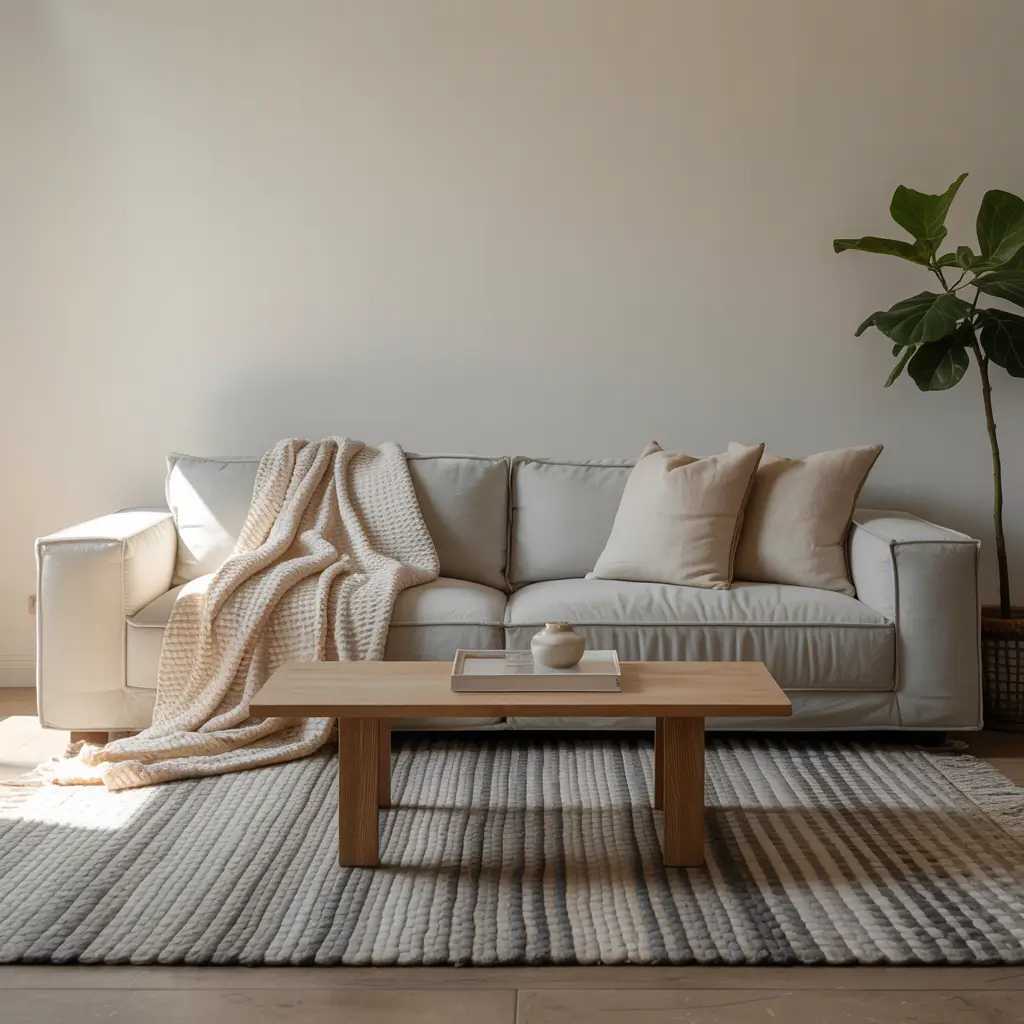
Contemporary design finally figured out that sterile spaces make humans sad. Bringing natural materials into modern spaces creates warmth without sacrificing the clean aesthetic.
I resisted this trend initially because I thought mixing sleek modern with rough natural materials would look confused. Turns out, the contrast is exactly what makes it work. The juxtaposition creates visual interest that pure modern can’t achieve alone.
The key is intentional pairing—you’re not randomly throwing wood and metal together hoping for magic. You’re creating deliberate contrast between refined and organic.
Material mixing strategies:
- Live edge wood tables with metal bases
- Stone countertops or backsplash with sleek cabinetry
- Leather furniture with chrome or brass accents
- Raw wood shelving against painted walls
- Concrete floors with plush natural fiber rugs
- Marble surfaces with matte black fixtures
- Woven natural baskets for storage in modern spaces
One combination I love: warm wood against cool concrete or stone. The temperature contrast keeps each material interesting. All warm feels cozy but dated; all cool feels modern but sterile. Together? Perfect balance.
Plants obviously count as natural materials, and contemporary spaces use them as intentional design elements rather than afterthoughts. Large floor plants in simple pots, not tiny succulents scattered randomly. Statement plants, not plant chaos :/
Also Read: 12 Beautiful Office Interior Design Luxury Ideas & Chic Decor
Innovative Storage & Display Solutions
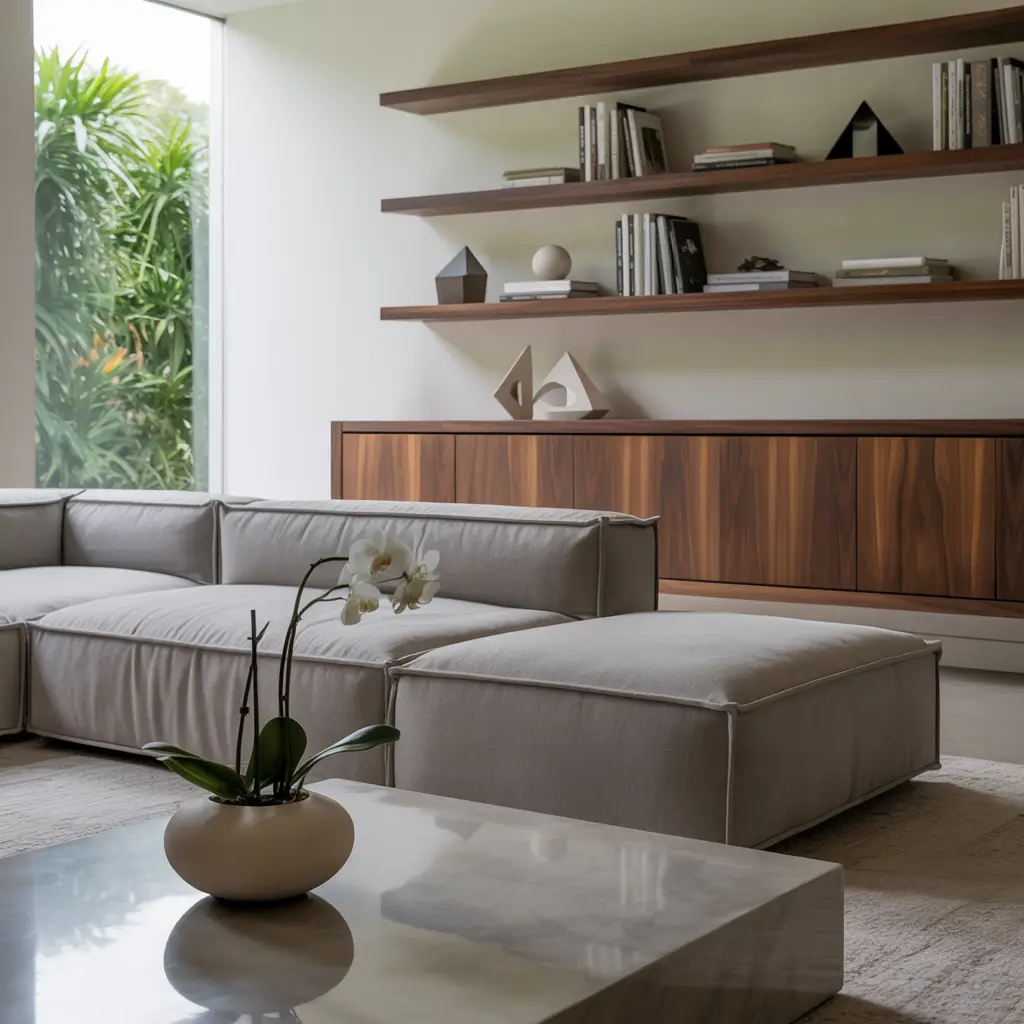
Contemporary design’s dirty secret: storage is everything. The clean aesthetic only works if you actually have places to put your stuff.
I spent months figuring out storage before my contemporary redesign clicked. You can’t just hide everything—contemporary design often makes storage part of the aesthetic through built-ins, open shelving, and multi-functional furniture.
The goal is visible storage that looks intentional versus cluttered. You’re curating what’s on display and concealing the chaos.
Contemporary storage ideas:
- Floor-to-ceiling built-in shelving in matching finishes
- Floating cabinets that appear weightless
- Under-stair storage with clean panel doors
- Hidden storage ottomans and benches
- Pegboard walls for organized tool or kitchen storage
- Open shelving styled with negative space
- Modular storage systems that adapt to your needs
The styling of open storage matters hugely. You can’t just stuff books on a shelf and call it contemporary. You need negative space, groupings of varying heights, and a limited color palette on display items.
I follow the one-third rule for open shelving: one-third books, one-third decorative objects, one-third empty space. It creates breathing room and prevents the “stuffed bookshelf” look that fights against contemporary aesthetics.
Artistic Wall Decor Ideas
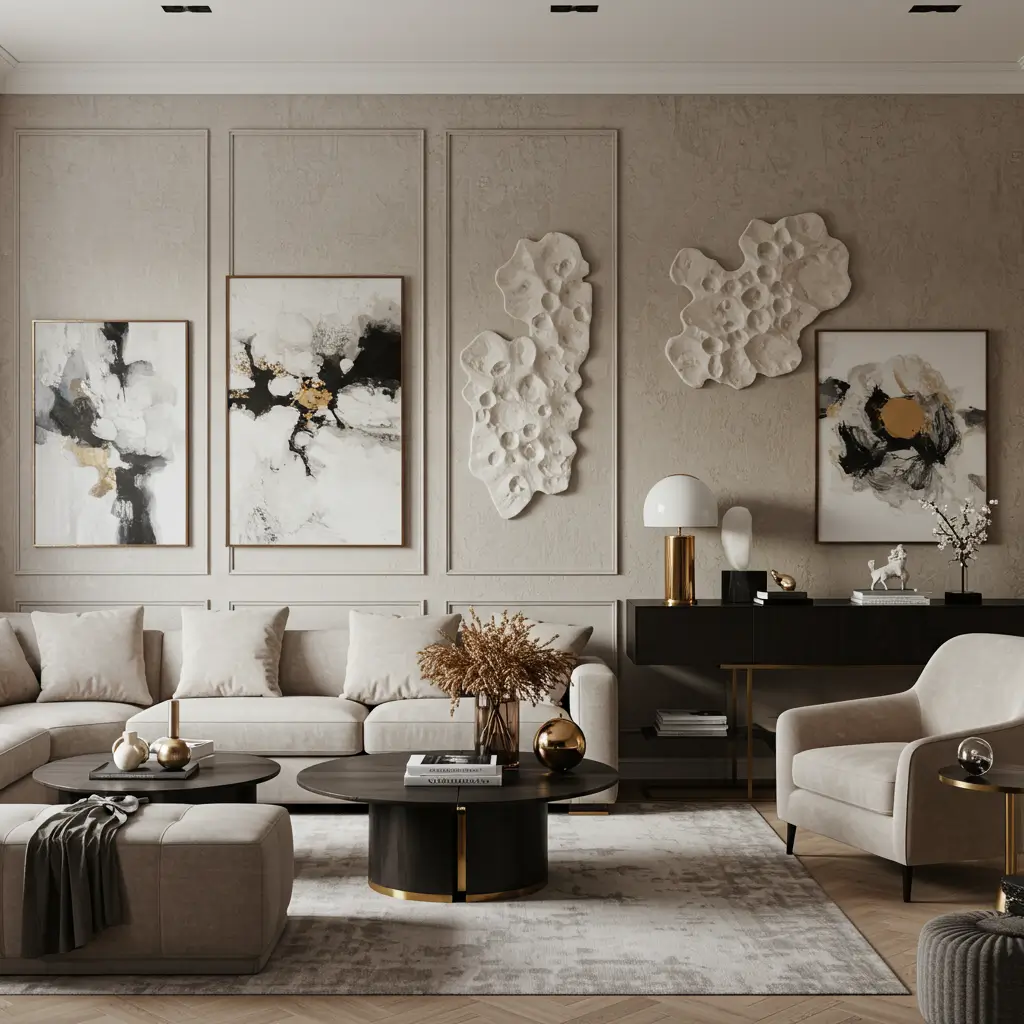
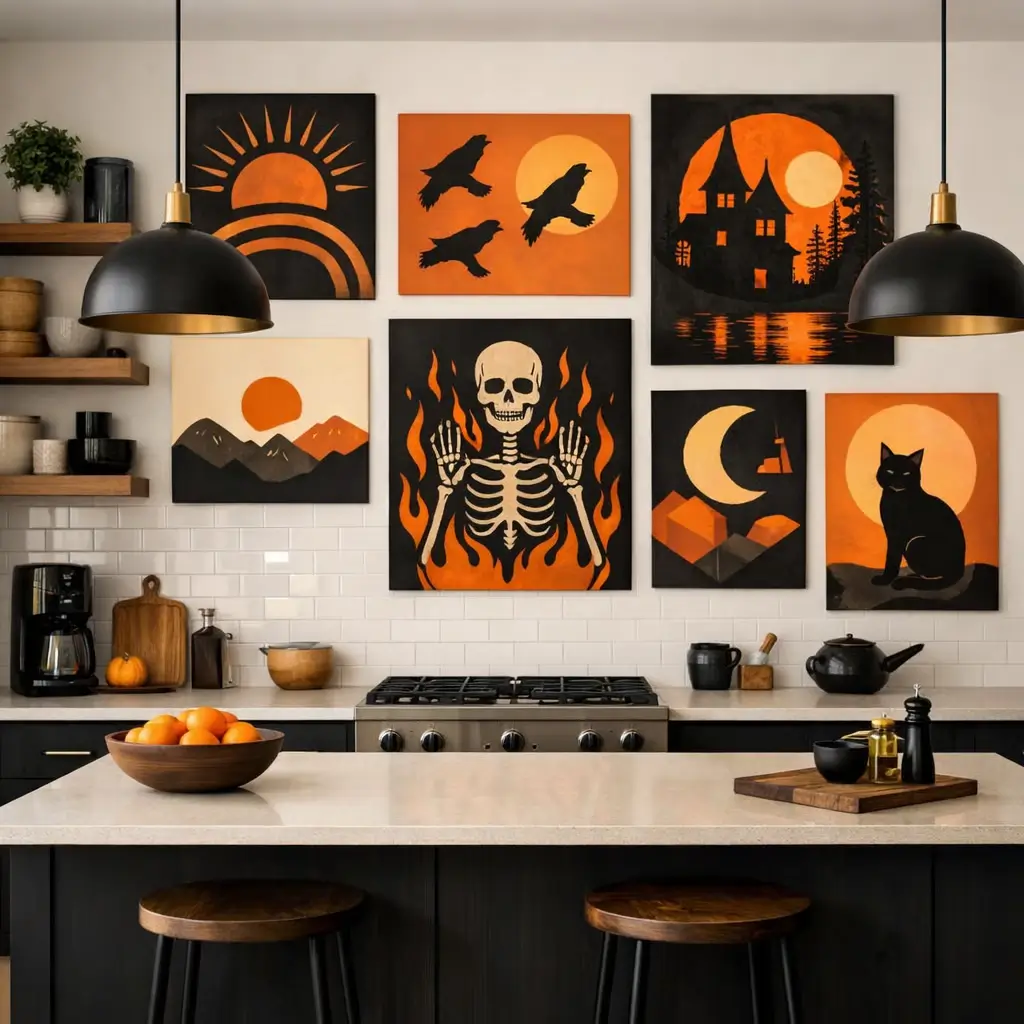
Contemporary wall art is where you can actually show personality without breaking the design rules. Art is the permission slip for bold choices in an otherwise restrained space.
I’ve collected contemporary art for years (prints, not originals—I’m not made of money), and choosing pieces has taught me that contemporary art in contemporary spaces needs to make a statement, not just fill a hole.
The contemporary approach treats art as architecture. You’re not decorating; you’re adding structural visual interest to your walls.
Contemporary wall art approaches:
- One large-scale piece instead of multiple small ones
- Abstract art in your neutral palette plus one bold accent color
- Black and white photography in oversized formats
- Geometric or line art in simple black frames
- Mixed media pieces with texture and dimension
- Gallery wall with consistent frame style (all black, all natural wood)
- Sculptural wall pieces that cast interesting shadows
The biggest mistake: art that’s too small for the wall. Size up more than you think you should. That piece that looks huge in the store will shrink on your wall. Contemporary spaces need bold art scaled to the space, not timid little frames scattered around.
I have one massive abstract print above my sofa—probably three feet by four feet. People always comment on it, and it completely anchors the room. Cost? Forty bucks for the print, another sixty for professional printing and framing. Best design investment I’ve made.
Cozy Contemporary Lounge Corners
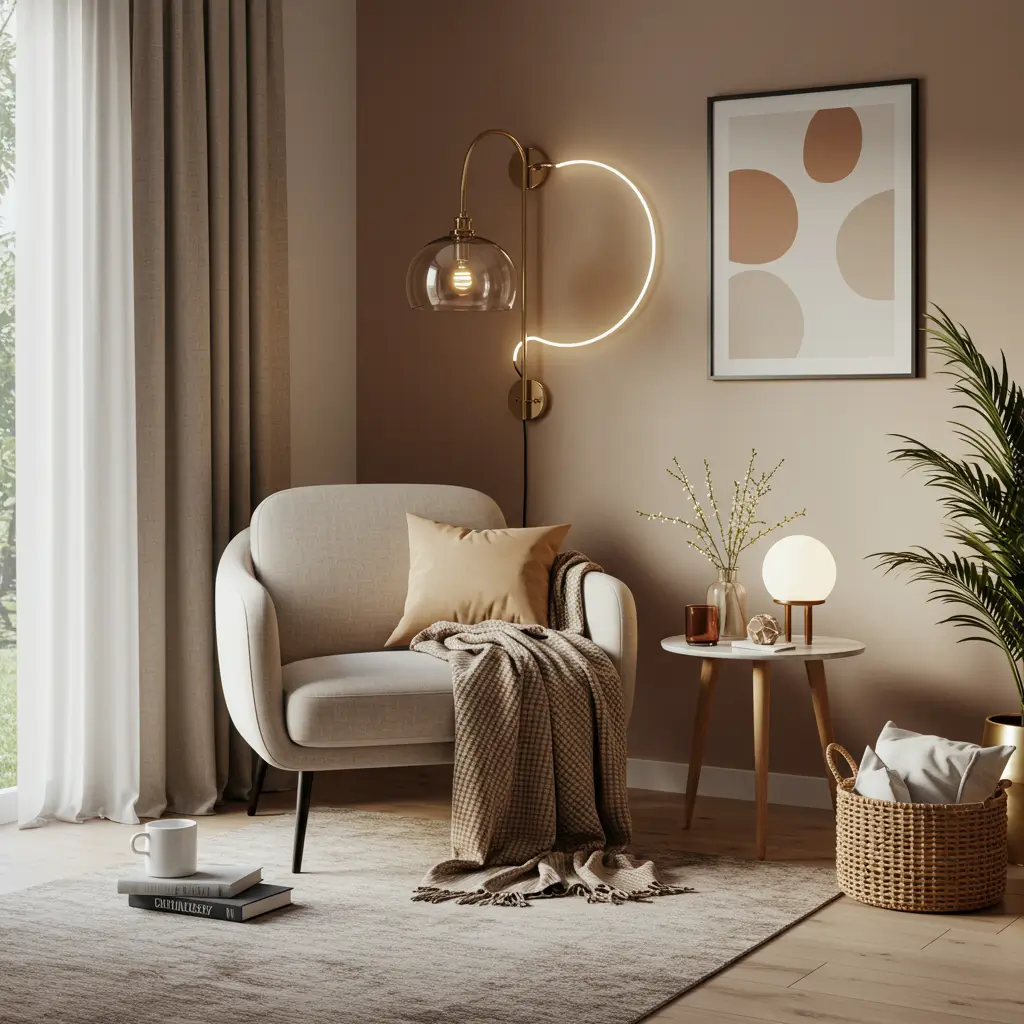
Contemporary doesn’t mean uncomfortable, and lounge corners prove it. You can have clean lines and still want to curl up with a book.
I created a lounge corner in my bedroom using contemporary principles, and it’s genuinely my favorite spot in the entire apartment. The trick is softening the contemporary aesthetic just enough to invite lingering without losing the clean visual.
Lounge corners work because they create intentional spaces for doing nothing—which we all need but rarely plan for. Contemporary design just makes sure they look good while serving that function.
Creating a contemporary lounge corner:
- One statement chair (think Eames-style or modern wingback)
- Side table with slim profile for drinks or books
- Floor lamp with adjustable arm for reading
- Soft throw blanket in texture that contrasts with chair
- Small area rug to define the zone
- One or two throw pillows (not seventeen)
- Optional: small bookshelf within arm’s reach
The chair choice defines everything here. You need comfortable seating with contemporary lines—not your grandma’s recliner, but also not a brutalist concrete slab pretending to be furniture.
I went with a leather accent chair in cognac brown (warm against my grey walls) with a brass floor lamp and cream throw. Contemporary aesthetic, maximum coziness. That corner gets more use than my sofa, honestly.
Conclution
Here’s what years of contemporary interior design experimentation has taught me: contemporary isn’t a set of rigid rules—it’s a philosophy of intentional, functional beauty.
You don’t need to throw out everything you own and start over (though I did exactly that once, and wouldn’t necessarily recommend it). You can layer contemporary principles into your existing space gradually.
Start with decluttering, add some key contemporary pieces, rethink your lighting, and suddenly your space transforms.
The beauty of contemporary design is that it works with real life. You can have kids, pets, hobbies, and stuff while still maintaining clean, beautiful spaces. It’s not about perfection—it’s about intention.
So whether you’re going full contemporary renovation or just adding some contemporary elements to your current space, remember that the goal is creating a home that functions beautifully and looks amazing. Not a museum, not a showroom, but an actual living space you love.
Now stop scrolling through more Pinterest boards and actually implement something. Your space is waiting, and those beige walls aren’t going to transform themselves 🙂