10 Elegant Small Dining Table Ideas for Cozy Dining Nooks
- Dining Table
 Ben
Ben- 0
- 46 minutes read
Living in a shoebox apartment taught me one crucial lesson: you can either complain about your tiny dining space or get creative with it.
After years of eating dinner hunched over a coffee table (my back still hasn’t forgiven me), I finally cracked the code on making small dining areas actually work. And no, the solution isn’t just “buy a smaller table and call it a day.”
The right small dining table can transform that awkward corner or cramped kitchen into a legitimate dining space where you can host friends without everyone playing footsie under the table.
Trust me, I’ve tested enough tiny tables to know what works and what just makes you feel like you’re eating at a kid’s tea party. Let me share 10 small dining table ideas that’ll help you reclaim your dining dignity, even if your square footage says otherwise.
1. Foldable Wall-Mounted Dining Tables
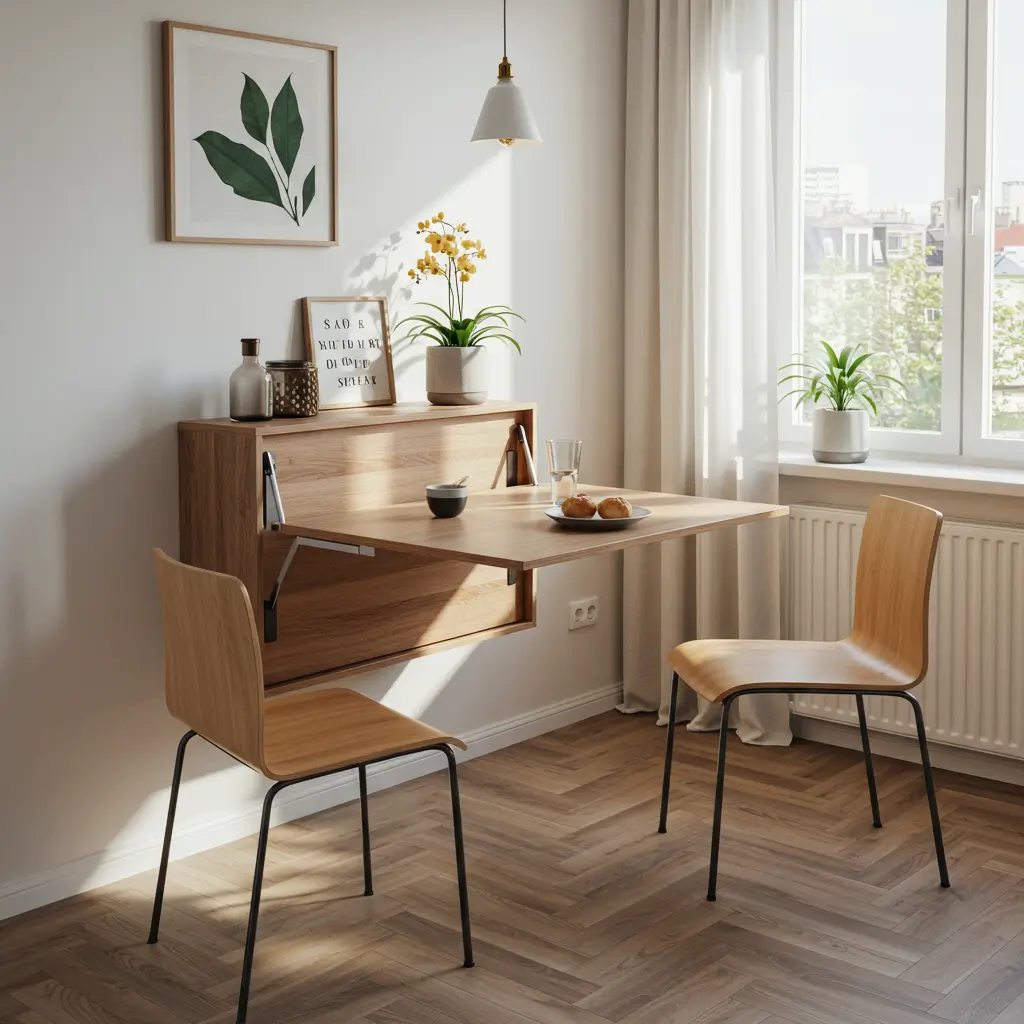
Foldable wall-mounted tables are basically the transformers of the furniture world. One minute you have a blank wall, the next you have a dining table for four. I installed one in my first studio apartment, and it literally saved my sanity (and my security deposit).
Why Wall-Mounted Tables Work Magic
These tables attach directly to your wall and fold down when needed. When you’re done eating, flip it back up and boom — you’ve got your floor space back. It’s like having a dining room that appears on command.
Key benefits of wall-mounted tables:
- Zero floor footprint when not in use
- Adjustable mounting height for standing or sitting
- Built-in storage options in many models
- Clean, minimalist look when folded
- Surprisingly sturdy when properly installed
- Perfect for studio apartments or tiny kitchens
Installation Reality Check
Here’s what nobody tells you about wall-mounted tables: installation matters more than the table itself. You need to hit studs or use serious wall anchors. My first attempt with basic drywall anchors ended with pasta on the floor and a hole in the wall. Learn from my mistakes — hire a handyperson or at least watch five YouTube videos first.
The best mounting height sits between 28-30 inches from the floor. Any higher and you’re eating at a bar, any lower and you’re having dinner in kindergarten.
Making It Feel Less Temporary
The biggest challenge with wall-mounted tables? They can feel like you’re eating at a Murphy bed’s cousin. Combat this with:
- A nice table runner that stays on when folded
- Wall art around the table area
- Proper dining chairs (not folding chairs)
- Good lighting above the table spot
- A small shelf nearby for table essentials
2. Round Pedestal Tables for Tiny Spaces
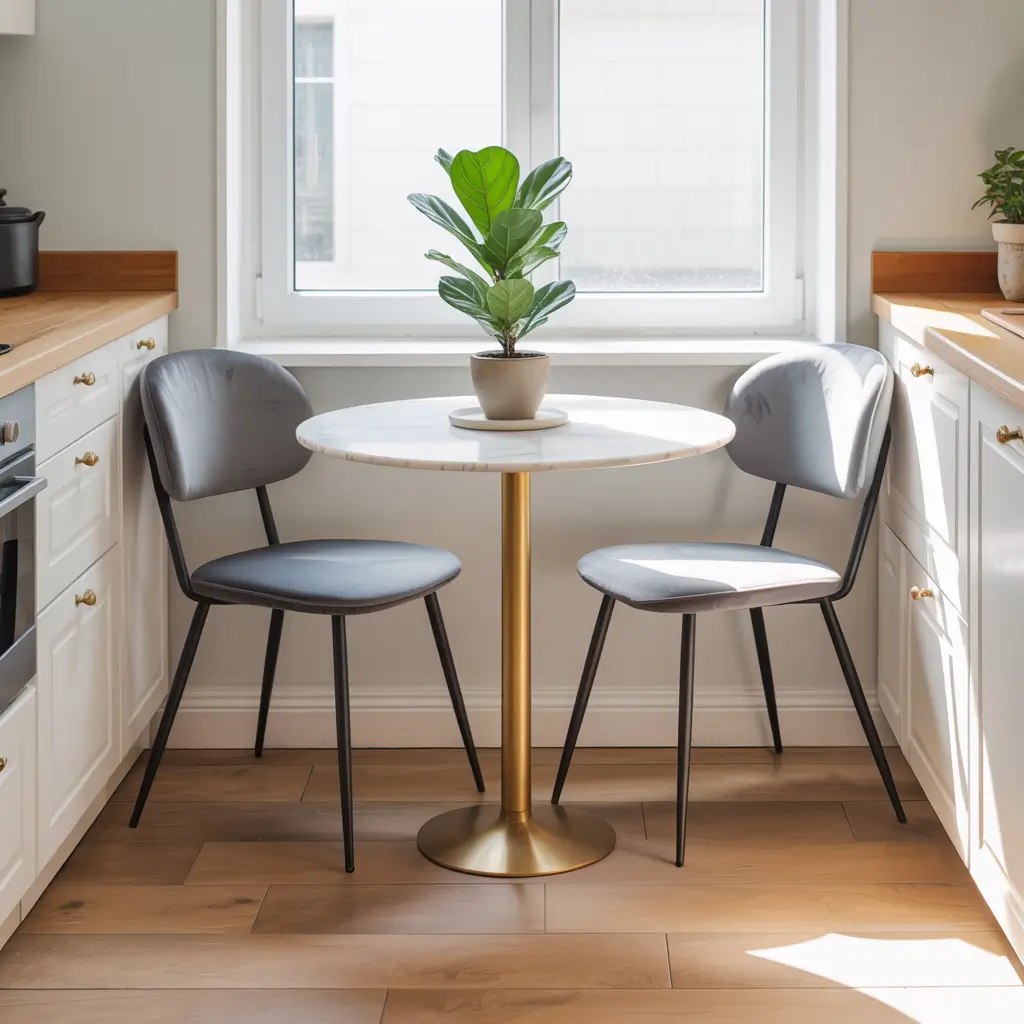
Round pedestal tables changed my entire perspective on small dining spaces. No corners to navigate around, no legs to bump into, just smooth sailing (literally) around the table. After switching from rectangular to round, I gained what felt like an extra ten square feet.
The Geometry of Small Spaces
Round tables work better in tight spaces because they eliminate corners. You can squeeze past a round table way easier than navigating the sharp edges of a square one. Plus, pedestal bases mean no table legs getting in anyone’s way.
Why round pedestal tables rule:
- Better traffic flow around the table
- Seats more people in less space (somehow)
- No bumping knees on table legs
- Easier to add an extra chair for guests
- Creates intimate conversation naturally
- Looks less bulky than rectangular tables
Size Sweet Spots
For small spaces, stick to these diameters:
- 30 inches: Cozy for 2 people
- 36 inches: Comfortable for 2-3 people
- 42 inches: Perfect for 4 people
- 48 inches: Maximum for small spaces (seats 4-6)
My 42-inch pedestal table fits perfectly in my 10×10 dining area and seats four without anyone feeling cramped. Going bigger would have killed the flow of the room.
The Pedestal Advantage
Single pedestal bases offer maximum legroom, but make sure the base is heavy enough to prevent tipping. I learned this when my lightweight table nearly flipped serving Thanksgiving turkey. Now I look for weighted bases or wide footprints that keep things stable even when someone leans on the edge.
3. Extendable Compact Tables for Apartments
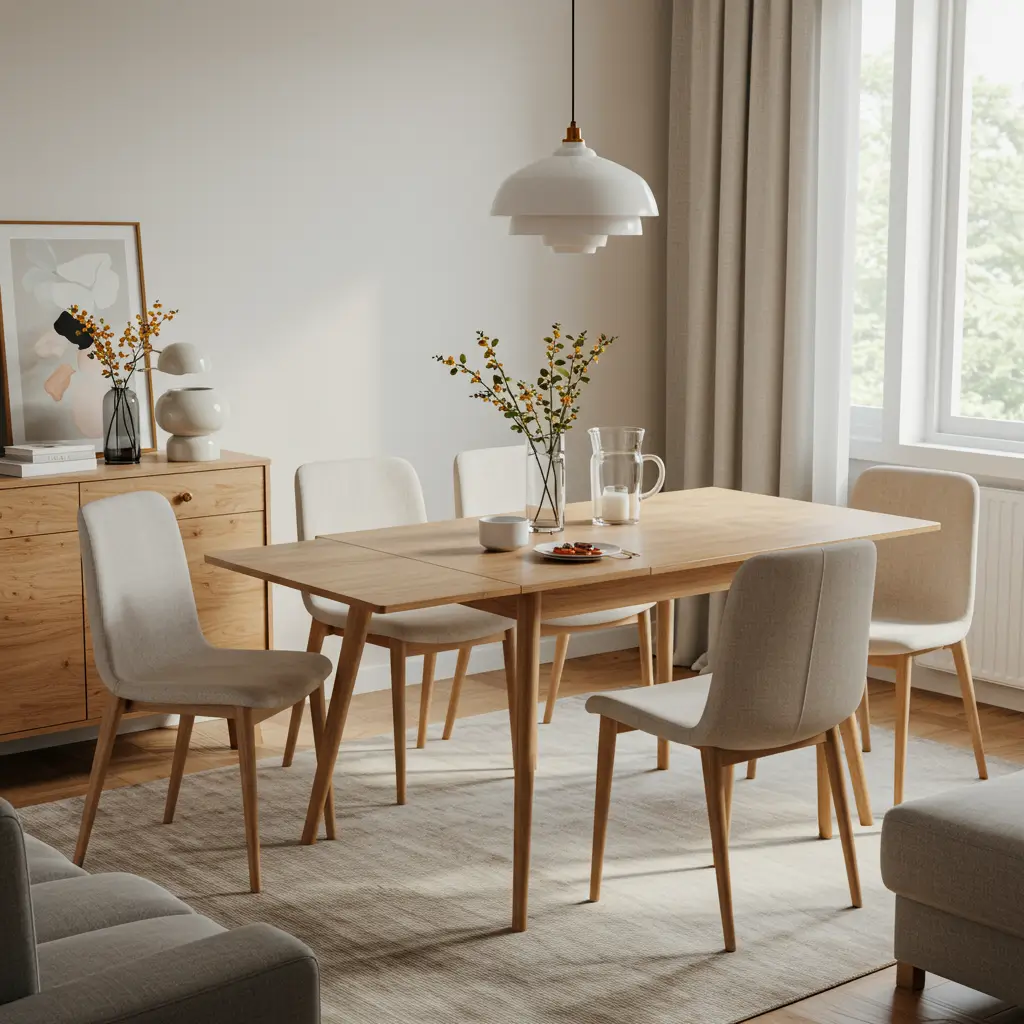
Extendable tables let you have your cake and eat it too — compact for daily use, expansive for entertaining. My extendable table goes from “dinner for two” to “game night for six” in about thirty seconds.
Extension Mechanisms That Actually Work
Not all extendable tables are created equal. Some mechanisms work smoothly for years, others break after three uses.
The best extension types for small spaces:
- Butterfly leaf: Stores underneath, no separate storage needed
- Drop-in leaf: Simple but requires leaf storage
- Sliding extensions: Smooth operation, hidden storage
- Flip-top: Doubles surface instantly
- Telescoping: Extends from both ends evenly
Daily Size vs. Party Size
Here’s the golden rule: optimize for daily use, not occasional parties. If you eat alone most nights but host Thanksgiving once a year, get a table that’s perfect for one that can extend for holidays. Don’t suffer with a too-big table 364 days for one day of glory.
My table stays at two-person size 90% of the time, extending to six-person size maybe once a month. Perfect balance.
Storage Solutions for Leaves
If your table has removable leaves, storage becomes crucial. Smart storage options:
- Under the bed in a protective bag
- Behind doors with wall hooks
- In a hall closet standing vertically
- Under the sofa (if it fits)
- In a custom-built window seat
Also Read: 10 Creative Dining Table Decor Ideas for Small Spaces
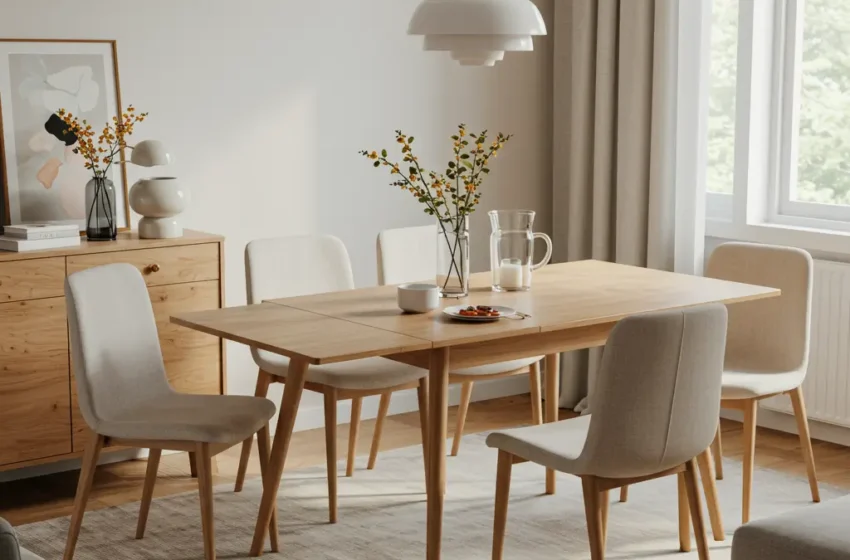
4. Minimalist Scandinavian Small Dining Sets
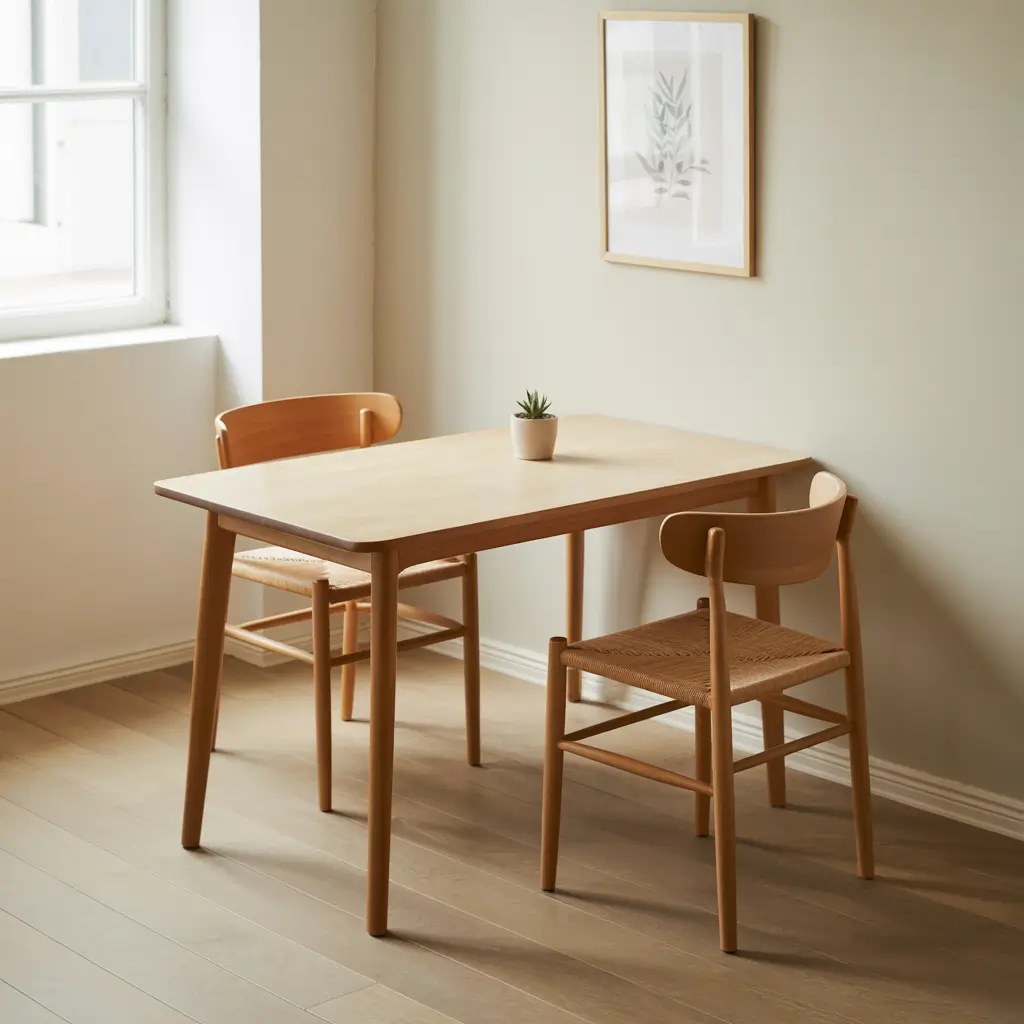
Scandinavian small dining sets prove that less really is more when you’re working with less space. Clean lines, light colors, and zero unnecessary bulk — it’s basically the Marie Kondo of dining furniture.
The Scandinavian Space Solution
Scandinavian design works brilliantly in small spaces because it prioritizes function without sacrificing beauty. Every element serves a purpose, nothing is purely decorative.
Essential Scandinavian characteristics:
- Light wood finishes (birch, pine, ash)
- Slim profiles that don’t dominate rooms
- Neutral colors that make spaces feel larger
- Tapered legs for visual lightness
- Multi-functional pieces
- Quality over quantity mindset
Creating Hygge in Tiny Spaces
Just because your dining space is small doesn’t mean it can’t be cozy. Add warmth through:
- Soft seat cushions in natural fabrics
- A simple pendant light above the table
- One or two candles (not seven)
- A small plant as a centerpiece
- Textured placemats or a runner
The Color Psychology
Light colors make small spaces feel bigger — it’s science. My white oak Scandinavian table reflects light around my tiny dining area, making it feel twice as large as my old dark wood table did. Stick to whites, light grays, and natural wood tones for maximum space enhancement.
5. Corner Nook Dining Table Ideas
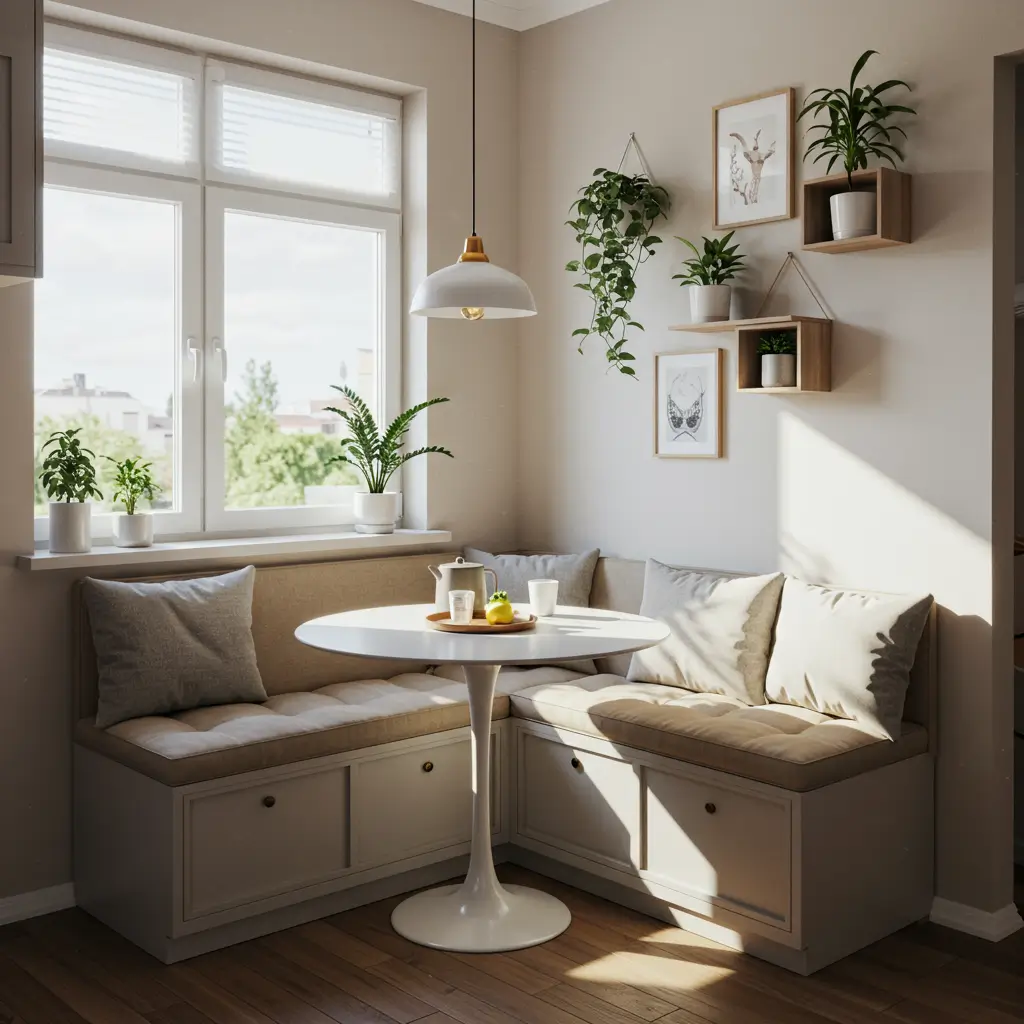
That awkward corner in your kitchen? It’s actually prime dining real estate. Corner nook dining setups maximize dead space while creating the coziest eating spots imaginable. It’s like having a booth in your own personal diner.
Building Your Corner Oasis
Corner nooks work by pushing seating into the corner, maximizing floor space in the center of the room. You can buy pre-made nook sets or DIY with a corner bench and separate table.
Corner nook essentials:
- L-shaped or curved bench seating
- Table that fits the bench curve
- Storage under bench seats
- Adequate lighting (corners can be dark)
- Easy-exit seating arrangement
- Washable cushions (trust me on this)
The Storage Bonus
The best part about corner nooks? Hidden storage everywhere. Under-bench storage holds everything from rarely-used appliances to board games. My corner nook hides Christmas decorations, extra linens, and that pasta maker I used exactly once.
Making Corners Comfortable
The biggest complaint about corner nooks? Someone always gets trapped in the corner. Solve this by:
- Using a pedestal table for easier sliding out
- Keeping one side open with chairs
- Choosing a smaller table so people can scoot around
- Making the corner person’s spot extra comfy with pillows
FYI, being the corner person isn’t that bad if you add enough cushions and claim it as your permanent spot 🙂
6. Multi-Functional Storage Dining Tables
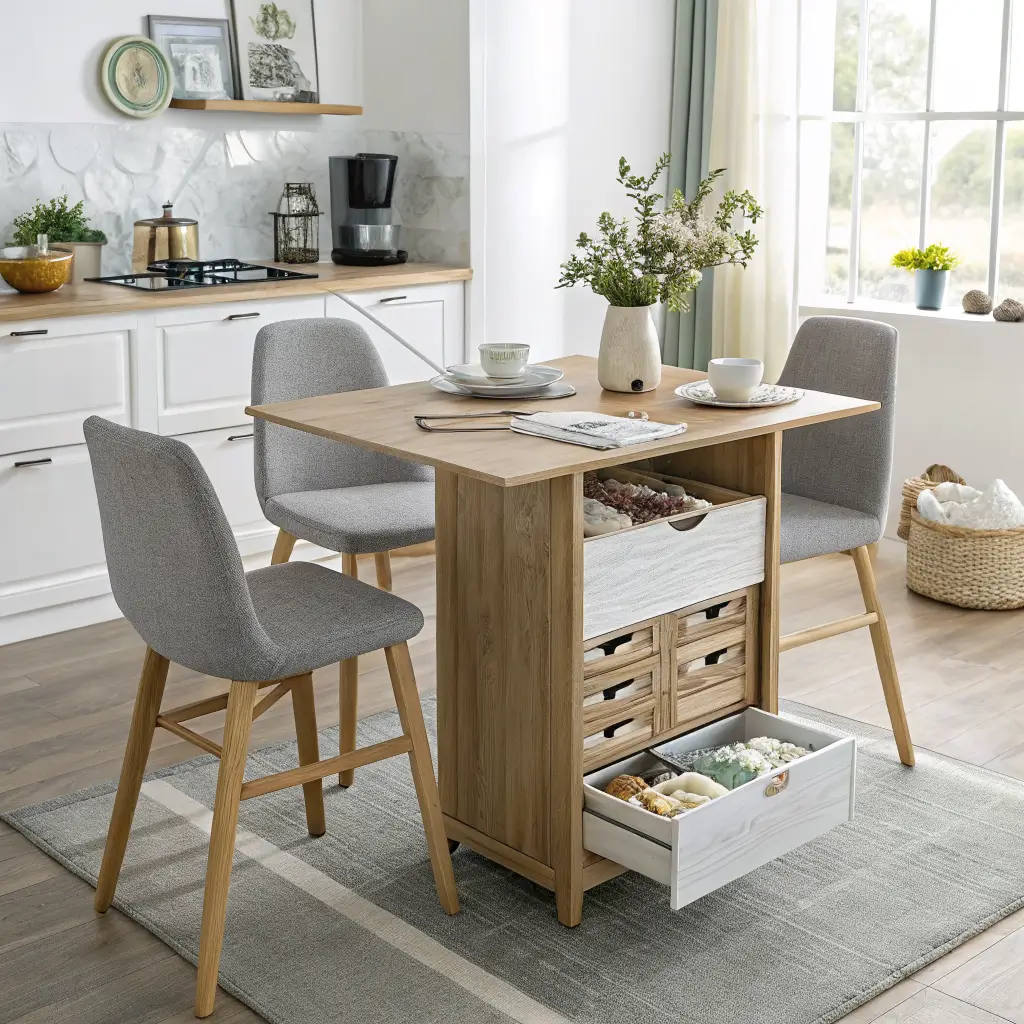
Storage dining tables pull double duty in small spaces. They’re not just eating surfaces — they’re command centers for your entire life. My storage dining table holds craft supplies, important documents, and an embarrassing amount of takeout menus.
Storage Options That Make Sense
Different storage styles work for different needs:
- Drawers for flatware and linens
- Shelving for dishes or decorative items
- Hidden compartments for laptops and work stuff
- Wine rack integration for the priorities
- Magazine holders on the sides
- Lift-top storage for seasonal items
The Organization Challenge
Having storage in your dining table sounds amazing until everything becomes a junk drawer. Create designated zones for different items:
- Everyday items in easy-access spots
- Seasonal stuff in harder-to-reach areas
- Work materials in one dedicated section
- Dining essentials always accessible
Avoiding the Clutter Trap
Storage dining tables can enable hoarding behavior. Combat this by:
- Regular purging sessions (monthly)
- One-in-one-out rule for items
- Using drawer organizers
- Labeling sections (yes, I’m that person)
- Keeping the top clear always
Also Read: 12 Trendy Dining Table Design Ideas and Contemporary Flair
7. Glass Top Tables to Open Up Space
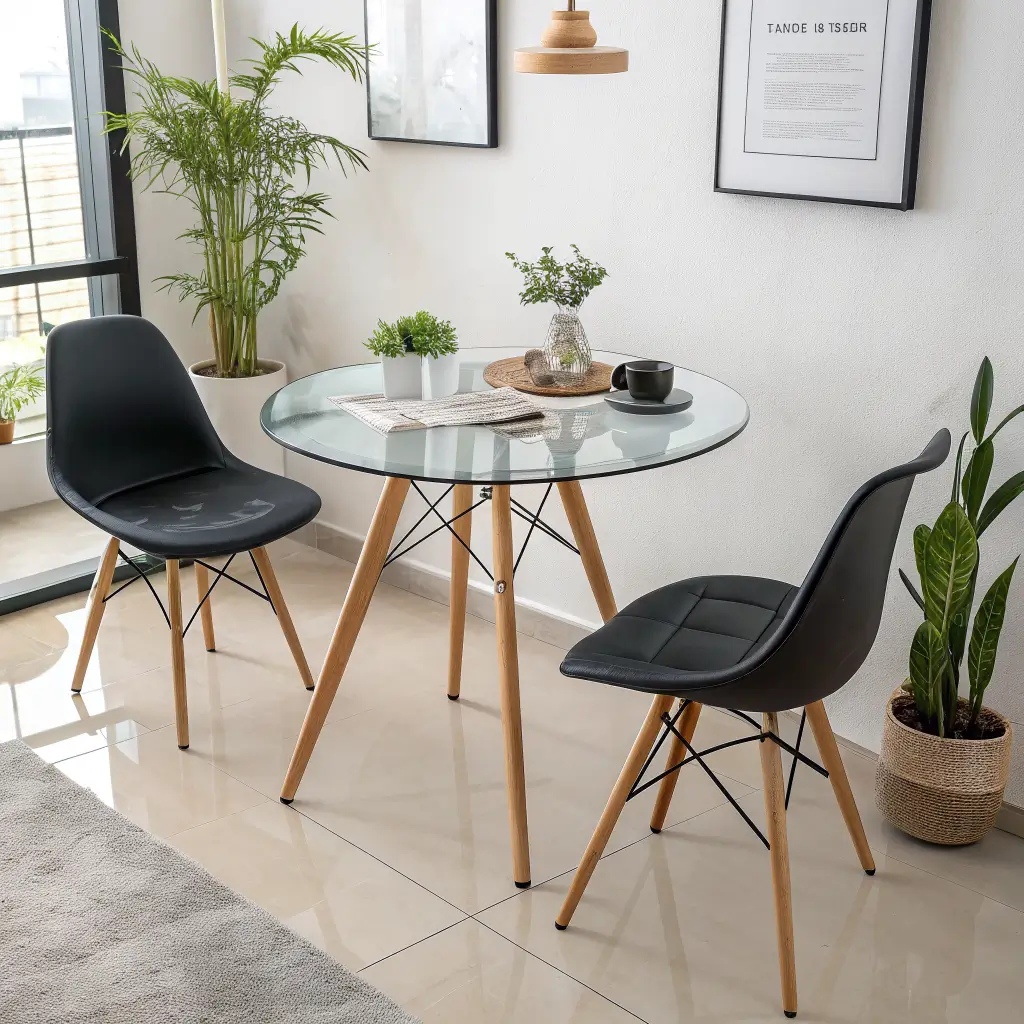
Glass top dining tables create the illusion of more space by basically being invisible. After years of solid wood tables, switching to glass made my dining area feel like it doubled in size. It’s like furniture magic.
The Transparency Advantage
Glass tables offer unique benefits for small spaces:
- Visual flow isn’t interrupted
- Light passes through freely
- Shows off nice flooring (if you have it)
- Makes rooms feel larger instantly
- Works with any decor style
- Easy to clean (despite what people say)
Addressing Glass Concerns
Everyone worries about glass tables. Let me bust some myths:
- Modern tempered glass is incredibly strong
- Fingerprints wipe off in seconds
- They’re not more dangerous than wood tables
- Scratches are actually pretty rare
- The sound issue is solved with placemats
Styling Glass Tables
The transparency of glass means everything shows, so styling matters more:
- Use a beautiful rug underneath as “art”
- Keep chair legs looking good (they’re visible)
- Add colorful placemats for personality
- Use the base as a design element
- Keep items under the table minimal and neat
IMO, glass tables work best when you embrace the transparency rather than trying to cover it up :/
8. Rustic Wooden Small Dining Tables
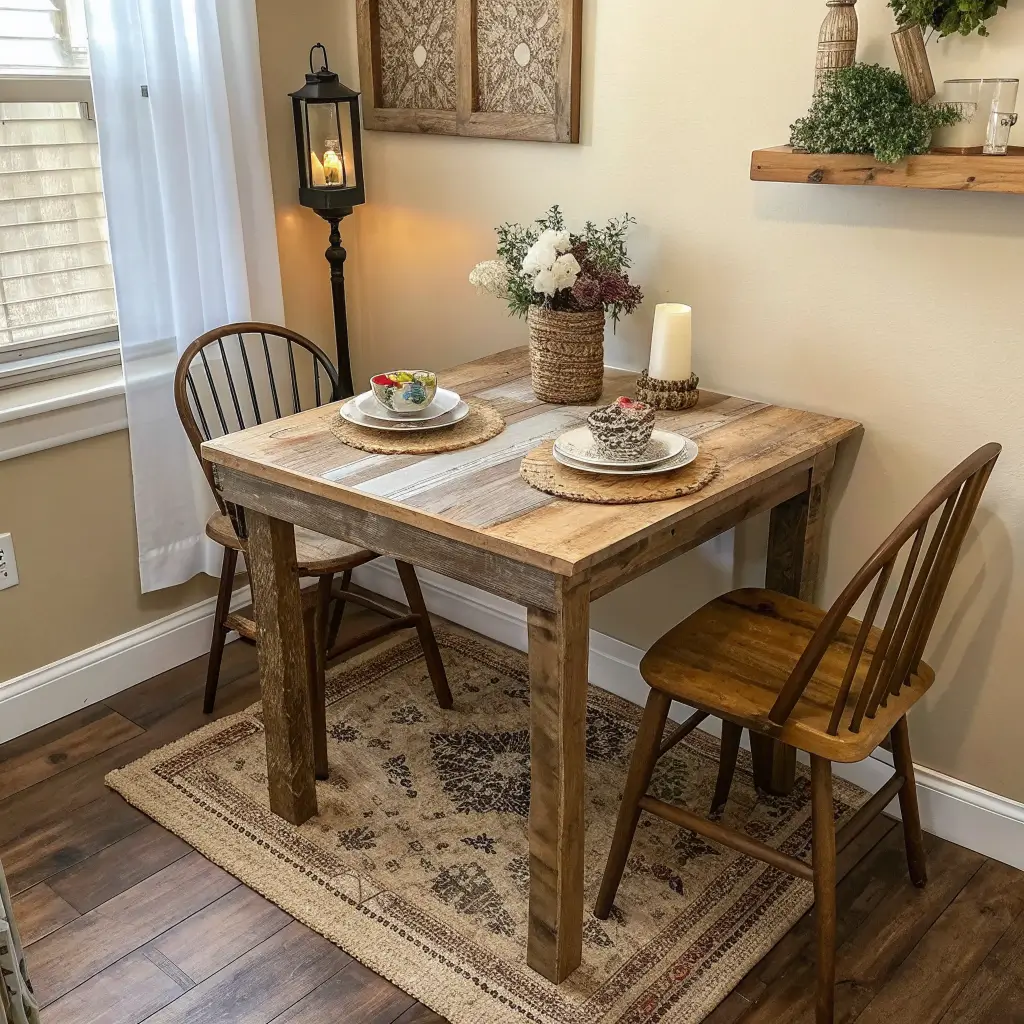
Rustic wooden tables bring warmth to small spaces without overwhelming them. There’s something about natural wood grain that makes even the tiniest dining area feel homey and welcoming. Plus, they hide crimes against furniture better than any other material.
Choosing the Right Rustic Scale
Rustic doesn’t have to mean massive. Look for:
- Smaller plank widths for proportion
- Simpler leg styles (not huge carved posts)
- Natural edges without being too live-edge
- Lighter wood stains to avoid heaviness
- Distressing that’s subtle not overdone
The Durability Factor
Rustic tables can take a beating, which is perfect for small spaces where the dining table doubles as everything else. Scratches add character, spills wipe up easily, and that hot pan you accidentally set down? It just adds to the patina.
My reclaimed barn wood table has survived:
- Multiple craft projects gone wrong
- A toddler with markers
- Hot pizza boxes directly on the surface
- General daily abuse
Still looks great — maybe even better.
Rustic in Modern Spaces
Rustic tables don’t require a farmhouse aesthetic:
- Pair with modern chairs for contrast
- Add contemporary lighting above
- Use sleek placemats and dinnerware
- Keep surrounding decor minimal
- Let the table be the only rustic element
9. Modern Floating Tables with Stools
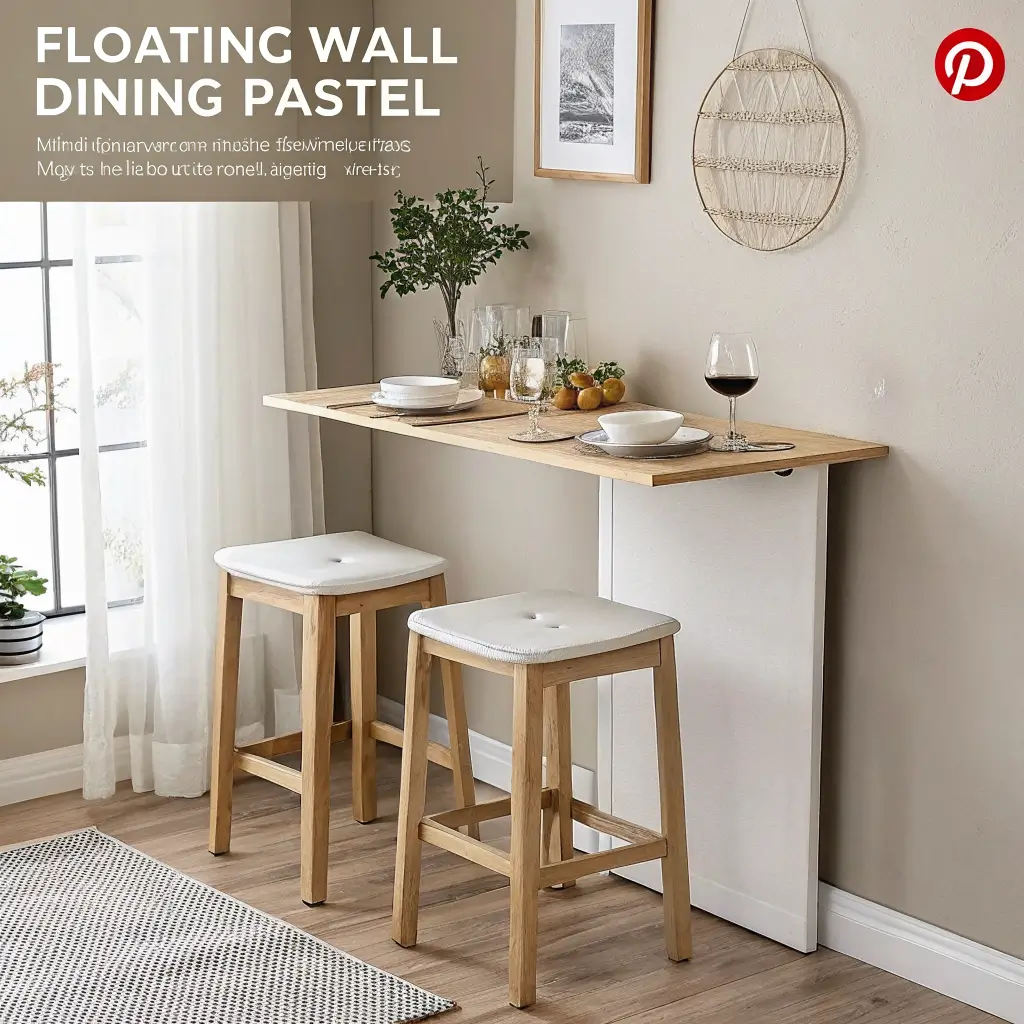
Floating tables with stools take the minimalist approach to the extreme. The table appears to float (wall-mounted or suspended), and stools tuck completely underneath. It’s like your dining set plays hide and seek.
The Floating Illusion
Floating tables mount to the wall with hidden brackets, creating a weightless appearance that keeps floor space completely clear. This visual trick makes small spaces feel significantly larger.
Benefits of floating setups:
- Maximum floor visibility
- Easy floor cleaning underneath
- Adjustable height options
- Ultra-modern aesthetic
- Stools disappear when stored
- Surprisingly stable when properly mounted
Stool Selection Matters
The right stools make or break this concept:
- Must fit completely under the table
- Backless for full tuck-ability
- Lightweight for easy moving
- Comfortable enough for meals
- Stackable for extra seating needs
Installation Is Everything
Floating tables require bombproof installation. We’re talking:
- Heavy-duty wall anchors or studs
- Professional installation (worth it)
- Weight ratings taken seriously
- Regular bracket checks
- Understanding your wall type
Don’t cheap out on installation — your pasta dinner depends on it.
Also Read: 10 Cozy Dining Table Ideas and Vintage Inspirations
10. Space-Saving Drop-Leaf Tables
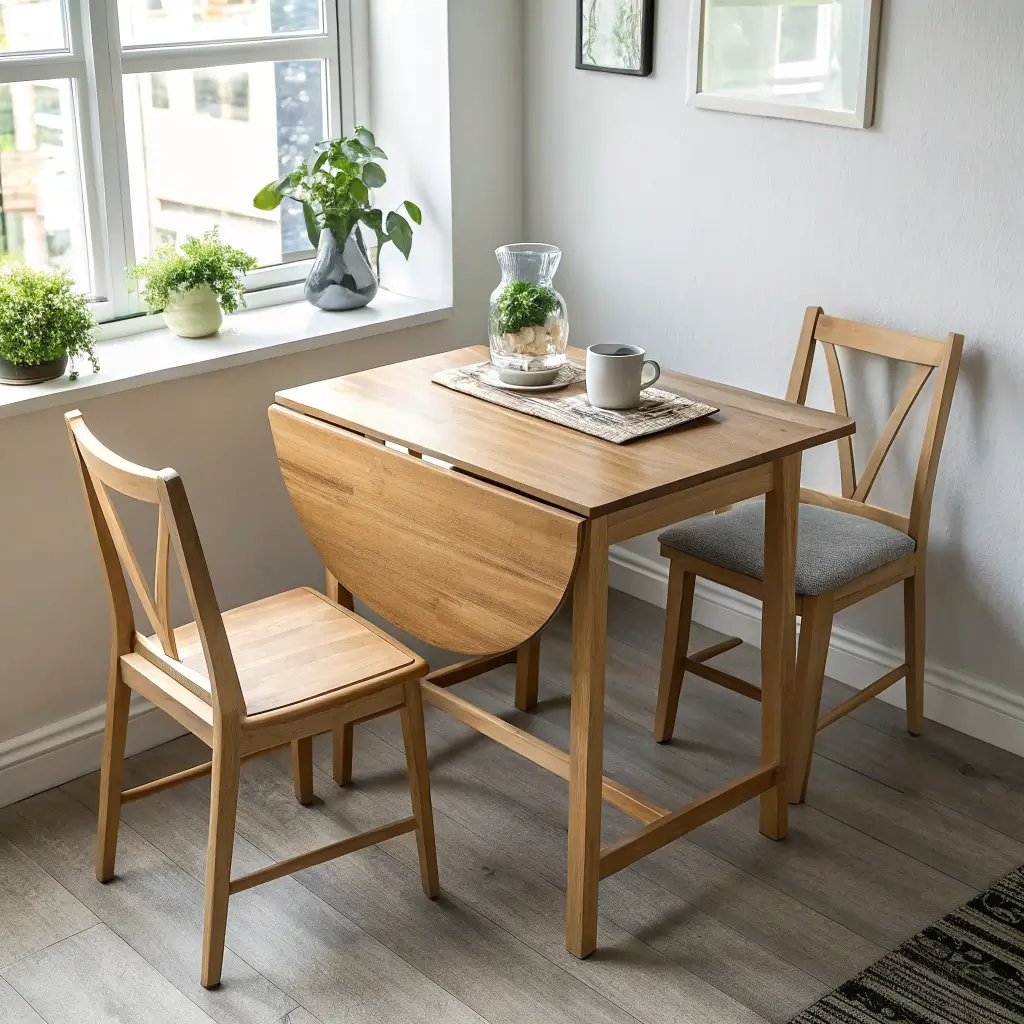
Drop-leaf tables are the OG space savers. They’ve been solving small dining problems since before tiny houses were trendy. Both my grandma and I swear by them, though hers is antique and mine is from IKEA.
The Classic That Still Works
Drop-leaf tables have hinged sections that fold down when not needed. It’s simple, reliable, and surprisingly versatile.
Why drop-leaf tables endure:
- Proven mechanism that rarely fails
- Variable sizing options
- Works with any decor style
- No separate leaf storage needed
- Smooth daily transitions
- Budget-friendly options available
One Leaf or Two?
Decide based on your space:
- Single drop-leaf: Perfect against walls
- Double drop-leaf: Maximum flexibility
- Different-sized leaves: Asymmetrical but functional
- Gate-leg style: Extra support for larger leaves
Modern Drop-Leaf Innovations
Today’s drop-leaf tables aren’t your grandma’s (unless your grandma is super trendy):
- Sleeker mechanisms with hidden hinges
- Contemporary materials like metal and glass
- Built-in storage in the fixed section
- Wheels for easy repositioning
- Counter-height options for kitchen islands
Making Small Dining Tables Work for Real Life
After living with various small dining table ideas for years, here’s what actually matters: the best table is the one that fits your specific space and lifestyle.
That Pinterest-perfect floating table might look amazing, but if you’re not handy with installation, it’s a disaster waiting to happen.
Start by honestly assessing how you use your dining space. Do you actually host dinner parties, or do you just think you should? Do you need a permanent setup, or would a fold-away option give you more flexibility? Would storage help or just enable clutter?
My journey through small dining tables taught me that constraints force creativity. That tiny corner you think is useless? It might be perfect for a cozy nook.
That wall you walk past daily? Prime real estate for a fold-down table. The key is seeing possibilities instead of problems.
Whether you go with a wall-mounted wonder, a glass-top illusion, or a trusty drop-leaf classic, remember that small dining tables can create just as many memories as their full-sized cousins.
Some of my best dinner parties happened around a 30-inch round table that barely fit four people. We were practically eating off each other’s plates, but nobody cared because the company was good and the space was used brilliantly.
Choose function over form, invest in quality where it counts, and don’t be afraid to think outside the traditional dining box. Your small space doesn’t need a small vision — just a smart dining table that makes every square inch count 🙂