10 Stylish Dining Room Table Decor Ideas for Warm Interiors
- Dining Table
 Ben
Ben- 0
- 38 minutes read
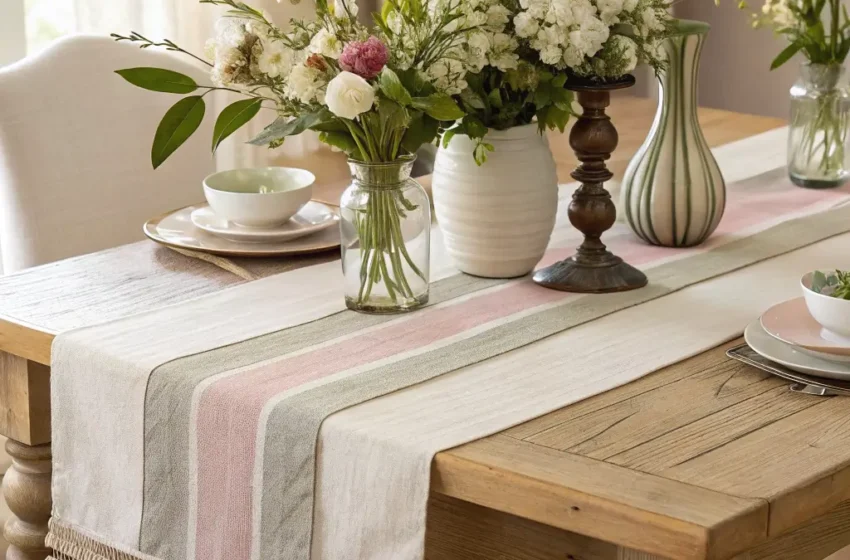
Your dining room table is basically the stage where all your life’s drama unfolds — family dinners, homework battles, that awkward conversation with your mother-in-law about your life choices.
But here’s the thing: most of us treat our dining tables like glorified mail sorting stations rather than the centerpieces they deserve to be. I spent years with a bare table except for a lonely salt shaker, wondering why my dining room felt so… meh.
Then I discovered the magic of dining room table decor. Not the fussy, don’t-touch-anything kind, but real, livable styling that makes every meal feel intentional.
After countless experiments (including one memorable disaster involving seventeen candles and a near fire hazard), I’ve figured out what actually works for real people with real lives. These 10 dining room table decor ideas will transform your table from functional furniture into the heart of your home.
1. Minimalist Tray Centerpiece
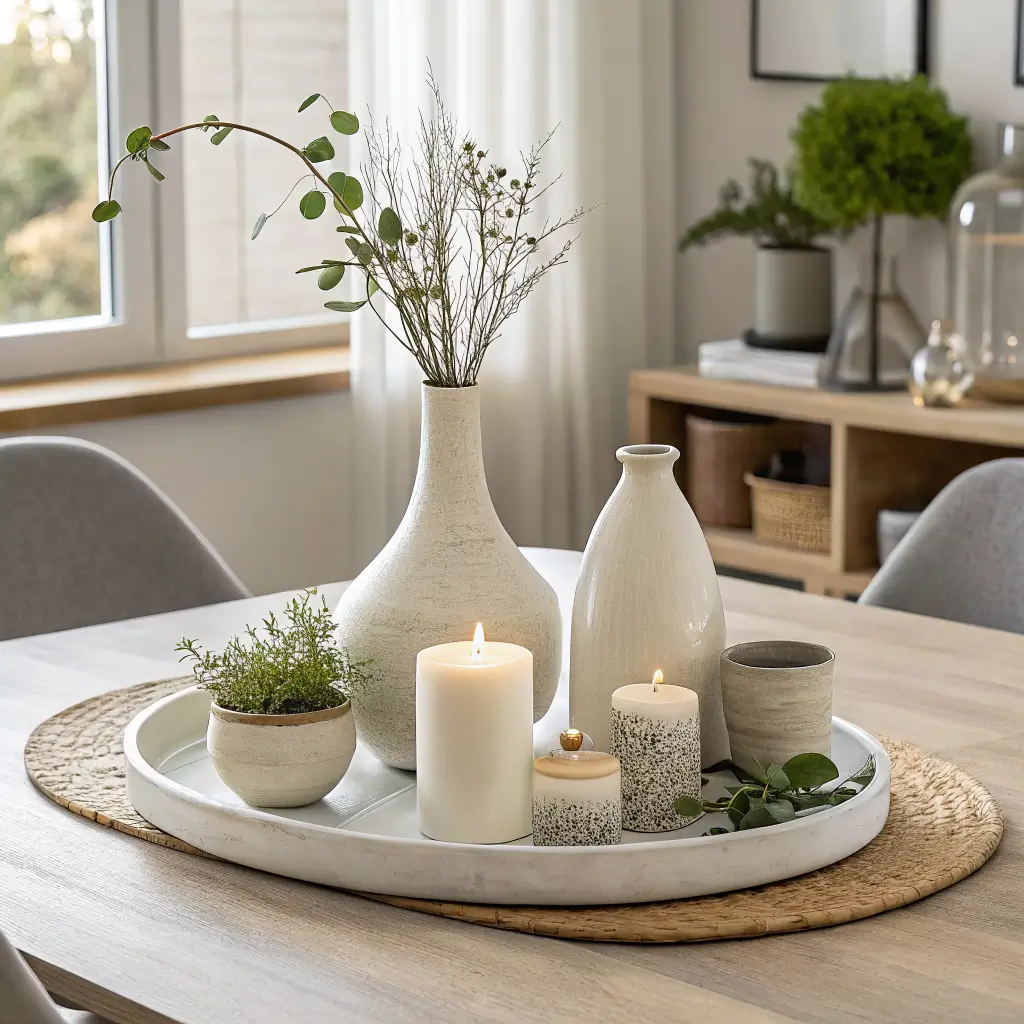
Minimalist tray centerpieces are the Swiss Army knives of dining table decor. They corral your styling elements into one cohesive unit while making your table look intentionally designed rather than accidentally decorated.
Why Trays Work Magic
A beautiful tray instantly creates boundaries and purpose. Instead of random objects scattered across your table, everything sits within a defined space that feels curated. I use a large wooden tray as my base, and it’s changed my entire approach to table styling.
Essential elements for tray centerpieces:
- One substantial tray in wood, metal, or ceramic
- Three to five objects of varying heights
- A mix of textures (smooth ceramics with rough wood)
- One living element like a small plant or fresh flowers
- Functional beauty — items that serve a purpose
- Consistent color palette throughout
Building Your Tray Composition
Think of your tray like a tiny stage. You need a leading actor (your tallest element), supporting characters (medium-height objects), and background players (low, spreading elements). My current setup includes a tall white vase, a medium wooden bowl, and three small succulents. Simple, but it looks like I actually know what I’m doing.
The Mobility Advantage
Here’s the genius of tray centerpieces: instant table clearing. When you need the table for homework, work projects, or that puzzle you swore you’d finish, just move the whole tray. No rearranging individual pieces, no forgetting where things go. It’s styling that works with real life, not against it.
2. Seasonal Greenery Runner
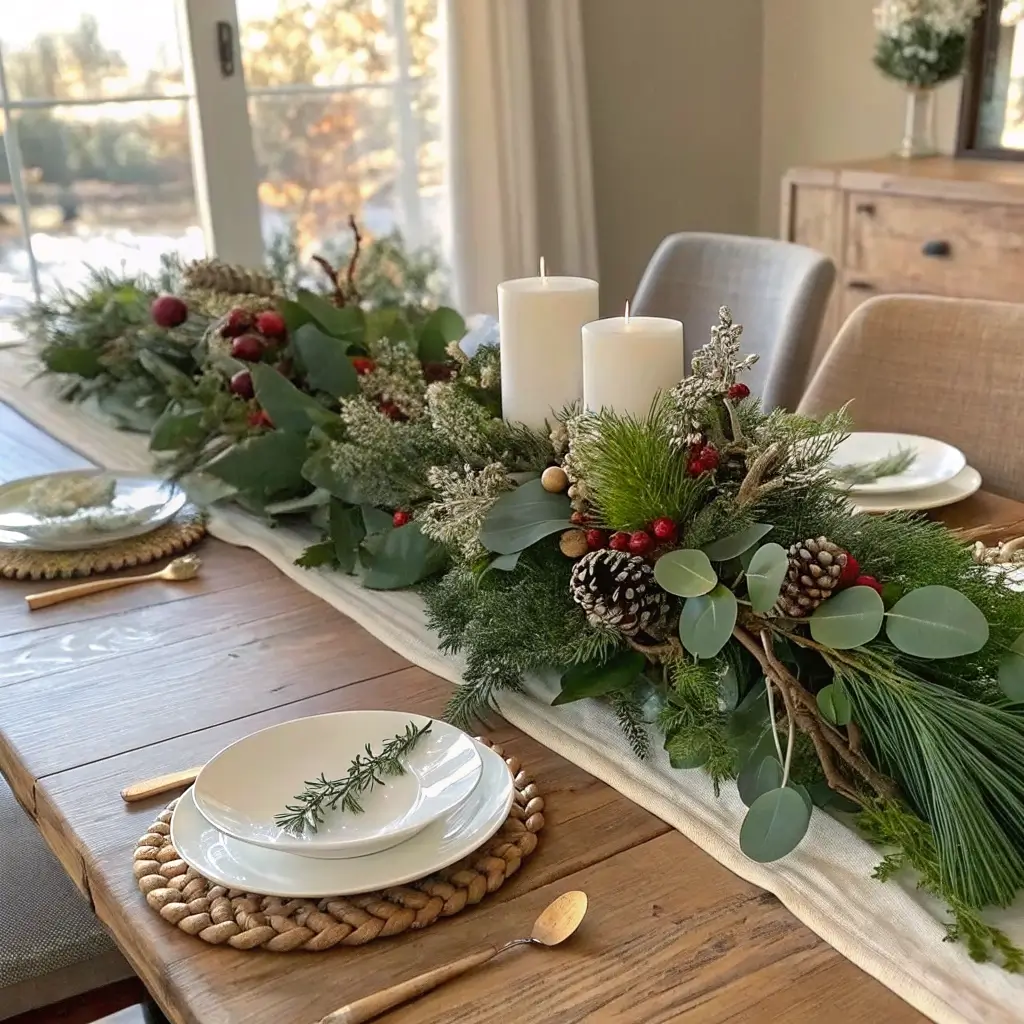
Seasonal greenery runners bring nature indoors while creating a living centerpiece that changes throughout the year. This approach feels fresh, organic, and surprisingly low-maintenance once you get the hang of it.
Creating Your Green Foundation
Start with a base runner in neutral linen or burlap, then layer greenery on top. The runner protects your table while the greenery adds life and movement. I change mine seasonally — eucalyptus in spring, ferns in summer, colorful leaves in fall, and evergreen branches in winter.
Seasonal greenery options:
- Spring: Fresh eucalyptus, flowering branches, new growth
- Summer: Ferns, ivy, lush green branches
- Fall: Colorful autumn leaves, berry branches, dried grasses
- Winter: Evergreen boughs, pinecones, bare branches
The Layering Technique
Don’t just plop greenery down the center of your table. Layer different types and heights for visual interest. Start with a base of longer branches, add shorter pieces for fullness, then tuck in special elements like flowers or berries. The goal is controlled wildness — natural but intentional.
Maintenance Reality Check
Let’s be honest — fresh greenery requires upkeep. But here’s my secret: mix fresh with high-quality faux elements. Real eucalyptus with fake ferns? Nobody can tell, and you get the best of both worlds. Change out the fresh pieces weekly and keep the faux base year-round.
Ever wondered why restaurant tables always look so effortlessly styled? They use this exact technique, mixing real and artificial elements to create that perfect “just gathered from the garden” look.
3. Candle Cluster Statement
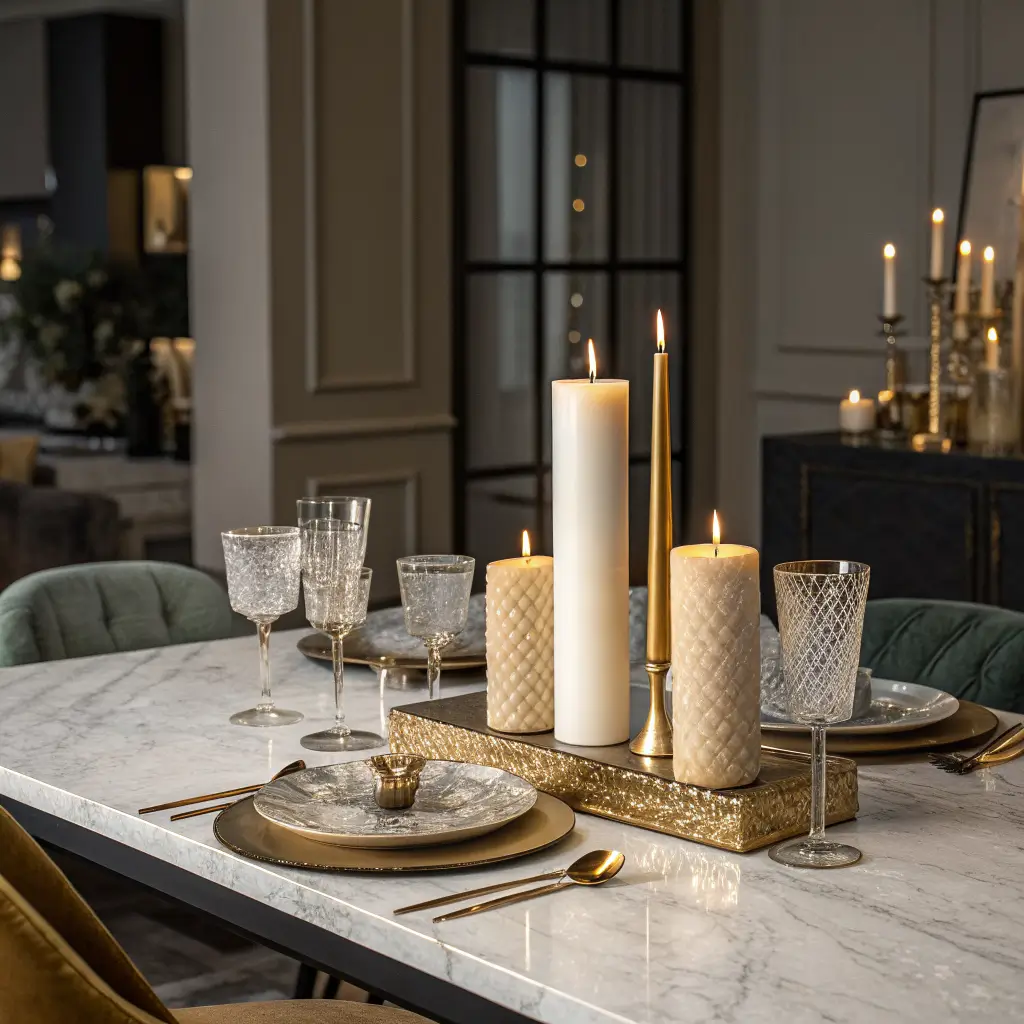
Candle cluster statements create instant ambiance and drama. There’s something primal about candlelight that makes even leftover pizza feel like a special occasion. Plus, candles are basically magic for hiding the fact that you haven’t dusted in three weeks.
The Art of Candle Grouping
Successful candle clusters need variety in height, size, and holder style. Think of it like a city skyline — you want tall buildings, medium buildings, and smaller structures all working together. I group candles in odd numbers (three, five, seven) because even numbers feel too formal and matchy.
Essential candle cluster elements:
- Varying heights from tapers to votives
- Different holder materials (brass, glass, ceramic)
- Mixed candle sizes for visual weight
- Consistent color family in the candles themselves
- Safe spacing between flames
- Stable bases that won’t tip over
Creating Candle Landscapes
Arrange your candles like a landscape with peaks and valleys. Tall tapers create your “mountains,” pillar candles form “hills,” and votives fill in as “valleys.” This creates depth and movement that’s way more interesting than a straight line of identical candles.
Safety Meets Style
Beautiful candle displays need to be safe candle displays. Keep flames away from anything flammable, use proper holders that catch wax, and never leave burning candles unattended. I mix real candles with high-quality LED versions — you get the ambiance without the anxiety.
FYI, the trick to making LED candles look real? Choose ones with flickering flames and warm color temperatures. The cheap ones scream “fake,” but quality LED candles fool everyone 🙂
Also Read: 10 Creative Dining Table Styling Ideas for Modern Homes
4. Modern Bowl + Orb Styling
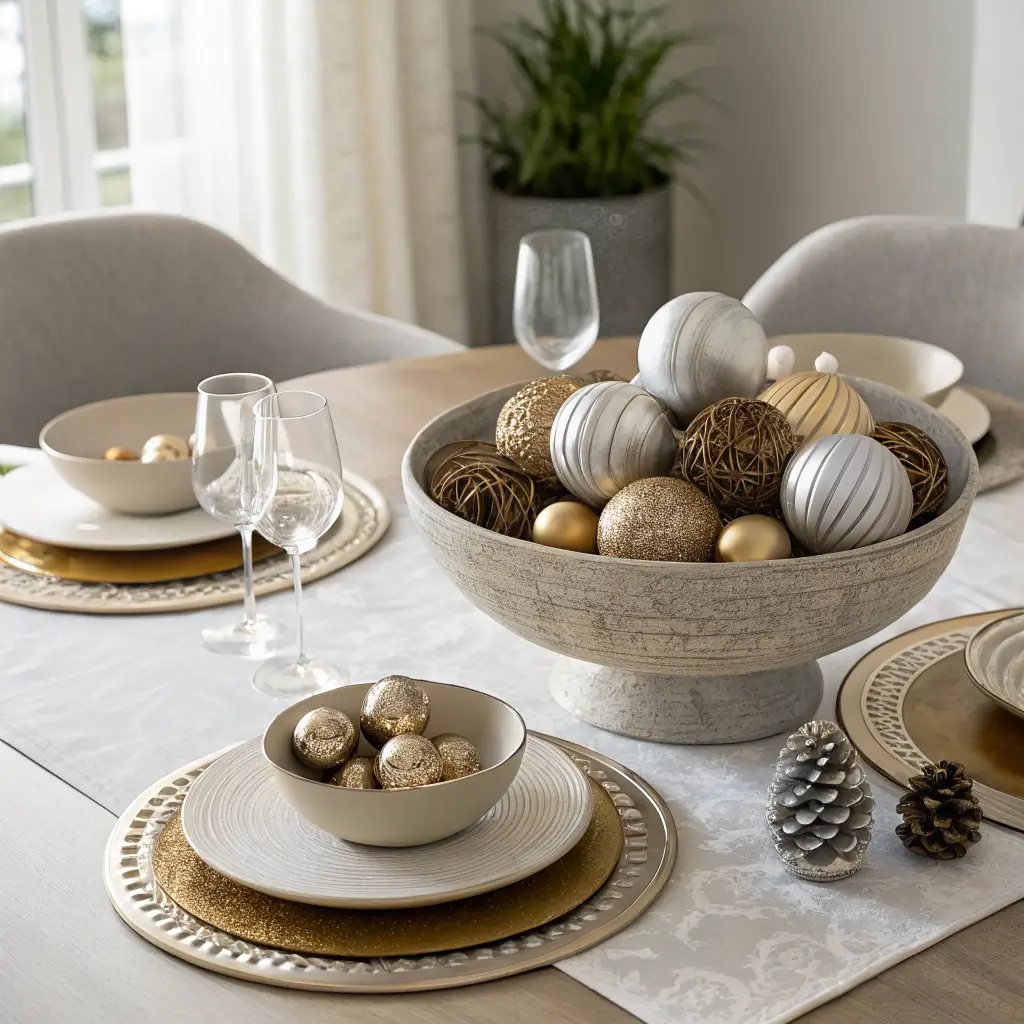
Modern bowl and orb styling brings sculptural elegance to your dining table. This approach treats your table like a gallery, using simple geometric shapes to create sophisticated visual interest.
The Geometry of Style
This look relies on clean lines and simple shapes. A large, beautiful bowl becomes your anchor, while spherical objects (orbs, balls, round fruits) create rhythm and movement. The key is choosing pieces with similar finishes or colors to maintain cohesion.
Perfect bowl and orb combinations:
- Ceramic bowl with wooden spheres for natural warmth
- Metal bowl with glass orbs for modern sophistication
- Stone bowl with marble spheres for luxury appeal
- White bowl with colorful fruit for practical beauty
- Textured bowl with smooth orbs for contrast
Playing with Scale
The magic happens when you mix different sizes thoughtfully. One large bowl, three medium orbs, and five small spheres create visual hierarchy without chaos. I learned this after my first attempt looked like a geometry lesson gone wrong — too many elements of the same size competing for attention.
Functional Beauty
The best part about bowl and orb styling? It’s inherently functional. That beautiful bowl can hold fruit, keys, or whatever needs a home. The orbs can be decorative balls, actual fruit, or even painted rocks from your kids’ craft projects. Style that adapts to real life wins every time.
5. Farmhouse Wood Crate Decor
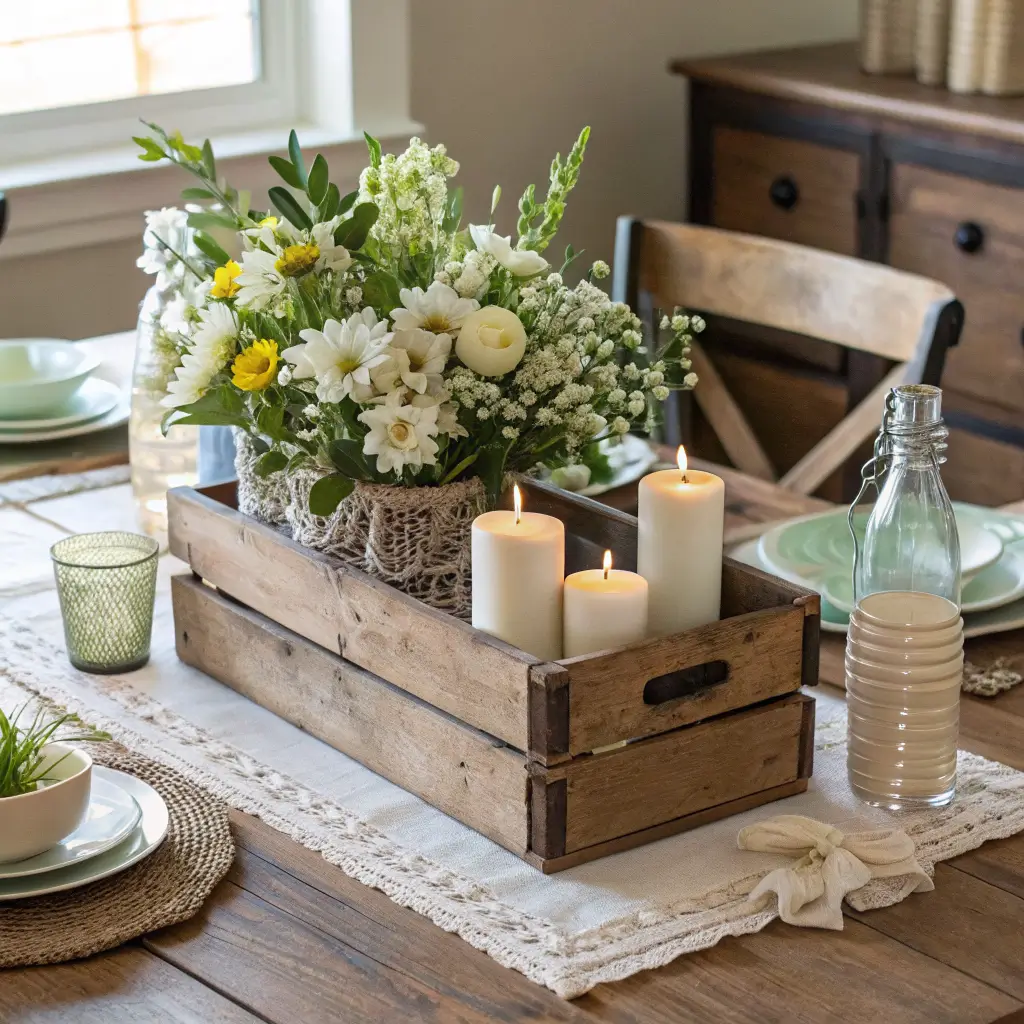
Farmhouse wood crate decor brings rustic charm without requiring an actual farm. This approach celebrates natural materials and casual elegance, creating tables that feel collected over time rather than purchased in one shopping trip.
Building Your Farmhouse Foundation
Start with a weathered wooden crate or box as your base. This becomes both storage and display, holding everything from napkins to seasonal decorations. I found mine at a flea market for $15, but you can age a new crate with sandpaper and stain for the same effect.
Essential farmhouse elements:
- Weathered wood crate or box as the foundation
- Mason jars for flowers or utensils
- Galvanized metal accents for authenticity
- Natural textiles like burlap or linen
- Fresh or dried flowers in simple arrangements
- Vintage-inspired accessories with patina and character
The Collected Look
Farmhouse style should feel accumulated, not assembled. Mix old and new pieces, combine different wood tones, and embrace imperfection. That slightly chipped enamel pitcher? Perfect. The mason jar with a tiny crack? Character building. The goal is comfortable, lived-in elegance.
Modern Farmhouse Balance
You can embrace farmhouse style without going full country. Keep the natural materials and casual vibe, but skip the roosters and “Live, Laugh, Love” signs. Focus on quality materials, simple forms, and functional beauty. My urban apartment rocks farmhouse table styling with a reclaimed wood crate, white ceramic dishes, and fresh eucalyptus. Rustic charm without the rural address.
6. Layered Runner & Vase Look
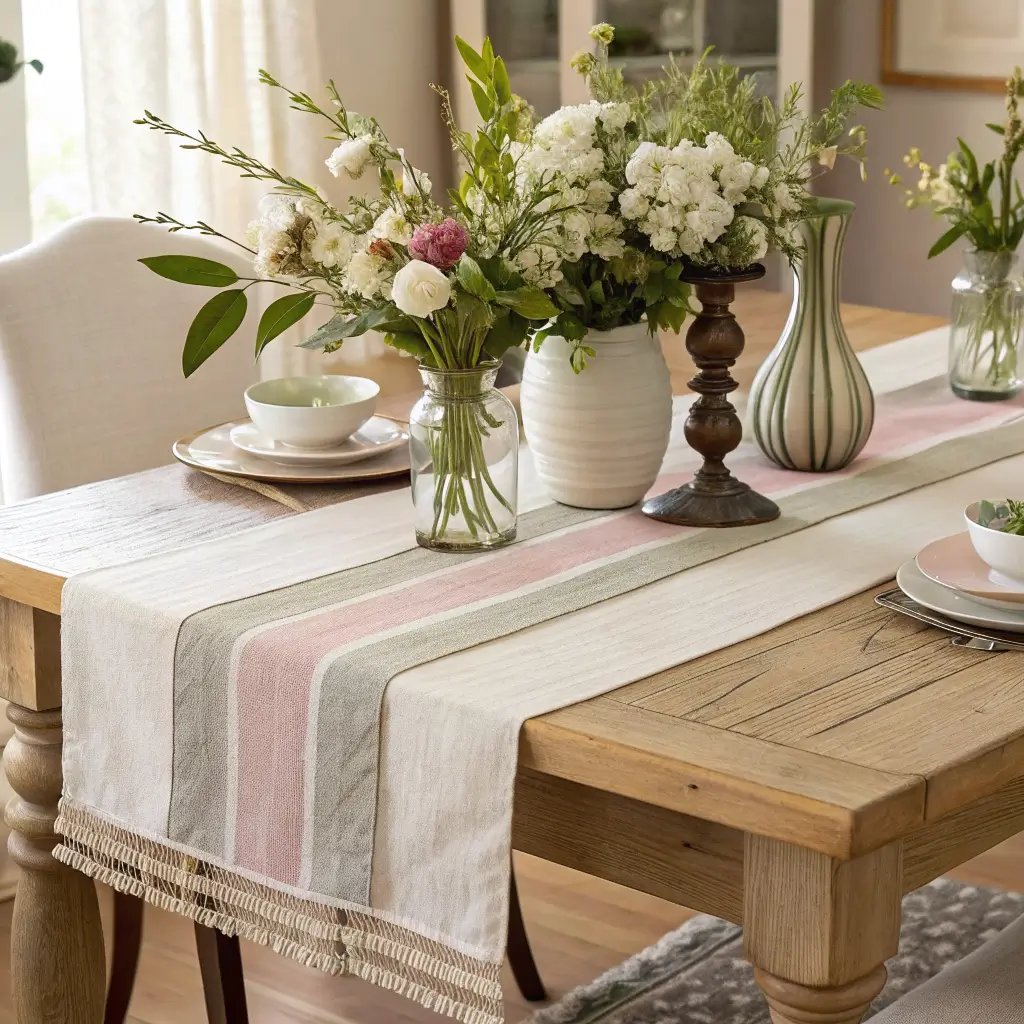
Layered runner and vase styling creates depth and sophistication through thoughtful layering. This approach builds visual interest by combining different textures, patterns, and heights in a cohesive composition.
The Art of Layering
Start with your base layer — usually a table runner or placemats. Add a second layer with a different texture or pattern, then top with your vase and accessories. The key is ensuring each layer complements rather than competes with the others.
Successful layering combinations:
- Jute runner + linen placemats + ceramic vase
- Linen runner + woven chargers + glass vase
- Burlap base + white runner + metal vase
- Solid runner + patterned napkins + wooden vase
Creating Visual Hierarchy
Each layer should serve a purpose in your overall composition. The bottom layer grounds everything, the middle layer adds interest, and the top layer (your vase and flowers) provides the focal point. Think of it like getting dressed — base layer, middle layer, statement accessory.
Seasonal Layer Swaps
The beauty of layered styling? You can change the mood by swapping just one layer. Keep your base runner year-round, but change the middle layer seasonally. Linen placemats in summer, wool chargers in winter. Same foundation, completely different feel.
I keep the same jute runner on my table all year but change the second layer monthly. Right now it’s white linen napkins with a tall glass vase holding branches. Next month? Maybe woven placemats with a ceramic pitcher. Same effort, fresh look.
Also Read: 12 Inspiring Oval Dining Table Ideas for Chic Dining
7. Sculptural Object Centerpiece
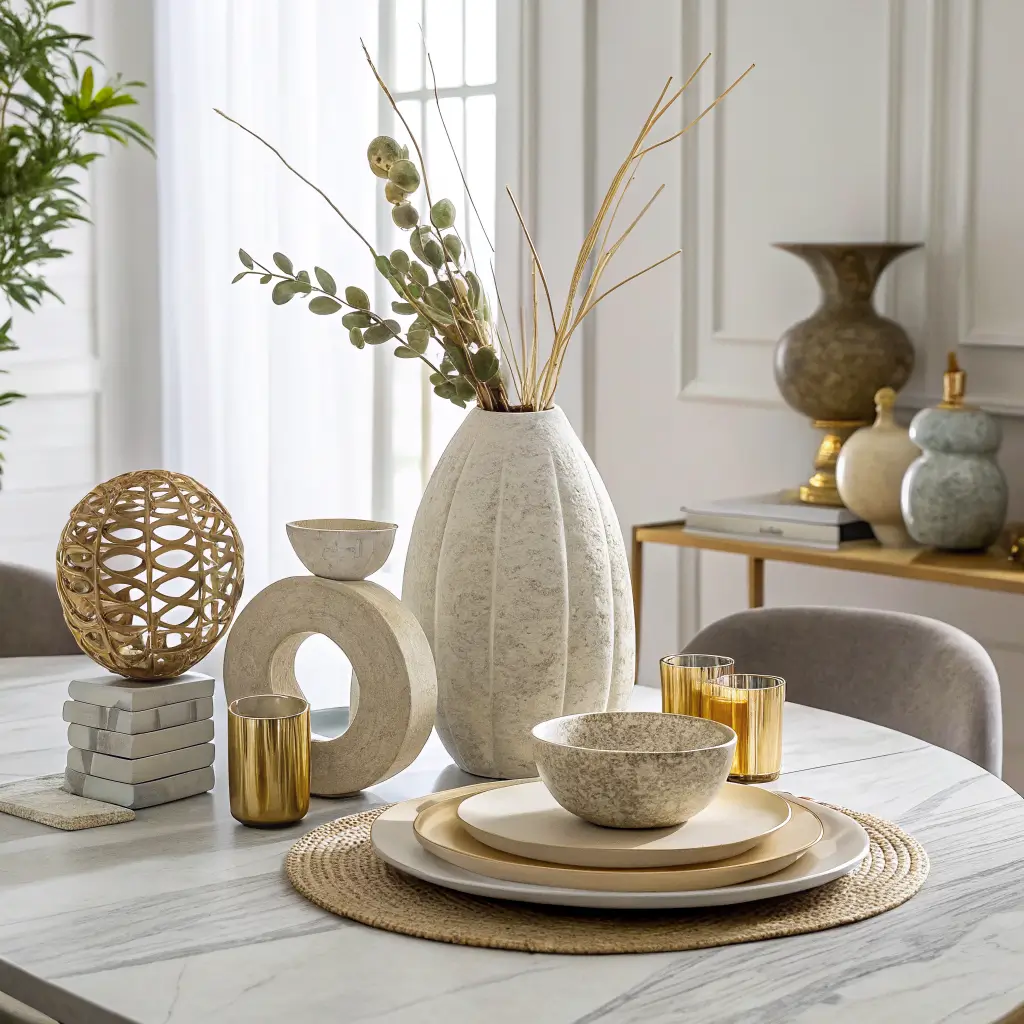
Sculptural object centerpieces treat your dining table like an art gallery. One stunning piece becomes the star, creating drama and conversation while keeping everything else beautifully simple.
Choosing Your Sculpture
Your sculptural centerpiece should be substantial enough to anchor the table but not so large it overwhelms the space. Look for pieces with interesting shapes, beautiful materials, or compelling textures. This could be actual art, a beautiful vase, an interesting bowl, or even a stunning piece of driftwood.
What makes a great sculptural centerpiece:
- Interesting form that draws the eye
- Beautiful materials like ceramic, wood, or metal
- Appropriate scale for your table size
- Conversation-starting appeal
- Stability — it won’t tip over easily
- Versatility — works with different seasonal additions
Supporting Your Star
Once you have your sculptural piece, everything else should support it without competing. Keep additional elements minimal and in the same color family. Maybe a few small candles or a simple plant, but let your sculpture be the hero.
Budget-Friendly Sculpture
Sculptural centerpieces don’t require gallery prices. I’ve found stunning pieces at thrift stores, flea markets, and even discount home stores. Sometimes the most interesting centerpieces are unexpected objects used in new ways. That interesting piece of driftwood from your beach vacation? Perfect sculpture. The vintage pottery you inherited? Instant art.
8. Everyday Place Setting Display
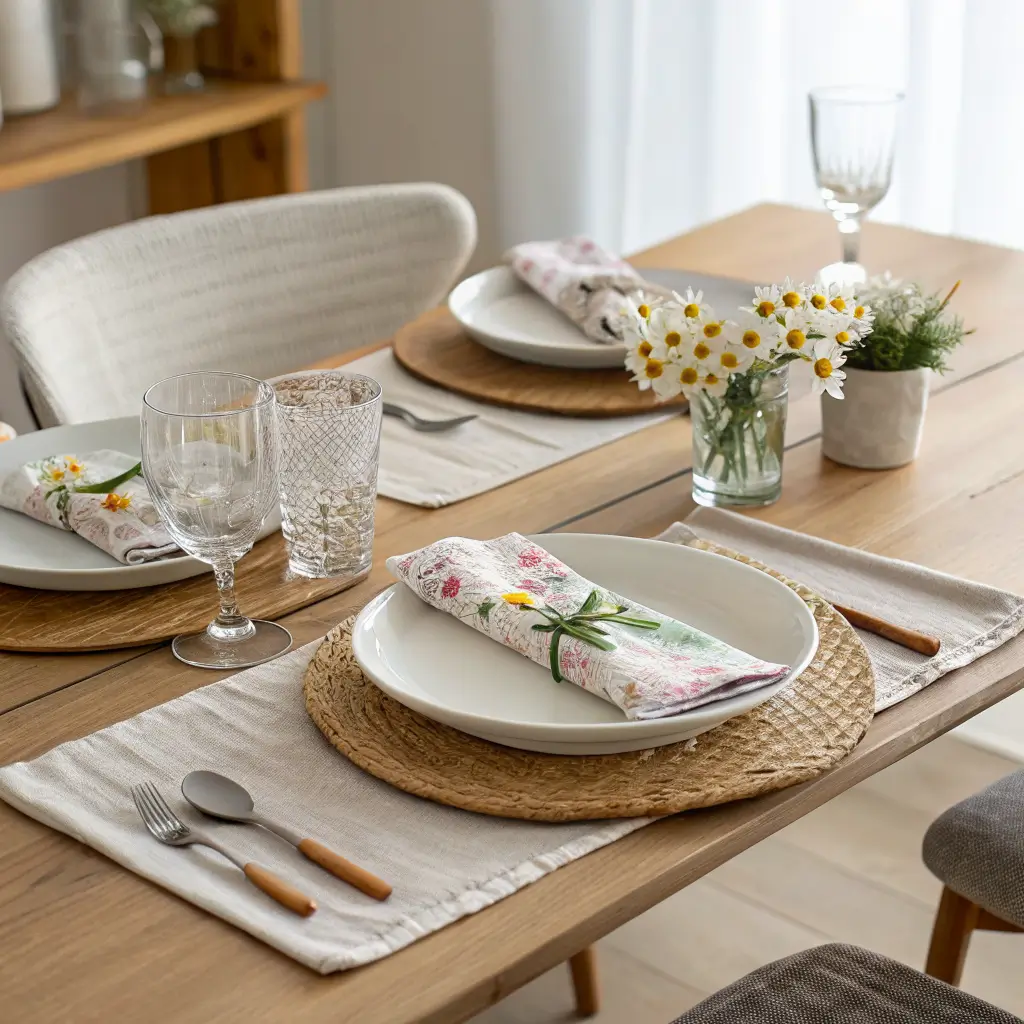
Everyday place setting displays make your dining table look ready for guests even when it’s just Tuesday night dinner. This approach treats your daily dishes like the beautiful objects they are.
The Permanent Place Setting
Instead of storing all your dishes in cabinets, display your everyday place settings on the table. This creates instant style while making your table feel ready for meals. Choose dishes you actually love using — life’s too short for ugly dinnerware.
Elements of beautiful everyday displays:
- Quality everyday dishes in colors you love
- Cloth napkins instead of paper (game changer)
- Simple glassware that works for water or wine
- Basic flatware that feels good in your hands
- Charger plates for extra elegance
- Small details like napkin rings or place cards
Making Daily Feel Special
The magic of everyday place settings? They make ordinary meals feel intentional. When your table always looks set for company, you naturally treat meals with more respect. I started doing this during lockdown, and it completely changed how my family approaches dinner time.
Practical Considerations
Everyday displays need to handle real life. Choose dishes that can go in the dishwasher, napkins that wash easily, and arrangements that kids can navigate without disaster. The goal is elevated everyday living, not museum-quality preservation.
IMO, the best everyday place settings are the ones you’re not afraid to use. If you’re constantly worried about your table styling, you’re doing it wrong :/
9. Neutral Textured Tablescape
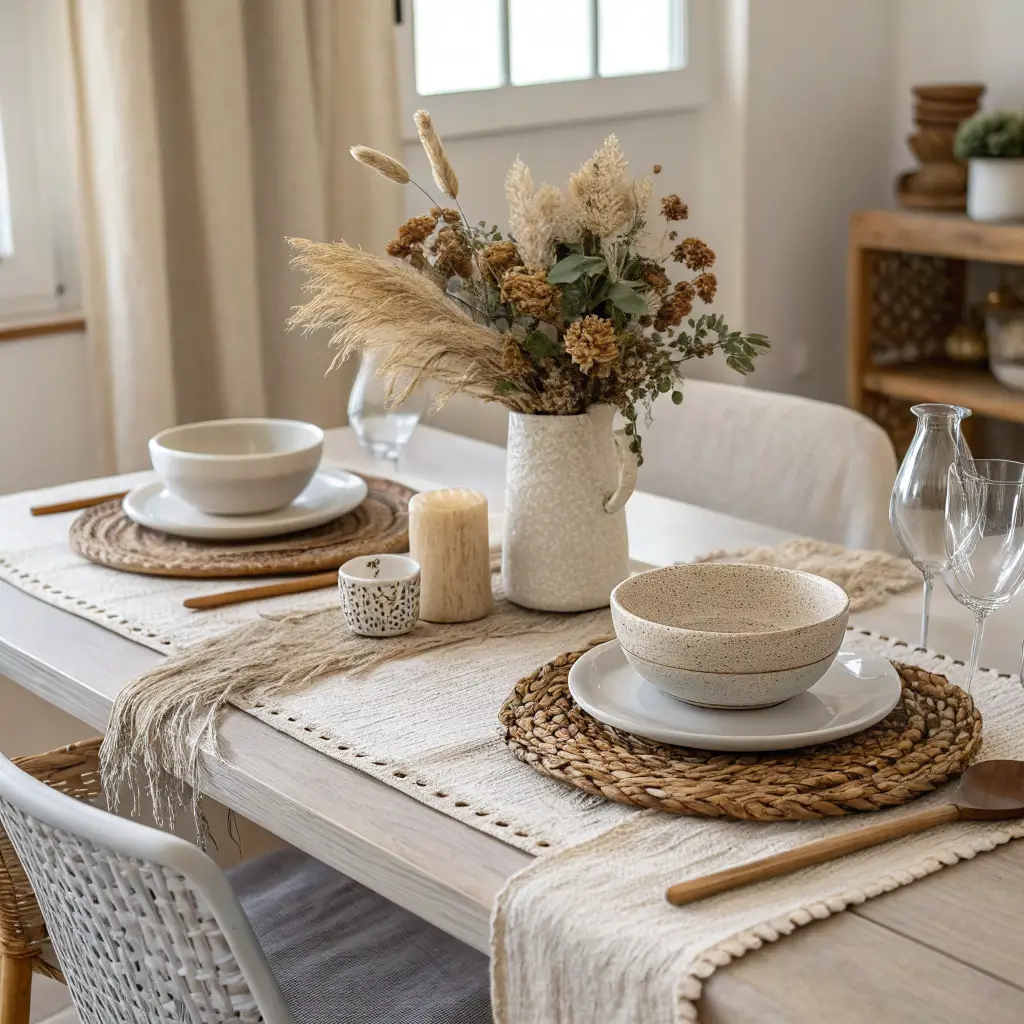
Neutral textured tablescapes create sophisticated elegance through subtle variation in materials and finishes. This approach proves that neutral doesn’t mean boring when you play with texture thoughtfully.
Building Your Neutral Palette
Start with a base of whites, creams, beiges, and soft grays. Then add interest through different textures — smooth ceramics, rough linen, polished wood, matte metal. The monochromatic palette creates calm, while varied textures prevent boredom.
Texture combinations that work:
- Smooth ceramic + rough jute + polished wood
- Matte metal + soft linen + glossy glass
- Woven baskets + smooth stone + textured fabric
- Rustic wood + sleek ceramic + nubby wool
The Power of Subtle Variation
Neutral textured tablescapes succeed through subtle differences rather than dramatic contrasts. Think cream next to ivory next to white, each with different textures. The eye reads it as sophisticated rather than matchy-matchy.
Adding Life to Neutrals
Neutral doesn’t mean lifeless. Add warmth through natural elements like wood and plants. Include metallic accents for subtle glamour. Use candlelight to create movement and warmth. The goal is serene sophistication, not sterile emptiness.
My neutral tablescape includes a linen runner, ceramic bowls in varying shades of white, wooden serving pieces, and a single green plant. It looks expensive and calming, even though most pieces came from discount stores.
Also Read: 10 Beautiful Black Dining Table Ideas and Minimalist Spaces
10. Asymmetrical Decor Styling
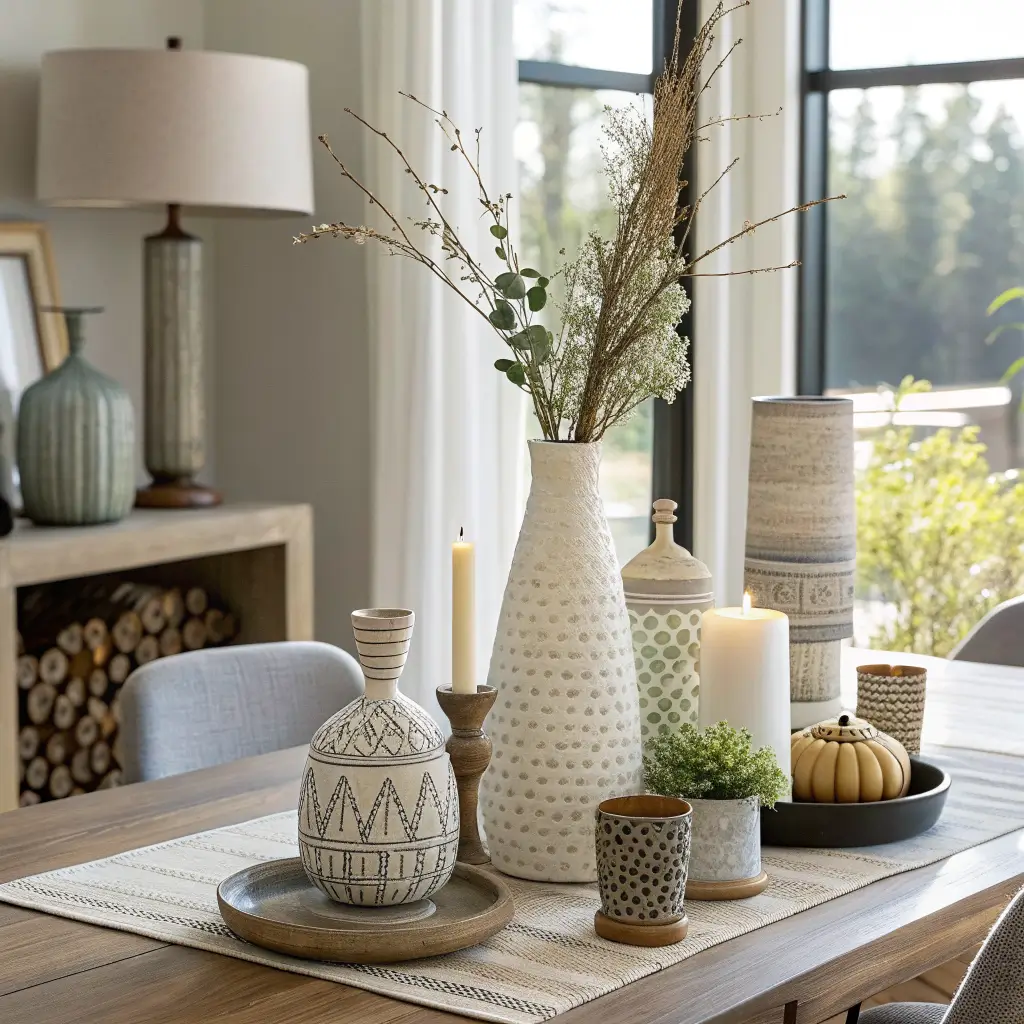
Asymmetrical decor styling breaks traditional centerpiece rules to create dynamic, modern table arrangements. This approach feels fresh and contemporary while still maintaining balance and harmony.
Understanding Asymmetrical Balance
Asymmetrical doesn’t mean random. You’re creating visual balance through different elements rather than mirror images. Think of a seesaw — you can balance a heavy object on one side with multiple lighter objects on the other.
Asymmetrical arrangement principles:
- Visual weight matters more than actual weight
- Odd numbers create natural asymmetry
- Varying heights add movement and interest
- Color distribution helps balance the composition
- Negative space becomes part of the design
Creating Dynamic Arrangements
Start with your largest element off-center, then balance it with smaller elements on the opposite side. Maybe a tall vase with flowers on one end, balanced by three small candles and a plant on the other. The key is making it look intentional rather than accidental.
Why Asymmetry Works
Asymmetrical arrangements feel more natural and relaxed than perfectly centered displays. They create movement and interest that draws the eye around the table. Plus, they’re more forgiving — if something gets moved or knocked over, the arrangement still works.
I love asymmetrical styling because it feels more livable. When my kids move things around (which they always do), the arrangement adapts rather than looking ruined. It’s styling that works with real life rather than against it.
Making Your Dining Table the Star
After exploring these 10 dining table decor ideas, you might feel inspired to completely transform your dining space. But here’s my advice: start with one approach that speaks to you and your lifestyle.
Maybe it’s the simplicity of a minimalist tray, or perhaps the warmth of farmhouse wood crates calls to you.
The best dining room table decor reflects how you actually live. If you have kids, embrace functional beauty that can handle daily chaos.
]If you love entertaining, focus on elements that create ambiance and conversation. If you’re rarely home, choose low-maintenance options that always look good.
Remember, your dining table should enhance your life, not complicate it. The goal isn’t to create a museum display that nobody can touch.
It’s to make your dining space feel intentional, welcoming, and uniquely yours. Whether you go minimalist or maximalist, neutral or colorful, the right decor makes every meal feel a little more special.