10 Simple Centerpiece for Dining Table Ideas and Modern Touch
- Dining Table
 Ben
Ben- 0
- 41 minutes read
Your dining table looks naked without a centerpiece. There, I said it. You can have the most beautiful dishes and the fanciest napkins, but without something interesting in the middle, your table feels like it’s missing its personality.
I spent years eating off a bare table with maybe a sad salt shaker as decoration before I realized that dining table centerpieces are the difference between “we’re eating dinner” and “we’re having an experience.”
The thing is, centerpieces don’t need to be complicated or expensive. After hosting countless dinners (and making some spectacular styling mistakes along the way), I’ve figured out what actually works for real people with real budgets.
These 10 centerpiece for dining table ideas will help you create a focal point that makes every meal feel special, whether it’s Tuesday night leftovers or your annual holiday feast.
1. Minimalist Modern Centerpiece Ideas
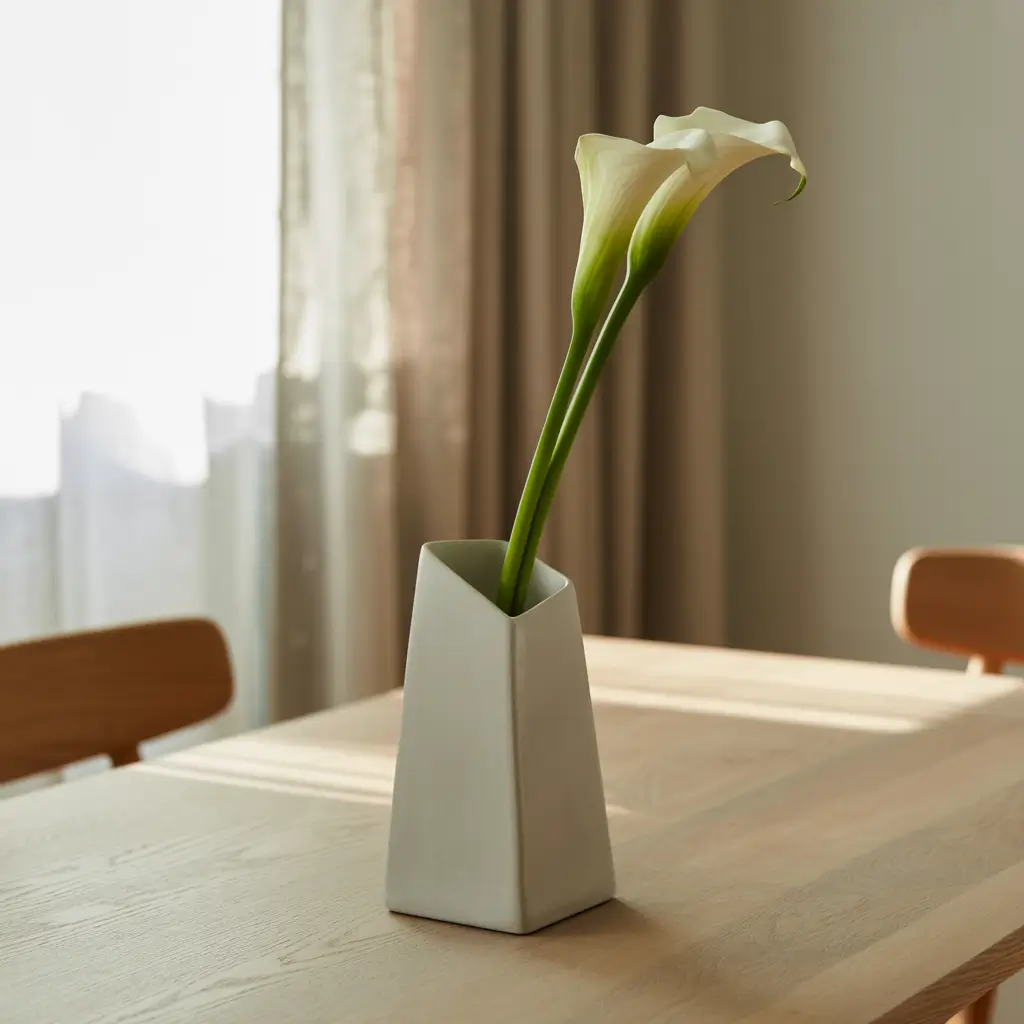
Minimalist modern centerpieces prove that sometimes less really is more. This approach strips away the clutter and leaves you with clean lines, simple forms, and maximum impact with minimum fuss.
The Art of Strategic Simplicity
Minimalist centerpieces work because they create a focal point without overwhelming your table. Think one perfect vase, a single sculptural object, or three identical elements in a row. The key is intentional simplicity — every piece should earn its place.
My go-to minimalist setup? One large ceramic bowl in matte white. Sometimes I fill it with lemons, sometimes I leave it empty. Either way, it looks like I actually know what I’m doing.
Essential minimalist elements:
- Single statement vase in ceramic, glass, or metal
- One or three identical objects for visual rhythm
- Monochromatic color scheme for cohesion
- Clean geometric shapes without fussy details
- Negative space as an actual design element
- Quality over quantity always
Creating Interest Without Clutter
The challenge with minimalist centerpieces? Making them interesting rather than boring. The solution lies in texture, proportion, and subtle variation. That single vase should be substantial enough to anchor the table. Those three white candles should be different heights. Choose pieces with interesting textures or finishes to add depth.
Living the Minimalist Life
Here’s what I love about minimalist centerpieces — they’re incredibly forgiving. When you only have one or two elements, you can’t really mess it up. Plus, they make clearing the table for actual meals super easy. No rearranging seventeen tiny objects just to fit the lasagna dish.
2. Seasonal Flower Centerpiece Ideas
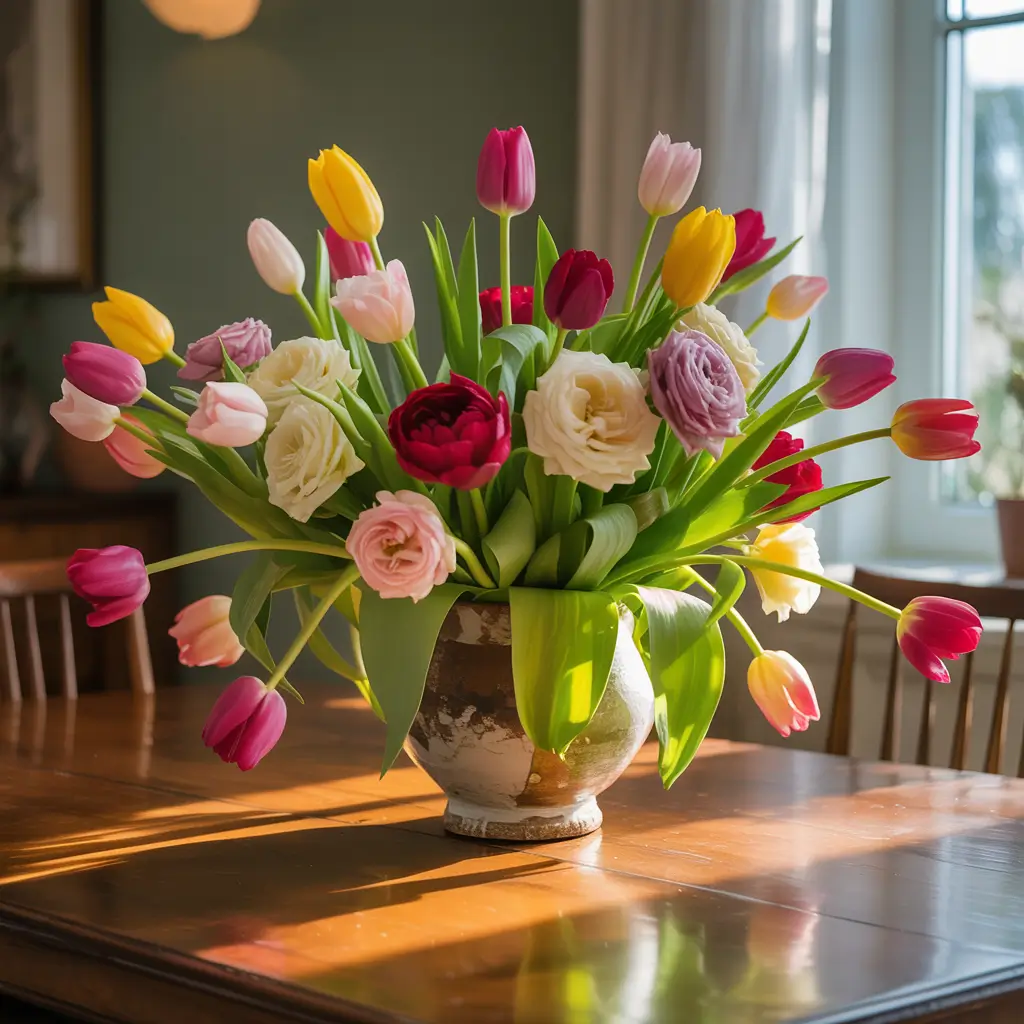
Seasonal flower centerpieces keep your dining table fresh and connected to nature’s calendar. This approach celebrates what’s blooming right now, creating arrangements that feel current and intentional rather than random.
The Seasonal Strategy
Seasonal flowers cost less, last longer, and look more natural than out-of-season imports. Spring tulips in December? Expensive and sad. Spring tulips in April? Affordable and glorious. I buy whatever’s on sale at the grocery store and make it work.
Seasonal flower guide by season:
- Spring: Tulips, daffodils, cherry blossoms, peonies
- Summer: Sunflowers, dahlias, zinnias, wildflowers
- Fall: Chrysanthemums, dahlias, marigolds, autumn branches
- Winter: Amaryllis, paperwhites, evergreen branches, holly
Budget-Friendly Flower Hacks
You don’t need expensive arrangements to create impact. I’ve learned to stretch grocery store bouquets by breaking them into multiple smaller arrangements rather than one large one. Three small vases down the table center look more intentional and cost less than one massive arrangement.
Making Flowers Last Longer
Want to know the secret to extending flower life? Change the water every other day, cut stems at an angle, and remove any leaves below the waterline. Sounds basic, but I watch people spend $20 on flowers then let them die in two days because they can’t be bothered to change the water.
Also, adding a penny to the water actually helps with some flowers. I have no idea why, but my grandmother swore by it and her roses always lasted forever.
3. DIY Rustic Centerpiece Ideas
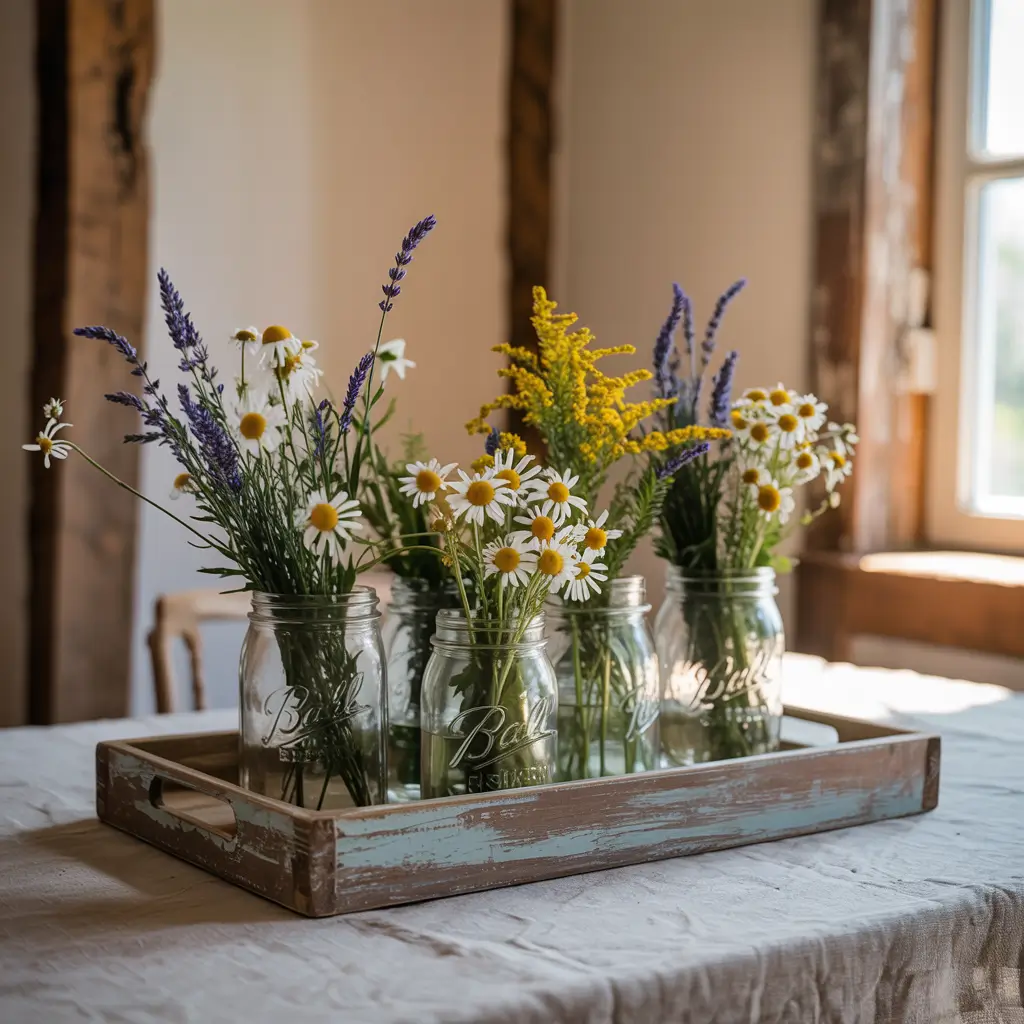
DIY rustic centerpieces celebrate handmade charm and natural materials. This style embraces imperfection and celebrates the beauty of things that look collected rather than purchased.
Building Your Rustic Foundation
Rustic centerpieces start with natural materials — wood, burlap, mason jars, twine, and anything that looks like it could have come from a barn (in a good way). The beauty of rustic styling? You can make most of it yourself with materials from your yard or craft store.
DIY rustic elements that work:
- Wood slice bases for candles or small vases
- Mason jars wrapped in burlap or twine
- Galvanized metal containers for flowers or greenery
- Natural branches or twigs arranged in simple vases
- Burlap or linen runners as the foundation
- Pinecones, acorns, or natural found objects
The Collected-Over-Time Look
The best rustic centerpieces look like you’ve been gathering elements for years, not like you bought everything at Hobby Lobby last Tuesday. Mix old and new, rough and refined. That slightly beat-up wooden box from the thrift store? Perfect for holding flowers. The mason jar collection you’ve been hoarding? Finally useful.
Creating Rustic Without Going Full Barnyard
You can embrace rustic style without looking like you’re hosting dinner in a stable. The trick? Balance rough elements with refined touches. Burlap runner with nice dishes. Mason jars with beautiful fresh flowers. Rough wood with elegant candles. The contrast makes both elements look intentional.
Ever wonder why rustic style feels so welcoming? Natural materials and handmade touches create warmth that perfect store-bought decorations simply can’t match. It’s like the difference between your grandmother’s kitchen and a hotel restaurant.
Also Read: 12 Magical Christmas Dining Table Decor Ideas to Inspire You
4. Elegant Candle Centerpiece Ideas
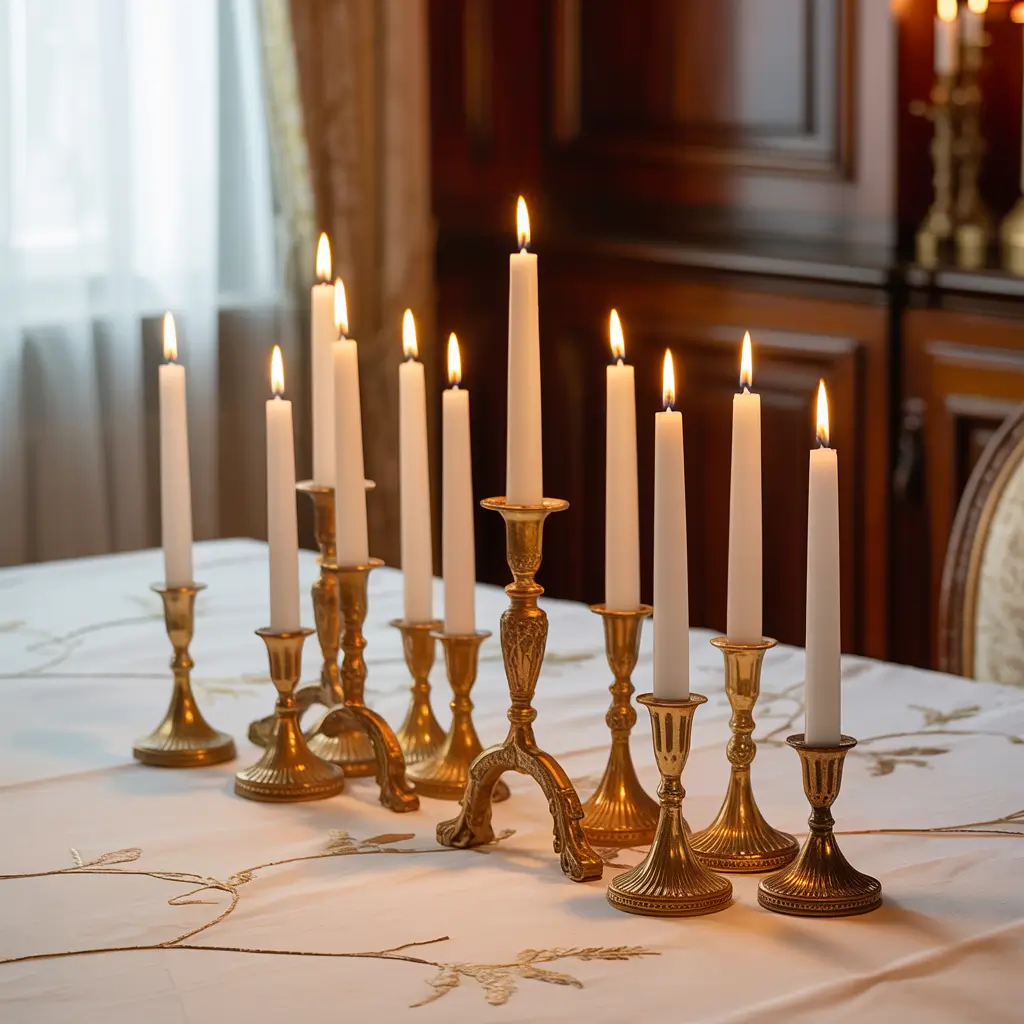
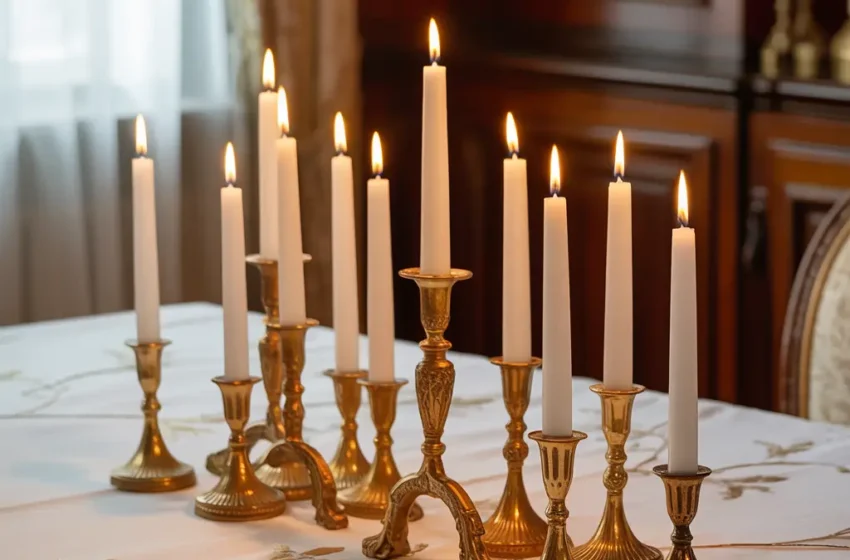
Elegant candle centerpieces create instant ambiance and sophistication. There’s something primal about candlelight that makes every meal feel like a special occasion, even when you’re serving spaghetti for the third time this week.
The Magic of Candlelight
Candles transform spaces in ways other decorations simply can’t. They create warmth, soften harsh edges, and make everyone look better (seriously, it’s like a free Instagram filter for your dinner party). For centerpieces, candles deliver maximum impact with minimal effort.
Candle centerpiece essentials:
- Varying heights for visual interest (short, medium, tall)
- Different candle types (pillars, tapers, votives mixed together)
- Unscented candles when serving food (nobody wants vanilla-scented chicken)
- Beautiful holders in glass, crystal, or metal
- Safe placement away from reaching arms and decorations
- LED backups for peace of mind with kids or pets
Creating Candle Landscapes
Think of your candle centerpiece like a landscape with peaks and valleys. Tall tapers create your mountains, pillar candles form hills, and votives fill in the valleys. This variation in height creates depth and interest that a straight line of identical candles simply can’t achieve.
The Tray Strategy
Here’s a game-changer: arrange all your candles on a decorative tray. This creates instant cohesion, makes clearing the table easier, and prevents wax drips from getting directly on your table. Plus, it looks way more intentional than randomly scattered candles.
I learned this after spending an hour scraping wax off my wood table. Now everything goes on a tray — lesson learned the hard way.
5. Festive Holiday Centerpiece Ideas
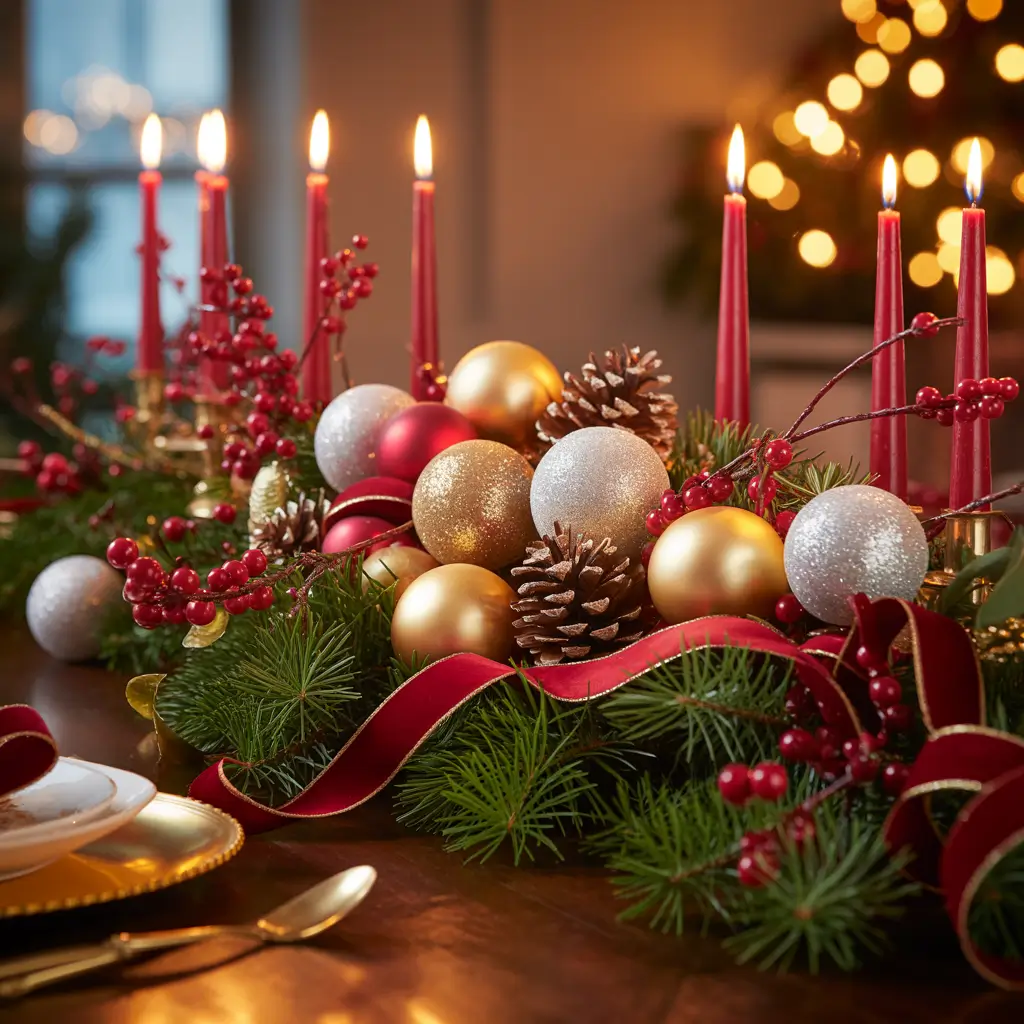
Festive holiday centerpieces transform your dining table for special occasions throughout the year. This approach celebrates seasonal holidays with themed decorations that make every gathering feel special.
Holiday-Specific Centerpiece Ideas
Each major holiday calls for different centerpiece approaches. The key is celebrating the holiday without going overboard into theme park territory. Subtle nods to the occasion work better than exploding holiday stores on your table.
Holiday centerpiece guide:
- Christmas: Evergreen garland, pinecones, red berries, candles, ornaments
- Thanksgiving: Pumpkins, fall leaves, wheat stalks, gourds, autumn colors
- Easter: Spring flowers, painted eggs, pastel colors, nest elements
- 4th of July: Red, white, blue flowers, small flags, patriotic subtle touches
- Halloween: Small pumpkins, autumn leaves, black candles, seasonal flowers
Creating Holiday Magic That Doesn’t Look Cheesy
The line between festive and tacky is thinner than you think. The secret? Choose elegant versions of holiday elements and use restraint. Beautiful real pumpkins instead of plastic jack-o-lanterns. Fresh evergreen branches instead of synthetic wreaths. Real flowers in seasonal colors instead of foam decorations.
Transitional Holiday Centerpieces
Smart holiday decorators create centerpieces that transition between holidays. My fall centerpiece starts with pumpkins and autumn leaves for September, adds candles for Thanksgiving, then I just remove the pumpkins and add evergreen branches for Christmas. Same base, evolving display.
6. Boho Chic Centerpiece Ideas

Boho chic centerpieces celebrate eclectic, collected style with natural materials, varied textures, and a relaxed, artistic vibe. This approach mixes colors, patterns, and elements that shouldn’t work together but somehow do.
The Boho Formula
Boho centerpieces thrive on organized chaos. You’re mixing different elements, textures, and even styles in one arrangement. The key is maintaining some common thread — similar colors, complementary materials, or a unifying theme.
Boho centerpiece elements:
- Mix of vessels (vintage bottles, ceramic pots, woven baskets)
- Natural materials (dried pampas grass, feathers, wood)
- Textiles (small woven runners, macramé elements)
- Earthy colors (terracotta, ochre, sage, cream)
- Plants (succulents, trailing vines, air plants)
- Global influences (Moroccan lanterns, Indian textiles)
Creating Boho Without Chaos
The challenge with boho centerpieces? Making them look intentional rather than random. Group similar items together, maintain a consistent color palette, and create visual balance even within the eclectic mix. Too much chaos and it looks like you dumped your craft drawer on the table.
The Collected Look
Boho style should feel accumulated over time, not assembled in one shopping trip. Mix vintage finds with new pieces, combine handmade elements with store-bought items, and include objects with personal meaning. That interesting piece of driftwood from your beach vacation? Perfect for your boho centerpiece.
FYI, the best boho centerpieces tell stories through their objects. Every element should feel chosen and meaningful rather than random filler 🙂
Also Read: 10 Stylish Dining Room Table Decor Ideas for Warm Interiors
7. Geometric & Sculptural Centerpiece Ideas
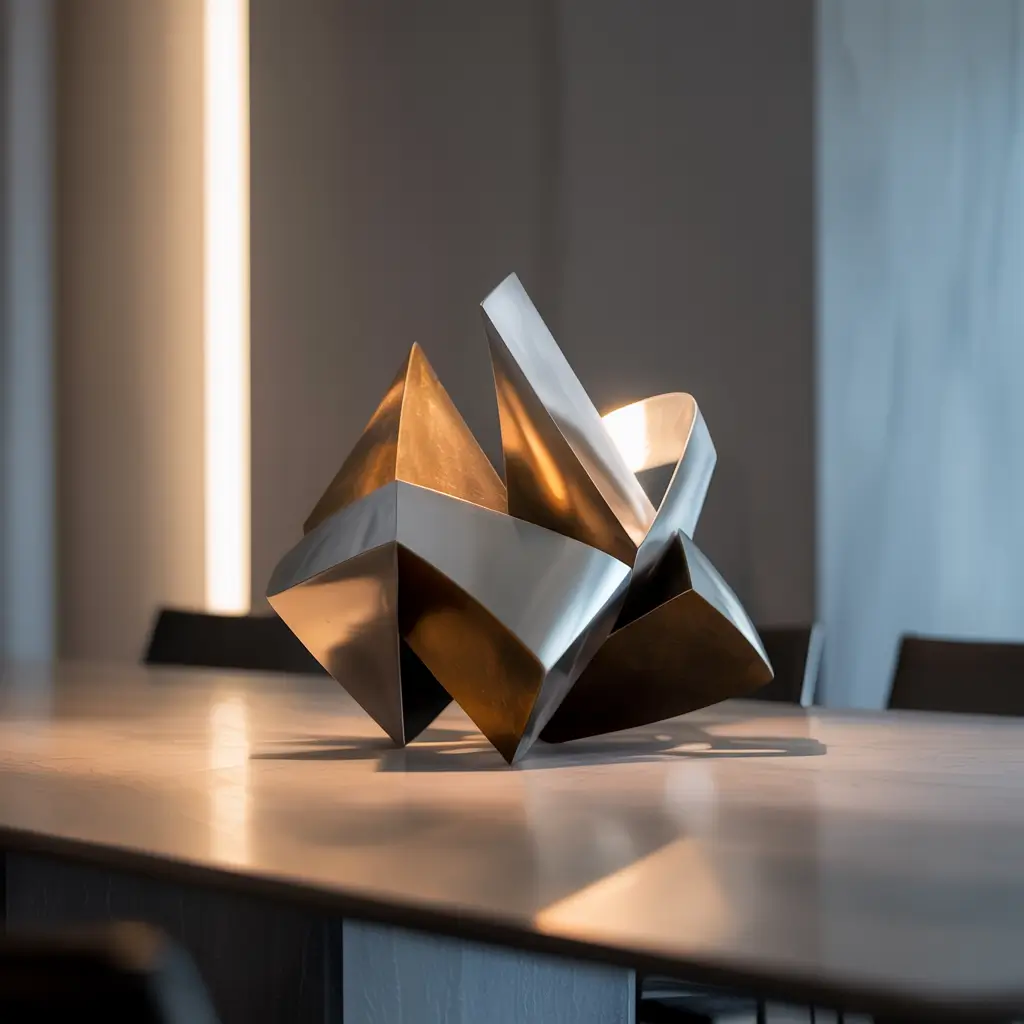
Geometric and sculptural centerpieces treat your dining table like an art gallery. These modern arrangements use interesting shapes, architectural forms, and sculptural objects to create visual interest through form rather than color or pattern.
The Art of Sculptural Centerpieces
Sculptural centerpieces work because they create conversation pieces that go beyond typical floral arrangements. Think terrariums in geometric shapes, interesting sculptural objects, modern vases with architectural forms, or abstract art pieces that happen to sit on your table.
Geometric centerpiece options:
- Geometric terrariums with succulents or air plants
- Sculptural vases in interesting shapes (asymmetric, angular, organic)
- Metal wire sculptures or abstract forms
- Faceted candle holders in geometric shapes
- Modern bowls with striking shapes or angles
- Stacked books as bases for sculptural objects
Playing with Scale and Proportion
The magic of sculptural centerpieces happens when you play with unexpected scale. One oversized geometric vase makes more impact than five small ones. Three different-sized geometric terrariums create rhythm and movement. The key is treating these pieces like the art they are.
Mixing Sculpture with Natural Elements
Balance the hard edges of geometric pieces with softer natural elements. Place flowers in geometric vases, add plants to wire sculptures, or surround angular objects with organic materials. This contrast makes both elements more interesting.
My geometric centerpiece? Three hexagonal terrariums in different sizes holding succulents. It cost about $40 total and looks like something from a design magazine. People always assume I paid way more than I did.
8. Fresh Fruit & Edible Centerpiece Ideas
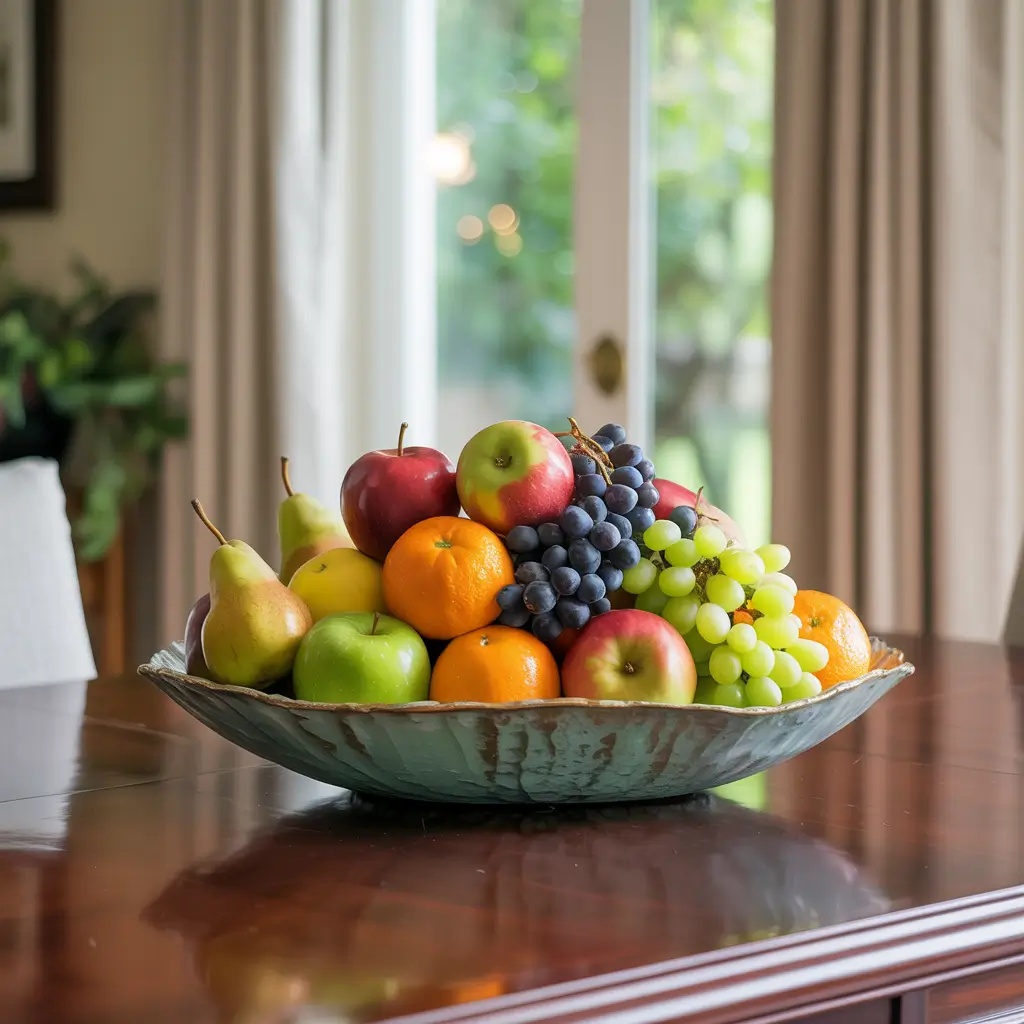
Fresh fruit and edible centerpieces combine decoration with function — your centerpiece becomes dessert or a healthy snack. This approach celebrates abundance while providing actual value beyond just looking pretty.
The Edible Advantage
Edible centerpieces make sense on multiple levels. They look beautiful, cost less than flowers (usually), serve a functional purpose, and never feel wasteful. Plus, they subtly encourage healthier eating when fruit sits right in front of you looking delicious.
Edible centerpiece ideas that work:
- Bowl of seasonal fruits arranged by color or type
- Stacked citrus display (lemons, limes, oranges)
- Grape cascade with different varieties
- Artichoke and vegetable arrangement for an unexpected look
- Herb garden centerpiece (small pots of basil, rosemary, thyme)
- Bread basket display for casual meals
Making Fruit Look Intentional
The difference between a fruit bowl and a centerpiece? Presentation and curation. Choose fruits in a cohesive color scheme, arrange them artfully, use a beautiful bowl or tiered stand, and keep everything looking fresh and abundant.
Combining Edible with Decorative
Elevate edible centerpieces by mixing in non-edible decorative elements. Place fruits among candles, add fresh flowers to the arrangement, use interesting serving pieces, or incorporate greenery for color variation.
The Seasonal Rotation
Change your edible centerpiece with the seasons — citrus in winter, berries in summer, apples and pears in fall, tropical fruits in spring. This keeps things fresh (literally) and connects your table to nature’s calendar.
9. Small Space Compact Centerpiece Ideas
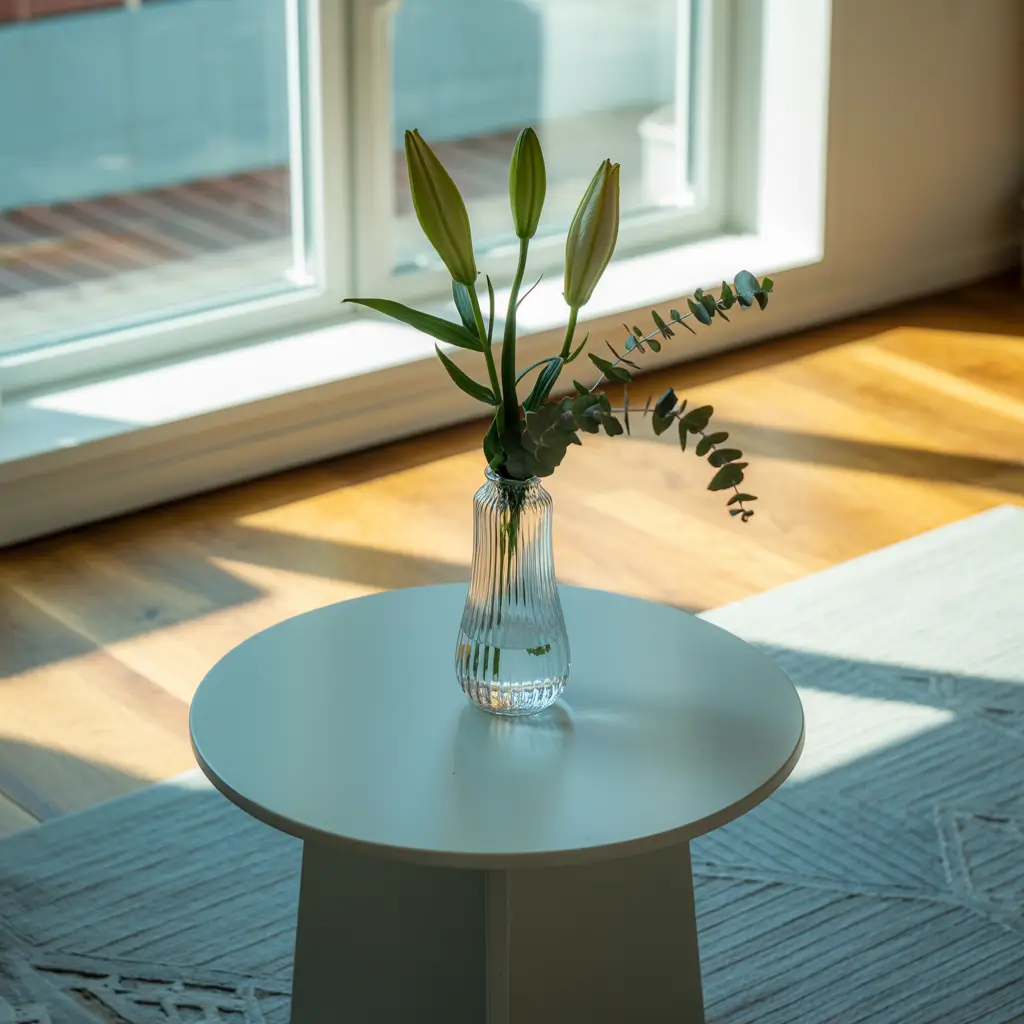
Small space compact centerpieces prove you don’t need a massive table for impactful centerpieces. This approach maximizes visual interest while minimizing physical footprint — perfect for small tables or crowded meals.
The Scale Challenge
Small tables need proportional centerpieces that add interest without overwhelming the space. Too large and you can’t fit the food. Too small and the centerpiece feels like an afterthought. The sweet spot is a centerpiece that fits comfortably in the table center while leaving at least 18 inches of clear space around it.
Compact centerpiece solutions:
- Single bud vase with one beautiful flower
- Small succulent garden in a shallow dish
- Three votives on a small tray
- One small sculptural object
- Narrow runner with minimal decorations
- Low, spreading arrangement that doesn’t block sightlines
Vertical vs. Horizontal
In small spaces, consider going vertical rather than horizontal. A tall, narrow vase takes up minimal table real estate while creating visual impact. Just keep the arrangement narrow enough that people can see around it for conversation.
The Removable Solution
My small table trick? Design centerpieces that easily remove when you’re actually eating. A beautiful tray with small objects that you simply lift off and set aside when food arrives. You get the styled table for guests to admire, then practical eating space when it matters.
IMO, small tables actually make styling easier because you can’t overthink it — there’s simply no room for complexity :/
Also Read: 10 Creative Dining Table Styling Ideas for Modern Homes
10. Luxury Crystal & Metallic Centerpiece Ideas
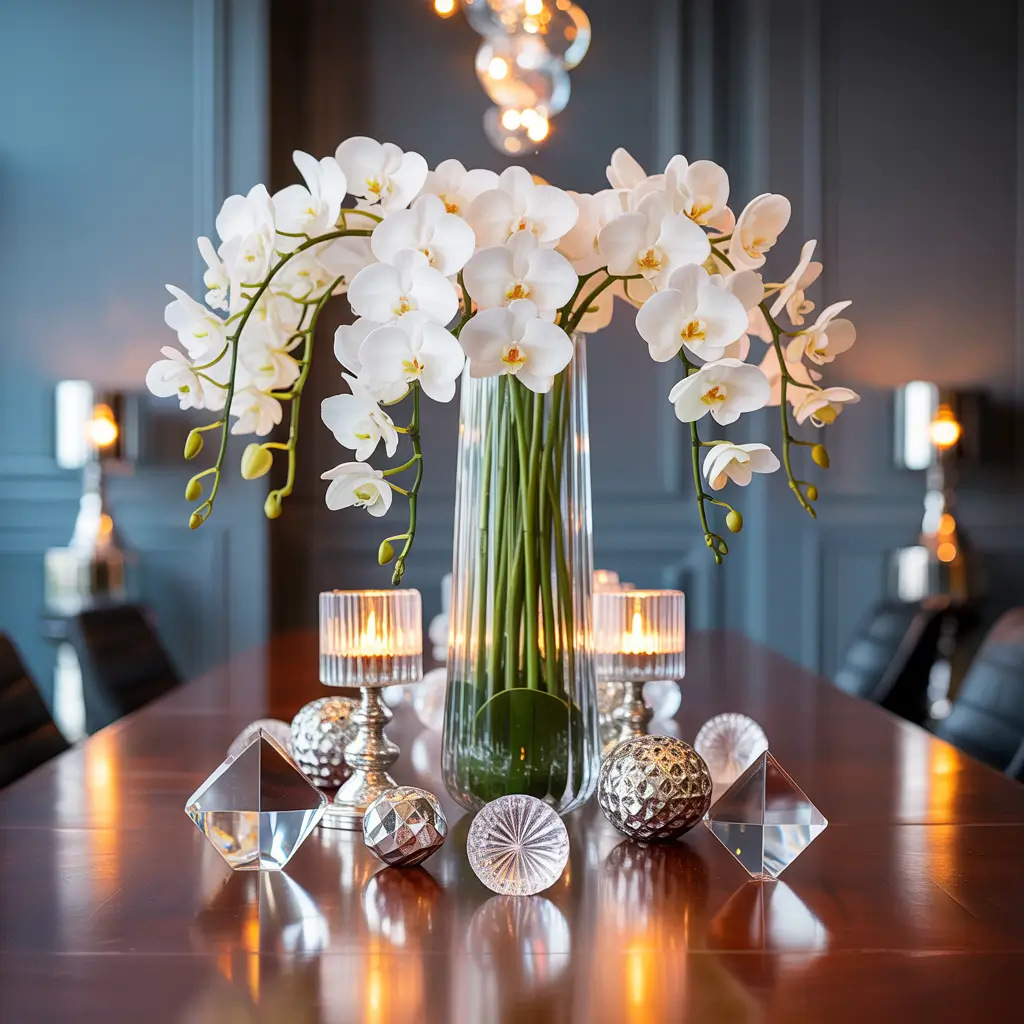
Luxury crystal and metallic centerpieces bring glamour and sophistication to your dining table. This style uses reflective surfaces, precious metals, and crystal elements to create centerpieces that catch light and elevate the entire dining experience.
The Glamour Factor
Crystal and metallic centerpieces work through reflection and shine. They catch and bounce light around your dining space, creating sparkle and movement that matte surfaces can’t achieve. The effect is especially magical with candlelight or dimmed overhead lighting.
Luxury centerpiece elements:
- Crystal candle holders in various heights
- Silver or gold trays as bases for arrangements
- Metallic vases in brass, copper, or silver
- Mercury glass votives and vessels
- Crystal bowls filled with ornaments or natural elements
- Mixed metals (gold and silver together) for modern luxury
Mixing High and Low
Here’s a secret: you don’t need real crystal or solid gold to get the luxury look. Mix quality pieces with affordable versions that mimic expensive materials. One genuine crystal piece surrounded by high-quality glass alternatives creates the luxe effect without the devastating price tag.
Creating Shine Without Tackiness
The line between glamorous and gaudy? Restraint and quality. Choose pieces with weight and substance rather than cheap plastic alternatives. Mix metallic with neutral elements to prevent overwhelming shine. Let the quality of materials speak for itself rather than piling on more and more metallic items.
Maintaining the Sparkle
Crystal and metallic centerpieces need regular cleaning to maintain their impact. Fingerprints and dust show up quickly on reflective surfaces. Keep glass cleaner and soft cloths handy. The upkeep is worth it when your centerpiece catches the light and makes everyone at the table look like they’re dining somewhere expensive.
Making Your Centerpiece Work for You
After exploring these 10 centerpiece for dining table ideas, you’ve got options for every style, space, and budget. The key is choosing an approach that reflects your personality and actually works with your lifestyle.
If you have kids, maybe skip the elaborate crystal until they’re old enough not to use it for Lego target practice.
Start with one centerpiece style that speaks to you. Gather materials gradually rather than buying everything at once.
Don’t stress about perfection — the most beautiful centerpieces are the ones that make you happy when you see them, not the ones that look exactly like Pinterest photos.
Remember, your centerpiece should enhance your dining experience, not complicate it. If you’re constantly rearranging it to fit the food, it’s too big.
If you never notice it’s there, it’s too subtle. The sweet spot is a centerpiece that makes people pause and appreciate the table before diving into the meal.
Mix ideas that appeal to you — maybe minimalist simplicity with some seasonal flowers, or rustic charm with elegant candles.
There are no hard rules, just opportunities to create a dining table focal point that makes every meal feel a little more special.