10 Luxury Dining Area Ideas for Sophisticated Decor
- Dining Room
 Ben
Ben- 0
- 35 minutes read
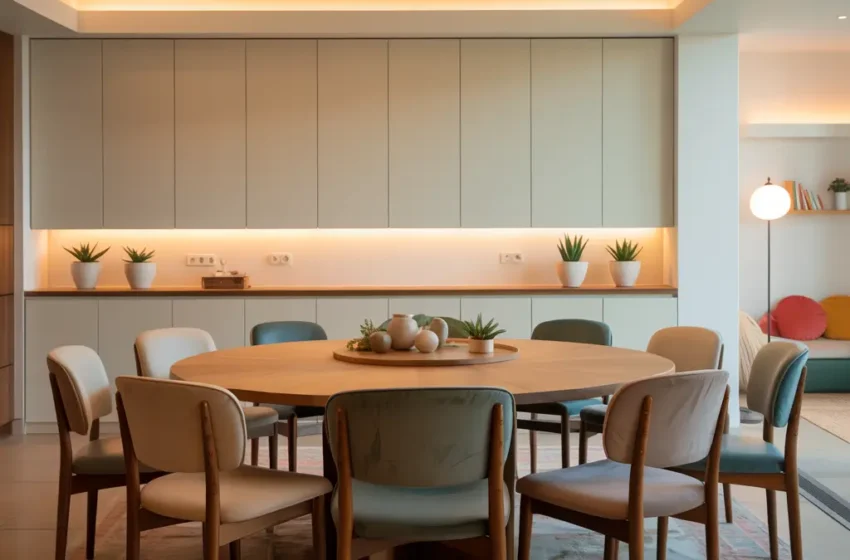
My dining room used to be the saddest room in my house. Just a table shoved against a wall, some mismatched chairs, and a light fixture that looked like it belonged in a hospital cafeteria.
Then one day, I had an epiphany while eating cereal at 2 PM (don’t judge): this space deserved better. Three months and one minor obsession later, I’d transformed that forgotten corner into the heart of our home.
Here’s what I discovered during my dining area revolution: creating an amazing dining area has nothing to do with square footage or budget. It’s about understanding how you actually live and eat, then designing around that reality.
Whether you’re working with a mansion or a studio apartment, these 10 dining area ideas will help you create a space that makes every meal feel special — even that 2 PM cereal.
Let’s transform your dining space from afterthought to absolutely incredible.
1. Minimalist Modern Dining Area
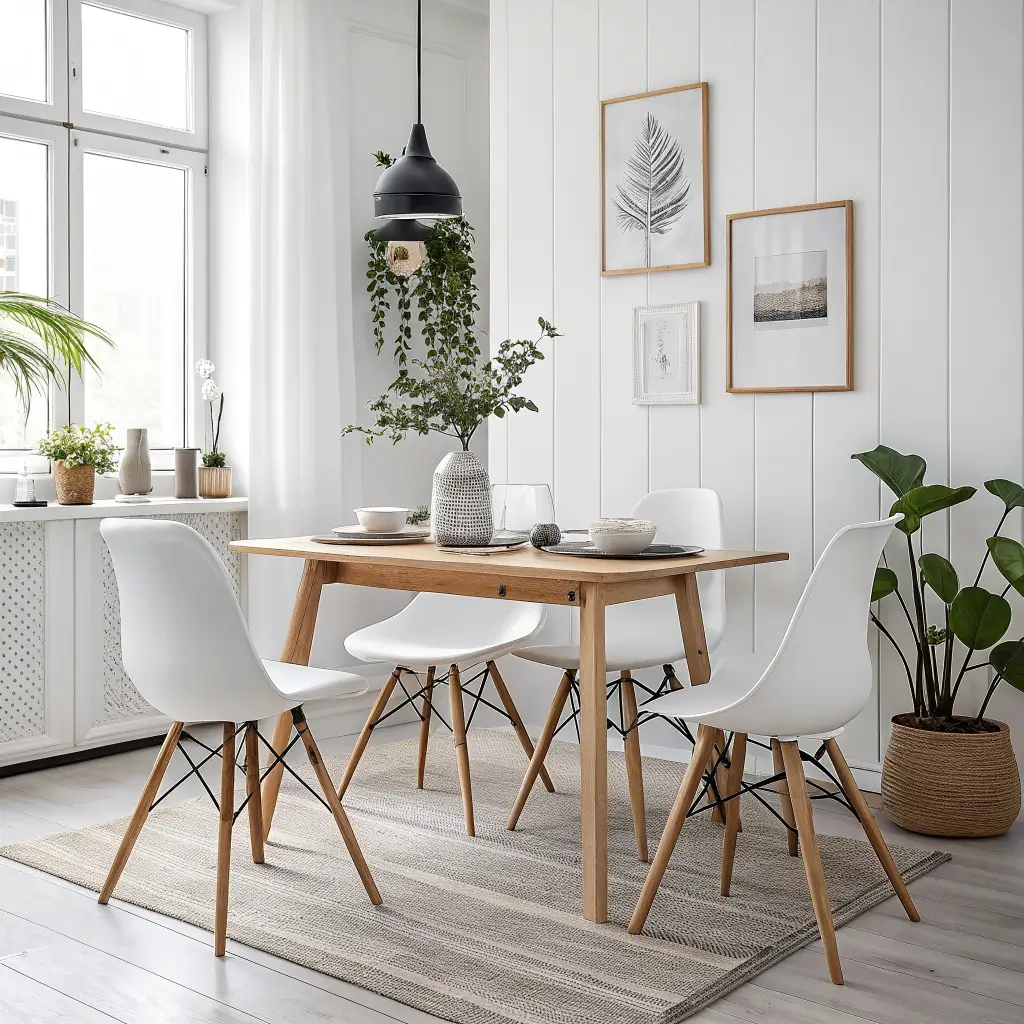
The minimalist modern dining area strips away everything unnecessary, leaving only what makes dining beautiful. No clutter, no fuss, just clean lines and purposeful choices that somehow make spaghetti Tuesday feel like a sophisticated affair.
Why Less Really Is More
I fought minimalism for years, convinced it meant living in a sterile white box. Then I saw my friend’s minimalist dining area — warm wood, perfect proportions, and this incredible sense of calm. Every single element earned its place, from the single pendant light to the perfectly positioned orchid.
The magic happens when you remove distractions. Suddenly, the quality of your table matters, the texture of your placemats becomes important, and that simple bowl of fruit transforms into sculpture. Your food actually tastes better when it’s not competing with visual chaos.
Creating Minimalist Magic
Essential elements for minimalist dining areas:
- Neutral color palettes with maybe one accent color
- Hidden storage keeping surfaces clear
- Quality over quantity in every choice
- Natural materials like wood, stone, or linen
- Strategic lighting creating ambiance without clutter
- Negative space as an actual design element
The best part about minimalist dining areas? They take literally five minutes to clean. Clear table, wipe down, done. More time eating, less time maintaining.
2. Rustic Farmhouse Dining Space
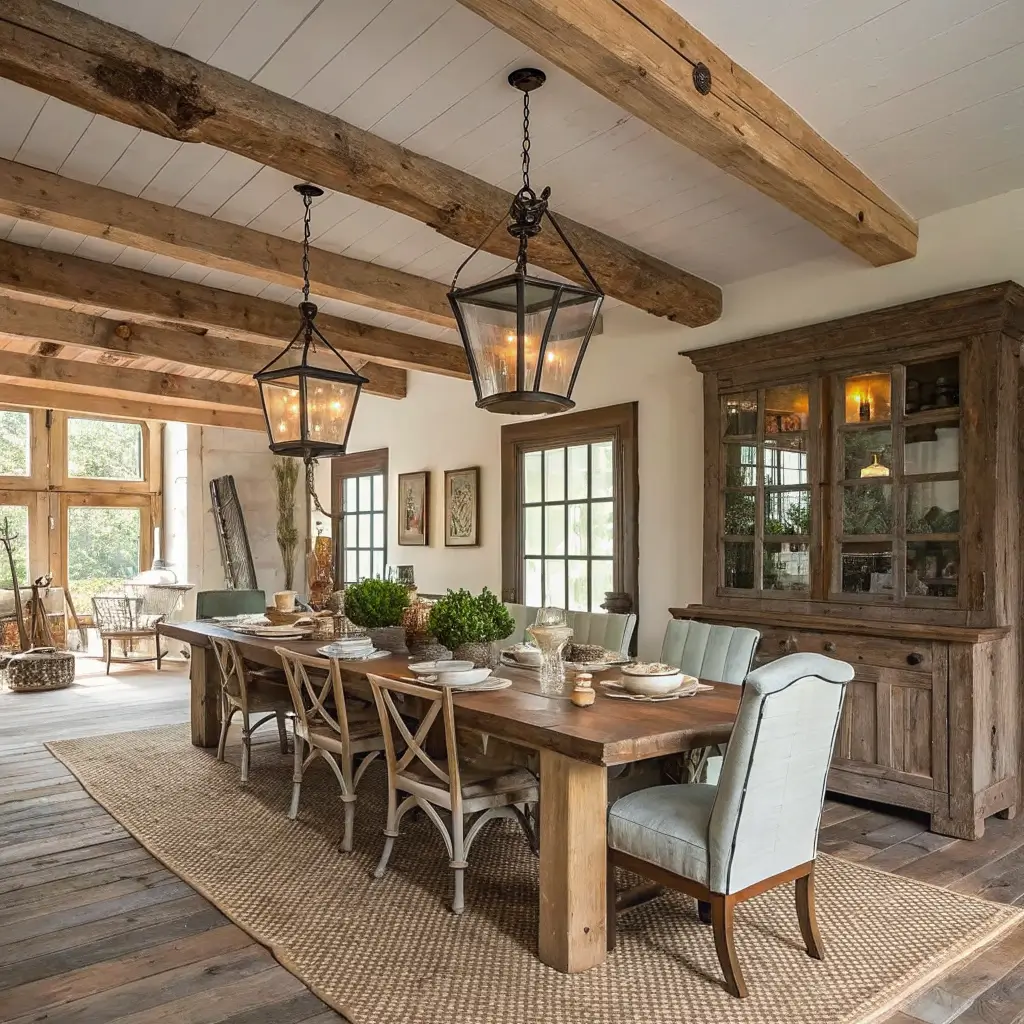
A rustic farmhouse dining space brings that “grandma’s house but cooler” energy everyone craves. This style celebrates imperfection, embraces wear, and makes everyone immediately want second helpings of everything.
Farmhouse Without the Farm
You don’t need actual farm animals to nail farmhouse style (thank goodness). My farmhouse dining space happened in a suburban townhouse, proving location doesn’t determine decoration. The key lies in choosing elements that tell stories — weathered wood, vintage finds, and pieces that look like they’ve witnessed decades of family dinners.
I scored my farmhouse table at an estate sale, complete with mysterious stains and carved initials from 1987. Instead of refinishing it, I embraced every imperfection. Those marks give it character that no manufactured distressing could replicate.
Building Authentic Farmhouse Vibes
What makes a dining space genuinely farmhouse:
- Reclaimed or distressed wood everywhere possible
- Mixed seating — benches, mismatched chairs
- Mason jars (yes, still valid despite Pinterest overload)
- Natural textiles like burlap or linen
- Vintage accessories that actually function
- Fresh flowers or herbs in simple containers
Have you noticed how farmhouse spaces make people linger? There’s something about that unfussy comfort that encourages long conversations over coffee. It’s the opposite of eat-and-run design.
3. Compact Small Dining Nook
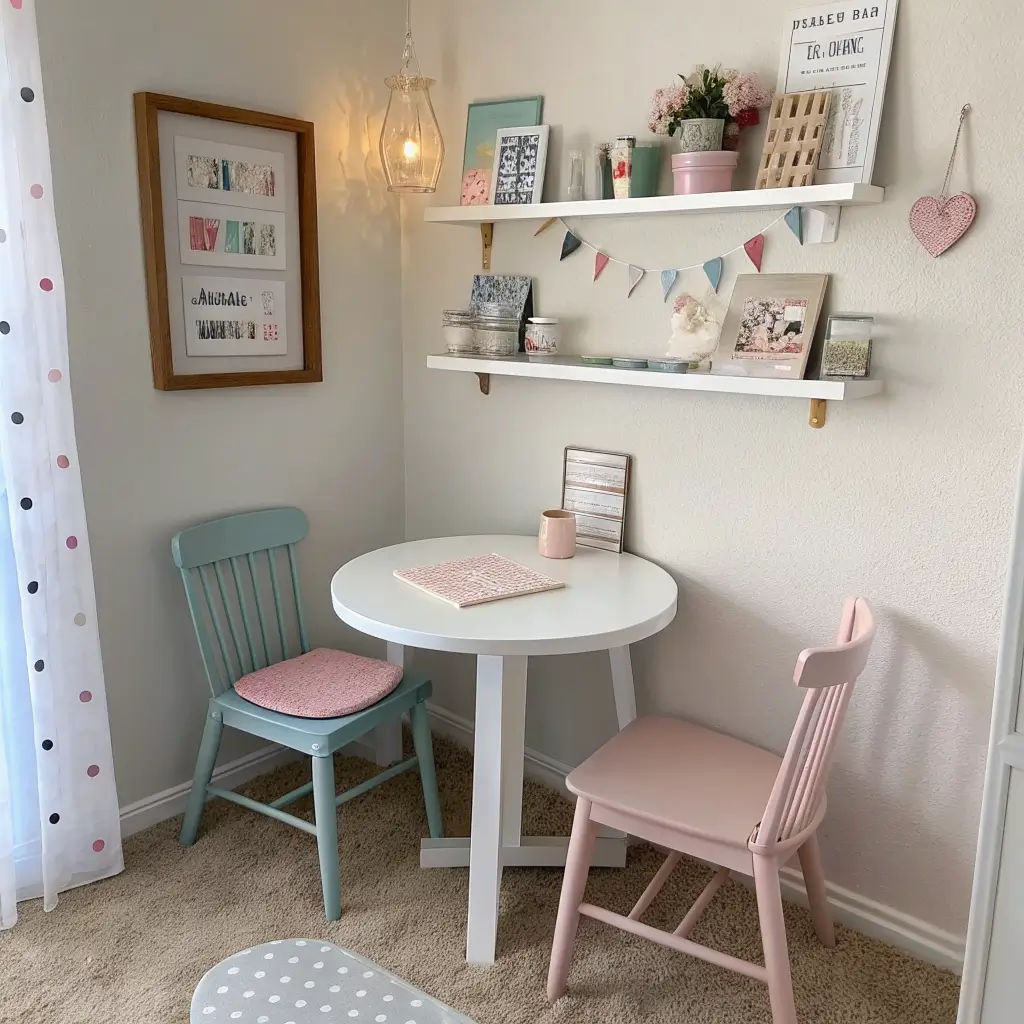
The compact small dining nook proves that tiny spaces can host big gatherings. These clever setups maximize every inch while creating intimate atmospheres that actually enhance the dining experience.
Small Space, Big Possibilities
My first apartment’s entire “dining area” measured 6×6 feet. I considered eating standing at the counter forever, but then discovered the magic of corner banquettes and round tables. Suddenly, that tiny corner could seat six people comfortably. Physics? Magic? Who cares — it worked.
Small dining nooks force creativity. You can’t rely on space to make statements, so you focus on smart solutions and impactful details. Often, these constraints lead to more interesting designs than unlimited square footage ever could.
Maximizing Minimal Square Footage
Smart strategies for compact dining areas:
- Built-in seating with storage underneath
- Wall-mounted tables that fold when not needed
- Round tables eliminating corners in tight spots
- Mirrors doubling visual space
- Vertical storage keeping floors clear
- Multi-purpose furniture earning its footprint
FYI, some of my favorite dinner parties happened in that tiny nook. The forced proximity created instant intimacy that larger dining rooms struggle to achieve.
Also Read: 10 Creative Dining Table Design Modern Ideas for Every Home
4. Luxury Marble Dining Room
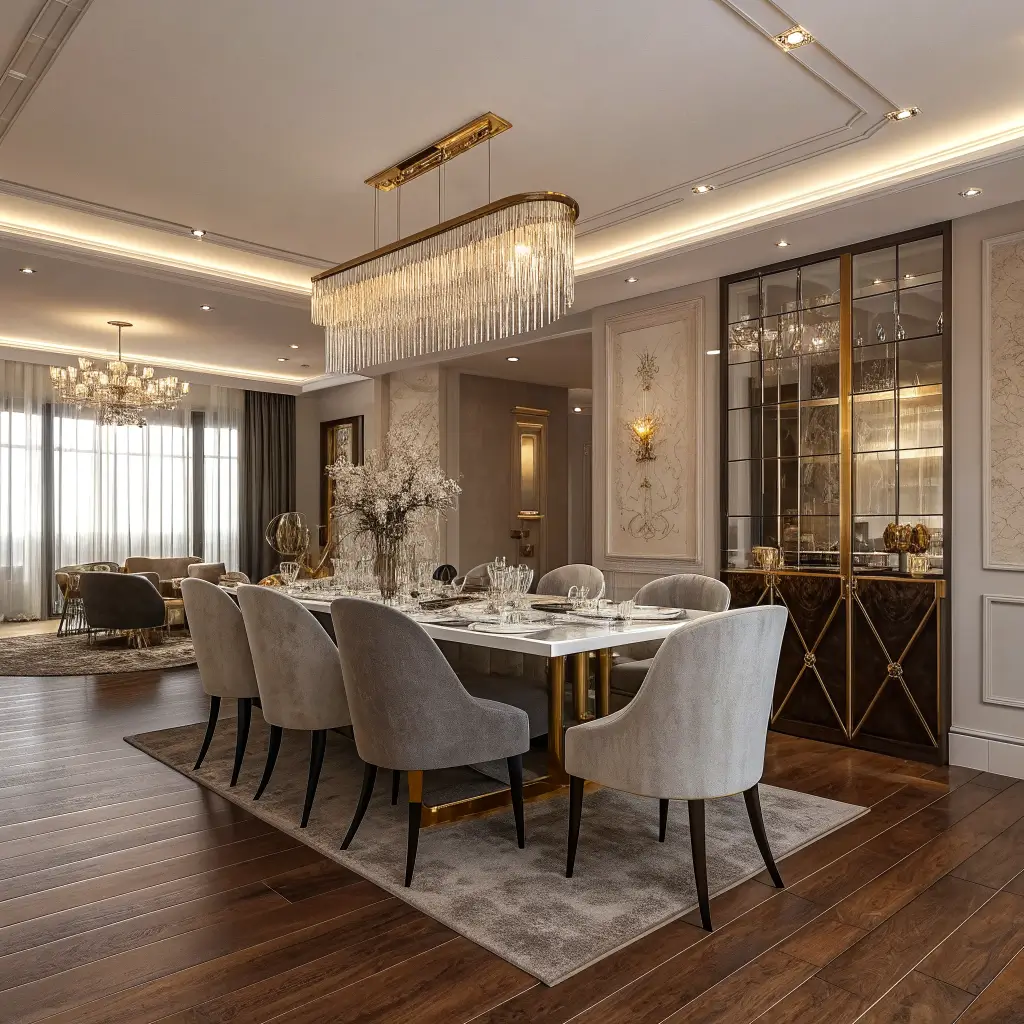
A luxury marble dining room doesn’t whisper elegance — it announces it with a megaphone. These spaces transform everyday meals into events and make even leftover pizza feel fancy.
The Marble Difference
Real marble brings geological drama that no imitation can match. My neighbor’s Calacatta marble dining table cost more than my car, but honestly? Worth every penny. The veining looks different from every angle, catches light throughout the day, and makes their whole house feel more expensive.
Luxury dining rooms succeed through quality, not quantity. One spectacular marble table beats ten mediocre decorations. The material itself becomes art, eliminating the need for excessive styling.
Creating Genuine Luxury
Elements that elevate dining rooms to luxury status:
- Natural stone surfaces with dramatic veining
- Custom lighting like chandeliers or designer fixtures
- High-end textiles — silk, velvet, cashmere
- Metallic accents in gold, brass, or copper
- Original artwork or statement mirrors
- Fresh flowers arranged professionally
The secret to luxury dining rooms? Restraint. Let quality materials and perfect proportions do the talking. Over-decorating luxury spaces makes them look try-hard rather than effortless. 🙂
5. Scandinavian Cozy Dining Corner
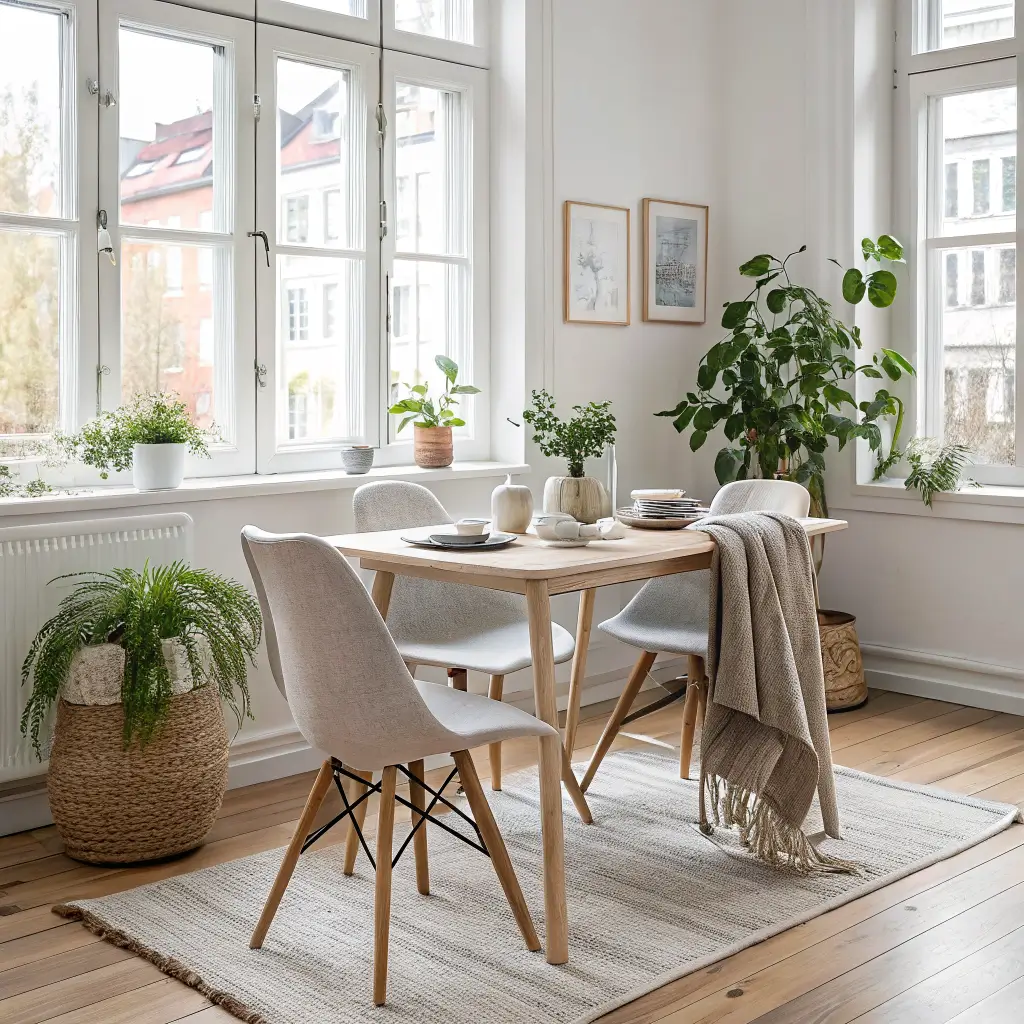
The Scandinavian cozy dining corner masters that elusive hygge everyone keeps talking about. These spaces feel like warm hugs in furniture form, making every meal feel like a cozy Sunday morning.
Understanding Scandi Magic
Scandinavian design balances minimalism with warmth — a combination that shouldn’t work but absolutely does. My Scandi dining corner features white walls, light wood, and enough candles to stock a cathedral. Somehow it feels both sparse and cozy simultaneously.
The philosophy focuses on creating spaces that enhance wellbeing. Every element should make you feel calmer, happier, or more connected. If it doesn’t contribute to that feeling, it doesn’t belong.
Building Your Hygge Haven
Essential Scandinavian dining elements:
- Light wood furniture in natural finishes
- Neutral colors with occasional black accents
- Layered lighting including many candles
- Natural textiles like wool and linen
- Simple greenery in ceramic pots
- Functional beauty in every choice
Ever notice how Scandinavian spaces make you breathe deeper? That intentional simplicity reduces stress and encourages presence. Your dining corner becomes a daily retreat from chaos.
6. Indoor-Outdoor Dining Setup
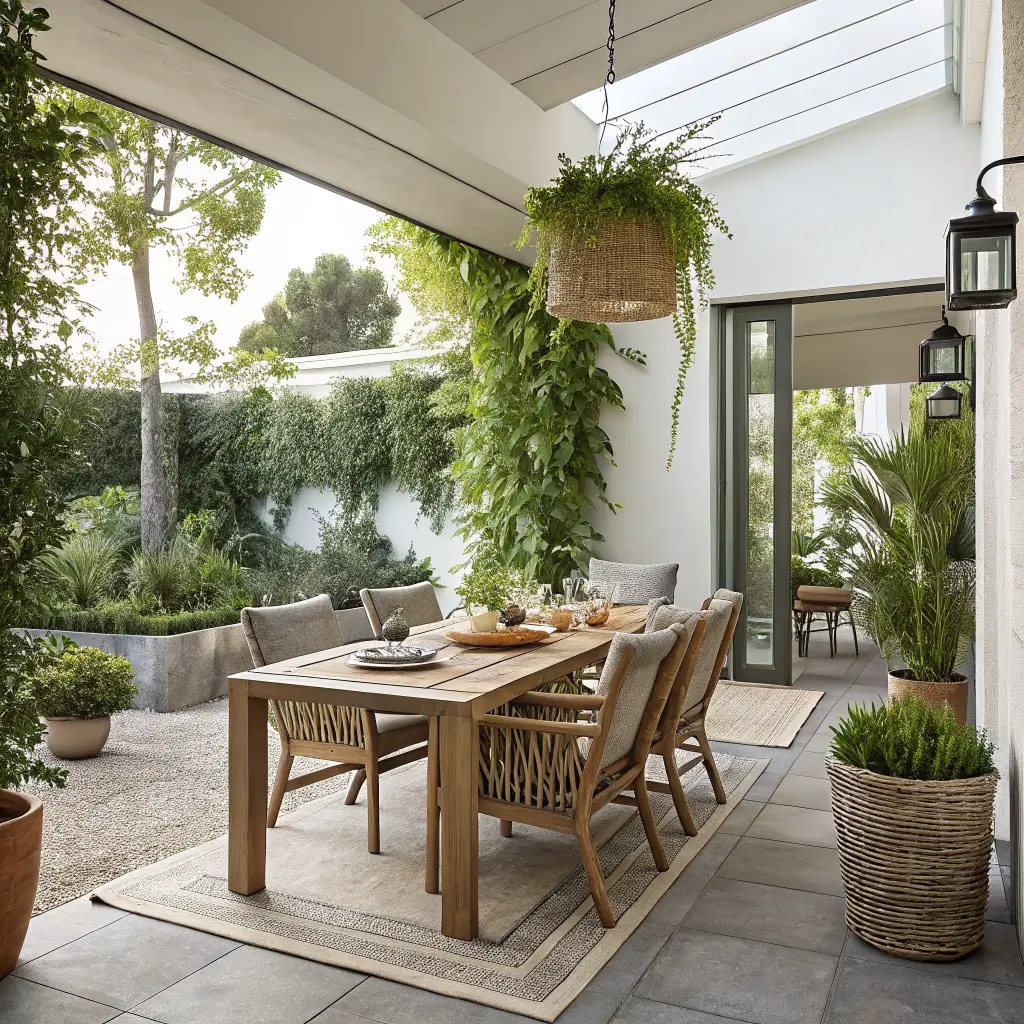
An indoor-outdoor dining setup erases boundaries between inside and outside, creating fluid spaces that adapt to weather and mood. These areas make every meal feel like vacation dining.
Blurring the Lines
My indoor-outdoor dining area started as a covered patio that felt disconnected from the house. Adding glass doors, consistent flooring, and weather-resistant furniture that looked good inside transformed it into our favorite dining spot. Now we eat outside nine months of the year.
The key lies in creating visual continuity. Use similar colors, materials, and styling inside and out. The spaces should feel like natural extensions of each other, not separate zones.
Seamless Transition Tips
Creating successful indoor-outdoor flow:
- Consistent flooring materials or complementary choices
- Weather-resistant furniture that doesn’t scream “outdoor”
- Retractable walls or doors opening completely
- Heating/cooling solutions extending usable seasons
- Lighting that works day and night
- Plants bridging inside and outside
The unexpected benefit? Indoor-outdoor dining makes small homes feel massive. That visual connection to outdoor space psychologically expands your living area without adding square footage.
Also Read: 12 Stylish Farmhouse Dining Table Ideas and Space-Saving Designs
7. Vintage Eclectic Dining Area
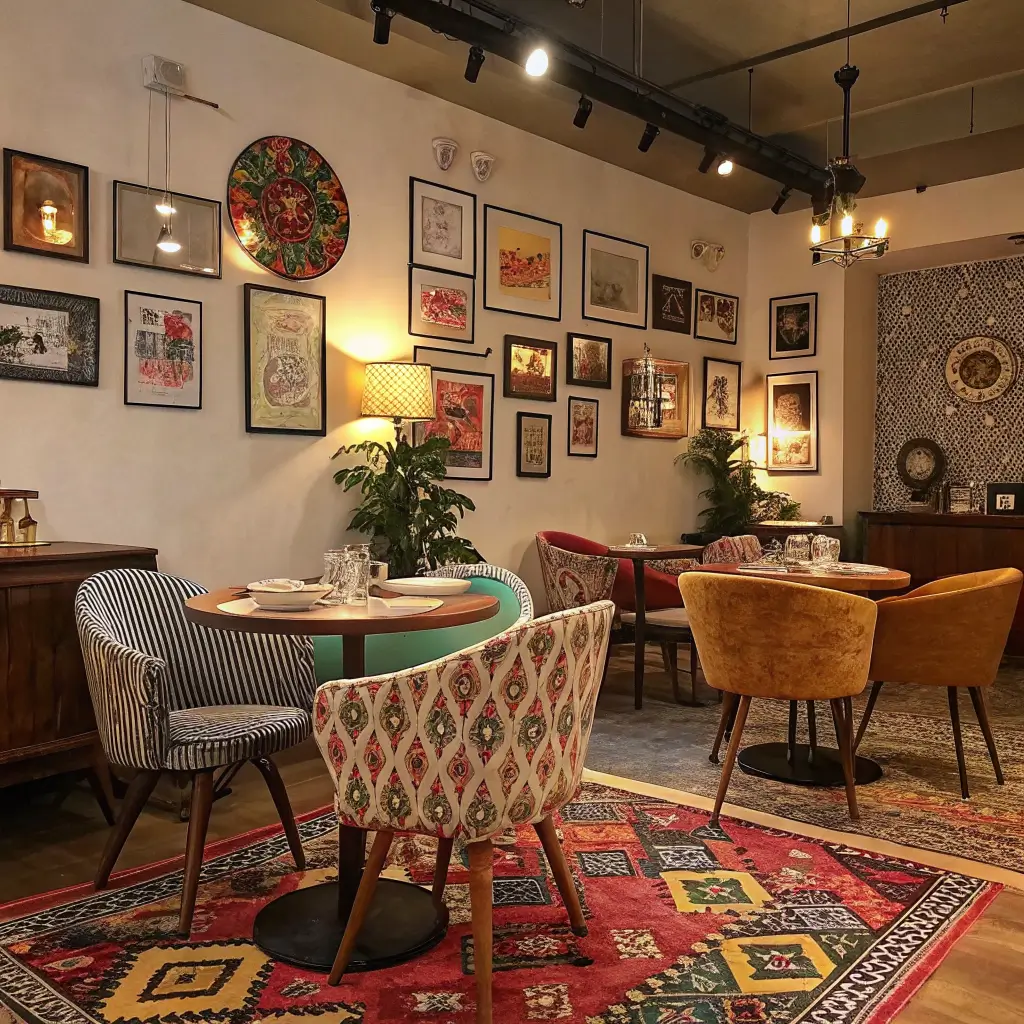
A vintage eclectic dining area celebrates the art of controlled chaos. These spaces mix periods, styles, and stories into harmonious compositions that feel collected rather than decorated.
Curating Controlled Chaos
My eclectic dining area includes a 1960s table, Victorian chairs, industrial lighting, and contemporary art. It shouldn’t work, but it absolutely does. The secret lies in finding common threads — color, material, or scale — that tie disparate elements together.
Vintage eclectic style gives you permission to love what you love without apology. That weird chair from the flea market? Perfect. Your grandmother’s china cabinet? Essential. Nothing matches, yet everything belongs.
Making Eclectic Work
Guidelines for vintage eclectic success:
- Choose a unifying element like color or material
- Mix different periods intentionally
- Balance proportions throughout the space
- Layer textures for visual interest
- Display collections thoughtfully
- Embrace imperfection as character
IMO, eclectic dining areas tell the best stories. Every piece has history, meaning, or memory attached. Dinner guests spend as much time discussing the decor as the food.
8. Contemporary Open-Plan Dining Space
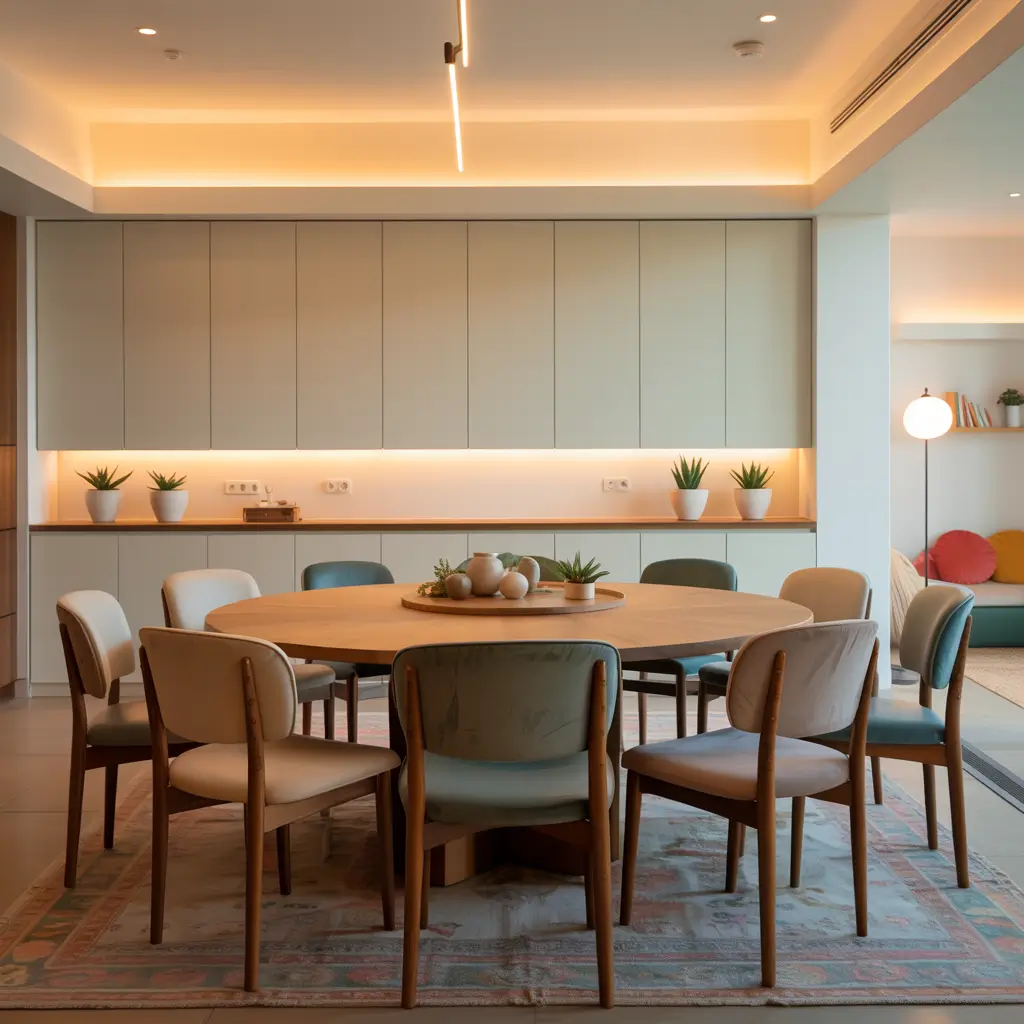
The contemporary open-plan dining space acknowledges how we actually live — cooking, eating, and living in fluid, connected spaces. These areas make dining feel integrated rather than isolated.
Open-Plan Realities
Open-plan dining requires thinking about sight lines, flow, and zones. My dining area shares space with the kitchen and living room, which initially felt chaotic. Creating distinct zones through furniture placement, rugs, and lighting transformed chaos into cohesion.
The challenge lies in maintaining dining area identity while ensuring visual harmony with surrounding spaces. You want distinction without disconnection.
Defining Spaces Without Walls
Strategies for successful open-plan dining:
- Area rugs defining the dining zone
- Pendant lighting creating visual boundaries
- Furniture placement establishing flow patterns
- Color coordination with adjacent areas
- Different flooring subtly marking transitions
- Statement pieces anchoring the dining space
Have you noticed how open-plan dining encourages lingering? Without walls creating barriers, conversations flow as freely as the floor plan. Dinner naturally evolves into living room lounging.
9. Japandi Style Dining Room
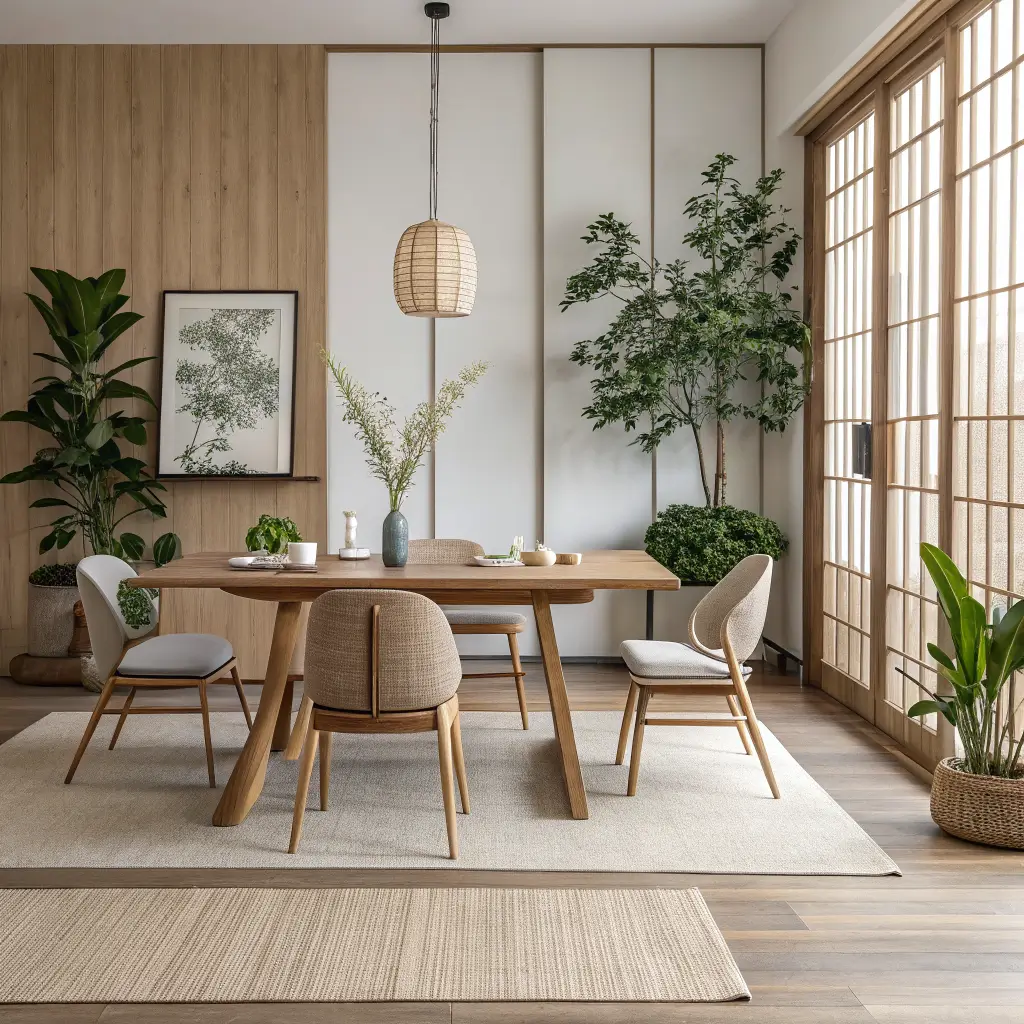
Japandi style dining rooms merge Japanese minimalism with Scandinavian coziness, creating spaces that feel both zen and hygge. This hybrid style proves that cultural fusion in design can produce something entirely new and wonderful.
East Meets North
Japandi happened when designers realized Japanese and Scandinavian aesthetics share DNA — simplicity, natural materials, and functional beauty. My Japandi dining room features low-profile furniture, natural wood, and negative space that feels intentional rather than empty.
The style respects both traditions while creating something unique. You get Japanese precision with Scandinavian warmth, minimal aesthetics with maximum comfort.
Creating Japandi Harmony
Essential Japandi dining elements:
- Low-profile furniture creating horizontal emphasis
- Natural wood in light to medium tones
- Neutral palettes with black accents
- Mixed textures within minimalist framework
- Ceramic accessories in organic shapes
- Plants adding life without clutter
The magic of Japandi dining rooms? They feel timeless rather than trendy. This style won’t look dated in five years because it’s rooted in enduring design principles rather than passing fads. :/
Also Read: 10 Trendy White Dining Table Ideas and Small Space Solutions
10. Multi-Functional Family Dining Zone
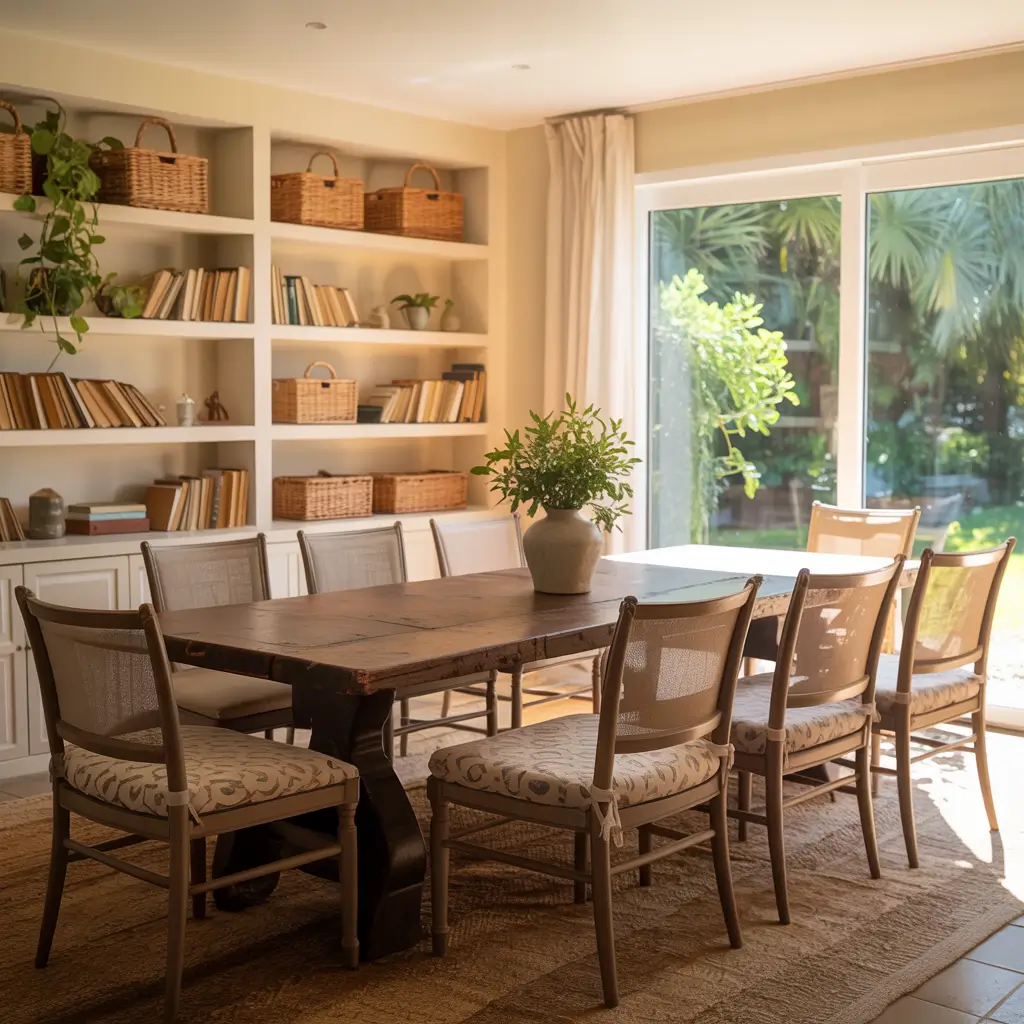
The multi-functional family dining zone accepts that modern dining areas do triple duty — meals, homework, and everything in between. These realistic spaces work hard while still looking good.
Real Life, Real Design
My family dining zone hosts breakfast, lunch, dinner, homework sessions, craft projects, and the occasional Lego construction site. Fighting this reality seemed pointless, so I designed around it. Durable finishes, hidden storage, and flexible lighting make the space work for everything we throw at it.
Multi-functional doesn’t mean sacrificing style. It means choosing pieces that look good while handling real life. That gorgeous table better survive marker incidents and science projects.
Family-Friendly Without Looking Juvenile
Creating sophisticated multi-functional spaces:
- Performance fabrics resisting stains and wear
- Built-in storage for supplies and homework
- Adjustable lighting for different activities
- Durable surfaces handling daily abuse
- Flexible seating accommodating various needs
- Easy-clean everything because life happens
The beauty of multi-functional dining zones? They acknowledge how families actually live. No more pretending the dining room is some pristine space used twice a year. This is life, happening around the table, every single day.
Your Perfect Dining Area Awaits
There you have it — 10 dining area ideas proving that great dining spaces come in every size, style, and budget.
Whether you gravitate toward minimalist calm or eclectic energy, compact efficiency or luxurious expansion, there’s a dining area concept here that fits your life.
The perfect dining area isn’t about copying someone else’s style or following every trend. It’s about creating a space that makes you want to gather, linger, and connect. Sometimes that’s a marble masterpiece.
Sometimes it’s a tiny nook with mismatched chairs. Both can be equally perfect if they serve your actual needs.
Here’s my advice after transforming multiple dining areas: start with how you really use the space, not how you think you should use it.
Build from that honest foundation, and you’ll create something that enhances daily life rather than fighting it.
Your dining area has the potential to become your home’s soul — where conversations happen, memories form, and life unfolds one meal at a time. Make it count.
Whether you’re eating that 2 PM cereal or hosting Thanksgiving dinner, your dining area should make every moment feel intentional.
Now stop reading and start creating. Your perfect dining area is waiting to happen!