10 Beautiful Small Dining Area Ideas to Maximize Space
- Dining Room
 Ben
Ben- 0
- 36 minutes read
Let me guess — you’re eating dinner on your couch again while that tiny corner you optimistically call a “dining area” collects mail and random stuff. Been there.
My first apartment had a dining space so small that I literally had to suck in my stomach to squeeze past the table. Not exactly the dinner party setup I’d dreamed about.
But here’s the thing: after living in three different small spaces and helping countless friends maximize their tiny dining areas, I’ve learned that small dining areas can actually be more charming and functional than sprawling dining rooms.
You just need to get creative and stop thinking like someone with unlimited square footage.
These 10 small dining area ideas come from real experience — the wins, the fails, and that time I tried to fit a six-person table in a space meant for two (spoiler: it didn’t work).
Let’s transform your cramped corner into a dining space you’ll actually want to use.
1. Space-Savvy Foldable Dining Tables
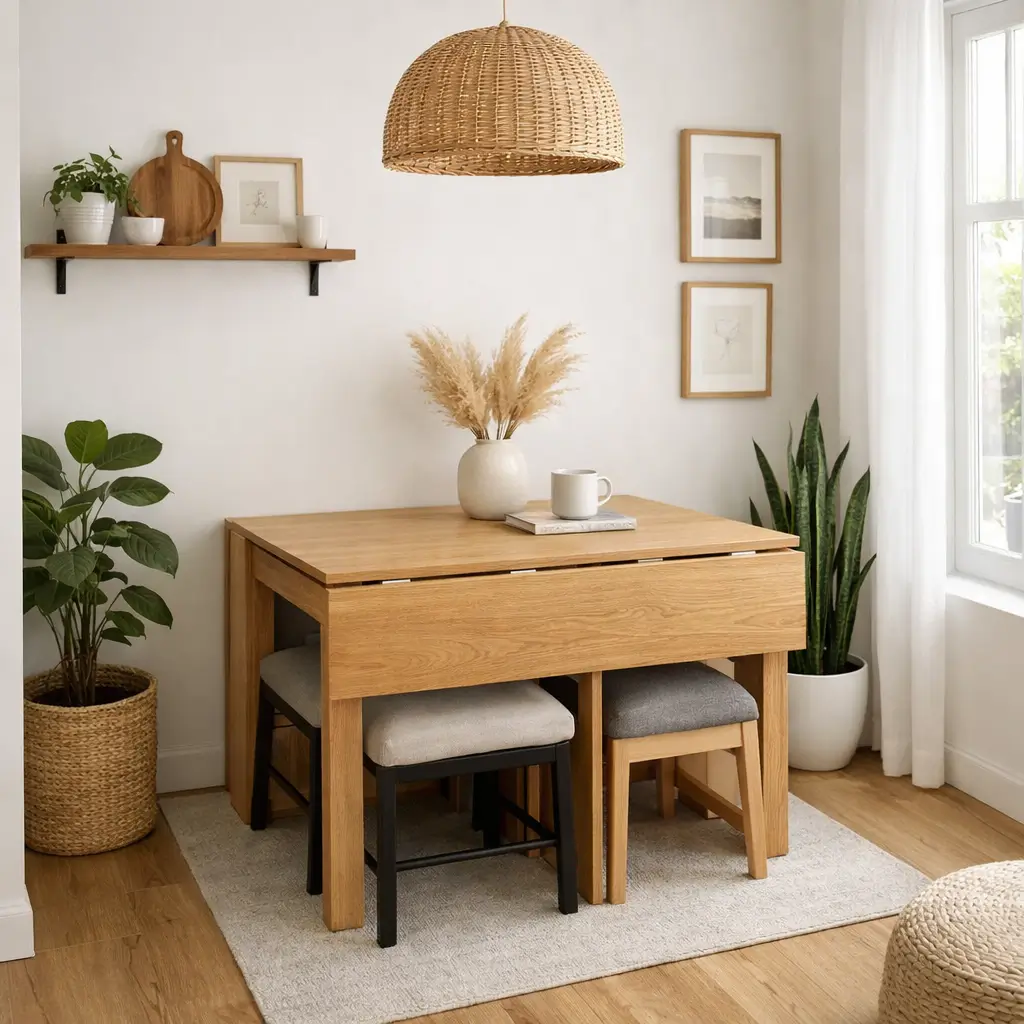
Space-savvy foldable dining tables are basically the transformers of the furniture world. One minute you have floor space to do yoga, the next minute you’re hosting a dinner party for six. Magic? Nope, just smart design.
The Foldable Revolution
I discovered foldable tables out of desperation when my studio apartment’s “dining area” measured exactly 4×4 feet. My wall-mounted drop-leaf table became my everything — breakfast nook in the morning, workspace during the day, dinner table at night. When folded down, it stuck out just 6 inches from the wall.
The beauty of foldable tables lies in their ability to disappear. You get a proper dining surface when you need it, and your precious floor space back when you don’t.
Choosing the Right Foldable Solution
What makes a foldable table actually work:
- Wall-mounted options that fold completely flat
- Gate-leg tables offering multiple size configurations
- Butterfly leaf designs storing leaves within the table
- Console-to-dining transformers doubling as entry tables
- Nesting tables that expand when needed
- Drop-leaf styles providing flexible sizing
Have you ever noticed how the best small-space solutions often involve furniture that does double duty? Foldable tables master this principle perfectly.
2. Minimalist Dining Corners for Tiny Homes
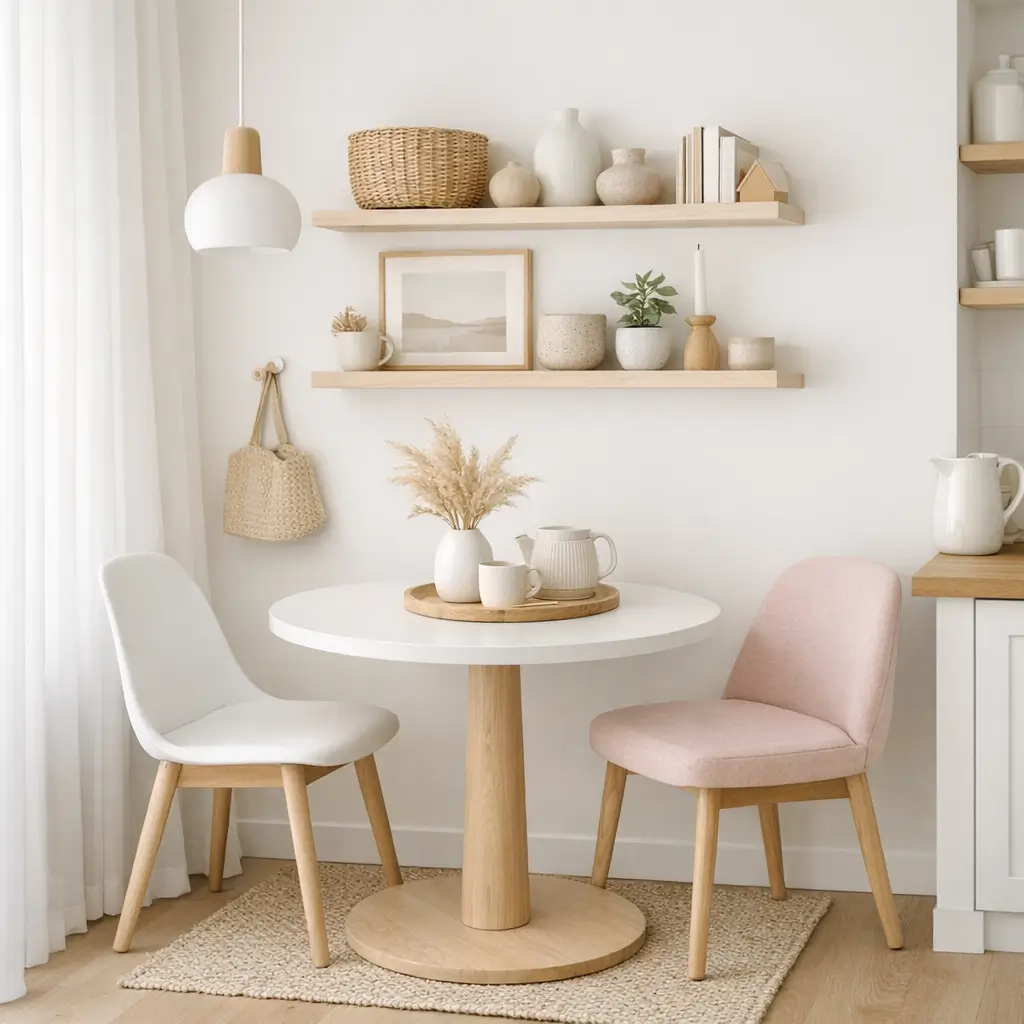
Minimalist dining corners embrace the “less is more” philosophy, proving that tiny spaces actually benefit from restraint rather than trying to squeeze in full dining sets.
Why Minimalism Works in Small Spaces
My tiny home friend has this incredible minimalist dining corner — just a floating shelf as a table, two stools that tuck underneath, and one pendant light. That’s it. The space feels intentional rather than cramped, and every meal feels like eating at a trendy café.
Minimalism in small dining areas works because it eliminates visual clutter. Your eye has space to rest, making the area feel larger than it actually is.
Creating Your Minimalist Corner
Essential minimalist dining elements:
- Slim-profile furniture with clean lines
- Monochromatic color schemes reducing visual noise
- Wall-mounted everything possible
- Clear or light materials maintaining visual flow
- Multi-purpose pieces serving double duty
- Hidden storage keeping surfaces clear
The trick with minimalist small dining areas? Every single item needs to earn its place. If it doesn’t serve a function or bring you joy, it doesn’t belong.
3. Multi-Functional Dining Nooks with Storage
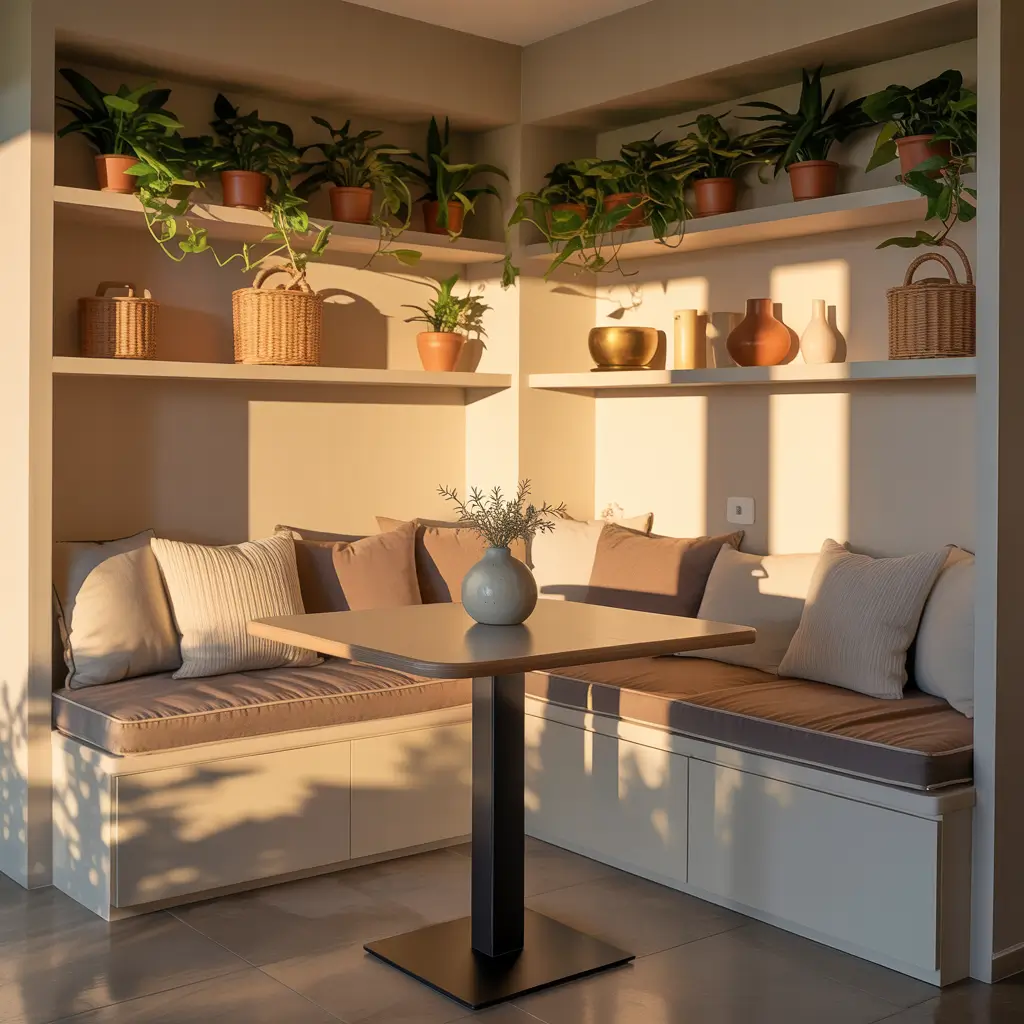
Multi-functional dining nooks with storage solve the eternal small-space dilemma: where to put all your stuff. These clever setups make every inch work overtime while still looking stylish.
Storage That Doesn’t Scream “Storage”
I built a dining nook with bench seating that opens for storage, floating shelves above for dishes, and a table with drawers. Suddenly, my dining area stored linens, board games, and seasonal decor while still functioning as an actual dining space. Every surface serves at least two purposes.
The key lies in choosing furniture that looks good while hiding your life’s chaos. Nobody needs to know your dining bench contains three months of Amazon boxes you’re definitely going to recycle soon.
Smart Storage Integration
Multi-functional storage solutions that work:
- Hollow ottoman seating hiding blankets or games
- Banquette benches with lift-up tops
- Tables with built-in shelving underneath
- Wall-mounted cubbies above dining height
- Magnetic knife strips doubling as utensil storage
- Pegboard walls for customizable organization
FYI, the best storage solutions are the ones you’ll actually use. There’s no point in complicated systems if you’re just going to pile stuff on top anyway. 🙂
Also Read: 12 Creative Living Room with Dining Area Ideas for Open
4. Cozy Two-Seater Dining Area Designs
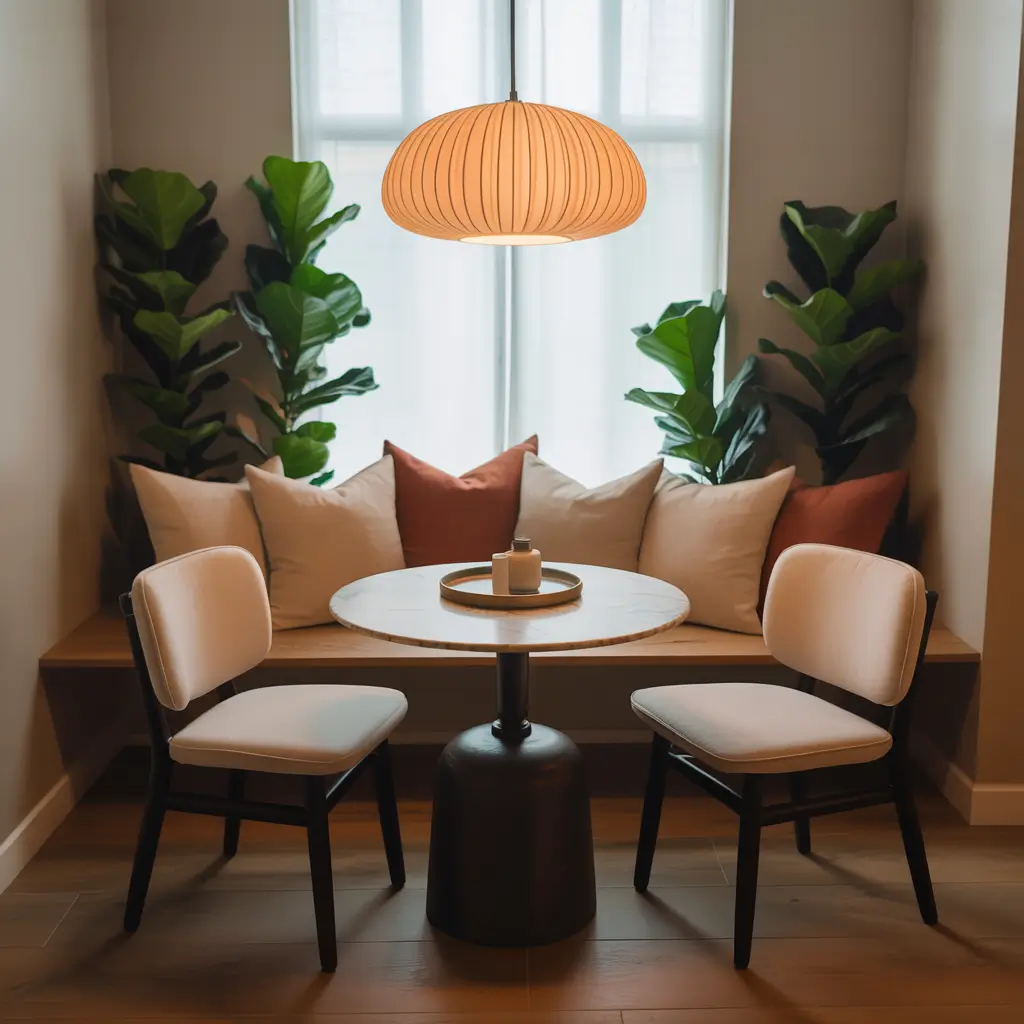
Cozy two-seater dining areas acknowledge reality — most of the time, it’s just you and maybe one other person eating. Why pretend you need seating for six when you rarely have more than one dinner guest?
Embracing the Intimate Scale
My current two-seater setup gets more use than any larger table I’ve owned. A small round café table with two comfortable chairs creates this intimate bubble perfect for morning coffee or date night dinners. No wasted space, no unused chairs collecting dust.
Two-seater dining works especially well for couples or singles who occasionally entertain. You can always add folding chairs for the rare larger gathering.
Making Two Seats Feel Complete
Creating a perfect two-seater dining space:
- Choose quality over quantity in chair selection
- Round tables maximize knee room for two
- Position near windows for natural light
- Add a small bar cart for extended serving space
- Include comfortable cushions encouraging lingering
- Install dimmable lighting for ambiance
Ever notice how the best conversations happen at small tables? There’s something about the forced intimacy that makes two-seater dining surprisingly special.
5. Bright and Airy Small Dining Spaces
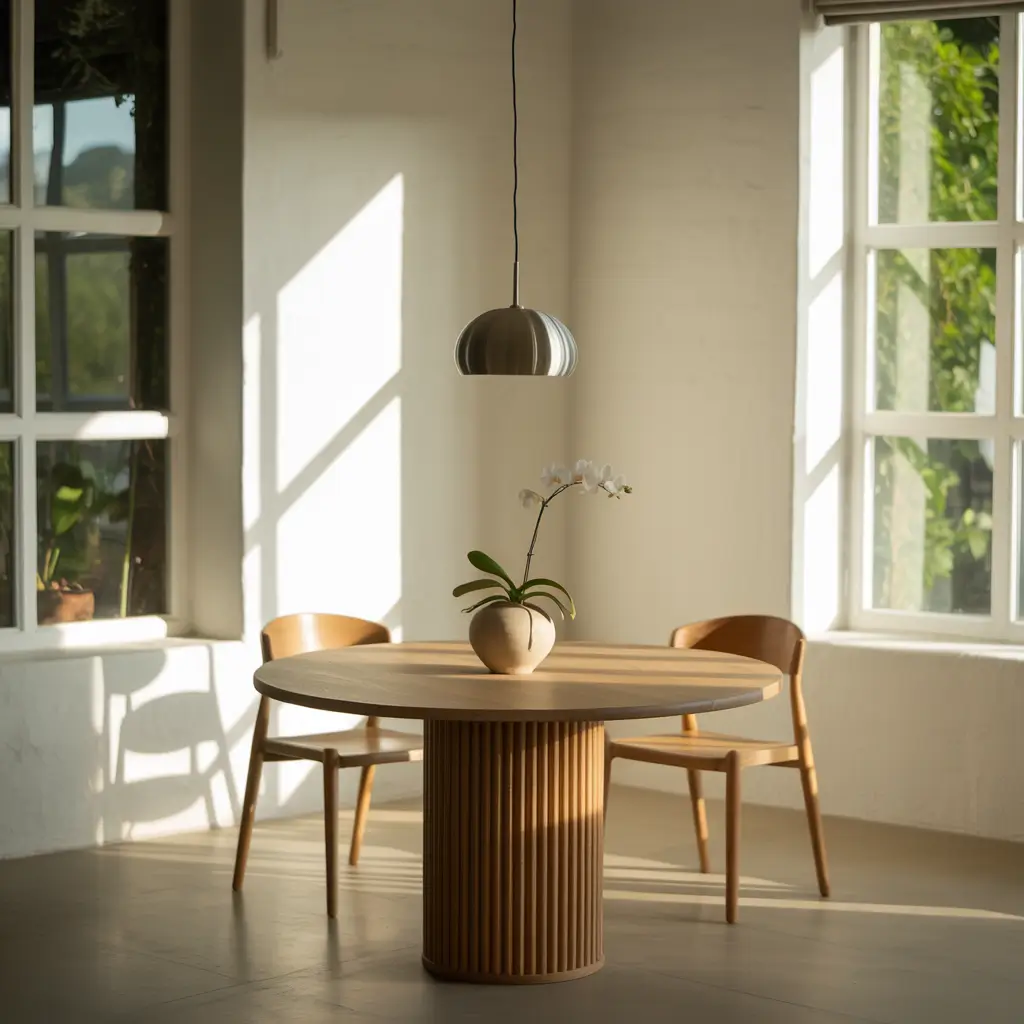
Bright and airy small dining spaces use light and color to make tiny areas feel twice their actual size. It’s basically optical illusion meets interior design, and it works every time.
Light as a Space Multiplier
I painted my dark dining nook white, added a mirror, and switched to sheer curtains. The space didn’t physically grow, but it felt three times larger. Light colors reflect light, mirrors double visual space, and minimal window treatments maximize natural light — the holy trinity of small space design.
Bright and airy doesn’t mean boring. You can add personality through textures, plants, and carefully chosen accent pieces without sacrificing the spacious feeling.
Achieving Maximum Brightness
Techniques for bright, airy dining areas:
- Paint walls and ceiling the same light color
- Use glass or acrylic furniture to maintain sight lines
- Hang mirrors strategically to reflect light
- Choose light wood tones over dark finishes
- Minimize pattern to reduce visual weight
- Add plants for life without heaviness
The transformation from dark and cramped to bright and airy happens faster than you’d think. Sometimes a gallon of white paint is all that stands between you and a dining space that actually feels pleasant.
6. Scandinavian Style Compact Dining Ideas
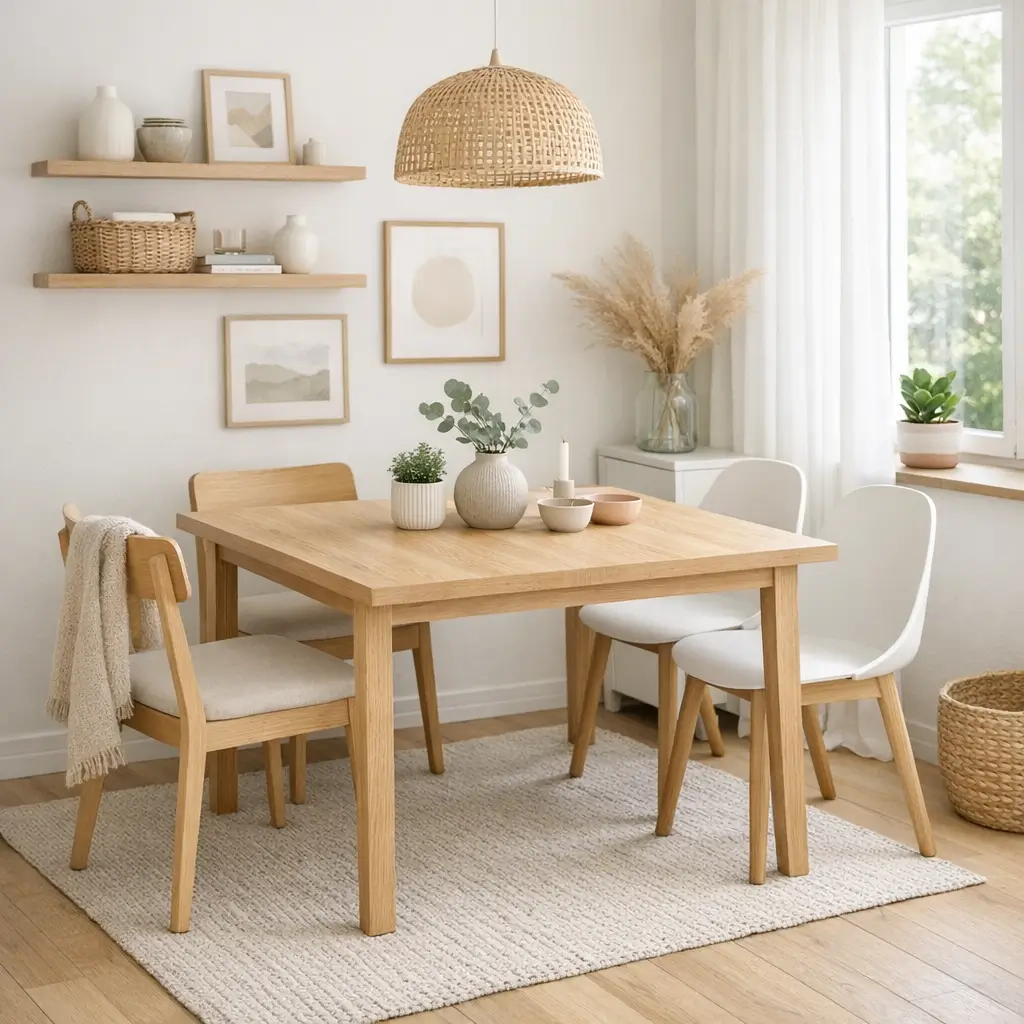
Scandinavian style compact dining brings that coveted Nordic simplicity to tiny spaces. This style basically invented making small spaces feel cozy rather than cramped.
The Scandinavian Secret Sauce
Scandinavian design works perfectly in small dining areas because it prioritizes function, simplicity, and comfort — exactly what tiny spaces need. My Scandi-inspired dining corner features light wood, white walls, and just enough black accents to add contrast without weight.
The style’s emphasis on natural materials and clean lines creates calm spaces that never feel cluttered, even when you’re working with minimal square footage.
Achieving Authentic Scandi Style
Essential Scandinavian dining elements:
- Light wood furniture in natural finishes
- Neutral color palettes with black accents
- Cozy textiles like sheepskin or wool
- Simple pendant lighting in modern shapes
- Minimal decorations focusing on function
- Natural elements like plants or branches
IMO, Scandinavian style works so well in small spaces because it makes limitations feel intentional rather than forced. Less becomes more when it’s done with purpose.
Also Read: 10 Creative Dining Area Design Ideas for Open Layouts
7. Small Dining Areas with Creative Lighting
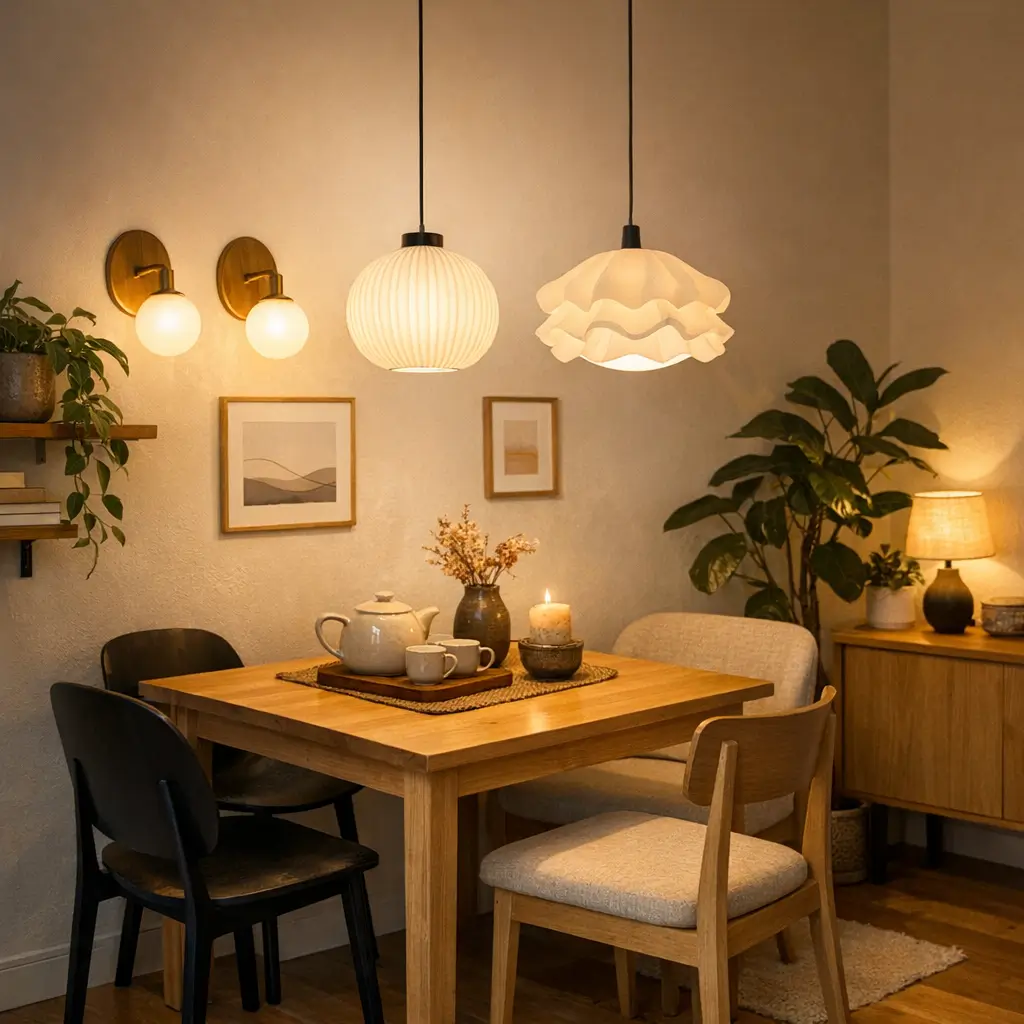
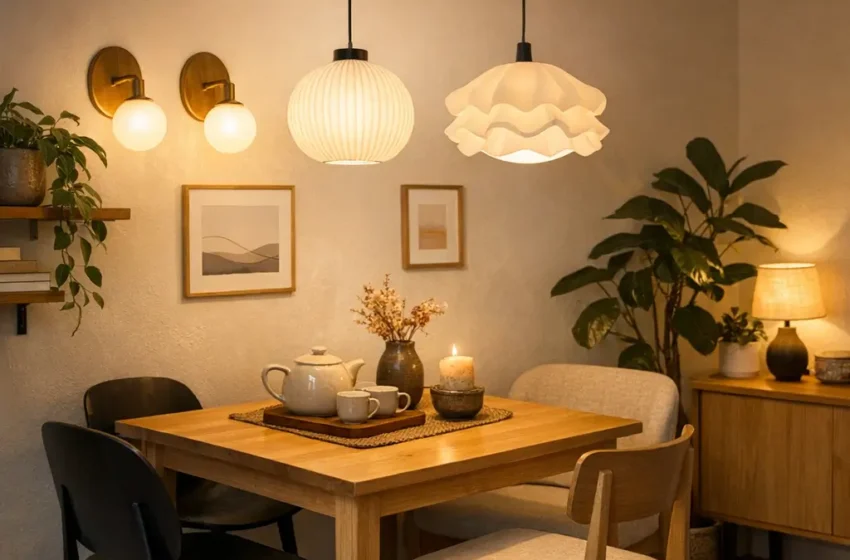
Creative lighting in small dining areas transforms tiny spaces from forgotten corners into intimate destinations. The right lighting can literally make or break your small dining space.
Lighting That Does Heavy Lifting
I hung an oversized pendant over my tiny two-person table, and suddenly the space had presence. That single dramatic light created a focal point that made the dining area feel important rather than squeezed in. Good lighting draws the eye up, making ceilings feel higher and spaces feel larger.
Creative lighting goes beyond basic overhead fixtures. Think about layering different light sources to create ambiance and functionality.
Lighting Strategies for Small Spaces
Creative lighting solutions that work:
- Oversized pendants creating drama without floor space
- Wall sconces freeing up table surface
- LED strips under shelving for ambient glow
- Battery-powered options avoiding electrical work
- Dimmer switches controlling mood instantly
- Candles adding warmth without installation
The best dining lighting makes every meal feel like an occasion. Even leftover pizza tastes better under the right light.
8. Modern Tiny Apartment Dining Solutions
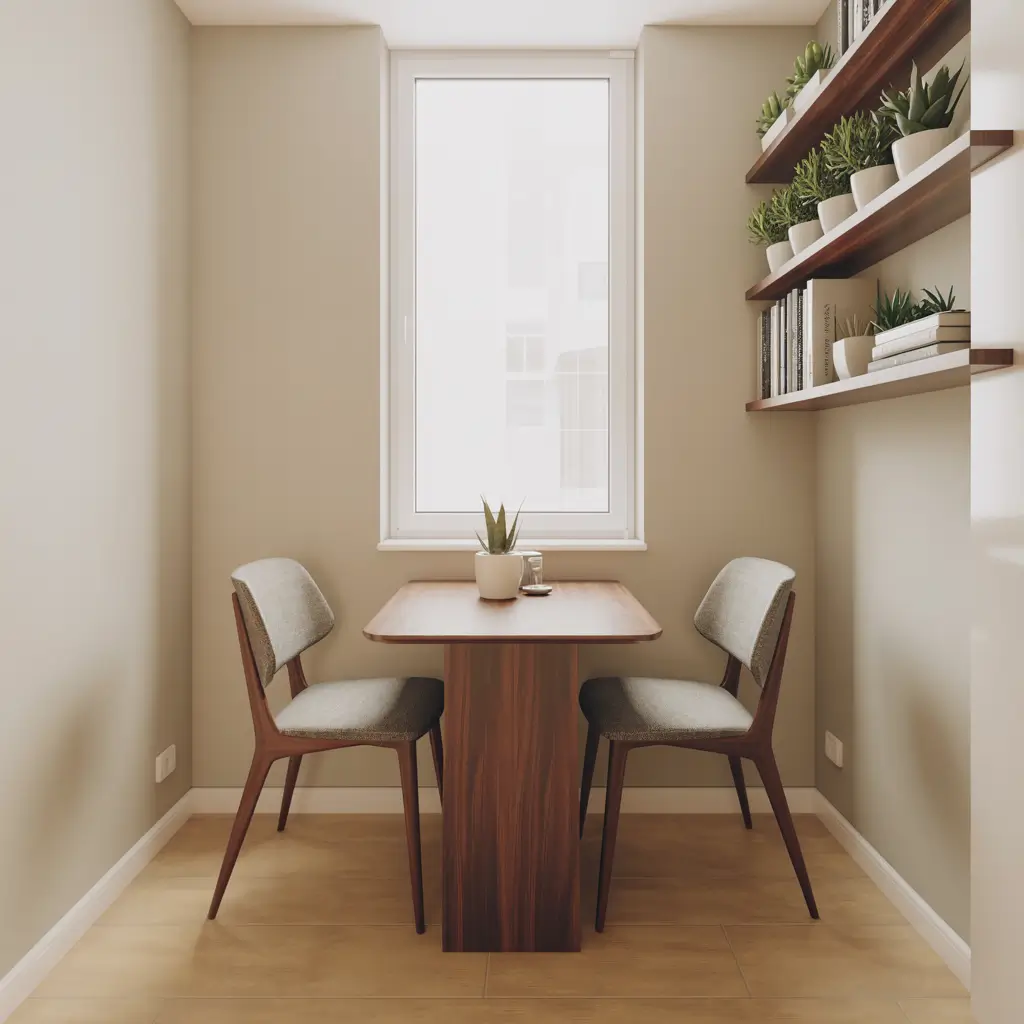
Modern tiny apartment dining solutions embrace contemporary design principles to make small spaces work harder and look better. These solutions think beyond traditional dining setups entirely.
Rethinking Dining for Modern Living
My neighbor’s tiny apartment has this genius setup: a kitchen island that doubles as a dining table, with stools that completely disappear underneath. It’s dining table, prep space, and storage unit all in one. Modern solutions like this acknowledge how we actually live in small spaces.
Modern design favors clean lines and multi-functionality, which perfectly suits tiny dining areas. Every piece serves multiple purposes without announcing it.
Contemporary Solutions That Work
Modern approaches to tiny dining:
- Kitchen islands with dining height extensions
- Bar-height tables creating vertical interest
- Modular furniture adapting to different needs
- Tech integration like charging stations in tables
- Transparent materials maintaining openness
- Built-in solutions maximizing every inch
Modern tiny dining solutions prove that small doesn’t mean sacrificing style or functionality. You just need to think differently about what dining furniture can be. :/
9. Rustic Charm for Compact Dining Corners
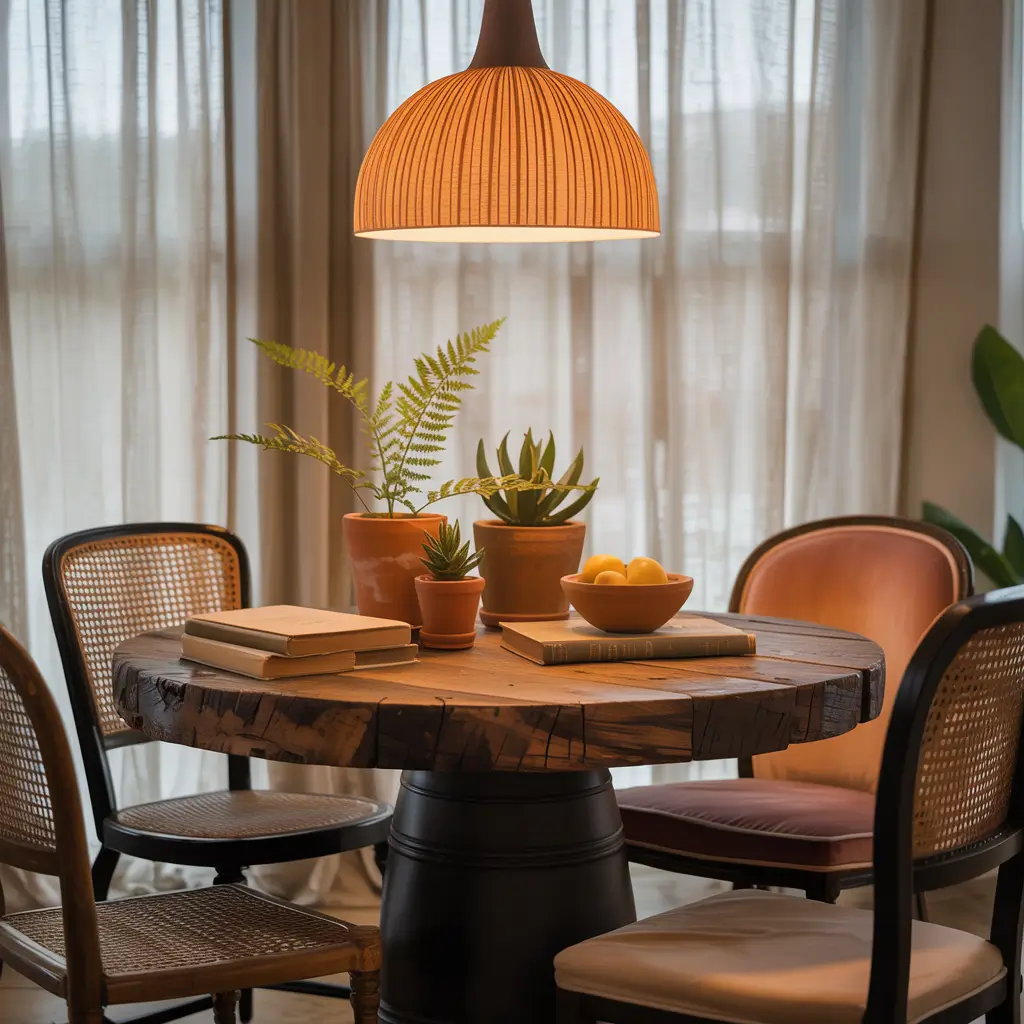
Rustic charm in compact dining corners brings warmth and character to small spaces without requiring a farmhouse. This style makes tiny dining areas feel cozy and intentional rather than cramped.
Why Rustic Works in Small Spaces
Rustic style embraces imperfection and authenticity — qualities that actually help in small spaces. My reclaimed wood floating shelf table and mismatched vintage chairs create more character in 20 square feet than most formal dining rooms achieve in 200.
Rustic elements add texture and warmth that make small spaces feel inviting rather than institutional. The lived-in quality gives permission to actually use the space.
Adding Rustic Touches
Creating rustic charm in tiny areas:
- Reclaimed wood surfaces adding instant character
- Vintage finds bringing unique personality
- Natural textures like jute or burlap
- Warm lighting from Edison bulbs
- Mixed metals in weathered finishes
- Simple greenery in mason jars or tin cans
The beauty of rustic style in small dining areas? Imperfections become features, and constraints become character. That tiny corner suddenly feels like it has stories to tell.
Also Read: 10 Luxury Dining Area Ideas for Sophisticated Decor
10. Vertical Space Hacks for Small Dining Areas
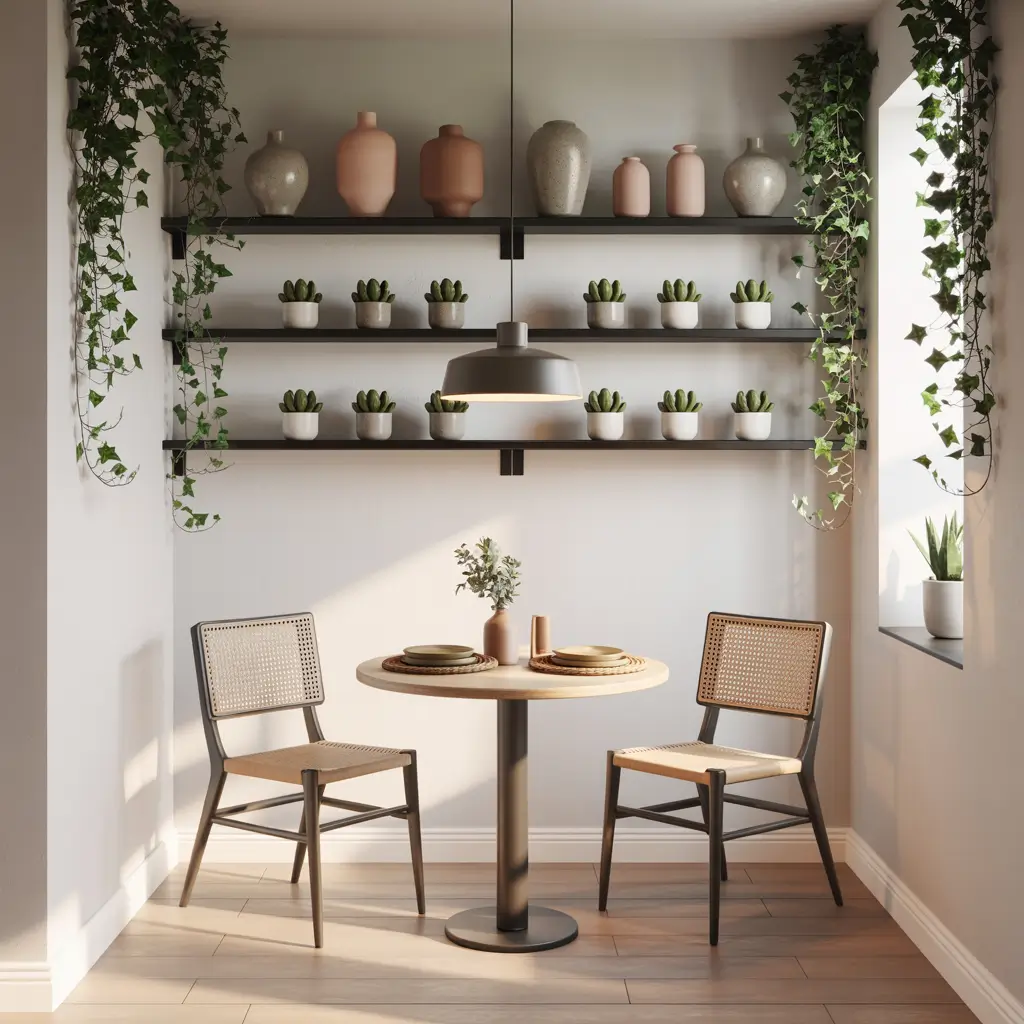
Vertical space hacks make you look up — literally. When floor space is limited, the walls and ceiling become your secret weapons for creating functional dining areas.
Going Vertical Changes Everything
I installed floor-to-ceiling shelving beside my dining table, and suddenly I had storage for dishes, glasses, linens, and decor without sacrificing an inch of floor space. The vertical element also draws the eye up, making my ceiling feel higher.
Most people forget about vertical space entirely, leaving walls bare while cramming everything at ground level. That’s like having a savings account you never touch while complaining about being broke.
Maximizing Vertical Potential
Smart vertical solutions for dining areas:
- Wall-mounted tables that fold when not used
- Hanging pot racks doubling as decoration
- Floating shelves at various heights
- Pegboard systems for customizable storage
- Ceiling-mounted planters adding greenery above
- Wall hooks for everything from bags to artwork
The vertical approach transformed my cramped dining corner into a functional space with room to breathe. Sometimes the solution isn’t out — it’s up.
Making Small Dining Areas Mighty
There you have it — 10 small dining area ideas that prove size doesn’t determine style or functionality.
Whether you’re working with a corner, a nook, or just a sliver of space, these approaches show that small dining areas can be just as inviting as grand dining rooms.
The secret to successful small dining spaces isn’t about cramming in as much as possible. It’s about choosing solutions that match how you actually live.
Do you eat alone mostly? Embrace the two-seater. Love entertaining? Invest in expandable options. Hate clutter? Go minimalist.
Here’s what I’ve learned from years of small-space living: the best tiny dining areas feel intentional, not apologetic.
Every choice should feel deliberate, every piece should earn its place, and the whole space should work with your lifestyle rather than against it.
Your small dining area has potential — you just need to see it differently. Stop comparing it to larger spaces and start celebrating what makes it unique. That tiny corner could become your favorite spot in the entire home.
Pick the ideas that resonate, combine approaches that make sense, and don’t be afraid to experiment. The perfect small dining solution is out there — or up there, if you’re thinking vertically!
Now excuse me while I go rearrange my dining corner again. Because that’s what small-space dwellers do for entertainment. 🙂