
10 Amazing Garage Shoe Storage Ideas to Declutter Fast
- Shoe Storage
 Ben
Ben- 0
- 35 minutes read
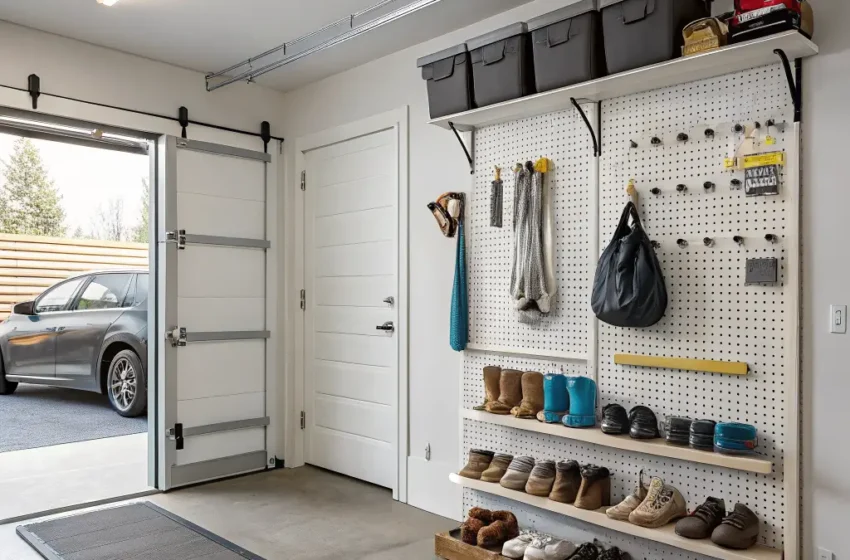
Your garage has become a shoe graveyard, hasn’t it? Muddy boots by the door, scattered sneakers under the car, and that one flip-flop that’s been MIA since last summer.
I get it—garages weren’t exactly designed with shoe organization in mind, but they’re where most of us actually take off our dirty shoes before heading inside.
I’ve battled garage shoe chaos for years. Between my hiking boots, my partner’s work shoes, the kids’ cleats, and about seventeen pairs of random sandals, our garage looked like a sporting goods store had a clearance sale explosion.
But after trying basically every storage solution known to humanity (some brilliant, some absolute disasters), I’ve figured out what actually works in a garage environment.
Let’s talk about 10 practical shoe storage ideas that’ll work with the dirt, temperature swings, and general chaos that come with garage life.
1. Vertical Shoe Rack Wall for Garage
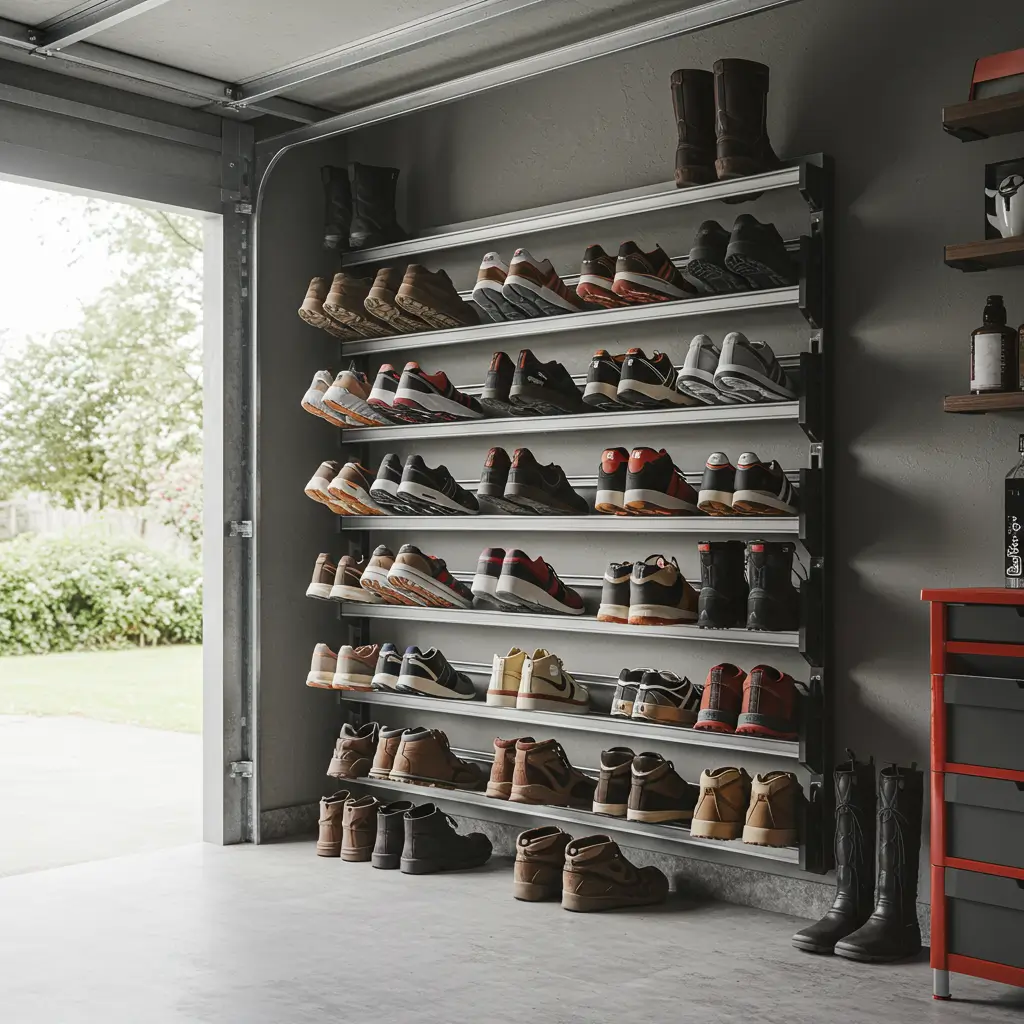
When floor space is premium and your walls are just sitting there doing nothing, vertical racks are the obvious answer. I installed a wall-mounted vertical rack system in my garage about two years ago, and it genuinely changed how I use the space.
These racks mount directly to your garage wall studs and create multiple tiers of shoe storage going upward. You’re using vertical real estate instead of eating up valuable floor space where you actually need to, you know, walk and park cars. The beauty is that you can see every pair at once—no more digging through piles.
Here’s why vertical racks work so well in garages:
- Floor stays clear: Critical for garages where space is tight
- Handles dirty shoes: Open design lets mud and dirt fall through
- Durable construction: Usually metal, built for garage conditions
- Holds tons of shoes: 20-40 pairs depending on the system
I went with a heavy-duty metal system that holds about 30 pairs. The open slat design is perfect because wet, muddy shoes can drip and air out without creating a gross puddle situation. In a garage, you need storage that can handle actual use, not just look pretty.
Installation requires finding your wall studs and mounting securely. I used 3-inch lag bolts because I’m paranoid about the whole thing ripping off the wall when fully loaded. Garages have notoriously tricky walls (insulation, vapor barriers, weird spacing), so take your time measuring and use a stud finder. Or just keep drilling holes until you find something solid—I won’t judge your methods.
2. Over-the-Door Garage Shoe Organizer
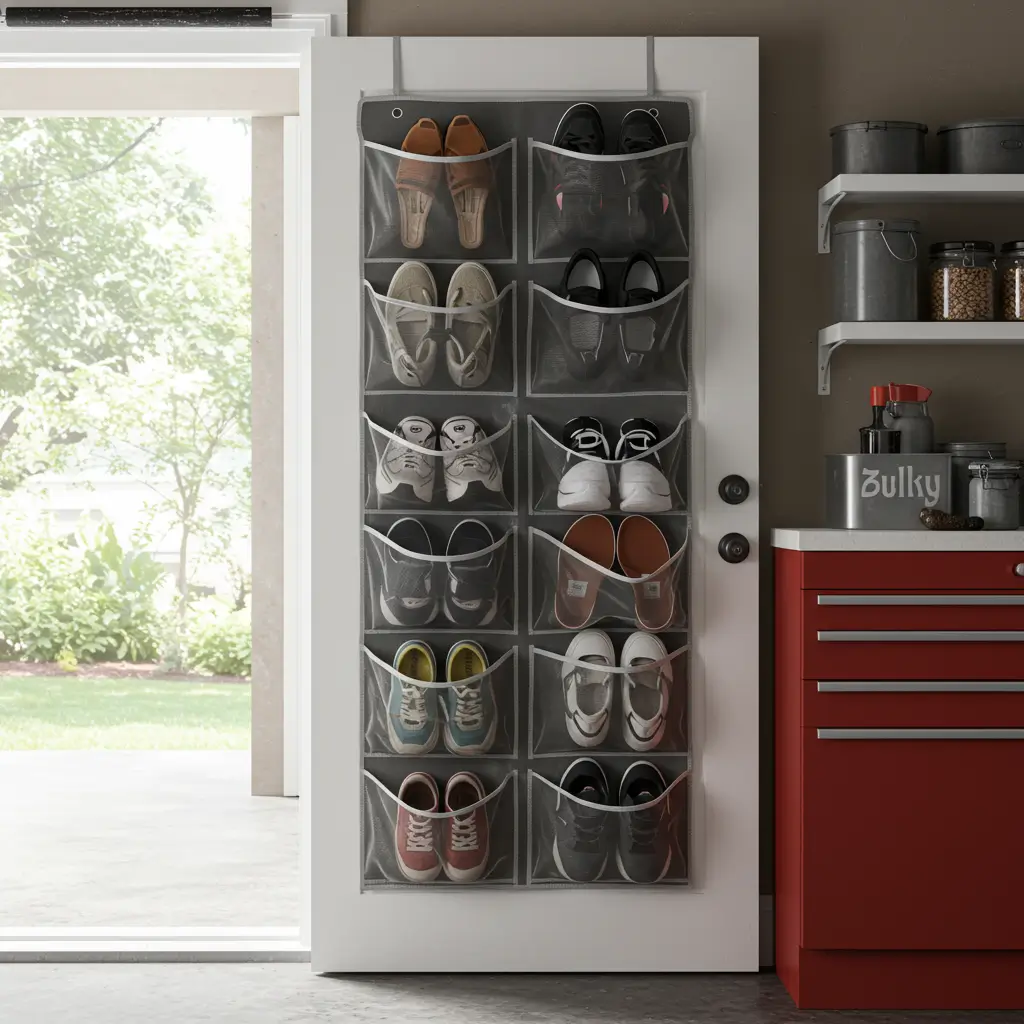
That door between your garage and house? It’s prime real estate you’re probably wasting. Over-the-door organizers aren’t just for bedroom closets—they’re actually perfect for garage use.
I hung one on our garage entry door, and now we have instant shoe storage right where we need it most. You walk in from outside, hang your shoes in the organizer, and head inside. The whole “shoes scattered across the garage floor” problem basically solved itself.
What makes these work in garages:
- Zero installation: Hook it over the door and you’re done
- Right at the transition point: Shoes come off exactly where you need storage
- Massive capacity: Most hold 20+ pairs easily
- Washable options: Fabric ones can handle getting dirty
The key is getting a garage-appropriate version. I learned this the hard way when I tried using a flimsy closet organizer that fell apart after two weeks of muddy shoes. Get something with reinforced pockets and heavy-duty construction. Canvas or thick fabric holds up way better than those cheap plastic pocket ones.
Pro tip: hang it on the house-side of the door. This keeps the organizer in the temperature-controlled zone rather than the garage itself, which matters if you live somewhere with extreme temperatures. Plus, it’s easier to grab shoes when you’re heading out. Small detail, huge convenience factor.
3. DIY Pallet Shoe Storage Shelves
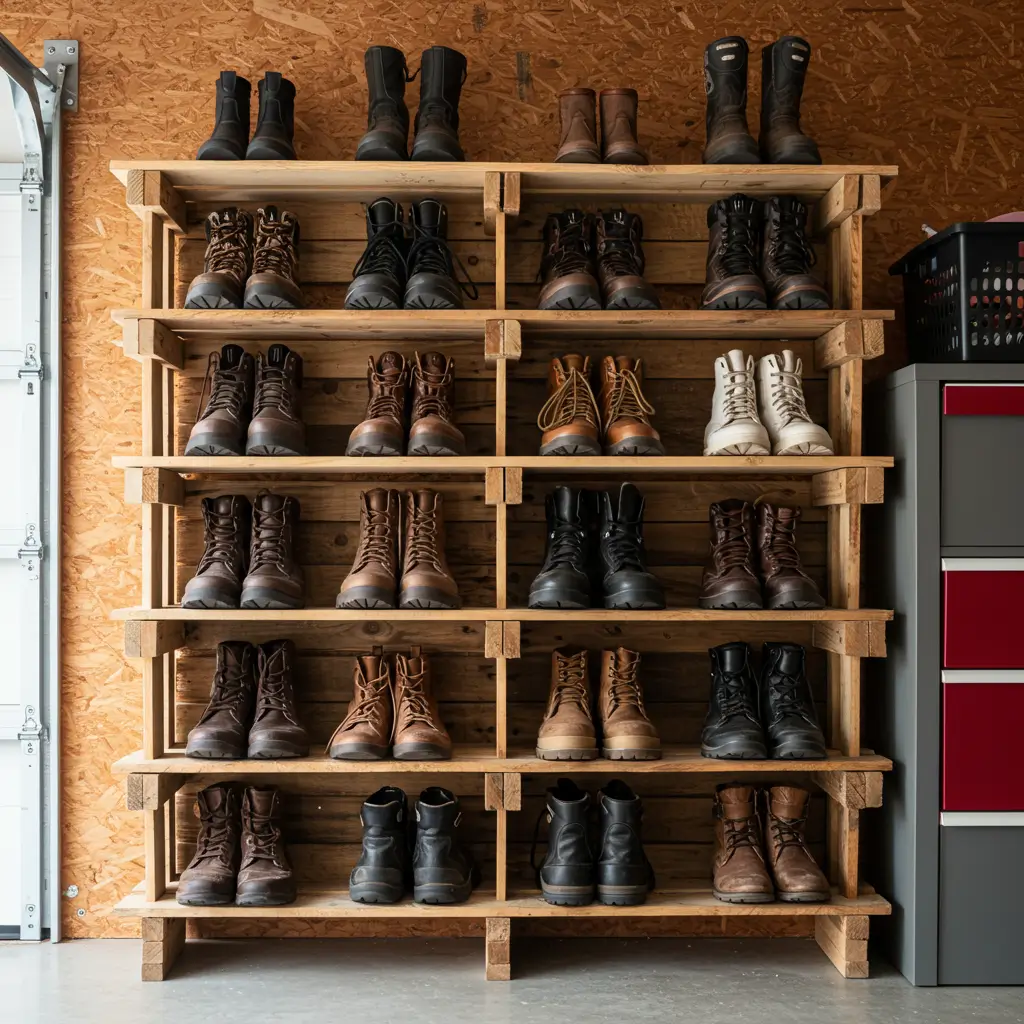
If you’re even slightly handy and want basically free storage, pallet shelves are where it’s at. I built mine using two pallets I grabbed from behind a furniture store (always ask first), some screws, and an afternoon of work.
Pallets are already structured with perfect spacing for shoes. Stand one upright, secure it to the wall, and boom—instant tiered shoe storage. The slatted design means dirt falls through, and the rustic look actually fits garage aesthetics way better than trying to make things look fancy.
Why pallet storage is genius for garages:
- Basically free: Pallets are often free for the taking
- Built-in ventilation: Slats let shoes air out and dirt fall through
- Easy to customize: Cut, stack, or combine however you want
- Garage-appropriate aesthetic: Rustic fits the space
I sanded mine down so nobody gets splinters and gave it a quick coat of weatherproof stain. The whole project cost maybe $15 in supplies and looks like I paid way more. Plus, there’s something satisfying about DIY projects that actually work out instead of becoming Pinterest fails.
Construction is straightforward—secure the pallet to wall studs, maybe add an extra support board across the back if it feels wobbly. I reinforced mine with L-brackets because I have trust issues with DIY furniture. The pallet now holds about 15 pairs of shoes and has survived two years of abuse without collapsing, so I’m calling it a win.
Also Read: 10 Creative Shoe Storage Ideas Closet Ideas for Busy Homes
4. Hanging Shoe Cubbies from Ceiling
Ever look at your garage ceiling and think about all that wasted space? Hanging storage cubbies from ceiling joists is next-level thinking that most people never consider.
I installed hanging fabric cubbies near our garage entry using heavy-duty hooks screwed into the ceiling joists. The cubbies hang down at perfect height for grabbing shoes, and they don’t take up any floor or wall space. It’s like floating storage that materializes exactly where you need it.
The benefits of overhead shoe storage:
- Uses unused space: Ceiling height becomes functional storage
- Keeps shoes off garage floor: Away from oil drips, dirt, and chaos
- Easy access: Hangs at convenient height for most people
- Protects from pests: Elevated storage keeps shoes away from critters
The fabric cubby design is perfect for garages because you can see what’s in each compartment, and they’re soft enough that bumping into them won’t hurt. Unlike hard shelving that you’ll definitely walk into at some point (speaking from painful experience).
Installation requires finding ceiling joists and using hooks rated for the weight. I used heavy-duty ceiling hooks meant for hanging bikes, which are total overkill but give me peace of mind. FYI, make sure you hang them in a spot where you won’t constantly hit your head—measure twice, install once, avoid concussions.
5. Rolling Shoe Cart for Garage Entry
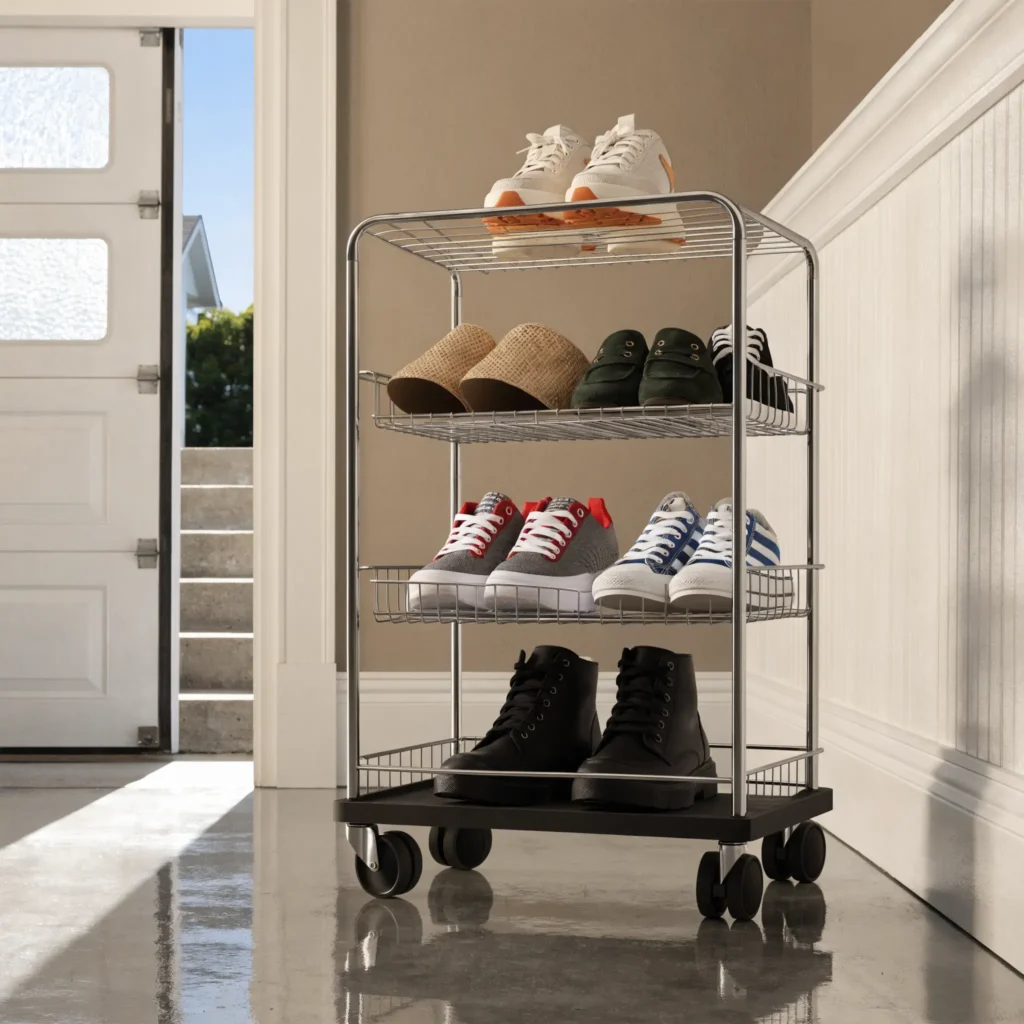
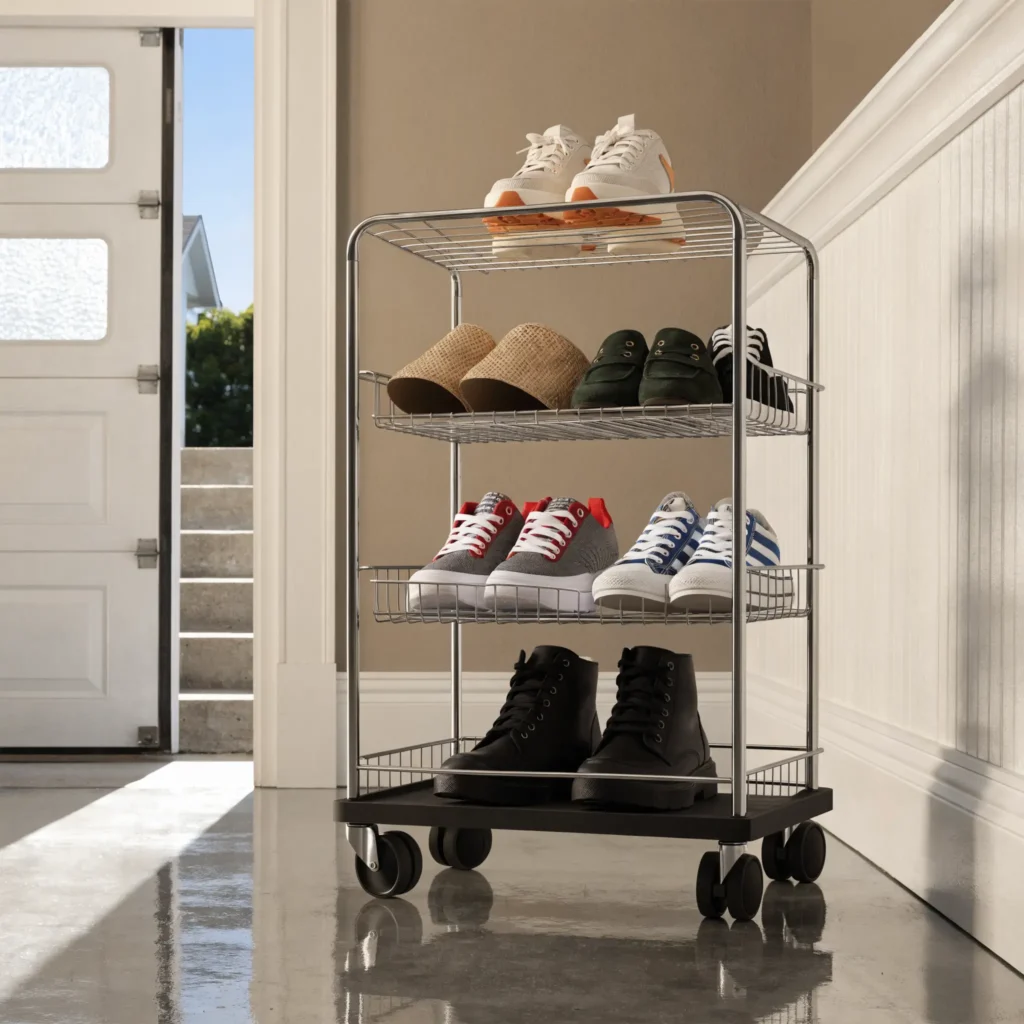
Mobility is underrated when it comes to garage storage. A rolling cart that you can move around makes so much sense for shoes because your needs change—sometimes you need floor space cleared, sometimes you don’t.
I bought a three-tier rolling cart from IKEA for like $30, and it’s become our go-to shoe storage right by the garage entry. We roll it wherever makes sense—sometimes near the door, sometimes against the wall, sometimes we move it completely out of the way when we need floor space. That flexibility is huge in a garage where you’re constantly moving things around.
Why rolling carts work great:
- Complete mobility: Move it wherever you need it
- Easy to clean around: Roll it aside and sweep
- Adjustable positioning: Find the perfect spot every time
- Multiple tiers: Holds 10-15 pairs depending on size
The three tiers give us enough space for everyday shoes, and the mesh design means dirt can fall through to the bottom (which I empty periodically—it’s gross but necessary). The wheels lock in place when you want it stationary, which prevents it from rolling away when you’re grabbing shoes.
One consideration: get something with decent weight capacity. Cheap carts with flimsy wheels will buckle under shoe weight and make awful grinding noises when you move them. Spend a few extra bucks on something sturdy, or you’ll be replacing it in three months. Trust me on this one :/
6. Stackable Clear Shoe Bins
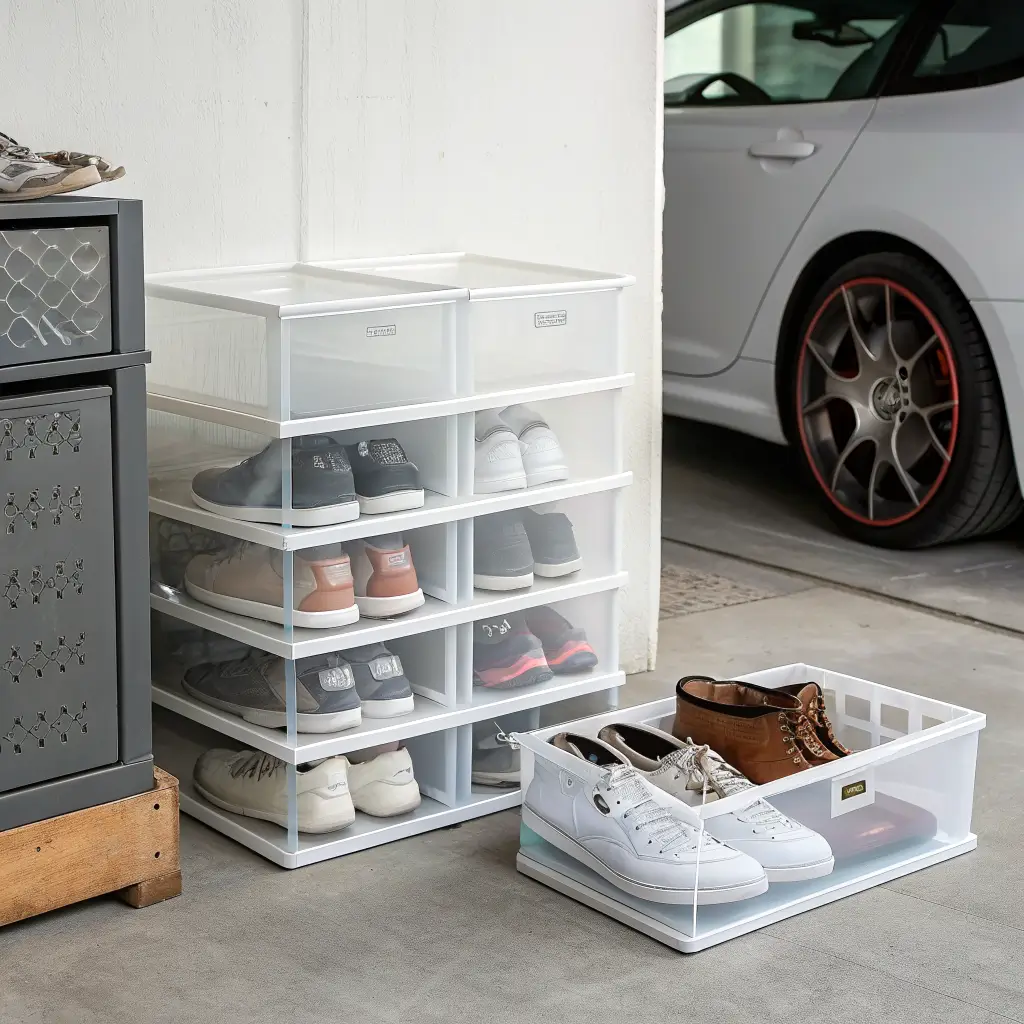
Clear storage bins are the “I want to see what I have without opening anything” solution. I use these for seasonal shoes or pairs we don’t wear constantly—they stack neatly on garage shelving and keep shoes protected while staying visible.
The clear design is crucial in garages because you’re not always walking past your storage. You need to see what’s inside without playing a guessing game with labels that fell off or weren’t clear to begin with. Stack them on existing shelves, and suddenly you have organized shoe storage that actually makes sense.
Stackable bins advantages:
- Dust and dirt protection: Shoes stay clean in garage environment
- Visual inventory: See exactly what you have at a glance
- Stackable design: Maximize vertical shelf space
- Weather-resistant: Plastic handles temperature and humidity
I keep all our seasonal shoes in these bins—winter boots in summer, sandals in winter. When seasons change, I just swap which bins are accessible. The system works because I can actually see what’s in each bin without digging through everything.
Sizing matters here. Get bins that actually fit your shoes—some of my boots need larger bins, while sandals fit in smaller ones. I learned this after buying a dozen identical bins and realizing half my shoes didn’t fit. Measure your largest shoes first, then buy bins accordingly. Revolutionary concept, I know, but we all make mistakes.
Also Read: 12 Stylish Entryway Shoe Storage Ideas for Small Spaces
7. Pegboard Shoe Storage System
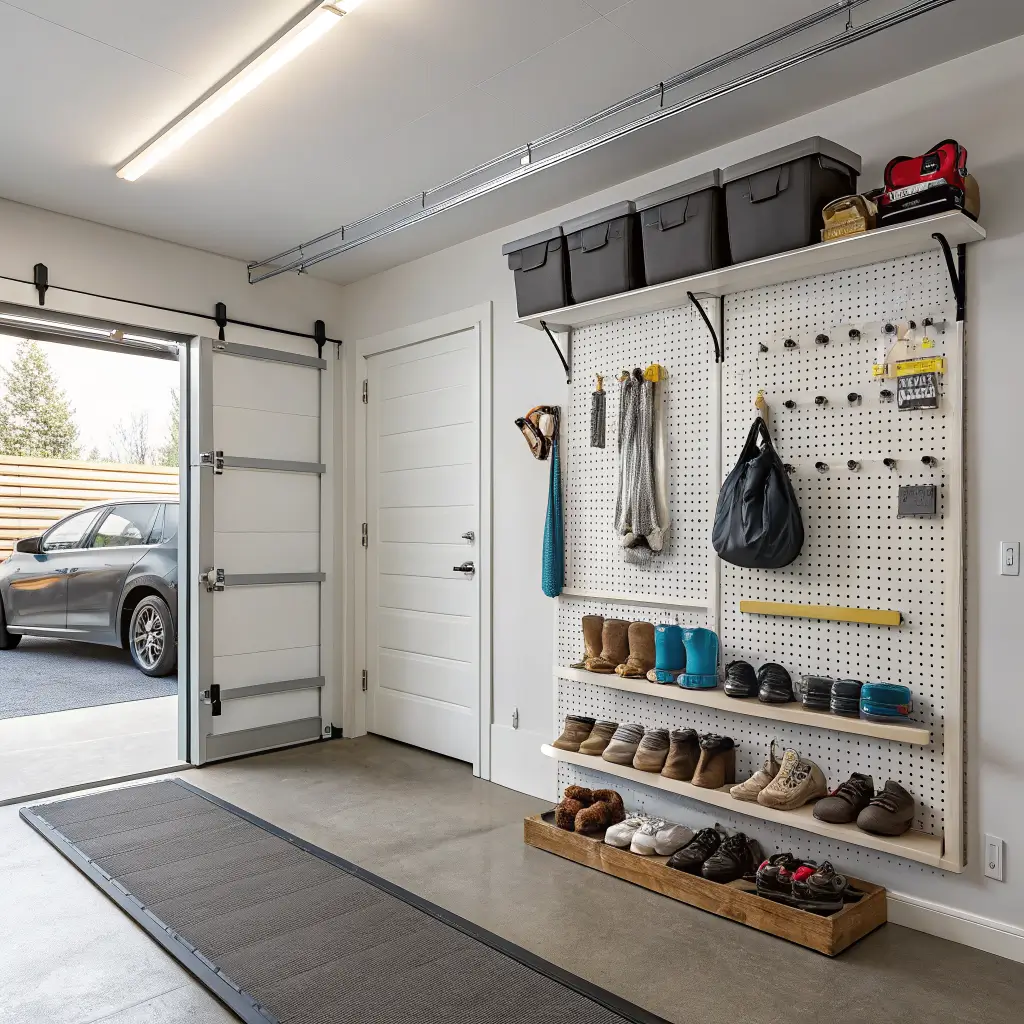
Pegboard is the ultimate customizable garage storage solution, and it works brilliantly for shoes. I installed a 4×8 sheet of pegboard on one garage wall, added hooks, and created a completely flexible shoe storage system that I can rearrange whenever I want.
The beauty of pegboard is that you can hang shoes by their heels, back loops, or any grab point. You arrange hooks however makes sense for your collection, and if your needs change, you just move the hooks. It’s endlessly adaptable, which is perfect for garages where storage needs evolve.
Why pegboard systems are perfect for garages:
- Total customization: Arrange hooks exactly how you want
- Easy to modify: Rearrange anytime without new holes
- Industrial aesthetic: Looks right at home in a garage
- Multi-purpose: Use for shoes, tools, whatever you need
I keep our most-used shoes on pegboard hooks at eye level—work boots, running shoes, everyday sneakers. Everything’s visible and accessible, and the open design means wet or muddy shoes dry out quickly. The airflow is way better than enclosed storage, which matters when you’re storing shoes that see real use.
Installation is straightforward but requires proper spacing behind the pegboard so hooks can actually go through. I mounted mine using furring strips to create a 1-inch gap between the pegboard and wall. This lets me use any pegboard accessories I want without fighting to get hooks in at weird angles.
8. Boot Tray with Multi-Tier Shelves
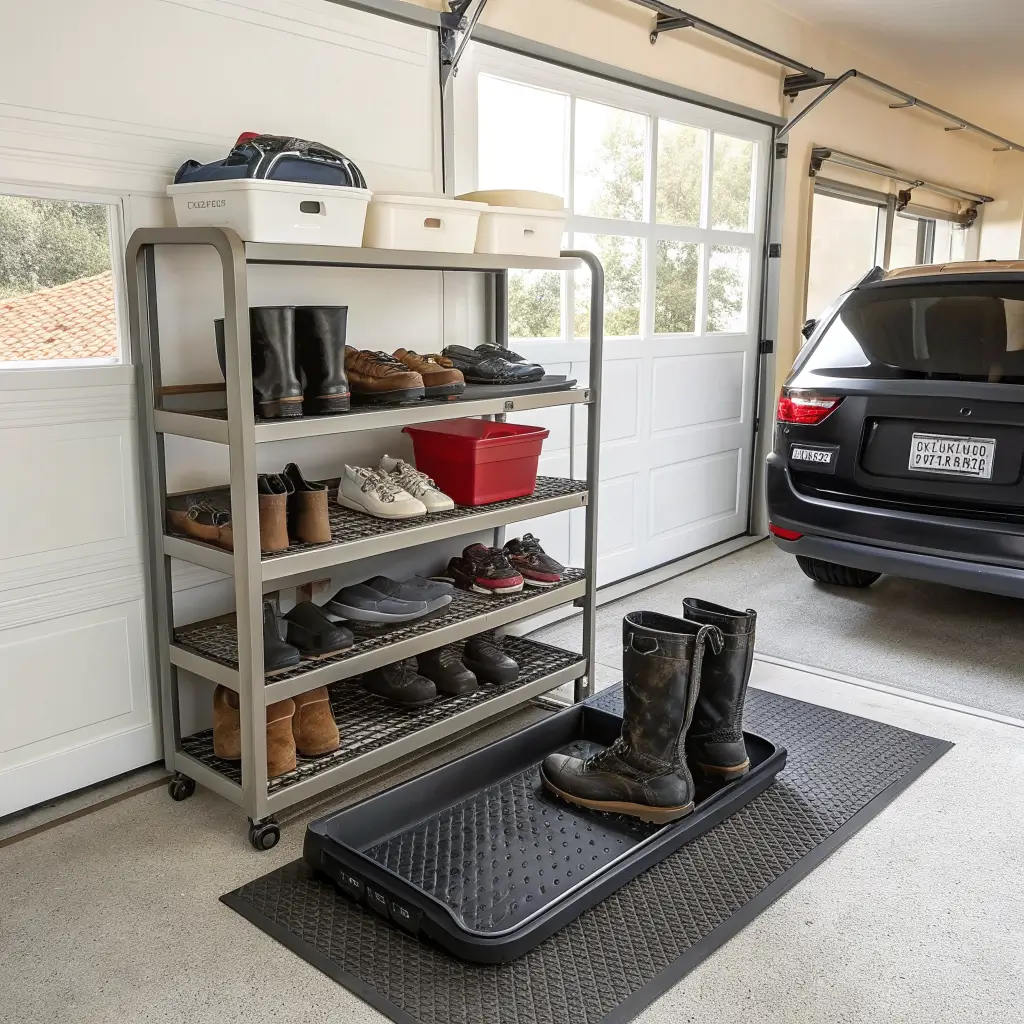
Combining a boot tray with shelving above it is practical genius. I set this up by our garage entry, and it handles the “boots are dripping wet but I need to take them off right now” situation perfectly.
The boot tray sits on the floor and catches all the water, mud, and general grossness that comes off shoes. The shelves above hold dry shoes that don’t need a drip tray. It’s a two-level system that addresses both wet and dry shoe storage in one compact footprint.
What makes this combination work:
- Handles wet shoes: Tray catches water without making a mess
- Maximizes vertical space: Shelving stacks above the tray
- Seasonal flexibility: Boots in winter, sandals in summer
- Easy to clean: Boot trays rinse out in seconds
I use a rubber boot tray that holds about 4 pairs of boots at a time. Above it, I installed three wire shelves that each hold 3-4 pairs of regular shoes. The whole system takes up about 2 square feet of floor space but stores 15+ pairs effectively.
The boot tray is crucial in my climate where winter means wet, salty, slushy boots that drip everywhere. I empty and rinse the tray once a week, which sounds like a chore but takes literally 30 seconds. IMO, that tiny bit of maintenance is worth not having gross puddles forming on the garage floor.
9. Garage Corner Shoe Tower
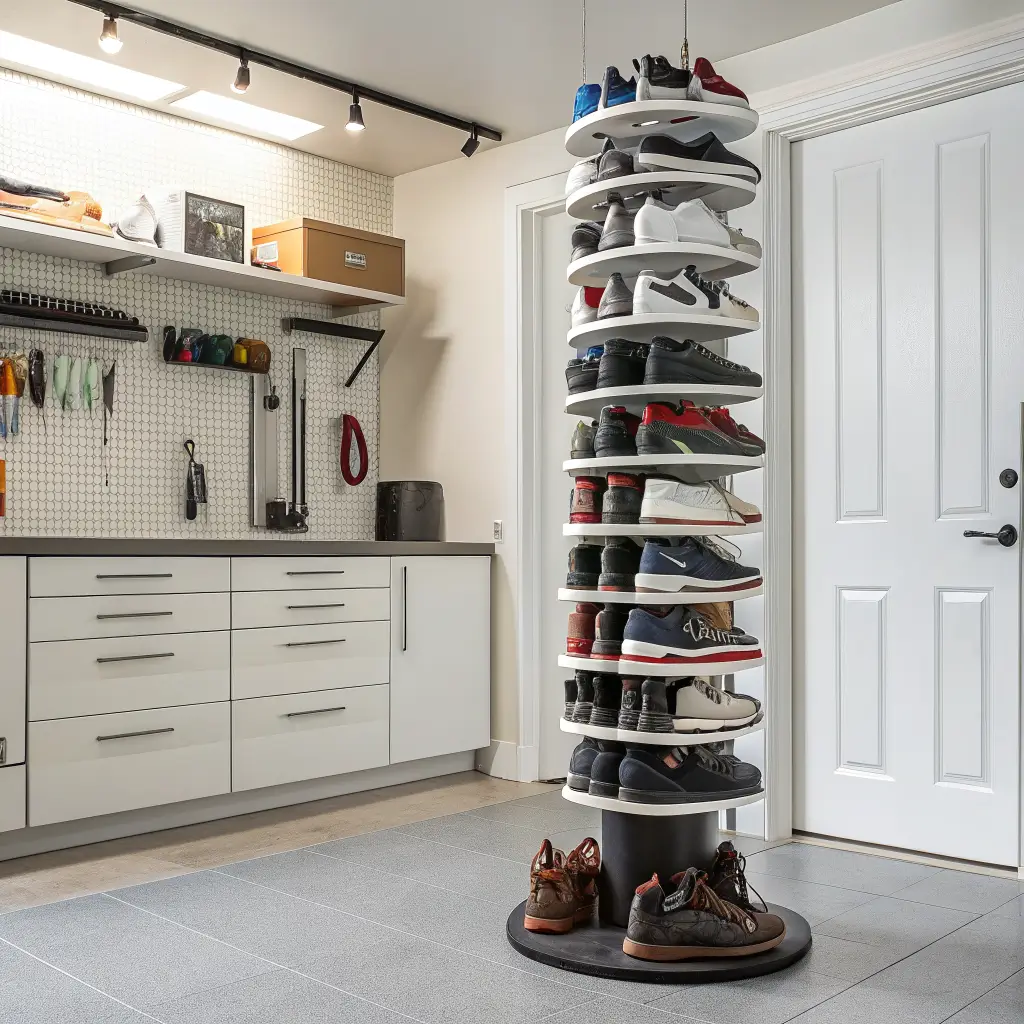
Corners are the forgotten real estate of garages. A corner shoe tower is specifically designed to fit into those awkward angles and maximize space that usually just accumulates random junk.
I installed a corner tower in our garage’s most awkward corner—the spot where two walls meet near the entry door. That corner was previously home to one sad traffic cone and a collection of cobwebs. Now it holds about 20 pairs of shoes in a compact footprint that makes actual use of dead space.
Corner tower benefits:
- Uses wasted space: Corners finally serve a purpose
- Compact footprint: Maybe 2 square feet of floor space
- High capacity: Vertical design holds lots of shoes
- Stable design: Triangular base is naturally sturdy
The tower I got has seven tiers that gradually expand as they go up, which means different sized shoes fit on different levels. Heavy boots go on the bottom where they’re stable, lighter shoes up top where they’re still easy to reach. The triangular design is actually more stable than rectangular shelving because of how the weight distributes.
Assembly was required (of course), but it wasn’t too painful—maybe 30 minutes of clicking parts together and making sure everything was level. The hardest part was getting it positioned correctly in the corner since you can’t really adjust once it’s loaded with shoes. Measure your corner first and commit to the placement before filling it up.
Also Read: 10 Smart IKEA Shoe Storage Ideas for Tiny Apartments
10. Magnetic Shoe Holders for Metal Surfaces
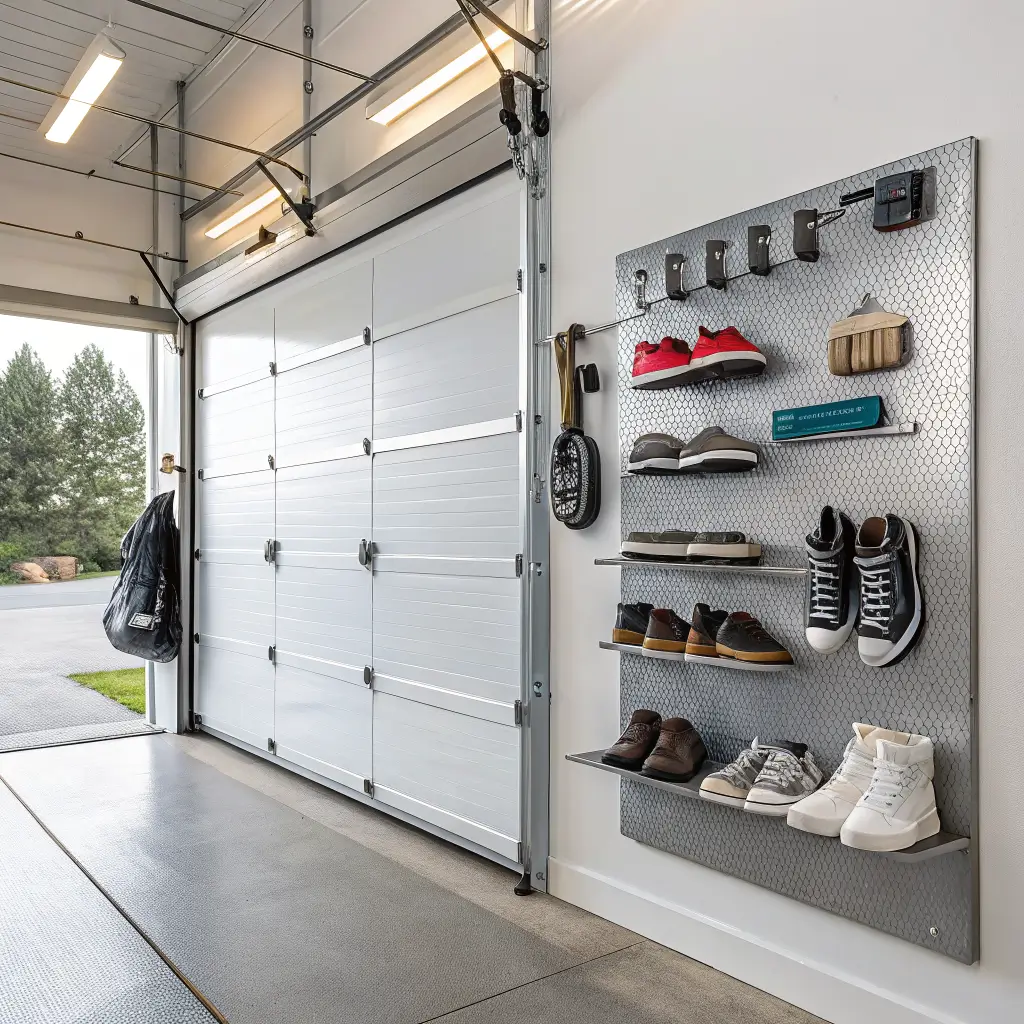
If your garage has metal surfaces—steel doors, metal cabinets, or even exposed metal studs—magnetic holders are a wild card option that actually works. I was skeptical until I tried magnetic hooks on our steel garage door, and now I’m a believer.
You slap magnetic hooks onto any metal surface, hang shoes that have back loops, and boom—instant storage that requires zero installation. No drilling, no measuring, no commitment. Just magnetic force holding your shoes exactly where you put them.
Why magnetic storage is underrated:
- Zero installation: Stick them on and you’re done
- Completely movable: Rearrange anytime you want
- Uses metal surfaces: Turn doors and cabinets into storage
- Temporary solution: Perfect for renters or temporary setups
I use these primarily on the steel door between our garage and house. I stuck six heavy-duty magnetic hooks on there, and now my running shoes and daily sneakers hang right by the exit. The magnets are strong enough that I’ve never had shoes fall, even when slamming the door (not that I slam doors… often).
The key is getting magnets that are actually strong enough. Those weak decorative magnets won’t cut it when you’re hanging shoes. You need heavy-duty magnetic hooks rated for at least 10-15 pounds each. I bought mine from a hardware store’s industrial section, not the craft aisle, and that made all the difference.
Making Your Garage Work for You
Here’s the reality: garages are challenging storage environments. They deal with temperature extremes, dirt, moisture, and limited space.
Whatever storage solution you choose needs to handle those conditions while still being functional for your daily routine.
Start by thinking about your actual usage patterns. Which shoes do you wear most? Those should be the most accessible. Which ones are seasonal or rarely used? Those can go in less convenient storage.
I keep my hiking boots in clear bins on a high shelf because I use them maybe once a month, while my everyday sneakers live on pegboard hooks right by the door.
Consider your climate too. If you live somewhere wet, you need drainage or trays. If you’re in a hot climate, enclosed storage might get musty and gross. Cold climates mean shoes might get stiff in winter.
Your storage needs to work with your local conditions, not against them.
And honestly, you’ll probably need a combination of solutions. I use pegboard for daily shoes, clear bins for seasonal storage, and a boot tray for wet weather gear.
Trying to force one storage method to do everything usually ends in compromise and frustration. Mix and match based on what works for different parts of your collection.
The garage entry point is prime real estate—that’s where shoes naturally come off. Whatever you put there gets the most use, so make it count.
I’ve got pegboard hooks and the rolling cart right by the door because that’s where the action happens. Everything else is secondary storage for shoes we use less frequently.
Maintenance matters in garages more than indoor spaces. Dirt accumulates, things get gross, and you need systems that you can actually clean. Open designs beat enclosed storage for this reason—you can sweep under them, hose them down if needed, and see when things need attention.
I clean my garage shoe storage maybe once a month, which keeps everything from getting disgusting.
Don’t overthink the aesthetics. Your garage doesn’t need to look like an IKEA showroom. It needs to function well and handle the abuse that comes with being a garage. If something works but looks a bit rough? That’s fine. This is where you store dirty shoes and park cars, not where you host dinner parties.
Time to Tackle That Shoe Situation
Your garage shoe chaos is completely fixable. It doesn’t require a huge budget or professional organizers—just some intentional storage that matches how you actually use the space.
Pick the solution that makes sense for your garage layout, shoe collection, and daily habits.
Start with one area and expand from there. I began with just the pegboard wall, and once that proved useful, I added the other elements. You don’t need to overhaul everything at once.
Small improvements add up to a garage that actually functions instead of frustrates.
And remember, the best storage system is the one you’ll actually use. If it’s complicated or annoying, you’ll revert to shoe piles within a week.
Keep it simple, make it accessible, and choose solutions that work with your routine rather than against it.
Your garage can absolutely handle organized shoe storage. It just needs the right approach and some practical solutions that match the space.
Now get out there and reclaim your garage floor from the shoe invasion. You’ve got this! 🙂